Posted in Sunday Songs

Sunday Songs: 4/7/24

Happy Sunday, bibliophiles! I hope this week has treated you well.

This week:

Choose the best answer: You can blow with:

a) This

b) That

c) Us

d) All of the above

Enjoy this week’s songs!

SUNDAY SONGS: 4/7/24

“Flea” – St. Vincent

Affirmation of the week: I have listened to this song a healthy amount of times. At least I didn’t pull the “listen but nothing but this song for almost four hours straight” stunt that I did with “Broken Man.” See? I’m better now. I’m savoring this one, and by “savoring,” I mean “listening to it slightly less, but still putting it on repeat for at least half an hour when it comes on shuffle.” What new St. Vincent does to an mf.

“Broken Man” is shining proof that All Born Screaming has a good chance of being my album of the year, but somehow, Annie Clark outdid herself even more with this latest single. I’m glad that “Broken Man” and “Flea” are tracks three and four on the album, respectively; even past the fact that they fit so slickly together, I like the idea that the title and closing tracks are a secret—she’s got something insane up her sleeve. I can just tell. After “Broken Man”‘s torrent of fury, vengeance, and Dave Grohl’s drumming, “Flea” makes the transition into the outright bloody—not bloody in the sense of the trail of destruction that “Broken Man” left, but in the sense of parasitism. Clark described the upcoming All Born Screaming as being bred in “That kind of isolation [that] breeds paranoia and loneliness…loneliness can breed violence.” Now I can see exactly where the whole “post-plague pop” label she stuck on it comes from. “Flea” slinks along on tiny, pointed legs, thrumming with a racing heartbeat and an insatiable thirst for blood; the repetition of “Once I’m in, you can’t get rid of me” is sung lower and raspier, a threat paired with a predatory lick of the lips. The kind of loneliness and violence Clark described seems to be exactly where this kind of sinister lust comes from—being isolated for so long could easily make love turn to lust, and lust consequently to hunger, so drained of human touch that what was once affection has become leeching for nutrients at the other person’s expense. And everything about “Flea” sounds frighteningly hungry, down to the parched-throat rasp with which Clark delivers the verses. When she ends verse two with a dried-out confession of “I look at you, and all I see is meat,” followed by a faint belch in the background, I suddenly got the feeling that I was being watched by something waiting to tear me limb from limb and suck me dry. It’s intense, but it’s the kind of intoxicating thrill ride that I’ve taken with Clark for nearly ten years. And the chorus finds the narrator covered in someone else’s blood, begging for just one more bite; the desperation sloughs off like a second skin, every blood-soaked belt starved and howling. It’s a kind of visceral musicianship that I haven’t seen from St. Vincent in years; although Daddy’s Home was certainly raw, it was the kind of raw you get from getting someone enough wine to spill about their childhood trauma and laugh it off. All Born Screaming is about as raw as flesh itself—it’s all the clearer that Clark has no intention of pulling punches, and that’s exactly what makes a St. Vincent song so iconic. “Rattlesnake” and “Severed Crossed Fingers” don’t illicit waves of emotion in me for nothing—they’re hearts laid bare in the street. In other words: Clark is at her best when she’s herself. Should be a given, but it’s more evident in some albums than others.

God, April 26th can’t come any sooner…

…AND A BOOK TO GO WITH IT:
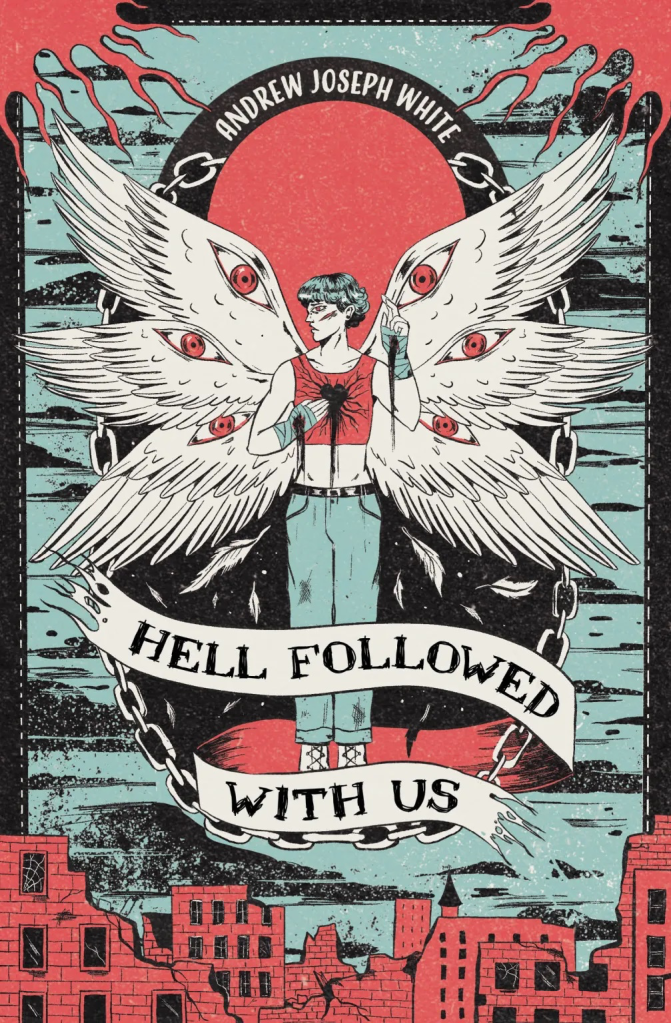
Hell Followed With Us – Andrew Joseph Whitedepending on how All Born Screaming goes, I might preemptively merge this with “Hell Is Here”…

“Tonight” – TV on the Radio

Aaaaaaaaaand, that’s one more album on the Sisyphean Album Bucket List. Between the “Wolf Like Me” (the best song there is about werewolves after this), the deeply moving “Province” with its David Bowie feature (YOU HEARD ME!!), and this, I now know that Return to Cookie Mountain has to make its way into the rotation. I have Chelsea Wolfe to thank for this one; at her fantastic show at the Gothic Theater in March, she played this before the show—I wouldn’t be surprised if she was a fan before, but I suspect that it’s a kind of thank you to the fantastic Dave Sitek, who produced her truly fantastic new album, She Reaches Out To She Reaches Out To She. Also, with a title like Return to Cookie Mountain, I feel like I just have to listen.

What “Tonight” made me realize about TV on the Radio is how effectively—and quickly—they can craft an atmosphere. Some of the most layered ones I can think of are from their early career, namely the first version of “Staring at the Sun” that appeared on their debut EP, Young Liars. Instead of the shorter version that made the cut for Desperate Youth, Bloodthirsty Babes, this one has a thirty second intro (that feels longer, honestly) that consists of just the a cappella vocals of the band, interspersed with an excerpt from a Spanish-speaking radio station. Even though the chatter on the radio station seems cheerful and singsong, the drawn-out gives it a prolonged air of foreboding and sorrow to come, like the next thing we hear will be the somber announcement of someone’s death. Thankfully, that doesn’t happen, but the first lyrics we hear on the heels of that are “Cross the street from your storefront cemetery,” which, bam. That’s how you start a song. When it comes to both of those aspects, “Tonight” operates in a similar way, creating an atmosphere that’s haunting before the instruments even kick in. With the whine of a distant siren and the ever-so-slightly distorted collision of wind chimes, “Tonight” instantly transports you to a place of brown grass and barren vastness, pockmarked by dead trees strung with glass bottles and the faint sounds of the road in the distance. The music seems to lumber with every step, a beleaguered creature that lurches with every step, as if its limbs are tied down with the wind chimes you hear tinkling throughout the song. Hollow whistles harmonize with a moaning clarinet and Tunde Adebimpe’s clarion call of a voice, all at once ragged and brimming with vitality. A fair amount of the buzz surrounding TV on the Radio when they got their start were vocals comparisons of his to Peter Gabriel, and it’s an apt one—they have a similar quality of being roughly visceral, but booming with emotion. Dave Sitek is also credited with “magic” on this song, which I cannot find a musical definition for the life of me, but if there’s anything that you would credit the man for, it’s that. He has the touch.

I often get so caught up in the atmosphere that I only mine the lyrics later, but the lyrics in “Tonight” pop out so prominently on the first listen; as the wind chimes huddle for warmth, Tunde Adebimpe’s voice cuts through them like a steak knife through fabric—”My mind is like an orchard/Clustered in frozen portraits.” How does this man do it? Every single line in this song is a literary gem in and of itself, and it’s not just because of the repeated references to Edgar Allan Poe’s “The Telltale Heart”—like heartbeats rumbling through flimsy floorboards, the lyrics never fail to send chills up my spine: “Her rusty heart starts to whine/In its tell tale time.” My rusty heart sure does whine whenever those lyrics wash over me. And like the sparse nature of the atmosphere, the lyrics tell of a spare mental space, one so full of sorrow and unpleasant memories that, like the telltale heart, cannot be pushed from the mind. The song still haunts me in a largely melancholy way, but it has an uplifting sentiment at its heart. I can’t help but think of Soundgarden’s “The Day I Tried to Live” and its similar atmosphere of doom, but its lyrical heart being the fact that despite all of the horrible things crashing down around you, there will always be something left to live for, so all you can do is push through. Adebimpe’s sentiment feels like wading through a slurry of unpleasantness that never seems to end (“Blossoms that bloom so fine, just to drop from the vine/I’ve seen them all tonight), but he makes the light at the end of the tunnel shine as bright as it can: “The time that you’ve been afforded/May go unsolved, unrewarded/Some nameless you cannot know, may be coming to show you/Unbridled love and light.” No matter how much you have to push down and wade through, never doubt that good things are coming. It’s something I struggle to hold to heart, but I’ve added this song as an unexpected guiding light. I can never know the future. It scares me. But there is certainty in the love lingering beyond my current time. There is always love.

…AND A BOOK TO GO WITH IT:
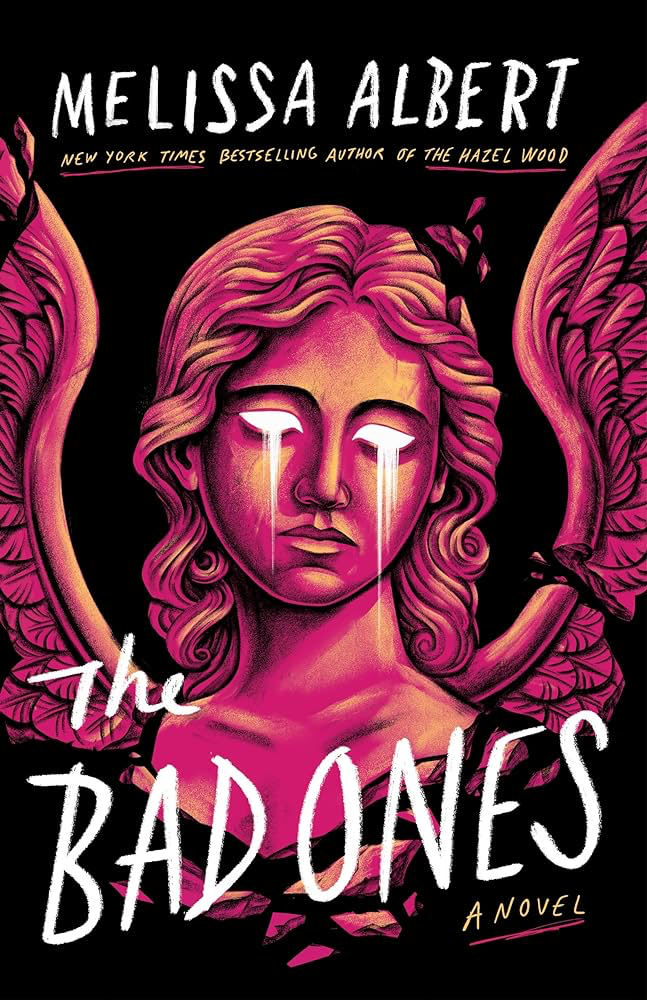
The Bad Ones – Melissa Alberta similarly haunting atmosphere woven from swirling memories.

“the rot” – Dean Blunt

Contrary to my graphic, this is not, in fact, that well-intentioned but ultimately regrettable black square everybody posted back in 2020. My text box accidentally cut out the 2 on Black Metal 2, the only thing distinguishing it from the cover of Black Metal, which is…also just a black square. Gotta admire Dean Blunt for committing to the bit.

I stumbled across this song thanks to Arlo Parks, who chose Black Metal 2 as one of her picks on her episode of Amoeba Records’ series What’s In My Bag?, where she also talks about my bloody valentine and happens to be wearing one of the coolest Radiohead shirts I’ve ever seen. The songs she discusses there—“VIGIL” and “the rot”—serve as bookends, the opener and closer of Black Metal 2, respectively. Both of them have the atmosphere of a massive curtain thrown over your eyes—you’re immediately thrown somewhere else in a space that Blunt has created; no time is wasted in transporting you into his world. While “VIGIL” has the tidal-wave mounting tension of strings to prop it up, “the rot” is the last, gentle minutes of a plane ride home. It’s a distinctly sunset song: you’re slumped back in your seat, golden light is spilling through the window, and you have the sense, more than ever, that a chapter is closing, but not necessarily in a negative way. You can tell that there’s a myriad of different instruments, but all of them are toned down to a faint crawl, strings gently winding, acoustic guitars drifting away like insects in the early evening. “the rot” in particular has such a gorgeous vocal contrast between Blunt and guest artist Joanne Robertson; like Phoebe Bridgers and Jeroen Vrijhoef on “Garden Song,” what grounds the song is the stark difference, although that of Blunt and Robertson feels much more natural and less jarring than the latter. Where Blunt has the warmth and thickness of the ocean lapping over a volcanic shore, Robertson’s words float like the breeze stirring the water. Both of them drift like motes of dust into the air, closing out Black Metal 2. Without even having listened to the whole album, I can tell how successful “the rot” is as a gentle closer.

…AND A BOOK TO GO WITH IT:
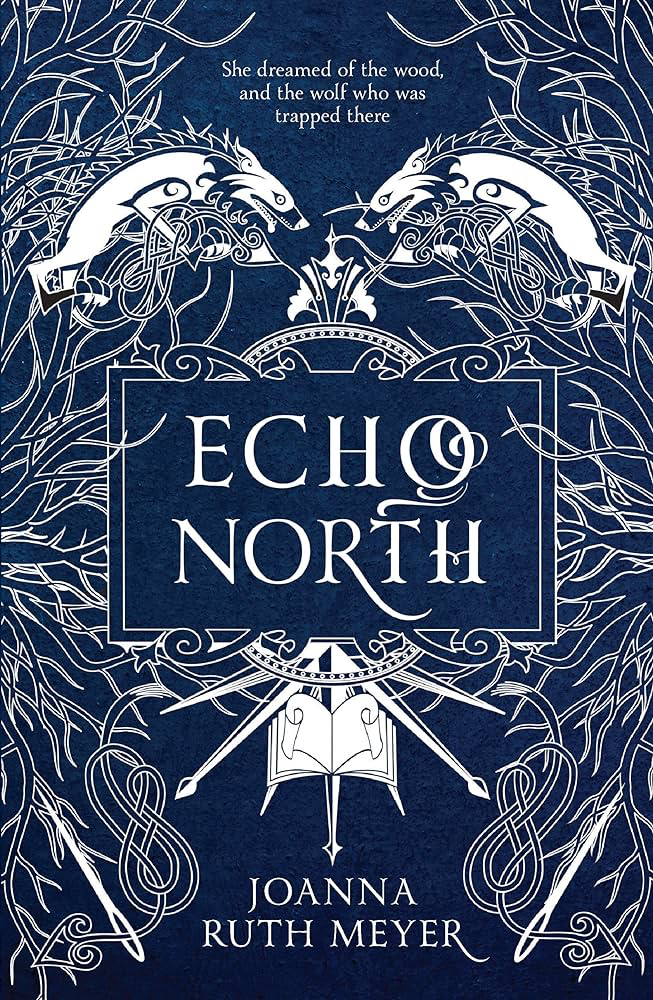
Echo North – Joanna Ruth Meyer – the frost, like the rot, lures you into the woods and makes you chase after old dreams.

“Weapon of Choice” – Fatboy Slim

Me when I walk without rhythm (I didn’t attract the worm):

…AND A BOOK TO GO WITH IT:

Dune – Frank Herbertas is written.

“Satellite of Love” – Lou Reed

Ugh, I’m so glad this song came back intro my regular rotation recently. The outro did wonders for amping me up for my astronomy midterm.

It’s been about four years since I’ve consciously started listening to this song, but I’m sure my dad played it in the car long before that. But I’ll always love this era of Lou Reed, and you know who I’ll also always love? David Bowie. And Bowie, along with Mick Ronson (Bowie’s guitarist in the Spiders from Mars) co-produced Transformer, which has spent a woefully long time on my album bucket list. It’s smack dab in that early-’70s sound that I just live for, and I’ve already heard a handful of the classics from the album already—“Walk On the Wild Side” and “Perfect Day,” to name a few. But “Satellite of Love” remains my favorite thus far, and it’s not just because I collect space-related songs like a bower bird collects shiny rocks and trinkets. As with…well, almost every Lou Reed song, “Satellite of Love” is tinged with melancholy; it tells of love watched from a distance, the aftermath of a breakup watched from below like a stargazer looking at a meteor shower. The offbeat admission of “I love to watch things on TV” feels like an admission of what Reed thought that the relationship had turned into—just something to pass the time and make the eyes go limp. I can’t help but think of Lisa Hannigan—I can’t be sure if this was her exact inspiration, but I wouldn’t be surprised if the chorus of “Passenger” came from a similar metaphor of distant love adrift in the sky—”Oh, my satellite/Oh, my passenger.” For once, Lou Reed is the one that doesn’t sound abjectly in mourning—wistful, sure, but there’s still some light shining in the corner of his eyes, even if it’s just the reflection of a star. For me, the outro is what pumps just the barest pulse of hope into “Satellite of Love”—the piano begins to gallop, clapping and snapping dominates the percussion, and Reed begins a harmony with a wailing, angel-voiced Bowie. Reed remains anchored to the ground, but Bowie, naturally, ascends skyward with every note. There’s something about it that feels like he’s extending a hand from somewhere in the night sky, inviting us to join in the chorus.

…AND A BOOK TO GO WITH IT:

All Systems Red (The Murderbot Diaries, #1) – Martha Wellsthe detached observation of love (and humanity in general) is much more humorous than wistful in nature here, but we can’t deny that Murderbot likes to watch things on TV.

Since this post consists entirely of songs, consider all of them to be today’s song.

That’s it for this week’s Sunday Songs! Have a wonderful rest of your day, and take care of yourselves!

Posted in Sunday Songs, Uncategorized

Sunday Songs: 3/10/24

Happy Sunday, bibliophiles! I hope this week has treated you well.

Don’t let the black color scheme full you—we’ve got a mostly joyful bunch, and if not joyful, at least upbeat. This week: what happened when I listened to Apple Music’s “Love” station on a whim, things that are wholly good and pure, and reflecting on the things that made middle school survivable.

Enjoy this week’s songs!

SUNDAY SONGS: 3/10/24

“After Hours” – The Velvet Underground

The story of “After Hours” famously goes that Lou Reed wrote this song, but knew it was too pure and innocent for him to possibly sing, so he enlisted Mo Tucker, the Velvet Underground’s drummer, for the task. As much as I love Lou Reed, he did the world a great service by not singing this song—in his hands, there’s no doubt that it would’ve felt like some kind of melancholic “Perfect Day” prequel, but at least he was self-aware enough to realize it. And there’s nobody more fit to sing it than Tucker. Her voice is beautiful, but it’s the voice of someone who rarely sings, if at all, and sings softly when she does. But that’s exactly the kind of voice that “After Hours” calls for. It’s a bashful, rosy-cheeked song, the kind that shyly peers out from behind the curtain to watch the bustling city below. There’s an embarrassment to it, but not the kind that makes you wince—it’s a diary confession written as the last threads of light are fading from the sky, the last pure thoughts filtering out of your brain. It’s so simple, and yet that’s why it digs at such a unique place in my heart—it’s not quite universal, but it’s just the kind of special to nestle up against me like a drowsy cat. There’s practically no end to the influence that The Velvet Underground has had on rock music, but I feel like “After Hours” is overlooked in that aspect—without it, where would the glorious pantheon of wistful women and their acoustic guitars come from?

Bonus: because somewhere down the line we collectively recognized that this song is best performed by female drummers, here’s a performance by Meg White of the White Stripes:

…AND A BOOK TO GO WITH IT:

Heartstopper – Alice Osemananother pure, sweet morsel of tenderness.

“Broken Man” – St. Vincent

It’s happening. IT’S HAPPENING. IT’S HAPPENING!!!

All Born Screaming? Uh, yeah, I sure am. The squeal I let out at 7 A.M. when my mom shared this new single could probably be heard through my whole dorm. I’m just glad that my RA didn’t catch on. After a solid month of teasing, first with the ceremonial removal of the Daddy’s Home blonde wig, then with throwbacks to her performance of “Lithium” with the surviving members of Nirvana at the Rock and Roll Hall of Fame (to the people saying “oH, shE’s sO oFf-KeY” about this one: did you all just forget how Kurt Cobain sang, or what?) and her performance of “Krokodil” at Coachella in 2012, we finally have the St. Vincent rock album that we’ve always wanted. I’ve gone past the point of trying not to hype myself up for this one—somehow I feel like it’s not gonna be another MASSEDUCTION incident, because everything about this album— the aesthetic around it, and its collaborators (Dave Grohl on drums in this track, and Cate LeBon featuring on another)—feels like it’s going to rock. Annie Clark always seems to have a clever, cheeky album title up her sleeve, but All Born Screaming has to be one of the harder ones. And the album art…well, yeah. Let’s get the elephant out of the room—it’s great album art, but the timing was…not good, as it came just days after Aaron Bushnell self-immolated to call attention to the ongoing Palestinian genocide. (Rest in power. Chip in where you can.) But at the same time, there’s no way that Clark or her team could have predicted that kind of thing. I really don’t feel like she’s at fault here—it’s bad timing, sure, but none of us can be expected to foresee everything in the news.

Back to the song…I need to be stopped. Somebody needs to hold me back…or, at any rate, somebody should’ve held me back on the Thursday morning when “Broken Man” came out, because I listened to nothing but that song from approximately 7-11 A.M, and I had to go about three days before I could listen to it again. I’ve learned nothing. But now that I’ve ridden the initial high, I’m reveling in the new direction that St. Vincent has started to go towards with All Born Screaming. Most of the comparisons I’ve seen wind up somewhere in the neighborhood of Nine Inch Nails, P.J. Harvey, and Rage Against the Machine, and I can see all of those, especially with the former two—the industrial grind of Trent Reznor and the feral, growling vocals of P.J. Harvey are wound all over this track. Like the album art, it’s painted in the colors of ashes, still hot to the touch and rough between your fingertips. Clark has toed this line more often than not (see “Krokodil”), but we’ve gotten an album where she’s fully embraced her heavier side—one that she’s always had the capacity for, but somehow bottled up before throwing herself into All Born Screaming, the first album that she produced herself. It oscillates smoothly between hectic, metronome-ticking pop, uncomfortably sung from inside of a steel crate as she taunts the listener with her head peering out of the lid. It feels like a callback to the frenetic, pent-up energy of her self-titled record [slides Anthony Fantano glasses up the bridge of my nose], but with even more fury—every other lyric feels like a spit-laden taunt: “Who the hell do you think I am?/Like you’ve never seen a broken man?” With each verse that goes by, every word is spat with more intention, more vitriol, swerving between her silky, whisper-vocals to a full-on, sweat-drenched growl as the song closes. And this song’s breakdown is one of the most exciting of her songs in recent years; crashing in with Dave Grohl’s legendary drumming, you can’t describe this song with anything other than “fiery”: it’s a primal scream of a song, burning, biting fervor engulfed in flames. And I can’t help but get excited about the choreography in the music video—as flames dance across her neat, white button-up and slicked-back ponytail, her arms play a game of “the floor is lava” with her torso, jerkily twisting to avoid some point of contact. An eagle-eyed YouTube commenter compared it to her choreography for “Rattlesnake,” and…oh god, now I’m way too excited. Daddy’s Home is the best of her more recent work, if we’re going post-self-titled [slides glasses up even further] but…don’t do it. Don’t give me hope.

…AND A BOOK TO GO WITH IT:

Gearbreakers – Zoe Hana Mikuta – industrial landscapes abound and all-around badassery to spare.

“Red’s Ok” (from Hellboy II: The Golden Army) – Danny Elfman

Fast-forward to 8:20 for “Red’s Ok.”

Hi. Gonna try and be calm about this one. As calm as I can be when I feel the raw, untamed power of my middle school Hellboy hyperfixation coursing through my veins. The deluxe edition of the Hellboy II soundtrack showing up on my Apple Music suggestions on an unsuspecting Sunday morning was certainly a kick in the pants that sent me hurtling back to 2017 at alarming speeds, and I have yet to reach terminal velocity.

I don’t know what prompted the release—last year would’ve been fine, given that Hellboy II turned 15 that July. Who knows. Just up and popped out of nowhere. But man, I am so glad that it did. Having this expanded edition just goes to show how many gaps were left out of the original soundtrack, even if many of them (including this song) are under a minute long. I’m convinced that there was some kind of rush in putting together the original soundtrack, since now we know that the random tidbits that didn’t seem to come from anywhere that were tacked onto the end of “Finale” were, in fact, two alternate versions of songs that were almost used in the troll market scene. Again: who knows how that happened. But now, the score feels as whole as ever—those short-and-sweet tidbits fill in the crucial gaps, the silly, almost jazzy flourishes to plump up some moments of witty banter (of which there are many), fleshed out a soundtrack that’s cemented itself in the nostalgia catalogue of my mind. “Red’s Ok,” in particular, is the wonderful variation on the tasteful electric guitar motif, shown just as we see Hellboy emerging from the wreckage of a car he’s just landed on top of, wielding the Good Samaritan in the film’s most honest-to-god movie poster moment. And we get the full, 7-minute long cut of “Where Fairies Dwell.” I was born in the right generation. Born too late to see the rockstars I like, born too early to explore space…but born just in time to be able to listen to “Fuck-Used”. Bless.

My good feelings towards Elfman himself have started to fade after the allegations that came out last year, and this doesn’t change that, but I can’t deny the talent that went into this soundtrack, as well as the countless others he’s crafted over the years. Admittedly, his work has become so entangled in my life that, even though I’m all for theoretically separating the art from the artist, the truth is often far more complicated than putting the allegations in one box and their art in the other. I don’t necessarily know if it’s a personal flaw that I can’t detach from people that easily (lord knows I haven’t been able to listen to Arcade Fire as often as I used to without feeling a little moral revulsion). It’s not like J.K. Rowling’s transphobia and other prejudices manifested out of thin air directly after she wrote Harry Potter. And yet, I’d be the world’s worst liar if I denied how dear this film is to me. 13-year-old me saw this and saw an image of found family, of freaks who banded together in a world that was bent on destroying them, of freaks showing affection and forgiveness towards the world and each other, and it stuck. It did something to me. It showed me a possibility of a future that I could live out. At least it’s just the soundtrack in this case, and not the film itself. That’s all safe. I don’t even want to entertain the notion of Guillermo del Toro having any metaphorical skeletons in his closet, because given what the guy’s house looks like, he definitely has some plastic ones lying around. But it seems like he’s the type to keep it to that.

So I’ll be excited for the middle schooler in me. When this came out, I painted my nails and listened to this as they dried, remembering that there was a part of me back then that should be cherished—the one that didn’t care what anybody thought, and the one that watched this movie at least once a month.

…AND A BOOK TO GO WITH IT:

Hellboy II: The Art of the Movie – Guillermo del Toro yeah, this was the obvious pick, but what else was I gonna do? Put in the movie novelization? Imagine swapping out “Dr. Manning, suck my ectoplasmic schwanzstucker” for “Manning, you’re a jerk.” Unconscionable.

“POP POP POP” – IDLES

It’s been almost a month since TANGK was released, and I find myself drawn to it over and over again, simply because it’s so IDLES in a way that I haven’t seen from them. Like I said when I talked about “A Gospel” back when the album was released, it’s a beast that’s half old and half new, but brimming with the same ethos of kindness with a hard-edged sound. While “A Gospel” and “Grace” were the album’s pinnacles of vulnerability, “POP POP POP” just seems like the place where Nigel Godrich went nuts—it feels like IDLES trying to make a Radiohead song, but never once does it feel like a blatant imitation. It has an angular, jerky smoothness to it, with the combination of synths that buzz like a hive of insects with Joe Talbot’s voice—the lyrics aren’t screamed like he tends to do, but with a dry, disaffected drawl that signals irony, but knowing IDLES, it’s a sign of bare sincerity just as any other bellow he lets out. On the inside, the lyrics are similar to most of the material on this album—a shield of kindness against a wave of hatred: “Strong like bull/Vulnerable (vulnerable)/Keep my people up/That’s my tool.”

But there’s something resolute about the way that “POP POP POP” is delivered—it’s almost like he’s drawing not from a place of repeating himself, but convincing himself of his mission. I’ve seen a fair amount of people in internet music circles roll their eyes at IDLES for acting like their lyrics are more radical than they are, which…I halfway understand. A lot of their subject matter in their music isn’t exactly new in terms of political fodder to spin into music. But is there really anything new, political or otherwise, that you can write a song about? I find myself thinking of Audre Lorde and her essay “Poetry is Not a Luxury,” where she states that “…there are no new ideas. There are only new ways of making them felt, of examining what our ideas really mean on Sunday morning at 7 AM…[while] making war, giving birth.” I get why people are put off by IDLES seemingly acting like their ideas are new (I’ve never gotten that impression, but that’s just me), but personally, that was never what was radical about them—it’s their approach to kindness. It’s unclear whether this is the exact criticism that may have spawned “POP POP POP,” but the final verse, chanted like a prayer as the hive of synths descends into a buzzy, Kid-A maelstrom, feels like Talbot convincing himself of the message that he and the band have always pioneered: “Imposter, imposter, living in my head/Am I the spider in your bed?/A dead canary and a thief for a king/A cheerleader valiant/But I will sing about love, love…” And as his voice gets overlaid, the final chant that rings out is the tagline for the later track “Grace” and this album’s tour: “love is the fing.” It feels like reassurance in a sea of self-doubt, a reminder of a message to be held dear, a mission statement lost in the mist but found again when it came time to look back and remember why they created it in the first place. And as with the ending of this song, what persists is four essential words: “love is the fing.” You look back into all of the mess that your creativity has taken you, and what you find at the center is the love that motivated you to create in the first place.

…AND A BOOK TO GO WITH IT:

Kindling – Traci CheeI just reviewed this one, so it’s pretty fresh in my mind, but the last, more distorted lyrics made me think of these characters and their struggles to grow out of their trauma and persist—”Imposter, imposter, living in my head/Am I the spider in your bed?/A dead canary and a thief for a king/A cheerleader valiant/But I will sing about love, love…”

“Just One Look” – Doris Troy

The other day, I decided to listen to Apple Music’s Love station on a whim—I was drawing before bed, and I wanted something new to listen to. It ended up having mostly hits, some misses (one of the hits was “After Hours,” but I’m honestly concerned about the fact that there was…an Elliott Smith song on there? Not the weirdest Apple Music pick, but I don’t know if that screams “love”…), but it was the reason that I stumbled upon this song, which I am so grateful for. Scratch that—I’m grateful, but more than anything, I’m more surprised than anything that I’d never heard of her before then, given the company that she kept: she was first discovered by James Brown, and later collaborated with everybody from The Rolling Stones to Pink Floyd (she contributed backing vocals to Dark Side of the Moon, my god…). With all that, a musical based on her life, and a number one hit, you’d think we would be hearing more about her, but alas, nope. Whether or not that’s just another testament to how history treats Black women or the fact that she stepped away from the mainstream music industry after the ’70s is up in the air, but either way, I’m glad the Love station brought me to her.

I’ve always had a soft spot for that late ’50s-early ’60s soul. As much as I laud other artists for having intricately crafted lyrics, sometimes, it’s simplicity that wins out—and that was exactly what labels like Motown were the best at producing. Artists like The Temptations, the Ronettes, and others feel like they’ve distilled love—one of the most complex human emotions—down to its barest essentials. Every song becomes something so tender and universal that it feels like a warm blanket for the soul. Along with the rich vocals that often came with it, and you’ve got one of my favorite musical soft spots—I’ll take shreddy guitars any day, but sometimes, all I need is some wholesome love. That’s exactly how “Just One Look” feels—brimming with warmth, and the perfect tempo for slow-dancing in the kitchen. Only seconds into the song, and you can hear exactly why Troy’s fans gave her the nickname “Mama Soul”—soulful is the only adequate word to describe her rich, soaring voice. Combined with the air light touch on the piano keys, and I’ve got another comfort song in my collection—there’s something to be said for simplicity.

…AND A BOOK TO GO WITH IT:

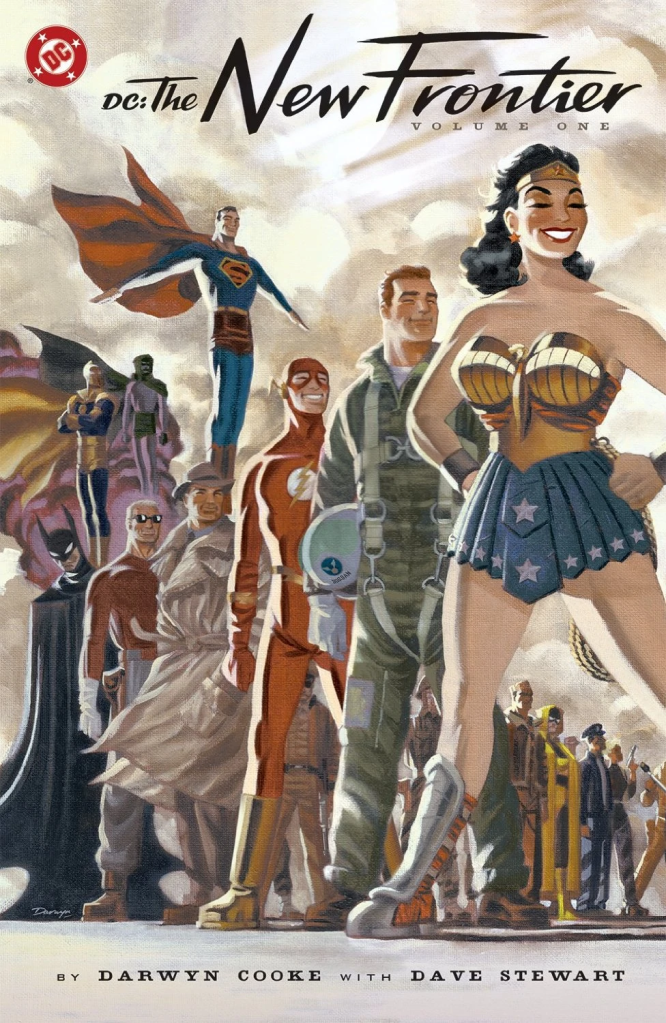
DC: The New Frontier, vol. 1 – Darwyn Cookethe lyrics for this song are so universal that they could cover any kind of romance, so instead, I went for the time period; the late ’50s-early ’60s setting of The New Frontier is settled right in the same era.

Since this post consists entirely of songs, consider all of them to be today’s song.

That’s it for this week’s Sunday Songs! Have a wonderful rest of your day, and take care of yourselves!

Posted in Sunday Songs

Sunday Songs: 2/25/24

Happy Sunday, bibliophiles! I hope this week has treated you well.

Took me this long to get to a blue period…it didn’t happened until almost three months in the year, but of course it’s the one that ends up having Faith No More and Kermit the Frog in the same breath. Duality of Madeline.

Enjoy this week’s songs!

SUNDAY SONGS: 2/25/24

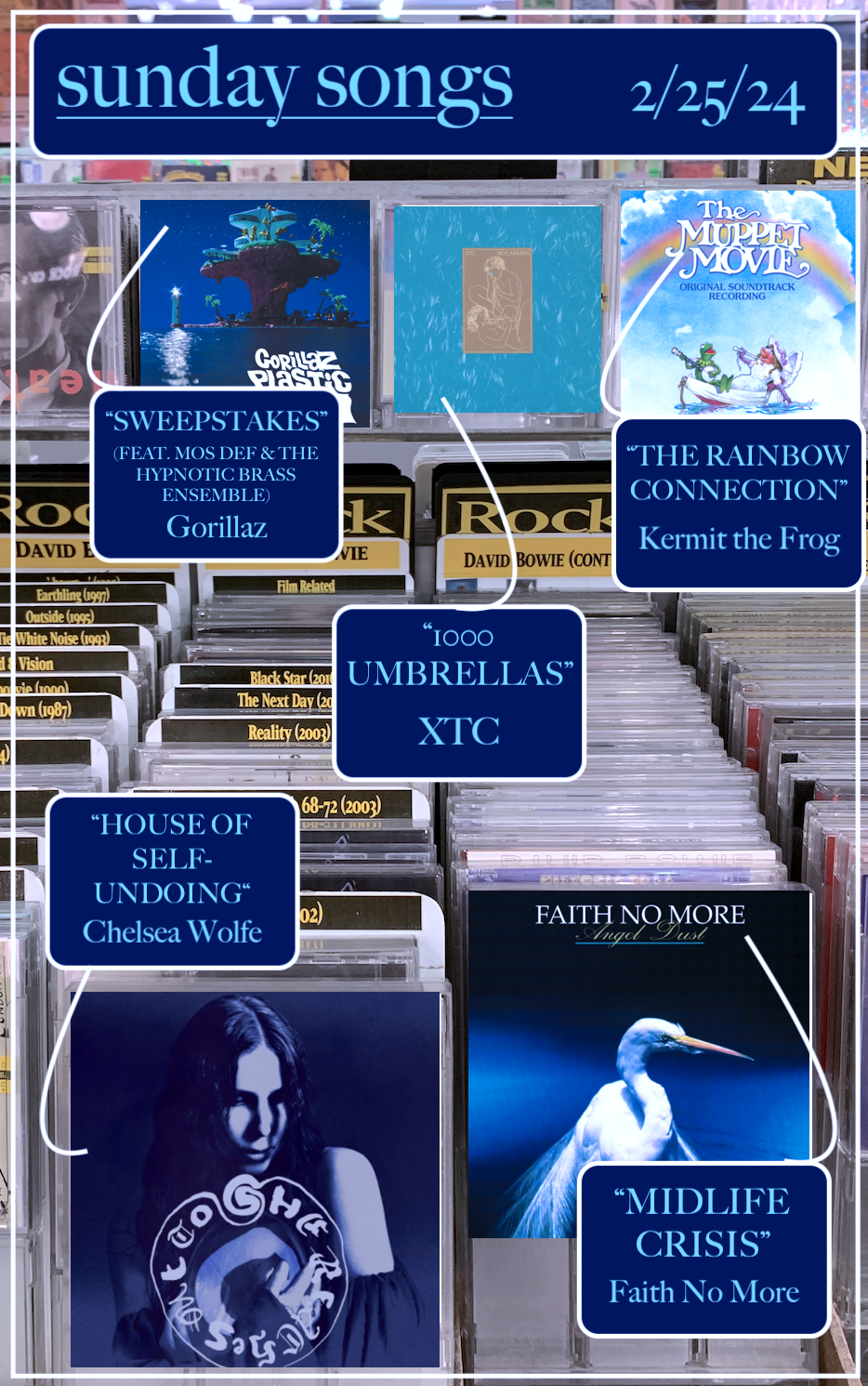
“House of Self-Undoing” – Chelsea Wolfe

In an outcome that should be surprising to no one, Chelsea Wolfe’s new record, She Reaches Out To She Reaches Out To She, absolutely rocks. Dare I say it might be one of her best albums in years? Birth of Violence was a solid album, but I remember it having some lulls, but then again, I haven’t listen to it since its release in 2019. I haven’t listened to her entire discography, but I’ve never met a Chelsea Wolfe album I didn’t like, but there are some that nudge their way past the others to the tidal wave of goth revelry that she’s come to be known for. I’ve meant to review at least a handful of the excellent singles that came out of this album, but I remember specifically that “Whispers In The Echo Chamber” came out at a time when I got unexpectedly swamped…when there were a bunch of fantastic blue songs I wanted to talk about. Oopsie. No time like the present, amirite?

In terms of themes, Wolfe always has something poetic up her sleeve, whether she’s making the skeleton of her album out of Jungian analysis or Tarot. They’re all deeply personal, but She Reaches feels more intimately so; here, she grapples with separation of all kinds: from past relationships, from present systems, and from future pathways that her life could lead her down. But as she’s draining the gore of all the past messiness out of her system, she’s burning bridges and building her new phoenix of a self out of the charred remains. Back to “Whispers In The Echo Chamber,” where she declares “this world was not designed for us,” (GO OFF QUEEN), whispering like a mysterious necromancer into the ear of the magic-oblivious king. The album finishes on “Dusk” and its promises of “Watch[ing] this empire as it burns and dissipates/Haunted, on fire, on the wings that we create” (GO OFFFFFFFFFFFFFFF), with Wolfe finally detaching herself from this lowly, undeserving mortal plane, and giving a final, cold look to us mortals before disintegrating into a cloud of vampire bats. God, I love her. With such stacked competition, I was grasping for a real favorite on the album, but I cannot stop coming back to “House of Self-Undoing.” After the triumphant declaration of independence in “Whispers,” the second track finds Wolfe extricating herself from the turmoil that she sought to free herself from (“In the house of self-undoing/I saw your face”). Most of the heavier tracks on She Reaches are heavy in the way of Wolfe’s goth dark theatricality and billowing cloaks, but “House of Self-Undoing” is pure rock, grinding with percussion like speeding footsteps and guitars smoother than hotel bedsheets. There’s a nervous, frantic energy that claws its way out of every note, just as Wolfe’s lyrics point to, as the boldness of separation gives way to the physicality of fleeing the old and bursting into the new. It’s the journey of clawing up through the earth and spitting out the dirt in your mouth, before your caked fingernails break the surface to find the sunlight.

…AND A BOOK TO GO WITH IT:

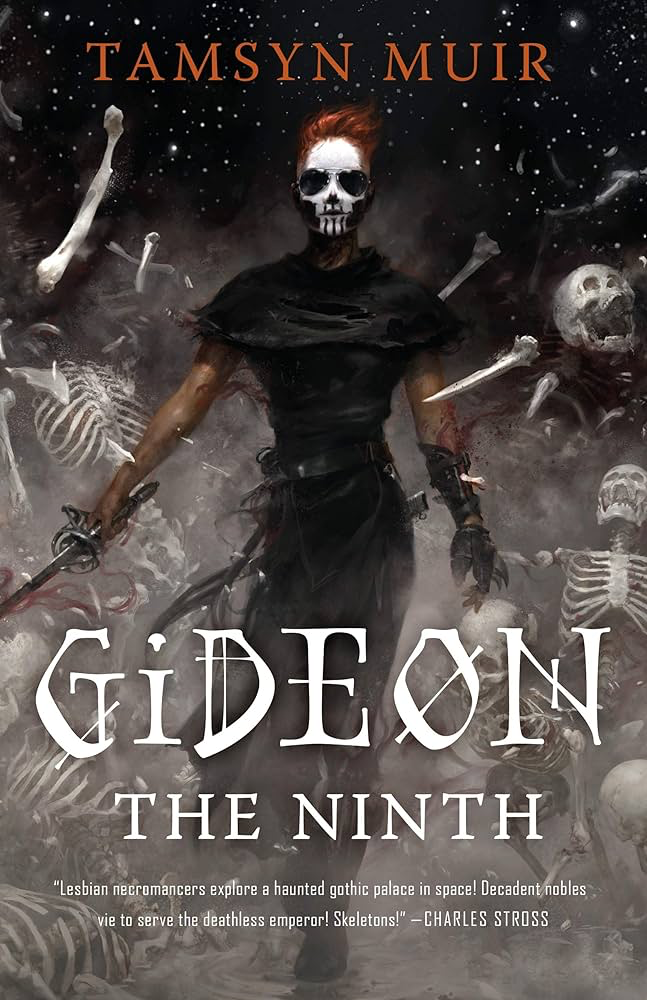
Gideon the Ninth (The Locked Tomb, #1) – Tamsyn Muiras much of a disappointment Harrow the Ninth turned out to be, I can’t deny how fun this book was. The general underworld/undead imagery is already fitting enough, but the themes of separation from a past life are the icing on the cake.

“Midlife Crisis” – Faith No More

The only proper way to describe “Midlife Crisis” is something along the lines of a feat of acrobatics. There’s so many twists, turns, and midair flips that this song executes one after the other that just makes you wonder about the mad scientist’s lab that it was surely cooked up in, because surely something bizarre and outside of human comprehension went into polishing this track to a shine. God, it just goes so hard.

Like Post, “Midlife Crisis,” over 30 years after its release, sounds like everything and nothing, but in this case, what a decent portion of the world of hard rock took from Mike Patton’s vocal acrobatics and spit out was…nu metal. Jesus. Urgh. I’ll dispense from my rant about why nu metal gets on my nerves since it’s more of a personal vendetta than one that has any kind of logical basis (listen, you try and do 50 push-ups at Tae Kwon Do while Linkin Park is blasting through the speakers), but they would’ve had nothing if not for this song. You can hear exactly where Korn got their Cookie Monster gibberish-vocals from on a single go-around on this song. What sets Mike Patton apart from them, however, is the range that he crams into these astounding four minutes; you’ve got said grimy Cookie Monster vocals, but just as quickly, he turns a corner into a soaring smoothness that makes you wonder if somebody slipped him the world’s most powerful cough drop in the time it took him to switch over. Going from those kinds of extremes so quickly and seemingly without breaking a sweat…if that’s not talent, I don’t know what is. And the scorn that this song radiates—”You’re perfect, yes, it’s true/But without me, you’re only you.” DAMN. Also, for the longest time, I thought that the line afterwards was “you’re menstruating hard” and not “your menstruating heart,” which…yeah, the actual line makes much more sense, but somehow, I feel like Patton seems like the type of guy to just say a line like “YOU’RE MENSTRUATING HARD 🗣🗣🗣🗣” with that delivery out of the blue. It was ’90s hard rock. Somehow, it works. Faith No More struck gold with this gift of a song, for sure.

…and I haven’t even gotten to the synth breakdown at 2:22. Good lord. Speaks for itself, really.

…AND A BOOK TO GO WITH IT:

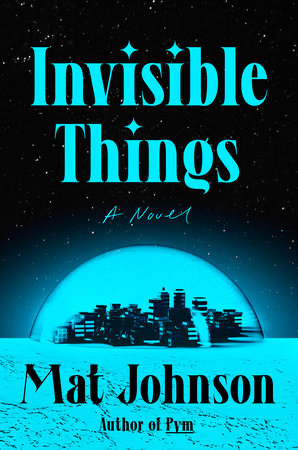
Invisible Things – Mat Johnson scorn, grime and polish in equal measure, and a bunch of alien abductees recreating Trump-era American in a bubble city on Europa. Time to party, right?

“Sweepstakes” (feat. Mos Def & The Hypnotic Brass Ensemble) – Gorillaz

I meant to talk more about Plastic Beach back in December when I first listened to it, but I can’t not come back to it, like most Gorillaz albums that I’ve listened to in full. (Maybe not Song Machine. Like…half of Song Machine. And not Cracker Island. Okay, the first three Gorillaz albums.) Besides being a sweeping showcase of both Albarn’s overflowing musical talent and the storytelling about a tech-invaded future and rampant consumerism, Plastic Beach, I think, is the first album that cemented their reputation for having a continuously stacked list of guest artists. I sincerely doubt that there will ever be another band to have Snoop Dogg, the surviving members of The Clash, and Lou Reed on the same album, and that’s not even because Lou Reed is no longer with us. The minute that I found out that there was a song that had both De La Soul and Gruff Rhys from Super Furry Animals on it, my soul just about left my body. There’s just no band quite like Gorillaz in the way they can unite and fuse genres and appeal to so many without selling their souls. I fully believe that Gorillaz are the people’s band. The arty people like them. The pretentious music nerds like them. The jocks like them. The alt people like them. I have a distinct memory of these two bros in my senior year chem class going through their Spotify, and then one of them declared “BRO, THIS IS OUR SONG,” and I fully expected something absolutely rancid, but no. It was “Dare.” DARE. Gorillaz is one of the few bands that have something for everybody, and not in the way that people say that they like “every genre” of music. Albarn’s many strengths in this part of his life hasn’t just been the varied influences that he brings to his music, but the way that he gives them a chance to have their say—Gorillaz is an amalgam of so many gems from so many places, and yet, save for some of their newer albums, hardly any of it doesn’t feel like them.

Onto “Sweepstakes.” This is one of the two Mos Def features on Plastic Beach (the other being “Stylo,” which was incredible live, by the way), and I’m frankly baffled that this one doesn’t get the attention that some of the other tracks on the album do. I’d risk it all to see this one live, especially if they actually bring out Mos Def and the Hypnotic Brass Ensemble onstage. In the video above, Mos Def comes out in…basically an Abraham Lincoln getup, if we count the beard, announcing prizes like a slick auctioneer, before launching into the truly charged, energy-pumped vibrations of this song. Energized is the only word you can ascribe to this song, really. From the beginning, the drum machine thrums a beat that hiccups so deliberately that you can’t help but start jumping. Bringing these three creative forces together on the song was the perfect recipe for a classic—Albarn’s penchant for engineering iconic dance beats, Mos Def’s commanding gravitas that he brings to each lyric, and the creeping, tidal force of the Brass Ensemble as the joyous, urgent burst of horns emerge from the curtain of synths like the chestburster clawing its way out of Kane’s body. It’s a song that begs to be heard, meant to be blasted down the streets in waves of confetti and marching feet—and that’s not just because of the brass that commands the latter half of the song. And for a song about mindless consumerism, exploitation and the duping of the working class by the rich (“‘Who’s the winner?’ Said the dealer/Every player, ‘Yeah, me'”), the infectious triumph is the most intentional thing about this track. Only fitting that The Hypnotic Brass Ensemble’s track “War” would be used for the Hunger Games movies only a few years after this. You’re a winner!

…AND A BOOK TO GO WITH IT:

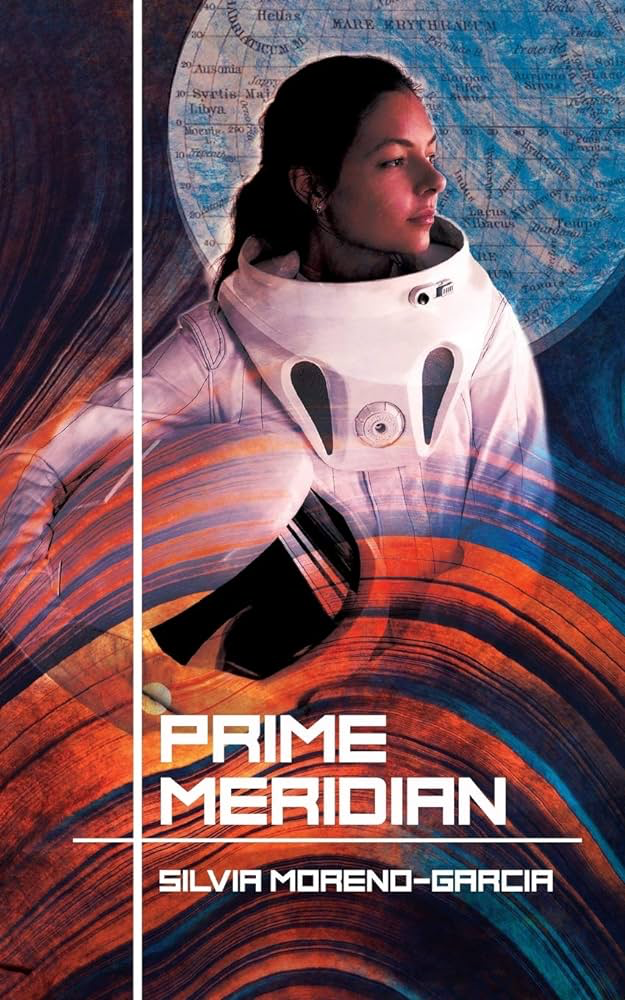
Prime Meridian – Silvia Moreno-Garciatelling the working class that they can do anything they set their heart to while the ruling class ignores them completely and colonizes Mars, anyone? Sound familiar?

…oh, wait. Damn.

“1000 Umbrellas” – XTC

Guess I just can’t stop listening to XTC, huh? In case you were wondering (because you totally were, I’m sure), “The Ballad of Peter Pumpkinhead” continues to have me in an unbreakable chokehold, but this one is good competition.

’60s inspiration can be found in almost any XTC song you can pull out of a jar, even if you ignore The Dukes of Stratosphear, which were just them under another name marketed as a “lost find” of the ’60s (and then ended up outselling any of their XTC records…ouch). For me, “1000 Umbrellas” immediately screams The Beatles, specifically in 1967—somewhere between Sgt. Pepper and Magical Mystery Tour. It’s pure theatre; even if the album, Skylarking, wasn’t a vague concept album, it practically begs for some kind of dramatic performance. Can’t you just imagine a scene of an aerial view of a bunch of pedestrians holding umbrellas in the rain, and Andy Partridge right smack in the middle of them, lamenting the loss of love as the rain pours down on him? Maybe the umbrellas morph into those pastel, spinning teacup rides as Patridge sings “And one million teacups/I bet couldn’t hold all the wet/That fell out of my eyes/When you fell out with me?” I particularly love how the orchestral arrangements seem to rise and fall, tilting just barely out of neatness and into delirium as Partridge wails, stumbling right along with the beleaguered strings section. On the heels of “Ballet for a Rainy Day,” the rain turns from the kiss of spring to cold, damp misery (a word that he frequently drags out like a ridiculed prisoner in medieval times) and like the swells of the orchestra, Partridge moans and wails like an actor trudging across the stage, the spotlight following him as he holds his broken umbrella against the downpour. I swear that this song needs a broadway-style, “It’s Oh So Quiet” music video—the imagery is jus too vivid for it to go without it.

And then we’re right back to having a jolly old time with “Season Cycle.” Duality of Skylarking.

…AND A BOOK TO GO WITH IT:

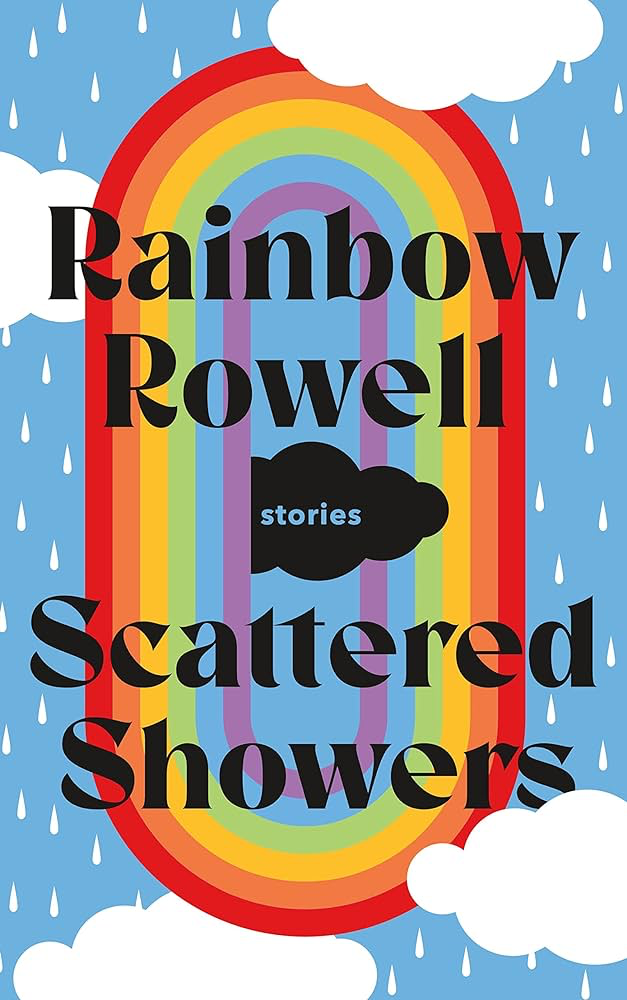
Scattered Showers – Rainbow Rowellmessy love and a chance of rain.

“The Rainbow Connection” – Kermit the Frog

Yeah. Well. If you need me to pay for your insurance following this whiplash, I’ll fork it over. But this is more of a palate-cleanser, right? Guess I ought to keep you on your toes. Or maybe you just need a bit of a break from Mike Patton growling about your menstruating heart. Take a breather. Find the rainbow connection.

Honestly, this song came on here solely since I’ve been thinking about The Muppets lately, and how glad I am that I had such an absurd and clever slice of positivity in my childhood. There seriously will never be another creator quite like Jim Henson, but it’s worth it to take his felt-covered gospel to heart: to keep imagination and joy close to your heart, always, whether or not you have an equally whimsical puppet on your hand.

…AND A BOOK TO GO WITH IT:

Any comforting book from your childhood – whatever made you feel good when you were younger should do the trick.

Since this post consists entirely of songs, consider all of them to be today’s song.

That’s it for this week’s Sunday Songs! Have a wonderful rest of your day, and take care of yourselves!

Posted in Book Review Tuesday, Books

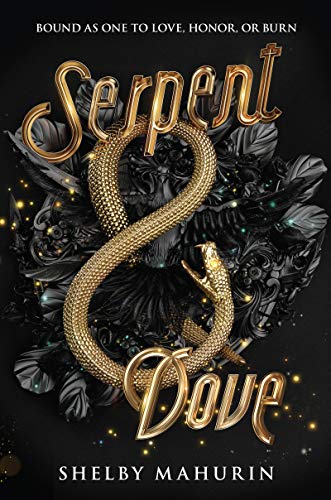
Book Review Tuesday (7/28/20)–Serpent & Dove

Happy Tuesday, bibliophiles!

I’ve had this one on my TBR for about a year and a half, and I finally got to read it last week after having it on hold for…a good month or so? It was one of the most hyped YA fantasies of last year, and though it wasn’t a perfect novel, I’d say that it mostly lived up to it!

Enjoy this week’s review!

Amazon.com: Serpent & Dove eBook: Mahurin, Shelby: Kindle Store

Serpent & Dove–Shelby Mahurin

In Cesarine, witches are feared. The only thing that may be feared more, however, are the Chasseurs–the Church’s personal witch-hunters who will stop at nothing to burn their prey at the stake.

Lou is on the run, struggling to keep her powers–and her infamous witch heritage–under wraps. But after being caught by the Chasseurs, she is presented with an ultimatum: be killed for her crimes, or marry Reid, the captain of the Chasseurs. Stuck with the second option, she is forced to live with him, but she soon realizes that, despite their backgrounds, she has feelings for him–and they might even be mutual.

The witch GIF - Find on GIFER

Alright, right off the bat, I noticed something…

Did anyone else find it funny that we have two characters named Lou and Reid that were in a romantic relationship?

Like…

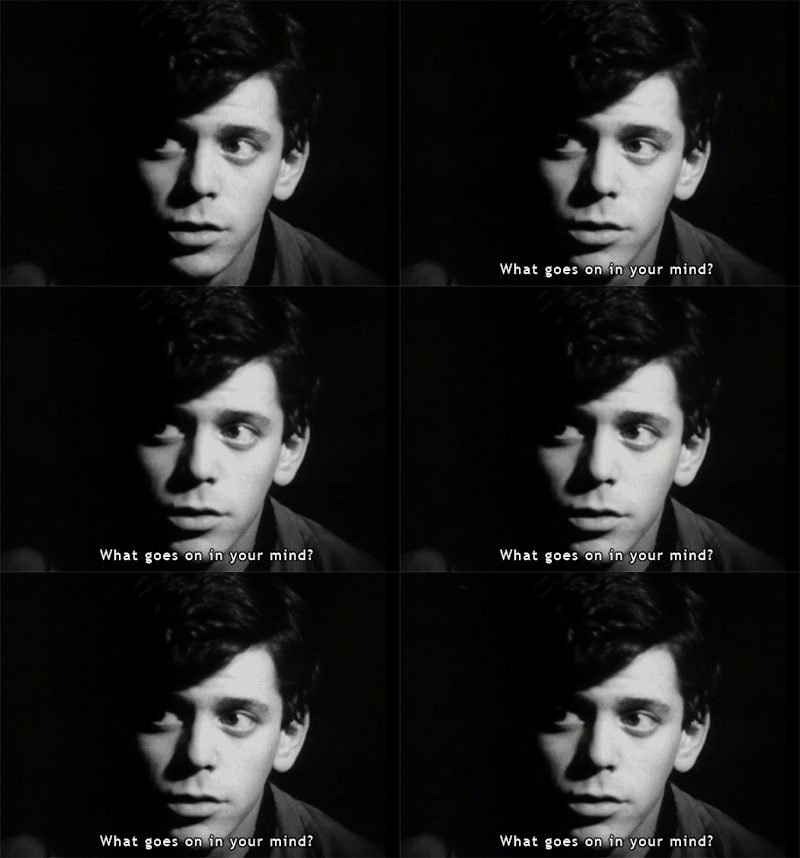
LOU REED?

lou reed gifs | Tumblr

[ahem] yeah, probably just me, carry on…

Overall, Serpent & Dove was a hysterical thrill ride of a fantasy novel! Not without its flaws, to be sure, but a whole lot of fun all the same.

My main issue with the novel was the world-building. At best, it felt…very messy. The setting is clearly inspired by 18th-19th century France, and uses tidbits of French in some of the dialogue. But even though it’s a fantasy world apart from our own, the predominant religion (and the religion pushed by the Chasseurs) is Christianity? Additionally, though some of the dialogue is hilarious, it often felt…a bit too 21st century? I mean, there’s no “yeet” or “vibin'” or anything, but mostly on Lou’s part, it didn’t mesh well with the historical-inspired setting. Reid’s dialogue felt appropriately stuffy, but that definitely threw off some of my suspension of disbelief.

But that’s where most of my issues end. I LOVED the characters–they were all completely over-the-top, but IN THE BEST WAY POSSIBLE. From the beginning, I loved Lou and Coco–they were both wonderfully sassy and spirited, and I loved their friendship dynamic. Reid has a lovely beginning to his character arc, and honestly? I love him just as much as the others, especially since he got over some of the prejudice he held in the first part of the novel. And since I’m a total sucker for enemies-to-lovers romances, I enjoyed every bit of Lou and Reid’s relationship. Hey, opposites attract.

And with the theme of witch-burning and whatnot, Serpent & Dove not only presents messages of shedding previous prejudice, but it’s morally grey as well. There’s a great depiction of sides that are most definitely blurred when it comes to morality–and neither one can be pinned as the “hero” or the “villain.” A lot of novels get this wrong, but this managed to portray it deftly.

All in all, a simultaneously thought-provoking and gut-busting fantasy novel, with a romance to die for and no shortage of witty banter. 3.75 stars, rounded up to 4!

Animated gif about loki gif avengers in Avengers bitch:)! by Miss ...

Serpent & Dove is the first in a trilogy, which continues with the forthcoming Blood & Honey, and an untitled third book.

Today’s song:

Okay but the point at 5:26 where Jeff Tweedy starts hitting those higher notes PERFECTLY

That’s it for this week’s Book Review Tuesday! Have a wonderful rest of your day, and take care of yourselves!