I’m back with a wrap-up, and we’ve officially passed the halfway mark of 2026…jeez. Currently reporting you within hours of melting into a puddle like the Wicked Witch of the West from this heat. I feel like I should start paying my swamp cooler for the labor it’s been putting in for the past month. Stay cool and hydrated, everybody!
Let’s begin, shall we?
GENERAL THOUGHTS:
I’m coming to you in a verydifferent place than I was while writing the March/April Wrap-Up, which is, for the most part, a welcome thing. Between my honors thesis, finals, and graduation, I had been constantly on for the most part. Sure, I had some time to squeeze in some fun and relaxation, but it was just go, go, go for most of the semester. But now I’ve got myself a nice Bachelor’s degree, and I’m spending it…not doing much. For right now, that’s exactly what I wanted.
I’ve spent most of the past few two reveling in the free time I have right now. I have several very disparate goals that I’ve set for the summer (exercise more, write one short story per month, and don’t buy any more yarn…send help, I’m drowning in yarn over here) that (knock on wood) I’ve managed to stay true to. But I love the routine I’ve set for myself. I love my college town, and I love taking walks to the local coffee shops, writing for an hour or two. (More often than not, those trips have also resulted in a trip to the record store, which has…[ahem] put a slight dent in my bank account. Maybe I need to put a ban on that too.) But ultimately, this summer has felt comfortably exploratory so far—I’m slowly trying new things, but they’ve all extended into cherished parts of my weekly routine.
So mostly, May and June have been about creativity. I’ve been more locked in than ever with my knitting, even if the results have been less than optimal. I’ve done so much more drawing and sketching. I’ve made more time to practice my guitar. I’ve written the most since I stopped my honors thesis. And I have more time to read than just before bed! Imagine that…
MAY READING WRAP-UP:
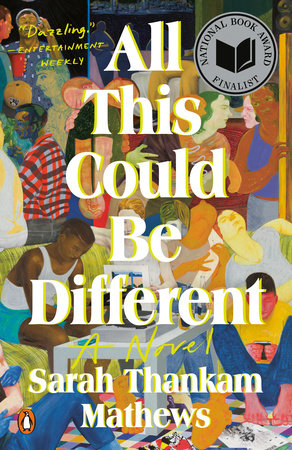
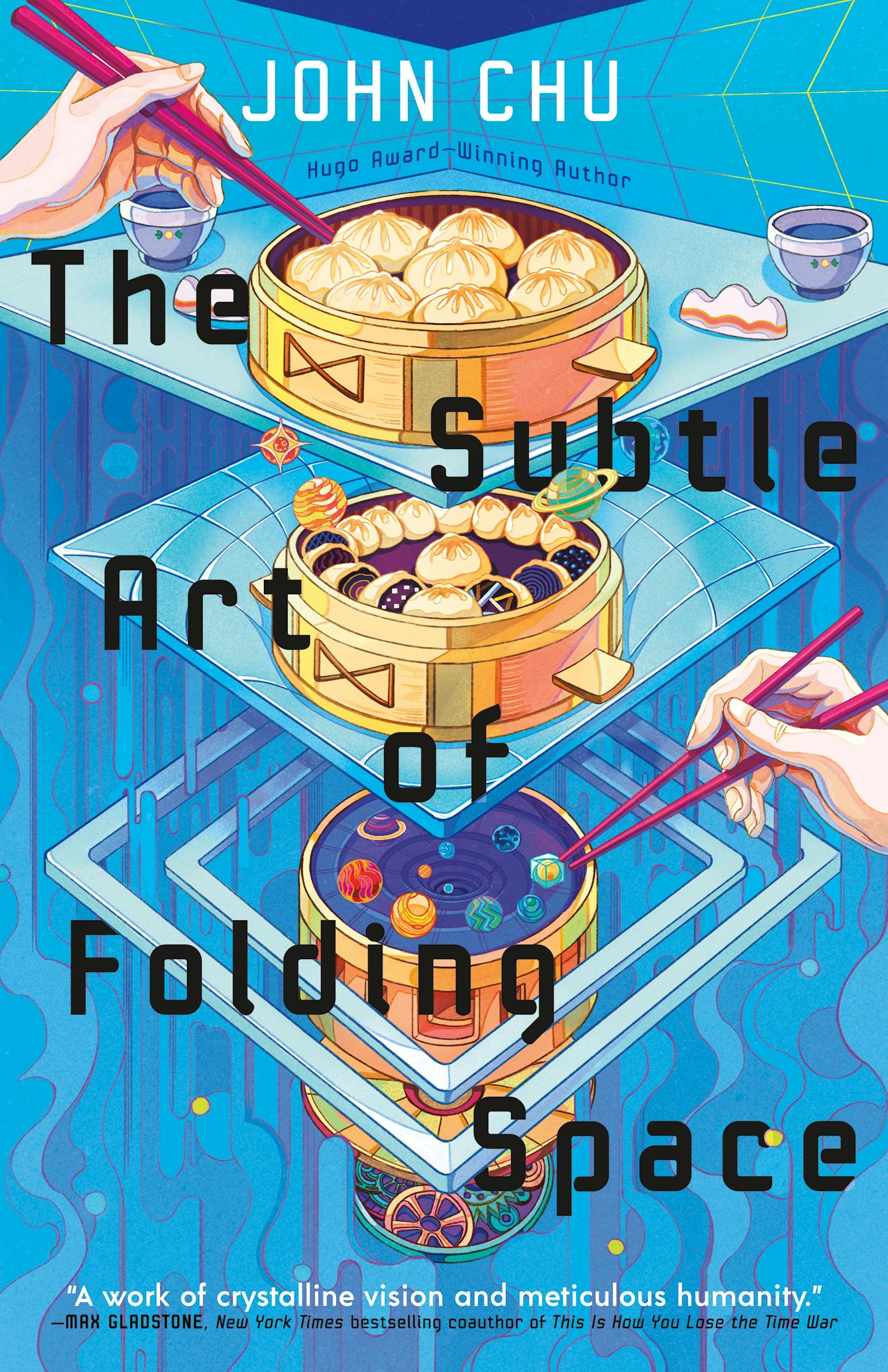
I read 13 books in May! It was really all over the place with a 5-star read and a DNF in the same month, but I read so many exciting books this month, both from new-to-me authors and familiar ones, focusing on AAPI authors for the Heritage Month.
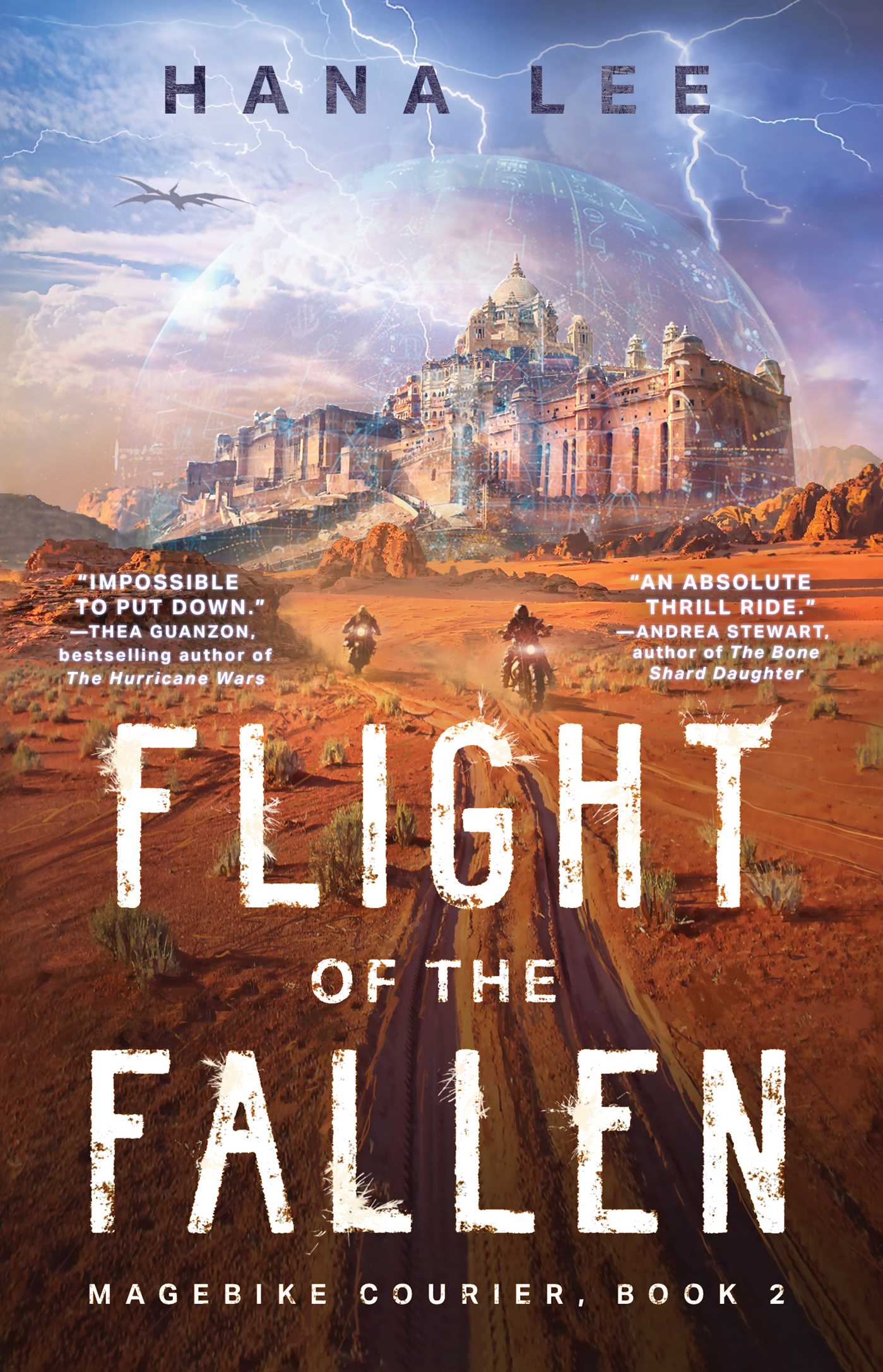
I read 14 books in June! It’s the most books I’ve read in a month in 2026, definitely owing to being freed up by summer. Though my ratings were once again all across the board, they trended towards positive ones—and I had some excellent reads from new and familiar queer authors for Pride Month!
Happy Sunday, bibliophiles! I hope this week has treated you well.
BEFORE I GET INTO IT: my longtime best friend has joined me in creating a book blog! It’s over on Wix, but it’s well worth migrating to another website to see her excellent book reviews. Go show Daisy’s Fables some love!!
This week: this one really feels like I’m a 12-year-old holding up my interests and talking at you about them, but that’s what blogs are for, right?
Sit down. I’m yapping about St. Vincent’s self-titled album again. You WILL listen. You subscribed to this blog, this is the price you pay…
I really haven’t changed since the age of 12, huh? It really makes pieces of my soul wither to see companies running with the joking “your inner child needs a little treat” expressions and turning the healing experience of becoming one with your inner child corporate. No, your inner child doesn’t need the new Starbucks drink, or whatever. That being said, preordering the 10th anniversary pressing of St. Vincent’s self-titled album was for me, but also my inner 12-year-old. As I sat there listening to it, I could feel her curled up inside of me like a chrysalis. I feel like I’m slowly becoming everything she wanted me to be.
But present me reveres St. Vincent as much as 12-year-old me did. Now that I’m older, it’s become one of those puzzle boxes of albums with new layers that reveal themselves every time you listen to it. (And that’s saying something, because I listened to it a concerning amount in middle school.) For me, this listen made me realize that this album is musically and thematically sound. There isn’t as much of a narrative to it as some of St. Vincent’s other albums, but throughout the many modern anxieties that she dishes out, there’s this through line of life being swallowed by the Internet; it’s meant to be more of a near-future thing, if her cult leader persona is anything to go by, but it rang true in 2014—and today. Clark wrote “Huey Newton” as a loose stream of consciousness song; the reference to the Black Panther Huey Newton is only relevant because of a vivid dream she’d had about him after taking a high dose of Ambien. For Clark, the lyrics are “tied to the next in a way that I don’t even understand…It has the feel of an extended Google search, and is set in the near future, after a long winter.” It is kind of a sonic doomscroll in the way that it pinballs from one disconnected image to the next. But you can see the intention of the artifice of the Internet that comes through in some of these images; “Fake knife, real catcher,” or “fuckless pawn sharks” evoke the ease of which people construct their identities even though there’s nothing behind the curtain. 12 years later, her image of a lawless internet populated by fakers and criminals has become even realer, with the blight of AI polluting what was already polluted in the first place. (For the record, I’m taking the line “Cowboys of Information” as the name for my purely hypothetical St. Vincent cover band.)
“Entombed in a shrine/Of zeroes and ones” remains one of the hardest lines on the album, if only in delivery alone. “Huey Newton” switches from a more restrained, dreamy piece of indie synth-pop before launching a salvo of guitar shrapnel in your face at the 2:37 mark. Every line is spit as her signature guitars dissolve into glitch-like fuzz. It all sounds distinctly pixelated, aggressive in its assault, as though the false veil of the digital world is being torn apart by a virus before your eyes. The beauty of St. Vincent to me is that the layers on “Huey Newton” are present on every song—everything has digitized tree rings hewn into it, every one revealing something about the vibrant tapestry of this album’s dystopian, digital world.
…AND A BOOK TO GO WITH IT:
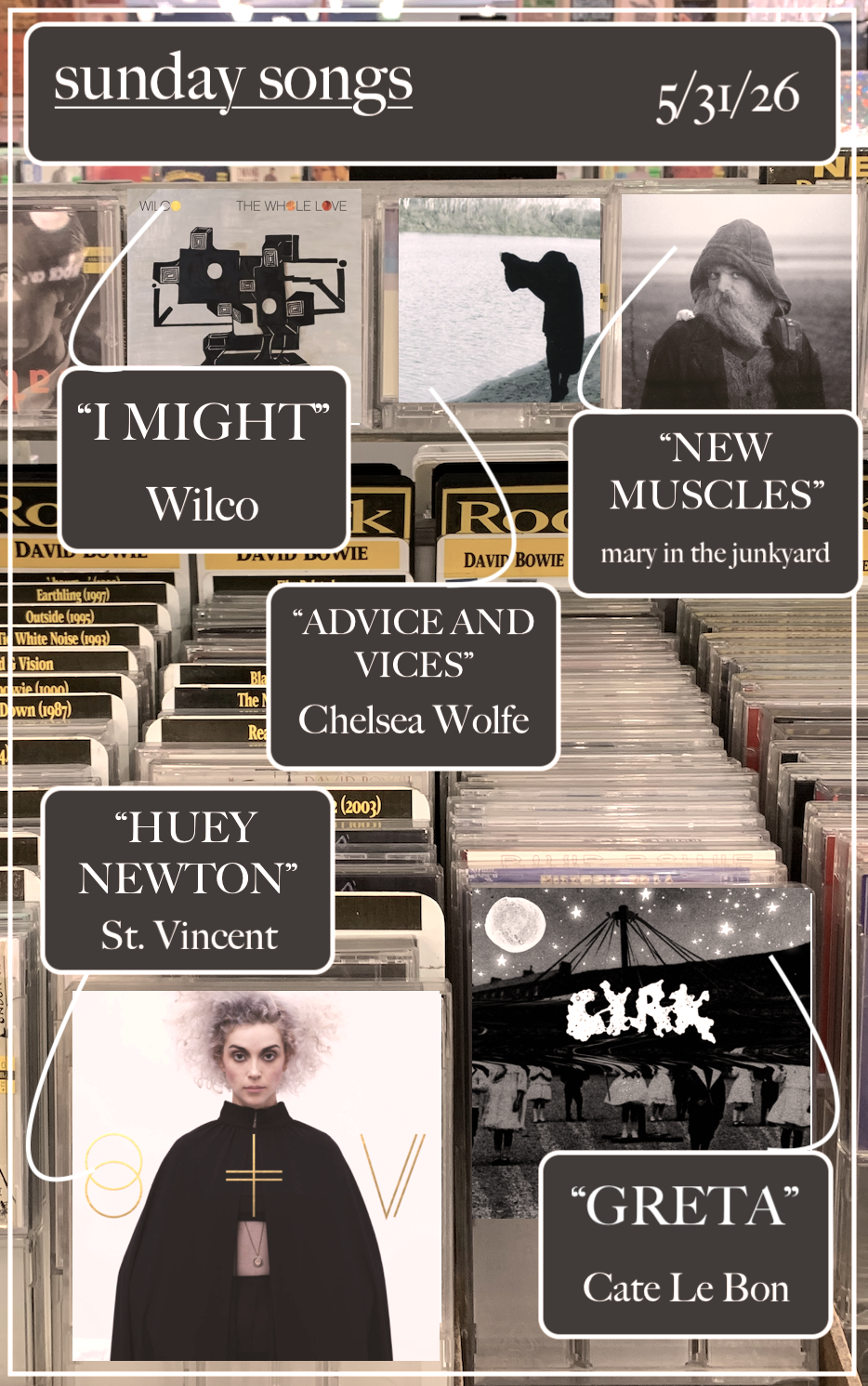
Machinehood – S.B. Divya – “Entombed in a shrine of zeros and ones, you know/You know/Oh, with fatherless features/You motherless creatures/You know…”
Genuinely baffling how one person can be this talented. Sure, there are weaker spots in her catalogue, but I don’t think there’s such a thing as a bad Cate Le Bon song. I’ve just listened to CYRK, her second album, and it’s just as inventive as some of her later work, though quite different in sound. Before she crafted atmospheres from saxophones and synths, she had a more traditionally indie rock sound, but not without the unique lyrical and vocal touches that she’s always carried. CYRK as a whole is playful (fitting for an album named for the Polish word for “circus”), an adventurous branching-out into whatever struck Le Bon’s fancy. In spirit, it reminds me a lot of Björk’s early work, where she was just putting out feelers wherever she wanted, with only the intention to make daring music.
“Playful” doesn’t exactly describe “Greta” though. It’s one of the slower, more contemplative songs on the album; aside from the vaguely trumpet detour at the end, most of it relies on muted guitar and bass. For that reason, it came out of nowhere for me. What also came out of nowhere was how emotionally moving this track is; Le Bon softly sings of a subject with “eyes the size of lagoons/Dreaming wild” and whose baby days are “coiled up inside her like ribbons all tied.” It feels like she took a telescope and looked down at me as a child, my eyes turned skyward. There’s something about it that feels like a comforting lullaby, from the references to a child born in the stars to the slow rhythm, fit for gently rocking a cradle back and forth. It feels like an ode to every weird child who refused to let the weirdness get beaten out of them, no matter how hard the world tried. If I’d heard this as a kid, I feel like I would’ve found infinite solace in it, but now that I’m hearing it as an adult, it feels like a potent reminder to keep the child alive, to not let the ribbons of baby days get tangled or forgotten, and to remember that all of us are made of star stuff.
…AND A BOOK TO GO WITH IT:
Beautyland – Marie-Helene Bertino – “Observatories clocked you in the stars/They were holding you so dear/Greta, be good to yourself/You’ve always been here.”
The Whole Love does not get the love it deserves. Fully acknowledging that I have a fog of nostalgia surrounding my head whenever I talk about this album, this album is severely underrated. I think the problem with Wilco’s discography is that Yankee Hotel Foxtrot is such an obvious, career-defining best that it overshadows so much of the adventurous work that they’ve made in the decades since. And if we’re talking about adventurous, then we need to talk about The Whole Love, an unexpected buffet of Wilco’s classic alt-rock sound and explorations out into both the electronic and folk worlds. “Art of Almost” and “Sunloathe” really shouldn’t be on the same album in theory, but The Whole Love makes it happen.
This album was the first Wilco release I remember being…well, conscious for. I was in elementary school when it came out; I specifically remember my dad playing the album all the way through while driving to work and watching the Popeye crossover music video for “Dawned On Me” at the old studio where I took piano lessons. So even before I went through the whole album on my own, I’d already listened to the whole thing. “I Might” was one of the many songs on the album that remained in a nameless limbo in my memory as A Wilco Song That Certainly Exists, but I couldn’t put it to a concrete song. It sounds like your average Wilco song from the 2010’s, with its driving rock sound and cheery organs, but even though it’s not as full-throttle weird as “Art of Almost” (which comes right before it on the album…talk about whiiiiplaaaaash), it has the spirit of “let’s try everything, what’s the worst that could happen?” Jeff Tweedy’s lyrics are nonsensical and free-association (“Your sno-cone/And it’s piss and blood,” anyone?) and the chorus of “You won’t set the kids on fire/Oh, but I might” is…wild, obviously, but the more I listen to it, the more it feels like it’s a defiant statement of turning his past work—and people’s expectations of the band—upside down and destroying them. The Whole Love came out of its ashes, and to me, it’s still one of the most daring albums in their catalogue.
…AND A BOOK TO GO WITH IT:
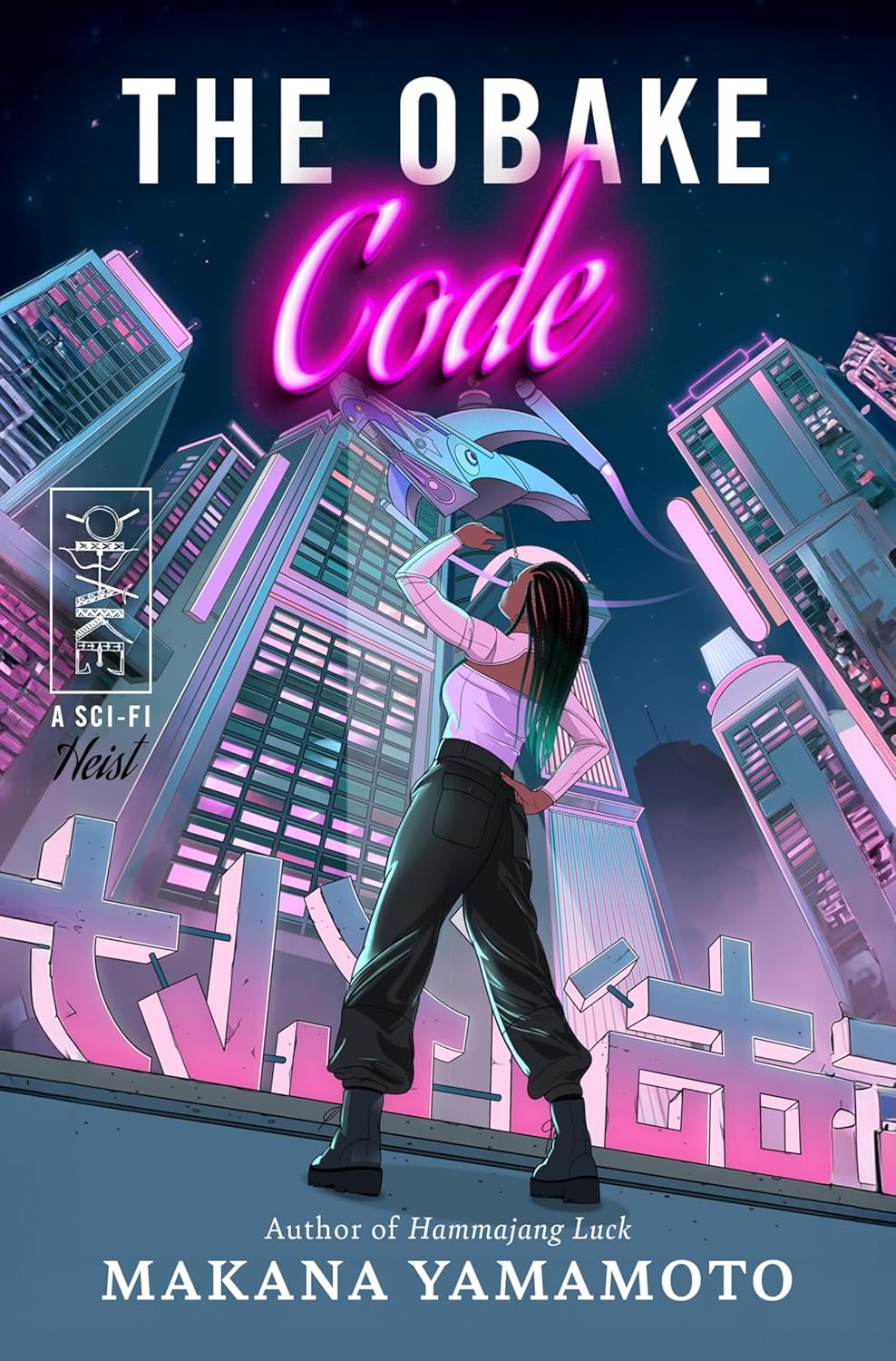
The Obake Code – Makana Yamamoto – “It’s in the cards, oh oh/’Get Well Soon – everybody’/Do all lies have a taste?/Let it go, I don’t know, oh…”
I’d forgotten about “Advice & Vices” since…at least high school, around the time I had my Chelsea Wolfe awakening proper and listened to The Grime and the Glow, her first album. Hearing a song like this brings up so many contradictions—I love it, but I simultaneously feel like it’s slightly distant from the music she’d become known for, and yet it feels so innately Chelsea Wolfe. It’s always been goth, but it’s not cloaked in quite the same foreboding atmosphere as much of her later work. The album is much more lo-fi, and yet you can already see the seeds of her signature style germinating; “Advice & Vices” feels like a more understated indie rock song, until you hear Wolfe’s muted ghostlike howls recorded at the very end of the song. Her voice is already strong here, and it’d only get stronger. But it’s like watching Wolfe fish in a frozen lake for what would become her sound; the ice is melting, and around it is what would become the iconic artist that I love today. She was always that good.
…AND A BOOK TO GO WITH IT:
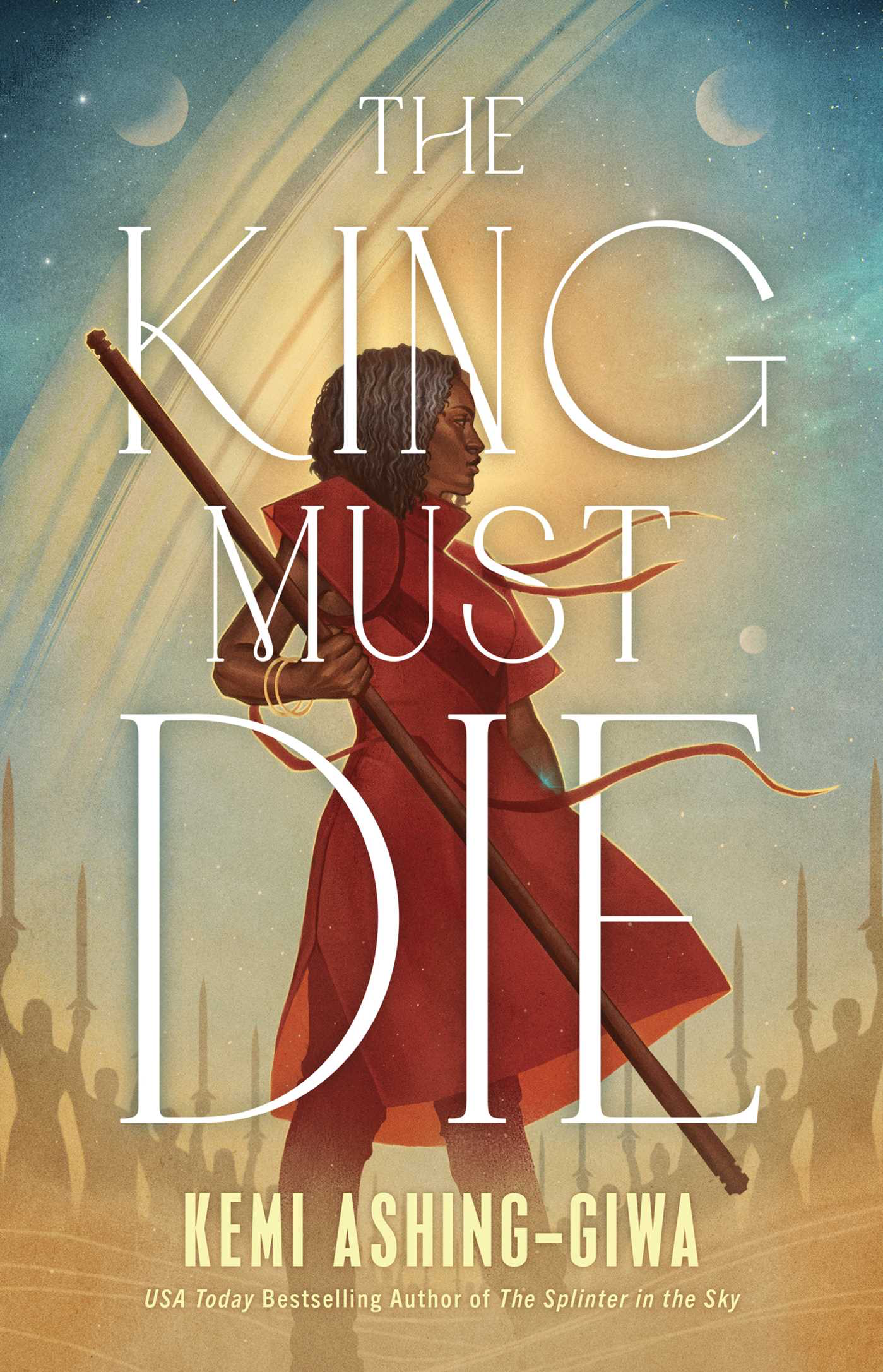
The King Must Die – Kemi Ashing-Giwa – “I never listen to my own best advice, no/Like one thing leads to another/Like one heart bleeds for another/And everybody wants what they can’t have…”
The cynical part of me is starting to think that mary in the junkyard (or their management) might’ve just been too good at picking singles. But the more optimistic part of me is starting to think that Role Model Hermit is going to be such a fun album. We’re at three singles now ahead of the album’s July release, and each one has been so different from the other—this is pretty much worlds apart from “Candelabra.” It’s also a very different song than I’ve expected from mary in the junkyard, and…I love it.
“New Muscles” is such an uplifting, confidence-boosting song. But from the more gloomy instrumentation, full of strings and percussion that sounds like somebody’s whacking a plastic bucket with a spoon, you wouldn’t think it. Yet it’s the perfect song for dusting yourself off and getting back on your feet. It’s all about emerging from a cocoon and embracing all of the possibilities of your new, stronger, and more healed self: “I’ve been getting up and getting out/Working out and working on myself/New muscles all over my back/New muscles all over my back.” It feels like the spiritual successor to Wilco’s “Kicking Television” in terms of empowering indie rock songs about self-improvement that totally avoid sounding corny. It has a playful element to it (“I will take you down with one finger”), but it balances the joking “they’ll never see the new me coming” attitude with a genuine, sparkling hope for the wonderful things that’ll happen once you start exercising these new muscles and putting that healing self to work. “New Muscles” came out at a very advantageous time in my life—I’ve been feeling some version of this song for a while, what with trying to claw my way out of a multitude of bad habits and becoming more independent in my life. It really does feel like emerging from a chrysalis, even though I know that I’ll probably be emerging from a number of chrysalises over the course of my life. For now, I’m taking this new self to better places. Here’s to flexing your new muscles.
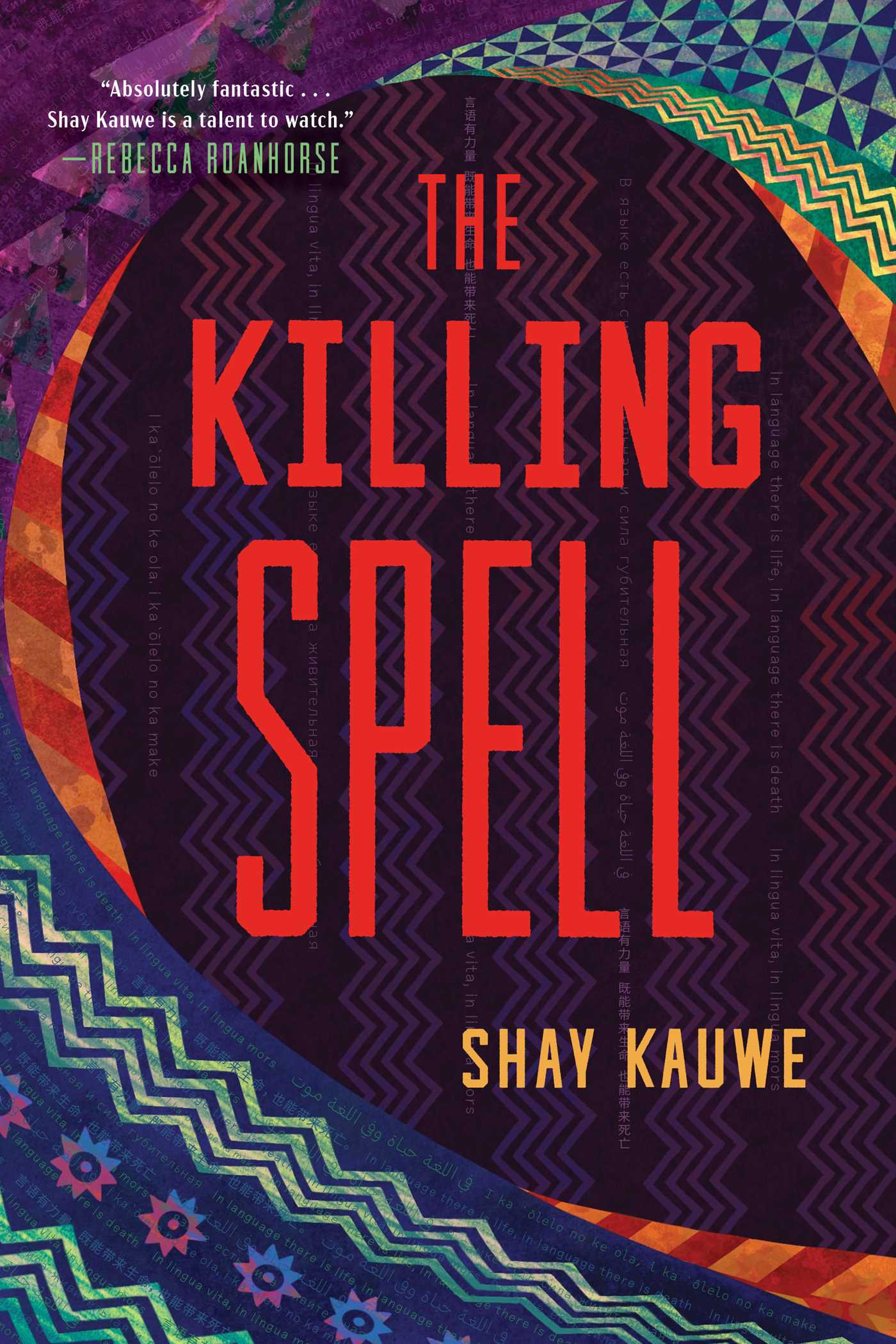
As I’ve been doing my AAPI books focus during AAPI Heritage Month over the years, I noticed that I’ve unintentionally neglected the PI part of the acronym, which is a real shame. Unfortunately, as with a lot of marginalized groups, it’s difficult to find books—especially genre fiction—by marginalized authors; in fact, The Killing Spell is billed as the first traditionally published adult fantasy by a Native Hawaiian author, which…insert the “disappointed, but not surprised” meme. It took until 2026 for this to happen? Christ.
Anyways, I was intrigued by that, and by the urban fantasy premise. In the end, The Killing Spell was a fun and ambitious fantasy debut.
200 years ago, a flood of unforeseen proportions changed the world forever. The Hawaiian Islands were submerged in the ocean, and the survivors found refuge on the coast of California. Kea Petrova lives in this Hawaiian Homestead in what remains of Los Angeles, honing her language-based magic. Discriminated against by the powers that be—both because of her heritage and her magic—she tries to keep her head down. But when a powerful politician is murdered by a killing spell connected to the Hawaiian language, Kea has a target on her back. Desperate to prove her innocence, she teams up with a corrupt politician to clear her name. But what they’ll uncover may shake the magical world of L.A. to its very foundations…
TW/CW: murder, violence, sexual harassment, racism, colonialism/imperialism themes
The Killing Spell is a great debut, but what stands out about it is that I can just feel how much fun Shay Kauwe had while writing it. Though it wasn’t without its flaws, I could feel that same sense of fun and adventure on every page of this novel. I guarantee that you’ll have a blast reading it!
The characters in The Killing Spell are also a standout for sure. Kea was such a compelling main character; she has that perfect combination of being flawed enough to seem real but likable enough to root for. She’s headstrong and stubborn more often than not (to be fair, it’s justified half the time), but she’s so determined and witty that it almost makes up for it. She had the perfect combination of traits to make all of her adventures instantly worth following. The other characters were differing degrees of fun and campy, which suited the classic murder mystery atmosphere. The only character that I didn’t like as much was Sora. He was a little too cliched for my liking, and as much as I love a good enemies-to-lovers arc, Kea and Sora lacked romantic chemistry to me. The romance subplot was just forced in general—thinking back to the story as a whole, it really didn’t enhance anything about it. But he’s the exception to the rule—Shay Kauwe’s characters were a joy to follow.
Despite The Killing Spell being set 200 years in the future, it checked off all of the boxes for a fun murder mystery. I think I just like genre fiction-mystery/thriller melds in general—they just present so many fun opportunities to use worldbuilding to make a compelling world and explain the structures of it by showing you what it means for things to go wrong. There’s so much here for the diehard fantasy fans, but I think if you’re a mystery reader who wants to get into fantasy, you should absolutely pick up The Killing Spell. The setting is modern enough for a lot of the classic murder mystery beats to happen, and with the right balance of seriousness and camp; you’ve got your mysterious poisonings, unlikely detective teams, and seducing people for clues in a dance hall, all wrapped up in a futuristic fantasy package. What was clear to me was that The Killing Spell was Kauwe’s love letter to both genres, and that passion was evident with every successive page.
Language-based magic was already a fascinating magic system for Shay Kauwe to explore, but it bolsters the novel’s themes, which were one of The Killing Spell‘s biggest strengths. Many of the characters (most prominently Kea) are Native Hawaiian, and there is so much discussion about sovereignty and land ownership, as well as the preservation of Indigenous cultures. But I think the language magic and the discussions of the “legitimacy” of languages was the strongest theme in the novel. Through this magic system, Kauwe starts some very cogent discussions about what languages that people and governments deems “important” in its often Eurocentric view, and the bias against languages that don’t have as many speakers; there’s also lots of very potent discussions about cultural pride and how it can be an act of resistance when the dominant, hegemonic cultures are bent on deeming it “lesser.” Kauwe’s pride in Native Hawaiian culture shone through in The Killing Spell, and from an outside perspective, I think these kinds of perspectives are so vital to fantasy as a genre.
Most of the elements above would’ve added up to a solid four stars for me. I had some minor nitpicks, but most of them aren’t very relevant. What is relevant, however, is the worldbuilding, which left a lot to be desired. Aside from the language-based magic, which was well-thought out and thematically strong, the worldbuilding got messy. The whole impetus for the emergence of magic was this cataclysmic flood, which somehow released this language magic into the world. How this happened just…isn’t explained. At all. There was a flood, the Hawaiian Islands sunk, and…magic appeared? I guess? And The Killing Spell happens 200 years after said flood. You’d think that there would be some sort of major societal change, right? Other than the vague system of magical mobs that rule L.A., we get no explanation as to how the world reorganized itself or how magic changed society at large. This is supposed to be 200 years in the future, but nothing would’ve changed if this was just an urban fantasy set today. Other than the Hawaiian Homestead plot, we don’t get any real consequences of how the world changed after the flood. And locations outside of America get mentioned, but what the hell happened to them? Come to think of it, what’s going on in America outside of L.A.? Ultimately, the foundation was there, but Kauwe didn’t expand on it nearly enough for the worldbuilding to actually hold water.
All in all, an action-packed debut rife with magic, mystery, and intrigue. 3.75 stars!
The Killing Spell is Shay Kauwe’s debut novel, and a standalone.
Today’s song:
ANOTHER BANGER CATE LE BON ALBUM IN THE BOOKS! cyrk is excellent, and this song makes me emotional out of nowhere…
That’s it for this week’s Book Review Tuesday! Have a wonderful rest of your day, and take care of yourselves!
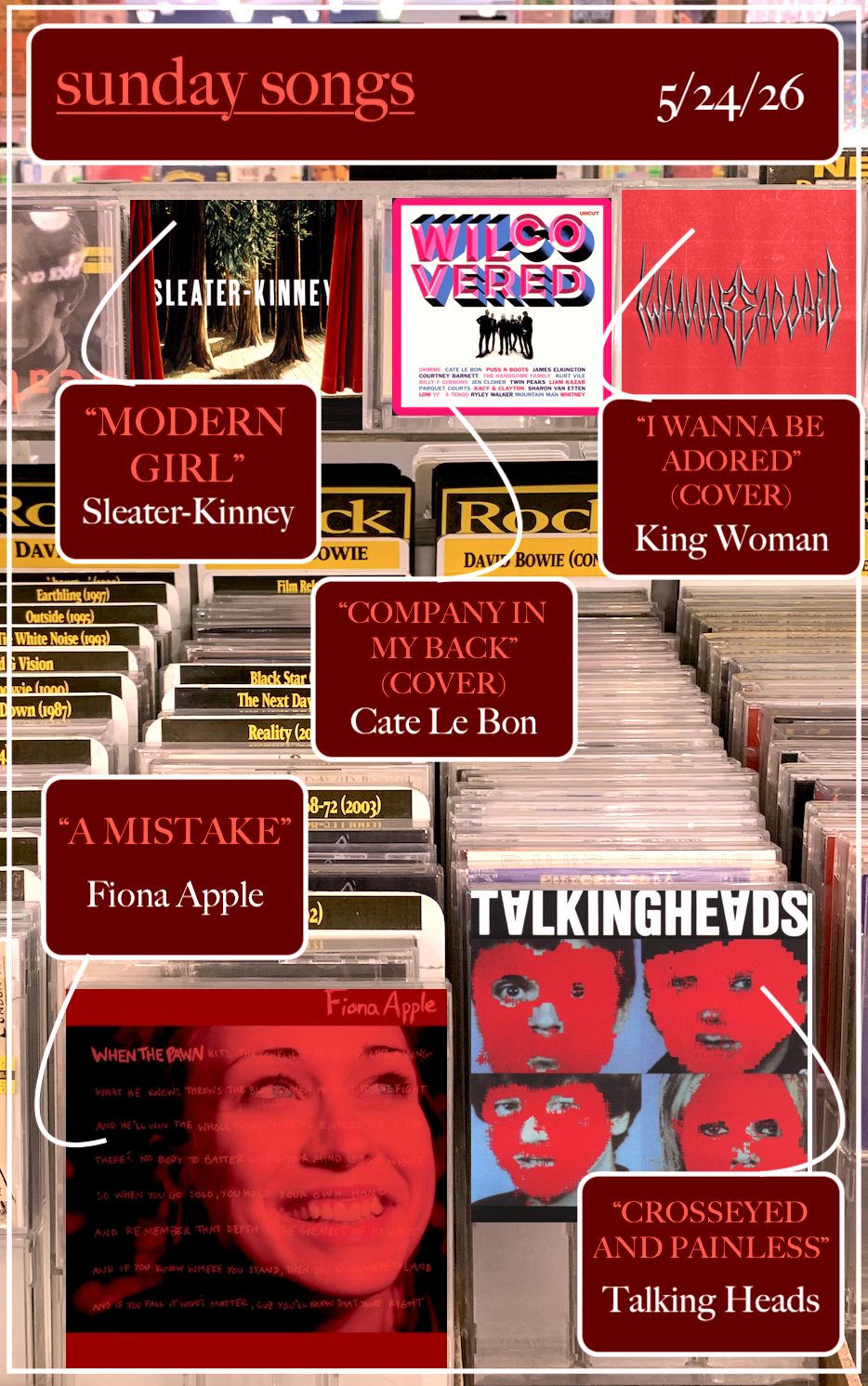
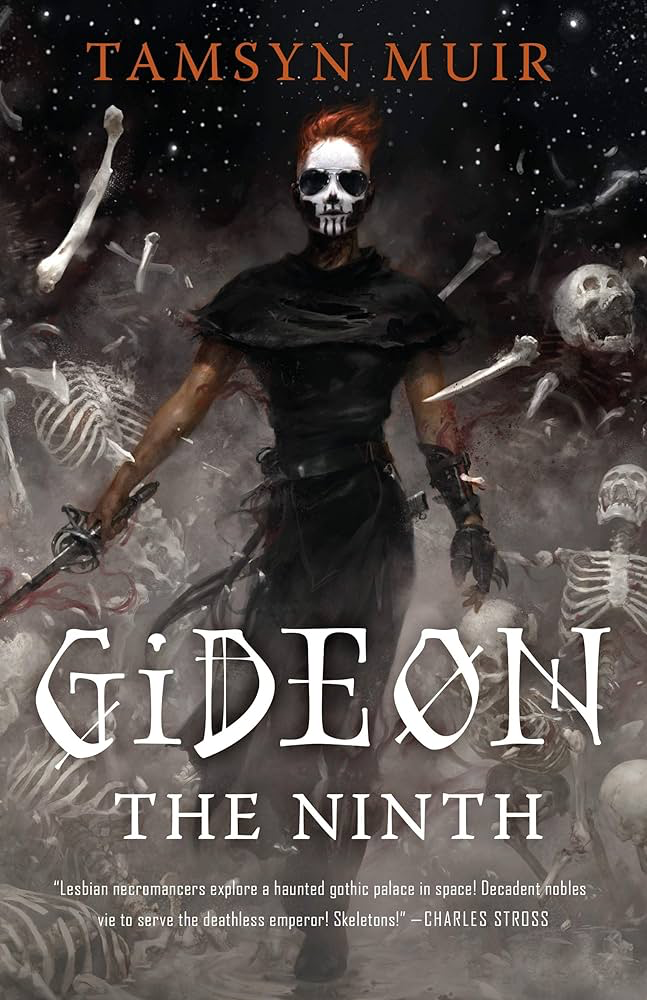
If we live long enough under the patriarchy, most of us women have the urge to permanently destroy something at least once in their lives. Once is generous, honestly…have you read the news lately? For Fiona Apple, who had been heavily scrutinized under the public eye and lambasted by music critics in the years leading up to When the Pawn…, the urge must’ve been constant. That’s why “A Mistake” feels so genuine. It’s a slinky, trip-hoppy track about breaking free of society’s expectation of a “good girl” and deliberately wrecking things, fully cognizant of the consequences but not caring in the slightest: “And when the day is done and I look back/And the fact is I had fun/Fumbling around/All the advice I shunned, and I ran/Where they told me not to run/But I sure had fun.” No matter if you act on it, Apple taps into that universal urge to raise hell after being boxed in and stymied by expectations of femininity (“I wanna make a mistake/Why can’t I make a mistake?”), societal control, and an urge to just rebel, even if you don’t know what against. And then there’s the element of deliberately going against good advice—Apple’s trail of destruction, by her own admission, isn’t entirely justified, but there’s that constant, biting urge to defy well-meaning advice anyway. After all, “And if you wanna make sense/Whatcha lookin’ at me for?/I’m no good at math.” It’s all wrapped up in a complex package, not always thoughtful, but from a messy, nonsensical place of rage with nowhere to go. Screeching guitars that give the effect of buzzing insects and a luscious synth loop to back it all up, creating a fully-fledged ode to giving into your most reckless urges.
…AND A BOOK TO GO WITH IT:
Gideon the Ninth – Tamsyn Muir – “So I’m gonna fuck it up again/I’m gonna do another detour/Unpave my path/And if you wanna make sense/Whatcha lookin’ at me for?/I’m no good at math…”
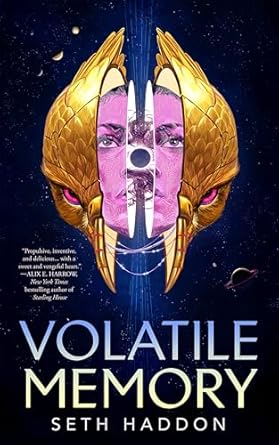
This might be the moment where I finally, finally get into Talking Heads. My brother recently listened to Remain In Light and introduced me to a handful of songs from it; apparently, he’d also fully Mandela-effected the idea that I owned a Remain In Light t-shirt, so maybe I should just listen to it. So much has been said about the album: the fusion of rock, funk, and early hip-hop, the influence of Afrobeats, the early electronic instrumentals. And all of that’s there. But you know what strikes me immediately?
Brian Eno. This just reeks of Eno. I mean, he obviously produced this album, but his rhythmic influence is so clear. “No One Receiving,” one of my favorite songs of his, is very Talking Heads, and he’d worked with the band on several albums at that point. But the frantic, anxious rhythms of “Crosseyed and Painless” and the chirping electronics are so Brian Eno. (He also provides backing vocals on the chorus, and Byrne’s certainly got some “King’s Lead Hat” in the delivery.) Maybe I just love it because of the Eno by proxy. But I feel like that would be a disservice to David Byrne and co., whose unique touch seems to have made Remain In Light so iconic. First off—oh my God, Tina Weymouth’s bass playing is nothing short of phenomenal. Once she finds the groove, she grabs ahold and never lets go. I think Byrne is what separates this from Eno in the end—though they share the same kind of angular energy, Byrne’s seamless shifts between desperate crooning in the chorus to frantic, anxious proto-rapping in the bridge: “Facts all come with points of view/Facts don’t do what I want them to/Facts just twist the truth around/Facts are living with their insides out.” That’s just nothing but David Byrne, as is this song’s spirit, in the end. Eno bolstered it, but the sweaty-palmed sprint through a state of alienation is nothing but Talking Heads.
…AND A BOOK TO GO WITH IT:
Volatile Memory – Seth Haddon – “Nothing there/No information left of any kind/Lifting my head/Looking for the danger signs…”
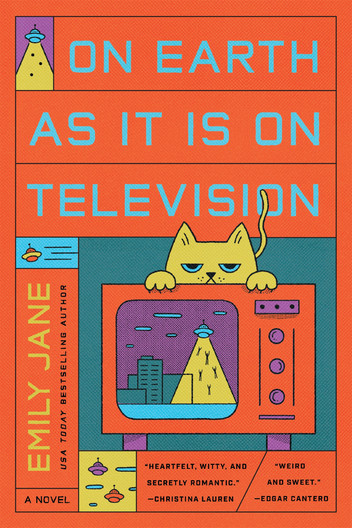
I hate to say it, but the strongest memory I have of hearing “Modern Girl” was hearing Sleater-Kinney play it live while co-headlining with Wilco about five years back. They did the classic “this is our big song, sing it with us!” thing and tried to get the crowd to sing the chorus…and only a handful of people did. Yeesh. Probably some of the largest-scale secondhand embarrassment I’ve ever felt. But they’re plenty successful, well-known, and presumably happy with their lives, so I can’t imagine that one (1) crowd in Colorado not singing along with them made much of a dent on their egos.
Nonetheless, “Modern Girl” is one of the songs I took away from that setlist all the way back in 2021. Despite the painful mix on the version I have (once it gets loud, it gets crunchier than a bass-boosted meme from 2018…somebody remaster this already, Jesus 😭), it has the same staying power. It’s an anthemic, gradually building story of mounting emptiness; every verse, happily sung until bitterly screamed, scrambles for meaning in a world of artifice. There’s a void (a donut hole, if you will) at the heart of “Modern Girl” that fruitlessly gets filled by consumerism, mass media, and hollow love. It’s a sort of universal story of filling the hole in your life with all the plastic that TV advertises, only to find that “My whole life/Looks like a picture of a sunny day”—beautiful on the surface, but really just a flimsy piece of film in the end. Where you end up is sprawled out, floundering in the drowning tide of distortion that gradually swallows Carrie Brownstein and Corin Tucker’s riffs and harmonicas. Sometimes, all you can do when faced with the emptiness at the heart of your life is shout at it—and shout Sleater-Kinney does.
…AND A BOOK TO GO WITH IT:
On Earth As It Is on Television – Emily Jane – “My baby loves me/I’m so angry/Anger makes me a modern girl/Took my money/I couldn’t buy nothin’/I’m sick of this brave new world…”
Somehow, while spreading the gospel of Cate Le Bon to my family, I completely missed this cover, which my brother thankfully found. Wilco Covered, a limited-edition album only available on CD (and another big thank you to my dad for digging it up on eBay), was a real mixed bag, but this cover is a staggeringly good fit for both Le Bon and Wilco. “Company In My Back” comes from A Ghost Is Born, and Jeff Tweedy’s signature lyricism was already at some of its delightfully weirdest; “I attack with love/Pure bug beauty/Curl my lips and crawl up to you” is still one of the more memorable Wilco openings if we’re going by lyrics alone. Add in the wording of the chorus (“Holy shit/There’s a company in my back”) and some dulcimer, and you’ve got one of the more left field early Wilco songs out there. The original’s clattering percussion, like bug’s legs against tile, are equally so. It’s natural that Le Bon covered it, given her weirdo proclivities. Her moody lilt and agitated instrumentals fit in so naturally in her interpretation of this song. (I especially love the way she sings “They are hissing radiator tunes.” Pure magic.) This was recorded in 2019, and Reward has its footprints all over it, with blasts of saxophone to replace the acoustic guitars of the guitar. It’s such an excellent tribute, turning “Company In My Back” almost inside out while lovingly preserving the offbeat-ness of the original without sacrificing her own artistry.
What makes a cover good to me is when it captures the song’s spirit; like I just talked about with Cate Le Bon’s take on “Company In My Back,” it messes around with the instrumentals but retains Jeff Tweedy’s soul beneath it. Though King Woman’s take on “I Wanna Be Adored” doesn’t reach those heights (and how could it, with the original basically defining a good portion of the alternative/indie rock sound of the ’90s?), I think it succeeds in the same way. While the Stone Roses’ original dips into a dreamy haze, King Woman’s cover basically sounds like Stone Roses by way of Chelsea Wolfe. It’s longer and more drawn-out, with sludgy guitars and a thick, foggy echo clouding everything. Kristina Esfandiari shouts the iconic chorus as though into the mouth of a canyon, pleading into a cold void, a stark contrast to the speed at which it’s sung in the original. It’s an exciting take on this song—one that clearly melds King Woman’s style into the original’s beating heart.
…AND A BOOK TO GO WITH IT:
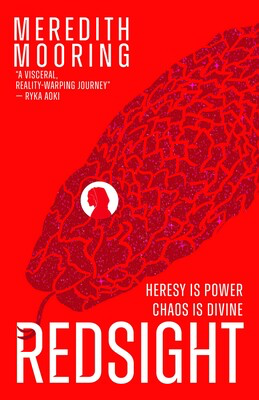
Redsight – Meredith Mooring – the sludgy, doomy atmosphere of this cover absolutely fits with this tale of dark magic in space.
BONUS: In addition to Programmes for Cools, Jim Noir has just released The DLC Tapes exclusively on Patreon—or you can buy it on his KoFi! It’s another album of polished releases from previous EPs and outtakes. Here’s the reworking of “Scene 2”:
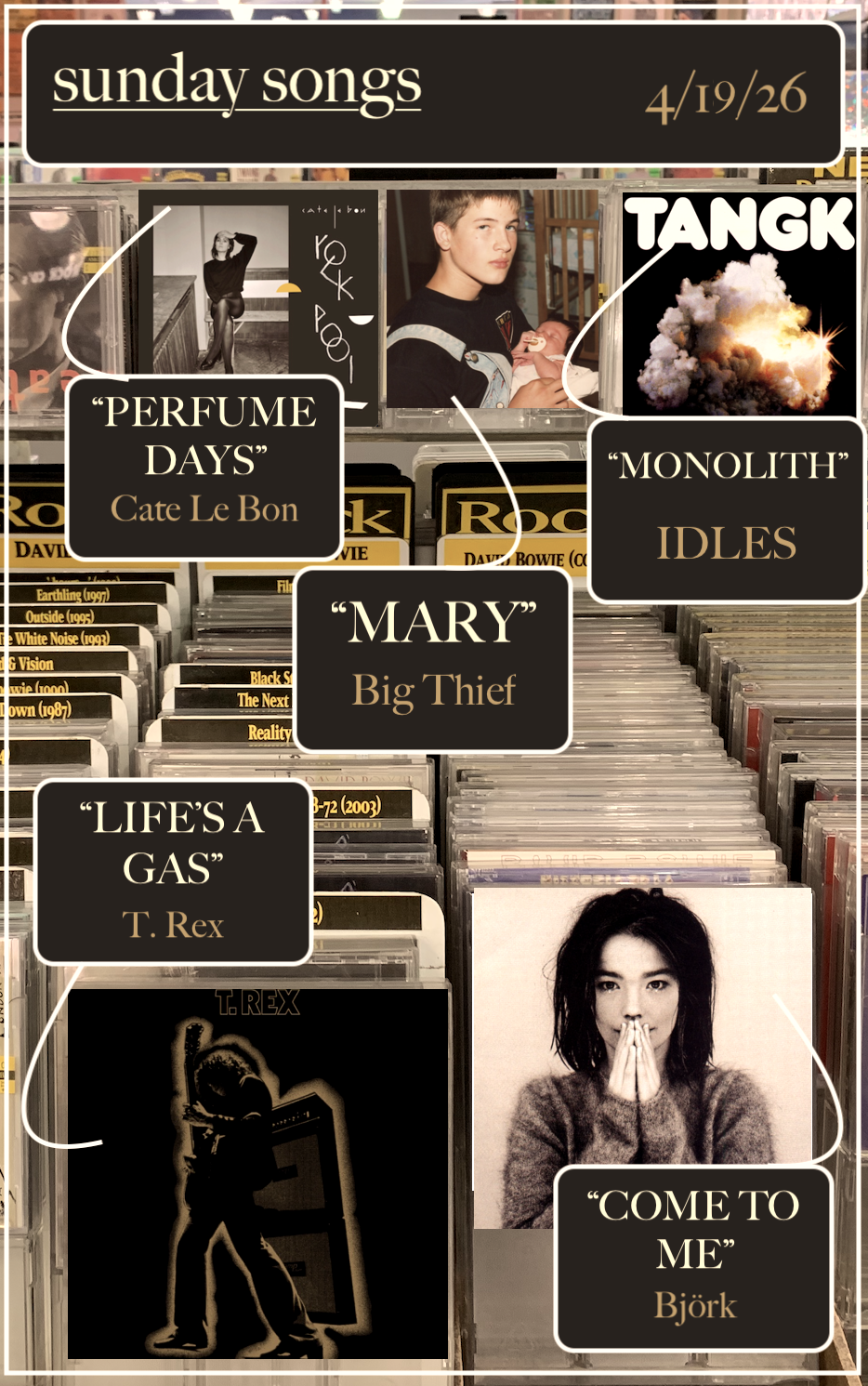
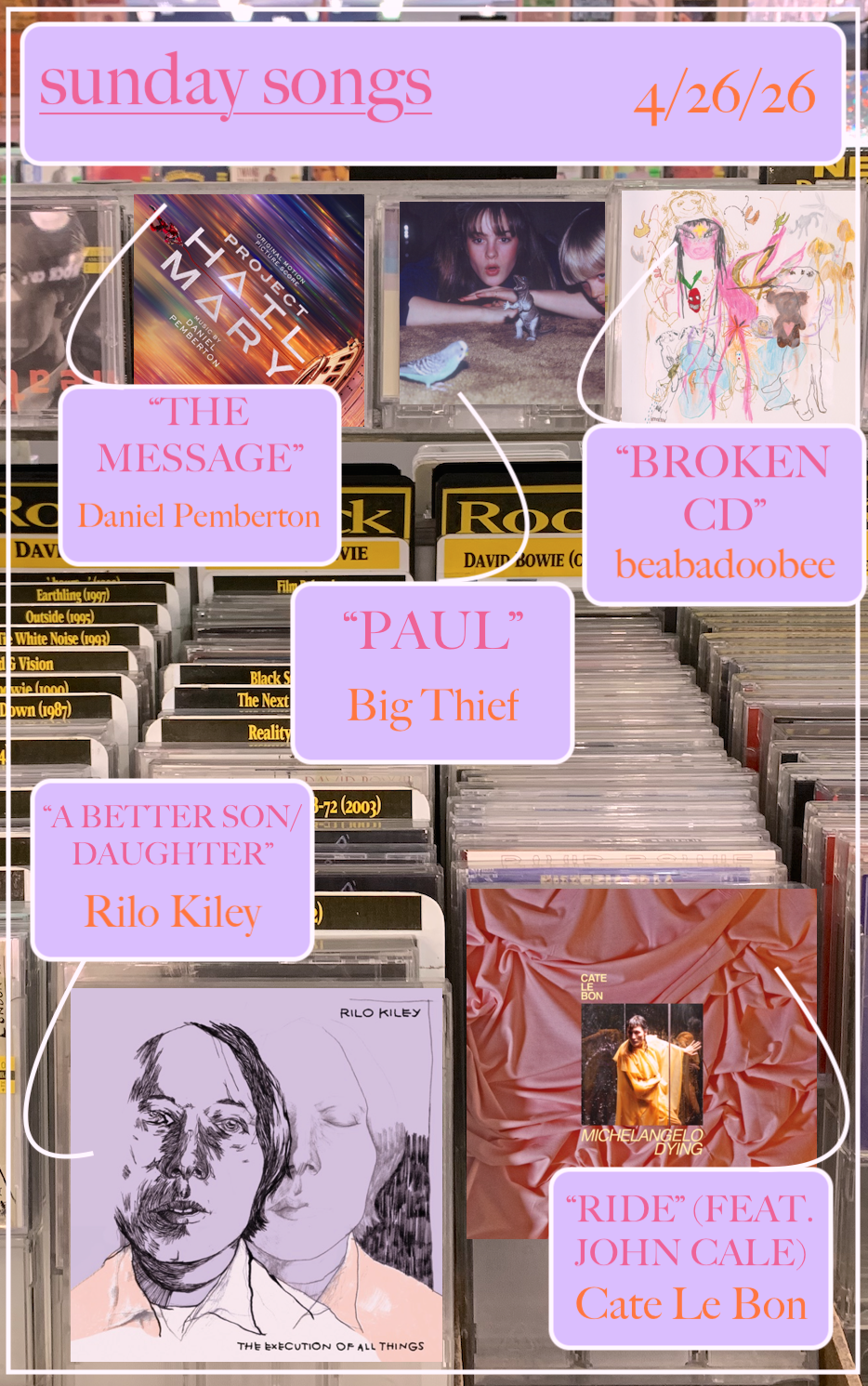
Since this post consists entirely of songs, consider all of them to be today’s song.
That’s it for this week’s Sunday Songs! Have a wonderful rest of your day, and take care of yourselves!
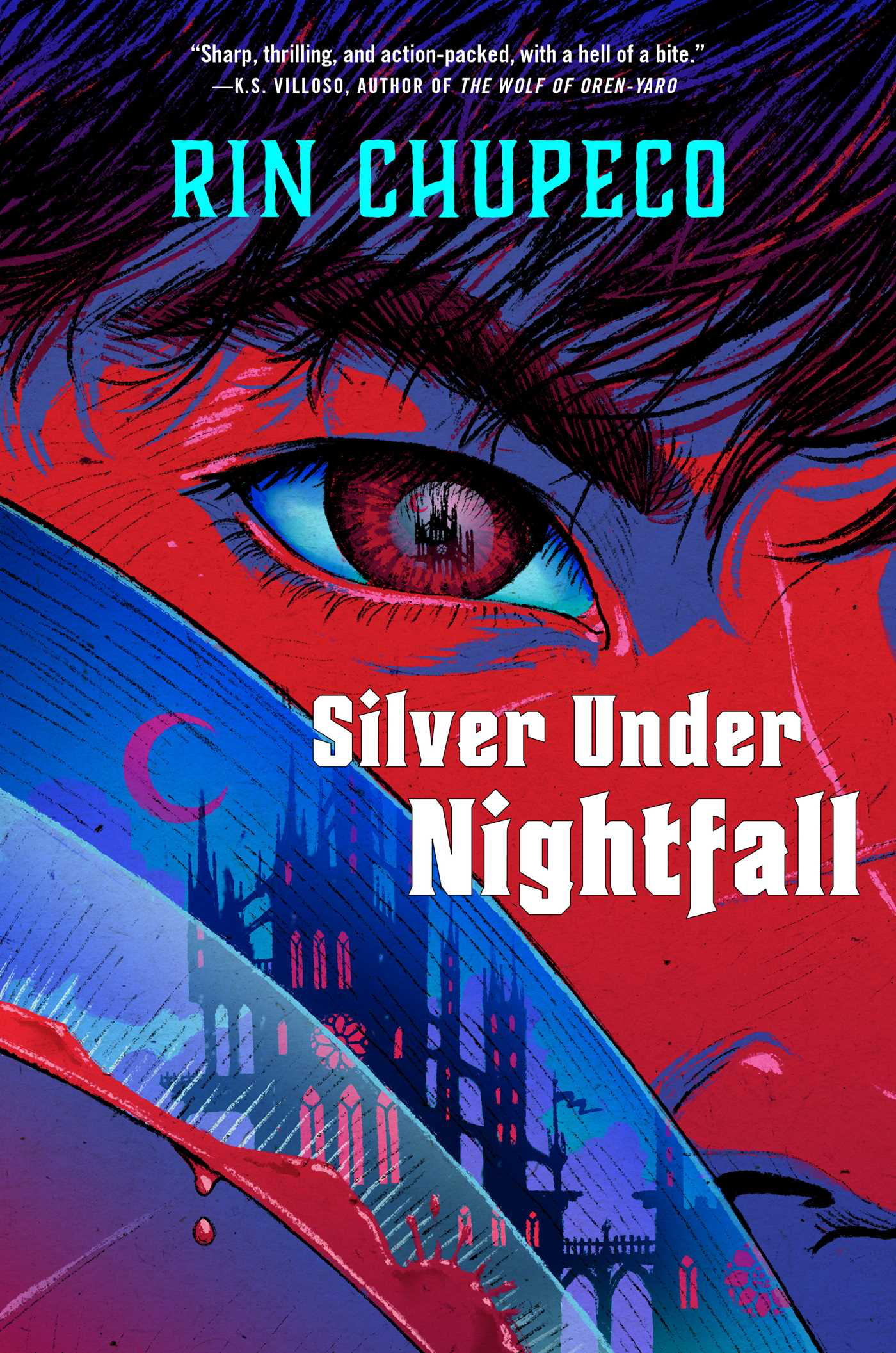
I read a handful of Rin Chupeco’s books in high school. I liked them for the most part, but I think I just lost interest eventually. Fast forward a few years, and I found out that they’d written another series for adults, and the premise hooked me. However, it seems like Chupeco’s writing doesn’t hold up now that I’m older. Silver Under Nightfall was just ridiculous in all the wrong ways.
Remington Prendergast is a Reaper—a highly-trained bounty hunter who specializes in the most dangerous quarry: vampires. Even with his talents, the rumors surrounding his possibly vampire heritage have alienated him from his colleagues. His father, the Duke of Valenbonne, has been desperate to make his powers so great that they overshadow the rumors, but he’s failed. But when strange, deadly vampires, the likes of which the kingdom has never seen, begin to spread across the kingdom, Remy’s only choice is to turn to a pair of enigmatic vampires to solve the case—and risk being drawn into their seductive web.
TW/CW: blood, gore, sexual content, loss of loved ones, pedophilia, vomit, emotional abuse
I haven’t read a Rin Chupeco book since I was about 17. I really should’ve kept it that way. Silver Under Nightfall sounded fun and gothic enough from the premise, but this novel was bordered on being a disaster. It genuinely boggles my mind that this book has such a positive average rating on both Goodreads andThe Storygraph. I endured 500 pages of this (probably should’ve DNF’d it), but now I have the evidence to hate from an educated stance…
Before I get into all my gripes, I’ll give Chupeco credit for the handful of things that they did well. Though it didn’t go in the direction I would’ve liked it to go, I loved the vampire murder mystery/thriller plot, and the genetically engineered monsters and subsequent fights were quite fun. There were moments where they nailed the gothic atmosphere, and there were a handful of solid quotes here and there. But unfortunately, these elements, despite being key to the premise, weren’t delivered on nearly enough, which is surprising, since Silver Under Nightfall is over 500 pages long. Unfortunately, most of that 500 pages is a poorly-written mess.
The last book of Chupeco’s that I read was The Ever Cruel Kingdom, which I honestly forgot about completely, other than the vague sensation of it being entertaining, but ultimately finishing it just to finish it. Not a great endorsement, I know. But even at that age, I had the sense that it felt overwritten, that there were random metaphors tripping over themselves. Unfortunately, that quality increased tenfold in Silver Under Nightfall. To Chupeco’s credit, their writing has some fun moments of being campy and gothic. In the end, they were just trying way too hard to be gothic. This resulted in so many sentences with nonsensical structure and metaphors that went on far longer than they humanly should have. At the worst points, the writing was so deliberately obtuse that I could barely get any sense of the setting or world beyond it. (Worldbuilding? Who is she?) It was just dense and unwieldy, and did very little to enhance the atmosphere.
Speaking of trying too hard, Chupeco’s dialogue was the worst victim of the above prose problem. It was terrible. All of the characters oscillated between talking like 15-year-old edgelords and fictional Victorian nobles, even though they’re all meant to be adults. The Victorian noble bit was painfully overwritten, carrying over the same problem of Chupeco’s floundering attempt at making Silver Under Nightfall gothic; again, a lot of the dialogue was stuffy at best, grammatically nonsensical at worst. On the other end of the spectrum, you have characters like Remy, who Chupeco spends 500 pages desperately trying to convince you that he’s funny.
Below is an actual quote from the book:
“…I’ve never infected anyone, if you don’t count my dry wit—”
Oh my God, free me from this prison. 90% of the humor in Silver Under Nightfall is 2017 Tumblr humor partially filtered through quasi-historical nobleman speak; like the specially-engineered vampire-creatures in the novel, it’s an unholy abomination that shouldn’t exist. And Chupeco really, really, really wants you to think that it’s funny, so much so that it supersedes most other elements that are important in a novel, like…oh, worldbuilding? Character development? No, apparently what matters most is making sure that the reader knows, beyond all reasonable doubt, that your character has a dry sense of humor. And he doesn’t. He, like most of this book, is painfully unfunny.
This brings me to the characters. I think the fundamental problem was that Chupeco seemed hellbent on making them as likable as possible, which in the novel, translated to them having virtually no flaws. We’re beaten over the head with the prospect that Remy is a poor widdle baby and nobody likes him because people think his mommy was a vampire but he’s also SO TALENTED and SPECIAL and EDGY and COOL. Textually, we get very little evidence to support this, other than his overlong monologues and the treatment he gets from his father. No character development, no revelations that aren’t external—stuff just happens to him, and Chupeco just paints him like this sad, wet puppy that got left out in the rain. Show me more interactions between him and the other Reapers! Give me some actual internal reflection and genuine grappling with his identity at the very least, dammit! As for the others, there’s not much to say about them…which is to say that most of them had one character trait each. Malekh and Xioadan were sexy, the Duke was a Bad, Bad Guy, and there were…a few others? I guess? Most of them got taken care of in the bloodbath towards the end. Silver Under Nightfall was just a classic case of a main character that was unrealistically overpowered and emo, and then all of the others were just window dressing (or threesome fodder).
However, I think the fundamental problem with the characters in Silver Under Nightfall was that Chupeco refused to give them any nuance. Remy, for how much of an edgelord he was purported to be, was purely good. Malekh and Xioadan were the same way—they were completely pure, despite the “oooh the evil vampires are seducing me ooooh 😏🫦” plot. There was a revelation at the end that could’ve complicated the relationship between Malekh and Remy in a super interesting way, but Chupeco immediately shuts it down in favor of Malekh being completely pure. Of course, all of the bad guys are completely bad. I wouldn’t even let this kind of black and white writing slide in a YA novel. It was such a lazy, uninteresting way to write these characters, especially when the novel touts itself as having all of these morally gray characters. None of the specialest, most precious little guys can have any sort of nuance or depth, I guess.
All in all, a bloated mess of a vampire novel with unwieldy writing and even worse character work. I feel like I’ve been drained…by Colin Robinson, maybe. 2 stars.
Silver Under Nightfall is the first in the Silver Under Nightfall duology, which concluded with Court of Wanderers. Chupeco is also the author of the Bone Witch series (The Bone Witch, The Heart Forger, and The Shadowglass), the Never Tilting World series (The Never Tilting World and The Ever Cruel Kingdom), the A Hundred Names for Magic trilogy (An Unreliable Magic, Wicked As You Wish, and The World’s End), The Sacrifice, and several other novels for teens and adults.
Today’s song:
That’s it for this week’s Book Review Tuesday! Have a wonderful rest of your day, and take care of yourselves!
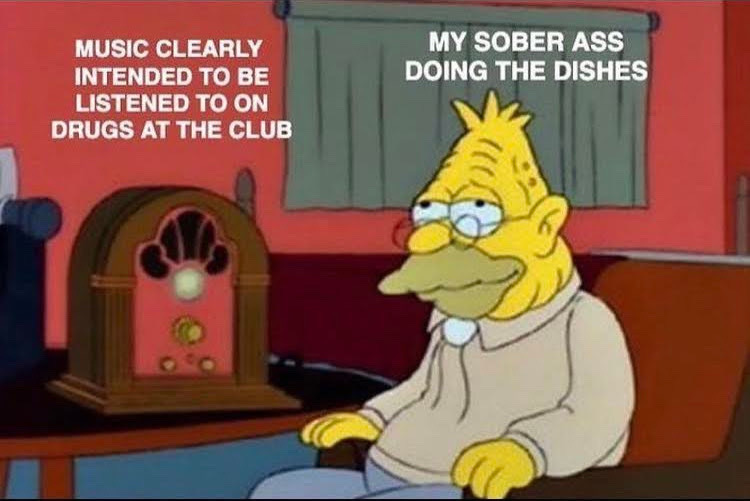
The above meme has been my experience with Earthling. You know what I’ve been doing while listening to Earthling? That’s right…knitting a scarf, otherwise motionless, while my brain is vibrating at a speed that could shatter glass. God, I love Bowie.
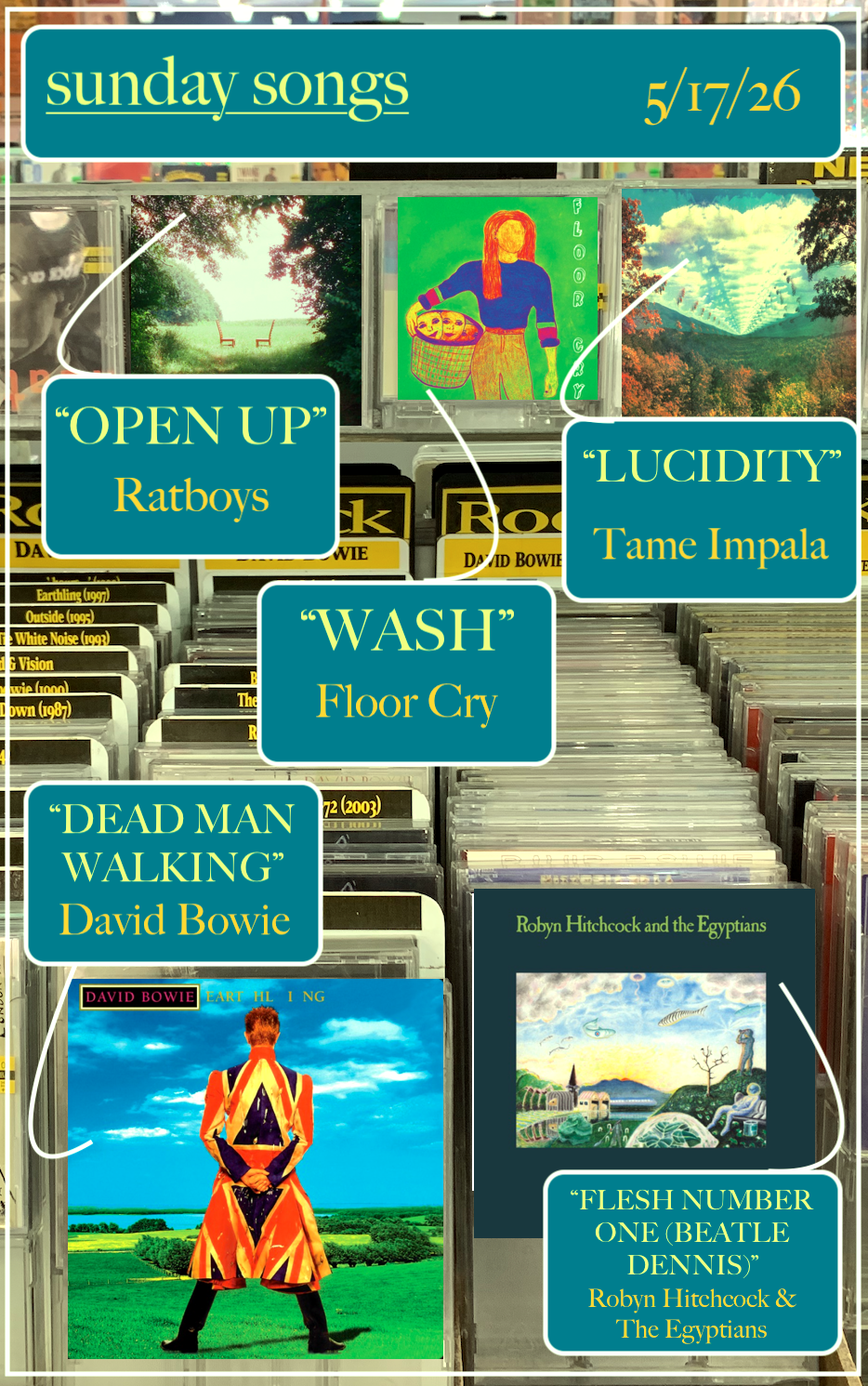
Earthling really was a shock to my system. Even as a seasoned Bowie fan, you know in the abstract how easily he was able to adapt to musical genres and eras without necessarily sacrificing his own personal core. But it’s albums like Earthling that make you remember this in earnest; he adapts to the growing electronic and dance subcultures of the ’90s amphibiously, as if it had been the air he’d been breathing all along. It’s all a mishmash of influences, and if you’re looking for a microcosm of it, look no further than the multitudes in “Dead Man Walking”; yes, it’s a meditation on aging on the surface, but to me, it’s a conversation between the past and the present, at heart; originally, it was meant to be a tribute to Susan Sarandon (who he’d worked with on The Hunger) and her film Dead Man Walking, but after watching a performance by Neil Young and Crazy Horse, it inspired Bowie to write about the contrast of these aging rock n’ roll legends and the vitality that the music still contained. The ties to the past increase tenfold with Jimmy Page’s connection—he offered the chord progression of “Dead Man Walking” to Bowie all the way back in the ’60s (he had already recycled it for multiple songs, namely “The Supermen”).
The frenetic, thrumming drum n’ bass of this track encapsulates how nonlinear this experience of time is—the past is constantly communicating with the present and future, creating a constant conversation, a kind of tangled subway map of years and people. Leave it to Bowie to create such a concise meditation in the form of pulsating dance—it feels like this song should soundtrack a high-speed speeder chase in some cyberpunk movie. And as if we hadn’t gotten enough twists, now throw in Mike Garson doing Aladdin Sane-esque jazz piano at the very end. Naturally. Up until the end, his manifesto was to keep everybody on their toes—including himself, it seems.
BONUS: here’s an excellent clip of Bowie performing an acoustic version of “Dead Man Walking” with Reeves Gabrels for Conan O’Brien:
…AND A BOOK TO GO WITH IT:
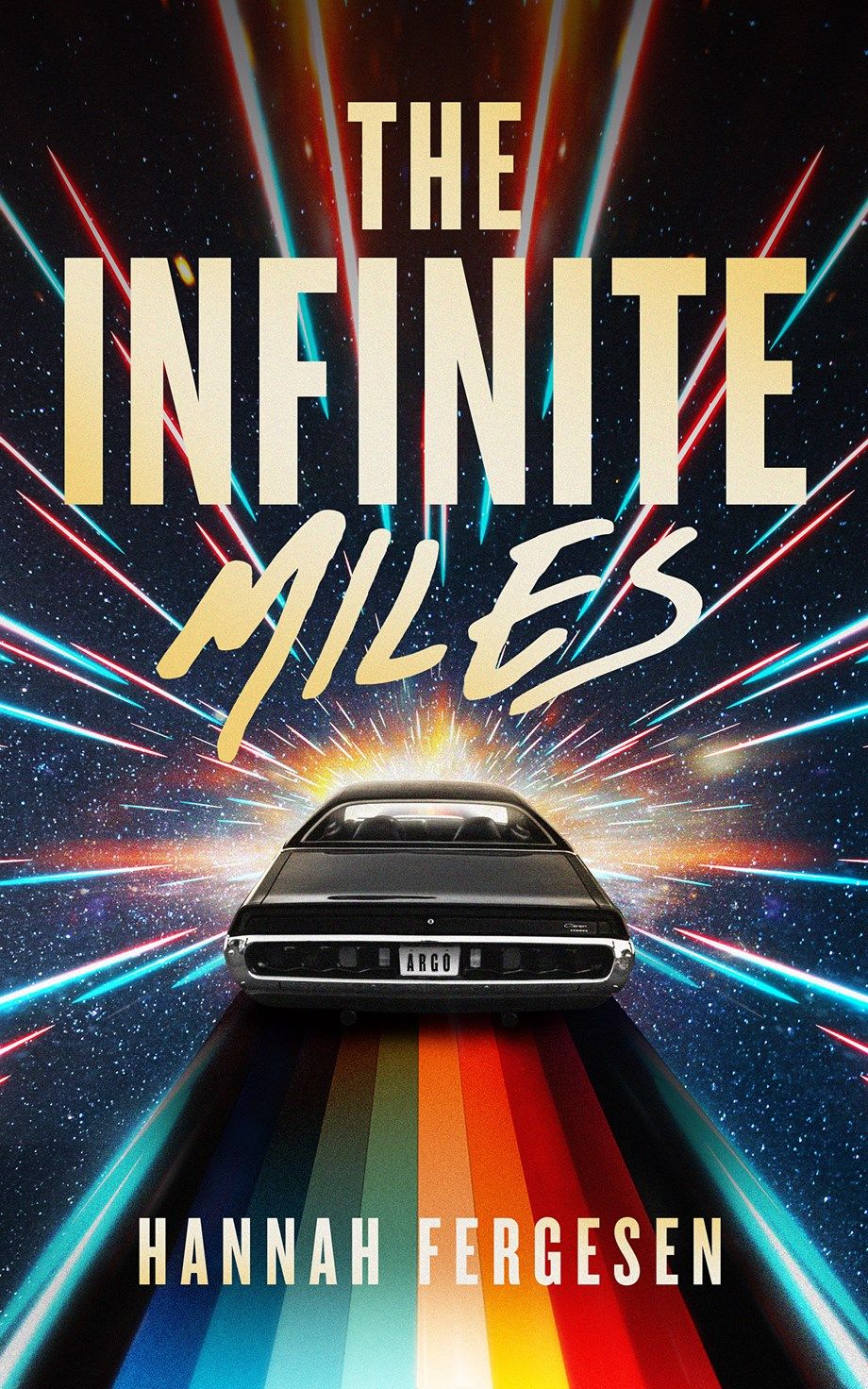
The Infinite Miles – Hannah Fergeson – “And I’m gone, gone, gone/(Gone, gone, gone spinning slack through reality)/Now I’m older than movies/(Dance my way, falling up through the years)/Let me dance away…”
A Globe of Frogs was, surprisingly, my first experience with listening to a Robyn Hitchcock project all the way through (not counting the Soft Boys); most of the tracks are excellent, but the average Robyn Hitchcock listening experience to me usually circles back around to “how does he manage to make this many good songs?” I swear that this is on the alternative-hit level of something like “Birds in Perspex” or “So You Think You’re In Love”—with how much indie airplay those two songs got, it’s baffling that “Flesh Number One (Beatle Dennis)” didn’t get it…okay, maybe it’s harder to sell a song with a title like that. But that doesn’t matter, right? Though it’s lyrically less weird than some of the other tracks on A Globe of Frogs, it distills Hitchcock’s undying love for the ’60s into a lovestruck, ’80s alternative track. It’s pure ’60s jangle all the way down (hence the Beatle in the title), breathlessly joyful; though that guitar brightness is straight-up Hitchcock, it made complete sense to hear that Peter Buck of R.E.M. also contributed his guitar skills to this album—it certainly has some of the same textures of Green, which came out around a year after A Globe of Frogs. It’s an encapsulation of the stages of love where you’re in so deep that nothing else matters—a plane could be crashing down in the studio, but we’re not there, are we? We’re in love, YIPPEE! God, it’s so delightful.
For the record, it’s an excellent duet. On A Globe of Frogs, he’s duetting with Glenn Tilbrook of Squeeze, but for most of the live shows I’ve seen recently, it’s been with his wife, Emma Swift. It was so sweet when I saw him back in February, and it’s just as sweet here:
It’s Wilco all the way down. I’ll just hear a song and like it, and bam. It’s just Wilco influence behind the Scooby-Doo villain mask.
For “Open Up” specifically, it didn’t hit me until I read frontwoman Julia Steiner’s interview about this song on Stereogum: “I love Wilco…They have records, Being There and Yankee Hotel Foxtrot, which both have these track ones that are these expansive scene-setters for the whole album and consist of a sequence of verses interspersed with beautiful noise. So that was sort of the template that I was excited to try to work within.” The openers in question are “Misunderstood” and “I Am Trying to Break Your Heart,” which…phew. That’s how you make an album opener, and it’s not exactly an easy act to follow.
Putting this in context makes me see exactly where “Open Up” gestated. Tinged with alt-country and led by Steiner’s vocals (which struck me as very Michelle Zauner, another Wilco fan), this track feels like An Opener. This is my first exposure to Ratboys, but already, I can see exactly where it takes shape; it’s got that slow, burbling build of a good opener that feels anthemic without giving everything about the album away. It never exactly gets to that “beautiful noise” that Steiner describes (no offense, but this isn’t “I Am Trying To Break Your Heart” 2, but nothing could be, to be fair), but it’s got such a hold on that sense of catch-and-release, with teases of percussion and guitar that reel you in before the ending…well, opens up, no pun intended. Fitting, with the song’s thesis and chorus: “what’s it gonna take to open up?”
…AND A BOOK TO GO WITH IT:
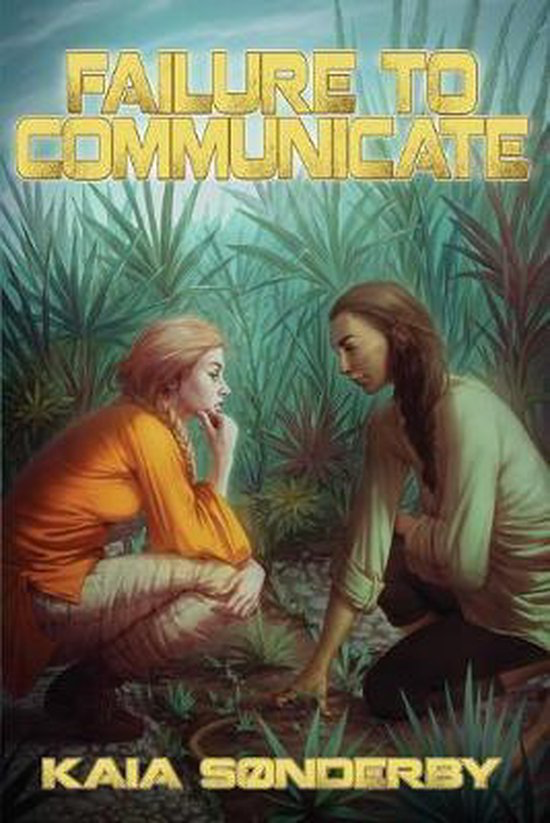
Failure to Communicate – Kaia Sønderby – “Pick all the locks inside our heads/It takes a while, in your defense/But I got lots of time/So what’s it gonna take to open up tonight?”
I feel like a part of me will always be nostalgic for that specifically 2010’s flavor of lo-fi dream pop that was everywhere when I was in high school. My friend knew exactly what she was doing sending me this in a café while it was actively raining outside—that’s the proper way to listen to these kinds of songs. It’s whispery and understated, but “Wash” is such a calming track. Propelled by its looped guitar and muted percussion, it really evokes that particular moment in time where the newest tracks weren’t afraid of sounding like yes, this was made with just me, myself and I with GarageBand in my room. Felicia Sekundiak’s vocals nearly drown under the mix, but for a song about feeling like you’re floundering in every way, it fits, whether or not it was intentional.
It’s songs like this that make me forget that Tame Impala is ostensibly…pretty boring now. Or so I’ve heard. I’ve just heard “Dracula” everywhere, and yeah, it’s mediocre, not much else I can say about it. But you know how I knew that Tame Impala had gone downhill? Around the time when Deadbeat came out last year, I heard the hippie baristas at my local coffee shop grousing about how terrible it was. The minute Tame Impala loses the barista demographic, he’s done for.
So it’s kind of a shock to remember Kevin Parker’s beginnings. “Lucidity” popped into my head the other day, and it feels worlds away from where he is now. With its chugging guitars and Parker’s drifting vocals, it’s a fantastic piece of psychedelic rock. Fuzzy and trippy, it manages to toe that ever-thinning line between ’60s worship and modern sensibilities, and while it does kind of stumble over the former line, it never makes it lose its potency. It’s very Beatles, but if a time traveler went and gave John Lennon a ton of new guitar pedals. It’s undeniable what made Tame Impala such a sensation in the first place—he hit just the right chord here.
…AND A BOOK TO GO WITH IT:
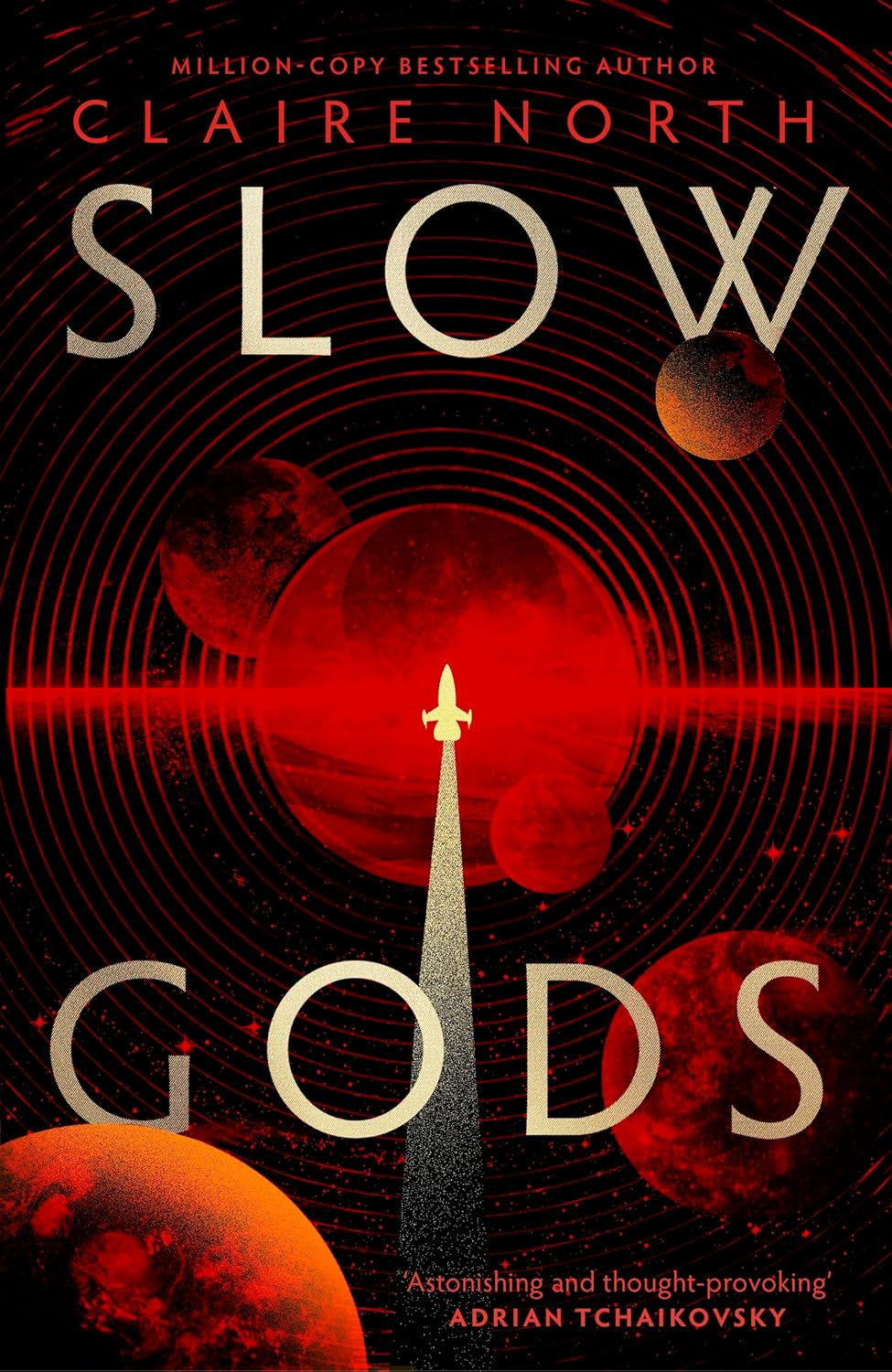
Slow Gods – Claire North – “Lucidity, come back to me/Put all five senses back to where they’re meant to be/Oh it’s hard to tell, breaks down/There is a will, there is a way…”
Since this song consists entirely of songs, consider all of them to be today’s song.
That’s it for this week’s Sunday Songs! Have a wonderful rest of your day, and take care of yourselves!
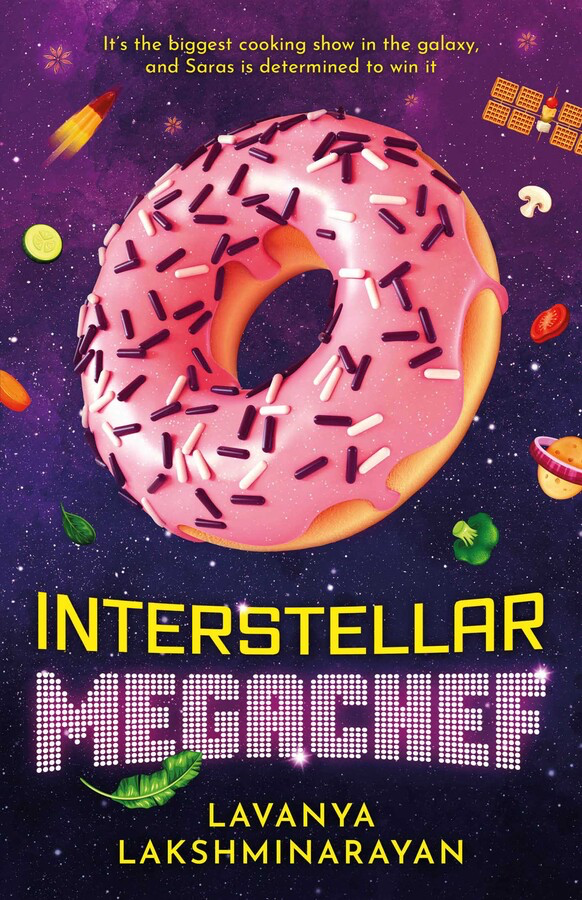
It’s funny that I should be reading/reviewing Interstellar Megachef when I am, because just a week ago, I was talking to my older brother about how you sometimes have to wade through the most cornball book covers and titles known to man to find good cozy fiction sometimes. Different strokes, I guess, but oh my God, this book cover is painfully corny. (And mismarketed, but I’ll talk more about that). But ultimately, it was mostly worth the gambit: although it had some structural issues, it was a solid novel about food, love, and immigration…in space, of course.
Saraswati Kaveri is determined to prove herself. After running away from her family on Earth, she upends her life to immigrate to the famed planet Primus—and earn a spot on its most popular cooking show, Interstellar Megachef. It’s not an easy feat, especially when the humans of Primus are deeply prejudiced against Earthlings, who they see as backwards and violent. But when Saras’s plans go awry, she has a chance encounter with Serenity Ko, a disgraced tech developer who might have just the solution for her to redeem herself—and her cooking.
First off: Interstellar Megachef is mismarketed. Cornball cover art aside, the Interstellar Megachef aspect of the book is fairly understated. This isn’t a spoiler, but Saras gets disqualified in the first episode of the show—and this happens about a quarter into the novel. (However, Interstellar Megachef comes back as a plot point, so it’s not entirely absent from the plot afterwards.) So I’m assuming that it was marketing reasons that gave this novel its title and tagline. So fair warning, if you’re expecting the entire novel to be food-centric, I’d suggest that you dial back your expectations.
Where Interstellar Megachef succeeds is its powerful commentary on the experience of being an immigrant. To me, good cozy sci-fi succeeds when it retains the low stakes, but doesn’t hold back on discussing whatever issues it seeks to tackle; Lakshminarayan does this to great success. Saras’s experiences as an Earthling immigrant to Primus were a biting indictment of how we treat immigrants, from the outright racism and xenophobia to the more subtle micro-aggressions that they’re taught to simply put up with. The labor that Saras has to do just to be marginally accepted by her Primian peers was poignant, and it spoke to the limits of “acceptance” that mainstream society often has for immigrants: she’s only valuable to them if she’s able to serve a purpose to them. But Saras’s commitment to going against the grain and staying true to her culture gave this novel a poignant, beating heart that propelled its narrative skyward.
Interstellar Megachef also boasts a particularly vibrant sci-fi world. Of course, there are elements that didn’t quite make me suspend my disbelief; I couldn’t quite believe that Earthling humans were more discriminated against than the nigh-incomprehensible mecha tentacle aliens, but that was necessary to the plot, so I get why that was a thing. (Also, the Primian naming convention of every adult being named after the Nine Virtues was okay in concept, but confusing logistically, when you have at least four characters with the same first name per virtue.) Lakshminarayan’s descriptions of this futuristic world were so bright and lived-in, and I truly felt immersed into this neon, intergalactic future for humanity. The aliens were fun, but I feel like their role in society was underutilized, especially when the themes of prejudice and marginalization are concerned. That being said, Lakshminarayan often delivered this worldbuilding in portions that went on for three paragraphs in some cases, which unceremoniously took away from the main narrative. All of the detail and hard work was there, but integrating smoothly into the narrative was a different story, unfortunately.
However, my biggest issue with Interstellar Megachef was the pacing. I’m used to some slowness when it’s cozy sci-fi that we’re talking about, but there were some parts of the novel that seriously dragged. We take so many detours into characters that aren’t central to the main plot, and they don’t serve much of a purpose—they did almost nothing to enrich the plot or the characters. They just seemed like vehicles for Lakshminarayan to do some even more unwieldy exposition for the world (like the three-paragraph-long dumps weren’t enough…). And it’s not as though the book was too short to cut some parts—my paperback edition is around 450 pages. Did we need a whole chapter about politicians negotiating with an alien species that we don’t even see afterwards? There was definitely some trimming needed. The issues with the pacing don’t end here; with all of these detours, it took away so much from the focal plot, making the development of the main characters feel rushed by comparison.
We took so much time on said detours that the romance between Saras and Serenity was rendered rushed and unbelievable. However, part of that was due to Lakshminarayan not giving them much chemistry at all from the start. I just wasn’t convinced of them being a couple, even towards the end of the book. They just didn’t seem compatible at all—and that’s not even counting some of the terrible things that Serenity does to “prank” Saraswati that realistically should’ve been dealbreakers. (Saras!! Get out of there, girl! You deserve better!) By the time they got together at the end of the novel, I was entirely unconvinced of them as a happy couple. It was just so forced from the start, like a bungled attempt at enemies-to-lovers banter.
All in all, a solid stab at a cozy space-opera, full of potent commentary and a vibrant world, but lacking in plot and some believability. 3.5 stars!
Interstellar Megachef is the first book in the Flavour Hacker series, followed by Intergalactic Feast. Lakshminarayan is also the author of The Ten Percent Thief.
Today’s song:
That’s it for this week’s Book Review Tuesday! Have a wonderful rest of your day, and take care of yourselves!
Happy Sunday, bibliophiles, and Happy Mother’s Day! 💐 My mom has done an immeasurable amount for me—introducing me to a good portion of the songs you see here is just the tip of the iceberg. I truly don’t know where I’d be without her support. 🩵
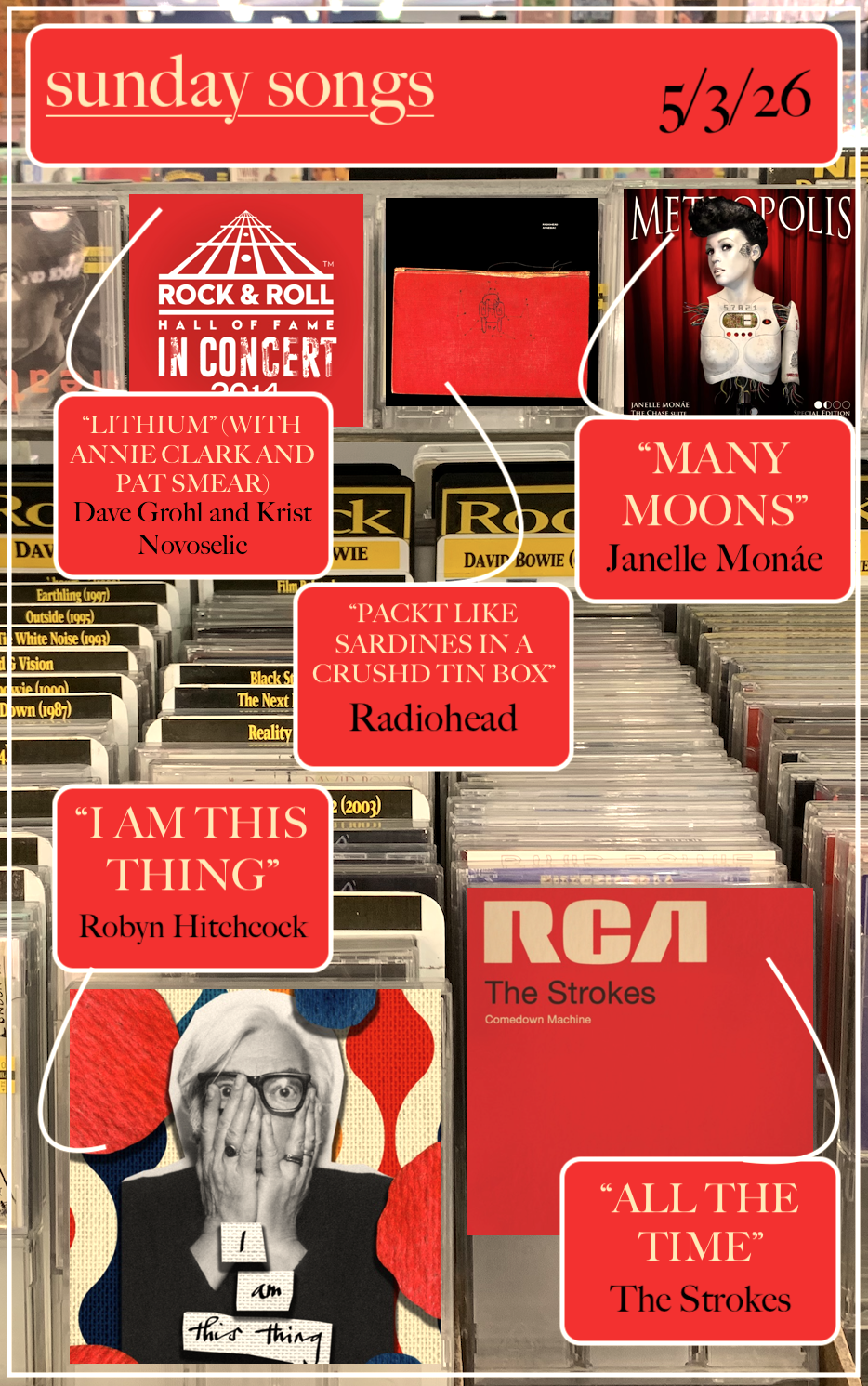
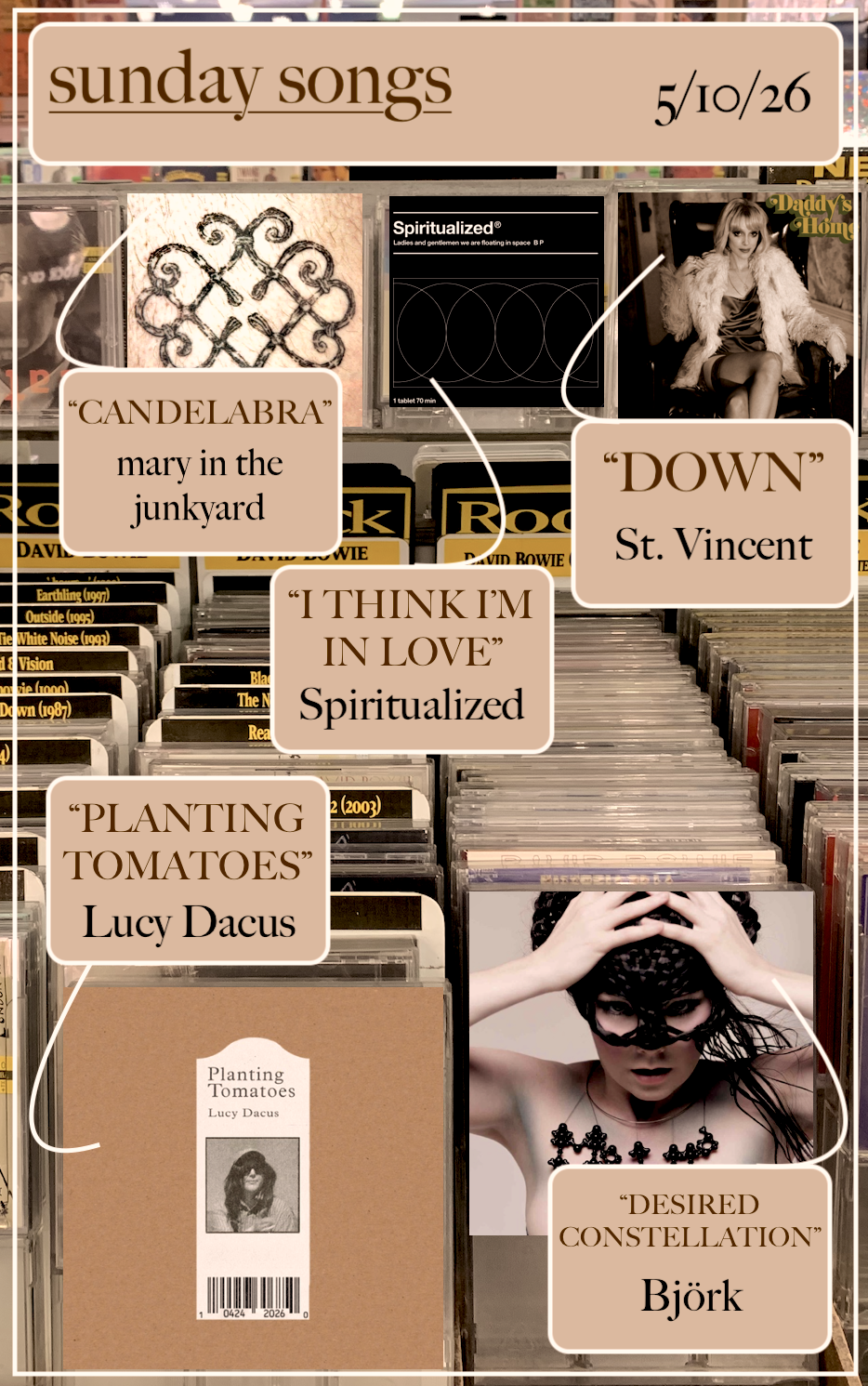
Since I’ve been gone for a few weeks, here are the graphics and songs from when I was taking a break:
This week: In honor of Mother’s Day, the mothers are mothering. (Yes, I’m counting J Spaceman, I feel like if you make something as astounding as Ladies and Gentlemen We Are Floating In Space, he gets to be called “mother” this once.)
Hot take of the day: Forever Is a Feeling would’ve been better if it had this track—and maybe “Losing”—on it. I get that “Losing” doesn’t exactly fit thematically, but sonically, it fits enough with the other tracks that it could’ve broken some of the monotony. Nobody asked, but my move would be to replace “Modigliani” with “Planting Tomatoes.” (But seriously, why was “Modigliani” the song that got the coveted Phoebe Bridgers feature?)
That’s the end of the hot take, but this might be another one: I feel like “Planting Tomatoes” might be one of Dacus’s best songs since Home Video. Forever Is a Feeling had some stunners, but composition and lyric-wise, “Planting Tomatoes” is truly something special. It takes her usual formula of stringing together perfectly-placed vignettes into something emotional. It’s more pop-forward, but in a way that feels natural to Dacus, and not trying to fit into a mold like some of Forever Is a Feeling‘s more forgettable tracks did. With reverb-drenched guitars that call back to her more indie rock days and tastefully echoing of her vocals, “Planting Tomatoes” is a breathless sprint through the realization that you’re living the life you once dreamed of—and everything that comes with it. There’s the starry-eyed ecstasy of being amongst friends and seeing the simple beauty in everything (tomatoes, holding hands with your friends, the view through a window screen).
Of course, it wouldn’t be Lucy Dacus without a trademark knife in the gut; that comes in the sparse bridge, but I think it captures something that comes along with trying to be more present: being present, but being distinctly aware of what you’ve lost while trying to be present. (“Livin’ in the moment/I can feel the moment passing.”) For Dacus, it’s the grief of losing someone that she wished she could experience the moment with; but her conclusion loops back to the chorus—the solution for all of these emotions, positive and negative, is this: “You’ve gotta live the life you’re fighting for/You’ve gotta live a life you would die for/But before then, I’ve got some ideas…” That hopeful ellipses of the chorus is where the joy of “Planting Tomatoes” lies: life is short, and yet, there is so much possibility in it.
…AND A BOOK TO GO WITH IT:
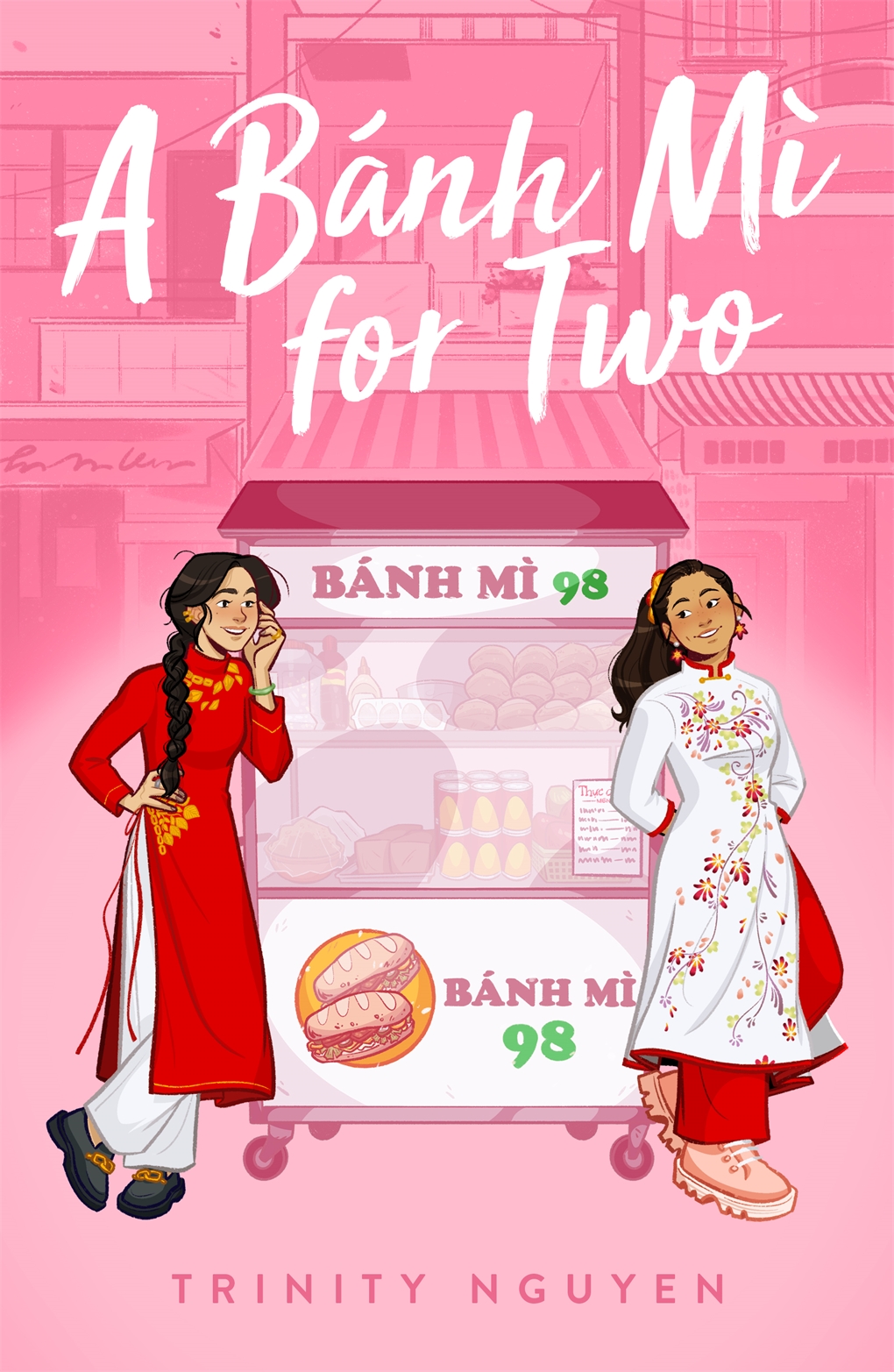
A Bánh Mì for Two – Trinity Nguyen – “Hearing my friends laughing in the distance/I can’t help but laugh along without knowing what the joke is/Can’t help thinking that I am gonna miss this/Living in the moment, I can feel the moment passing…”
I’ve been toying with the idea that Medúlla might be my favorite Björk album. I’m not 100% sure. With some of my favorite artists (Bowie, St. Vincent, etc.), it’s easy to pick a favorite. The thing about Björk is that her albums, as varying as they are in sound, are almost all at the same level of being consistently excellent. I like some more than others, but other than the two I haven’t listened to (Vulnicura and Utopia), I really can’t say if there’s a badBjörk album. Medúlla has some slight weaknesses, but after two more re-listens, I feel like even the songs that didn’t hook me as much on the first go around (see: “Submarine”) are still excellent in the ecosystem of the album as a whole. I’m firm in the belief that emotional attachment should never be ignored in choosing your favorite albums, and if that was the only criteria, Medúlla would easily slide up there—I’ve spoken about it a fair amount, but knowing the background and goal of this album was to evoke a sense of prehistoric, primal kinship connection of family and feminine lineages and storytelling as a whole makes every listen so powerful. It makes me feel in tune with that sense of being everything that your ancestors—especially the women in your family—dreamed of, but also a sort of nonlinear sense of connection across time and space. Something about it is innately human—the acapella format makes you hear every hiccup and falter in the vocals. You do feel like you’re around the fire, nestling for warmth in the presence of your kin.
But I think the best endorsement of Medúlla now is that, after a while spent dithering at the record store, I bought it on vinyl even though it was $43, but I immediately started crying after hearing “Pleasure Is All Mine,” so it was worth every penny. (Jeez, is that saying obsolete now? Wow. “Worth every dollar” just doesn’t have the same ring to it.)
When I first listened to Medúlla about a year ago, “Desired Constellation” was nearly one of the songs I talked about initially; it’s still one of the standouts from the album for me. At first, it sounds like it has some of the only non-vocal instrumentals, but I was fooled—the electronic backdrop was created by sampling Björk’s vocals from Vespertine, and adding layers of effects, giving it the delicate, sparkling effect that you hear; more relevant to the song’s subject matter, it’s specifically of this line from “Hidden Place”: “I’m not sure what to do with it.” It has some of my favorite Björk lyrics, hands down: “With a palm full of stars/I throw them like dice (Repeatedly)/On the table (Repeat, repeatedly)/I shake them like dice/And throw them on the table/Repeatedly (Repeatedly)/Until the desired constellation appears.” It’s an intimate, hard-hitting exploration of trying to make order out of chaos, of picking up the pieces until they resemble something you can make sense of.
…AND A BOOK TO GO WITH IT:
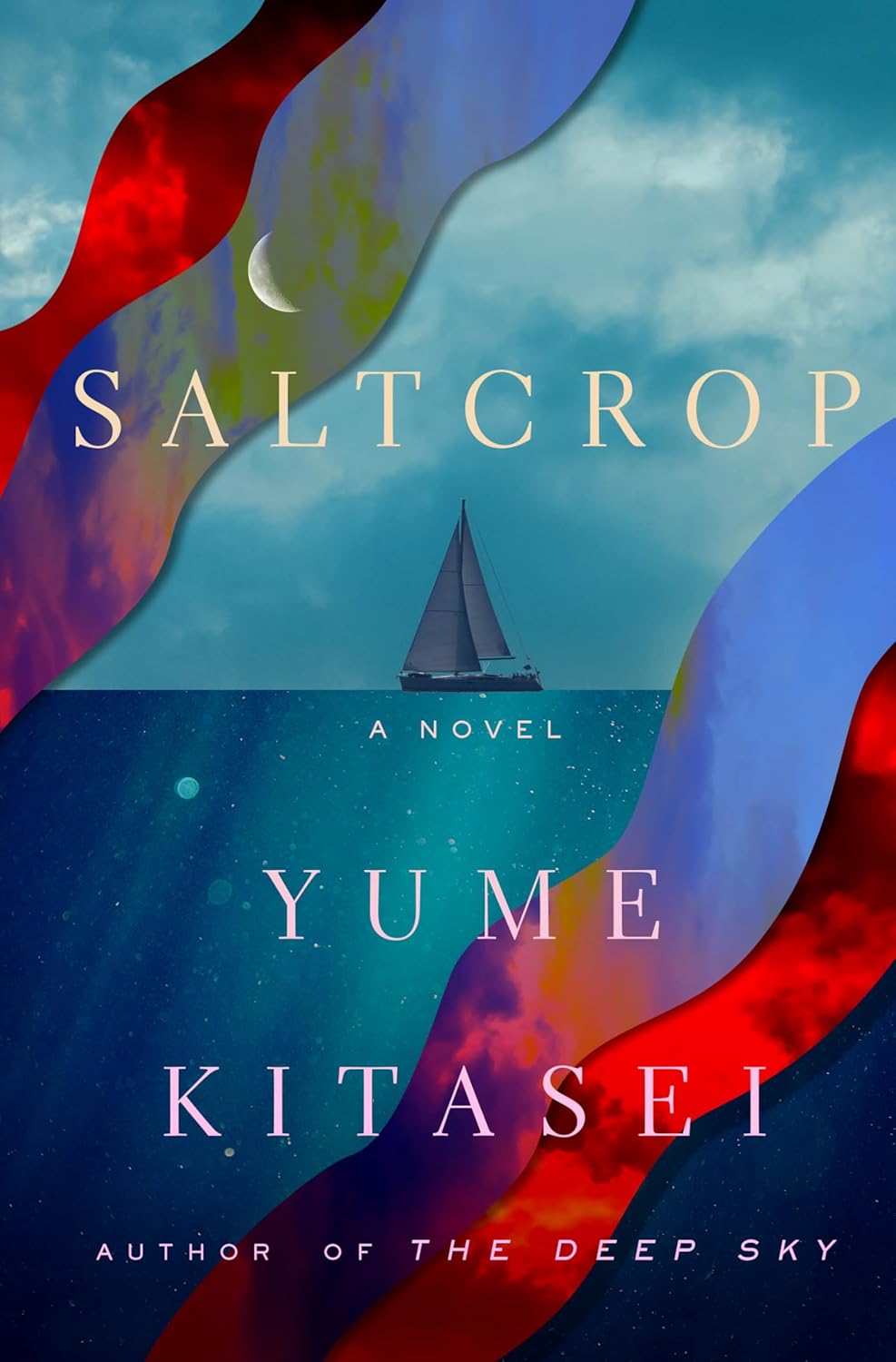
Saltcrop – Yume Kitasei – “It’s slippery when/Your sense of justice/Murmurs underneath/And is asking you: ‘How am I going to make it right?'”
We’re now two singles into Role Model Hermit, and I don’t want to jinx it, but it’s shaping up to be promising. “Candelabra” leans more towards their earlier acoustic work, but it fits just as snugly with the sweeping “Crash Landing.” As it turns out, it’s a holdover from frontwoman Clari Freeman-Taylor’s solo career, all the way back in 2021; it’s clear she’s gained so much more confidence since then, and despite “Candelabra” being a soft and wistful song, you can hear the leaps and bounds Freeman-Taylor and co. have made in the 5 years since. Whether acoustic or with a full band, this higher-quality production has done wonders for their sound, making it sound cleaner without sacrificing any of their eerie, vulnerable atmosphere. And vulnerability is something that “Candelabra” is ripe with, a meta, half-whispered confession about the confusion of songwriting and intimacy: “I want you to know me through my songs/They’re so much cleaner than anything I could say” is bookended with “Frantically I wrote you a letter/One I knew I never would send/Write fast, write deep, write better/Nothing I ever write will be enough.” This self-deprecation keeps this understated tune afloat.
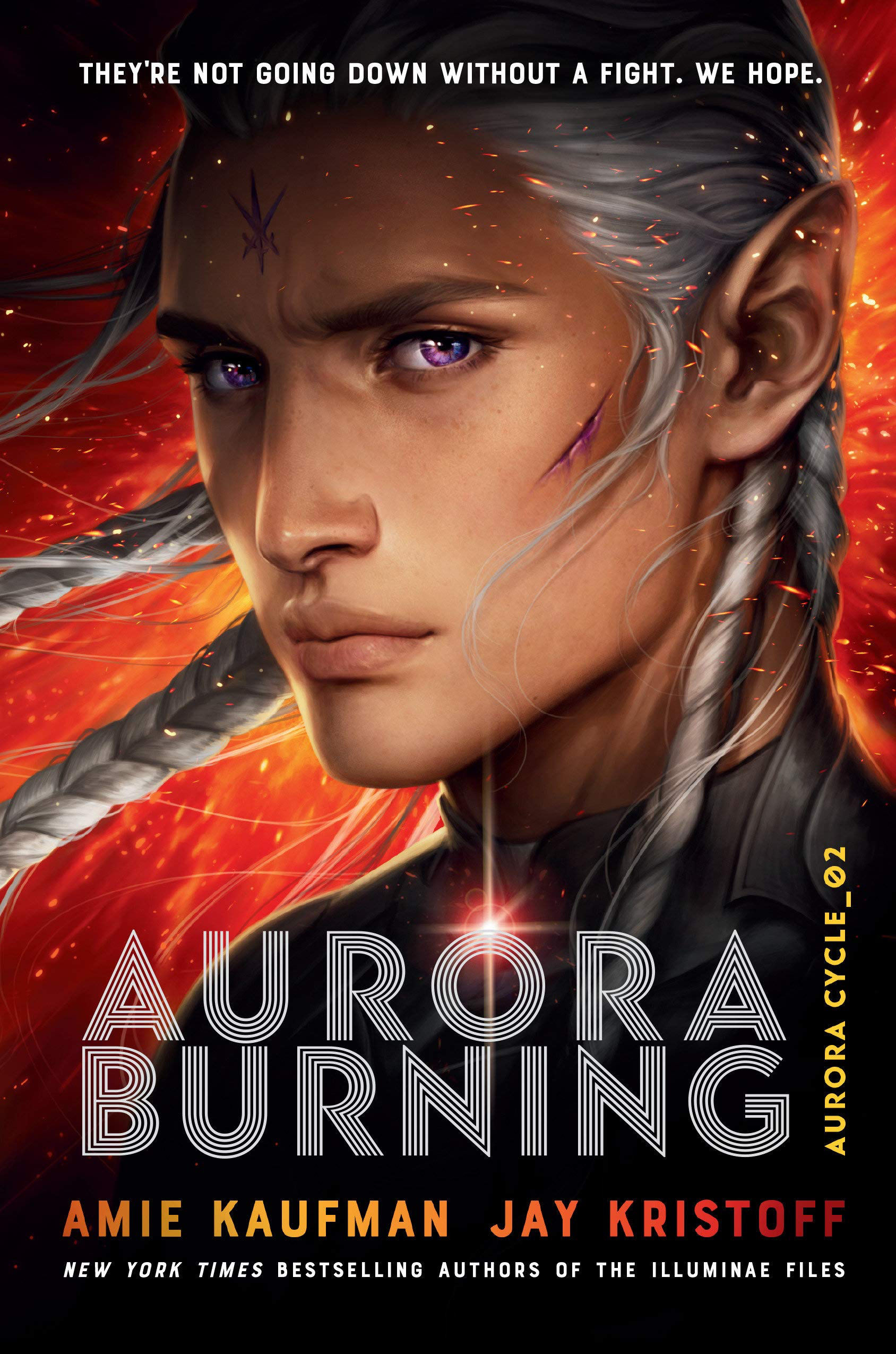
Musically, I might be reverting to a pandemic-era state. Normally, that’d be a cry for help, but by some miracle, the memories I have of listening to Spiritualized during the pandemic are actually very positive. They said it couldn’t be done…but also, I listened to Ladies and Gentlemen We Are Floating in Space for the first time during the very early days of the pandemic, so that’s why the memories never soured. This was the part of the pandemic where I’d finished my highly modified AP tests and was waiting for my preordered copy of Aurora Burning to arrive in the mail. I hadn’t gotten burnt out and depressed…yet.
But I think Ladies and Gentlemen is one of those albums that no bad situation could sour. It’s just a masterpiece, through and through, a masterclass in creating and maintaining an atmosphere, of slow-burn tales that unfurl like you’re adrift in space, held to your spaceship by the thinnest tether, but never lost completely. The amount of layers in each song, whether 3 or 17 minutes, makes each one feel like an entire expanse of space that J. Spaceman has personally mapped out and condensed into sound waves. And if we’re talking about slow burns, then “I Think I’m In Love” is one of the key studies of it on Ladies and Gentlemen. Of course, the sun-blinded haze of this song comes from the monotony of heroin—something that comes up repeatedly on this album—but the way that it unfolds from this dissociative state back into a colder reality once the high wears off is one of J. Spaceman’s most memorable compositions on this album. For the first two minutes, his airy self-harmonization makes you feel like you’re waking up from a dream, still bleary-eyed, unsure of where you are. Every effect from the guitar pedals makes the song glimmer, but once the song gets curb-stomped back to Earth, the bleating saxophones and steady percussion only add to the atmosphere, as densely-packed with sound as a rainforest is with flora. And cynical as it is, the lyrics in the last 2/3rds of the song are so painfully self-effacing, but sardonically clever:
“I think I can hit the mark/Probably just aimin’/I think my name is on your lips/Probably complainin’/I think I have caught it bad/Probably contagious/I think that I’m a winner, baby/Probably Las Vegas.”
I mean…oof. And he’s got a whole four minutes full of these self-aimed barbs up his sleeve. But it really demonstrates the state he was in, musically and lyrically; the transition to drugged-out, blissful ignorance to astronomical levels of self-deprecation is just where he was at the time of the album, and honestly, with the rock bottom that he hit multiple times, it just makes me all the more grateful that we live in the timeline that he survived both of his near-death experiences, mostly due to complications with the drugs he was abusing throughout his life. And sure, we’ve got those debates about whether you need drugs to make an album as masterful as this, to which I say…dude, have you listened to Everything Was Beautiful lately? Sure, nothing can touch Ladies and Gentlemen, but it’s basically Ladies and Gentlemen with J Spaceman being clean and happy. Either way you look at it, “I Think I’m In Love” is a pitch-perfect study in Spaceman’s ability to make a song feel like an entire dimension in and of itself, a push-pull of dissociation and reality, like a slingshot firing in slow motion.
…AND A BOOK TO GO WITH IT:
Embassytown – China Miéville – “I think I’m in love/Probably just hungry/I think I’m your friend/Probably just lonely…”
Daddy’s Home is approaching its 5 year anniversary, and…I feel so old. I know that’s dramatic. But it has such a specific, comfortingly nostalgic place in my heart; I specifically remembering finishing my AP exams after slogging through the mire of online school, and walking out of the building knowing that I had a new St. Vincent album as a reward. Especially coming off of the heels of the deeply disappointing MASSEDUCTION, it was like being bathed in rays of sunlight. Nearly 5 years later, it holds up as a sonically consistent and pure fun album, despite its subject matter. It’s a sly concentration of “if I don’t laugh, I’ll cry,” especially when looking back at circumstances more messed up than you could’ve predicted. (For Clark, it was her father getting arrested and finishing out his sentence around the time of the album’s release.) It’s difficult to think of an artist who’s channeled an aesthetic so clearly—this is straight up early ’70s, and nothing but; the only pitfall is that, past this era, it almost feels wrong to hear her play tracks from this album live without the intricately crafted aesthetic and campy blonde wig. But I guess that’s what you get for committing to a bit thishard.
Daddy’s Home was anchored on a slew of excellent singles, and “Down” hasn’t lost its sheen nearly 5 years on. It’s got bite. Acerbic but righteous in its condemnation of a good-for-nothing abuser, every lyric is spit with triumphant venom. We’ve been inundated with vaguely feminist revenge stories in the past decade or so; It’s a real shame that a lot of stories about getting the upper hand on your abuser have become cliche, but I feel like it’s more the shallow idea of these revenge fantasies being labeled feminism by default that’s made a lot of mainstream stories ring hollow. Even Clark herself has said that “Down” is a revenge fantasy. However, I think the reason “Down” sets itself apart is the campof it all—it realizes it’s playing into a cliche and a somewhat universal experience of wanting to get back at someone who’s wronged you, and Clark puts every ounce of performance into this character. Daddy’s Home is honestly a masterclass in tragic camp—it rarely takes itself entirelyseriously, and that’s what gives it the edge. Plus, who could deny that guitar solo, delectable ’70s tone and all?
GUESS WHO’S BACK…WITH A BACHELOR’S DEGREE! 🎓 YIPPEE!! Either way, I’ll be back to my normal posting schedule for the foreseeable future, as I’m now done with finals and all of my graduation festivities.
I’ve been a fan of Yume Kitasei since her debut, The Deep Sky. Her second novel, The Stardust Grail,was a 5-star read for me—it’s truly a gem, if you haven’t read it already. (After re-reading it last month, I’m firmly convinced that we need another book set in that universe. Her worldbuilding was so expansive!! It needs a companion novel!! Please!!) So I was ecstatic to hear that she was writing another sci-fi novel. It seems she’s been jumping between all kinds of sci-fi subgenres: a literary thriller with The Deep Sky, space opera with The Stardust Grail, and now dystopia with Saltcrop. And though it didn’t blow me away like The Stardust Grail did, Saltcrop is still a worthy, timely testament to Kitasei’s talents.
In a world ravaged by climate change, the three Shimizu sisters–Nora, Carmen, and Skipper—eke out a living with their aging grandmother. But Nora has been missing for months without an explanation. Carmen has faith that Nora will turn up soon, but Skipper suspects foul play. The sisters voyage out into uncertain waters to find Nora, but when they stumble into an intricate conspiracy that’s more than they bargained for, they must decide whether the journey was worth it at all—and if Nora is even out there in the first place.
TW/CW: medical content, body horror, death of parents, abuse, violence, murder, illness, animal death, chronic illness themes
One of the coolest things about watching Yume Kitasei’s career expand, from a reader’s perspective, is her willingness to try almost anything within the sci-fi genre. Her first novel was a more literary, sci-fi thriller; her second, a daring space opera with influences from Star Wars and Indiana Jones. Saltcrop is wholly different than both of them, and perhaps the greatest thing about it is that Kitasei never seems to run out of ideas, and that she’s unafraid to chase them.
Saltcrop is full of heart, and to me, that was its main strength. What formed this heart was the central relationship between Skipper, Carmen, and Nora. Even though 1/3 sisters was notably missing for 2/3rds of the novel, her presence was palpable; all that was possible due to the subtle interactions that Kitasei wove through Skipper and Carmen, both past and present. Their clashing but united dynamic as sisters propelled the novel in such a poignant way. Though you know from the start that Skipper and Carmen would cross the ocean for their sister (and they do), Kitasei never falters in giving you the sense of the complex but steadfast love that they have for each other. It feels like a middle finger to all of the dystopian media that posits that the apocalypse will somehow deteriorate our inherently human urge to love and help each other. Siblings will be siblings, even when climate change floods the world—Kitasei means that in every sense possible.
The settingof Saltcrop is familiar: a flooded dystopian world rendered unrecognizable by climate change, where the poor eke out a hardened existence while the rich continue to get richer. It’s a plot we’ve heard many times before, but Kitasei’s touch made it much more human. Aside from the exploration of the sisters’s relationships, I think what made Saltcrop’s plot and worldbuilding so memorable were the vignettes that made it human. Kitasei’s flooded world was peppered with stories of ordinary people, dead and alive, who made a living in spite of nearly inhospitable circumstances. It doesn’t shy away from the dark and ugly parts of this world (namely the spread of illness and corporate greed) Combine that with the clearly exhaustive research she did about agriculture, epidemiology, and genetic modification that got especially relevant in the last half of the novel, and Saltcrop was one of the most lived-in dystopias that I’ve read in quite some time.
I said earlier that Saltcrop is fairly different from her previous two novels, but in terms of writing, I think it trends closer to The Deep Sky, which is to say that it leans more into the literary side of her prose. And if there’s anybody I trust with more literary prose, it’s Kitasei. Her eye for poignant, needle-sharp descriptions that lodge themselves into your heart is stronger than ever—there are casual gut-punches laid about everywhere. Even in the heart of a climate-ravaged dystopia, there were almost Fargo-like interludes where reality and memory warp, which was all the more potent considering the themes of remembrance in Saltcrop. (The bear scene in the middle especially comes to mind.) Like the plot, Kitasei’s prose turned an environment that we’ve seen many times before into something wholly fresh and enlivened.
I’ll admit, I have some mixed feelings about the ending. On the one hand, I loved how the sisters rallied together to try and bring down the antagonist corporation, which routinely swallowed all of their attempts at resisting; the gradual, quiet victory was hopeful, and felt realistic to the long and rocky road to justice that we see with these kinds of issues. However, I feel like there were so many unanswered questions at the end; without spoiling anything, it felt like the setup to another novel, but there was so much left unsolved and unsaid, and yet Kitasei gave it the tone of a bittersweet ending, but a concrete ending all the same. It only felt wrapped up in the sense of the corporation plot, but beyond that, it felt unfinished. I’m all for an ambiguous ending, but with such a key piece of the puzzle missing, it didn’t feel satisfying in the slightest.
All in all, a startlingly human post-apocalyptic story of sisterhood and survival. 4 stars!
Saltcrop is a standalone, but Yume Kitasei is also the author of The Deep Sky and The Stardust Grail.
Today’s song:
genuinely criminal that this isn’t available on streaming, but this is, hands down, one of the best Wilco covers out there
That’s it for this week’s Book Review Tuesday! Have a wonderful rest of your day, and take care of yourselves!
Happy Monday, bibliophiles! This is the last of my scheduled posts, so you can expect that I’ll be slowly getting back to my normal posting routine soon.
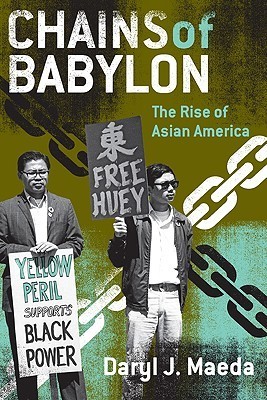
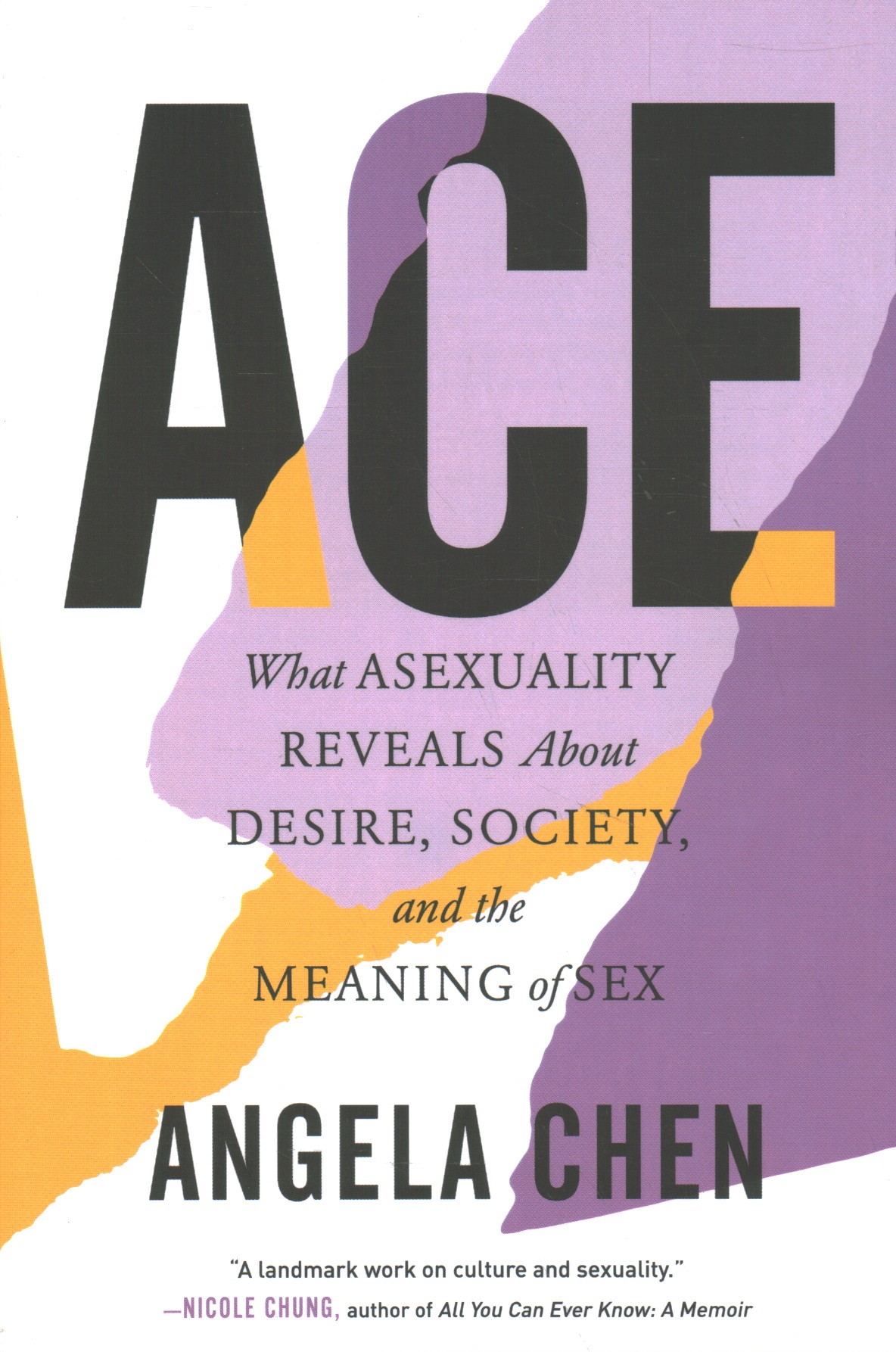
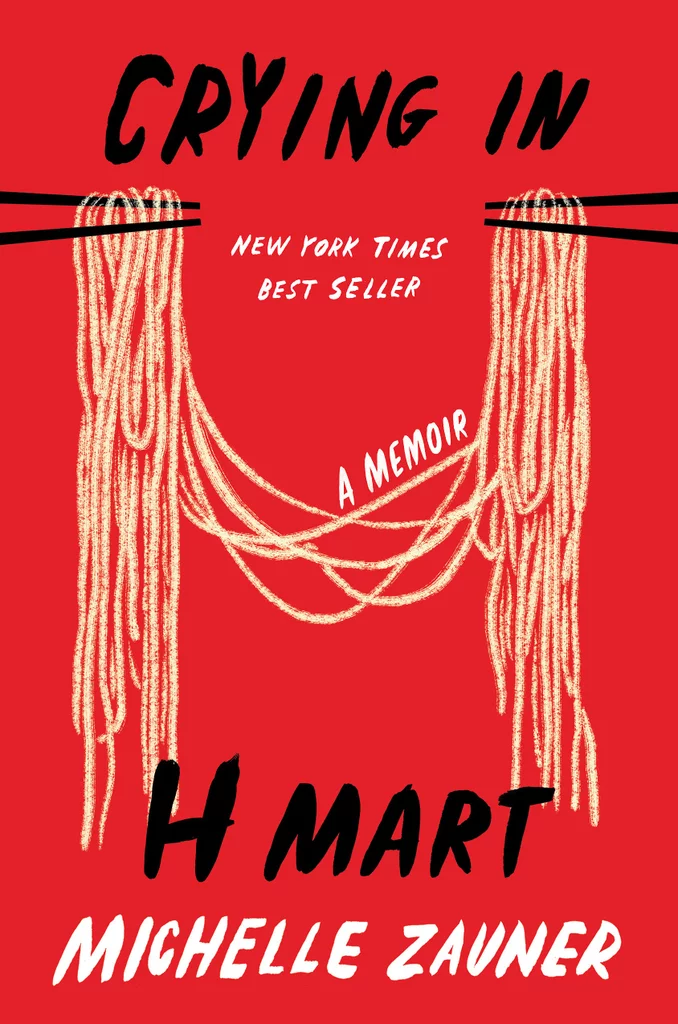
Here in the U.S., May is Asian American and Pacific Islander Heritage Month! As with all of the heritage and pride months, it has always been difficult to ignore how complicated of a moment it is. In particular, I think of the unspeakable violence that ICE has been inflicting on AAPI immigrants, and Asian people at large, no matter their status; combine that with the blatant racism that this administration has allowed, and it has made this time in American history exceedingly dangerous. But we have to remember that it has always been this way, in some way, shape or form—our historical treatment of AAPI people in America has been nothing short of shameful, from the conception of this country to now.
Yet as with every year, the best way to combat the government wanting to silence AAPI voices—and all marginalized voices—is having pride in one’s heritage and educating oneself. Pride and education are the two things that the government deems most dangerous in any marginalized community, and fostering them is the ultimate antidote to the continual erasure of AAPI voices from our history and literature. So I hope with this list, which draws from fiction and nonfiction and from many different backgrounds and genres, helps this effort.
TELL ME WHAT YOU THINK! Have you read any of these books, and if so, what did you think of them? What are some of your favorite books by AAPI authors? Let me know in the comments!
Today’s song:
That’s it for this recommendations post! Have a wonderful rest of your day, and take care of yourselves!