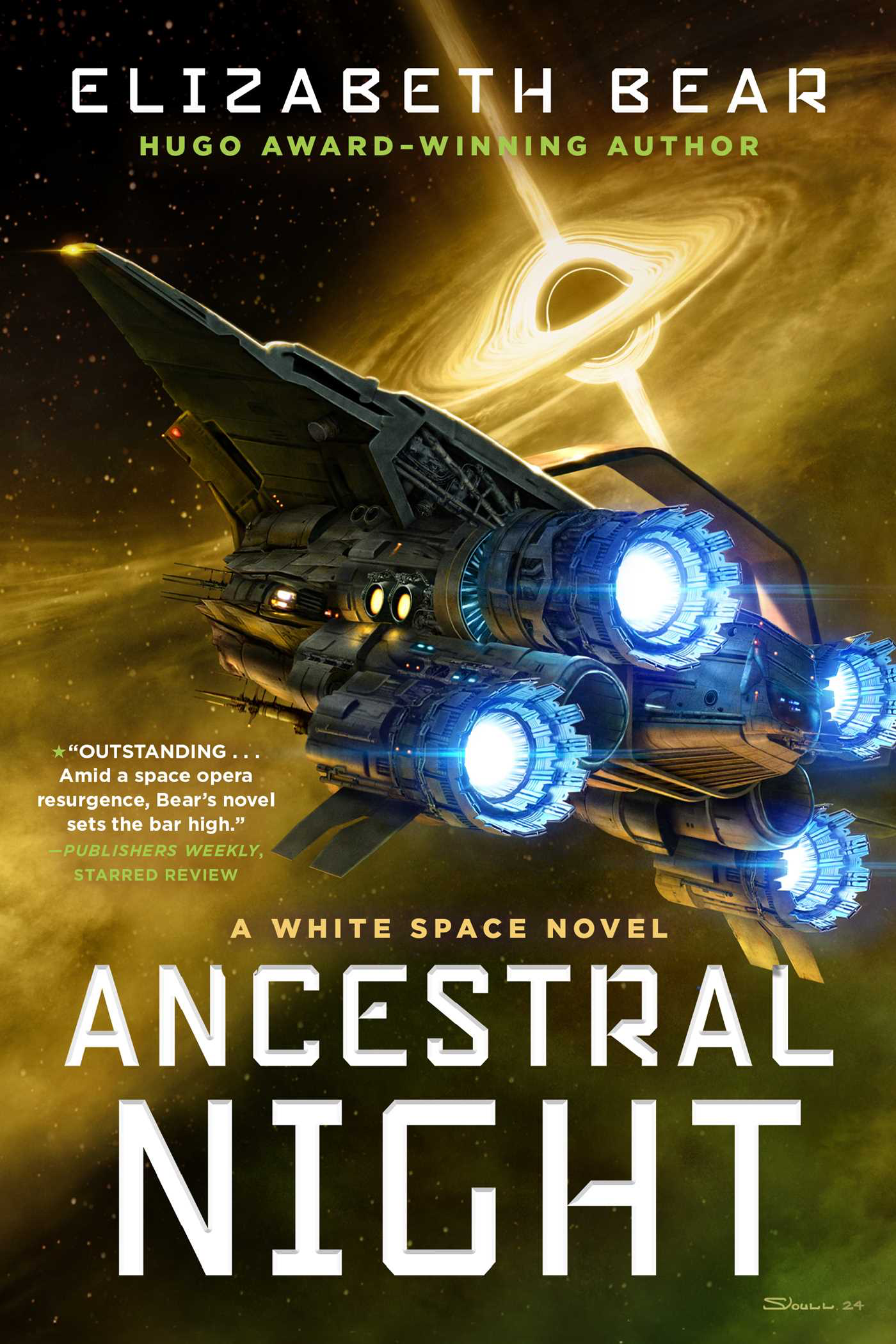
Posted in Book Review Tuesday

Book Review Tuesday (12/9/25) – Planetfall

Happy Tuesday, bibliophiles! My finals are pretty much over, so it looks like I’ll be coming back.

Yeah, I thought I’d broken my “comes back from break, immediately writes a negative review” streak too. As always, I maintain that a balance is necessary.

For the most part, my quest to find more diverse sci-fi has been successful and has led me to find so many remarkable new books and authors. However, there are always some misses along the way, because as always, diversity isn’t a guarantee that a book will have a sound plot and characters. I’d seen Planetfall come up on several lists of science fiction with solid queer and disabled rep, so of course I snapped up a copy at the library when I had the chance. Unfortunately, Planetfall was lukewarm at best, and a jumble of unfulfilled promises at worst.

Enjoy this week’s review!

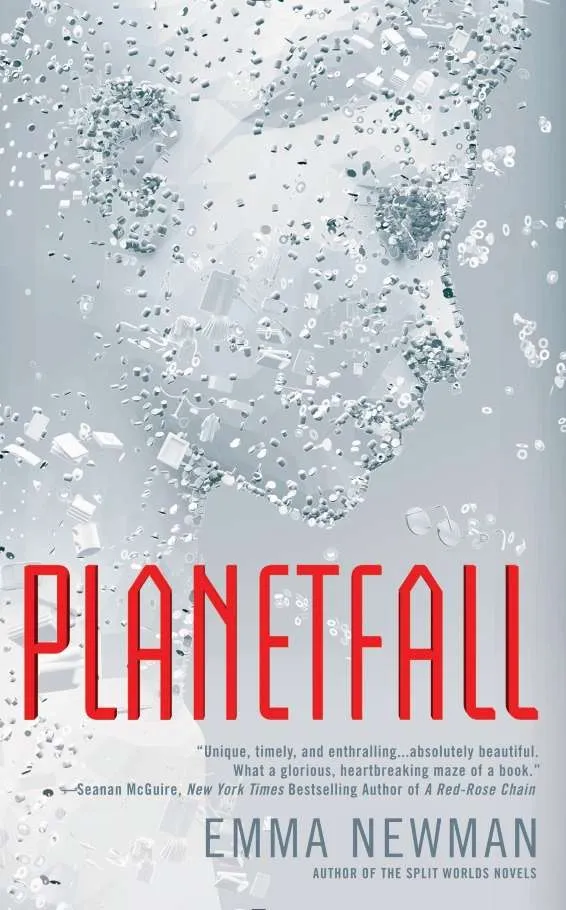
Planetfall (Planetfall, #1) – Emma Newman

22 years ago, escaping the brink of certain extinction, the last remains of humanity formed a colony deep in the cosmos, on a mysterious planet home to a strange alien structure. Leading them was Lee Suh-Mi, a godlike figure who has retreated in recent years to live inside of the alien structure. Renata “Ren” Ghali, an engineer, has spent her life toiling away to make this new haven habitable for humanity. But when a stranger arrives on their doorstep bearing an uncanny resemblance to Suh-Mi, Ren must question everything she knows about her new planet—and her supervisors.

TW/CW: panic attacks/mental illness (PTSD, anxiety) themes, ableism, grief, death, murder, descriptions of injury, death of a child, substance abuse (alcohol)

Once I got past the halfway mark of Planetfall, my recurring thought was “This is just Prometheus if it sucked.” Prometheus is already a divisive film (I’ll always have a soft spot for it, I don’t care), but this novel feels like what would happen if you separated Prometheus from the Alien franchise…and then surgically extracted everything that was interesting about it.

I will say, even though my overall experience with Planetfall wasn’t the best, there were some significant positives. Newman’s prose had moments of being very clever and poetic, though they were few and far between. I liked the inclusion of Renata’s mental illness, and the pushback of the narrative of disability/mental illness needing a cure, especially in sci-fi settings. The casual inclusion of lots of characters who were queer and/or people of color was also a plus.

Yet once you get beyond that, there isn’t much to like about Planetfall. One of the worst things to fall short on in genre fiction in general is the sense of place. If you’re in the real world, you can let go of descriptions on the basis that your reader exists in this world and knows how it functions; when you’re creating something entirely new—say, an alien planet—grounding the reader in the setting is almost always an absolute necessity. I was so excited to explore the alien colony that Newman set up, but hardly any of it was expounded upon. Other than a few throwaway descriptions of Ren hearing alien creatures’ mating calls (how do you not follow up on that?? Tell me about the creatures!) while trying to fall asleep at night, I have almost no clue about how this planet looks. I think there’s…some caves? Maybe? All I can say with certainty is that there’s an ominous alien structure. That’s about all I can tell you. That also extends to the interior of the colonists’ base—I’m lost as to even what that looks like, even though that’s where we spend most of the novel.

This novel’s biggest pitfall is that it sets up far too many things—both in terms of plot and theme—and there’s practically no payoff for any of it. Newman clearly wanted to say something about religious fanaticism, but her analysis didn’t get further than “religious fanaticism is bad,” which, while that’s obviously true, really merits going deeper than that. The plotline about Ren’s guilt and mental illness was the closest Planetfall had to having something tangible to say, but even that got lost amidst the tangled mess of half-baked threads. Given the prominence of guilt and religion in this novel, there could’ve been something compelling for Newman to explore, but those dots were barely connected, if at all. The same is true of the plot. The entire foundation of the colony is upended? Nah, we’re dealing with that later, I guess. There’s a whole thread where they find evidence of an alien language, and…nothing happens. I kid you not. They just drop that thread and leave it there. If you go into Planetfall thinking that any of the plot threads will be resolved, prepare yourself for disappointment. Reading this novel made me feel like Darla from Finding Nemo shaking Nemo in a plastic bag, desperately trying to get him to “wake up!” Spoiler alert: it never did.

Part of what accentuated that feeling of narrative unresolution was the fact that the characters weren’t developed nearly enough for me to even care what happened to them. Ren came the closest, but I suspect it was more because she was actively being horribly mistreated by some of the other characters. I’m not sure if I know a lot about her other than what happens to her, even though Planetfall happens entirely from her point of view. To Newman’s credit, her guilt was written quite evocatively, and that was where I felt the glut of my sympathy for her. She was less of a character and more of a chess piece for things to unceremoniously happen to. Had she been characterized beyond her crushing guilt, I might have been much more interested in the story—guilt is an emotion, not a character trait.

The same can be said for all of the other characters. All Mack really did was act badly enough for Newman to have an excuse to slide him in as the antagonist in the eleventh hour. Sung-Soo didn’t have any discernible traits other than the fact that he upends what the colonists had believed for decades. Speaking of other colonists…other than maybe four other named characters, where were they? With the lack of description, I fully would’ve believed you if you told me that there were only seven people tops on this planet. Planetfall was just so painfully bare-bones in most regards. All of the promises of a good story are here, from the themes to the plot, but it’s all promises and no deliverance. It’s the literary manifestation of doing the least to get your readers to believe that there’s a story going on.

All in all, a sci-fi novel that promised intrigue, mystery, and devastating secrets, and delivered on…none of those things. 2 stars.

Planetfall is the first book in the Planetfall series, followed by After Atlas, Before Mars, and Atlas Alone. Emma Newman is also the author of several other series, including The Split Worlds (Between Two Thorns, Any Other Name, All is Fair, A Little Knowledge, and All Good Things), the Industrial Magic duology (Brother’s Ruin and Weaver’s Lament), The Vengeance, and many others.

Today’s song:

That’s it for this week’s Book Review Tuesday! Have a wonderful rest of your day, and take care of yourselves!

Posted in Book Review Tuesday

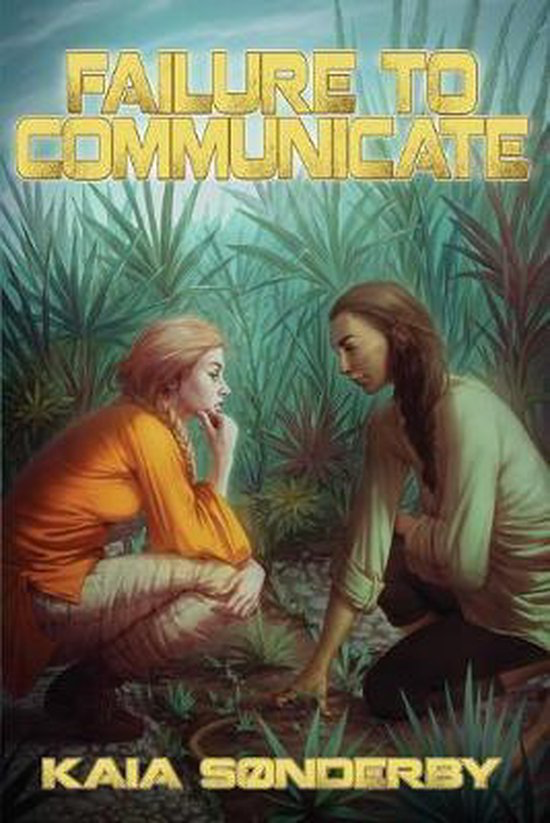
Book Review Tuesday (10/21/25) – Failure to Communicate

Happy Tuesday, bibliophiles!

I found out about this book earlier this year while looking for more sci-fi with queer and/or disabled rep (as I always am). This book seemed to have nearly the perfect premise—I just can’t get over how genius it is to have an autistic protagonist who’s had to study human behavior her whole life study alien behavior as well in order to initiate First Contact. I ended up buying it for Bookshop.org’s recent Anti-Prime Sale, and I ate it up in a handful of days. Though not without its flaws, Failure to Communicate delivers almost completely on its remarkable premise, full of political intrigue, aliens, and heart.

Enjoy this week’s review!

Failure to Communicate (Xandri Corelel, #1) – Kaia Sønderby

Xandri Corelel has spent her life studying everyone around her, be they people or aliens. She’s been forced to, after centuries of eugenics has made her one of the few autistic humans left in the universe. She uses these skills as a Xeno-Liaison, negotiating with all sorts of aliens on behalf of the Starsystems Alliance. But when presented with a potentially hostile species possessing one of the most powerful weapons in the universe, Xandri faces the most difficult negotiation of her career—one that may chance the face of interspecies relations forever.

TW/CW: ableism, xenophobia (fictional), violence, blood, genocide themes, slavery, animal death

“Autistic person spends entire life trying to understand human behavior, doesn’t fully understand it, then spends her entire career understanding alien behavior instead” has to win the gold medal for the best sci-fi premise I’ve heard in years. (Also, felt.) And though not all of it delivered on said premise, Failure to Communicate is a hidden gem for sure.

Now, I’m reviewing a space opera book which features a whole host of alien species, which means it’s time for my obligatory creature design rant. The aliens in Failure to Communicate are…a complicated case, for sure. The majority of them are basically larger, intelligent versions of real-world animals (with some brief exceptions), but Sønderby is self-aware of the fact; for instance, the Psittacans (a name that Xandri gave the species and didn’t develop on its own, thankfully) basically look like giant parrots, but Xandri explains that in-universe, all of their parrot-like features aren’t anything like what we would call, say, feathers, but evolved in such a way that they looked exactly like Earth parrots independently of Earth. This same explanation is given to pretty much all of the other species in the book, which is a bit too convenient to apply to 90% of the aliens in the novel. As for the Anmerilli, though I’m not disparaging the cover artist in any way, I feel like the cover didn’t do justice to their more alien features—and man, was I relieved that these aliens weren’t just humans with extra steps. Well…if you boiled it down, they kind of were, but there were enough traits that they at least got to the level of a decently compelling Star Wars humanoid. (Also, Sønderby’s descriptions of the Zechak also made me picture them as genocidal Piglins, which was…uh, interesting, for sure.)

But what almost made up with that for me was the in-depth explanations of their respective cultures. In the end, Failure to Communicate wasn’t necessarily a book about biology—it was a book about politics, anthropology, culture, and communication. That, at least, was incredibly fleshed out and much more thoroughly thought-out—as it should’ve been. Dissecting some of the alien cultures was one of the best parts of the novel. These cultures and the conflicts between them formed the backbone of the novel. Though until the end, Failure to Communicate is somewhat light on action, Xandri’s experiences with navigating the intricacies of dozens of alien cultures was nothing short of compelling—Sønderby has the mind of an anthropologist, and there was truly no stone left unturned. I loved that she didn’t shy away from depicting the discomfort that comes with interacting with other cultures for the first time and having one’s own values brush up against theirs—it’s bound to happen with First Contact, and it’s bound to happen in a lot of novel, multicultural interactions. There were some places where I felt there needed to be more nuance (ex. the whole situation with the Zechak; yes, they’re genocidal, but it verged too close to “this entire species consists of genocidal, cold-blooded killers,” which Xandri tries to self-correct, but isn’t emphasized enough. I’d find that hard to believe), but overall, I loved Sønderby’s cultural explorations.

Sønderby’s commitment to not shying away from discomfort was one of the best parts of the novel, and that was made manifest in her main character, Xandri. There was a ton about her that I loved—her keen eye for cultural quirks, her inner monologues about the idiosyncrasies of the neurodivergent world, and her unflappable sense of justice. However, she was far from a perfect character—even being in a world populated with aliens, she harbored her own unconscious biases and prejudices, which she frequently had to come to terms with throughout her mission. She lashed out, she made rash decisions—she was imperfect. And though she was easy to root for, she had plenty of flaws, a balance that is difficult for any author to strike.

Failure to Communicate isn’t an action-heavy book, which I’m all for—waiter! More cozy sci-fi, please! However, I hesitate to call this novel “cozy,” especially considering the moment when shit hits the fan during the last third of it. Everything that happens then swiftly merits the “cozy” title being unceremoniously ripped off. Nonetheless, Sønderby takes some cues from cozy sci-fi’s best; I loved how she let the plot meander in the more interpersonal conflicts as opposed to the big and showy ones, and let the often messy character dynamics take the lead. The ending was also messy and bittersweet, but not in a way that lacks resolution—it is a resolution, just a very complicated one with quite a lot of uncomfortable implications for Xandri. Another example of Sønderby not shying away from making things complex. I do like that it ended on a very hopeful note, as much of a wreck as some things ended up being.

Being neurodivergent, the subject of disability was part of what drew me into Failure to Communicate. I’ve mentioned on here that I have SPD, which shares some similarities with autism, and I related to Xandri’s lifelong mission to study and understand the neurotypical people around her in order to try and piece together how their world worked. She deals with a hefty dose of ableism (both from well-intentioned and malicious people) throughout the book, which was quite rough, but I loved that she never compromised her pride in being autistic. Sønderby takes the trope of futuristic societies erasing disability as a sign of progress to task, which amplifies Xandri’s struggles as an autistic woman into the struggles of possibly being the only autistic person in the entire galaxy. Which…yeah. The ableism is inevitable at that point. The only disability aspect that I’m not so sure about was having the twist that Marco was also disabled (specifically, he has bipolar disorder); I do appreciate that Sønderby uses it as an opportunity to show that almost identical conditions can produce a hero as well as a villain and that the pressures of ableism drove him to betray the team, but I really don’t think the latter had enough nuance to it. Not that disabled characters can’t be evil, obviously, but it felt too much like making a mentally ill character automatically a villain simply because they’re mentally ill. I’m willing to give Sønderby the benefit of the doubt because she handled all of the other disability-related topics so wonderfully, but it still didn’t sit completely right with me.

Also, I just have to mention that this book is so, so queer. BLESS. First off, I loved that Xandri was bisexual, but I appreciated that she was polyamorous too—there’s hardly any depictions of polyamory out there that don’t make their characters the butt of a joke or a fetish, so this was a breath of fresh air, for sure.

All in all, a wholly unique space opera about communication, culture, and collision. 4 stars!

Failure to Communicate is the first novel in the Xandri Corelel series, followed by Tone of Voice and preceded by Testing Pandora, a prequel novella. Kaia Sønderby is also the author of the YA fantasy novel Damsel to the Rescue.

Today’s song:

That’s it for this week’s Book Review Tuesday! Have a wonderful rest of your day, and take care of yourselves!
Posted in Book Review Tuesday

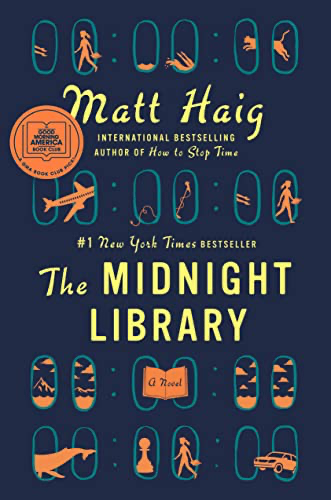
Book Review Tuesday (2/7/23) – The Midnight Library

Happy Tuesday, bibliophiles!

I’ve had this book on my radar for a few years now, but I wanted to read it after the ocean of hype died down. I forgot about it for a while, and I found a copy at my college’s library, and figured that it might be worth a try—I read The Humans, also by Matt Haig, and thought it was decent, so I decided to take a stab. I lowered my expectations to average from all of the hype, but The Midnight Library ended up being even worse than I thought—insultingly un-nuanced and a wholly frustrating read.

Enjoy this week’s review!

The Midnight Library – Matt Haig

Nora Seed has reached what seems to be a dead end in her life. All of her childhood dreams never came to fruition, and now she’s stuck in her thirties with nowhere to go. But after she attempts to take her own life, Nora finds herself in the Midnight Library, where every book on the endless shelves contains an alternate life—lives where she pursued different dreams, different boyfriends, and every other imaginable outcome. As she travels through a multitude of alternate realities, Nora must come to terms with herself and how she wants to live her life—full of regrets, or full of hope?

TW/CW: suicide/suicidal ideations, animal attack, loss of a loved one, depression, panic attacks, animal death, substance abuse, cancer

A recurring thought that came to me while reading The Midnight Library was that it was like if you sucked every ounce of nuance and complexity out of Everything, Everywhere, All At Once. I know full well that Everything came out two years after this novel, but my point still stands. In the abstract, the message of The Midnight Library was good, but it had all the subtlety of a sledgehammer to the face, which made for an exceedingly unpleasant reading experience.

The Midnight Library is a case study in the effect of good or bad execution of a story idea. If you have a good idea but don’t execute it well, the idea itself gets bogged down in all of the structural flaws of the writing itself. The message that Matt Haig tried to get across was a good one—focusing on living your life, not getting bogged down with regrets, and giving yourself a chance to change—but it was so ham-handed in its delivery that all of the nuance (of which there was SO much potential) was erased entirely. It was so clear that The Midnight Library was trying to say something, but without any complexity, it ended up spitting out nothing that we haven’t heard before.

For instance, in one life, Nora Seed is a world-famous rockstar selling out arena shows all around the world. However, as Nora progresses through this alternate timeline, she realizes that this alternate self is feeling empty inside, and that fame has left her a barren shell of what she once was. That’s all well and good, and it’s a good message that fame does not automatically equal happiness. But at the end of the chapter, this message was digestibly packaged into a short platitude, right above Nora’s hypothetical follower count on social media. It was almost insulting how it was delivered—what was the point of that when Haig showed it through his writing just a page before? Even if you’re not a writer, if you’re ever taught about writing in school, “show, don’t tell” is one of the first principles that you’re taught. As a reader, it feels insulting to one’s intelligence: I got the message just fine, why be that redundant and blatantly obvious?

Furthermore, a lot of the potential lives, even though they were neatly and obviously packaged to the reader to teach them a lesson, ended up contributing nothing to the plot. When they did contribute, the message was reiterated by the all-knowing librarian, as if I’m watching a children’s show, each episode ending with an “and what did we learn today, kids?” kind of message. The Midnight Library isn’t all that long of a book, but a good quarter of the misadventures through Nora’s alternate lives didn’t serve any purpose, even though that was the obvious intent.

Lastly—Matt Haig isn’t at fault for this first part, but dear lord, do not let the synopsis fool you. This is not a feel-good book. The inciting incident for The Midnight Library is Nora attempting suicide, and that got glossed over so much in the marketing of the book. For the first part of the book, I feel like Nora’s mental health issues, although they aren’t explicitly named, were dealt with respectfully, but once it got to the end of the book, it took a turn for the worse. As if by magic, Nora’s depression is cured, and she now has the will to live again, after glimpsing all of her alternate lives. It really felt harmful—yes, this is a sci-fi/fantasy book, but depression and other mental health issues don’t magically disappear after a romp through alternate realities. Downplaying something as serious as depression and suicide really didn’t sit right with me, and it felt like the ending of the book erased something that should have been acknowledged far more in this book.

All in all, a disappointing book that decided to take its well-intentioned message and knock you over the head with it, thereby erasing all attempts at nuance and complexity. 2 stars.

The Midnight Library is a standalone, but Matt Haig is also the author of The Humans, How to Stop Time, The Radleys, and several other books.

Today’s song:

I like this one even more than Panopticom—I can’t wait to see what else this album brings!!

That’s it for this week’s Book Review Tuesday! Have a wonderful rest of your day, and take care of yourselves!
Posted in Book Review Tuesday

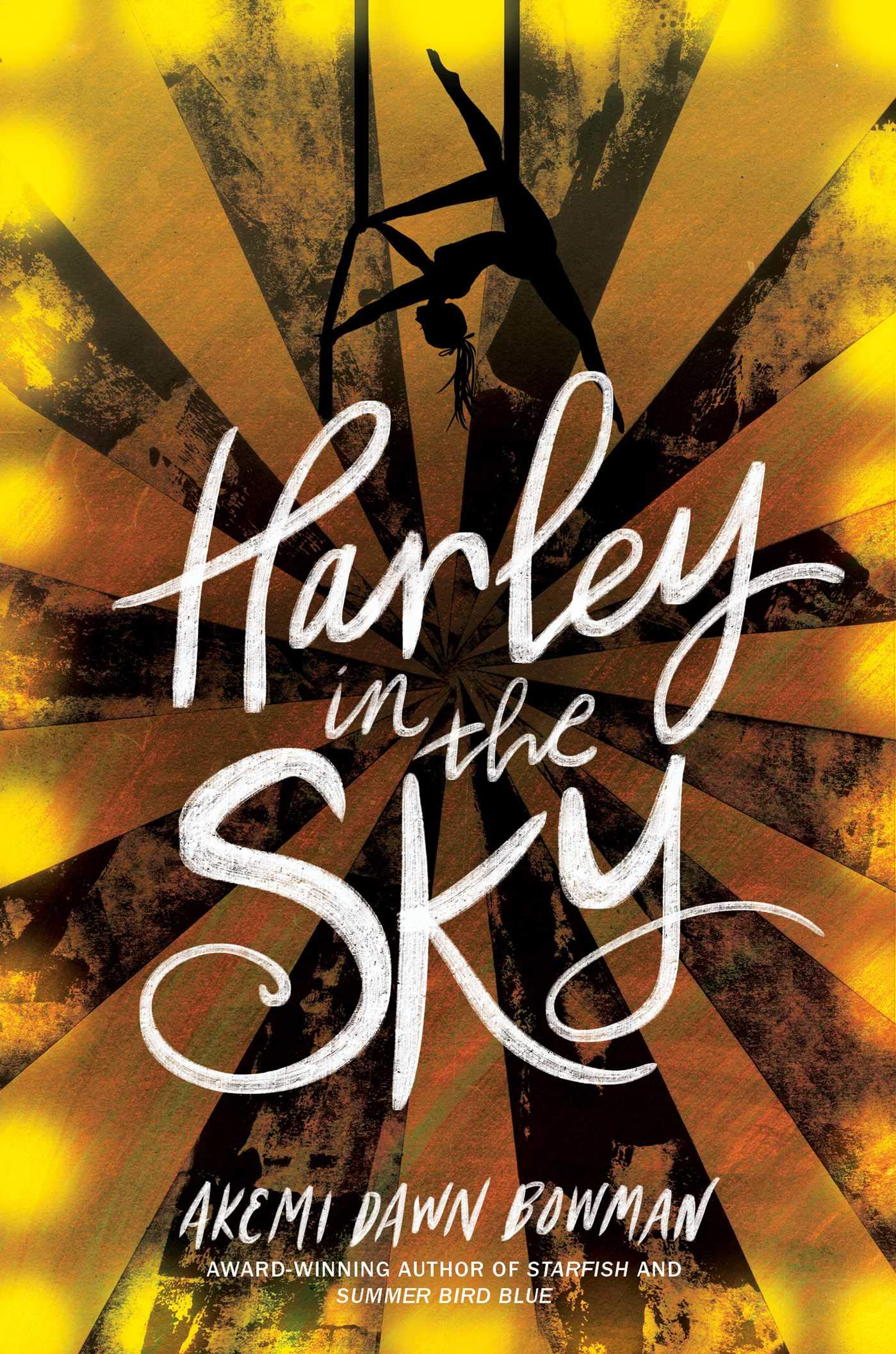
Book Review Tuesday (9/21/21) – Harley in the Sky

Happy Tuesday, bibliophiles!

I’ve been a fan of Akemi Dawn Bowman ever since I read Starfish around three years ago. This is the latest of her books that I’ve read, and I’m glad to say that it doesn’t disappoint – just as poignant and gut-wrenching as her other novels!

Enjoy this week’s review!

Amazon.com: Harley in the Sky: 9781534437128: Bowman, Akemi Dawn: Books

Harley in the Sky – Akemi Dawn Bowman

Harley Milano grew up surrounded by vibrant costumes and trapeze artists in her parents’ circus. Her dream has always been to join the circus, but her parents want her to go to college for computer science instead.

After a fight on her eighteenth birthday, Harley goes against everything that they’ve ever wished for–she runs away and joins the Maison du Mystère, the rival traveling circus. There, she is thrust into the world of the circus, quickly falling in love and rising to the top of the hierarchy as one of its lead trapeze artists. But Harley’s past is catching up to her, and she must grapple with the people she betrayed in order to see her dreams come to fruition.

WIL WHEATON dot TUMBLR dot COM

TW/CW: depression, racism, emotional manipulation, suicidal ideation

I think all of us have read plenty of books about characters running away to pursue their dreams and leaving everything they knew behind. But very few discuss the consequences–the people they leave behind and the emotional wounds that they may open up. Harley in the Sky is one such book, and man, it was just as heart-wrenching as Akemi Dawn Bowman’s other novels. All at once tender, heavy, and messy, it grapples with all sorts of hefty emotions and handles them all with aplomb.

Harley was, by all means, a very unlikeable character. She has a plethora of issues that she leaves undealt with when she takes off in search of her circus dreams, but you can’t help but root for her. I will say that I related to her on one plane: that of her mixed-race identity. Both of Harley’s parents are biracial, and as a result, she feels as though she doesn’t fit in anywhere. As a mixed-race person myself, Bowman handled her identity in a way that really resonated with me. And despite how tangled of a character Harley is, she displays some significant growth over the course of the novel, and by the end, she begins to reconcile with everything that she’s done and everything she’s left behind.

The rest of the characters also shone! There was such a unique and diverse cast, and the circuses that Bowman created felt like ones that might travel cross-country in the real world. Each character was refreshingly distinct, all with unique backstories and personalities. I especially loved Vas–yeah, yeah, I’m a sucker for the brooding British guys who play instruments, but he was such a well-fleshed-out character, both standing on his own and as a love interest for Harley.

As with all of Akemi Dawn Bowman’s novels, Harley in the Sky deals with some heavy topics. I won’t lie–it was a hard book to read at times, but Bowman handles all of these topics, from undiagnosed mental illness to toxic relationships, with incredible skill. All of her books stir up such profound emotion in me, and this one was no exception.

All in all, a novel that was all at once tender and heartbreaking that will leave a permanent mark on your heart. 4 stars!

circus gifs Page 12 | WiffleGif

Harley in the Sky is a standalone, but Akemi Dawn Bowman is also the author of Starfish, Summer Bird Blue, and the Infinity Courts series, which includes The Infinity Courts, and the forthcoming The Genesis Wars.

Today’s song:

That’s it for this week’s Book Review Tuesday! Have a wonderful rest of your day, and take care of yourselves!