

Happy Sunday, bibliophiles! I hope this week has treated you well.
This week: I wish I’d gotten this unintentionally all-women lineup (or, all frontwomen, at least) for March, but every month is Women’s Month! (Especially now…reach out to your representatives about the SAVE Act, for the love of god. Protect your right to vote!) Also, the broad spectrum of romance: rollerskating past a cute person’s window on one end, and beating up creepy guys in the club on the other. Duality of woman.
Enjoy this week’s songs!
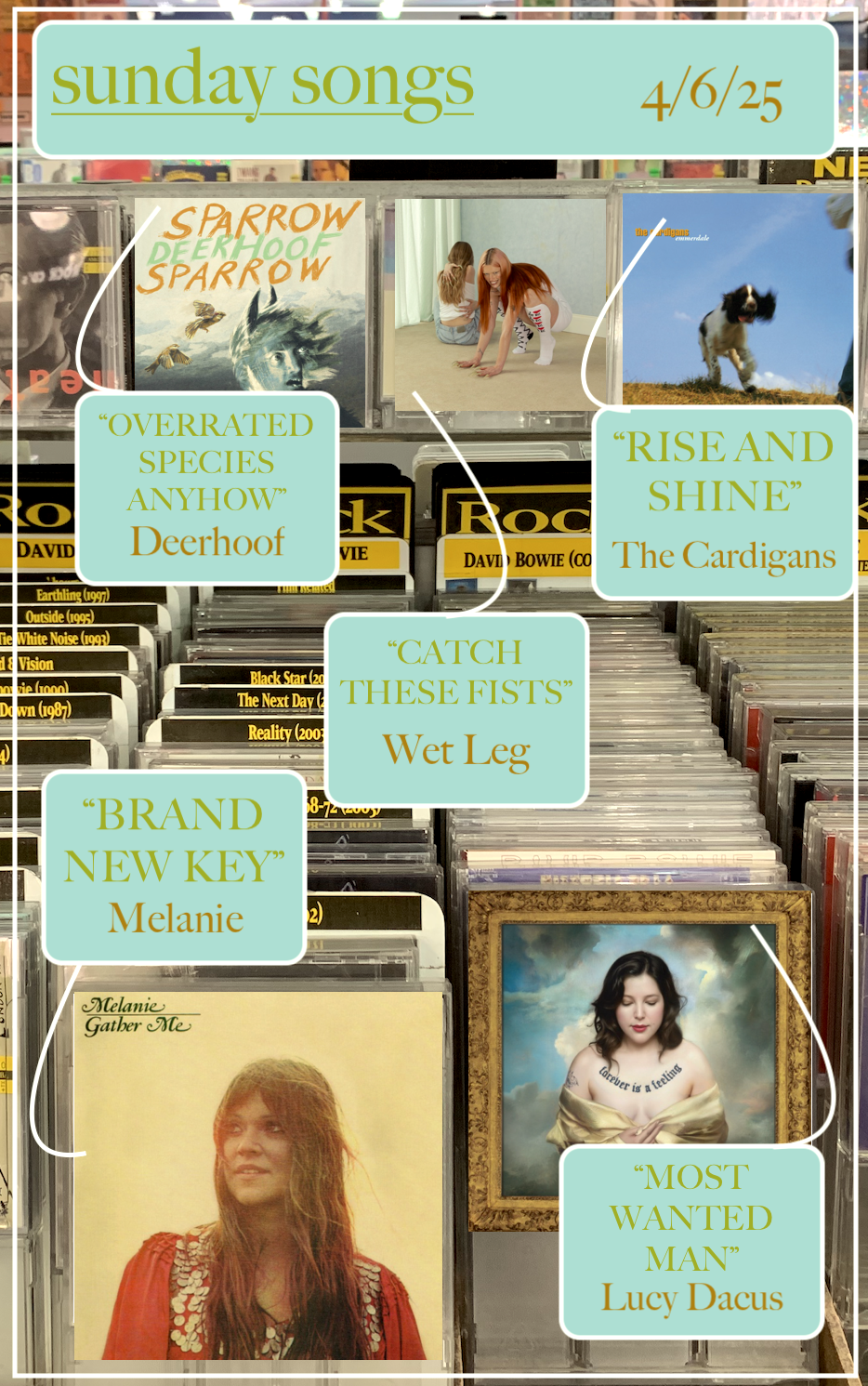
SUNDAY SONGS: 4/6/25
Somebody needs to start a hypothetical support group for carefree, childhood-inspired songs that get slapped with distinctly “adult” interpretations (see: “Lookin’ Out My Back Door,” a delightful song about imagination that everybody chalks up to LSD). Yeah, yeah, you can’t control how your work will be interpreted, but for the love of god, EVERYTHING ROD-SHAPED ISN’T AN INNUENDO. Quit summoning Freud with an ouija board…why can’t we as a culture let go of darkening everything inspired by childhood? Everybody just seems content to label anything childish as naïve, whack it with a frying pan, and justify its essence by saying that there’s a “mature” meaning behind it…can you not digest a little unadulterated happiness without your edgelord pills?
Anyways. As Melanie tells it, the song was inspired by eating McDonald’s after an extensive fast: “no sooner after I finished that last bite of my burger …that song was in my head. The aroma brought back memories of roller skating and learning to ride a bike and the vision of my dad holding the back fender of the tire.” It’s such a weightless song—from the minute the opening riff kicks in, it never walks—it skips between jump-ropes. “Brand New Key” is just so charmingly joyous to me. Melanie boldly announces herself with a smile that never fades as the song retains a timeless bounce that makes every step into a little shimmy, every turn of the shoulders into a carefree sway. Yet even with the folksy instrumentals, the kind that should give this song a one-way ticket into Wes Anderson’s next movie, it’s Melanie’s voice that makes “Brand New Key.” She takes on the persistence of the song’s narrator with a self-assured confidence—she can roller-skate anywhere she pleases, and she’ll do it with gusto. The way she crows the iconic line in the second verse—”For someone who can’t drive, I’ve been all around the world/Some people say I’ve done alright for a girl”—can’t inspire any emotion other than pure, fist-pumping joy. “Brand New Key” isn’t exactly some sort of revolutionary work of feminism (and that might be as much of a stretch as the innuendo), but I can’t help but think of Melanie’s boldness and relentless devotion to her creative vision, so soon after she’d performed at Woodstock at the age of 22 and begun to make a name for herself as an artist. “Brand New Key” has gone down in history more as a novelty song than anything, but it’s stuck for a reason—I can’t help but bob up and down with joy with every successive play.
…AND A BOOK TO GO WITH IT:
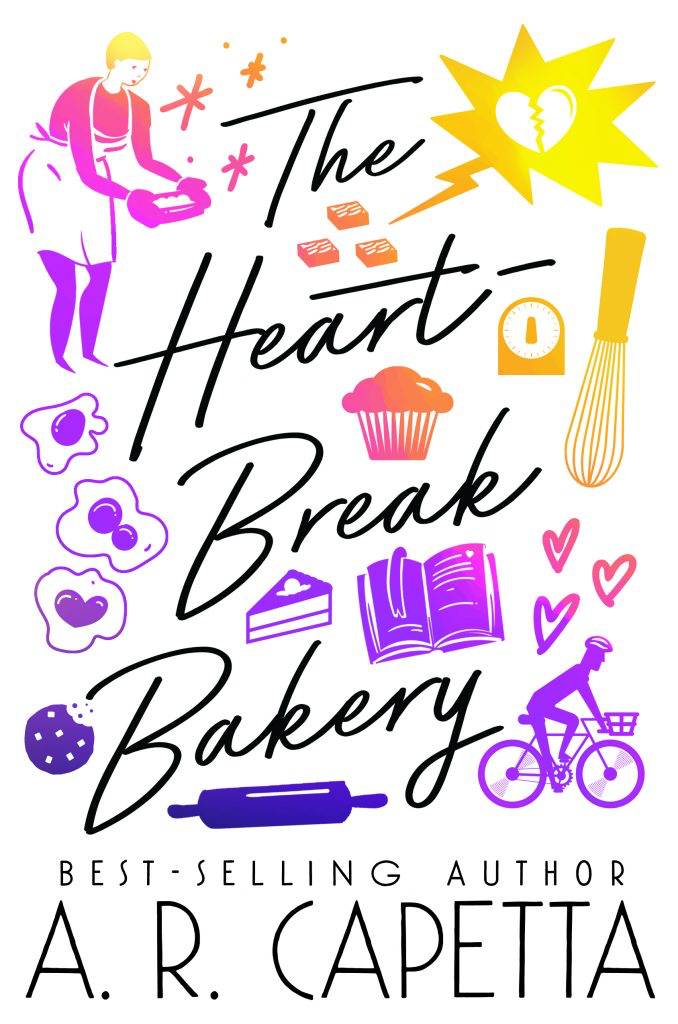
The Heartbreak Bakery – A.R. Capetta – The romance isn’t a one-to-one match, obviously, but the carefree spirit of young love (and bicycle-riding) remains the same.
“Most Wanted Man” – Lucy Dacus
Now that the dust has settled and I’ve listened more to Forever is a Feeling, it’s still a good album, but not the good I can usually expect from Lucy Dacus. After my first listen, I came away with the thought that the singles were better than the album as a whole, but also that she’d almost sold out, that dreaded stage in an artist’s career. It’s not like she wasn’t indie-popular before, but now she’s on the verge of popular popular, dueting with Hozier popular. I don’t believe Dacus, with her penchant for turns of phrase too clever to fully fit any kind of mold, will ever go fully mainstream. But with the relatively toned-down spirit of Forever is a Feeling, I can’t help but think that it was the doing of a major label that made some of these songs…almost tame. Even though the same amount of emotional explosion remains under the surface, for half of the songs, it almost feels curtailed. She’s never allowed an impassioned belt or more than a small guitar solo at the end of a song. I’m not saying that she was, y’know, absolutely screamo or anything, but she knew how to give even the smallest moments the weight of the world. This album should’ve been the perfect opportunity, given that it’s crafted from heartfelt vignettes of falling in love with Julien Baker (SO HAPPY FOR THEM!!! my boys…I wish them all the best!! 🥹). Maybe it’s just personal. It’s always weird to see indie artists get popular. Who knows.
That being said, it’s not like Forever is a Feeling was a bad album by any stretch. Lyrics? Always top-notch. And when it was able to delve into the deepest well of emotion (see: “Lost Time”), it got plenty of moments of true, misty-eyed beauty and affection. “Most Wanted Man” was one of the immediate standouts, and not just because of the tempo. With it’s upbeat, guitar-driven sway, Dacus constructs a tattered, energetic scrapbook styled like a blurry-viewed movie montage of moments with Julien Baker: “Tied in a double knot/Just like our legs all double knotted/In the morning at the Ritz/$700 dollar room, still drinking coffee from the Keurig/We’re soaking up the luxuries on someone else’s dime.” Dacus called it the song on the album that’s most overtly about her relationship with Baker, and it’s full of unbridled joy for what they’ve had, but also for the adventures they’ve yet to have together, repeating a starry-eyed refrain of “I’ll have time to write the book on you.” Besides the healing reference to “Everybody Does” (“Gripping my inner thigh/Like if you don’t, I’m gonna run”…right in the 2020 Madeline) and Baker herself contributing harmonies, it’s a song brimming with hope, of seizing the moment, and yet holding the excitement of spending your life with someone in your heart. Major label or no, they can’t stop Lucy Dacus from penning the most heartfelt songs about relationships, be they romantic or platonic.
…AND A BOOK TO GO WITH IT:
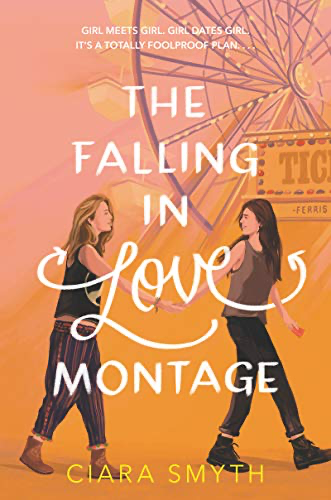
The Falling in Love Montage – Ciara Smyth – A similarly energetic and tender (and sapphic!) story of love and adventuring.
“Overrated Species Anyhow” – Deerhoof
I know an album intro when I see one…and I heard this single before Deerhoof announced their new album, Noble and Godlike in Ruin. It’s short, anthemic, it feels like a nice thesis…and it’s a good thesis to boot: “Love to all my aliens/Lost, despised, or feared/You are why I wrote these passages.” I feel like that scene in Into the Spiderverse at Peter Parker’s funeral where one of many strangers in a Spider-Man masks tells Miles Morales that “he’s probably not talking about you,” but I will gladly be accepted as one of said aliens. Hey, “Future Teenage Cave Artists” got me through a pretty nasty bout of anxiety, and I cherish it to this day.
Thus far, some of the album seems to be about frontwoman Satomi Matsuzaki’s experience as an immigrant in America alongside all of the hateful rhetoric that is (and has always been) multiplying; Admittedly, I balked at the use of the word “savages” in the way that it’s used here, but I can see it as being a reclamation of a term that has been historically lobbed against immigrants. (Still not ideal, but I can at least see the justification of it.) “Overrated Species Anyhow” feels almost choir-like, meant to be sung as a kind of incantation of sanctuary; amidst the chaotic melding of birdsong, “Via Chicago”-like drumming, and a cascade of rippling instrumentals, the track serves as both an outstretched hand to the othered and an opening of the album’s curtain. I don’t think I’m dedicated enough of a fan to go into Noble and Godlike in Ruin, but this offering is a lovely, delightfully weird one, as Deerhoof always is.
…AND A BOOK TO GO WITH IT:
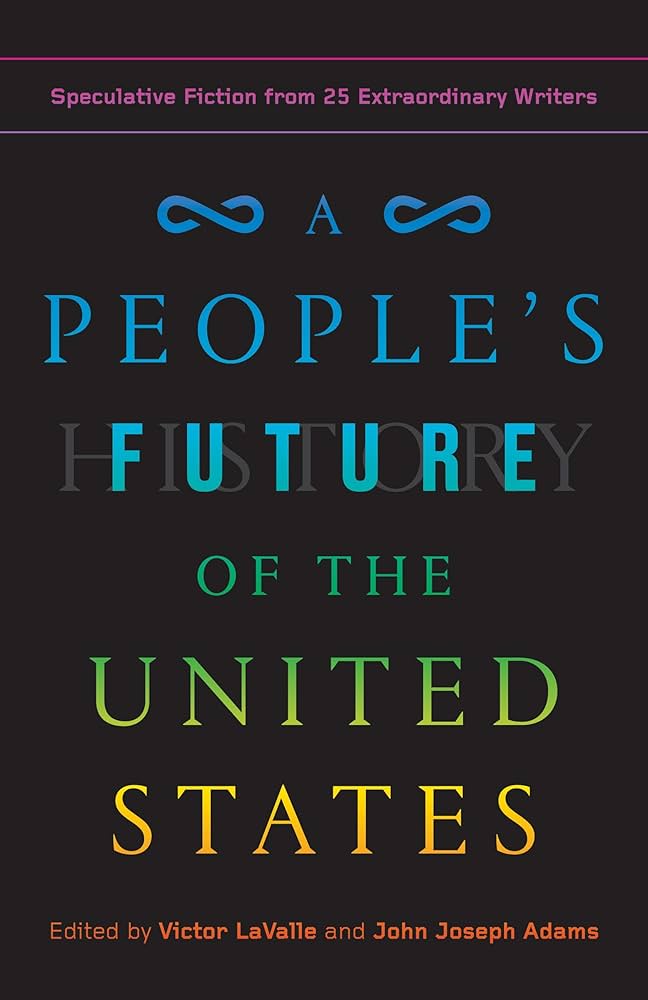
A People’s Future of the United States – edited by Victor LaValle (anthology) – at times, frightening (and sometimes too feasible) visions of the future, but all containing stories of marginalized resistance.
Wet Leg’s self-titled 2022 debut isn’t a particular favorite of mine, but it marked its place right when I graduated high school—it was full of droll, commandingly danceable anthems for that short time in my life. Yet even then, I got the sense that their songs were on the repetitive side. They’re a bit like Weezer, in a way—they have maybe two or three songs, but all of them are great. They know what they’re good at. Now that Rhian Teasdale and Hester Chambers have announced their next album, moisturizer (are all of their albums going to be synonyms for “wet?” damp, coming in 2028!), it seems as though they’re trodding on the same path. Here’s the thing: it’s a good path. I feel like it’d be too harsh to call them one trick ponies, because they’ve got at least two or three, but those tricks? They’re infectious, catchy, and begging to be played over and over. “catch these fists” may be covering the same ground they’ve covered for three years (unsatisfying romance, drugs, clubbing, shitty men), but they inject it with energy that would make anyone want to get up and have some fisticuffs. The disaffected, rhythmic way that Teasdale intones the lines of “Can you catch a medicine ball?/Can you catch yourself when you fall?” provide a slinking hook for a song with a killer right hook that never loses its potency.
…AND A BOOK TO GO WITH IT:
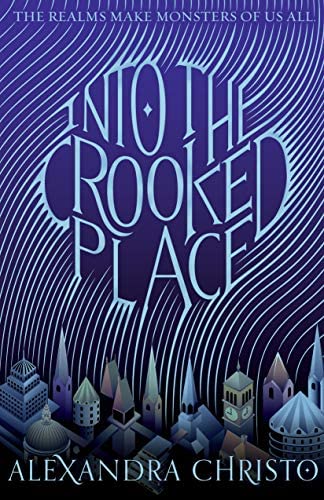
Into the Crooked Place – Alexandra Christo – an action-packed match for the high energy (and fist-fighting) in this song.
“Rise and Shine” – The Cardigans
Whew, we’ve got another whiplash transition here…not necessarily from the tempo, but without a doubt, the lyrics. I guess if we’re going linearly, we’re healing? You gotta beat scummy men hitting on you to a pulp sometimes, but then you’ve got to go reconnect with nature and regain your faith in humanity the next morning. Healing! We’re circling back to Melanie’s unfettered happiness in no time.
Leave it to The Cardigans to bring that pure levity. “Rise & Shine” was the first song that they recorded with Nina Persson as the lead vocalist, which…the fact that they considered anyone else but her is astounding, given how enduring and clear her voice has proven to be, but it seems that it’s the reason they began their upward descent to fame. It later came on their debut album, Emmerdale, and the track feels as free as the album cover’s dog bounding through a field of grass. With its jangly guitars and tambourine percussion, there’s an inherent scent of summer that they’ve bottled inside every note as Persson sings of reconnecting with nature: “I want to be alone for a while/I want to Earth to breath to me/I want the ways to grow loud/I want the sun to bleed down.” Despite the angst aplenty that they’d later become masters at (see: “Step On Me”), this kind of upbeat, optimistic spirit became an undercurrent of their music that keeps me returning time after time. Even when Nina Persson’s in abject misery, they at least make you want to dance, right?
…AND A BOOK TO GO WITH IT:
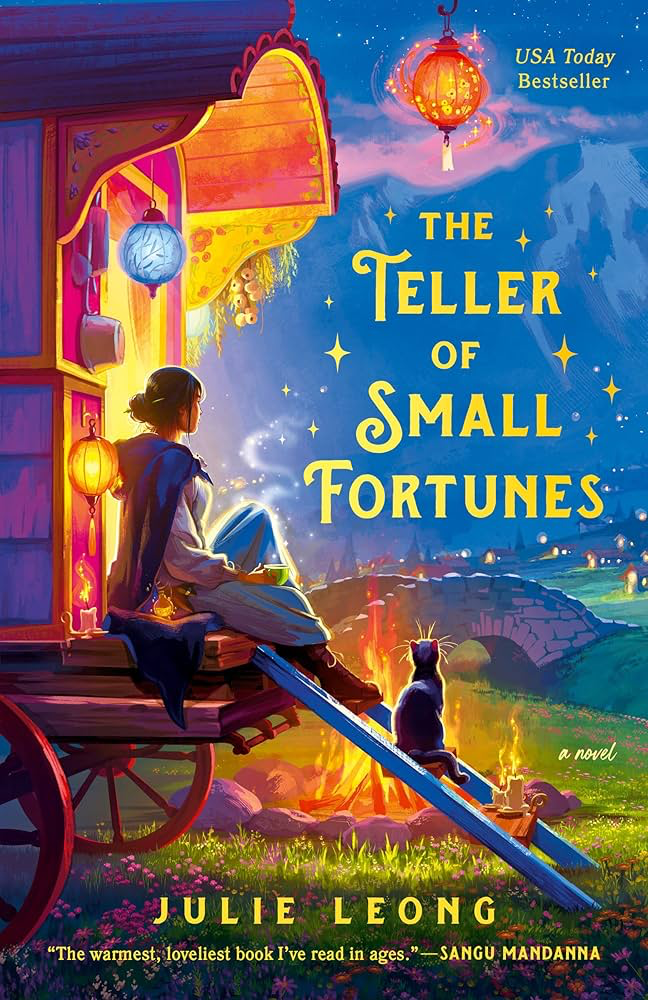
The Teller of Small Fortunes – Julie Leong – “I want to be alone for a while/I want earth to breathe to me/I want the waves to grow loud/I want the sun to bleed down…”
Since this post consists entirely of songs, consider all of them to be today’s song.
That’s it for this week’s Sunday Songs! Have a wonderful rest of your day, and take care of yourselves!


 The Bookish Mutant