
Happy Sunday, bibliophiles! I hope this week has treated you well.
This week: we’ve got a post full of songs with very specific lyrics that have been knocking around in my brain lately—poetry, all of it. Plus, albums that went triple platinum in my mind, but seemingly nowhere else (sorry, Cory Hanson).
Enjoy this week’s songs!
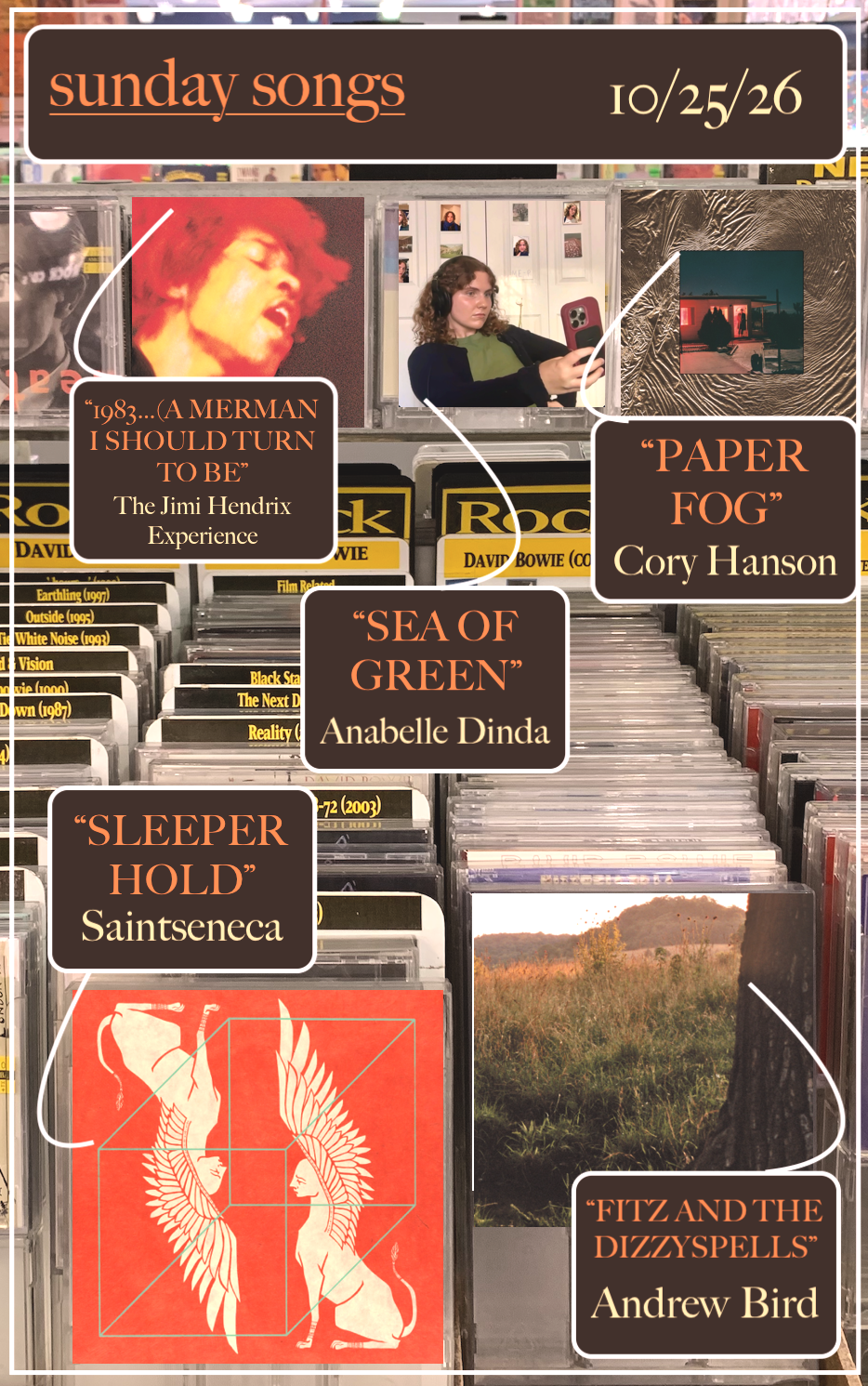
SUNDAY SONGS: 10/25/26
“Heaven is a chemical/Swimmin’ laps ’round the bowl of your skull/But tucked into your subtle frame/The keys to the kingdom lie in wait.”
Things to be grateful for: when your brain summons a song out of the cobwebbiest part of your mind that you’d forgotten about for years like a dusty whack-a-mole. I feel like I’ve been dropkicked back into 2015. In a good way, I promise. Simpler times, and also, a great breeding ground for fun indie rock like this. “Sleeper Hold” only existed in the limbo of my dad’s car for years before I remembered it again last week. Eleven years later (god, I feel old), I’m so keen on the melody itself, but man, the lyrics? Dude. Back when “Sleeper Hold” was released, bandleader Zac Little explained that the song was “a pop song about the physics of consciousness. What is a dream made of? What is the thingy-ness of thought? Where does the substance of perception converge with the perceived?” Which, okay, easy on the pontification, my guy, but if that was the aim, then “Sleeper Hold” was a rousing success.
Like that excerpt, the lyrics of “Sleeper Hold” tread the fine line of being wordy in a show-offy way (very 2015 hipster) and being wordy just because that’s how Little is/because it’s fun; granted, this is the only Saintseneca song I know, but it seems on brand for him. Either way, my English major brain is loving the fact that this is the only pop song I know to use the word “somnolence” and have it sort of feel natural. Grappling with the nature of consciousness and existence is a real tall order for a song this short, but “Sleeper Hold” manages to wrap it up in cheerful folk-rock ribbons. Maryn Jones’s keen vocals is the key to the message landing, her soaring delivery making the existential lyrics about transience and the celebration of the experience of being alive feel all the more like a celebration: “Oh, end it now/If I’m river bottom-bound/Yeah, this lethargy/When induced by summer’s heat/Oh, how it is so sweet/When you’ve got your drink to drink.” The “keys to the kingdom” in the second verse strike me as that consciousness itself; are we any closer to comprehending the nature of consciousness? No. Can we still recognize the ecstasy of being alive as a gift? A resounding yes, according to Zac Little—and me, honestly. That chorus perfectly encapsulates those bouts of being existential when your thoughts are interrupted by the startling revelation of being alive—and how wondrous that is. Sometimes you just have to say “damn, being alive is strange” and go about the rest of your day. Such is the nature of existence.
…AND A BOOK TO GO WITH IT:
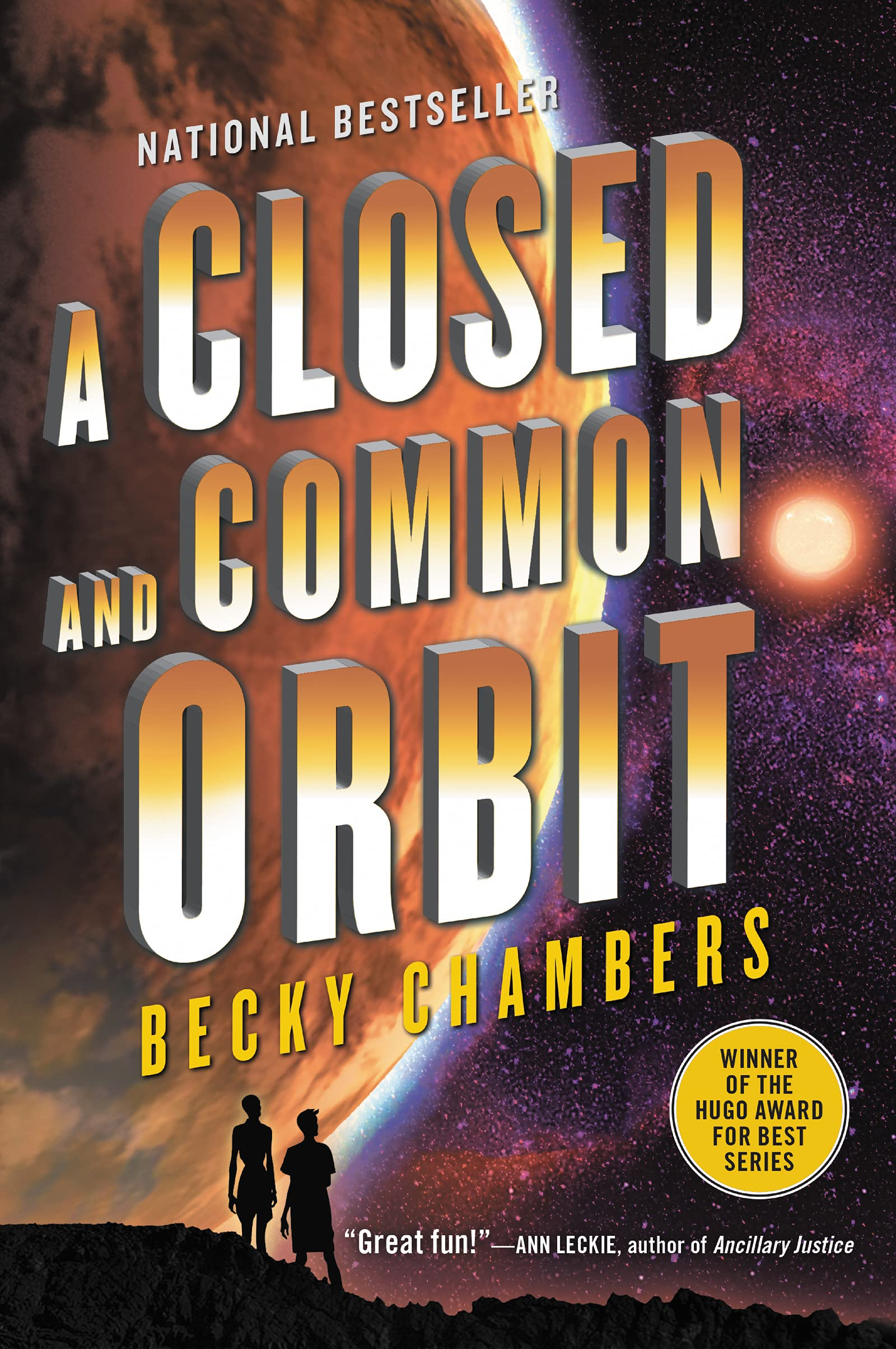
A Closed and Common Orbit (Wayfarers, #2) – Becky Chambers – “Sleep and need, when in accordance/Are luxuries seldom afforded/To those who sow solely fauna/Somnolence, all you ever wanted…”
“Fitz and the Dizzyspells” – Andrew Bird
“Flailing to the whir of a snack machine/And muted screams of an old regime/And then, oh/Something gets in/The nightshade gets in it…”
Save some of that poetry for the rest of us, Andrew Bird! Damn!! Each one of his songs feels like a baseball bat to the head reminding me that I need to listen to more of his stuff. Noble Beast seems like the way to go, given how this track and the skittering, Radiohead-like “Not a Robot, But a Ghost” have had a chokehold on me. Fall is also a very Andrew Bird season, anyway.
Whatever the case, Andrew Bird—violin maestro, whistler for hire, occasional 1950’s Kansas City funeral director, magical dulcimer repairman, and Viking funeral archer, according to this video—has encapsulated a whole world in “Fitz and the Dizzyspells.” First off, I commend the sheer whimsy the man has in his soul to give this song a title that wonderful. It sounds like a band of pixies and sprites the size of your thumb that use dandelion stems as flutes and drum on acorns. Bird has such an innate way of arranging words to me. He’s one of those artists like A.C. Newman, Kevin Barnes, or Lisa Germano, that seem to have an ingrained knowledge of how words meld in the most effective ways possible, like toy blocks that slide together pitch-perfectly. The lyrics I pasted above keep on returning to me—there’s something about the consonant clicks of “the whir of a snack machine” and the subsequent rhyming and juxtaposition of “screams of an old regime” sidled next to it that makes me rub my hands together like a fly. (Plus, there’s the innocuous feel of “snack machine” pairs with the more sinister “screams of an old regime!” The layers!!) And that’s not even talking about the “aubergine” rhyme a few lines after that! The same works for “fits and dizzyspells” with the satisfying rhyming of the “i” sounds and the delightfulness of the lyrics itself.
Of course, I can’t go for a full Andrew Bird song without commending how incredible of an arranger he is. “Fitz and the Dizzyspells” is nothing short of cinematic, with the fast-paced rhythm of flying in a whimsical, wooden airplane through a dewy, autumnal fairy forest. Between fluttering violins, plinking xylophones and his signature harmonic whistling, which sounds like birdsong in this setting, it feels like a sprint through a wide world of wonders. You get the feeling of being inside a fairy house of Bird’s creation, decorated with all of his favorite words and sounds. It’s a marvel of a song.
BONUS: because I’m a niche Gen Z-er and I’m not about to let you forget about Dr. Strings:
…AND A BOOK TO GO WITH IT:
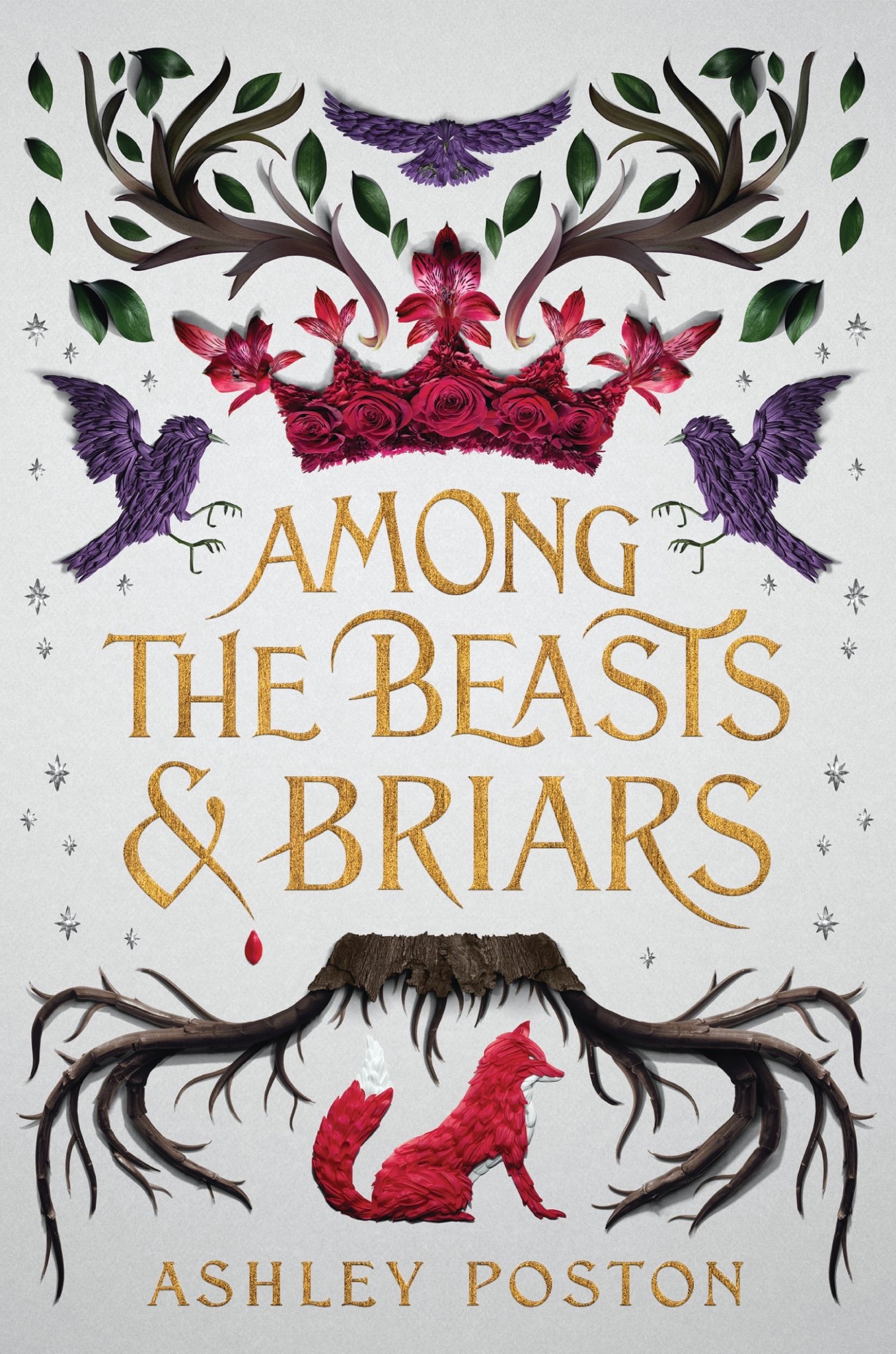
Among the Beasts and Briars – Ashley Poston – this is a fitting jaunt for an exploration through strange, magical forests.
“1983…(A Merman I Should Turn to Be)” – The Jimi Hendrix Experience
Half of the reviews of “1983…(A Merman I Should Turn to Be)” are about how it’s this drugged-out trip—Chris Jones called it a “stoned classic” back in 2007. Given Jimi Hendrix’s drug use at the time, there’s some painful truth to that. But I think a lot of what gets labeled as stoner music is just songs that dare to be more epic and expansive. Spiritualized comes to mind, and yes, drugs have played a critical part in his musical trajectory, but he’s still out here making 9-minute cinematic opuses after getting clean and becoming a father. Sure, there’s an extended, jammy stretch in the middle of this track that’s pretty much engineered for somebody to trip balls to, as was a lot of music of this genre in the late ’60s. Drugs or not, I can’t imagine how mind-shattering this was to the average listener back in 1968. It makes me think about just how rapidly bonkers the development of technology (and by extension, the innovations in music) was; we went from dinky planes in the 1910’s to the internet by the end of the century, and we went from scratchy folk tunes on wax cylinders to 13-minute, apocalyptic epics like this with 30 years more innovation still to go.
“1983…(A Merman I Should Turn to Be)” is just mind-blowing. It’s one of those great 10+ minute tracks that you barely even process is that long because you’re just so swept up in the experience. (No pun intended.) Granted, I haven’t gotten that deep into the Jimi Hendrix Experience’s discography (and it’s high time that I do, Jesus Christ…I’ve basically listened to 2/3rds of Are You Experienced? at this point), but it takes a far darker turn than a lot of his music seems to. Hendrix paints a picture of a war-torn world, scorched earth, hellfire and brimstone, where the only escape is to return to our birthplace: the ocean. His apocalyptic vision of lovers escaping the fatal fray into the sea is delivered in a deceptively comforting, soft tone—it’s jarring to hear him muttering about “the Arctic stains from silvery blue to red” and the “screams of pain” in the same cadence that he sang “Little Wing,” for god’s sakes. That extended, instrumental stretch in the belly of the track becomes a kind of oral worldbuilding, the drifting flutes and murmuring guitars becoming crashing waves on a sandy shore and the trails of bubbles accompanying people’s lithe forms as they pierce the water’s surface. It’s nothing short of monumental, a towering giant of a track that’s just as revelatory as it must’ve been at the end of the ’60s.
…AND A BOOK TO GO WITH IT:

The Light at the Bottom of the World – London Shah – “The machine that we built/Would never save us, that’s what they say/That’s why they ain’t coming with us today/And they also said that it’s impossible/For a man to live and breathe underwater…”
“Sea of Green” – Annabelle Dinda
“In the pollen, resting neatly on the table/I see green, I see green/Are the planets strung like baubles on a cable/In between a sea of green?”
Hoowee. That’s a line right there. Something about the orrery-like imagery combined with the repetition of the -ble ending (“baubles” and “cable”) just makes it such a perfect combination. “Sea of Green” has a lot of potency for a track that’s less than two and a half minutes—and I think it’s suited best for this short yet impactful length. Between self-harmonizations and gentle strums of her acoustic guitar, Annabelle Dinda paints a picture that’s fading away as she writes the song itself, of memories dissipating with age: “Stems are growing through the cracks of what was built here/There are vines to pull this little life along/Is that why each time a memory does wilt here/I convince myself I need to write a song?” Her juxtaposition of ordinary vignettes—an often-used songwriting technique these days—against the fact that these vignettes are actively disappearing make the underlying message all the more melancholy, with Dinda wistfully conjuring memories as the world around her changes into something unrecognizable.
…AND A BOOK TO GO WITH IT:
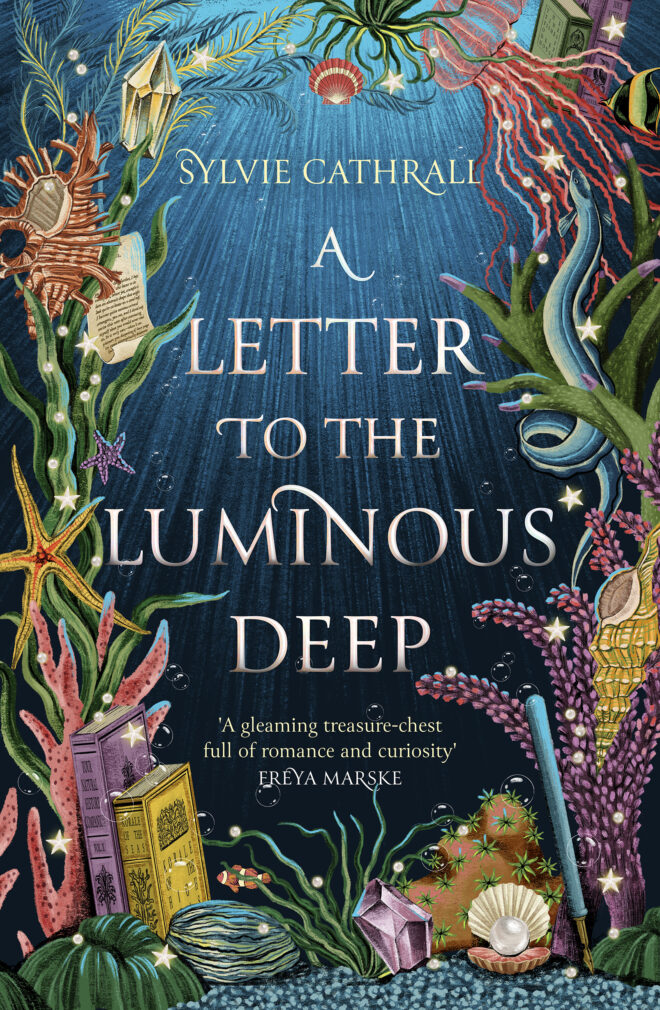
A Letter to the Luminous Deep – Sylvie Cathrall – “Is it where we all emerge from and return to/Sea of green, sea of green/And it’s funny how I don’t remember places/Even places I have known a thousand times…”
I probably just haven’t engaged with the hypothetical Cory Hanson fandom enough, but I swear Pale Horse Rider isn’t talked about enough. It’s not some underground masterpiece or anything, but it certainly deserves a crumb more recognition. One thing’s for sure: the whole album pretty much went triple-platinum on my couch while I was doing online school. It’s a capital-P Pandemic album, but one that thankfully wasn’t marred by how miserable that time generally was for me.
Pale Horse Rider is a nicely atmospheric album, gentler than Hanson tends to be (especially where Wand is concerned). Though some of the other tracks fall by the wayside for me, “Paper Fog” is the one that cuts through the noise every time. (See also: the title track, “Pale Horse Rider,” is also pretty fantastic and worth revisiting.) It’s had a time-honored spot on my fall playlist for years—it has an easy chill to it that pairs well with the cold air on a November morning. And what an opening track for Pale Horse Rider! Atmospheric and instantly enveloping, “Paper Fog” has the rhythm of being cradled, cocooned in a predawn mist that unfolds like, well…fog. And if we’re connecting the “paper” bit to it, the title perfectly embodies the music, with its wafer-thin, delicate textures. Even amidst the lightning-like bolts of electric guitar freak-outage interspersed between the acoustic anchoring, “Paper Fog” dwells in the space between your eyelids, a melody that feels like it lives in the space between your eyelids as you wake up in the morning.
…AND A BOOK TO GO WITH IT:
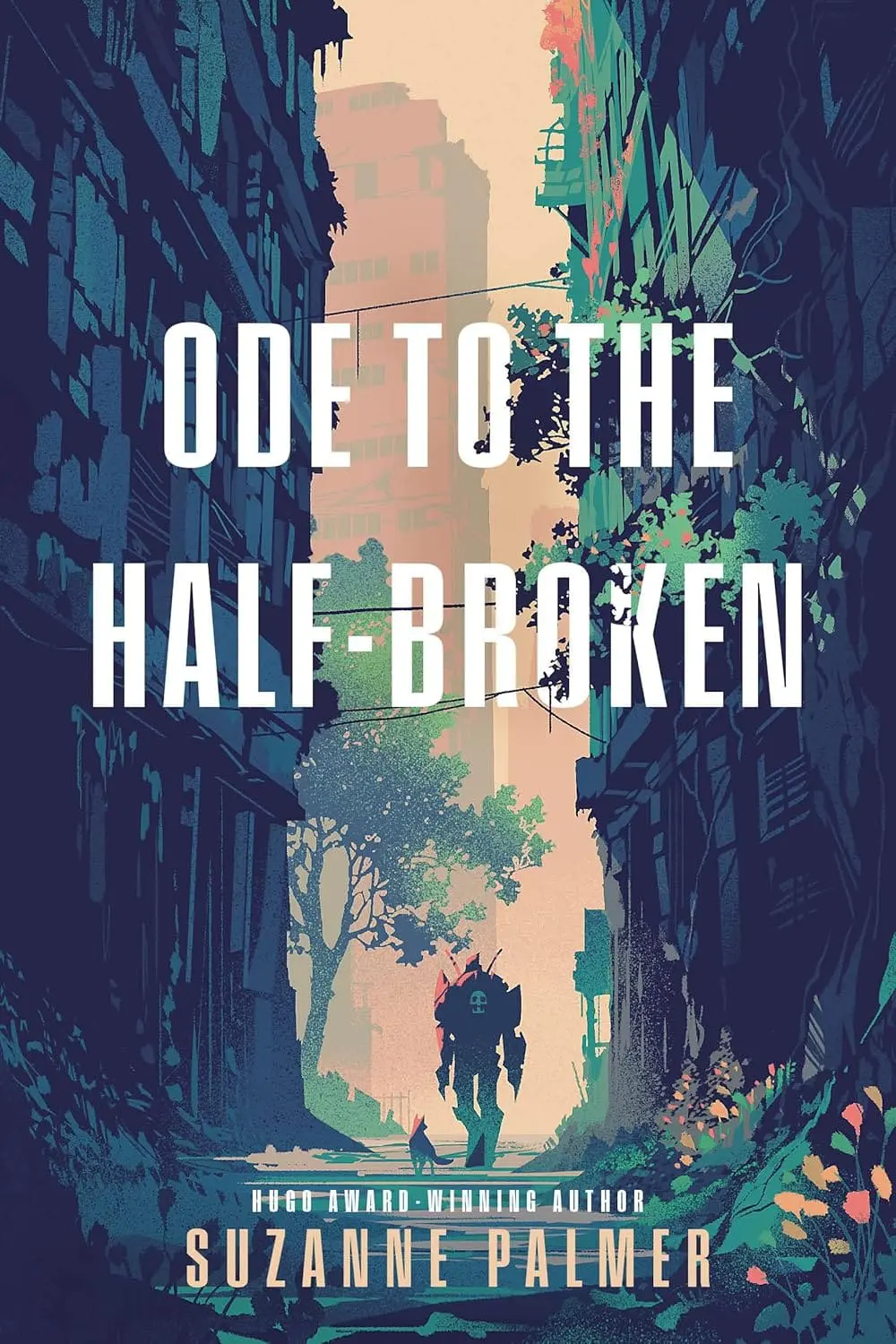
Ode to the Half-Broken – Suzanne Palmer – somehow, this is the perfect soundtrack to robots wandering around the ruins of the New York Botanical Gardens after the apocalypse.
Since this post consists entirely of songs, consider all of them to be today’s song.
That’s it for this week’s Sunday Songs! Have a wonderful rest of your day, and take care of yourselves!