Posted in Sunday Songs

Sunday Songs: 10/27/24

Happy Sunday, bibliophiles! I hope this week has treated you well.

This week: if I had a nickel for every year that I’ve had a bright green Sunday Songs color scheme right before Halloween, I’d have two nickels, which isn’t a lot, but it’s weird that it happened twice…bon appetit.

Enjoy this week’s songs!
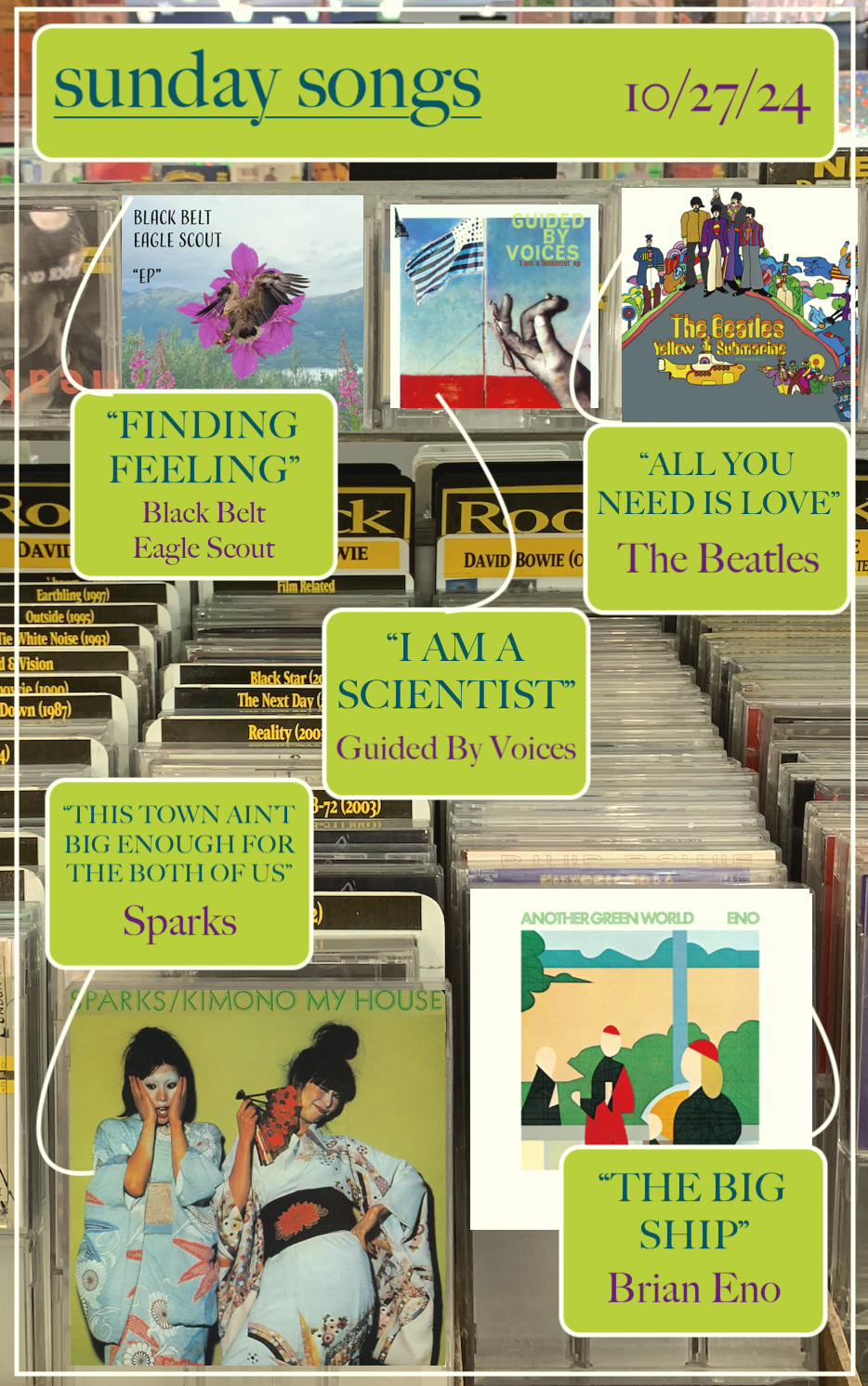
SUNDAY SONGS: 10/27/24

“This Town Ain’t Big Enough for the Both of Us” – Sparks

Because all you musicians totally want my unsolicited advice, I’ll offer it up: this is peak walk-on music. Imagine the band coming onstage the minute the drums kick in after the gunshot sound effect at 0:35. Come on.

In my glacial but nonetheless exploration of Sparks, I realized that I sort of knew this one—it’s one of their most popular and enduring songs, but I knew it from the cover that Siouxsie and the Banshees did, which should tell you all you need to know about how I was raised (read: a hipster). I think my desire for somebody to use this as walk-on music stems from just how punchily theatrical it is. It demands dynamic movement, silk, and finger guns fired into the audience of an opera house. Even though I’d place it well on the outskirts of glam (somewhere near Brian Eno ca. 1974), it walks that line between pure rock and full-face theatre. The Mael Brothers’ brand is significantly tighter than the spandex that their counterparts were (probably) wearing, but the constrained, cagey feel of it adds to the suspense, however thickly they laid it on—it certainly fits with the anecdote about the zoo animals in the first verse. Yet for the slimness of it all, they lean into how over-the-top it is. Case in point: said Wild West gunshot sound effect during the chorus. Brilliant.

Other than Siouxsie, a fair share of artists have covered “This Town Ain’t Big Enough for the Both of Us” over the years. I found out that the most recent happens to be The Last Dinner Party, who…admittedly, other than “Caesar on a TV Screen,” I haven’t exactly liked much, covered it as well, and…eh? The overwhelming vibe I got was that they were trying to go for over-the-top, but, as with…well, everything I’ve heard of theirs, they were trying way too hard. It sounds tight, but there’s hardly any fun in this. And how do you cover Sparks and not make it fun? Siouxsie and the Banshees made it their own—the flow is more dynamic and not as punctuated as the original, but it’s got that theatrical urgency that gives it the oomph that’s necessary to cover the song. The Last Dinner Party restrained themselves so much…and I hate to harsh on them, but they’re missing the whole point! The spirit of “This Town Ain’t Big Enough for the Both of Us” is to go dramatic! Go big or go home! I AIN’T GONNA LEAVE!

…AND A BOOK TO GO WITH IT:

The Good Luck Girls – Charlotte Nicole Davisanother—but very different—twist on Westerns.

“The Big Ship” – Brian Eno

me when I’m in a “making incredibly soothing but also innovative music” and my competition is Brian Eno:

Brian Eno can really do it all. He glammed up the ’70s with Roxy Music, then struck out on his own and glammed some more…and eventually came to be the person responsible for both coining and creating the genre of ambient music. He’s a master of both the lyrical and the instrumental; Another Green World contains both, but is considered by many to be part of his transition to almost exclusively making solo, instrumental ambient music. Even if he did mold the genre, however, I wouldn’t call “The Big Ship” ambient. Compared to something like “1/1,” it has an unmistakable feel of rising action, as in a novel, instead of the former’s soothing plateau. It’s unassuming at first glance, but judging from the outpouring of emotion in the YouTube comments—and its use in deeply emotional scenes from Me and Earl and the Dying Girl and The End of the Tour—”The Big Ship” is anything but. Author David Foster Wallace even said this in his posthumous novel, The Pale King:

“This song is making me feel both warm and safe, as though cocooned like a little boy that’s just been taken out of the bath and wrapped in towels that have been washed so many times they’re incredibly soft, and also at the same time feeling sad; there’s an emptiness at the center of the warmth like the way an empty church or classroom with a lots of windows through which you can only see rain in the street is sad, as though right at the center of this safe, enclosed feeling is the seed of emptiness.”

I don’t think I’ll be able to articulate anything about this song better than Wallace. I don’t think anyone ever could—he really did chip away the truth. You feel all of it. You can touch that drained eggshell’s core of emptiness, but you can see the pinprick of light made by a needle at the top. Whatever you imagine the big ship to be, the gradual rise of the song produces imagery that leads you to believe that this ship could be arriving just as well as it could be leaving. “The Big Ship” is a door ajar, but whether or not you see the light retreating or impending is entirely up to the flip of a coin.

In my mind’s eye, there’s a gargantuan, city-sized ferry, perhaps fueled by a pair of unseen wings on the hull. Like a kind knife through melted butter, it cleaves a path through a roiling sea of fog, curls of mist tracing the polished metal like child’s fingers. It moves slowly, glacially, taking its time to pave a path through the billowing clouds, into whatever lies beyond. I love the title of Another Green World, and even though I haven’t yet listened to all of it, I immediately relate to the concept of the Green World in literature; I was introduced through it by Shakespeare and A Midsummer Night’s Dream, where Athens functions as the world grounded in reality, whereas the realm of fairies, governed by magic, whimsy, and glamour, is the Greener. It is the “false” world, but also the world of innovation and real magic that we strive to create. Like a sprout, it is ripe with possibility, things yet to come to fruition. Perhaps that’s where Eno’s big ship has charted its gentle course.

…AND A BOOK TO GO WITH IT:
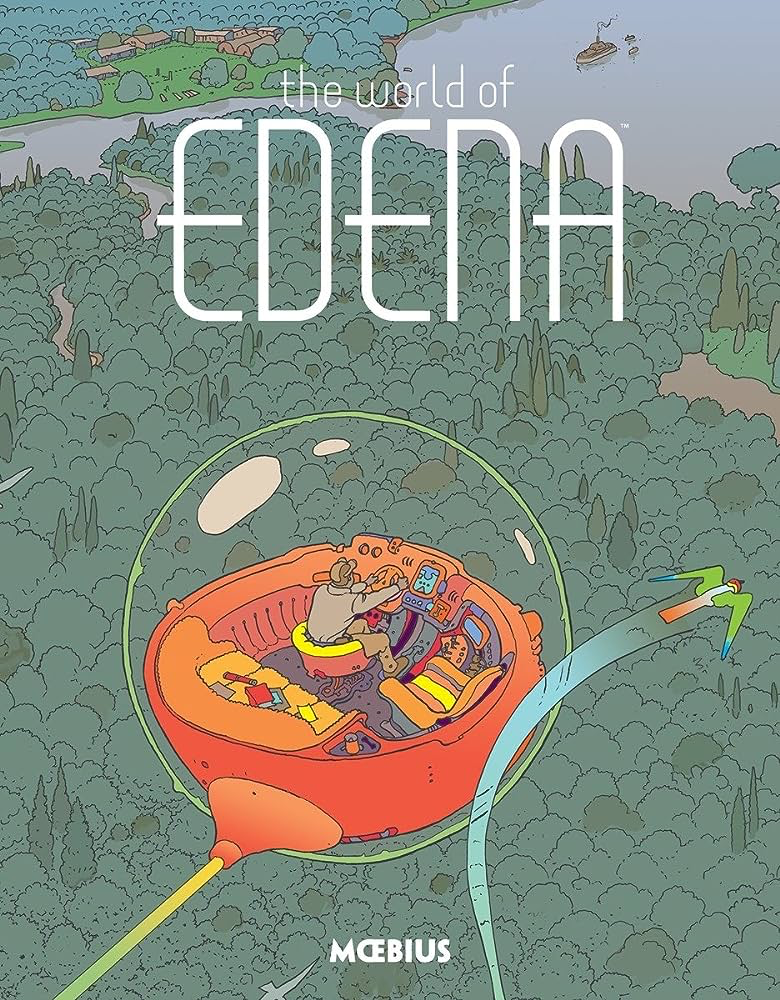
The World of Edena – Mœbiussomewhere, across temporal boundaries, I can imagine Eno and Mœbius creating art together—the latter to create the brightly-colored, simple landscape, and the former to soundtrack the gentle humming of its engines.

“Finding Feeling” – Black Belt Eagle Scout

Ten years ago, Katherine Paul self-released their debut EP on Bandcamp as Black Belt Eagle Scout. A decade later, and Paul has brought this artifact of her career to streaming, letting the world see the infancy of this project. Like Eno, it’s a soothing exercise, sculpted from handfuls of reverb and sparing percussion. Now, I can see the remnants of this sound that later permeated into their debut album, Mother of My Children; it flows as easily as water, but in those early days, they were prone to get caught up in the current and let the same phrase repeat itself for quite some time. It’s not that it’s bad by any stretch of the imagination—Paul just hadn’t hit their stride yet, and didn’t know when to whip out the cutting board to make things more succinct. (“Finding Feeling” repeats itself for the first third of the song…which is six and a half minutes long.) The lyrics lack the artistry that Paul would later learn, but time has proven that her voice has always been as crystal-clear and cooling as still water from the mouth of a glacier. “Finding Feeling” almost describes itself as you nearly get lost in the repetition, but the payoff, though long-earned, is the seed of what would become a soaring talent.

…AND A BOOK TO GO WITH IT:
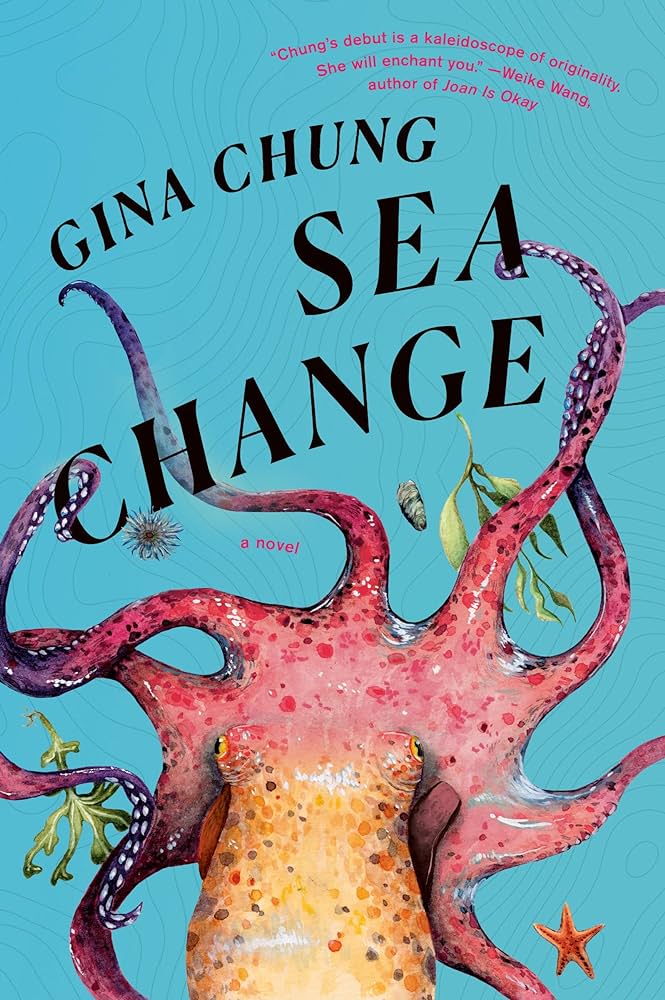
Sea Change – Gina Chung“I go home in the evening/I don’t feel a thing/I don’t know nothing/I go home in the evening/I don’t see a thing/I don’t have anything…”

“I am a Scientist” – Guided by Voices

It’s baffling that this version of “I am a Scientist”—from the 1994 I am a Scientist – EP—never made it onto the album that the original version did (Bee Thousand); the original, as good as it is, screams “demo,” muted in every way. While I’m all for the scrappy, understated recordings (see: everything Car Seat Headrest did until about 2016), the full band backing the EP version makes it into the triumphant march that it was always meant to be. And what a perfect slice of ’90s indie-rock this is—it’s Pavement from an alternate universe, one where they decided to churn out multiple albums a year for the rest of the foreseeable future. I’m no judge of how good said prolific output is, as this is one of two songs I’ve listened to, but if the talent displayed on “I am a Scientist” and the acclaim that their ’90s albums have gotten, I can only assume that said talent hasn’t dried up.

…AND A BOOK TO GO WITH IT:
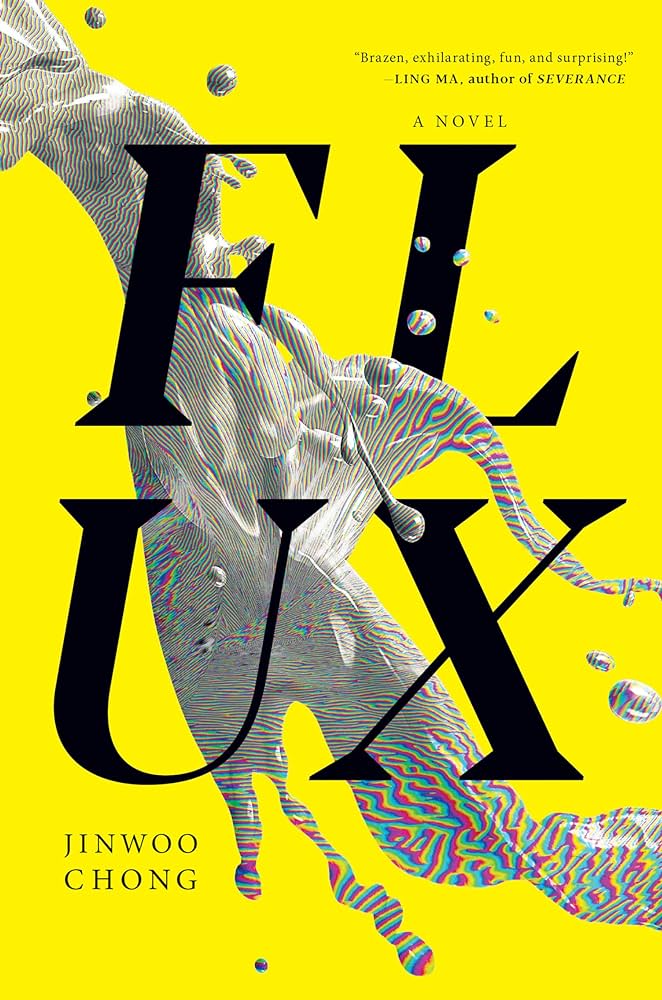
Flux – Jinwoo Chongan unraveling mystery between men, generations, television, and time travel. (Was it always successful? No, but I enjoyed enough of it. I’ll always applaud the ambition of it.)

“All You Need is Love” – The Beatles

I didn’t conceive of Sunday Songs consciously to put them on Sunday—the alliteration was just there, and it worked. But this week feels fitting that it’s on Sunday, and I’m glad I stuck this song at the end.

Here. Take a moment to breathe. We have miles and miles of anxiety ahead of us and miles and miles of horror behind us. But that is not all there is in the world. You see the spinning earth at the end of this video, animated in silence, and remember that there is love. Even if they were summoned into a studio, you can see all of the people gathered together, covered in flowers, and remember there is love. Millions of miles gives way to the possibility of endless cruelty, but if you look hard enough, you will know that our planet was never molded from just that. Whatever happens, there will always be love, and there will always be someone to embody love. Take a seat. Let the confetti brush your cheeks, let the sound lift you into the air.

All you need is love. I’ll take this into the week, I’ll keep it against my breastbone like a locket until the silver wears into my skin. Will you?

All you need is love.

…AND A BOOK TO GO WITH IT:
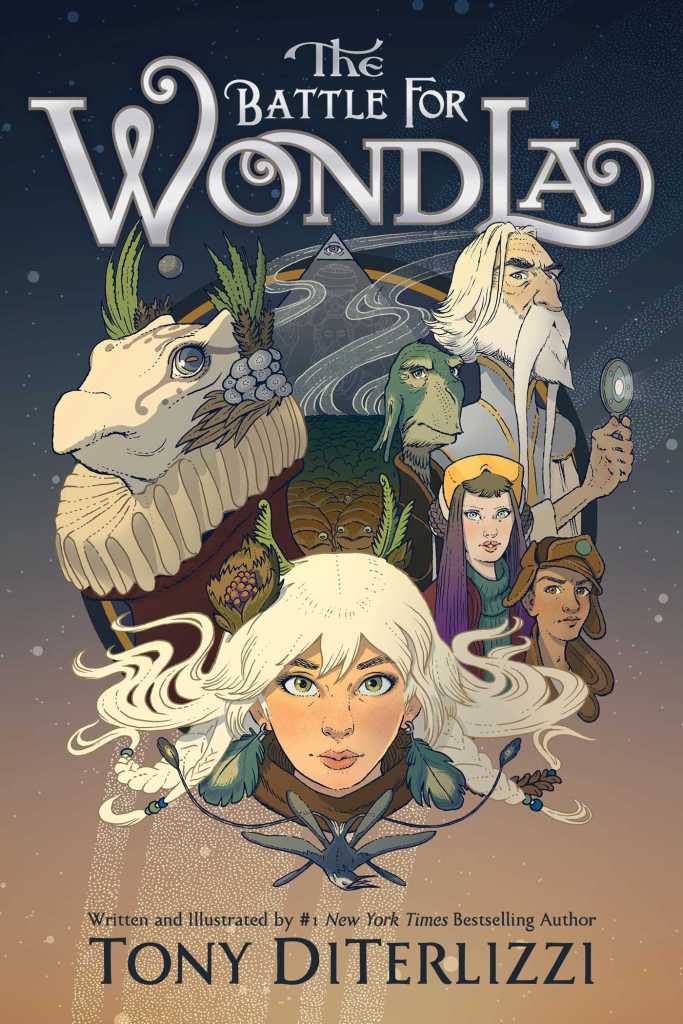
Since this post consists entirely of songs, consider all of them to be today’s song.

That’s it for this week’s Sunday Songs! Have a wonderful rest of your day, and take care of yourselves!

Posted in Book Review Tuesday

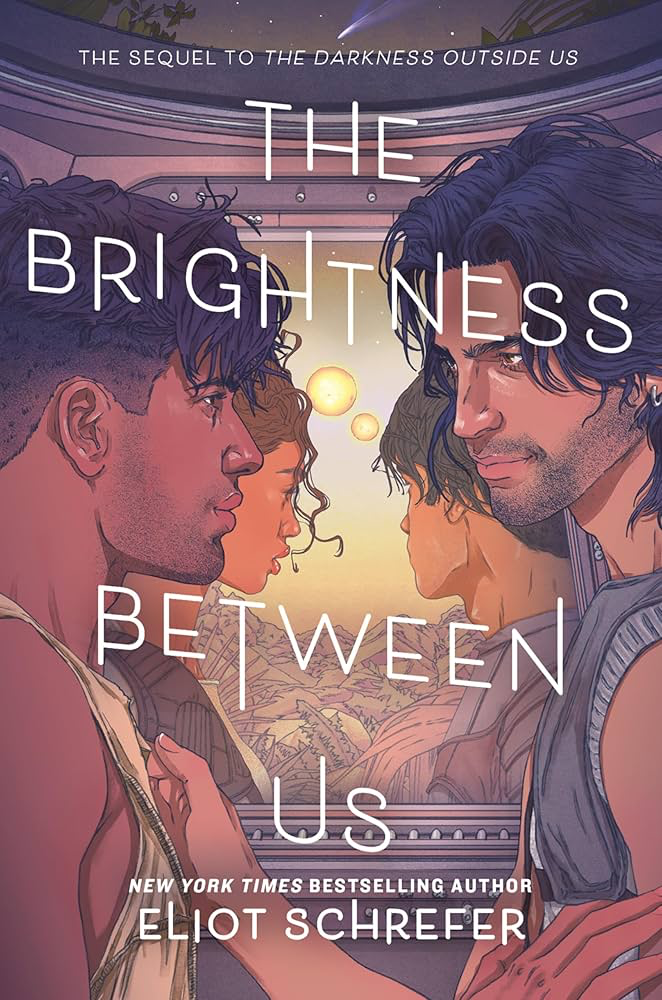
Book Review Tuesday (10/22/24) – The Brightness Between Us (The Darkness Outside Us, #2)

Happy Tuesday, bibliophiles!

We’re keeping up my sequel streak for the time being, so it seems. The difference between this and The Heart of the World is that I had no idea that The Darkness Outside Us, one of my favorite books of 2021, was even getting a sequel in the first place. That novel rocked my world—it really enraptured me in a way that not a whole lot of books ever have. But it was beautiful as a standalone—it had about as satisfying of an ending as you could ask for. So I was teetering towards hesitantly optimistic when I heard about The Brightness Outside Us, but in the end, I’m so glad I took the gamble; this novel is a different kind of twisty than its predecessor, but it’s worth taking the leap.

Enjoy this week’s review!

Now, tread lightly! This review contains spoilers for book one, The Darkness Outside Us. If you haven’t read it and intend on doing so, read at your own risk!

For my review of book one, The Darkness Outside Us, click here!

The Brightness Between Us (The Darkness Outside Us, #2)

In the 24th century, Ambrose Cusk is on the cusp of the greatest space mission mankind has ever embarked on. After losing his sister Minerva in a troubled gambit outside of the solar system, Ambrose is set to cross the universe itself in order to save her. But when he discovers that he won’t be on the ship—only clones of himself—he is determined to get to the bottom of what his true mission is—and what really happened to Minerva.

30,000 years in the future, the final clones of Ambrose and Kodiak have grown from the teenage clones they once were into fathers of two children. Owl and Yarrow live a peaceful but sheltered existence on the surface of Minerva. Owl yearns to learn what the rest of the planet holds, but her parents are keen on keeping her safe. But when her brother Yarrow begins acting strangely, the family suspects that a stranger thousands of years in the past may have sabotaged their mission.

TW/CW: violence, war, past mentions of child death, animal death, terrorism, intrusive thoughts

It didn’t even cross my mind that The Darkness Outside Us would have a sequel. I went into this novel with trepidation—how do you follow up a novel as twisty, complex, and heartwrenchingly beautiful as The Darkness Outside Us? By splitting the novel in two, as it turns out. I didn’t think that The Darkness Outside Us needed a sequel, but nonetheless, I’m glad I stuck around to see the result—of course Eliot Schrefer would have something fascinating up his sleeve.

The Brightness Between Us reminds me of how much I love a good “space colony gone wrong” story. As I said, I didn’t even think about The Darkness Outside Us getting a sequel, but this novel has the perfect setup for precisely this kind of plot. I should have trusted Schrefer from the start, given how masterful book one was, but wow, the Minerva plot amazed me! There was so much solid, hard sci-fi put into the terrain, climate, and wildlife of Minerva, and Schrefer did an excellent job of keeping the reader in the dark just enough to make everything suspenseful, even when the mysterious bones that Owl digs up in her exoplanet yard only turn out to be from a duck. From the research behind the wildlife, the weather, and the atmosphere, no stone was left unturned, each one its own Chekhov’s gun waiting to fire.

Although Owl wasn’t my favorite protagonist, she fits perfectly for the environment she’s in. Every “space colony gone wrong” needs a character who questions everything; there is always some part of the planet that has been unexplored, and someone needs to be curious and daring enough to want to discover what’s on the other side of the world. It can be even more effective when that character is a child; children are naturally curious, making it more than simply questioning authority—the authority is often their parental figures, and the excuses of them hiding things “for their safety” feel more tangible. Fifteen-year-old Owl was naturally curious, but also paired with her more obedient (at first) brother, Yarrow, giving her more resentment towards her parents. She wasn’t as likeable as Ambrose or Kodiak (I loved seeing them become parents), but they had the home field advantage of book one. But I can recognize when a character is perfect for the plot they’re in, and Owl was the perfect match for the plot of The Brightness Between Us.

After the pummeling of gut-wrenching twists that we call The Darkness Outside Us, the sequel was going to have to pull off a miracle to follow it up in terms of plot. The main twist was so earth-shattering that I thought it would be impossible to come up with anything better. I remain correct—I don’t think anyone, much less Schrefer, could come up with a twist that could top book one. But the main twist that we do have was excellent enough to propel me to finish the book in one sitting—just like The Darkness Outside Us! (The difference is that it was at a reasonable hour this time. I’ve matured since 2021, I promise.) Not only is this duology a love story 30,000 years in the making—it’s a conspiracy 30,000 years in the making! I loved the twist that Devon manipulated the frozen fetuses to develop violently aggressive traits as they grew—it gave even more stakes to an already gripping plot, and it made the days of present future half of the novel gripping as well. It gave the “space colony gone wrong” side of The Brightness Outside Us a truly unique twist—sabotage from 30,000 years in the past, and two versions of the main characters communicating across time to thwart it.

All this talk about the Minerva plot, and I haven’t even touched on the “present-day” Ambrose and Kodiak…oops. I don’t have a favorite child, I swear. The worldbuilding in this half of The Brightness Outside Us was my favorite part; getting a glimpse into the forgotten world that we only knew about in whispers in book one was fascinating. Schrefer’s vision of a world divided into a corporate hellscape of excess and a corporate hellscape of rigidity was one that was mapped out just as vividly as the alien world of Minerva. You really do see how it is that Ambrose and Kodiak got to be how they were at the start of book one. In terms of character development, it did tend to feel like listening to a broken record after book one, but that’s my only minor nitpick—Schrefer made sure that they had startlingly different—and almost as emotional—arcs as their clone counterparts in The Darkness Outside Us. Devon was a fascinating, slippery antagonist, and his sabotage was one of my favorite parts of the novel to witness unfolding.

All in all, a sequel that had a Herculean task to live up to its predecessor, but delivered a miracle in spite of the odds—just like Ambrose and Kodiak. 5 stars!

The Brightness Between Us is the second book in The Darkness Outside Us series, preceded by The Darkness Outside Us. Eliot Schrefer has also written several other books for children and young adults, including the Ape Quartet (Endangered, Threatened, Rescued, and Orphaned), The Lost Rainforest series (Mez’s Magic, Gogi’s Gambit, and Rumi’s Riddle), Queer Ducks (And Other Animals): The Natural World of Animal Sexuality, and many others.

Today’s song:

EVERGREEN COMES OUT THIS FRIDAY, ARE WE READY?

That’s it for this week’s Book Review Tuesday! Have a wonderful rest of your day, and take care of yourselves!

Posted in Sunday Songs

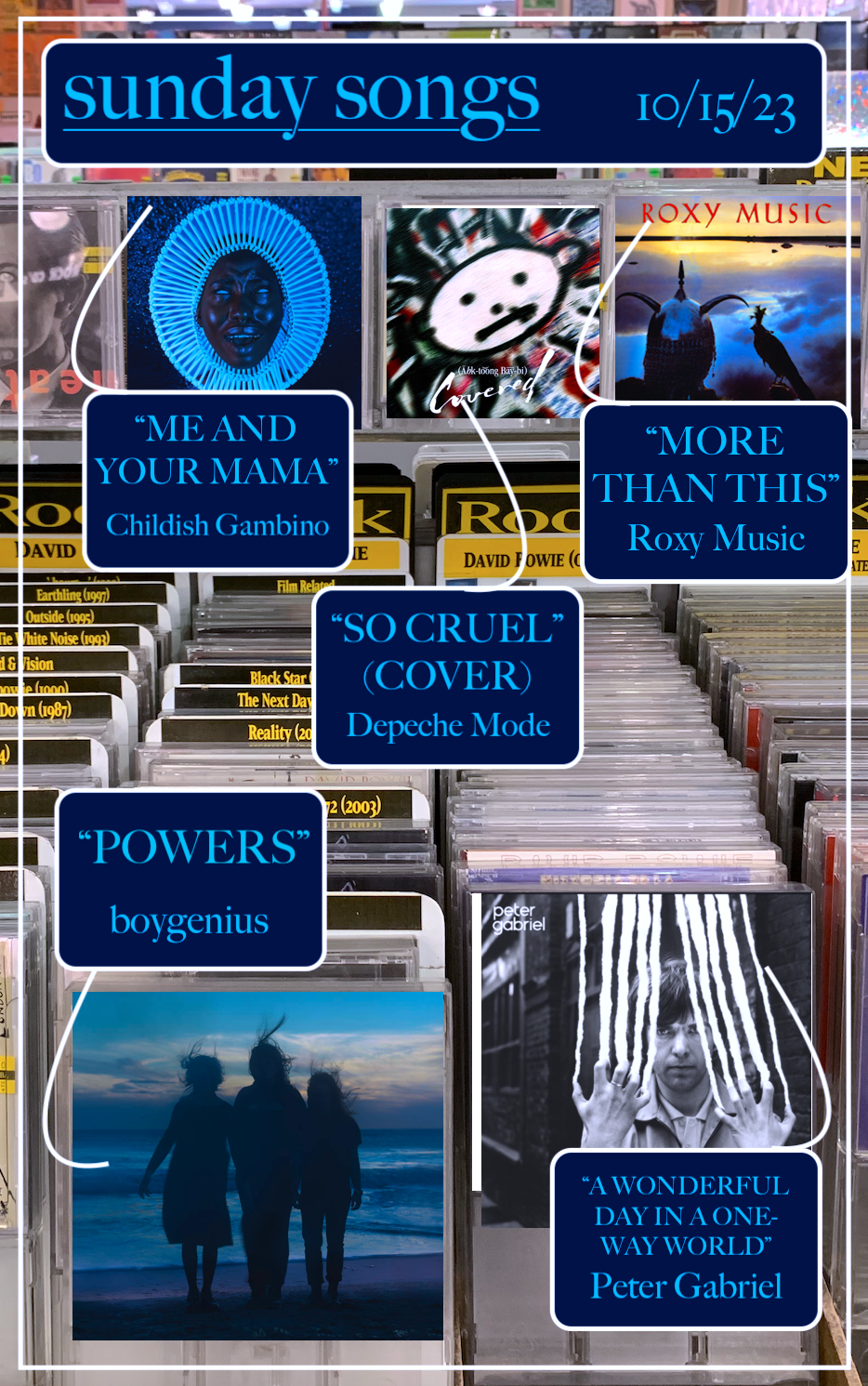
Sunday Songs: 10/20/24

Happy Sunday, bibliophiles! I hope this week has treated you well.

This week: we regret to inform you that the All Born Screaming brainrot has persisted for 6 months. It may be terminal. Please stand by.

Enjoy this week’s songs!

SUNDAY SONGS: 10/20/24

“Reckless” – St. Vincent

So. Almost 6 months later, and All Born Screaming remains etched onto the folds of my brain. I already talked about how the climax of this song hit me like a train in my review of the album back in May, but rest assured that time has not dulled its potency. 2024 has been a spectacular year for album intros (see: “IDEA 01,” “Wall of Eyes,” and, I’ll preemptively say it, “Lost”), and All Born Screaming’s “Hell Is Near” rightfully claims its crown in those ranks. But “Reckless” feels like the rightful evolution of it—I’d even to as far to say that it would be stunning as a whole track. Imagine that, combined into about 8:06 of a suspenseful, cinematic build. That’s perhaps the only thing that could make the sonic lightning strike at 2:38 even more explosive. Like a well-shot film, suspense is what drives “Reckless” to its pinnacle of art—every lyric is a footstep down a pitch-black hallway, constantly wary of the faulty wiring in the ceiling that’s ready to burst. Knowing that Clark has opened every setlist for this tour with “Reckless” makes the salt in the wound that SHE DIDN’T COME TO COLORADO ON THIS TOUR even saltier. WHY HAVE YOU FORSAKEN US, ANNIE? YOU WENT TO IDAHO, FOR GOD’S SAKES!

…AND A BOOK TO GO WITH IT:

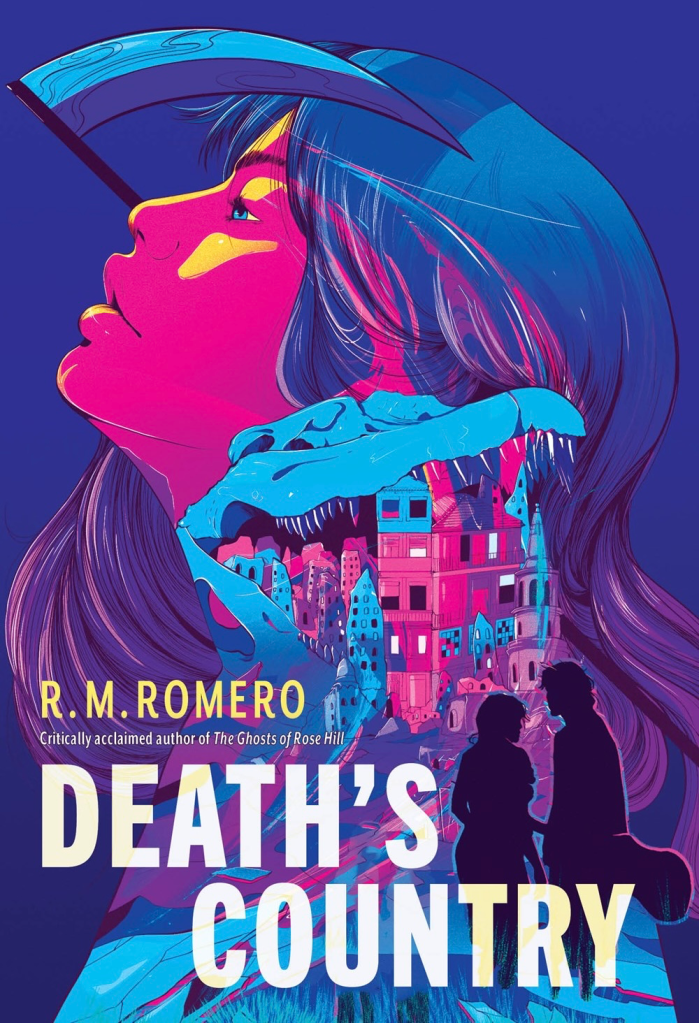
Death’s Country – R.M. Romero“If your love was an anchor/And I am lost at sea/I hear the riders calling/They’re calling for me…”

“Look What They’ve Done To My Song, Ma” – Melanie

I came here from the wonderful show We Are Lady Parts (highly recommended if you need a laugh and also want to see some Muslim punks being badass and very vulnerable on TV); it’s a fitting soundtrack for the bitter disappointment of the band at the end of the first episode of season 2 as they watch their hit song being covered by newcomers, only for said newcomers to get the bulk of the praise and applause from the crowd.

Given this song’s partial legacy of being butchered for commercial jingles (confirmation that corporate executives never listen to lyrics), there’s something predictably depressing about “Look What They’ve Done To My Song, Ma” becoming exactly what the lyrics talk about. In an slow lament that slants towards an older Broadway standard, Melanie sings of how her music has been dragged through the mud: “Look, look what they’ve done to my song/You know, they tied it up in a plastic bag/And then turned it upside down, oh Mama/Look at what they’ve done to my song.” That kind of Broadway feel is the ideal form for this song—it begs for a spotlight on a sordid character with mascara running down her cheeks as she belts her sorrow into a rapt crowd. The more I think about it, I feel like it’s one of the premier victims of the ’60s-’90s fadeout in music—why, why, why would you start turning the volume down right when she hits the most impassioned belt of the whole song? Melanie specifically wrote it about how her producer (who also happened to be her husband) would often halt her creative process in the studio, diverting her from her vision when he saw what he wanted to be a hit.

“Look What They’ve Done To My Song, Ma” has been covered a slew of times over the years, most notably by greats such as Ray Charles and Nina Simone (!!). Sometimes, with a song that covered, it’s simply a matter of fame, but it taps into what might be one of the most universal fears of anyone in the arts: trying to put yourself out there, but then getting your vision sanitized and reshaped for mass appeal. It’s always at the back of my mind. Being unreceptive towards any criticism is one thing, but I’m always afraid of what I put out there being somehow not right for what publishers want. Whatever finished products I eventually publish will have to be rigorously edited, of course, but it would kill me if there were key parts of my stories I had to dilute just so I could sell more copies. Of course, careers in the arts are often…not the most well paying, to say the least, and I almost fear having to succumb to diluting my vision just because of money more than I fear the dilution itself. Would I be able to live with myself? We’ll cross that bridge when we get to it. No, if. I’ve gotta have a little faith. If this song—released in 1970—was able to break through the constraints of producers and the music industry at large, maybe it isn’t all as bleak. Melanie did get the last laugh, from what I can tell, eventually gaining more creative control and outliving her husband. Sadly, she passed away this January, but her legacy precedes her. I’ve only been familiar with Melanie for a woefully short time, but I hope she’s resting easy.

…AND A BOOK TO GO WITH IT:

Not Here to be Liked – Michelle Quach“Look at what they’ve done to my brain/Well, they picked it like a chicken bone/And I think that I’m half insane, ma…”

“Final Fantasy” – TV on the Radio

Picture this. You open up Instagram. TV on the Radio has posted an ominous picture of their logo on their page. They’ve been on hiatus for almost a decade. When the world needed them most, TV on the Radio returned…

…just to play a few shows in New York, LA, and London.

They’re at least reissuing Desperate Youth, Bloodthirsty Babes for its 20th anniversary and we got “Final Fantasy” out of it. Hopefully the slow creep of the bass and the ominous, razor-sharp lyrics are enough to distract from the fact that we’ve been sidelined…again. I’m just telling myself that they’re cooking up something new, just so I can sleep at night. You can’t just rise from the dead like that only to play…what, nine shows in only 3 locations? Come ON.

…AND A BOOK TO GO WITH IT:

Some Desperate Glory – Emily Tesh “You’ve made a family/Now kill ’em dead/Oh it’s not me Ma/It’s what the TV said…”

“Like Humans Do” – David Byrne

When I heard this in the background of a post on Instagram earlier in the week, I got hooked through the screen—you ever just hear a 10-second snippet of a song and are immediately impelled to download it? It’s so delightfully hooky. No wonder Microsoft chose this song as one of the samples of music for their Windows XP Media Player. It’s now widely accepted as the unofficial “Windows XP Anthem”—the radio edit, that is; Microsoft used the radio edit, which cut out the following line: “I never watch TV except when I’m stoned.” (They replaced the line with “We’re eating off plates and we kiss with our tongues.”) Either way, even though I never got to experience “Like Humans Do” in that context, thank you to whoever decided that David Byrne’s music would be the flagship of Windows XP.

Byrne wrote the song as an imagined perspective of a Martian watching humans interact; the lyrics have a simplistic, domestic calm to them, placidly and warmly recounting the everyday normalities of human life that we take for granted: “For millions of years, in millions of homes/A man loved a woman, a child it was born/It learned how to hurt and it learned how to cry/Like humans do.” With its clanging, light percussion and that classically funky, Talking Heads groove, it’s a jangle that really does embody one of its more delightful lyrics: “Wiggle while you work.” You bet I was IMMEDIATELY wiggling when I first heard this song…and on every subsequent listen. And it feels exactly like the kind of song Byrne would write. It’s in that same vein of Björk’s “Human Behaviour,” but with more of a calm appreciation rather than baffled curiosity on the subject. Relating it back to Byrne’s autism diagnosis later in life doesn’t explain everything, but as with Björk, who said that she “may be semi-autistic” in an interview in 2011, it does make sense for Father Autism himself to take on this kind of subject matter. Of course, you can zoom this lens out to apply this observational mentality to anyone on the fringes of normality, but it does feel like a role I’ve embodied as a neurodivergent person myself. You watch others to learn how to act, and sometimes, you feel like you’re another species collecting enough information to try and blend in. Of course, the freedom comes when you realize that there’s no point in blending in, but for me, at least, there was never a shunning of neurotypical behavior—simply a realization that I would never fully be able to imitate it, and I’d found enough people who understood and words to explain why I am the way I am. “Like Humans Do” feels like the calm epiphany of discovering difference once neurodivergent acceptance becomes reality.

…AND A BOOK TO GO WITH IT:

Beautyland – Marie-Helene Bertinolisten, I try not to double-dip on book pairings, especially since I paired this book with “Always Crashing in the Same Car” last week. But…the alien observing humans connection is right there!

“Breaking the Split Screen Barrier” – The Amps

Normally, I take a liking to any given Kim Deal-related song fairly quickly. But “Breaking the Split Screen Barrier” wasn’t so instantaneous for me. The beginning sounds like a series of false starts layered on top of each other. The prolonged space between each chord doesn’t just feel like a ruse: they pile up on top of each other so much that you feel like you’re being served three courses of red herrings. And I hate to say that about The Amps! I don’t think I’m that impatient of a listener, but I’m used to them getting straight to the point (see: “I Am Decided”).

After a few listens, however, you realize how much that slow build pays off. Every instrument has more crunch and crackle than a wadded-up ball of tin foil. In between the gravel and abrasion, Kim Deal murmurs her borderline surreal lyrics into a void curtained by echoing near-abrasion. Maybe I am guilty of being one of those damn gen z-ers with an attention span shorter than that of a minnow, but I think I can be patient—especially when Kim Deal is concerned. It paid off for “Breaking the Split Screen Barrier.”

…AND A BOOK TO GO WITH IT:

The Brightness Between Us (The Darkness Outside Us, #2) – Eliot Schrefer“I know you’re not sane anymore/That doesn’t mean you’re fine…”

BONUS: the great Jim Noir has a new album Jimmy’s Show 2, out on November 5th! He released a music video to accompany the lead single, “Out Of Sight,” this week:

Since this post consists entirely of songs, consider all of them to be today’s song.

That’s it for this week’s Sunday Songs! Have a wonderful rest of your day, and take care of yourselves!
Posted in Book Review Tuesday

Book Review Tuesday (10/15/24) – The Heart of the World (The Isles of the Gods, #2)

Happy Tuesday, bibliophiles!

The day has finally come…the Isles of the Gods duology has concluded. The end of a (short) era. I’m all over anything that Amie Kaufman writes, and even though fantasy isn’t my top genre, she made me fall in love with her brand of it. Naturally, The Heart of the World was one of my most anticipated releases of the year, and while it fell barely short of book 1, it stuck the landing to become a fulfilling conclusion to a duology full of heart.

Now, tread lightly! This review contains spoilers for book one, The Isles of the Gods. If you haven’t read it and intend to do so, read this review at your own risk!

For my review of The Isles of the Gods, click here!

Enjoy this week’s review!

The Heart of the World (The Isles of the Gods, #2) – Amie Kaufman

Selly Walker has failed.

When she, Leander, and Keegan tried in vain to seal away the gods from the mortal world, they created a conflict much worse than they could have ever imagined. Now, Leander is the mortal messenger of Barrica, goddess of war. Possessed by power beyond human comprehension and puppeteered by a being of unearthly sway, he knows that war is brewing—and that allowing Barrica into the mortal realm would kill him in the process. Selly, now deeply in love, will risk anything to make sure that Leander is unscathed, but little to they know that the rival god Macean has his own Messenger—and that he’s hungry for war.

TW/CW: violence, blood, murder, loss of loved ones, neglectful parent

Man, Amie Kaufman just can’t resist writing relationship dynamics where one becomes all-powerful and the other is Just Some Guy, huh? Not to call Selly just some (gal), but…Aurora Cycle fans, we see it, right?

It’s not like me to rate a solo Amie Kaufman book in the 4-star range. Well, sort of. The Isles of the Gods was a 4.75 for me, but that was easily rounded up to 5. I expected The Heart of the World to be more of the same, and it almost was. Almost. Its fatal flaw was that it took so long to get back on its feet after the chaos and craziness that was the ending of book 1. That was so campy (in an Indiana Jones way) and explosive that it must have been so hard to ground the beginning afterwards. An additional problem is that this book is 400 pages long, which meant that, for the first fifth to a quarter of the novel, it bordered on dragging. Kaufman’s writing didn’t suffer, and neither did the characters, but The Heart of the World took so long to regain its sea legs that it never fully recovered.

From there, however…I have no notes. Even if that first fifth (or thereabouts) dragged in terms of plot, it excelled in terms of character development. Leander’s arc was among the most well-developed of the novel—as it should have been, given that he’s on the cover and all. As I said before, unceremoniously foisting godlike power onto ordinary people and watching them try and grapple with the consequences is Amie Kaufman’s bread and butter. Leander’s internal struggle of being both a puppet of Barrica and being tossed around by the royal family—his family—and being treated like an overpowered chess piece made for some enticing internal struggles. I hesitate to say that his relationship with Selly was a genderbent carbon copy of Kal and Auri, but…the similarities were there. However, what sets them apart is the differences in Leander and Selly’s characters. Unlike Auri, Leander was slick and confident before he he was forced to embody Barrica’s power—thinking he had sway and power was nothing compared to having a taste of uncontrollable, immortal power, and it fundamentally rearranged who he was as a person. Selly, on the other hand, was already out of her depth and new to the relationship, but clung to the glimpse of the real Leander, and knew that she couldn’t risk losing him—or their shared home. I trust Amie Kaufman enough to know that she wouldn’t copy and paste a relationship dynamic, and the more I think about it, the less it feels like a rehash—Selly and Leander were so sweet together, and this wrench in their romance was one that created an intricate rift to explore.

Speaking of Selly being out of her depth…good god, I just want to give her a hug. Lord. Kaufman already gave her a great obstacle in trying to find her way through the palace life and feeling like a fish out of water while trying to navigate impending war. Then she had to resolve the arc about Selly looking up to her dad…who, as was faintly hinted at in The Isles of the Gods, turned out to be using her for her magic, then abandoned her. My poor girlie…either way, it was written so sensitively. After the smoke screen of her dad pushing her to foster her magic fell away, Selly realizes that he’s just been using her as a tool to bolster the family name, and Kaufman was able to hammer in just how crushing that was for her. All her life, she’s been in his service, and all of these years she’s waited for him to return, and you just knew that he only came back to her because Barrica had him and the rest of his crew under her spell. Their reunion was hollow, just like the remainder of their relationship. Once she began to come too grips with it, however, it was beautiful to see Selly assert that she would no longer be somebody else’s pawn—just like Leander. Waiter! Waiter, more parallels, please!

In my review of The Isles of the Gods, I said that I was miffed at the book being tagged LGBTQ+ when all we got was a background lesbian couple that was about the equivalent of that one scene in The Rise of Skywalker. (You know the one.) I couldn’t help but be disappointed. Let me say on the record that I stand corrected! The additional queer queen and consort aside (diversity win! This warmongering queen likes women!), we’ve also got some wonderful queer representation in Jude. Another minor complaint that I had about The Isles of the Gods was that Jude didn’t have an awful lot to do, even though he was one of five of the POV characters. Not only does he have a beautiful, tearjerking character arc, HE’S QUEER! AND HE’S HAS A WONDERFUL BOYFRIEND! After all that this poor guy has been through, I’d say that’s the ultimate reward. I had a feeling that something had to be queerer about The Isles of the Gods, but I’m so glad that Jude finally got his due diligence in terms of character development and focus—and queerness. We love a battle-scarred guy with a secret stash of fantasy books.

Another character arc I loved seeing resolved…Laskia! Along with Leander and Selly, she’s part of the unofficial “spent their lives being moved around like chess pieces” trio, and seeing her come into her power—without the help of Macean—was a beautiful redemption arc. Laskia was driven to villainy by a desire to be loved, constantly shoved in the shadow of her sister Ruby, and like Leander and Selly, she let herself believe that she was in control. For her, the ultimate act of heroism was to become her own person—to steer her own course in life. Looking back, that’s what the whole Isles of the Gods duology feels like it’s been about. The ultimate form of magic is to know your power, to know that you have control of your life, and that despite the pressures telling you to sail one way or another, you’re the captain of your own ship. 🫡

In the end, if there’s anything that Amie Kaufman can write like nobody’s business, it’s a final battle. It was so tightly paced and action-packed that it nearly made me forgive how slow of a start The Heart of the World had. An aspect that The Heart of the World introduces is how the gods and goddesses factor in (Kaufman’s descriptions of which were arresting, as was expected), but it gave stakes to the battle that truly made it feel like thousands of lives hung in the balance. And to conclude it all in an assertion that spending your life grieving will never make any new love grow? And how that grief can feel so desolate that nothing else can grow there? And that remembering the connections that you have in the here and now is how you can move forward? And…and…and…dammit, Amie Kaufman, you did it again. You can only hide behind so many cheery “hi my friends!” before the jig is up. YOU HAVE TO STOP RUNNING A STEAMROLLER THROUGH MY FEELINGS LIKE THIS.

All in all, a duology concluder that faltered slightly in its early stages, but stuck the landing with buckets of action—and many a resonant message to spare. 4.5 stars!

The Heart of the World is the final book in the Isles of the Gods duology, preceded by The Isles of the Gods. Amie Kaufman is the author and co-author of several series for children and young adults, including the Elementals trilogy (Ice Wolves, Scorch Dragons, and Battle Born), the Illuminae Files (co-authored with Jay Kristoff – Illuminae, Gemina, and Obsidio), the Aurora Cycle (co-authored with Jay Kristoff – Aurora Rising, Aurora Burning, and Aurora’s End), the Other Side of the Sky duology (with Meagan Spooner – The Other Side of the Sky and Beyond the End of the World), and many others.

Today’s song:

We Are Lady Parts brought me here…

That’s it for this week’s Book Review Tuesday! Have a wonderful rest of your day, and take care of yourselves!

Posted in Sunday Songs

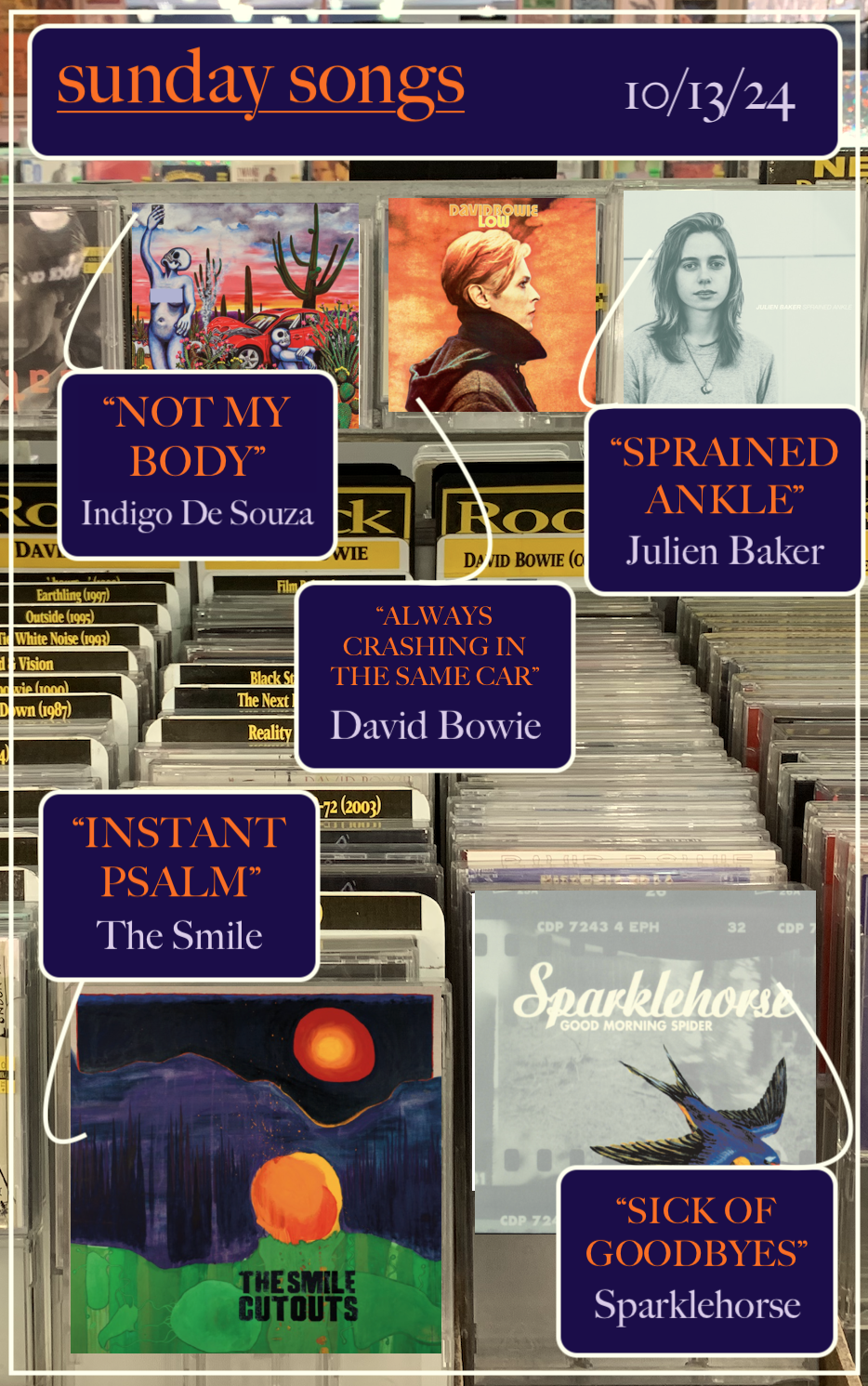
Sunday Songs: 10/13/24

Happy Sunday, bibliophiles! I hope this week has treated you well.

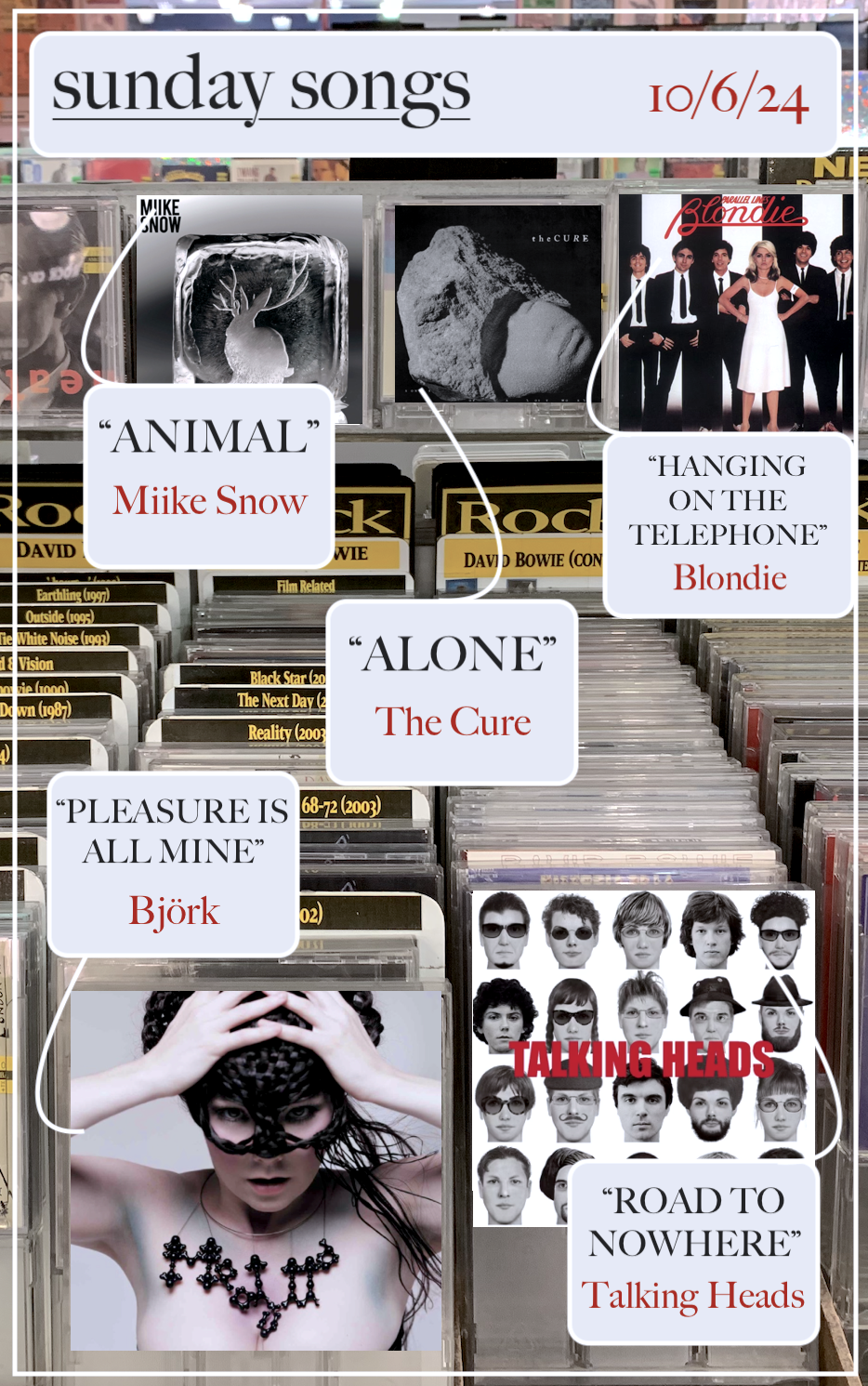
Apologies for the lack of a Sunday Songs last week and a Book Review last week—midterms are one helluva drug. Either way, I have been able to read some fantastic books, so expect a fun review next week. For now, here’s my graphic from last week:

10/6/24:

This week: MOM!!! MOM, MADELINE’S GOING AFTER THIN WHITE DUKE APOLOGISTS AGAIN!

Enjoy this week’s songs!

SUNDAY SONGS: 10/13/24

“Instant Psalm” – The Smile

Unprecedented opinion by me: Cutouts, the second album from The Smile in 2024, was…a slight disappointment. Are all of the songs good? Absolutely—this is The Smile we’re talking about, remember? And yet, even though the talent is all there, well-crafted songs don’t make up for an album lacking in cohesion. If they knowingly named the album Cutouts for this reason, it might make sense, but it really does live up to the name; these are the scraps, but for a band as artfully skilled as The Smile, the scraps will be treasures. Even if Cutouts meanders this way and that without the direction of A Light for Attracting Attention, the moving parts are spectacular.

Take “Instant Psalm.” I love when I just have the gut feeling of knowing that a song will rearrange my molecules after only listening to a 30-second snippet of it. From the minute the strings sunburst into existence, you feel that light blooming in the back of your mind. To say that this song only starts would do it a critical injustice: it awakens in the same way a flower does, the same way a cloud of spores puffs from a stomped mushroom, all of its glistening tendrils erupting in slow motion after the joyous moment of birth. “Instant Psalm” lyrically contains about the same existential dread as any other The Smile track, but I’d place it somewhere near “You Know Me!” in terms of siblings; these glistening tendrils have heralded the manipulation that the former track ushered in, and now, all is left is a kind of mental automation where your mind knows that what it’s doing is wrong, but cannot let go of what’s coiled around it: “yes is not a real yes.” It’s so calm in its submission, and that “Instant Psalm” feels like sparkling dust blown into the eyes, the kind that clogs them up enough that they no longer see reality. If there’s anything highly specific that The Smile has excelled in, it’s making songs about submitting to corrupted, outside forces sound so soothing and sleepy. Again: precisely the point.

…AND A BOOK TO GO WITH IT:

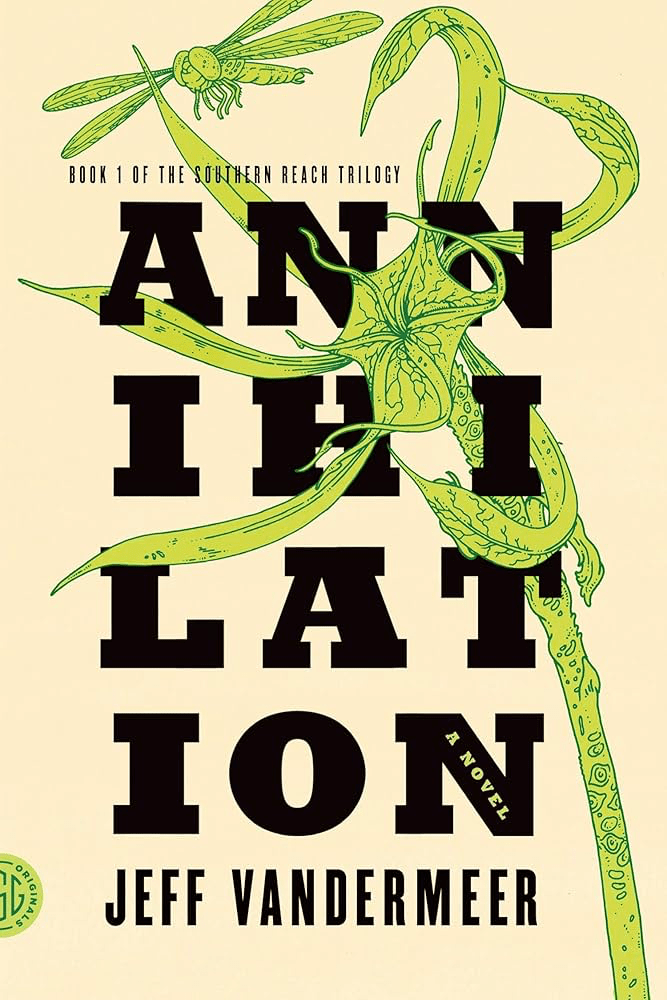
Annihilation (Southern Reach, #1) – Jeff VanderMeer“We can slide through this narrow gap/The narrow gap that you leave us in/And we feel you near/But so close that you disappear…”

“Sick of Goodbyes” – Sparklehorse

Listening to It’s a Wonderful Life prompted me to return to one of my many depressing high school lovers: Good Morning Spider, the album that preceded the former. I thought “Sick of Goodbyes” was okay back then, and given how much I suckled on that album like a baby bottle, “okay” is harsh. Compared to the irresistible draw of the melancholy of “Sunshine” and the adrenaline-blooded screech of “Pig,” this one stuck out like a sore thumb. Why is it so twangy? And my God, is it actually…upbeat?

To be fair, it really does stick out oddly in Sparklehorse’s catalogue, and for how odd Sparklehorse sounds, that really is saying something. It somehow lies at the crossroads of alt-country and punk, where scratchy guitars meet the place where Mark Linkous hefts his Southern twang into the spotlight. It’s got a vigor that few other songs on Good Morning Spider have (save for “Pig”), but the emotion behind it is no less of a punch to the face than the rest. Linkous’ specialty has always been stirring the surreal into his lyrics like a witch tossing strange objects into a cauldron, and “Sick of Goodbyes” has what I think may be one of his best weird one-liners: “no one sees you on a vampire planet.” No beating that, right?

But beating between lyrics like that is one of the sparer sentiments, but there’s no making it flowery: “I’m so sick of goodbyes.” It is sad in the way that a Sparklehorse song typically is, but the fury behind it makes it seem almost intent on healing. It’s a recognition of wanting to free yourself from the wallowing that you’ve been doing, and saving up all of the energy to declare as such. It’s not lost on me that the final belt of the chorus cuts off at “I’m so sick,” but I can’t not see the momentum. There may be no motion yet, but all of that energy has formed legs that are willing to stand, legs that are willing to rise from the muck and power forwards. “I’m so sick of goodbyes” feels like that spark of energy after you’ve gone through the first, ugly period of your grieving and realizing that you’ve spent so much energy on the dead that you have forgotten to go on living.

…AND A BOOK TO GO WITH IT:

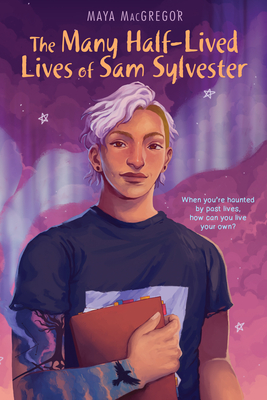
The Many Half-Lived Lives of Sam Sylvester Maya MacGregor“If I could just keep my stupid mind together/Then my thoughts would cross the land for you to see/No one sees you on a vampire planet/No one sees you like I do…”

“Not My Body” – Indigo De Souza

“Not My Body,” with De Souza’s intro, starts at 8:02.

While I ping-pong on whether or not I should listen to Any Shape You Take or All Of This Will End in my ongoing Indigo De Souza journey, I watched their Tiny Desk Concert, taken from the period of the latter. When introducing “Not My Body,” she said this about the song: “I think that when I die…what I want is to be composted and to become soil, and for that soil to be used to plant a tree, and I want that tree to be so big and strong. I don’t know what kind of tree yet—still thinking on it—A tree that people can visit and be like, ‘This is Indigo!'” Thus, she joins Peter Gabriel and his oak tree in what I imagine is a growing forest of reincarnation. It’s a soothing thought, to be reborn in the cells of something so sturdy.

Do you ever get those moments where you stop and have this realization that out of the billions of people on this Earth, that you are you, and by some roll of the dice, this is your life, this is your body, and this is who you are? It’s been a recurring thought lately. Those memes about gaining consciousness at age 4 in the middle of a Chuck-E-Cheese honestly hit the nail right on the head. For whatever reason, it’s been a recurring thought as of late. Not ideal for when I’m supposed to be listening to lectures, but it is a humbling reminder. As disembodying as those moments are, they remind me that yes, I do have the reins on this body. De Souza describes “Not My Body” as an ode to nature, and it taps into that feeling of being so conscious of your existence yet, for a moment, a spectator of it: “I’m not my body although you see me/Making moves and walking freely.” Nature, for me, is the missing key in this equation; the redwood tree that De Souza wants to be is the ultimate symbol of groundedness and connectivity—it is rooted in the earth, but its roots connect to all points in the wide world above and below it. There’s a happy medium between awareness and not feeling like you’re adrift in space, and nature has figured it out. And what better way to end such a sentiment than the last third of “Not My Body?” The way De Souza fashions their voice like a theremin, those echoing electronics that almost sound like dolphin calls, the gentle collapse of all the instruments into a single, coalescing being?

…AND A BOOK TO GO WITH IT:

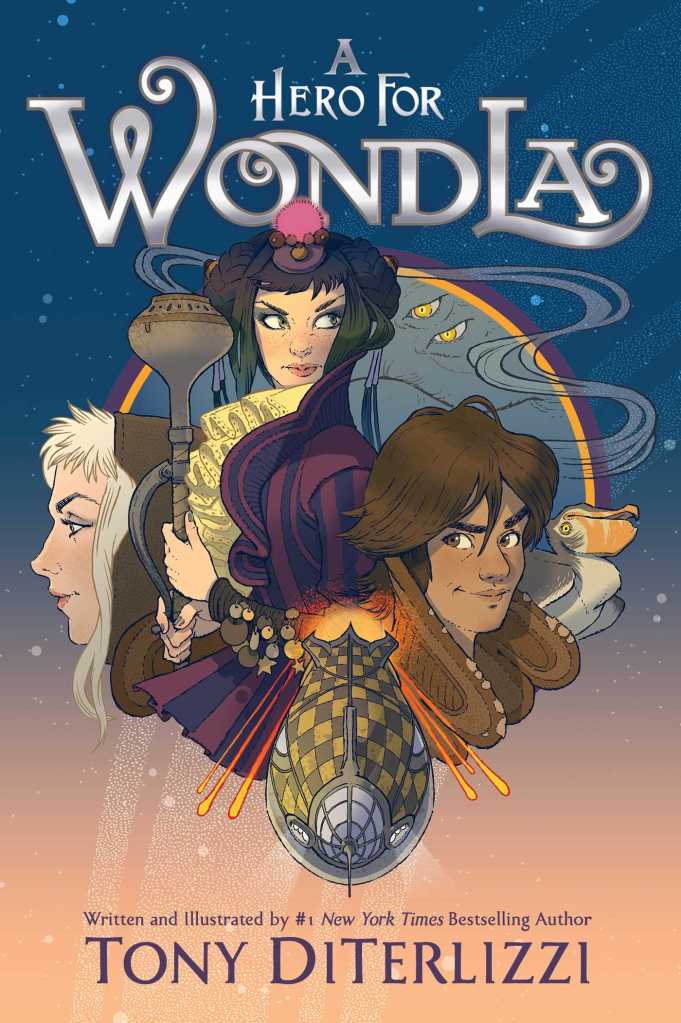
A Hero for WondLa (The Search for WondLa, #2) – Tony DiTerlizziwithout spoiling anything…Eva Eight arc, perhaps?

“Always Crashing in the Same Car” – David Bowie

If you mistook the title of this song for a commonplace idiom, I wouldn’t blame you. Frankly, it should be one. It’s memorable, it’s effective, and it’s a Bowie reference.

Low came at a deeply fraught time in David Bowie’s life. His Berlin trilogy of albums came on the heels of his darkest period, one where he committed actions that he disavowed until his dying day. Hence why I’m always suspicious and disdainful of Bowie fans who think that the Thin White Duke is somehow the “deepest” of his personas. Oh, okay, do you think you’re cool because you like the Bowie who was taking so much cocaine that it addled his brain enough to the point that he had a brush with Nazism? This is the period that Bowie spent the rest of his life thereafter vehemently swearing off (see: “Under the God“), and every clip from that era shows that he was clearly not of sound mind and body. Taking a critical look at the period is one thing, but being so uncritical about a period that Bowie so clearly wanted to forget takes a certain kind of thickheaded edgelord, in my humble opinion. It took him years to return to reality, and the Berlin trilogy chronicles his long and rocky journey towards healing, not to mention getting clean.

The circumstances surrounding “Always Crashing In the Same Car” are a fragment of Bowie’s period of addiction, an instance where, high out of his mind, he rammed his car into the car of his drug dealer. Yet there’s such a calm to this track, both warm and cold. It’s as though Bowie is watching his own life as a spectator, watching the car spiraling out of control from high above the clouds. His voice is placid, restrained, as he resigns himself to the song’s title, doomed to make the same mistakes. Apart from the crooning towards the conclusion, his voice never leaps—what does is the soaring guitar riff that seems to unfold Bowie’s ladder into the sky, from which he can watch his life from a safe distance.

Even if I haven’t gotten to such extreme lows in my life (please hold an intervention if I somehow do, good god), that kind of distance what makes the message of the song land. Breaking out of cycles and unhealthy habits is one of the hardest things a person can do, in my opinion. The effort it takes to change is outweighed by the ease of staying stagnant. You know you’re crashing in the same car, and yet your hands grip the wheel anyway. A few months, I made a commitment at the beginning of the month to stop being consumed by trivial thoughts, and I found myself trapped in an even worse cycle of anxiety just days later. The internal work I did that month was some of the most mentally strenuous that I’ve had in a while—it was far too easy to fall back on ineffective, harmful coping mechanisms than to put in the work to claw myself out of that pit of misery. I’m still working on it. But I’ve put in work. It’s taken a lot of clawing, but I’m growing the armor. Listening back to “Always Crashing in the Same Car” after all that mess gives it a whole new meaning—maybe the triumph I feel from that truly glorious guitar solo is symbolic of how it feels to climb through the sunroof, out of the wreckage, and into the light, knowing that the hard work of breaking these patterns is done.

…AND A BOOK TO GO WITH IT:

Beautyland – Marie-Helene Bertinothe narration of this novel feels the same as Bowie’s singing here: a kind of cool, matter-of-fact distance through which the world is observed, but not without some warmth.

“Sprained Ankle” – Julien Baker

From all accounts, it seems like Julien Baker has something new cooking up post-boygenius, and…hoo, boy. Am I ready? Nope. Nevertheless: I will listen. I will cry. (I already love “Middle Children” and “High in the Basement,” what can I say?) It seems simultaneously like ancient history and the blink of an eye away from when I first discovered Julien Baker, when, halfway through junior year during COVID, I listened to Sprained Ankle while I was a miserable puddle of grief and burnout. Whether or not that’s the only state you can properly listen to Julien Baker without curling up in a ball and crying is debatable, but…the only way out is through. Dramatic expression for weathering an album, I know, but there’s something gratifying in knowing that I’m a happier, stronger, and more healed person than the person I was when Little Oblivions came out in 2021. To my mom: consider this a formal apology for making you sit through almost a-capella Julien Baker depression while driving to school while it was barely even light out.

In the barest sense, Baker was working with what she had. She didn’t have any backup instrumentalists and recorded this in college at age 20, so there wouldn’t be any accompaniment other than what she played herself until Little Oblivions, alternating between guitar and piano. Yet there is no other way that “Sprained Ankle”—or any of the songs on Sprained Ankle—could have been made. It’s a lonely, self-deprecating, and wound-stingingly raw album, and outside of the lyrics, it sounds lonely. Like the bare, unadorned background of the album cover, many of the tracks feel like being in a cramped room with only the sound of your negative thoughts to keep you company. I realize how awful of an endorsement of Baker that is, but in that dreary state of 17, that was just what I needed. (To be fair, it can get to be too much—“Go Home” was exceedingly hard to listen to even back then, which is really saying something.) In the sparse, Baker creates a kind of confessional solace. Confessions are how “Sprained Ankle” starts off, after all: “I wish I could write songs about anything other than death.” There’s a self-awareness to the sadness, but like “Always Crashing In the Same Car,” the engine is running on borrowed fuel, and the marathon runner is sprinting on sprained ankles. Beyond the metaphor, Baker’s voice is meant to be the loudest thing on this record—like the cramped room, it echoes off the walls it’s given, an oral manifestation of the feeling of knowing that all you’ve got is your body. It would take a few years for it to reach the soaring heights of “Claws In Your Back,” but from the start, Baker always knew she had an anchor in her music—the instrument of her wobbling yet lighthouse-beacon piercing voice.

Now that I’ve mentioned “Claws In Your Back,” I can’t not link this dazzling performance from Baker with the National Symphony Orchestra…dare I say I haven’t felt goosebumps quite like this in years?

…AND A BOOK TO GO WITH IT:

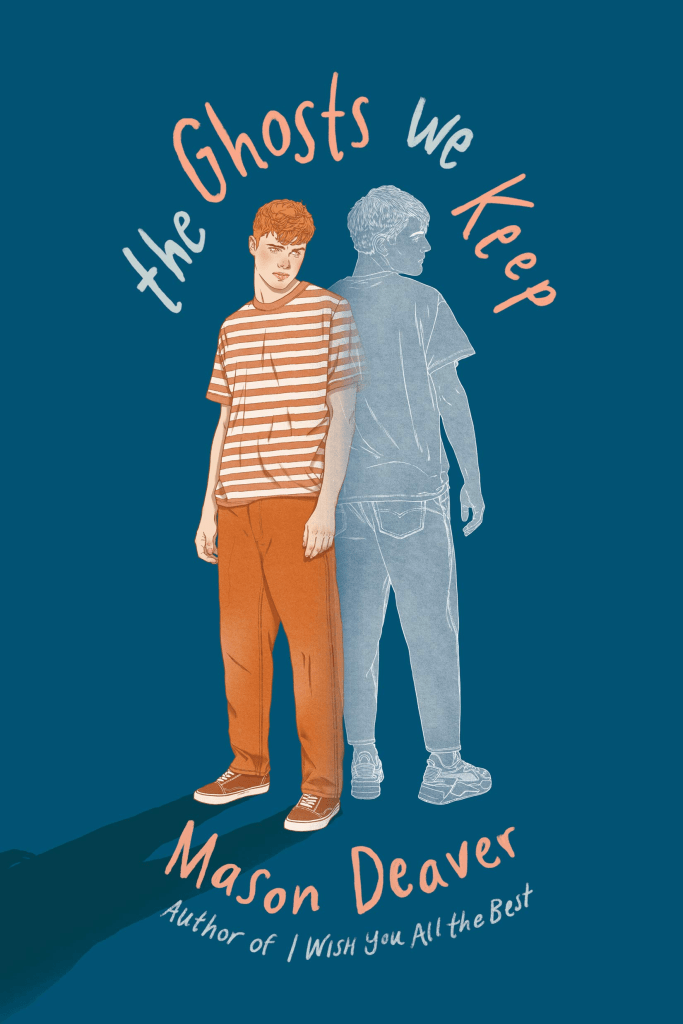
The Ghosts We Keep – Mason Deaver“I wish I could write songs about anything other than death…”

Since this post consists entirely of songs, consider all of them to be today’s song.

That’s it for this week’s Sunday Songs! Have a wonderful rest of your day, and take care of yourselves!

Posted in Book Review Tuesday

Book Review Tuesday (10/1/24) – Death’s Country

Happy Tuesday, bibliophiles, and happy October!

Since today is both in the middle of Latinx Heritage Month and the start of spooky season proper, I figured I would deliver on both fronts. I’d heard a lot of buzz about this one, especially the fact that it had polyamorous representation—something I rarely see in literature, much less in YA. Genre fiction written in verse is also uncommon, so I had to pick up this book since it combined both of them. The result was something that was inventive at every turn.

Enjoy this week’s review!

Death’s Country – R.M. Romero

Andres Santos is ready for a new start. After moving to Miami from São Paulo, he’s keen on leaving his past behind—especially his brush with mortality after nearly drowning and seeing the face of Death itself. He barely escaped by making a deal with Death for a second chance at life. Now, he’s a part of a happy, poly triad, deeply in love with spunky photographer Renee and joyous dancer Liora. But when a car crash puts Liora in a coma, Andres and Renee know that the only option is to confront Andres’ past—by returning to the Underworld where he once bargained for his very life.

TW/CW: car crash/coma, emotional abuse, suicide, self harm, eating disorders, fantasy violence

The minute that David Bowie was mentioned, I tried so hard not to go headfirst into liking this novel. My expectations were average, and I wanted to be surprised. And then “Space Oddity” became a recurring motif. You know me, I ate that up.

For the most part, I’ve rarely seen genre fiction and novels in verse mix. The latter is usually reserved for telling realistic fiction stories and occasional historical fiction, though I’ve only seen one or two examples of the latter. But using this method outside of fiction is something that, now that I’ve read Death’s Country, I feel should be utilized more often. Poetic language lends itself to describe the dark, fantastical setting of this novel and fantastical settings in general, and Romero’s is no exception; even if it doesn’t fill up the entire page, the flowing language renders the setting in luscious detail. Given that romance is also at the beating heart of this novel, Romero’s decision of putting it in verse made the romance feel all the more like the center of the narrative. Once more, her language didn’t just put the spotlight on it—the sparsity of the amount of words on the page truly made it feel like the center of the universe.

Even with the leaps and bounds that literature, mainly YA, has made in terms of queer representation, I’ve seen hardly any with polyamorous representation. (The only other one that I can remember is Iron Widow, which I also recommend!) What I liked about how Death’s Country handled it was that it was a polyamorous story, but that it wasn’t necessarily about polyamory; those stories have a place, but sometimes, the most powerful representation comes from seeing yourself in fantastical stories usually reserved for white, cishet, etc. protagonists. There are great discussions about the stigmas surrounding polyamory (cheating, slut-shaming, etc.), but they were only a part of the story, not the whole. The more that I think about it, a poly triad makes this story work in a way that it might not have with a couple; having two people, not just one, braving the Underworld for their girlfriend in a coma, presented a unique twist on a story that’s been retold countless times, and presented an opportunity to explore multiple perspectives of love under duress.

I went into Death’s Country expecting a meditation on death (obviously), but what I didn’t expect was such an insightful metaphor about how we idealize those we love in death. The Underworld in Death’s Country is almost a vehicle for reproducing what people deem most memorable about them: not just how they die, but how they were seen in death. Liora, who was adored unconditionally by both Andres and Renee, has been molded into a romanticized version of herself that, upon closer inspection, barely resembles the real Liora. Most of that is thanks to the manipulation of The Prince, but we later find out that even he is a reflection of the dark side of Andres’ love—that kind of unquestioning idealization that strips a real person into a glowing facsimile of who they once were. This provided an insight into these kinds of retellings (Death’s Country is a loose retelling of the myth of Orpheus and Eurydice) that they don’t normally touch on; death changes the people you love physically, but also mentally—in the perceptions of others that come to define them once their physical body is gone.

However, I feel like Death’s Country could have used a dual POV to execute the emotion to its absolute fullest. The only perspective we get is Andres, while we never get into the headspace of Renee, who is journeying with him through the underworld alongside him for the entire book. I wasn’t as big of a fan of Andres as a protagonist (I found him to be on the abrasive side at worst), but Romero’s writing of him was never sloppy or badly-executed in a technical sense. I just had the strongest sense that Renee had just as much of a story to tell as him! I get that Andres was specifically the one who made a deal with Death for another shot at life, but Liora isn’t just his girlfriend—she’s Renee’s girlfriend too. She needed more backstory, but I have a strong feeling that Death’s Country would have been enhanced if she’d also had more of a voice.

All in all, an inventive, fantastical novel-in-verse with plenty of fresh twists on otherwise well-trodden literary ground. 4 stars!

Death’s Country is a standalone, but R.M. Romero is also the author of The Dollmaker of Krakow, The Ghosts of Rose Hill, A Warning About Swans, and the forthcoming novel Tale of the Flying Forest.

Today’s song:

A NEW CURE ALBUM?? what a time to be alive

That’s it for this week’s Book Review Tuesday! Have a wonderful rest of your day, and take care of yourselves!

Posted in Monthly Wrap-Ups

October 2023 Wrap-Up 🧛🏼‍♀️

Happy Tuesday, bibliophiles, and more importantly, happy Halloween!

I really should be used to this by now, but getting this much snow two days before Halloween always feels so wrong. I like snow this time of year generally, but not when I have a costume to wear.

Let’s begin, shall we?

GENERAL THOUGHTS:

Usually a month this busy would dampen my overall feeling of it, but for once, it really hasn’t! That’s the magic of the Halloween season, I suppose. I’ve had a ton more stuff to do on the heels of midterm season, and even though I’m still somewhat busy (hence the scant amount of posts I’ve been able to make this month), I’m still enjoying myself.

However, even though most of the month has been favorable for me, my reading…hasn’t been as much so. Since the beginning of the month, I’ve been in a slump that I’ve only just been able to get out of in the last week or so. After the first few days, I just fell into a bad spell of especially mediocre books—for a solid two weeks, I didn’t run into much that I ended up rating higher than 3.5 stars. But I’ve slowly gotten out of the dry spell, and the end of the month has been filled with some fantastic reads!

I’ve also tried to get back into the rhythm of fiction writing, since I’ve fallen off the wagon for that since school started. Although I haven’t been able to adhere to the schedule to a T, I’ve allotted a good time of night towards writing at least 1,000 words a day, and that got me to the end of my first draft of the second book in my main sci-fi project! This one ended up being almost 82,000 words! Pretty proud of myself. Sadly, as I’m getting older, November has become a worse and worse year to try and crank out 50,000 words, so I’m not doing NaNoWriMo this year. The July Camp is a much more reliable time for me. In the meantime, I’m hoping to polish up some of my short stories to send off for publication…

Aside from that, though, there have been SO many fantastic things going on. First off, Sir Patrick Stewart (!!!!!) stopped by my school for his book tour, and it was incredible! I wish I had more pictures to show for it (we weren’t allowed to take any), but he just had the kindest, warmest presence, and it was such an honor to hear him speak about his life. What an incredible man.

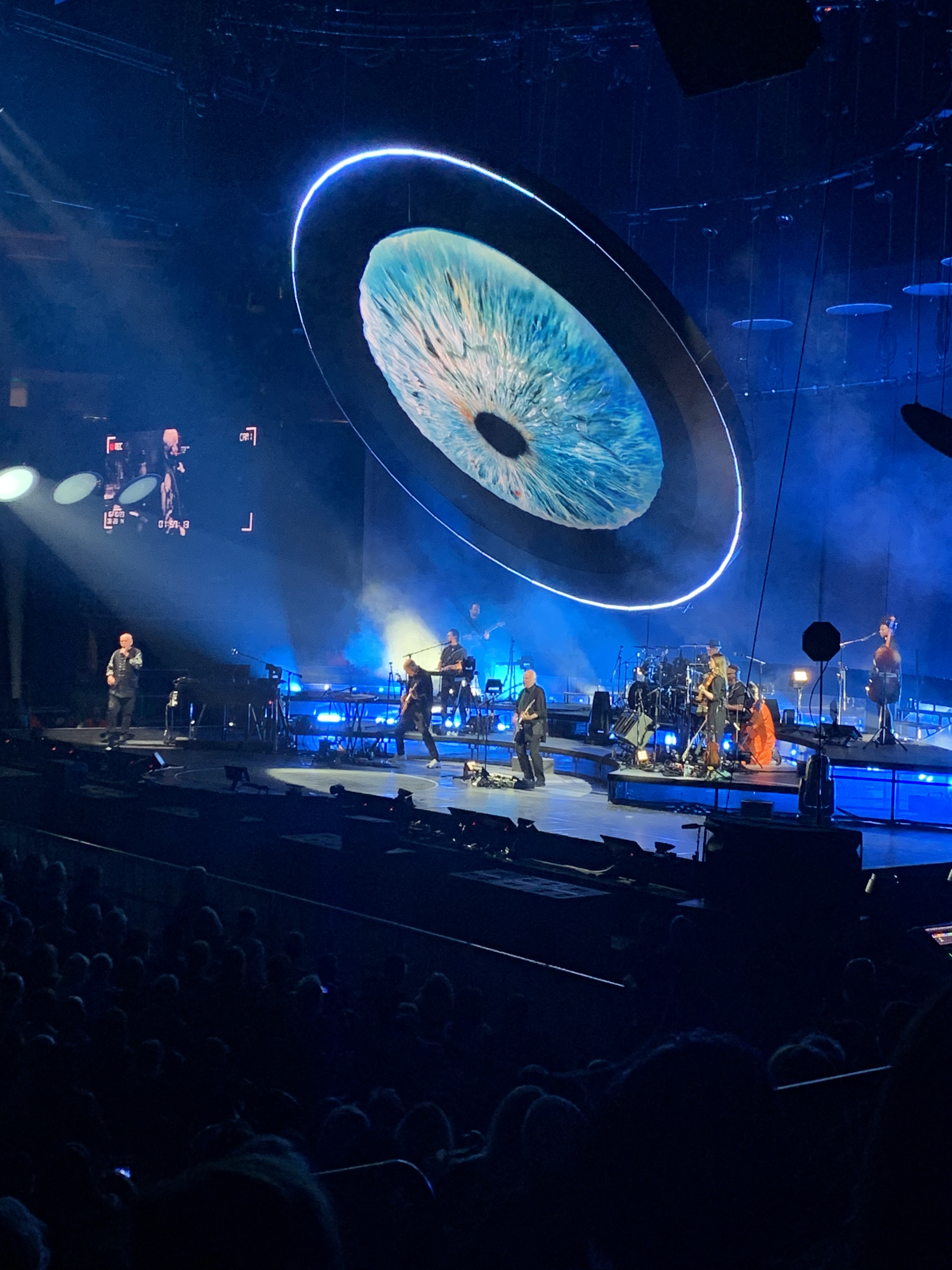
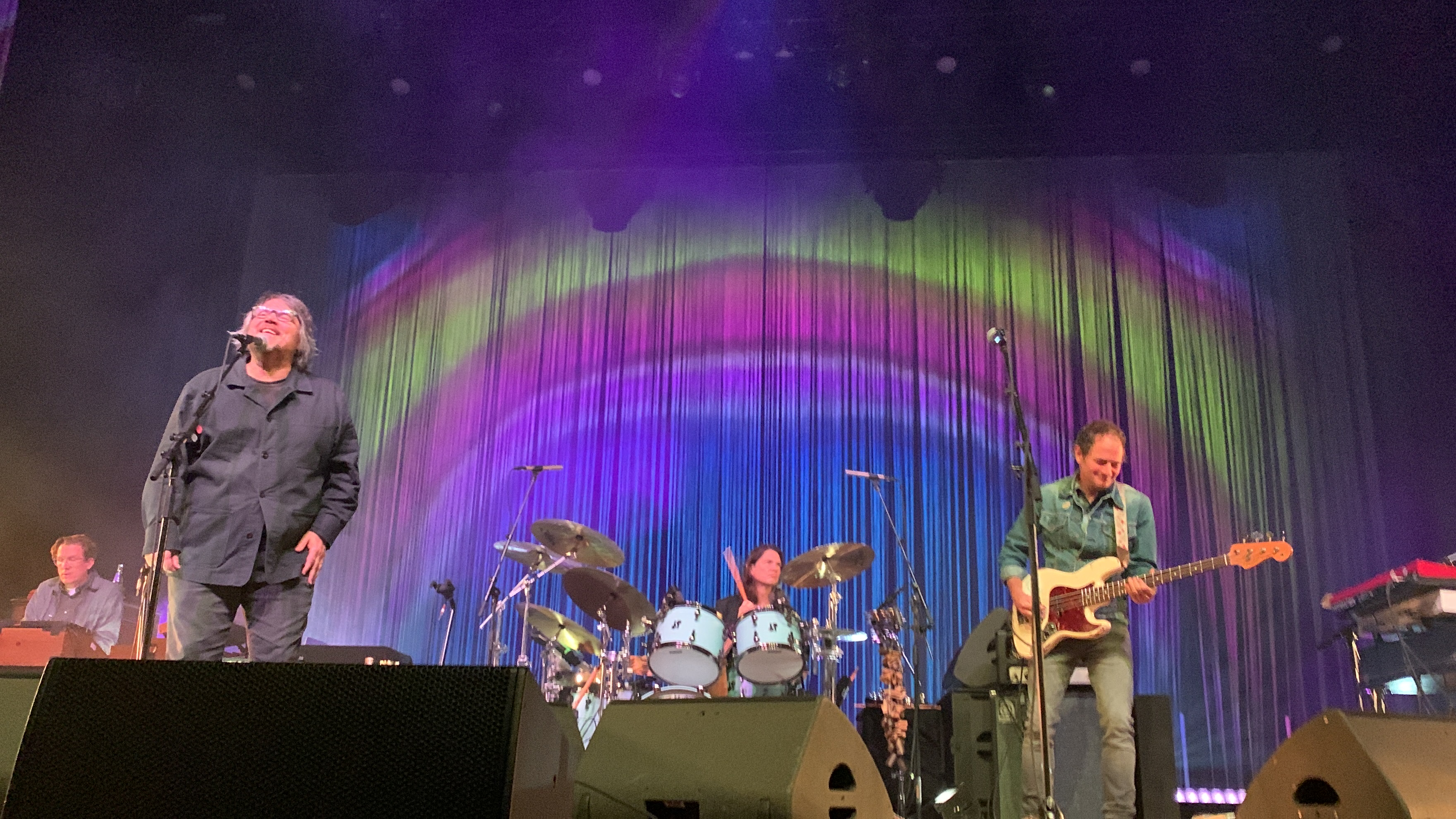
After that, I had the amazing luck of being able to see Peter Gabriel and Wilco in the same week! Both were such phenomenal shows in their own ways—seeing Peter Gabriel when I thought I’d never even see him tour was the most transformative, beautiful experience, and seeing one of my favorite bands perform their best setlist yet (and seeing them from the front row!!) was just as wonderful.

Peter Gabriel at the Ball Arena
Wilco at the Mission Ballroom

Other than that, I’ve just been getting back in the rhythm of drawing, playing some guitar now and then, taking far too many pictures of the pretty leaves on campus, drinking my fill of apple cider, watching Taskmaster (FINALLY GOT THROUGH SEASON 15! THE BINGING HAS CEASED!) and catching up on Only Murders in the Building (please stop pairing Mabel up w randos, she deserves so much better), and soaking up the fall weather. At least I was until we got snow 2 days before Halloween. Oops.

READING AND BLOGGING:

I read 16 books this month! This month was slow going, and I ended up in a somewhat extended reading slump, but there were bright spots here and there.

2 – 2.75 stars:

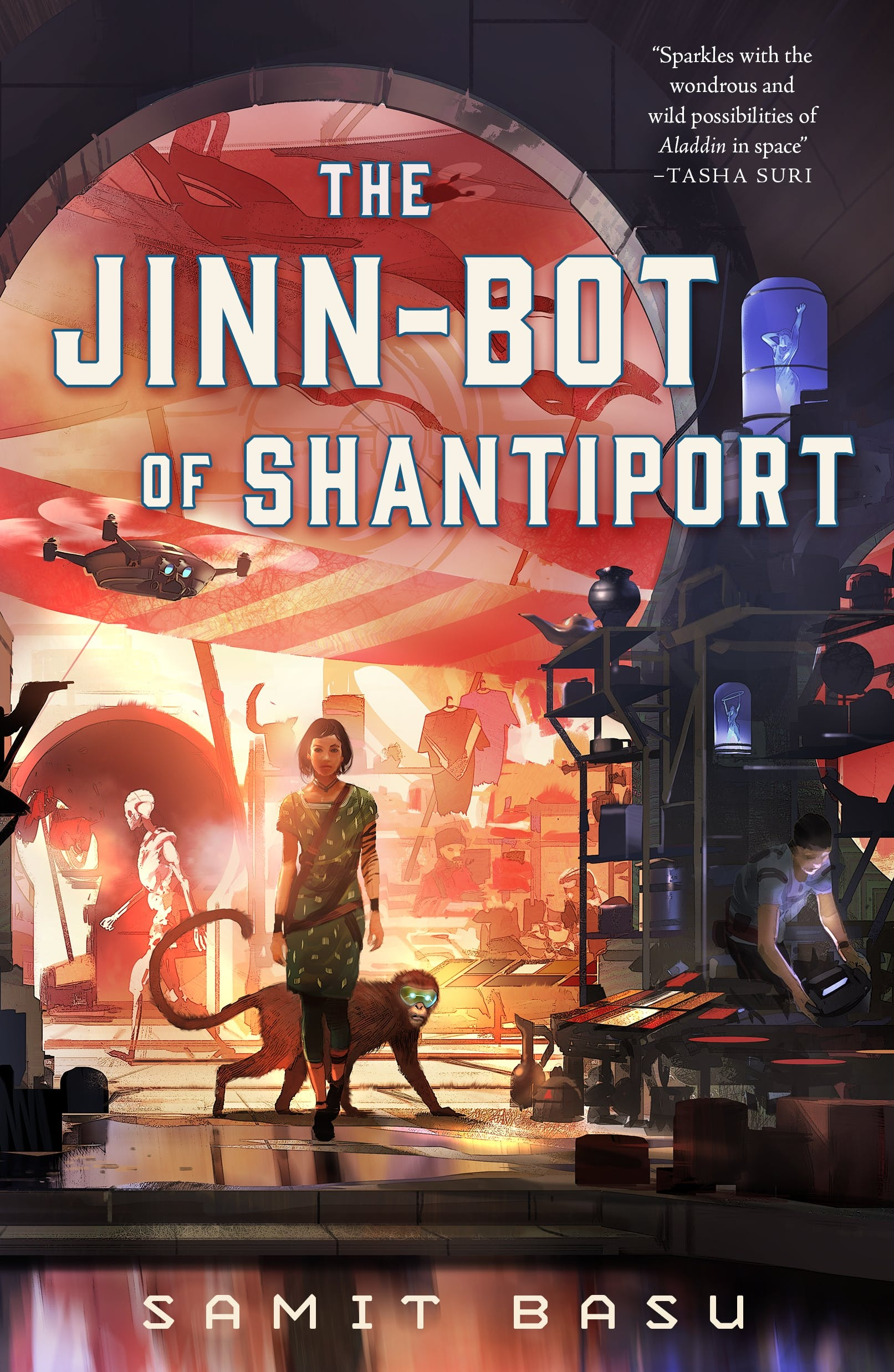
The Jinn-Bot of Shantiport

3 – 3.75 stars:

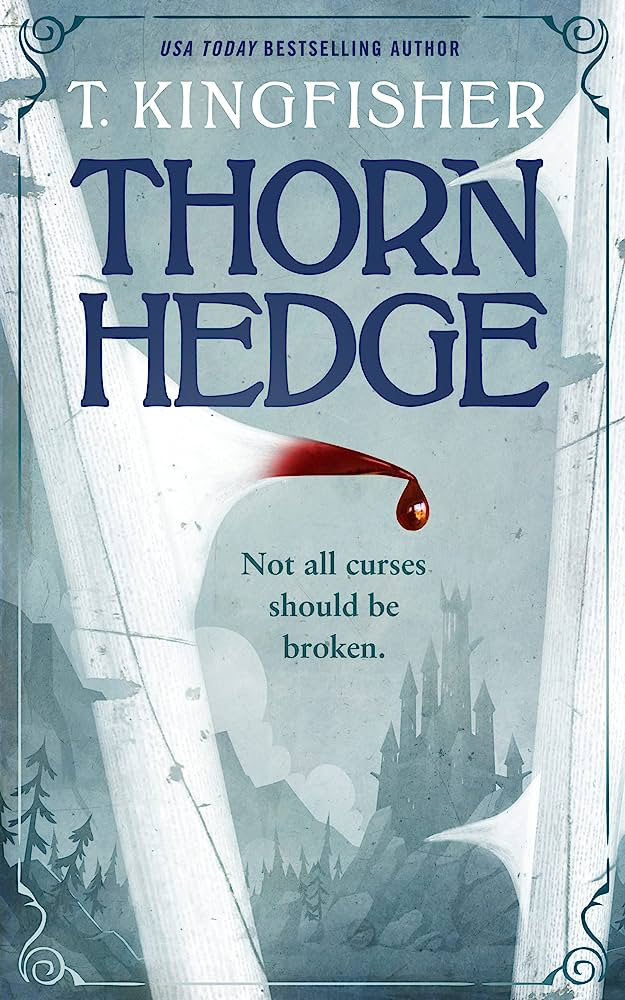
Thornhedge

4 – 4.75 stars:

The Thursday Murder Club

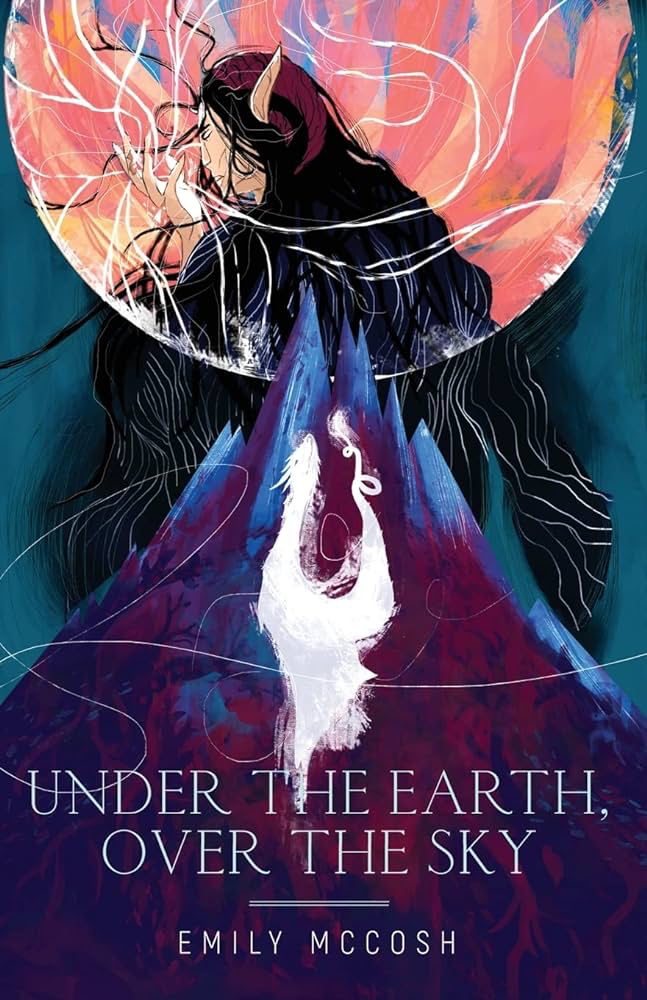
FAVORITE BOOK OF THE MONTH: Under the Earth, Over the Sky4 stars

POSTS I’M PROUD OF:

[cough] not a whole lot here, but:

POSTS FROM OTHER WONDERFUL PEOPLE THAT I’VE BEEN ENJOYING:

Again, I haven’t had as much time to blog-hop, but:

SONGS/ALBUMS I’VE BEEN ENJOYING:

LOVING the new Wilco
this song makes my soul leave my body
this album was just as wonderful (and uncomfortable) as I thought it would be
WAAAAAAAAAAAAAAAAAAAA
yeah I love OK Computer with every cell of my being, but there’s something to be said for the good ol’ Bends-era Radiohead
seeing Peter Gabriel live was truly magical :,)

Today’s song:

HAPPY HALLOWEEN EVERYBODY

That’s it for this month in blogging! Have a wonderful rest of your day, and take care of yourselves!

Posted in Sunday Songs

Sunday Songs: 10/29/23

Happy Sunday, bibliophiles! I hope this week has treated you well.

Here we are, almost at Halloween, the most wonderful time of the year! And to celebrate, I’ve brewed up a very special post for you, complete with…

…a Christmas color palette.

Hear me out. I didn’t intend to schedule the Christmas colors this week. It just happened. And it’s currently snowing where I am. Please. Please hear me out guys

Will last week’s Sunday Songs graphic cheer you up, then? It’s nice and autumnal…(and it’s got some nice songs, if I do say so myself. Would’ve written about them, but I was exhausted.)

LAST WEEK’S SUNDAY SONGS:

And now, enjoy this week’s songs!

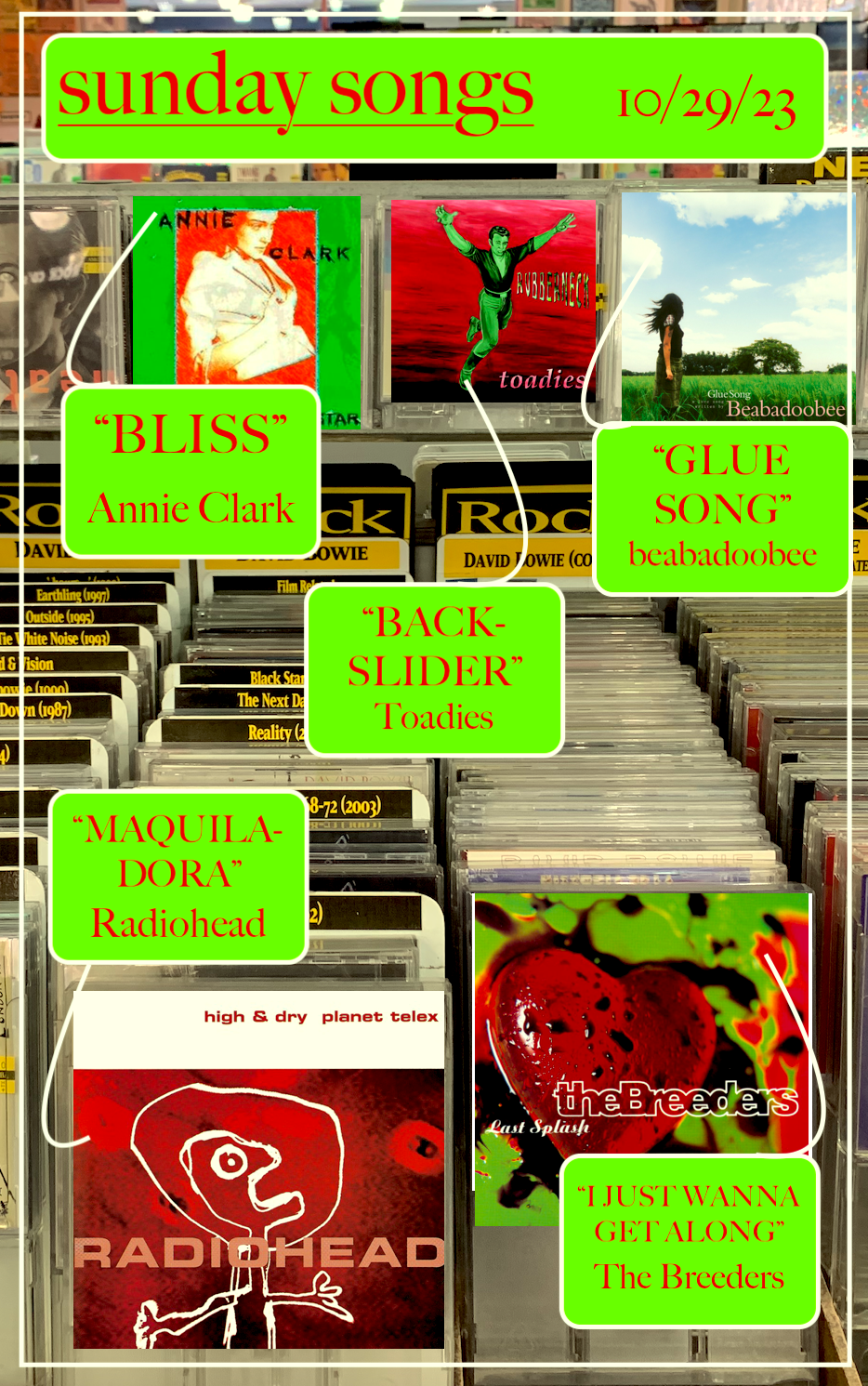
SUNDAY SONGS: 10/29/23

“Maquiladora” – Radiohead

I’ve long since accepted my status as a die-hard Radiohead fan, but I’ve noticed that most diehard Radioheads fans tend to put The Bends in time out in the corner in favor of Kid A and OK Computer. It’s understandable to a certain point—OK Computer is my second favorite album of all time, and Kid A is one of the most important records in modern rock history. But I’ll always have a soft spot for most everything that came out of the Bends era. Yes, it’s far more of a conventional rock record and there’s little of the experimentation that Radiohead became known for, but it’s consistently emotional and chock-full of some beautiful, punchy guitar work. Who can deny the grandeur of “Fake Plastic Trees?” Who can deny that “Planet Telex” is one of the coolest rock album openers of the 90’s, if not of all time? Come on now.

But there were a host of EPs (that I need to explore) that came out shortly before the full album released, with sprinklings of songs that would later appear on it (in this case, the iconic “High & Dry” and “Planet Telex”). Besides having some fantastic cover art (I think I had a dream in early high school where I had it on a shirt), this EP really has something of a hidden gem. The minute the distorted guitars kick in, my first thought was similar to hearing “Burning Bridge” by Kate Bush for the first time—how the hell was this a B-side? How was this not on the album and something like…I don’t know, “Bones” didn’t get relegated to throwaway EP status? It’s incredible. It has to be, since it’s in such legendary company, but “Maquiladora” is worthy of it. The grinding, tidal wave texture of the combined guitars of Thom Yorke, Johnny Greenwood, and Ed O’Brien is always a Radiohead trademark, but it really screams out on this track—the minute they kick it, it’s like watching yourself being buried in rubble, but with a smile on your face. Thom Yorke hasn’t quite wrestled the squeaky cracks out of his voice, but somehow, it sells the crunching angst of the sound ten times more. Everything cascades down around you as you watch it crumble, and the result is an explosion of sound that makes The Bends such a staple of the 90’s. It’s hard, it’s crunchy, and even the softer, twinkling moments screech along like a car past the speed limit, leaving trails of exhaust in its wake. Again: how this track wasn’t on the album is beyond me. Good god. It could’ve been perfectly sandwiched between “High & Dry” and “Fake Plastic Trees.” I’m just saying.

“I Just Wanna Get Along” – The Breeders

Speaking of punchy, early-to-mid 90’s rock…do I smell a coincidentally great transition? (It’s all gonna fizzle out by the time we get to the next song, don’t worry…)

My god, I love the 90’s. I love the 90’s. I really need to listen more of The Breeders, because this hits an especially sweet spot for me. It toes the line between abrasive and absolute tightness; it’s got a punk sensibility to it, but with a sanded edge that smooths it into something truly meticulous in how much it rocks. For a song that’s only a minute and 44 seconds long, it has such a punch to it that could only be so self-contained; it’s rare that I like a song and don’t want to extend it if it’s so short. Some songs were meant to be a smack in the face and then fade away like a sparkler fizzling out. And this song has just the same bite as a sparkler—the double guitar act of twins Kim and Kelley Deal, combined with the thrumming bass of Josephine Wiggs, makes for a deliciously spiky, driving sound. Kim Deal’s deadpan vocals only elevate it—the dry delivery of the line “if you’re so special/why aren’t you dead?” feels like spitting a wad of chewed-up gum in the trash in the most gloriously 90’s way. Deal delivers the song’s title in the same way; it’s not a chant so much as it is a rolled eye and a shrug as you reapply red lipstick in the mirror. There’s a sharply stamped period at the end of each repetition: “I just wanna get along. I just wanna get along.” It oozes confidence, but not in an arrogant way: it’s the kind of confidence of pulling yourself onto a motorcycle without a word and leaving everyone else in the dust.

“Bliss” – Annie Clark

“Bliss” starts at 0:32 in this video.

I’ve done it. I’ve reached peak obscurity in one of these posts. Streaming? No can do. Available to purchase? Doubtful. All we’ve got is a few YouTube videos where the “full” version is still missing a song (or two?), complete with some crusty pixelation on the album art. Mwah.

I am become annoyingly into St. Vincent, scroller of wikipedia rabbit holes. Even though I first heard about this EP during my initial St. Vincent superfan period in about sixth grade, I hadn’t gotten around to listening to it until now. Ratsliveonnoevilstar is St. Vincent before she was St. Vincent; she released the EP in early 2003, when she was a student at the Berklee College of Music. Most of the only copies that exist are floating somewhere around Berklee and possibly on eBay. What remains accessible is three to four songs—Wikipedia only lists three, but “Good Morning” (the first song in the above video) is only on this YouTube version, and “Breathing” seems lost to the ether. And from what Clark herself has said about the EP, it’s likely to stay that way:

“It was horrible. I did that my sophomore year or something. I haven’t listened to that in a really long time. I would say I should have put a little more Bill Callahan and a little less Herbie Hancock in it.”

And upon listening to it, I’m glad I listened to it then and not in middle school, because I sincerely doubt that I would’ve lasted more than 2 minutes at age 12. Now, I can say this affectionately, as someone who is around the age Clark was when she made this EP: this is the most college student thing I’ve ever listened to. She’s made her voice theatrically lower than how her voice sounds as a grown woman, and most of the EP is a very particular brand of over-the-top avant-garde, jazzy-sounding circularity. Most of it’s pleasant to listen to, but it still has an air of “look at me, College Student, producing High Art™️.” But it’s not all bad. Songs like “Bliss” are still full of the meticulous threads that led to the wonderfully clever art-pop of Marry Me five years later. It’s a portrait of a very artsy young musician, one who hadn’t hit her stride yet, but was brimming with inspiration and determination. Clark had a very specific sound in mind, and she was well on her way to nailing it. It’s certainly not your ordinary acoustic college student EP—I guess that’s bound to happen if you’re going somewhere like Berklee, but either way, there’s something endearing about this effort; it’s far from perfect, but it’s the seedling that would go on to sprout one of the most iconic musical careers of the 21st century. #26 on Rolling Stone’s 250 Greatest Guitarists of All Time list? Those lists may be exceedingly subjective, but come on. More than deserved.

I love the sound of old men foaming at the mouth in the Rolling Stone comments section in the morning.

“Backslider” – Toadies

There’s no bond like the bond between a high school girl and a simple but spectacular song that she learned how to play by herself on guitar. It’s a perfect warm-up song; part of why I’ve loved playing guitar more than piano is that I’ve feel more connected with the material that I can use for keeping my fingers dextrous. And when I was first learning this and slowing the song down on YouTube, it doesn’t sound silly like a bunch of other songs do (play “Drive My Car” on 0.5x speed, I dare you)—this just sounded so perfectly bluesy.

I suppose this could be the closest to Halloweeny that this week’s songs come to, but I really should’ve gone with something like “Possum Kingdom” if we wanted some real Halloween. Alas, “Backslider” was on the brain more. But that’s not a complaint—I’ve been coming back to this, the aforementioned vampire song, and “I Come From the Water” since 8th grade, and I have nothing but fond memories of them. That chugging, grinding guitar never fails to hook me just like it did when I was 14; there’s a dark grime clinging to every Toadies song I’ve ever heard, muddy and hazily dark, like the humidity that clings to your forehead at night in the South. (A feeling that they probably knew well, what with the band hailing from Texas.) The flies lingering around the band in the video really tie it all together. It’s a sludgy, eery texture that pairs with everything I’ve heard of theirs, but especially with this, a series of vignettes of Todd Lewis’ Southern, Christian upbringing and the creeping dread ever-present within it. All crammed in just over two and a half minutes, all of that grime and dread is as tight as ever—not polished, but sculpted into something fully-formed.

“Glue Song” – beabadoobee

Since I first posted about beabadoobee way back in July, I’m veeeery slowly sprinkling some of her songs into my rotation. And although not everything’s my speed, I’m not regretting this mini deep-dive into her music! Again, if anyone has any starting points as far as album goes, be my guest! Onto the Sisyphean album bucket list…

An open letter to anybody looking to make a high quality teen rom-com: please, this needs to go at the very end. Imagine that: you see the two protagonists look into each other’s eyes, their hands slowly slip into each others, they smile. The opening strings kick in, camera cuts back to them looking into each other’s eyes. Roll credits as beabadoobee’s voice hits. Perfection, right? I’m starting to see why so much of her catalogue is made up of love songs—from what I can tell, that kind of sweetness has been her trademark for years. “Glue Song” is one of her newest efforts, and it’s easy to see that she’s known for that kind of love song craft. She has the perfect voice for these kind of tenderhearted, smiley ballads—gently high-pitched, feathery, and glimmeringly sweet like honey. As soon as she declares that “I’ve never known someone like you,” I can’t help but believe it. And just like the orchestral arrangements in the background of “the way things go,” the strings and horns trilling in the background elevate “Glue Song” into the perfect bite of cheek-blushingly, dress-twirlingly lovey-dovey declarations. It would be easy to make something like this incredibly sappy, but Bea Kristi’s light voice is light enough to feel like she isn’t trying to pack a ton of unneeded sugar into every note—she knows the balance, and she keeps it simple, gentle. It’s just the right amount of sweetness—enough to melt on your tongue, but not so much that it rots your teeth.

Bonus: she also released a version of “Glue Song” as a duet with Clairo—it’s just as lovely!

Since this post consists entirely of songs, consider all of them to be today’s song.

That’s it for this week’s Sunday Songs! Have a wonderful rest of your day, and take care of yourselves!
Posted in Book Review Tuesday

Book Review Tuesday (10/24/23) – Stars, Hide Your Fires

Happy Tuesday, bibliophiles!

Here I am with a proper book review this week! I’m not exhausted now! However, I’ve still been in something of a reading slump for a fair portion of the month. Behold the consequences.

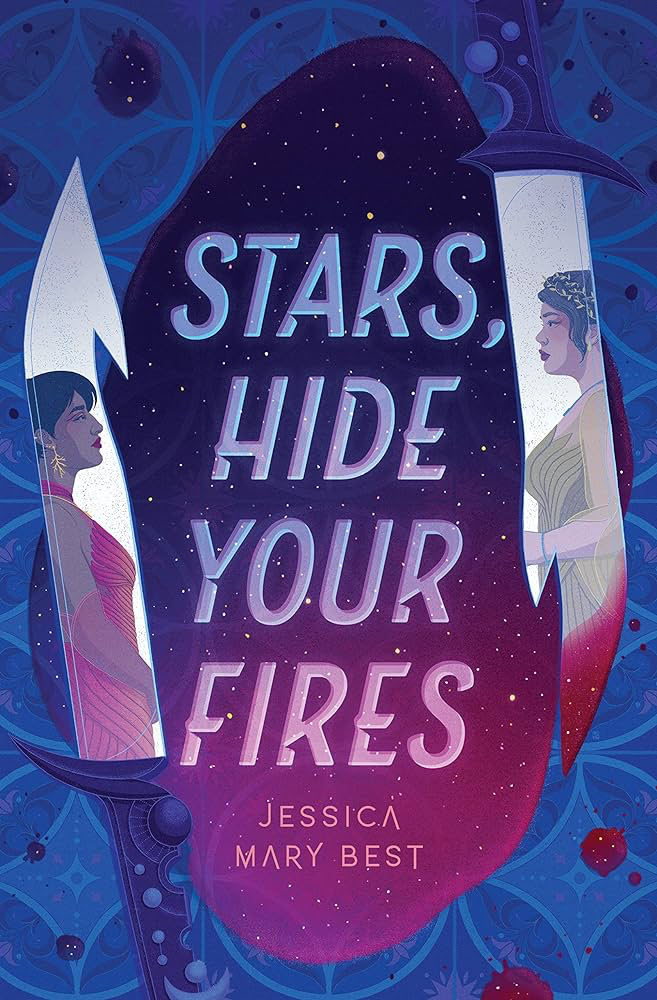
Knives Out in space? Yep. I am not immune to propaganda. I fell for that one. The gorgeous cover helped. Duped by a pretty cover again. I’m always on the hunt for YA sci-fi that really delivers, but even though Stars, Hide Your Fires was an entertaining read, it largely fell into the “ballrooms in space” trap that so much of the subgenre suffers from.

Enjoy this week’s review!

Stars, Hide Your Fires – Jessica Mary Best

Cass knows her place. As a thief scraping out a living on a backwater moon, she knows that there’s no escape that the life that the Emperor and his family have made for people like her. But when she sees the chance to hitch a ride to the Palace Station, she knows she’s hit it big. Steal enough jewelry, and she’ll be able to escape the planet forever. But when the Emperor is mysteriously murdered and suspicion lands on her, Cass must find a way to escape the space station—and clear her name.

TW/CW: murder, blood, sci-fi violence

I really need to stop going after YA sci-fi books where most of the plot takes place in some kind of ballroom or palace. After a certain point, it just gets so bogged down in the flowy dresses, jewelry, and court intrigue modeled after…I don’t know, Ancient Rome, probably, that it barely feels like sci-fi anymore. It’s really a travesty. But even though Stars, Hide Your Fires was far from perfect, it didn’t fall into every single one of the pitfalls I just described. It at least had a few elements that almost set it apart. Almost.

I’ll give Best this—for the first quarter of the book or so, Stars, Hide Your Fires did actually feel like science fiction. Although we didn’t get into the full extent of the worldbuilding, I did like the setup of the class difference just from showing the differences between two planets. You really did get a sense for Cass’ situation, and the setting of the dead, backwater moon really emphasized not only that, but the stakes that Cass later had to follow up on. Best’s writing sold the dusty, gloomy setting that dominates the first quarter of the book, and in comparison to all of the glittery ballroom business that comes later, it was a well-written contrast.

I’d also have to hand it to Best for keeping Stars, Hide Your Fires so tightly paced! Even though I lacked much connection to the plot, I’d be remiss if I didn’t acknowledge how neat it was—that part really felt sanded to a polish. All of the beats lined up straight into place, and with the exception of some dawdling in the middle, it at least held my attention for most of the novel. If anything, Stars, Hide Your Fires had some solid timing—Jessica Mary Best clearly had her line of dominoes ready to fall from the start, and the suspense was palpable.

That being said, other than the first and last quarters, I barely got the sense that this was science fiction. It’s one of those books where it could have just as easily been a historical drama or even fantasy if you took away the space setting. Sci-fi is my go-to, and usually, I’d like for a novel to present at least something partially new, whether it be a subversion of a typical setting, a unique kind of technology, or even some aliens to populate the universe. (ALIENS! ALIENS! ALIENS!) But other than being set in space, Stars had nothing to its name in that department. You could have just as easily made the palace a grounded palace on Earth, and hardly anything about the plot would have changed. Cass’ home moon could have been a different country, the spaceships could have been trains, the escape routes that she took could have been back alleys or indoor ventilation ducts. Even though it’s billed as sci-fi, Stars, Hide Your Fires doesn’t have anything to show for it other than being in space.

Additionally, I felt hardly any connection to the plot or characters. That was in no small part thanks to how unoriginal much of it was. You’ve got a generic setup of a tyrannical empire, but you don’t get much of a sense of what exactly is tyrannical about what they’re doing, other than being generally evil and a bit of monkey business with clones. To oppose them is an equally generic rebellion, and other than them being billed as heroic, you don’t really have much motivation to root for them since their goal is defeating said empire and not much else. Cass doesn’t have any ties to either, but other than her poorer background, there’s not much to her, either. My, a loner, rebellious pickpocket? Where have I seen that before? That’s the sad thing about this novel—if we’d had some original elements to any of the plot points, it could have been really fun. I’m all for a heist in space, but you’ve got to have the sci-fi chops to pull it off. And there’s some slack I’m willing to give Best since this is her debut novel, but it was still disappointing on that front.

All in all, an entertaining YA novel that could have elevated itself above simply “entertaining” if it had boasted any kind of original elements. 3 stars.

Stars, Hide Your Fires is a standalone; it is also Jessica Mary Best’s debut novel.

Today’s song:

thank you to whoever was in charge of the Wilco pre-show playlist on Sunday night for this

That’s it for this week’s Book REview Tuesday! Have a wonderful rest of your day, and take care of yourselves!
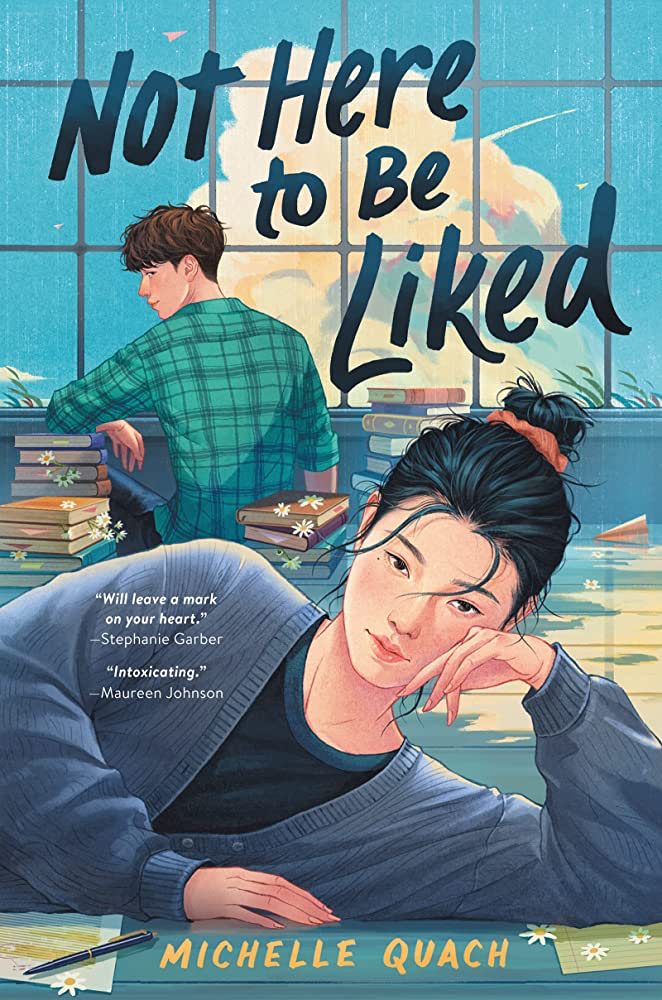
Posted in Sunday Songs

Sunday Songs – 10/15/23

Happy Sunday, bibliophiles! I hope this week has treated you well.

THIS IS A CODE RED, I REPEAT, WE HAVE A CODE RED! IMPENDING BOYGENIUS BREAKDOWN IMMINENT! BRACE, BRACE, BRACE! BOYGENIUS BREAKDOWN HAS REACHED MACH 1, I REPEAT—[RADIO GOES DEAD]

…CAPTAIN? CAPTAIN!

Enjoy this week’s songs!

SUNDAY SONGS: 10/15/23

“Powers” – boygenius

I’m writing this on the day that the rest – EP came out, and I can assure you that’s been the only thing pouring through my headphones all day. I’ve lost count of how many times I’ve run through the whole thing. It’s easy to do it endlessly—only four songs, 3/4 of then in the two minute range. That’s this EP’s only crime—those three songs are just too short. Other than that, they’re so criminally flawless that it was exceedingly difficult to pick just one to talk about this week. There was the appropriate all-consuming but gentle harmonies of “Black Hole,” the painful relatability of “Afraid of Heights” (Ms. Lucy Dacus could you not stare into my soul today? Please?), and the gut-punches of “Voyager.” I was trying to have a good morning, but then, boom: Phoebe Bridgers hit me with that beautiful line about the pale blue dot. Ouchie.

But from the start, “Powers” would have always broken through as a standout amongst standouts. Led by Julien Baker, this song is appropriately the EP’s longest, and one of boygenius’ most lyrically exciting songs. It’s something that I wouldn’t have expected out of them—of all things, a superhero origin story. It’s the coolest. Who wouldn’t get that rush of excitement as Baker and company croon “Either way, I have been wondering/Just how it is that I have never heard/The tale of how I got my powers?” Leave it to a line so inviting, so promising of something cosmic, to immediately steal my heart. Over the course of the song, Baker ponders this untold tale, searching for some remnant of the event that made her extraordinary—”Did I fall into a nuclear reactor/Crawl out with acid skin or something worse/A hostile alien ambassador?” It’s the kind of subject matter that lends itself to a more pop-rock sensibility, something punchy and full of action, but the subtle rise from acoustic guitars to atmospheric, electronic background noise feels just as sweeping. As the background reaches something close to a quiet crescendo, the lyrics are all it takes to ramp up the stakes: “No object to be seen in the supercollider/Just a light in the tunnel and whatever gets scattered/Life flashing before the eye of whatever comes after.” And with a whole album about their shared friendship, how could the final lines of “The hum of our contact/The sound of our collision” not be about just that—the strange journey that led three to become one and create such meaningful music together? And to follow it with a somber, resonant chorus of brass as the EP fades out? Glorious. “Powers” really is boygenius at the height of their own powers—purely cinematic, all-consuming, and as emotional as ever. Long live the boys.

“A Wonderful Day In a One-Way World” – Peter Gabriel

It’s long overdue that I talked about Peter Gabriel 2: Scratch. I listened to it all the way through…wow, a month ago? But stubbornly, I refused to put it in because it didn’t at least vaguely fit into one of my color schemes until this week. As everything has been with my eternal Peter Gabriel summer, Scratch was a strange and jaunty little adventure. It seems to be his only album that never really produced any “hits,” as we’d define them, but it still charted to #10 in the U.K. Scratch didn’t chart quite as high in the U.S., and you can sort of see why—it wasn’t made for hitmaking. Neither was Car, but that album was just so nuts and all over the place that a hit was bound to come out when the dust settled. It’s still got that playful weirdness that Car had in spades, now with the cohesion that Car lacked. It’s still experimental and abrasive as all get-out at times (see: “Exposure,” another favorite of mine from the album), but you can see the unifying threads.

“A Wonderful Day In a One-Way World” was a surprise favorite for me, but it really shouldn’t have been. I’m not fully warmed up to prog in general, but Peter Gabriel’s late 70’s take on it has a certain jaunt to it that makes it endearing. Like some of Kate Bush’s weirder music coming out at around the same time, it’s got that hip-swaying, Bowie-inspired groove that propels it for the whole length. Something about the particular arrangement of instruments and the light, airy key that it’s in makes it feel so playful. I’d even go so far to say that it borders on sounding like a show tune. Again: not something I’m normally receptive to, but the combination of Peter Gabriel’s theatrics (no doubt leftovers from his Genesis days) and the winking spirit of the whole song make it much more fun to listen to. The wry lyricism only adds to that theatricality (“There’s an old man on the floor, so I summon my charm/I say, ‘Hey scumbag, has there been an alarm?’”) as the self-absorbed narrator makes his way through his one-way world (“Time is money/And it’s money I serve”). If there’s anything that this journey through the Peter Gabriel catalogue has taught me, is that he’s always been full of surprises, and continues to be to this day—that’s what’s made him so lasting, in my opinion. Whether he’s looking outward or inward for inspiration, he always has something new to offer. That sure is a rarity for an artist of his age.

As for me, I’m excited to see his newest surprises on tour tomorrow! Ready to cry…

“Me and Your Mama” – Childish Gambino

This is probably one of the more left-field songs that I’ve ever ended up including on these posts. I’m 100% under a rock when it comes to most mainstream music; most of what I know is a) what I remember from middle school dances (not fondly), b) random stuff I pick up from following Pitchfork and Stereogum, and c) my neighbors. It’s always just background noise for me—thankfully, I’ve matured past the “I don’t like mainstream music and therefore I’m better than anyone else” mindset that plagued me in middle school, and even though most pop/mainstream rap still remains not my cup of tea, I’ve gotten to the point where I can admit how cool something sounds. I’d be remiss if I didn’t deny that it happens once in a blue moon.

Like this. I only happened upon it because a friend of mine put it in the background of their story, but the snippet I heard blew me away. We’ll get to that a bit later. But if there’s any song that screams “album intro” louder than anything else, it’s “Me and Your Mama.” It starts off at a crawl, with some gentle, twinkling synths and a beat that doesn’t persist so much as creep up on you. There’s a nearly 2-minute wait for anything to change about this song—it takes a while to really kick in. But the payoff? Jesus, the payoff. The first time I hit the 2:01 mark when listening to this song all the way through, I swear my soul left my body. Everything about it makes it worth the wait—come on, how could that Halloween-store-skeleton laughter not immediately elevate everything? All of it—the sudden collision and time signature shift, the bass—it’s like getting an electric shock straight to the heart. And right on the heels of Donald Glover absolutely howling the rest of the lyrics. Even when some of the earthshaking soundscape fades in favor of letting a bit of acoustic guitar slip through, none of the momentum gets lost. Every line is delivered rawly, like it’s freshly covered in blood, pulsating with captivating energy. And just as it reaches its crescendo, it’s gone. Two minutes more of spacey synths, and this song drops out of existence. Poof. I can’t not see the expert craft that went into every note of this song—it’s elevated from a song to something reaching beyond an experience. It really does swallow you whole for all 6 minutes and 18 seconds. I only have a vague notion of the rest of Childish Gambino’s catalogue, but damn. That’s how you open an album.

All for a song called “Me and Your Mama.” Go figure.

“So Cruel” (U2 Cover) – Depeche Mode

I’m gonna say it: I’ll absolutely defend U2. Up to their more recent stuff, I’ll still hold that they’re an incredible band, the “we’re going to put our new album on every single apple device and there’s nothing you can do about it” incident notwithstanding. I might’ve been too young to understand the full degree of annoyance of every apple user who wasn’t into U2, but I wasn’t too young to have a ton of fun at one of my first concerts—U2, on that same tour. Even if Songs of Innocence wasn’t their best work, I can still remember how the show was just pure fun. And whoever was in charge of the visuals was putting out their absolute best work—even almost 10 years after that show, I still remember how wowed I was by them. Sure, their more recent work has gone more than a little stale, but they’re far from deserving of the “worst band in the world” title that people have foisted on them in the last 20 years or so. How is everybody putting that on them when…I don’t know, Oasis exists?

Oh, they toured together, you say?

…oh.

Anyways. I’m not necessarily here to talk about U2 themselves. Just as U2 has been the soundtrack to many a car ride in my childhood (see: at least a quarter of How To Dismantle an Atomic Bomb), so too were many songs from this album of U2 covers. I’ve always been back and forth about Depeche Mode—I love their atmosphere in general, and I like some of their songs here and there. (“John the Revelator” will ALWAYS be a banger.) It’s that atmosphere that elevates their cover of “So Cruel.” The original was already chock-full of drama, and Bono’s soaring voice, as it usually does, sells it all. But Depeche Mode’s interpretation gives this drama and heartache a new flavor, taking it to goth heights that make both the heartbroken, enchanting moan of both Bono and David Gahan feel all the more palpable. The landscape of synths consumes the whole of this cover, with a murmuring heartbeat of a drum machine blanketed by a static hum of electricity that feels fizzly enough to touch. It grows sparser (and bleep-bloopier) in the chorus, but that’s exactly what it needs. Gahan’s cavernous voice needs all the more room to breathe, and it’s given that and more. It’s hard to think of anybody other than Bono who could deliver lines like “Her skin is pale like God’s only dove/Screams like an angel for your love” without sounding ridiculous. It’s an excellent cover—and a welcome surprise from my shuffle.

“More Than This” – Roxy Music

This one’s been a long time coming on one of these posts. I listened to it a ton this August, but it got lost in my desire to create a somewhat coherent color scheme, despite the chills it gives me on every listen. But now here we are, in our nice little blue period, and here we are. Perfect time for us to join hands, close our eyes, and feel like someone’s blowing a nice, big gust of wind into our long, lustrous heads of hair.

There’s few songs that I can think of that are as instantly transporting as “More Than This.” I’m not usually as receptive to that eighties, saccharine synth extravaganza, but this feels like the fleeting, sweet time capsule of that moment in time. It does call to mind that angle where the subject is blindingly front-lit, glowing from within with the wind blowing in their hair. I feel like we would all be receptive to feeling that glow once in a while, right? I wouldn’t complain. Maybe it’s because “More Than This” came before this was the concrete norm—this was 1982, and we were still a few years removed from the overlords of synthesizers and consumerism, so maybe that’s why it doesn’t feel as contrived. Somewhere in between Roxy Music and the rest of the eighties, the romantic grandeur of this song was lost—and that’s what keeps this song so powerful. It perfectly matches the starkness of the album cover; Bryan Ferry conceived of Avalon, the album where this song hails (its title track and first single), while visiting the west coast of Ireland. I haven’t been, but I can imagine that kind of stormy environment of steep, gray cliffs, the kind that have endured since time immemorial, would tend to stir that up in a person. And even though I haven’t listened to the rest of the album, that sweeping beauty shines through. As the narrator languishes in melancholy, hoping that there is something beyond this deep sorrow but being so entrenched in said sorrow to definitively say so, the instrumentals make a combination of guitars, synths, and saxophone sound as expansive as the sea. Bryan Ferry’s voice isn’t the deepest, but it hits that level of deep that sells the existential plea of it all. “More Than This” really feels romantic—not in the lovey-dovey sense, but in the 19th century poetry sense. Is it too much of a stretch to say that somebody like Shelley or Keats would have rocked with this? I’ll stand by it. Bottom line: yes, we put too much focus on old dead white guys in literature, but sometimes nobody hits it quite like certain subsets of old dead white guys. Keats knew what was up. And if this song is proof, so does Bryan Ferry.

And as a bonus, here’s the legendary Karen O’s acoustic take, from a few months back:

Since this post consists entirely of songs, consider all of them to be today’s song.

That’s it for this week’s Sunday Songs! Have a wonderful rest of your day, and take care of yourselves!