Posted in Sunday Songs

Sunday Songs: 7/7/24

Happy Sunday, bibliophiles! I hope this week has treated you well.

This week: it’ll be two years of making these Sunday Songs graphics in a few days (!!), but I haven’t had many purple color schemes in all that time…enjoy the purple while it lasts. Also, I talk about movies that I haven’t seen and albums that I haven’t quite seen.

Enjoy this week’s songs!

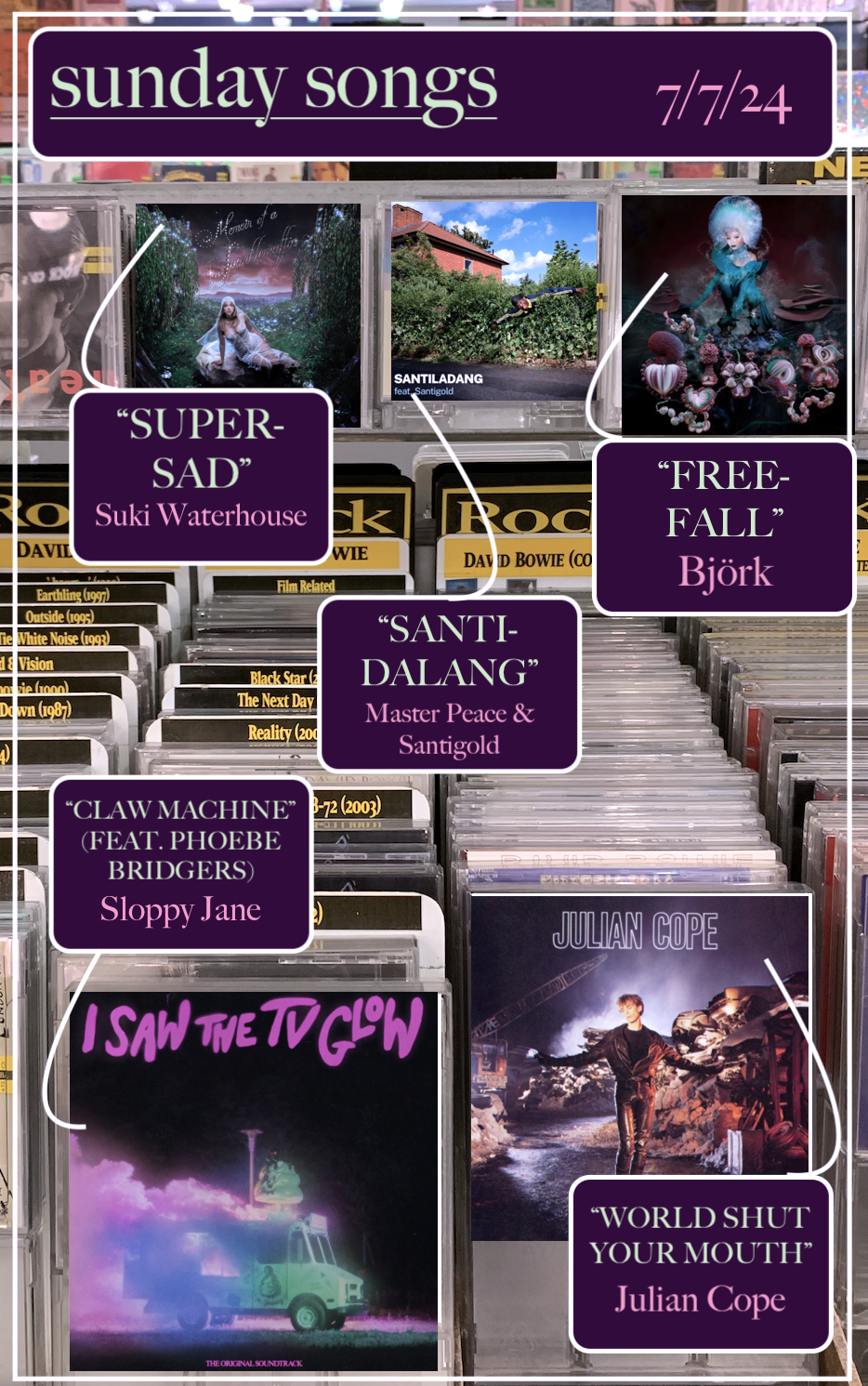
SUNDAY SONGS: 7/7/24

“Claw Machine” (feat. Phoebe Bridgers) – Sloppy Jane

Here I am, an absolute poser, posting this without having seen I Saw the TV Glow. I’m a simple woman. I saw Phoebe Bridgers and Jay Som on the soundtrack and immediately downloaded both songs without knowing any of the context apart from Lindsey Jordan being in her first acting role (I’m lovingly suspicious of her acting abilities, but that shot of her with an axe in the trailer is top-tier), and that “Claw Machine” plays in the opening.

The opening? Is Jane Schoenbrun trying to eviscerate us before the movie even begins? For everyone who’s soldiering through the boygenius hiatus: fear not! Phoebe Bridgers, along with Haley Dahl (aka Sloppy Jane, who Bridgers formerly played bass for) have come to emotionally derail your summer. “I think I was born bored/I think I was born blue/I think I was born wanting more/I think I was born already missing you.” Oh! Good to know that I won’t survive 10 minutes of this movie if I eventually watch it! Yippee!

…AND A BOOK TO GO WITH IT:

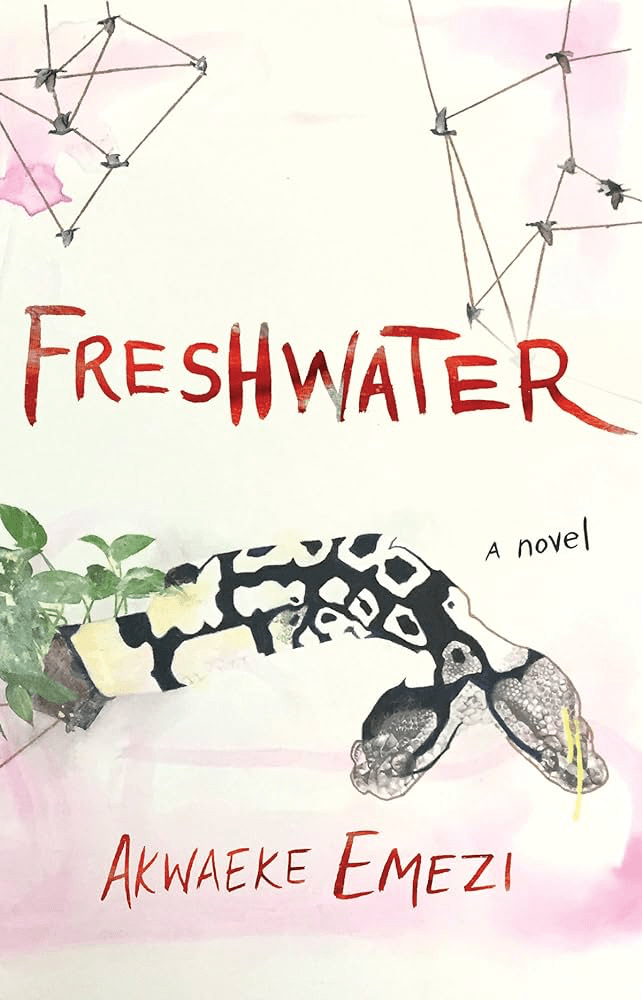
Freshwater – Akwaeke Emezi“Your heart is like a claw machine/Its only function is to reach/It can’t hold onto anything…”

“World Shut Your Mouth” – Julian Cope

It takes a certain kind of person to have the guts to name their album Saint Julian, but thankfully, it’s not entirely Julian Cope’s fault. Before this album’s release, his record label was intent on Cleaning Up His Act™️ and making him into their idea of a rockstar, thus: the leather, the haircut, and constantly looking like there should be a vine boom whenever the camera lands on his face. It was the ’80s. Comfortingly, the song “Saint Julian” is about his frustrations with god, but to be fair, anybody who can cover Roky Erikson’s “I Have Always Been Here Before” so heartwrenchingly deserves the saint title.

The ’80s never gave Cope the praise he deserved, save for some alternative hits. Crazy, given the fact that after Saint Julian came around, he’d basically become the unacknowledged father of Britpop. Everybody mentions The Kinks (obviously) and The Smiths as some of the progenitors of the genre, but where’s the love for Julian, who basically molded Parklife’s guitar-heavy confidence seven years prior with “Shot Down”? The clean, punchy guitars? The tongue-in-cheek lyricism? Even the look, even if it was more on the part of the record label than Cope himself—there’s no denying Damon Albarn and Jarvis Cocker took plentiful notes, chiseled cheekbones and all. Regardless of whether people will remember that, at least they’ll remember that he could pen a perfect pop song. Oiled and sleek as a new car, it oozes confidence more than Cope’s fabricated persona ever could. He didn’t need to get his hair did to have the gravitas to belt “World, shut your mouth/Shut your mouth/Put your head back in the clouds and shut your mouth,” just like the song’s unnamed protagonist who “[flies] in the face of fashion.” Complete with a mic stand that Cope could climb up and spin around on, it’s the side of the ’80s that I wish lingered—the slickness combined with clever turns of phrase thanks to the likes of Cope. Even if Cope resented the attempts to make him into a pop star (understandably so), there’s no denying that, at the height of his powers, he could write a perfect pop song. Good for him, though. Presently, he’s out living his best life and writing about Stonehenge and rock history. Go off, king.

I suppose all this means is that I selfishly get to gatekeep Julian Cope while cursed with the knowledge that he may get the praise that he deserves. I’ll Cope. I’ll Julian Cope—[gets dragged off stage by a comically large cane]

…AND A BOOK TO GO WITH IT:

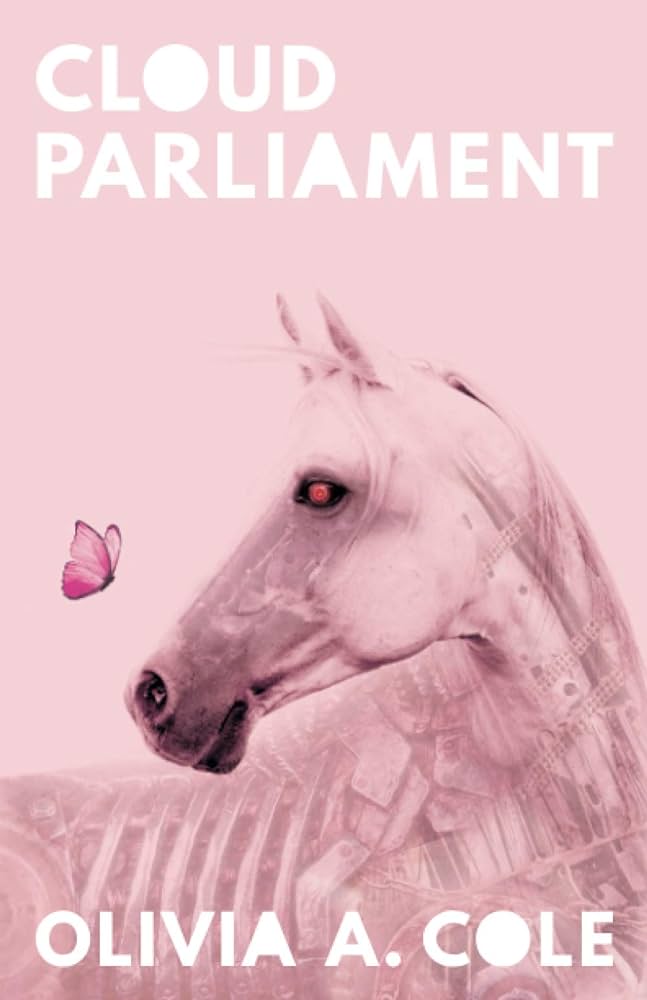
Cloud Parliament – Olivia A. ColeBold confidence abound—the kind strong enough to avenge the dead and bring entire industries to their knees.

“Supersad” – Suki Waterhouse

After a string of recent singles, Suki Waterhouse has announced her new album, Memoirs of a Sparklemuffin, out this September. I have to say…oh, god, that’s a painful album title. It sounds like the kind of thing you’d come up with at age 10 when asked for the title of your hypothetical autobiography. It feels like something that would be printed on a Justice shirt with kittens wearing sunglasses and enough glitter to blind a person at short range. Yeesh. But there is a method to the memoir; Waterhouse named the album after a species of Peacock spider from Australia (I wonder if the scientist who nicknamed it “sparklemuffin” regrets it…at least it’s just a nickname): “I came across the Sparklemuffin—which is wildly colored, does this razzle-dazzle dance, and its mate will cannibalize it if she doesn’t approve of the dance. It’s a metaphor for the dance of life we’re all in. The title felt hilarious, ridiculous, and wonderful to me,” she said to Rolling Stone. My verdict? Still a yikes album title, but at least there was thought behind it…?

The newest single, however? A joyous summer bop, to say the least! For Waterhouse, this has a slight rock edge, but undeniably remains the indie pop that she’s begun to polish. Strung together with “My Fun,” it’s clear that Memoirs of a Sparklemuffin centers rediscovering joy and healing at the forefront; “Supersad” is an anthem to hauling yourself out of bed, letting go of what you can’t control, and embracing fun in all of its forms: “Could be the worst time I ever had/Lose my mind, always get it back/There’s no point in being supersad.” Stagnation and sadness aren’t just detrimental to your health—at the end of the day, it always feels so boring to me, even if, in the moment, I can’t do anything to do it. And there’s a multitude of things that are way out of your control! No matter how long it takes to get yourself out of the funk, it’s temporary—and there’s no point in being supersad. Life is short.

…AND A BOOK TO GO WITH IT:

The Many Half-Lived Lives of Sam Sylvester – Maya McGregorLeaving old ghosts behind to turn over a new leaf—and find love.

“Santidalang” – Master Peace & Santigold

My mom and I are very similar people in a number of ways, but one of the ways that we hadn’t acknowledged until now is that we’ll see a song with Santigold on it and immediately hit download. It’s Santigold!! Who wouldn’t?

Named “Santidalang” in acknowledgment of the aforementioned legend, this track is a slight reworking of Master Peace (ba-dum tssssss)’s “Shangaladang” from his debut album, How to Make a Master Peace (ba-dum tsssssssssss). For someone who frequently cites LCD Soundsystem as one of his primary influences, what I’ve heard of his music is far from the uptight rhythms that I associate with James Murphy. What he’s taken from him, along with several other indie and dance acts from the 2000’s, is a neat rhythm—it’s a box, when you look at it from afar, but one that’s large enough to allow Master Peace a spacious environment to dance. Even amidst the pressing issues of the lyrics, “Santidalang” never stops being carefree; the opening is delivered with a defiant “ha-ha,” and lines like “The police wanna arrest me and my mates/I’m just wanna get myself some good grades/My mom told that she’s gonna send me away” with the goofy ring of a flexatone in the background and a smile that you can hear through the music. Like Santigold, it’s a grinning middle finger to those who would put him in a box and an assertion of joy in spite of it all. That’s why it’s so perfect that Santigold is featured on this finger after championing a similar mentality of joy and self-love in spite of societal expectations. Santigold bursts into an already vibrant track with her signature confidence, immediately claiming the space as hers. Like Master Peace, her smile and persistence cuts through the track like rays of sunshine: “Try to hold me down/I fight the power with my fist up.”

It’s easy to imagine that both Master Peace and Santigold had an absolute blast recording “Santidalang,” but it seems this picture only confirms it:

…AND A BOOK TO GO WITH IT:

A Song of Salvation – Alechia Dow – Defiant love and joy in the face of a universe that wants our heroes dead.

“Freefall” – Björk

Once I hit a valley in my Sisyphean Album Bucket List, I’m due for revisiting Fossora. When it was released almost two years ago, I liked it, but I felt like I didn’t fully get it. Björk is about as out there as out there can get, but even for me, it felt impenetrably so, like she’d ascended to a higher plane of being that us mere mortals couldn’t dream of reaching. Is that still true? It’s Björk, of course it is. But the more I listen, the more the ice melts—it’s not that I never liked Fossora, but for me, its merits become more evident the more time you spend with it. A way-homer, if you will.

I’d forgotten all about “Freefall” in the dust, and in retrospect, the fact that I listened to Fossora while I was figuring out how college works didn’t do wonders for remembering this album—or interpreting it. In Björk’s quest to become the all-knowing fungus queen, she remains as attuned to the surreal thrill of love as she was on Vespertine. Even in the wake of the tumultuous divorce with Matthew Barney (cheating is reprehensible on its own, but IMAGINE CHEATING ON BJÖRK, MY GOD), she has still found time to reminisce about the coalescence that the best relationships produce: “I let myself freefall into your arms/Into the shape of the love we created/Our emotional hammock/Safe inside the fabric of our love-woven membrane.” Of course she refers to it as a membrane, but it’s one of my favorite lyrics; saying that she’s attuned to nature and her body is an understatement—even in such a yearning song, she feels more whole than ever. Love as a fleshy, beating membrane, something to curl up inside like a vital organ (or a cocoon, even), evokes what most songs could not touch with multiple verses. Even if Björk drinking the water of life and willingly being consumed by the fungus has made her music more esoteric than it already was, what strikes me about “Freefall” is that she has such a human understanding of love; not necessarily in the sense of the soul, but in the sense of the sensation of warmth and the bodily joy of watching your heart tie itself to another and merge.

…AND A BOOK TO GO WITH IT:

The Darkness Outside Us – Eliot Schrefer“Our joined presence gains form/Our affections captured in a structure/Visceral sculpting of our love into space…”

Since this post consists entirely of songs, consider all of them to be today’s song.

That’s it for this week’s Sunday Songs! Have a wonderful rest of your day, and take care of yourselves!

Posted in Sunday Songs

Sunday Songs: 6/16/24

Happy Sunday, bibliophiles!

First off: happy Father’s Day to my incredible dad! Not only are you such a wonderful role model for being a genuinely kind, accepting, and truly empathetic person, you’ve given me the gift of sharing music—what these posts are all about. To be able to share music with you back brings me all the joy in the world. I love you.

This week: 🚨SOCCER MOMMY HAS COME TO SAVE THE SECOND HALF OF 2024, THIS IS NOT A DRILL🚨

Enjoy this week’s songs!

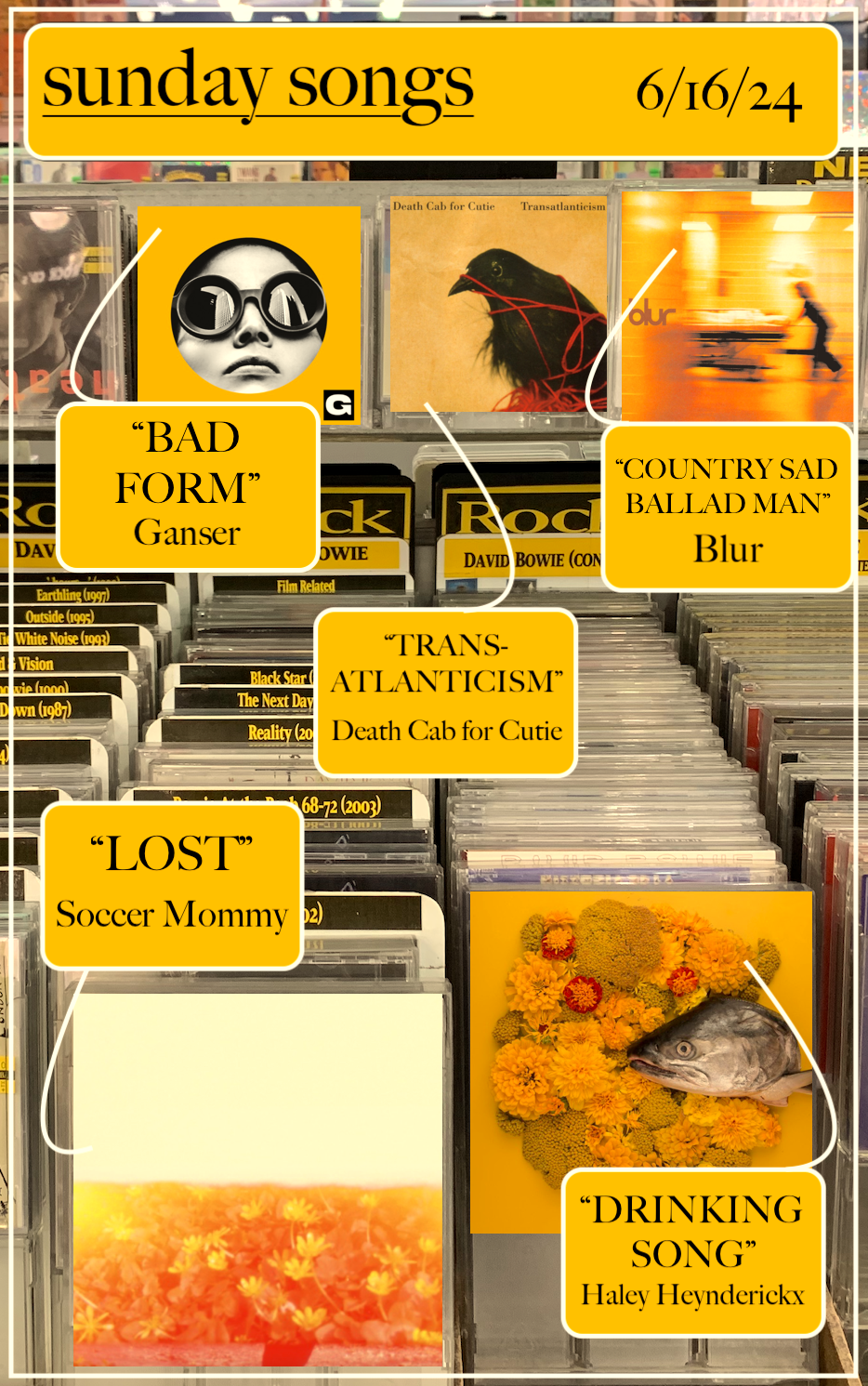
SUNDAY SONGS: 6/16/24

“Lost” – Soccer Mommy

SOCCER MOMMY RETURNS!!! Given the short tour (that’s nowhere near me……..no, I’m totally not mad, no way) that she’s currently embarking on to support some of this new material, there’s a fourth album (sixth, counting the self-released albums) on the horizon, and hopefully on a happier date. Poor thing. I still haven’t gotten over the fact that her last album, Sometimes, Forever, was unintentionally released on the day that Roe v. Wade was overturned. Jesus.

Something that I’ve admired over the years about Soccer Mommy is her willingness to experiment with her production. At their core, her songs have never changed their essence: honest, tender confessions of the trials of heartbreak, grief, and mental health. But the dressing is never the same twice, from color theory’s color-coded tonal shifts and synth-dusted melodies to the darker, more distorted soundscape of Sometimes, Forever. With the latter, Chelsea Wolfe wasn’t somebody that I’d readily compare to Soccer Mommy, but then she comes along with “Unholy Affliction,” and the comparison, at least on that track, is as clear as day. Just when you think she’s playing it safe, she comes out of nowhere with instrumentation that you’d never imagine attributed to her name—and almost every time, it still feels like nothing but Sophie Allison. There’s a boldness to her that’s rare in the genre; there is an expectation of sameness in the kind of indie circles she’s in, an expectation to box yourself into the image that the record label deems as “authentic” in order to stay in their good graces—and the good graces of fans who cling to their raw lyrics. Julien Baker, although her first two albums adhered to that, took a similar leap with Little Oblivions, and that, for me, was her best album to date.

But Soccer Mommy can’t help but be herself. “Lost” strays nearer to some of her sparer, more traditionally indie roots, but with production that feels spun from silk; inside of the glowing cocoon where Allison resides, threads of synth, birdsong, and yearning strings coalesce in what can only be described as the musical form of a grainy polaroid, a sunset tinged with ink, film, and bygone memories. Bygone memories, like much of her other material, is at the core of “Lost,” specifically bygone memories of those bygone. Given the trajectory of “yellow is the color of her eyes,” some have speculated that “Lost” is about her mother’s death, although Allison has chosen to not disclose the subject. whatever the case, I’m glad that Soccer Mommy doesn’t have the kind of rabid Swiftie fanbase that would relentlessly strip away at the press and at Allison herself to get to the bottom of who she’s mourning, because…that’s her own business, dammit. I’m glad us…whatever Soccer Mommy fans are called (does this fanbase have a name?) have the heart to give a human being space to breathe, because, judging from the lyrics (and all of color theory, frankly), Allison needs it. “Lost” distills grief in the truths of the cliche that every movie seems to repeat about grief: “I wish I’d had more time.” Most media leans on that universal kernel to hold the weight of such a complex, unmappable sensation, but Allison scratches at its heart; her grief rests not just in tangible objects, but in the reminders of the time never spent: “I’ve got a way/Of keeping her with me where I go/But how she feels, I’ll never know/It’s lost to me.” The pain of this track is in the insurmountable truth of never being able to fully know a person; of course you can never fully, truly know a person beyond yourself, but grief exacerbates that unsurmountable summit—even if you tell yourself that you could be a cartographer of a brain outside your own, that chance has all but slipped through your fingers. Grief has unrealistic expectations of you; in its throes, it tells you that you could have made up for all of the missed regrets in your lifetime, and that’s half of the knife in your gut. Half of the pain isn’t what didn’t happen, but what can’t happen, even in the alternate reality it presents. When she repeats “If I had another chance/I’d ask her then,” it doesn’t feel like a throwaway from a stale funeral in the MCU—it feels like the testimony of something still putting down the compass and fountain pen, knowing that this expedition was doomed from the start.

So, what, you ask, might us sad girls do while we wait for Soccer Mommy’s fourth LP, which will inevitably destroy us? Watch Allison and fellow storied sad girl Phoebe Bridgers unite to cover Elliott Smith:

…AND A BOOK TO GO WITH IT:

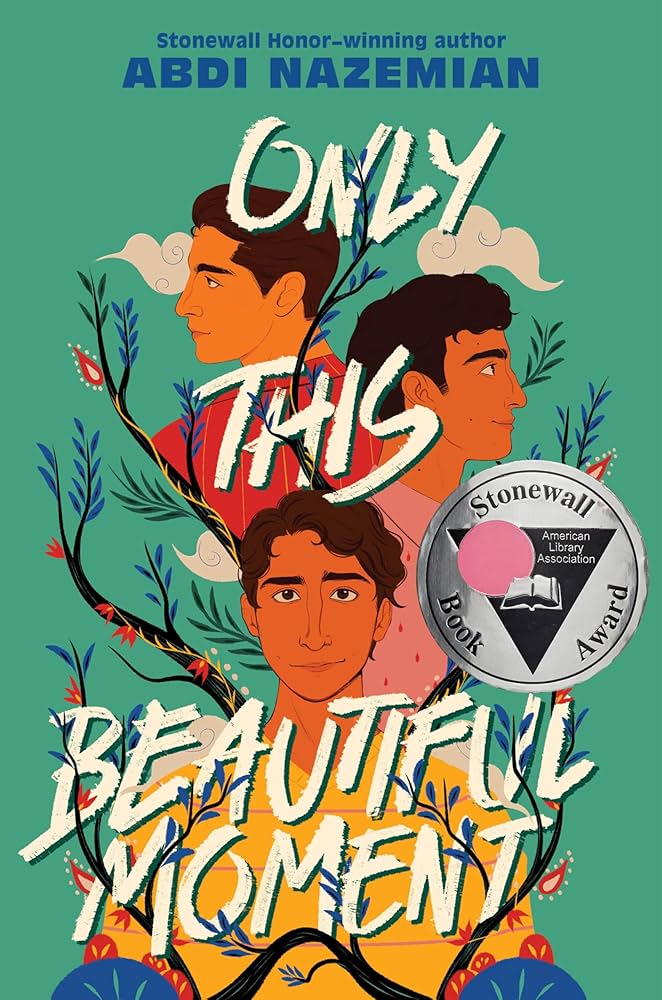
Only This Beautiful Moment – Abdi Nazemianbreaching generational lines to form an understanding of heritage, sexuality, and family.

“Drinking Song” – Haley Heynderickx

Contrary to the song title, Haley Heynderickx is (probably) not responsible for the kind of song that old men will sing in a pub while drunk for generations to come. I mean, that could be a possibility in some alternate universe. I’d like to see that. It’d make for an odd movie scene—nothing about this universe has changed, but instead of old Irish ballads, there’s a pub full of swaying people singing late-2010’s indie rock.

With a title like “Drinking Song,” I fully expected this song to be the prequel to “Oom Sha La La,” a telling of the period where “The milk [was] sour/I’ve barely been to college/And I’ve been doubtful/Of all that I have dreamed of.” Contrary to that, “Drinking Song” is a soft-spoken but resolute declaration of hope, delivered out a summer window while the crickets sing. Any darkness is the shroud of night, and all of the stars seem to bear witness to a constitution of better days to come: “And the edge of the world makes it seem/That everyone gone is still singing the same song/And I can believe in these things/That everyone’s singing along/The good and the bad and the gone.” There’s a kind of childlike optimism to the openness of Heynderickx’s declaration, but one with roots strong enough to hold it; with each repetition of “there’s a light at the end that I know,” that glow, like The Great Gatsby’s green light, pulses with more intensity with each incantation, until it becomes a portal to better times. It’s the opposite of negative overthinking; this song overflows with future vignettes of new cities to explore and new lovers to embrace, all held within the space of the back of your mind. “Drinking Song” is a snow globe containing every good future—all is too small to comprehend in the here and now, but with a little luck, you can hold them in your hands and watch them unfold before you.

…AND A BOOK TO GO WITH IT:

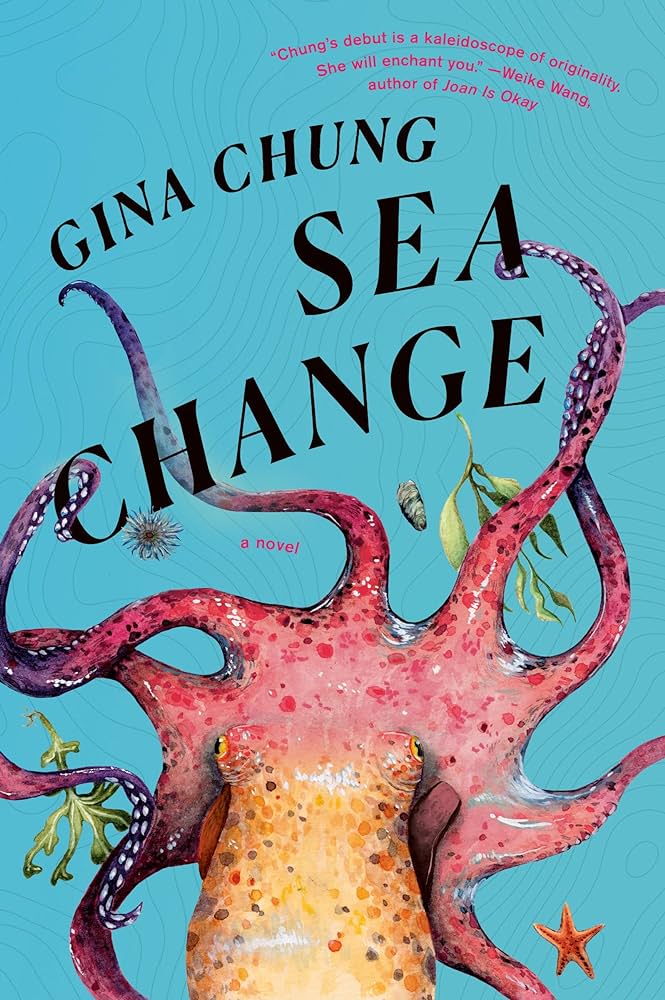
Sea Change – Gina Chungholding onto hope in a time of lovelessness and isolation.

“Bad Form” – Ganser

I like plenty of bands and artists whose catalogue consists of one or two songs tops (see: Wet Leg, Suki Waterhouse, etc.). What distinguishes said bands, for me, is that they’ve made a career out of making those two songs worth your time—they may only be two songs, but they play them well. Sure, “I Just Threw Out the Love of My Dreams” may be one of Weezer’s one, maybe two songs (and even that’s generous), but it’s such a bright and shining piece of machinery that you can’t help but gaze at said one song and know that, yeah, it may be the same song they’ve been peddling since 1994, but it’s one fantastic song.

The more I listen to Ganser, the more I realize that they fall into that camp. I hate to say that every time, but like I said, it’s not always an insult. Although they do have a good amount of deviation here and there, most of Just Look At That Sky, as much as I enjoyed it, is the same three off-kilter, drawled post-punk songs about being numb, exhausted, and angry, or some combination of the three. They’ve got a brand. Ganser, for me, stands out in that their three songs sound different enough from any given song that you can excuse them for relative lack of variety. None of their chords ever align pleasantly—it’s abrasive, grating, and honestly? Fun. As with “People Watching” (which I reviewed at the beginning of the month), Ganser makes the kind of punk that’s aware of how punk it sounds, and they lean into every inch of theatricality with their bleary-eyed drawls and itchy, buzz-saw guitar riffs, fuzzy and stinging like staring straight at the sun—just as like the climax of “Bad Form.” Ganser is a band that’s not afraid to make music that scratches your skin like un-filed, bitten nails, and if that’s their three songs, then three cheers for making three songs that are bold enough to sound unappealing.

…AND A BOOK TO GO WITH IT:

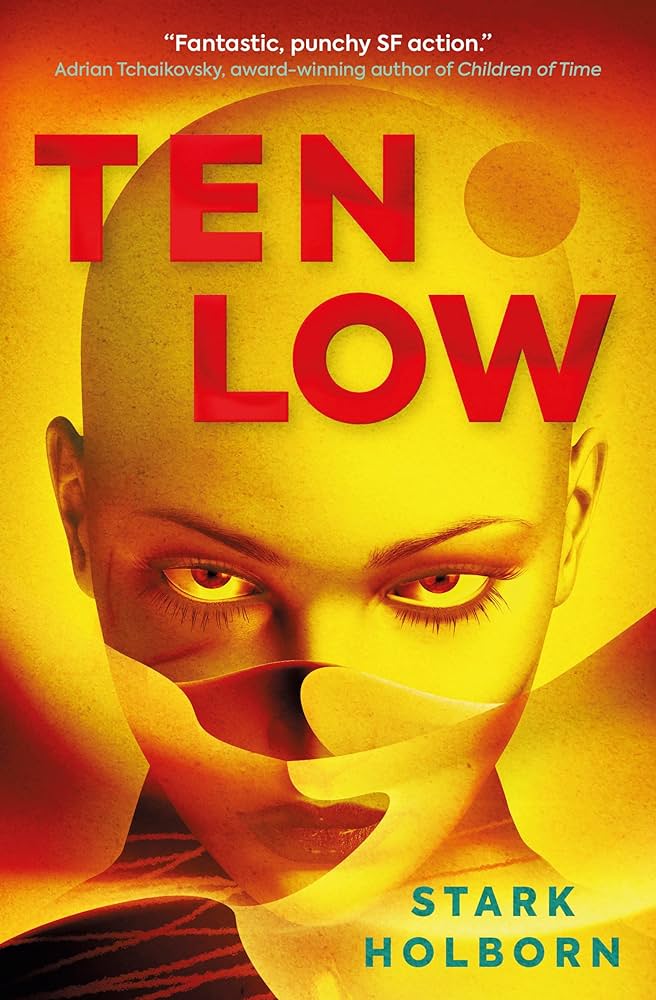
Ten Low (The Facts Sequence, #1) – Stark Holborn“I’m the other man/I’ll take the medicine/The room spins like a feather/Folding over and over…”

“Transatlanticism” – Death Cab for Cutie

I was first introduced to “Transatlanticism” when I was about 12 or 13. A few months after the first listen (and being irreparably entranced), I had an internship at a local flower shop, where the owner had Sirius XMU playing. This song came on at some point, and I’ll never forget the deeply concerned look she gave me when I told her, in the most 13-year-old way possible, how much I “loooooooooooved” this song. She was entirely justified.

Another thing that music criticism does that I’ve never understood: categorizing Death Cab for Cutie as emo. If I suspend my disbelief enough, I can see the basis being in the whine in Ben Gibbard’s voice, especially when he performs live, and the dramatic emotion is there, but…in what world does Death Cab for Cutie belong in the same breath as My Chemical Romance? Really? I could almost see them being the middle ground between emo and indie, with some of the lingering whine and drama, but the key with selling drama is what has always lost me with most emo music: it actually feels authentic. Never once does Gibbard sound like a suburban teenage boy who’s just discovered heartbreak and black eyeliner in one fell swoop. The whine, although it can fit into some of said teenage boy sensibilities (see: “We Looked Like Giants”), just seems more of a product of Gibbard’s natural range than it does a forced vehicle for airbrushed angst.

In theory, “Transatlanticism” fails my test of withstanding a long song; most of the time, in order for a long song to hold enough water past around the six minute mark, there has to be at least some sort of shift, whether that’s tonal, lyrical, or instrumental; it’s why “Cop Shoot Cop” by Spiritualized really feels like it’s over 17 minutes long, with its largely extended sleepwalk of monotony, whereas Nina Simone’s ten minute epic “Sinnerman” has the fervor and gusto, as well as an act structure similar to classical pieces, is a nail-biting journey that never lets go of your shirt collar. (To be fair to J. Spaceman, my guess is that the tedium is the intended effect, seeing as it’s about how his heroin addiction all but made him into a dead man walking. Knowing him, it’s fully intentional.) However, there’s songs like Blur’s “Tender”—nearly eight minutes long and without much change—that have the pure, undiluted heart to keep its sails billowing. You feel everything—it’s an IV drip straight through to the sparest, most instinctual emotions, heart-wrenching in its delicately-crafted simplicity. “Transatlanticism” takes a trick out of that same book; until the last third, all that accompanies Gibbard’s thinning, tender lament is about four piano chords, played over and over with a purposeful negative space between them. Come to think of it, negative space is exactly why “Transatlanticism” works so well. Transatlanticism as a whole is a concept album about long-distance relationships, and even without the lyrics, crushing as they are, you can sense the abyssal gulf cutting down the middle of this song. At the four-minute mark, after Gibbard has finished with the first repetition of “I need you so much closer,” a full minute passes of a single, instrumental strain: those same four chords, a spare guitar lick, and tiny tendrils of synth that faintly moan and rattle like dying machinery, as if trying to conceal their death rattles without bothering anyone. Transatlancism was aided with Brian Eno’s Oblique Strategies cards, and I wouldn’t be surprised if they drew the same cards that produced Bowie’s “Sense of Doubt”—”emphasize difference” and “try to make everything as similar as possible.”

The difference, in this case, is a shift in lyrical style; It’s all but silent compared to the lyrics in the first half, but that silence conveys the feeling of separation, of having a strand of your soul stretched across an ocean and not being able to see who’s on the other shore, just as heartbreakingly as words do. After Gibbard’s lament (“The rhythm of my footsteps crossing flatlands to your door/Have been silenced forevermore/The distance is quite simply much too far for me to row/It seems farther than ever before”), the exhaustion of sorrow leaves you with no strength to do anything but stare into the canyon wrought by distance, too far to even touch fingertips over. Simplicity is what kills me about this song; after that instrumental break, Gibbard repeats the “I need you so much closer” refrain, only to transform it to “I need you so much closer…so come on.” When all of the poetry’s drained, sometimes the most sparing lyricism destroys me. The ocean has spread its impossible distance before you, and all you can do is stare as far as you can, towards the bottom, with only the most baseline instincts of longing to keep you company. It’s such an artful buildup and approach to portraying such deep yearning—you feel that negative space as a tangible barrier. See what I mean about Death Cab for Cutie making their angst authentic? “Transatlanticism” hits me like a goddamn steam train every time without fail. Ow, dude, who kidnapped me and abandoned me in the onion-cutting factory?

…AND A BOOK TO GO WITH IT:

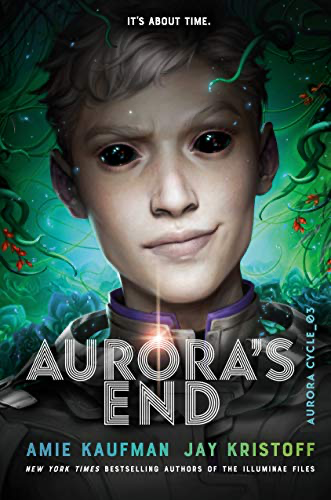
Aurora’s End (The Aurora Cycle, #3) – Amie Kaufman & Jay Kristoffow oof ow ouchie ow ow ow somebody hold me

“Country Sad Ballad Man” – Blur

And now, “Song 3.”

Blur’s self-titled album [slides Anthony Fantano glasses up bridge of nose] is an exercise in becoming the very thing you swore to destroy. After years of being right smack in the middle of the spotlight, participating in a manufactured battle of the bands, and pushing their mutual abuse of multiple substances to the edge, the band collectively decided that a change needed to be made. They packed their bags, temporarily relocated to Iceland, and hammered out a new album. The result was Blur, which had a much dingier, edgier, and altogether harder sound, with a lead single that famously parodied grunge, but then…circled around to being a smash success and an enduring stadium classic. That’s another story. (I’ll give you a hint: wooooooooohoo!) Yet, as much as they poked fun at American grunge, in all of its nihilistic, self-deprecating time in the sun, they slipped straight into the lifestyle, shedding their Britpop gloss for aggressive, alternative guitar, stubble, and, to the detriment of the whole band, excessive abuse of alcohol and heroin (see: “Beetlebum”).

Though the drug use is lamentable (to say the least), as all of the band members now agree, it was their mutual exhaustion and anger at being put through the British media meat grinder that allowed for such a hard—and delicious—left turn. On the verge of snapping, the band decided to put Parklife behind them and get grungy. It was bound to happen eventually, what with Graham Coxon’s adoration for the American alternative scene and the guitar sounds they were producing (should’ve listened to him earlier on that one…). Blur is all but absent of a bad track, crashing with the equivalent of a drum set tossed through a window one minute (“Chinese Bombs”) and slipping into acoustic melancholia in the next (“You’re So Great”). But “Country Sad Ballad Man,” for me, is a highlight I find myself sniffing out every six months or so. With one of the drier and more self-explanatory titles, this track feels like food left to rot out in a heatwave, festering and twangy. Every other lyric finds Damon Albarn stretching his voice into a creaky, scratching highs, as though mocking his own state of lying squarely at rock-bottom: “I haven’t felt my legs/Since the summer/And I don’t call my friends/Forgot their numbers.” The strings on Alex James’ upright bass come loose and unsteady, as though a few more takes of this song would’ve seen them snap off and collapse on the floor. Graham Coxon relishes in the alternative aggression that Britpop never fully allowed for, twisting riffs that seem to languish like drooping eyelids, dripping sweat and numbness. But the real freakout, one that must have been canned and compressed for ages, explodes in a vomit of wobbly distortion and screeching falsetto. It’s a vertigo-inducing outro that caves in like the mold-rotted roof of a wooden house, shattering in a hail of splinters and nails. In all of its spring-plucking chaos, there’s really no other lyric that fits it than Albarn’s self-aggrandizing, high-pitched screech of “I’ve done and fucked it!” yelled straight up from the well of rock bottom.

…AND A BOOK TO GO WITH IT:

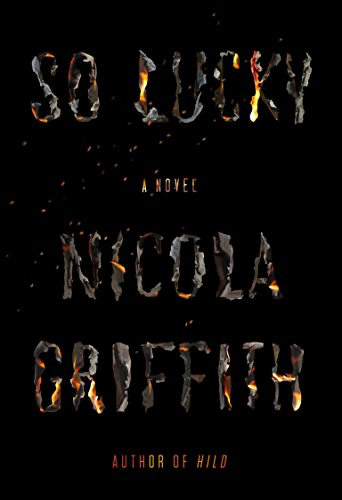
So Lucky – Nicola Griffith“Yeah, I found nowhere/It got to know me…”

Since this post consists entirely of songs, consider all of them to be today’s song.

That’s it for this week’s Sunday Songs! Have a wonderful rest of your day, and take care of yourselves!
Posted in Sunday Songs

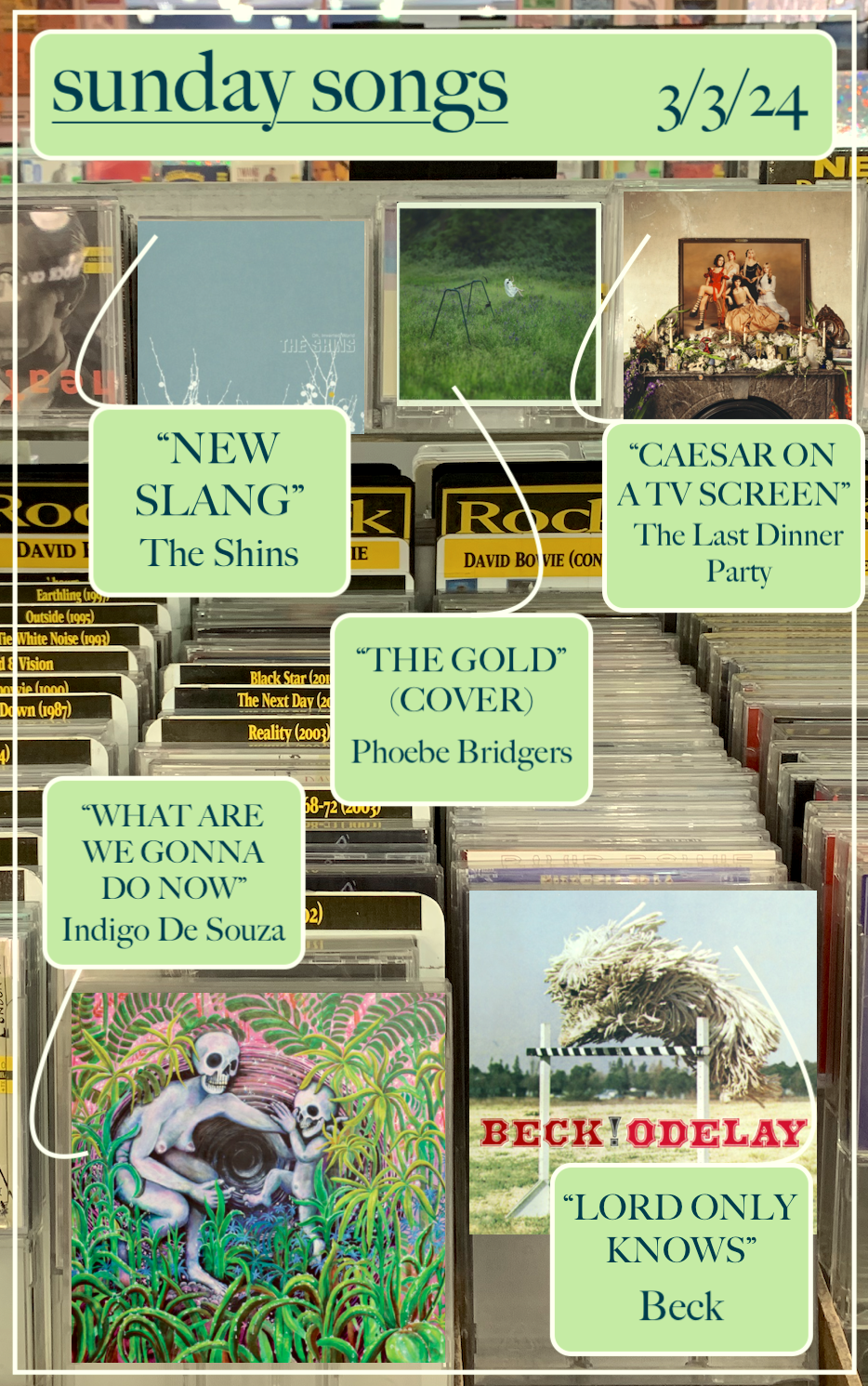
Sunday Songs: 3/3/24

Happy Sunday, bibliophiles! I hope this week has treated you well.

This week: spring green for March, old dogs, and the consequences of the fact that at least 90% of my friends are gay and their music tastes rub off on me.

Enjoy this week’s songs!

SUNDAY SONGS: 3/3/24

“What Are We Gonna Do Now” – Indigo De Souza

This just in: the sad girl kool-aid has never left my system, and it likely never will. Buckle up.

“What Are We Gonna Do Now” lives squarely in the liminal space of uncertainty, as the title implies. It feels like the tense opening to a film; I could just be stuck on this imagery of the line “and we’re still on call with the nurses,” but I can’t help but imagine an opening shot panning out from the slow spikes of a heart monitor, slowly letting out beeps as Indigo De Souza’s voice gently drips like an IV with that lingering, trailing question: “what are we gonna do now?” Almost everything is gradual about this song, as if the verses were frozen in time: a picture of a person standing on the street while snowflakes suspended in midair decorate the space around them. De Souza’s voice dips and dives into nooks and crannies that only a cat could fit into, army-crawling through the shadows as she describes the wear and tear of a relationship in the middle of turmoil—not necessarily on the verge of a fracture, but in the middle of the storm that they aim to push through together. Exhaustion and frustration tinges it (De Souza’s delivery of “and I’m never cooking up what you’re craving” remains one of my favorite parts of the whole song), but it’s never the kind so intense that would throw their love out the window—it’s the determination of trying to find out exactly how to fix things, and scrabbling around, searching for answers in desperation. Like the ebb and flow of love, the instrumentals swerve from a near standstill to a rousing, guitar-driven chorus and back to quiet again, but after the first verse, nothing is the same; it has the same kind of barely-contained chaos of songs like Wilco’s “Via Chicago” and Mitski’s “The Deal,” with a sense that the anxiety of making amends and grasping for solutions. As De Souza’s airy voice rises like she’s gasping for air after emerging from the ocean, trembling drums and tambourines slip in and out of time, ever so slightly off-kilter and teetering, like one sneeze would send them all into disarray. Unlike the former two songs, though, it never fully gives in, but the unraveling is always at the back of the song’s mind, like an overflow of fearful thoughts as they try to pick up the pieces, but a sense of deep-breathing control as De Souza picks themselves back up.

…AND A BOOK TO GO WITH IT:

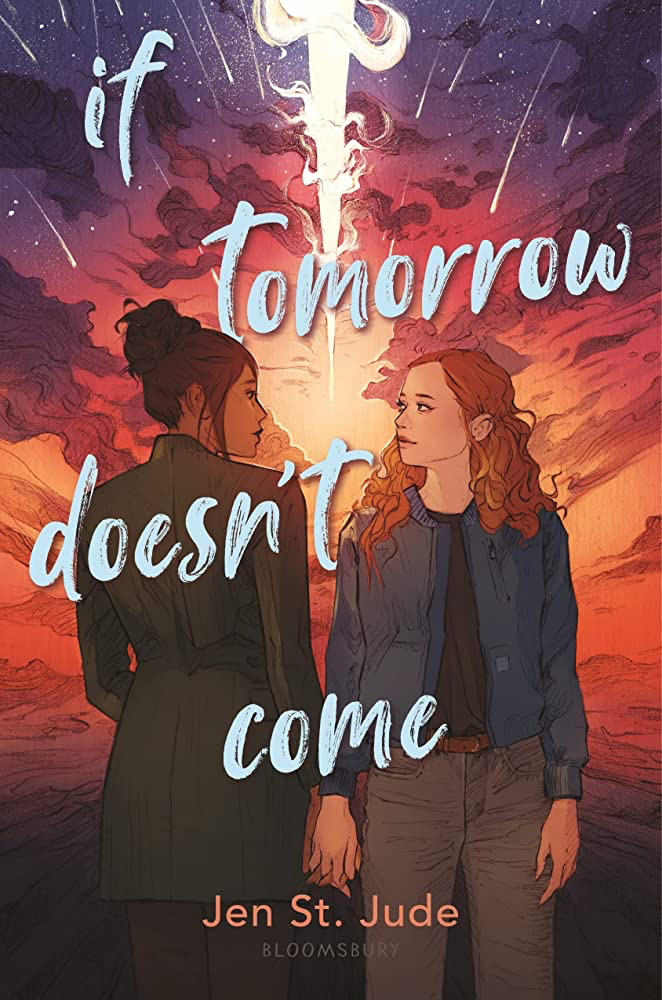
If Tomorrow Doesn’t Come – Jen St. Judeone of the few apocalypse novels that really makes it a mission to focus on the human aspect.

“Lord Only Knows” – Beck

Full disclosure: I definitely ruined this album for myself. I knew it was going to be a good album, and it 100% is, but I’d already listened to about 3/4 of it, so there were no surprises left. All of the songs I remembered were already favorites, and the ones I hadn’t yet discovered weren’t as instantly classic as the others (sorry, “Derelict”). But that’s on me. Maybe on my parents for playing it so much in the car over the years, but mostly on me. Whoops.

That’s not to say that Odelay is a bad album at all—in fact, it’s quite the opposite. It makes me miss the old Beck, the one who didn’t scrub everything to an unnecessary polish, but instead made his music like a sculpture made from bits and bobs found in the junkyard—a bit of a tire here, an old, rusty car hood there, some nuts and bolts sprinkled on top for a finishing touch. It’s a collage, but not necessarily in the way that artists like De La Soul or The Beastie Boys make their collages: while their infinitely clever concoctions feel like they oil every sample into a unified organism of unlikely pieces, Beck’s method (for a while, at least) was to make every spare and found part stick out like sore thumbs, but so much so that all those sore thumbs eventually made a hand so absurd that it makes you think how does that even function as a hand? And yet it’s the perfect hand. There’s no other way that “Hotwax” would work without “I’m the enchanting wizard of rhythm.” In fact, the absurdity of all these samples make this mutant (no pun intended) record so memorable—nobody was doing it quite like Beck. Take this song, which starts out with a rasping scream, then descends into twangy and almost docile acoustic-guitar driven rock. It’s not the heat-waved calm that “Jack-Ass” (my favorite track on the album) exudes, but it’s got that same lazy drawl to it, every word curled at the edges like scraps of paper singed by a campfire. Odelay hadn’t yet reached critical mass of clever silliness that made ’90s-2000’s Beck so fun (that would be Midnite Vultures), but he had plenty of fun to spare—I always find myself laughing at the final lines that Beck sings as the track fades out like a car driving out of view, obscured by the wobbling lines of a heat wave: “Going back to Houston/Do the hot dog dance/Going back to Houston/To get me some pants.” You just can’t deliver the word “pants” with that much emphasis and have it not be funny. Them’s the rules. I apparently have the humor of a five-year-old, but evidently, so does Beck, and we’re all the better for it.

…AND A BOOK TO GO WITH IT:

Fortuna (Nova Vita Protocol, #1) – Kristyn Merbethall of the same lazy, summer-eyed charm, but make it space opera (as things usually are on this blog).

“New Slang” – The Shins

Whenever I go to write about The Shins, I always end up going straight for the purple prose. It’s like the way I get with Radiohead, except they invoke something akin to religious fervor in me. I’m too far gone. But there’s something about James Mercer and his perpetually rotating cast of characters that evokes the lyrical side of my writing. Perhaps it’s that part of me connecting to that part of him, because he’s certainly got songwriting chops for days.

“New Slang” has been lingering in my life for decades; I faintly associate it with a period sometime in elementary or middle school. I think it may have been at the end of a playlist I listened to frequently. The Shins are never all that far from my mind, but this was the perfect song to shuffle out of the blue, soft and smiling like an old dog with white patches threaded into the fur of its snout. And I ran right up to pet that dog—god, I missed this song. Hello, old friend. Mercer has long since mastered the art of the old heartstring-tugging acoustic song, and while its as hipstery as it gets, there’s a calmness to it, a serenity like no other. And yet, for all intents and purposes, it’s James Mercer’s equivalent of a pop-punk “I’m getting out of this town” song; the lyrics were inspired by his experiences separating from Albuquerque, New Mexico, where the first iterations of The Shins had tried to take root. Disillusioned by a scene that he described as “macho, really heavy, and aggressive,” Mercer and company branched outwards, where their lyrical folk could have more meaning. “New Slang” was Mercer’s way of “flipping off the whole city,” as he described it (“Gold teeth and a curse for this town”), but there’s something beautiful in how quietly this song shoots its bitter middle finger. It’s not the jerky angst of separation that pop-punk lends to the subject, but instead the moment of looking back into the sunset, knowing that everything you’ve left behind is in the dust with the approaching night. Perhaps that’s where that serenity I feel comes from—the serenity of knowing that what’s in the past is in the past, and that it has no control over your life anymore. It’s underfoot, only tire tracks in the dirt now. You can’t help but feel a wave of peace at the thought.

…AND A BOOK TO GO WITH IT:

Trouble Girls – Julia Lynn Rubinwhile Lux and Trixie’s reasons for ditching their town are more complicated, there’s no less of a feeling that they’re giving it the finger the whole way out.

“The Gold” (Manchester Orchestra cover) – Phoebe Bridgers

Full disclosure: I hate the original version of this song. Hate it. It stinks of that kind of that faux-earnest, country-leaning pop that forced itself down everyone’s throats in the mid-2010’s like a contagion. If this weren’t obviously a breakup song, I know my music teacher would have made my 5th grade class sing this. I hate to relentlessly dog on a song, but also…Christ. This made me throw up in my mouth a little.

Phoebe Bridgers, on the other hand? A godsend. Leave it to her to make the original lyrics, some of which were actually good sound good, and not like they were being shoved down through the godforsaken Mumford & Sons strainer. I will give Manchester Orchestra (posers, they’re not even from Manchester…) some credit: “you’ve become my ceiling” is genuinely a beautiful lyric. But I just wish it wasn’t being delivered with that smarmy, offensive excuse for authenticity. Again: Phoebe Bridgers is our savior. She grounds this song enough to make the turmoil within it feel real. Never once did this song need belting, stadium-rock grandeur: it needed clarity, a sense of calm amidst the chaos, and a steady hand on an acoustic guitar. It’s got slightly more effects than Bridgers usually allots to a song of this tempo, but it hits the balance of flourish and that acoustic sincerity that she’s come to be known for. It’s a breakup song, but although some of those call for grandiose declarations of sorrow, some of them need time to sit in silence and wallow it in, and that’s exactly the treatment that Bridgers gave “The Gold.” I’ll just go ahead and pretend that she wrote it. Yup. Manchester Orchestra? Who is she?

…AND A BOOK TO GO WITH IT:

Vinyl Moon – Mahogany L. Brownesimilarly, this novel in verse deals with the fallout of a relationship built on mistrust.

“Caesar on a TV Screen” – The Last Dinner Party

Before I listened to the full song, I distinctly remember seeing a snippet of this song advertised somewhere on Instagram and thinking something along the lines of “god, this is pretentious.” And I stand by that. It’s still pretentious. But in context, it’s a good listen.

I’ve heard a decent amount of buzz surrounding The Last Dinner Party, usually falling in one of two camps: that they’re out to save rock and roll and bring it back to its glory days, or that they’re just…okay? The former argument, while I like it in concept, reeks of the kind of mentality that “modern music isn’t good anymore” because it’s not all Pink Floyd, which…okay, cool if you like Pink Floyd, but also…creative rock didn’t die as soon as Y2K hit? You just have to look a little harder now that rock isn’t the reigning influence on popular music anymore. In the modern day, we treat rock music like we often treat women: as something to be saved, when all along, it’s been doing just fine, thank you. I doubt we’ll ever go back to those days, and maybe we shouldn’t—there’s no way you can completely replicate a movement in its full, temporal context, and maybe that’s okay. I’m all for bringing back glam rock, but chances are, anything you try to resurrect is going to feel displaced in our modern day context. You can take inspiration from them, but personally, it’s a hard thing to recreate in all of its flesh and blood.

Which…seems like a good deal of what The Last Dinner Party are going for. Frontwoman Abigail Morris has regularly emphasized how much she and the band enjoy being pretentious (if having their debut album titled Prelude to Ecstasy wasn’t enough of an indication), and if that’s what’s bringing them joy, then all power to them! They’re talented musicians, for sure. Weirdly, the other two songs of theirs that I listened to just sounded like…any old indie pop song, which I kind of hate to say, but if you’re all about “saving rock n roll” and just putting out that, then I feel like you have to keep your mission consistent. But you certainly get that feel from “Caesar on a TV Screen.” As far as the structure goes, it feels slightly disjointed, but the more I watch the music video, I get what they’re going for—a song with a distinct, three-act structure, emulating the epic, Shakespearean twists and turns that inspired it. There’s loads of drama to spare, from the rush of strings in the third act to Morris’ impassioned howl of “everyone will like me!” at the song’s exiting flourish, like she’s brandishing a prop sword with every word. It’s dripping with that kind of theatrical, ’70s and ’80s drama—there’s Queen written all over it, and I can’t help but think that some of that drama was informed by Kate Bush. And…yeah, Freddie Mercury, Kate Bush, and David Bowie, the latter of whom the band have repeatedly cited as one of their primary influences, are probably some of the most colossal shoes to fill in terms of musical artistry. But there’s no doubt that The Last Dinner Party are a skilled bunch in their own right—and god, they look like they’re having the time of their lives. It’s exactly the kind of excess, maximalism, and drama that their band name implies.

…AND A BOOK TO GO WITH IT:

Strike the Zither (Kingdom of Three, #1) – Joan He“When I was a child, I never felt like a child/I felt like an emperor with a city to burn” HMMM…

Since this post consists entirely of songs, consider all of them to be today’s song.

That’s it for this week’s songs! Have a wonderful rest of your day, and take care of yourselves!

Posted in Sunday Songs

Sunday Songs: 12/31/23

Happy Sunday, bibliophiles!

Whew, here we are on New Year’s Eve! What a year it’s been, huh? The fact that there’s 2/5ths depressing songs in this batch was entirely unintentional, but I’m of the firm opinion that the last one is a good way to close out 2023. Also—no, somehow the Phoebe Bridgers song this week isn’t one of the depressing ones, bizarrely. Who would’ve thunk.

Enjoy the last songs of 2023!

SUNDAY SONGS: 12/31/23

“Garden Song” – Phoebe Bridgers

This song, like a good song does, came back like an old, loyal dog when I needed it most. But before I get into it, I remembered that I reviewed Punisher when it came out. So let’s see what I thought about it back in 2020:

This was the first single to be released out of the whole album. When I first listened to it, something about it got under my skin, but as I’ve listened to it more, something about it has grown on me (no pun intended). A nostalgic, dreamlike opener to the album. (Rating: 7/10)

…huh. Well, I thought I’d have…more to work with there, but 2020 me wasn’t necessarily wrong. I’d certainly bump up the rating up to at least an 8 or an 8.5, though. It’s what this song deserves, upon a few more years of reflection. It’s a way-homer once you get past the age of 16.

Yes, there is some sad bastard music coming soon in this post (buckle up), but contrary to what…95% of Phoebe Bridgers’ discography would have you believe, this isn’t one of them. Pigeonholing an artist into being just a “sad girl” has a multitude of pitfalls, but one of them is that automatically assuming that slow = sad. In fact, I think this is one of her most hopeful songs. I remember taking a while to warm up to it at first—the startlingly low, Matt Berninger-esque backing vocals, probably several octaves below Bridgers, felt off at first. (In fact, the voice belongs to Jeroen Vrijhoef, her tour manager, who she described as sounding like “Dutch Matt Berninger.”) It’s a stark contrast—Vrijhoef’s rumbling bass almost becomes the unstable ground that Bridgers’ frayed-silk high notes treads over, but it grows on you after a while.

One thing that writing these posts this year has taught me is that I can see more clearly how I approach music; it’s always the music itself first, and unless something immediately jumps out at me (or if I come in expecting it), the lyrics follow on subsequent listens. That’s certainly what’s happened with this song. The dreamlike calmness has never failed to soothe me, but the lyrics have a soothing quality to them as well. The sleepily rambling second verse, where Phoebe Bridgers describes a meandering dream, has the murmur that you would only expect when she’s just woken up and is scrawling the non-sequitur fragments into her journal. (Not to project onto a complete stranger, but I feel like she’s the kind of person to keep a dream journal. I just get that vibe.) But even beyond that, “Garden Song” really is about growth. It’s the soft space where you can look back on your life, recognizing the good and bad, and see it as the soil for other things to grow. It’s the sad smile that you can see as you recall the painful times in your life, but also the comfort in realizing that your sprout has gone beyond that and bloomed, and the hope that there’s blooming yet to do. I find myself going back to 2020, a few months after Punisher came out, when it seemed like all of the lead-weight things pinning my shoulders down would never lift, and inevitably feeling heavy again, but remembering where I’m sitting now, and where my feet have taken me since then. The path was winding and full of twists, but it led us all here. As Bridgers herself said, “…if you’re someone who believes that good people are doing amazing things no matter how small, and that there’s beauty or whatever in the midst of all the darkness, you’re going to see that proof, too. And you’re going to ignore the dark shit, or see it and it doesn’t really affect your worldview. It’s about fighting back dark, evil murder thoughts and feeling like if I really want something, it happens, or it comes true in a totally weird, different way than I even expected.” There’s no denying the darkness, but it is never all there is.

“Garden Song” came back to me towards the end of finals, and of course, I had to sit a while in my spinny chair and sit with it. To me, it’s the perfect song to take with us to the new year—to reflect on how you’ve grown through everything, and that there is so much left to grow through. I’ll leave it with these lines:

“I don’t know how, but I’m taller
It must be something in the water
Everything’s growing in our garden
You don’t have to know that it’s haunted
The doctor put her hands over my liver
She told me my resentment’s getting smaller
No, I’m not afraid of hard work
I get everything I want
I have everything I wanted.”

…AND A BOOK TO GO WITH IT:

The Long Way to a Small, Angry Planet – Becky Chamberseven if the gentle, muted instrumentals didn’t perfectly mesh with the homey atmosphere of this novel, the stargazingly hopeful attitude certainly would.

“Ruined” – Adrianne Lenker

Alright, here’s a blanket. This one’s from another sad girl, and it’s very much actually sad.

If there’s one thing that Adrianne Lenker can write well, it’s a heartbreak song. Unlike most of her solo work that I’ve listened to, there’s no acoustic guitar in sight. This time, Lenker has opted for something equally sparse and solemn: the classic solo piano ballad, aided by some faint, synthy notes in the background, apparently credited as “crystals.” It could’ve easily blended in with the acoustic-dominated landscape of most of her other music, but somehow, the slowly marching piano chords leave the song room to take every rattling breath. Thanks to the music video…I…yeah, I think I’ve now seen more of Adrianne Lenker than I ever needed to see, but this song provides more of that in the metaphorical sense, which I much prefer. She’s a soul-bearer. Something about the plaintive, ever-present waver in her voice seems to age her—it’s not like much time has passed between her solo work, but the shake in her voice seems to indicated that whatever inspired this song aged something inside of her, certainly. Poor thing. Whether or not this song will eventually be a part of an album or remain adrift in Lenker’s discography, it would make a wonderful, thematic addition to the end of an album—it wouldn’t even need to be the very last song, but it would fit in at least the final three or four. The opening lines lend themselves to an album fading into the ether, of both love and music slipping through your fingers—”I wish I’d waved when I saw you/I just watched you passing by.”

…AND A BOOK TO GO WITH IT:

Even Though I Knew the End – C.L. PolkI don’t think Adrianne Lenker would mind the inclusion of vampires, but this is certainly the kind of love that ruins you.

“I’m Not Feeling Human” – The Olivia Tremor Control

My musical wish for 2024: BRING BACK SLIDE WHISTLES, DAMMIT!

I’ve been riding off my dad’s high of Elephant 6 musicians after he recently watched the Elephant 6 Recording Co. documentary (hence the recent spike in Apples in Stereo-related content). There’s something so pure about so much of the music that they put out in the early days. Well…okay, maybe not on Neutral Milk Hotel’s part, but Robert Schneider (of the Apples) and Will Cullen Hart and Bill Doss (of The Olivia Tremor Control) certainly knew how to juice playful simplicity out of synths and all manner of catchy melodies. The Apples in Stereo have a space-age, almost scientific quality to their pop songs, but to me, The Olivia Tremor Control has always come across as something just as whimsical, but in the way of flat colors and simple shapes that bounce around. I’ll die on the hill that this song deserves some kind of Chicka-Chicka Boom Boom-style music video to go along with it. The patchwork of goofy instruments scattered around (including the aforementioned, glorious slide whistle) gives it a delightful whimsy that calls to mind stacks of building blocks. Even the slight discomfort of the lyrics seem to be delivered with a wry smile—”Don’t I feel, don’t I feel like a mineral?/Don’t I feel, don’t I feel like a vegetable?” Maybe it’s the rhymes, or maybe just the fact that I’ve always found the phrase “animal, vegetable, or mineral” funny for no reason (I blame it on what little I remember from The Magician’s Nephew), but even vague alienation has a childlike whimsy to it in the hands of The Olivia Tremor Control. Probably the slide whistle, though.

…AND A BOOK TO GO WITH IT:

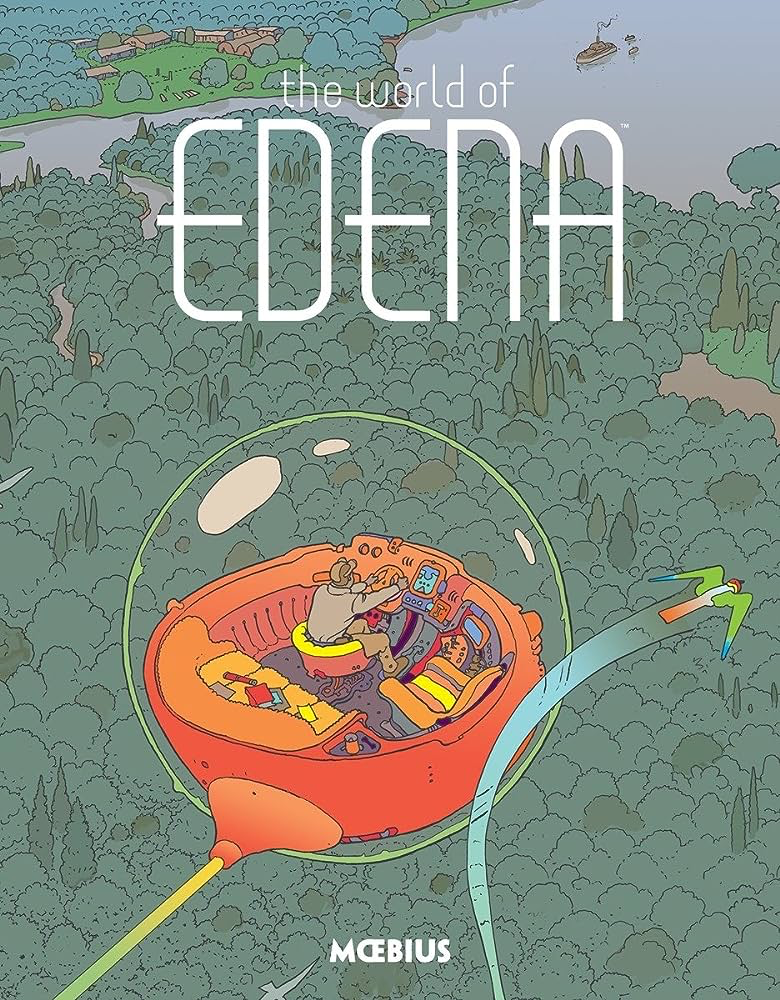
The World of Edena – Mœbiuscolored in with the same flat but vibrant colors that “I’m Not Feeling Human” is shaded in.

“Crash” – The Primitives

Okay, we’ve got one more peppy song before the depression hits…let’s ride the high while it lasts.

“Crash,” other than being a nostalgic, smiling thing popping up in my brain’s whack-a-mole system of remembering songs, feels like the better side of late ’80s pop. By then, the oversaturated synths and gated reverb had probably spread faster than the plague; I can’t speak from experience, given that…y’know, I wasn’t alive, but it had to have gotten obnoxious by that point. This song could have easily been that, but The Primitives seemed to know just the right balance to hit to make something instantly catchy, but that also managed to date itself in a way that wasn’t plasticky and corny. It’s distinctively ’80s without being distinctively ’80s, if you get what I mean. The guitars are bright, but not polished into oblivion, and yet there’s no denying the authentic, cartoon stars coming off of the opening riff. It’s practically begging to soundtrack a confident, reckless heroine with a slick jacket and and a pair of rollerblades, the kind with sparks that fly off with every turn she makes. Tracy Tracy, dolled up like some kind of new wave Marilyn Monroe in the music video, knows that she never needed to over-exaggerate her voice—the warmth of it, combined with the fiery embers self-contained in a tidy two and a half minutes, made for a song that’s unmistakable as a hit.

And they put this song in Dumb and Dumber? Huh?

…AND A BOOK TO GO WITH IT:

Little Thieves – Margaret Owen Vanja Schmidt is certainly the kind of reckless firebrand that doesn’t know when to slow down—and it takes her to some unexpected places…

“Motion Picture Soundtrack” – Radiohead

Another thing I have my wonderful dad to thank for: we watched a few episodes of Joseph Campbell’s The Power of Myth (it’s all on Youtube, go watch it), and besides the plentiful, earth-shattering truth bombs, for lack of a better phrase, about the nature of life and myth (and how those two aren’t really separate things after all), a quote from the second episode stood out to me when I was reminded of this song. At about 42:48, after he and Bill Moyers are discussing the manifestation of god in everything, and by extension, machines, Campbell examines the inner framework of a computer and remarks, “have you ever looked inside one of those things? You can’t believe it! It’s a whole hierarchy of angels…and those little tubes, those are miracles.” For the sake of not derailing this post so I can actually publish it on Sunday, I’ll holding back from expanding on all of the aforementioned Campbell capital-T Truth bombs, which he seems to produce with the same frequency as the other Campbell’s soup cans, but I can’t help but think of this song when I think of computers and angels. There’s no other word besides “angelic” to describe the distorted chorus of electric voices that begins at 2:15. That sound couldn’t have come from any other place save for the miraculous angel tubes. There’s some kind of gospel to this song, I swear.

Unless something absolutely drastic and apocalyptic happens, I doubt I’ll ever stop singing the praises of Radiohead. I’m long past caring about how inevitably insufferable I am as a result, but all the language I have about them ends up being hyperbolic. Kid A is probably somewhere amongst my favorite albums—I haven’t formally organized them past top 10, but I’d say that this lands somewhere in the 20s or 30s, at least. OK Computer, even if their chronological placement has doomed them to comparisons as long as there are music critics to do so, will always be the favorite child in my mind, but the special quality of this album can’t be understated. Like Punisher, another red, blue, and black-colored album that I listened to during the summer of 2020, it’s a signpost for a hyper-specific time in my life, and one of the most cohesive showcases of the talents of Thom Yorke and company. But as much as “Everything In Its Right Place” and “Idioteque” hold uncontested places in my heart, “Motion Picture Soundtrack” will wield the ultimate trophy as far as Kid A goes, and for my standards of music in general. Right now, it’s my favorite album closer of all time. (Before anybody says anything, I know, ackshually ☝️🤓 “Untitled” is technically the closer, but at this point, it’s basically a cooling-down extension to this song). As I brought up before, there’s an undeniable air of gospel about it—the synths that press in at the beginning sound like pipe organs run through a dystopian starscape, and if that’s the case, then the choir is certainly the angels dwelling just out of view in the pews.

“Motion Picture Soundtrack” was marinating in Thom Yorke’s massive cauldron of glorious music since the mid-nineties, where it was an acoustic lament befitting of The Bends. After that, it became a deeply solemn piano ballad somewhere in the depths of the OK Computer sessions, but I, for one, am glad that this is the definitive version, even if we were robbed of what was originally the third verse: “Beautiful angel/pulled apart at birth/Limbless and helpless/I can’t even recognize you.” (OW.) “Motion Picture Soundtrack” was always meant for cosmic grandeur; even though the opening mentions of “red wine and sleeping pills” ground us in the dim hours of planet Earth, the sprawling emotion of it all is the definition of all-consuming. It feels like the final leap off the cliff from death to rebirth, watching your feet slip and the gravel crumble beneath them as the electric, harp-like notes fill your ears like an endless field of stars. Within the infinite sprawl of sorrow, you can’t help but see the staggering beauty of life itself blossom in front of you. I’ll go out again and say it: I doubt we’ll ever come close to the tearjerking final line of Kid A: “I will see you in the next life,” and the pleading waver of Yorke’s soul-caressing voice makes it resonate all the more.

Kid A is probably the pinnacle of hopeless sad bastard music, but I can’t help but feel some kind of embryonic hope resting in the egg yolk of this song. “I will see you in the next life” is a release from all the mindless, sorrowful things that the rest of the verses lay out, and the promise of a starry new beginning. The closing of a chapter, the setting of a book back on the shelf, knowing that if you ever go back and read it, nothing will ever fully be the same, but knowing that isn’t always a bad thing.

What a way to end the year, huh? Just like “Garden Song,” I’m glad this song returned to me when it did. Radiohead is the gift that keeps on giving (me too many feelings to handle).

…AND A BOOK TO GO WITH IT:

The Darkness Outside Us – Eliot Schreferthis book takes “I will see you in the next life” very seriously. One of my favorite love stories of all time, and one of my favorite sci-fi books of all time as well.

Since this post consists entirely of songs, consider all of them to be today’s song.

That’s it for the last Sunday Songs of the year! Have a wonderful rest of your day, and take care of yourselves.

Posted in Sunday Songs

Sunday Songs – 11/5/23

Happy Sunday, bibliophiles! I hope this week has treated you well.

Did somebody order a monthly blue period double-dipped with Peter Gabriel? Because you guys are not gonna believe what showed up on my doorstep this morning…

Enjoy this week’s songs!

SUNDAY SONGS: 11/5/23

“The Tower That Ate People” – Peter Gabriel

COME AND GET IT! TWO FOR ONE PETER GABRIEL DEAL! TWO FOR THE PRICE OF ONE!

If there’s a vaguely overarching theme for this week’s songs that I can throw together, it’s that Peter Gabriel gets so much weirder than people give him credit for. I suppose that’s the curse of any musician whose earlier hits get the spotlight while the later, more experimental parts of their career go on the wayside in terms of engagement, but are as full of life and creativity as anything else they’ve produced (see also: David Bowie, Kate Bush). To be fair, we’re so used to aging artists that continue to pump out more of the same in hopes of keeping the fire of fame going (say, what’s going on with The Rolling Stones lately?), but equating aging to a decline in musical artistry is shallow either way. Again: I just saw Peter Gabriel a few weeks back, and here he is at 73 delivering some of the most spectacular performances—both visual and musical—that I’ve seen from any musician on stage.

The album, 2000’s OVO, is technically his soundtrack work, and was conceived for a multimedia show that ran in the Millennium Dome for 999 shows in that same year. Gabriel’s work on it interfered with his next album, the criminally underrated Up, which ended up coming out in 2002, a year after it was set to be released. The through lines between the two are clear; “The Tower That Ate People” (good god, what a title) has an industrial, almost Massive Attack-like crawl to it, propelled by a looped guitar riff. Gabriel’s voice comes out as a shrouded growl, making it all the more convincing when he opens the song with “There’s a bump in the basement/there’s a knocking on the wall.” The electronic grinding as he sings of “the pumping of the pistons” makes the music swell. It’s a clanging machine, but it never loses an ounce of that cinematic, Peter Gabriel touch—especially not the prolonged silence after he declares “We’re building up/Until we touch the sky,” letting everything fade to lumbering, echoing footsteps. I can only imagine what the stage show was like. I’m jealous that I wasn’t one of the lucky few who got to see this live on the i/o tour, because can you imagine the feeling of this reverberating straight through your ribs?

“We Looked Like Giants” (Death Cab for Cutie cover) – Car Seat Headrest

THEY’RE BACK!! THEY’RE BACK!!!! So what if it’s a cover—it’s a perfect fit.

Even without as much Death Cab for Cutie knowledge (much less about the album that they’re commemorating—before this, all I knew was the title track. Owie.), it’s easy to see that pairing them with Car Seat Headrest was a fit as perfect as puzzle pieces sliding together. Despite “We Looked Like Giants” being a cover, it feels like the whole song is harkening back to the Teens of Denial glory days, with its crashing guitar breakdowns and angst so dense you could squeeze it out of a dish towel. The lyrics feel even more like it was made for them—”When every Thursday/I’d brave the mountain passes/And you’d skip your early classes/And we learned how our bodies worked.” Certainly makes…every single song from Twin Fantasy make more sense. Even without the slam of an intro that the original version boasts, the tension and momentum that Will Toledo and company bring to this song fills it with the nervous energy that has defined the band for so long—it’s a song teetering on its tiptoes, balancing out both arms as it contemplates the edge. Toledo’s signature, honeyed wail takes the song to dizzying heights, making the collision course back to Earth as the final seconds plunge into silence all the more riveting. I always get all sappy about Teens of Denial and all of the memories of listening to it the summer before I started high school, and this song brings all of the good parts of that back—slip this before “Fill In the Blank,” and I wouldn’t even blink. Leave it to Car Seat Headrest to toe the line between an unchanged cover and one that makes the cover all their own.

“The Family and the Fishing Net” – Peter Gabriel

I’ve done it. I’ve finally surmounted the task of going through all of Peter Gabriel’s albums (minus his soundtrack work). Peter Gabriel summer has come to an end. Peter Gabriel 4: Security was the last one for entirely arbitrary reasons, but it’s fantastic—and a lot creepier than most people give it credit for.

Take this song. Immediately, it sonically calls back to “Intruder,” with its ominously creeping instrumentals, off-kilter chanting and an unsettling chorus of flutes that open the song. Slowly, you start to process the lyrics, and the chill starts creeping down your spine. “Icing on the warm flesh cake?” Yep. Mom, come pick me up, I’m scared. But if you take just a quick look through, you can see the true genius of this song—I was super curious about the meaning, and I was floored by the concept behind it.

“Vows of sacrifice (vows of sacrifice)/Headless chickens (headless chickens)/Dance in circles (dance in circles)”. It sounds like the makings of a cult. But Peter Gabriel specifically created “The Family and the Fishing Net” as a wedding song. Vows of sacrifice? For richer, for poorer, in sickness and in health. Headless chickens? Could just as well be serving a roast dinner at the ceremony. Dance in circles? We’ve all done that at a wedding or two, haven’t we? That’s where the lyrical genius comes in—it’s not just that he’s subverting Western wedding imagery and making it sound like a cult ritual, there’s a level of exoticization that he brings to it that makes it clever in a conscious way that lines up with his worldly sensibilities. It feels like a response to every song that’s ever demonized and exoticized ordinary (and often sacred) rituals of indigenous people around the world. And given that much of this album has that worldly ethos (see also: “San Jacinto,” “Wallflower”), it’s a perfect addition. As much as I tend to rag on old white guys, Peter Gabriel should be one of the paragon examples in writing songs—and any kind of writing—outside our worldviews, just for the simple fact that he cares to listen about people’s lived experiences. It’s not just writing about some strange, foreign goings-on that he witnessed in his travels—Gabriel took the time to make sure that he understood and uplifted the people and cultures that he encountered. That’s what makes this song feel so important—he recognized the detriment in writing songs from an ignorant distance, and used that aspect of the history of Western music to create one of the creepiest—and most clever—songs in his catalogue.

Also, to the anonymous YouTube commenter who said that she wanted to have this play when she walked down the aisle: I salute you. I’d pay to see that.

“She Plays Bass” – beabadoobee

So it turns out that the she who plays bass is beabadoobee’s actual bassist, and…yeah. They’re aren’t romantically involved, but that still has to be bizarre to be playing bass on a song about yourself. At least all parties seem to be okay with it? Knock on wood that beabadoobee’s backing band doesn’t get into any kind of Fleetwood Mac funny business.

That aside, here’s another entry into my thesis that beabadoobee makes the perfect music for teen rom-coms. From her 90’s-inspired Space Cadet EP (hmm, wonder why there’s a song called “I Wish I Was Stephen Malkmus”…), it’s an ode to yearning, longing, and bright, shiny guitars. Bea Kristi described the song as “a Cure rip-off,” a description that she admitted to Robert Smith himself when they met at the BRIT awards back in 2020. Either way you want to describe it, there’s no denying the brightness of it—despite the black and white cover of the single, “She Plays Bass” is rife with neon colors and cartoon stars. I halfway get the Cure bit—definitely more like “Friday I’m in Love” or “Let’s Go to Bed” than their other music—but what I do get is delightfully guitar-driven indie longing, sparkling and starry-eyed. If “Glue Song” plays in the end-credits of said rom-com, maybe this plays as the intimidatingly cool love interest is introduced. Just a thought.

“Black Hole” – boygenius

What? You thought I was gonna shut up about the rest after talking about “Powers”? You fools…

“Black Hole” is an easy song to have on loop—it’s part of the 3/4 of this EP where every song is freakishly hypnotic, but they’re all around two and a half minutes long, so they just suck you down with them forever, like water sucked down the sink drain. Or…maybe, something else? Mayhaps…a black hole? But the black hole in this song is a more recent revelation—”You can see the stars, the ones/The headlines said this morning were being spat out/By what we thought was just/Destroying everything for good.” The black hole in question is a fascinating one: caught by the Hubble telescope in early April of this year, NASA observed that this supermassive black hole was leaving a trail of stars in its destructive wake that stretched over 200,000 light years long. It’s the perfect, beautiful moment to write a song about. Hopefully this bodes well for me because I’m taking an astronomy class next year: I’ve always struggled with astronomy in school previously, but it makes me tear up that we live in a universe that we will never fully know everything about. That there will always be new things to discover about the vastness of space and the world around us and beyond us until the day I die.

Back to the song: it’s poetry. More specifically, it’s two separate poems. Julien Baker takes the reins in the first poem, with her musings about looking at the stars. The gently clattering electronic instrumentals sound appropriately starry, with the hum of synths leading into Baker’s voice, then transitioning into a tinny, ascending scale on a keyboard just before everything shifts. This is the second poem. It feels like the camera has whipped around as the drums and synths intensify, panning around to Lucy Dacus as Phoebe Bridgers lingers just out of the frame, opaque camera shots flickering at high speed over them as the camera zooms in on their faces. Hearing Dacus take the high notes and Bridgers taking the low, the opposite of their normal range, is an odd treat—it makes Bridgers’ voice seem like a ghost, barely there unless you really pay attention, while Dacus acts as the piercing lighthouse beacon cutting through the fog. All of their lines are enchantingly neat, spaced apart like they’re all collected in separate bins. Apart from the initial confusion (and fleeting clunkiness) of the first two lines (“White teeth/black light/White tee/brown eyes”—”teeth” and “tee” sound way too similar, especially when preceded by the same adjective), I’ve been eating up the emotionally-charged precision of it all. As each line is cut off the chopping block, the drum machine thrums on, just as meticulous as the delivery of each lyric. And I am nothing if not a sucker for songs on an album (or an EP, in this case) that transition into the other as though they’re the same song. Especially with this and “Afraid of Heights” being so short, it feels all the more like a single song. Pure artistry.

Since this post consists entirely of songs, consider all of them to be today’s song.

That’s it for this week’s Sunday Songs! Have a wonderful rest of your day, and take care of yourselves!
Posted in Sunday Songs

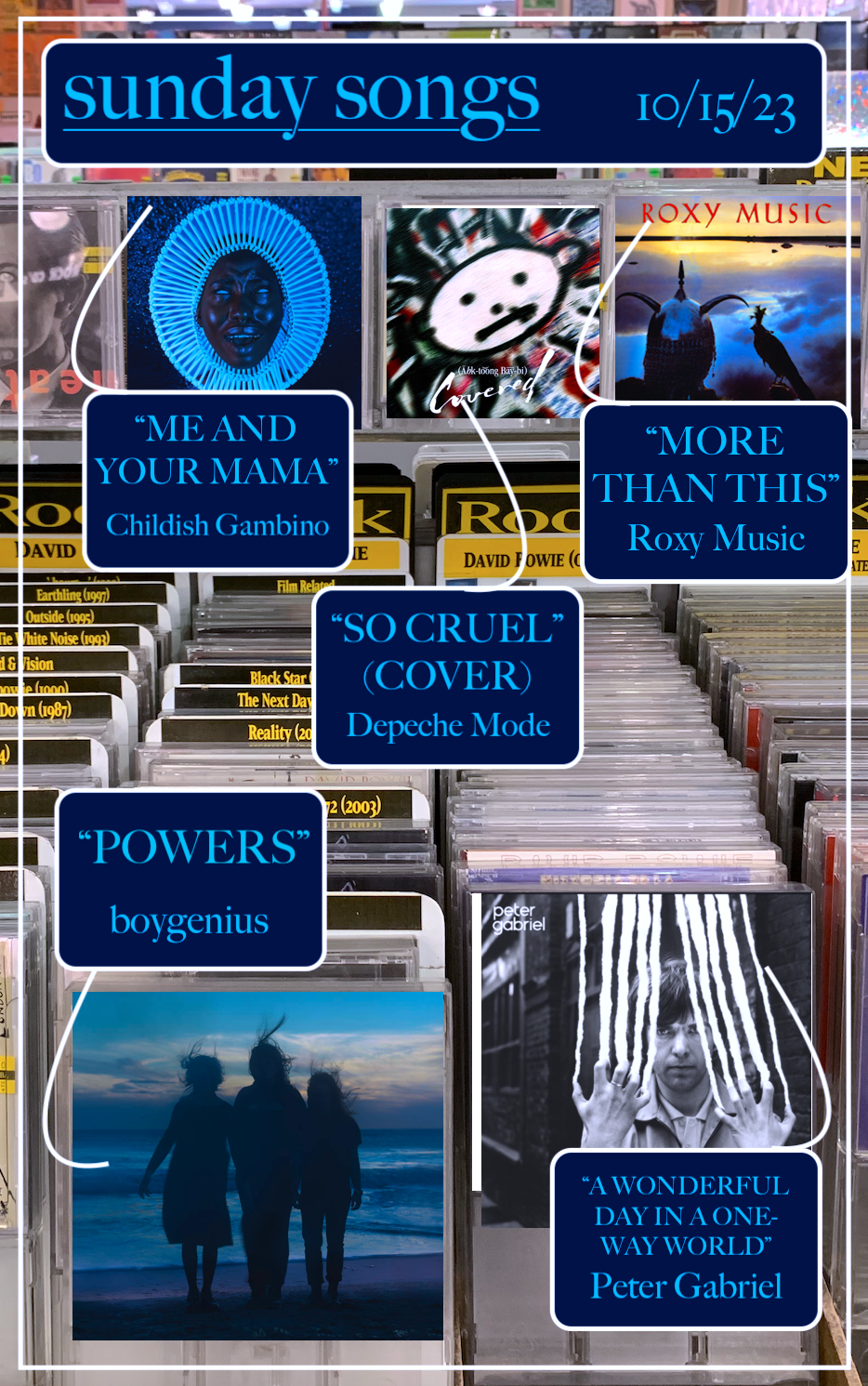
Sunday Songs – 10/15/23

Happy Sunday, bibliophiles! I hope this week has treated you well.

THIS IS A CODE RED, I REPEAT, WE HAVE A CODE RED! IMPENDING BOYGENIUS BREAKDOWN IMMINENT! BRACE, BRACE, BRACE! BOYGENIUS BREAKDOWN HAS REACHED MACH 1, I REPEAT—[RADIO GOES DEAD]

…CAPTAIN? CAPTAIN!

Enjoy this week’s songs!

SUNDAY SONGS: 10/15/23

“Powers” – boygenius

I’m writing this on the day that the rest – EP came out, and I can assure you that’s been the only thing pouring through my headphones all day. I’ve lost count of how many times I’ve run through the whole thing. It’s easy to do it endlessly—only four songs, 3/4 of then in the two minute range. That’s this EP’s only crime—those three songs are just too short. Other than that, they’re so criminally flawless that it was exceedingly difficult to pick just one to talk about this week. There was the appropriate all-consuming but gentle harmonies of “Black Hole,” the painful relatability of “Afraid of Heights” (Ms. Lucy Dacus could you not stare into my soul today? Please?), and the gut-punches of “Voyager.” I was trying to have a good morning, but then, boom: Phoebe Bridgers hit me with that beautiful line about the pale blue dot. Ouchie.

But from the start, “Powers” would have always broken through as a standout amongst standouts. Led by Julien Baker, this song is appropriately the EP’s longest, and one of boygenius’ most lyrically exciting songs. It’s something that I wouldn’t have expected out of them—of all things, a superhero origin story. It’s the coolest. Who wouldn’t get that rush of excitement as Baker and company croon “Either way, I have been wondering/Just how it is that I have never heard/The tale of how I got my powers?” Leave it to a line so inviting, so promising of something cosmic, to immediately steal my heart. Over the course of the song, Baker ponders this untold tale, searching for some remnant of the event that made her extraordinary—”Did I fall into a nuclear reactor/Crawl out with acid skin or something worse/A hostile alien ambassador?” It’s the kind of subject matter that lends itself to a more pop-rock sensibility, something punchy and full of action, but the subtle rise from acoustic guitars to atmospheric, electronic background noise feels just as sweeping. As the background reaches something close to a quiet crescendo, the lyrics are all it takes to ramp up the stakes: “No object to be seen in the supercollider/Just a light in the tunnel and whatever gets scattered/Life flashing before the eye of whatever comes after.” And with a whole album about their shared friendship, how could the final lines of “The hum of our contact/The sound of our collision” not be about just that—the strange journey that led three to become one and create such meaningful music together? And to follow it with a somber, resonant chorus of brass as the EP fades out? Glorious. “Powers” really is boygenius at the height of their own powers—purely cinematic, all-consuming, and as emotional as ever. Long live the boys.

“A Wonderful Day In a One-Way World” – Peter Gabriel

It’s long overdue that I talked about Peter Gabriel 2: Scratch. I listened to it all the way through…wow, a month ago? But stubbornly, I refused to put it in because it didn’t at least vaguely fit into one of my color schemes until this week. As everything has been with my eternal Peter Gabriel summer, Scratch was a strange and jaunty little adventure. It seems to be his only album that never really produced any “hits,” as we’d define them, but it still charted to #10 in the U.K. Scratch didn’t chart quite as high in the U.S., and you can sort of see why—it wasn’t made for hitmaking. Neither was Car, but that album was just so nuts and all over the place that a hit was bound to come out when the dust settled. It’s still got that playful weirdness that Car had in spades, now with the cohesion that Car lacked. It’s still experimental and abrasive as all get-out at times (see: “Exposure,” another favorite of mine from the album), but you can see the unifying threads.

“A Wonderful Day In a One-Way World” was a surprise favorite for me, but it really shouldn’t have been. I’m not fully warmed up to prog in general, but Peter Gabriel’s late 70’s take on it has a certain jaunt to it that makes it endearing. Like some of Kate Bush’s weirder music coming out at around the same time, it’s got that hip-swaying, Bowie-inspired groove that propels it for the whole length. Something about the particular arrangement of instruments and the light, airy key that it’s in makes it feel so playful. I’d even go so far to say that it borders on sounding like a show tune. Again: not something I’m normally receptive to, but the combination of Peter Gabriel’s theatrics (no doubt leftovers from his Genesis days) and the winking spirit of the whole song make it much more fun to listen to. The wry lyricism only adds to that theatricality (“There’s an old man on the floor, so I summon my charm/I say, ‘Hey scumbag, has there been an alarm?’”) as the self-absorbed narrator makes his way through his one-way world (“Time is money/And it’s money I serve”). If there’s anything that this journey through the Peter Gabriel catalogue has taught me, is that he’s always been full of surprises, and continues to be to this day—that’s what’s made him so lasting, in my opinion. Whether he’s looking outward or inward for inspiration, he always has something new to offer. That sure is a rarity for an artist of his age.

As for me, I’m excited to see his newest surprises on tour tomorrow! Ready to cry…

“Me and Your Mama” – Childish Gambino

This is probably one of the more left-field songs that I’ve ever ended up including on these posts. I’m 100% under a rock when it comes to most mainstream music; most of what I know is a) what I remember from middle school dances (not fondly), b) random stuff I pick up from following Pitchfork and Stereogum, and c) my neighbors. It’s always just background noise for me—thankfully, I’ve matured past the “I don’t like mainstream music and therefore I’m better than anyone else” mindset that plagued me in middle school, and even though most pop/mainstream rap still remains not my cup of tea, I’ve gotten to the point where I can admit how cool something sounds. I’d be remiss if I didn’t deny that it happens once in a blue moon.

Like this. I only happened upon it because a friend of mine put it in the background of their story, but the snippet I heard blew me away. We’ll get to that a bit later. But if there’s any song that screams “album intro” louder than anything else, it’s “Me and Your Mama.” It starts off at a crawl, with some gentle, twinkling synths and a beat that doesn’t persist so much as creep up on you. There’s a nearly 2-minute wait for anything to change about this song—it takes a while to really kick in. But the payoff? Jesus, the payoff. The first time I hit the 2:01 mark when listening to this song all the way through, I swear my soul left my body. Everything about it makes it worth the wait—come on, how could that Halloween-store-skeleton laughter not immediately elevate everything? All of it—the sudden collision and time signature shift, the bass—it’s like getting an electric shock straight to the heart. And right on the heels of Donald Glover absolutely howling the rest of the lyrics. Even when some of the earthshaking soundscape fades in favor of letting a bit of acoustic guitar slip through, none of the momentum gets lost. Every line is delivered rawly, like it’s freshly covered in blood, pulsating with captivating energy. And just as it reaches its crescendo, it’s gone. Two minutes more of spacey synths, and this song drops out of existence. Poof. I can’t not see the expert craft that went into every note of this song—it’s elevated from a song to something reaching beyond an experience. It really does swallow you whole for all 6 minutes and 18 seconds. I only have a vague notion of the rest of Childish Gambino’s catalogue, but damn. That’s how you open an album.

All for a song called “Me and Your Mama.” Go figure.

“So Cruel” (U2 Cover) – Depeche Mode

I’m gonna say it: I’ll absolutely defend U2. Up to their more recent stuff, I’ll still hold that they’re an incredible band, the “we’re going to put our new album on every single apple device and there’s nothing you can do about it” incident notwithstanding. I might’ve been too young to understand the full degree of annoyance of every apple user who wasn’t into U2, but I wasn’t too young to have a ton of fun at one of my first concerts—U2, on that same tour. Even if Songs of Innocence wasn’t their best work, I can still remember how the show was just pure fun. And whoever was in charge of the visuals was putting out their absolute best work—even almost 10 years after that show, I still remember how wowed I was by them. Sure, their more recent work has gone more than a little stale, but they’re far from deserving of the “worst band in the world” title that people have foisted on them in the last 20 years or so. How is everybody putting that on them when…I don’t know, Oasis exists?

Oh, they toured together, you say?

…oh.

Anyways. I’m not necessarily here to talk about U2 themselves. Just as U2 has been the soundtrack to many a car ride in my childhood (see: at least a quarter of How To Dismantle an Atomic Bomb), so too were many songs from this album of U2 covers. I’ve always been back and forth about Depeche Mode—I love their atmosphere in general, and I like some of their songs here and there. (“John the Revelator” will ALWAYS be a banger.) It’s that atmosphere that elevates their cover of “So Cruel.” The original was already chock-full of drama, and Bono’s soaring voice, as it usually does, sells it all. But Depeche Mode’s interpretation gives this drama and heartache a new flavor, taking it to goth heights that make both the heartbroken, enchanting moan of both Bono and David Gahan feel all the more palpable. The landscape of synths consumes the whole of this cover, with a murmuring heartbeat of a drum machine blanketed by a static hum of electricity that feels fizzly enough to touch. It grows sparser (and bleep-bloopier) in the chorus, but that’s exactly what it needs. Gahan’s cavernous voice needs all the more room to breathe, and it’s given that and more. It’s hard to think of anybody other than Bono who could deliver lines like “Her skin is pale like God’s only dove/Screams like an angel for your love” without sounding ridiculous. It’s an excellent cover—and a welcome surprise from my shuffle.

“More Than This” – Roxy Music

This one’s been a long time coming on one of these posts. I listened to it a ton this August, but it got lost in my desire to create a somewhat coherent color scheme, despite the chills it gives me on every listen. But now here we are, in our nice little blue period, and here we are. Perfect time for us to join hands, close our eyes, and feel like someone’s blowing a nice, big gust of wind into our long, lustrous heads of hair.

There’s few songs that I can think of that are as instantly transporting as “More Than This.” I’m not usually as receptive to that eighties, saccharine synth extravaganza, but this feels like the fleeting, sweet time capsule of that moment in time. It does call to mind that angle where the subject is blindingly front-lit, glowing from within with the wind blowing in their hair. I feel like we would all be receptive to feeling that glow once in a while, right? I wouldn’t complain. Maybe it’s because “More Than This” came before this was the concrete norm—this was 1982, and we were still a few years removed from the overlords of synthesizers and consumerism, so maybe that’s why it doesn’t feel as contrived. Somewhere in between Roxy Music and the rest of the eighties, the romantic grandeur of this song was lost—and that’s what keeps this song so powerful. It perfectly matches the starkness of the album cover; Bryan Ferry conceived of Avalon, the album where this song hails (its title track and first single), while visiting the west coast of Ireland. I haven’t been, but I can imagine that kind of stormy environment of steep, gray cliffs, the kind that have endured since time immemorial, would tend to stir that up in a person. And even though I haven’t listened to the rest of the album, that sweeping beauty shines through. As the narrator languishes in melancholy, hoping that there is something beyond this deep sorrow but being so entrenched in said sorrow to definitively say so, the instrumentals make a combination of guitars, synths, and saxophone sound as expansive as the sea. Bryan Ferry’s voice isn’t the deepest, but it hits that level of deep that sells the existential plea of it all. “More Than This” really feels romantic—not in the lovey-dovey sense, but in the 19th century poetry sense. Is it too much of a stretch to say that somebody like Shelley or Keats would have rocked with this? I’ll stand by it. Bottom line: yes, we put too much focus on old dead white guys in literature, but sometimes nobody hits it quite like certain subsets of old dead white guys. Keats knew what was up. And if this song is proof, so does Bryan Ferry.

And as a bonus, here’s the legendary Karen O’s acoustic take, from a few months back:

Since this post consists entirely of songs, consider all of them to be today’s song.

That’s it for this week’s Sunday Songs! Have a wonderful rest of your day, and take care of yourselves!
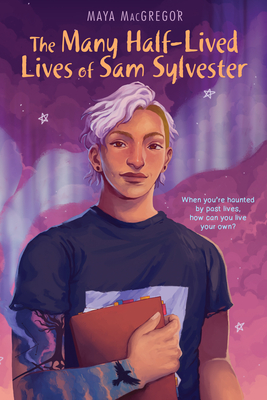
Posted in Sunday Songs

Sunday Songs: 7/23/23

Happy Sunday, bibliophiles! I hope this week has treated you well.

What a momentous few days it’s been. Barbenheimer weekend (I HAVEN’T SEEN EITHER YET NO SPOILERS), two highly anticipated albums coming out within a week of each other, and entirely too much heat. So how do we celebrate? With resurrected memes and cryptids, of course!

Enjoy this week’s songs!

SUNDAY SONGS: 7/23/23

“Barbaric” – Blur

And here we are…Blur’s reunion album is finally here! My mom and I listened to it all the way through twice on the day it came out, continuing our recent tradition of supercharging my car with the music of Damon Albarn and co. But after both of those listens (and some change), I’m divided on how to feel about it. Albarn called it Blur’s “first legit album since 13,” which…if that isn’t a surefire way to get hype, then I don’t know what is. But it makes sense—only 3/4 of Blur recorded and performed 2003’s Think Tank after their pseudo-split in 2000, and the recording of 2015’s The Magic Whip was completely by chance after the cancellation of a festival that left them in Hong Kong. And with the dubious connections between 13 and Ballad (the former is definitively about a breakup, while the latter is more of a rumor), it’s not impossible to try and connect the dots, even if the dots may or may not be even there.

But as with “The Narcissist,” The Ballad of Darren is largely a solid album, but it rarely feels like Blur. Save for the obvious best track (that would be “St. Charles Square”), it doesn’t feel like anything more than Damon Albarn’s solo work. For all of the buzz around their reunion, it lacks the equilibrium that they had down pat until around 2000—that’s when it felt like Blur was a four-man band, not just Damon Albarn with the occasional hint of Graham Coxon’s backing vocals. And given how Coxon’s guitar work, James’ iconic bass lines, and Rowntree’s precise drumming all contribute, it doesn’t feel like a “legit” Blur album at all. Even The Magic Whip, as fan service-y as it was, felt like Blur. I’m sure it’ll grow on me, but I can’t help but be a little disappointed.

However, that’s not to say that it isn’t a good album. It is good, but it rarely strays beyond just good and into great or fantastic. And it does have some moments—this song included. “Barbaric,” despite the fact that it could pass just as well for a more recent Gorillaz or solo Albarn effort, is still a catchy, deceptively bubbly song. With the marriage of its synths and guitars, the music brims with new summer radiance, Coxon’s few moments of guitar making the edges glitter. But it wouldn’t be Damon Albarn’s midlife crisis/breakup album without an upbeat, joyful sounding song that betrays lyrics positively dripping in melancholy. Nothing like bopping your head to this song in the car and then realizing that the chorus starts out with “I have lost the feeling that I thought I’d never lose/Now where am I going?” YIKES. You wouldn’t expect a song as musically upbeat as this to describe an “empty grove, winter darkness,” would you? I certainly didn’t. “And I’d like, if you’ve got the time/To talk to you about what this breakup has done to me” is no “No Distance Left to Run” in terms of Blur breakup songs, but in the midst of several solid songs whose slowness matches their lyrics, “Barbaric” is one of the few pleasant surprises on this album.

Probably for the best that we didn’t get “No Distance Left to Run” 2, though. Yeesh. Rough ride, that one. Wouldn’t wish that on Damon.

“Head Like Soup” – Palehound

I’ve already talked about this song and Eye on the Bat in general on my review of the album (gave it 5 points more than Pitchfork did bwahaha) but I still find myself coming back to this song again and again.

Eye on the Bat saw a return to El Kempner’s earlier form, weaving intricate, punchy riffs into meticulously-crafted indie rock songs. The meticulous approach to every lyric never stopped, but I did find myself missing some of Kempner’s more riotous guitar work, as in “Molly.” (I feel like I always go back to that song when I talk about Palehound. I swear it’s the blueprint.) But Eye on the Bat was a welcome return to shreddy form, and if “The Clutch” wasn’t convincing enough, then “Head Like Soup” should do the trick. The whole song brims with bits of creative experimentation; as Kempner sings of sacrificing herself for her partner’s sake (“I live to fill you up/And I burn unwatched”) and doing all of the work to support them as they seem to do nothing for her (“Holding your body like a paperweight/heavy glass resting in my hand/changing something in me”), the instrumentation is as vibrant as ever. From the pounding guitars that smash into the chorus to the synths that leave their marks like insect feet over the second verse. It’s a song that constantly keeps you guessing, and keeps you nodding your head all the way. And there’s nothing like letting your distorted guitar ring out for the final seconds of the song—nothing gets the serotonin a-flowin’ quite like that.

“Hindsight” – Built to Spill

Before I get into the actual song—can we take a moment to appreciate the looming cryptid on the album cover of There Is No Enemy? Faceless, barely has any form, the height of at least two and a half to three of the houses on the cover…does it get any better than that? There Is No Enemy was clearly the right name to assign to the album—of course that thing isn’t an enemy. He’s just a guy. Just stopping by to see if you he could use the phone or borrow a bag of chips for the block party next week. He’s just your friendly neighborhood eldritch horror.

Built to Spill is one of those bands that’s been ever-present in my life, but I’ve only started to appreciate them in the past few years. Even though I did like some weird stuff as a kid (I remember asking my parents to play “Circuit” by The Apples in Stereo on repeat when I was 5), I guess my ears hadn’t been fine-tuned to the hipster frequency just yet. But once I did, I found that there was so much to unravel: “When I was a kid, I saw a light/Floating high above the trees one night/Thought it was an alien/Turned out to be just God.” In such an already meticulously-crafted song (“Goin’ Against Your Mind”), atmospheric, multilayered lines like that are an experience in and of themselves. But “Hindsight” isn’t exactly like that; it’s a gentler, janglier tune, slow and meandering. And yet, it feels just as meticulous, even with its simplicity. I’ve come to realize that I’m a sucker for songs about dwelling on the past and the future (see also: “Darkness”)—maybe that was what drew me to “Hindsight,” with its old folks reunion music video and the smack in the face of the first verse: “Hindsight’s given me/Too much memory/There’s too much never seen/It’s always there.” And Doug Martsch comes to the same, grounding conclusion that I always have to tell myself when I get in that headspace: “Now I’ve come to find/That tricks are played/With human brains.” Sometimes, when you can’t smack yourself upside the head yourself, you’ve got to find a song. So thanks, Martsch and co.

…hold on, you’re telling me that Bob Odenkirk directed this music video? That Bob Odenkirk?

“The Recipe” – Shakey Graves

I’m glad to live in a world where, occasionally, quoting “We’re Not Gonna Take It” in a song actually feels clever. As is with everything: leave it to Shakey Graves to pull it off.

With the exception of July 9th, I’ve had a Shakey Graves song per week this month (nothing next week, though, whoops). It can definitely be owed to seeing him live this summer; I’ve been picking bits and pieces more from his catalog ever since, whether or not he actually played them live when I saw him. (And now we’ve got a new album due in mid-September! The harvest is bountiful this year!) “The Recipe,” taken from his 2020 EP Look Alive, was one that I’d been meaning to check out, but had never gotten around to downloading. The only percussion for half of the song is Rose-Garcia’s muted guitar strums, dragging out a scratchy, hazy beat as grainy as the filter and fog machine smoke on the album cover. It’s a really scratchy song, a song that creaks and groans like stepping on old wooden floorboards. Rose-Garcia’s voice never rises above a haunted whisper, humming above the percussive guitar in discordant harmony with himself. And “haunted” is the perfect word to describe this song, detailing an aimless journey through substance abuse, ruin, and unease as time passes. But as with any Shakey Graves song, it’s a cleverly-penned journey. There’s some kind of self-contained perfection to the fourth verse: “Finally a beggar down on King Street/Tryin’ hard to tune my E string/Singin’, “We’re Not Gonna Take It” for a dollar in a jar/I only know the chorus, but it’s gotten me this far.” Rarely does a simple set of rhymes get me that excited, but the eerie delivery of it makes the genius of it shine even more than it already did. And then the faint singing of said chorus of “We’re Not Gonna Take It” at the 4:25 mark?Pure spooky genius.

“Pegasus” (feat. Phoebe Bridgers) – Arlo Parks

This one was due to appear in a Sunday Songs post for at least a few weeks; my dad has sent me several songs with Phoebe Bridgers featuring in them over the years since I got into her (one of the infinite reasons why I love him & sharing music with him), and this was one of them, right before we went on vacation in Washington. Since then, it’s become a staple of my library playlist, the perfect combination of soft and sweet that fits right into the atmosphere.

I’m slowly starting to dig into more of Arlo Parks’ music, but this was my first real exposure, save for seeing her play piano with Phoebe Bridgers on their cover of Radiohead’s “Fake Plastic Trees.” Park’s distinctive voice is only a whisper on the chorus there, and three years later, it seems as though the two have come full circle. Now, on Parks’ new album My Soft Machine (which is an excellent album title, if I’ve ever seen one), their roles have reversed: Parks takes center stage, where Bridgers’ haunting whisper provides drifting backing vocals that seem to peer behind the curtain of the music. It’s not often that I feel like a musician’s voice is truly unique, no matter how powerful it may be, but Arlo Parks has struck me as having a strange combination of sounding simultaneously high-pitched and thick, almost nasally, but delightfully unique enough to sound like some sort of woodland fairy. And those vocals, paired with Parks’ arrangement of humming, synth-heavy instrumentation, make for a dreamy slice of indie pop. As Parks adds spliced moments with her partner into her collage (“holding your puppy in your Prussian blue sheets” or “blue jewels round your neck”), it all swirls in a song that feels like it holds the soft glow of sunlight—not enough to blind you, but just the right amount to make you feel all warm and sappy on the inside.

Since this post consists entirely of songs, consider all of them to be today’s song.

That’s it for this week’s Sunday Songs! Have a wonderful rest of your day, and take care of yourselves!

Posted in Monthly Wrap-Ups

June 2023 Wrap-Up 🏳️‍🌈

Happy Friday, bibliophiles!

And just like that, we’re halfway through the year…I don’t want to jinx it, but I feel like it’s been a good one so far. Other than being sick for all of April, basically, but that’s in the past. Now the pollen allergies are kicking in!! Whee!!

Let’s begin, shall we?

GENERAL THOUGHTS:

June has been on the busier side, but in a good way, for the most part. I got my very first job as a page at my local library (!!!), and I’ll be working there part-time until school starts back up. As of today, I’ve just gotten my first paycheck!!

Right after that, I went on vacation in Olympic National Park! Washington is the prettiest—I loved seeing the rainforest and the ocean, and all of that nature really got my creative juices going.

I also went to my very first pride parade last weekend!! I only stayed for an hour to watch the parade itself (that’s on sensory issues), but it made me so incredibly happy to see my community gathered there and spreading so much joy. Unforgettable experience.

Now that I’m off school, I’ve tried to get back into my writing routine. I started on the first draft to the sequel of my main WIP. I’ve made some good progress so far, but I’m planning on taking it to Camp NaNoWriMo tomorrow! I’m shooting for the full 50,000 this time, so wish me luck!

Other than that, I’ve just been drawing, practicing guitar, seeing the Yeah Yeah Yeahs and Shakey Graves live (both of which were AMAZING GAAAH) binging even more Taskmaster (just finished season 6, looking forward to seeing how unreasonably angry James Acaster gets in season 7), watching Across the Spiderverse (can’t remember the last time a movie changed my brain chemistry THIS much, so beautiful) and Asteroid City (another win from Wes Anderson), and trying not to inhale every single mote of pollen in my room. Allergy season is a real Fun Time.

READING AND BLOGGING:

I read 16 books this month! June wasn’t off to a great start (see the DNF below), but I ended up reading a ton of fun books for pride month! You’d think that vacation would’ve given me more time to read, but I ended up buying three books on my Kindle, all of which were rather chunky, so…

1 – 1.75 stars:

Agent Josephine

2 – 2.75 stars:

The Drowned Woods

3 – 3.75 stars:

Forever is Now

4 – 4.75 stars:

Welcome to St. Hell

FAVORITE BOOK OF THE MONTH – Painted Devils4.25 stars

Painted Devils

POSTS I’M PROUD OF:

POSTS FROM OTHER WONDERFUL PEOPLE THAT I’VE ENJOYED:

SONGS/ALBUMS THAT I’VE BEEN ENJOYING:

obSESSED thanks Max
ever since this came to Bandcamp I have Not Been Okay
brain chemistry-altering movie, 10,000/10
delightfully weird album
NEW SMILE I REPEAT NEW SMILE
WHUHHHHHHHWHWHWHHWHWHHH LOVE THIS ALBUM

Today’s song:

now THIS is the Blur I missed

That’s it for this month in blogging! Have a wonderful rest of your day, and take care of yourselves!

Posted in Sunday Songs

Sunday Songs: 6/11/23

Happy Sunday, bibliophiles! I hope this week has treated you well.

Just a note—I’ll probably be radio silent for the next week (save for liking all your wonderful posts 🫡) because I’ll be on vacation! I’m heading up to Olympic National Park, so I’m pretty excited. But for now, have a nice, blue-gray color scheme and some silly goofy music while I’m gone. And of course, we’ve got Phoebe Bridgers, The Magnetic Fields, and Ernie and Bert for pride month.

Enjoy this week’s songs!

SUNDAY SONGS: 6/11/23

“Excuse Me” – Peter Gabriel

So…here I am. Finally got around to listening to Peter Gabriel 1: Car the other day. Fantastic album, but if I had to describe it in one word, that one word would be whiplash. I already knew I was in for a ride knowing that the album started out with the absolute proto-Danny Elfman insanity of “Moribund the Burgermeister” and the album’s classic radio hit “Solsbury Hill” one after the other (as much as I love the latter, it’s a crime that it’s all this album is typically remembered for…doesn’t surprise me, though), but even that couldn’t have prepared me for the full experience.

But if there’s any song off of this album that characterizes said whiplash, it’s this one. I went in expecting it to be weird, but the pure shock of this one just sent me into the nth dimension of musical weirdness. I’m not even exaggerating. This one starts out with a barbershop quartet. It’s just nuts. And I love it. It’s like Peter Gabriel was just unleashing every ounce of the pent-up goofiness within. It’s kooky. It’s whimsical. It’s silly. I’d unironically call this one of the best tracks on the album, just because he just goes all in on the silliness. However, I go back and forth on whether or not the incoherence of this album is a pro or a con—I’ve tentatively decided that it’s more pro than con, but some of it didn’t work for me. Coherence is not a quality that an album needs to have to be enjoyable, but you can do an album where every song has a different feel, genre, etc. from the next and still have it feel cohesive and joyfully carefree at the same time (see Super Furry Animals’ Rings Around the World). But on the other hand, the antici……pation of having no clue of what comes next was such fun to experience. There were some songs on Car that were genuine misses for me (sorry, “Down the Dolce Vita”), but albums that are pure chaos, like this one, are a special experience. Go crazy, Peter.

“Waiting Room” – Phoebe Bridgers

This one’s now on Bandcamp—all proceeds go to Music Will!

(are we all still okay, bisexuals? nope? I thought so)

Now, here we are with something of a legend amongst Phoebe Bridgers’ catalogue. Famously written when she was only 16, it’s hidden in the shadows despite being a fan favorite, existing only in older video performances and a brief stint on Spotify as part of the Lost Ark Studio collection, before being mysteriously taken down. And now that it’s on Bandcamp, more of us can lose ourselves in it!

The fact that Bridgers wrote this at 16 is still incredibly impressive, but with all due respect, it…makes sense. It’s 6 and a half minutes of pure angst—she hadn’t quite nailed the lyrical flow and subtleties that came with experience yet. There’s nothing subtle about “If you were a waiting room/I would never see a doctor/I’d just sit there with my first aid kit and bleed.” But the point of this song was never to be subtle—it’s a time capsule, capturing young, unrequited love at the epicenter of its emotion. If Bridgers hadn’t nailed her lyrical style just yet, she had already nailed her innate ability to conjure engrossing emotion. There’s something about the lines “Wanna make you fall in love as hard as my poor parents’ teenage daughter/She’ll be the best you’ve ever had, if you let her” that always get me. Aww, little Phoebe…

And it all comes to a head in the iconic refrain of “Know it’s for the better,” repeated for the last half of the song. The instrumentals rise in intensity along with Bridgers’ voice until it all crashes down in a tidal wave of guitars. It really is a song to lose yourself in—the last part of the song really does make it feel like everything else has ceased to exist around you. And even though this song has gone through several iterations over the years, it’s still a feat to achieve so young. If anything, I’m just glad to exist in a world with Phoebe Bridgers in it. I know it’s for the better.

“La La La La Lemon” (Sesame Street cover) – The Barenaked Ladies

Alright, here’s a childhood nostalgia pick-me-up after Phoebe Bridgers’ sea of teen angst. I wouldn’t blame you if you needed a palate cleanser.

This one was a last minute addition, but I’d be remiss if I didn’t include it in this. I haven’t thought about this song in a solid 15 years, but the other night, I had a dream—I can’t even remember what the dream was even about, but whatever the case, it dredged this song up from the dark recesses of my mind. And I’m not complaining! There’s nothing like the joy of uncovering a forgotten childhood song, like digging through dusty old boxes of mementoes in the attic. Or, at least, that’s how I imagine it. I don’t have an attic. I digress. It’s moments like this where I really appreciate the incomprehensible eccentricities of the human brain—which neuron fired and made me remember this all of the sudden?

Even though they have the worst possible band name to have included on a kid’s album (which they did—not just this, but the classic Snacktime!), The Barenaked Ladies really do have a talent for making nostalgic, clever kid’s songs. This one is technically a cover, but for once, I’ll defer to them instead of Sesame Street; in any other circumstance, I’d immediately call blasphemy, but in this case, their take on “La La La La Lemon” surpasses the original for me. No disrespect to Ernie and Bert, the original gay TV couple. This is the only exception. They reign supreme in all else. Nothing tops the Rubber Ducky song.

The slower, more subdued Sesame Street version fits when you consider that our crotchety friend Bert is singing half of it. But The Barenaked Ladies gave this song an infectious energy—just by picking up the speed, the song gains a far more carefree, loose, and altogether more joyous feel. Maybe my preference is the nostalgia talking, but I swear that this version manages to turn the kookiness up to the perfect level—the level that made me giggle as a kid and still makes me smile now, when I’m somehow an adult with a job. Man, how’d that happen…

Either way, the main takeaway is that comedy peaked at at “La la la la, linoleum!”

“I Don’t Want to Get Over You” – The Magnetic Fields

I’m entirely serious when I say that the only thing keeping me from listening to 69 Love Songs right this second is because of…said 69 songs. I will, eventually, but it’s gonna require a nice, long, uninterrupted stretch of…[checks notes] almost three hours, Jesus. But you’re not gonna catch me complaining about nearly three hours of Stephin Merritt and company.

In the meantime, it seems like almost every song I hear on its own from this album rearranges my brain chemistry for a solid three days before I can snap out of it. Case in point: this one. The minute the buzzy background synths and deeply distorted…well, everything kicks in, I lost myself. Again. With his signature, dry witticism, Merritt pens another two-and-a-half minute bite of love gone sour, cloaking the thought of “[taking] a sleeping pill and sleep at will/and not have to go through what I go through” in a web of tinny distortion. I always come back to the tongue-in-cheek lines of “Or I could career of being blue/I cold dress in black and read Camus,” because…I mean, he did kind of make a career out of that? Almost? Aside from a few songs, most of The Magnetic Fields that I can think of is about love left to get moldy after a few weeks in the fridge. But here’s the thing—it never feels like Merritt is spinning a broken record—each time, has has something new to bring to the table, whether it’s the drowning melancholy of “I Don’t Believe in the Sun” or the confessional nature of “Born on a Train.” He always finds something inspired to spin out of love lost or gone the way of spoiled milk, and every time, it’s a rush of inventiveness to the head.

“World of Ammonites” (from Prehistoric Planet 2) – Anže Rozman & Kara Talve

Here’s my PSA for today: if you haven’t watched both seasons of Prehistoric Planet on Apple TV+ …respectfully, what are you even doing? If David Attenborough’s part in it isn’t convincing enough by itself, will a masterfully-animated, nature-show style documentary about Cretaceous dinosaurs and other prehistoric life entice you? The animation puts almost everything else of its kind to shame—so much so that it looks too real to be animated, which adds to the nature show feel. Plus, it acts like a good nature show should, not focusing all on “DINOSAUR FIGHT!!!!!1!!! RAAAAAAH THEY ARE ANNIHILATING EACH OTHER RAAAAAH!!1” and giving a speculative insight into many aspects of these extinct creatures’ lifestyles. It’s a beautiful show, whether or now you’re interested in prehistoric life. You will be, after watching this.

Even though the animation obviously steals the show (as it should), I couldn’t help but notice parts of the artfully crafted soundtrack as well. The ammonite section of season 2’s ocean episode wasn’t just my favorite moment of the season because of the tiny prehistoric cephalopods—the paired track, “World of Ammonites,” made it all the more gorgeous. Nothing fits the image of thousands of funky little guys with weird shells bobbing about in a prehistoric sea than a mixture of low woodwind, violins, and synths tinny enough to fit into a sci-fi B-movie from the fifties. The synths especially capture the audio representation of the likeness of these bizarre animals; fitting these very spacey sounds with such alien-looking creatures feels like an obvious choice, but it’s a genius one. Prehistoric Planet has consistently been a joy to watch, but nothing quite gave me the rush of joy that the ammonites—and this track—did. Love me a good cephalopod.

Since this post consists entirely of songs, consider all of them to be today’s song.

That’s it for this week’s Sunday Songs! Have a wonderful rest of your day, and take care of yourselves!
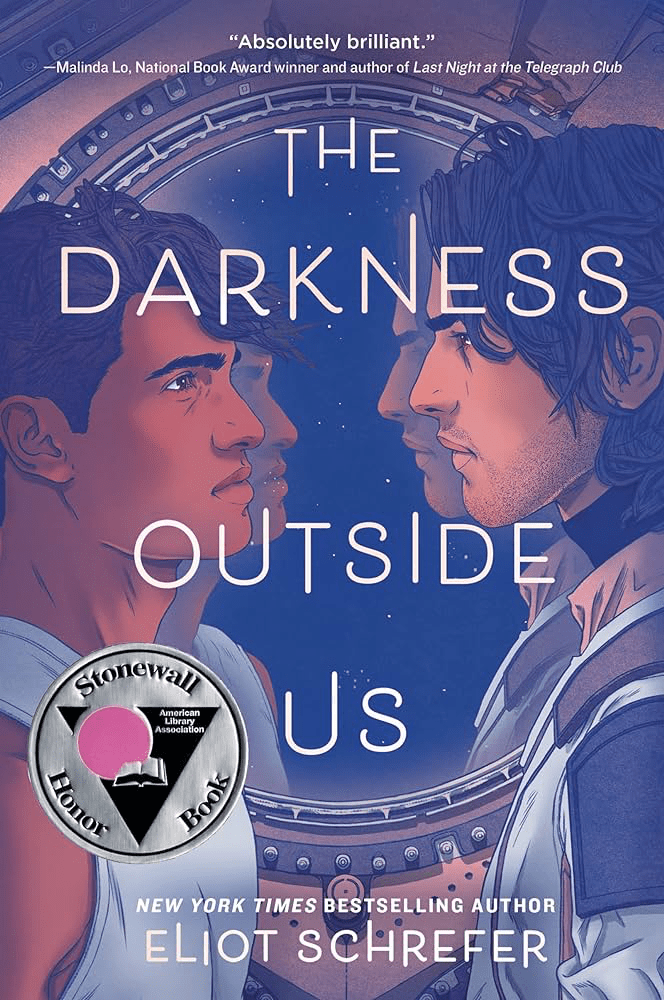
Posted in Monthly Wrap-Ups

May 2023 Wrap-Up 🌂

Happy Wednesday, bibliophiles! Hope this month has treated you well.
How is it already the end of May? It feels like I was trying to get dust bunnies out of the corners of my dorm room just a few days ago…(so many dust bunnies 😭)

Let’s begin, shall we?

GENERAL THOUGHTS:

Whew! May has been pretty busy, but everything’s…temporarily winding down. I finished up my finals and managed to make straight A’s this semester—I just found out I got on the dean’s list, too! Still can’t believe I’m already finished with my first semester of college; it was such a scary and jarring experience at first, but I’m already finding myself missing parts of it. What a weird and wonderful year it’s been. Now that I’m back home for the summer, I’ve just been trying to soak it all up—I’ve had a few quiet weeks, but I’ll be going back to the library soon, which I’m so excited about!

My reading and blogging have both still been slower, with all of the bustle of finishing…everything, but I’m starting to get back on track now that summer’s started. I’m slowly trying to get back on a writing schedule as well—I ended up deciding to write the sequel to my main sci-fi WIP, and once I finish outlining it (which I’m in the middle of right now), I’ll get back on my writing schedule. That’ll probably be what I end up working on for Camp NaNoWriMo in July…

Other than that, I’ve just been drawing more, playing guitar, watching Kindred (Octavia Butler deserves a better adaptation), committing to binge-watching my way through Taskmaster (there’s strength in arches, y’know), and enjoying being home. We’re still in the “summer, but not disastrously hot yet” stage here in Colorado, so I’m enjoying that while it lasts…

And more importantly, I’m going to a virtual Q & A with the one and only AMIE KAUFMAN tonight!! I CAN’T WAIT!!

READING AND BLOGGING:

I read 18 books this month! My reading’s still a bit slowed down after finals and moving out (!!!), but I still feel like I read a good amount. It was a really mixed bag, though—two 1 star books (one was a DNF, the other would’ve been had I not been trying to wait out a lightning storm before going to sleep 🥴), but THREE 5-star (one rounded up from 4.75) books! Can’t remember the last time the former happened. Either way, I found a ton of great reads for AAPI heritage month, and finally got my hands on some of my most anticipated reads of the year!
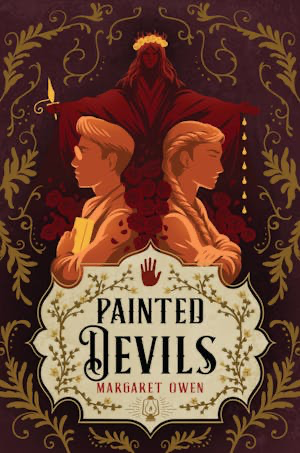
If this month’s 1 star reads are any indication, maybe the word “monster” is the problem…?

1 – 1.75 stars:

Only a Monster

2 – 2.75 stars:

This Is Not a Personal Statement

3 – 3.75 stars:

The Art of Prophecy

4 – 4.75 stars:

The Isles of the Gods

5 stars:

A Thousand Steps into Night

FAVORITE BOOK OF THE MONTH: The Stonewall Reader 5 stars

POSTS I’M PROUD OF:

POSTS BY OTHER WONDERFUL PEOPLE THAT I ENJOYED:

SONGS/ALBUMS I’VE BEEN ENJOYING:

[castanet insanity ensures]
NEW PALEHOUND LET’S GO
Kindred was a disappointment but this cover is great
✨𝙗𝙧𝙚𝙖𝙠𝙖𝙙𝙖𝙬𝙣✨
EXCELLENT album
NEW BLUR OUT IN JULY I AM NOT OKAY I AM NOT OKAY
I don’t know if I’m completely committed to listening to this album all the way through yet but I WILL EVENTUALLY IT’S JUST LONG

Today’s song:

I have not felt peace since this was uploaded to bandcamp on Sunday night

That’s it for this month in blogging! Have a wonderful rest of your day, and take care of yourselves!