
Happy Sunday, bibliophiles! I hope this week has treated you well.
This week: everything’s a David Bowie reference if you’re neurodivergent enough. Plus, the ocean and the taxi are rainy, and you can’t believe or keep anything.
Enjoy this week’s songs!
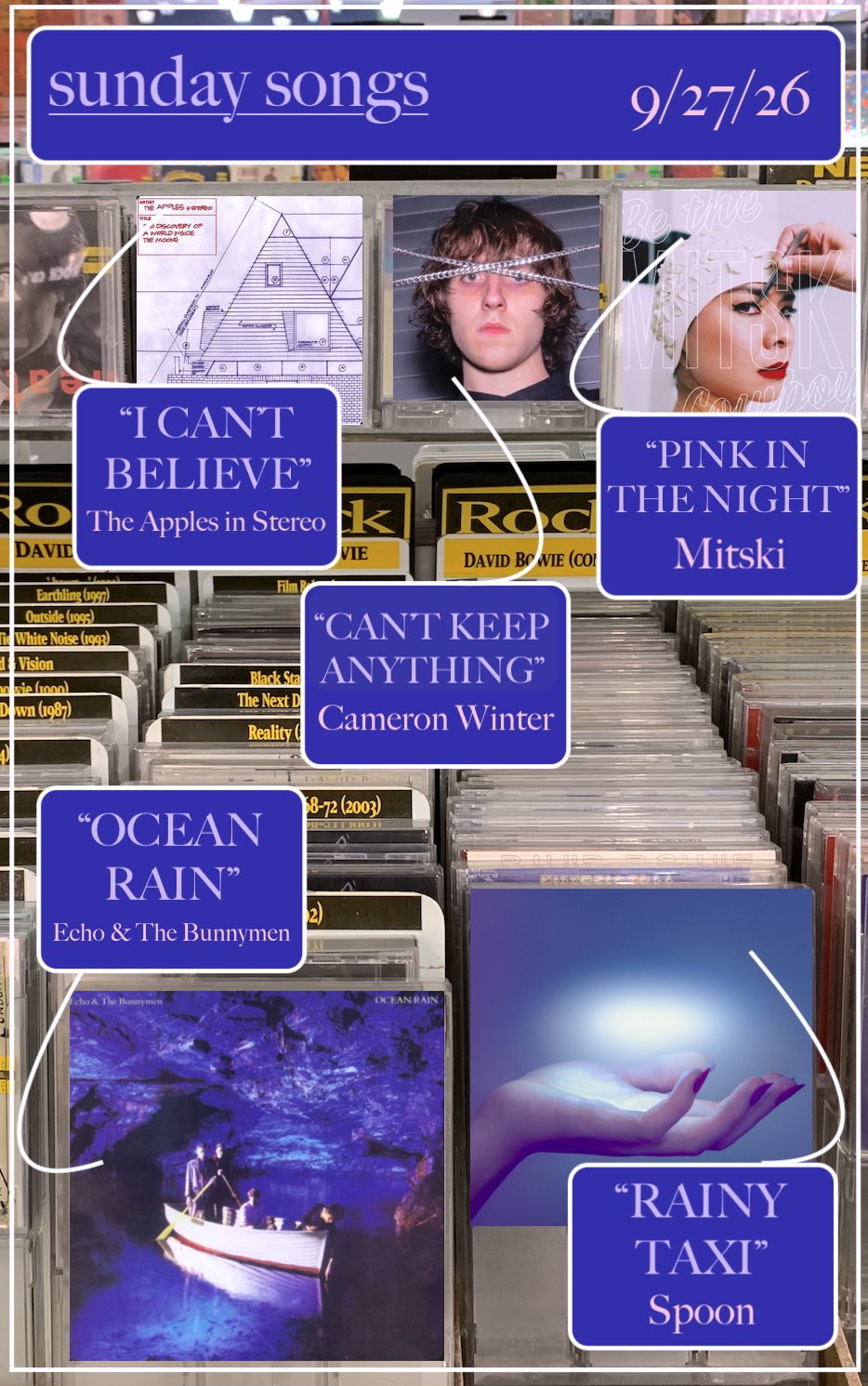
SUNDAY SONGS: 9/27/26
“Ocean Rain” – Echo & The Bunnymen
Ocean Rain’s cover art is suited to the songs on it to an almost scientific degree: gothic and dark, with a canvas of deep indigos and blacks. Whoever made the decision to have the cover (photographed by Brian Griffin) in the Carnglaze Caverns should’ve gotten a raise. All of the tracks I’ve heard from the album (see also: “The Killing Moon,” “Nocturnal Me”…damn, remember when Stranger Things had meaningful and fun needle drops?) have the feel like the grand, orchestral arrangements are pinging off of the dappled light inside of a moonlit cavern.
This is probably kind of silly, considering that I’ve only listened to about half of Ocean Rain, but my hot take is that “Ocean Rain” would’ve been a way better opener than “Silver.” No shade to “Silver” (which has always reminded me of Wii Sports Resort music, weirdly…if Wii Sports Resort was goth), but I think this track lends itself more naturally to that classic, swelling build that more cinematic openers have. Whisper-quiet, “Ocean Rain” tiptoes in before launching into a slow-burn tale of storm-wracked seas—and minds: “All hands on deck at dawn/Sailing to sadder shores/Your port in my heavy storms/Harbors the blackest thoughts.” (I love the double meaning of “harbor” here—harboring thoughts, but then there’s the connection to the ocean/sailing imagery. Peak.) The more Ian McCulloch weaves the lyrics, the more his ocean begins to roil with crushing waves, a cry for help on a raft drifting further and further out to sea. But I doubt that it would be half as impactful without that expertly-timed, cinematic build, from McCulloch’s echoing vocals, almost a cappella, to his wail accompanied by the swells of an orchestra.
…AND A BOOK TO GO WITH IT:
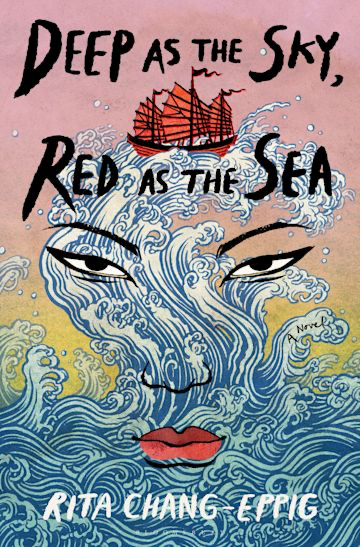
Deep as the Sky, Red as the Sea – Rita Chang-Eppig – “I’m at sea again and now your hurricane/Have brought down this ocean rain/To bathe me again/My ship’s a-sail, can you hear its tender frame?/Screaming from beneath the waves…”
“Rainy Taxi” is a frantic love song for the end times. Amidst the kind of biblical apocalypse besetting the characters, Britt Daniel only has one thing on his mind: “Put on your red shoes; sing it to me, lover-girl/When you do, my love, I forget the world/And if you say ‘run,’ I may run with you/I’ve got nothing else, I’ve got nowhere else.” First off: I can’t not mention the nods to the David Bowie’s “Let’s Dance,” and its placement feels very intentional; in Daniel’s hands, “and if you say ‘run,’ I may run with you” is molded from a declaration of love to a sign to flee the oncoming end of the world and devotion as everything crumbles. The graying minor key and Alex Fischel’s spurts of discordant piano gives “Rainy Taxi” the anxious, precipice feel that at the slightest hint of danger, it’s time to bolt. By the outro, the characters presumably have run for the hills for good. Spoon isn’t a band that I’d usually think of with more sci-fi narratives like this, but their painting of the apocalypse is as good as any prog-rockers or metalheads; their nervy style translates effortlessly into the sky falling.
…AND A BOOK TO GO WITH IT:
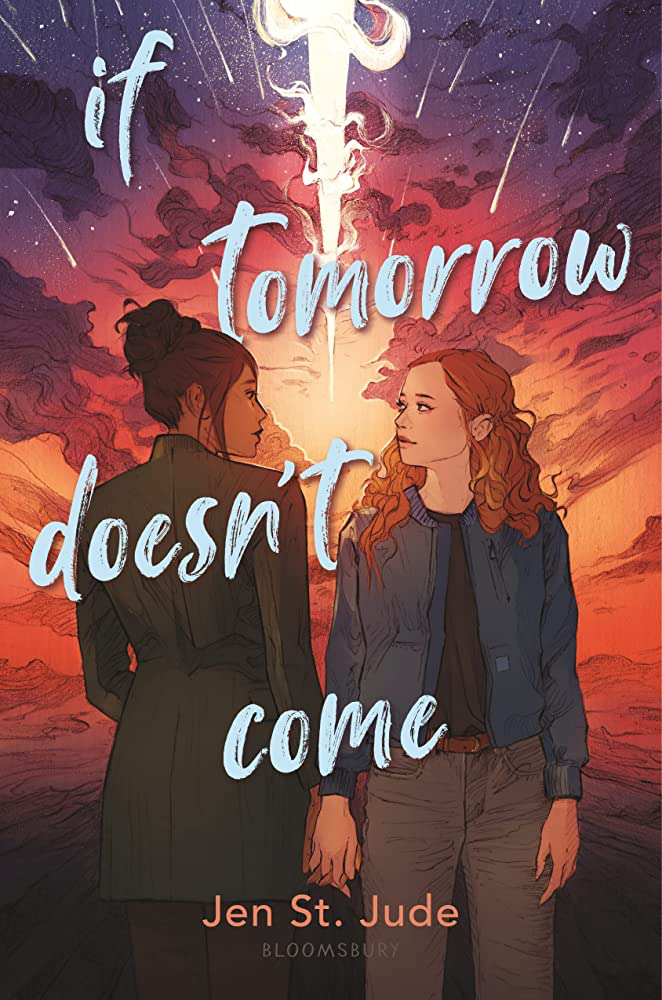
If Tomorrow Doesn’t Come – Jen St. Jude – “I came home last night, I had no good news/And you’ve been sleeping through the brightest flash of apocalyptic ruin/And if you leave, I’ll never sing another tune…”
“I Can’t Believe” – The Apples in Stereo
The Apples in Stereo could rarely write a straight-up love song: there’s always a sci-fi element. Somebody’s a robot, somebody’s in space, et cetera. But that’s why I come back to them anyway—it was never a complaint. I thought that “I Can’t Believe” was one of those rare birds that didn’t include any of those elements until I listened more closely to the lyrics. What first appears to just be a classic case of an absent girlfriend turns into an absent girlfriend who’s also a time traveler: “She told me she came from tomorrow/And from a world far away, man/She told me leaves here this morning/Has she come back yesterday, man?” Yup. Just another Tuesday for Robert Schneider, apparently. It’s so perfect. It’s like the plot of some pulp comic from the ’60s.
And like the strange time loop that the girlfriend seems to be traveling through, “I Can’t Believe” is a song that I keep coming back to, over and over. There’s a timelessness to it, an instant clicking that feels rooted in classic rock elements but retains that signature Elephant 6 quirkiness. Something about the harmonies on the chorus—that repetition of “I can’t believe what she said to me,” before Schneider feinting silence on the last “what”—is so impeccably choreographed. Something really scratches an itch in my brain about the note change and Hilarie Sidney’s harmonies on the last repetition of the chorus before the verse starts again. The spacey synths and the crunched-up guitar riffs—it’s just a perfect pop song with a sci-fi twist, as is the mission of The Apples in Stereo.
…AND A BOOK TO GO WITH IT:
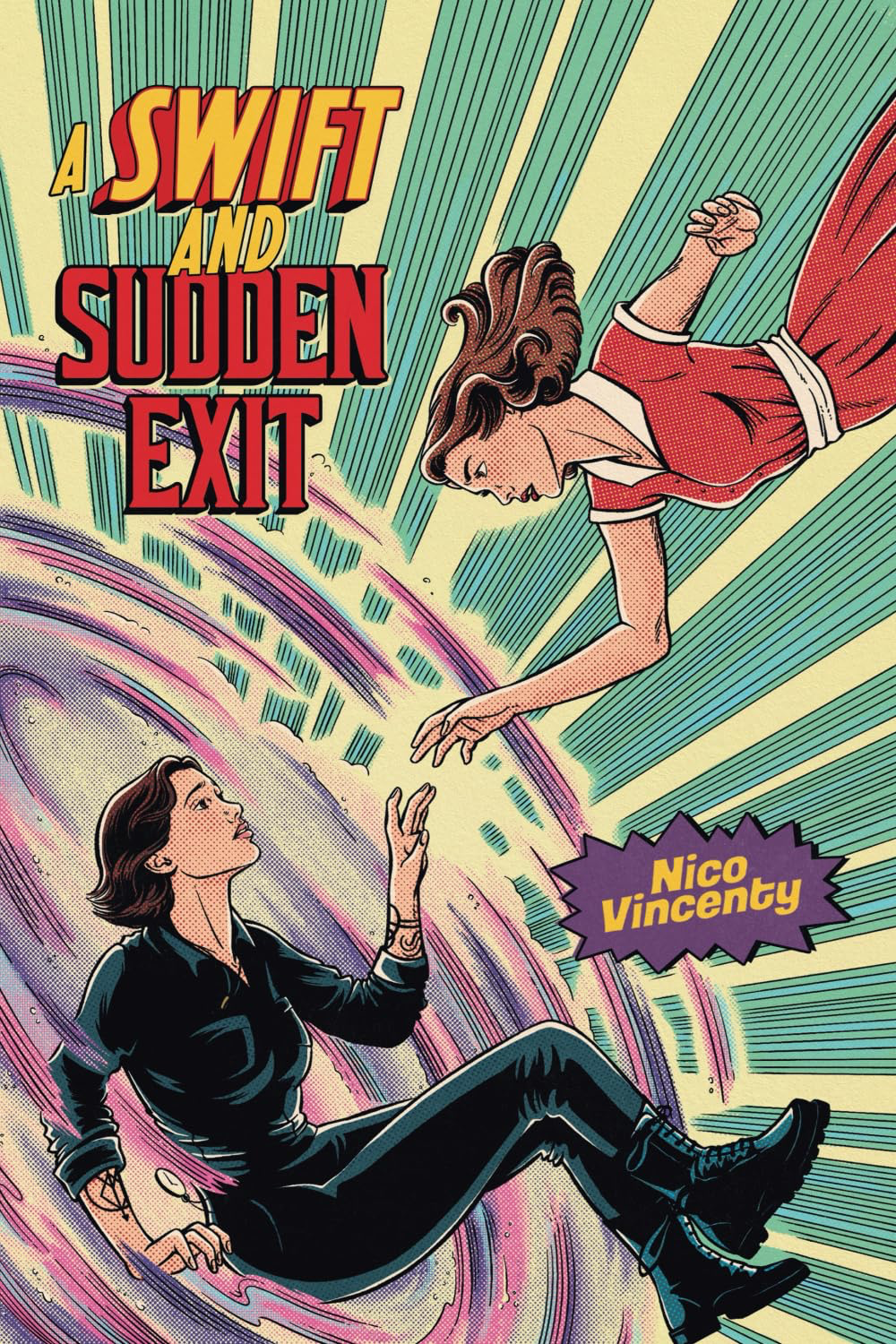
A Swift and Sudden Exit – Nico Vincenty – self-explanatory: time-traveling girlfriend.
“Can’t Keep Anything” – Cameron Winter
Alright, here I go. I feel like that meme of all of the identical Buzz Lightyear action figures in Toy Story, but oh my lord, Heavy Metal is a fantastic album. What people tend to gloss over is that it really isn’t the most palatable listen. The wise-beyond-its-years optimism of “Love Takes Miles” is the outlier. Whoopsies. Some of the songs are downright anxiety-inducing, like you’re standing on the unstable ground of a volcano about to blow its top; you’ll see a truly inspired lyric whizz by your head like shrapnel, but oh god, another piece of the ground just broke off into the lava flow and you’re precariously teetering on the edge. And then you fall down—that’s “$0” for you. After a certain threshold, Heavy Metal is completely untethered, hurtling towards some sort of chaotic, terminal doom, fully aware of its own destruction. It’s like witnessing somebody’s manic episode. I was honestly shaking a bit during that stretch between “Nina + Field of Cops” and “$0,” but thankfully, Cameron Winter finds a way to land the plane.
The best comparison I can make to Heavy Metal is Wilco’s masterpiece, Yankee Hotel Foxtrot. Not that the albums are fully comparable, since Yankee Hotel Foxtrot is easily a top 10 album for me, but Winter has that same spirit of Tweedy in terms of dressing up personal turmoil in intricately noisy compositions, whole worlds contained in three minutes. “Can’t Keep Anything” feels the most Wilco to me in its lyrics. As the closer to the album, it’s no “Reservations” (but what could ever be?), but Tweedy feels alive and well in the beat-up, tired self-reflection: “Walking and walking, you used up your feet…Begging and praying, you used up your knees.” After this pseudo-religious spiral desperately trying to win back affection (romantic? spiritual? artistic? all three?), Winter’s laid down his sword. In the many ways that self-deprecation manifests on Heavy Metal, this feels like the admission of defeat. Love, or whatever it may be, has slipped through his fingers, and this is his final acceptance of it. (I can’t help but thinking that the repetition of “I can’t give everything away” in the outro is a reference to the David Bowie song of the same name...cathedrals for those with eyes to see, etc. etc.). Musically, it’s much more subdued, with the soft plunking of the xylophones seeming to gently usher of Winter into the next stage of his life. It’s a gesture of futility and exhaustion, but also a kind of pledge to himself: he’s wasted all of this time going to inhuman lengths to pursue this something; from now on, there’s no use butchering pieces of himself. For an album that goes to such catastrophic highs and lows, it’s a sad ending, yet it feels like making peace with your mistakes. Whether or not he follows up on it, “I just can’t give everything away” feels like the binding of a pact: it’s over.
…AND A BOOK TO GO WITH IT:
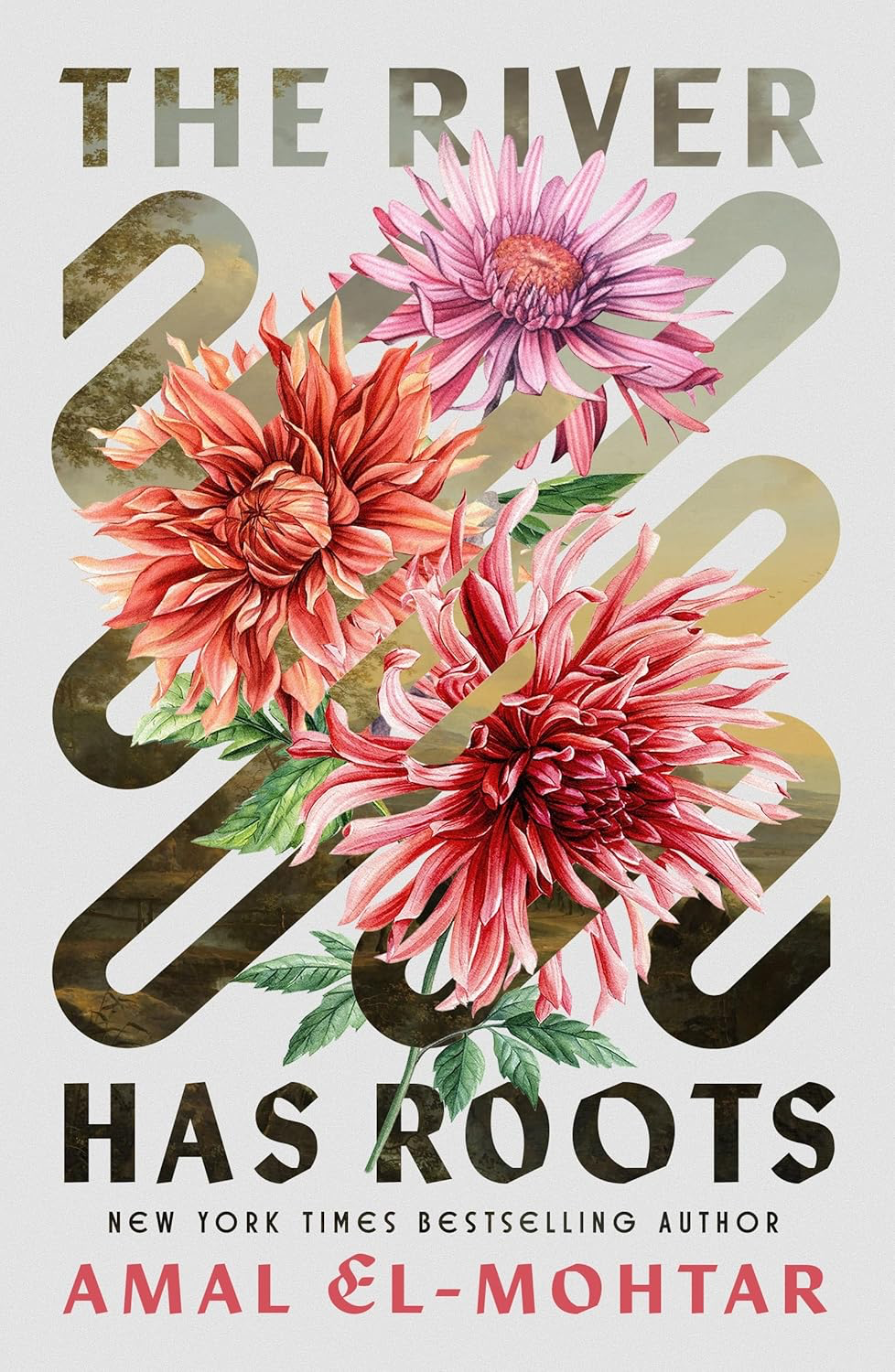
The River Has Roots – Amal El-Mohtar – “I don’t know where I’m going, babe/Wherever it is I’m going, baby/You’re going too/Baby, where I’m going/I can’t keep anything/But I can’t just give everything away…”
“Pink in the Night” really does glow. Everything about the production and instrumentation just glimmers, bathed in reverb and synths that feel like they could dissipate with the slightest breath. Listening to it feels like watching afternoon light illuminate specks of dust until they become stars. Even the persistent kick drum that ushers the song into its ending might as well be the hammering of a lovesick heart against a ribcage. That glowing feeling is so intimately concentrated that it might as well be emanating straight from Mitski’s chest. And that’s exactly where it’s coming from—Mitski described “Pink in the Night” as being centered around “that visual of someone glowing pink because they’re so infatuated,” but that the heartbreak threaded through the first verse “doesn’t have to be a hard, horrible bad thing. It’s just like ‘I’m so infatuated and in love that I feel myself crumbling… but in a good way!'”
Of course, there’s an undercurrent in this track that the love feels one-sided or unrequited, but like too many of Mitski’s songs, they’re automatically pigeonholed as depressing. “Pink in the Night” doesn’t seem to be so, as painful as unrequited love can be. It’s just an overpowering emotion, of falling so head-over-heels in love that you feel weightless, tumbling through space with no trajectory. That infatuation is heady, but that carefree tailspin takes you all the way down, sprinting through summer rain that catches the evening light; it feels like dust turning into stars (or raindrops singing) because that’s how infatuation feels: like the ordinary has somehow become the most cosmic, wondrous thing in the universe.
…AND A BOOK TO GO WITH IT:
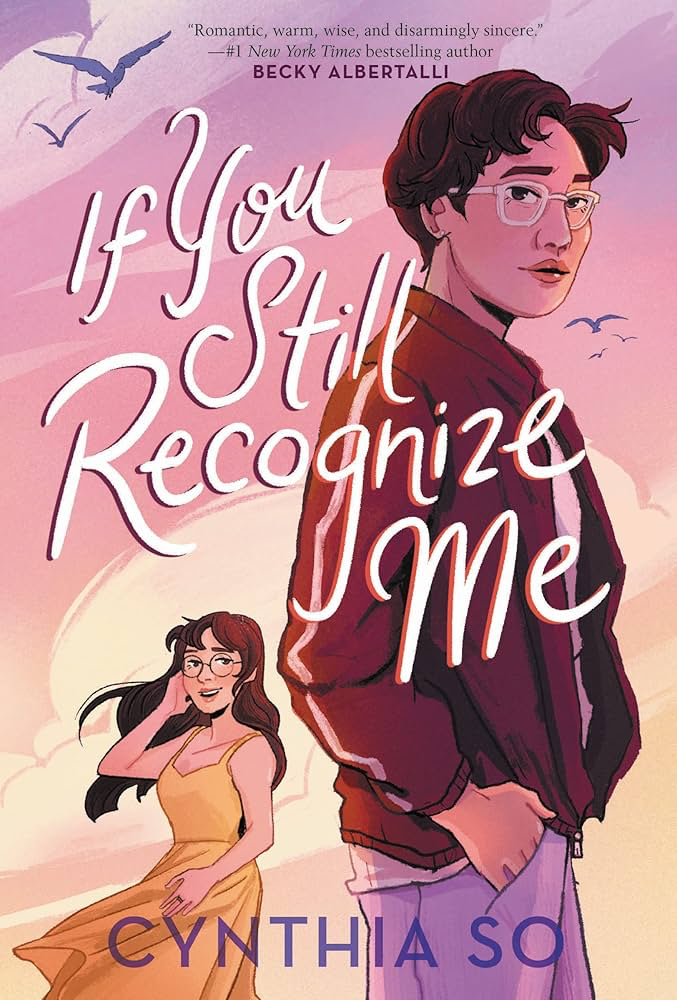
If You Still Recognize Me – Cynthia So – “I glow pink in the night in my room/I’ve been blossoming alone over you/And I hear my heart breaking tonight…”
Since this post consists entirely of songs, consider all of them to be today’s song.
That’s it for this week’s songs! Have a wonderful rest of your day, and take care of yourselves!