Posted in Book Review Tuesday

Book Review Tuesday (12/16/25) – Katabasis

Happy Tuesday, bibliophiles!

I’ve been a fan of R.F. Kuang’s work for years (though I’ve steered away from the Poppy War trilogy, given how many people I know have been emotionally eviscerated in its wake). As bored as I am with dark academia, if there’s anybody I trust with the genre, it’s Kuang—and for the most part, her latest venture into the bowels of academia (and Hell itself) was an adventurous success!

Enjoy this week’s review!

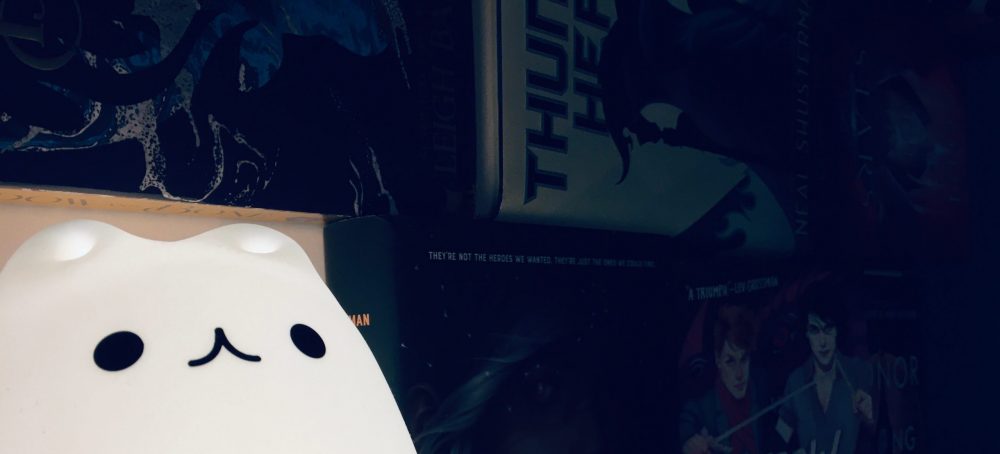
Katabasis – R.F. Kuang

Professor Grimes is going to Hell, and it’s all Alice Law’s fault.

After a backfired spell sends their advisor to an early grave, two rival Cambridge grad students find a way to enter Hell to bring back Professor Grimes. Braving all manner of demonic horrors beyond their wildest nightmares, Alice Law and Peter Murdoch have agreed to risk it all for their beloved professor. Yet the further they travel through Hell, they must come to grips with the man Professor Grimes was—and if the man they idolized was really worth going to Hell for.

TW/CW: violence, gore, loss of loved ones, sexual assault/harassment, suicidal ideation/suicide, ableism

There’s really nobody doing it like R.F. Kuang. She isn’t my favorite author of all time, but nonetheless, I don’t think I’ll ever find another fantasy book that has both spooky scary skeletons sending shivers up my spine AND a well-placed dig at Jacques Derrida. That’s how it’s done.

Right after it was released, Katabasis seems to have made a major splash in the book community (namely BookTok)—partly because Kuang’s next novel was bound to be highly anticipated, but partly because it sparked some debate about anti-intellectualism. But compared to something like Babel, which is practically footnotes upon footnotes, I feel like this…isn’t that bad? Sure, it’s very esoteric, but most everything is so easily searchable online? Or in the library? Granted, I understood a fair amount of this solely because I took a literary theory course for my English degree, but even then…just google what you don’t know! And maybe you’ll learn something fun! I don’t know how one would go into an R.F. Kuang book and not expect something academically-minded, but maybe this is just the people who were only used to the strictly realistic fiction of Yellowface? Who knows.

Either way, the academic aspect of Katabasis was such a fun element for me. Whether or not that’s because I’m so hopelessly English-majoring it out here, but I loved all of the subtle nods to world mythologies and literature. (The bit about postmodern and poststructuralist magic cracked me UP. Poststructuralism slander healed my soul. Thanks, literary theory.) But ultimately, I loved what Kuang said about academia; there’s the satirical part that it can be Hell, but also that it demands an inhumanity of you that is systemically supported and produces such spectacular burnout. Being the genius that people like Grimes wanted required students like Alice and Peter to relinquish their humanity in pursuit of knowledge and prestige, and that’s something that you shouldn’t have to sacrifice to get what you want. Given Kuang’s accolades and track record, I’m sure she’s experienced this firsthand, but it was a potent statement on the pressure that’s put on students, especially in the Ivy Leagues and other prestigious institutions, magical or not.

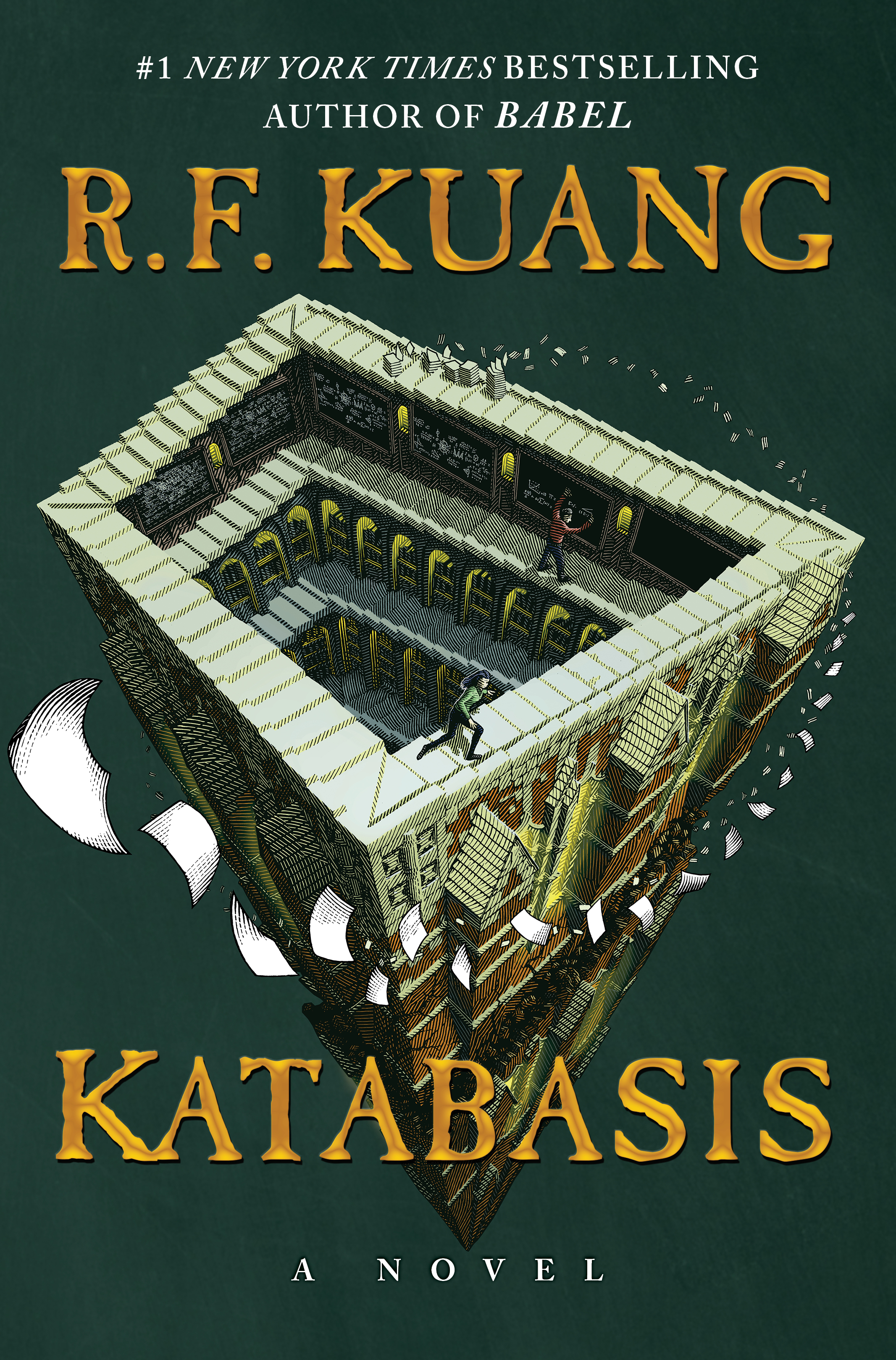
Katabasis had a wild version of Hell, and so much of the fun of the book was exploring it. Granted, it is rather all over the place, but I feel like it emphasizes Kuang’s initial rule of Hell: there are no rules in Hell. There’s the parts that are just Cambridge but in Hell, carnivorous hordes of Tim Burton-esque skeletons, deities from all kinds of mythologies, and one very lucky cat. (Shoutout to Archimedes, I’m glad he survived!) Entire sections of Hell are made out of M.C. Escher’s structures, there’s impossible shapes everywhere, and all of it serves to make Alice and Peter get as close to snapping as possible—exactly what you’d expect from Hell. Tonally, it was also kind of all over the place; some of it was genuinely horrific, while other parts bordered on Beetlejuice-esque camp. But all of these disparate elements made sense as a sort of archive of all possible Hells; it’s a very academic Hell, but beyond that, it seems like an exercise in writing that Kuang had tons of fun writing. That passion poured off every page!

Alice and Peter’s relationship formed the core of the novel, and I loved following them as characters. They made such an odd couple of rivals to friends to…something more, I’d imagine, and their personalities bounced so well off of each other. The perspectives that both of them brought to Kuang’s satire of academia—Alice’s struggles as a woman of color and Peter’s as a chronically ill person—really hammered the commentary home. My main criticism of Katabasis has to do with the 75% mark (more on that later), but I feel like part of why it felt so off-balance for me was that Peter wasn’t there. Alice was a compelling character on her own, but Katabasis leaned so much on their shared dynamic, the scholarly banter they bounced off of each other and the warring struggles that eventually coalesced as they realized their dual mistake in idolizing Grimes. They had such effortless chemistry both as rivals and friends, making them easy to root for.

Of course, when you’ve created a Hell this dizzyingly intricate and complex, you’re bound to get lost. Alice and Peter did, and so did Kuang herself. There’s a point at the 75% mark where the plot, along with the characters, gets hopelessly lost. By this point, we’ve moved on past “we’re here to get Grimes,” but it seems like none of the detours served the novel in any way. The real kicker is that this part of Hell isn’t even that new or interesting—it’s even more academic commentary, which, while I liked it at first, was just repetitive and regurgitated the same satire about academia that Kuang had already talked about in the first third of the book. I’m all for taking detours to explore an unknown realm, but this one didn’t even feel new at all. My edition of Katabasis is around 540 pages, mind you, so it’s not like cutting too much of this would’ve made it too short. I feel like not every little thing about a novel directly needs to serve the plot, but I feel like it should at least develop the characters or show us something new, and this part of Katabasis did none of those things. Thank goodness we were whisked out of Hell soon after that.

All in all, an inventive and satirical journey into the depths of Hell—which, as it turns out, looks an awful lot like Cambridge. 4 stars!

Katabasis is a standalone, but R.F. Kuang is the author of several other fantasy and fiction novels, including Yellowface, Babel, and the Poppy War trilogy (The Poppy War, The Dragon Republic, and The Burning God).

Today’s song:

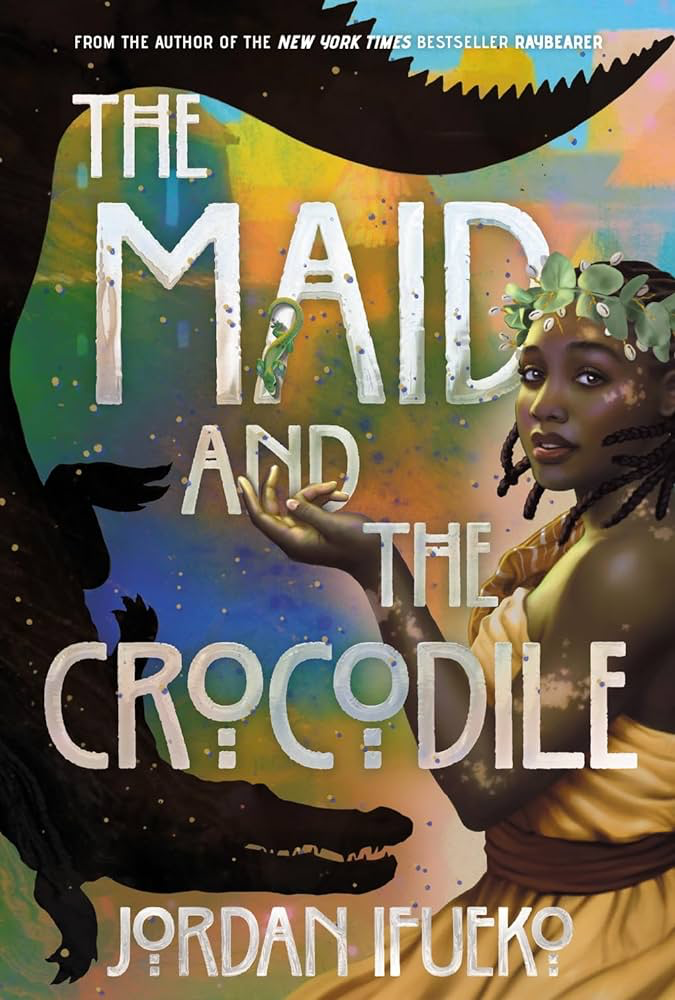
I just need everybody to know that this cover exists. That’s it.

That’s it for this week’s Book Review Tuesday! Have a wonderful rest of your day, and take care of yourselves!

Posted in Book Review Tuesday

Book Review Tuesday (11/25/25) – Mad Sisters of Esi

Happy Tuesday, bibliophiles!

Guess who’s back…for only a week, probably. We’ll see. My college is on this maddening schedule that only gives us one (1) week after Thanksgiving Break and then it’s straight into finals, so I’ve been grinding for most of November. But now I’m on break, thank goodness!

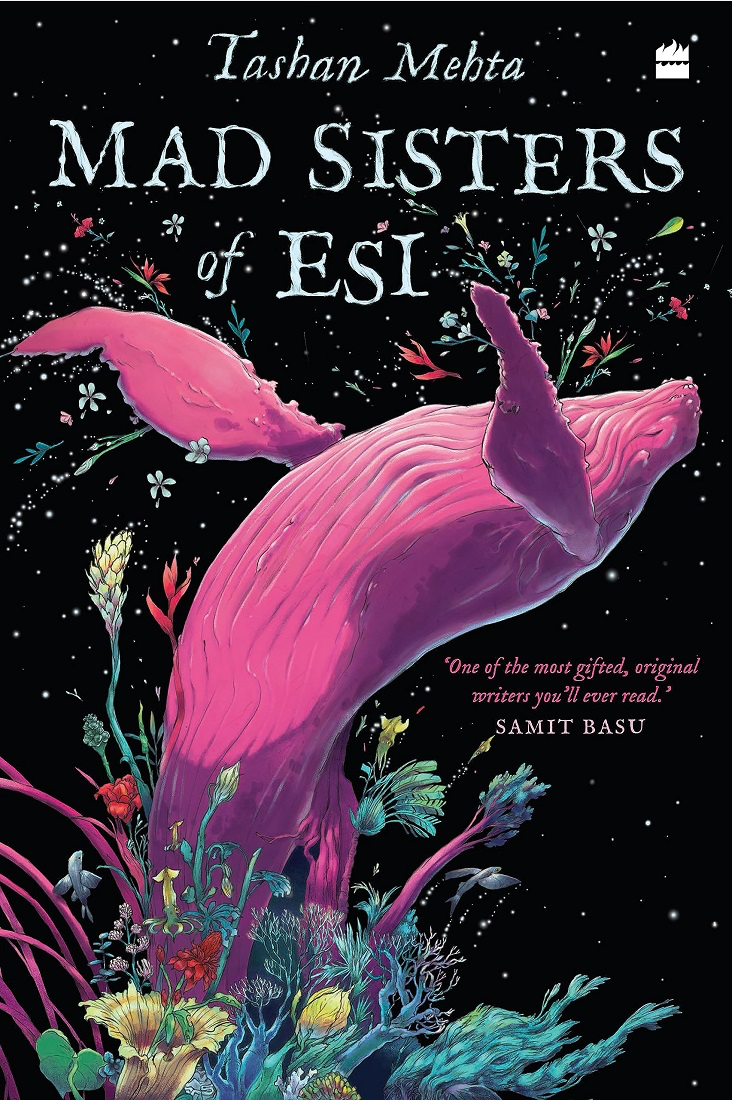
I found out about Mad Sisters of Esi while doing a research paper on the history of science fiction in India. It sounded intriguing—who doesn’t love an incomprehensibly large cosmic whale, after all? I’m not usually one for fantasy (citation needed) novels that are this dense and self-referential, but there was so much passion poured into every word that I couldn’t help but be dragged along for the bizarre ride.

Enjoy this week’s review!

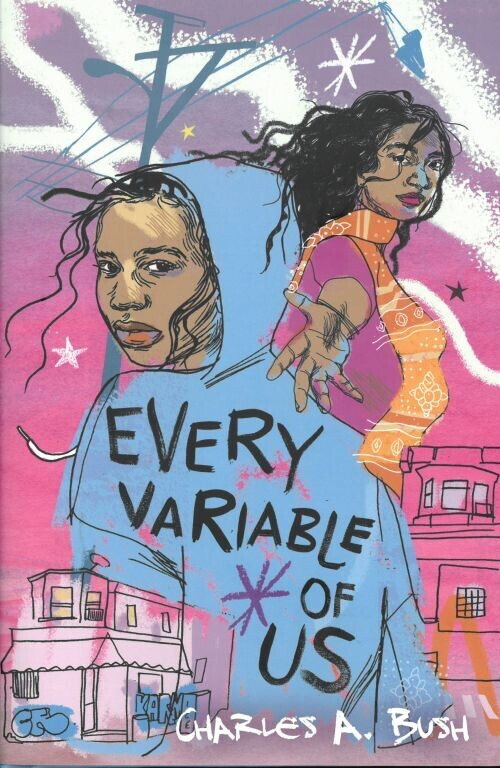
Mad Sisters of Esi – Tashan Mehta

Myung and Laleh are inseparable sisters living inside the Whale of Babel, a whale the size of a galaxy, large enough to contain planets in the folds of its body. They have never known life outside of the Whale, save for the Great Wisa, their distant, unknown creator. Laleh is content to explore the endless lands inside the Whale’s body, but Myung yearns for something more. Her journey takes her to the far edges of the universe, but so far that she cannot find her way back to her only home. As Myung and Laleh attempt to find their way back to each other, they ponder the stories that got them to where they were, and if stories themselves can bring them back together.

TW/CW: loss of loved ones, grief, abandonment

If you’re wondering how I’ve been lately, I’m apparently saturating myself with “[]ad Sisters” media. Mad Sisters of Esi? Bad Sisters? What am I doing here? What’s going on with all these sisters?

I’m glad that this trend doesn’t have a name, but I love the trend of recent genre fiction coming to conclusion that “maybe [x] was the friends we made along the way” can actually be a very powerful message. Maybe storytelling was the friends we made along the way. God. What a book.

I was captivated by the premise of Mad Sisters of Esi, but I could have easily not been. It falls into those fantasy books that verge more on the literary side that are very self-serious about been multilayered, dense, and Deep with a capital D. Not that there’s anything wrong with it, but toeing the line between a story that’s actually meaningful and a book that’s 500+ pages of needlessly convoluted, pretentious nonsense that only serves as a monument for how supposedly complex of a plot the author could dish up. The latter are often all style and no substance, but the real frustrating part is that they’re so convinced of their substance that it deadens any meaning that it could’ve had. (See my review of The Spear Cuts Through Water. At least Simon Jimenez has other good books. Go read The Vanished Birds instead of that one.) It’s just a literary version of “look, Ma, no hands!” that rarely results in anything really substantive.

My main criticism of Mad Sisters of Esi is that it does stray into that territory sometimes. It never fully went over the edge for me, but there were moments were it got too convoluted for both my taste and the service of the narrative. Most of it was complex, but not needlessly so, but at a certain point, parts of it got dizzying. I definitely didn’t get everything about this book, and I feel like it’s almost the point. For me, what separates the two kinds of fantasy novel that I just described is…well, love. I could tell right away that Mehta didn’t write Mad Sisters of Esi to show off how complicated of a narrative that she could write—there’s a story, a tangible message, and a thrum of passion that spills through in every page. With every fictional academic article and magical town, I knew that Mehta’s world was born of love. Which, given the nature of this book’s themes, is exactly what it should have been. It’s a novel that’s all about love, storytelling, and the act of creation, and Mehta’s writing felt more than faithful to that premise.

Mad Sisters of Esi is full of meta commentary on the nature of storytelling. I’ll get more into that aspect later, but part of what sold those thematic elements was Mehta’s prose itself. Mehta is clearly someone who has studied her fair share of fairytales. Mad Sisters of Esi doesn’t just feel like a fairy tale in terms of the plot—Mehta’s prose has the same enchanting quality of a timeless fairy tale. The narrator bobs in and out, always with a cryptic lesson. The lush world is rendered in the most magical, wondrous detail. All of the descriptions surrounding Myung and Laleh make them sound like classic protagonists in an ancient tale. It was all very self-aware, but in a way that made the story feel fuller—and drew me in page by page. With Mehta’s strong hand, every location that Myung visited was bursting with bizarre, fantastical life—I was hooked on nearly every aspect.

If this novel has made me realize anything, it’s that we don’t have nearly enough cosmic whales in literature. We need more of them, frankly. Or maybe not—I’m torn on whether or not we should gatekeep them so they don’t get tired. I doubt they would, though. Either way, you can’t just promise a galaxy-sized whale full of planets and two sisters that live inside it and not deliver on that premise. Thankfully, Mehta did in spades. The world of Mad Sisters of Esi was a sight to behold. Every minute detail was somehow nonsensical and yet made perfect sense. It all felt very trippy and whimsical, and above all, so vibrant. I loved every quirk in every location that Myung visited in the vast universe; I’ve seen reviews compare it to The Phantom Tollbooth, and honestly, I have to agree—it has that same absurd, dreamlike quality more often than not. Beyond that, I love the integration of the academic articles and research papers about all of the bizarre events and people within this novel—it added such a fun layer of worldbuilding that made it all feel more grounded and real—as much as it could be, with all of the out-of-this-world (no pun intended) stuff that was going on.

With all of the emphasis on madness, I was really hoping there wasn’t going to be yet another story about art being all about suffering. From how incredible the first few chapters were, I was hopeful. But with everything about madness, madness, madness…doubt crept into my mind, for sure. I’m not confident that I fully got what Mehta intended, but I feel like this is what I took away from it. There is a little madness in every creation, even if you’re not actively suffering—how do you create a massive cosmic whale and not go a little crazy? Yet she emphasizes that even if you pour your all into your creation, that you run the risk of losing yourself, and that’s when your creation goes wrong. Mehta’s madness isn’t the suffering kind of madness—it’s about the passion. It’s about throwing all of your love into the act of creating, just so that the world is a little brighter and less boring than it was before, and to give your love a physical form. The reason that Myung is so lost out in the universe is that she strays from something that was created with nothing but love. That’s my two cents (is that expression even relevant anymore now that we don’t have pennies?), especially given how the novel concluded. That’s why the passion I felt from every page felt authentic—the passion is what it’s about, to love what you create and not destroy yourself in the process, because you too are made of love.

All in all, a dazzling and surreal space fantasy full of love, sisterhood, and whales. 4.5 stars!

Mad Sisters of Esi is a standalone, but Tashan Mehta is also the author of the novella The Liar’s Weave, and has contributed to several anthologies, including Magical Women, Solarpunk Creatures, and The Gollancz Book of South Asian Science Fiction, Vol. 2.

Today’s song:

That’s it for this week’s Book Review Tuesday! Have a wonderful rest of your day, and take care of yourselves!
Posted in Book Review Tuesday

Book Review Tuesday (10/28/25) – Red City

Happy Tuesday, bibliophiles!

It’s safe to say that I’ve grown up with Marie Lu in my formative years. Sure, her quality has wavered on occasion, but she’s been such a consistently talented writer and a consistent presence in my life since I was about 13 or 14. When I heard she was writing her first adult book, I was over the moon—and I’m glad to say that I devoured Red City just like I devoured her other books as a pre-teen.

Enjoy this week’s review!

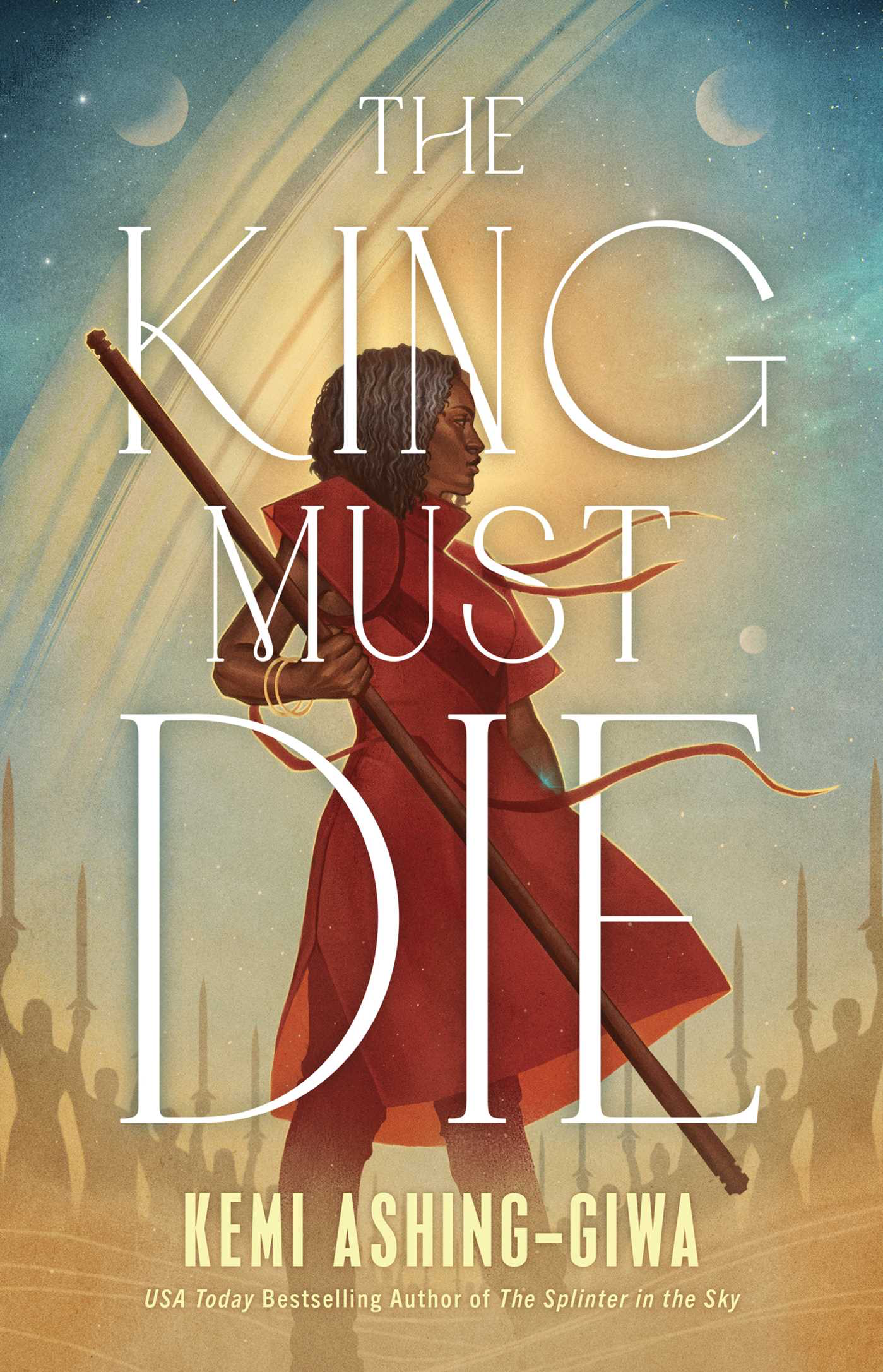
Red City (The New Alchemists, #1) – Marie Lu

In Angel City, Alchemy is the backbone of the wealthy. Those who are knowledgeable in the art of alchemical transformation can perform acts once thought impossible, both through the study of magic and the consumption of sand, a drug that makes the user more perfect—at a deadly price. For Sam and Ari, childhood friends caught on the opposite sides of the criminal syndicates of Angel City, this price is one that will bring them everything that they ever wished for. But will the rift deepening between them ever be breached—and what is the price of the enmity they’ve sown between each other in their quests for power?

TW/CW: substance abuse (fantasy), torture, violence, sexual content, loss of loved ones, child abuse

Marie Lu slipping in a reference to Nannerl Mozart whenever it’s humanly possible:

I’ve been on the Marie Lu train beginning with Warcross all the way back when I was 13 or 14, and I’ve been hooked ever since. Has she had her lower points? Sure, but it’s overshadowed by her consistency overall. Even her weaker books have still been loads of fun. It feels like a wonderful, full circle moment to be reading her adult debut now, here in my twenties and nearly finished with college. Thankfully, it did not disappoint.

First off, I think Lu’s really onto something with this alchemy-based magic system…I’m fully invested in this world! A lot of what I know about alchemy (chiefly from my amazing dad, who’s taught whole classes about this—shoutout to him!) is all about transformation—not just with the kind of alchemy that was done in ancient times with physical objects and elements, but of self-transformation, whether to reach a lofty goal of immortality or of general spiritual betterment or being closer to the divine. In Red City, the premise hinges around this quality of alchemy being perverted; you can physically perform transformation-based magic of several types, but the alchemical transformation is aided by a drug called sand. Of course, in the hands of criminal syndicates around the world, it becomes a tool to become more “perfect.” Leave it to the mafia to ruin alchemy. (New elevator pitch for Red City just dropped?)

On that subject, I really like that use of alchemy as a way to critique our societal concept of perfection. Self-transformation can be an incredibly powerful thing, when you’re putting in the work to become a better, kinder, smarter, etc. person. But when the urge to become perfect consumes you to the point of becoming a shell of your former self, it eats you up from the inside. Sam and Ari both fall prey to this, and it destroys them both. Lu always has a knack for using her fantasy and sci-fi worlds to critique parts of society, whether it was the examination of otherness and marginalization in The Young Elites or the sidelining of women’s stories in The Kingdom of Back. Using the negative potentials of transformational, alchemy-based magic to critique our society’s tendency to glamorize a destructive kind of false perfection.

So of course, by virtue of this story being about wealthy people doing horrible things to stay perfect and powerful, of course it’s set in Los Angeles. (Cue “Los Ageless” by St. Vincent. There ya go, past Madeline.) Well, not really Los Angeles. This is an alternate world that Red City is set in, and the scene is set in Angel City. But Lu took such great pains to make the worldbuilding as airtight as possible, which I thoroughly enjoyed! I expected nothing less from her, honestly, given her track record. Peppered with everything from fictional textbooks to congressional testimonies to FDA announcements, Lu left no stone unturned when it came to finding out how alchemy magic would affect the world. Even with the real-world basis to go off of, it seemed effortless for her to integrate alchemy and have the world still feel so real. I was immersed from page one, and there wasn’t a hole to be found throughout.

Making the jump from YA to Adult is harder than a lot of authors make it seem, but Marie Lu did it with ease with Red City! I feel like a lot of authors make the switch not considering how different the characters’ voices and choices will be, even with an age difference of only 5-10 years from the teenagers were once writing. I’ve read quite a few adult books from normally YA authors where the protagonists still read like teenagers. Lu made it look easy. It’s much more mature for sure, but never strays into edgelord torturefest territory either just to seem more “adult”; the violence, complexity, and sexual content are dialed up, but in a way that felt realistic for the characters, their circumstances, and the stakes. (And for the record, the way she wrote sex scenes was effortless and never got cringy, thank goodness! If I remember correctly, The Midnight Star got pretty steamy in some places, so I’m not surprised, but it’s worth commending.)

As always, Marie Lu’s characters are the star of the show in Red City. Man, she can craft such compelling characters! She just keeps winning!! Sam and Ari were both unlikable in some capacity, but they felt like tragic heroes to me. They were both doomed from the start (and I’m assuming they’ll get even more doomed as the series goes on…yippee!), but Lu wove them both like tapestries, and their stories hooked me from the start. My only nitpick is that Sam seemed to get disproportionately more development than Ari, but I’m assuming that’s what the mysterious book 2 is setting up. What we have now is excellent—Sam and Ari were both such compelling, tragic protagonists, and the way that their quests for power, recognition, and perfection tore them apart was nothing short of breathtaking. MARIE LU HAS DONE IT AGAIN!

All in all, a dark and dazzling addition to Marie Lu’s expansive fantasy canon that you won’t want to miss. 4.25 stars!

Red City is the first novel in the New Alchemists series, though no information has been released about its sequels or how long the series will be. Lu is also the author of many series for young adults, including the Legend series (Legend, Prodigy, Champion, and Rebel), the Warcross duology (Warcross and Wildcard), the Young Elites trilogy (The Young Elites, The Rose Society, and The Midnight Star), the Skyhunter duology (Skyhunter and Steelstriker), the Stars & Smoke duology (Stars & Smoke and Icon & Inferno), the standalone novel The Kingdom of Back, and the DC Comics tie-in Batman: Nightwalker.

Today’s song:

That’s it for this week’s Book Review Tuesday! Have a wonderful rest of your day, and take care of yourselves!
Posted in Book Review Tuesday

Book Review Tuesday (10/14/25) – Scout’s Honor

Happy Tuesday, bibliophiles!

To close out Latine Heritage Month, here’s a novel from an author I haven’t read in years! I’d totally forgotten about Lily Anderson since high school. I remember liking Undead Girl Gang a lot when I was younger, so I figured I might give her (somewhat) newer novel a chance. Scout’s Honor is a novel that leans into both the adventurous and the sensitive, a tale of sisterhood, coming of age, and carnivorous interdimensional monsters.

Enjoy this week’s review!

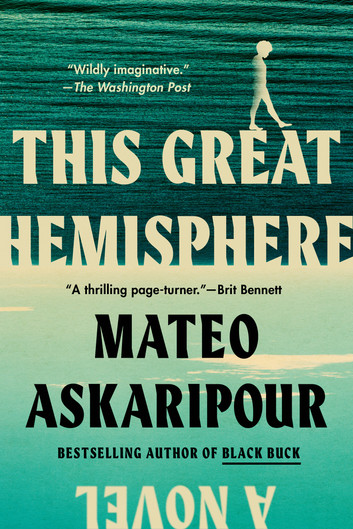
Scout’s Honor – Lily Anderson

Prue wants nothing to do with her family legacy. A third-generation Ladybird Scout, she is part of an elite circle of women trained to hunt Mulligrubs, interdimensional beasts who feed off of the emotions of humans—and sometimes their flesh, when they get hungry enough. After her friend was killed in a deadly Mulligrub attack, Prue swore off the Ladybird Scouts for good. But when a new crisis pulls her back into the fray, Prue must decide if her legacy is worth preserving—or if she needs to go her own way.

TW/CW: PTSD themes, panic attacks, violence, gore, loss of a loved one

Maybe the real Root is the friends we made along the way, amirite?

Though I can’t speak to the accuracy of the representation (Prue has PTSD), Scout’s Honor had such a deeply sensitive depiction of trauma. If the acknowledgements are anything to go by, Anderson drew a hefty amount of it from personal experience, and that authenticity shone through emotionally on the page. Narratively, you’re only fed breadcrumbs of Prue’s trauma (until you aren’t), but I feel like it mirrored Prue’s difficulties with confronting her past. There’s a lot of detail afforded to how she experiences panic attacks and how her trauma has manifested in the three years since her trauma began. Beyond that, Prue had such a poignant arc, and so much of it revolved around her trauma; the entire reason she returns to the site of her trauma is to find a way to forget it (to physically remove her ability to See the Mulligrubs via a special tea), and yet it shows her that no matter what, she can never forget the past: the only way to truly heal is not to easily overcome it, but to face it. It was such a poignant take on trauma and healing, so kudos to Anderson for that!

I also loved how Scout’s Honor tackled its themes of sisterhood! In an organization like the Ladybird Scouts, where a value like sisterhood is prized above all else, it’s bound to be perverted; any value put on that high of a pedestal is bound to be used for ill intent, which it often is in this novel—case in point with Faithlynn. But I loved how Anderson talked about what sisterhood really is—uplifting difference yet embracing commonality, and truly helping each other when we’re down. There’s Faithlynn’s sisterhood, which is just a word she can toss around while putting down the other girls around her, and there’s Prue’s sisterhood, who accepts the less conventional Ladybird Scouts like Sasha and Avi into the fold and celebrates their individual strengths in order to solve the problems throughout the novel. It’s a heartwarming exploration of the topic and a lovely depiction of how it can so easily be twisted—and an indictment of any woman whose path to success is only built on putting other women down (and in the path of danger).

For the most part, the world of Scout’s Honor was a treat! Though the worldbuilding wasn’t anything groundbreaking, there was so much surrounding the lore and the structure of the Ladybird Scouts that I loved dissecting and exploring. Anderson really nailed all of the idiosyncrasies and minute rules of this organization, from their front in the real world to the work they did behind closed doors. Anderson truly nailed the feeling of being a part of a tight-knit, insular community sworn to secrecy—there were so many laws and bylaws that had to be dodged, almost as much as the Mulligrubs, throughout the novel. Although I enjoyed the classifications of all the different Mulligrubs, I would have liked some more explanation as to how they came to Earth in the first place, and exactly what kind of dimension we’re talking about when Anderson calls them “interdimensional,” but that’s more of a me thing—the novel doesn’t necessarily need it since the worldbuilding of the primary location is already well-established.

My main issue with Scout’s Honor, however, lay in the pacing. Despite most of the emotional sections of the novel landing appropriately, Anderson didn’t seem to know how much time to allocate to certain scenes, which ended up making the pacing quite lopsided. Until the climax, it also lessened the stakes quite a bit; even though the mulligrubs are a very real threat in this universe, almost all of the battle scenes were over in what felt like the blink of an eye. If not for Prue’s trauma surrounding them, I wouldn’t have felt the tangible threat of them at all—aside from the aftermath, the characters seemed to deal with the Mulligrubs, no matter the size or strength, like that. On the flip side, although I love some character building, there were long stretches when not a ton happened, and hardly any of it serviced the plot or character development—there were just long stretches of banter that didn’t show anything that hadn’t already been established. Anderson is a strong writer for the most part, but the pacing dragged Scout’s Honor down for sure. It was really the only thing keeping me from rating it the full 4 stars.

All in all, a novel brimming with heart and heinous monsters, let down by pacing but lifted up by its depictions of trauma and sisterhood. 3.75 stars, rounded up to 4!

Scout’s Honor is a standalone, but Lily Anderson is also the author of The Only Thing Worse Than Me is You series (The Only Thing Worse Than Me is You and Not Now, Not Ever), Undead Girl Gang, The Throwback List, Killer House Party, and several other novels for teens and adults. She has also contributed to the YA anthologies The (Other) F Word: A Celebration of the Fat and Fierce, That Way Madness Lies: 15 of Shakespeare’s Most Notable Works Reimagined and All Signs Point to Yes.

Today’s song:

been unhealthily obsessed w this for the past few days…

That’s it for this week’s Book Review Tuesday! Have a wonderful rest of your day, and take care of yourselves!
Posted in Book Review Tuesday

Book Review Tuesday (10/7/25) – The Volcano Daughters

Happy Tuesday, bibliophiles!

Continuing with Latine Heritage Month, here’s a novel that came on my radar last year when it was released. Literary fiction isn’t my go-to, but I do love some magical realism sprinkled in, so I was interested. What resulted was something deeply impacting. The Volcano Daughters pulls no punches, and yet cares so deeply for its protagonists—and for everyone whose voice is silenced.

Enjoy this week’s review!

The Volcano Daughters – Gina María Balibrera

Graciela grew up in El Salvador, among their family of Indigenous women. But when the cronies of a rising dictator steal her away to be his oracle, she’s torn away from everything she knows and loves. In the dictator’s palace, she meets Consuelo, her stolen sister who is also indentured in the palace, made to sit by as the government dabbles in faulty magic and formulates a plan to commit genocide on her Indigenous community. Now young women, Consuelo and Graciela free for their lives, both thinking the other dead.

Darting between America and France, Consuelo and Graciela fight to forge new lives for themselves. But can they ever leave the past behind—or each other?

TW/CW: rape, genocide, colonialism/imperialism themes, racism, misogyny, miscarriage, violence, murder, deportation/kidnapping

My main gripe with literary fiction at large is that it’s a breeding ground for novels that are unrealistically miserable in the thought that misery and depression automatically make it “deep.” I’ve read enough of said books and been in fiction workshops long enough that just the thought of sadness being equated to depth makes me want to throw up in my mouth. Is The Volcano Daughters a sad, literary novel? Yes. And yet the sadness is there to tell a powerful story, not just to sell. It’s the story of silenced women, but also a story of resilience and sisterhood and so much more. It’s what literary fiction should be.

After this novel, I’m sure I’ll read more from Gina María Balibrera, but…god, in the right headspace, for sure. The Volcano Daughters is a heavy novel, and for good reason. I didn’t put these trigger warnings there lightly. But Balibrera’s prose is seriously something to behold. Just as Consuelo and Graciela view the world through the lens of artists, so too does Balibrera. Every detail is truly luscious; the many places that The Volcano Daughters travels through are realized in such vivid detail that I swear I could almost smell the air. No stone is unturned, and no metaphor is treated lightly—Balibrera puts even the most minor details under a microscope and crafts them into the most lush language, almost bordering on poetry in the more metaphorical moments.

There’s something so special about the way that Balibrera treats Consuelo and Graciela as characters. I hesitate to call them fully tragic characters, but their lives are largely dictated by one tragedy after another. Yet no matter what happened to them, I always sensed that Balibrera would have something waiting for them at the end. It wasn’t an ending that was tied up with a nice bow, but it was a speckle of hope on the horizon. They were still suffering, but their justice was just out of reach, but still visible. Had she gone too far in one direction, it would’ve felt like needless plot armor, especially in the climate(s) that Consuelo and Graciela lived in; too far in the other, and it would’ve strayed into trauma porn territory. Balibrera treats her characters in the most realistic and yet the most caring way; though they have endured so much and have so much more to endure, she makes you cling to that sliver of hope, gives you glimpses of incremental lives that they might live in a few years’ time, because it is all that is left. As somber of a book as this is, I did appreciate that there was a very tangible inkling of better days to come.

What seems to hook most readers about The Volcano Daughters is the ghosts, which…yeah, that’s what hooked me too. But it’s one of the most original and compelling aspects of this book; in between the present narrative, the story has frequently interjections from four ghosts: Consuelo and Graciela’s other sisters who were murdered during the genocide. Like the other characters in this novel, they’re so vibrant and full of sass and wisdom in equal measure. Their role is often to come in and drag the reader back to the embarrassing reality when somebody’s inner monologue gets too self-absorbed or when someone’s telling the story wrong. (Nobody can quite agree what’s really right, and that’s what makes them so funny.) At times, the humor didn’t quite land (I found it hard to believe that a ghost who got killed in the ’30s would use “Boom!” as an exclamation like it’s the 2010’s), but they all had such distinct voices that I could almost let it slide. Yet they are also there to be incorporeal forces of justice, metaphysical representations of the voiceless, the forgotten of history who have been brushed aside. They are the deliverers of the justice they never got, and they form the emotional backbone of The Volcano Daughters.

The part that the ghosts emphasize for me is how Balibrera examines the theme of storytelling and whose stories are told—and the power structures that ensure that some stories are either untold or told incorrectly. Names are deeply important: every murdered Indigenous woman is given a specific name, whereas the dictator of El Salvador is only referred to as “El Gran Pendejo”; similarly, El Gran Pendejo’s entire regime operates on stories, ones that are told to reinforce a racist narrative. Graciela acts out stories about marginalized people in order to further the United States’ racist stereotypes of various groups. And yet here are the ghosts, who take the story into their own hands to deliver the complicated, messy, yet real narrative. The ghosts are there to be the voice of every marginalized person who has ever been deliberately erased from history, every marginalized person who has had to bear the pain of having their history warped and their country slandered. Both the ghosts and the central sisters are stars of the novel because they are precisely the kind of people that history forgets. The Volcano Daughters tells us that history surrounds us—and that there will always be someone to tell the truth.

Overall, a deeply moving and emotional novel of sisterhood and distance that serves as a righteous megaphone for those who have had their voices stolen. 4 stars!

The Volcano Daughters is a standalone and Gina María Balibrera’s debut novel.

Today’s song:

I loved her episode of What’s In My Bag? and I love this song!!

That’s it for this week’s Book Review Tuesday! Have a wonderful rest of your day, and take care of yourselves!
Posted in Book Review Tuesday

Book Review Tuesday (9/30/25) – Beasts of Carnaval

Happy Tuesday, bibliophiles!

Continuing with Latine Heritage Month, here’s a new release that caught my eye! The cover and premise seemed stunning, and I was intrigued by the inclusion of Taíno mythology. On almost all of those fronts, Beasts of Carnaval delivered instantly—I was hooked from page one!

Enjoy this week’s review!

Beasts of Carnaval – Rosália Rodrigo

Sofía has heard legends of Isla Bestia since she was a child. They say that enchanting performances and mysterious people populate the mysterious island, and those who come there are too entranced to ever return to the real world. Sofía is sensible enough to not believe the rumors. But when her twin brother goes missing, her trail leads to Isla Bestia. There, she’s drawn into a bizarre, luscious world of magic and shifting alliances. Caught up in a tangled web of intrigue, Sofía must keep her wits about her if she wants to find out which of her new allies are men—and which of them are monsters.

TW/CW: colonialism/imperialism themes, loss of loved ones (past), panic attacks, religious bigotry, blood, murder, racism/slavery themes, misogyny

Before I get into gushing about everything I adored about Beasts of Carnaval, I’ll get my one major pet peeve out of the way: fantasy worlds that are named so closely to reality that they basically are reality. Rodrigo’s world is essentially the Caribbean, except that the countries are named slightly differently—their colonizers are Hisperian, for instance. Real-word terms such as mestiza are used, so at that point…I dunno, it’s so close to historical reality, so why not just set it in the Caribbean of the past and just establish that there’s magic and some minor changes? Alternate history, anyone? I guess there’s a ton of fantasy novels that do that for European countries, but honestly, I’ve never liked it no matter the country that inspired the setting.

I dunno, the commentary would come across no matter the setting. Beasts of Carnaval isn’t the first book to have this, but for me, even though it peeved me, it didn’t take away from how lush the worldbuilding was; beyond the real-world hierarchies that were present, I loved the magic in this world, and it was integrated into the real world almost effortlessly. It’s a very fleshed out world rooted in historical themes and cultures, enlivened by vibrant and vivid magic inspired by Indigenous Taíno mythologies.

After reading Beasts of Carnaval, I’m absolutely going to be looking out for anything else that Rosália Rodrigo writes, because the prose of this novel was truly captivating! A Carnaval-inspired setting is bound to have some fun imagery, but Rodrigo wrung every ounce of magic out of it. With her prose, Isla Bestia wasn’t just abstractly a place that nobody wants to leave—she really makes you feel the seductive enchantment of the entire island! From the first description of the hummingbird dancer at the beginning, I was nothing short of captivated—I was hooked from start to finish, and I loved every minute of exploring the world that Rodrigo had crafted!

Compelling prose needs a compelling protagonist, and Sofía was just that! I adored her character, and she just seemed to leap off the page for me. From the start, I loved the many facets of her personality; she was strong-willed, determined, sensible, and sometimes practical to a fault, but I loved watching her adventures. Especially in contrast to the other characters around her, she was so focused on her mission of finding her missing brother that I got sucked in immediately. Hidden beneath her practical exterior, her deep caring for Sol made me root for her instantly, and I loved the way she fought back against the micro (and very much macro)aggressions that she experienced in daily life for being mixed-race. It’s rare that I love a character from the get-go, but Sofía captured my heart immediately!

A part of Sofía’s character that I also appreciated was the discussion of her mixed-race/mestiza identity! As a mixed-race person myself (though I’m very white-passing), I loved the nuanced discussions surrounding her conflicting feelings about her identity and how it positioned her in the highly stratified world around her. Rodrigo also had some excellent discussions about passing privilege and the treatment that Sofía got as this universe’s version of an Afro-Latina woman, especially with her being a former slave; Rodrigo did an excellent job of balancing her pride with the hurt she carries from enduring decades of racism from her peers and having to justify being a part of either of the communities she’s descended from. It was also especially poignant to have her arc revolving around discovering the magic of her Indigenous ancestors, inspired by Taíno mythology! It’s always so fulfilling to connect with one’s culture (speaking from experience), and to have that be physically manifested as healing magic was nothing short of emotional. I couldn’t get enough of it!

Overall, an enchanting and emotional novel that hooked me instantly. 4 stars!

Beasts of Carnaval is Rosália Rodrigo’s debut novel.

Today’s song:

MICHELANGELO DYING MY BELOVED

That’s it for this week’s Book Review Tuesday! Have a wonderful rest of your day, and take care of yourselves!
Posted in Book Review Tuesday

Book Review Tuesday (9/16/25) – Mistress of Bones

Happy Tuesday, bibliophiles!

Guess who’s back/back again…with a negative review. Oopsies.

Yeah, sorry. I feel like this always happens, and I hate that it’s happening a) right when I come back to blogging in earnest and b) at the start of Latine Heritage Month. I swear this has happened so many times. (Don’t worry! I made a whole post about so many more books by Latine authors that are actually worth a read!) But a gal’s gotta review some bad books sometimes, and remember, kids: a book’s diversity doesn’t immediately mean that there aren’t any issues with the writing.

I’ve been hearing about Mistress of Bones around the blogosphere, and the premise seemed like some classic, YA fantasy fun. I regret to inform you that I’ve once again been duped into reading a very lackluster and generic fantasy book. There’s some slack I’m willing to give this novel because it’s Maria Z. Medina’s debut, but god, I haven’t read such a hot mess in quite some time.

Enjoy this week’s review!

Mistress of Bones – Maria Z. Medina

Azul de Arroyo cares for little more in life than her beloved older sister, who had an early death at fourteen. But by channeling the bone magic of her people, she was able to resurrect her at a young age. But when her sister is killed again, she has no choice to journey to the capital city in order to steal back her sister’s bones and return her to life. Soon, Azul has run afoul of the Emissary of Lord Death; her escapades have not gone unnoticed, and he’s got his eye on her. The rules of Death cannot be reversed so easily, and he’ll do anything to stop her—however pulled he is to her. Dragged into a tangled web of dark magic and court intrigue, Azul must do everything in her power to bring her sister back—even at the cost of the world.

TW/CW: animal death, loss of loved ones, violence, gore, murder

DNF at about 60%. I just couldn’t take it. I really tried to make it through this one, but at a certain point, I realized just how fleeting life is, and wanted to spend that life with something other than this novel.

Listen. There’s a certain amount of slack I’m willing to give a novel like this based on a) the fact that it’s a debut novel, and b) how hard it is to get published as a marginalized author. Every novel is, to some extent, a labor of love, and I’m sure this was the truth for Mistress of Bones. I don’t mean to discount the work of Medina and anybody else involved. But god, this was a MESS. Labor of love as writing always is, this needed at least two more rounds of editing. At LEAST.

The problem with the setup of Mistress of Bones wasn’t that it had a nonlinear timeline. I don’t even know if I would call it nonlinear, but there aren’t adequate words to describe…quite what the situation with this novel is. It’s less nonlinear and more just thousands of flashbacks in a trenchcoat posing as a novel. I didn’t mind them in the prologue, and in fact, I did actually enjoy the way the prologue set up the narrative and the tone of the story. It was appropriately spooky and it set up Azul’s character nicely—it got the job done. However, this novel ended up being 50% flashbacks. Mind you, they weren’t just to the same period as the prologue, but jumping to entirely random years in the past. None of it made any logical sense, and not even in a convoluted way—it wasn’t complex, the plot points were just scattered every which way. At that point, if that much of your plot is propped up by taking random detours into the past, there’s something desperately wrong with the plot. Take the flashbacks away, and the plot was just the writing equivalent of a pile of crumpled-up tissues on the ground.

I’m usually one for bombastic dialogue; in fact, I’d like to think that I have a good tolerance, given the steady diet of classic sci-fi novels and ’80s X-Men comics I consumed when I was in high school. If done right, campy dialogue can enhance the atmosphere and the writing style in many ways. But Mistress of Bones missed the mark by miles. The key to its downfall was how self-serious it all was. Once again: I still read a good amount of YA, and there’s a certain amount of drama that you’ve got to accept from the get-go. But Medina constantly had teenagers exclaiming “Bah!” like Romantic English poets and then spouting off the corniest lines of dialogue known to man without an inch of self-awareness. (Thomas Thorne-core, and I don’t mean that in a good way. iykyk.) It was just so self-serious that it defeated the purpose of amping up the drama. What’s more is that all of the characters had the exact same voice. I expected it to be just reserved for the spooky edgelord male YA love interest, but no…they were ALL involved in this. If you’re aiming for drama, you at least have to do it right.

Speaking of the characters…they were also woefully mishandled. I’m wise enough in my older years (read: my early twenties) to know that hardly any YA fantasy book marketed with a Six of Crows comparison delivers. But this was a special kind of mismarketing. First off, only Azul, the Emissary, and Nereida really got any page time. There were a handful of other purportedly important characters skittering about somewhere, but they got so little page time that I lost interest in them and their minimal sway over the plot. Not only that, but even between the main characters, they all had virtually the same voice. They all had that pompous, overly self-serious tone that I spoke about earlier, but there was almost zero variation between any of them. You mean to say that a witch, the emissary of death himself, and a seventeen year old girl would have the exact same speaking voice? It’s almost like they were indistinguishable from each other on purpose—I can’t think of any other explanation for the breadth of how far this hot mess spreads.

Beneath it all, I can’t really say that there was much about Mistress of Bones that grabbed my attention. There were a few quirks in the worldbuilding that kept me reading for a good length, but they were barely sustained. I’m always excited to see Latine-inspired worlds and cultures in genre fiction, but it barely extended past the Spanish-inspired names. I was intrigued by the whole concept of the floating continents and the gods that mandated this seismic shift, but it barely seemed to have any bearing on the plot or the characters. The Emissary of Death should’ve had significant sway over the plot and over Azul’s actions, but the title only served to give him more edgelord love interest points. Looking back, I think this issue boils down most of my problems with Mistress of Bones as a whole: it was all setup with no payoff. We were promised a multilayered, multi-POV fantasy with romance and intrigue, and we only got the bones of those things (no pun intended). It was all skeleton, with no skin or muscle tissue to make the novel into something that could function on its own.

All in all, a novel full of messy, undelivered promises masquerading as a plot. 1.5 stars.

Mistress of Bones is Maria Z. Medina’s debut novel and the first novel in the Mistress of Bones duology; no information is currently available about the sequel.

Today’s song:

GORILLAZ AND SPARKS, THIS IS NOT A DRILL

That’s it for this week’s Book Review Tuesday! Have a wonderful rest of your day, and take care of yourselves!
Posted in Books

The Bookish Mutant’s Books for National Latine Heritage Month (2025 Edition)

TW/CW: there are mentions of gun violence/school shootings as well as deportations/racism in this post. If those are sensitive topics for you, scroll down to the bold, underlined text to see the book recommendations. Take care of yourself!

Happy Monday, bibliophiles! Looks like I’ll be back for the foreseeable future, now that I’ve adequately got my stuff in order life-wise. As much as I can.

I’d like to take a moment before I get into this post to talk about something nobody seems to want to talk about. I hate to start this off on a somber note, but I have to get this off my chest. I was planning on coming back to the blogosphere earlier, but last week happened to be a dumpster fire like no other. On Wednesday, September 10th, Evergreen High School—the high school I attended—was the victim of a school shooting. Yet nobody seemed to care, solely because a certain conservative influencer happened to be louder and more favored by Trump, and therefore more important, than my community. Days after this tragedy hit my community, it seemed to disappear from the headlines, even when it was revealed that the shooter, like so many in this country, had been radicalized by neo-Nazi and white supremacist ideologies online. I’m livid. I’m heartbroken. I’m only just now coming down from the horrific mess of feelings that came about on Wednesday. If you take anything from this part of the post, it’s that none of these shootings are nameless. This happened in the town where I grew up, where I made friends and had crushes and went through awkward high school stages, just like the rest of you. I beg of you: remember that school shootings are neither abstract nor nameless. End gun violence now. To everyone in the mountain community that I’ve called home for so many years, I love you. Take care of yourselves, take care of each other.

If you’d like to help out, the Colorado Healing Fund is taking donations to support repairs for EHS and to help the families whose children have been affected by this tragedy. Please chip in what you can. If not, keep speaking out. Remember Evergreen. Remember every other victim of gun violence.

Now, then…here in the U.S., September 15th-October 15th is Latine Heritage Month! Regrettably, I never got around to making a full blown recommendations list like I usually do. September-October is a dicey time as far as getting my stuff together for school, but it is a little embarrassing, given that I’m half Latina. But there’s no time like the present.

Though I’m proud as ever of my heritage, I can’t help but find difficulty in being celebratory now, as with…well, any other specific identity-based post I’ve made in the past year. But this one feels especially raw, given how wantonly carelessly this country has treated its Latine diaspora for the past decade. It’s never stopped, but the fire has only grown greater this year, what with the inhumane ICE raids disproportionately targeting Latine immigrants. Just a week ago, the Supreme Court ruled that it was constitutional (if that word means anything anymore) to racially discriminate, especially against Latine individuals, during immigration stops. Somehow, our country has come to a place where powerful people can casually suggest that the entire Latine population of the United States be fed to alligators and face no consequences. It’s hard to be celebratory when a key part of my heritage and community is under attack, continually without consequences.

But as with any marginalized community, even in times of such strife as these, we must resist the fact that our lives are defined only by suffering. Every time I learn more about my Colombian heritage, I feel fuller. More me. Even though it’s only a half of me, I feel like I’m discovering more of myself. And that brings me so much joy. Reading beautiful books by Latine authors brings me joy. Eating food from my culture brings me joy. If nothing else, we must remember that joy is an act of resistance. No amount of slander and hurt from the government will make us less Latine. They can never erase us. So I hope we can come together and celebrate what makes us fuller and celebrate the joy of community, because that can never be extinguished.

For my past lists for Latinx Heritage Month, click here: 

NOTE: I’ve switched to using “Latine” as opposed to “Latinx” from now on, as there have been criticisms that “Latinx” is more Westernized; though Spanish is a gendered language, the suffix -e is frequently used to denote gender neutrality. Personally, I use Latina to refer to myself since I’m a cis woman, but I generally use Latine to refer to the community at large. If you’re in the community, use whichever language suits you best. I’m just too lazy to change my header…oops.

THE BOOKISH MUTANT’S BOOKS FOR NATIONAL LATINE HERITAGE MONTH (2025 EDITION)

FANTASY:

SCIENCE FICTION:

REALISTIC FICTION:

TELL ME WHAT YOU THINK! Have you read any of these books, and if so, did you like them? What are some of your favorite books by Latine/x authors? Let me know in the comments!

Today’s song:

That’s it for this recommendations post! Have a wonderful rest of your day, and take care of yourselves!

Posted in Book Review Tuesday

Book Review Tuesday (8/12/25) – The Full Moon Coffee Shop

Happy Tuesday, bibliophiles! Apparently today marks ten whole years since I started with this blog…granted, it was a pretty far cry from what it is today, but it’s a marvel that I’ve kept it going for this long. Thanks for tagging along, everyone! 🫡

In my ongoing quest to read more translated books, I’ve stumbled upon a lot more Japanese books about cats than I anticipated. Granted, they’ve varied greatly, but it’s a pattern. Not that I’m complaining—I’ll read most anything involving cats! Which is partly why I decided to read The Full Moon Coffee Shop. It sounded downright whimsical, and to some degree it was, but ultimately, that quality was dulled by the formulaic nature of…well, pretty much everything else.

Enjoy this week’s review!

The Full Moon Coffee Shop – Mai Mochizuki (translated by Jesse Kirkwood)

The Full Moon Coffee Shop is no ordinary café. It only appears during the night of the full moon. Its waitstaff are talking cats, and you can never order what you want—they only serve you what you need. And if you find yourself in the Full Moon Coffee Shop, you’re in need of direction in life. Weaving together the interconnected stories of five unlikely strangers, the Full Moon Coffee Shop may be the answer to their burning questions—and the healing they desperately need.

TW/CW: cheating/affairs, sexism, grief

One of the biggest letdowns in reading: finding a book that seems super cute and whimsical, and then said whimsy is there in name only. You can’t just give us an incorporeal coffee shop manned by talking astrologer cats and then be so unconvinced by your own whimsy! God.

The worst thing that a cozy book can be is preachy. Having a low-stakes novel centered around life lessons, healing, and character growth doesn’t mean that you have to have a Learning Moment™️ worded like a PSA every few chapters. It’s a pitfall that’s easy to fall into with cozy fiction, but it’s one that takes away the magic for me. For novels that are meant to be about taking quiet moments that are often taken for granted and giving them more weight and value to the narrative, having everything explained to you seems so contrary to what “cozy” means to me. I just resent books that try to show character development decently, and then ruin it all by assuming that the reader doesn’t have the capacity to figure out what just happened and regurgitating it word-for-word. This was the main problem with this novel—it assumed so little of the reader and spelled everything out in the least subtle way. Every chapter of The Full Moon Coffee Shop pulled a “And what did we learn today, kids?” moment at the end without fail, and it just got so tedious so quickly. It just felt so preachily worded and repetitive, dulling any emotional impact this story could’ve had.

I feel so conflicted when talking about the writing of The Full Moon Coffee Shop. I read it in translation, so I really don’t know who’s to blame for the quality of the writing. I don’t know if Mai Mochizuki’s original text was dryly written to begin with or if Jesse Kirkwood’s English translation somehow dulled some of Mochizuki’s writing style and rendered it blander than before! I have no clue! Gaaaaaaaah! In any case, The Full Moon Coffee Shop was written so stiffly for a book that billed itself as so whimsical. The characters’ inner monologues all feel very rote and one-note and there’s hardly any sensory descriptions to immerse the reader in the setting. The writing let me down the most when we were introduced to the coffee shop itself, the most unique part of the novel; while I enjoyed the concepts of everything, from the celestial-themed desserts to the talking cat waitstaff, it was all described with the sparsest possible detail, the bare minimum word count to get the reader to visualize a new image. The Full Moon Coffee Shop is a slim novel, so it’s not like more detailed descriptions would’ve made it overly long—I was barely immersed in both the real-world and magical settings. The same can be said for the characters, who were barely developed beyond a problem they needed solving. The writing just felt like the bare minimum of describing…well, everything.

For me, one of the main issues with The Full Moon Coffee Shop was just how formulaic everything was. I had the same issue with What You Are Looking For is In the Library, a similarly cozy book about finding direction in life, but in that case, the stories were so repetitive and short and seemed to be saying the exact same thing, so my patience ran thin much earlier than with this novel. Once again, cozy doesn’t necessarily mean predictable—it should mean something that’s low-stakes, not repetitive. The Full Moon Coffee Shop felt like hearing the same story three times over; character is dissatisfied with life, character discovers coffee shop, character gets their natal chart read, character has a revelation and magically figures out how to fix their life. Rinse and repeat for 200 pages. You can see how tired that got. I appreciated that Mochizuki at least attempted to switch things up for the last story, but it didn’t do much to my interest in the story. All that changes is that it’s framed through the characters thinking that the coffee shop experience is a dream. Sadly, that amounted to little more than a perspective change and a switch to a handwritten font. It just got so repetitive and boring after a while, and even though the stories focused on different problems, Mochizuki rarely had anything new to say.

I hadn’t read a ton of reviews of The Full Moon Coffee Shop going in, but it seems a lot of people had problems with the heavy emphasis on astrology. The presence of astrology in and of itself wasn’t an issue for me, but it was more how said astrology was woven into the novel that got on my nerves. “Woven” is a generous word—even as someone who’s at least sort of into astrology, I felt absolutely sledgehammered over the head with every minute detail of it. After a certain point, The Full Moon Coffee Shop just became Astrology for Dummies. You know that meme of the kid pretending to read the Bible, but there’s a Minecraft book peeking out of the Bible? That’s what it felt like. It’s less of a novel and more somebody talking at you about the natal charts of complete strangers for 200 pages. I guess it might be beneficial to assume that your reader doesn’t know much about astrology, but Mochizuki got so bogged down in explaining every minute detail of every character’s astrology that the real meat of the story got lost. For me, it took away from the heart of the story, which should’ve been getting insights into the characters and their healing journeys. I feel like astrology easily could’ve been a fascinating aspect of the novel if not for how unsubtly it was shoehorned in—there could’ve been a chance to give it some narrative significance rather than spending 50 pages explaining astrology to the reader like they’re 5 years old.

Despite the formula of The Full Moon Coffee Shop getting on my nerves, I at least appreciated some of the messaging that the cats gave to the characters on how to fix their lives, particularly in the second chapter. However, the advice that the cats gave Mizuki seemed downright weird. I get that she’s not having success in her career, but the cats telling her to get with the times and not write what she loves just seemed so odd to me. There could’ve been something so poignant about success not being everything and her failures only being a small part of her career, but the cats were just talking to her like they were corporate executives telling her to be hip with the kids! Not only did that rub me the wrong way, the story itself seemed to refute the cats’ advice as well. Mizuki ends up finding success when she injects her signature style into a project that she was only doing for the money, thereby finding success in being herself and putting her own personal spin on things! Crazy concept! So why even have the cats tell her that in the first place, if that’s not even the lesson that the novel leads us to believe that Mizuki takes away from it?

All in all, a cozy novel that billed itself as tender and sweet, but ended up being unsubtle, preachy, and unconvinced of its own lessons. 2 stars.

The Full Moon Coffee Shop is the first in the Full Moon Coffee Shop series, followed by Best Wishes from The Full Moon Coffee Shop. Mai Mochizuki is also the author of the Holmes of Kyoto series.

Today’s song:

That’s it for this week’s Book Review Tuesday! Have a wonderful rest of your day, and take care of yourselves!
Posted in Book Review Tuesday

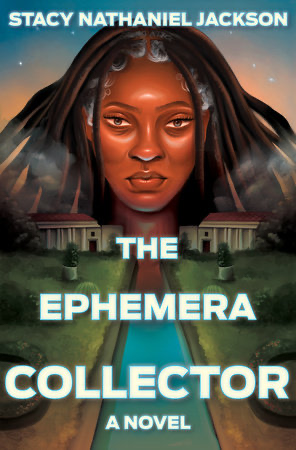
Book Review Tuesday (7/22/25) – The Ephemera Collector

Happy Tuesday, bibliophiles!

Continuing with Disability Pride Month, here’s a fascinating 2025 debut! I love books about libraries and archives, both for personal reasons and because of the possibilities that they hold. Add in the queer, science fiction aspect of it, and I was instantly hooked. The Ephemera Collector turned out to be one of the more unique books I’ve read recently, both in its mixed-media approach and the sprawling nature of its vision.

Enjoy this week’s review!

The Ephemera Collector – Stacy Nathaniel Jackson

2035. In a divided, polluted Los Angeles, Xandria Brown pours her passion into her work as an archivist. Collecting ephemera from prominent Black authors, artists, and activists, she fights to preserve her work as the threat of corporate encroachment in her library looms. After the death of her wife, only her health bots, which monitor her symptoms of long COVID, keep her company. But when the library goes into lockdown for undisclosed reasons, Xandria and her health bots must get to the bottom of the mystery—and make sure that her collections are unscathed.

TW/CW: ableism, eugenics, racism, violence, medical content

Though not without its flaws, this is one of those novels where you can really feel how much of a labor of love it was for the author. The Ephemera Collector is Stacy Nathaniel Jackson’s debut novel, which he published in his 60’s (!!!). It’s a mix of prose, poetry, and visual media, and I honestly wish I’d read a physical copy instead of an ebook in this case, because I feel like my Kindle couldn’t grasp the formatting fully. Nevertheless, The Ephemera Collector is a unique novel in all senses: a unique dystopia, a unique Afrofuturist novel, and a startlingly original piece of sci-fi.

Stacy Nathaniel Jackson’s vision of the United States 10 years from now was certainly bleak, but his worldbuilding was what made The Ephemera Collector stand out so much to me. No stone was left unturned in terms of what happens to America in the next 10 years, from the threat of corporate oversight on Xandria’s archives of Black history to the COVID-34 pandemic that occurs a year before the novel is set. It was bleak to me, but not necessarily cynical to me; yeah, us going into a second global pandemic only 14 years after “getting through” the first one seems a bit cynical, but given how this country absolutely bungled how we handled COVID-19, it feels somewhat realistic. Yet the weirder and further you get from the center of what makes Jackson’s dystopia a dystopia, the more imaginative the worldbuilding gets. Xandria is followed around by health bots that all have distinct personalities. There’s a whole Atlantis 2: Electric Boogaloo situation with a group of POC separatists who settle underwater off the coast of California. The weirder Jackson gets with it, the better the worldbuilding becomes; those unique touches are what stuck with me the most.

Yet even though Jackson’s vision of the future is full of polluted air and government corruption (not too far off…oof), it never fully felt like completely gloom and doom. In the end, I feel like this novel was about the importance of preserving history, and the main character’s fight is to keep corporations out of her exhibition of Black history, namely a collection of ephemera about Octavia Butler. Our protagonist is a queer, disabled Black woman who comes from a line of disabled Black ancestors, and she is standing her ground when it comes to preserving their history as a fundamental thread in the fabric of our country. Xandria putting up this fight, for me, was what kept The Ephemera Collector from being fully cynical. To imagine a darker vision of the future is one thing, but to have a character fight it, win, and outlast said corruption and hatred (somehow, she lives to be 300 years old? I assumed it was the gene editing, but it’s never fully explained) was what gave me hope in the end. Xandria, a battered woman who faced threats to her archives, non-consensual gene editing and eugenicist practices, and the death of her wife, comes out the victor in the end, triumphant over everything she fought to defeat. She is alive to preserve the history of her ancestors, but she is also proof that even the groups that America is most determined to erase will survive no matter what this country throws at them—and outlive them by centuries.

Going into The Ephemera Collector, I knew it wouldn’t be the easiest book to digest. The reviews warned me of a novel that frequently went on tangents that didn’t relate to the main storyline, and a novel that was disorganized in general. Having that in mind, I went in with low expectations. While I do think this novel was a bit disorganized at worst, I think it was partially the point. This is a book about an archivist poring through artifacts in a massive library. Jackson’s style is very stream-of-consciousness, and I feel like it uniquely reflects what Xandria’s mindset would accurately be if she spent most of her waking hours as an archivist. It reminded me vaguely of The Library of Broken Worlds, a very different book from this one, but still a sprawling, magnificent at best, deeply convoluted at worst novel set in a vast library. Maybe that’s just what you’re in for if you write imaginative books about sci-fi/fantasy libraries. There were some sections that strayed too far from the main plot for my taste (more on that later), but overall, I enjoyed the breaks in form, whether it was the switches from prose to poetry to the anecdotes about Xandria’s ancestry. It really put me in mind of an archivist, and that seems exactly what Jackson set out to do. For me, it also tied back into the theme of preserving history—all of what we see is the history that Xandria fought so hard to keep alive and non-sanitized by corporations.

Here’s the thing, though. I was fine with the earlier tangents because I could see the thread that connected them to the rest of the novel. But around 60% of the way through, The Ephemera Collector quite literally loses the plot. Without warning, it switches to an entirely new story that’s barely connected to the main story—and that’s being generous. The only possible connection I could find was that one of the characters was a relative of Xandria, but that’s it. There’s no connection to her or the library. My dilemma is that although it was very distant from the rest of the novel, it was still a compellingly written storyline. It dealt with one of the more fascinating parts of the worldbuilding: the separatist community who created an underwater settlement, and later became pseudo-climate refugees when it became untenable to live underwater for any longer. It was so strange and lovely to pick apart, but it didn’t connect to the main narrative until the very last minute. Even in the context of Xandria looking through the archives, there wasn’t a clear thread. I’m tempted to give this less than 4 stars, because although this frustrated me, the writing was just that good. In my more arbitrary system, I guess it would be more in the 3.8-3.9 range, if we’re getting really specific, but I like it more than a 3.75. It’s a weird dilemma, but so is the whole novel, really.

All in all, a deeply imaginative Afrofuturist novel that pushed the boundaries of what a dystopia can be. 4 stars!

The Ephemera Collector is a standalone and Stacy Nathaniel Jackson’s debut.

Today’s song:

NEW GUERILLA TOSS, WOOOO

That’s it for this week’s Book Review Tuesday! Have a wonderful rest of your day, and take care of yourselves!