Posted in Book Review Tuesday

Book Review Tuesday (2/11/25) – The Maid and the Crocodile

Happy Tuesday, bibliophiles!

I had a ton of fun with Jordan Ifueko’s Raybearer duology, but somehow I completely missed that she released a novel last August in the same universe! It was an absolute treat to be back in Ifueko’s world, and The Maid and the Crocodile proved a valuable asset to her fantasy universe.

Enjoy this week’s review!

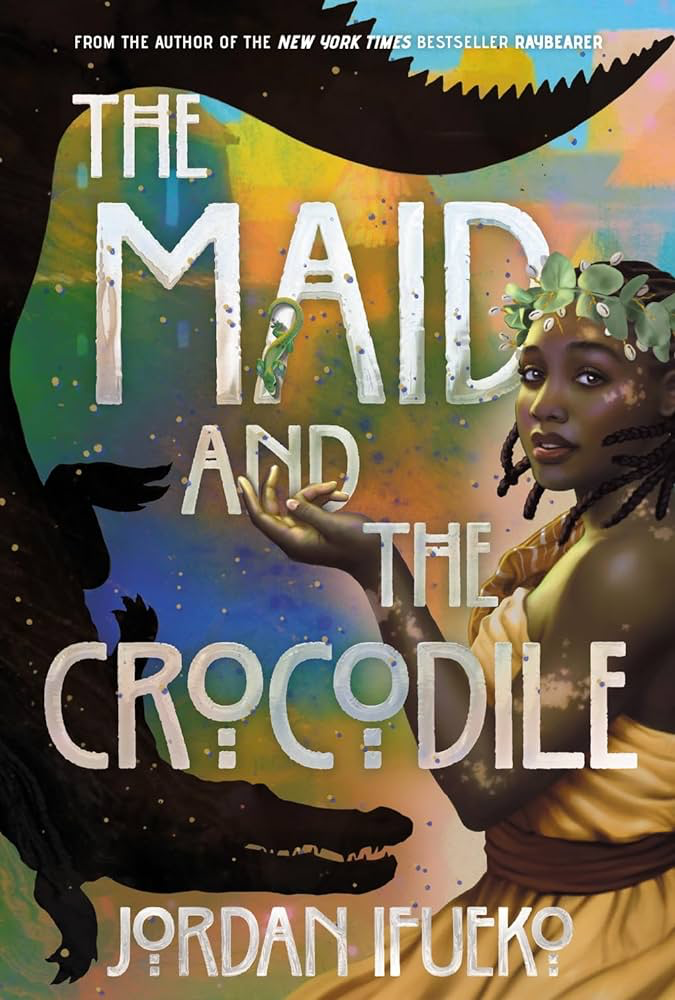
The Maid and the Crocodile – Jordan Ifueko

Small Sade is desperate for any job that she can find. With her crooked foot and vitiligo, the people of her village think she is cursed and touched by spirits. Eventually, she finds work as a maid, but not before an act of desperation sees her bound to a powerful god, known only as the Crocodile. As she moves up in the ranks, she realizes that she is a Curse Eater—her profession as a maid not only cleans the houses of her clients, but changes their fates. Juggling her newfound ability and a world on the brink of revolution with only the Crocodile as her guide, Small Sade must learn to forge her own path before someone else decides it for her.

TW/CW: ableism, self-harm/mentions of suicide, descriptions of injuries, classism, mentions of sexual assault, abuse, loss of loved ones

I can excuse a handful of pop culture references here and there, but after that god-awful Minecraft trailer, if I hear “the children yearn for the mines” ONE MORE TIME, I’m gonna snap…Jordan Ifueko, this was a great book, but that tested me…especially with the climactic scene that it temporarily undercut.

That aside, it was an absolute treat to return to the world of Raybearer with The Maid and the Crocodile! I didn’t think to re-read the duology before going back into it (I never seem to do that unless it’s with a book I’m really invested in), but I was so easily immersed into the world nonetheless! For both casual and eagle-eyed readers, there are Easter eggs aplenty—several characters from the duology make cameo appearances (SANJEET!!! MY GUY!!!!), and the nuances of the world stay the same, for the most part. It was an easy transition, which isn’t always easy to do. I loved how The Maid and the Crocodile expanded on the world as well! Ifueko really has a strength in writing ordinary characters forced into extraordinary, powerful positions, and Small Sade is no exception. However, she’s much more different than Tarisai, which I appreciated—there’s much more of a sense of her having to work towards the top, and her humored yet determined tenacity was what made her so special of a character. Through her, we see Oluwan City from more ordinary eyes, which makes the themes of the story so much more clearer.

I couldn’t have read The Maid and the Crocodile at a better time, and not just because it was a fun read. Its themes about the nature of change and revolution are critical—IT’S ALL ABOUT LOVE! It’s so refreshing to see a character who wants to help society change for the better not out of revenge or a vague “evil government bad [does not elaborate]” motivation, but out of love. Small Sade’s motives stem from wanting to care for the people she loves and wanting to see that love reciprocated in the world around her. Change rooted from love is a perspective that I rarely see in YA, even though its plots have centered around dismantling governments and revolutionary change for decades. I’m so tired of saying “in times like these,” but I mean it—in times like these, narratives about radical change being rooted in love—for your people, for your country, and for your culture—are critical to understanding what change can truly do.

Whenever you have a disabled character in a non-modern setting, even if it’s fantasy, you always run the risk of amping up the internalized ableism. Small Sade, who is shunned and deemed “spirit-touched” because of her crooked foot (she uses a cane for mobility) and her vitiligo, faces a great deal of ableism. It’s not as though plots about overcoming ableism (NOT the disability, mind you) aren’t worth telling, but in non-modern and fantasy settings, it does get slightly tired to have all disabled characters in these settings go through versions of the same arc. I loved how Ifueko handled Small Sade’s character—she resists ableism, but most importantly, she is a person beyond her experiences of ableism. Her experience of discrimination informs her story, but it is not the entirety of her character. Small Sade is defiant, self-reliant, and deeply caring—she’s so fully-fleshed out, which is a rarity for disabled characters. So hats off to Ifueko for an excellently-written disabled character!

However, though it had its moments, I was never fully invested in the romance between Small Sade and Zuri. I got that they had a connection, but I feel like he showed up too few times for the relationship to really work. Small Sade had eons more character development than he ever had the chance to. I get that a curse slowly turning you into a crocodile tends to do this to a guy, but at times Zuri felt rather codependent—up until the last 50 pages or so, Small Sade felt more like a means to an end for him, and his redemption was too underdeveloped for me to be fully invested in it. I appreciated their mutual resolution, but it was too late for it to feel fully satisfying. Given how strongly written the relationship between Sanjeet and Tarisai was in the Raybearer duology, I really expected Ifueko to deliver more with The Maid and the Crocodile. Small Sade and Zuri had moments, but not enough for me to be invested in them romantically.

All in all, a worthy addition to Jordan Ifueko’s Raybearer universe, full of heart, curses, and hope. 3.75 stars, rounded up to 4!

The Maid and the Crocodile is a standalone, but is set in the world of the Raybearer duology (Raybearer and Redemptor). Jordan Ifueko is also the author of the 2022-2023 run of Marvel’s Moon Girl and Devil Dinosaur, and has also contributed to Jim Henson’s Storyteller: Tricksters.

Today’s song:

That’s it for this week’s Book Review Tuesday! Have a wonderful rest of your day, and take care of yourselves!

Posted in Books

The Bookish Mutant’s Books for Black History Month (2025 Edition)

Happy Wednesday, bibliophiles!

Here in the U.S., February is Black History Month! I normally begin by talking about how critical it is in these times to uplift marginalized voices (in this case, Black voices) with the attacks on so-called “critical race theory” in elementary schools and the attempts in both the classroom and the government to whitewash our fraught, racist past. However, I find these posts becoming more relevant as the Trump administration strikes down D.E.I. initiatives and has started shutting down “identity months” among many federal agencies. As Trump and his cronies push us into an age (certainly not a golden one) that strips away the celebration and acknowledgment of the wonderful difference that makes up this country, it’s more valuable than ever to celebrate those who have historically been downtrodden. Especially since Trump has purported himself as a friend to Black Americans (then turned around and committed unspeakably racists acts during both terms already), we need to emphasize the truth: Black people are and will always be vital to this country, and their history and contributions are an irreplaceable part of American history. No policy, removal, or dismissal can change that.

As with all of the related lists I make each year, this is not an exhaustive list; I encourage you to always look further and discover books and authors of your own during Black History Month (and during the rest of the year).

For my lists from previous years, click below:

NOTE: while the header image just says YA, I’m including books of various age levels on this list. (I’m just too lazy to make a new header, sorry…)

Let’s begin, shall we?

THE BOOKISH MUTANT’S BOOKS FOR BLACK HISTORY MONTH (2025 EDITION)

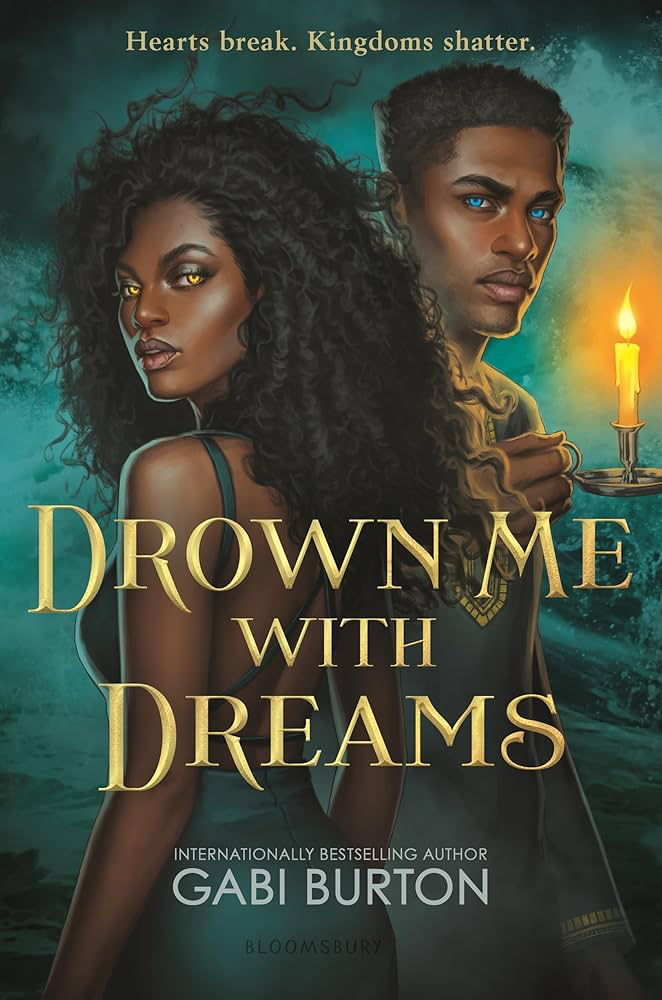
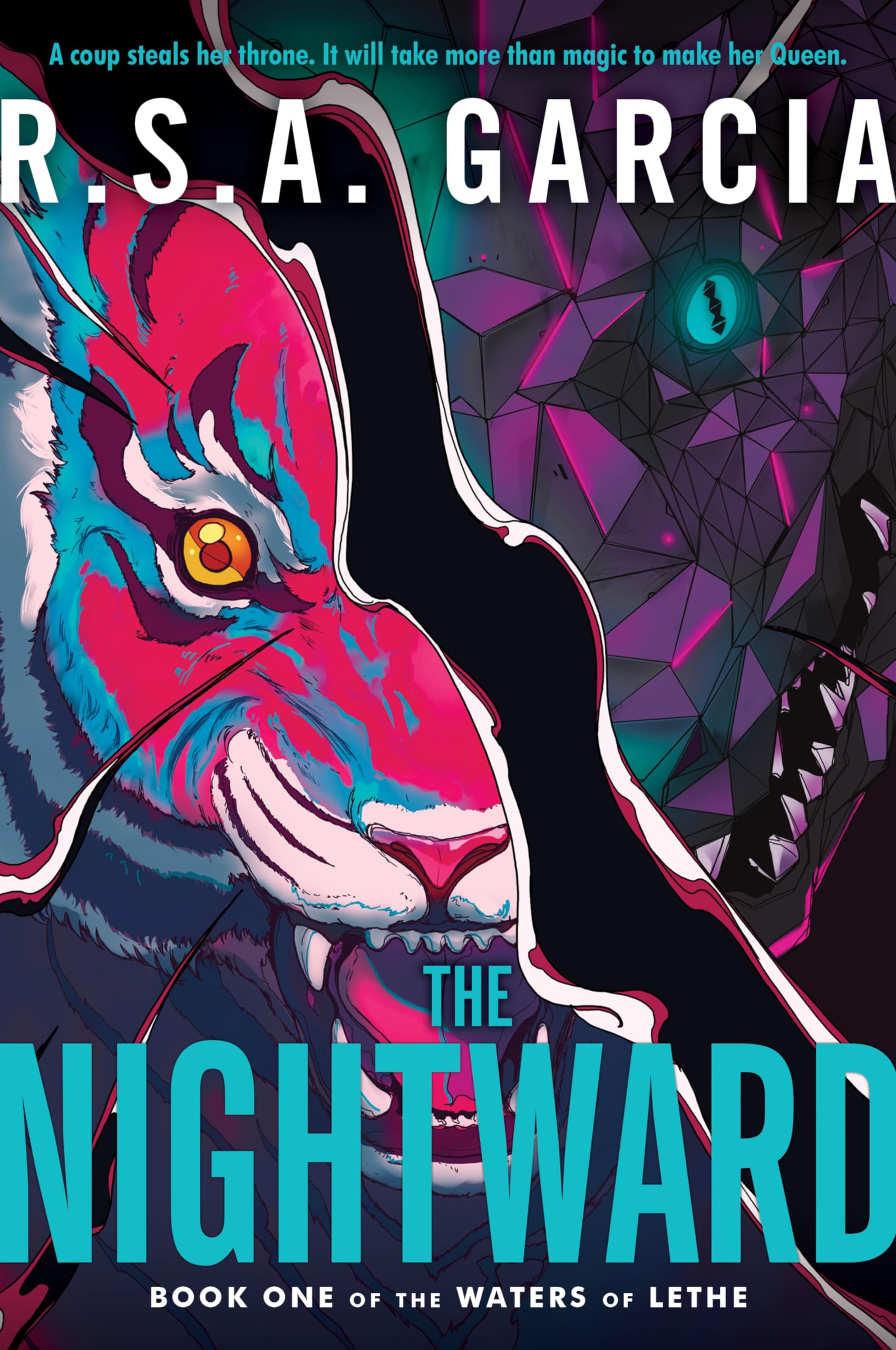
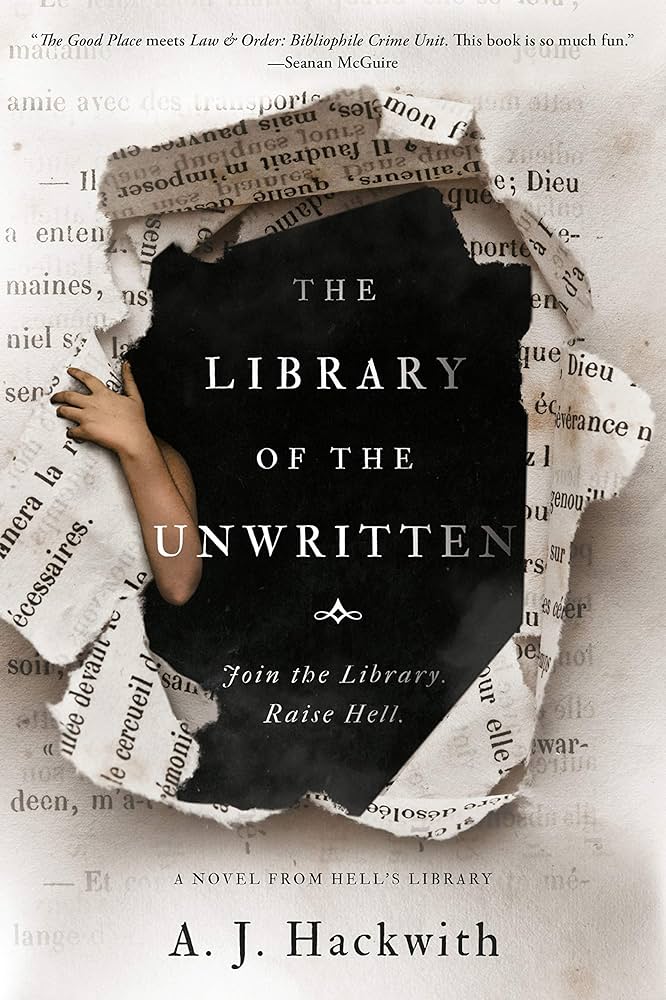
FANTASY:

SCI-FI:

REALISTIC/HISTORICAL FICTION:

TELL ME WHAT YOU THINK! Have you read any of the books on this list, and if so, what did you think of them? What are some of your favorite books by Black authors that you’ve read recently? Let me know in the comments!

Today’s song:

That’s it for this year’s Black History Month list! Have a wonderful rest of your day, and take care of yourselves!

Posted in Book Review Tuesday

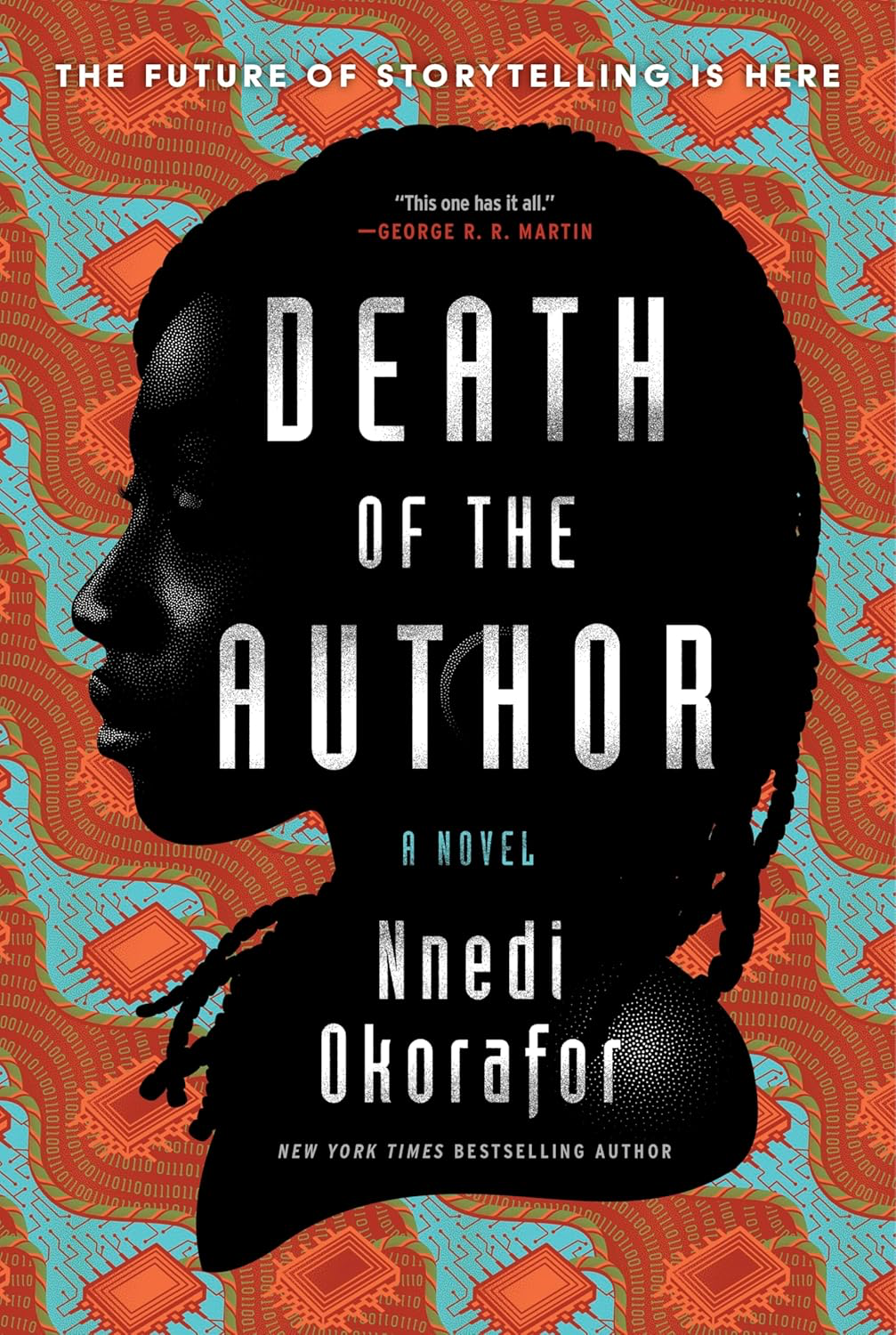
Book Review Tuesday (2/4/25) – Death of the Author

Happy Tuesday, bibliophiles!

I’ve been a longtime fan of Nnedi Okorafor, albeit on and off—I picked up Akata Witch back when I was in middle school, and then discovered her adult books when I was in high school. Since then, I’ve been a fan of her quirky brand of Africanfuturism. You can imagine my surprise when I found out that Death of the Author was not an addendum to her long sci-fi fantasy canon, but instead literary fiction—albeit, with a dash of sci-fi. Either way, the switch from genre to genre is as smooth as I’d expect from Nnedi Okorafor.

Enjoy this week’s review!

Death of the Author – Nnedi Okorafor

Zelu is on the verge of giving up her dream to be a writer. After a pile of rejected manuscripts and a botched job as a professor, she moves back in with her overbearing, judgmental family as she attempts to get back on her feet. But when a spark suddenly comes to her, she has a bestseller on her hands: Rusted Robots. As she grapples with the price of fame and the mobility—and simultaneous lack thereof—Zelu must come to terms with her own identity as she explores the fabrication of it that the public has created for her.

TW/CW: substance abuse, ableism (external & internalized), loss of a parent, near-death situations, kidnapping

Of all people, I didn’t expect Nnedi Okorafor to take the leap into literary fiction, and after I found out the switch in genre, I didn’t expect to enjoy Death of the Author as much as I did. Thankfully, it’s only really literary in the sense that it’s contemporary, realistic fiction…mostly. The woven tapestry of Zelu’s real life and her creation, Rusted Robots, turned out to be a powerful meditation on the nature of art and identity.

Once again, make no mistake: this is fiction, but it’s not entirely just fiction. The assumption is that it’s a handful of years in the future; Zelu has fairly futuristic, adaptive prosthetics that are still in beta testing, and she tests out an automated cab service that’s been newly introduced to the streets of Chicago. Yet Okorafor takes the same skilled hand that she uses to craft intricate, far-future worlds and translates it into the idiosyncrasies of modern life, from the gauntlet of social media fame (and harassment) to being in the confines of a chaotic, judgmental family. For every character that was introduced, Okorafor matched them with an unforgettable personality, even if they only appeared for a few pages. All of the complex, rapidly fluctuated emotions were depicted with sensitivity, from the highest joys to the deepest pits of anguish and the plentiful uncertainty in between. Even without her talent for worldbuilding, Okorafor is a force to be reckoned with, and Death of the Author is proof.

I was hesitantly optimistic that Okorafor was writing a disabled main character again; Noor was a great novel, but from my memory, there was quite a bit of internalized ableism in the main character that went unaddressed. (However, somehow I didn’t know that Okorafor has experience with disability and was herself temporarily paralyzed, so my bad.) The setting couldn’t be more different for Death of the Author, but Okorafor has certainly stepped up her game as far as writing disabled characters—and part of it is that Zelu is unlikable. More often than not, you can at least sympathize with her, but at times, you can see her for the insufferable, argumentative, reckless stoner that her family sometimes sees her as. Of course, not every disabled character has to be likeable, but her relative un-likeability made some of the novel’s most powerful commentary shine even more. As she grapples with her meteoric rise to literary fame, Zelu’s fans place the burden of her being a “role model” for a number of communities: Black, woman, Nigerian-American, disabled. Being a role model can be powerful, but as soon as people saw Zelu as more of a role model than a person, it disregarded her humanity in an entirely different way. She became an example, not an autonomous being—something that is intimately tied to what many disabled people experience. In that way, Zelu represents a leap in how Okorafor writes her disabled protagonists—not just independent, but human.

I don’t have a ton of experience with meta-fiction—it’s not a matter of me not liking it, I just hardly get around to reading much of it—but Death of the Author pulls it off with ease. If you’re still not convinced that Okorafor’s literary fiction isn’t for you, you’ll at least be tided over by her signature brand of Africanfuturism, complete with the landscape of a futuristic Nigeria, robots, and appearances from Udide. It’s somehow a delightful vision of the future, where types of robots have proliferated across the face of the Earth in the face of the extinction of the human race. It’s threaded into Zelu’s life, yet it’s also a clever distillation of the novel’s themes; Ankara’s struggle with coexisting with Ijele inside of his head, as well as the changing world around him, spoke to the themes of embracing collaboration and the blurry relationship between creator and reader.

Which brings me to the whole “death of the author” part. I’ll admit, the Roland Barthes quote from the (original) “Death of the Author” gave me literary theory flashbacks. But as a grounding concept for the book, I love how Okorafor’s Death of the Author playfully pokes fun at the concept. Here, it’s as though the concept has been subsumed by the publishing industry; instead of taking Zelu’s novel as tied to her heritage and her disabled identity, the world swallows it and regurgitates a whitewashed, Americanized movie adaptation that the public eats up. (“Look what they’ve done to my song, Ma…”) Yet at the same time, Zelu is confronted by readers who insistently pester her, insisting that everything in the novel is fully tied to her identity and selfhood. Death of the Author’s strength is the clarity it finds in the balance. Zelu’s work is intimately tied to her identity, but just as intimately tied to her imagination. Her being marginalized meant that people saw her work as surely being solely about her identity, but that wasn’t the whole story either. (The note in the acknowledgements about Okorafor talking to her daughter about worrying that readers would think that Zelu is her makes the point all the more clear.) In this case, fence-sitting is the most reasonable position I can think of—to consider reader interpretation first and foremost can have fruitful results, but to deny the lived experience veers into foolishness, and vice versa; Okorafor’s embrace of the area in the middle is what made the message so clear. Reading and world-creation is a twin act, created both by ourselves and those who receive our work—it’s not a simple question of one or the other.

All in all, a surprising novel that at first seemed like a left turn, but turned out to be another testament to Nnedi Okorafor’s enduring talent. 4 stars!

Death of the Author is a standalone, but Nnedi Okorafor is also the author of several books for adults, teens, and children, including the Binti trilogy (Binti, Home, and The Night Masquerade) the Nsibidi Scripts series (Akata Witch, Akata Warrior, and Akata Woman), Lagoon, Noor, the Desert Magician’s Duology (Shadow Speaker and Like Thunder), and many more.

Today’s song:

ADORE this album

That’s it for this week’s Book Review Tuesday! Have a wonderful rest of your day, and take care of yourselves!
Posted in Book Review Tuesday

Book Review Tuesday (1/7/25) – The Infinity Particle

Happy Tuesday, bibliophiles!

First book review of 2025, and so far, the best book I’ve read this month! Granted, we’re only a week into the month, but it still counts for something, right? loved Mooncakes, which Wendy Xu illustrated, but I had no idea until recently that she had published a solo graphic novel—and a sci-fi one! What resulted was an incredibly emotional read to start the year off with: robot romance and explorations of how relationships make the universe work.

Enjoy this week’s review!

The Infinity Particle – Wendy Xu

Clementine Chang is headed for Mars. In the distant future, it’s a place of peace and industry, and it’s precisely the place that Clem wants to start her new life. A clever inventor, Clem has a knack for working with AI. She hopes to continue her education under Dr. Marcella Lin, a legendary AI engineer who inspired her work. But Dr. Lin is not what she seems—and she’s hiding a secret from the scientific world: a lifelike, humanoid AI that she refers to as her son. His name is Kye, and he yearns for a life outside of the one that Dr. Lin programmed for him. As Clem gets acquainted with him, she discovers that Dr. Lin’s intentions in making him were not as noble as she once thought—and that she may be falling in love with her former hero’s creation.

art by Wendy Xu (p. 150)

TW/CW: emotional abuse (past/present)

You know me. I’m a sucker for a good Frankenstein story. Oh, so you brought a conscious being into existence, expected it to be completely obedient to you and your whims, and didn’t expect anything to go wrong? Surely this will not have a domino effect of consequences…

That being said, The Infinity Particle isn’t just a Frankenstein story. We’ve been inundated with stories about AI and the ethics of giving robots human-like consciousnesses since day one of sci-fi’s conception (back to Frankenstein), but The Infinity Particle does what many of those stories try and fail to do: make the story human. It weaves both engineering and the complicated legacies of familial trauma into a story that is ultimately about relationships: that of parents and children, but also of young lovers. It’s a story of breaking cycles and of forging something newer and better out of their ashes. All of it is worth your time.

Wendy Xu’s vision of Mars in the distant future is one that I want to live in, which isn’t something I often say about sci-fi novels. The world of The Infinity Particle is a cozy, comforting one. In spite of the more emotional moments of the story, Xu’s setting is one you can get lost in. Rendered in a pastel color palette that’s easy on the eyes, it’s a world full of greenhouses, cafés, and cobblestone paths. Here, Mars is the perfect place for a museum date—except here, the museum features all manner of robots from bygone centuries. Although there are ethical conflicts with some of the AIs (this forms the central conflict of the novel), none of Xu’s AIs are malicious creatures—they’re all in the form of cuddly cats or owls, and in the case of Clem’s custom companion, a cat-moth hybrid. (SENA!! WE LOVE SENA!!) It’s a world I was eager to escape to, and one that I could dwell in forever.

Clem’s motivations were part of what made this story stand out. As she begins to dig deeper into Dr. Lin’s true motives for creating Kye, the way her former hero treats her AI creation begins to mirror how she was treated as a child; the emotional abuse from her mother is very similar to the emotional abuse by Dr. Lin to Kye. The Infinity Particle is a fantastic example of how very far-fetched, sci-fi concept can be used as incredibly emotional metaphors. We have Clem, who is a clone of her mother and was raised to live out the dreams that her mother could not, and Kye, an AI made to replace Dr. Lin’s son and live out her fantasies. Admittedly, the clone part was very on the nose, but the way that Xu delivered with care, giving The Infinity Particle an undeniable heart. In part, The Infinity Particle is a story of how trauma always echoes into the present, and how it can create ripples that both tear apart and rebuild relationships with others.

That shared trauma is part of what made the romance between Clem and Kye one that I was rooting for from page 1. Not only were they the most adorable couple (museum dates! Philosophical conversations in greenhouses!), their shared connection allowed them to help each other in ways that made the relationship blossom. Clem had experience with having to escape from the same kind of emotional abuse that Kye was undergoing, and as they realized that connection, their relationship deepened. However, it wasn’t just that aspect that made their relationship so lovable. Their chemistry was some of the best I’ve read in a YA novel in a long time—they were both such curious and sensitive people, and that combined curiosity not only drove the plot, but the course of their romance. Every shared moment was sweet, but never saccharine—The Infinity Particle was just a warm hug (and a kiss on the cheek) in so many ways, this being one of the most prominent.

However, even though Dr. Lin was objectively in the wrong, I appreciated the way that The Infinity Particle humanized her; never once were her actions condoned, but in the end, she wasn’t a purely evil person—she was a person who slipped so far into grief that she failed to realize how she was treating those around her. She did horrible things that could not be undone, but she was also capable of healing. It’s an incredibly difficult line to toe between acknowledging a character’s humanity and acknowledging that their actions were inexcusable; most media gets it wrong (I am looking directly at Encanto), but in the short time that was given to this plot, Xu did a graceful job of hitting that balance. Dr. Lin did some unspeakably terrible things, but deep down, she is still human. My one (minor) complaint is that this was squeezed into the end and didn’t have as much time to develop as some other parts of the novel, but it was executed thoughtfully nonetheless.

And the epilogue…hnnnnnnnngh do I love a good “the fabric of the universe is made up of love” story AUUUUUUUUGH

All in all, a heartwarming, sensitive, and thoughtful story of love, robots, and what it means to have—and to want—a mind and a life of your own. 4.5 stars!

The Infinity Particle is a standalone, but Wendy Xu is also the co-creator of Mooncakes and the creator of Tidesong.

Today’s song:

I feel like I remember this song about every 5 years and realize how much I’ve missed it…

That’s it for this week’s Book Review Tuesday! Have a wonderful rest of your day, and take care of yourselves!
Posted in Book Review Tuesday

Book Review Tuesday (11/26/24) – Countess

Happy Tuesday, bibliophiles!

I try not to let my lizard brain take over when it comes to my TBR these days (that’s how it got to almost 1,100 books back to high school…that took some serious pruning). That being said, at this point, I’ve accepted that the phrases “space opera,” “queer,” and “anti-colonial” strung together activate me like some kind of sleeper agent. Thus, Countess found its way onto my TBR and swiftly onto my Kindle. It excited me even more that Countess was Caribbean-inspired and that the author is Trinidadian-Canadian (!!!!), so my expectations were high. Though it wasn’t perfect, Countess was a raw and brutal novella—hardly a page was wasted.

Enjoy this week’s review!

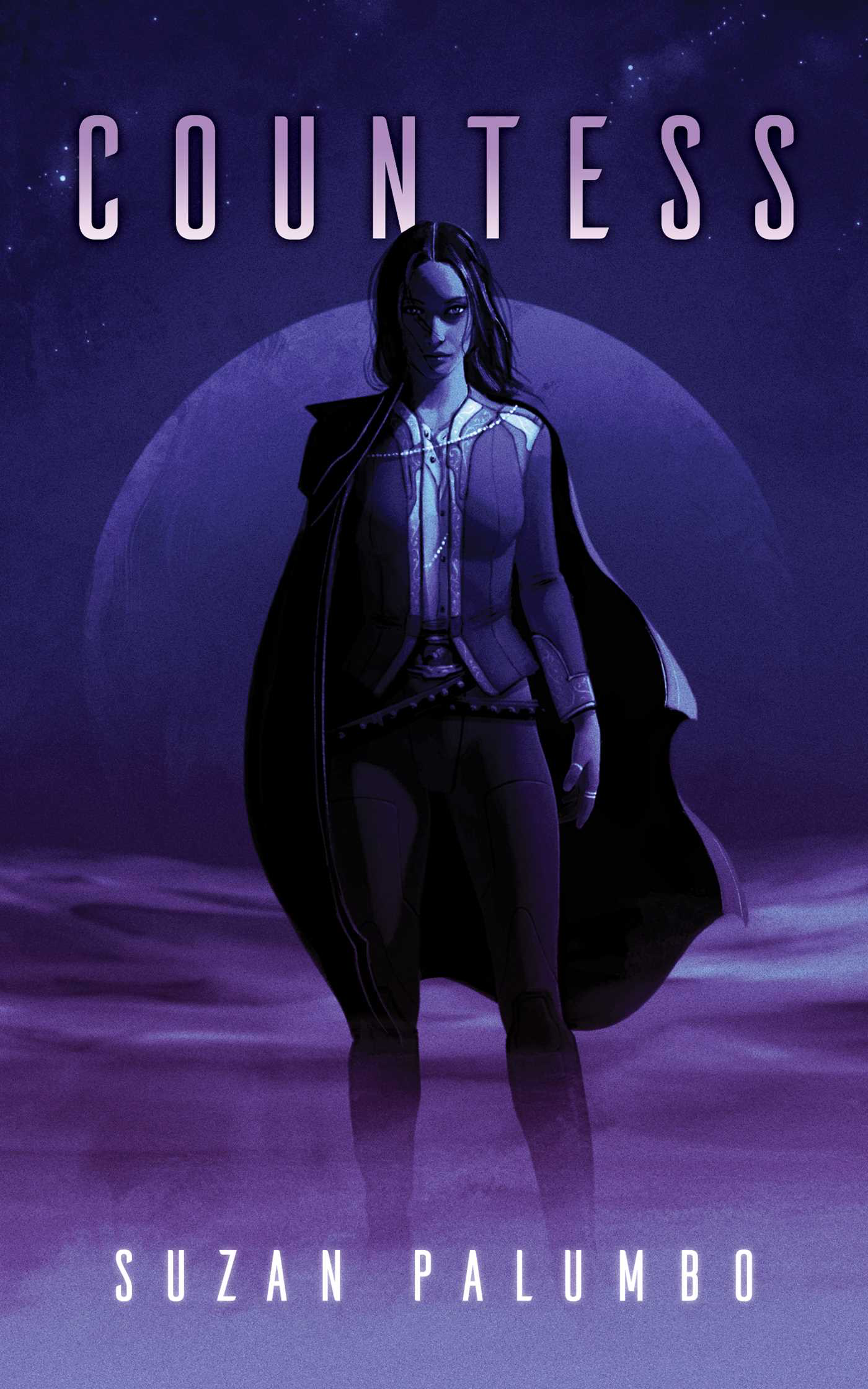
Countess – Suzan Palumbo

Centuries after the British colonized islands in the Caribbean, an evolution of their iron fist remains in space. Under the harsh rule of the Æcerbot Empire, planets and moons are stripped of their resources and their inhabitants left with the paltry choice to enter an immigration lottery to find work or make a meager on their exploited homeworlds.

Virika Sameroo has sworn her life to the empire, loyal to their army for years. But just as she attempts to ascend to a higher position, her captain mysteriously dies—and the imperial authorities frame him for his death. Imprisoned and alienated from the empire that brainwashed her, Virika becomes an unlikely figure for a galaxy-wide revolution—but will she survive long enough to see the Æcerbot empire fall to its knees?

TW/CW: colonization/imperialism themes, torture, murder, descriptions of corpses, blood, self-harm, attempted suicide, sexual assault

how it feels to enjoy a retelling when a bunch of the reviews say that it doesn’t follow the source material (I’ve never read The Count of Monte Cristo):

Of course, regardless of whether or not I’ve actually read The Count of Monte Cristo, I think it’s worth saying that a retelling doesn’t have to stick to every plot line to a T. I get going into a retelling and being disappointed on that front, but even if the setting is wildly different (as Countess is), I don’t think it’s a crime to tweak many of the plot points. In this case, having a vastly different setting kind of necessitates the plot being different, but from what I can gather, Countess is more inspired by The Count of Monte Cristo than it is a direct retelling. That’s fine, in my book. No pun intended.

As a whole, Countess was a fantastic read, but its one weak point was the writing. In a way, the writing style, even if I disliked some of it, worked for the story—and the character—that Palumbo was telling. It picks up at the halfway point, once the plot rockets into a breakneck pace in terms of both action and stakes, but for the first half, the prose felt very bare-bones. Even in this new, expansive empire in the stars full of political intrigue, there wasn’t much to embellish the prose—it was all very quick and to the point, with language that took the quickest routes to explain how we got from point A to point B. This is my first experience with Palumbo’s writing, so I’m not sure if it’s just her style, but either way, it works in connection to Virika; she’s been groomed to be a perfect, obedient soldier, so I doubt she’d be one to mince words or get into excessively flowery prose. For some of the scenes where Virika is in prison and a decade blurs by in only a handful of pages, it makes complete sense. Yet I needed some more descriptive prose to get me immersed in the setting—and in the other characters outside of Virika.

I’m all for having gentler books about resistance, but that doesn’t mean that narratives centered around brutal realities have no place. In fact, in stories like that of Countess, I’d argue that they’re necessary. This is a novella about the horrors of imperialism, down to the most minute aspects. For me, it didn’t go full grimdark, but it was because there was realism to it; grimdark is, for the most part nothing but suffering and pain with no real basis, but the events of Countess, horrendous as they are, were logical byproducts of the crushing weight of a colonialist empire with the galaxy under its colossal thumb. Palumbo pulled no punches with the depictions of what Virika goes through (especially the sequences in prison…please pay attention to the trigger warnings); some of it bordered on gratuitous, but this is a slim novella, and all of it was in service of the theme that the crimes under imperialism are many, varied, and real.

As I’ve said so many times, I see the phrases “queer,” “space opera,” and “anti-colonial” and I’ll run towards the book like I’m a bull that’s just seen the tiniest sliver of red in my peripheral vision. What grabbed me about Countess in particular was that it was Caribbean-inspired—particularly Trinidadian. My grandparents on my mom’s side are from Trinidad, and I’ve seen hardly any literature—much less speculative fiction—that incorporates these cultures. Admittedly, I’m more than a little distanced from that part of my heritage, but I’ve been learning thanks to the tireless research of my amazing artist mom, who is in the process of making a Caribbean oracle deck of her own! It’s thanks to her that I caught a lot of the Trini and generally Caribbean references (the fact that there’s a rebel ship called the Pomerac was gold), and there are plenty scattered throughout the novella—I’m sure I didn’t catch all of them, but what I recognized, I loved. I’ve loved witnessing the shift towards marginalized voices in speculative fiction, but one of the reasons it feels particularly beautiful to me is because for so long, our communities have been denied a place in the collective imagination, a place in a distant future among the stars. So thank you to Suzan Palumbo for this novella, and thank you to my wonderful mom for being the reason that I got these references.

In these kinds of stories (and in life in general), I always try to look for a glimmer of hope, even if it’s foolish of me. Make no mistake: Countess is a tragedy, one of the many (forthcoming) ones that Palumbo has written, according to her Goodreads bio. This novella is a very realistic depiction of how revolutions often make martyrs of their figureheads, and that was Virika’s fate from the start. Palumbo does make you feel the wasted potential of her life as she falls, but I couldn’t help but see the swell of revolution that she ushered in as the ultimate form of revenge—and an assurance of a better tomorrow, at least for a short time.

All in all, a brutal and bold—if not rote in periods—novel of revolutionary change and one woman’s struggle to break free of imperialism. 4 stars!

Countess is a standalone novella, but Suzan Palumbo is also the author of the anthology Skin Thief: Stories and several short stories in various magazines.

Today’s song:

finally got around to listening to Songs Of A Lost World!! this was my favorite—the whole album tended to be repetitive, but it was great nonetheless.

That’s it for this week’s Book Review Tuesday! Have a wonderful rest of your day, and take care of yourselves!
Posted in Book Review Tuesday

Book Review Tuesday (11/19/24) – Loka (The Alloy Era, #2)

Happy Tuesday, everyone!

…so. Elephant in the room here, quite literally. I’ll venture to say that last Tuesday was one of the worst Tuesdays in American history. Hence, no activity. (Also, I had a whole cocktail of midterms to study for and papers and annotated bibliographies to write.) I needed the time to grieve. Let me tell you the truth: I’m so scared. I’m betrayed. Being in my formative years under a president who systematically mocked the identities of everyone who isn’t him—not just the ones that comprise my family—forced me to confront the fact that America had no regard for me. If there was change to be made, I had to do it myself, and with the help of the communities around me. So I started writing. I started educating myself. The process is never over, and will continue until my dying day; even with the sort of beef that I have with Sara Ahmed (yeah, killjoy etc. etc. etc., I’m on board with 50% of it, but can’t feminism be gleeful sometimes?), I look back to her words: “To become a feminist is to stay a student.” I am always learning. I am far from perfect, but I am trying. The key here is motion: we can’t afford to stay static, not in our ideas or in our actions. Resistance comes in many forms (and don’t let anybody tell you that there’s one right way to fight), but the key is that we must always keep moving. Donate. Protest. Pay someone a compliment. Make art. Write with hope in your heart. Trump and his ilk win when we’re too far into the quicksand of hopelessness.

Never lose hope and never lose love, because that is what the Trump administration lacks. Grieve, and grieve on your terms. I certainly did. The last thing I wanted was a repeat of that November morning when, at the age of 13, I woke up to my dad hanging his head over the kitchen counter as he made lunches for my brother and I. I remember clinging to him tighter than I ever had, frightened of every horrid possibility. Some of them came true. Some of them didn’t. I called both of my parents. I cried the same tears to them that I cried when I was young. Cry the same tears, but remember that they are the same tears. I’m frightened. But if we can resist Trump once, we can do it again. We can fight the same good fight. I love you.

All this is to say that, even though my output has been lessened lately (college!), this won’t change a thing. I’ll still be reviewing queer books aplenty, and no election will change that. Gather ’round.

After a solid two weeks of reading nothing but fluff to keep my mind off of everything, I remembered that Meru, one of the more innovative new sci-fi novels I read last year, had a sequel that was finally out! I was eager to re-immerse myself into S.B. Divya’s endlessly creative futuristic landscape, and Loka found itself on my Kindle in no time. Loka turned out to be contrary to my expectations and a very different book to Meru—it was a mixed bag at first, but by the final third, I’m happy to say that it stuck the landing in a deeply moving way.

Now, TREAD LIGHTLY! This review contains spoilers for Meru, book one in The Alloy Era series. If you haven’t read Meru and intend to do so, read at your own risk!

For my review of book one, Meru, click here!

Enjoy this week’s review!

Loka (The Alloy Era, #2) – S.B. Divya

Akshana is a child that defies all existence. Her mother is human, and her maker is an Alloy—a post-human being with godlike powers. The ruling Alloy government condemns her very existence. For years, she has lived a sheltered existence on the planet Meru, raised by her human mother. But once Akshana turns 16, she heeds the call of Earth, the ancient homeworld of humankind. With the help of her friends, she takes up the rigorous Anthro Challenge: a trek to circumnavigate the habitable zone of Earth. As she navigates foreign terrain, Akshana comes to terms with how she was born and created—and where her destiny lies.

TW/CW: near-death situations, medical emergencies (related to sickle-cell anemia), xenophobia/discrimination (fictional), life-threatening storms

I thought that Meru had scared off all of the people who thought that S.B. Divya invented neopronouns, but apparently people are still complaining about it in the reviews for Loka? Did you just…miss book one in its entirety, or what?

I’ll get my main gripe about Loka out of the way first. The more I think about it, the more that I realize that my issue with Loka is that to some extent, it has the exact same stakes as Meru: a young girl/woman has to take a daring trek onto a foreign landscape, all the while facing prejudice from the outside world and alien, terrestrial dangers from the ground beneath her feet. S.B. Divya remains an excellent writer and crafter of worlds, but in terms of plot, in this case, lightning couldn’t strike twice. Aside from Akshana’s differing personality and the novelty of Earth 1,000 years in the future, there wasn’t as much to distinguish the two plots once I broke them down.

I wasn’t crazy about the main plot of the Anthro Challenge. In the future landscape of Loka, this challenge is designed for humans and Alloys to circumnavigate the landscape of Earth as humans did millennia ago. Only a few strips of Earth remain habitable (forming ringed borders around the world), but the brave adventurer must cross swaths of the Southern hemisphere and the Atlantic and Pacific Oceans in order to complete the challenge. In concept, it’s a great bit of worldbuilding, but it didn’t make for a very compelling of a plot. For the first half of the novel, it felt like the same regurgitation of 1) reach new landscape, 2) inter or intra-personal conflict within the friend group, and 3) make a harrowing trek to the next stop on the Challenge. This was rinsed and repeated with less change than I wanted; even with the new landscapes, none of the side characters had much time to develop, and they seemed to encounter almost the exact same problems for a solid 100 pages. It bordered on feeling cheap, given how innovative Meru was.

That being said, even though the plot faltered, Divya’s writing never did. You’ve just got to trust in her abilities at this point, because she can write some fantastic sci-fi, even if the foundation of the plot is flimsy. Her voice for Akshana perfectly captured that teenage urge to explore beyond your parents’ backyard and prove everyone wrong. Divya’s descriptions of future Earth, from the raging seas to the lush greenery to the plains of a futuristic America, immersed me instantly in a vibrantly crafted vision of the future. I’ll get to the specifics of the emotional core of Loka later, but that was perhaps the best part of the novel—S.B. Divya’s brand of space opera borders on hard sci-fi for me, but it keeps the emotional center that so many other hard sci-fi novels forget to consider.

The subject of disability was one of the more compelling aspects of Meru; in a genre rife with eugenic practices that get dismissed as signs of a “progressive” society, Divya changed the game by creating Jayanthi, who, in a future when most disabilities were edited out of the gene pool, was specifically engineered to have sickle-cell anemia. More than that, her sickle-cell anemia was advantageous for surviving the landscape of Meru. Fast-forward 16 years, and Akshana is experiencing, as I said before, the same plot, but her sickle-cell anemia presents unique challenges on Earth, leading to many a close scrape when she exhausts herself to near-fatal levels. She has thoughts of resentment towards her mother, who made a conscious decision to pass this gene down to her. S.B. Divya said that Loka was inspired by their experience being a disabled parent, and that shone through in Loka; eugenicists would have you believe that this would constitute cruelty on the highest level, but Akshana comes to reconcile with—and understand—her mother’s logic. By erasing this gene and others from the gene pool, the Alloys past erased entire cultures, as well as the ways in which they moved about in the world. Being disabled is challenging, to say the least, and in my experience, bothersome and at times taxing to deal with on a daily basis. Yet it has shaped my life in ways that I will never regret. Akshana comes to realize that her mother, even though the road to this decision was rocky, merely wanted her to know that individuality, adversity, and culture cannot be erased by a purging of the gene pool.

Which brings me to the ending. The buildup of Loka concerns the mounting pressure and prejudice surrounding daring Akshana and her friends as they complete the challenge and return to a world that wants to erase their bravery and ban the Anthro Challenge altogether. Not only has she come to terms with her disability, she has come to reckon with her status as a half-human, half-Alloy being in a galaxy where neither party wants her to exist. Yes, there was the physical challenge, but the real Anthro Challenge is the identity crisis you have along the way, amirite? All jokes aside, that was the real hurdle to overcome. I know how corny I sound, but the real journey was Akshana’s journey to self-acceptance in all of the facets of her identity. At the end of the treacherous paved with prejudice and hatred, Akshana learns that the only way to survive is to be yourself, unapologetically so. As she says, in Loka’s stunning final lines:

“Our bodies don’t have a true end. Subatomic particles bounced between skin and air continually. So what did that make me, or any person? If I coexisted with everything and everyone, then part of me was also part of them, and vice versa. To some people, I would never be human enough. To others, I would always be too human. In the end, I had no choice by to be myself.”

And if anything could save Loka from being a letdown, it would be this, and the character arc it coincides with. Excuse me for a moment…no, I’m not crying, it’s just raining on my face.

All in all, a sequel with a plot that nearly dragged the novel down, but just like Akshana completing the Anthro Challenge, beautifully stuck the landing after a rocky journey. 4 stars!

Loka is the second book in The Alloy Era series, preceded by Meru. S.B. Divya is also the author of Machinehood, Runtime, and several other science fiction short stories.

Today’s song:

NEW HORSEGIRL IN FEBRUARY? ON VALENTINE’S DAY? PRODUCED BY CATE LE BON? today is a GOOD day

That’s it for this week’s Book Review Tuesday! Have a wonderful rest of your day, and take care of yourselves!
Posted in Book Review Tuesday

Book Review Tuesday (9/10/24) – The Sun and the Void

Happy Tuesday, bibliophiles!

Looks like I’m back! I’ve returned to college, and, as it always does, it has taken me some time to settle in. My ducks aren’t fully in a row, but they’re straightened enough that I’ve figured out when and where I’ll have times to squeeze in some writing. Key word is some: chances are I’ll stick to the two posts a week for a while now that I’ve got lots of schoolwork on my hands.

For this week’s Book Review Tuesday, I have a book that it’s almost miraculous that I liked as much as I did; at their worst, overly long epic fantasy novels are the bane of my existence. The Sun and the Void clocks in at nearly 600 pages, and I expected at least some of it to be a slog. Lo and behold, this novel held so much more in store—vibrant characters, Venezuelan-inspired mythology, and a daring quest across an inhospitable land.

Enjoy this week’s review!

The Sun and the Void (The Warring Gods, #1) – Gabriela Romero Lacruz

Reina has lived her life on the outskirts of society. Though her kind, the nozariels, have won their freedom, her tail and features mark her as an outcast. Reina returns to her estranged grandmother in dire need of healing—and answers. Now kept alive by means of dark, unpredictable magic, she is now the owner of a terrible secret: her grandmother is in league with a demon-god hungry for sacrifices, and one such sacrifice may be someone that she holds dear.

On the other side of the kingdom, Eva struggles to hide her true self. Her mixed heritage—part human, part valco—makes her a target. Soon after she is set to be married off to a man she barely knows, she falls in with a revolutionary. But this charming, volatile man has a darker side, a hunger for power that will not spare her if she stands in the way.

The paths of these women intersect as the clock ticks, and the fate of both of their worlds may hang in the balance…

TW/CW (from the author): alcohol, assault, blood, child death, childbirth, death, demons, emotional abuse, gore, infertility, kidnapping, pregnancy, racism, religion, sexually explicit scenes, mentions of slavery, violence

Ever since my tastes started drifting more into adult novels, I’ve had a history of getting a hundreds or so pages into an epic fantasy novel, losing my way, and coming out with only the vaguest sense of plot and one character. There’s some of it that’s on me, but it’s often a case of rambling; I’ve found many such novels to be more wordy than necessary and convoluted in their delivery of the worldbuilding. I lowered my expectations for The Sun and the Void for this very reason, though I clung onto it because of the promise of the Venezuelan and Colombian-inspired setting and anticolonial storyline (!!!!!!!!!!!!). Beyond being sick of generic, catch-all European settings in fantasy, my half-Colombian Spidey sense was tingling…and for good reason! The Sun and the Void is an overlooked gem of epic fantasy, with magic and action abound.

The vibrant setting that Romero Lacruz crafts was the clear star of The Sun and the Void. Her South American-inspired landscape was a breath of fresh air in a sea of vaguely European epic fantasies, breathing some much-needed life and diversity into the genre. Logistically, this region of South America—Venezuela and Colombia—also provides a variety of biomes to play with: we get flashes of deserts, forests, and glittering, tropical beaches, all with a fantastical dash of demons and monsters. That alone would have already put it a step above your average epic fantasy, but it was this series’ unique fantasy races that truly shone! As metaphors for oppression and who the dominant power in society deems “acceptable,” the nozariels and valcos were effective on that front. Their designs, however, were what made them so fun, making for memorable characters in looks and culture as well as personality.

In my experience, there are certain brands of epic fantasy that are allergic to accessible writing. When I say accessible, I don’t mean simple; accessible doesn’t mean the absence of artful prose or clever metaphor. For me, accessible prose is inventive, but not so caught up in making itself sound clever that it becomes a chore to read. Romero Lacruz’s writing is a fantastic case study in how to hit the balance between artful and digestible. Every action scene, political machination, and argument is rendered in ways that do feel like how people talk, and yet she never forgets to season her prose with unique metaphors and descriptors of the characters and their surroundings that keep you hooked—or, in my case, vigorously highlighting on my Kindle. At no point did the writing feel pompous or overly convinced of its own talent—it’s writing for writing’s taste, which is what writing should be.

Power dynamics were at the forefront of The Sun and the Void, and the explorations of them were some of the most impactful parts of the novel. Through the side characters, Romero Lacruz portrays the different way that power manifests itself in people; no matter how “noble” their causes, characters like Doña Ursulina and Javier became so obsessed with achieving their goals that it subtly began to eclipse all else. What was unique about The Sun and the Void, however, was how it was framed: through the eyes of vulnerable, sensitive women that get pulled under their spells. Such abusive dynamics meant that Reina and Eva were respectively drawn into the web of these other characters. At no point were they helpless—they were victim to people that promised them healing or freedom, and became so entangled in the schemes of others that they had to fight tooth and claw to find their way back to the light.

That being said, the weakest links in The Sun and the Void lay in the worldbuilding. Even though this novel is one of the few lengthy epic fantasies that I’ve read that miraculously doesn’t get overly convoluted, the price it paid was that some of the worldbuilding was left messy and sloppy once I took a closer look. The glossary was helpful, but it took quite a while to get used to some of the intricacies of the magic system. Terms are thrown around in a very slipshod way, and instead of the dreaded page-long block of worldbuilding exposition, we get…a few sentences, at most, before said facet of the magic system is barely mentioned for the rest of the novel. It’s an issue with followthrough—once something was mentioned, it often took 300 pages for it to make a brief appearance, only to poof back into the unexplained ether. It’s clear that there was a lot of thought behind the worldbuilding, but the issue was more of following the time-honored rule of Chekhov’s gun—Chekhov’s magic system, in this case. The gun did go off in the end, but it took so long to get to that moment that I completely forgot the significance of it being there in the first place.

All in all, an epic fantasy that defied the conventions of the genre—setting, writing style, and more—in all of the best ways. 4 stars!

The Sun and the Void is the first novel in the Warring Gods series, followed by The River and the Star, which is slated for release in 2025. The Sun and the Void is Romero Lacruz’s debut novel.

Today’s song:

BLESSED WITH ANOTHER NEW SOCCER MOMMY TRACK AND A NORTH AMERICAN TOUR NEXT YEAR!!!!!

That’s it for this week’s Book Review Tuesday! Have a wonderful rest of your day, and take care of yourselves!
Posted in Book Review Tuesday

Book Review Tuesday (6/25/24) – Flawless Girls

Happy Tuesday, bibliophiles!

I’ve been a fan of Anna-Marie McLemore since high school, but over the past two years or so, I’ve seen a decline in quality in their books; for their last two releases, I chalked it up to co-authoring (Venom & Vow) and being constrained by what they had to work with, although that could be a stretch (Self-Made Boys: A Great Gatsby Remix). With their latest release, Flawless Girls, having a concerningly low average rating (3.30 at present), I expected the worst, but still wanted to believe that they could come back with something better. And…Flawless Girls was better, but only by a slim margin.

Enjoy this week’s review!

Flawless Girls – Anna-Marie McLemore

The Soler sisters—Isla and Renata—are famously wild, raised to be rebellious and questioning of their restrictive society from a young age. But their grandmother knows that society will frown upon such disobedient girls, and there is one last resort to keep them in line: the prestigious Alarie House, a finishing school famous for the assembly line of polite, high-society women that it churns out. After Renata returns from the Alarie House plagued by madness, Isla decides to dig into the dark corners of the school to see just what made her sister crumble. But what she finds in the corrupted heart of the Alarie House may put all of the girls in jeopardy…

TW/CW: prejudice against an intersex person, fire, body horror, misogyny, dysphoria, descriptions of injury, violence

For the past two years or so, I’ve seen a decline in Anna-Marie McLemore’s novels, which is something that I’ve dreaded saying. I didn’t want to force such words upon the same lyrical talent who wrote When the Moon Was Ours and Wild Beauty, but alas…maybe it wasn’t meant to last. Although it wasn’t as disappointing as Venom & Vow or Self-Made Boys, Flawless Girls was thoroughly messy, even if there were some bright spots in it.

What I want to emphasize the most about Flawless Girls is that, for all of its flaws (no pun intended), it had promise—it was just severely underdeveloped. If McLemore didn’t want to flesh out the concept of the novel, I think it would have worked spectacularly as a novella or even a short story. McLemore’s narration, even it wasn’t as lushly descriptive as I’ve come to know them for, had the feel of a cautionary fable, which was a perfect fit for this story. Even if it did feel like we were being sledgehammered in the face with the main metaphor, it nonetheless had the feeling of a dark fairytale or a fable. To be honest, Flawless Girls could work even better if it were aimed at younger YA audiences just coming into the genre, and I don’t mean that as a slight to the novel at all. It’s not subtle, but as a transitory book between middle grade and YA, it could work. With some significant polishing, of course.

Said main metaphor is femininity—more specifically the performance of it. The institution of the Alarie House served as a pointed commentary about the artificiality of our expectations for women and girls, and how unattainable and manicured these expectations are. It was especially poignant with Isla, a Latina and intersex protagonist struggling with performing femininity with a nonconforming body. Isla’s story felt incredibly personal—I had no idea that McLemore was also intersex, and it’s clear from every page that this is the story of their heart. There’s so little intersex representation out there, but that’s not the only reason why Flawless Girls, with a little polish, could be so important—it’s a fable of the madness that befalls women and feminine-presenting people crumbling under the weight of beauty and behavioral standards. Could it have been more subtle? Without a doubt. Was it impactful nonetheless? Absolutely.

That being said…a recurring thought I had while reading Flawless Girls was that it felt like a front for as many gemstone facts as possible. Next to the metaphor about femininity and performance, gemstones were right up there with the most striking motifs of the novel, but they were everywhere. Once you get past the 30% mark, characters will just ramble on about any kind of gemstone fact that they can shove in the span of two pages. At that point, a motif that bloats so much of the narrative just isn’t a motif anymore—it’s just swallowing everything else in its path. It did play a key role in the ending, but if McLemore wanted to make said ending more impactful, slimming down the endless character interactions where they just talk about gemstones for five pages would have been the right move. Like with jewelry, placement is key—you can’t just drown the narrative in a single motif and call it pretty.

Also, the worldbuilding is a mess. A complete mess. In the synopsis and the beginning of the novel, it’s stated that the reason that Isla and Renata are sent off to the Alarie House is that they’ve been raised to be rebellious and questioning of authority, and as they are Latina girls, it’s safer to teach them to keep quiet so that they don’t garner any unwanted attention. That would have been a very timely theme…if there was any indication of what society that Flawless Girls was set in! I assumed that it was a vaguely historical setting (and the author’s note didn’t clarify much else other than it being “historical”), but we get no sense of where we are in time, save for pre-21st century. Flawless Girls could equally work as being in a fantasy world or historical fiction with a touch of magical realism…but we have no idea which McLemore was going for, because outside of the Alarie House, nothing about the world is explained. No explanation of how and why the finishing schools came to be, no explanation of the technology level, no explanation of the (presumably) patriarchal powers pulling the strings and squeezing women into these molds. No worldbuilding, only gemstones!

All in all, a disappointing and messy effort from a longtime favorite that felt half-baked at best, but still shone in places. 3.25 stars.

Flawless Girls is a standalone, but Anna-Marie McLemore is also the author of Wild Beauty, When the Moon Was Ours, The Weight of Feathers, Lakelore, Dark and Deepest Red, Blanca & Roja, and Self-Made Boys: A Great Gatsby Remix. They also co-authored Venom & Vow (with Elliott McLeMore) and Miss Meteor (with Tehlor Kay Mejia), and have contributed short stories to several anthologies, including All Out: The No-Longer-Secret Stories of Queer Teens throughout the Ages, Eternally Yours, Color Outside the Lines, and many others.

Today’s song:

one of my favorite songs from this album!!

That’s it for this week’s Book Review Tuesday! Have a wonderful rest of your day, and take care of yourselves!
Posted in Book Review Tuesday

Book Review Tuesday (5/21/24) – Squire

Happy Tuesday, bibliophiles!

Squire has faintly been on my radar on-and-off for the two years that it’s been out. I figured it would be something fun, but I didn’t expect such a hard-hitting, timely, and wholly beautiful graphic novel full of vibrant characters and sharp social commentary.

Enjoy this week’s review!

Squire – Sara Alfageeh and Nadia Shammas

Aiza wants nothing more than to be a Squire—she’ll be able to become a knight revered in legends and lore and send money home to her family, who are barely scraping by. And as a member of the Ornu ethnic group, she’s considered a second-class citizen by the empire of Bayt-Sajji, and becoming a Squire and joining the Knighthood is the only way to become a citizen. At first, she’s elated to join the ranks of the recruits, but after failing her first test, she’s relegated to the night watch. But she’s soon discovered by Doruk, the groundskeeper, whose past may lead her to discoveries about the Knighthood that may change everything. Soon, Aiza realizes that she’s become a part of the same machine that’s destroying her people, and must make a decision—loyalty to her heritage, or loyalty to the empire.

art by Sara Alfageeh

TW/CW: war themes, racism, violence, colonialism/imperialism themes, amputation (forced)

Whew. This hit me so much harder than I anticipated. But I am all the better for it—I’m so, so glad that this graphic novel exists, especially since it’s aimed at a younger YA audience.

Squire has some of the sharpest critique of imperialism in YA that I’ve seen since Maggie Tokuda-Hall’s The Mermaid, the Witch, and the Sea duology. It’s all the more poignant since the main character is so young—we never get an estimate, but it seems Aiza is on the younger side of the 12-17 age range for Squires. It’s an intimate portrait of watching everything you know about patriotism, faith, and empire be deconstructed in front of your eyes, and how that radicalizes a person—especially a young person—into enacting positive change. It holds no punches, and that’s exactly what it’s meant to do: imperialism is not something to be sugarcoated, even for younger reasons, and Squire does all of this and more.

Seeing all of this through Aiza’s eyes was what made Squire so unique. Her journey throughout the novel is as complicated as they get; at a young age, she has to grapple with the fact that the only way to gain recognition and help her family survive is to betray her own people. It’s a decision that she feels is straightforward at first, but having been fed on heroic, medieval-style propaganda, she feels in her heart that she’s right. It’s only when she fails to meet the standards of the empire that she sees the error in her ways, and her crisis begins: how can she hold an empire that she’s been groomed to love and an identity that has shaped her life in equal regard? Not such a simple decision, especially when you’re 13 or 14—and when you realize that this empire has been carrying out raids on the very same people that you once called family and friends, who the empire likens to mongrels and scum. Alfageeh and Shammas executed her journey, in all of its emotional messiness, with such care and beauty; you really feel for Aiza as she watches the reality that the empire constructed for her crumble, and her eventual mission to pursue justice was a truly resonant call to action for our times.

For the first 30% of Squire, I didn’t think that I would end up rating it 5 stars. I loved Alfageeh’s art, toeing the line of stylized and realism with ease, with each character displaying a unique emotional range. For the first third of Squire, it’s mostly seeing Aiza go through her training—a lot of running around in the countryside and playing at being a Knight. But the minute the tone shifts, it shifts dramatically—and for good reason: this is when Aiza’s image of the empire is turned to dust. Never once did the tone shift feel unrealistic; not only did it represent the drastic fall of Aiza’s faith in herself (and the Knighthood) after failing her first round of tests, but it felt true to her age and situation. If I’d been in the same situation at that age, I would have lashed out just like she did, that classic mix of sadness, anger, and deep-seated frustration at trying so hard, only to miss your goal by a hair.

Squire’s cast of characters were equally vibrant, and beautifully rendered by both Alfageeh and Shammas. Shammas’ writing made them feel like real teenagers grappling with circumstances out of their control. Like Aiza, each of them went through a complicated journey before joining Aiza and her cause; some had reason to believe that empire was beneficial to them, others never wavered in their faith until the end. Above all, they felt like confused kids—and that’s what they were. But the relationship that stood out most to me was that of the mentor relationship between Aiza and Doruk. After some hesitation, Doruk begins to see himself in Aiza—a child abandoned by the empire and forced to see the might that she once viewed as heroic being turned against her own people. I’m always a sucker for stories with ambitious, energetic kids being guided by disgruntled, older mentors, but in this case, it was a relationship that was crucial to Aiza’s development. Here was someone who had been ground through the same machine as she was and come out the other side knowing the truth; Doruk knew he had the power to change things, and mentoring Aiza in secret was his way of rebelling: teaching. God. God. Somebody hold me.

Squire’s climax was one of the book’s strengths, not just in its execution but in its symbolism, if the latter was in your face. (I’d argue that it’s supposed to be in your face—explosively annihilating a symbol of imperialism doesn’t really scream “quiet” to me.) The unity of Aiza and her band of misfits shone through after page after page of delicate development, and the conclusion, as dramatic as it was, really was the only way the book could end: in flames. What a beautiful note to end on—the physical representation of imperialism and blind patriotism, both as a character and a location, going up in flames as a result of the justice and drive of ordinary people. Yes. YES! I’ve seen some reviews that it’s a very straightforward way of going about imperialism as a whole, but I think what Squire has the power to do is be an introduction to the horrors of imperialism for younger readers just getting into the genre. Especially in these horrific times, Squire gives older MG and younger YA readers a picture of imperialism digestible enough to apply to both history and the present (especially the present). And I can’t think of any other novel fitting of the job: it’s a heavy load to carry for so many young readers, but I am so, so glad that Squire exists.

All in all, a timely and deeply emotional portrait of imperialism and war that is sure to touch the hearts of readers young and old. 5 stars!

And by the way, if it wasn’t already clear: Free Palestine.

Squire is a standalone; Nadia Shammas is also the author of Ms. Marvel: Stretched Thin, Confetti Realms, Where Black Stars Rise, and several other comics. Sara Alfageeh is also the illustrator of Not Yet: The Story of an Unstoppable Skater, and has contributed to Once Upon an Eid, Bingo Love, vol. 1: Jackpot Edition, and many other comics.

Today’s song:

I LOVE MY MOM!! (in the sense that I love my mom, and also this album, I Love My Mom.)

That’s it for this week’s Book Review Tuesday! Have a wonderful rest of your day, and take care of yourselves!
Posted in Book Review Tuesday

Book Review Tuesday (5/14/24) – Dear Wendy

Happy Tuesday, bibliophiles!
Hooooooooooooo-whee…rant incoming…they’re good for the soul. Sometimes. I hate to do this so soon after I posted this year’s AAPI Heritage Month recommendations, but I just had to get this review off my chest. I highly recommend all of those books over this one.

God. I really wanted to like this one. Older YA where the characters are in college are few and far-between, and what’s even fewer and further-between is aromantic/asexual representation, much less POC aro-ace representation. I almost DNF’d this one, but I really wanted to stick it out and see if it turned out any better…and tragically, it didn’t. I hate to say it, but Dear Wendy was one of the most stiffly-written books I’ve read in quite a while.

Enjoy this week’s review!

Dear Wendy – Ann Zhao

Sophie Chi and Jo Ephron are both second-semester freshmen at Wellesley College, and they don’t know that they know each other. Sophie runs Dear Wendy, an Instagram account that gives love advice to Wellesley’s student body, and Jo runs Dear Wanda, a much more unhinged parody of the former with joke advice to contrast Wendy’s more serious online persona. The two meet in real life and immediately hit it off—they’re both aroace, and have never met many people, even in the queer community, who have experienced the same things as them. But as their online feud as Wendy and Wanda gets heated, Sophie and Jo must decide if they want to divulge their mutual secret—and risk their real friendship.

TW/CW: aphobia, anxiety, bullying, discussions of coming out/non-accepting parents (brief)

Ooof. Even from an outside perspective (as a non-ace person, but still queer), there’s a noticeable dearth of asexual-/aromantic- spectrum stories, even in YA, which is usually several steps ahead of the game as far as being progressive. So in concept, I’m glad that Dear Wendy exists, and I’m sure it will help a ton of a-spec people find their voices and feel seen. But good lord, this was easily one of the most poorly-written novels I’ve read all year. I’m genuinely baffled that I read the same book as all of the other people who left such glowing reviews. Baffled. Again, speaking from an outside perspective, but I think the a-spec community deserves better than this…

I usually preface my negative reviews with this, but I’ll say it again, because it always applies: I’m willing to give a certain amount of slack to Ann Zhao since Dear Wendy is her debut novel. It’s so hard to put pen to paper, and harder still to get it published, and that in and of itself is an intense labor of love. And I’m so glad that this book exists for some people for its discussions of AAPI, aroace, and gender non-conforming identity. I’m sure it’ll be a book that will mean a great deal to a great deal of people.

But. But.

All that doesn’t fully excuse how painfully stiff Zhao’s writing was. Dear Wendy would have been a DNF for me had I not stubbornly tried to stick it out, just because I was convinced that the rest of the book wouldn’t be a disappointment. I wanted to give it a chance, with the combination of the premise and the fact that it’s Zhao’s debut. I had faith that it would get better, but it never did. For a novel that purported itself to be charming and emotional, the writing felt more like a textbook or a brochure than fiction—never once did any of the characters feel like real people talking. The novel was full of writing choices that just felt downright odd; at some point, we hear one of the main characters eavesdropping on two other characters (about the Social Media Drama™️), and after each of these side characters speak, we get their first and last names—and then never hear from them again. Characters list out song titles like they’re being read aloud by Siri, and all of the attempts at humor are just the characters doing word-for-word reenactments of jokes from Tumblr and TikTok without any attempts to hide the evidence. And for two characters that are supposed to have opposing personalities, their voices blended together in an indistinguishable, bland mess—the only way we can “tell” is through the differences in their fabricated social media personalities. If I wanted to be hit over the head with something that unsubtly, I would’ve stood under the ice dispenser in the dining hall. But through it all, I was just struck by how none of the people acted like people—they acted like social media fabrications of queer people, and the world was similarly dictated through an artificial lens.

Dear Wendy is full of a myriad of relevant topics: aroace identity and acceptance, the suffocation of allosexual culture and the unrelenting pressure to find “the one,” and immigrant parents who don’t fully accept your queerness, to name a few. I’ll say again how glad I am that these subjects are being discussed in literature, because it’s true—we do need to talk about these things! But their delivery, more than not, zigzagged around one of the most time-worn rules of writing: show, don’t tell. Although this is realistic fiction, I feel like it falls into the same kind of mistakes that some sci-fi or fantasy novels make when they deliver information that is new to the reader: they deliver it in unpalatable blocks, making time all but stop in the narrative just so the author can explain The Important Thing™️. This was how most of the discussions felt in Dear Wendy; instead of a new worldbuilding point, it was just the character’s inner monologue, uninterrupted, for at least two pages at the longest. I get that it’s crucial to weave in these points, but there’s a way to do it without harming the flow of the story—once or twice is fine, when there’s a reason for the character to be so deep inside their head, but given that this story was supposed to center around Sophie and Jo’s relationship, there could have been so many more bonding scenes where they talked about this organically! That’s not to say that those scenes weren’t there, but since we were already stuck in inner monologue limbo 50 pages ago, none of the information was new, and therefore, none of the bonding felt like new ground.
In the author’s note, Ann Zhao calls this a love letter to Wellesley College, and that although her experience there wasn’t all good, she wanted to highlight the good in Dear Wendy. Remember what I said about the stiff writing? It applied to the surroundings, too. If her writing style contained…any sort of soul, then that mission statement would have come across. Instead, I felt like I was reading a college website for some parts of the novel. I got so far in to Zhao’s descriptions of the campus and the features of the dining hall that I had to blink and question whether or not she’d been paid to write all this by the college. Look—I’m sure Wellesley is a great place (historically women’s colleges are fantastic!) and I don’t want to negate the love that Zhao had for her time there, but there were so many places where the descriptions didn’t feel, again, like people experiencing their environment—it was just being dictated through a lens so devoid of personality that I felt like I was on a college tour, forced to hear a long-winded monologue about a bunch of landmarks that I’d never see again.

Usually, I’m in favor of a little pop culture referencing once in a while. I’ve never understood the argument that pop culture references in YA fiction take them out of the story. What, is fiction supposed to exist in some kind of culture-less vacuum? God forbid your characters engage with the same media as you do…god forbid you pay homage to the creators that inspired you to put pen to paper, apparently? If there’s anything that actually takes me out of the story, it’s the fake celebrities/artists/social media apps. (I get that a lot of that is dodging copyright, but the point still stands.) The argument has never made sense to me. Sure, dumping them all in a barrage is obviously a no-no, but there’s an art to a well-placed reference, and it’s an art that I appreciate. I have a completely arbitrary Goodreads shelf for books with good music references. (This one almost went on it just for an off-hand mention of Mitski.) But reading Dear Wendy made me understand where the anti-pop culture reference people are coming from. The whole book felt like a front to shove in as many references as humanly possible. Dear Wendy is over 360 pages—it wouldn’t have killed Zhao to cut out the chapter entirely consisting of Jo and Sophie talking about Harry Styles. The only places where the music references in particular felt relevant where when Jo was DJ-ing at the college station, and even then, when she was talking to Sophie about her upcoming song choices, it felt like they were being queued up and read aloud by Siri. Mind you, this wasn’t when Jo was actually DJ-ing—this was when she was talking to her friend. It only would have been worse if she’d said “Remastered version” in verbal parentheses.

And…god. If another book tries to smother me with this many Taylor Swift references, I’m going to chew my kindle in half. It’s already bad enough that even the dining hall TV was showing me news clips about whatever mediocre thing she’s doing…please, I thought literature was supposed to be an escape…

All in all, a platonic love story with all the ingredients for something meaningful and sweet that substituted personality and charm for stiffness and irrelevant references. 1.5 stars.

Dear Wendy is a standalone and Ann Zhao’s debut.

Today’s song:

That’s it for this week’s Book Review Tuesday! Have a wonderful rest of your day, and take care of yourselves!