Posted in Sunday Songs

Sunday Songs: 1/5/25

Happy Sunday, bibliophiles, and happy near year!

First post and the first Sunday Songs of 2025! No pressure. This week: new verses on new songs, new(ish) takes on old(er) songs, and…oh, god, Eric, please put your shirt back on—

Enjoy this week’s songs!
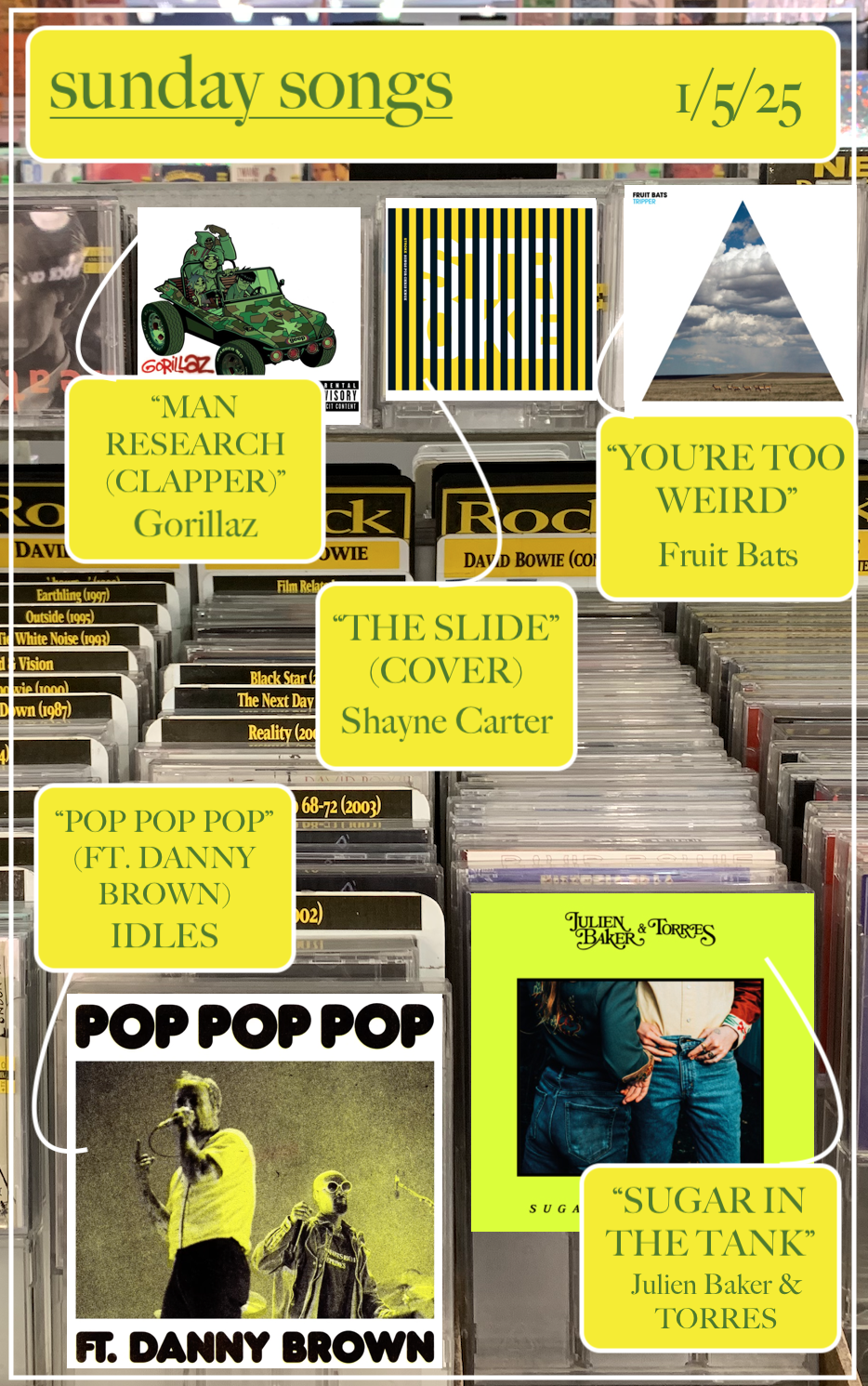
SUNDAY SONGS: 1/5/25

“POP POP POP (feat. Danny Brown)” – IDLES

Dread it…run from it…TANGK always arrives. One of the best albums of 2024, hands down. I already talked about “POP POP POP” back in March, but at the end of the year, IDLES added one more flourish to an already excellent track—a guest feature by Danny Brown. Of course, I say that knowing next to nothing about Danny Brown up until this point, but the spin he and IDLES put on one of the most prominent highlights of TANGK is an interesting one—and catchy, too. In places, the beat has been treated like an accordion, stretched out in some areas and compressed in others—the final, spoken-word monologue has been sped up, while the first five seconds are jumpstarted, recreating the static of plugging a guitar amp in. Meanwhile, Brown’s guest verse hurtles at breakneck speed; For me, there are some lines that come across rather corny (“On the surface/Looks like a circus/All these clowns around, pull the curtain”). However, at the very end, Brown’s lyrics align with the ethos of “POP POP POP” in the first place: an assertion of purpose, that purpose being staying true to yourself, spreading love, and being a source of protection for others. The final line sums it up nicely: “Took a couple wrong turns/Don’t know right from left/But found my way to the home that I strayed/And now I say everything is okay.” Can “POP POP POP” ever be improved? I highly doubt it, but I also doubt that this was meant to be an improvement—it’s more the kicking around with a preexisting idea with other collaborators, and in that experimentation, it creates an exciting take on one of the 2024’s best songs.

…AND A BOOK TO GO WITH IT:
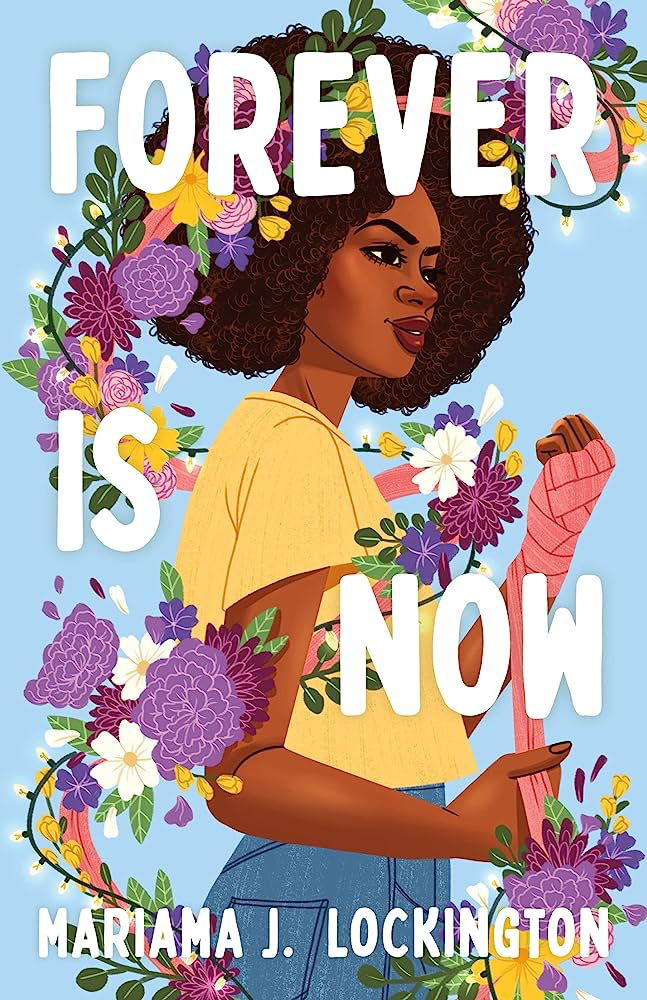
Forever Is Now – Mariama J. Lockington“Searching for something you cannot hide/Looked in the wrong place, but should search inside/Relied on things that just let me down
But now I see what its really ’bout…”

“Sugar in the Tank” – Julien Baker & TORRES

Personally, I’ve never quite gotten on board with the queer cowboy aesthetic, but I can respect how queer people have been taking it back. In the first place, I think any kind of cowboy mythos attracts the kind of people who want to forge their own trails and make their own way without the constraints of society, a Venn diagram that seems to attract, strangely enough, both conservative people wanting to go back to “traditional values” and queer people who see an out from heteronormative culture. Growing up in the mountains, my association with much of it came from the former, even in our fairly liberal town (I say fairly liberal because there was the odd confederate flag or “if you’re reading this, you’re in range” sign on someone’s house). But I don’t mind seeing a bedazzled cowboy hat or a boygenius photoshoot out in the desert every now and then. Evidently, I’m too much of a city slicker.

The reclamation of country by queer people has gone in much the same way, and I’ve never been one for country in the first place (same association as above), but what I will give a try 8 or 9 times out of 10 is anything that Julien Baker is involved in. Now here’s an example of queer cowboy/country reclamation done right: nothing better than two lesbians making a song with a title referring to slang for an effeminate man and turning it into something positive and sensual. Musically, there’s twang aplenty, but at least for me, Baker’s talent screams at you like a neon sign—she’s whipped out the banjo once more, and it contrasts with the hazy overdrive that TORRES has applied to her excellent guitar work. The boygenius fan is me is more partial to how Baker’s harmonies fit with Phoebe Bridgers and Lucy Dacus, but it’s clear that she’s well-matched with TORRES, musically and vocally. I’m not 100% on board with the more country direction—it’s more on the alt-country side, but very much country-sounding—but I’ll give it a chance for Baker.

…AND A BOOK TO GO WITH IT:

Road to Ruin – Hana Leewill something close to post-apocalyptic, biker cowboys suffice?

“Man Research (Clapper)” – Gorillaz

I remembered this track after getting into “Bill Murray” a few weeks ago; as wonderful an album as Gorillaz is, I often find myself forgetting about some of the songs sandwiched in the middle; this one has the job of following up “Clint Eastwood,” and with how many tidal waves that classic made in the early 2000’s, any track following that up, like “Bill Murray” and “Feel Good, Inc.,” has an exceedingly hard act to follow. But in much the same way as “Bill Murray” brings down the tempo but keeps the creativity, “Man Research (Clapper)” provides a bridge between some of the more energetic heavy-hitters—“Punk” comes up right after it. Buoyed by a sample from Raymond Scott’s instrumental piece “In The Hall of the Mountain Queen” (delightful, honestly—feels like the title screen music for an ’80s video game and not in a cheesy way), it’s dominated by the rasping repetitions of Damon Albarn pushing his higher vocals to their limits—maybe there’s the excuse for why I forgot about it. A good portion is just him going “yeah yeah yeah yeah yeah yeah,” but that’s the mark of a great musician—sure, he’s just going “yeah yeah yeah” in front of a sample and some record scratches, but I eat it up every time. There’s a smooth cohesion to his craft that makes every separate element seem as though this song is their final form, their ultimate destiny to be brought together.

…AND A BOOK TO GO WITH IT:
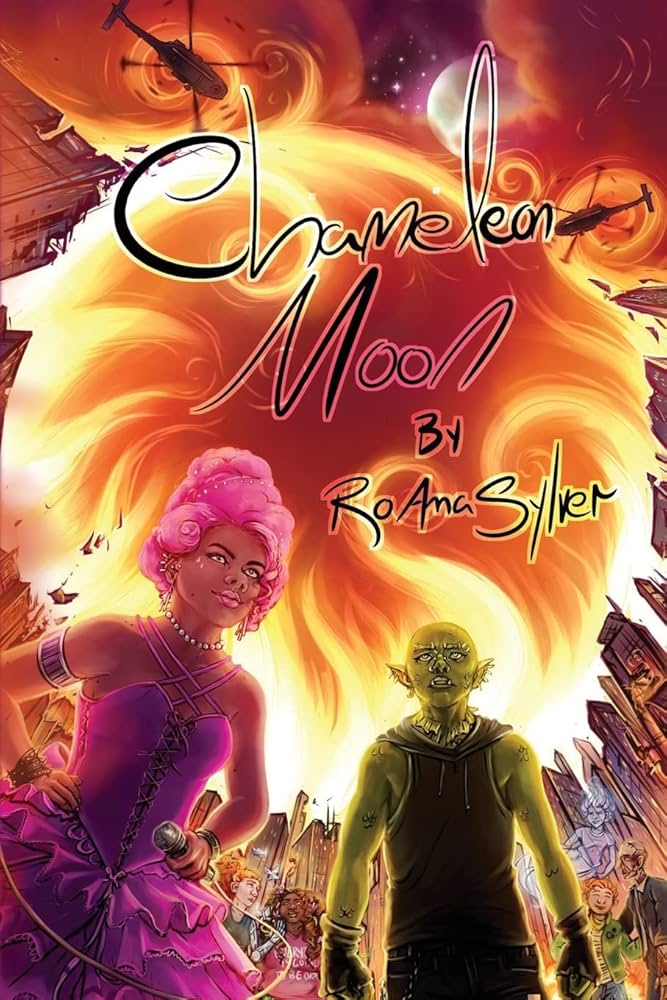
Chameleon Moon – RoAnna SylverI picked this one more for the atmosphere than the lyrics—a similar kind of hazy and raspy energy, but with an undercurrent of vitality.

“The Slide” (Tall Dwarfs cover) – Shayne Carter

Some covers prove that the singer understands some part of the song more than the original creators. Not to front on Chris Knox, incredibly talented and oddball songwriters as he is, but Shayne Carter’s cover gets to the heart of what Knox and co. were going for as far as the tone and the emotion of the lyrics.

Tall Dwarfs aren’t going to be anything but jangly, and their original version of “The Slide” is no exception. It’s got a psychedelic, ’60s sway to it, faintly sunny…and then you get to the lyrics. And then you get the whiplash from hearing those upbeat guitars against the lyrics: “The doctors should kill/She’s terminally ill.” I’m sorry, WHAT? I’m not saying that songs can’t have lyrics that don’t match the mood of their music, but in this case, Shayne Carter’s interpretation does the song more justice. In contrast to Knox’s upbeat instrumentals, Carter employs solemn pianos, muted strums of an acoustic guitar, and an electronic drone that begins to circle around you at the 1:58 mark as you listen like vultures circling carrion. The acoustics sound like they were recorded at 3 a.m. in an abandoned gym with walls covered in mold. That atmosphere captures how disturbing the lyrics are—sparsely told, it recounts the experience of an 80-year-old, terminally ill woman wasting away in an institution. That cold, chilling echo gives the song a much more tangible setting and emotional depth; the spareness of it all makes the setting so much more unforgivable, with its featureless walls and constant chill in the air. That Radiohead-like, droning dread comes about as close as I would imagine to capturing that imprisoned, monotonous feeling of your mind slip away and being powerless to do anything about it, all the while surrounded by nurses who barely want to be there. It’s a tragedy of a song—it was written in the 1990’s, and while I’m sure conditions have somewhat improved for patients, these situations are a reality for so many people, whether or not they have control of their minds. The pen that Chris Knox and co. put to paper was a respectful and sympathetic one, but Shayne Carter deserves so much praise for how much his musical interpretation brought out the original sentiment—and made it even more emotional.

Sadly, it’s a story that partially came true for Chris Knox; he suffered a stroke in 2009, and has had a limited vocabulary ever since. He’s made a handful of public appearances and performances in the last decade or so, but he’s largely off the radar these days. However, “The Slide,” alongside many more of his covers from both his solo work and of Tall Dwarfs, were compiled on Stroke: Songs for Chris Knox in order to initially help his family pay the medical bills. I hoped that he hadn’t accidentally predicted his own fate with “The Slide,” but it seems that his family has been going to great lengths to make sure he’s taken care of. Even amidst the horrors he described, there are bright spots worth celebrating—namely, the love of family and friends during unpredictable situations such as his.

…AND A BOOK TO GO WITH IT:
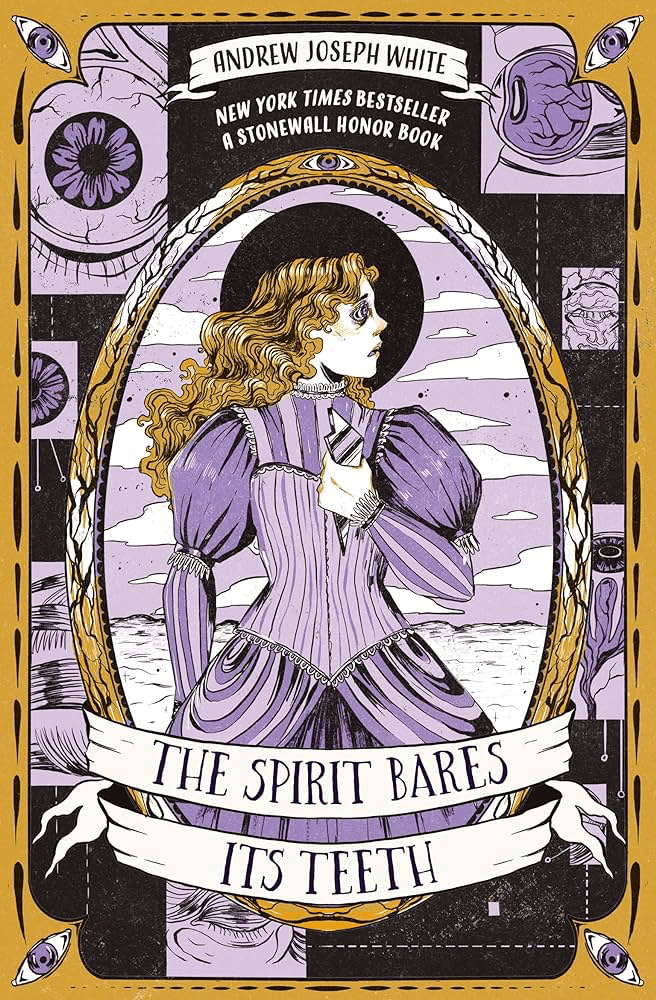
The Spirit Bares Its Teeth – Andrew Joseph Whitethe institutions in this novel are different than the one in the song, but it’s just as oppressive—and deeply haunting and eerie.

“You’re Too Weird” – Fruit Bats

…okay! Going into this, I didn’t expect to be that well-acquainted with Eric Johnson’s chest hair while he stared longingly into my eyes, but here we are? 😀 Don’t think I needed all that…thank you Eric, very cool

Either way, it’s all part of the ’80s-parodying cheese of the music video, complete with mullets, long pearl necklaces, everyone’s hair being artfully blown by an invisible fan, and even a keytar. The best part is that every single band member is fully leaning into the cheese, with every band member hamming it up whenever the camera is on them. If I can erase the strategic view of said chest hair via Johnson’s unbuttoned shirt, “You’re Too Weird” is a great little indie track; Johnson has one of the more distinctive voices in indie music that I can think of, and he takes it to some of its extremes, hitting higher notes than I’d expect even from him. Like the ’80s music and videos that “You’re Too Weird” takes cues from, it’s an endlessly catchy love song, peppered by a tasteful guitar solo and tambourine here and there. I’ll have to bring this back once the weather gets warmer—it’s the perfect song for staring out the car window on a summer evening.

…AND A BOOK TO GO WITH IT:
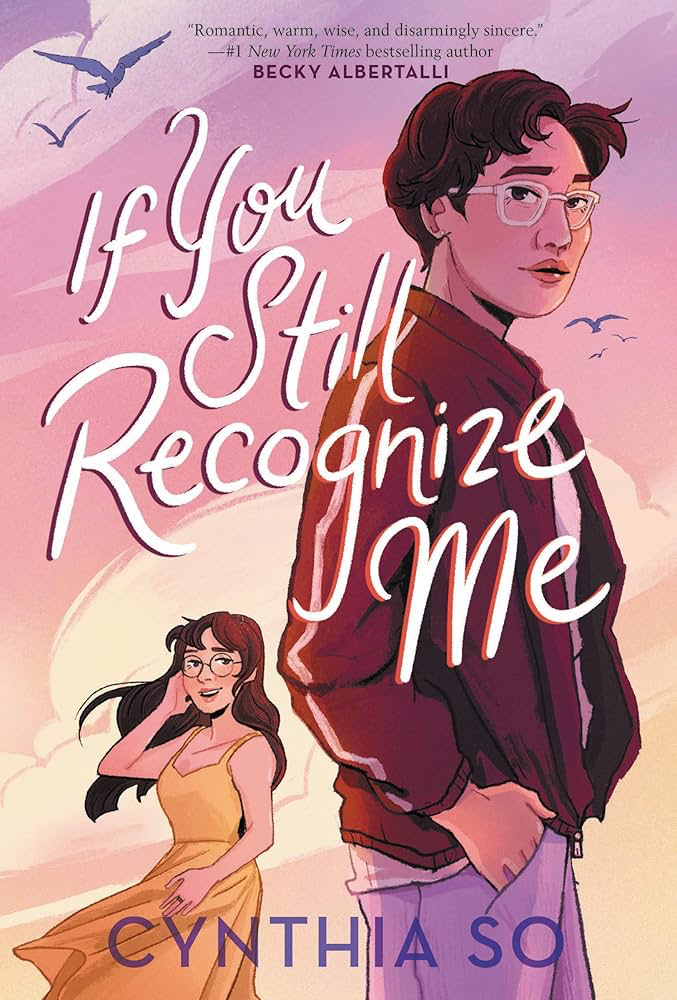
If You Still Recognize Me – Cynthia So“They say that I’m not supposed to be in love with you/They say that you’re too weird for me/And you’ll leave eventually/But then I’m the only one who ever believed in you…”

Since this post consists entirely of songs, consider all of them to be today’s song.

That’s it for the first Sunday Songs of the year! Have a wonderful rest of your day, and take care of yourselves!

Posted in Book Review Tuesday

Book Review Tuesday (12/24/24) – The Lost Story

Happy Tuesday, bibliophiles, and a merry Christmas Eve (and Christmas, in advance) to those who celebrate! No matter your beliefs, I hope you’re staying warm and spending time with your loved ones this week. Happy holidays! ❄️⛄️🎄🍪

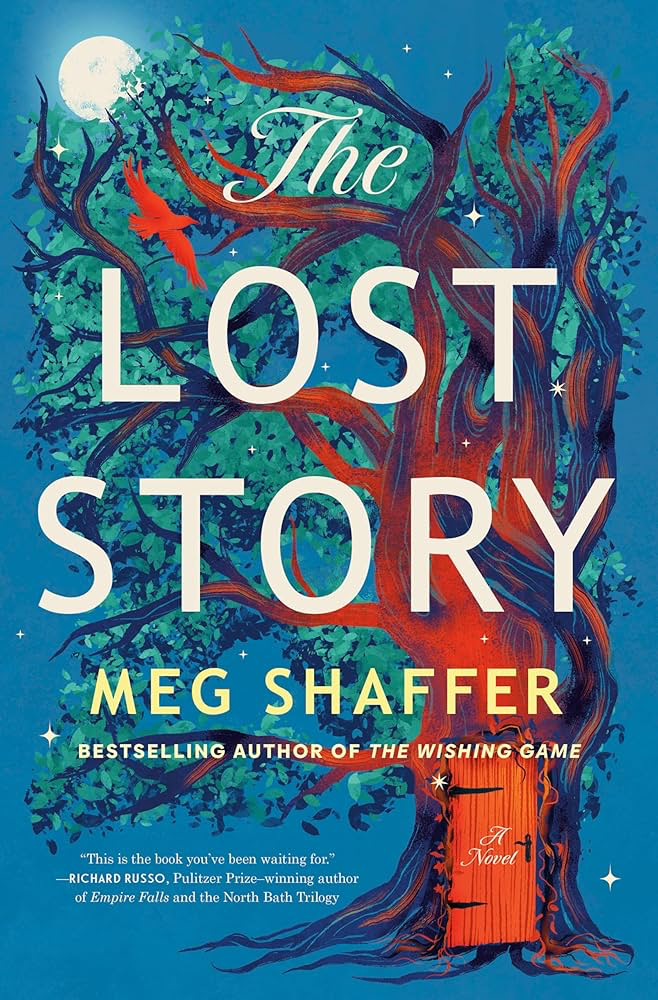
I discovered Meg Shaffer’s debut novel, The Wishing Game, about a month back and loved it. (Bottom line: if you’re an adult who wished they could’ve gotten Willy Wonka’s golden ticket as a kid, READ IT.) Naturally, I moved onto The Lost Story the minute it became available at the library. Although it wasn’t as strong as Shaffer’s debut, The Lost Story is a testament to the healing power of fantasy.

Enjoy this week’s review!

The Lost Story – Meg Shaffer

When they were 15, Rafe Howell and Jeremy Cox went missing in the West Virginia woods. Six months after their disappearance, they came back, seemingly unscathed. What the rest of the world doesn’t know is that they escaped to a fantasy world hidden deep in the Red Crow State Forest. But only Jeremy remembers their odyssey. Now, distanced for 15 years, Rafe remembers nothing about what happened that day, and Jeremy has a magical knack for discovering missing persons.

Emilie Wendell has gotten wind of Jeremy’s talent for locating the missing, and enlists his help to find her older sister, who vanished in the same stretch of woods where he and Rafe went missing all those years ago. With Rafe and Jeremy in tow, Emilie discovers a magical world that could have only sprung from the mind of a child, only visible to those who look hard enough. But confronting this world and its secrets may lead to the very reason that Jeremy and Rafe never spoke of their time together—and the reason why Emilie’s sister never returned.

TW/CW: near death situations, discussions of child endangerment/kidnapping (past), abuse (physical and emotional), homophobia, loss of loved ones (past), fantasy violence, mentions of suicide (past)

I never got around to reviewing The Wishing Game (which I liked better than The Lost Story) here, but it’s safe to say that Meg Shaffer is out here doing the good work, and by the good work I mean writing books about reclaiming childhood innocence and joy via the stories we loved as children. Having read both books, Shaffer really gets the power of stories—and the power of rediscovering them in adulthood. The balance between childlike wonder and whimsy and the harrowing realities that come with adulthood are a difficult balance to strike, but The Lost Story lives in the reality between them and never denies either aspect. Rafe and Jeremy’s journey of healing, rescuing people who may not need to be rescued, and realizing their love for each other was a rickety, emotional ride, but one that, once the plot got going, paid off in spades. Plus, I love that Shaffer made this story a distinctly queer one—I always love queer books, but the fantasy escapism plot with their queer identities made so much sense when you consider how fiction can be a sanctuary for queer people.

Part of what made that aspect of The Lost Story land so well was that Shanandoah truly felt like a child’s wonderland. There was a charm to the misplaced names (the Valkyries being only what a young girl would think of the real Valkyries of Norse myth, for instance) and the over-the-top magical ones, and each fantasy element had the nonsensical aspect of a child’s mind. This world is full of magical horses, impossibly sweet fruit, vengeful spirits, and everything a child could possibly populate a fantasy world with—and all of it is delightful. The Narnia influence was clear (it’s wonderful! Imagine C.S. Lewis without the proselytizing), but there was a whimsy to it that Shaffer excelled in—even if it was separate from the real world, she fully succeeding in making a world feel like it was ripped from the pages of a 13-year-old girl’s notebook.

However, I really didn’t see the point of Emilie being a part of the story. In contrast to Jeremy and Rafe’s complicated relationship, the only thread connecting her to the narrative was the fact that it was her sister who happened to have gone missing. Her personality bordered on grating—there wasn’t much to her other than a determination to find her sister and having her “teehee! so quirky”-isms when the plot called for it. (But did it really call for it?) My main issue with her is that she didn’t have the development that the other characters did. She witnesses the wonders and horrors of Shanandoah and comes out of it having barely changed, save for the fact that she’s reunited with Shannon. In contrast with Rafe and Jeremy, it just seemed increasingly obvious that she didn’t have as much business being there, even though she was purportedly the main character. The Lost Story might have been stronger if she had been nixed entirely—she was placed as the protagonist, but at its heart, it was the story of Rafe, Jeremy, and Shannon, not her.

Additionally, The Lost Story had some issues with its pacing. It took nearly halfway through the book for the characters to reach Shanandoah, the whole premise of the book. The first third or so, although Shaffer’s establishment of the exposition was spread out evenly, tended to drag. Instead of more development that could have lead more to the (excellent) arcs of the characters later on, we get drawn-out scenes of banter between the main characters once they reunite, as well as some tired training montages that could have been flattened out into a much shorter scene. As a result, the first half of the events in Shanandoah were rushed together—our heroes reach this famed fantasy land, and almost immediately, they’re separated and thrown on wildly different adventures that only converge in the last quarter or so. For such a grounded story, there needed to be more even allocation of events that truly mattered, which is why I couldn’t give it the full 4 stars.

That being said, I loved how the duality of the themes were tied together in the end. For all of the characters, the land of Shanandoah was escapism, but they had different ways of handling reality while in it. For Rafe and Jeremy, they couldn’t stay because there were real monsters they had to confront; Shanandoah worked both as a place for them to rekindle their relationship, but also to confront the very real demons back in the real West Virginia. For them, they had to return to the real world to heal. But for Shannon, Shanandoah was the realest part of her life. She had gotten into a situation that no child should ever be placed in, and for that, her childhood wish for another world came true, and it became her sanctuary. If The Lost Story had gone with either interpretation, I would’ve been happy, but I loved Shaffer’s approach in depicting both sides of fantasy and escapism. Fantasy can be a place to ignore all of your troubles, but also a place you return to when you need healing. Even if it’s fictional, it can be the truest, realest part of you. Both can be true.

All in all, a heartfelt and heartstring-tugging fantasy for all of the kids who wanted to return to Narnia. 3.75 stars, rounded up to 4!

The Lost Story is a standalone, but Meg Shaffer is also the author of The Wishing Game.

Today’s song:

That’s it for this week’s Book Review Tuesday! Have a wonderful rest of your day, and take care of yourselves!
Posted in Sunday Songs, Uncategorized

Sunday Songs: 3/10/24

Happy Sunday, bibliophiles! I hope this week has treated you well.

Don’t let the black color scheme full you—we’ve got a mostly joyful bunch, and if not joyful, at least upbeat. This week: what happened when I listened to Apple Music’s “Love” station on a whim, things that are wholly good and pure, and reflecting on the things that made middle school survivable.

Enjoy this week’s songs!

SUNDAY SONGS: 3/10/24

“After Hours” – The Velvet Underground

The story of “After Hours” famously goes that Lou Reed wrote this song, but knew it was too pure and innocent for him to possibly sing, so he enlisted Mo Tucker, the Velvet Underground’s drummer, for the task. As much as I love Lou Reed, he did the world a great service by not singing this song—in his hands, there’s no doubt that it would’ve felt like some kind of melancholic “Perfect Day” prequel, but at least he was self-aware enough to realize it. And there’s nobody more fit to sing it than Tucker. Her voice is beautiful, but it’s the voice of someone who rarely sings, if at all, and sings softly when she does. But that’s exactly the kind of voice that “After Hours” calls for. It’s a bashful, rosy-cheeked song, the kind that shyly peers out from behind the curtain to watch the bustling city below. There’s an embarrassment to it, but not the kind that makes you wince—it’s a diary confession written as the last threads of light are fading from the sky, the last pure thoughts filtering out of your brain. It’s so simple, and yet that’s why it digs at such a unique place in my heart—it’s not quite universal, but it’s just the kind of special to nestle up against me like a drowsy cat. There’s practically no end to the influence that The Velvet Underground has had on rock music, but I feel like “After Hours” is overlooked in that aspect—without it, where would the glorious pantheon of wistful women and their acoustic guitars come from?

Bonus: because somewhere down the line we collectively recognized that this song is best performed by female drummers, here’s a performance by Meg White of the White Stripes:

…AND A BOOK TO GO WITH IT:

Heartstopper – Alice Osemananother pure, sweet morsel of tenderness.

“Broken Man” – St. Vincent

It’s happening. IT’S HAPPENING. IT’S HAPPENING!!!

All Born Screaming? Uh, yeah, I sure am. The squeal I let out at 7 A.M. when my mom shared this new single could probably be heard through my whole dorm. I’m just glad that my RA didn’t catch on. After a solid month of teasing, first with the ceremonial removal of the Daddy’s Home blonde wig, then with throwbacks to her performance of “Lithium” with the surviving members of Nirvana at the Rock and Roll Hall of Fame (to the people saying “oH, shE’s sO oFf-KeY” about this one: did you all just forget how Kurt Cobain sang, or what?) and her performance of “Krokodil” at Coachella in 2012, we finally have the St. Vincent rock album that we’ve always wanted. I’ve gone past the point of trying not to hype myself up for this one—somehow I feel like it’s not gonna be another MASSEDUCTION incident, because everything about this album— the aesthetic around it, and its collaborators (Dave Grohl on drums in this track, and Cate LeBon featuring on another)—feels like it’s going to rock. Annie Clark always seems to have a clever, cheeky album title up her sleeve, but All Born Screaming has to be one of the harder ones. And the album art…well, yeah. Let’s get the elephant out of the room—it’s great album art, but the timing was…not good, as it came just days after Aaron Bushnell self-immolated to call attention to the ongoing Palestinian genocide. (Rest in power. Chip in where you can.) But at the same time, there’s no way that Clark or her team could have predicted that kind of thing. I really don’t feel like she’s at fault here—it’s bad timing, sure, but none of us can be expected to foresee everything in the news.

Back to the song…I need to be stopped. Somebody needs to hold me back…or, at any rate, somebody should’ve held me back on the Thursday morning when “Broken Man” came out, because I listened to nothing but that song from approximately 7-11 A.M, and I had to go about three days before I could listen to it again. I’ve learned nothing. But now that I’ve ridden the initial high, I’m reveling in the new direction that St. Vincent has started to go towards with All Born Screaming. Most of the comparisons I’ve seen wind up somewhere in the neighborhood of Nine Inch Nails, P.J. Harvey, and Rage Against the Machine, and I can see all of those, especially with the former two—the industrial grind of Trent Reznor and the feral, growling vocals of P.J. Harvey are wound all over this track. Like the album art, it’s painted in the colors of ashes, still hot to the touch and rough between your fingertips. Clark has toed this line more often than not (see “Krokodil”), but we’ve gotten an album where she’s fully embraced her heavier side—one that she’s always had the capacity for, but somehow bottled up before throwing herself into All Born Screaming, the first album that she produced herself. It oscillates smoothly between hectic, metronome-ticking pop, uncomfortably sung from inside of a steel crate as she taunts the listener with her head peering out of the lid. It feels like a callback to the frenetic, pent-up energy of her self-titled record [slides Anthony Fantano glasses up the bridge of my nose], but with even more fury—every other lyric feels like a spit-laden taunt: “Who the hell do you think I am?/Like you’ve never seen a broken man?” With each verse that goes by, every word is spat with more intention, more vitriol, swerving between her silky, whisper-vocals to a full-on, sweat-drenched growl as the song closes. And this song’s breakdown is one of the most exciting of her songs in recent years; crashing in with Dave Grohl’s legendary drumming, you can’t describe this song with anything other than “fiery”: it’s a primal scream of a song, burning, biting fervor engulfed in flames. And I can’t help but get excited about the choreography in the music video—as flames dance across her neat, white button-up and slicked-back ponytail, her arms play a game of “the floor is lava” with her torso, jerkily twisting to avoid some point of contact. An eagle-eyed YouTube commenter compared it to her choreography for “Rattlesnake,” and…oh god, now I’m way too excited. Daddy’s Home is the best of her more recent work, if we’re going post-self-titled [slides glasses up even further] but…don’t do it. Don’t give me hope.

…AND A BOOK TO GO WITH IT:

Gearbreakers – Zoe Hana Mikuta – industrial landscapes abound and all-around badassery to spare.

“Red’s Ok” (from Hellboy II: The Golden Army) – Danny Elfman

Fast-forward to 8:20 for “Red’s Ok.”

Hi. Gonna try and be calm about this one. As calm as I can be when I feel the raw, untamed power of my middle school Hellboy hyperfixation coursing through my veins. The deluxe edition of the Hellboy II soundtrack showing up on my Apple Music suggestions on an unsuspecting Sunday morning was certainly a kick in the pants that sent me hurtling back to 2017 at alarming speeds, and I have yet to reach terminal velocity.

I don’t know what prompted the release—last year would’ve been fine, given that Hellboy II turned 15 that July. Who knows. Just up and popped out of nowhere. But man, I am so glad that it did. Having this expanded edition just goes to show how many gaps were left out of the original soundtrack, even if many of them (including this song) are under a minute long. I’m convinced that there was some kind of rush in putting together the original soundtrack, since now we know that the random tidbits that didn’t seem to come from anywhere that were tacked onto the end of “Finale” were, in fact, two alternate versions of songs that were almost used in the troll market scene. Again: who knows how that happened. But now, the score feels as whole as ever—those short-and-sweet tidbits fill in the crucial gaps, the silly, almost jazzy flourishes to plump up some moments of witty banter (of which there are many), fleshed out a soundtrack that’s cemented itself in the nostalgia catalogue of my mind. “Red’s Ok,” in particular, is the wonderful variation on the tasteful electric guitar motif, shown just as we see Hellboy emerging from the wreckage of a car he’s just landed on top of, wielding the Good Samaritan in the film’s most honest-to-god movie poster moment. And we get the full, 7-minute long cut of “Where Fairies Dwell.” I was born in the right generation. Born too late to see the rockstars I like, born too early to explore space…but born just in time to be able to listen to “Fuck-Used”. Bless.

My good feelings towards Elfman himself have started to fade after the allegations that came out last year, and this doesn’t change that, but I can’t deny the talent that went into this soundtrack, as well as the countless others he’s crafted over the years. Admittedly, his work has become so entangled in my life that, even though I’m all for theoretically separating the art from the artist, the truth is often far more complicated than putting the allegations in one box and their art in the other. I don’t necessarily know if it’s a personal flaw that I can’t detach from people that easily (lord knows I haven’t been able to listen to Arcade Fire as often as I used to without feeling a little moral revulsion). It’s not like J.K. Rowling’s transphobia and other prejudices manifested out of thin air directly after she wrote Harry Potter. And yet, I’d be the world’s worst liar if I denied how dear this film is to me. 13-year-old me saw this and saw an image of found family, of freaks who banded together in a world that was bent on destroying them, of freaks showing affection and forgiveness towards the world and each other, and it stuck. It did something to me. It showed me a possibility of a future that I could live out. At least it’s just the soundtrack in this case, and not the film itself. That’s all safe. I don’t even want to entertain the notion of Guillermo del Toro having any metaphorical skeletons in his closet, because given what the guy’s house looks like, he definitely has some plastic ones lying around. But it seems like he’s the type to keep it to that.

So I’ll be excited for the middle schooler in me. When this came out, I painted my nails and listened to this as they dried, remembering that there was a part of me back then that should be cherished—the one that didn’t care what anybody thought, and the one that watched this movie at least once a month.

…AND A BOOK TO GO WITH IT:

Hellboy II: The Art of the Movie – Guillermo del Toro yeah, this was the obvious pick, but what else was I gonna do? Put in the movie novelization? Imagine swapping out “Dr. Manning, suck my ectoplasmic schwanzstucker” for “Manning, you’re a jerk.” Unconscionable.

“POP POP POP” – IDLES

It’s been almost a month since TANGK was released, and I find myself drawn to it over and over again, simply because it’s so IDLES in a way that I haven’t seen from them. Like I said when I talked about “A Gospel” back when the album was released, it’s a beast that’s half old and half new, but brimming with the same ethos of kindness with a hard-edged sound. While “A Gospel” and “Grace” were the album’s pinnacles of vulnerability, “POP POP POP” just seems like the place where Nigel Godrich went nuts—it feels like IDLES trying to make a Radiohead song, but never once does it feel like a blatant imitation. It has an angular, jerky smoothness to it, with the combination of synths that buzz like a hive of insects with Joe Talbot’s voice—the lyrics aren’t screamed like he tends to do, but with a dry, disaffected drawl that signals irony, but knowing IDLES, it’s a sign of bare sincerity just as any other bellow he lets out. On the inside, the lyrics are similar to most of the material on this album—a shield of kindness against a wave of hatred: “Strong like bull/Vulnerable (vulnerable)/Keep my people up/That’s my tool.”

But there’s something resolute about the way that “POP POP POP” is delivered—it’s almost like he’s drawing not from a place of repeating himself, but convincing himself of his mission. I’ve seen a fair amount of people in internet music circles roll their eyes at IDLES for acting like their lyrics are more radical than they are, which…I halfway understand. A lot of their subject matter in their music isn’t exactly new in terms of political fodder to spin into music. But is there really anything new, political or otherwise, that you can write a song about? I find myself thinking of Audre Lorde and her essay “Poetry is Not a Luxury,” where she states that “…there are no new ideas. There are only new ways of making them felt, of examining what our ideas really mean on Sunday morning at 7 AM…[while] making war, giving birth.” I get why people are put off by IDLES seemingly acting like their ideas are new (I’ve never gotten that impression, but that’s just me), but personally, that was never what was radical about them—it’s their approach to kindness. It’s unclear whether this is the exact criticism that may have spawned “POP POP POP,” but the final verse, chanted like a prayer as the hive of synths descends into a buzzy, Kid-A maelstrom, feels like Talbot convincing himself of the message that he and the band have always pioneered: “Imposter, imposter, living in my head/Am I the spider in your bed?/A dead canary and a thief for a king/A cheerleader valiant/But I will sing about love, love…” And as his voice gets overlaid, the final chant that rings out is the tagline for the later track “Grace” and this album’s tour: “love is the fing.” It feels like reassurance in a sea of self-doubt, a reminder of a message to be held dear, a mission statement lost in the mist but found again when it came time to look back and remember why they created it in the first place. And as with the ending of this song, what persists is four essential words: “love is the fing.” You look back into all of the mess that your creativity has taken you, and what you find at the center is the love that motivated you to create in the first place.

…AND A BOOK TO GO WITH IT:

Kindling – Traci CheeI just reviewed this one, so it’s pretty fresh in my mind, but the last, more distorted lyrics made me think of these characters and their struggles to grow out of their trauma and persist—”Imposter, imposter, living in my head/Am I the spider in your bed?/A dead canary and a thief for a king/A cheerleader valiant/But I will sing about love, love…”

“Just One Look” – Doris Troy

The other day, I decided to listen to Apple Music’s Love station on a whim—I was drawing before bed, and I wanted something new to listen to. It ended up having mostly hits, some misses (one of the hits was “After Hours,” but I’m honestly concerned about the fact that there was…an Elliott Smith song on there? Not the weirdest Apple Music pick, but I don’t know if that screams “love”…), but it was the reason that I stumbled upon this song, which I am so grateful for. Scratch that—I’m grateful, but more than anything, I’m more surprised than anything that I’d never heard of her before then, given the company that she kept: she was first discovered by James Brown, and later collaborated with everybody from The Rolling Stones to Pink Floyd (she contributed backing vocals to Dark Side of the Moon, my god…). With all that, a musical based on her life, and a number one hit, you’d think we would be hearing more about her, but alas, nope. Whether or not that’s just another testament to how history treats Black women or the fact that she stepped away from the mainstream music industry after the ’70s is up in the air, but either way, I’m glad the Love station brought me to her.

I’ve always had a soft spot for that late ’50s-early ’60s soul. As much as I laud other artists for having intricately crafted lyrics, sometimes, it’s simplicity that wins out—and that was exactly what labels like Motown were the best at producing. Artists like The Temptations, the Ronettes, and others feel like they’ve distilled love—one of the most complex human emotions—down to its barest essentials. Every song becomes something so tender and universal that it feels like a warm blanket for the soul. Along with the rich vocals that often came with it, and you’ve got one of my favorite musical soft spots—I’ll take shreddy guitars any day, but sometimes, all I need is some wholesome love. That’s exactly how “Just One Look” feels—brimming with warmth, and the perfect tempo for slow-dancing in the kitchen. Only seconds into the song, and you can hear exactly why Troy’s fans gave her the nickname “Mama Soul”—soulful is the only adequate word to describe her rich, soaring voice. Combined with the air light touch on the piano keys, and I’ve got another comfort song in my collection—there’s something to be said for simplicity.

…AND A BOOK TO GO WITH IT:

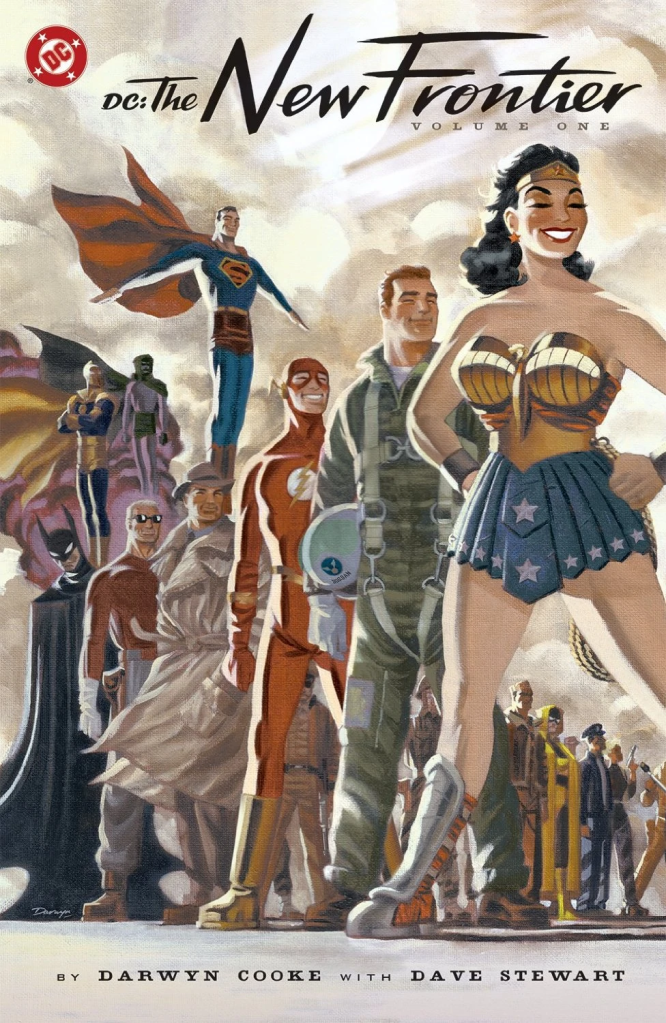
DC: The New Frontier, vol. 1 – Darwyn Cookethe lyrics for this song are so universal that they could cover any kind of romance, so instead, I went for the time period; the late ’50s-early ’60s setting of The New Frontier is settled right in the same era.

Since this post consists entirely of songs, consider all of them to be today’s song.

That’s it for this week’s Sunday Songs! Have a wonderful rest of your day, and take care of yourselves!