
Happy Sunday, bibliophiles! I hope this week has treated you well.
This week: next stop, Big Feels™️ central…totally haven’t been anxious for the past week and a half, how’d you guess?
Enjoy this week’s songs!
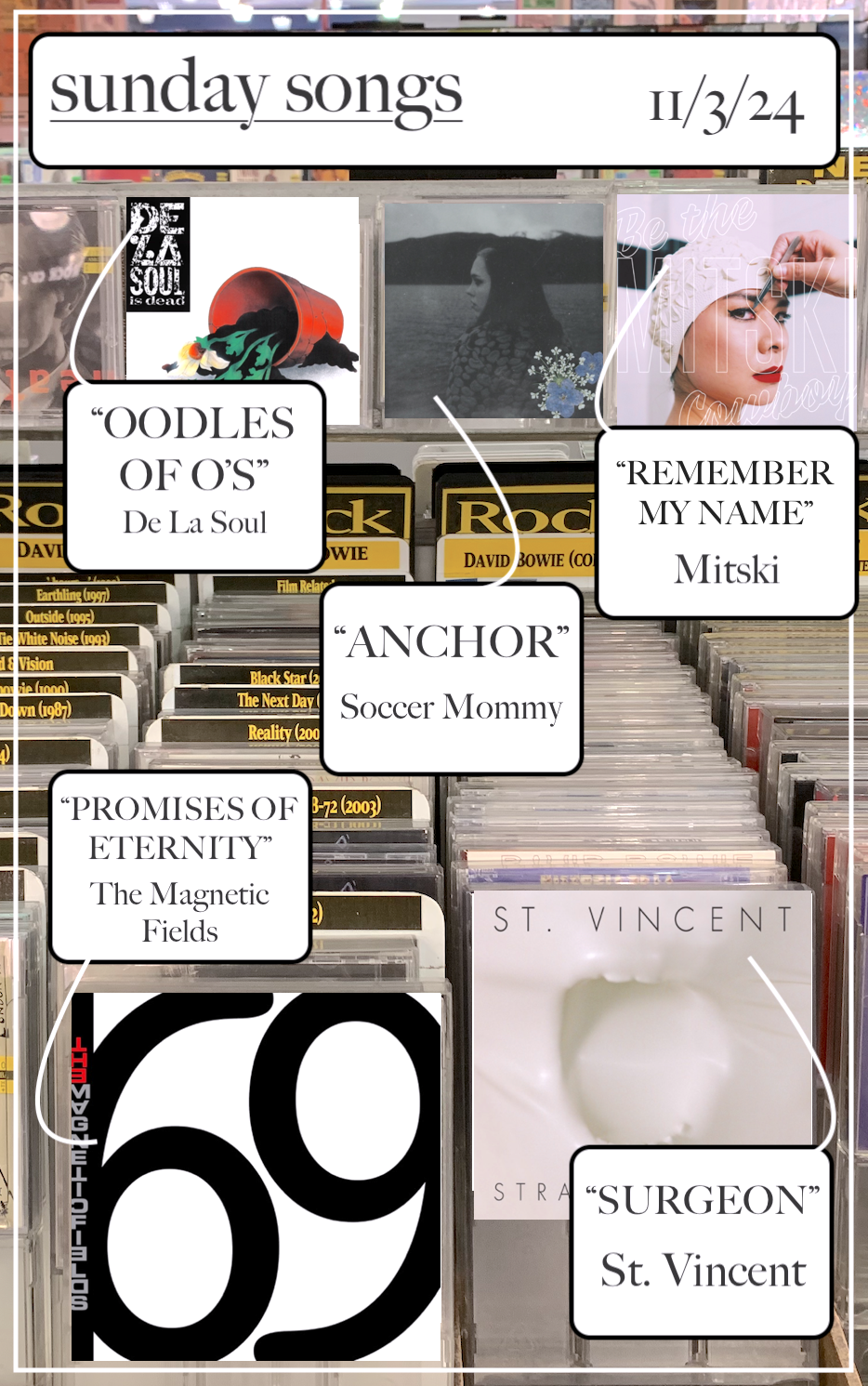
SUNDAY SONGS: 11/3/24
“Promises of Eternity” – The Magnetic Fields
I had the privilege of seeing The Magnetic Fields a second time last weekend; this year marks the 25th anniversary of an album that (from what I’ve heard) is not so much an album but a great balancing act of music itself: 69 Love Songs, a triple album consisting entirely of songs about love. (Make no mistake, they’re not all romantic. See: “How Fucking Romantic,” “Yeah! Oh, Yeah!” “I Think I Need a New Heart.”) I’ve yet to find the time to set aside a whole three hours and listen to the album in its entirety, but even a glimpse at around half of it over the course of my lifetime leaves me in awe of how Stephin Merritt and company pulled this off. Especially Merritt, as he wrote every single song—his songwriting never falters, but to not sputter out after 69 songs is a feat as awe-inspiring as his vocal range.
Somehow, “Promises of Eternity” slipped by my notice, but it hasn’t let me go since last weekend. Sung by Merritt on the album and by Anthony Kaczynski live, it immediately stuns. In both mediums, the synths just bowl you over—they don’t play as much as grandly announce their presence with the flourish of the same velvet curtain that the song speaks of. That chest-clutching drama defines the rest of the song—all of the lyrics detail the hypothetical collapse of the world if the narrator’s lover did not love them back: “What if no show ever happened again?/No seven, no eight and a half, no nine and no ten?” Most of Merritt’s singing has a sarcastic current to it that almost makes you question if the guy really believes in true love (though “The Book of Love” disproves that hypothesis quickly), but the way that he belts out “What if the clowns couldn’t be clowns?”, of all lines, gives you the feeling that he’s just fallen to his knees and is begging straight to your face. Apparently, the absence of clowns will signal the end? Who’s to say, really? Along with the circus imagery, the organ sound created by the synth makes “Promises of Eternity” feel like an elaborate, gilded carousel of lovesickness, with instrumentals that wouldn’t be out of place at a fairground, but lyrics fit for Romantic (in the Keats way, not the general way) poetry.
…AND A BOOK TO GO WITH IT:
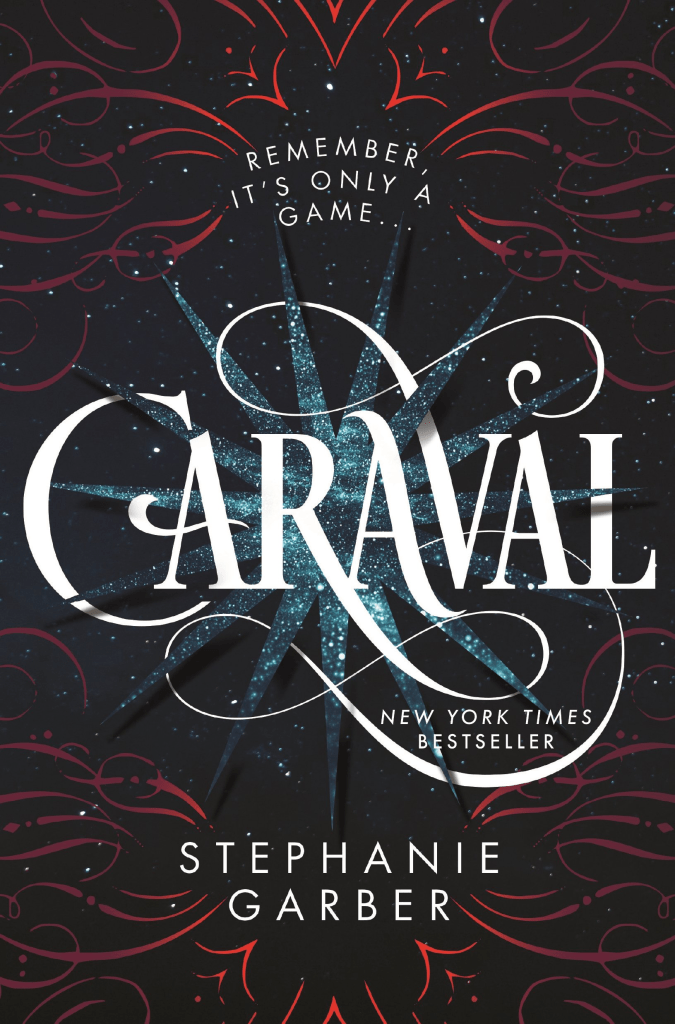
Caraval – Stephanie Garber – circus imagery aplenty, as is the levels of drama being off the charts.
In the age where you can make a synth—and most any instrument, really—make almost any sound you want it to, I shouldn’t be surprised at the staggering achievements that music has made in the simple terms of what noises we can make. What sounds like “the future” feels entirely subjective when we’re talking about anything past the 2010’s—electronic music had exploded, and plus, what sounds futuristic to me might not sound futuristic to you.
My waxing poetic about St. Vincent has mostly been directed to her self-titled 2014 album, which, ostensibly fits that description for me. But with each successive listen to “Surgeon,” I’m blown away at just how much this sounds like the future. This was 2011, and aside from the percussion, most everything on this track sounds utterly alien. Watching the 4AD sessions recording that I linked above was genuinely eye opening—every few minutes, I just found myself going wait, that’s the instrument that’s making that weird noise? The synths are manipulated to the point where they could just as easily be the vocalizations of a children’s choir from another planet. Even the blink-and-you’ll-miss-it trill of a flute turns into a glitch in some kind of code. I can see the threads of Björk—especially Homogenic—throughout, yet it’s so distinctly Annie Clark. By far the most masterful of these manipulations should be obvious: Clark’s guitar solo beginning at 3:36 feels like she’s almost reached the extreme of what the instrument can sound like. It’s hardly even a solo anymore—it doesn’t just sound like a synth, it sounds like some kind of creature whose consciousness has been trapped in a computer and is howling to be freed. If you were to somehow visualize this music, I’d fully believe it if it came out fleshy and trailing with electrodes.
Oh, to spend a day in her mind…
…AND A BOOK TO GO WITH IT:
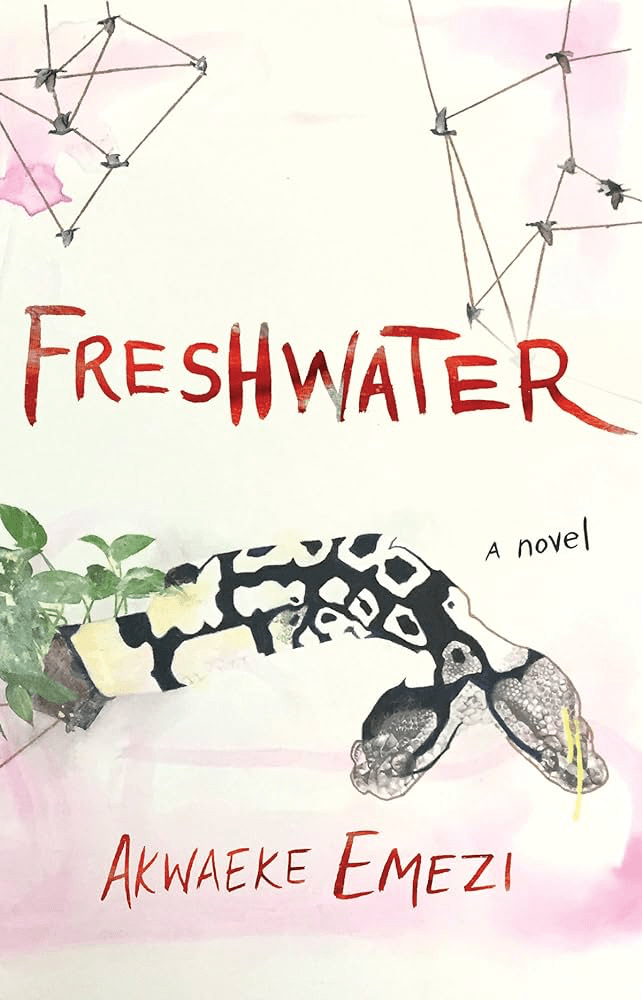
Freshwater – Akwaeke Emezi – stagnation, grappling with identities beyond the human, and the desire to free that identity with help of a surgeon.
Is it possible for De La Soul to have a bad song? Well…okay, I haven’t gotten into their later catalogue, which seems to have a worse reputation (I don’t know, though, “Snoopies” is pretty fantastic), so that’s up for interpretation. But for me, De La Soul are one of those bands where almost every new song of theirs I find feels like digging up buried treasure. At least in the ’90s, their creativity seemed to come to them as easy it is for the average person to breathe. The lyrics? Deadly serious, but still full of whimsical, silly rhymes—nothing but De La Soul. The best part is that every single line ends in an o sound—quite literally oodles of o’s! The samples? That Tom Waits bassline sample is something to behold. This is my kind of hip-hop. Can’t say if their entire catalogue is perfect, but “Oodles of O’s” is. We need to bring back the word oodles. Carry on the spirit.
At the end of the day, it’s beautiful that this got the video that Dave wanted it to have, now around a year and a half after his passing. Maybe it’s not the grittiness he envisioned, but a donut shop more than makes up for it.
…AND A BOOK TO GO WITH IT:

Geekerella (Once Upon a Con, #1) – Ashley Poston – admittedly, a much fluffier take on fame, but an exploration of how it reduces you nonetheless.
With the workload I’ve been swimming through this semester, I’m not sure if I’ll get around to reviewing Evergreen, but rest assured—I LOVED it. After a few listens, Sometimes, Forever remains on top, but Evergreen is special. There’s a matured, bedroom-pop-grown-older familiarity to it, but as with every successive album, Sophie Allison always has something new to offer. Her fourth album is a cartography of grief, detailing the tangled web of loss, healing, and pining after your Stardew Valley wife, as it turns out. As with every one of her albums, it’s her introspection that shines—with every kind of grief that she experiences, it feels like a flag planted in the ground, a recognition of every hill and valley of the harrowing trek she’s been on, but recognition that it’s not the end, no matter how much of it is behind her.
In contrast to the largely acoustic (or at least traditionally guitar-driven) landscape of Evergreen, “Anchor” instantly singles itself out as the black sheep of the bunch. Though it covers some of the same ground as the rest of the album, the production doesn’t jump out at you so much as it pounces on you like some creature going after your ankles in the dead of night. I should’ve expected that Allison would retain some of the sound from Sometimes, Forever, but with how the rest of Evergreen sounded, it was a surprise—and a 100% welcome one. With synths and bells that wouldn’t sound out of place in a Chelsea Wolfe track, it has a jaggedness and fear that the rest of the album lacks. In a song about feeling so unmoored in the face of loss, it’s one of the most creative stylistic choices on Evergreen to me. In the same way that a simple object or scent or song can trigger a domino effect of memories that takes days or weeks to recover from, “Anchor” comes out of nowhere with its instrumentation. It has the static and crunch of watching yourself bolting through the woods through the lens of a trail cam, and that’s how grief can make you feel—cornered and in the dark.
…AND A BOOK TO GO WITH IT:
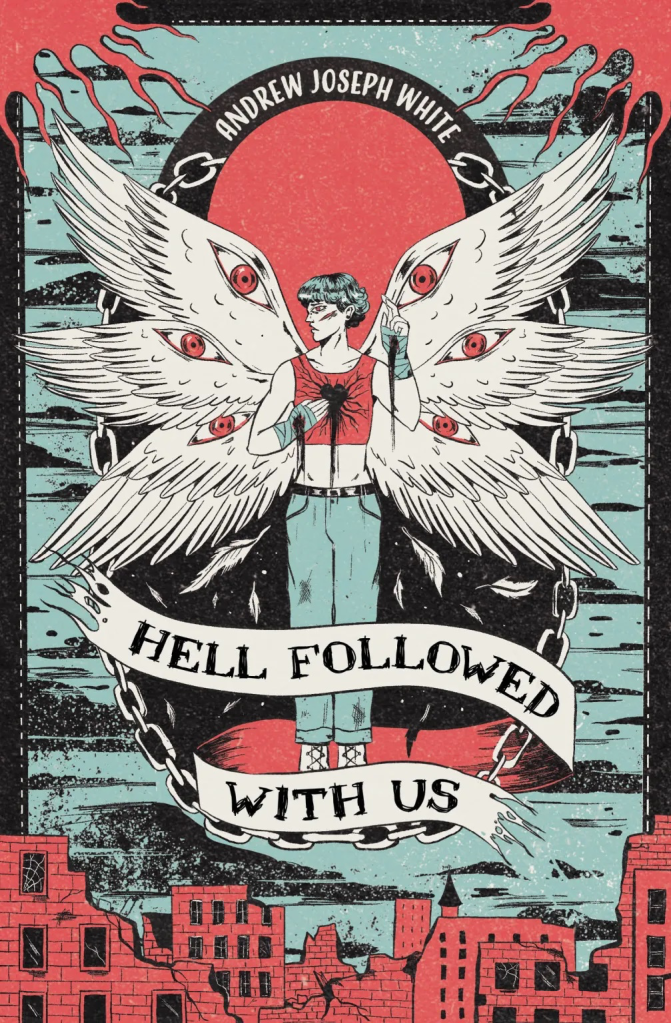
Hell Followed With Us – Andrew Joseph White – “When we left the harbor/I was certain of my path/There’s no turning back/Now I long for something that/Could stop me in my tracks/An anchor to cast…”
Knowing that “Remember My Name” was released so close to the time that she almost quit music (back in 2019) really puts this song in perspective. Mitski’s still battling being in the spotlight, but this song presents the other side that’s been waging that war; deep down, she harbors a desire to be musically immortal, even at the steep cost: “I gave too much of my heart tonight/Can you come to where I’m staying/And make some extra love?/That I can save ’til tomorrow’s show.” With its crunching guitar riff that’s begging to be sampled and the way that the chorus consumes you in the same way that watching an approaching tornado on the horizon does, there’s so much urgency and volatility packed into just over two minutes. The best of Mitski speaks to that part of me that is so easily overcome by emotion and gives itself over to its throes—sometimes, whatever the situation, you do feel like you need something bigger than the sky. What works so well is that Mitski is dead serious—every song is an explosive, cathartic release. Of course, again, that’s probably what attracts so many parasocial weirdos to her shows, but I at least have the tact to not yell “MOMMY” at her, much less anybody else. That’s exactly the price of the fame she speaks of—she places her heart on a platter, people tear it to shreds, and the process repeats itself every day. I’m just glad that after The Land is Inhospitable and So Are We, she’s repaired that volatile relationship with music, or at least started to. Much as I love a good Mitski explosion, her best music comes when she’s healed, or at least processing it.
…AND A BOOK TO GO WITH IT:
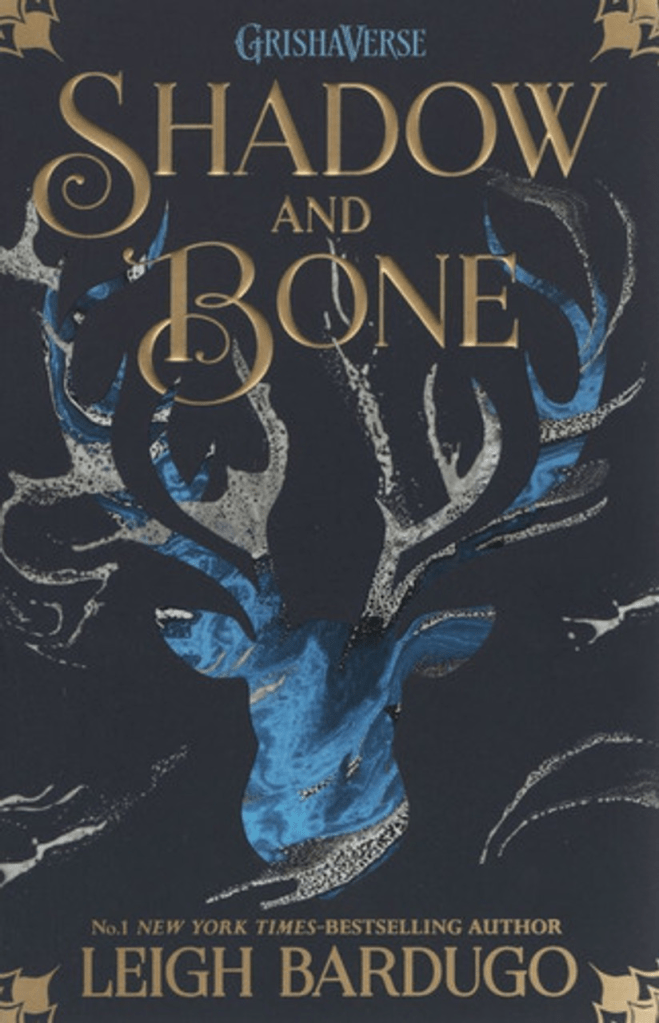
Shadow and Bone – Leigh Bardugo – “I need something bigger than the sky/Hold it in my arms and know it’s mine/Just how many stars will I need to hang around me/To finally call it Heaven?”
Since this week’s post consists entirely of songs, consider all of them to be today’s song.
That’s it for this week’s Sunday Songs! Have a wonderful rest of your day, and take care of yourselves!


 The Bookish Mutant