Posted in Book Review Tuesday

Book Review Tuesday (10/21/25) – Failure to Communicate

Happy Tuesday, bibliophiles!

I found out about this book earlier this year while looking for more sci-fi with queer and/or disabled rep (as I always am). This book seemed to have nearly the perfect premise—I just can’t get over how genius it is to have an autistic protagonist who’s had to study human behavior her whole life study alien behavior as well in order to initiate First Contact. I ended up buying it for Bookshop.org’s recent Anti-Prime Sale, and I ate it up in a handful of days. Though not without its flaws, Failure to Communicate delivers almost completely on its remarkable premise, full of political intrigue, aliens, and heart.

Enjoy this week’s review!

Failure to Communicate (Xandri Corelel, #1) – Kaia Sønderby

Xandri Corelel has spent her life studying everyone around her, be they people or aliens. She’s been forced to, after centuries of eugenics has made her one of the few autistic humans left in the universe. She uses these skills as a Xeno-Liaison, negotiating with all sorts of aliens on behalf of the Starsystems Alliance. But when presented with a potentially hostile species possessing one of the most powerful weapons in the universe, Xandri faces the most difficult negotiation of her career—one that may chance the face of interspecies relations forever.

TW/CW: ableism, xenophobia (fictional), violence, blood, genocide themes, slavery, animal death

“Autistic person spends entire life trying to understand human behavior, doesn’t fully understand it, then spends her entire career understanding alien behavior instead” has to win the gold medal for the best sci-fi premise I’ve heard in years. (Also, felt.) And though not all of it delivered on said premise, Failure to Communicate is a hidden gem for sure.

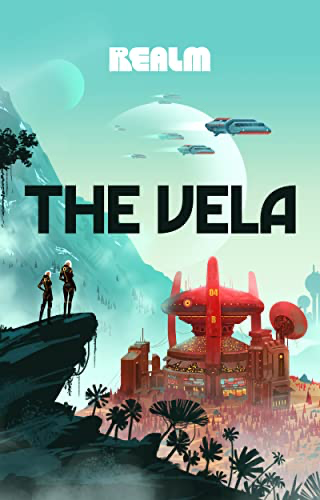
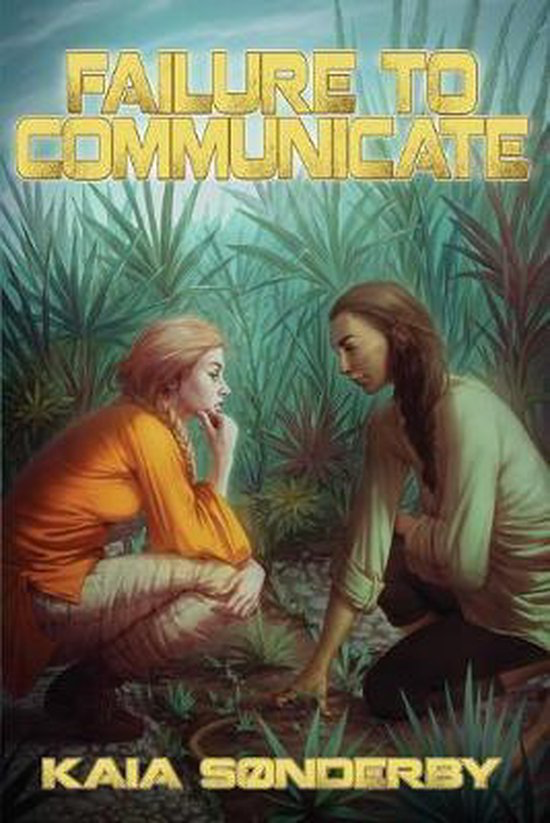
Now, I’m reviewing a space opera book which features a whole host of alien species, which means it’s time for my obligatory creature design rant. The aliens in Failure to Communicate are…a complicated case, for sure. The majority of them are basically larger, intelligent versions of real-world animals (with some brief exceptions), but Sønderby is self-aware of the fact; for instance, the Psittacans (a name that Xandri gave the species and didn’t develop on its own, thankfully) basically look like giant parrots, but Xandri explains that in-universe, all of their parrot-like features aren’t anything like what we would call, say, feathers, but evolved in such a way that they looked exactly like Earth parrots independently of Earth. This same explanation is given to pretty much all of the other species in the book, which is a bit too convenient to apply to 90% of the aliens in the novel. As for the Anmerilli, though I’m not disparaging the cover artist in any way, I feel like the cover didn’t do justice to their more alien features—and man, was I relieved that these aliens weren’t just humans with extra steps. Well…if you boiled it down, they kind of were, but there were enough traits that they at least got to the level of a decently compelling Star Wars humanoid. (Also, Sønderby’s descriptions of the Zechak also made me picture them as genocidal Piglins, which was…uh, interesting, for sure.)

But what almost made up with that for me was the in-depth explanations of their respective cultures. In the end, Failure to Communicate wasn’t necessarily a book about biology—it was a book about politics, anthropology, culture, and communication. That, at least, was incredibly fleshed out and much more thoroughly thought-out—as it should’ve been. Dissecting some of the alien cultures was one of the best parts of the novel. These cultures and the conflicts between them formed the backbone of the novel. Though until the end, Failure to Communicate is somewhat light on action, Xandri’s experiences with navigating the intricacies of dozens of alien cultures was nothing short of compelling—Sønderby has the mind of an anthropologist, and there was truly no stone left unturned. I loved that she didn’t shy away from depicting the discomfort that comes with interacting with other cultures for the first time and having one’s own values brush up against theirs—it’s bound to happen with First Contact, and it’s bound to happen in a lot of novel, multicultural interactions. There were some places where I felt there needed to be more nuance (ex. the whole situation with the Zechak; yes, they’re genocidal, but it verged too close to “this entire species consists of genocidal, cold-blooded killers,” which Xandri tries to self-correct, but isn’t emphasized enough. I’d find that hard to believe), but overall, I loved Sønderby’s cultural explorations.

Sønderby’s commitment to not shying away from discomfort was one of the best parts of the novel, and that was made manifest in her main character, Xandri. There was a ton about her that I loved—her keen eye for cultural quirks, her inner monologues about the idiosyncrasies of the neurodivergent world, and her unflappable sense of justice. However, she was far from a perfect character—even being in a world populated with aliens, she harbored her own unconscious biases and prejudices, which she frequently had to come to terms with throughout her mission. She lashed out, she made rash decisions—she was imperfect. And though she was easy to root for, she had plenty of flaws, a balance that is difficult for any author to strike.

Failure to Communicate isn’t an action-heavy book, which I’m all for—waiter! More cozy sci-fi, please! However, I hesitate to call this novel “cozy,” especially considering the moment when shit hits the fan during the last third of it. Everything that happens then swiftly merits the “cozy” title being unceremoniously ripped off. Nonetheless, Sønderby takes some cues from cozy sci-fi’s best; I loved how she let the plot meander in the more interpersonal conflicts as opposed to the big and showy ones, and let the often messy character dynamics take the lead. The ending was also messy and bittersweet, but not in a way that lacks resolution—it is a resolution, just a very complicated one with quite a lot of uncomfortable implications for Xandri. Another example of Sønderby not shying away from making things complex. I do like that it ended on a very hopeful note, as much of a wreck as some things ended up being.

Being neurodivergent, the subject of disability was part of what drew me into Failure to Communicate. I’ve mentioned on here that I have SPD, which shares some similarities with autism, and I related to Xandri’s lifelong mission to study and understand the neurotypical people around her in order to try and piece together how their world worked. She deals with a hefty dose of ableism (both from well-intentioned and malicious people) throughout the book, which was quite rough, but I loved that she never compromised her pride in being autistic. Sønderby takes the trope of futuristic societies erasing disability as a sign of progress to task, which amplifies Xandri’s struggles as an autistic woman into the struggles of possibly being the only autistic person in the entire galaxy. Which…yeah. The ableism is inevitable at that point. The only disability aspect that I’m not so sure about was having the twist that Marco was also disabled (specifically, he has bipolar disorder); I do appreciate that Sønderby uses it as an opportunity to show that almost identical conditions can produce a hero as well as a villain and that the pressures of ableism drove him to betray the team, but I really don’t think the latter had enough nuance to it. Not that disabled characters can’t be evil, obviously, but it felt too much like making a mentally ill character automatically a villain simply because they’re mentally ill. I’m willing to give Sønderby the benefit of the doubt because she handled all of the other disability-related topics so wonderfully, but it still didn’t sit completely right with me.

Also, I just have to mention that this book is so, so queer. BLESS. First off, I loved that Xandri was bisexual, but I appreciated that she was polyamorous too—there’s hardly any depictions of polyamory out there that don’t make their characters the butt of a joke or a fetish, so this was a breath of fresh air, for sure.

All in all, a wholly unique space opera about communication, culture, and collision. 4 stars!

Failure to Communicate is the first novel in the Xandri Corelel series, followed by Tone of Voice and preceded by Testing Pandora, a prequel novella. Kaia Sønderby is also the author of the YA fantasy novel Damsel to the Rescue.

Today’s song:

That’s it for this week’s Book Review Tuesday! Have a wonderful rest of your day, and take care of yourselves!

Posted in Book Review Tuesday

Book Review Tuesday (7/22/25) – The Ephemera Collector

Happy Tuesday, bibliophiles!

Continuing with Disability Pride Month, here’s a fascinating 2025 debut! I love books about libraries and archives, both for personal reasons and because of the possibilities that they hold. Add in the queer, science fiction aspect of it, and I was instantly hooked. The Ephemera Collector turned out to be one of the more unique books I’ve read recently, both in its mixed-media approach and the sprawling nature of its vision.

Enjoy this week’s review!

The Ephemera Collector – Stacy Nathaniel Jackson

2035. In a divided, polluted Los Angeles, Xandria Brown pours her passion into her work as an archivist. Collecting ephemera from prominent Black authors, artists, and activists, she fights to preserve her work as the threat of corporate encroachment in her library looms. After the death of her wife, only her health bots, which monitor her symptoms of long COVID, keep her company. But when the library goes into lockdown for undisclosed reasons, Xandria and her health bots must get to the bottom of the mystery—and make sure that her collections are unscathed.

TW/CW: ableism, eugenics, racism, violence, medical content

Though not without its flaws, this is one of those novels where you can really feel how much of a labor of love it was for the author. The Ephemera Collector is Stacy Nathaniel Jackson’s debut novel, which he published in his 60’s (!!!). It’s a mix of prose, poetry, and visual media, and I honestly wish I’d read a physical copy instead of an ebook in this case, because I feel like my Kindle couldn’t grasp the formatting fully. Nevertheless, The Ephemera Collector is a unique novel in all senses: a unique dystopia, a unique Afrofuturist novel, and a startlingly original piece of sci-fi.

Stacy Nathaniel Jackson’s vision of the United States 10 years from now was certainly bleak, but his worldbuilding was what made The Ephemera Collector stand out so much to me. No stone was left unturned in terms of what happens to America in the next 10 years, from the threat of corporate oversight on Xandria’s archives of Black history to the COVID-34 pandemic that occurs a year before the novel is set. It was bleak to me, but not necessarily cynical to me; yeah, us going into a second global pandemic only 14 years after “getting through” the first one seems a bit cynical, but given how this country absolutely bungled how we handled COVID-19, it feels somewhat realistic. Yet the weirder and further you get from the center of what makes Jackson’s dystopia a dystopia, the more imaginative the worldbuilding gets. Xandria is followed around by health bots that all have distinct personalities. There’s a whole Atlantis 2: Electric Boogaloo situation with a group of POC separatists who settle underwater off the coast of California. The weirder Jackson gets with it, the better the worldbuilding becomes; those unique touches are what stuck with me the most.

Yet even though Jackson’s vision of the future is full of polluted air and government corruption (not too far off…oof), it never fully felt like completely gloom and doom. In the end, I feel like this novel was about the importance of preserving history, and the main character’s fight is to keep corporations out of her exhibition of Black history, namely a collection of ephemera about Octavia Butler. Our protagonist is a queer, disabled Black woman who comes from a line of disabled Black ancestors, and she is standing her ground when it comes to preserving their history as a fundamental thread in the fabric of our country. Xandria putting up this fight, for me, was what kept The Ephemera Collector from being fully cynical. To imagine a darker vision of the future is one thing, but to have a character fight it, win, and outlast said corruption and hatred (somehow, she lives to be 300 years old? I assumed it was the gene editing, but it’s never fully explained) was what gave me hope in the end. Xandria, a battered woman who faced threats to her archives, non-consensual gene editing and eugenicist practices, and the death of her wife, comes out the victor in the end, triumphant over everything she fought to defeat. She is alive to preserve the history of her ancestors, but she is also proof that even the groups that America is most determined to erase will survive no matter what this country throws at them—and outlive them by centuries.

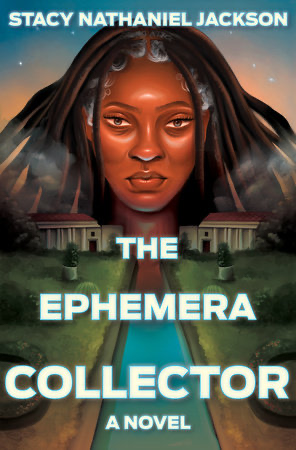
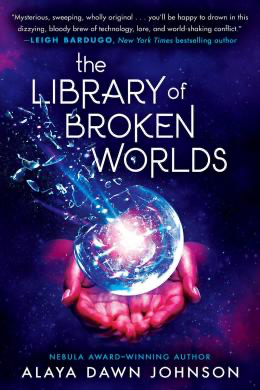
Going into The Ephemera Collector, I knew it wouldn’t be the easiest book to digest. The reviews warned me of a novel that frequently went on tangents that didn’t relate to the main storyline, and a novel that was disorganized in general. Having that in mind, I went in with low expectations. While I do think this novel was a bit disorganized at worst, I think it was partially the point. This is a book about an archivist poring through artifacts in a massive library. Jackson’s style is very stream-of-consciousness, and I feel like it uniquely reflects what Xandria’s mindset would accurately be if she spent most of her waking hours as an archivist. It reminded me vaguely of The Library of Broken Worlds, a very different book from this one, but still a sprawling, magnificent at best, deeply convoluted at worst novel set in a vast library. Maybe that’s just what you’re in for if you write imaginative books about sci-fi/fantasy libraries. There were some sections that strayed too far from the main plot for my taste (more on that later), but overall, I enjoyed the breaks in form, whether it was the switches from prose to poetry to the anecdotes about Xandria’s ancestry. It really put me in mind of an archivist, and that seems exactly what Jackson set out to do. For me, it also tied back into the theme of preserving history—all of what we see is the history that Xandria fought so hard to keep alive and non-sanitized by corporations.

Here’s the thing, though. I was fine with the earlier tangents because I could see the thread that connected them to the rest of the novel. But around 60% of the way through, The Ephemera Collector quite literally loses the plot. Without warning, it switches to an entirely new story that’s barely connected to the main story—and that’s being generous. The only possible connection I could find was that one of the characters was a relative of Xandria, but that’s it. There’s no connection to her or the library. My dilemma is that although it was very distant from the rest of the novel, it was still a compellingly written storyline. It dealt with one of the more fascinating parts of the worldbuilding: the separatist community who created an underwater settlement, and later became pseudo-climate refugees when it became untenable to live underwater for any longer. It was so strange and lovely to pick apart, but it didn’t connect to the main narrative until the very last minute. Even in the context of Xandria looking through the archives, there wasn’t a clear thread. I’m tempted to give this less than 4 stars, because although this frustrated me, the writing was just that good. In my more arbitrary system, I guess it would be more in the 3.8-3.9 range, if we’re getting really specific, but I like it more than a 3.75. It’s a weird dilemma, but so is the whole novel, really.

All in all, a deeply imaginative Afrofuturist novel that pushed the boundaries of what a dystopia can be. 4 stars!

The Ephemera Collector is a standalone and Stacy Nathaniel Jackson’s debut.

Today’s song:

NEW GUERILLA TOSS, WOOOO

That’s it for this week’s Book Review Tuesday! Have a wonderful rest of your day, and take care of yourselves!
Posted in Book Review Tuesday

Book Review Tuesday (7/1/25) – The Library of Broken Worlds

Happy Tuesday, bibliophiles, and happy Disability Pride Month! I’ll have something up for the occasion later this week, but for now, here’s the first book review of the month.

I’ve had this novel on my TBR for a few years. I read Alaya Dawn Johnson’s Trouble the Saints several years ago and remembered it being on the denser side, so I was hesitant going into this novel, especially with the low ratings on both Goodreads and Storygraph. I understand those ratings now—this book is not for the faint of heart, but it was also victim to some serious mismarketing, in my opinion. It’s a sprawling novel that hops between worlds and genres, and despite its flaws, it’s one of the most ambitious novels I’ve read in a while.

Enjoy this week’s review!

The Library of Broken Worlds – Alaya Dawn Johnson

Centuries ago, tesseract technology made travel and connection across the stars. Now, in the Library, where all of the tesseracts are held and all of the political machinations go on, Freida spends her childhood wandering amongst all kinds of strange magic and technology. She was artificially created by the Library, and has access to all of its texts. But as she grows older, she begins to understand the corruption deep within the Library. Her friends face persecution from all sides, both from mortal people and the gods beyond their reach. To save them, she must dig deeper than she’s ever ventured into the Library—and what she finds there could change her life.

TW/CW: genocide, loss of loved ones, sexual assault, colonialism/imperialism, violence

Right off the bat, let me just say: this is truly a weird book. For the most part, I mean that affectionately. It’s weirder than most YA I’ve read, and even weirder than some adult books. It’s also one of the more ambitious books I’ve read in quite some time. Straddling the line between hard sci-fi and full-blown fantasy, The Library of Broken Worlds is an ambitious—if not incredibly messy—novel.

I’ll start off by saying this: The Library of Broken Worlds really shouldn’t have been YA. Even though Freida is about 17 here, all of the concepts jammed in here really don’t feel like they should be for the 12-18 crowd. That might just be another consequence of 12-18 being a ridiculous jump in maturity for a single age range, but I digress. There are a lot of aspects that feel more well-suited for the more adult crowd. You sit in on a lot of court hearings, the politics get both deeply philosophical and intricate, and you’re dunked into the worldbuilding like one might be dunked face-first into a bucket of ice water. I think you can still work with a teenage character in an adult story (see: The Fifth Season), so I feel like it wouldn’t be much of an adjustment. As voracious of a reader as I was when I was in the peak market for YA books, I feel like I would’ve DNF’d this book in my teens. But that’s not to say that I didn’t love The Library of Broken Worlds. Had it been adjusted for an older audience, I think it might have been more successful—if not in marketing than anything else.

The case of the worldbuilding in The Library of Broken Worlds is a complicated one. It’s both the biggest strength and the biggest weakness of the novel. The worldbuilding itself is marvelous—what I could get of it. This novel is such a unique blend of sci-fi and fantasy. You have a Library as the central hub to travel to other parts of the galaxy, and the main characters is an artificially-created being created by the will of the Library itself. There’s lots of intergalactic folktales, extinct alien civilizations, a triad of nature gods that preside over the universe and form the basic divisions between its people, and a ton of worms and grubs. Gotta love the grubs. There’s a lot of ’em. The world is also refreshingly queernormative, with a variety of characters with different neopronouns and a young sapphic couple at the forefront of the story. In the acknowledgements, Johnson said that Studio Ghibli and Hayao Miyazaki were the biggest inspirations for the book. The comparison didn’t fully make sense to me, but in a way, I can see that the blend of sci-fi and fantasy, along with some of the more imagery, could feel like a darker, more convoluted version of Miyazaki. It’s such a lovingly created and multilayered world—I just wish we could’ve explored more of it.

Now, let’s go back to that word, convoluted, because it applies to…well, everything. I often talk about how writers often have the issue of vomiting all of their worldbuilding in chunks that distract from the story. This book has the exact opposite problem. From the start, you’re thrown headfirst into an exceedingly complex and convoluted world, expecting to know all of the terms and political divisions as they’re thrown about every which way. It felt like the scene from The Big Lebowski where The Dude is repeatedly getting his head dunked into the toilet (“WHERE’S THE MONEY, LEBOWSKI?”), but each time, you get a face full of completely wild fantasy terms that only get the most barebones explanations. By the time you’re sort of acclimated to the world and you think you’re getting a break, somebody’s pissing on your rug that really pulled the room together (more unexplained worldbuilding out of nowhere that overcomplicates things further). I still don’t fully know what a “broonie” is, and at this point I’m too afraid to ask. This book was in desperate need of a glossary, Jesus Christ. And a lot more exposition, as well as less convoluted and all-over-the-place explanations for what little was explained beyond the basics.

The characters in The Library of Broken Worlds were also a treat to explore! I wish we got more of some of the side characters, since there were so many, but it was Frieda’s story first and foremost. Though some parts of her were underdeveloped, Frieda was a solid protagonist; although she almost falls into a very typical mold of the YA protagonist whose life is out of her control and is different from the others (and is understandably angsty about it), these things are for reasons that are fully fleshed-out—the weight on her shoulder never feels manufactured, and the way that Johnson writes her trauma, from various sources, was very sensitive. I don’t think we got enough of Joshua (he’s almost forgotten about halfway through and only comes back in the last few bits of the climax), but I did like Nergüi’s coldness and eventual insightfulness as a counter to Frieda’s passion and hunger for knowledge.

There are some fascinating themes, political and otherwise, at play in The Library of Broken Worlds. In an attempt to be more utopian, the main government has built its government and legal system on the basis of freedom from and freedom to, and the discussion surrounding that, especially where those definitions get dangerously misused (justifying planetwide colonialism and genocide). Johnson didn’t shy away from getting into a ton of moral dilemmas. However, aside from that theme, I loved how The Library of Broken Worlds handles cycles. Simply by existing counter to her original purpose, Freida is breaking a cycle of her sisters being created for a specific purpose, and embracing empathy and love. But by doing that, she is also breaking a multitude of other cycles—the personal cycles of being traumatized and taking it out on others, and the vast, historical cycles of injustice and mass cruelty. The tesseracts also felt a bit like the interconnectedness of actions as well as events throughout history, and Freida exists at the confluence of it, making her able to fully see how she is able to reshape both her destiny and the unjust system that she lives under. As rocky and convoluted of a road Johnson takes us to get there, I appreciate that it was taken in the first place, because the payoff was mostly worth it in the end.

For most of what I just detailed, I nearly gave The Library of Broken Worlds the full 4 stars. But given the state of the book, I just…couldn’t. For all of its boundless creativity, timely themes, and observant insights, this novel was just a mess. I think this could’ve been the second-to-last draft before sending it off to the publisher, because as good as it was, the writing was all over the place. You’re unceremoniously thrust into the worldbuilding, and the only reason that I ended up acclimating (and even that’s a stretch) to everything was that this novel is nearly 450 pages long. It desperately needed more exposition, as well as clearer explanations of the key terms that come into play throughout the novel. The pacing was off—though I enjoyed the explorations of politics that Johnson employed throughout, I think we could’ve spent more time getting to know the world and less time sitting in space congressional hearings. There were a multitude of loose ends that didn’t fully get tied up. I guess that’s a consequence of such an expansive world, but The Library of Broken Worlds needed some serious refinement. I don’t normally find myself saying this, but give this book 50 more pages and a glossary, and I think some of these issues could be fixed.

All in all, an expansive piece of sci-fi/fantasy with highly commendable worldbuilding and themes, but which needed more page time and another round of edits to fully achieve its purpose. 3.75 stars!

The Library of Broken Worlds is a standalone novel, but Alaya Dawn Johnson is also the author of several novels for teens and adults, including Trouble the Saints, Love is the Drug, Moonshine, Racing the Dark, and The Summer Prince.

Today’s song:

That’s it for this week’s Book Review Tuesday! Have a wonderful rest of your day, and take care of yourselves!
Posted in Book Review Tuesday

Book Review Tuesday (6/10/25) – When the Tides Held the Moon

Happy Tuesday, bibliophiles!

I found this novel in an Instagram post about upcoming queer releases in 2025, and this one immediately caught my eye. You put a comparison to The Shape of Water in the tagline, and you bet I’m in. (If anything, it’s right between The Shape of Water and Nightmare Alley, given the setting.) Venessa Vida Kelley has delivered a vibrant and sensitive story of queer love and solidarity amongst weirdos.

Enjoy this week’s review!

When the Tides Held the Moon – Venessa Vida Kelley

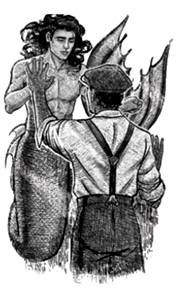
Orphaned and far from his homeland of Puerto Rico, Benny Caldera makes a living as an ironworker in 1910’s New York City, barely scraping together enough to stay afloat and out of reach of the taunts of his white coworkers. But when Sam Morgan, the owner of a sideshow, notices his handiwork, he commissions a strange project for him: a tank whose contents are unknown to him. Benny takes the opportunity for a new job, and finds an unexpected family in the sideshow’s performers. He soon finds out that the tank holds an impossible marvel: a captured merman. As Benny gains the merman’s trust, he finds himself drawn to him—and the merman to him. But when Morgan’s abuse to the merman turns deadly and the sideshow begins to crumble, it’s up to Benny to hatch a plan to save them all.

TW/CW: racism, homophobia, abuse (emotional and physical), violence, blood, ableism, xenophobia, mentions of sexual assault (off-page)

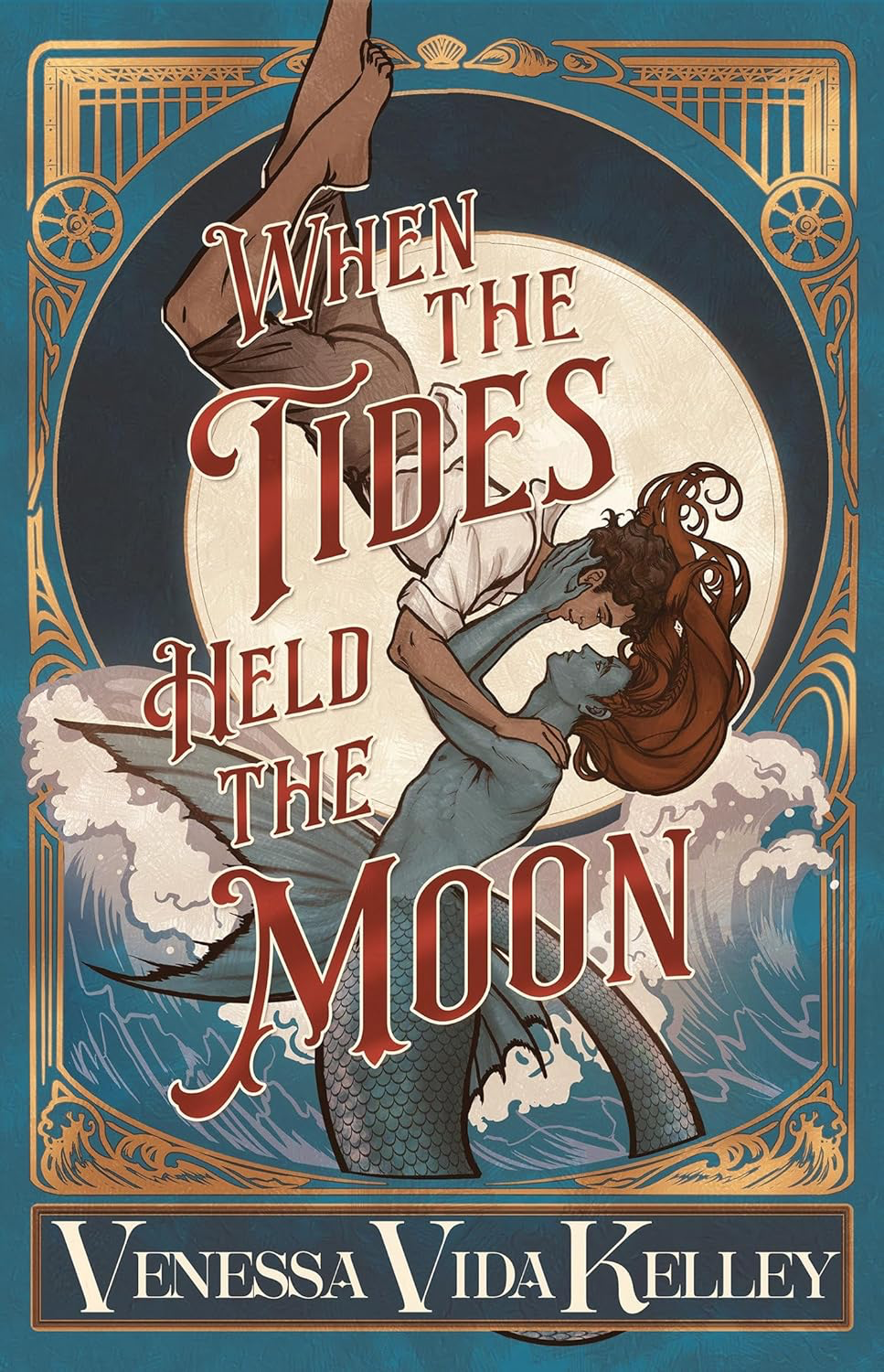
art by Venessa Vida Kelley

I may be a somewhat critical consumer, but listen…you dangle a comparison to The Shape of Water in front of me like a carrot, and goddamnit, I’m eating it right up. God forbid that a weird girlie such as myself consume even more media about found family, fish people, and the nature of marginalization!! That being said, nothing comes close to The Shape of Water, but that’s not the book’s fault. When the Tides Held the Moon is a beautiful novel in all of its parts.

When the Tides Held the Moon boasts a vibrant cast of characters, and it really felt like a feat for Kelley to balance all of them and still give them unique and complementary personalities. Besides Benny and Río, the cast is mostly rounded out by the fellow performers in the sideshow, of which there are many. Yet out of the nine (I think?) primary side characters, none of them ever felt like an afterthought. Each of them were not only rounded out, but had such thoughtfully planned interactions with all of the other characters—sometimes clashing, and sometimes meshing perfectly. There were individual romances and special friendships between the nine of them, but they were a shining example of found family done well. Despite their individual differences, their solidarity and kinship shone through on the page, making for a narrative that had no shortage of tenderness and heart.

The romance between Benny and Río shone in When the Tides Held the Moon. There was such a tenderness to both of them that gave the novel so much of its heart. I’m always a sucker for narratives about two outsiders falling in love, but I love the ways that their separate senses of outsiderness intertwined; they shared music, stories, and tales of their respective homelands. The slow burn romance was paced well, and never felt rushed. I do feel like the ending was a tad bit too close to The Shape of Water, without spoiling anything, but I think their individual way of solidifying their romantic relationship at the end of the novel separated itself enough in the end, making for a resonant, vibrant end to the novel and to their respective arcs. It was all just so wonderfully sweet, but never in a way that felt insincere or cloying—I just loved them!

When the Tides Held the Moon is an incredibly diverse novel, which was exactly how it should’ve been; even without nearly as much knowledge as Kelley has (this was a very well-researched novel and it shows), it would’ve been a disservice to show either New York City or the culture of sideshows as places that don’t have a history of diversity. Immigrants from many different countries (Puerto Rico, Ireland, India, and Russia to name a few) are at the forefront, as well as lots of queer people, disabled people, people of color, and people who overlap within these intersections. However, some novels have a tendency to have a very 21st century view of all of these things. When the Tides Held the Moon felt very historically sensitive in terms of the language it used around these characters, but not in a way that was sanitized. In fact, it didn’t hold back from depicting the kinds of horrific oppression that these characters faced. Yet it wasn’t straight-up trauma porn either—it was honest about the struggles marginalized people faced during this time period, but never in a way that felt like their trauma was being exploited for emotion. That emotion shone through naturally in the interactions that the characters had and the solidarity they fostered in the face of mutual oppression.

That being said, the major thing keeping When the Tides Held the Moon was some of the writing, particularly the dialogue writing. Even from someone with a fairly high tolerance for bombastic, dramatic dialogue (I love Ray Bradbury and the Claremont run of X-Men for similar reasons, if that gives you a good idea of where I’m at), Kelley’s dialogue often bordered on too much. As sensitive and nuanced as everything else about this novel was, the dialogue trended towards excessively cheesy and overdramatic more often than not. Though I adored Río as a character, his voice very much fell into that overly verbose, “wise”-sounding dialogue that you could slap on any fantasy character. Benny in particular had some of that pathetic “aw, gee, mister, gimme a break, why don’tcha” kind of overwritten voice that was in-character at best but almost grating at worst. The side characters had varying degrees of this affliction, but none of them necessarily jump out at me save for the very stereotypically New York mobsters (“he’ll be sleepin’ with the fishes,” etc…wait, there was SUCH a missed opportunity them to say that). The only exception I can think of was Matthias since it was established that it was his genuine personality and not a consequence of the writing. If this were any other novel, I would’ve tolerated this much less, but Kelley’s story had so much heart that I could partially let it slide…but not all the way.

All in all, a beautiful, sensitive novel about love and marginalization with a big heart. 4 stars!

When the Tides Held the Moon is a standalone and Kelley’s debut novel. She is also the author of the forthcoming graphic novel Manu Faces the Music, which is set to be released in 2026.

Today’s song:

That’s it for this week’s Book Review Tuesday! Have a wonderful rest of your day, and take care of yourselves!
Posted in Book Review Tuesday

Book Review Tuesday (6/3/25) – The Death I Gave Him

Happy Tuesday, bibliophiles!

Here’s a continuation of my recent sci-fi mood…I’ve been looking to add more sci-fi to my TBR, because I seem to exhaust my supply faster than I can keep up. The premise of The Death I Gave Him being a queer, sci-fi/thriller retelling of Hamlet enticed me, but sadly, this novel didn’t deliver—not on the retelling front, and not entirely on the thriller part either.

Enjoy this week’s review!

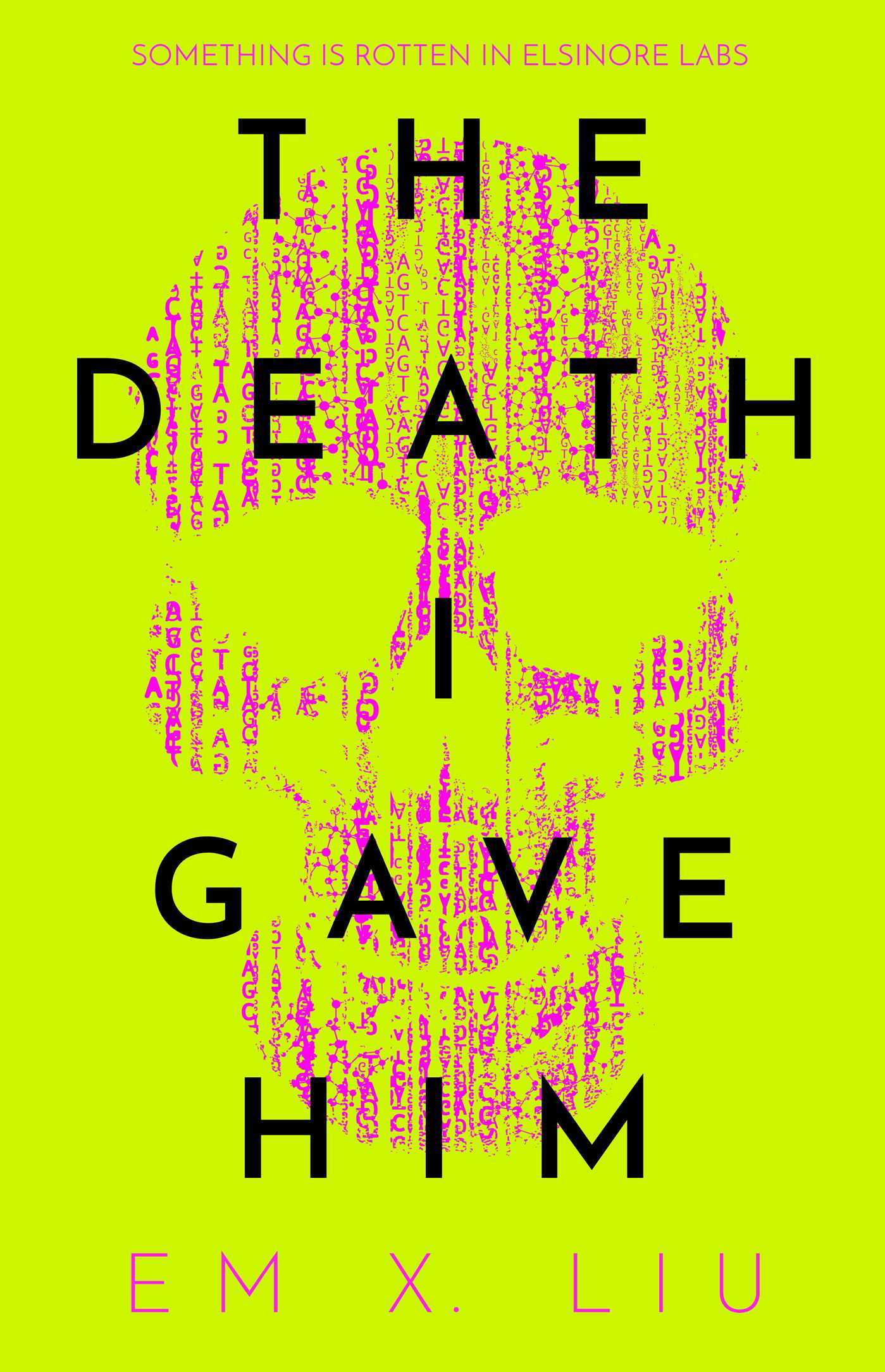
The Death I Gave Him – Em X. Liu

Hayden Lichfield is intent on carrying out the mission that his father is pioneering—the Sisyphus Formula, a substance that could one day reverse death itself. Enticed by immortality and down on his luck, Hayden throws himself into his work. But when his father is found murdered in Elsinore Labs, Hayden has no idea who to turn to—and who wanted to murder the man who wanted to beat death. Trapped in his room with only his AI, Horatio, to trust, Hayden scrambles for answers, and everyone around him is a suspect. But is it not just Hayden’s friends, but his father that have been lying to him all along?

TW/CW: murder, blood, descriptions of injury, suicidal ideation, grief, death of a parent

Trying to describe whether or not The Death I Gave Him qualifies as a retelling feels like the Ship of Theseus. If all of your characters’ names allude to Hamlet and you set your story in Denmark, but not much else relates to Hamlet, is it still a Hamlet retelling? How much Hamlet does one need to remove for it to still feel like a retelling? Sadly, Em X. Liu is proof that there is a limit to how much you can remove before it stops feeling like a retelling. It’s Hamlet in name only.

Having read Hamlet less than a year ago, I went into The Death I Gave Him with a fairly fresh memory. However, if not for the more obvious name changes (Hamlet becomes Hayden, Polonius becomes Paul, etc.) and the fact that it’s set in Denmark, I really wouldn’t have thought that this was a Hamlet retelling. I’m fine with loose retellings, but I don’t think it should’ve been billed as such. The whole Denmark setting definitely felt like very a “see? This is Hamlet, I promise!” move and wasn’t relevant to the plot whatsoever. I’m fine with loose retellings, but I feel like the similarities end with what I just described above. I’m not sure if this even qualifies as a retelling so much as people named after characters in Hamlet. Also, none of these people were nearly crazy enough to be in a Hamlet retelling. You’ve got to have someone go at least a little insane to have a proper Hamlet retelling. Hayden got a wee bit depressed and existential towards the end, but there wasn’t nearly enough “something is rotten in the state of Denmark” insanity to make it feel like a true tribute to Shakespeare. It just felt like a rather emotionally stunted novel even though it’s based off of something so dramatic. Some tonal liberties are inevitable for any given adaptation, but these ones just didn’t feel true to Hamlet, which made the more obvious Hamlet references feel more like preventative measures to make sure that people remembered that this was a Hamlet retelling.

Having mixed formats (interview excerpts, security camera footage, etc.) can be a great tool to add some additional context—and a unique flavor—to a novel, and I think it works especially well with thrillers, which The Death I Gave Him partially was. However, I don’t think Liu properly executed this format. Granted, it’s difficult to pull off, but when it’s executed well, it adds another layer of mystery to what is hopefully another layer of mystery. The problem Liu seemed to have is that, with the exception of the security camera footage, all of the other perspectives sounded exactly the same. All of the interviews, document excerpts, and “fictional” interludes by Horatio were in the same tense and the same POV, which basically rendered the format useless. Beyond that, these interviews and whatnot were from multiple people, but they all had virtually the same narrative voice. By the end of the novel, it didn’t even matter where the excerpts were coming from—they all sounded the same. If you’re going to pull off this kind of format, you have to make each component sound unique—if everything sounds the same, what’s the point in specifying which chapter is an interview and which one is a fictional account?

Also, none of the characters seemed to have much of a purpose outside of being props, aside from Hayden, Horatio, and maybe Felicia if I’ve being generous. Even though we get a significant portion of the novel through her interviews and written segments, I never even got a specific read on her voice since it was so similar to every other character’s. Paul, Rasmussen, and Charles were just there until they conveniently weren’t. The timeless fun of Hamlet comes from seeing everybody scheming against each other and different motives clashing against each other, but everybody was just rendered into very similar characters with too similar motives to each other for the mystery to really be worth it.

The same was true of the plot. I was committed to The Death I Gave Him because I was excited by the premise and wanted to see how the plot unfolded. I will say that Liu did a great job of setting the scene and cramming us in said locked room of this locked-room mystery. However, very little happened in said locked room—other than a handful of scattered moments, the place was quite slow, and the ratio of information that was revealed to the amount of pages it correlated to was way off—it felt like we only got significant revelations every 100 pages, and The Death I Gave Him is a little over 300 pages. There needed to be much more intrigue and complicating factors and clashing motives for this novel to work as a mystery; what we had was quite lackluster.

All in all, a sci-fi retelling of Hamlet that missed the mark on its source material and its new plot. 2 stars.

The Death I Gave Him is a standalone, but Em X. Liu is also the author of the novella If Found, Return to Hell and several short stories in various anthologies and magazines.

Today’s song:

That’s it for this week’s Book Review Tuesday! Have a wonderful rest of your day, and take care of yourselves!
Posted in Books

🏳️‍⚧️🏳️‍🌈The Bookish Mutant’s Books for Pride Month (2025 Edition)🏳️‍🌈🏳️‍⚧️

Happy Monday, bibliophiles!

Here in the U.S., June is Pride Month! I usually start off these posts with something about how the world is slowly getting kinder to queer people, but that, as always, the shadows of homophobia and transphobia loom large. Well…Christ, it sure is looming larger than ever. Misinformed voters have decided that they’re perfectly content to return us to an administration that has already required passports to revert to the carrier’s assigned gender at birth and has been emboldened to toy with the idea of repealing the right to same-sex marriage. Of course, here I am sitting on my comfy couch in my comfy blue state of Colorado that thankfully has a) a gay governor (shoutout to Jared Polis), and b) enshrined the right to same-sex marriage in the constitution, but that doesn’t mean that my heart doesn’t constantly ache. All of us in the queer community are deeply interconnected. What hurts one of us hurts all of us.

Book banning across the country has disproportionately targeted queer books, deeming the presence of such subjects in children’s, middle grade, and YA literature as pornography and grooming. And god forbid that a drag queen commits the incredibly sexual and predatory act of…[checks notes] reading picture books to kids at libraries. Republicans have their priorities twisted. That’s old, old news by now. Books and libraries were never meant to be war zones, but fascists have made it their mission, then and now, to declare the right to information and new ideas as the most dangerous threat to their power. This goes for books both queer and non-queer. But the power of queer books can’t be overstated. Even I, who grew up in an incredibly supportive, accepting environment (biggest thank you imaginable to my wonderful family for being that way), was enlightened and comforted when, in the short period when I was closeted, I found bisexual characters in books that reflected my story and my feelings. Queer literature is revelatory, and it saves lives. For queer people, it gives them the comfort that they aren’t alone. For others, it gives them a glimpse into perspectives that they might not have otherwise considered, and compels them to empathize with people who are different than them.

So this pride month, and all year round (as always), when you think of what you can do to support the LGBTQ+ community, consider picking up a book. Support queer authors. Buy from queer-owned bookstores, because they tend to be pretty cool places. Support your local library (because they need it now more than ever)—checking out queer books shows them that they’re in demand, and that encourages librarians to keep on shelving them. For us book bloggers and other social media-oriented folks: keep on reviewing and shouting out books. And for all of us: no president, no government, and no legislation can take away your queerness. No one has that power but you. Your queerness is revolutionary and beautiful. Keep on being queer.

So here is my annual list of great LGBTQ+ reads from all sorts of genres, backgrounds, and identities. If I’ve mistakenly identified something about a book’s representation, please let me know! I’ve mixed YA and Adult books here, and I’ve also added a nonfiction section for the first time, as I’ve done with my other recommendation lists.

A refresher on my key:

MC: Main character

LI: Love interest

SC: Side character(s)

For my posts from previous years, click below:

Let’s begin, shall we?

🌈THE BOOKISH MUTANT’S BOOKS FOR PRIDE MONTH (2025 EDITION)🌈

FANTASY:

Includes paranormal, magical realism, horror, and genre fusion(s)

SCIENCE FICTION:

Includes dystopia, speculative fiction, & genre fusion(s)

REALISTIC FICTION

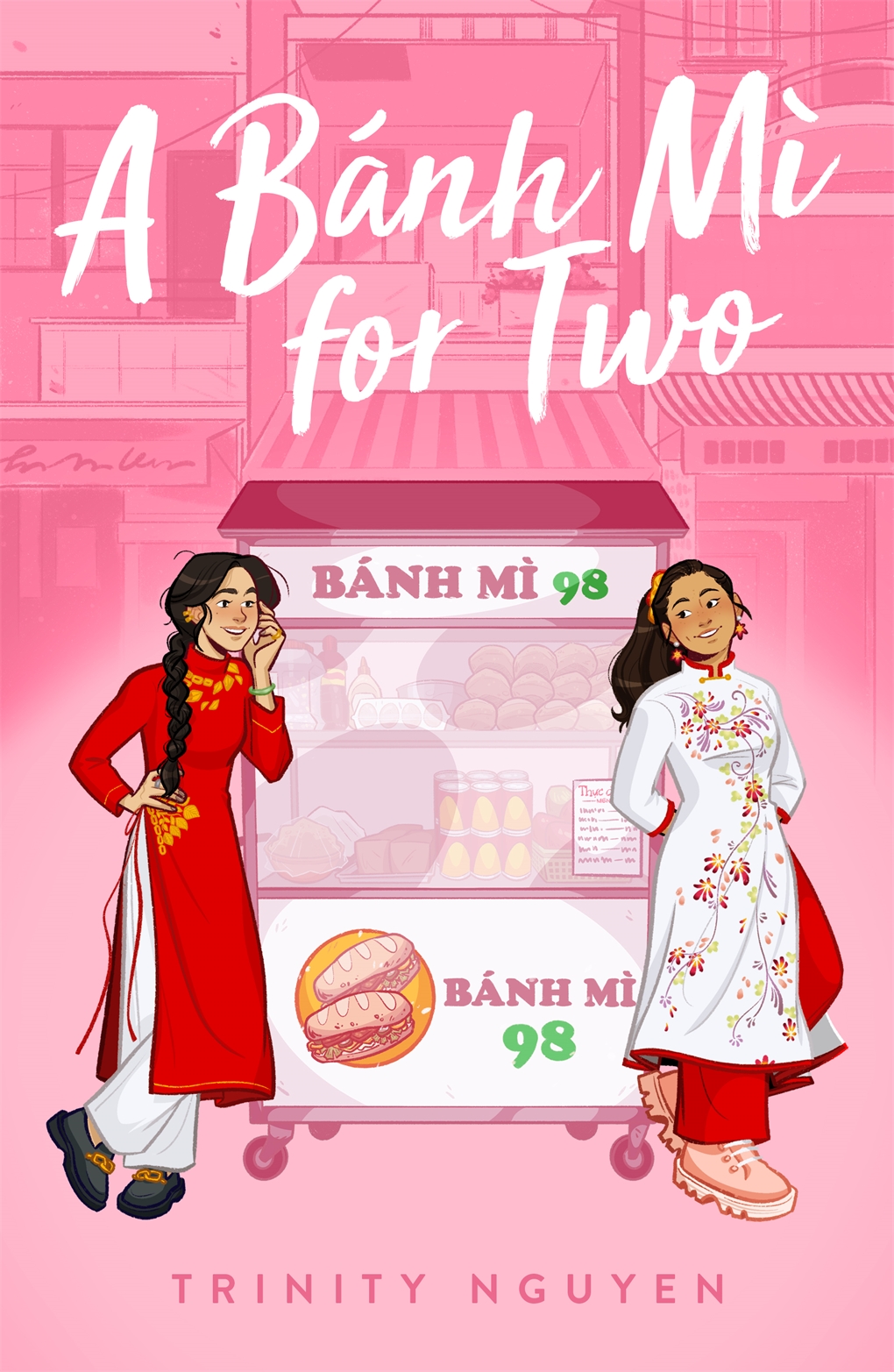
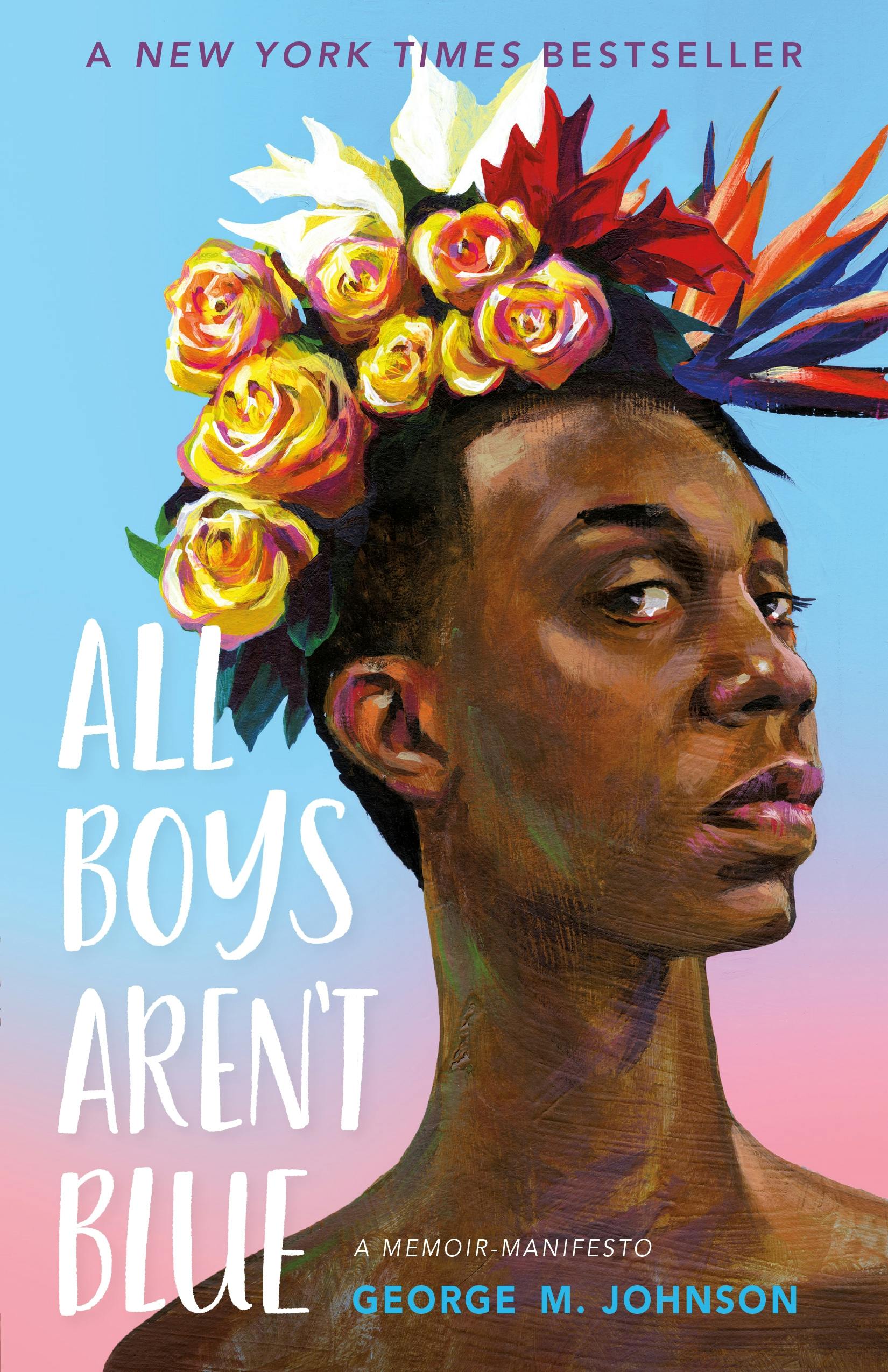
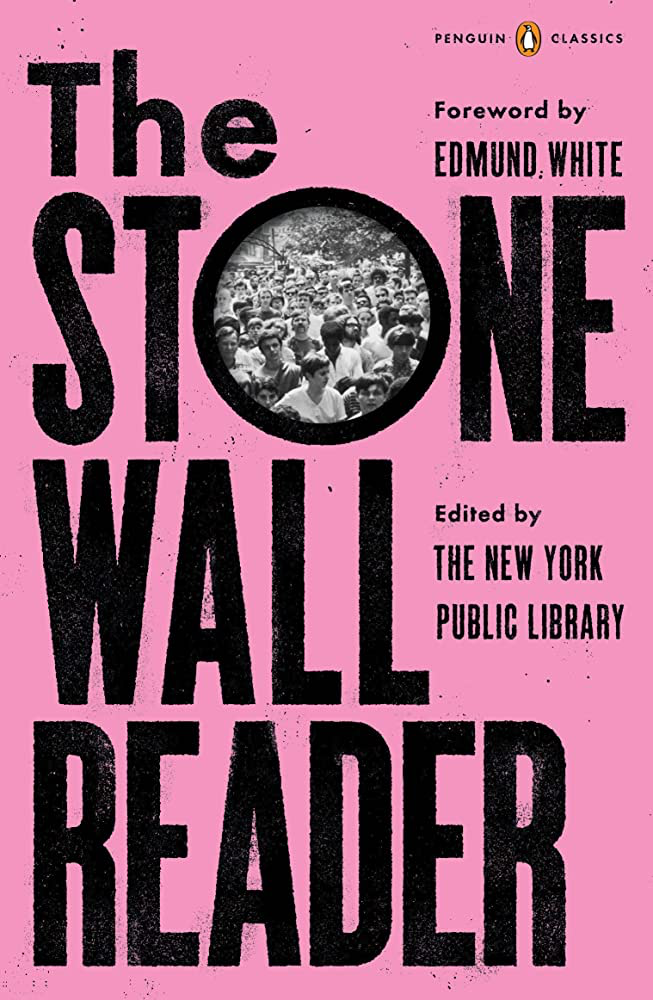
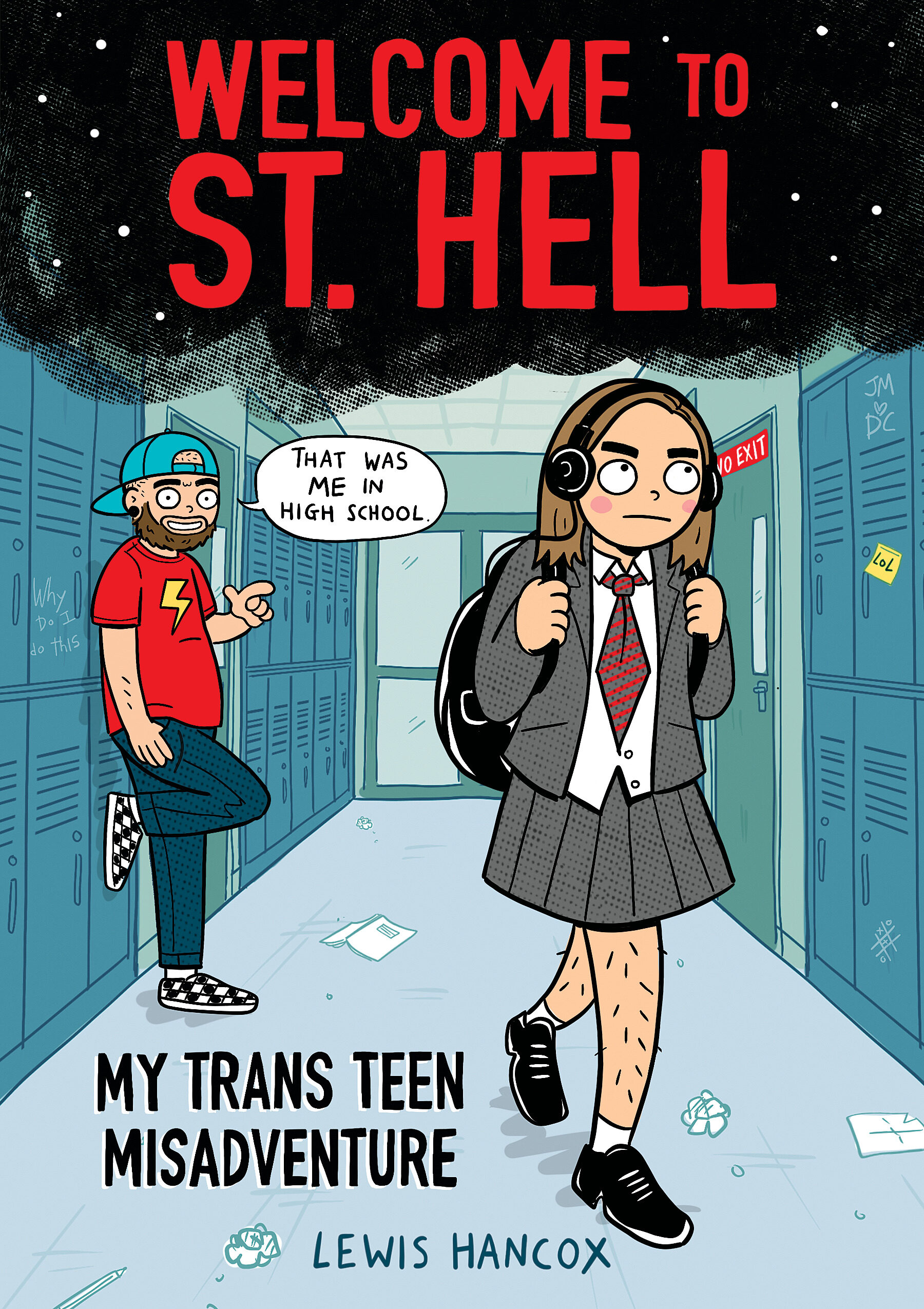
NONFICTION:

TELL ME WHAT YOU THINK! Have you read any of these books, and if so, what did you think of them? What are some of your favorite queer books that you’ve read recently? Let me know in the comments!

Today’s song:

lindsey…please tell me this is a sign that you’re cooking something…

That’s it for this year’s pride recommendations! Have a wonderful rest of your day, and take care of yourselves!

Posted in Book Review Tuesday

Book Review Tuesday (4/8/25) – You Sexy Thing

Happy Tuesday, bibliophiles!

I’ll skip the prologue about how predictable it is that I picked up another queer space opera, and one with a ’70s music reference in the title at that. (SING IT WITH ME!! 🎶I BE-LIEVE IN MIRACLES—🎶) Nonetheless, I kept my expectations low, and I’m glad I did. Hilarious, heartbreaking, and heartwarming all at once, You Sexy Thing is the start of a true joy of a space opera trilogy!

Enjoy this week’s review!

You Sexy Thing – Cat Rambo

It’s been decades since Niko Larson and her fellow soldiers were able to break free of the Grand Military of the Hive Mind, where they were voiceless pawns in a never-ending war. Now, they run the Last Chance, a humble restaurant at the edge of TwiceFar Station, serving customers from all over the galaxy and from all walks of life. But when a mysterious, sentient ship destroys their livelihood before giving them a mysterious mission that they can’t refuse, Niko and her fellow chefs and restaurateurs must return to the fray they tried so desperately to escape—all with the heir to the Paxian Empire in tow.

TW/CW: sexual content, violence, blood, torture, kidnapping/imprisonment, war themes, abuse, genocide themes, death

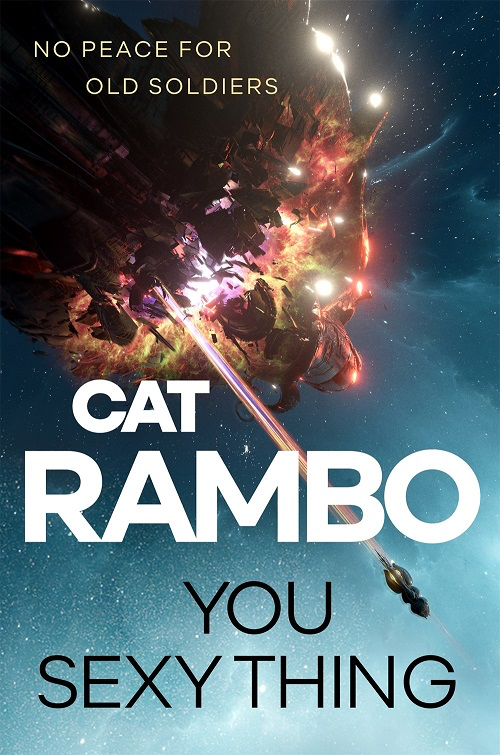
The entire time I was reading this book, I’d click on the Kindle cover and I’d immediately start hearing “You Sexy Thing.” It just kept coming back, like I was trapped in a sitcom gag with a signature musical cue. Probably the intended effect. Not complaining, though. Absolute banger.

What an excellent space opera this was! You Sexy Thing scratched so many of my favorite sci-fi itches, and one of the biggest ones was the aliens and creatures! CREATURES! CREATURES! I’d place You Sexy Thing as bordering on space fantasy, though I won’t go into a whole digression on what counts/doesn’t count as sci-fi or SF; that was mainly because of the ghosts, some magic use, and were-creatures. However, Rambo did an excellent job with all of the alien denizens of this galaxy! There was a fantastic balance of humanoid and more unfamiliar creatures, all of whom were delightful. Skidoo was a personal favorite, as I’m particularly fond of any kind of cephalopod-inspired aliens, but Petalia, even if their name was rather on-the-nose (in line with a lot of the humor of the book), had some fascinating details about their culture and plant-based physiology. Also, there’s a chimp. Gotta have a chimp to round out the crew, amirite? Thankfully, this one doesn’t go the way of Nope, and Gio is a perfectly reasonable individual. There’s also lots of casual queerness abound, which is always a plus.

Another thing I love in space opera is a good motley crew, and You Sexy Thing had a stellar one! Rambo’s choice (apparently a challenge from fellow sci-fi author Ann Leckie, if the epigraph is anything to go by) to have You Sexy Thing in an omniscient, third-person POV was a great solution for covering the thoughts of all of the characters, discarding the need for separate chapters for everyone. All of them had distinct and lovable (mostly) personalities that made them butt heads with some characters and mesh with others, while still retaining a sense of familial bonding. Even outside of the restaurant setting, they retained a hilarious rapport that was a joy to read. Dabry’s musings on cooking were a delight, Atlanta’s trouble fitting in with the crew made for some lovely interactions, and Niko’s continuous struggles to face her past made for some of the novel’s most emotional points. You Sexy Thing balanced levity with emotional weight to great effect, and had a fantastic cast of characters to split the difference.

Amidst all of the humor, You Sexy Thing explores some quite complex, nuanced emotion, which I appreciated. I don’t think Rambo fully explored the implications of everything that had been done to Petalia, and how returning to Niko’s company affected them, but what we got was appropriately complicated, messy, and painful to read—exactly how it should have been, given the circumstances. This story never strays away from the cross-cultural complications of relationships, grief, and more, which added to how fleshed-out and unique all of the characters felt. By the end, all of the betrayals were appropriately punches to the gut, but ones that were cushioned by the found family dynamic that had been built up by the end.

Like the characters, the worldbuilding was an absolute treat! I will say, some of it was rather scattershot—we frequently get references to alien species and places that don’t even show up after they’re mentioned, but since this is a trilogy, I might be able to get past that, assuming that they come up later. I’m mostly accepting it, knowing that a) this is a huge galaxy, and b) that the world will presumably be expanded upon. It only really peeved me when they failed to explain much about what said alien races looked like. Other than that, Rambo’s worldbuilding was fascinating to pick apart! Sometimes, individual concepts are more interesting than the whole, and that aspect was made manifest by many of Rambo’s concepts, from married couples (or friends) being able to meld into a single being to the biotechnology that made You Sexy Thing (the sentient ship) possible. Through it all, I got the sense that Rambo’s galaxy was a distinctly lived-in one, which made my reading experience all the better.

My only real complaint, if any, was Tubal Last. You Sexy Thing had moments of being purposely cheesy, from the in-your-face ’70s music references to the on-the-nose character names; the latter felt like a nice, tongue-in-cheek reference to some of the characteristics of older sci-fi. That quality extended to the villain, who was cartoonishly evil. I don’t necessarily mind a comically evil villain every now and then, but in contrast to the complexity and nuance of many of the characters, Tubal Last felt out of place, just another obstacle (a formidable one, but a very one-note one) for the crew to overcome. He was over-the-top, but not in a way that necessarily served the story, other than some slightly unique motivations.

Overall, You Sexy Thing was a blast from start to finish, with a lively, energetic galaxy and a cast of lovable characters and daring hijinks to fill it with. 4.5 stars!

You Sexy Thing is the first book in Cat Rambo’s Disco Space Opera series, followed by Devil’s Gun and Rumor Has It. They are also the author of Neither Here Nor There, the Tabat Quartet (Beasts of Tabat, Hearts of Tabat, and Exiles of Tabat), And the Last Trump Shall Sound (with Harry Turtledove and James Morrow), and many other full-length works and short stories. Rambo is also the former president of the Science Fiction and Fantasy Writers of America (SFWA).

Today’s song:

it’s taken me this long to finally listen to Jimmy’s Show all the way through…preparing for Jimmy’s Show 2? either way, it’s an absolute delight.

That’s it for this week’s Book Review Tuesday! Have a wonderful rest of your day, and take care of yourselves!
Posted in Book Review Tuesday

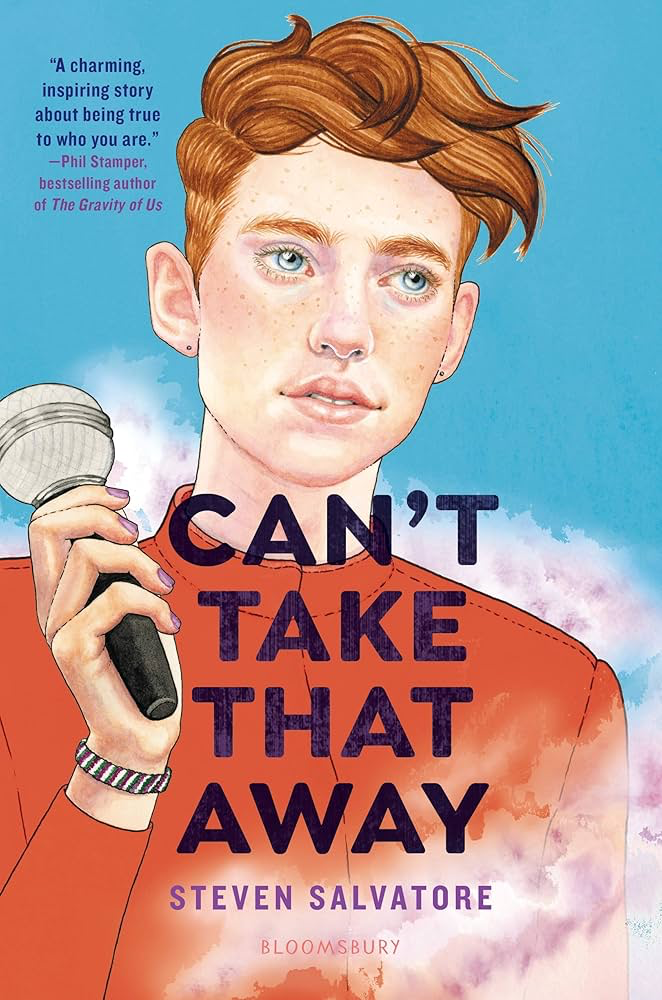
Book Review Tuesday (12/17/24) – Can’t Take That Away

Happy Tuesday, bibliophiles!

For the time being, I’m back! Safe to say I was swamped this semester, so I’m glad that I’ll have about a month of rest before I go back to school for the spring semester. When I wasn’t writing here or in my WIPs, I wrote around a combined 24 combined pages for various papers…and they say being an English major is easy…

Either way, I’ve had Can’t Take That Away on my radar since it came out in 2021. As with most other books on my TBR, there’s no real rationale for it languishing there for so long. I ended picking it up because of the premise; queer YA and MG books are bearing the brunt of bans and challenges here in the States, so I wanted to support them whenever I can (even if it’s already a good amount of what I read). (I can’t find anything definitive on whether or not this one was actually banned or challenged other than one Goodreads reviewer shelving it as such.) Either way, though it had its flaws, the storyline of Can’t Take That Away feels ripped right out of the headlines, and it’s a vital piece of literature for trans teens looking to find their voices.

Enjoy this week’s review!

Can’t Take That Away – Steven Salvatore

Carey Parker was born to be a diva. With an unwavering love for Mariah Carey and aspirations of stardom, they have fought tooth and nail to express themself the way that they want. So when a friend convinces them to audition for Elphaba in their high school’s production of Wicked, they seize the opportunity—and land the leading role. Yet in spite of their apparent talent, parents and teachers cause an uproar about genderqueer Carey’s casting in the role of a leading lady. With mounting threats to kick them out of the play and dismantle the production all together, Carey must find their voice in order to prove that they deserve to be heard—and sing.

TW/CW: homophobia, transphobia, misogyny, misgendering, physical assault/violence, descriptions of injuries, bullying, gender dysphoria, suicidal ideation, cheating, loss of loved ones

I have nothing against Wicked, but reading this while being oversaturated with all things Wicked every time I opened up Instagram was an experience, for sure…I guess if Carey were a real person, they’d be over the moon at the prospect of the movie, so there’s that.

Without a doubt, Can’t Take That Away is a story that needed to be told. For the most part, I applaud Steven Salvatore for delivering this novel with unflinching realism (about 90% of it, at any rate. More on that later). The plot—parents and teachers cause an uproar when a genderqueer teen takes on the role of Elphaba in their high school’s production of Wicked—feels like a headline waiting to happen. I have no doubt that it’s already happened. My only minor complaint is that the main villains (Mr. Jackson and Max) felt cardboard, but they too, in a way, felt like the adults raving and ranting about “gender ideology” and the online trolls bent on tearing queer people down. They leaned on the side of exaggeration, yet…some people are just like that, unfortunately. That realism is what fueled the story; Carey’s manifold struggles, from grappling with gender dysphoria, bullies, and first love, was delivered both candidly and sensitively. Salvatore didn’t hold back from the ugly parts of some of these topics (be warned—happy ending aside, it’s a rough ride), but it made them all the more important to show that, like the plot, Carey is as real a person as your trans classmate. Carey could easily be someone in your life, and that was what made the story ring so resonantly.

That being said, I felt that the romance was incredibly messy, and not necessarily in a good way. Having Carey have their first love as they’re fighting to find themself was a good side plot in concept, but…it was just a dumpster fire for no reason. I don’t know if this is just me reading YA and no longer being a teenager, but half of the romantic drama felt unnecessary in contrast to the very timely, very upfront main plot. Why did Carey need to kiss some random guy in a basement while they were dating Cris? How are Carey and Cris just okay with everything that the other did? Maybe this is just me, but if my partner kissed somebody else in a basement while we were dating, I wouldn’t come running back…see? MESSY. Can’t Take That Away already had high drama aplenty, and I know that’s a hallmark of YA to some extent (that I appreciate), but this bordered on ridiculous.

I’m rather conflicted about the ending. It was wrapped up quite neatly, which isn’t inherently a crime, especially since it’s YA. There are bound to be some things that are tied up more nicely than they would be in real life. Can’t Take That Away is aimed at high schoolers, and unless it’s too neat, this quality isn’t always an instant flaw in YA books. That being said, Can’t Take That Away bordered on taking that to an extreme. After the protest, the cops are immediately on the side of the queer people and people of color, and have almost no hesitation about punishing the white male perpetrators of the hate crimes. Carey’s protest immediately goes viral, and they get so famous that they get free tickets to see Mariah Carey and go onstage and sing with her. The bad guys get their comeuppance almost instantly, and the good guys get the greatest rewards possible. I’m not saying that Carey and company didn’t deserve a happy ending—they absolutely did—but it felt unrealistic to a point where it almost felt like the fulfillment of a fantasy. Sure, that’s what writing’s for to some extent, but when dealing with a plot that felt ripped from the headlines, the resolution felt much less so. You can give characters a fulfilling, satisfying victory that feels earned and realistic!

Yet at the same time, queer kids deserve these kinds of stories. There are easily infinite examples of straight characters getting unrealistic endings that end in instant fame and wish fulfillment, so why shouldn’t Carey? Why shouldn’t all of the trans kids reading their story? Yes, it made me roll my eyes a little when this story, one that ended well enough, had to escalate everything to “and then Carey got everything that they ever wanted in life! Yippee!” But after the deluge of hatred and violence that Carey endured throughout Can’t Take That Away, why shouldn’t they get that ending? This novel is not escapist by any stretch of the imagination, but there’s a kind of necessary escapism in these stories—very real circumstances resolving with the absolute best possible outcome with no strings attached. Sure, it was a stretch, but Carey deserves it—and so do all of the queer teens reading this book.

All in all, a book with flaws here and there, but ultimately proved a timely story about finding your voice. 3.5 stars!

Can’t Take That Away is a standalone, but Steven Salvatore is also the author of And They Lived…, No Perfect Places, The Boyfriend Subscription, and the forthcoming novel When Love Gives You Lemons, which is slated for release in May of 2025.

Today’s song:

this is the least fitting pick for a book about a teen who loves Mariah Carey, but I only pair books with songs in my Sunday Songs, so…enjoy the whiplash. Bon appetit!

That’s it for this week’s Book Review Tuesday! Have a wonderful rest of your day, and take care of yourselves!
Posted in Book Review Tuesday

Book Review Tuesday (11/19/24) – Loka (The Alloy Era, #2)

Happy Tuesday, everyone!

…so. Elephant in the room here, quite literally. I’ll venture to say that last Tuesday was one of the worst Tuesdays in American history. Hence, no activity. (Also, I had a whole cocktail of midterms to study for and papers and annotated bibliographies to write.) I needed the time to grieve. Let me tell you the truth: I’m so scared. I’m betrayed. Being in my formative years under a president who systematically mocked the identities of everyone who isn’t him—not just the ones that comprise my family—forced me to confront the fact that America had no regard for me. If there was change to be made, I had to do it myself, and with the help of the communities around me. So I started writing. I started educating myself. The process is never over, and will continue until my dying day; even with the sort of beef that I have with Sara Ahmed (yeah, killjoy etc. etc. etc., I’m on board with 50% of it, but can’t feminism be gleeful sometimes?), I look back to her words: “To become a feminist is to stay a student.” I am always learning. I am far from perfect, but I am trying. The key here is motion: we can’t afford to stay static, not in our ideas or in our actions. Resistance comes in many forms (and don’t let anybody tell you that there’s one right way to fight), but the key is that we must always keep moving. Donate. Protest. Pay someone a compliment. Make art. Write with hope in your heart. Trump and his ilk win when we’re too far into the quicksand of hopelessness.

Never lose hope and never lose love, because that is what the Trump administration lacks. Grieve, and grieve on your terms. I certainly did. The last thing I wanted was a repeat of that November morning when, at the age of 13, I woke up to my dad hanging his head over the kitchen counter as he made lunches for my brother and I. I remember clinging to him tighter than I ever had, frightened of every horrid possibility. Some of them came true. Some of them didn’t. I called both of my parents. I cried the same tears to them that I cried when I was young. Cry the same tears, but remember that they are the same tears. I’m frightened. But if we can resist Trump once, we can do it again. We can fight the same good fight. I love you.

All this is to say that, even though my output has been lessened lately (college!), this won’t change a thing. I’ll still be reviewing queer books aplenty, and no election will change that. Gather ’round.

After a solid two weeks of reading nothing but fluff to keep my mind off of everything, I remembered that Meru, one of the more innovative new sci-fi novels I read last year, had a sequel that was finally out! I was eager to re-immerse myself into S.B. Divya’s endlessly creative futuristic landscape, and Loka found itself on my Kindle in no time. Loka turned out to be contrary to my expectations and a very different book to Meru—it was a mixed bag at first, but by the final third, I’m happy to say that it stuck the landing in a deeply moving way.

Now, TREAD LIGHTLY! This review contains spoilers for Meru, book one in The Alloy Era series. If you haven’t read Meru and intend to do so, read at your own risk!

For my review of book one, Meru, click here!

Enjoy this week’s review!

Loka (The Alloy Era, #2) – S.B. Divya

Akshana is a child that defies all existence. Her mother is human, and her maker is an Alloy—a post-human being with godlike powers. The ruling Alloy government condemns her very existence. For years, she has lived a sheltered existence on the planet Meru, raised by her human mother. But once Akshana turns 16, she heeds the call of Earth, the ancient homeworld of humankind. With the help of her friends, she takes up the rigorous Anthro Challenge: a trek to circumnavigate the habitable zone of Earth. As she navigates foreign terrain, Akshana comes to terms with how she was born and created—and where her destiny lies.

TW/CW: near-death situations, medical emergencies (related to sickle-cell anemia), xenophobia/discrimination (fictional), life-threatening storms

I thought that Meru had scared off all of the people who thought that S.B. Divya invented neopronouns, but apparently people are still complaining about it in the reviews for Loka? Did you just…miss book one in its entirety, or what?

I’ll get my main gripe about Loka out of the way first. The more I think about it, the more that I realize that my issue with Loka is that to some extent, it has the exact same stakes as Meru: a young girl/woman has to take a daring trek onto a foreign landscape, all the while facing prejudice from the outside world and alien, terrestrial dangers from the ground beneath her feet. S.B. Divya remains an excellent writer and crafter of worlds, but in terms of plot, in this case, lightning couldn’t strike twice. Aside from Akshana’s differing personality and the novelty of Earth 1,000 years in the future, there wasn’t as much to distinguish the two plots once I broke them down.

I wasn’t crazy about the main plot of the Anthro Challenge. In the future landscape of Loka, this challenge is designed for humans and Alloys to circumnavigate the landscape of Earth as humans did millennia ago. Only a few strips of Earth remain habitable (forming ringed borders around the world), but the brave adventurer must cross swaths of the Southern hemisphere and the Atlantic and Pacific Oceans in order to complete the challenge. In concept, it’s a great bit of worldbuilding, but it didn’t make for a very compelling of a plot. For the first half of the novel, it felt like the same regurgitation of 1) reach new landscape, 2) inter or intra-personal conflict within the friend group, and 3) make a harrowing trek to the next stop on the Challenge. This was rinsed and repeated with less change than I wanted; even with the new landscapes, none of the side characters had much time to develop, and they seemed to encounter almost the exact same problems for a solid 100 pages. It bordered on feeling cheap, given how innovative Meru was.

That being said, even though the plot faltered, Divya’s writing never did. You’ve just got to trust in her abilities at this point, because she can write some fantastic sci-fi, even if the foundation of the plot is flimsy. Her voice for Akshana perfectly captured that teenage urge to explore beyond your parents’ backyard and prove everyone wrong. Divya’s descriptions of future Earth, from the raging seas to the lush greenery to the plains of a futuristic America, immersed me instantly in a vibrantly crafted vision of the future. I’ll get to the specifics of the emotional core of Loka later, but that was perhaps the best part of the novel—S.B. Divya’s brand of space opera borders on hard sci-fi for me, but it keeps the emotional center that so many other hard sci-fi novels forget to consider.

The subject of disability was one of the more compelling aspects of Meru; in a genre rife with eugenic practices that get dismissed as signs of a “progressive” society, Divya changed the game by creating Jayanthi, who, in a future when most disabilities were edited out of the gene pool, was specifically engineered to have sickle-cell anemia. More than that, her sickle-cell anemia was advantageous for surviving the landscape of Meru. Fast-forward 16 years, and Akshana is experiencing, as I said before, the same plot, but her sickle-cell anemia presents unique challenges on Earth, leading to many a close scrape when she exhausts herself to near-fatal levels. She has thoughts of resentment towards her mother, who made a conscious decision to pass this gene down to her. S.B. Divya said that Loka was inspired by their experience being a disabled parent, and that shone through in Loka; eugenicists would have you believe that this would constitute cruelty on the highest level, but Akshana comes to reconcile with—and understand—her mother’s logic. By erasing this gene and others from the gene pool, the Alloys past erased entire cultures, as well as the ways in which they moved about in the world. Being disabled is challenging, to say the least, and in my experience, bothersome and at times taxing to deal with on a daily basis. Yet it has shaped my life in ways that I will never regret. Akshana comes to realize that her mother, even though the road to this decision was rocky, merely wanted her to know that individuality, adversity, and culture cannot be erased by a purging of the gene pool.

Which brings me to the ending. The buildup of Loka concerns the mounting pressure and prejudice surrounding daring Akshana and her friends as they complete the challenge and return to a world that wants to erase their bravery and ban the Anthro Challenge altogether. Not only has she come to terms with her disability, she has come to reckon with her status as a half-human, half-Alloy being in a galaxy where neither party wants her to exist. Yes, there was the physical challenge, but the real Anthro Challenge is the identity crisis you have along the way, amirite? All jokes aside, that was the real hurdle to overcome. I know how corny I sound, but the real journey was Akshana’s journey to self-acceptance in all of the facets of her identity. At the end of the treacherous paved with prejudice and hatred, Akshana learns that the only way to survive is to be yourself, unapologetically so. As she says, in Loka’s stunning final lines:

“Our bodies don’t have a true end. Subatomic particles bounced between skin and air continually. So what did that make me, or any person? If I coexisted with everything and everyone, then part of me was also part of them, and vice versa. To some people, I would never be human enough. To others, I would always be too human. In the end, I had no choice by to be myself.”

And if anything could save Loka from being a letdown, it would be this, and the character arc it coincides with. Excuse me for a moment…no, I’m not crying, it’s just raining on my face.

All in all, a sequel with a plot that nearly dragged the novel down, but just like Akshana completing the Anthro Challenge, beautifully stuck the landing after a rocky journey. 4 stars!

Loka is the second book in The Alloy Era series, preceded by Meru. S.B. Divya is also the author of Machinehood, Runtime, and several other science fiction short stories.

Today’s song:

NEW HORSEGIRL IN FEBRUARY? ON VALENTINE’S DAY? PRODUCED BY CATE LE BON? today is a GOOD day

That’s it for this week’s Book Review Tuesday! Have a wonderful rest of your day, and take care of yourselves!
Posted in Book Review Tuesday

Book Review Tuesday (10/22/24) – The Brightness Between Us (The Darkness Outside Us, #2)

Happy Tuesday, bibliophiles!
We’re keeping up my sequel streak for the time being, so it seems. The difference between this and The Heart of the World is that I had no idea that The Darkness Outside Us, one of my favorite books of 2021, was even getting a sequel in the first place. That novel rocked my world—it really enraptured me in a way that not a whole lot of books ever have. But it was beautiful as a standalone—it had about as satisfying of an ending as you could ask for. So I was teetering towards hesitantly optimistic when I heard about The Brightness Outside Us, but in the end, I’m so glad I took the gamble; this novel is a different kind of twisty than its predecessor, but it’s worth taking the leap.

Enjoy this week’s review!

Now, tread lightly! This review contains spoilers for book one, The Darkness Outside Us. If you haven’t read it and intend on doing so, read at your own risk!

For my review of book one, The Darkness Outside Us, click here!

The Brightness Between Us (The Darkness Outside Us, #2)

In the 24th century, Ambrose Cusk is on the cusp of the greatest space mission mankind has ever embarked on. After losing his sister Minerva in a troubled gambit outside of the solar system, Ambrose is set to cross the universe itself in order to save her. But when he discovers that he won’t be on the ship—only clones of himself—he is determined to get to the bottom of what his true mission is—and what really happened to Minerva.

30,000 years in the future, the final clones of Ambrose and Kodiak have grown from the teenage clones they once were into fathers of two children. Owl and Yarrow live a peaceful but sheltered existence on the surface of Minerva. Owl yearns to learn what the rest of the planet holds, but her parents are keen on keeping her safe. But when her brother Yarrow begins acting strangely, the family suspects that a stranger thousands of years in the past may have sabotaged their mission.

TW/CW: violence, war, past mentions of child death, animal death, terrorism, intrusive thoughts

It didn’t even cross my mind that The Darkness Outside Us would have a sequel. I went into this novel with trepidation—how do you follow up a novel as twisty, complex, and heartwrenchingly beautiful as The Darkness Outside Us? By splitting the novel in two, as it turns out. I didn’t think that The Darkness Outside Us needed a sequel, but nonetheless, I’m glad I stuck around to see the result—of course Eliot Schrefer would have something fascinating up his sleeve.

The Brightness Between Us reminds me of how much I love a good “space colony gone wrong” story. As I said, I didn’t even think about The Darkness Outside Us getting a sequel, but this novel has the perfect setup for precisely this kind of plot. I should have trusted Schrefer from the start, given how masterful book one was, but wow, the Minerva plot amazed me! There was so much solid, hard sci-fi put into the terrain, climate, and wildlife of Minerva, and Schrefer did an excellent job of keeping the reader in the dark just enough to make everything suspenseful, even when the mysterious bones that Owl digs up in her exoplanet yard only turn out to be from a duck. From the research behind the wildlife, the weather, and the atmosphere, no stone was left unturned, each one its own Chekhov’s gun waiting to fire.

Although Owl wasn’t my favorite protagonist, she fits perfectly for the environment she’s in. Every “space colony gone wrong” needs a character who questions everything; there is always some part of the planet that has been unexplored, and someone needs to be curious and daring enough to want to discover what’s on the other side of the world. It can be even more effective when that character is a child; children are naturally curious, making it more than simply questioning authority—the authority is often their parental figures, and the excuses of them hiding things “for their safety” feel more tangible. Fifteen-year-old Owl was naturally curious, but also paired with her more obedient (at first) brother, Yarrow, giving her more resentment towards her parents. She wasn’t as likeable as Ambrose or Kodiak (I loved seeing them become parents), but they had the home field advantage of book one. But I can recognize when a character is perfect for the plot they’re in, and Owl was the perfect match for the plot of The Brightness Between Us.

After the pummeling of gut-wrenching twists that we call The Darkness Outside Us, the sequel was going to have to pull off a miracle to follow it up in terms of plot. The main twist was so earth-shattering that I thought it would be impossible to come up with anything better. I remain correct—I don’t think anyone, much less Schrefer, could come up with a twist that could top book one. But the main twist that we do have was excellent enough to propel me to finish the book in one sitting—just like The Darkness Outside Us! (The difference is that it was at a reasonable hour this time. I’ve matured since 2021, I promise.) Not only is this duology a love story 30,000 years in the making—it’s a conspiracy 30,000 years in the making! I loved the twist that Devon manipulated the frozen fetuses to develop violently aggressive traits as they grew—it gave even more stakes to an already gripping plot, and it made the days of present future half of the novel gripping as well. It gave the “space colony gone wrong” side of The Brightness Outside Us a truly unique twist—sabotage from 30,000 years in the past, and two versions of the main characters communicating across time to thwart it.
All this talk about the Minerva plot, and I haven’t even touched on the “present-day” Ambrose and Kodiak…oops. I don’t have a favorite child, I swear. The worldbuilding in this half of The Brightness Outside Us was my favorite part; getting a glimpse into the forgotten world that we only knew about in whispers in book one was fascinating. Schrefer’s vision of a world divided into a corporate hellscape of excess and a corporate hellscape of rigidity was one that was mapped out just as vividly as the alien world of Minerva. You really do see how it is that Ambrose and Kodiak got to be how they were at the start of book one. In terms of character development, it did tend to feel like listening to a broken record after book one, but that’s my only minor nitpick—Schrefer made sure that they had startlingly different—and almost as emotional—arcs as their clone counterparts in The Darkness Outside Us. Devon was a fascinating, slippery antagonist, and his sabotage was one of my favorite parts of the novel to witness unfolding.

All in all, a sequel that had a Herculean task to live up to its predecessor, but delivered a miracle in spite of the odds—just like Ambrose and Kodiak. 5 stars!

The Brightness Between Us is the second book in The Darkness Outside Us series, preceded by The Darkness Outside Us. Eliot Schrefer has also written several other books for children and young adults, including the Ape Quartet (Endangered, Threatened, Rescued, and Orphaned), The Lost Rainforest series (Mez’s Magic, Gogi’s Gambit, and Rumi’s Riddle), Queer Ducks (And Other Animals): The Natural World of Animal Sexuality, and many others.

Today’s song:

EVERGREEN COMES OUT THIS FRIDAY, ARE WE READY?

That’s it for this week’s Book Review Tuesday! Have a wonderful rest of your day, and take care of yourselves!