Posted in Book Review Tuesday

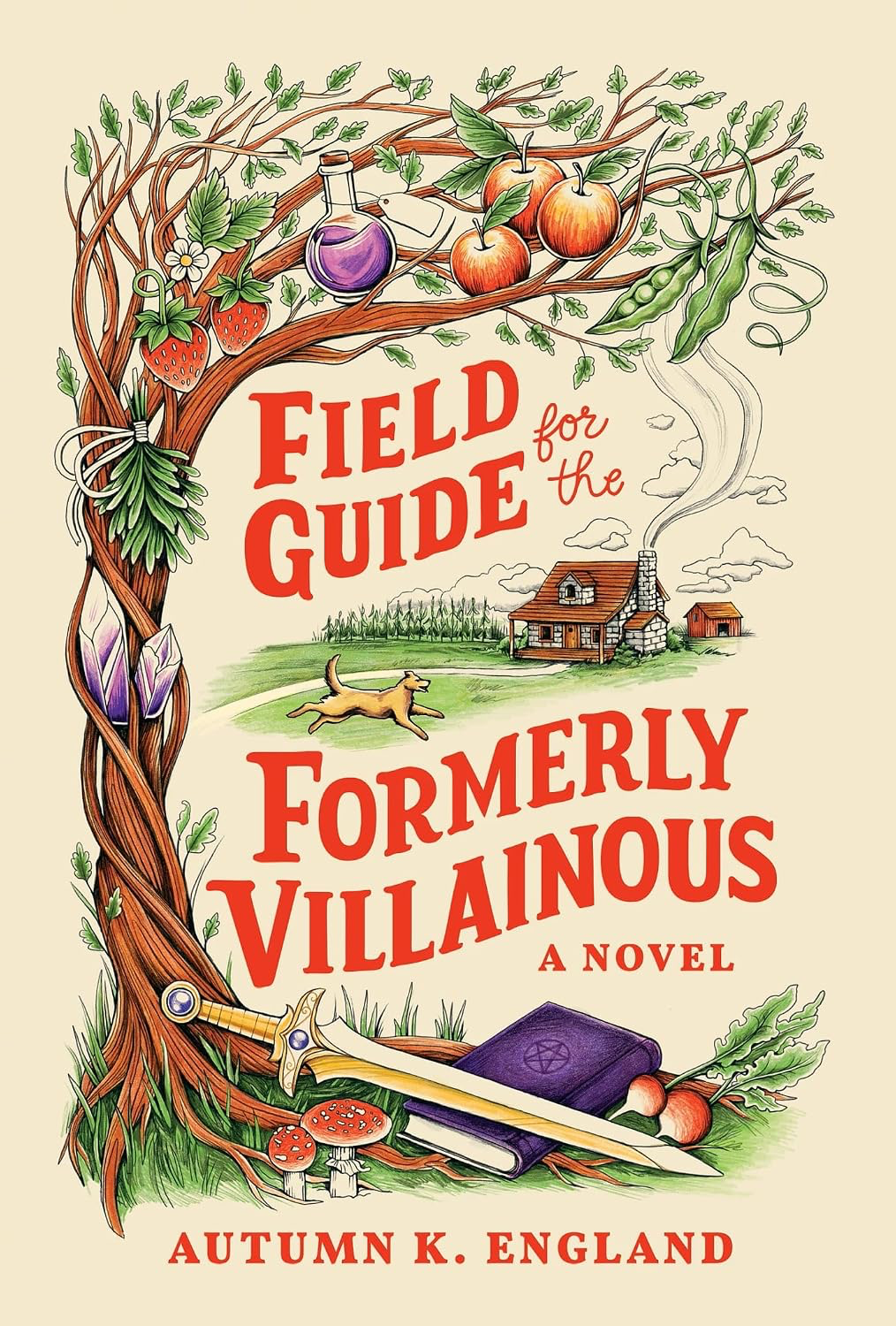
Book Review Tuesday (7/21/26) – Field Guide for the Formerly Villainous

Happy Tuesday, bibliophiles!

I hate to say it, but while Amie Kaufman has never let me down with her books, her book recommendations are less reliable. That’s how I found out about Field Guide for the Formerly Villainous, but to be fair, I’ve been reading and enjoying Autumn K. England/M.K. England’s books since I was in high school. They’ve never been a favorite or auto-buy author for me, but their books have been consistently solid and enjoyable in a pinch. Unfortunately, their cozy adult debut is their weakest novel to date.

Enjoy this week’s review!

Field Guide for the Formerly Villainous – Autumn K. England

Oaklin Nettlewood is turning over a new leaf. After narrowly escaping from a magical cult, Oaklin has fled to the small town of Mossley’s Rest. In a fit of desperation, they buy a farm, not knowing that its former occupant was a beloved staple in the town before her death. Her ghost lingers in the barn, and she’s bent on helping Oaklin revive the farm in earnest. But between painful flashbacks, suspicious townsfolk, and Oaklin’s self-imposed barriers, will they ever be able to start over?

TW/CW: panic attacks, mental illness themes, past descriptions of murder/violence, substance abuse

I wasn’t a massive fan of England’s books before, but they were consistently entertaining, which is why I’ve kept reading them. This might be where I break up with them. I should’ve seen the red flags when this was compared to Can’t Spell Treason Without Tea, which I rated too generously in retrospect. Field Guide for the Formerly Villainous was largely bland, and when it wasn’t bland, it was grating; there are so many ways to make cozy genre fiction compelling, and England used none of them.

Field Guide for the Formerly Villainous did have a prominently good aspect; it’s not just a matter of “the main character is disabled/mentally ill and that’s cool,” but England’s depiction of Oaklin’s PTSD was so empathetic. England did an excellent job of writing all of the facets of Oaklin’s trauma and mental illness. No punches were pulled with the depictions of their violent flashbacks, and their frequent panic attacks and harshly critical inner monologue were treated with the appropriate balance of sympathy and authenticity—unlike some other parts of the book, none of it felt sanitized, which I appreciated. It didn’t just feel like representation for representation’s sake—it felt like a genuine attempt to humanize a mental illness that’s quite stigmatized.

I’m not sure if I was just able to pass over the flaws in England’s novels in high school because I wasn’t super discerning or if Field Guide for the Formerly Villainous is just their worst novel. Whatever the case, one of the biggest weaknesses of this novel was just how downright bland it is. I hate to say this, but I genuinely can’t think of a single unique quality that England’s writing has. There were a few nicely flowery metaphors here and there, but it just felt devoid of any individuality. The bucolic setting was described at the barest minimum, as were the relationships between Oaklin and the others. I wasn’t expecting a worldbuilding marvel, or anything, but any sense of the world beyond the absolute bare minimum was missing. England’s writing style was just exceedingly nothing. This was certainly a book. With words in it.

I was hoping that England’s characters and dialogue would pick up the slack that the boring writing left off. Unfortunately, that was not the case. Apart from Oaklin, who was decently written, and Granny (whose main distinguishing factors were that she was a ghost and had the mannerisms of an old lady), the supporting characters were lazy copy and pastes of each other. Looking back, the only thing that distinguished Lior from the others was that she was [checks notes] an attractive woman who had a different job from the others. Ryn and Jules were the exact same character. (I think one of them plays guitar? That’s all that distinguishes them.) But what really exacerbated this issue was that all of their dialogue sounded the same. To make matters worse, they all had these very modern, gratingly “quirky” mannerisms that felt like some insufferable person’s DnD campaign. For all the effort that England put into making the people of Mossley’s Rest seem like the kind of small town folk that you’d be comfortable being neighbors with, I just wanted to leave as soon as possible.

An extension of this character issue came in the form of the romance. I liked the setup of Oaklin and Lior’s relationship, but none of it felt earned. From the start, I knew that they would end up together. That in and of itself wasn’t the problem; the problem was that their romantic progression felt so fast and unearned. So much of how their relationship developed fell into the many timeskips throughout the novel, leaving what we had on the page insufficient. It just lacked tension. In cozy genre fiction of any kind, romance is a great way to introduce an element of low-stakes tension without making the novel overly tense. Here, it was just insta-love, and wholly unearned. The only real barriers were Oaklin’s past identity and their conflicting professions, both of which got smoothed over pretty quickly. I do like that Lior was able to accept Oaklin in spite of their past, but it just felt like it robbed the book of some fluffier tension that it very much needed.

That being said, I will say that, in spite of not enjoying myself throughout most of Field Guide for the Formerly Villainous, I did love the ending. It’s messier than a lot of cozy fantasies like it are willing to get, and the biggest takeaway is that Oaklin is fundamentally deserving of love in spite of their past, which they had no control over. Yes, it was a little sappy, but I always appreciate narratives about the harsh criticism that characters have about themselves being proven wrong. England stuck the landing, but it wasn’t enough to save the whole novel.

All in all, a cozy fantasy that was forgettable in all senses of the word. 2.25 stars.

Field Guide for the Formerly Villainous is the first novel in the Everyday Magic series, but no sequels have been announced yet. Autumn K. England (also writing as M.K. England) is also the author of several other books for teens and adults, including The Disasters, Spellhacker, Roll for Love, All Fired Up, and many others.

Today’s song:

NEW CHELSEA WOLFE ALBUM IN AUGUST, THIS IS NOT A DRILL!!

That’s it for this week’s Book Review Tuesday! Have a wonderful rest of your day, and take care of yourselves!

Posted in Book Review Tuesday

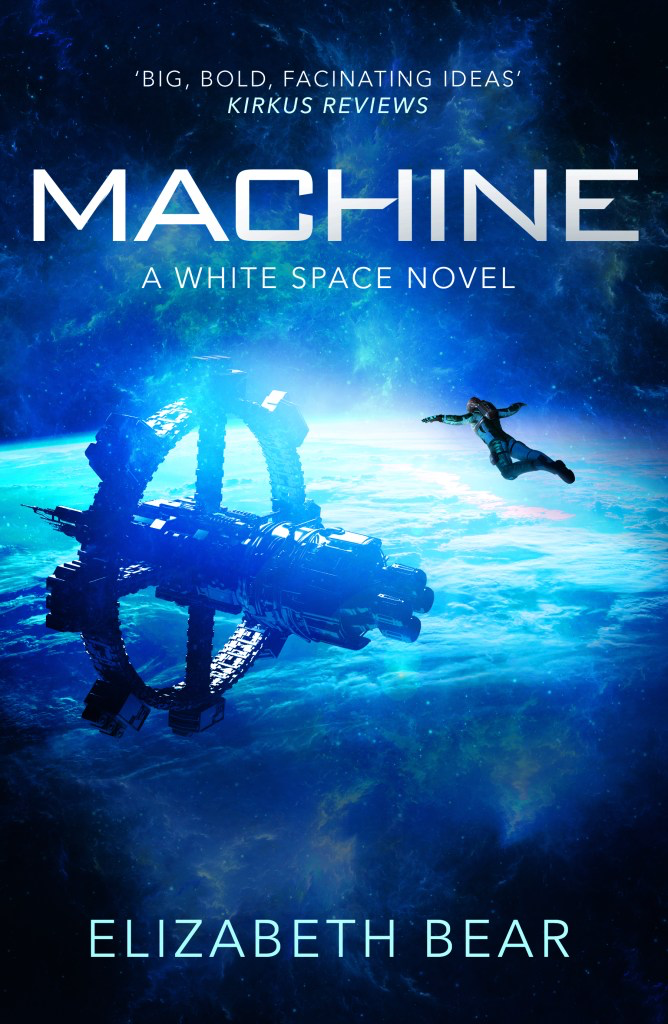
Book Review Tuesday (7/14/26) – Machine (White Space, #2)

Happy Tuesday, bibliophiles!

Thankfully, after last week’s disappointment, we’ve got something to save the track record for Disability Pride Month. I started Elizabeth Bear’s White Space trilogy earlier this year, and I knew I wanted a physical copy of book 2. It’s one of the great joys in life when a sequel is better than the first book—and Ancestral Night was already a 4.5-star read for me, so this was huge! Machine was a fantastic step up for a series that’s already a cut above the rest.

Enjoy this week’s review!

Machine (White Space, #2) – Elizabeth Bear

Dr. Brookllyn Jens is a special kind of doctor. Her patients are usually aliens, and her status as an emergency specialist means that her job description tends to involve having to jump out of spaceships. It’s already a job that keeps her on the edge. But when Dr. Jens and her crew discover two ships that have been abandoned for thousands of years, they uncover a mystery with layers upon layers of disastrous implications. With a strange, antiquated AI, an entire human crew in cryosleep, and a potential conspiracy on their hands, Dr. Jens and her crew must race against the clock to make sure that everybody makes it out alive.

TW/CW: ableism, misogyny, medical content, xenophobia, violence, murder

Genuinely, my sole problem with this novel is the title. Elizabeth Bear thought out this intricate and complex space opera world full of thousands of aliens and unique space travel, and couldn’t think of a more memorable title than Machine? I mean, yeah. There sure are Machines. Lots of ’em. But come on, really.

As much as I enjoyed Haimey’s story in Ancestral Night, I really think that making the White Space series several collected companion novels was the right move. It expands the intricate world that Elizabeth Bear has crafted in so many exciting ways that were only possible through the eyes of a different cast of characters. I loved the ways that the Synarche and all of the different species within it were fleshed out. Bear’s writing is as sharp as ever—her voice is so witty and hilarious, but she also knows just how to stick the landing when it comes to the more climactic or serious moments. The pacing was top-notch, especially considering that Machine is nearly 500 pages long—I blew through hundreds of pages at a time, and Bear never lost me.

I absolutely adored Dr. Jens as a protagonist, and Bear’s willingness to let her protagonists be messy yet lovable people made her shine. Dr. Jens has such a dry sense of humor, and her wry observations about the world around her made Machine such an entertaining read. But beyond that, I loved her continuous self-reflection—about the ideas she’s constructed about herself, but also about her work and the world around her. The supporting cast was so vibrant and lovable—it was a treat to see Cheerilaq again, first off, but all of the characters were so delightful and added a real human (and syster) authenticity to Core General’s staff. Sometimes your coworker gets on your nerves for no discernible reason, and they’re also a massive cetacean-like being getting wheeled around in a massive tank. On that subject, I loved all of the new Systers that Bear introduces. My creature design brain predictably became that meme of the dog with the propeller beanie and the giant lollipop seeing all of the truly alien aliens that populated the Synarche. But Bear went beyond good creature design and into crafting memorable, multilayered characters, which is what makes her space opera stand out in the end.

In particular, the expansion of the AI and robots in the Synarche was one of the most intriguing aspects of the world that Bear discusses in Machine. The whole plotline with Helen Alloy was one of the most well-executed. I love how Bear interrogates the objectification of women and how sci-fi has historically translated this into female-presenting robots. The visceral discomfort that Dr. Jens has that Helen was specifically created to have a hypersexualized, feminine form felt was like seeing the sun peer through the clouds after decades of weird men writing all kinds of messed-up sex-bots. It’s treated with the appropriate level of disgust—both on Helen and Dr. Jens’s part. Helen’s manipulation also ends up being vital to the later twist, and her entire arc of deconstructing the lies that she was programmed with was handled with such tenderness. Beyond the robots, I think that thread of treating people who have been brought up with hateful ideologies and not immediately dismissing those with different opinions was one of the best aspects of Machine; Bear’s insistence that people—human, alien, or AI—are not inherently bad, only victims of harmful ideas, was so necessary.

Bear’s take on disability in a sci-fi context was also such a respectful and well-researched one! She listed off several sensitivity readers in the acknowledgements, and their work paid off—for someone who seems to be non-disabled, by all accounts, this might be one of the most caring representations of a disabled person and their struggles in sci-fi I’ve seen by a non-disabled author. Dr. Jens has a chronic pain disorder, and she has a special exo-suit that manages some of her pain, but not all of it—sci-fi tech still has limitations in the far, far future. She still aches and gets physically taxed from her daring missions. Granted, I’m not chronically ill, but it felt like Bear paid so much attention to how Dr. Jens’s symptoms would present and how her high-stakes profession would affect it. Additionally, there’s a lot of talk about how disability is handled in the future; there was lots of discussion of “rightminding,” a process that, among other things, mitigates the effects of some mental illnesses. It would’ve been so easy to just slap it on as a cure-all technology, but Bear’s approach was one that I rarely see in sci-fi. It’s not necessarily “disability isn’t cured,” but it’s handled on a case-by-case basis, there’s an understanding that different kinds of disabled people have different needs and opinions about how they want to live with their disabilities with the technology available. This rejection of the one-size-fits-all approach to disability was a breath of fresh air, and wasn’t afraid to get into the nuance of how disabled people live their lives.

Disability wasn’t the only issue that gets dealt with in a refreshing amount of nuance. Bear was not afraid to get into the weeds with this novel, and it made my reading experience so much better. Machine, more so than its predecessor, gets into how a utopia and utopian ideas can be twisted into something sinister. It all feels very Ursula K. LeGuin—the Synarche is without a doubt an ambiguous utopia like The Dispossessed. (First off, I liked that Bear interrogates the ethics of “rightminding” targeting potentially “dangerous ideologies,” and how that ends up being decidedly non-utopian.) I appreciated that Bear discusses how well-intentioned utopias can be co-opted into vehicles for hatred, but also how that revelation wracks the people who genuinely believed in this utopia—people like Dr. Jens. Her arc in having faith in her hospital and the Synarche was so human—her entire reality and faith in the organization she devoted her life to is messily upended. But the realization that she comes to—that you can take the good work you wanted to do and the faith in your fellow people outside of corrupt organizations and do your own work—was one that feels so vital. I also loved the thematic potential of the infectious meme—not unlike the spread of a hateful ideology—that is treated as an infection that has to be weaned out with attention and care. Bear’s depictions of that crushing realization and how Dr. Jens and her coworkers pick up the pieces was so heartfelt, and a very potent message in this day and age.

All in all, a spectacular companion to Ancestral Night that expanded Elizabeth Bear’s masterfully crafted space opera universe with pulse-pounding action and heart. 5 stars!

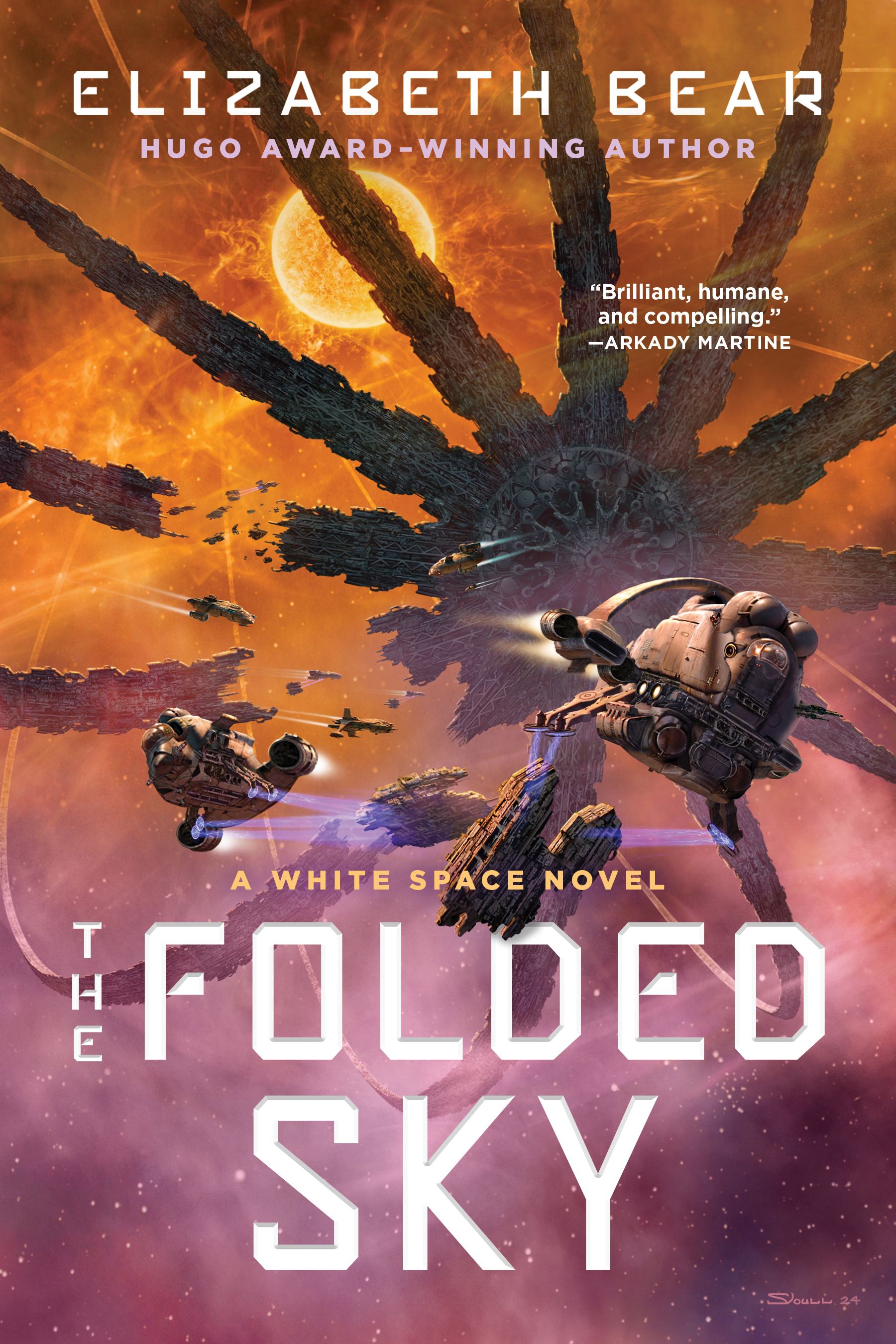
Machine is the second book in the White Space trilogy, a series of companion novels set in the same universe; it is also includes Ancestral Night (book 1) and Folded Sky (book 3). Elizabeth Bear is also the author of several other series, including the New Amsterdam series (New Amsterdam, Seven for a Secret, The White City, Ad Eternum, and Garrett Investigates), the Jacob’s Ladder trilogy (Dust, Sanction, and Grail) and many others

Today’s song:

still going through my mom’s records from the ’80s. this remains peak.

That’s it for this week’s Book Review Tuesday! Have a wonderful rest of your day, and take care of yourselves!
Posted in Book Review Tuesday

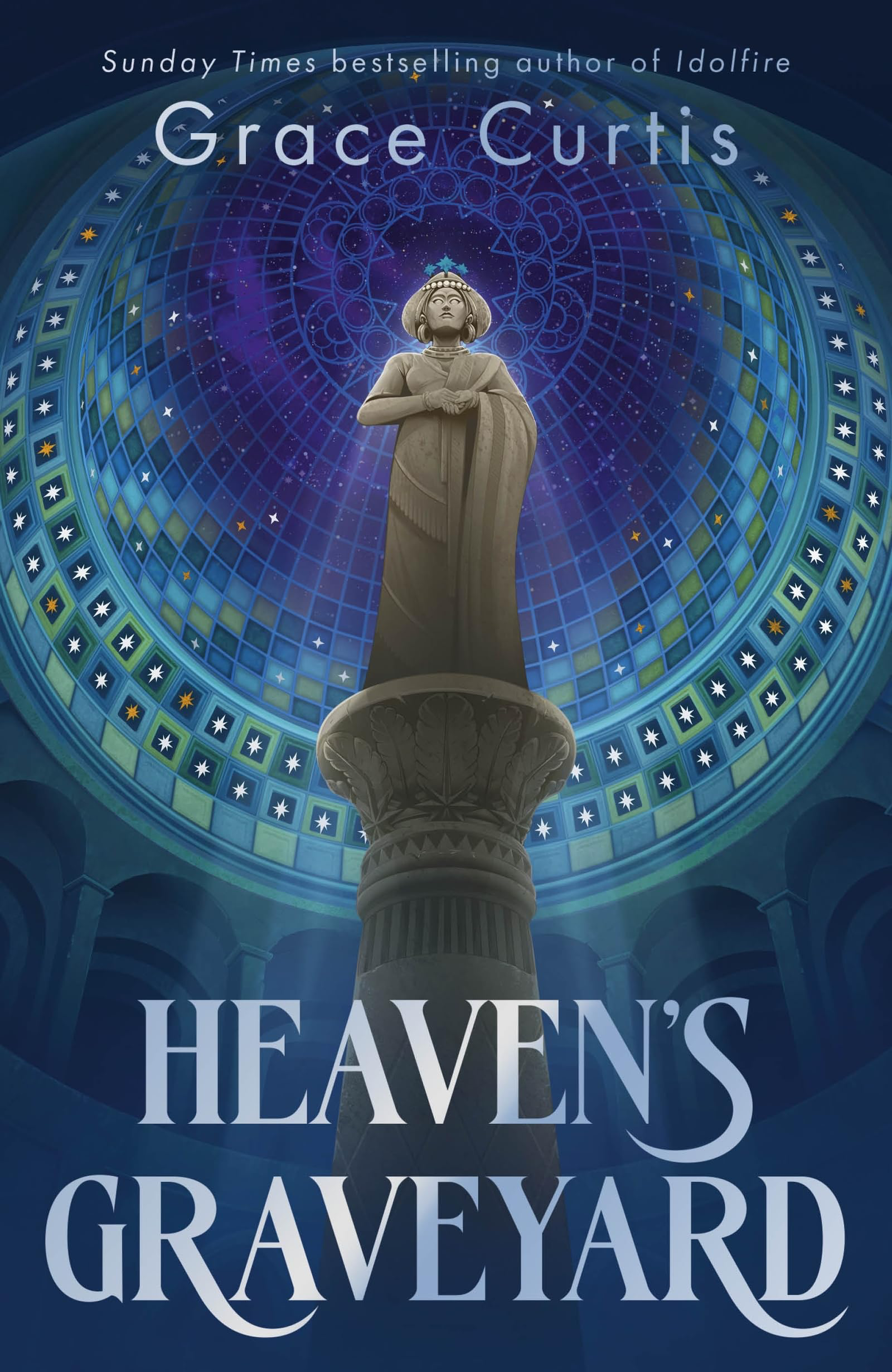
Book Review Tuesday (6/23/26) – Heaven’s Graveyard

Happy Tuesday, bibliophiles!

After my Idolfire freakout last week, I knew I had to get my hands on Heaven’s Graveyard as soon as I could. I put it on hold, but mercifully, it came in way sooner than I thought! YIPPEEEE!! It wasn’t as enchanting as Idolfire, but those are huge shoes to fill—Heaven’s Graveyard is still a cut above the rest.

Enjoy this week’s review!

Heaven’s Graveyard – Grace Curtis

Coda Callanuny has thrown herself into her university work. A student of archaeology, she’s been bent on solving a mystery that she’s been chasing since childhood: proving that Aleya, a figure of myth, was a real person and not a fairytale. But when a beloved professor—the only one who believes her theory—suddenly turns up dead, her chase for history becomes a chase for a murderer. It turns out that her professor’s findings could change the world, and in the wrong hands, could spell disaster. With the knowledge of a sunken, magical city in ruins, Cod must fight to protect the secrets that governments could kill for—and to protect the ones she loves.

TW/CW: murder, violence, misogyny, descriptions of injury, war themes, religious bigotry (fictional) animal cruelty, toxic relationship

First off, can we stop to appreciate how gorgeous the cover is? Aled Thompson’s artwork is truly stunning.

There. Have you taken sufficient appreciation time? Very well, onto the review…

Once again—like Idolfire, which was billed as science fantasy for…reasons, I guess, Heaven’s Graveyard isn’t science fantasy either. I’d put it more in speculative fiction or fantasy, since this is a fantastical setting and magic exists, but said magic doesn’t play a central role; there also isn’t enough “new” technology to qualify as sci-fi. But enough about my ramblings about genre misclassification and mismarketing, let’s get into how excellent Heaven’s Graveyard is!

With Heaven’s Graveyard, Curtis proves that she is a master of worldbuilding. Watching the more archaic world in Idolfire transform into something semi-modern was a fascinating feat. In terms of technology, I’d say we’re somewhere at the equivalent of the 1900’s-1930’s (radios, fantasy forms of high-speed transportation, fairly advanced warfare methods, etc.); aside from being a breath of fresh air in a genre where medieval and Victorian settings reign supreme, it was planned out so meticulously. Between the explorations of politics, education, and religion, it felt as vibrant and real as Curtis’s other worlds. I particularly liked how Curtis explored the rise of the new Procumbent religion, and how it had come to dominate much of the world and how it seeped into said politics and education. Stepping into Heaven’s Graveyard felt like I’d gotten a ticket to visit this world, which is a must for good genre fiction!

As always, Curtis’s characters shone in Heaven’s Graveyard. The central characters lacked some of the oomph that made Idolfire stick with me—I loved Coda (and Sparrow was despicable, but excellently-written as a manipulative but charming prick), but she lacked the pull that Aleya and Kirby had on me. I think part of it was just that kind of grand, mythic arc that they had wasn’t present here, and although Cod’s arc was emotional, it didn’t move me nearly as much as the former’s. Granted, I knew going in that it wasn’t going to be the same, but I just feel like the full effects of Cod and Sparrow’s disastrous relationship were glossed over, to the point where it almost felt like an afterthought. Thal grew on me much more than I expected, and I loved the relationship that she and Cod had towards the end. Like Idolfire, all of the kooky side characters felt so real and made the world feel so much more lived-in, and every glimpse made the world so delightfully human.

Like Idolfire, Heaven’s Graveyard excels at the balancing act of pairing humor with darkness. In this case, it applied to the murder mystery side of the plot. In spite of the murder of one of Cod’s beloved mentors, Curtis’s take on mystery was surprisingly funny. Most of that came from the fact that, in the first half of the novel, the main obstacle that Cod faced was the infinite layers of bureaucracy from the university and her colleagues thinking that she’s gone nuts. Yet Curtis maintains the stakes—both external and personal—involved in the mystery. I loved the first reveal about Nivela, and I loved how it tied into how this novel examined how history and historical discoveries are often manipulated for political gain. There’s a thematic thread from Idolfire about revelations that could shatter the carefully maintained foundation that a country/empire/etc. has built for itself that I appreciated. Fast-paced and full of mystery, Curtis’s blend of genres was a success.

It’s clear that Heaven’s Graveyard comes from a deep passion for archaeology and history. On the surface level, I loved Curtis’s depiction of historians and academia, from Cod’s relentless search for the truth to the bureaucratic hoops that she has to endure, even in a fantasy world. Cod’s quest to prove that Aleya was real formed the core of her character, but I loved how it tied into her character arc and Curtis’s exploration of history and obsession. Cod’s quest becomes one that blurs the boundaries of genuine desire to uncover history and her own ego, and I loved the nuance that Curtis afforded it. It also provided a timely commentary on how we often feel the need to push aside the wishes of other people and cultures in the pursuit of knowledge, and without spoiling anything, I love how Cod comes to the realization that she does. It shows not just a deep reverence for archaeology and historians, but a love for the people whose bones that this history once belonged to.

All in all, a masterful blend of fantasy, speculative fiction, and mystery that made every page worth the ride. 4.25 stars!

Heaven’s Graveyard is a companion novel to Idolfire, which is set 2,000 years before this story in the same universe; however, according to Curtis, they can be read separately from each other. Grace Curtis is also the author of Floating Hotel and Frontier.

Today’s song:

today’s oddly specific song fragment that I love: the way that tom waits says the word “mackerel”

That’s it for this week’s Sunday Songs! Have a wonderful rest of your day, and take care of yourselves!

Posted in Book Review Tuesday

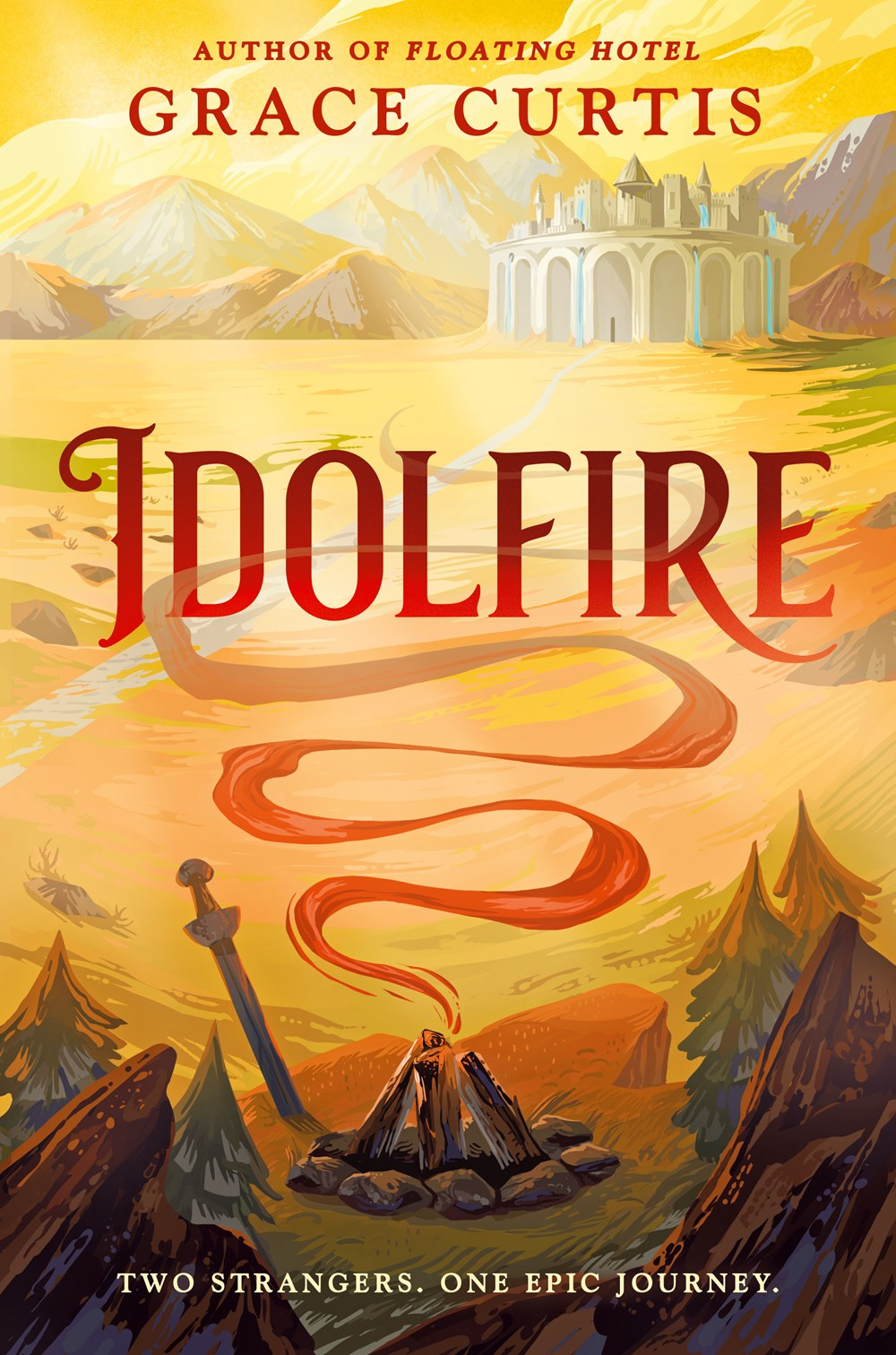
Book Review Tuesday (6/16/26) – Idolfire

Happy Tuesday, bibliophiles! Halfway through 2026 now…😵‍💫

If you told me about 3 years ago that I was this excited for a new Grace Curtis book, I wouldn’t have believed you. Full disclosure: I didn’t like Frontier, but the premise of Floating Hotel was so endearing to me that I took a chance on it…and loved it. And here I am now. (Special shoutout to Kat @ The Lily Cafe, who is the reason that I know that this book exists. Thanks, Kat!) I had a feeling I was going to enjoy Idolfire, but as we’re officially halfway through the year…this might be one of my favorite books that I’ve read this year!

Enjoy this week’s review!

Idolfire – Grace Curtis

After illness tears her family apart, Kirby of Wall’s End sets off on the road to Nivela, a famed kingdom that has fallen from grace, but retains the promise of magic beyond its gates. Across the world, Aleya Ana-Ulai is searching for Nivela too, eager to prove herself after being abandoned by her family. When these two women from disparate regions meet on the road, neither knows that their togetherness is key to their survival. But the road to Nivela is long and treacherous, and it seems to hold everything but the answers they need within it. Aleya and Kirby must decide if the promise of Nivela is worth it—and if they’ll be able to survive at all.

TW/CW: violence, blood, war themes, loss of loved ones, child death, infertility

First off—this isn’t a slight on the book, but if you’re going in (like I did) expecting science fantasy, Idolfire is not that. This is straight up fantasy. I’m convinced that the “science fantasy” thing was tacked on for marketing reasons after Curtis wrote two sci-fi novels. Just be forewarned about that…and the fact that this book came dangerously close to destroying me. This might be one of the best books I’ve read all year.

Grace Curtis’s prose keeps getting better and better with each novel she writes. It’s prose that gave me genuine, heartwarming joy to read. She just has this way of making everything, from the setting to the subtle glances between characters, so wholly human; it goes beyond feeling lived-in and real and becomes something with a real heartbeat. Where Curtis succeeds is in shedding light on the unsaid; slight turns of phrase became quietly heartwarming or heartbreaking with a single word. Her renderings of the varied landscapes that Aleya and Kirby travel through are so rich and full of life. Every line of dialogue is razor-sharp, both in their humor and their power to devastate. If you want proof of Curtis’s improvement as a writer, Idolfire is the perfect evidence.

One of the strongest aspects of Idolfire was how it balanced humor and more sobering, serious themes. Curtis has really honed her talent for humor—there were so many moments throughout that were laugh-out-loud funny. Aleya and Kirby had such excellent chemistry (more on that later), but their separate senses of humor pinged off of each other exceptionally well, making for a fantastical road trip that never had a dull moment. And yet, Curtis gave the same amount of care to depict the darker themes of the novel alongside the lighter ones. Curtis’s depiction of war was one that has stayed with me; her descriptions of it have no interest in glorifying its purpose or its participants. Even for a novel billed with swordfighting, her sparse, devastating language in describing the horrors of war were so impactful in a genre where there’s often a degree of romantic language ascribed to something so horrendous. From the effect it has on the minds of individual soldiers to the scars that it wrought across the lands of Idolfire, Curtis explored every facet of living during wartime. Yet Curtis had the same level of care in the lighthearted and dark aspects of Idolfire—for a novel like this, it was a very difficult balance to strike, but Curtis absolutely clinched it, making for a novel that was, above all, human.

I didn’t think that Curtis’s character writing could get much better after Floating Hotel, but I was proven wrong. Although I loved the slice-of-life roving between multiple characters, I think that narrowing her focus down to two central characters did a great service to their development. Aleya and Kirby were some of the most memorable characters that Curtis has ever written. A less talented writer would’ve slapped a hasty grumpy-sunshine dynamic on them and left it at that, but they both had such richly layered personalities. Both of them had trauma so deeply embedded in their psyches, but Curtis did an excellent job of showing us how it manifested in both of them and shaped their personalities. I loved how Aleya’s more reserved, stoic nature played off of Kirby’s more mischievous personality, but the deeper you get, the more you realize that both of these traits serve as shields for both of them. They had such immediate, lovable chemistry, and the progression from begrudging companions on the road to lovers was impeccably paced, and every step of that progression felt so natural—and instantly lovable to root for. Without spoiling anything, things do turn out bittersweet for them, but I think the way that Curtis ended their story was poignant and fitting for both of them.

I also adored the road trip plot of Idolfire, and it kept me guessing constantly. Curtis’s talent for character writing also applied to the menagerie of weirdos that Aleya and Kirby met along the road to Nivela. Even the smallest glimpses we got of the denizens of Idolfire‘s expansive fantasy world were so fleshed-out, and they added so much life to the already fantastic worldbuilding. Balance is something that Curtis clearly has been honing, because like the balance between levity and darkness, there was a great balance of more action-packed moments—such as Aleya’s many swordfights—and downtime with Aleya and Kirby. The pacing was neat as a pin, and even the downtime between the more climactic parts of the novel were measured out to near-perfection. Idolfire really was a balancing act in so many ways, but Curtis toed the lines she set with enviable ease.

And if there’s anything that you can expect Curtis to do well with, it’s sharp commentary on empires and imperialism. Floating Hotel excelled at that as a point in the background, and Idolfire honed in on it even more. I think what Idolfire brings to the conversation is how ideas shape the image of an empire. Fully acknowledging that Curtis is British and I’m just projecting my experience onto this book, but I couldn’t help but think about Nivela—and Aleya and Kirby’s goals—in terms of the permanently out of reach “American dream,” and how an empire can build up an idea of itself while hiding a crumbling foundation beneath it. The further they go on their journey, the more they see the destructive aftermath of an idea twisted into something that excuses genocide and imperialism. I also liked how it tied into the magic system, with belief being what makes certain magic work/not work, and how that translated into the belief in Nivela, which has been faltering to the point of destruction. (Without getting into spoilery territory, there’s some really fascinating stuff about the very literal, human cost that this has in the world of Idolfire.) In the end, I think it was a beautiful meditation on the power of ideas, and how they can be twisted into something so terrible that it swallows the world, but how we can use that same power to create a more equitable world worth living in.

Ultimately, with ratings like these, there’s always that slight oomph that pushes it into 5 star territory. I think there’s still a few small nitpicks that made 5 stars not justifiable, but it sure was close. Overall, Idolfire was a deeply moving and human road trip fantasy, a meditation on the nature of the ideas and idols we hold up in our minds. 4.75 stars!

Idolfire is a standalone, but it has a companion novel, Heaven’s Graveyard, set 2,000 years later in the same universe. Grace Curtis is also the author of Frontier and Floating Hotel.

Today’s song:

I’m sorry, Let’s Dance (1983), I was unfamiliar with your game

That’s it for this week’s Book Review Tuesday! Have a wonderful rest of your day, and take care of yourselves!
Posted in Books

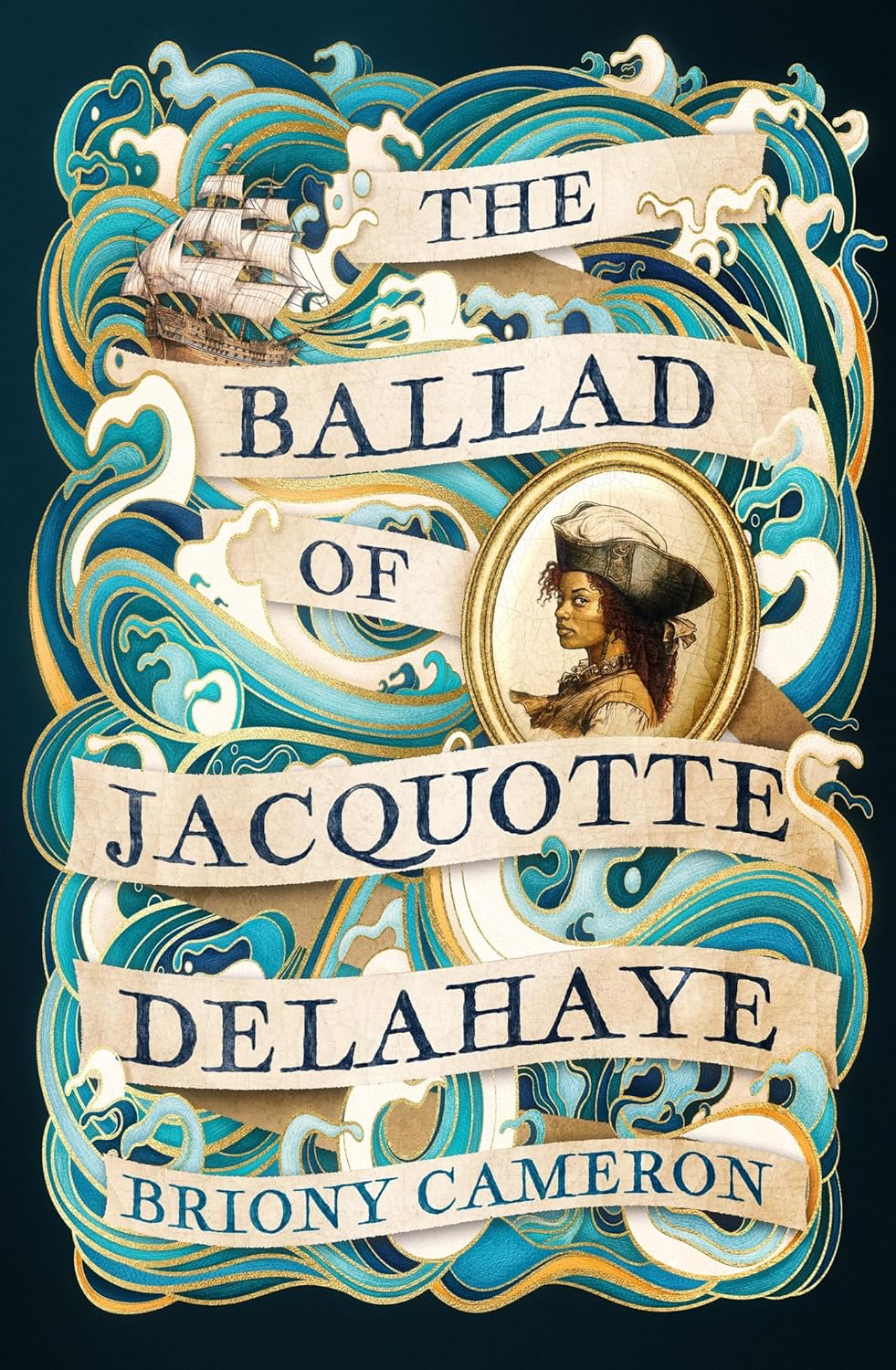
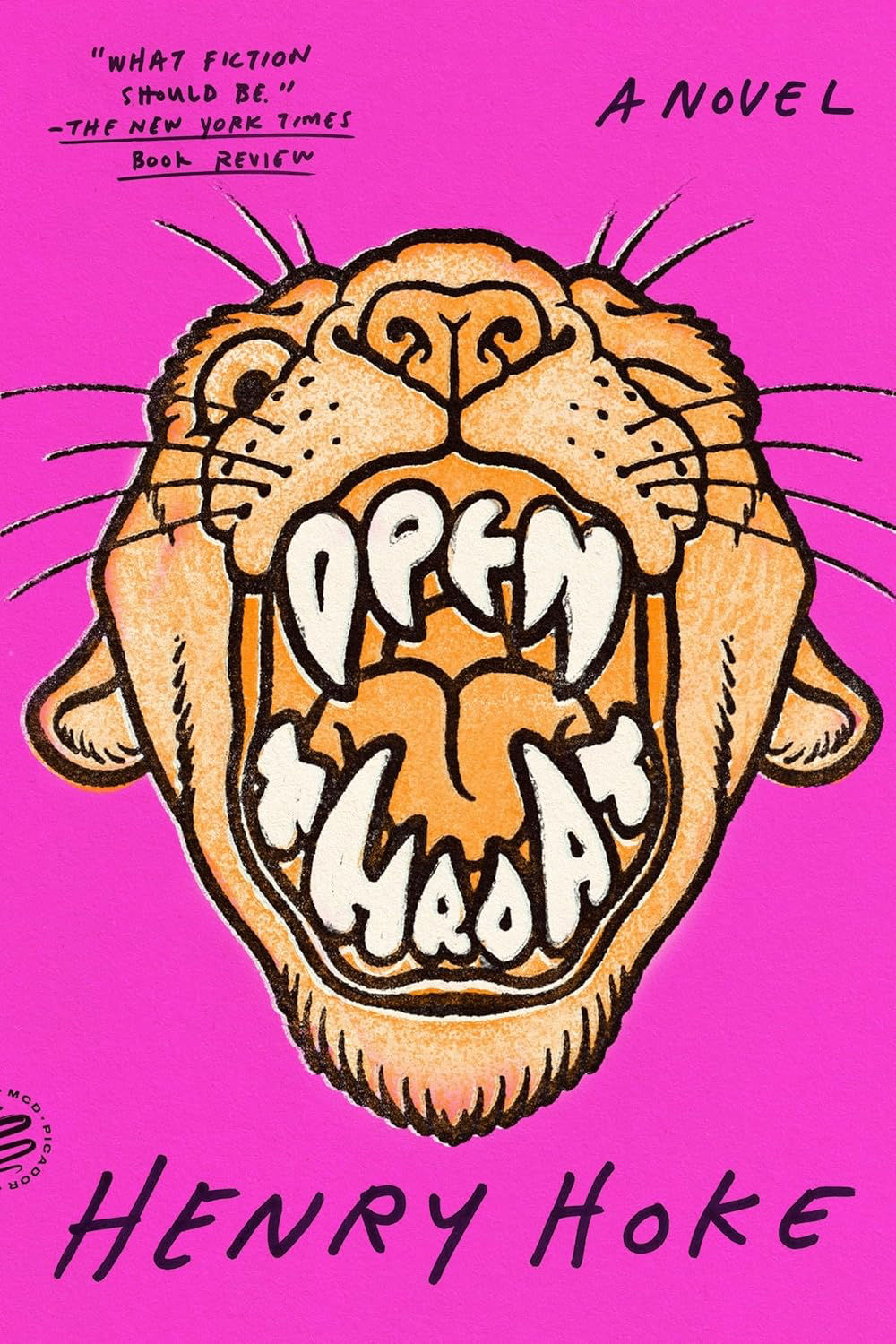
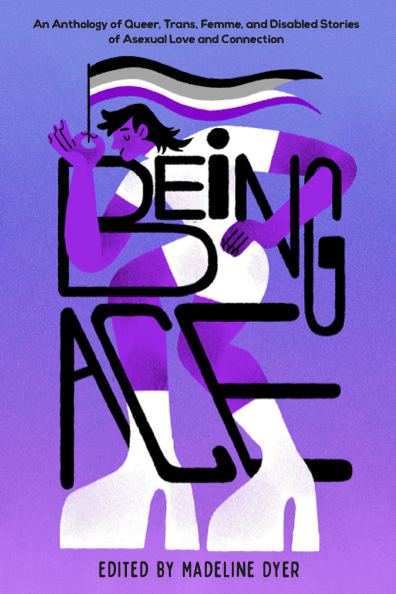
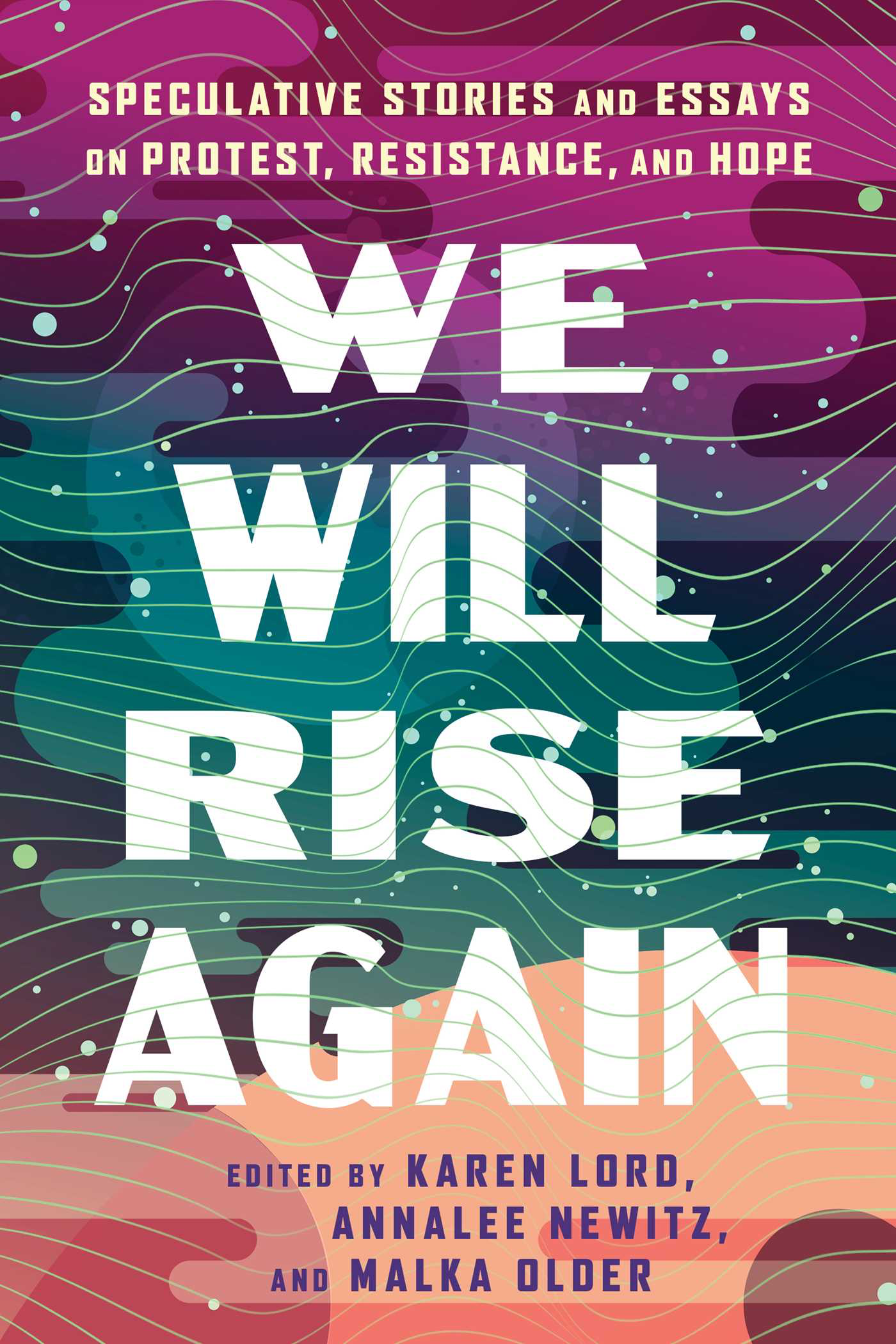
🏳️‍⚧️🏳️‍🌈The Bookish Mutant’s Books for Pride Month (2026 Edition)🏳️‍🌈🏳️‍⚧️

Happy Thursday, bibliophiles!

Here in the U.S., June is Pride Month! You know the drill. I hate how bittersweet these posts are, and the bitter keeps growing. I see the beauty of this month and our queer community, but I can’t help but shrivel from the reminders that there have been repeated attempts to take queer books off the shelves across the country, and that the trans community here in the states has been under attack more than ever. My heart truly, truly hurts for all of us. I hurt. Of course, here I am, being cisgender in my cushy blue state with an openly gay governor, but nonetheless, I hurt whenever any other member of the queer community is hurt.

I’ve been an out and proud bisexual for almost eight years. Not long, in the grand scheme of things, but these years have taught me so much about queer people and the LGBTQ+ community. If there’s anything that I see in us, it’s our tenacity. No matter the slew of hateful legislation and rhetoric, we always come back stronger than ever. If there’s anything that the queer community doesn’t do, it’s back down in the face of a threat. In spite of the never-ending threats from outside and inside (the infighting never stops, y’all need to be normal about each other, please), we are like dandelions pushing through the cracks in the pavement: we never surrender, and we continue to bloom in the face of adversity.

But here’s the thing. I don’t like having to be this resilient. I don’t think any of us do. But if there’s anything to take solace in, it’s that our community is so strong and diverse that there will always be someone fighting. Yes, we all have to do what we must, but it’s important to remember that simply surviving, just being, is resistance in the face of the government wanting the public to believe that we aren’t worthy of the same rights as everybody else and that our stories are not fit for public consumption. You don’t have to be out and proud. All you have to do is be.

So here’s my annual pride month recommendations list of queer books from a variety of genres and backgrounds. I’ve compiled all kinds of books from various sexual orientations and gender identities, as well as backgrounds (queer people of color, disabled queer people, queer immigrants, etc.). Hopefully there’s something for everyone. (As always, if I’ve mistakenly identified anything on this list, please let me know! I’m only human.)

Now, more than ever, it’s crucial to support the LGBTQ+ community (especially the trans community, who are under attack more than ever) in whatever way you can. If you want to show your support them monetarily, here are some great organizations to donate to:

This is a non-exhaustive list, and I encourage you to seek out organizations in your area! There are so many wonderful people across the country (and the world) doing great work for the LGBTQ+ community.

A refresher on my key:

MC: Main character

LI: Love interest

SC: Side character(s)

For my posts from previous years, click below: 

Let’s begin, shall we? 

🏳️‍⚧️🏳️‍🌈THE BOOKISH MUTANT’S BOOKS FOR PRIDE MONTH (2025 EDITION)🏳️‍🌈🏳️‍⚧️

FANTASY:

SCIENCE FICTION:

REALISTIC/HISTORICAL FICTION:

*it’s worth noting that the main character of this novella is a mountain lion, but I feel like it still counts.

**the cover for The Golden Boy’s Guide to Bipolar has not yet been updated to reflect Sonido Reyes’s name change.

ANTHOLOGIES (VARIOUS GENRES):

NONFICTION:

TELL ME WHAT YOU THINK! Have you read any of these books, and if so, what did you think of them? What are some of your favorite queer books that you’ve read recently? Let me know in the comments!

Today’s song:

That’s it for this recommendations post! Have a wonderful rest of your day, and take care of yourselves!

Posted in Book Review Tuesday

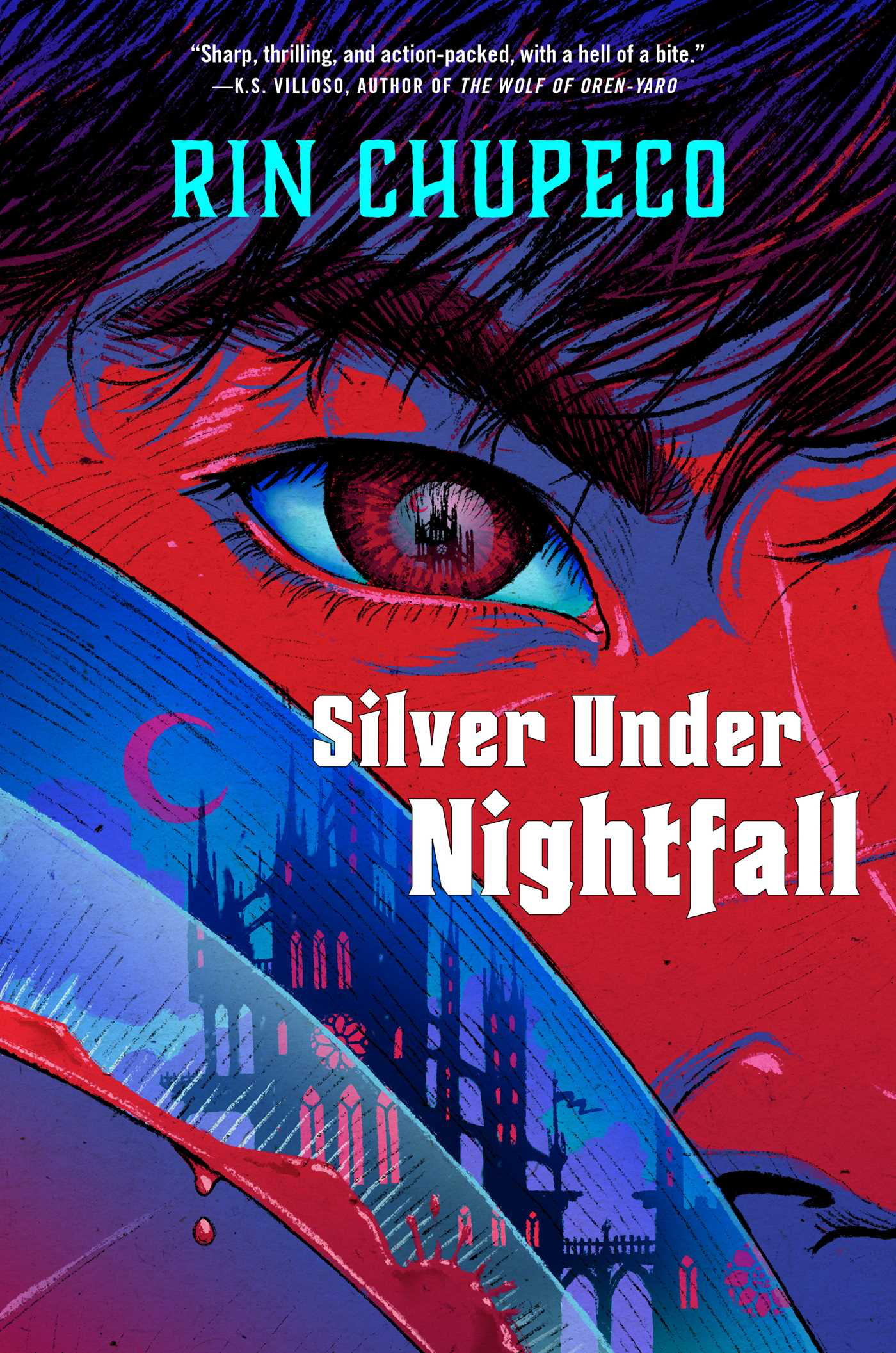
Book Review Tuesday (5/19/26) – Silver Under Nightfall

Happy Tuesday, bibliophiles!

I read a handful of Rin Chupeco’s books in high school. I liked them for the most part, but I think I just lost interest eventually. Fast forward a few years, and I found out that they’d written another series for adults, and the premise hooked me. However, it seems like Chupeco’s writing doesn’t hold up now that I’m older. Silver Under Nightfall was just ridiculous in all the wrong ways.

Enjoy this week’s review!

Silver Under Nightfall (Silver Under Nightfall, #1) – Rin Chupeco

Remington Prendergast is a Reaper—a highly-trained bounty hunter who specializes in the most dangerous quarry: vampires. Even with his talents, the rumors surrounding his possibly vampire heritage have alienated him from his colleagues. His father, the Duke of Valenbonne, has been desperate to make his powers so great that they overshadow the rumors, but he’s failed. But when strange, deadly vampires, the likes of which the kingdom has never seen, begin to spread across the kingdom, Remy’s only choice is to turn to a pair of enigmatic vampires to solve the case—and risk being drawn into their seductive web.

TW/CW: blood, gore, sexual content, loss of loved ones, pedophilia, vomit, emotional abuse

I haven’t read a Rin Chupeco book since I was about 17. I really should’ve kept it that way. Silver Under Nightfall sounded fun and gothic enough from the premise, but this novel was bordered on being a disaster. It genuinely boggles my mind that this book has such a positive average rating on both Goodreads and The Storygraph. I endured 500 pages of this (probably should’ve DNF’d it), but now I have the evidence to hate from an educated stance…

Before I get into all my gripes, I’ll give Chupeco credit for the handful of things that they did well. Though it didn’t go in the direction I would’ve liked it to go, I loved the vampire murder mystery/thriller plot, and the genetically engineered monsters and subsequent fights were quite fun. There were moments where they nailed the gothic atmosphere, and there were a handful of solid quotes here and there. But unfortunately, these elements, despite being key to the premise, weren’t delivered on nearly enough, which is surprising, since Silver Under Nightfall is over 500 pages long. Unfortunately, most of that 500 pages is a poorly-written mess.

The last book of Chupeco’s that I read was The Ever Cruel Kingdom, which I honestly forgot about completely, other than the vague sensation of it being entertaining, but ultimately finishing it just to finish it. Not a great endorsement, I know. But even at that age, I had the sense that it felt overwritten, that there were random metaphors tripping over themselves. Unfortunately, that quality increased tenfold in Silver Under Nightfall. To Chupeco’s credit, their writing has some fun moments of being campy and gothic. In the end, they were just trying way too hard to be gothic. This resulted in so many sentences with nonsensical structure and metaphors that went on far longer than they humanly should have. At the worst points, the writing was so deliberately obtuse that I could barely get any sense of the setting or world beyond it. (Worldbuilding? Who is she?) It was just dense and unwieldy, and did very little to enhance the atmosphere.

Speaking of trying too hard, Chupeco’s dialogue was the worst victim of the above prose problem. It was terrible. All of the characters oscillated between talking like 15-year-old edgelords and fictional Victorian nobles, even though they’re all meant to be adults. The Victorian noble bit was painfully overwritten, carrying over the same problem of Chupeco’s floundering attempt at making Silver Under Nightfall gothic; again, a lot of the dialogue was stuffy at best, grammatically nonsensical at worst. On the other end of the spectrum, you have characters like Remy, who Chupeco spends 500 pages desperately trying to convince you that he’s funny.

Below is an actual quote from the book:

“…I’ve never infected anyone, if you don’t count my dry wit—”

Oh my God, free me from this prison. 90% of the humor in Silver Under Nightfall is 2017 Tumblr humor partially filtered through quasi-historical nobleman speak; like the specially-engineered vampire-creatures in the novel, it’s an unholy abomination that shouldn’t exist. And Chupeco really, really, really wants you to think that it’s funny, so much so that it supersedes most other elements that are important in a novel, like…oh, worldbuilding? Character development? No, apparently what matters most is making sure that the reader knows, beyond all reasonable doubt, that your character has a dry sense of humor. And he doesn’t. He, like most of this book, is painfully unfunny.


This brings me to the characters. I think the fundamental problem was that Chupeco seemed hellbent on making them as likable as possible, which in the novel, translated to them having virtually no flaws. We’re beaten over the head with the prospect that Remy is a poor widdle baby and nobody likes him because people think his mommy was a vampire but he’s also SO TALENTED and SPECIAL and EDGY and COOL. Textually, we get very little evidence to support this, other than his overlong monologues and the treatment he gets from his father. No character development, no revelations that aren’t external—stuff just happens to him, and Chupeco just paints him like this sad, wet puppy that got left out in the rain. Show me more interactions between him and the other Reapers! Give me some actual internal reflection and genuine grappling with his identity at the very least, dammit! As for the others, there’s not much to say about them…which is to say that most of them had one character trait each. Malekh and Xioadan were sexy, the Duke was a Bad, Bad Guy, and there were…a few others? I guess? Most of them got taken care of in the bloodbath towards the end. Silver Under Nightfall was just a classic case of a main character that was unrealistically overpowered and emo, and then all of the others were just window dressing (or threesome fodder).

However, I think the fundamental problem with the characters in Silver Under Nightfall was that Chupeco refused to give them any nuance. Remy, for how much of an edgelord he was purported to be, was purely good. Malekh and Xioadan were the same way—they were completely pure, despite the “oooh the evil vampires are seducing me ooooh 😏🫦” plot. There was a revelation at the end that could’ve complicated the relationship between Malekh and Remy in a super interesting way, but Chupeco immediately shuts it down in favor of Malekh being completely pure. Of course, all of the bad guys are completely bad. I wouldn’t even let this kind of black and white writing slide in a YA novel. It was such a lazy, uninteresting way to write these characters, especially when the novel touts itself as having all of these morally gray characters. None of the specialest, most precious little guys can have any sort of nuance or depth, I guess.

All in all, a bloated mess of a vampire novel with unwieldy writing and even worse character work. I feel like I’ve been drained…by Colin Robinson, maybe. 2 stars.

Silver Under Nightfall is the first in the Silver Under Nightfall duology, which concluded with Court of Wanderers. Chupeco is also the author of the Bone Witch series (The Bone Witch, The Heart Forger, and The Shadowglass), the Never Tilting World series (The Never Tilting World and The Ever Cruel Kingdom), the A Hundred Names for Magic trilogy (An Unreliable Magic, Wicked As You Wish, and The World’s End), The Sacrifice, and several other novels for teens and adults.

Today’s song:

That’s it for this week’s Book Review Tuesday! Have a wonderful rest of your day, and take care of yourselves!
Posted in Book Review Tuesday

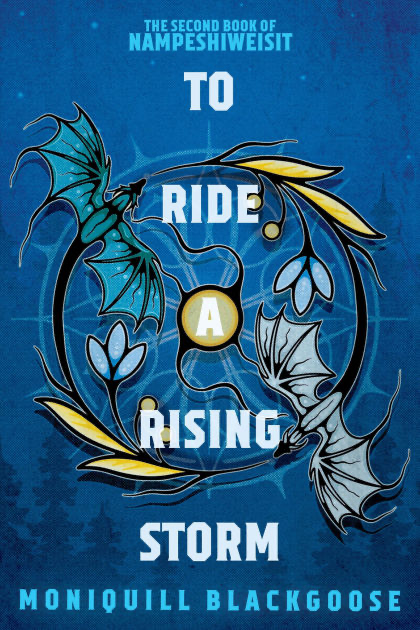
Book Review Tuesday (3/10/26) – To Ride a Rising Storm (Nampeshiweisit, #2)

Happy Tuesday, bibliophiles!

I fully thought I reviewed the first book in this series…whoops. Did I just hallucinate writing a book review? In 10-ish years of writing book reviews, I guess it was bound to happen…

Suffice to say, I really enjoyed To Shape a Dragon’s Breath—it filled the void left by Harry Potter and rekindled my love for good old magic school YA, but without having to remember that J.K Rowling exists. To Shape a Dragon’s Breath is unabashedly Indigenous and queer, with a witty, delightful protagonist, a lovable supporting cast, and potent commentary on racism and colonization. And did I mention the dragons? Naturally, I was excited to see what the sequel had in store. And for the most part, To Ride a Rising Storm was a very rewarding sequel, full of the same heart that endeared me to book one.

Now, tread lightly! This review contains spoilers for book one, To Shape a Dragon’s Breath. If you haven’t read it and plan on doing so, you may want to skip this review.

Let’s begin, shall we?

To Ride a Rising Storm (Nampeshiweisit, #2) – Moniquill Blackgoose

Anequs has survived her first year at Kuiper Academy. Eager to return home with Theod, her only other indigenous classmate…who she may be developing feelings for. She intends to spend her summer break with her family, but what she returns home to is quite the opposite. The Anglish have begun to encroach on her homeland. Anequs is determined to assert her people’s right to govern themselves, but before she can intervene, she’s swept back to Kuiper Academy for another semester. With new friends and enemies, Anequs is determined to not let the idiosyncratic, nonsensical rules of Anglish society beat her down. But with a looming political threat mounting outside of her school, Anequs’s peace might be short-lived.

TW/CW: racism, xenophobia, misogyny, homophobia, colonialism, classism, violence, descriptions of injury

I love the Nampeshiweisit series—both books have been a delight to read. But for both books, I’ve been slightly torn about the worldbuilding. What you have to know right off the bat is that it’s not subtle, but also that it’s not trying to be subtle. Anequs and her people are Native American-coded, and the English stand-in is quite literally Anglish. You can see where we’re going here. But I wouldn’t be reading book two of this series if I wasn’t on board with it; and to be fair, the Anglish are basically a hybrid of England and a lot of Scandinavian countries in terms of their culture and folklore, even though they play the role of the English here.

However, I appreciate it more in the sense that it’s a political statement rather than a worldbuilding one—Blackgoose isn’t here to beat around the bush here when it comes to critiquing colonialism. Once you get past the names, there’s a rich fantasy world to be found here. It’s a world of dragons and secret societies and magic, and Blackgoose does an excellent job of explaining how they’re integrated into this world, and how they’ve affected geopolitics; this book gets even more into the politics of the world, which I greatly enjoyed. Plus, if you’re sick of how said magic schools have handled diversity (you all know who I’m talking about here), there’s so much diversity here, be it queer, POC, or disabled characters. And none of it feels like ticking off boxes—it all feels like how marginalized people would have lived and acted historically in a multicultural space.

One of the parts I most enjoyed about To Shape a Dragon’s Breath was Anequs herself. She’s just such a spirited and downright delightful protagonist, but one that easily holds her own against the obstacles that she faces. The Nampeshiweisit series is one that I’d recommend to readers of all ages, honestly, but especially younger readers who have just reached the age range of YA, and one of the main reasons I’d recommend it to younger readers (especially young girls) is Anequs. She’s such a good role model for young women, especially young, queer women of color: she’s determined, smart, and takes both her peers and the authorities to task for their racism and colonialism. Her personality practically bursts off the page. She isn’t without her flaws, either, and all the better—young girls are better off with role models who aren’t perfect. But so much of the draw for this series is how much I love being in her head and going on adventures with her and Kasaqua. Blackgoose really struck gold with Anequs—she’s a memorable protagonist in every way.

To Ride a Rising Storm was more character-driven than its predecessor, and for the most part, it greatly benefitted from it. For most of the novel, there’s not any hardcore, climactic action, but there are so many parts of the world and other cultures that get fleshed out that I can’t complain…mostly. (More on that later.) Either way, I loved the development of Anequs and her friends, old and new. Blackgoose’s characters are just so charming and compelling, and I loved that we got more page time with them. Jadzia was a great new addition, and I loved what she added to the friendship dynamic with Anequs, Theod, Sander, and the others. The glimpses we get of those on the margins of Anglish society outside of Kuiper Academy made the world feel even realer—there were so many pockets that we hadn’t seen before, and Blackgoose’s prose made me so much more immersed into the setting. Though some of the other parts of the book suffered from this focus, To Ride a Rising Storm felt like it was there to make the world more real.

However, there are drawbacks to having a book just for making the world feel more immersive. I’m torn about To Ride a Rising Storm because although I loved reading every second of it, there was a very clear pacing issue. While I enjoyed the more cozy, somewhat low-stakes approach that this book had, it was paced quite unevenly. We get some very serious action and stakes, but they aren’t introduced until halfway through the book. The final battle is crammed into the last 3% of the novel—I checked on my Kindle when this huge battle went down, and it started at the 97% mark! For a moment this climactic, it was introduced far too late. It just didn’t quite feel like Blackgoose quite knew whether she wanted to make this novel fully cozy or low stakes; either commit to the coziness or give the stakes more weight throughout the rest of the novel. Again, I enjoyed the pace until I didn’t—the last quarter of the novel proved that there was a serious issue with imbalance.

All in all, a worthy sequel with timely political commentary, tender friendships, and one of YA fantasy’s most memorable protagonists today. 4 stars!

To Ride a Rising Storm is the second book in the Nampeshiweisit series, preceded by To Shape a Dragon’s Breath.

Today’s song:

prepping myself to see Jeff Tweedy this friday…thanks to my dad for this one!

That’s it for this week’s Book Review Tuesday! Have a wonderful rest of your day, and take care of yourselves!
Posted in Book Review Tuesday

Book Review Tuesday (1/27/26) – A Swift and Sudden Exit

Happy Tuesday, bibliophiles!

First off, I figured I would share this resource with you all. My heart continues to break from seeing ICE violence wracking Minneapolis. If you’re financially available, here’s a post with a comprehensive list of places to donate to support the good people of Minneapolis. If you’re not financially able: continue to spread the word! When the government continues to propagate blatant lies, your words are the best weapon to use against them. Rest in power to Renee Nicole Good, Keith Porter, and Alex Pretti. ABOLISH ICE.

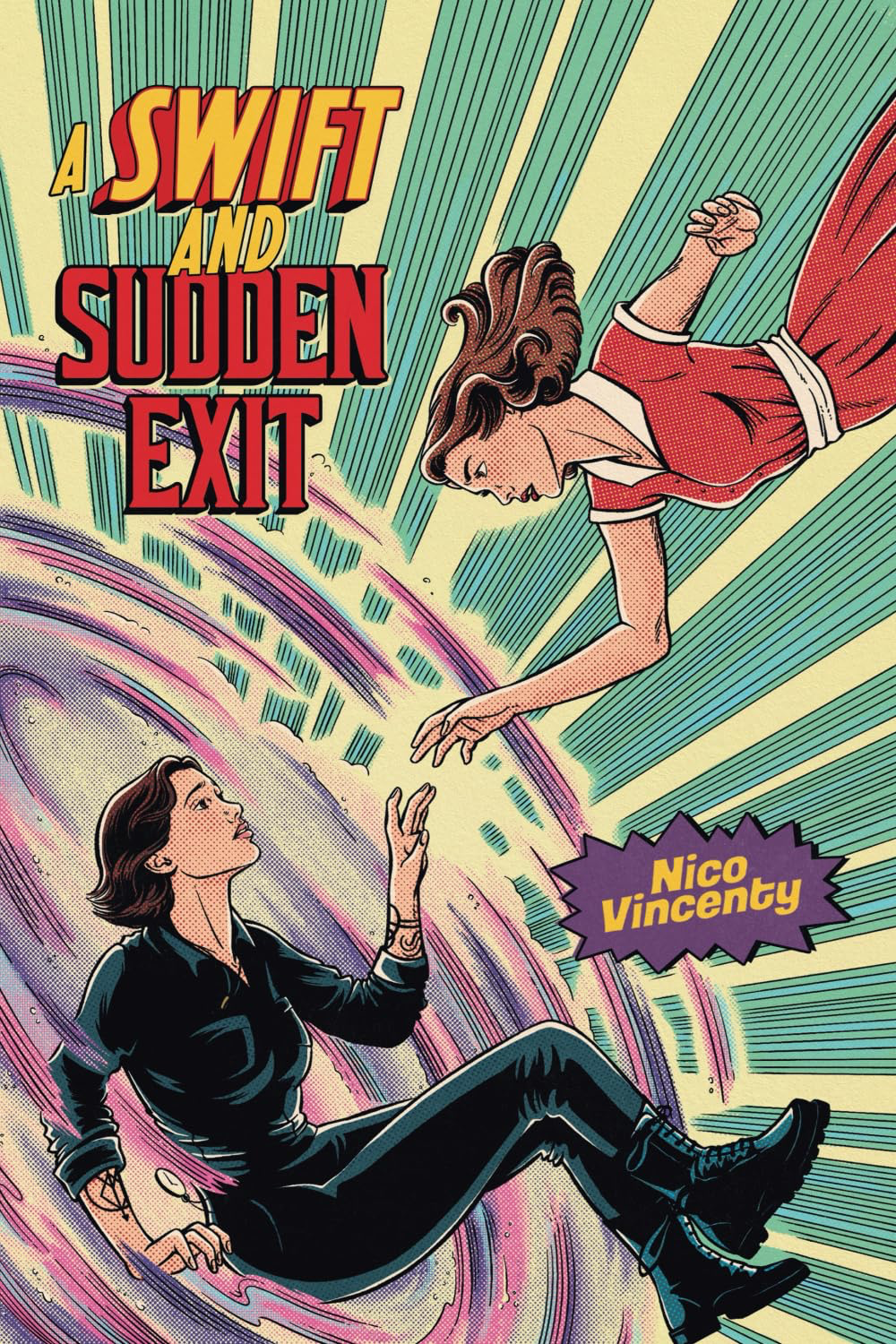
Here’s another book that I got with some gift card money for Christmas. I’m always on the hunt for more books with good bisexual rep, especially when it’s in genre fiction. This indie-published time travel romance between a time traveler from the post-apocalyptic 2050’s and an immortal caught my eye immediately, in no small part thanks to the wonderfully comic book-y cover. Though it wasn’t without its flaws, A Swift and Sudden Exit was an emotional and action-packed romp through time and space.

Enjoy this week’s review!

A Swift and Sudden Exit – Nico Vicenty

Zera lives in a post-apocalyptic 2058, where a geomagnetic storm nearly two decades ago plunged Earth into almost uninhabitable conditions. The remains of the military are scrambling to make things right, and the only way out of the wasteland is time travel. But when Zera travels back to 2040—the date of the geomagnetic storm that started it all—she sees a woman who claims to have known her, and may just be immortal. Zera follows this woman over centuries as she struggles to find the missing piece of the puzzle, but will this mysterious, immortal woman be more than just a means to reverse the apocalypse?

TW/CW: homophobia, violence, police brutality, vomit, abuse, suicidal ideation, stalking, blood, murder, loss of loved ones

Maybe the real geomagnetic storm was the bisexual romance we made along the way?

A lot of the reviews for A Swift and Sudden Exit that I’ve read have talked about how this novel couldn’t seem to make up its mind on whether it wanted to be sci-fi or romance. This problem never popped up for me, and I think that might be the novel’s hidden strength. It wasn’t afraid to put the sci-fi and romance elements at equal importance. Vincenty did an excellent job of developing these aspects in tandem, and it made for a very unique mix of genres. The worldbuilding was sound for the most part, but the same attention was paid to making Zera and Katherine’s romance into something that had a very real, slow-burn progression. I felt just as much tension with Zera trying to prevent the geomagnetic storm as I did with her will-they-won’t-they dynamic with Katherine. It’s such a fun premise to begin with—a romance between a time-traveler and an immortal—but Vincenty delivered on both aspects. A Swift and Sudden Exit succeeded for me in part because equal effort was put into the two most disparate parts of the novel, and the merging of the two felt seamless.

The most compelling parts for me were how Vincenty explored both the past and the future. The radiation-wracked future was appropriately bleak, and I loved the atmosphere she created with Zera and the others in their bunker. Just the same, I loved Zera and Katherine’s journey through time. My only critique was that I wanted to see more of the 1884 period—I feel like the whole failed Arctic expedition subplot was way too interesting to only get a single chapter. Come on. Yet beyond that, I loved seeing the different time periods across the United States. Vincenty had a great balance of having some fun, romantic notions of the time periods that Zera and Katherine visited, but also of the very real dangers they presented for queer women like them. Zera and Katherine both being bisexual made my heart so happy, but I appreciated Vincenty’s approach to writing them navigating more unsafe time periods; it didn’t shy away from queer-related issues (including police brutality and the AIDS crisis), but it never veered into full-on trauma porn territory. Vincenty’s strength in this novel is balance.

However, throughout A Swift and Sudden Exit, I found myself unable to fully suspend my disbelief. Although the worldbuilding was fairly solid—I’m honestly fine with the immortals bit not being explained fully—it was the stakes that made me suspicious of the story. Even though this is presumably an incredibly dire situation with world-ending stakes, the remains of the military seemed completely content to let Zera go on all manner of borderline frivolous missions that conveniently lined up with her meeting her sexy immortal girlfriend. Sure, you’ve got to let some plot conveniences go just to keep the story going, but given that Zera’s pretty low in the chain of command (and on Colonel Vylek’s nerves almost constantly), it didn’t make sense that she hadn’t been demoted or kicked off the mission at least halfway through the novel. Additionally, a lot of the problems got resolved far quicker than they should’ve—the funding getting cut for the time travel initiative comes to mind. Seems like a huge problem, and yet it got resolved in the span of maybe 1, 2 chapters tops? It didn’t make sense. I can chalk part of it up to the pacing—A Swift and Sudden Exit has very swift and sudden pacing, giving us little time to rest; it worked when it came to some of the more climactic scenes, but not when glossing over important plot points.

Additionally, I found Vincenty’s writing style to be a bit bare-bones. It was entertaining, but I never found myself thinking that it was great. She did an excellent job with describing the historical time periods and post-apocalyptic 2058, but I think there could’ve been a lot more done with the character writing. Zera and Katherine were developed well, but a lot of the other characters, even the more important ones, felt like window dressing at best. Until the last quarter, Kissi didn’t function as much else than a witty sidekick for Zera. Without spoiling anything, the twist about Byrd came out of nowhere, but I feel like that’s more of a consequence of his character rarely appearing and not getting much development other than quirky banter. Colonel Vylek was much more secondary, but even though I gather her presence was meant to feel like a threat, she never did; maybe that’s because all of the obstacles that she put in front of Zera got resolved so quickly. Had they been developed more, especially Byrd and Colonel Vylek, I think the stakes issue might have been partially resolved. They never felt like real antagonists (or even just roadblocks, in Vylek’s case). I’m not saying that they needed to be on the importance level of Zera and Katherine, but given the roles they had, they could’ve been more distinct and developed.

All in all, an ambitious debut that didn’t fulfill all of its promises, but provided an adventurous, sapphic journey through time nonetheless. 3.5 stars!

A Swift and Sudden Exit is a standalone, but Nico Vicenty is also the author of Bone Dresser and Death Between the Stars.

Today’s song:

love love love crab day!!

That’s it for this week’s Book Review Tuesday! Have a wonderful rest of your day, and take care of yourselves!
Posted in Book Review Tuesday

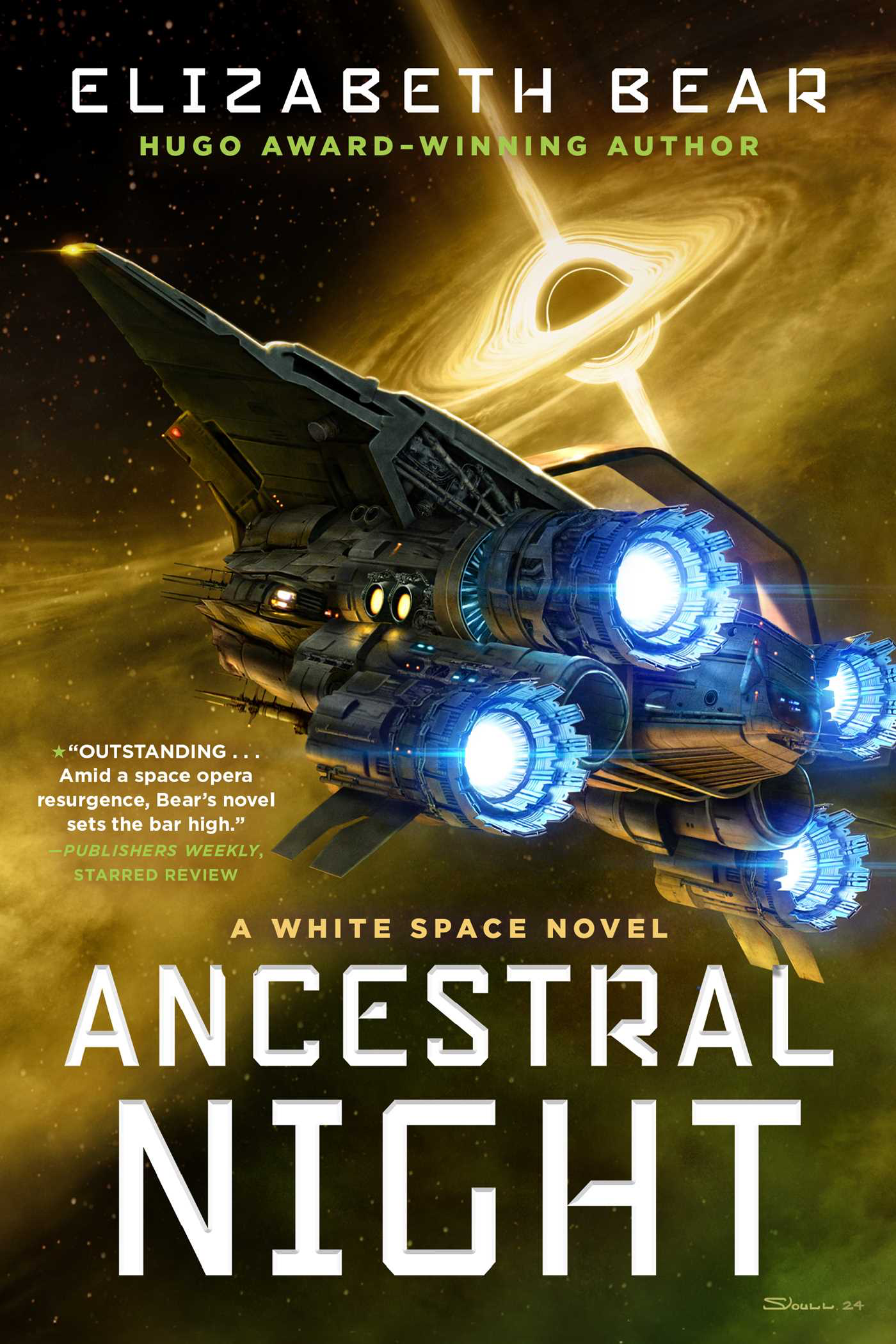
Book Review Tuesday (1/20/26) – Ancestral Night

Happy Tuesday, bibliophiles!

I’d like to think that I’m a competent, capable adult, but a few months back, I picked up book three of this series without realizing that it was book three. Oops. All the same, I was motivated to read it, so I ended up getting a copy with some gift card money for Bookshop.org. Long haul as it was, I’m so glad I took the leap—Ancestral Night knocked me off my feet from the first few pages, and that momentum almost never stopped.

Enjoy this week’s review!

Ancestral Night (White Space, #1) – Elizabeth Bear

Haimey Dz and her small crew fly under the radar, making a living salvaging spaceships at the edge of the galaxy. But after a run-in with a gang of pirates and the discovery of a galaxy-changing revelation hidden inside a derelict spaceship, Haimey knows that she can’t let just anyone get ahold of this secret. Inside of the spaceship is illegal, ancient technology that could turn the tides for the worse if in the wrong hands—and judging from the spaceship, it was already in the wrong hands. Infected with a strange, ancient parasite and with pirates and the government hot on her heels, Haimey and her crew must get to the bottom of this mystery before this tech falls into the wrong hands.

TW/CW: descriptions of injury, violence, blood, emotional abuse, grief, suicide, mental health themes

I really need to put together some kind of list of sci-fi with cats on spaceships. There’s enough out there that it’s a Thing, and though it’s not enough to be a full-on trope, it never fails to make me smile, both as a sci-fi fan and a cat lover. Jonesy from Alien set the precedent, but I think it’s just that through line of historically having cats on boats for good luck that makes it so wonderful. Bushyasta and Mephistopheles deserve a spot in the sci-fi cats pantheon.

The world of Ancestral Night is truly something to behold. From the get-go, I got lost in it so easily—Bear’s prose kept me hooked for all 500+ pages. Part of that was just how intriguing the world was. Everything you could want in a space opera is here—mysterious, derelict spaceships with dark secrets, all manner of very alien aliens, two naughty cats on a spaceship, and perhaps best of all, eldritch, centuries-old seahorse creatures that live in the vacuum of space. Who could ask for more, really? There’s a dormant part of my high school brain that was obsessed with Aurora Rising that got beyond amped about salvaging spaceships, so that was an automatic win. I loved the Atavikha an unreasonable amount, as well as the aliens, but that’s not news at all. But I love the care that Bear took to make this world feel familiar in the right places, but appropriately alien where it was necessary. It’s a world where you can read George Eliot in your free time, but also come face to face with a creature so alien you barely have any appropriate human analogues for it. Balance is key, and Bear balanced it well.

With sci-fi like this, there’s a tendency to forget that no matter how much time you spend on worldbuilding, your universe still may feel like it isn’t lived in; everything’s too sterile and sleek, and you never get the sense that these strange planets and moons and whatnot are places where people spend their lives. Bear circumvented that issue from the get-go—everything about Ancestral Night felt lived-in, from the humble spaceships to the crowded space stations that Haimey and her friends navigated. Her spaceship wasn’t just a way to get around: it was a place where Haimey lounged around and read old books and petted her cats. Every corner that the crew explored was full of not just lore, but memories—everything in Ancestral Night had a story, and that did almost as much work as the worldbuilding in making sure that Bear’s world felt real.

Another aspect that made Ancestral Night feel real was Haimey herself. I’m all for representing marginalized people beyond stereotypes, but there’s something to be said for queer characters who are unapologetically messy and make decidedly terrible decisions—and Haimey makes terrible decisions aplenty. (I finished Pluribus not long ago, and I thought the same about Carol. I guess they’re both lesbians who fall for highly questionable pirate ladies, in the end.) If Ancestral Night was a TV show, I fully would’ve thrown something at the TV when she kissed Zanya. HAVE YOU LEARNED NOTHING? That being said, she felt so staggeringly real in the amalgamation of all her hopes and flaws. Even in this far-flung sci-fi world, this woman who reads ancient classics onboard her spaceship and dotes after her cats and falls for the messiest, scariest pirate women was so refreshingly real, and in spite of those flaws, ultimately lovable.

Ancestral Night is a space opera without question, but the worldbuilding will certainly appeal to the more hard science fiction-leaning readers for sure. Care for the worldbuilding obviously isn’t exclusive to hard sci-fi, especially as a cozy sci-fi/space opera/soft sci-fi defender and enjoyer, but not every space opera you come across goes into this much detail about accretion disks. Bear doesn’t shy away from getting esoteric with the worldbuilding, whether it’s in terms of astrophysics or politics. The politics form the core of the novel for me. My one major problem with the novel was that it had a tendency to go into Haimey’s philosophical musings about the nature of governments and freedom to a point where it was difficult to suspend my disbelief that nothing bad had happened to her while this was all going on, given everything else that happens throughout. (How did she not get conked on the head by pirates mid-digression during half of those scenes?) However, the nature of these digressions fed into the thematic elements of Ancestral Night really well, and I loved how they formed the backbone of Haimey’s character.

Even though not all of the philosophical musing landed, the setup of it, as well as the worldbuilding of Ancestral Night, set such a wonderful stage for Haimey’s character development. She’s caught between two very opposite poles: the Clade where she grew up, where her existence was placid but assimilated, and the pirates, whose messy anarchy is hyperindividualistic to a fault. Set against the backdrop of a flawed yet somewhat well-intentioned government, Haimey’s realization that her true self comes not from sacrificing her individuality or her obligation to do good for others in her community was so poignant. All her life, the notion of who she really is has been forced upon her from both sides, and yet what’s in her heart is where the two ideologies meet: retaining her uniqueness, but not kicking everybody else aside in the process. Haimey’s true spirit comes from how she decides her life should be, but also from the positive relationships around her. It was such a heartfelt message, and Haimey’s arc gave Ancestral Night a powerful emotional core.

All in all, a captivating space opera with real, lovable protagonists, a lived-in universe, and mystery that had me on the edge of my seat. 4.5 stars!

Ancestral Night is the first novel in the White Space series, followed by Machine and The Folded Sky. Bear is also the author of several other award-winning novels, including the New Amsterdam series (New Amsterdam, Seven for a Secret, The White City, Ad Eternum, and Garrett Investigates), the Jacob’s Ladder trilogy (Dust, Sanction, and Grail) and many others.

Today’s song:

That’s it for this week’s Book Review Tuesday! Have a wonderful rest of your day, and take care of yourselves!
Posted in Book Review Tuesday

Book Review Tuesday (10/21/25) – Failure to Communicate

Happy Tuesday, bibliophiles!
I found out about this book earlier this year while looking for more sci-fi with queer and/or disabled rep (as I always am). This book seemed to have nearly the perfect premise—I just can’t get over how genius it is to have an autistic protagonist who’s had to study human behavior her whole life study alien behavior as well in order to initiate First Contact. I ended up buying it for Bookshop.org’s recent Anti-Prime Sale, and I ate it up in a handful of days. Though not without its flaws, Failure to Communicate delivers almost completely on its remarkable premise, full of political intrigue, aliens, and heart.

Enjoy this week’s review!

Failure to Communicate (Xandri Corelel, #1) – Kaia Sønderby

Xandri Corelel has spent her life studying everyone around her, be they people or aliens. She’s been forced to, after centuries of eugenics has made her one of the few autistic humans left in the universe. She uses these skills as a Xeno-Liaison, negotiating with all sorts of aliens on behalf of the Starsystems Alliance. But when presented with a potentially hostile species possessing one of the most powerful weapons in the universe, Xandri faces the most difficult negotiation of her career—one that may chance the face of interspecies relations forever.

TW/CW: ableism, xenophobia (fictional), violence, blood, genocide themes, slavery, animal death

“Autistic person spends entire life trying to understand human behavior, doesn’t fully understand it, then spends her entire career understanding alien behavior instead” has to win the gold medal for the best sci-fi premise I’ve heard in years. (Also, felt.) And though not all of it delivered on said premise, Failure to Communicate is a hidden gem for sure.

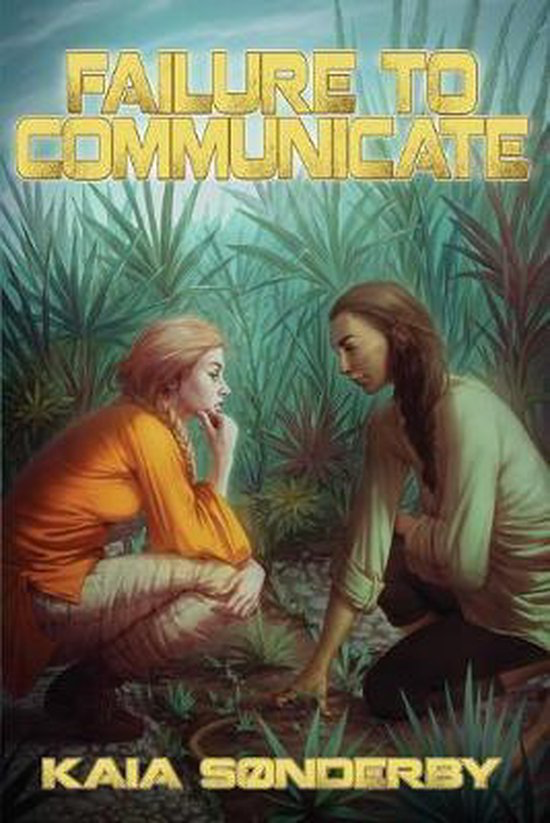
Now, I’m reviewing a space opera book which features a whole host of alien species, which means it’s time for my obligatory creature design rant. The aliens in Failure to Communicate are…a complicated case, for sure. The majority of them are basically larger, intelligent versions of real-world animals (with some brief exceptions), but Sønderby is self-aware of the fact; for instance, the Psittacans (a name that Xandri gave the species and didn’t develop on its own, thankfully) basically look like giant parrots, but Xandri explains that in-universe, all of their parrot-like features aren’t anything like what we would call, say, feathers, but evolved in such a way that they looked exactly like Earth parrots independently of Earth. This same explanation is given to pretty much all of the other species in the book, which is a bit too convenient to apply to 90% of the aliens in the novel. As for the Anmerilli, though I’m not disparaging the cover artist in any way, I feel like the cover didn’t do justice to their more alien features—and man, was I relieved that these aliens weren’t just humans with extra steps. Well…if you boiled it down, they kind of were, but there were enough traits that they at least got to the level of a decently compelling Star Wars humanoid. (Also, Sønderby’s descriptions of the Zechak also made me picture them as genocidal Piglins, which was…uh, interesting, for sure.)

But what almost made up with that for me was the in-depth explanations of their respective cultures. In the end, Failure to Communicate wasn’t necessarily a book about biology—it was a book about politics, anthropology, culture, and communication. That, at least, was incredibly fleshed out and much more thoroughly thought-out—as it should’ve been. Dissecting some of the alien cultures was one of the best parts of the novel. These cultures and the conflicts between them formed the backbone of the novel. Though until the end, Failure to Communicate is somewhat light on action, Xandri’s experiences with navigating the intricacies of dozens of alien cultures was nothing short of compelling—Sønderby has the mind of an anthropologist, and there was truly no stone left unturned. I loved that she didn’t shy away from depicting the discomfort that comes with interacting with other cultures for the first time and having one’s own values brush up against theirs—it’s bound to happen with First Contact, and it’s bound to happen in a lot of novel, multicultural interactions. There were some places where I felt there needed to be more nuance (ex. the whole situation with the Zechak; yes, they’re genocidal, but it verged too close to “this entire species consists of genocidal, cold-blooded killers,” which Xandri tries to self-correct, but isn’t emphasized enough. I’d find that hard to believe), but overall, I loved Sønderby’s cultural explorations.

Sønderby’s commitment to not shying away from discomfort was one of the best parts of the novel, and that was made manifest in her main character, Xandri. There was a ton about her that I loved—her keen eye for cultural quirks, her inner monologues about the idiosyncrasies of the neurodivergent world, and her unflappable sense of justice. However, she was far from a perfect character—even being in a world populated with aliens, she harbored her own unconscious biases and prejudices, which she frequently had to come to terms with throughout her mission. She lashed out, she made rash decisions—she was imperfect. And though she was easy to root for, she had plenty of flaws, a balance that is difficult for any author to strike.

Failure to Communicate isn’t an action-heavy book, which I’m all for—waiter! More cozy sci-fi, please! However, I hesitate to call this novel “cozy,” especially considering the moment when shit hits the fan during the last third of it. Everything that happens then swiftly merits the “cozy” title being unceremoniously ripped off. Nonetheless, Sønderby takes some cues from cozy sci-fi’s best; I loved how she let the plot meander in the more interpersonal conflicts as opposed to the big and showy ones, and let the often messy character dynamics take the lead. The ending was also messy and bittersweet, but not in a way that lacks resolution—it is a resolution, just a very complicated one with quite a lot of uncomfortable implications for Xandri. Another example of Sønderby not shying away from making things complex. I do like that it ended on a very hopeful note, as much of a wreck as some things ended up being.

Being neurodivergent, the subject of disability was part of what drew me into Failure to Communicate. I’ve mentioned on here that I have SPD, which shares some similarities with autism, and I related to Xandri’s lifelong mission to study and understand the neurotypical people around her in order to try and piece together how their world worked. She deals with a hefty dose of ableism (both from well-intentioned and malicious people) throughout the book, which was quite rough, but I loved that she never compromised her pride in being autistic. Sønderby takes the trope of futuristic societies erasing disability as a sign of progress to task, which amplifies Xandri’s struggles as an autistic woman into the struggles of possibly being the only autistic person in the entire galaxy. Which…yeah. The ableism is inevitable at that point. The only disability aspect that I’m not so sure about was having the twist that Marco was also disabled (specifically, he has bipolar disorder); I do appreciate that Sønderby uses it as an opportunity to show that almost identical conditions can produce a hero as well as a villain and that the pressures of ableism drove him to betray the team, but I really don’t think the latter had enough nuance to it. Not that disabled characters can’t be evil, obviously, but it felt too much like making a mentally ill character automatically a villain simply because they’re mentally ill. I’m willing to give Sønderby the benefit of the doubt because she handled all of the other disability-related topics so wonderfully, but it still didn’t sit completely right with me.

Also, I just have to mention that this book is so, so queer. BLESS. First off, I loved that Xandri was bisexual, but I appreciated that she was polyamorous too—there’s hardly any depictions of polyamory out there that don’t make their characters the butt of a joke or a fetish, so this was a breath of fresh air, for sure.

All in all, a wholly unique space opera about communication, culture, and collision. 4 stars!
Failure to Communicate is the first novel in the Xandri Corelel series, followed by Tone of Voice and preceded by Testing Pandora, a prequel novella. Kaia Sønderby is also the author of the YA fantasy novel Damsel to the Rescue.

Today’s song:

That’s it for this week’s Book Review Tuesday! Have a wonderful rest of your day, and take care of yourselves!