Posted in Sunday Songs

Sunday Songs: 7/6/25

Happy Sunday, bibliophiles!

This week: (Almost) three years of making Sunday Songs graphics! As for right now, baby’s on fire, better throw her in…la mer?

Enjoy this week’s review!
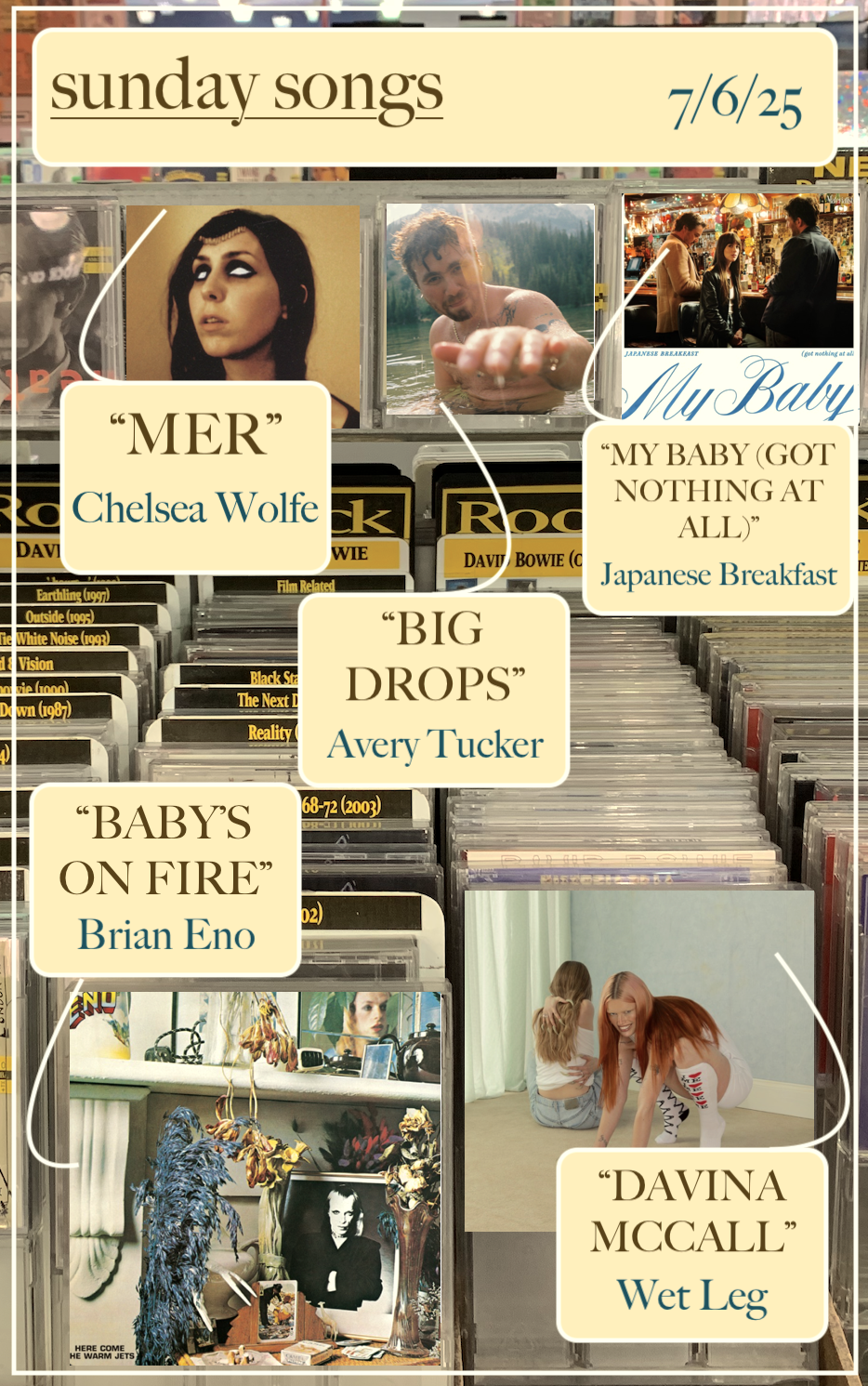
SUNDAY SONGS: 7/6/25

“Baby’s On Fire” – Brian Eno

I…oh, shit. It took me until I published this post to realize that I’ve talked about this song twice now on this blog. Welp…

Music hot take of the week: this song needs to be, like, 8 minutes long. At least. I love an album that has songs that smoothly transition into one another (as is the transition from “The Paw Paw [Redacted] Blowtorch”* to this track), but oh my god, it needs more time!! The way that the song builds up is so monumental—it’s a whole fizzing, crackling Rube Goldberg machine of compounding suspense. The intro needs to be at least a minute long to stretch it out, just to give the first lyrics the punch they need. It’s a glam rock/art rock masterpiece, but it feels like a study in buildup and release more than anything. The percussion stays steady throughout the entire song, giving way for every other instrument—most of which were apparently woefully out of tune when they recorded it—to spiral outwards into a tidal wave that doesn’t crash until three minutes in—it just looms for so long. Most of me wants that to be extended, but Eno is a master of creating such a layered atmosphere.

What most people rightfully remember “Baby’s On Fire” for, however, is that truly insane Robert Fripp solo. The Genius annotation on the lyrics where it denotes the solo simply says “holy fucking shit,” which I think sums it up better than most music critics have. It’s the moment that the tidal wave that Eno has built up fully crashes, sending a kaleidoscope of chaotic spray down on the listener. As the story goes, Fripp had the flu while recording this marvel of a solo…I can only imagine the kind of tricks he was able to pull off when his health was stable, because GOD. It really is chaos personified—you can never predict which direction it’s striking next, and the stark contrast between it and the consistent, steady build of Eno’s background instrumentals make it feel like modern art. I get the same feeling of listening to “Baby’s On Fire” as I do looking at abstract, geometric paintings. It’s a masterclass in contrast.

Eno’s lyrics, especially in this era, are rarely serious, mostly just surreal word-play. Dehumanization is at the heart of the story, with a figure actively ablaze whose suffering is being exploited for photos. Here’s where I feel like Eno’s genius working with glam rock really comes in. He’s got this disaffected, theatrical tone, but what he’s saying is so deeply sarcastic that I can’t help but read it as critique of how the fictional subject is being exploited while she’s actively suffering; “Photographers snip-snap/Take your time, she’s only burning” reads to me as the photographers seeing her pain as tabloid fodder, a spectacle to make money off of. His nasally, sarcastic tone feels like a cue to laugh at the clowns who would ignore her plight just to make an extra buck. But whether in the fictional realm or in reality, I’ve always admired that Brian Eno has always been committing to condemning dehumanization of all kinds, from the 1970’s right up until today. It’s always comforting when the best musicians have consciences to match.

*It’s more an outdated term than anything, and I really don’t think Eno used it with any disrespectful intent—it was normal for the time. However, it feels uncomfortable for me personally to type it here, so see for yourself.

…AND A BOOK TO GO WITH IT:
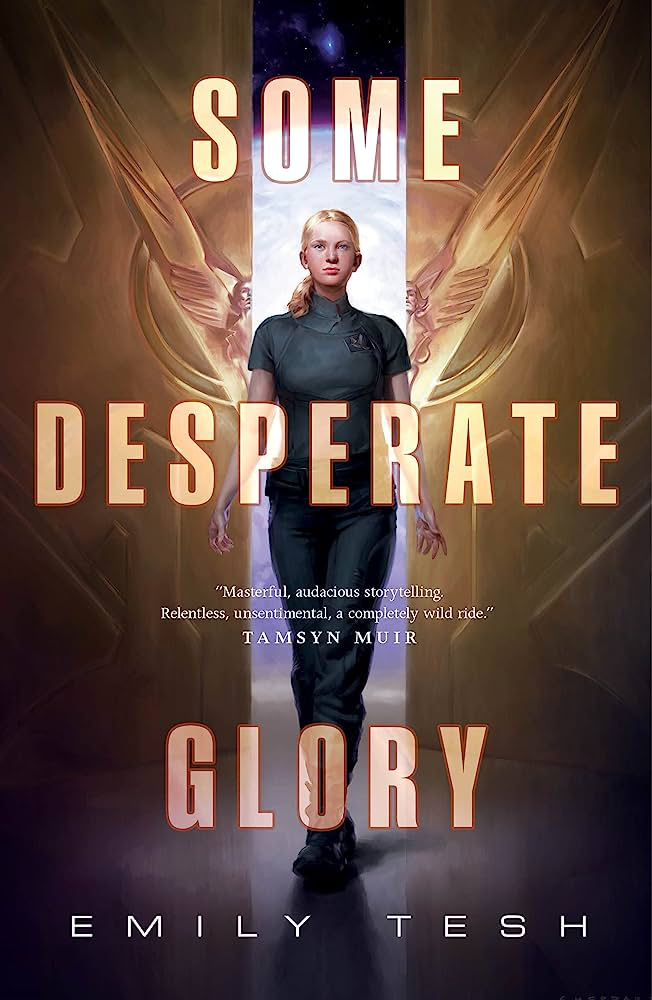
Some Desperate Glory – Emily Tesha fantastic sci-fi book that interrogates our casual comfort with dehumanization of others.

“davina mccall” – Wet Leg

BREAKING: Wet Leg actually has another song? I’m doing my best to not sound like a broken record whenever I talk about them, but I swear this feels like the most growth I’ve seen them have as far as songwriting range. It’s not a wild left turn for them, but it feels fresh.

Snuggled in between the ’90s and the 2010’s, somewhere between The Cardigans and early Wolf Alice, “davina mccall” stands out partly because it’s probably their first love song—and maybe their most sincere song. However fun they make their music, a lot of it is mostly the more maddening sides of modern life, whether it’s being bounced between stupid men or being apathetic and numb about the world. It’s never come across as abjectly doomery or irony-poisoned, mostly because they have a sense of humor about it. Yet they have kind of run themselves dry with the subject matter. I know that love songs are pretty much the most common kind of song you’ll hear these days, but for Wet Leg, it feels like a more vulnerable step. When your entire body of work is about being relatable and vulnerable about how silly and artificial modern life is, it feels significant for them to embrace the idea that vulnerability is not all phone addictions and bad sex. I might be getting too deep with it, but strip it all away, and “davina mccall” is just a lovely, summery love song, content to linger in the ordinary, quiet moments of romance.

Also, I can’t not talk about how delightful this music video is! Directed by Chris Hopewell—who I forgot I knew from the glorious stop-motion music video for Radiohead’s “There There,”—it reminds me of Fantastic Mr. Fox in the best possible ways. Luckily, none of them go the way of Thom Yorke in this video—the song’s too happy for that kind of thing. The members of Wet Leg are all rendered in claymation, and they all look an awful lot like Petey and the rest of his gang (at least it’s not weak songwriting this time). Wet Leg’s task force for bird-related crimes is nothing short of hilarious—and surprisingly sweet at the end.

…AND A BOOK TO GO WITH IT:
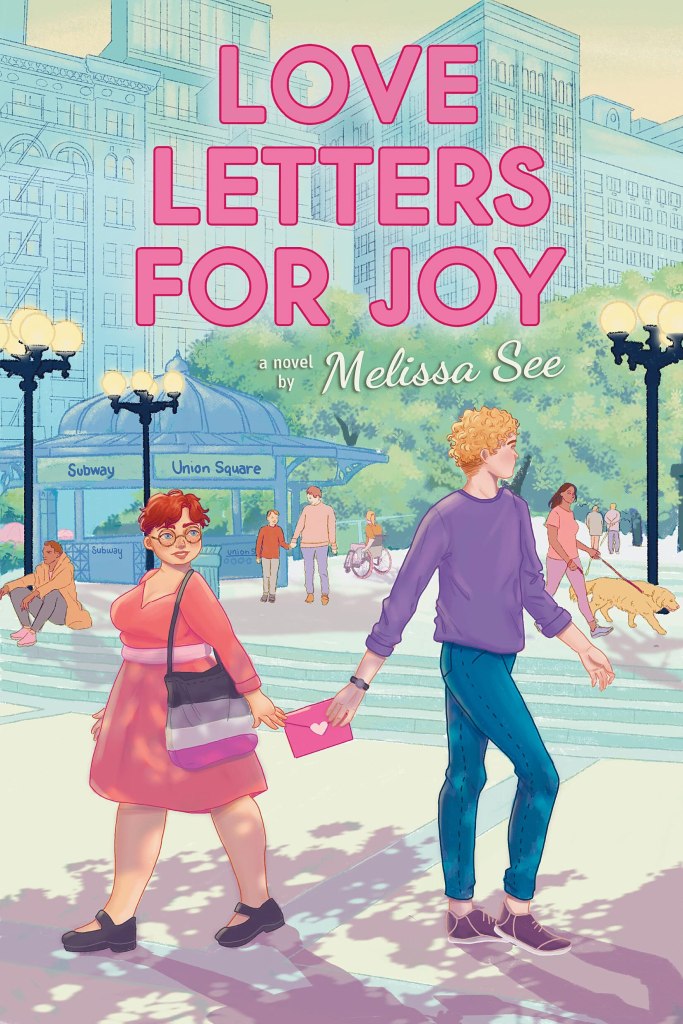
Love Letters for Joy – Melissa See“You know that I would/Do anything for you/It’s like a dream come true/Every day is spent trying to say something to make you smile…”

“Mer” – Chelsea Wolfe

I don’t talk about Chelsea Wolfe nearly as much as I should, even though, by my count, she’s featured on one of these posts/graphics…four times? Only four? Granted, she fell into that curse where every time I’d put one of her singles on a graphic, I’d be too busy to write about it. Shame, really, given that She Reaches Out to She Reaches Out to She was one of the best albums of 2024. Go listen to it—the album didn’t get nearly enough love as it deserved!!

As penance, let’s take a look back at one of her older tracks, 2011’s “Mer” from her album Apokalypsis, which has to have one of the most wondrously goth album covers ever (though her entire discography puts in a lot of great contenders). “Mer,” named for the French word for the sea, embodies its title, but not in the way you’d expect. The mer that Wolfe is channeling here isn’t the gentleness of waves lapping against the shore in July—it’s more the dread of looking out onto a roiling ocean as storm clouds gather over jagged, rocky cliffs. It’s a landscape that calls something along the lines of “Annabel Lee” for me. Even though I do play music, I’ve never been super keen about deciphering time signatures and the like, but I swear there’s something going on with “Mer”‘s timing—I swear there’s some syncopation going on with the percussion and the other instruments, but it all feels like each instrument is keeling ever so slightly to the side of the others, a sinking ship pulled in all directions. It all feels so off-kilter in Wolfe’s classic, sinister way. Even without the barely decipherable noises in the background, which for all the world sound like wailing Tim Burton-like spirits trapped in glass bottles, “Mer” would remain fundamentally eerie.

…AND A BOOK TO GO WITH IT:
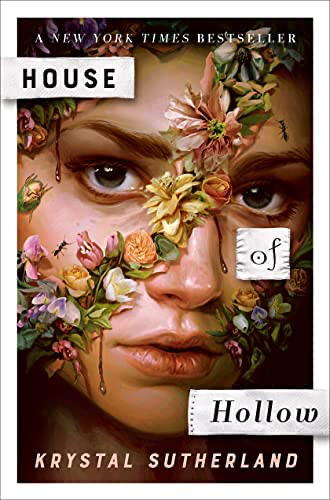
House of Hollow – Krystal Sutherlandthough the sea doesn’t factor as much into this novel, the general eerie, misty atmosphere very much carries over.

“Big Drops” – Avery Tucker

I only found out that Avery Tucker was finally going solo when I was writing about girlpool back in June. Compared to the more pop direction that Harmony Tividad has embraced now, Tucker’s single reminds me more of mid-career, more guitar-driven girlpool—something close to Powerplant or the first half of What Chaos is Imaginary. As far as new directions go, the more electronic turn that girlpool took in their later years was hit or miss—when they hit it (see: “Like I’m Winning It”), they made fantastic, sultry, synthy indie-pop; when they missed (see: …uh, pretty much 75% of Forgiveness), it almost smothered their candid lyrics and how well they worked together as a duo. It felt plastic.

So I can’t help but be relieved that Tucker’s returned to the band’s roots. Even though he’s…well, he’s playing a tele during some of the acoustic parts of the song in the music video, which is admittedly a little silly, seeing Tucker back in his element makes the music feel more natural. Though some of his delivery and lyrics veer on being too earnest, “Big Drops” shines a light on some of the more candid, bare songwriting that made girlpool so memorable. Solely in his hands, he crafts a narrative from intimacy, late-night talking, and musing about unexpected events and the regrets that come from them. With the (mostly) acoustic guitar, it gives the song a tender, warm spaciousness that evokes the exact imagery he conjures—sitting on pool chairs, looking at the sky, and spouting off about your life.

…AND A BOOK TO GO WITH IT:
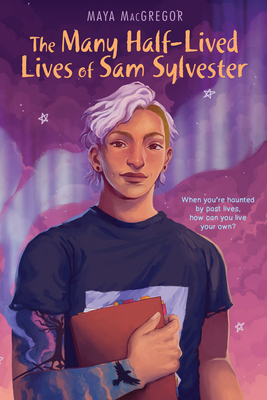
The Many Half-Lived Lives of Sam Sylvester – Maya MacGregor“Last night we talked about big drops/Big drop on the boardwalk ride/Big drop thinking about her life/Should we visit the two of them?/Or did the town get too violent?”

“My Baby (Got Nothing At All)” – Japanese Breakfast

In keeping with last year’s Sunday Songs anniversary, I am once again reviewing a song from a new movie that I haven’t even seen. (Update: I still haven’t seen I Saw the TV Glow. Someday…) Materialists doesn’t seem like my thing, but Japanese Breakfast certainly is. Ever since the trailer for the movie came out, I was enchanted by the way Michelle Zauner breathily sang “my baby.” I was fooled into thinking that this song was going to be on For Melancholy Brunettes (& sad women), so you can imagine my disappointment, as fantastic as that album was.

Regardless of whether or not you’ve seen Materialists, the swoony, rom-com feel comes away in waves on “My Baby (Got Nothing At All).” The more delicate range of Zauner’s voice shines through in this environment, accompanied by the gentle strum of acoustic guitars and swelling strings. As Zauner (and the protagonist of the movie, presumably?) affectionately admits that her lover is broke (but he gives it all to her anyway), she sings with the relaxed, daydreaming posture of someone leaning over a fire escape, watching the glow of the city lights below and the cool wind tossing her hair. As her voice climbs on the bridge (“You’re in love/There’s no doubt about it/There’s no use in messing up”), it cements the song as one of the more perfect rom-com songs—it’s not cloying or earnest, but it sounds appropriately like a lovelorn hand draped over a sighing forehead.

…AND A BOOK TO GO WITH IT:
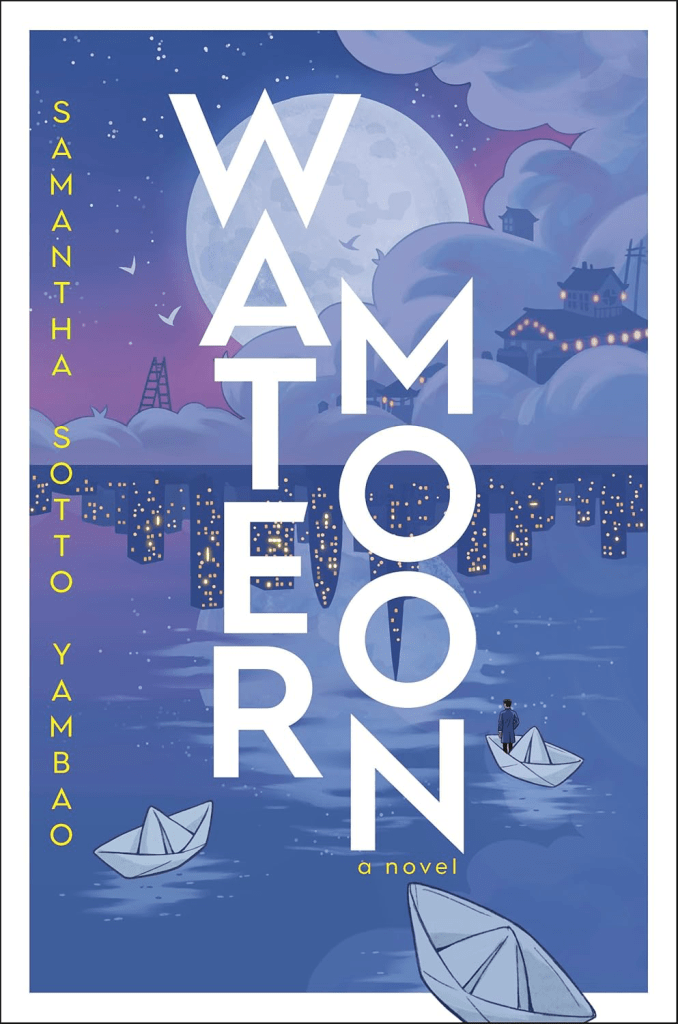
Water Moon – Samantha Soto Yambaothe best parts of this novel have the same dreamy, swoony feel of watching the lights of a glittering city and falling in love.

Since this post consists entirely of songs, consider all of them to be today’s song.

That’s it for this week’s Sunday Songs! Have a wonderful rest of your day, and take care of yourselves!

Posted in Uncategorized

Sunday Songs: 7/9/23

Happy Sunday, bibliophiles! I hope this week has treated you well.

Today marks almost a year since I’ve been making these Sunday Songs graphics, and about six months since I’ve started writing about them on here. But if there’s on thing I’ve learned in this year of collaging album covers on Previews, it’s this: all roads lead back to David Bowie.

Enjoy this week’s songs!

SUNDAY SONGS: 7/9/23

“Quicksand” (demo) – David Bowie

Lordy. This song gets me in whichever form it manifests—the original, untouchable album version, the live performance with the Cure’s Robert Smith for Bowie’s 50th Birthday Bash…everything. Since when did I wake up in the onion cutting plant, and where’s the door?

“Quicksand” has been an immensely special song to me, from the time I was young and my dad still had to speedily turn the car volume down in time for little me to miss the word “bullshit.” Even back when I didn’t even have the capacity to understand anything about what an ego is or the fact that it was capable of death (“knowledge comes with death’s release,” cue the “aah-aah-aah-aah” that always scoops my tender heart out of my ribcage), this song felt like the encircling warmth of a cosmic pair of arms, infinite in their reach and love, rocking me to sleep like a baby. The iconic lyric “I’m not a prophet or a stone-age man, just a mortal with the potential of a superman” has been my life’s mantra ever since I comprehended it. Learning it on guitar made me love the song down to its molecular structure—chances are, if you can rattle off any old chord off the top of your head, it’s in there somewhere. Even the painful, finger-twisting ones—especially the finger twisting ones. And yet David Bowie makes them all sound like they were all destined to be played together since the dawn of time—all of them. It’s the kind of song that was fully-formed from the very start, as Athena splitting out of the skull of Zeus, armed with a ragtag, motley crew of guitar chords. It feels like listening to the heartbeat of the cosmos itself.

So it’s so strange to think that it wasn’t always quite as fully-formed as I thought—in parts, at least. With the release of Divine Symmetry (a line fittingly taken from this song), a boxed set containing Hunky Dory in its entirety, plus the demos and live performances that eventually fused to form my favorite album of all time. Among them was this—a raw, stripped-down version of one of my favorite songs of all time. “Quicksand” was always destined for the epic grandeur of the album version, but there’s a different brand of poignant tenderness to this demo. With only David Bowie’s voice and the heartbeat-thrum of his acoustic guitar, you can hear the subtle differences—lyrics swapping places, Bowie straining to reach the high notes in the higher key he originally plays this song in. There’s an urgency to every strum, as though he knew this song had to see the light of day, but he had to put his heart into it, whichever way it came out. And that’s the power of this song: Bowie never took the easy way out. Every version is in tune with the resonant hum of the universe.

“Gone Daddy Gone” – Violent Femmes

Never in my life would I have anticipated liking a xylophone solo this much. The words “xylophone” and “solo” make sense separately, but you rarely ever hear them together, right? And yet, against all odds, it’s so good. Imagine being at a Violent Femmes concert and the crowd going wild over a xylophone solo. That’s the dream.

A lot of what I’ve heard of the Violent Femmes works against all odds, from the infamous story of how the cover of their debut, self-titled album came to be to everything about their unique, abrasive sound. All you’ve got here is some guitar, bass, and a drum set that was originally part washbasin (plus said xylophone). The nicest you can necessarily say about the vocals is that they’re abrasive. It really is the essence of D.I.Y.—separately, there’s no way that it should work together and sound good, and yet it does. We all know “Blister in the Sun” nowadays, right? Whatever formula that Gordon Gano and company worked out in the early 80’s with this album, when everybody started turning to synths and capitalism, they nailed it. Every song I’ve heard off of this album feels timeless, but “Gone Daddy Gone” feels like it could’ve come from anywhere—a tiny, under-underground garage in the 70’s, somebody sick of all of said synths and capitalism in the 90’s—there’s something so ubiquitous about this song, from its frustrated, high school lyrics that Gano delivers with a sinister sneer, to the unexpected patchwork of sound. And of course, whoever’s idea it was to add a xylophone solo to this song deserves an award.

“Baby’s On Fire” – Brian Eno

I’ve been overdue to talk about Here Come the Warm Jets and Brian Eno for a few weeks, but I am nothing if not pointlessly devoted to trying to create a nice color scheme. But yes, I finally got around to listening to it after putting it off for several months (blame it on the whiteboard…oh, I still need to post those, don’t I?), and I’m a fan! Even though nothing rivaled “Cindy Tells Me” (which is, for me, a hard thing to achieve—my absolute favorite Brian Eno song, now that I think about it), there wasn’t a single song I didn’t like. I’m a sucker for any album where each track bleeds into the next, giving the illusion of a continuous, long song—almost a symphony: some of my favorites albums do it, or at least do it partway (see: Hunky Dory, OK Computer), and in the case of Here Come the Warm Jets, it added a cohesive layer to an already meticulously weird album. There’s Brian Eno doing weird voices, there’s guitar freakouts, and there’s uptight-but-glam 70’s weirdness all over the place. It’s an album.

“Baby’s On Fire” stood out immediately—I remember hearing the name somewhere and looking it up a few years before I listened to this album in full, but I’d all but forgotten about it until a few weeks ago. It has a deliciously creeping, building feeling to it—with every thrumming piano chord and drumbeat, it feels like something is sneaking up on you, casting a long, thin shadow over your body before coming in to pounce. And pounce it does, with an extended, purely 70’s guitar freakout that, if you break the separate parts of it, easily takes up half to 2/3 of the song—as it absolutely should. It’s fantastic. I find myself vibrating in my seat every time I listen to it; Robert Fripp’s frenetic playing sounds like the auditory version of fabric being torn apart, all at once ragged and full of hypnotic color. Add that to Brian Eno’s distinctly nasally, theatrical vocals, and you’ve got something that feels like the shadow of a hand on the wall—a hand with long, glossy acrylics on the nails, the kind that look like claws. I suppose that’s what ‘s tearing through the fabric, but I doubt that would be very conducive to the kind of guitar insanity on this song. In this house, we love and cherish 70’s guitars.

“Tin Man” – feeble little horse

I swear that my motive for downloading this song wasn’t just to create a playlist consisting of songs that have the same names as other songs. It’s twins with “Tin Man” by Shakey Graves, if you were interested. I named the playlist “Attack of the Clones.” Execute Order 66.

I’m very new to feeble little horse, but “off-kilter” was the one (hyphenated) word that immediately came to mind when I first listened to “Tin Man.” Every note just seems slightly tweaked from the next—almost pleasant sounding, but just enough to make you furrow your brow. Lydia Slocum’s dry, droll drawl creeps over the withered vines of notes, just as creaky and rusty as the the famous Tin Man himself before he got some oil in his joints. But unlike the Tin Man, this song doesn’t need any oiling or polishing; like the Violent Femmes, it exists in its own, uniquely abrasive space, not existing to please, but baring its prickly porcupine quills proudly. Like Lisa Germano, Sparklehorse, and others before them, feeble little horse is content to make their songs look and feel like a collection of rusty spare and found parts. But where the former two is the dread you feel upon finding said spare parts, “Tin Man” is the sudden prick of stepping on something sharp sticking out of the pile. It’s almost like Sid’s cobbled-together, mutant toys in Toy Story—despite all of its parts from other toys, it crawls along the carpet just fine. And maybe it’s an insult to compare this great song to that baby doll-spider monstrosity, but given the aesthetic of the music video, I don’t think Lydia Slocum and company would be too insulted.

“Sun’s a Star” – Wilco

I didn’t intend for this one to end on such a somber note, I promise. Just the way I thought the album covers went together. But I came upon this song on accident—as dear to my heart as Wilco is, I haven’t listened to Being There all the way, despite the claims of an unknown employee at Amoeba Records in San Francisco that it was “the best Wilco album.” BOOOOOO. DUDE. Not to rag on a complete stranger several states away that has no idea that I exist, but respectfully…Yankee Hotel Foxtrot exists? Summerteeth? My guy??

But I’m not here to rag on Being There, either. It’s the same record that gave us “Misunderstood,” after all, and proof that screaming like a death metal frontman is just one of the great Jeff Tweedy’s many talents. Every member of Wilco is proof that they’re really a jack-of-all-trades band; they’re primarily known for generally being on the stranger side of alt-country, but they can do it all, from Nels Cline’s famous, spidery guitar solo on “Impossible Germany” to the pseudo-Thom Yorke surprise of “Art of Almost.” The thing is, loving songs like those almost makes me forget that they’re just as apt at creating gently melancholy folk numbers: “Red-Eyed and Blue,” anyone? And as with every Wilco song that I can think of, Jeff Tweedy’s sharp, ever-clever songwriting is the clear star (no pun intended) on “Sun’s a Star.” What’s more Tweedy than taking a look at one’s own folky breakup tune and declaring “and there’s this song/in a minor key/hey, how could it be/such a cloudless tune?” I’m nothing if not a sucker for a sad, acoustic song, and leave it to Jeff Tweedy to scratch that itch. And there’s nobody else that could translate walking away into a single contraction—somehow, the name “Sun’s a Star” feels like an apathetic shrug of the shoulders. You’re not as special as I thought you were. Oh well. Sun’s a star.

Since this post consists entirely of songs, consider all of them to be today’s song.

That’s it for this week’s Sunday Songs! Have a wonderful rest of your day, and take care of yourselves!

Posted in Music, Sunday Songs

Sunday Songs: 2/26/23

Happy Sunday, bibliophiles! Hope this week has treated you all well.

Here we are at the end of the shortest month of the year, and we’ve got a bit of a…chaotic mishmash of songs for the occasion this week. I suppose it always is, but even though the album covers are somewhat coordinated, the songs were strung together like angry children reluctantly getting shoved into a family photo. I like them all, though, and I hope you do too. Climb aboard the (emotional) rollercoaster, you never know what’ll hit you. Hopefully not whiplash.

Enjoy this week’s songs!

SUNDAY SONGS: 2/26/23

“The Court (Dark-Side Mix)” – Peter Gabriel

“Justice is a luxury for the rich” HERE KING YOU DROPPED THIS 👑

I end up sacrificing color schemes for chronology in these posts more than not, but in the end, it’s more about talking about the music I’m generally liking, so I’ve abandoned the guilt at this point, even though we’re closer to the next full moon to when “The Court” actually came out. Anyway.

I talked a bit about “Panopticom” last month, and I liked it, but it felt like there was something missing. Turns out that this song was what was missing—I was already excited for i/o, but “The Court” is getting my hopes up. From the barely audible, slowed-down laughter hidden in the intro, there’s a creeping, sinister feel to the whole song; you can almost feel a shadow being cast across your body when the chorus echoes with “And the court/Will rise/While the pillars all fall.” It’s a slow build, but unlike “Panopticom,” which left a sort of void that I was waiting for the entire time, “The Court” weaves into an ominous spectacle, that, regardless of the Dark-Side or Bright-Side mix, wraps you up in a cloud of smoke. A bit of theatricality, almost reminiscent of some of Gabriel’s orchestral reimaginings of his earlier songs, creeps into the bridge as his voice (still just as rich even when he’s in his 70’s…oh, happy belated birthday, by the way!), making for a song that functions as an individual piece, but has the feeling of a great album opener. I’m not even sure. I think it would be a good opening, but we won’t have any semblance of order for i/o until the end of the year, so we’ll see…

“MFSOTSOTR” – Sidney Gish

As of now, it’s been a few weeks since the actual announcement, but Sidney Gish is back!! She’s been teasing a new album that was originally set to be released in January, but as of now, is still being worked on. But for now, she’s released two singles as part of the Sub Pop Singles Club—this song and “Filming School,” which is just as great. On the process of writing “MFSOTSOTR,” Gish said that “the lyrics were freestyled while staring at a meme of a buff man wearing high-waisted jeans. No edits were ever made to ‘MFSOTSOTR.’ It has haunted my hard drive for three years.” And if that doesn’t sum up the wonderfully oddball spirit of Sidney Gish both in her songwriting and personality, then I don’t know what does. Even though it’s barely a minute long, this song is packed with everything that endeared Gish to me back in 2019—it’s the definition of carefree, building off of freestyle riffing without any worry about meaning. From the deliberate mispronunciation of “question” to the delicate layering of Gish’s harmonies, it’s made me so excited for what the future has in store for her—let’s hope that album comes out soon (whenever she feels like it’s ready, of course), but for now, we have some bite-sized, joyful weirdness to enjoy for the time being.

“Enter One” – Sol Seppy

And now we’re at the polar opposite of the spectrum of sadness. Whoops. Apologies for the emotional whiplash.

I can thank my mom for this one after she found it in the soundtrack of Dark (which I still haven’t seen, oops), and all I can say is that it’s heartbreakingly beautiful. This is my first exposure to Sol Seppy (a stage name for Sophie Michalitsianos), but knowing that she was part of Sparklehorse’s backing band for several years (most notably on their 2001 album It’s a Wonderful Life) makes the sound of this song make even more sense. It has the same bare, melancholic sparseness, with a delicate piano as the only instrumentation for most of the song. That should be enough to signal how rough of a ride this song is, but I digress. Seppy’s voice does no small amount of heavy lifting as its layered over each other, rising like an impending tidal wave that casts a long, creeping shadow over the beach. And given that, from what I can sort of glean from the lyrics, it seems to be about letting go and welcoming/coming to terms with death (“Fear not this light/We are on this light divine/Welcome/Enter one”), the atmosphere is palpable—it’s a painfully beautiful song, and it’s difficult to listen to, but nonetheless a gorgeously written piece of music. I guess that’s why at least 3 different death (or somehow emotional) scenes from several different movies or TV shows came up when I searched it on YouTube…

“Rotten Ol’ me” – Shakey Graves

Alright, here we go. Back to happy times again. The dark clouds have parted, and in the sunshine comes Shakey Graves.

I haven’t had the time to listen to Deadstock – A Shakey Graves Day Anthology in its entirety, but I decided that I’d listen to the iTunes previews of the songs that sounded promising to me. I sifted a handful out of that initial listen, but “Rotten Ol’ me” has quickly risen to my favorite of the bunch. The opening riff perfectly captures the feel of this song—darkly mischievous and playful, with the feeling of a tiny devil with a pointy goatee sitting on your shoulder with a guitar. (Or maybe the giant, hovering skull on the album cover instead? Either one fits the vibe, really.) Alejandro Rose-Garcia is, without a doubt, one of the more innovative alternative/folk musicians to come out of the past few decades, and that’s not even talking about some of his drum techniques, but “Rotten Ol’ me” is proof of his sheer guitar prowess. With its multilayered melodies and a rapid plucking style that makes my fingers hurt just think about it, each note feels like a thread in a giant tapestry, each one knotted to the other to create a lively folk song full of hooks.

“D.I.Y.” – Peter Gabriel

I thought I was done doubling up after two weeks ago, but Peter Gabriel will always be just that good. This one’s worlds away from the feel of “The Court,” and it comes off of his second album, Peter Gabriel 2: Scratch (you know, the one where he’s got the frighteningly long acrylics—oh, those are scratches, you say?). My first thought upon listening to this was that it reeked of Berlin Trilogy-era David Bowie (Low, “Heroes,” and Lodger, for reference). Scratch was released just a year after both Low and “Heroes,” so there’s no doubt that this guy was leaning over Bowie’s shoulder and taking notes and hoping that he wouldn’t notice. Robert Fripp produced this album and worked with Bowie around the same time as well, so I guess there weren’t any hard feelings. Still a few years fresh off of Genesis, “D.I.Y.” is full of art-rock defiance, jangling and bright but ready to spit in the face with it’s pre-chorus: “Come up to me with your ‘What did you say?’/And I’ll tell you, straight in the eye, hey!/D.I.Y.” With its climbing instrumentation and Gabriel’s simultaneously bright and rich vocals, it’s instantly catchy, proof of his versatility even that early on in his career.

Since today’s post consists entirely of songs, consider all of them to be today’s song.

That’s it for this week’s Sunday Songs! Have a wonderful rest of your day, and take care of yourselves!