
Happy Sunday, bibliophiles! I hope this week has treated you well.
Last Sunday Songs of the month, and…yep, more dreary colors. At least the actual weather is marginally less dreary. There’s still those gross piles of snow and dirt next to the sidewalk that just refuse to melt, but at least I can feel my hands now. Most of the songs aren’t nearly as dreary, I promise. Mostly upbeat, with some ominous instrumentals thrown in. Gotta keep y’all on your toes.
Enjoy this week’s songs!

SUNDAY SONGS: 1/28/24
“Sense of Doubt” – David Bowie
I’ve given up on listening to David Bowie’s discography in any semblance of order, since I’ve been listening to as much as I can on-and-off since I was about 12. But with every album I hear, I’m still staggered by the places that his experimentation took him, all the way up until his death. His creative juices truly runneth over, to put it lightly.
But, of course, in order to generate said creative juices, one must stimulate creativity and poke at your comfort zone. That’s how many of the tracks off of “Heroes” were born, with help from Brian Eno and his “Oblique Strategies” cards, which he designed as a way to provide musicians and artists with challenges on creative projects. The two each selected a card as they were making this track—Bowie drew “emphasize differences,” while Eno drew “try to make everything as similar as possible.” Seems like a frustratingly clashing set of cards, but I suppose that’s exactly why Eno made the deck and the first place. And, of course, if anybody could make these two concepts mesh…of course. It’s David Bowie, what can’t the man do? The result is “Sense of Doubt,” which feels like it was made to soundtrack the classic “dark and stormy night”—I can practically see bolts of lightning crackling behind the pointed spires of a looming castle as clouds bulge and darken in the distance, bellies full of thunder. Even with the chunky, brighter synth chords that punctuate this soundscape, nothing can make this song sound anything other than ominous; the piano chords feel like something out of a classic horror soundtrack, there’s a faint buzzing overhead that almost sounds like planes in the distance, as though war is imminent, and there’s a squeaky-door creaking that was first just the sound of a pick being dragged across guitar strings, but was later imitated by Bowie with his own voice. Somehow, the mime performance (see above) that Bowie performed to this song brings an entirely different sense of foreboding (never thought I’d say that about mime)—he repeats a gesture of moving his hand, gently rubbing his fingers, like something’s slipping away from them—sifting through the ashes of destruction wrought by his hand; what was sown has been reaped. “Sense of Doubt” echoes like a slick cavern, leaving you to wonder exactly what’s lingering in the darkness, because something is definitely waiting to strike.
…AND A BOOK TO GO WITH IT:

Flowers for the Sea – Zin E. Rocklyn – the rain-soaked creeping dread of “Sense of Doubt” would fit right in with this brand of cramped, uncertain horror on a boat full of people you don’t fully trust (including your unborn baby).
It’s been about a year since I first listened to Vespertine, and I’ll continue to die on the hill that it’s a perfect winter album. Every song has the texture of newly fallen snow, and even amidst the frigid temperatures (the kind I’m sure she’s very familiar with, what with being from Iceland and all), it makes you see the glimmer in the gray sky and the diamond sparkle of snow when the moon shines on it. It’s cold, but not in an unwelcoming way.
Next to some of the other tracks on the album, “Heirloom” doesn’t stand out as a major highlight (but to be fair, it’s hard when your competition is “Cocoon”), but it’s so oddly sticky that you I couldn’t help but let it loop when it came on the other day. It doesn’t have the same immediate power as some of its sisters—in fact, even though I will always praise Björk and her endless fount of oddball creativity, but my first thought upon re-listening to this one was that the plinking drum machine and the single, off-kilter synth chord sounded like the times I was fooling around with random buttons on my keyboard when I was seven. Even for her, it’s discordant in a borderline sloppy way, but of course, it doesn’t take her long to turn the car around and craft another successful track. Once the full forest of synths and low, reverberating hums tangle everything together, it feels like the cohesively strange Björk I’ve come to know. Her lyrics are always arcane poetry (or…pagan poetry, even), but even though this one isn’t as dense of a story, there’s still a fairytale-like lilt to the way she rambles about “a recurring dream”; like the album’s undercurrent of body heat amidst winter’s cold, the warmth radiates from hazy dream-images—”I swallow little glowing lights/my mother and son baked for me/During the nights/They do a trapeze walk/Until they’re in the sky.” I almost get a Studio Ghibli-like image of the glowing lights, as if they’d have little pinprick eyes and smiling faces like the warawara from The Boy and the Heron.
…AND A BOOK TO GO WITH IT:

The Wide Starlight – Nicole Lesperance – this time, a mother’s “trapeze walk into the sky” is no dream, and it leads Eli to freezing and unexpected places.
“You and Oblivion” – Robyn Hitchcock
I had the incredible privilege of seeing Robyn Hitchcock on Friday night, and I’m now convinced that he’s some kind of cryptid prophet. Between most of the songs, he’d go on for a while about CDs and salami or vampires or whether or not there was a goldfish in his glass of water or his belief that the population of Britain consists of ghosts (“that’s how Brexit happened”), and that was honestly half the fun of the show—never once did I know what was coming, and it was hilarious. The other half of the fun was how immensely talented Hitchcock is as a musician—you don’t get the sense from much of his recordings, but there’s no doubt that he’s under-recognized as an incredibly skilled guitarist. My dad had been saying it over and over, and I believed him, but it was cemented when we saw Hitchcock with just an acoustic guitar strumming out whimsical hit after whimsical hit. Some of his playing bordered on the speed that I’ve only seen with Flamenco players. He’s hardcore.
In retrospect, this probably wasn’t the best song to pick since he didn’t even play it on the setlist, but I’m trying to be honest about what I’m listening to (and also trying to fit this color scheme), and it’s still a lovely song. Structurally, it’s very simple—only about three chords top, and it hardly ever changes, but it has the quality of rolling hills, a comforting curve that stays soft under your feet; each strum is an anchor, a signpost on a flat, endless road. But as with every Robyn Hitchcock song, his whimsical lyrics always steal the show. This one calls to mind graying, autumnal images—after all, “All of the colors ran out/’Round mid-November-o.” I’ve certainly got…a multitude of questions after the “I remember your locks/And your virginity” (wh…why is that what you’re fixating on, my guy), but…[ahem] that aside, every graying vignette plucked from the depths of memory fills this song up like a gothic scrapbook, full of dancing dresses and dead leaves.
…AND A BOOK TO GO WITH IT:
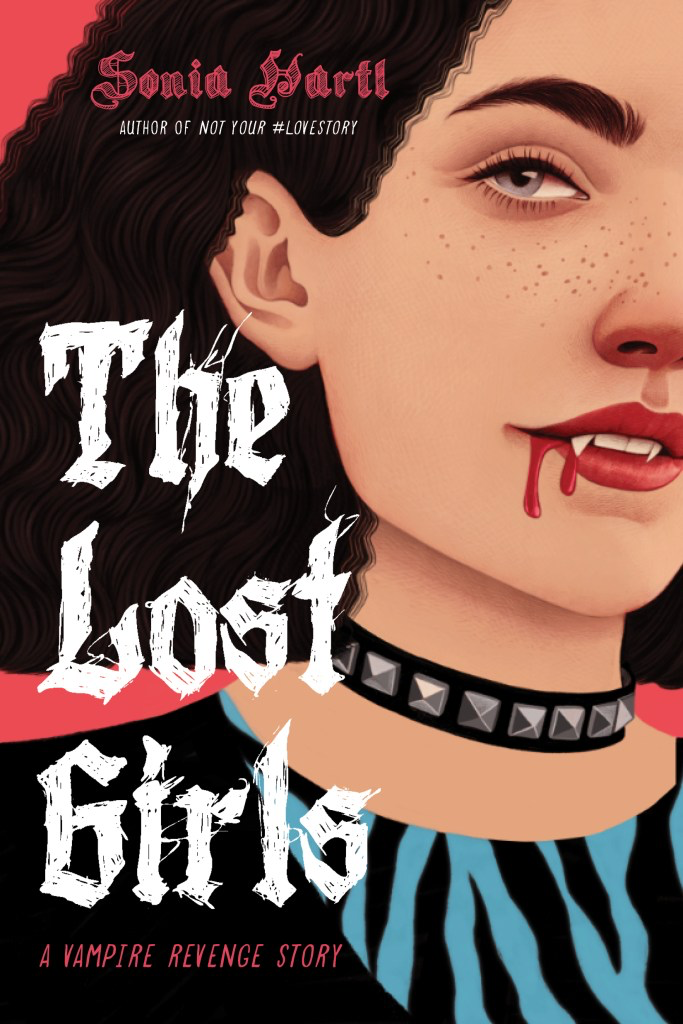
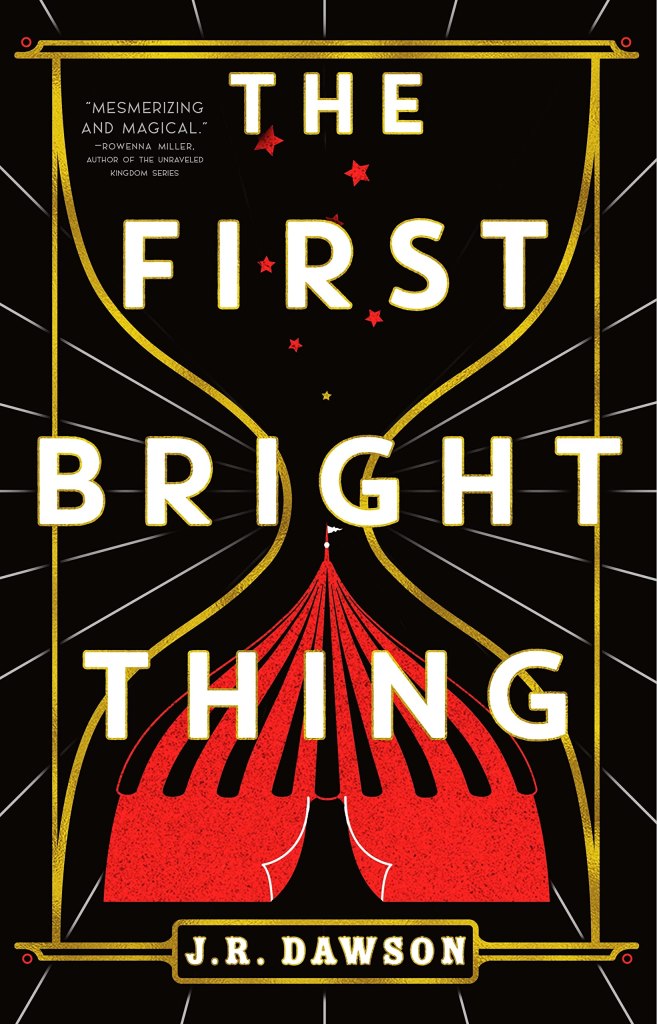
The Lost Girls – Sonia Hartl – “This is the month of the dead/Leaves on your Ouija board” already conjures up some images similar to this book, but this one also has the kind of romance that cements itself in Holly’s mind—vampirism does that to a gal.
“Lose Control” (feat. Ciara & Fat Man Scoop) – Missy Elliott
I watched part of this year’s Rock n’ Roll Hall of Fame performances for two reasons, and two reasons only: Kate Bush (filled in for by St. Vincent) and Missy Elliott. Neither of them disappointed, especially with the absolutely showstopping, infectiously joyful, and meticulously arranged medley of songs that Missy Elliott and her backup dances performed. The video here doesn’t show it, but the official recording (you can stream it on Hulu) has a moment where the camera cuts to Annie Clark just completely slack-jawed at the whole spectacle, which is the only appropriate response, frankly. It’s glorious. And it’s because of this performance that I remembered that “Lose Control” existed. Setting aside that it’s an impeccably crafted and performed hip-hop song, I forgot that I even knew it in the first place because…well, I didn’t know that I knew it. The very second it started, the realization hit me like a freight train.
It’s the triangle song. It’s the dancing triangle song from those memes from early 2020.
MUSIC MAKE YOU LOSE CONTROL! MUSIC MAKE YOU LOSE CONTROL!
…AND A BOOK TO GO WITH IT:

A Song of Salvation – Alechia Dow – I feel like this kind of infectious dancing is just kind of asking to be associated with a fun space opera centered around rescuing a space DJ.
“Wanting and Waiting” – The Black Crowes
Now that I’ve gotten more into some of the history of the band, it…seems like a minor miracle that The Black Crowes have reunited, what with the band having been something of a ship of Theseus with members coming and going for decades, as well as the multitude of hiatus periods and the most recent breakup, many of which resulted from various feuds by brothers Chris and Rich Robinson. Either way, it was recently announced that the two seem to have buried the hatchet (for now) and have started making new music!
Like several bands I’ve come to love now, it took me a while to warm up to The Black Crowes; they were fairly ever-present in the speakers of my family car when I was a kid, but I remember being put off by the Southern rock twang (though I was far from being able to use those words at age six) when I first heard them. And even though I’m still not a twang aficionado, I can appreciate more country-leaning music (not fully country though, I’m not sure if I’ll ever dip my toes that far into the pool), and I know a foot-stomping earworm when I hear it. It seems like these years apart have not dulled the classic Black Crowes formula; other than the subtle, aging of Chris Robinson’s voice, “Wanting and Waiting” could have been plucked straight from the mid-’90s. Time has served them well—they’ve only sharpened their ability to craft a catchy rock song that’s full to bursting—there’s no shortage of instrumental flurries working in this machine, from the very country organ flourish at the beginning to the choir chanting “blood on fire” as the song triumphantly stomps to a close. This one’s a crowd-pleaser in the making; I’m not sure if I’m a big enough fan to want to listen to the rest of Happiness Bastards in full once it comes out, but if the rest of it is anything like this song, it’ll be a hit.
…AND A BOOK TO GO WITH IT:

Hunger Makes the Wolf – Alex Wells – I feel like a fair amount of Black Crowes songs would fit with the Western-inspired aesthetic of the novel—it has that same scrappy, confident vibe to it that makes you want to stomp your feet.
Since this post consists entirely of songs, consider all of them to be today’s song.
That’s it for this week’s Sunday Songs! Have a wonderful rest of your day, and take care of yourselves!








 The Bookish Mutant