Posted in Sunday Songs

Sunday Songs – 5/10/26

Happy Sunday, bibliophiles, and Happy Mother’s Day! 💐 My mom has done an immeasurable amount for me—introducing me to a good portion of the songs you see here is just the tip of the iceberg. I truly don’t know where I’d be without her support. 🩵

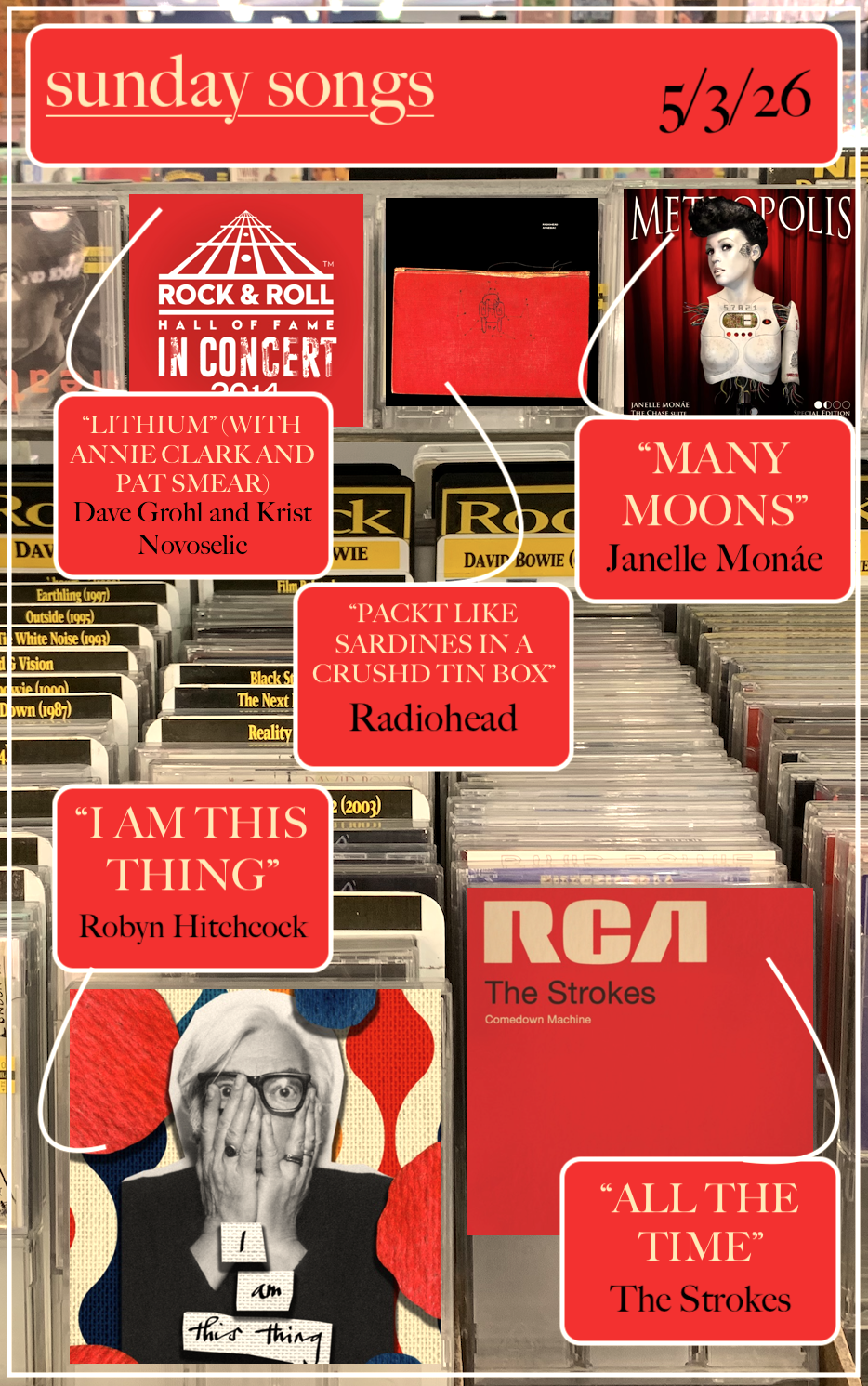
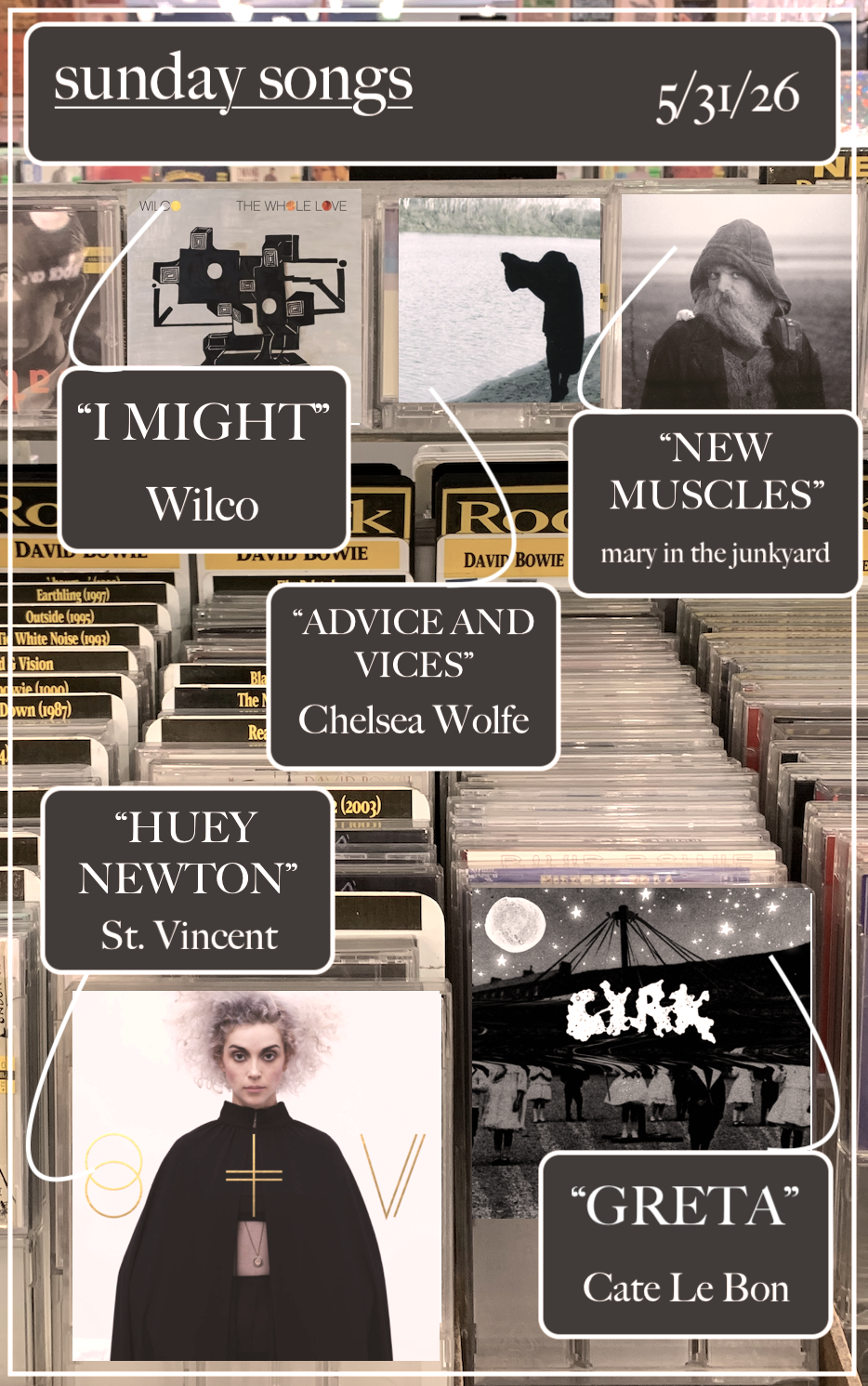
Since I’ve been gone for a few weeks, here are the graphics and songs from when I was taking a break:

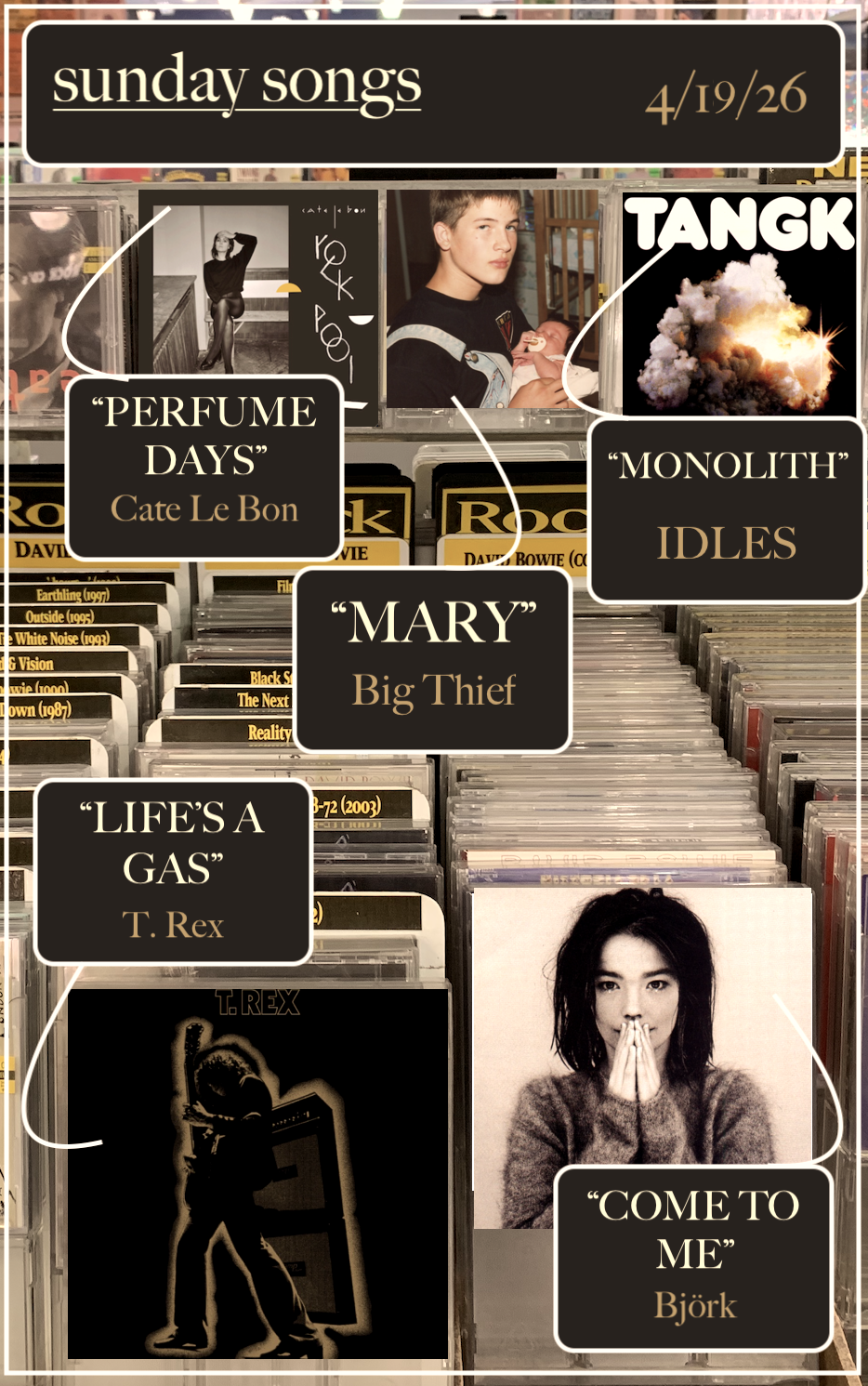
4/19/26:

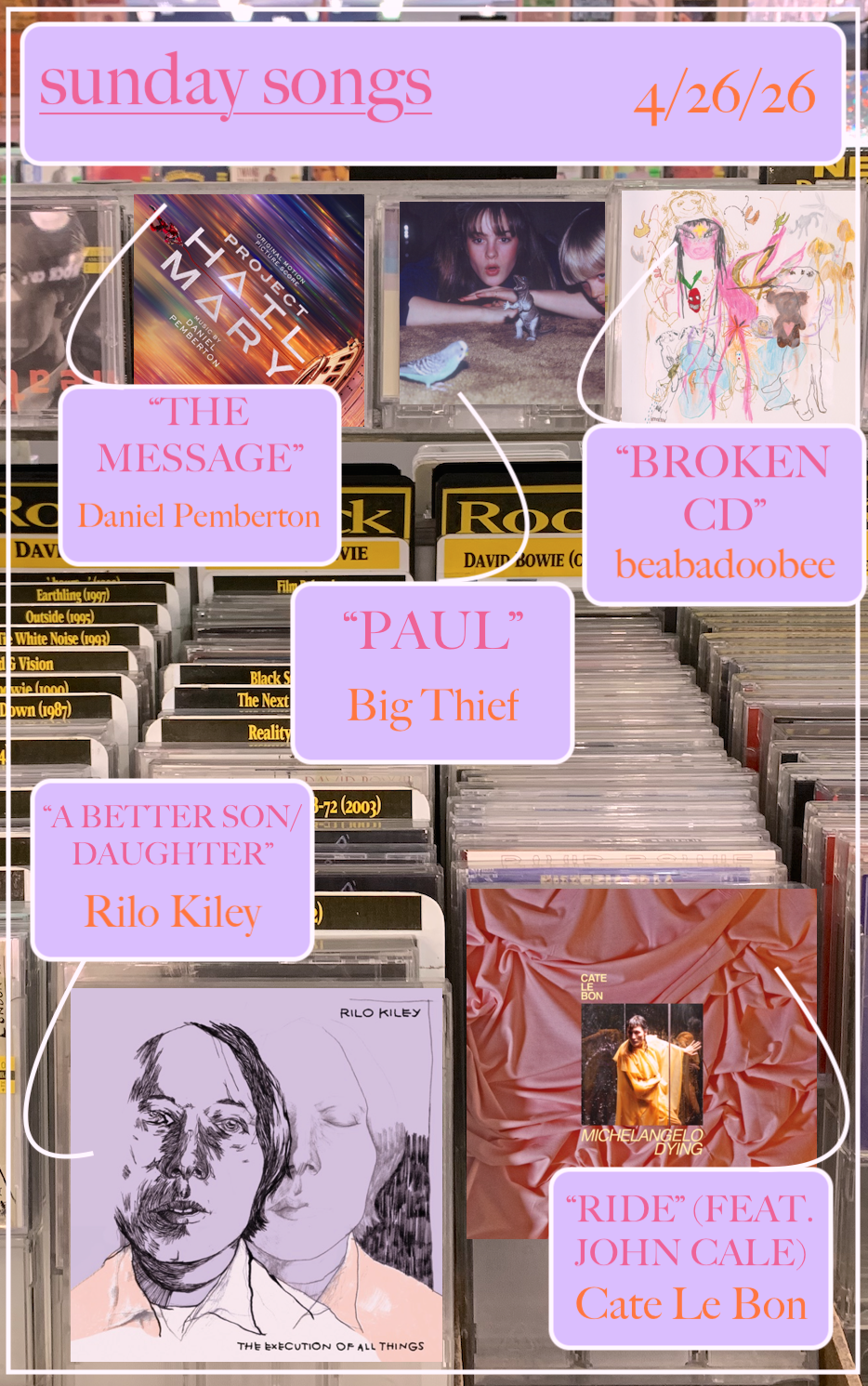
4/26/26:

5/3/26:

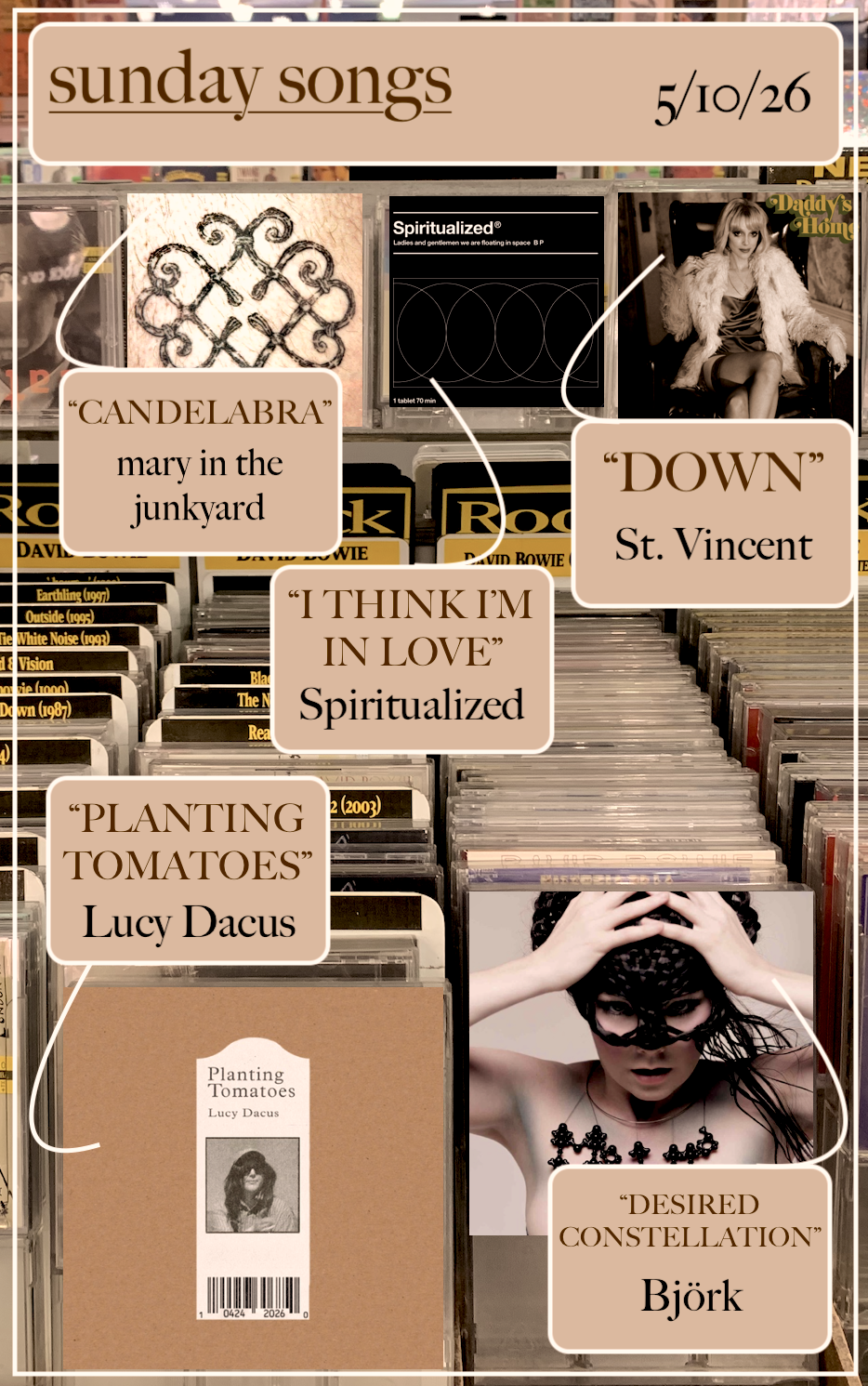
This week: In honor of Mother’s Day, the mothers are mothering. (Yes, I’m counting J Spaceman, I feel like if you make something as astounding as Ladies and Gentlemen We Are Floating In Space, he gets to be called “mother” this once.)

Enjoy this week’s songs!

SUNDAY SONGS: 5/10/26

“Planting Tomatoes” – Lucy Dacus

Hot take of the day: Forever Is a Feeling would’ve been better if it had this track—and maybe “Losing”—on it. I get that “Losing” doesn’t exactly fit thematically, but sonically, it fits enough with the other tracks that it could’ve broken some of the monotony. Nobody asked, but my move would be to replace “Modigliani” with “Planting Tomatoes.” (But seriously, why was “Modigliani” the song that got the coveted Phoebe Bridgers feature?)

That’s the end of the hot take, but this might be another one: I feel like “Planting Tomatoes” might be one of Dacus’s best songs since Home Video. Forever Is a Feeling had some stunners, but composition and lyric-wise, “Planting Tomatoes” is truly something special. It takes her usual formula of stringing together perfectly-placed vignettes into something emotional. It’s more pop-forward, but in a way that feels natural to Dacus, and not trying to fit into a mold like some of Forever Is a Feeling‘s more forgettable tracks did. With reverb-drenched guitars that call back to her more indie rock days and tastefully echoing of her vocals, “Planting Tomatoes” is a breathless sprint through the realization that you’re living the life you once dreamed of—and everything that comes with it. There’s the starry-eyed ecstasy of being amongst friends and seeing the simple beauty in everything (tomatoes, holding hands with your friends, the view through a window screen).

Of course, it wouldn’t be Lucy Dacus without a trademark knife in the gut; that comes in the sparse bridge, but I think it captures something that comes along with trying to be more present: being present, but being distinctly aware of what you’ve lost while trying to be present. (“Livin’ in the moment/I can feel the moment passing.”) For Dacus, it’s the grief of losing someone that she wished she could experience the moment with; but her conclusion loops back to the chorus—the solution for all of these emotions, positive and negative, is this: “You’ve gotta live the life you’re fighting for/You’ve gotta live a life you would die for/But before then, I’ve got some ideas…” That hopeful ellipses of the chorus is where the joy of “Planting Tomatoes” lies: life is short, and yet, there is so much possibility in it.

…AND A BOOK TO GO WITH IT:

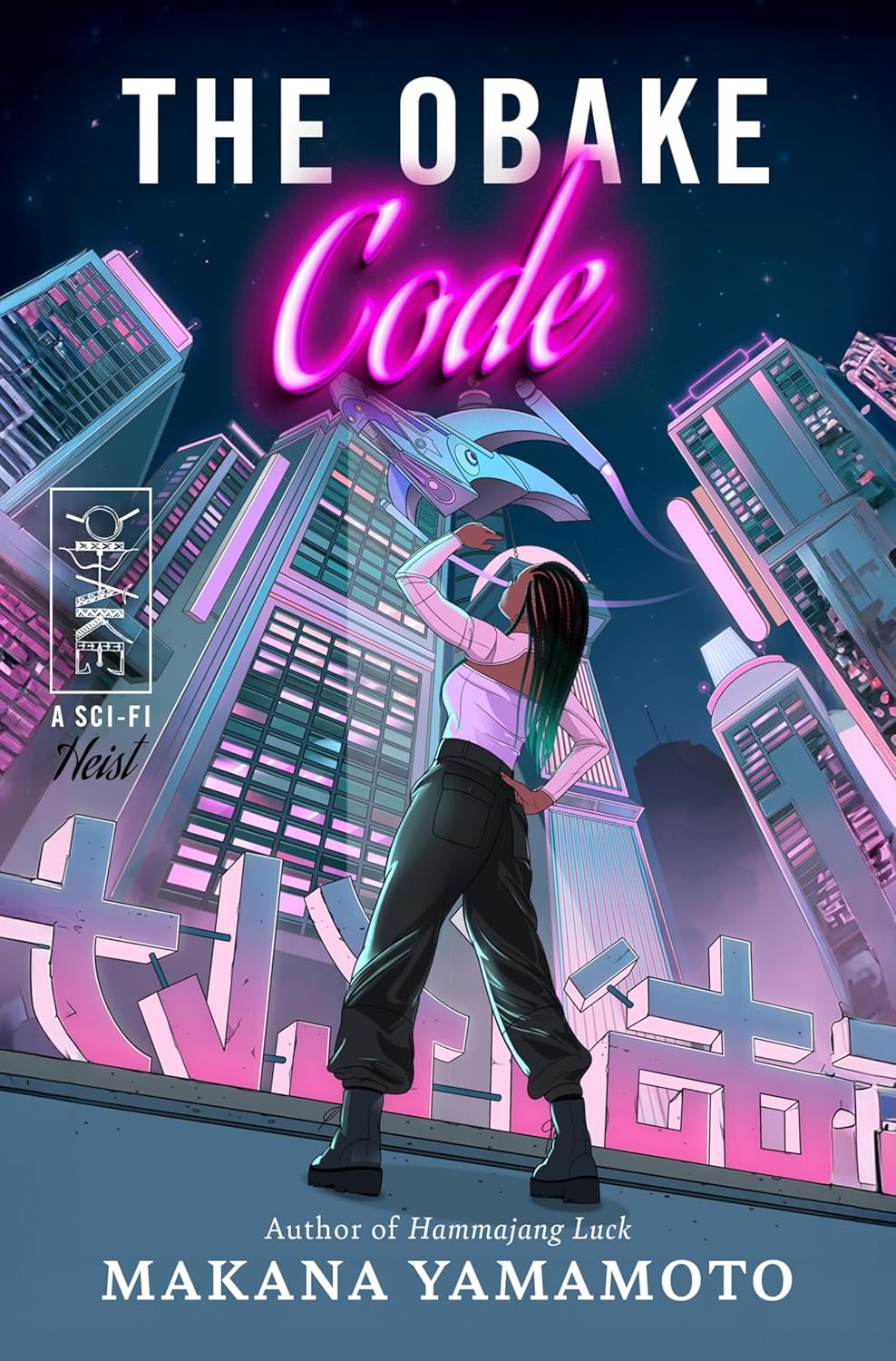
A Bánh Mì for Two – Trinity Nguyen“Hearing my friends laughing in the distance/I can’t help but laugh along without knowing what the joke is/Can’t help thinking that I am gonna miss this/Living in the moment, I can feel the moment passing…”

“Desired Constellation” – Björk

I’ve been toying with the idea that Medúlla might be my favorite Björk album. I’m not 100% sure. With some of my favorite artists (Bowie, St. Vincent, etc.), it’s easy to pick a favorite. The thing about Björk is that her albums, as varying as they are in sound, are almost all at the same level of being consistently excellent. I like some more than others, but other than the two I haven’t listened to (Vulnicura and Utopia), I really can’t say if there’s a bad Björk album. Medúlla has some slight weaknesses, but after two more re-listens, I feel like even the songs that didn’t hook me as much on the first go around (see: “Submarine”) are still excellent in the ecosystem of the album as a whole. I’m firm in the belief that emotional attachment should never be ignored in choosing your favorite albums, and if that was the only criteria, Medúlla would easily slide up there—I’ve spoken about it a fair amount, but knowing the background and goal of this album was to evoke a sense of prehistoric, primal kinship connection of family and feminine lineages and storytelling as a whole makes every listen so powerful. It makes me feel in tune with that sense of being everything that your ancestors—especially the women in your family—dreamed of, but also a sort of nonlinear sense of connection across time and space. Something about it is innately human—the acapella format makes you hear every hiccup and falter in the vocals. You do feel like you’re around the fire, nestling for warmth in the presence of your kin.

But I think the best endorsement of Medúlla now is that, after a while spent dithering at the record store, I bought it on vinyl even though it was $43, but I immediately started crying after hearing “Pleasure Is All Mine,” so it was worth every penny. (Jeez, is that saying obsolete now? Wow. “Worth every dollar” just doesn’t have the same ring to it.)

When I first listened to Medúlla about a year ago, “Desired Constellation” was nearly one of the songs I talked about initially; it’s still one of the standouts from the album for me. At first, it sounds like it has some of the only non-vocal instrumentals, but I was fooled—the electronic backdrop was created by sampling Björk’s vocals from Vespertine, and adding layers of effects, giving it the delicate, sparkling effect that you hear; more relevant to the song’s subject matter, it’s specifically of this line from “Hidden Place”: “I’m not sure what to do with it.” It has some of my favorite Björk lyrics, hands down: “With a palm full of stars/I throw them like dice (Repeatedly)/On the table (Repeat, repeatedly)/I shake them like dice/And throw them on the table/Repeatedly (Repeatedly)/Until the desired constellation appears.” It’s an intimate, hard-hitting exploration of trying to make order out of chaos, of picking up the pieces until they resemble something you can make sense of.

…AND A BOOK TO GO WITH IT:

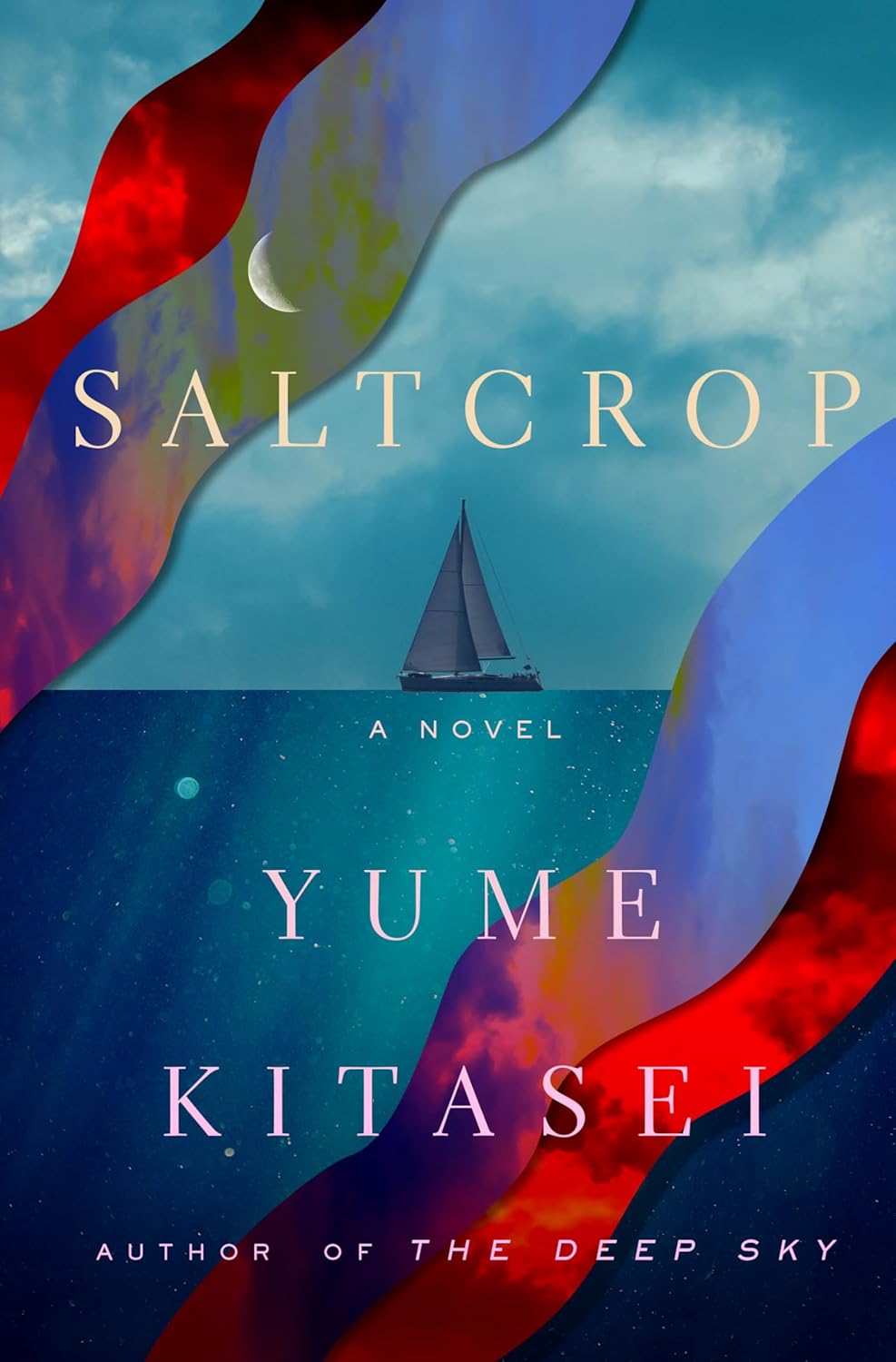
Saltcrop – Yume Kitasei “It’s slippery when/Your sense of justice/Murmurs underneath/And is asking you: ‘How am I going to make it right?'”

“Candelabra” – mary in the junkyard

We’re now two singles into Role Model Hermit, and I don’t want to jinx it, but it’s shaping up to be promising. “Candelabra” leans more towards their earlier acoustic work, but it fits just as snugly with the sweeping “Crash Landing.” As it turns out, it’s a holdover from frontwoman Clari Freeman-Taylor’s solo career, all the way back in 2021; it’s clear she’s gained so much more confidence since then, and despite “Candelabra” being a soft and wistful song, you can hear the leaps and bounds Freeman-Taylor and co. have made in the 5 years since. Whether acoustic or with a full band, this higher-quality production has done wonders for their sound, making it sound cleaner without sacrificing any of their eerie, vulnerable atmosphere. And vulnerability is something that “Candelabra” is ripe with, a meta, half-whispered confession about the confusion of songwriting and intimacy: “I want you to know me through my songs/They’re so much cleaner than anything I could say” is bookended with “Frantically I wrote you a letter/One I knew I never would send/Write fast, write deep, write better/Nothing I ever write will be enough.” This self-deprecation keeps this understated tune afloat.

…AND A BOOK TO GO WITH IT:

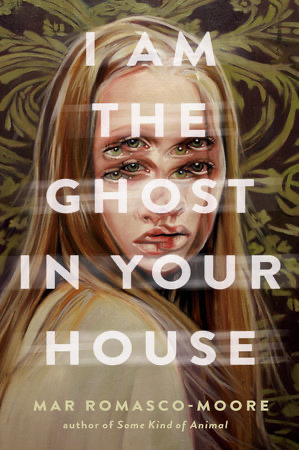
I Am the Ghost In Your House – Mar Romasco-Moore“Don’t let me into your life baby/I hurt you enough as it is/Don’t let me under your skin baby/I’m full of false promises…”

“I Think I’m In Love” – Spiritualized

Musically, I might be reverting to a pandemic-era state. Normally, that’d be a cry for help, but by some miracle, the memories I have of listening to Spiritualized during the pandemic are actually very positive. They said it couldn’t be done…but also, I listened to Ladies and Gentlemen We Are Floating in Space for the first time during the very early days of the pandemic, so that’s why the memories never soured. This was the part of the pandemic where I’d finished my highly modified AP tests and was waiting for my preordered copy of Aurora Burning to arrive in the mail. I hadn’t gotten burnt out and depressed…yet.

But I think Ladies and Gentlemen is one of those albums that no bad situation could sour. It’s just a masterpiece, through and through, a masterclass in creating and maintaining an atmosphere, of slow-burn tales that unfurl like you’re adrift in space, held to your spaceship by the thinnest tether, but never lost completely. The amount of layers in each song, whether 3 or 17 minutes, makes each one feel like an entire expanse of space that J. Spaceman has personally mapped out and condensed into sound waves. And if we’re talking about slow burns, then “I Think I’m In Love” is one of the key studies of it on Ladies and Gentlemen. Of course, the sun-blinded haze of this song comes from the monotony of heroin—something that comes up repeatedly on this album—but the way that it unfolds from this dissociative state back into a colder reality once the high wears off is one of J. Spaceman’s most memorable compositions on this album. For the first two minutes, his airy self-harmonization makes you feel like you’re waking up from a dream, still bleary-eyed, unsure of where you are. Every effect from the guitar pedals makes the song glimmer, but once the song gets curb-stomped back to Earth, the bleating saxophones and steady percussion only add to the atmosphere, as densely-packed with sound as a rainforest is with flora. And cynical as it is, the lyrics in the last 2/3rds of the song are so painfully self-effacing, but sardonically clever:

“I think I can hit the mark/Probably just aimin’/I think my name is on your lips/Probably complainin’/I think I have caught it bad/Probably contagious/I think that I’m a winner, baby/Probably Las Vegas.”

I mean…oof. And he’s got a whole four minutes full of these self-aimed barbs up his sleeve. But it really demonstrates the state he was in, musically and lyrically; the transition to drugged-out, blissful ignorance to astronomical levels of self-deprecation is just where he was at the time of the album, and honestly, with the rock bottom that he hit multiple times, it just makes me all the more grateful that we live in the timeline that he survived both of his near-death experiences, mostly due to complications with the drugs he was abusing throughout his life. And sure, we’ve got those debates about whether you need drugs to make an album as masterful as this, to which I say…dude, have you listened to Everything Was Beautiful lately? Sure, nothing can touch Ladies and Gentlemen, but it’s basically Ladies and Gentlemen with J Spaceman being clean and happy. Either way you look at it, “I Think I’m In Love” is a pitch-perfect study in Spaceman’s ability to make a song feel like an entire dimension in and of itself, a push-pull of dissociation and reality, like a slingshot firing in slow motion.

…AND A BOOK TO GO WITH IT:

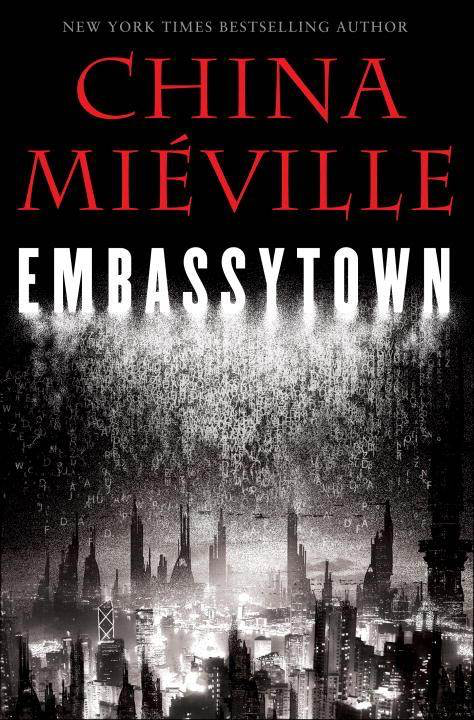
Embassytown – China Miéville“I think I’m in love/Probably just hungry/I think I’m your friend/Probably just lonely…”

“Down” – St. Vincent

Daddy’s Home is approaching its 5 year anniversary, and…I feel so old. I know that’s dramatic. But it has such a specific, comfortingly nostalgic place in my heart; I specifically remembering finishing my AP exams after slogging through the mire of online school, and walking out of the building knowing that I had a new St. Vincent album as a reward. Especially coming off of the heels of the deeply disappointing MASSEDUCTION, it was like being bathed in rays of sunlight. Nearly 5 years later, it holds up as a sonically consistent and pure fun album, despite its subject matter. It’s a sly concentration of “if I don’t laugh, I’ll cry,” especially when looking back at circumstances more messed up than you could’ve predicted. (For Clark, it was her father getting arrested and finishing out his sentence around the time of the album’s release.) It’s difficult to think of an artist who’s channeled an aesthetic so clearly—this is straight up early ’70s, and nothing but; the only pitfall is that, past this era, it almost feels wrong to hear her play tracks from this album live without the intricately crafted aesthetic and campy blonde wig. But I guess that’s what you get for committing to a bit this hard.

Daddy’s Home was anchored on a slew of excellent singles, and “Down” hasn’t lost its sheen nearly 5 years on. It’s got bite. Acerbic but righteous in its condemnation of a good-for-nothing abuser, every lyric is spit with triumphant venom. We’ve been inundated with vaguely feminist revenge stories in the past decade or so; It’s a real shame that a lot of stories about getting the upper hand on your abuser have become cliche, but I feel like it’s more the shallow idea of these revenge fantasies being labeled feminism by default that’s made a lot of mainstream stories ring hollow. Even Clark herself has said that “Down” is a revenge fantasy. However, I think the reason “Down” sets itself apart is the camp of it all—it realizes it’s playing into a cliche and a somewhat universal experience of wanting to get back at someone who’s wronged you, and Clark puts every ounce of performance into this character. Daddy’s Home is honestly a masterclass in tragic camp—it rarely takes itself entirely seriously, and that’s what gives it the edge. Plus, who could deny that guitar solo, delectable ’70s tone and all?

…AND A BOOK TO GO WITH IT:

Camp Zero – Michelle Min Sterling“Tell me who hurt you/No wait, I don’t care to/Hear an excuse why you think you can be cruel…”

Since this post consists entirely of songs, consider all of them to be today’s song.

That’s it for this week’s Sunday Songs! Have a wonderful rest of your day, and take care of yourselves!

Posted in Sunday Songs

Sunday Songs: 4/5/26

Happy Sunday, bibliophiles, and Happy Easter to those celebrating! 🐰

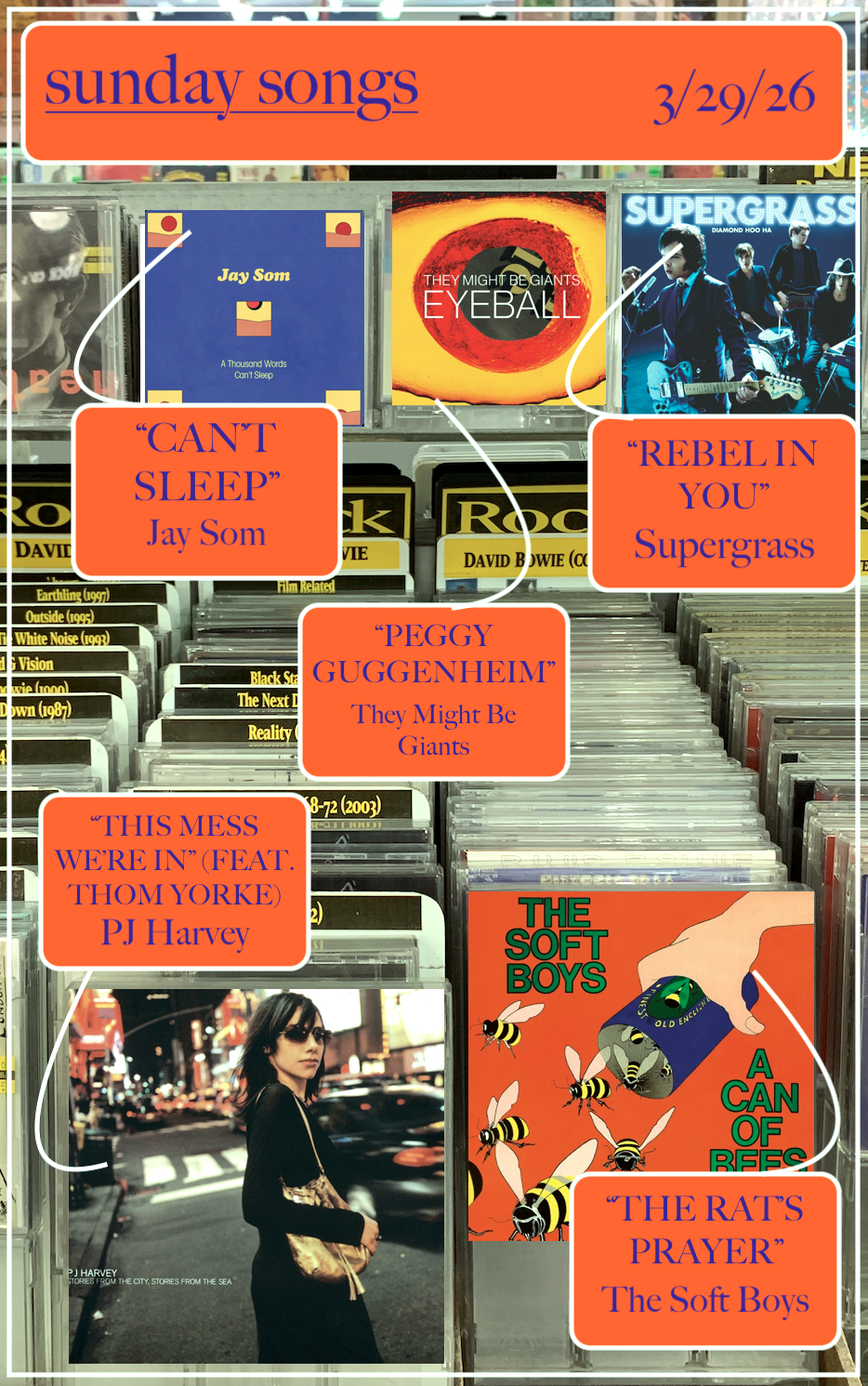
Since I took a break last week to finish up my honors thesis, here’s my graphic and the accompanying songs from that week:

SUNDAY SONGS (3/29/26):

This week: living vicariously through a digital album because SOMEBODY won’t tour in my area, making something out of nothing, and the inevitability of mildly cursed Jeff Tweedy music videos.

Enjoy this week’s songs!

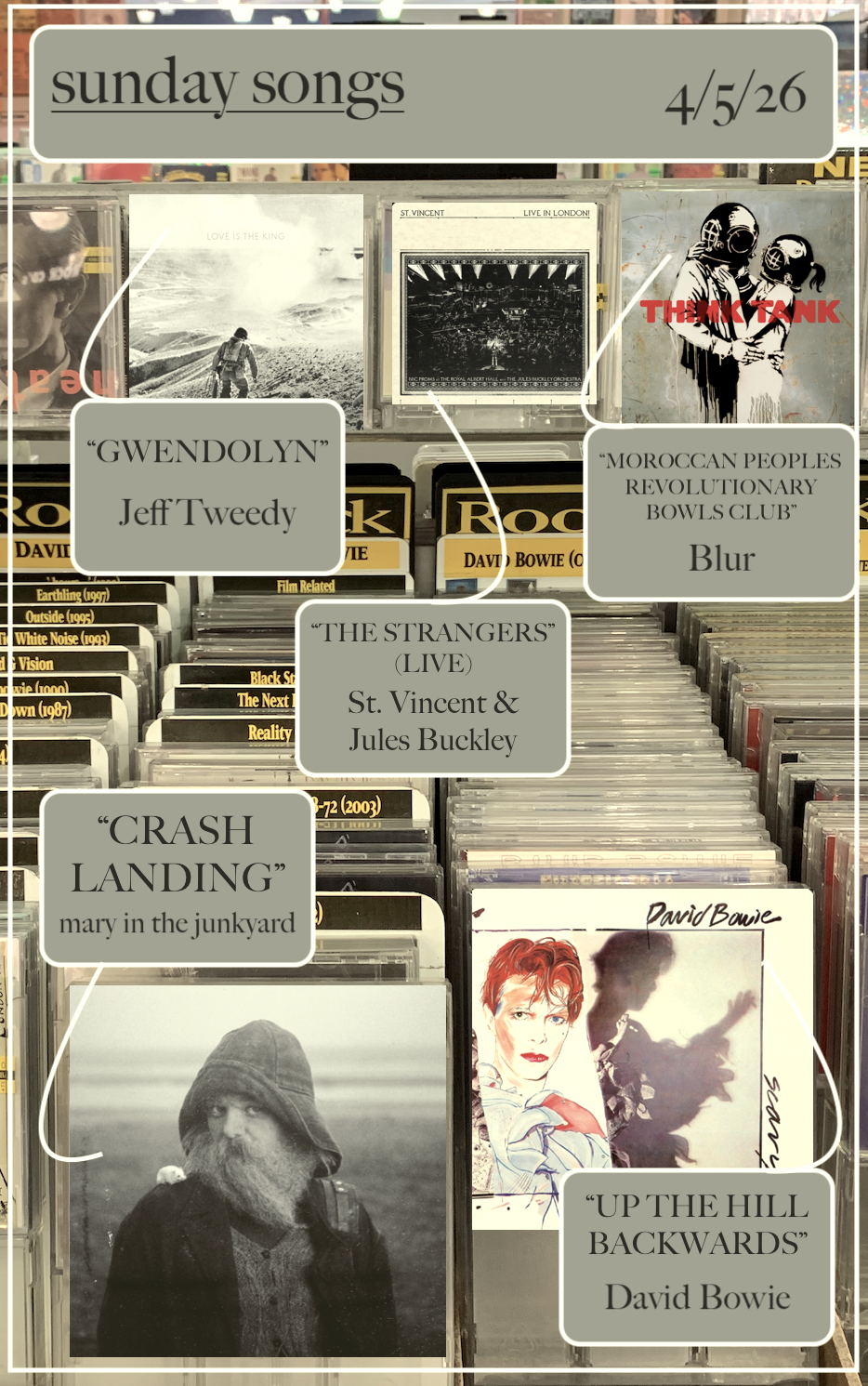
SUNDAY SONGS: 4/5/26

“Crash Landing” – mary in the junkyard

THE ALBUM! THE ALBUM IS FINALLY COMING!

After about a year and a half of following their excellent singles and EP, mary in the junkyard is finally putting out their debut album! Role Model Hermit comes out this July, and I couldn’t be more excited. With the last handful of singles, I had some fears that they’d become a one-trick pony, but I’m so glad that a) they’re deviating from the sound that they’d established, and b) that the final product is this stunningly good.

“Crash Landing” gives their sound more polish, but takes away none of their corner-dwelling, cobweb-covered sensibilities. The harmonium gives me goosebumps every time, but after the instrument fades away, that haunting power never fades. When the harmonium chords transition into the soaring guitar, it really makes the choice of the music video make sense—everything in this song sounds like frigid waves crashing against white chalk cliffs. Now that Clari Freeman-Taylor sounds clearer, the subtle power of her voice comes through even more, through lyrics surrounding falling in love with a deeply guarded person: “And I can take your mask off/But only in the dark/And you won’t takе your shoes off/In case you have to run, run, run.” The repetition of “you open up like a coconut” sticks out, mainly from the coconut bit—that word doesn’t fit as neatly with the rest of them—but as with all of their lyrics, mary in the junkyard frame it as just the right kind of flotsam and jetsam to decorate this track.

…AND A BOOK TO GO WITH IT:

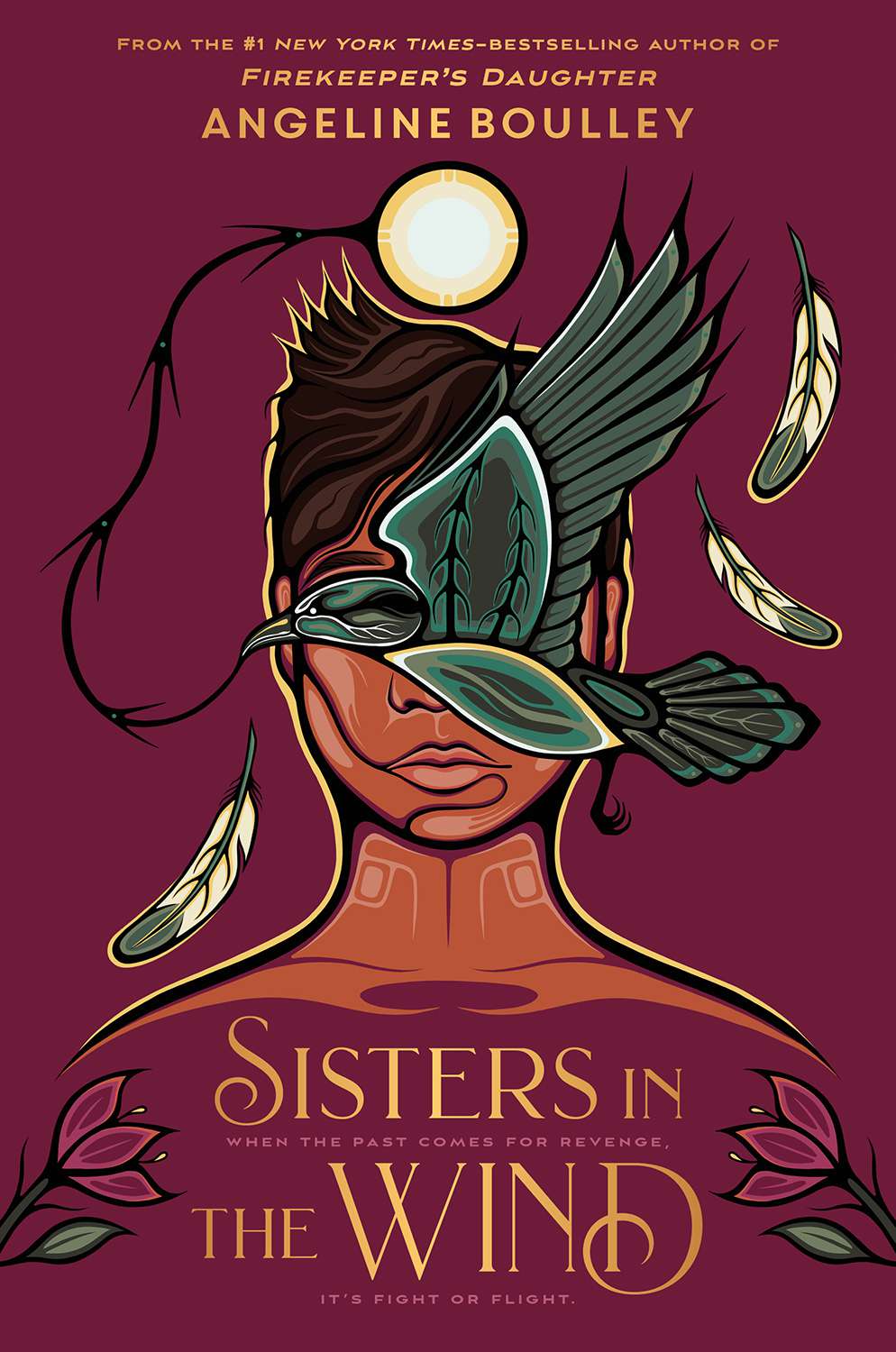
Sisters in the Wind – Angeline Boulley“And I can take your mask off/But only in the dark/And you won’t takе your shoes off/In case you have to run…”

“Up The Hill Backwards” – David Bowie

Scary Monsters and Super Creeps has a special place in my heart. All the way back in middle school, at the height of my David Bowie discovery phase, it was one of the first albums that I listened to in full, after the virtually unbeatable Hunky Dory/Ziggy Stardust/Aladdin Sane glam trifecta. But I hold it up with nearly the same nostalgia. I feel like most of it tends to get lost amongst other Bowie albums, save for its most popular singles (“Ashes to Ashes” and “Fashion”). Both of them are icons in their own right, but I’d honestly argue that Scary Monsters, all the way through, is nearly as strong as the Berlin Trilogy, if not equally strong. It’s in a strange limbo in Bowie’s discography between the end of Berlin and the beginning of his plainer, more mainstream pop era of the ’80s, and the space between that juncture is what makes Scary Monsters so exciting to me: all the polish of pop, but with the same unusual, and often dystopian undertones of an album like Low or Lodger. Hell, he’s using what sounds to be the same drum machine from “Breaking Glass” on “Up the Hill Backwards.” It’s basically the fourth and forgotten chipmunk of the Berlin Trilogy that got unfairly swept aside.

“Ashes to Ashes” remains one of my favorite David Bowie tracks of all time, and that, along with the more commercial singles from the album, tends to overshadow the other gems on this album, everything from a Tom Verlaine cover to a dystopian tale more grounded and grittier than the contents of Diamond Dogs. But “Up The Hill Backwards” is an immediate standout to me. It feels like an alien organism wearing the skin of a typical pop song as a coat: everything seems aligned perfectly for radio-friendliness, but then it reveals just how delightfully askew it is. Most of that is due to the unusual 7/4 time signature, giving it that lack of resolution, but it’s full of chimes and squeals and chimney-like puffs that make it into a well-oiled machine like no other. With the ripping guitar riffs of Robert Fripp, you can’t go wrong—every off-kilter cog in “Up The Hill Backwards” is working in precise harmony. And it’s all strangely upbeat for a song about the existential void that comes in realizing the slowness of progress; the first line references a line in Dada: Art and Anti-Art which itself is referencing the fall of Imperial Germany (“The vacuum created by the arrival of freedom/And the possibilities it seems to offer”), but it could represent the death of one system and the slow birth of another. It’s contextualized further knowing that Scary Monsters was written in wake of his divorce with Angie Bowie, so that “vacuum created by freedom” can be systemic or personal. Either way, “Up The Hill Backwards” pledges to trudge onwards in the face of collapse, no matter how uphill the journey is.

…AND A BOOK TO GO WITH IT:

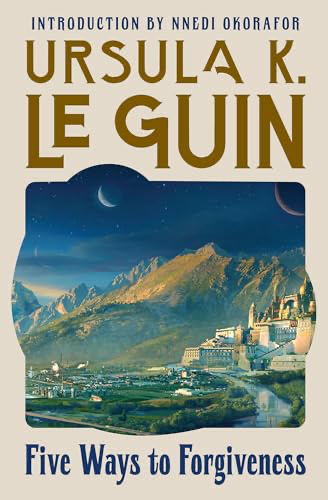
Five Ways to Forgiveness – Ursula K. LeGuin“The vacuum created by the arrival of freedom/And the possibilities it seems to offer/It’s got nothing to do with you, if one can grasp it…”

“Gwendolyn” – Jeff Tweedy

Jeff Tweedy’s always been one for mildly cursed music videos (see: “I Know What It’s Like”), and this video certainly translated it into the COVID-19 age, with the noses and mouths of fellow musicians (and a handful of actors) disturbingly green-screened over his masked face. If you’re hankering to see what Jeff Tweedy’s face would look like if it was mashed up with Robyn Hitchcock, Fred Armisen, Jay Som, Seth Meyers, Jon Hamm, or Nick Offerman (and more)…now’s your chance, I guess?

A lot of Jeff Tweedy’s solo work before Twilight Override tends to be more on the folky and borderline simplistic side (though the two are mutually exclusive, that’s not a dig at the entirety of folk music). It hasn’t hooked me nearly as much as his work with Wilco, but what you have to understand is that even if you’re getting something less than Wilco-quality, it’s still a great song. “Gwendolyn” is a more straightforward rocker, but you still get your money’s worth of most of what I like about Jeff Tweedy; there’s punches of truly inspired lyrics (“The sun coming up/Like a piece of toast”) and squealing, joyous guitar riffs aplenty. The truth is, Tweedy’s a cut above the rest, and even his more traditionally rock songs are as such—”Gwendolyn” is pure joy.

…AND A BOOK TO GO WITH IT:

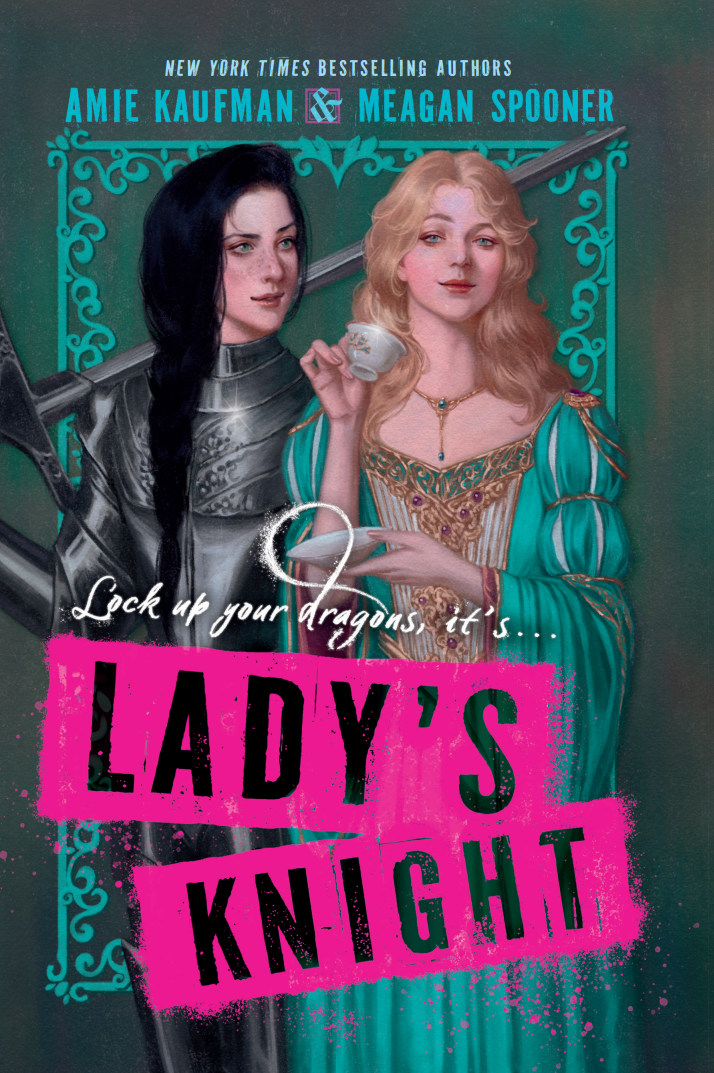
Lady’s Knight – Amie Kaufman & Meagan Spoonerokay, sue me…yes, I did put this in just because we’ve got two Gwens here.

“The Strangers” (Live) – St. Vincent & Jules Buckley

Even though I’ve been cruelly deprived of an orchestral tour date near me, at least I have LIVE IN LONDON! , St. Vincent’s digital-exclusive live album, where she’s accompanied by Jules Buckley’s 60-piece (!!) orchestra. I’ve loved seeing these new takes on her classic songs, especially since she’s been dredging up some rarely-played deep cuts out of the vault to interpret live (most of the shows have been opened with “We Put A Pearl In the Ground,” an instrumental piece from Marry Me.) “The Strangers” isn’t a deep cut by any capacity, but nonetheless, I think some of the album’s best interpretations have been of tracks from Actor; the whole album leans into drama and theater, so it’s no surprise that it translates well with orchestral backing. “The Strangers” is given the suspenseful, eerie grandeur of the original track, with the backing instrumentation easily taken up by the string and woodwind sections. It’s a grand, cinematic interpretation of an already grand and cinematic track, and with Annie Clark’s elevated shredding, it becomes something truly epic and sweeping, decadently consuming everything in its path.

…AND A BOOK TO GO WITH IT:

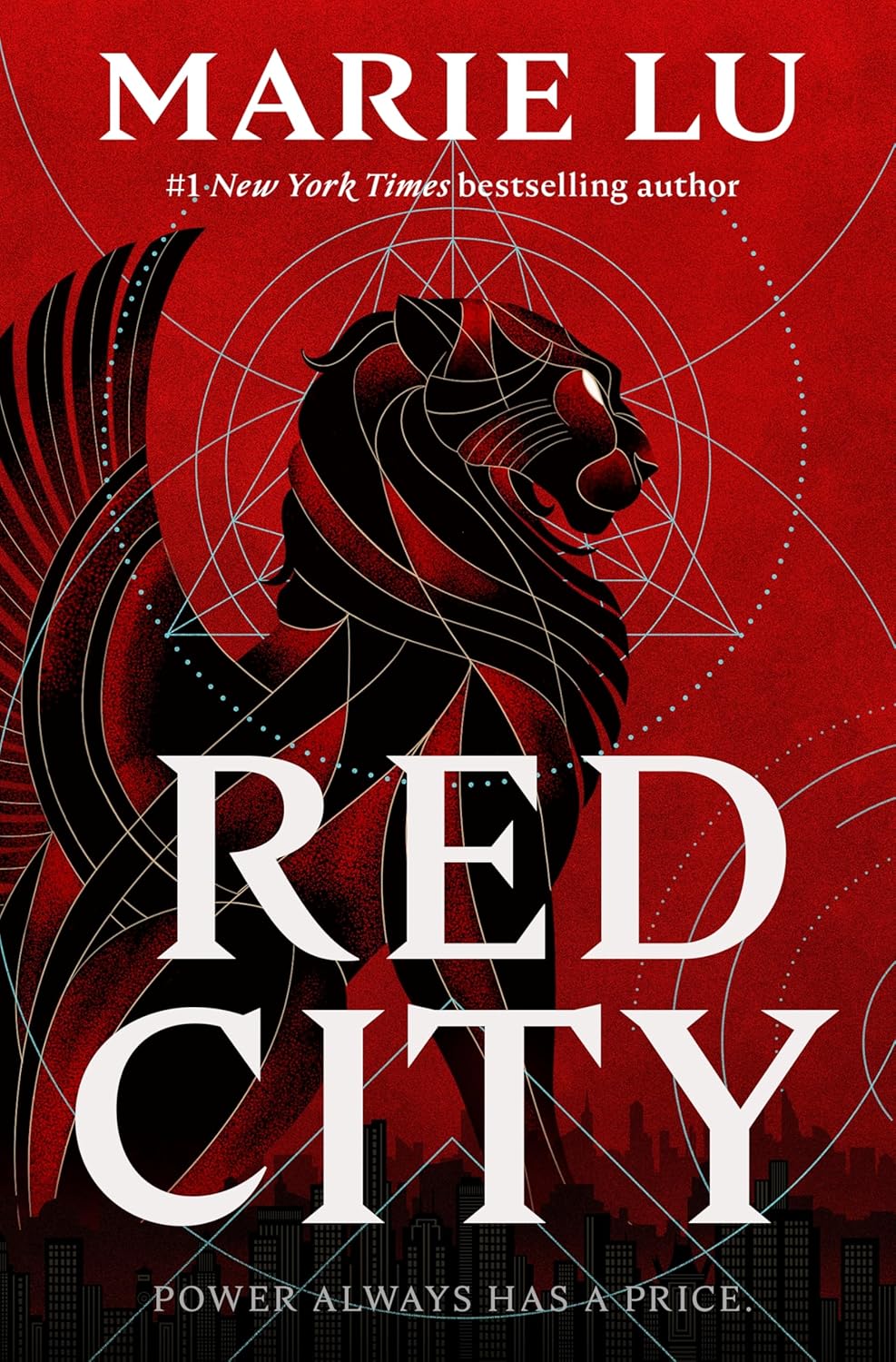
Red City – Marie Lu“Lover, I don’t play to win/But for the thrill, until I’m spent…”

“Moroccan Peoples Revolutionary Bowls Club” – Blur

My lukewarm Blur take du jour is that Graham Coxon may be the most talented member of the band, either on par or above Damon Albarn, as much as I love him. So the fact that I love Think Tank so much comes as a surprise even to myself. Blur without Coxon, in concept, isn’t even Blur! Right?

Sort of.

Coxon left the band temporarily due to creative differences, and during Think Tank, he only appears on one track, playing guitar for “Battery In Your Leg.” But what redeems the un-Grahamness of the album is the sheer inventiveness of it. You take away your lead guitarist, responsible for creating the band’s most iconic riffs, and the rest of the band members went “Huh. Let’s make sounds that sound like everything but a guitar and see what happens.” For Blur, this feels like a continuation of the experimental mindset that peaked with13, but in a new, more worldly sort of vein. In a way, it’s a response to loss, musically more than anything, though occasionally lyrically (“Sweet Song” was written about Coxon’s departure): when an important person departs from your life (temporarily, at least), what do you do with what’s left?

“Moroccan Peoples Revolutionary Bowl Club” doesn’t tackle that subject matter, but it is a spectacular showcase of what happened when a chunk was untimely ripped from the fabric of the band. It’s one of the tracks on the album that easily could’ve come from Gorillaz’s first album, with its commentary on greed and the destruction of the environment. Alex James’s bass gets to shine on this track, with his smooth, funky riffs becoming the centerpiece amidst humming autotune and guitars. However you feel about Blur sans Graham, it stands as a quirky album produced by a band at a crossroads—it’s strikingly unusual in their catalogue.

…AND A BOOK TO GO WITH IT:

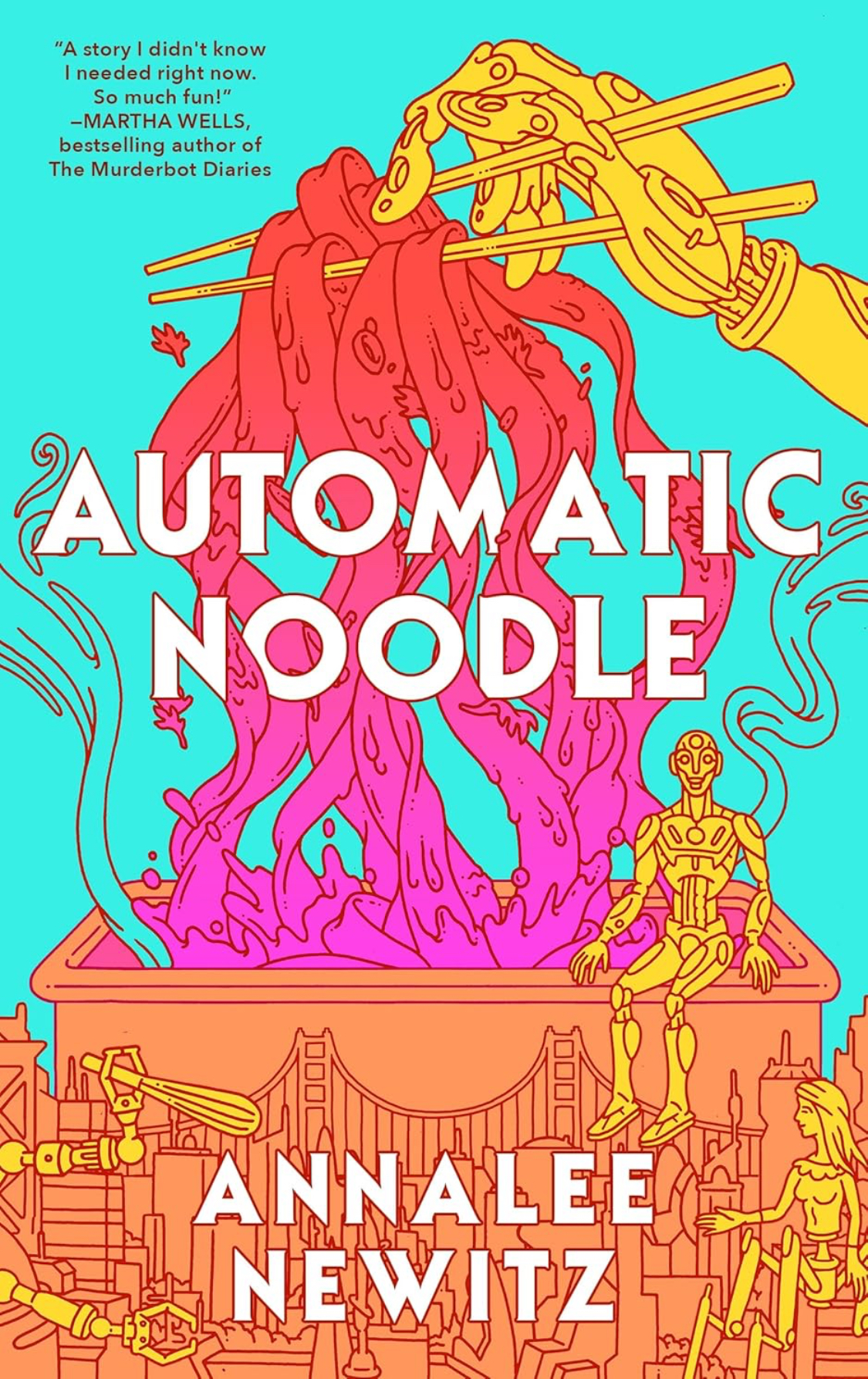
Automatic Noodle – Annalee Newitzsimilar in spirit to the feel of Think Tank: full of strange machinery, and mostly upbeat in spite of being smack dab in the middle of a dystopia.

Since this post consists entirely of songs, consider all of them to be today’s song.

That’s it for this week’s songs! Have a wonderful rest of your day, and take care of yourselves!