Posted in Book Review Tuesday

Book Review Tuesday (8/18/26) – The Republic of Memory

Happy Tuesday, bibliophiles!

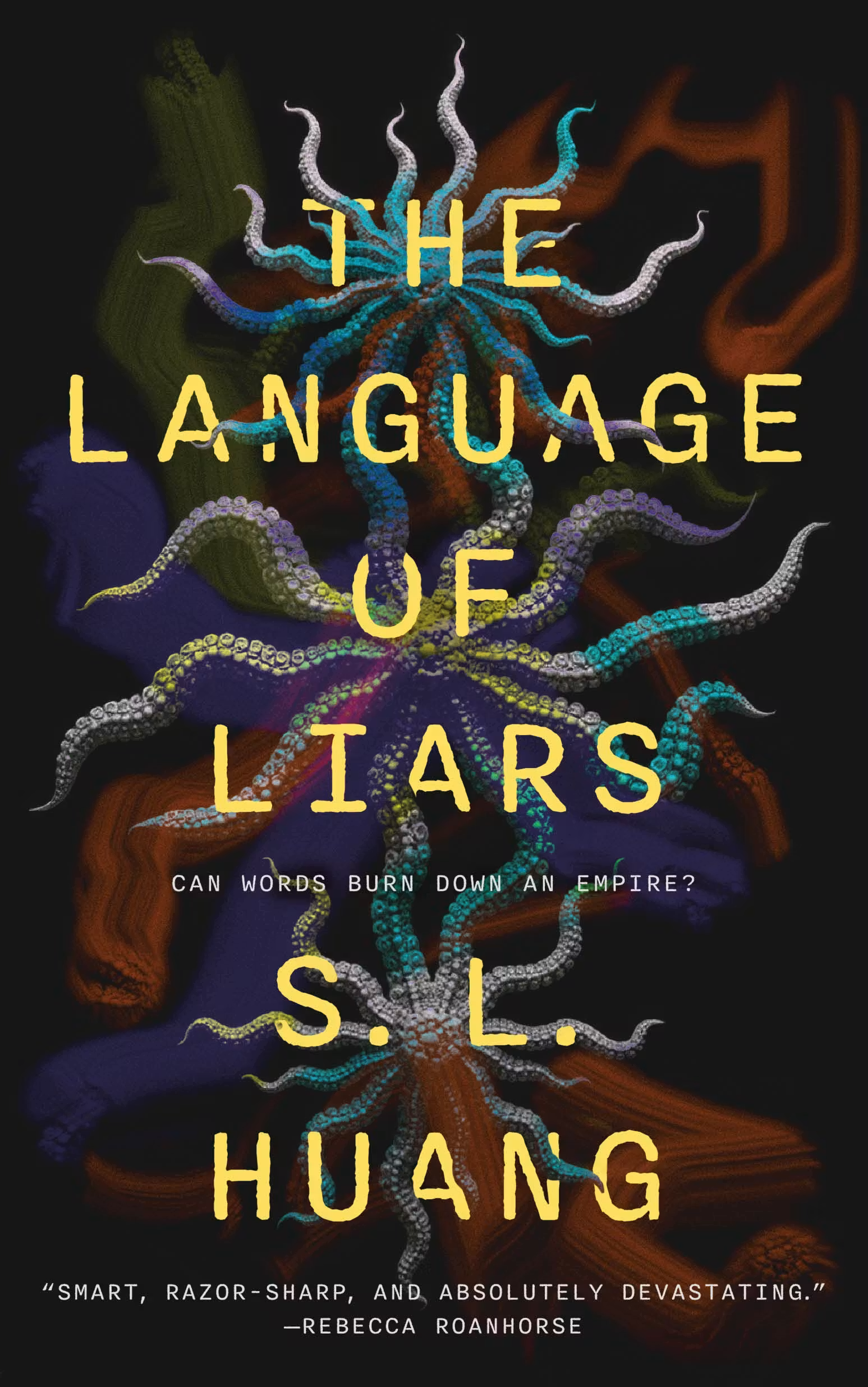
It’s always the best feeling when you find an extra cool-looking book at a bookstore that you’ve never even heard of before. (It’s a rare feeling for me, since I spend too much time reading and engaging with content about reading. Oops. I need to get out more.) That’s what happened with The Republic of Memory, and I recently bought myself a copy (shoutout to the Boulder Bookstore!).The Republic of Memory boasted so many inventive concepts, and it was such an original novel!

Enjoy this week’s book review!

The Republic of Memory (Song of Safina, #1) – Mahmud El Sayed

Onboard the Safina, a generation ship on a 400 year journey, revolution is brewing. Factioning based on one’s language and the tyrannical rule of the Captain have begun to chafe on the thousands of crew members. But when the Safina is plagued by a series of targeted blackouts, many of the disparate crew must come to terms with the fact that the foundations of their ship—and their journey—are about to change forever.

TW/CW: violence, police brutality, xenophobia, murder, homophobia, infertility, sexual content, suicide

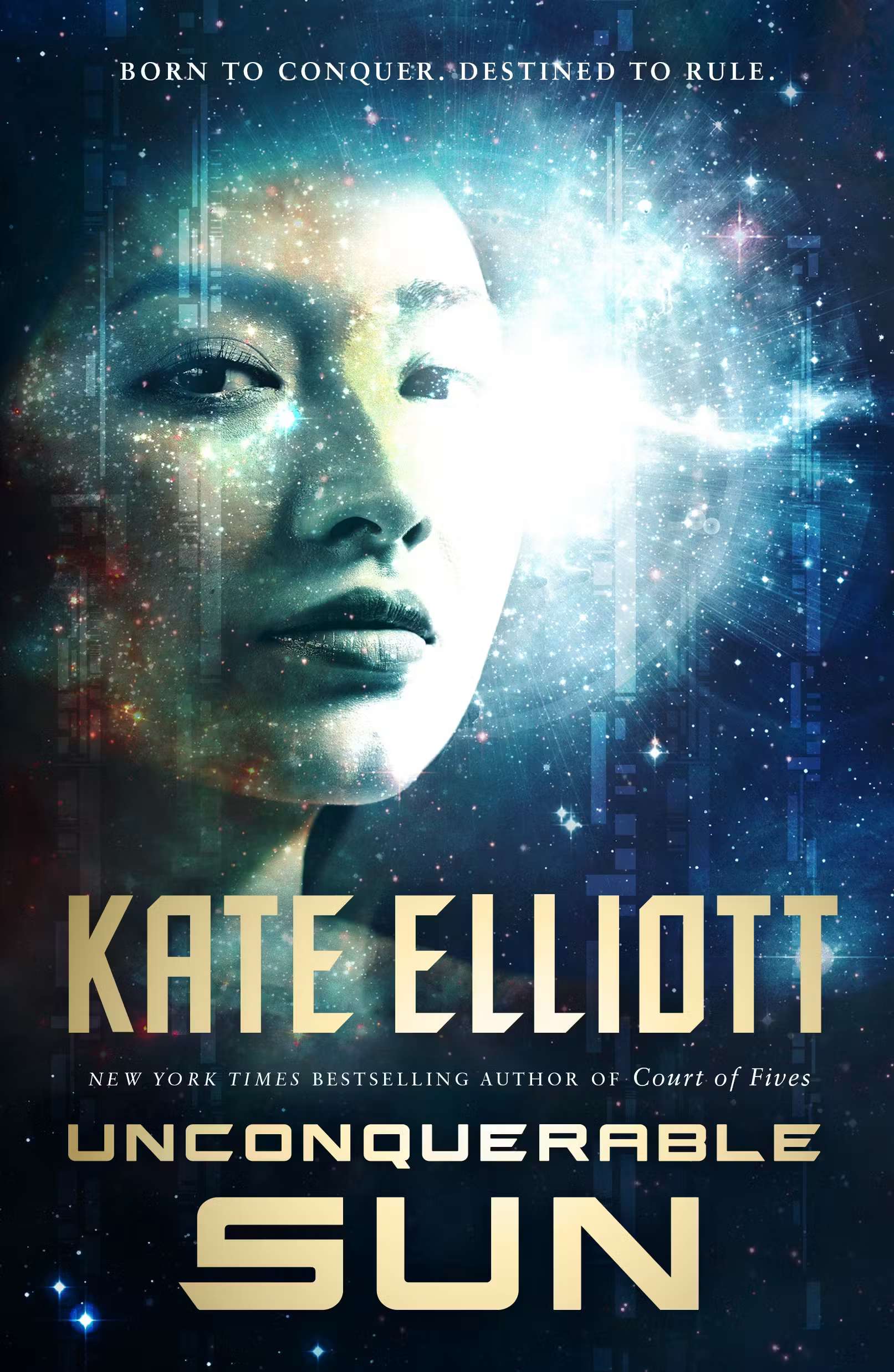
Without a doubt, The Republic of Memory is one of the more original sci-fi novels that I’ve read recently. It’s in a subcategory that Mahmud El Sayed calls Arabfuturism, and though I’ve read speculative fiction by Arab authors, it was so fascinating to see all of the cultural aspects integrated into this classic sci-fi setting. The worldbuilding is top-notch, and El Sayed did an amazing job of making the vast, interconnected world of the Safina into such a lived-in place brimming with history. I loved how El Sayed explores the idea of linguistics and language; the Safina is stratified based on language, and he gets into every possible outcome of separating people and groups based on language. Not only that, he gets into so much detail on how this has affected the culture aboard the Safina in the past few centuries, from how translators have become bureaucratic annoyances to a con-lang that mixes at least six different languages becomes a form of resistance. To say that El Sayed put so much thought into The Republic of Memory is a major understatement—this is a massive worldbuilding undertaking that was nothing short of phenomenal.

This novel dissects the beginnings of revolutions like very few others I’ve read have done. Until the end, it’s not terribly action-packed, but I loved that about it; it’s very much in the vein of a political thriller, and you get to see the revolution boiling over and eventually erupting through a kind of slow-burn, tense series of incidents all across this centuries-old generation ship. Along with El Sayed’s expert worldbuilding, there was such an incredible attention to detail paid to every aspect of what could trigger a revolution. We get a complicated, messy history of the Safina and all of the circumstances leading up to it, and The Republic of Memory is, in a way, a trail of hundreds of separate dominoes leading to the climax. It felt like a very honest depiction of how a revolution begins: not in a single, concentrated burst of activity, but a slow implosion over the course of years—in this case, centuries.

The Republic of Memory juggles dozens of POV characters. It’s a hard task, but I think it partially worked. It reminded me of Grace Curtis’s Floating Hotel, which is admittedly a very different book, but it has the same structure of including lots of POV characters in service of telling the story of the vast setting. For El Sayed, it wasn’t the setting that was told through the characters, but the story of a revolution from dozens of different perspectives. Although I wish some of the characters had been developed more, I loved how El Sayed examined the rumblings of a budding revolution through characters of all walks of life. Not all of the characters were likable or necessarily compelling, but I liked how they contributed to different views of how the revolution aboard the Safina was brewing. The execution wasn’t perfect, but I liked the approach that El Sayed took with the characters.

Unfortunately, the big ideas that made The Republic Memory so compelling also became its downfall. El Sayed has so much to say about the nature of language, resistance, and ideologies; for the most part, he’s successful in getting his ideas across. But there was a point when those ideas got so tangled up in the already complex plot that they made said plot even more convoluted than it already was. There were moments where El Sayed was so clearly so deep in his head that he thought it would be perfectly fine to frequently have nigh-incomprehensible chapters in the main con-lang of this novel, which were dizzying, to say the least. (To be fair, said con-lang incorporates elements from at least six different languages, so there’s bits and pieces that you eventually understand, but boy, it takes a long way to get there. And I’m not sure if it was worth it.) In addition, I’m not sure there was enough payoff for all of the established ideas; granted, The Republic of Memory is the first in a duology, but I think El Sayed ran into the classic issue of wanting to have lots of Big Statements on said Big Themes, but there wasn’t nearly enough time to get into everything that he established at the beginning of the novel. It’s a very ambitious novel, but not everything in it was executed neatly enough. I have faith in book two though.

All in all, a densely-packed sci-fi novel with lofty ideas to spare, which was both its strength and its weakness. 3.75 stars!

The Republic of Memory is Mahmud El Sayed’s debut novel, and the first book in the Song of Safina duology; the release date of the sequel has not yet been announced.

Today’s song:

phoebe bridgers + cameron winter doing a duet is seriously a match made in heaven!!

That’s it for this week’s Book Review Tuesday! Have a wonderful rest of your day, and take care of yourselves!

Posted in Book Review Tuesday

Book Review Tuesday (8/11/26) – The Celestial Seas

Happy Tuesday, bibliophiles!

Have I read Moby Dick? Nope. Do I intend to? It’s not a high priority. But will I read any sci-fi retelling of it? Absolutely.

There’s such a dearth of YA sci-fi, so much so that the tagline for The Celestial Seas compares it to two very different books (Aurora Rising and Iron Widow). It’s so sad that there’s not even enough popular books to make a valid comparison to this novel, even if it is just a marketing technique. And though it wasn’t without its issues, The Celestial Seas is a wonderfully weird addition to the pantheon of YA space opera.

Enjoy this week’s review!

The Celestial Seas – T.A. Chan

Years ago, a giant Ballena—a sentient biological spacecraft in the shape of a whale—destroyed an entire spacefaring whaler, leaving Ishara Ming as the sole survivor. Now, with a scrappy crew and rapidly dwindling supplies, she’s on the hunt to avenge her former shipmates. They all dismiss her thirst for revenge as delusion, but Ishara knows what she saw. But when Augustus, a mysterious mechanic who wants to kill this Ballena as much as her, appears on their ship, Ishara begins to question the truth of her bloody memories—and whether this thankless whaling quest is worth it at all.

TW/CW: descriptions of injury, loss of loved ones, substance abuse, murder, violence

First off, I’m in love with this book cover! I’m obsessed with Carolina R. Fuenmayor’s style, and it suits Chan’s book wonderfully. AND SHE’S COLOMBIAN!! LET’S GOOOOOOO

I’ve never read Moby Dick, but if there’s one thing that promises some good old-fashioned sci-fi weirdness, it’s a sci-fi retelling of Moby Dick. (The other one that comes to mind is China Miéville’s gloriously bonkers Railsea, which I liked much better than this, but it’s a hard act to follow.) I’ve absorbed enough from pop culture to know the gist of the story, so it’s not all that hard to understand without the context of the book. Either way you look at it, The Celestial Seas is a spirited YA debut with undeniable charm.

Half of the fun of The Celestial Seas was diving into the worldbuilding. It’s a refreshingly original setting. You’ve got your sentient space whale-ships, for starters, but it only gets better from there. We’ve got a win for the Latines in space, because some sort of Pan-Latin-American coalition ends up settling a large portion of space before the events of the novel, and a lot of the slang was informed by Spanish; for Ishara, there’s also remnants of Mandarin Chinese that remained in her original language, which was also super cool. There’s got all sorts of cultural and technological quirks to pick apart. T.A. Chan covered all of her bases when it came to the worldbuilding, and it showed. The one caveat was that Chan plunges you headfirst into said worldbuilding—a lot of the information I just talked about isn’t explained in-scene; personally, I don’t think it’s much of a problem, since it’s easily decipherable thanks to context clues. But there sure is a lot of sci-fi technobabble, so buckle up. Personally, I think it was all part of the charm.

Saying that I loved Ishara as a protagonist is complicated. She was developed fantastically, but I really wasn’t a fan of her personality. Is she likable? Not really, no—not until the last third of the novel, to be honest. But does it work for the novel? Absolutely. Especially given Moby Dick, Ishara’s bloodlust (is it bloodlust if it’s a sentient spaceship? Ishara certainly doesn’t think so) and grief were exactly the kind of protagonist that The Celestial Seas needed. Chan was unafraid of making Ishara flawed and reckless. She had an excellent arc by the end of the novel, and I loved how her quest for the Ballena tied into questions about her identity, and whether or not it was worth it to base her entire life’s purpose on the past and a singular, dangerous goal—and whether it was worth it to brazenly risk the lives of her crew along the way. Quinn and Augustus were both solid foils to Ishara, and I’m glad that they haven’t turned into a love triangle…yet.

Unfortunately, that same care wasn’t afforded to the rest of the cast of The Celestial Seas. To a point, it’s understandable; you’ve got a whole crew of a spaceship, and there’s not that much time to develop every single one of them. That would be excusable, if not for two things. First off, most of the supporting cast (aside from Quinn and Augustus) had a single, shared personality—they were each assigned a job, and then they all got a turn pushing the sarcastic one-liner button when the time called for it. Second, by the end of The Celestial Seas, we’re all supposed to care so deeply for all of them, as evidenced by the impassioned inner and outer monologues given by Ishara; of course, they had almost no importance to the plot, so all of said monologues felt hollow. I get that every novel with a largish cast doesn’t have time to make everybody the star, but Chan left everybody but three people in the dust.

Chan’s writing style was solid, but it had some pitfalls that dragged The Celestial Seas down. Her renderings of the celestial sea in question were nothing short of immersive, and she nailed that sci-fi charm of new slang and technobabble without drowning the interactions between the characters. However, there are places where Chan holds your hand in a way that felt too much, even for YA. (Probably not even suited for YA—yes, the audience are younger, but you don’t insult the intelligence of teenagers, of all demographics!) Like Ishara’s Big Emotional Speech during the climax, there were moments where Chan unceremoniously shoved the Big Message in our faces, which got old quickly. I know, YA, but there’s only so much repetition of “the girl with the wildfire eyes” one can take. What’s worse is that most of these moments didn’t have the textual evidence to back them up—I know that Quinn is the girl with the wildfire eyes, but Chan doesn’t even care to explain what that means. It wasn’t the best combination, but Chan’s writing is at a solid starting point.

All in all, an ambitious YA debut full of determination, spirit, and massive space whales. 3.75 stars!

The Celestial Seas appears to be a series, but no sequels have been announced. T.A. Chan is also the author of the adult novella One Last Game.

Today’s song:

goddamn, this might be my favorite led zeppelin song…

That’s it for this week’s Book Review Tuesday! Have a wonderful rest of your day, and take care of yourselves!
Posted in Book Review Tuesday

Book Review Tuesday (7/28/26) – The Language of Liars

Happy Tuesday, bibliophiles!

I discovered S.L. Huang through The Vela and The Water Outlaws, and I was intrigued enough by their writing to put The Language of Liars on my TBR. It was the most compelling premise I’d seen in any of their novels—and it quickly proved to be their best.

Enjoy this week’s review!

The Language of Liars – S.L. Huang

The Star Eaters are the key to making sure that galactic civilization runs—they are the only species who can mine the element required for space travel. But so little is known about them—scientists haven’t been able to figure them out and linguists have not been able to decipher their language. The only way—or so Ro has been told—is to jump into their minds, inhabiting their bodies in order to pick apart their enigmatic existence. Ro has been assigned to jump into the mind of a Star Eater, and he carries a monumental amount of responsibility on his shoulders. But the more Ro figures out about the Star Eaters, the more he realizes that this mission was never about understanding, and that the sinister ulterior motives may spell a horrible fate for him and his team.

TW/CW: genocide, torture, imperialism/colonialism, slavery, police brutality, violence

TREAD LIGHTLY! This review contains spoilers, so if you haven’t read this novella and plan to, read at your own risk.

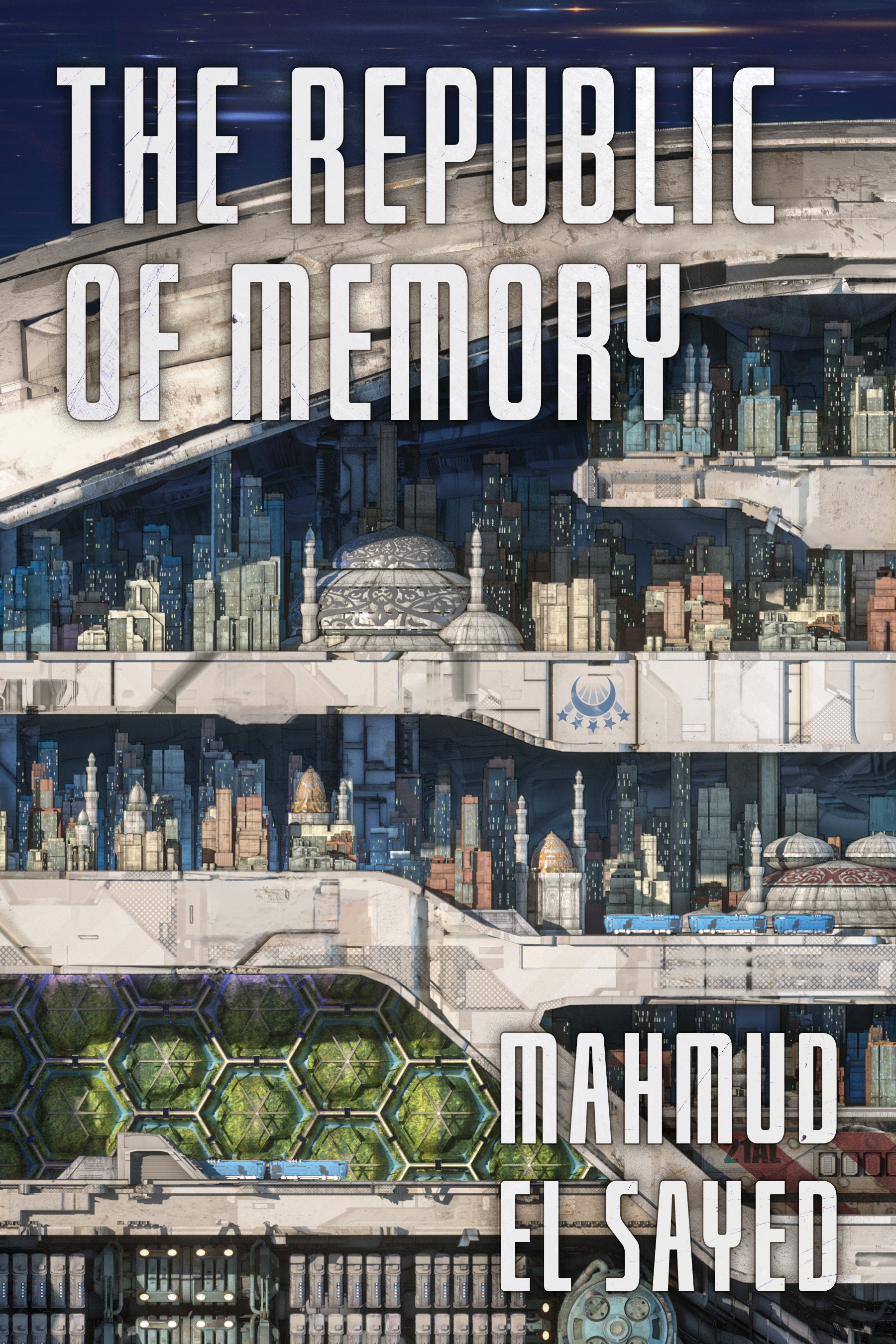
I’ve only read one full novel by S.L. Huang, but after reading The Language of Liars, I’m convinced that this is their best work yet. Few other novellas are able to pack so much top-notch worldbuilding, twists, and emotions into so few pages, but this one did. I’ve been thinking about it for days.

I enjoyed The Water Outlaws, but I wasn’t quite as invested in the story as I was with The Language of Liars. What carried over from that novel was Huang’s distinct writing style. They excel in extruding the raw emotion from the most minute, overlooked moments. Every little thing is important to Huang, and that made The Language of Liars into a truly unique novella. The care they put into each metaphor carried over to the care they put into each minor character. The inhospitable, alien world and all of its contradictory rules were written tensely—and intensely. I find myself thinking of Octavia Butler’s famous note to herself, where she vows to “make people FEEL, FEEL, FEEL!”; Huang certainly carries on Butler’s legacy in that regard—as well as their commitment to making anti-colonial sci-fi that truly makes you think.

The world of The Language of Liars is a truly intricate one, but Huang pulled off the exceedingly tricky feat of establishing it a) in less than 200 pages, and b) doing it without unwieldy chunks of exposition. Part of why I think Huang was so successful was because of the tidbits at the beginning of each chapter: passages from books, news segments, and quotes from fictional politicians all buttressed this world, making it feel real in the spaces between the narrative. Beyond that, Huang did an excellent job of not only pulling off this marvel of worldbuilding, but making it compelling. There’s a whole host of fascinating species, all with their own cultures and wars that the narrative is able to dip its toes into without derailing the plot. I especially loved all of the cultural quirks of Ro’s species, and the creature design in me loved how Huang went beyond “these aliens look like rabbits” to integrating rabbit-like behaviors into their language and culture.

I debated whether or not to reveal the big twist of The Language of Liars in this review because it knocked me off my feet and I don’t want to ruin that for other people. And yet, it’s so hard to discuss this novella without talking about it, and I desperately want to talk about it. As it turns out, this cutthroat social system of the Star Eaters is entirely a fabrication, and the reason that the Star Eaters’s culture is so enigmatic and unknowable is that it cannot be known—all of the remaining Star Eaters’s consciousnesses have been hijacked by other alien spies like Ro. It gutted me. The other civilizations were so desperate to “understand” (read: figure out so they could adequately exploit) the Star Eaters that they committed a mental genocide on the entire species, and everything about their culture that could’ve been discovered has been lost forever. It’s a seismic blast of a twist. And it makes such a potent point about the nature of imperialism and the history of anthropology and linguistics—sometimes, something as innocuous as attempting to understand another culture or language can quickly be turned into tools of exploitation and slavery. Though there was the faintest (faintest) glimmer of hope at the end, that haunting conclusion has stayed with me for weeks. Not only did I not see it coming, but the way that Huang executed it made everything fall into place horribly—it takes a hard left turn into psychological horror, in my opinion, but it’s the horror of imperialism.

The Language of Liars isn’t necessarily about disability, but Ro is hinted to be neurodivergent. I hesitate to put an exact name to it, as he’s an alien with entirely different physiology and brain chemistry. (That being said, some of the traits that Huang names are similar to autism, namely a difficulty grasping social cues and aversions to certain food textures.) However, I think a part of the twist that stood out to me is that the entire premise felt innately neurodivergent. Here you have Ro, who goes undercover into the mind of an alien creature to get to the bottom of their language and culture, and is shoved headfirst into a world of intricate, often contradictory social cues. Say the wrong thing, and you’ll be punished, and yet everybody else is unwilling to share what it is that makes words or phrases “wrong.” And as the twist tells us, this intricate, contradictory system of words is a house of cards that’s easily toppled: nobody knows what to do or what to say in the end, only that one wrong word could mean death. Everybody’s just performing normalcy, but it all falls apart at the drop of a hat. The Language of Liars felt so neurodivergent to me, and Ro’s journey of struggling to figure out this thankless construction of language hit home for me in more ways than one.

All in all, an inventive and haunting novella that packs a startling amount of power into less than 200 pages. 4.25 stars!

The Language of Liars is a standalone, but S.L. Huang is also the author of The Water Outlaws, the Cas Russell series (Zero Sum Game, Null Set, and Critical Point), and several other novels for adults.

Today’s song:

such a classic album—this is my favorite track, without a doubt

That’s it for this week’s Book Review Tuesday! Have a wonderful rest of your day, and take care of yourselves!

Posted in Book Review Tuesday

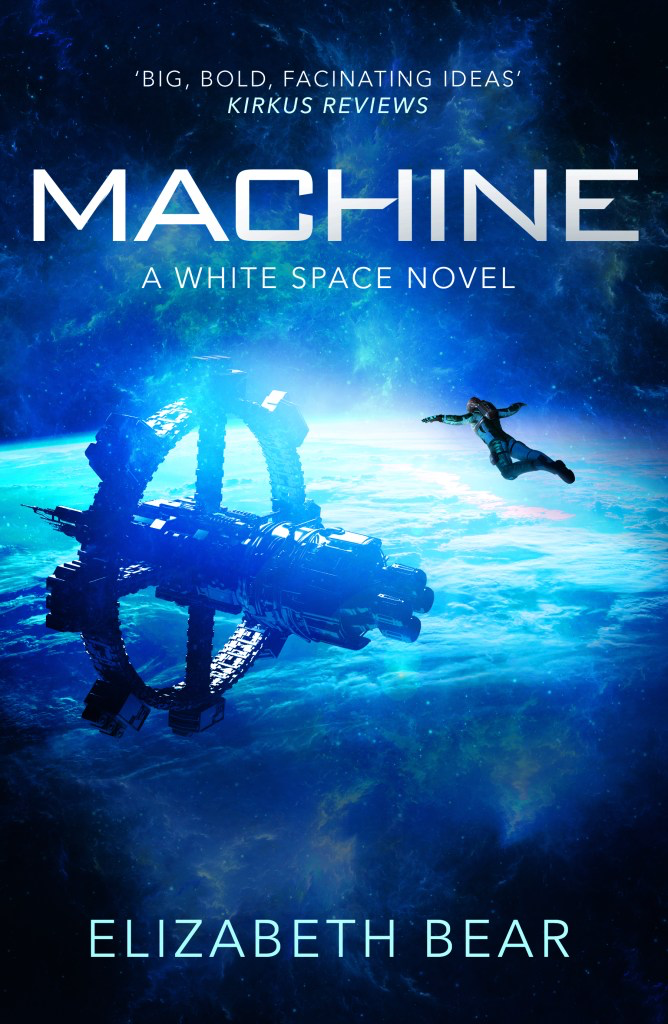
Book Review Tuesday (7/14/26) – Machine (White Space, #2)

Happy Tuesday, bibliophiles!

Thankfully, after last week’s disappointment, we’ve got something to save the track record for Disability Pride Month. I started Elizabeth Bear’s White Space trilogy earlier this year, and I knew I wanted a physical copy of book 2. It’s one of the great joys in life when a sequel is better than the first book—and Ancestral Night was already a 4.5-star read for me, so this was huge! Machine was a fantastic step up for a series that’s already a cut above the rest.

Enjoy this week’s review!

Machine (White Space, #2) – Elizabeth Bear

Dr. Brookllyn Jens is a special kind of doctor. Her patients are usually aliens, and her status as an emergency specialist means that her job description tends to involve having to jump out of spaceships. It’s already a job that keeps her on the edge. But when Dr. Jens and her crew discover two ships that have been abandoned for thousands of years, they uncover a mystery with layers upon layers of disastrous implications. With a strange, antiquated AI, an entire human crew in cryosleep, and a potential conspiracy on their hands, Dr. Jens and her crew must race against the clock to make sure that everybody makes it out alive.

TW/CW: ableism, misogyny, medical content, xenophobia, violence, murder

Genuinely, my sole problem with this novel is the title. Elizabeth Bear thought out this intricate and complex space opera world full of thousands of aliens and unique space travel, and couldn’t think of a more memorable title than Machine? I mean, yeah. There sure are Machines. Lots of ’em. But come on, really.

As much as I enjoyed Haimey’s story in Ancestral Night, I really think that making the White Space series several collected companion novels was the right move. It expands the intricate world that Elizabeth Bear has crafted in so many exciting ways that were only possible through the eyes of a different cast of characters. I loved the ways that the Synarche and all of the different species within it were fleshed out. Bear’s writing is as sharp as ever—her voice is so witty and hilarious, but she also knows just how to stick the landing when it comes to the more climactic or serious moments. The pacing was top-notch, especially considering that Machine is nearly 500 pages long—I blew through hundreds of pages at a time, and Bear never lost me.

I absolutely adored Dr. Jens as a protagonist, and Bear’s willingness to let her protagonists be messy yet lovable people made her shine. Dr. Jens has such a dry sense of humor, and her wry observations about the world around her made Machine such an entertaining read. But beyond that, I loved her continuous self-reflection—about the ideas she’s constructed about herself, but also about her work and the world around her. The supporting cast was so vibrant and lovable—it was a treat to see Cheerilaq again, first off, but all of the characters were so delightful and added a real human (and syster) authenticity to Core General’s staff. Sometimes your coworker gets on your nerves for no discernible reason, and they’re also a massive cetacean-like being getting wheeled around in a massive tank. On that subject, I loved all of the new Systers that Bear introduces. My creature design brain predictably became that meme of the dog with the propeller beanie and the giant lollipop seeing all of the truly alien aliens that populated the Synarche. But Bear went beyond good creature design and into crafting memorable, multilayered characters, which is what makes her space opera stand out in the end.

In particular, the expansion of the AI and robots in the Synarche was one of the most intriguing aspects of the world that Bear discusses in Machine. The whole plotline with Helen Alloy was one of the most well-executed. I love how Bear interrogates the objectification of women and how sci-fi has historically translated this into female-presenting robots. The visceral discomfort that Dr. Jens has that Helen was specifically created to have a hypersexualized, feminine form felt was like seeing the sun peer through the clouds after decades of weird men writing all kinds of messed-up sex-bots. It’s treated with the appropriate level of disgust—both on Helen and Dr. Jens’s part. Helen’s manipulation also ends up being vital to the later twist, and her entire arc of deconstructing the lies that she was programmed with was handled with such tenderness. Beyond the robots, I think that thread of treating people who have been brought up with hateful ideologies and not immediately dismissing those with different opinions was one of the best aspects of Machine; Bear’s insistence that people—human, alien, or AI—are not inherently bad, only victims of harmful ideas, was so necessary.

Bear’s take on disability in a sci-fi context was also such a respectful and well-researched one! She listed off several sensitivity readers in the acknowledgements, and their work paid off—for someone who seems to be non-disabled, by all accounts, this might be one of the most caring representations of a disabled person and their struggles in sci-fi I’ve seen by a non-disabled author. Dr. Jens has a chronic pain disorder, and she has a special exo-suit that manages some of her pain, but not all of it—sci-fi tech still has limitations in the far, far future. She still aches and gets physically taxed from her daring missions. Granted, I’m not chronically ill, but it felt like Bear paid so much attention to how Dr. Jens’s symptoms would present and how her high-stakes profession would affect it. Additionally, there’s a lot of talk about how disability is handled in the future; there was lots of discussion of “rightminding,” a process that, among other things, mitigates the effects of some mental illnesses. It would’ve been so easy to just slap it on as a cure-all technology, but Bear’s approach was one that I rarely see in sci-fi. It’s not necessarily “disability isn’t cured,” but it’s handled on a case-by-case basis, there’s an understanding that different kinds of disabled people have different needs and opinions about how they want to live with their disabilities with the technology available. This rejection of the one-size-fits-all approach to disability was a breath of fresh air, and wasn’t afraid to get into the nuance of how disabled people live their lives.

Disability wasn’t the only issue that gets dealt with in a refreshing amount of nuance. Bear was not afraid to get into the weeds with this novel, and it made my reading experience so much better. Machine, more so than its predecessor, gets into how a utopia and utopian ideas can be twisted into something sinister. It all feels very Ursula K. LeGuin—the Synarche is without a doubt an ambiguous utopia like The Dispossessed. (First off, I liked that Bear interrogates the ethics of “rightminding” targeting potentially “dangerous ideologies,” and how that ends up being decidedly non-utopian.) I appreciated that Bear discusses how well-intentioned utopias can be co-opted into vehicles for hatred, but also how that revelation wracks the people who genuinely believed in this utopia—people like Dr. Jens. Her arc in having faith in her hospital and the Synarche was so human—her entire reality and faith in the organization she devoted her life to is messily upended. But the realization that she comes to—that you can take the good work you wanted to do and the faith in your fellow people outside of corrupt organizations and do your own work—was one that feels so vital. I also loved the thematic potential of the infectious meme—not unlike the spread of a hateful ideology—that is treated as an infection that has to be weaned out with attention and care. Bear’s depictions of that crushing realization and how Dr. Jens and her coworkers pick up the pieces was so heartfelt, and a very potent message in this day and age.

All in all, a spectacular companion to Ancestral Night that expanded Elizabeth Bear’s masterfully crafted space opera universe with pulse-pounding action and heart. 5 stars!

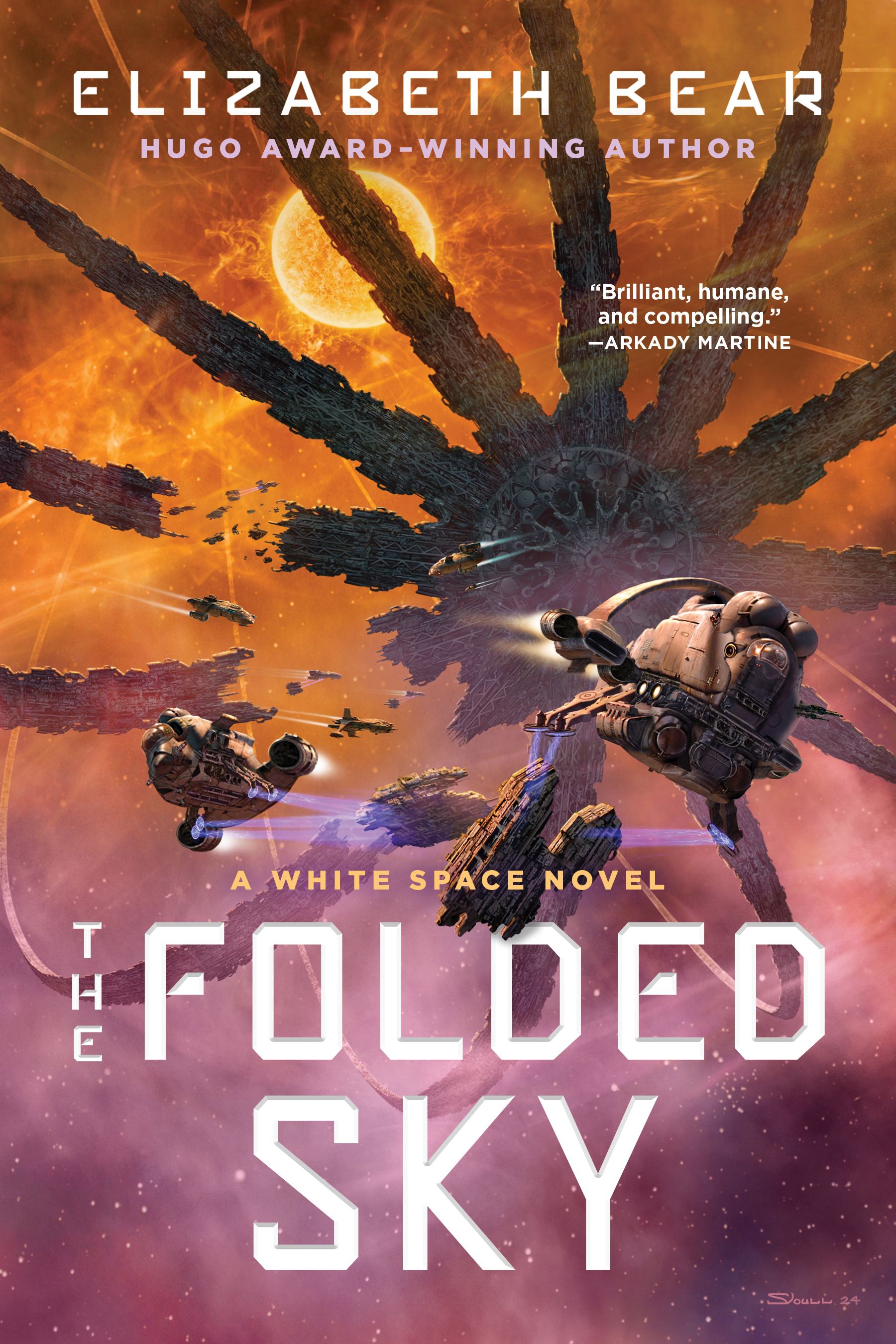
Machine is the second book in the White Space trilogy, a series of companion novels set in the same universe; it is also includes Ancestral Night (book 1) and Folded Sky (book 3). Elizabeth Bear is also the author of several other series, including the New Amsterdam series (New Amsterdam, Seven for a Secret, The White City, Ad Eternum, and Garrett Investigates), the Jacob’s Ladder trilogy (Dust, Sanction, and Grail) and many others

Today’s song:

still going through my mom’s records from the ’80s. this remains peak.

That’s it for this week’s Book Review Tuesday! Have a wonderful rest of your day, and take care of yourselves!
Posted in Book Review Tuesday

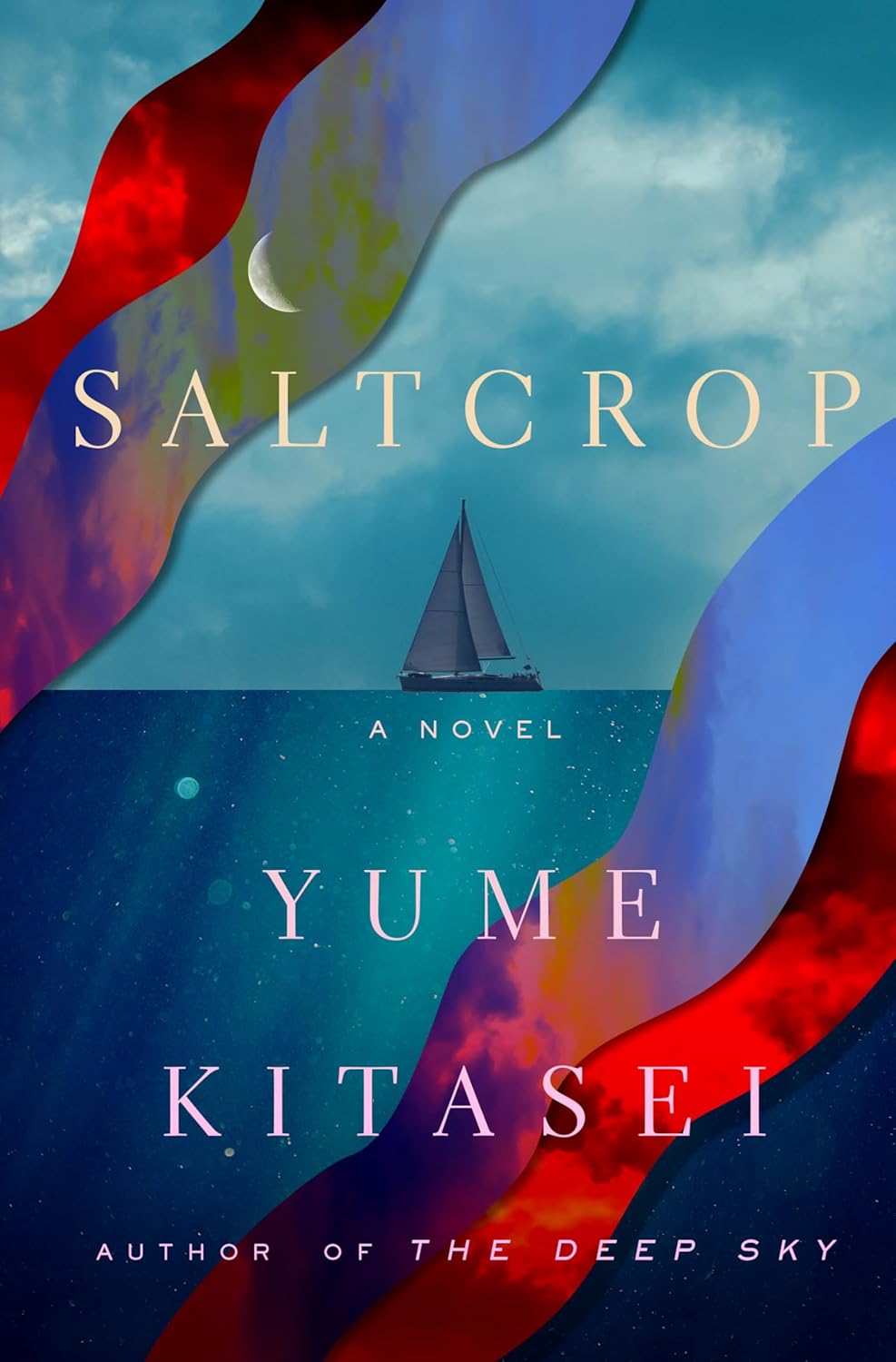
Book Review Tuesday (5/5/26) – Saltcrop

Happy Tuesday, bibliophiles!

GUESS WHO’S BACK…WITH A BACHELOR’S DEGREE! 🎓 YIPPEE!! Either way, I’ll be back to my normal posting schedule for the foreseeable future, as I’m now done with finals and all of my graduation festivities.

I’ve been a fan of Yume Kitasei since her debut, The Deep Sky. Her second novel, The Stardust Grail, was a 5-star read for me—it’s truly a gem, if you haven’t read it already. (After re-reading it last month, I’m firmly convinced that we need another book set in that universe. Her worldbuilding was so expansive!! It needs a companion novel!! Please!!) So I was ecstatic to hear that she was writing another sci-fi novel. It seems she’s been jumping between all kinds of sci-fi subgenres: a literary thriller with The Deep Sky, space opera with The Stardust Grail, and now dystopia with Saltcrop. And though it didn’t blow me away like The Stardust Grail did, Saltcrop is still a worthy, timely testament to Kitasei’s talents.

Enjoy this week’s review!

Saltcrop – Yume Kitasei

In a world ravaged by climate change, the three Shimizu sisters–Nora, Carmen, and Skipper—eke out a living with their aging grandmother. But Nora has been missing for months without an explanation. Carmen has faith that Nora will turn up soon, but Skipper suspects foul play. The sisters voyage out into uncertain waters to find Nora, but when they stumble into an intricate conspiracy that’s more than they bargained for, they must decide whether the journey was worth it at all—and if Nora is even out there in the first place.

TW/CW: medical content, body horror, death of parents, abuse, violence, murder, illness, animal death, chronic illness themes

One of the coolest things about watching Yume Kitasei’s career expand, from a reader’s perspective, is her willingness to try almost anything within the sci-fi genre. Her first novel was a more literary, sci-fi thriller; her second, a daring space opera with influences from Star Wars and Indiana Jones. Saltcrop is wholly different than both of them, and perhaps the greatest thing about it is that Kitasei never seems to run out of ideas, and that she’s unafraid to chase them.

Saltcrop is full of heart, and to me, that was its main strength. What formed this heart was the central relationship between Skipper, Carmen, and Nora. Even though 1/3 sisters was notably missing for 2/3rds of the novel, her presence was palpable; all that was possible due to the subtle interactions that Kitasei wove through Skipper and Carmen, both past and present. Their clashing but united dynamic as sisters propelled the novel in such a poignant way. Though you know from the start that Skipper and Carmen would cross the ocean for their sister (and they do), Kitasei never falters in giving you the sense of the complex but steadfast love that they have for each other. It feels like a middle finger to all of the dystopian media that posits that the apocalypse will somehow deteriorate our inherently human urge to love and help each other. Siblings will be siblings, even when climate change floods the world—Kitasei means that in every sense possible.

The setting of Saltcrop is familiar: a flooded dystopian world rendered unrecognizable by climate change, where the poor eke out a hardened existence while the rich continue to get richer. It’s a plot we’ve heard many times before, but Kitasei’s touch made it much more human. Aside from the exploration of the sisters’s relationships, I think what made Saltcrop’s plot and worldbuilding so memorable were the vignettes that made it human. Kitasei’s flooded world was peppered with stories of ordinary people, dead and alive, who made a living in spite of nearly inhospitable circumstances. It doesn’t shy away from the dark and ugly parts of this world (namely the spread of illness and corporate greed) Combine that with the clearly exhaustive research she did about agriculture, epidemiology, and genetic modification that got especially relevant in the last half of the novel, and Saltcrop was one of the most lived-in dystopias that I’ve read in quite some time.

I said earlier that Saltcrop is fairly different from her previous two novels, but in terms of writing, I think it trends closer to The Deep Sky, which is to say that it leans more into the literary side of her prose. And if there’s anybody I trust with more literary prose, it’s Kitasei. Her eye for poignant, needle-sharp descriptions that lodge themselves into your heart is stronger than ever—there are casual gut-punches laid about everywhere. Even in the heart of a climate-ravaged dystopia, there were almost Fargo-like interludes where reality and memory warp, which was all the more potent considering the themes of remembrance in Saltcrop. (The bear scene in the middle especially comes to mind.) Like the plot, Kitasei’s prose turned an environment that we’ve seen many times before into something wholly fresh and enlivened.

I’ll admit, I have some mixed feelings about the ending. On the one hand, I loved how the sisters rallied together to try and bring down the antagonist corporation, which routinely swallowed all of their attempts at resisting; the gradual, quiet victory was hopeful, and felt realistic to the long and rocky road to justice that we see with these kinds of issues. However, I feel like there were so many unanswered questions at the end; without spoiling anything, it felt like the setup to another novel, but there was so much left unsolved and unsaid, and yet Kitasei gave it the tone of a bittersweet ending, but a concrete ending all the same. It only felt wrapped up in the sense of the corporation plot, but beyond that, it felt unfinished. I’m all for an ambiguous ending, but with such a key piece of the puzzle missing, it didn’t feel satisfying in the slightest.

All in all, a startlingly human post-apocalyptic story of sisterhood and survival. 4 stars!

Saltcrop is a standalone, but Yume Kitasei is also the author of The Deep Sky and The Stardust Grail.

Today’s song:

genuinely criminal that this isn’t available on streaming, but this is, hands down, one of the best Wilco covers out there

That’s it for this week’s Book Review Tuesday! Have a wonderful rest of your day, and take care of yourselves!
Posted in Book Review Tuesday

Book Review Tuesday (3/31/26) – The Actual Star

Happy Tuesday, bibliophiles! Apologies for the unexplained absence last week—I defended my honors thesis, so I needed some time to prepare (emotionally, if nothing else). But I’m back now, and man, do I have a review for you…

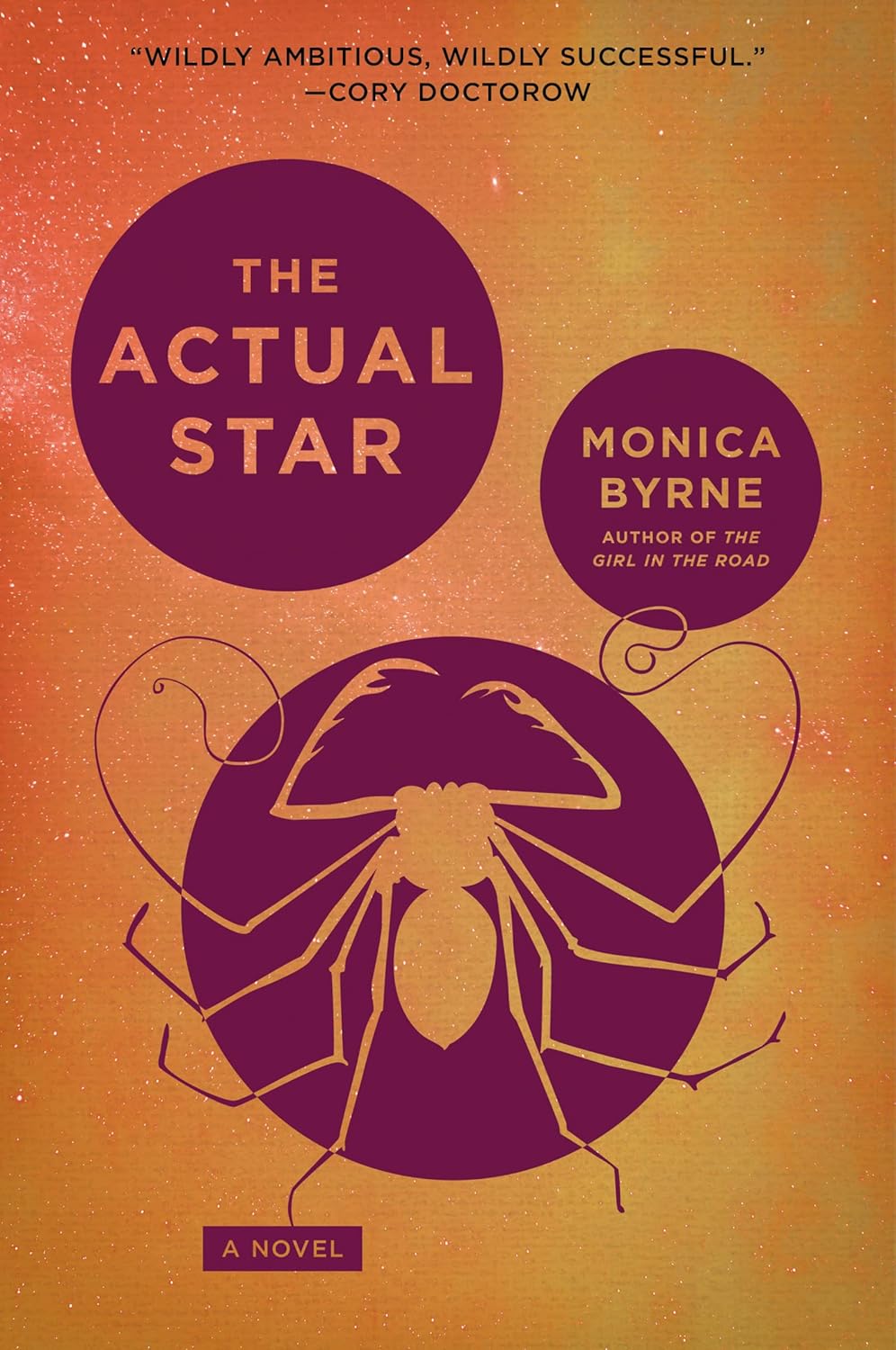
Despite having one of my least favorite animals on the cover (whip scorpions give me the heebie jeebies, sorry), I was intrigued by the millennia-spanning premise of The Actual Star, and it satisfied my eternal hankering for more science fiction. Dizzying in scope, The Actual Star is, without a doubt, an undertaking to read—even though it’s only March, I have no doubt that it’ll be one of the most ambitious books that I’ll read all year.

Enjoy this week’s review!

The Actual Star – Monica Byrne

1012. In the Mayan city of Tzoyna, Ajul and Ixul—a pair of twins descended from the Hero Twins of legend—have ambitions to reclaim a throne that was stolen from them. With their journey foretold by the gods, they will stop at nothing to claim what is rightfully theirs.

2012. Born to a Belizean father and a Mayan mother, Leah has been distanced from her father’s culture all her life. In a snap decision, she decides to venture to Belize to discover her heritage—but the mystical connection she feels to the land may be driving her to extreme decisions.

3012. The last vestiges of humanity cling to a climate-ravaged Earth. Niloux and Tanaaj, rival fanatics, are locked in a power struggle to reclaim their religion, based in ancient Mayan rituals and a mysterious saint named Leah. Their voyages will take them across an unrecognizable globe.

Across thousands of years, the lives of these distant individuals will intertwine in ways that they did not think possible.

TW/CW: self-harm (ritual), terminal illness, sexual content, incest, violence, descriptions of injury, death

To put it bluntly, The Actual Star is a mindfuck. But honestly, few other words could so succinctly put into words how I felt reading this novel. Nothing could’ve prepared me for how dizzyingly layered this novel is. Aside from the three different plots across multiple millennia, you’ve got Mayan mythology, entire sections written in Belizean Kriol, wild visions of Earth in the 31st century, pockets of poetic brilliance interspersed in bloody wrath, and so much more. “Wild ride” doesn’t even begin to describe The Actual Star. But through it all, what kept occurring to me is that Monica Byrne left no stone unturned in terms of weaving these three disparate plots together. There are so many Easter eggs connecting these timelines together, and I’m certain that I missed a ton of them. Each world was rich in narrative and thematic experimentation. It’s one of those novels that sometimes verges on an experience as opposed to a novel, and despite my qualms with it, I can’t fault this novel for being purely, showstoppingly unique.

Even though they were all connected through various through-lines, The Actual Star shone (no pun intended) in terms of the richness of the individual plot lines. While the 1012 Mayan plot was the weakest of the three in my opinion, Byrne clearly researched the time period exhaustively. I loved the 2012 plotline just for the memories of that fleeting moment when so many were convinced that the world would end, but Leah, in all her flaws, was a character I loved following through her development into something close to a (future) saint. But by far, the most entertaining and well-constructed plot was that of the speculative, climate-ravaged 3012. Byrne’s vision of the far future is bizarre, full of idiosyncratic religion, flooded cities, and humanity beyond human, but it was so rich and detailed in its construction that I loved every minute exploring this unrecognizable Earth. Beyond that, I think the power struggle in the 3012 plotline was the most interesting of the three, with the magnetic poles of Niloux and Tanaaj pushing up against each other in strange and unforeseen ways. Bottom line: Byrne did a staggering amount of research for this novel, and it shows.

However, for all of its ambition, I don’t think The Actual Star was able to follow through on all of its promises. Byrne gives us a lot to chew on here. What was most realized for me were the themes about divinity and religion, particularly with the dichotomy of what we see/know (the star) and what truly is (the actual star), a theme that I found quite poignant. For me, it worked with the plot lines of religions and personal beliefs being constructed in real time, as well as what we know the world to be in our deepest heart of hearts. However, I think there were so many thematic threads that were unresolved, even after 620-odd pages. Byrne tries to tackle a lot about the nature of death, sex, and utopia, among other things, but I think this novel was just so overstuffed that the secondary themes were bound to get rotten from sitting too long on the proverbial windowsill. Were Byrne to narrow some of the themes down, it might’ve been a more cohesive effort.

Additionally, what prevented me from enjoying The Actual Star fully was how it depicted some of its more taboo subjects. If you’re going into this novel, what you need to know first and foremost is that all—and I mean all—of the central characters are truly, deeply flawed individuals. To an extent, I really enjoyed this aspect, especially when exploring their different personalities. That being said, there’s a lot of taboo stuff happening in this novel, but I’m not sure Byrne handled it well. To Byrne’s credit, there was at least some grace given to the depictions of self-harm and cutting, but aside from that, the (plentiful) sex was gratuitous and the incest plotline was frankly unnecessary. In the end, it felt more for shock value than anything else, which did not leave the best taste in my mouth.

All in all, a complex web of a novel that boasted an ambitious premise, most of which was paid off—but by a hair, not enough. 3.75 stars!

The Actual Star is a standalone, but Monica Byrne is also the author of The Girl in the Road and Traumphysik.

Today’s song:

it’s finally here…the world finally gets to experience the pure lyrical genius of “I come at a price/like egg fried rice…”

That’s it for this week’s Book Review Tuesday! Have a wonderful rest of your day, and take care of yourselves!
Posted in Book Review Tuesday

Book Review Tuesday (3/3/26) – Red Star Rebels

Happy Tuesday, bibliophiles!

BEFORE I BEGIN: as this is a bookish space, I feel that it’s essential to bring this to your attention. Here in the States, H.R. 7661 (misleadingly named the “Stop the Sexualization of Children Act”) presents a grave danger to libraries and our freedom to read as Americans. This legislation, as many similar ones are, is presented under the guise of “protecting children” from sexually explicit material, but we all know what it targets in reality: fiction and nonfiction about queer people, people of color, and other marginalized groups. EveryLibrary has both a petition to oppose H.R. 7661 and instructions to call your representatives. Excluding stories of marginalized people doesn’t protect anybody. Protect our freedom to read!

It’s 2019. I’m about to finish my first year of high school, and I’m excited to buy the new Amie Kaufman book.

It’s 2026. I’m about to finish my last year of college, and I’m excited to buy the new Amie Kaufman book.

Needless to say, longtime followers of this blog (and longtime friends of mine in general) know how pivotal of a role Amie Kaufman has played in my life. Her sci-fi and fantasy novels have been a positive constant for seven years and counting, especially the Aurora Cycle. I was over the moon to find out that she was returning to science fiction after a long stint focusing on fantasy. And though it wasn’t as emotionally potent as some of her other novels, Red Star Rebels was an action-packed and romantic blast all the way through!

Enjoy this week’s review!

Red Star Rebels – Amie Kaufman

Hunter Graves has Mars in the palm of his hand. As the grandson of the man who settled Mars, he’s got it made. If only the rest of his family would actually pay him any mind. But when he’s trapped on the U.N. base after a mysterious attack, he’ll have to use more than his name to get out alive.

Cleo just wanted to stow away on this U.N. base to get the Earth gangs off her back and make a quick buck. Having to stow away with Hunter Graves when the base goes on lockdown was not part of the plan. But they’ll have to work together for eight hours before a bomb detonates, killing everybody on the base. And neither of them counted on falling for each other…

TW/CW: violence, loss of loved ones (past), fire

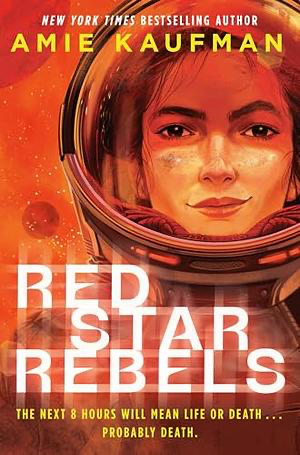
I’m a huge fan of Zoë Van Dijk’s artwork and I love her cover art for the U.S. edition of Red Star Rebels, but…I can’t unsee the fact that Cleo is doing the Dreamworks face. It haunts me. The thing is, it’s 100% in character for her, which almost haunts me even more.

The main draw for Red Star Rebels is that it’s a pulse-pounding action thriller in space; Kaufman has compared it to Die Hard and Home Alone in equal measure, in reference to both the atmosphere and the amount of interstellar hijinks. All of the events of Red Star Rebels happen in the span of 8 hours (the time it’ll take for the U.N. base to detonate), and it really does feel like it’s all crammed into such a short amount of time. Be prepared to be gripping the edge of your seat, because this novel moves fast—and this is the exact type of novel that needs to go at breakneck speed. The pacing is impeccable. The only drawback is that Red Star Rebels sacrificed some of the emotional potency that I come to expect with your typical Amie Kaufman novel. There’s a reason that her books are normally so thick—she doesn’t hesitate to get in the weeds with character development and poignant arcs. Though Hunter and Cleo’s relationship was charming as ever, some of the emotional aspects of this novel were quite rushed in comparison to her other novels, and I think that can exactly be chalked up to the uncharacteristically short page count—288 pages, in comparison to her often 400+ page whoppers. While the pacing worked for the plot, it didn’t work all the way for the characters—give it at least 50 more, and I think this would’ve been near perfect. That being said, even a weaker Amie Kaufman book is guaranteed to be a cut above the rest, so I’m not complaining.

Every time there’s a chance for Amie Kaufman to write a relationship dynamic where one’s a scrappy criminal and the other is a spoiled, rich brat (both of whom secretly have a heart of gold), by God, she’ll take it (see also: Selly and Lysander from Isles of the Gods, Lilac and Tarver from These Broken Stars, Nik and Hanna from Gemina, etc.). And do I eat it up every time? Absolutely. At least she switches the genders up. It’s a blatant pattern at this point, but she writes it so compellingly that I’m not even that mad. Would I like for her to mix it up a little? Sure, but this is Amie Kaufman we’re talking about—no matter what kind of relationships she’s writing, they’re always so charming and heartstring-tugging, so I’m not here to complain. The setup for Cleo and Hunter’s relationship was a perfect storm, but Kaufman did such an excellent job of making the development of their relationship realistic—it’s a survival situation spaced over eight hours, but never at any point did their romance feel too rushed. They were trapped together with very little interaction from the outside world (other than the antagonists), and there was plenty of time for their chemistry to develop. All in all, it’s another slam dunk from Kaufman—Cleo and Hunter were so sassy, and yes, made for each other. Plus, I’ve loved Kaufman’s casual queer inclusion, especially in terms of bisexuality. Beyond that, it’s so, so important to show that straight-passing relationships are just as valid and still queer, so I’m very grateful to Red Star Rebels for showcasing this!

Red Star Rebels should be a masterclass in why you shouldn’t underestimate the craft that goes into good YA novels. The best part about Amie Kaufman’s books is that sure, they look like cheesy YA (and in some ways, they are, but tastefully so) on the surface, but 9 times out of 10, they’re Trojan horses for top-notch, exhaustively researched worldbuilding. Aside from the Illuminae Files, Red Star Rebels might honestly be some of the hardest science fiction that she’s ever written. There was a ton of thought put into the physics and logistics of establishing colonies on Mars, and every aspect was pored over in exceptional detail, from the nutrients you’d need to survive on Mars to how the gravity affects the red planet’s permanent residents. Not only that, Kaufman goes headfirst into discussing the geopolitics of international Mars settlements. All of this fed into some great commentary on corporate space exploration and how corporations have unjustly been able to buy their way into influencing world politics. Kaufman’s vision of 2067 is basically what would happen if Elon Musk—[ahem] Graves had his way with things, and the commentary was an excellent way to scaffold the worldbuilding.

Back to Cleo and Hunter—as well as the worldbuilding—what I really appreciate about Kaufman’s class-divided relationship dynamics is that the less privileged person in the couple doesn’t sacrifice their values. There’s some potent class commentary in Red Star Rebels, and I love Hunter’s arc in seeing that their colonialism has consequences, and that the exceptionalism of his family came at a bloody cost. There’s also some sharp commentary on how poor people have to circumvent the law in order to make a living and are punished for it, but rich people use the same methods and get away scot-free—for instance, Cleo and Hunter ending up on the U.N. base in the exact same way, but Cleo being the only one who would be theoretically imprisoned for it. There’s a fine line in these dynamics where the poorer person in the couple ends up excusing the power imbalance and the narrative ignoring any issues of class disparity and the circumstances that made them so, but Kaufman is always right on the money (no pun intended) with imbuing her relationships with a strong sense of justice and class commentary.

All in all, another win for Amie Kaufman, full of outer space hijinks, crafty characters, and romance. 4 stars!

Red Star Rebels is a standalone, but Amie Kaufman is the author of several other books for children and teens, including the Isles of the Gods duology (The Isles of the Gods and The Heart of the World), The Illuminae Files (with Jay Kristoff; Illuminae, Gemina, and Obsidio), The Aurora Cycle (with Jay Kristoff; Aurora Rising, Aurora Burning, and Aurora’s End), The Other Side of the Sky duology (with Meagan Spooner; The Other Side of the Sky and Beyond the End of the World), and many more. Her next book, co-authored with Meagan Spooner, is One Knight Stand, the sequel to Lady’s Knight, which is slated for release on June 4th, 2026.

Today’s song:

gonna be honest…I wasn’t a huge fan of The Mountain, but this song was fantastic, so it’s not a complete loss.

That’s it for this week’s Book Review Tuesday! Have a wonderful rest of your day, and take care of yourselves!
Posted in Book Review Tuesday

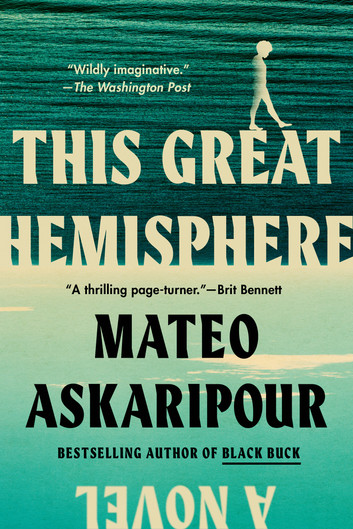
Book Review Tuesday (2/10/26) – This Great Hemisphere

Happy Tuesday, bibliophiles!

This book came up in several searches I found looking for speculative fiction authors that I hadn’t heard of. It seemed more on the literary side of dystopia/sci-fi, but the premise seemed interesting enough, so I took the leap. Unfortunately, This Great Hemisphere falls into the same trap as many other literary sci-fi novels: all literary, hardly any sci-fi—or basic worldbuilding to speak of.

Enjoy this week’s review!

This Great Hemisphere – Mateo Askaripour

In the 26th century, Earth has become unrecognizable, and so have its people. Parts of the population have become Invisible; those who cannot be seen are relegated to manual labor and pushed to the margins of society. Sweetmint, and Invisible woman, has worked her entire life to ensure that she becomes more than another statistic, securing a top apprenticeship with a legendary non-Invisible businessman. But when her missing brother becomes the prime suspect in a politically-motivated murder, Sweetmint sets off to find him—and convince the rest of the world of his innocence.

TW/CW: racism, misogyny, violence, sexual assault, murder

I really just need to steer clear of literary sci-fi, at this point. Once in a blue moon, you’ll get something incredible, but I feel like authors who go from literary fiction straight into sci-fi forgo world/character building and just slap the same faux-deep prose into a vaguely speculative setting. To Mateo Askaripour’s credit, This Great Hemisphere goes slightly further than that, but beyond the basic premise, there’s not much about this novel that holds water.

Overall, This Great Hemisphere left a lot to be desired in terms of the worldbuilding, which I’ll get to later. That being said, the one part I really enjoyed about the novel was how fleshed-out the concepts of the Invisibles were. It’s the only bit of worldbuilding we really get, but at least what we have was somewhat substantial. I loved how Askaripour outlined not just how Invisibles are marginalized in this far-future society, but their own cultural quirks; I love the “scent-prints” that Invisibles recognize each other by without sight, and the fact that some paint themselves in order to be visible in DP society was fascinating to me. Askaripour fleshed out their social world well, and it made that part of the novel feel real. From the get-go, it’s easy to see how this becomes allegorical for racism. I found the allegory a little shallow, personally—it doesn’t go far beyond “racism is bad and it’s systemic,” and I would have liked it to have more nuance—say, the psychological effects of it or how a character like Sweetmint might view herself because she’s been socialized around this racism. But as it was, it was a decent way of showing how racism could manifest in a speculative setting.

However, the Invisibles concept is where my praise for This Great Hemisphere ends. One of my biggest issues with this novel is that all of the characters were flat, and as a result, I had significant trouble connecting to any of the characters. Sweetmint was the protagonist who we were supposed to root for, but she had no personality outside of being an object of marginalization; I know that she gets beaten up and wants to save her brother, but those aren’t character traits. Strip the plot away, and Sweetmint would be nothing. The same applied to most of the other characters in the novel, who were either hollow caricatures of various kinds (ex. Croger was an eccentric billionaire, the Rainbow Girls were gossipy, catty women), or just not given any personality traits at all. This was most detrimental when it came to Sweetmint’s brother; since we spend the whole novel searching for him, surely we’ll get a taste of what his personality is like, as well as his relationship with Sweetmint, right? Apparently not…once again, he’s just there to move the plot along. This Great Hemisphere could have been a solid novel with the bones that it stood on, but without any substantial characters, it was practically skeletal.

Beyond the Invisibles, there’s almost no worldbuilding, and what’s there makes almost no sense. It’s the 26th century, and we’re in…a forest of some sort. Climate change has affected…something, but Askaripour refuses to tell you what. There aren’t any major technological innovations in 500 years, seemingly—and even if this were some kind of society where everybody had become luddites for whatever reason, that’s not explained either! Chief Architect Croger is the one responsible for molding modern society into what it is, but do we know how? Also no. There’s a government, and it’s bad, and they have…elections? That’s about all I know. There’s just absolutely no scaffolding for any of the worldbuilding, nor is there context for it. If Askaripour hadn’t said anything about the time period, I fully would’ve assumed that this was set, at the furthest, at the end of the 21st century. If This Great Hemisphere had been set in a climate-ravaged 2080’s, or something, half of these problems wouldn’t even exist—but it would still take at least some modicum of effort to convince us that this was set past 2024. It was just blatantly clear that Askaripour did very little work to make his speculative fiction truly speculative—it felt so modern, and that continued negligence for the worldbuilding made suspending my disbelief exceedingly difficult.

I’m always wary of male authors writing from the perspective of female characters, and This Great Hemisphere reminded me of why I have those fears in the first place. Don’t worry—we don’t get into “her boobs breasted boobily” territory here, but it’s not great, either. The bar is in the Mariana Trench, but Askaripour is still somewhere in the twilight zone at best. Already, the characters were developed poorly and presented little opportunity to get attached, so Sweetmint, regardless of gender, was not a compelling character. But her gender factored greatly into the discrimination in this novel, which is where it gets messy. There are so many scenes with her being beaten up, groped, and otherwise abused, which bordered on gratuitous. And yes, This Great Hemisphere is about a (somewhat) fictional kind of discrimination, but Askaripour didn’t seem to reflect at all about how gender would intersect with this fictional marginalization. Instead, we got page after page of Sweetmint facing gender-based violence with no nuanced reflection on it. It just rubbed me the wrong way that these things were being done so thoughtlessly to a female character. It wasn’t gratuitous enough to be torture porn, but it came close to it. In addition, when the female characters weren’t underdeveloped entirely, they felt rather shallow; I did appreciate that Askaripour kind of humanized a few of the Rainbow Girls, but they were very much a caricature of gossiping, oversexualized women in the end. Again! He could’ve made some very potent commentary on that, but no, apparently this novel needed the same caricature in every color of the rainbow…for some reason.

All in all, a speculative dystopia that talked the talk in terms of its themes and metaphors, but largely failed to walk the walk and follow through on its own ideas. 2.5 stars.

This Great Hemisphere is a standalone, but Mateo Askaripour is also the author of Black Buck.

Today’s song:

That’s it for this week’s Book Review Tuesday! Have a wonderful rest of your day, and take care of yourselves!
Posted in Book Review Tuesday

Book Review Tuesday (1/27/26) – A Swift and Sudden Exit

Happy Tuesday, bibliophiles!

First off, I figured I would share this resource with you all. My heart continues to break from seeing ICE violence wracking Minneapolis. If you’re financially available, here’s a post with a comprehensive list of places to donate to support the good people of Minneapolis. If you’re not financially able: continue to spread the word! When the government continues to propagate blatant lies, your words are the best weapon to use against them. Rest in power to Renee Nicole Good, Keith Porter, and Alex Pretti. ABOLISH ICE.

Here’s another book that I got with some gift card money for Christmas. I’m always on the hunt for more books with good bisexual rep, especially when it’s in genre fiction. This indie-published time travel romance between a time traveler from the post-apocalyptic 2050’s and an immortal caught my eye immediately, in no small part thanks to the wonderfully comic book-y cover. Though it wasn’t without its flaws, A Swift and Sudden Exit was an emotional and action-packed romp through time and space.

Enjoy this week’s review!

A Swift and Sudden Exit – Nico Vicenty

Zera lives in a post-apocalyptic 2058, where a geomagnetic storm nearly two decades ago plunged Earth into almost uninhabitable conditions. The remains of the military are scrambling to make things right, and the only way out of the wasteland is time travel. But when Zera travels back to 2040—the date of the geomagnetic storm that started it all—she sees a woman who claims to have known her, and may just be immortal. Zera follows this woman over centuries as she struggles to find the missing piece of the puzzle, but will this mysterious, immortal woman be more than just a means to reverse the apocalypse?

TW/CW: homophobia, violence, police brutality, vomit, abuse, suicidal ideation, stalking, blood, murder, loss of loved ones

Maybe the real geomagnetic storm was the bisexual romance we made along the way?

A lot of the reviews for A Swift and Sudden Exit that I’ve read have talked about how this novel couldn’t seem to make up its mind on whether it wanted to be sci-fi or romance. This problem never popped up for me, and I think that might be the novel’s hidden strength. It wasn’t afraid to put the sci-fi and romance elements at equal importance. Vincenty did an excellent job of developing these aspects in tandem, and it made for a very unique mix of genres. The worldbuilding was sound for the most part, but the same attention was paid to making Zera and Katherine’s romance into something that had a very real, slow-burn progression. I felt just as much tension with Zera trying to prevent the geomagnetic storm as I did with her will-they-won’t-they dynamic with Katherine. It’s such a fun premise to begin with—a romance between a time-traveler and an immortal—but Vincenty delivered on both aspects. A Swift and Sudden Exit succeeded for me in part because equal effort was put into the two most disparate parts of the novel, and the merging of the two felt seamless.

The most compelling parts for me were how Vincenty explored both the past and the future. The radiation-wracked future was appropriately bleak, and I loved the atmosphere she created with Zera and the others in their bunker. Just the same, I loved Zera and Katherine’s journey through time. My only critique was that I wanted to see more of the 1884 period—I feel like the whole failed Arctic expedition subplot was way too interesting to only get a single chapter. Come on. Yet beyond that, I loved seeing the different time periods across the United States. Vincenty had a great balance of having some fun, romantic notions of the time periods that Zera and Katherine visited, but also of the very real dangers they presented for queer women like them. Zera and Katherine both being bisexual made my heart so happy, but I appreciated Vincenty’s approach to writing them navigating more unsafe time periods; it didn’t shy away from queer-related issues (including police brutality and the AIDS crisis), but it never veered into full-on trauma porn territory. Vincenty’s strength in this novel is balance.

However, throughout A Swift and Sudden Exit, I found myself unable to fully suspend my disbelief. Although the worldbuilding was fairly solid—I’m honestly fine with the immortals bit not being explained fully—it was the stakes that made me suspicious of the story. Even though this is presumably an incredibly dire situation with world-ending stakes, the remains of the military seemed completely content to let Zera go on all manner of borderline frivolous missions that conveniently lined up with her meeting her sexy immortal girlfriend. Sure, you’ve got to let some plot conveniences go just to keep the story going, but given that Zera’s pretty low in the chain of command (and on Colonel Vylek’s nerves almost constantly), it didn’t make sense that she hadn’t been demoted or kicked off the mission at least halfway through the novel. Additionally, a lot of the problems got resolved far quicker than they should’ve—the funding getting cut for the time travel initiative comes to mind. Seems like a huge problem, and yet it got resolved in the span of maybe 1, 2 chapters tops? It didn’t make sense. I can chalk part of it up to the pacing—A Swift and Sudden Exit has very swift and sudden pacing, giving us little time to rest; it worked when it came to some of the more climactic scenes, but not when glossing over important plot points.

Additionally, I found Vincenty’s writing style to be a bit bare-bones. It was entertaining, but I never found myself thinking that it was great. She did an excellent job with describing the historical time periods and post-apocalyptic 2058, but I think there could’ve been a lot more done with the character writing. Zera and Katherine were developed well, but a lot of the other characters, even the more important ones, felt like window dressing at best. Until the last quarter, Kissi didn’t function as much else than a witty sidekick for Zera. Without spoiling anything, the twist about Byrd came out of nowhere, but I feel like that’s more of a consequence of his character rarely appearing and not getting much development other than quirky banter. Colonel Vylek was much more secondary, but even though I gather her presence was meant to feel like a threat, she never did; maybe that’s because all of the obstacles that she put in front of Zera got resolved so quickly. Had they been developed more, especially Byrd and Colonel Vylek, I think the stakes issue might have been partially resolved. They never felt like real antagonists (or even just roadblocks, in Vylek’s case). I’m not saying that they needed to be on the importance level of Zera and Katherine, but given the roles they had, they could’ve been more distinct and developed.

All in all, an ambitious debut that didn’t fulfill all of its promises, but provided an adventurous, sapphic journey through time nonetheless. 3.5 stars!

A Swift and Sudden Exit is a standalone, but Nico Vicenty is also the author of Bone Dresser and Death Between the Stars.

Today’s song:

love love love crab day!!

That’s it for this week’s Book Review Tuesday! Have a wonderful rest of your day, and take care of yourselves!
Posted in Book Review Tuesday

Book Review Tuesday (1/20/26) – Ancestral Night

Happy Tuesday, bibliophiles!

I’d like to think that I’m a competent, capable adult, but a few months back, I picked up book three of this series without realizing that it was book three. Oops. All the same, I was motivated to read it, so I ended up getting a copy with some gift card money for Bookshop.org. Long haul as it was, I’m so glad I took the leap—Ancestral Night knocked me off my feet from the first few pages, and that momentum almost never stopped.

Enjoy this week’s review!

Ancestral Night (White Space, #1) – Elizabeth Bear

Haimey Dz and her small crew fly under the radar, making a living salvaging spaceships at the edge of the galaxy. But after a run-in with a gang of pirates and the discovery of a galaxy-changing revelation hidden inside a derelict spaceship, Haimey knows that she can’t let just anyone get ahold of this secret. Inside of the spaceship is illegal, ancient technology that could turn the tides for the worse if in the wrong hands—and judging from the spaceship, it was already in the wrong hands. Infected with a strange, ancient parasite and with pirates and the government hot on her heels, Haimey and her crew must get to the bottom of this mystery before this tech falls into the wrong hands.

TW/CW: descriptions of injury, violence, blood, emotional abuse, grief, suicide, mental health themes

I really need to put together some kind of list of sci-fi with cats on spaceships. There’s enough out there that it’s a Thing, and though it’s not enough to be a full-on trope, it never fails to make me smile, both as a sci-fi fan and a cat lover. Jonesy from Alien set the precedent, but I think it’s just that through line of historically having cats on boats for good luck that makes it so wonderful. Bushyasta and Mephistopheles deserve a spot in the sci-fi cats pantheon.

The world of Ancestral Night is truly something to behold. From the get-go, I got lost in it so easily—Bear’s prose kept me hooked for all 500+ pages. Part of that was just how intriguing the world was. Everything you could want in a space opera is here—mysterious, derelict spaceships with dark secrets, all manner of very alien aliens, two naughty cats on a spaceship, and perhaps best of all, eldritch, centuries-old seahorse creatures that live in the vacuum of space. Who could ask for more, really? There’s a dormant part of my high school brain that was obsessed with Aurora Rising that got beyond amped about salvaging spaceships, so that was an automatic win. I loved the Atavikha an unreasonable amount, as well as the aliens, but that’s not news at all. But I love the care that Bear took to make this world feel familiar in the right places, but appropriately alien where it was necessary. It’s a world where you can read George Eliot in your free time, but also come face to face with a creature so alien you barely have any appropriate human analogues for it. Balance is key, and Bear balanced it well.

With sci-fi like this, there’s a tendency to forget that no matter how much time you spend on worldbuilding, your universe still may feel like it isn’t lived in; everything’s too sterile and sleek, and you never get the sense that these strange planets and moons and whatnot are places where people spend their lives. Bear circumvented that issue from the get-go—everything about Ancestral Night felt lived-in, from the humble spaceships to the crowded space stations that Haimey and her friends navigated. Her spaceship wasn’t just a way to get around: it was a place where Haimey lounged around and read old books and petted her cats. Every corner that the crew explored was full of not just lore, but memories—everything in Ancestral Night had a story, and that did almost as much work as the worldbuilding in making sure that Bear’s world felt real.

Another aspect that made Ancestral Night feel real was Haimey herself. I’m all for representing marginalized people beyond stereotypes, but there’s something to be said for queer characters who are unapologetically messy and make decidedly terrible decisions—and Haimey makes terrible decisions aplenty. (I finished Pluribus not long ago, and I thought the same about Carol. I guess they’re both lesbians who fall for highly questionable pirate ladies, in the end.) If Ancestral Night was a TV show, I fully would’ve thrown something at the TV when she kissed Zanya. HAVE YOU LEARNED NOTHING? That being said, she felt so staggeringly real in the amalgamation of all her hopes and flaws. Even in this far-flung sci-fi world, this woman who reads ancient classics onboard her spaceship and dotes after her cats and falls for the messiest, scariest pirate women was so refreshingly real, and in spite of those flaws, ultimately lovable.

Ancestral Night is a space opera without question, but the worldbuilding will certainly appeal to the more hard science fiction-leaning readers for sure. Care for the worldbuilding obviously isn’t exclusive to hard sci-fi, especially as a cozy sci-fi/space opera/soft sci-fi defender and enjoyer, but not every space opera you come across goes into this much detail about accretion disks. Bear doesn’t shy away from getting esoteric with the worldbuilding, whether it’s in terms of astrophysics or politics. The politics form the core of the novel for me. My one major problem with the novel was that it had a tendency to go into Haimey’s philosophical musings about the nature of governments and freedom to a point where it was difficult to suspend my disbelief that nothing bad had happened to her while this was all going on, given everything else that happens throughout. (How did she not get conked on the head by pirates mid-digression during half of those scenes?) However, the nature of these digressions fed into the thematic elements of Ancestral Night really well, and I loved how they formed the backbone of Haimey’s character.

Even though not all of the philosophical musing landed, the setup of it, as well as the worldbuilding of Ancestral Night, set such a wonderful stage for Haimey’s character development. She’s caught between two very opposite poles: the Clade where she grew up, where her existence was placid but assimilated, and the pirates, whose messy anarchy is hyperindividualistic to a fault. Set against the backdrop of a flawed yet somewhat well-intentioned government, Haimey’s realization that her true self comes not from sacrificing her individuality or her obligation to do good for others in her community was so poignant. All her life, the notion of who she really is has been forced upon her from both sides, and yet what’s in her heart is where the two ideologies meet: retaining her uniqueness, but not kicking everybody else aside in the process. Haimey’s true spirit comes from how she decides her life should be, but also from the positive relationships around her. It was such a heartfelt message, and Haimey’s arc gave Ancestral Night a powerful emotional core.

All in all, a captivating space opera with real, lovable protagonists, a lived-in universe, and mystery that had me on the edge of my seat. 4.5 stars!

Ancestral Night is the first novel in the White Space series, followed by Machine and The Folded Sky. Bear is also the author of several other award-winning novels, including the New Amsterdam series (New Amsterdam, Seven for a Secret, The White City, Ad Eternum, and Garrett Investigates), the Jacob’s Ladder trilogy (Dust, Sanction, and Grail) and many others.

Today’s song:

That’s it for this week’s Book Review Tuesday! Have a wonderful rest of your day, and take care of yourselves!