Posted in Sunday Songs

Sunday Songs: 8/30/26

Happy Sunday, bibliophiles! I hope this week has treated you well.

This week: unfortunately, I’m still in a very ’80s time of my life. Plus, the Apples in Stereo take a break from the robots and take a nice dip in the ocean.

Enjoy this week’s songs!
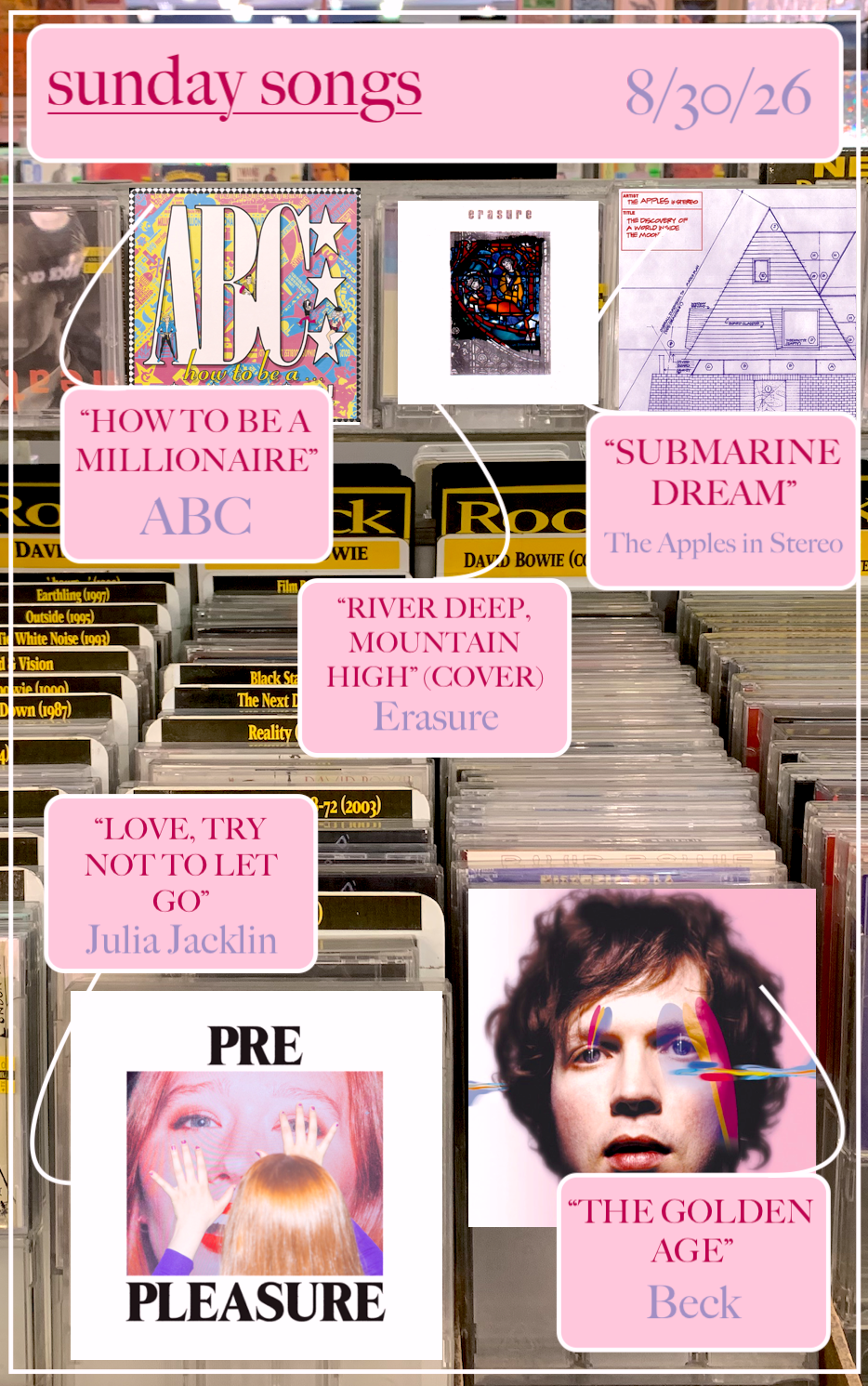
SUNDAY SONGS: 8/30/26

“Love, Try Not To Let Go” – Julia Jacklin

That soft shade of pink on Julia Jacklin’s face on the album cover of Pre-Pleasure couldn’t fit this track more. Setting aside the association of pink and romance, that blush color feels exactly the hue that “Love, Try Not To Let Go” is shaded in. Easygoing percussion and piano soundtracks Jacklin’s feathery vocals, as she drifts untethered from the Earth, swimming through memories and lust alike. I can’t help but be reminded of Fleetwood Mac’s “Dreams” when listening to this track—similar beat and key, for sure. I love all of the subtle touches that Jacklin layers into this track to make the image shine with such clarity, everything from the fact that the harmonies kick in when she starts off the pre-chorus with the word “echo” (it literally makes a kind of echo!) and the swiftness that the chorus rushes from a gentle piano ballad to a quivering burst of electric guitars. At the end of the final chorus, Jacklin’s vocals fizz into static, as though everything keeping her grounded has dissolved, leaving us with her lovelornly murmuring as the track fades. It’s such a memorable indie rock track, and an excellent piece of push-and-pull between rose-colored fantasies and less-than-ideal memories.

…AND A BOOK TO GO WITH IT:
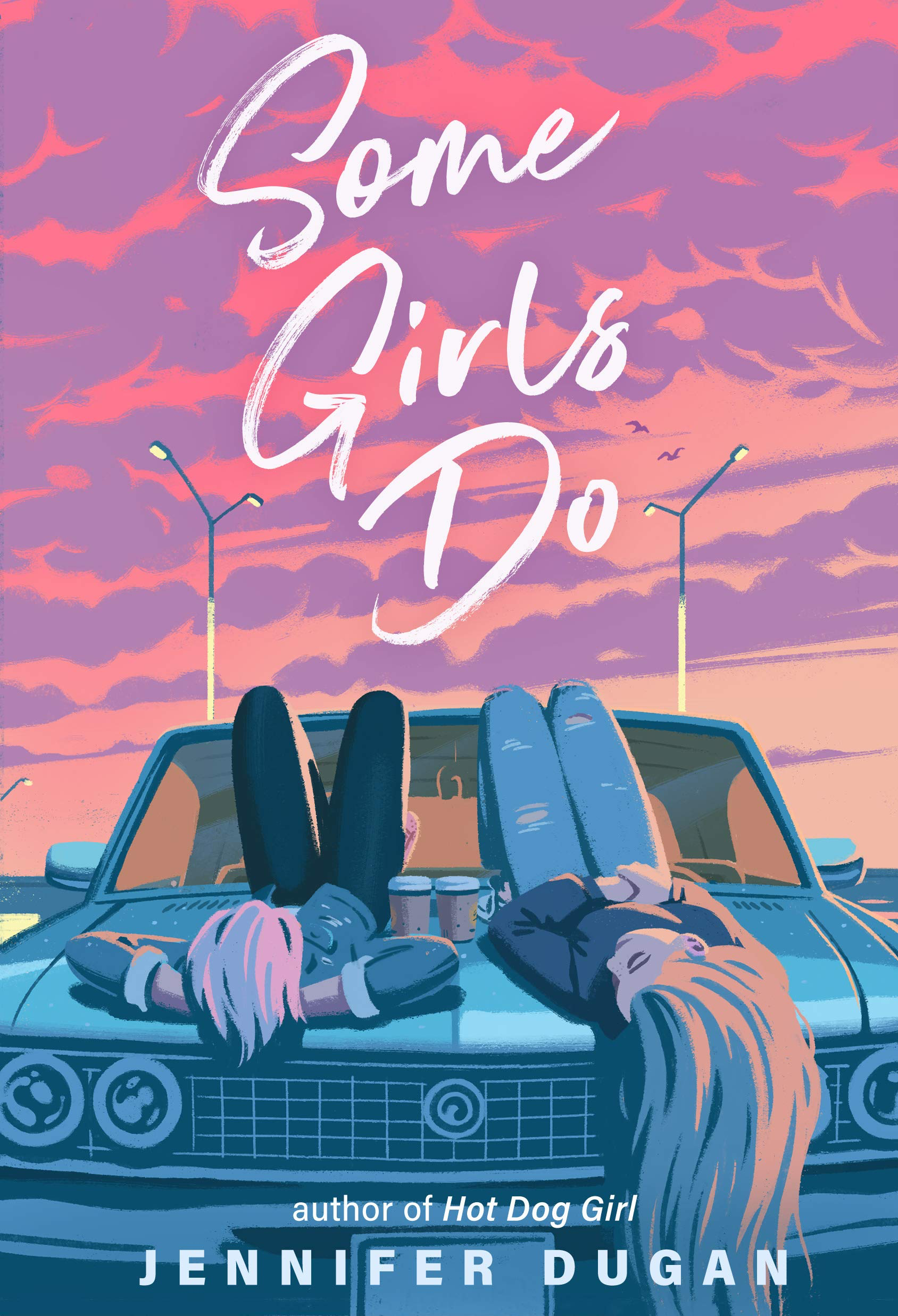
Some Girls Do – Jennifer Dugan“The echo of my hometown/The things I never said/Consumes the space between me/And everyone I left…”

“The Golden Age” – Beck

Beck isn’t somebody I readily associate with slow songs. Pre-Sea Change, even his more meandering songs had a hint of humor to them (see: “Jack-Ass”). His impish spirit was always there, even under layers of acoustic guitars. It’s even more jarring that, other than some EPs and B-side collections, Sea Change came right on the heels of Midnite Vultures, ostensibly his funniest, most deeply unserious album. (I can’t imagine the whiplash of going from “Debra” to something this plainly depressing.) But given the circumstances surrounding Sea Change—his breakup with then-fiancee Leigh Limon—it’s no wonder that he couldn’t summon any humor.

None, maybe, save for the title: “The Golden Age” is the exact opposite of what he’s describing. The chorus is only two lines long: “These days, I barely get by/I don’t even try.” Nevertheless, Beck’s talent translates to every emotion—he’s just as skilled with this wallowing, acoustic lament as he is cracking jokes with a fanfare of saxophones in the background. The plucks of almost country electric guitar, acoustic strums, and keyboards give “The Golden Age” an air of sunshine, but the kind of glaring sunshine that comes from listlessly staring at it, utterly unsure of your direction in life. I think it represents how much of a chameleon Beck could be in his prime—no matter the situation or emotion, he could adapt to it in his own, irreplaceable way.

…AND A BOOK TO GO WITH IT:
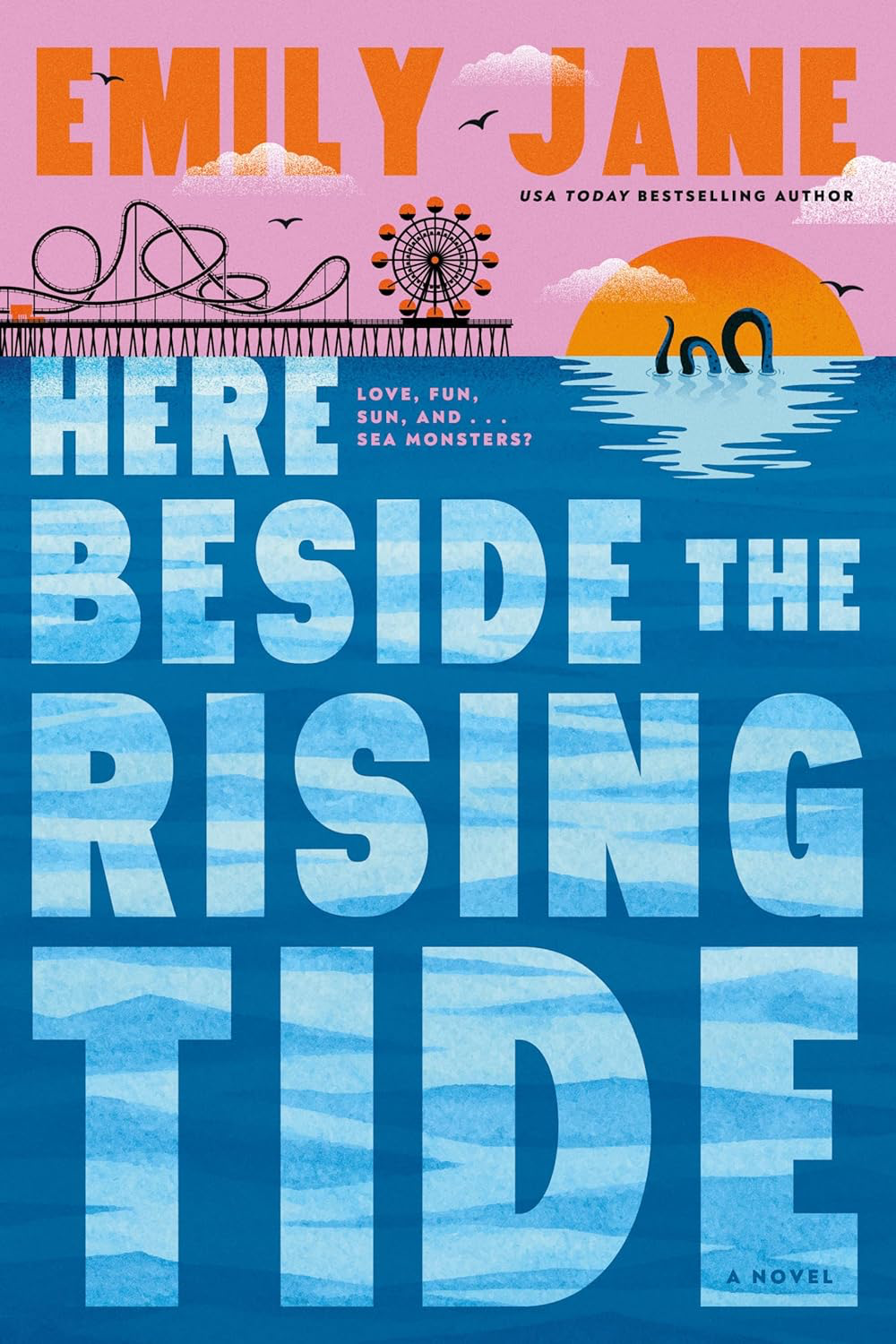
Here Beside the Rising Tide – Emily Jane“It’s a treacherous road/With a desolated view/There’s distant lights/But here they’re far and few/And the sun don’t shine/Even when it’s day…”

“How to Be a Millionaire” – ABC

Maybe I’m just not reading the right stuff, but I swear that ABC don’t get credit for being one of the most distinctly ’80s bands to ever ’80s. It’s just so in-your-face ’80s. Sure, some of the cuts from How to Be a Zillionaire are…well, painfully so (if you’re looking for proof, there’s the extended Cold War metaphor on “Between You And Me.” Still a banger, but…it gets to a point). But songs like “How To Be a Millionaire” are just such perfect products of their time. I feel like this song sounds like being inside of a slot machine. This is a very distinctly Reagan/Thatcher-era commentary on consumerism and class inequality, with its synth chorus, and the rapidly looped utterances of “billions and billions and billions of pounds.” (It’s said so fast that it almost starts sounding like “beans.” I can’t unhear it.) But you can’t say that it’s not still relatable today—and not undeniably a genius pop song: “I’ve seen the future, I can’t afford it/Tell you the truth, sir, someone just bought it.” Surely this isn’t applicable to anything today…

…AND A BOOK TO GO WITH IT:

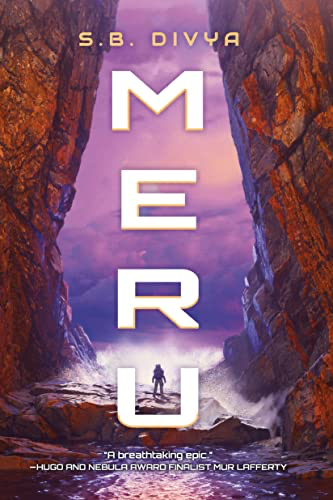
Machinehood – S.B. Divya“Hardly surprising if you might consider/Loyalties go to the highest of bidders…”

“River Deep, Mountain High” (Ike & Tina Turner cover) – Erasure

Being a musician with an already-established career in the late ’80s must’ve been nuts. At any moment, your song could get sniped and covered by some gay Brits with synths out of nowhere.

Of course, “Always On My Mind/In My House” is the obvious example because it surpassed the original by miles. Ike & Tina Turner’s original version of “River Deep – Mountain High,” on the other hand, couldn’t possibly be touched by any cover—it’s just that good. But though it doesn’t reach nearly the same heights, boy, Erasure’s cover is loads of fun. I think I’ll eternally have a soft spot for it just because it’s the first version of the song that I ever heard, especially during my big Erasure phase when I was in elementary school. (And yet it took me until I was about 14 to realize that I was queer…”the closet is glass” doesn’t even begin to cover it 😭) Nothing could ever rip the synths away from Erasure, but here, they work both for and against the effectiveness of the cover—they’re gleeful, sure, but I feel like the exclusively electronic sound makes it feel slightly colder than the original, unintentionally. But “River Deep, Mountain High” isn’t cold by any means—you just need to listen to the original and hear how overwhelmingly exuberant it is. Nothing can reach the staggering heights of Tina Tuner’s joy on that song—Andy Bell and Vince Clarke came close, though. With an extended dance mix that revels in the translation of the organic to juddering synths, it’s clear that the same kind of exuberance that Ike & Tina imbued the original with was ever-present here, with Bell’s vocals soaring with every successive declaration of everlasting love. OH I LOVE YOU, BABY! BABY, BABY, BABY!

…AND A BOOK TO GO WITH IT:
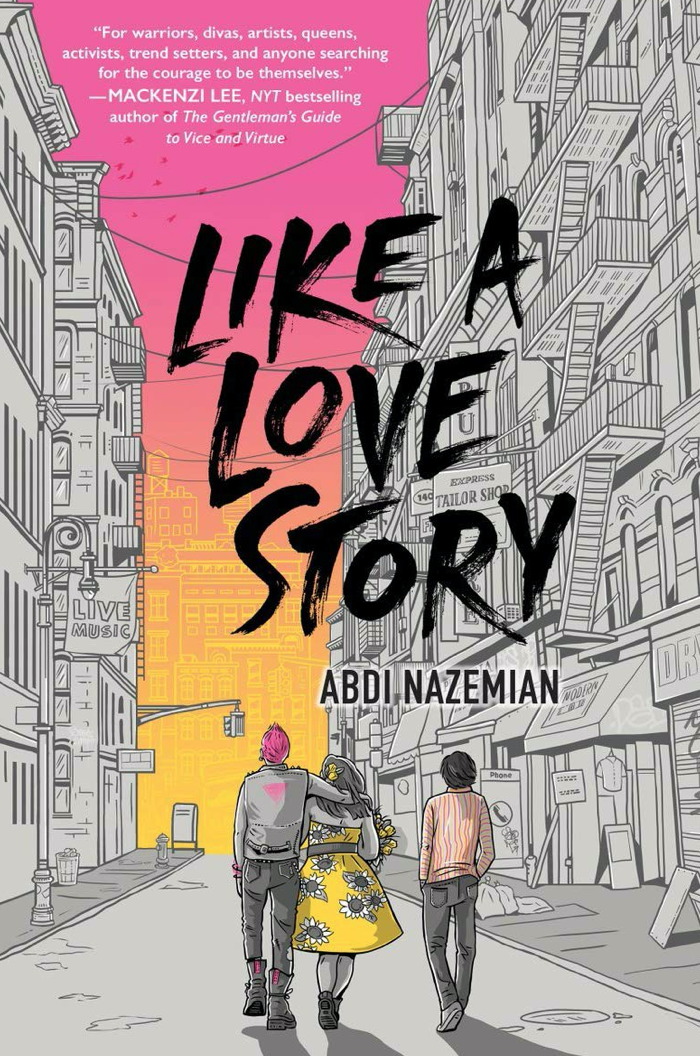
Like a Love Story – Abdi Nazemian I promise that I’m not pairing this book with every queer ’80s bop. You can’t say that it isn’t fitting…

“Submarine Dream” – The Apples in Stereo

The Apples in Stereo have such a knack for creating an atmosphere. Most of the time, that atmosphere evokes a distant retro-future full of cartoonish robots and sleek spaceships, a world flung into the furthest corners of outer space. They’ve never been ones to have their feet planted on the dull ground of planet Earth. But if there’s anywhere here on this planet that’s just as wondrous and unknown as space, it’s the ocean—so it’s no wonder that Robert Schneider and co. wrote a song about it.

“Submarine Dream” feels like their tribute of sorts to “Octopus’s Garden,” in both its imagery and its ’60s-indebted sound. I feel like Ringo would be proud. Though it’s much slower than the former, it has that same carefree joy that comes from the freedom of the sea. The sparkling synths that they usually liken to robots have now translated to the glimmer of sunlight on the waves and the shimmer of pearls under the ocean’s surface. Gently flowing at a dreamy, lazy pace, Robert Schneider’s mixture of acoustic and electric guitars, as well as their synths, vibrant as the varied colors of a coral reef, drifts along. Weightless and starry-eyed, it makes you feel all the ease and awe of the mermaid-like protagonist as she watches the delicate wonders of the ocean: “The time slips through her hands/Just like the ocean sand/And everybody knows/That’s the way it goes.”

…AND A BOOK TO GO WITH IT:
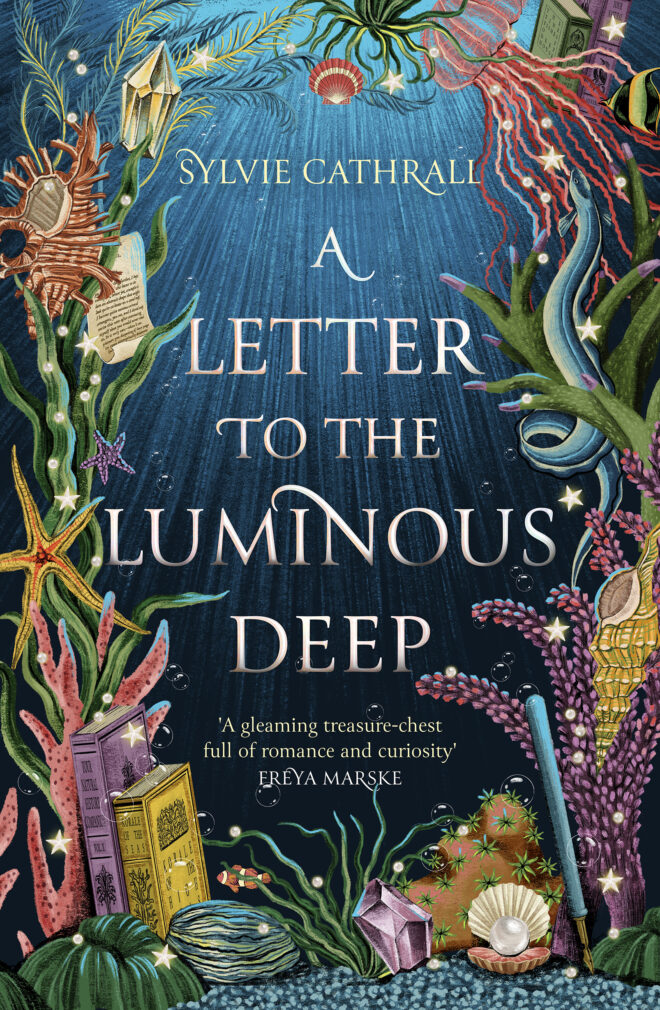
A Letter to the Luminous Deep – Sylvia Cathrall“She likes the ocean caves/The world beneath the waves/Where everything is strange…”

BONUS DOUBLE FEATURE, BECAUSE THIS WEEK HAS BEEN HELL:

Admittedly, I didn’t have as strong of a connection to Dolly Parton’s music as many people did. But I’d be hard-pressed to think of somebody who has done the sheer amount of good in the world that she has. What a guiding light for so many, someone who shared her wealth and talent to make sure that the COVID vaccine was funded, that thousands of children in underserved communities could have books, that the LGBTQ+ and Black communities could feel accepted and welcome, and that people like her—who came from unassuming, working class roots—could be stars.

I picked this clip in particular because I remember seeing it floating around on Instagram sometime in high school. There was a tweet that went around that likened her fingerpicking the guitar with her signature acrylic nails to playing tennis in heels—and it’s spot on. Without knowing much about her, I saw that clip and thought to myself, there’s somebody who knows her stuff. Among everything, I hope we don’t pass over just how singularly talented she was. Rest easy, Dolly, knowing that you’ve done an insurmountable service to our country—and the world.

And then, as if this week wasn’t bad enough…

God. Even now, I’m struggling to find the words. Just looking at these clips is making me tear up. The Rocky Horror Picture Show is my main point of reference for the genius of Tim Curry. When my parents introduced it to me when I was 17, it was during the mire of COVID; I’d been out for about two years, but a global pandemic made it so that I hadn’t been able to engage much with a larger queer community (outside of my friends), socially and, to an extent, culturally. Something instantly clicked when I saw this film—here was a radically queer touchstone that, 50 years on, was a thing of transgressive beauty, a madcap, anything-goes film that retained a message of freedom and unconventional self-expression.

And that message applies to the rest of Curry’s long career, playing a variety of characters with an insatiable appetite for the villainous and unusual. His work created a sacred space for all of the freaks. I’m just glad that I can count myself among them. What a gift it’s been to have been moved so deeply by his art. Rest easy.

Don’t dream it, be it.

Since this post consists entirely of songs, consider all of them to be today’s song.

That’s it for this week’s Sunday Songs! Have a wonderful rest of your day, and take care of yourselves!

Posted in Sunday Songs

Sunday Songs: 10/27/24

Happy Sunday, bibliophiles! I hope this week has treated you well.

This week: if I had a nickel for every year that I’ve had a bright green Sunday Songs color scheme right before Halloween, I’d have two nickels, which isn’t a lot, but it’s weird that it happened twice…bon appetit.

Enjoy this week’s songs!

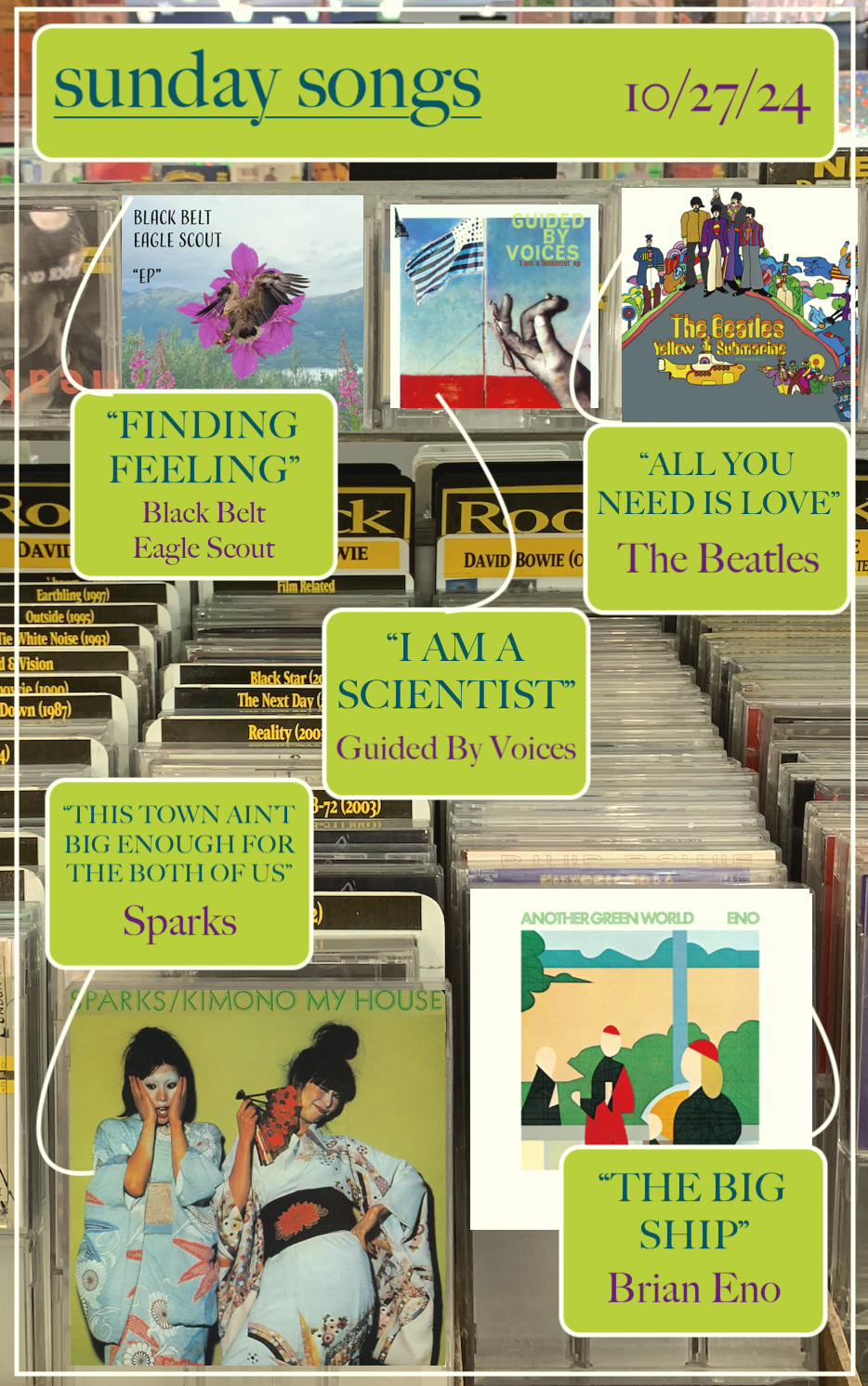
SUNDAY SONGS: 10/27/24

“This Town Ain’t Big Enough for the Both of Us” – Sparks

Because all you musicians totally want my unsolicited advice, I’ll offer it up: this is peak walk-on music. Imagine the band coming onstage the minute the drums kick in after the gunshot sound effect at 0:35. Come on.

In my glacial but nonetheless exploration of Sparks, I realized that I sort of knew this one—it’s one of their most popular and enduring songs, but I knew it from the cover that Siouxsie and the Banshees did, which should tell you all you need to know about how I was raised (read: a hipster). I think my desire for somebody to use this as walk-on music stems from just how punchily theatrical it is. It demands dynamic movement, silk, and finger guns fired into the audience of an opera house. Even though I’d place it well on the outskirts of glam (somewhere near Brian Eno ca. 1974), it walks that line between pure rock and full-face theatre. The Mael Brothers’ brand is significantly tighter than the spandex that their counterparts were (probably) wearing, but the constrained, cagey feel of it adds to the suspense, however thickly they laid it on—it certainly fits with the anecdote about the zoo animals in the first verse. Yet for the slimness of it all, they lean into how over-the-top it is. Case in point: said Wild West gunshot sound effect during the chorus. Brilliant.

Other than Siouxsie, a fair share of artists have covered “This Town Ain’t Big Enough for the Both of Us” over the years. I found out that the most recent happens to be The Last Dinner Party, who…admittedly, other than “Caesar on a TV Screen,” I haven’t exactly liked much, covered it as well, and…eh? The overwhelming vibe I got was that they were trying to go for over-the-top, but, as with…well, everything I’ve heard of theirs, they were trying way too hard. It sounds tight, but there’s hardly any fun in this. And how do you cover Sparks and not make it fun? Siouxsie and the Banshees made it their own—the flow is more dynamic and not as punctuated as the original, but it’s got that theatrical urgency that gives it the oomph that’s necessary to cover the song. The Last Dinner Party restrained themselves so much…and I hate to harsh on them, but they’re missing the whole point! The spirit of “This Town Ain’t Big Enough for the Both of Us” is to go dramatic! Go big or go home! I AIN’T GONNA LEAVE!

…AND A BOOK TO GO WITH IT:

The Good Luck Girls – Charlotte Nicole Davisanother—but very different—twist on Westerns.

“The Big Ship” – Brian Eno

me when I’m in a “making incredibly soothing but also innovative music” and my competition is Brian Eno:

Brian Eno can really do it all. He glammed up the ’70s with Roxy Music, then struck out on his own and glammed some more…and eventually came to be the person responsible for both coining and creating the genre of ambient music. He’s a master of both the lyrical and the instrumental; Another Green World contains both, but is considered by many to be part of his transition to almost exclusively making solo, instrumental ambient music. Even if he did mold the genre, however, I wouldn’t call “The Big Ship” ambient. Compared to something like “1/1,” it has an unmistakable feel of rising action, as in a novel, instead of the former’s soothing plateau. It’s unassuming at first glance, but judging from the outpouring of emotion in the YouTube comments—and its use in deeply emotional scenes from Me and Earl and the Dying Girl and The End of the Tour—”The Big Ship” is anything but. Author David Foster Wallace even said this in his posthumous novel, The Pale King:

“This song is making me feel both warm and safe, as though cocooned like a little boy that’s just been taken out of the bath and wrapped in towels that have been washed so many times they’re incredibly soft, and also at the same time feeling sad; there’s an emptiness at the center of the warmth like the way an empty church or classroom with a lots of windows through which you can only see rain in the street is sad, as though right at the center of this safe, enclosed feeling is the seed of emptiness.”

I don’t think I’ll be able to articulate anything about this song better than Wallace. I don’t think anyone ever could—he really did chip away the truth. You feel all of it. You can touch that drained eggshell’s core of emptiness, but you can see the pinprick of light made by a needle at the top. Whatever you imagine the big ship to be, the gradual rise of the song produces imagery that leads you to believe that this ship could be arriving just as well as it could be leaving. “The Big Ship” is a door ajar, but whether or not you see the light retreating or impending is entirely up to the flip of a coin.

In my mind’s eye, there’s a gargantuan, city-sized ferry, perhaps fueled by a pair of unseen wings on the hull. Like a kind knife through melted butter, it cleaves a path through a roiling sea of fog, curls of mist tracing the polished metal like child’s fingers. It moves slowly, glacially, taking its time to pave a path through the billowing clouds, into whatever lies beyond. I love the title of Another Green World, and even though I haven’t yet listened to all of it, I immediately relate to the concept of the Green World in literature; I was introduced through it by Shakespeare and A Midsummer Night’s Dream, where Athens functions as the world grounded in reality, whereas the realm of fairies, governed by magic, whimsy, and glamour, is the Greener. It is the “false” world, but also the world of innovation and real magic that we strive to create. Like a sprout, it is ripe with possibility, things yet to come to fruition. Perhaps that’s where Eno’s big ship has charted its gentle course.

…AND A BOOK TO GO WITH IT:

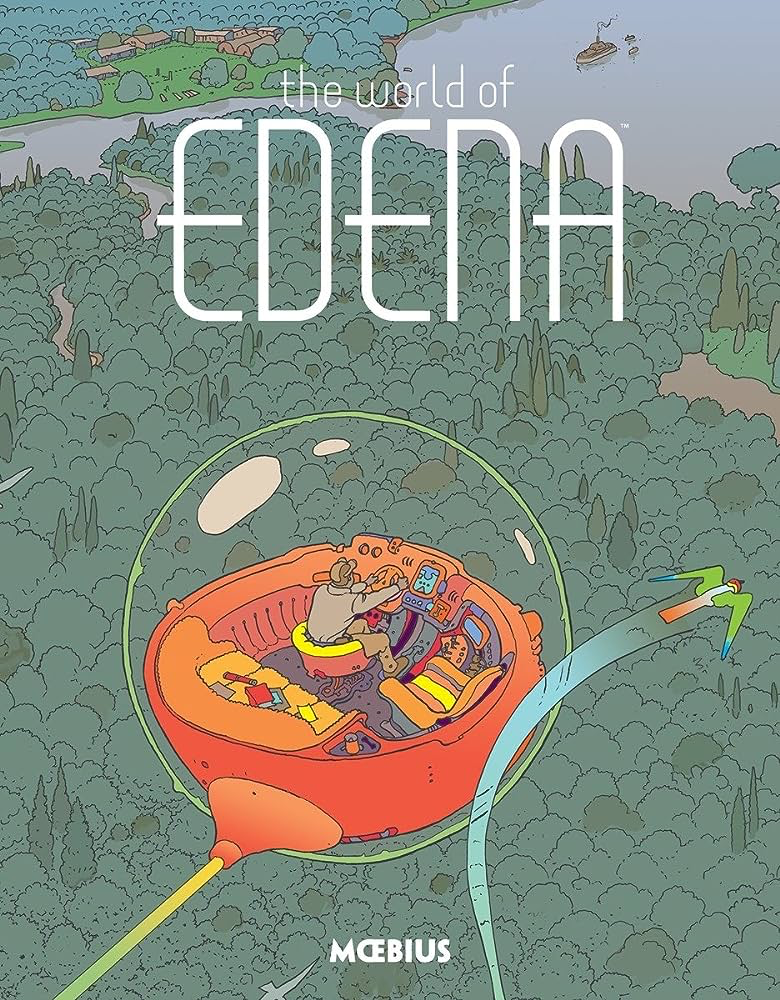
The World of Edena – Mœbiussomewhere, across temporal boundaries, I can imagine Eno and Mœbius creating art together—the latter to create the brightly-colored, simple landscape, and the former to soundtrack the gentle humming of its engines.

“Finding Feeling” – Black Belt Eagle Scout

Ten years ago, Katherine Paul self-released their debut EP on Bandcamp as Black Belt Eagle Scout. A decade later, and Paul has brought this artifact of her career to streaming, letting the world see the infancy of this project. Like Eno, it’s a soothing exercise, sculpted from handfuls of reverb and sparing percussion. Now, I can see the remnants of this sound that later permeated into their debut album, Mother of My Children; it flows as easily as water, but in those early days, they were prone to get caught up in the current and let the same phrase repeat itself for quite some time. It’s not that it’s bad by any stretch of the imagination—Paul just hadn’t hit their stride yet, and didn’t know when to whip out the cutting board to make things more succinct. (“Finding Feeling” repeats itself for the first third of the song…which is six and a half minutes long.) The lyrics lack the artistry that Paul would later learn, but time has proven that her voice has always been as crystal-clear and cooling as still water from the mouth of a glacier. “Finding Feeling” almost describes itself as you nearly get lost in the repetition, but the payoff, though long-earned, is the seed of what would become a soaring talent.

…AND A BOOK TO GO WITH IT:

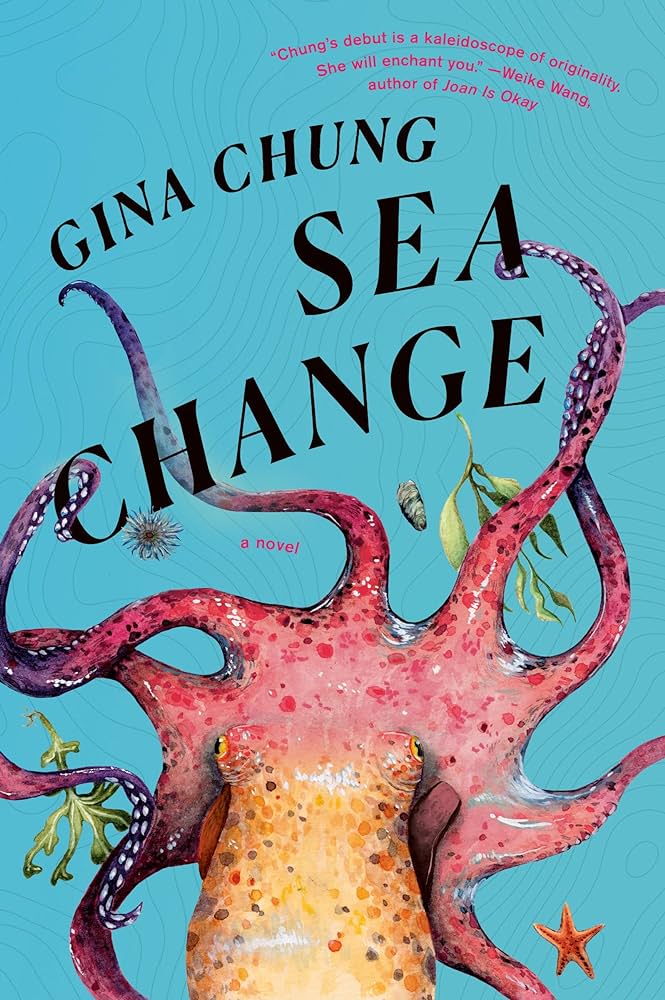
Sea Change – Gina Chung“I go home in the evening/I don’t feel a thing/I don’t know nothing/I go home in the evening/I don’t see a thing/I don’t have anything…”

“I am a Scientist” – Guided by Voices

It’s baffling that this version of “I am a Scientist”—from the 1994 I am a Scientist – EP—never made it onto the album that the original version did (Bee Thousand); the original, as good as it is, screams “demo,” muted in every way. While I’m all for the scrappy, understated recordings (see: everything Car Seat Headrest did until about 2016), the full band backing the EP version makes it into the triumphant march that it was always meant to be. And what a perfect slice of ’90s indie-rock this is—it’s Pavement from an alternate universe, one where they decided to churn out multiple albums a year for the rest of the foreseeable future. I’m no judge of how good said prolific output is, as this is one of two songs I’ve listened to, but if the talent displayed on “I am a Scientist” and the acclaim that their ’90s albums have gotten, I can only assume that said talent hasn’t dried up.

…AND A BOOK TO GO WITH IT:

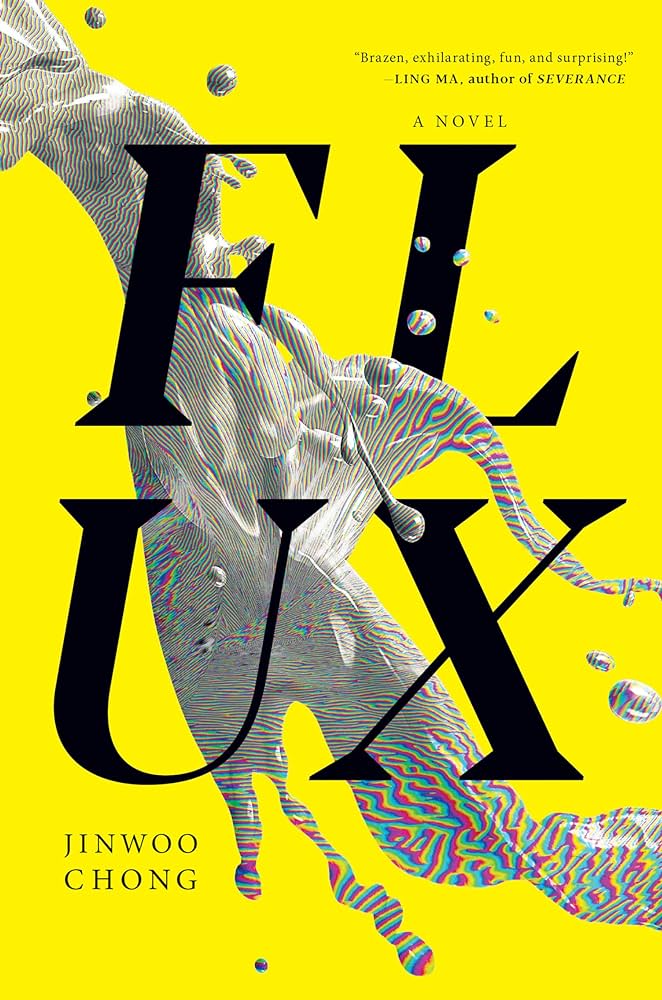
Flux – Jinwoo Chongan unraveling mystery between men, generations, television, and time travel. (Was it always successful? No, but I enjoyed enough of it. I’ll always applaud the ambition of it.)

“All You Need is Love” – The Beatles

I didn’t conceive of Sunday Songs consciously to put them on Sunday—the alliteration was just there, and it worked. But this week feels fitting that it’s on Sunday, and I’m glad I stuck this song at the end.

Here. Take a moment to breathe. We have miles and miles of anxiety ahead of us and miles and miles of horror behind us. But that is not all there is in the world. You see the spinning earth at the end of this video, animated in silence, and remember that there is love. Even if they were summoned into a studio, you can see all of the people gathered together, covered in flowers, and remember there is love. Millions of miles gives way to the possibility of endless cruelty, but if you look hard enough, you will know that our planet was never molded from just that. Whatever happens, there will always be love, and there will always be someone to embody love. Take a seat. Let the confetti brush your cheeks, let the sound lift you into the air.

All you need is love. I’ll take this into the week, I’ll keep it against my breastbone like a locket until the silver wears into my skin. Will you?

All you need is love.

…AND A BOOK TO GO WITH IT:

Since this post consists entirely of songs, consider all of them to be today’s song.

That’s it for this week’s Sunday Songs! Have a wonderful rest of your day, and take care of yourselves!
Posted in Sunday Songs

Sunday Songs: 6/16/24

Happy Sunday, bibliophiles!

First off: happy Father’s Day to my incredible dad! Not only are you such a wonderful role model for being a genuinely kind, accepting, and truly empathetic person, you’ve given me the gift of sharing music—what these posts are all about. To be able to share music with you back brings me all the joy in the world. I love you.

This week: 🚨SOCCER MOMMY HAS COME TO SAVE THE SECOND HALF OF 2024, THIS IS NOT A DRILL🚨

Enjoy this week’s songs!

SUNDAY SONGS: 6/16/24

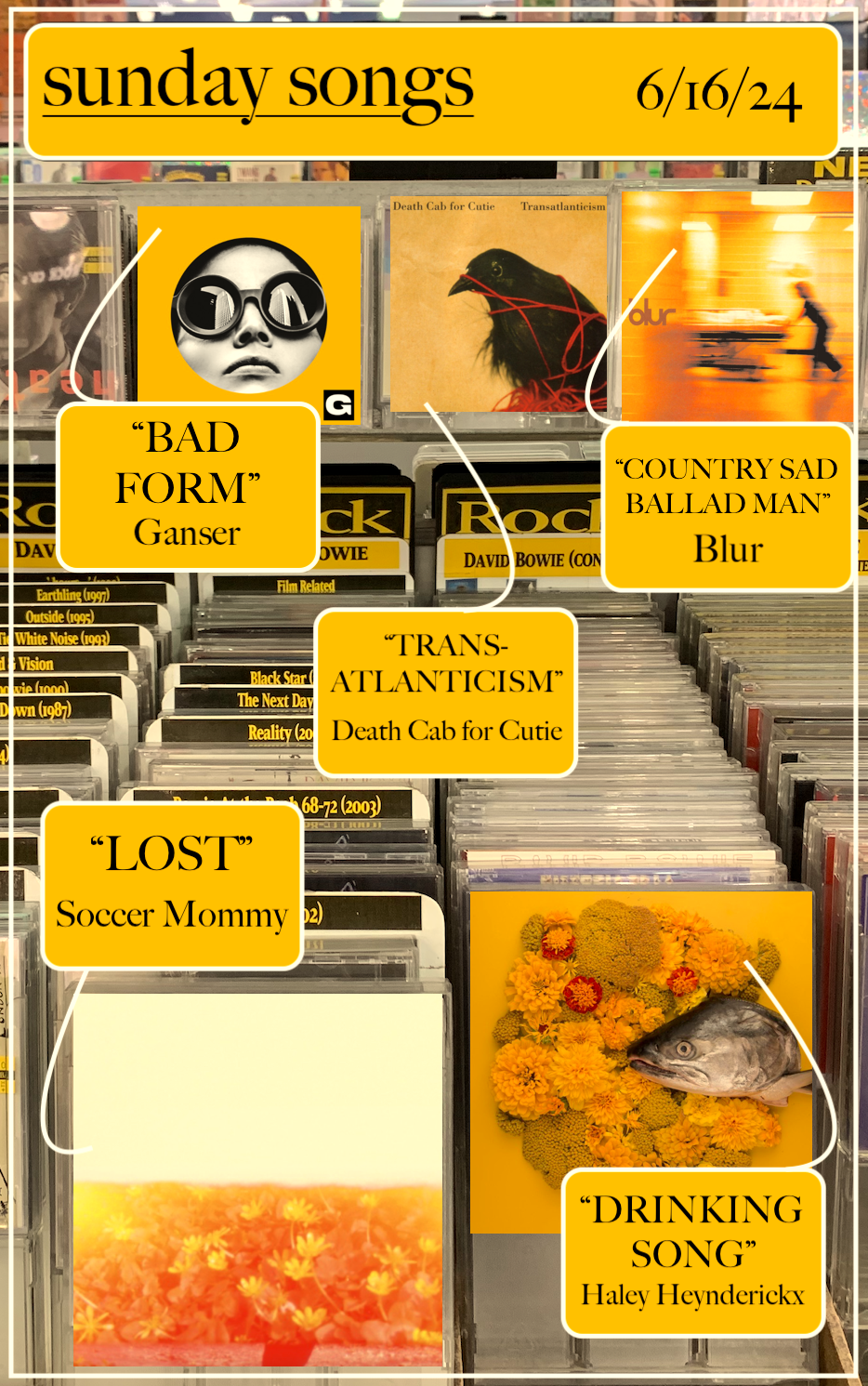
“Lost” – Soccer Mommy

SOCCER MOMMY RETURNS!!! Given the short tour (that’s nowhere near me……..no, I’m totally not mad, no way) that she’s currently embarking on to support some of this new material, there’s a fourth album (sixth, counting the self-released albums) on the horizon, and hopefully on a happier date. Poor thing. I still haven’t gotten over the fact that her last album, Sometimes, Forever, was unintentionally released on the day that Roe v. Wade was overturned. Jesus.

Something that I’ve admired over the years about Soccer Mommy is her willingness to experiment with her production. At their core, her songs have never changed their essence: honest, tender confessions of the trials of heartbreak, grief, and mental health. But the dressing is never the same twice, from color theory’s color-coded tonal shifts and synth-dusted melodies to the darker, more distorted soundscape of Sometimes, Forever. With the latter, Chelsea Wolfe wasn’t somebody that I’d readily compare to Soccer Mommy, but then she comes along with “Unholy Affliction,” and the comparison, at least on that track, is as clear as day. Just when you think she’s playing it safe, she comes out of nowhere with instrumentation that you’d never imagine attributed to her name—and almost every time, it still feels like nothing but Sophie Allison. There’s a boldness to her that’s rare in the genre; there is an expectation of sameness in the kind of indie circles she’s in, an expectation to box yourself into the image that the record label deems as “authentic” in order to stay in their good graces—and the good graces of fans who cling to their raw lyrics. Julien Baker, although her first two albums adhered to that, took a similar leap with Little Oblivions, and that, for me, was her best album to date.

But Soccer Mommy can’t help but be herself. “Lost” strays nearer to some of her sparer, more traditionally indie roots, but with production that feels spun from silk; inside of the glowing cocoon where Allison resides, threads of synth, birdsong, and yearning strings coalesce in what can only be described as the musical form of a grainy polaroid, a sunset tinged with ink, film, and bygone memories. Bygone memories, like much of her other material, is at the core of “Lost,” specifically bygone memories of those bygone. Given the trajectory of “yellow is the color of her eyes,” some have speculated that “Lost” is about her mother’s death, although Allison has chosen to not disclose the subject. whatever the case, I’m glad that Soccer Mommy doesn’t have the kind of rabid Swiftie fanbase that would relentlessly strip away at the press and at Allison herself to get to the bottom of who she’s mourning, because…that’s her own business, dammit. I’m glad us…whatever Soccer Mommy fans are called (does this fanbase have a name?) have the heart to give a human being space to breathe, because, judging from the lyrics (and all of color theory, frankly), Allison needs it. “Lost” distills grief in the truths of the cliche that every movie seems to repeat about grief: “I wish I’d had more time.” Most media leans on that universal kernel to hold the weight of such a complex, unmappable sensation, but Allison scratches at its heart; her grief rests not just in tangible objects, but in the reminders of the time never spent: “I’ve got a way/Of keeping her with me where I go/But how she feels, I’ll never know/It’s lost to me.” The pain of this track is in the insurmountable truth of never being able to fully know a person; of course you can never fully, truly know a person beyond yourself, but grief exacerbates that unsurmountable summit—even if you tell yourself that you could be a cartographer of a brain outside your own, that chance has all but slipped through your fingers. Grief has unrealistic expectations of you; in its throes, it tells you that you could have made up for all of the missed regrets in your lifetime, and that’s half of the knife in your gut. Half of the pain isn’t what didn’t happen, but what can’t happen, even in the alternate reality it presents. When she repeats “If I had another chance/I’d ask her then,” it doesn’t feel like a throwaway from a stale funeral in the MCU—it feels like the testimony of something still putting down the compass and fountain pen, knowing that this expedition was doomed from the start.

So, what, you ask, might us sad girls do while we wait for Soccer Mommy’s fourth LP, which will inevitably destroy us? Watch Allison and fellow storied sad girl Phoebe Bridgers unite to cover Elliott Smith:

…AND A BOOK TO GO WITH IT:

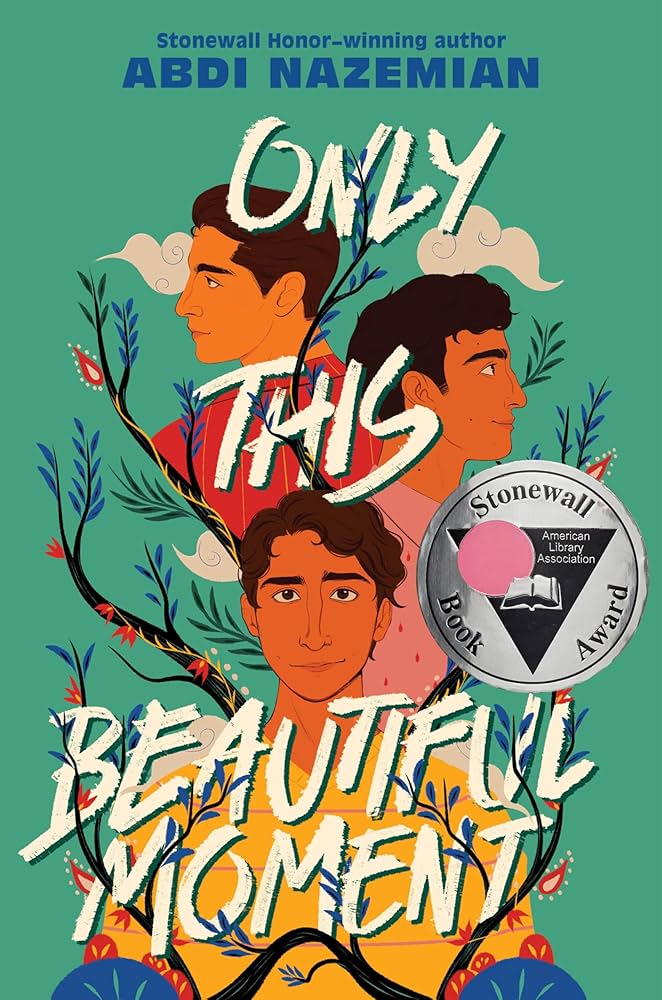
Only This Beautiful Moment – Abdi Nazemianbreaching generational lines to form an understanding of heritage, sexuality, and family.

“Drinking Song” – Haley Heynderickx

Contrary to the song title, Haley Heynderickx is (probably) not responsible for the kind of song that old men will sing in a pub while drunk for generations to come. I mean, that could be a possibility in some alternate universe. I’d like to see that. It’d make for an odd movie scene—nothing about this universe has changed, but instead of old Irish ballads, there’s a pub full of swaying people singing late-2010’s indie rock.

With a title like “Drinking Song,” I fully expected this song to be the prequel to “Oom Sha La La,” a telling of the period where “The milk [was] sour/I’ve barely been to college/And I’ve been doubtful/Of all that I have dreamed of.” Contrary to that, “Drinking Song” is a soft-spoken but resolute declaration of hope, delivered out a summer window while the crickets sing. Any darkness is the shroud of night, and all of the stars seem to bear witness to a constitution of better days to come: “And the edge of the world makes it seem/That everyone gone is still singing the same song/And I can believe in these things/That everyone’s singing along/The good and the bad and the gone.” There’s a kind of childlike optimism to the openness of Heynderickx’s declaration, but one with roots strong enough to hold it; with each repetition of “there’s a light at the end that I know,” that glow, like The Great Gatsby’s green light, pulses with more intensity with each incantation, until it becomes a portal to better times. It’s the opposite of negative overthinking; this song overflows with future vignettes of new cities to explore and new lovers to embrace, all held within the space of the back of your mind. “Drinking Song” is a snow globe containing every good future—all is too small to comprehend in the here and now, but with a little luck, you can hold them in your hands and watch them unfold before you.

…AND A BOOK TO GO WITH IT:

Sea Change – Gina Chungholding onto hope in a time of lovelessness and isolation.

“Bad Form” – Ganser

I like plenty of bands and artists whose catalogue consists of one or two songs tops (see: Wet Leg, Suki Waterhouse, etc.). What distinguishes said bands, for me, is that they’ve made a career out of making those two songs worth your time—they may only be two songs, but they play them well. Sure, “I Just Threw Out the Love of My Dreams” may be one of Weezer’s one, maybe two songs (and even that’s generous), but it’s such a bright and shining piece of machinery that you can’t help but gaze at said one song and know that, yeah, it may be the same song they’ve been peddling since 1994, but it’s one fantastic song.

The more I listen to Ganser, the more I realize that they fall into that camp. I hate to say that every time, but like I said, it’s not always an insult. Although they do have a good amount of deviation here and there, most of Just Look At That Sky, as much as I enjoyed it, is the same three off-kilter, drawled post-punk songs about being numb, exhausted, and angry, or some combination of the three. They’ve got a brand. Ganser, for me, stands out in that their three songs sound different enough from any given song that you can excuse them for relative lack of variety. None of their chords ever align pleasantly—it’s abrasive, grating, and honestly? Fun. As with “People Watching” (which I reviewed at the beginning of the month), Ganser makes the kind of punk that’s aware of how punk it sounds, and they lean into every inch of theatricality with their bleary-eyed drawls and itchy, buzz-saw guitar riffs, fuzzy and stinging like staring straight at the sun—just as like the climax of “Bad Form.” Ganser is a band that’s not afraid to make music that scratches your skin like un-filed, bitten nails, and if that’s their three songs, then three cheers for making three songs that are bold enough to sound unappealing.

…AND A BOOK TO GO WITH IT:

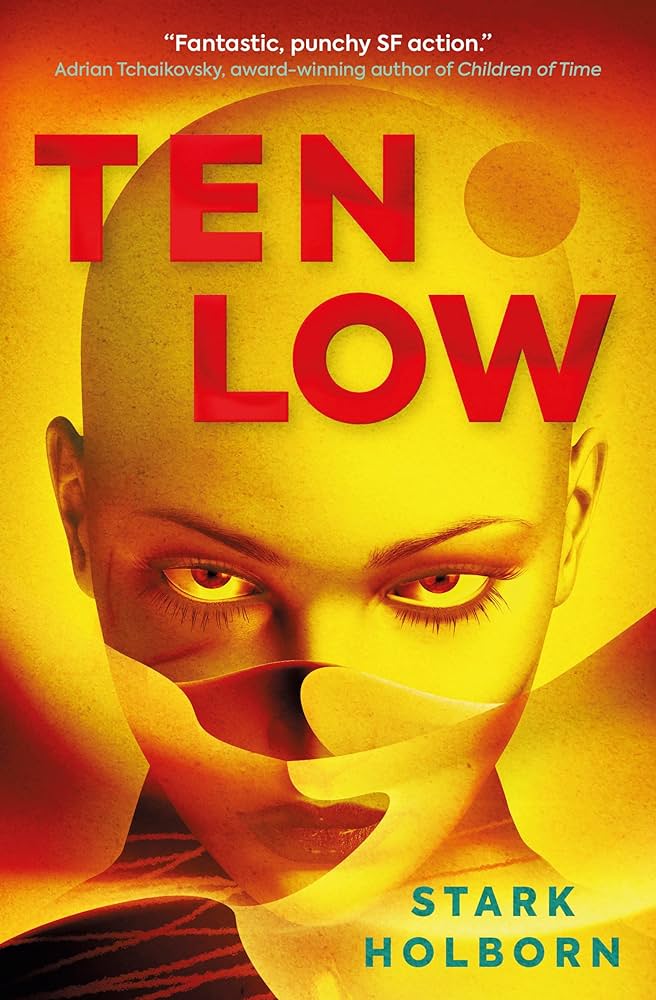
Ten Low (The Facts Sequence, #1) – Stark Holborn“I’m the other man/I’ll take the medicine/The room spins like a feather/Folding over and over…”

“Transatlanticism” – Death Cab for Cutie

I was first introduced to “Transatlanticism” when I was about 12 or 13. A few months after the first listen (and being irreparably entranced), I had an internship at a local flower shop, where the owner had Sirius XMU playing. This song came on at some point, and I’ll never forget the deeply concerned look she gave me when I told her, in the most 13-year-old way possible, how much I “loooooooooooved” this song. She was entirely justified.

Another thing that music criticism does that I’ve never understood: categorizing Death Cab for Cutie as emo. If I suspend my disbelief enough, I can see the basis being in the whine in Ben Gibbard’s voice, especially when he performs live, and the dramatic emotion is there, but…in what world does Death Cab for Cutie belong in the same breath as My Chemical Romance? Really? I could almost see them being the middle ground between emo and indie, with some of the lingering whine and drama, but the key with selling drama is what has always lost me with most emo music: it actually feels authentic. Never once does Gibbard sound like a suburban teenage boy who’s just discovered heartbreak and black eyeliner in one fell swoop. The whine, although it can fit into some of said teenage boy sensibilities (see: “We Looked Like Giants”), just seems more of a product of Gibbard’s natural range than it does a forced vehicle for airbrushed angst.

In theory, “Transatlanticism” fails my test of withstanding a long song; most of the time, in order for a long song to hold enough water past around the six minute mark, there has to be at least some sort of shift, whether that’s tonal, lyrical, or instrumental; it’s why “Cop Shoot Cop” by Spiritualized really feels like it’s over 17 minutes long, with its largely extended sleepwalk of monotony, whereas Nina Simone’s ten minute epic “Sinnerman” has the fervor and gusto, as well as an act structure similar to classical pieces, is a nail-biting journey that never lets go of your shirt collar. (To be fair to J. Spaceman, my guess is that the tedium is the intended effect, seeing as it’s about how his heroin addiction all but made him into a dead man walking. Knowing him, it’s fully intentional.) However, there’s songs like Blur’s “Tender”—nearly eight minutes long and without much change—that have the pure, undiluted heart to keep its sails billowing. You feel everything—it’s an IV drip straight through to the sparest, most instinctual emotions, heart-wrenching in its delicately-crafted simplicity. “Transatlanticism” takes a trick out of that same book; until the last third, all that accompanies Gibbard’s thinning, tender lament is about four piano chords, played over and over with a purposeful negative space between them. Come to think of it, negative space is exactly why “Transatlanticism” works so well. Transatlanticism as a whole is a concept album about long-distance relationships, and even without the lyrics, crushing as they are, you can sense the abyssal gulf cutting down the middle of this song. At the four-minute mark, after Gibbard has finished with the first repetition of “I need you so much closer,” a full minute passes of a single, instrumental strain: those same four chords, a spare guitar lick, and tiny tendrils of synth that faintly moan and rattle like dying machinery, as if trying to conceal their death rattles without bothering anyone. Transatlancism was aided with Brian Eno’s Oblique Strategies cards, and I wouldn’t be surprised if they drew the same cards that produced Bowie’s “Sense of Doubt”—”emphasize difference” and “try to make everything as similar as possible.”

The difference, in this case, is a shift in lyrical style; It’s all but silent compared to the lyrics in the first half, but that silence conveys the feeling of separation, of having a strand of your soul stretched across an ocean and not being able to see who’s on the other shore, just as heartbreakingly as words do. After Gibbard’s lament (“The rhythm of my footsteps crossing flatlands to your door/Have been silenced forevermore/The distance is quite simply much too far for me to row/It seems farther than ever before”), the exhaustion of sorrow leaves you with no strength to do anything but stare into the canyon wrought by distance, too far to even touch fingertips over. Simplicity is what kills me about this song; after that instrumental break, Gibbard repeats the “I need you so much closer” refrain, only to transform it to “I need you so much closer…so come on.” When all of the poetry’s drained, sometimes the most sparing lyricism destroys me. The ocean has spread its impossible distance before you, and all you can do is stare as far as you can, towards the bottom, with only the most baseline instincts of longing to keep you company. It’s such an artful buildup and approach to portraying such deep yearning—you feel that negative space as a tangible barrier. See what I mean about Death Cab for Cutie making their angst authentic? “Transatlanticism” hits me like a goddamn steam train every time without fail. Ow, dude, who kidnapped me and abandoned me in the onion-cutting factory?

…AND A BOOK TO GO WITH IT:

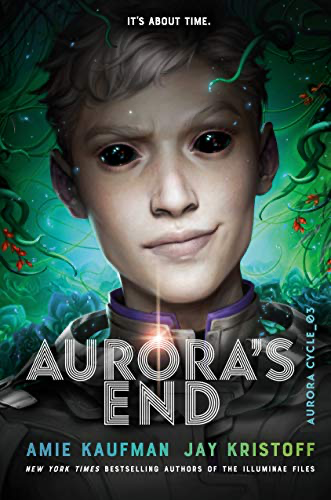
Aurora’s End (The Aurora Cycle, #3) – Amie Kaufman & Jay Kristoffow oof ow ouchie ow ow ow somebody hold me

“Country Sad Ballad Man” – Blur

And now, “Song 3.”

Blur’s self-titled album [slides Anthony Fantano glasses up bridge of nose] is an exercise in becoming the very thing you swore to destroy. After years of being right smack in the middle of the spotlight, participating in a manufactured battle of the bands, and pushing their mutual abuse of multiple substances to the edge, the band collectively decided that a change needed to be made. They packed their bags, temporarily relocated to Iceland, and hammered out a new album. The result was Blur, which had a much dingier, edgier, and altogether harder sound, with a lead single that famously parodied grunge, but then…circled around to being a smash success and an enduring stadium classic. That’s another story. (I’ll give you a hint: wooooooooohoo!) Yet, as much as they poked fun at American grunge, in all of its nihilistic, self-deprecating time in the sun, they slipped straight into the lifestyle, shedding their Britpop gloss for aggressive, alternative guitar, stubble, and, to the detriment of the whole band, excessive abuse of alcohol and heroin (see: “Beetlebum”).

Though the drug use is lamentable (to say the least), as all of the band members now agree, it was their mutual exhaustion and anger at being put through the British media meat grinder that allowed for such a hard—and delicious—left turn. On the verge of snapping, the band decided to put Parklife behind them and get grungy. It was bound to happen eventually, what with Graham Coxon’s adoration for the American alternative scene and the guitar sounds they were producing (should’ve listened to him earlier on that one…). Blur is all but absent of a bad track, crashing with the equivalent of a drum set tossed through a window one minute (“Chinese Bombs”) and slipping into acoustic melancholia in the next (“You’re So Great”). But “Country Sad Ballad Man,” for me, is a highlight I find myself sniffing out every six months or so. With one of the drier and more self-explanatory titles, this track feels like food left to rot out in a heatwave, festering and twangy. Every other lyric finds Damon Albarn stretching his voice into a creaky, scratching highs, as though mocking his own state of lying squarely at rock-bottom: “I haven’t felt my legs/Since the summer/And I don’t call my friends/Forgot their numbers.” The strings on Alex James’ upright bass come loose and unsteady, as though a few more takes of this song would’ve seen them snap off and collapse on the floor. Graham Coxon relishes in the alternative aggression that Britpop never fully allowed for, twisting riffs that seem to languish like drooping eyelids, dripping sweat and numbness. But the real freakout, one that must have been canned and compressed for ages, explodes in a vomit of wobbly distortion and screeching falsetto. It’s a vertigo-inducing outro that caves in like the mold-rotted roof of a wooden house, shattering in a hail of splinters and nails. In all of its spring-plucking chaos, there’s really no other lyric that fits it than Albarn’s self-aggrandizing, high-pitched screech of “I’ve done and fucked it!” yelled straight up from the well of rock bottom.

…AND A BOOK TO GO WITH IT:

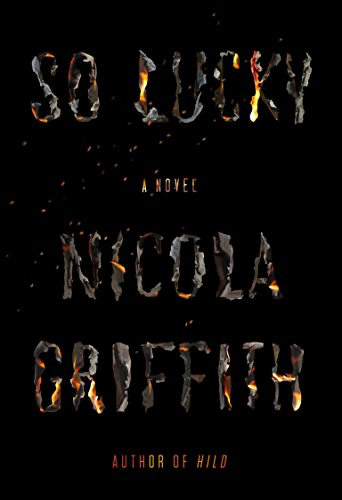
So Lucky – Nicola Griffith“Yeah, I found nowhere/It got to know me…”

Since this post consists entirely of songs, consider all of them to be today’s song.

That’s it for this week’s Sunday Songs! Have a wonderful rest of your day, and take care of yourselves!

Posted in Books

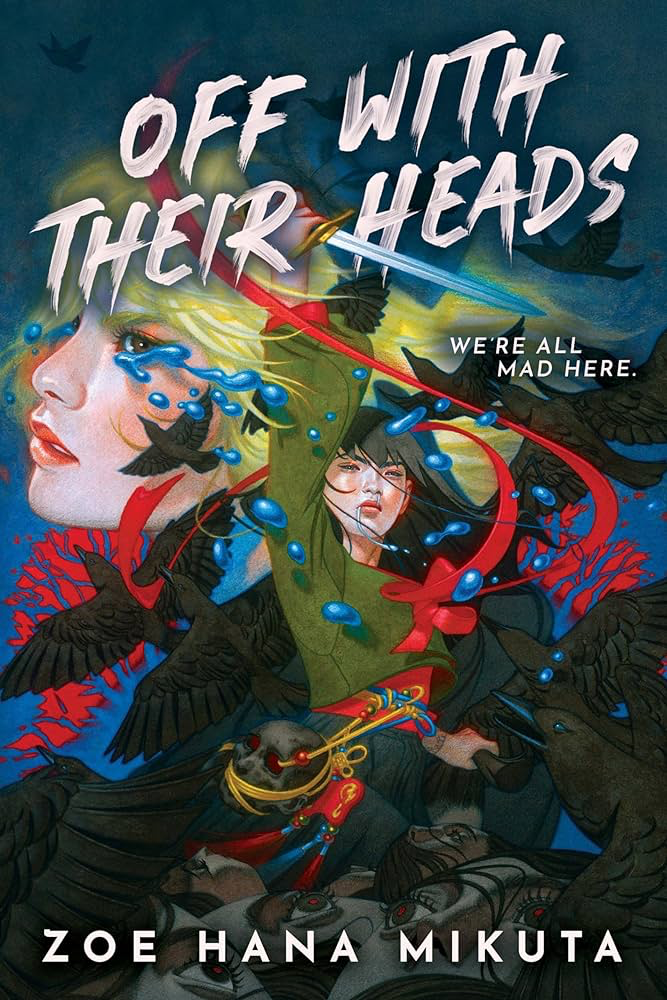
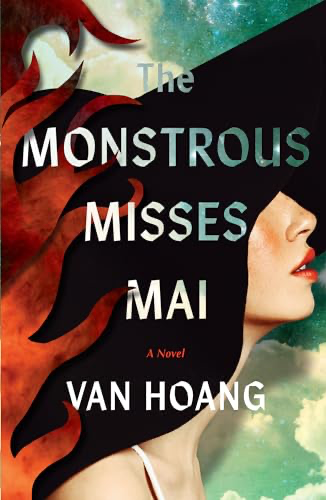
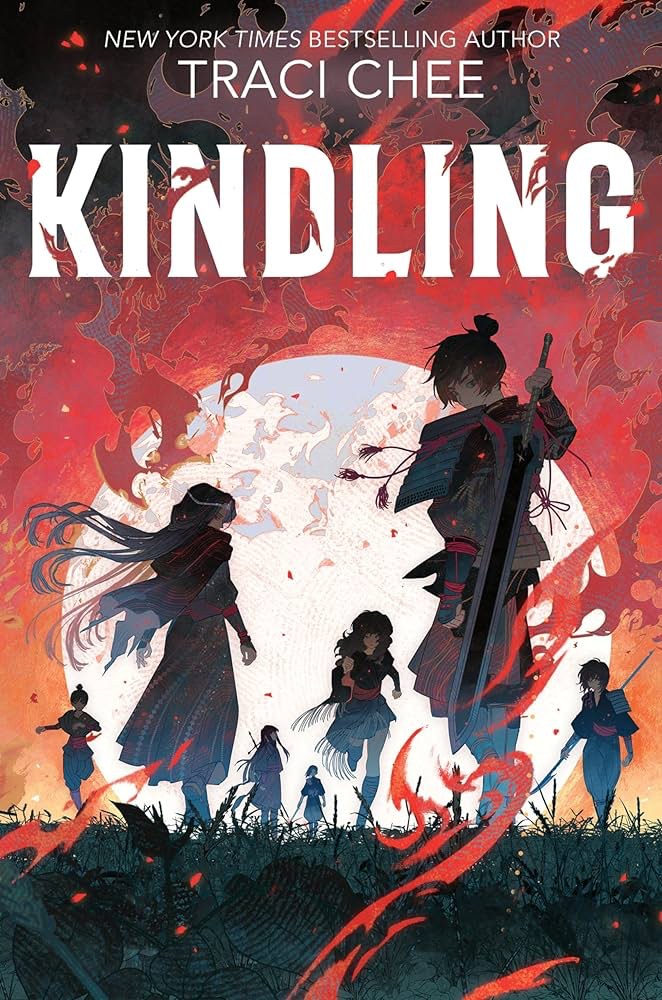
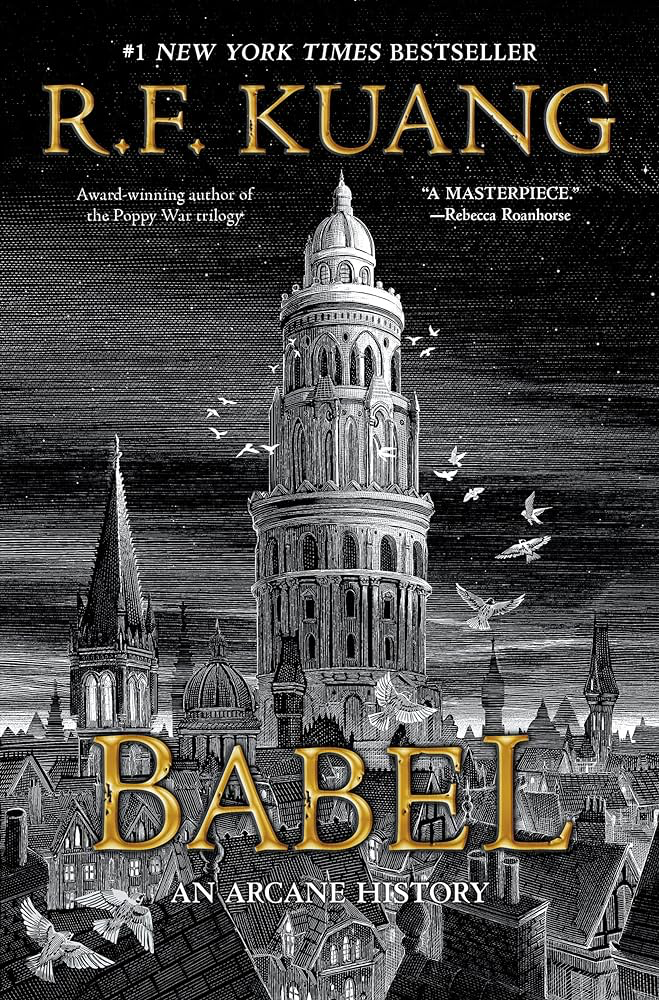
The Bookish Mutant’s Books for AAPI Heritage Month (2024 Edition)

Happy Monday, bibliophiles!

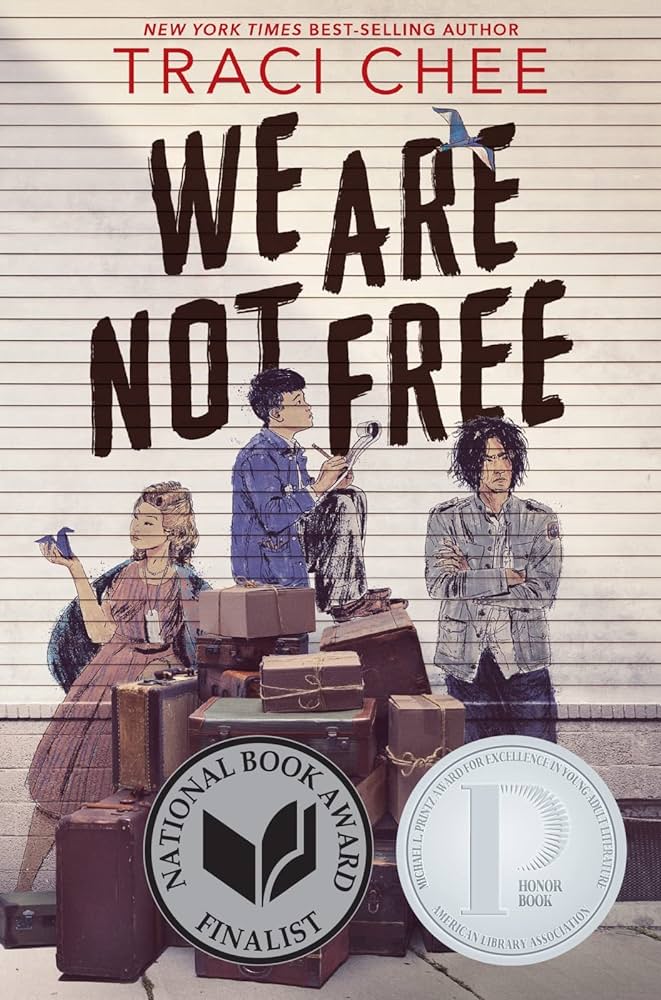
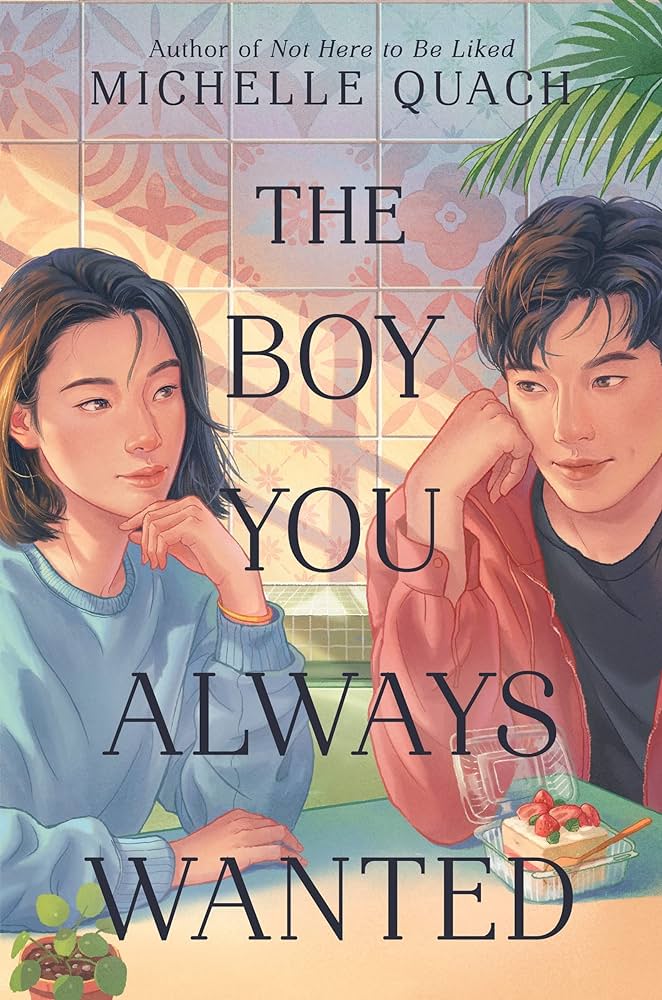
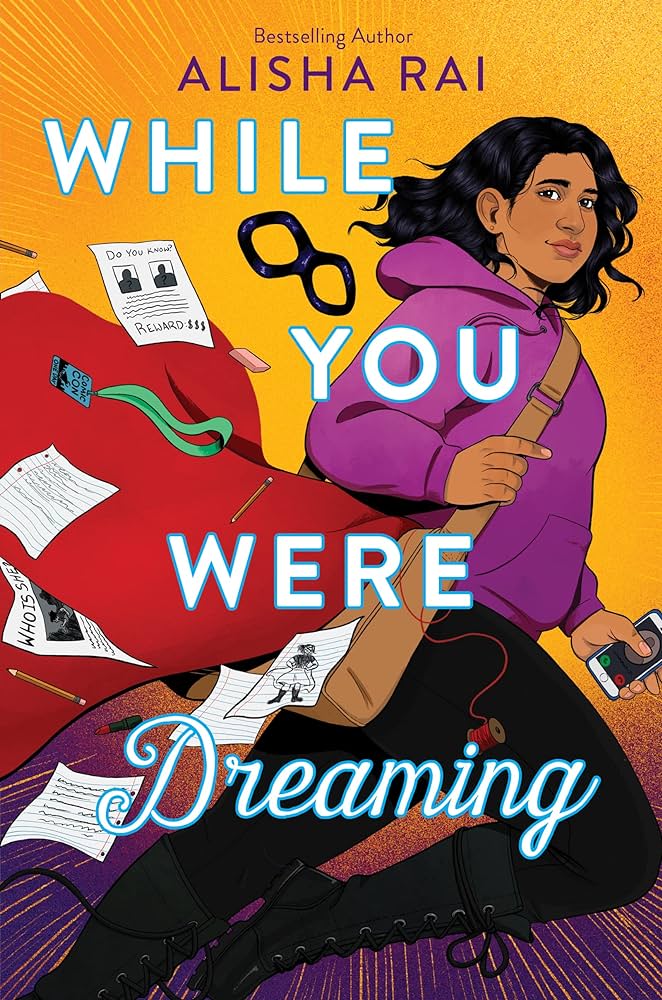
Here in the U.S., May is Asian American and Pacific Islander Heritage Month! This is my fourth year making this particular list, and I’ve found and read so many incredible books since then. As always, diverse reading shouldn’t be restricted to one month only, but here at The Bookish Mutant, I try to take any opportunity I can to shift the focus to marginalized voices—and to recommend fantastic books. It feels especially important to make these lists in the past few years, what with the book bans that are not-so-subtly targeting almost exclusively POC and queer voices—read between the lines. Freedom to read is freedom to resist.

As with last year’s list (see below), I’ve now expanded them to included both YA and Adult titles, organized by genre.

For my past lists, click below:

Let’s begin, shall we?

THE BOOKISH MUTANT’S BOOKS FOR AAPI HERITAGE MONTH (2024 EDITION)

FANTASY:

SCIENCE FICTION

REALISTIC AND HISTORICAL FICTION:

TELL ME WHAT YOU THINK! Have you read any of these books, and if so, did you enjoy them? What are your favorite books by AAPI authors? Let me know in the comments!

Today’s song:

NEW BEABADOOBEE????? I’m seated—

That’s it for this recommendations post! Have a wonderful rest of your day, and take care of yourselves!
Posted in Monthly Wrap-Ups

August 2023 Wrap-Up 🎂

Happy Friday, bibliophiles!

I just finished my first week back to school, but after this, chances are I’ll be somewhat radio silent until I can get fully settled into my routine. The only reason that this post is seeing the light of day is that I start working on my wrap-up posts about a week in advance, so here we are.

Let’s begin, shall we?

GENERAL THOUGHTS:

Summer’s officially over, but the weather sure doesn’t seem to think so. Hopefully I won’t have to endure much more of my (long) walk to class in this 90+ degree heat.

That aside, I’ve had a good August, for the most part. My initial “yay, I’m going back to college!” got partially replaced by “oh god, I’m going back to college” closer to move-in, but I’m feeling better now. (The fact that I’m in a much nicer dorm than I was last year certainly helps. It doesn’t constantly reek of weed in here! Huzzah!) I had the opportunity to soak up the last dregs of summer beforehand, at least. I finished up my summer job at the library, bought a catnip toy for my cat for his sweet 16, completed another trip around the sun, and blew part of my paycheck on books to celebrate said trip around the sun. Worth it.

My blogging’s been a tad slower since I’ve been trying to get everything together before I moved in, but I feel like I’ve still been able to be productive. I’ve enjoyed reviewing all of my books this month and putting together graphics and going off about music. And I got in one book tag that WordPress screwed up and I had to recreate from scratch, but it was fun in the end. Once my schedule figures itself out, I’ll get back on the writing train, but for now, I’m mapping out the best route to my class in That One Building on the other side of campus.

Other than that, I’ve just been drawing, watching Only Murders in the Building (for the love of god, can we just stop pairing Mabel with people who have zero chemistry with her 😭). Good Omens (pain, suffering, even), Heartstopper (Lucy Dacus and Wolf Alice paying in the same episode >>>>>>>), and Taskmaster (“you’ve got no chutzpah”), and reveling in the fact that my new dorm has air conditioning. It’s the (not so) small things.

READING AND BLOGGING:

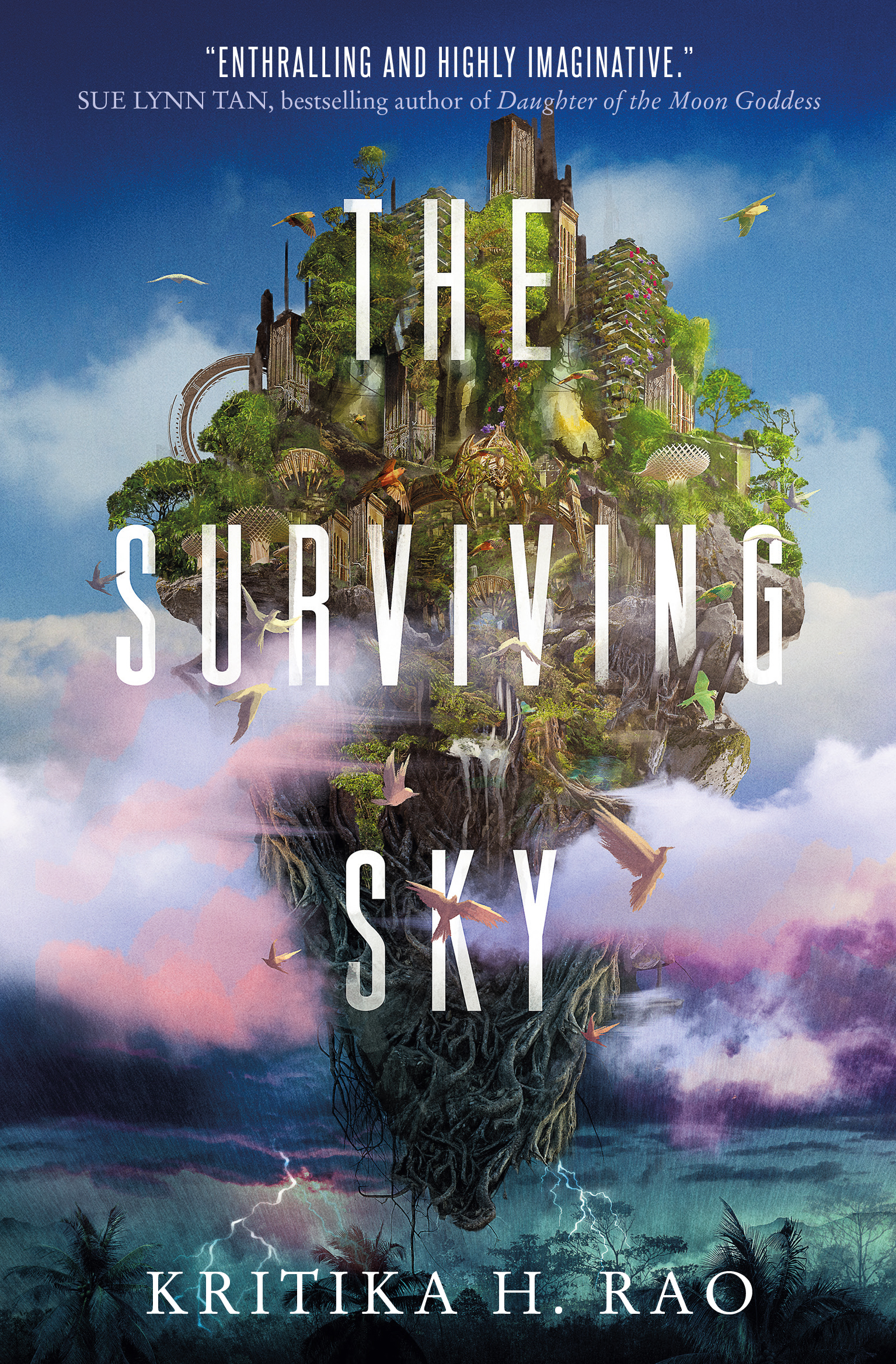
I read 17 books this month! Other than the one stinker in the batch (sorry, The Surviving Sky), it’s been a great reading month in terms of quality and in terms of quantity. Expect some kind of mini-review post for all of the books I bought for my birthday and the books I got as gifts, because they’ve all been fantastic so far.

1 – 1.75 stars:

The Surviving Sky

3 – 3.75 stars:

The World of Edena

4 – 4.75 stars:

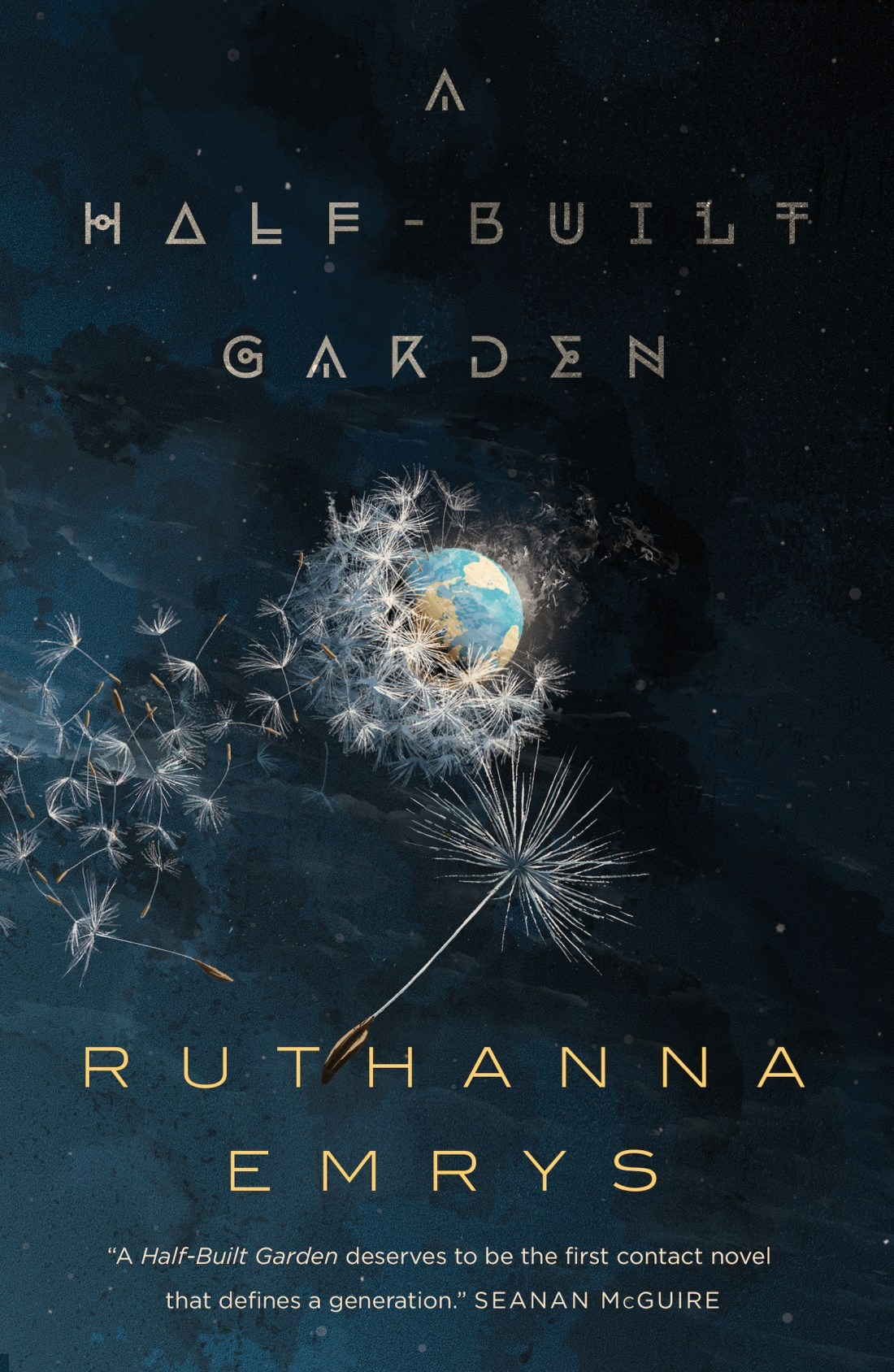
A Half-Built Garden

5 stars:

Thi is How You Lose the Time War

FAVORITE BOOK OF THE MONTH: This is How You Lose the Time War 5 stars

POSTS I’M PROUD OF:

POSTS FROM OTHER WONDERFUL PEOPLE THAT I’VE BEEN ENJOYING:

SONGS/ALBUMS THAT I’VE BEEN ENJOYING:

UNDERRATED ALBUM ALERT
the catchiest
guess who blew through season 2 of Heartstopper in less than a week
too groovy to clean the bathroom to
good lord I love Lisa Germano
this song tickles my brain in the most pleasant way possible
man I need to listen to more P.J. Harvey

Today’s song:

deliciously 90’s earworm

That’s it for this month in blogging! Have a wonderful rest of your day, and take care of yourselves!