
Happy Sunday, bibliophiles! I hope this week has treated you well.
This week: the last Sunday Songs of 2025 (good riddance), featuring one more song from Bad Sisters, early college memories, and Liz Fraser getting her money’s worth out of the letter ‘S.’
Enjoy this week’s songs!
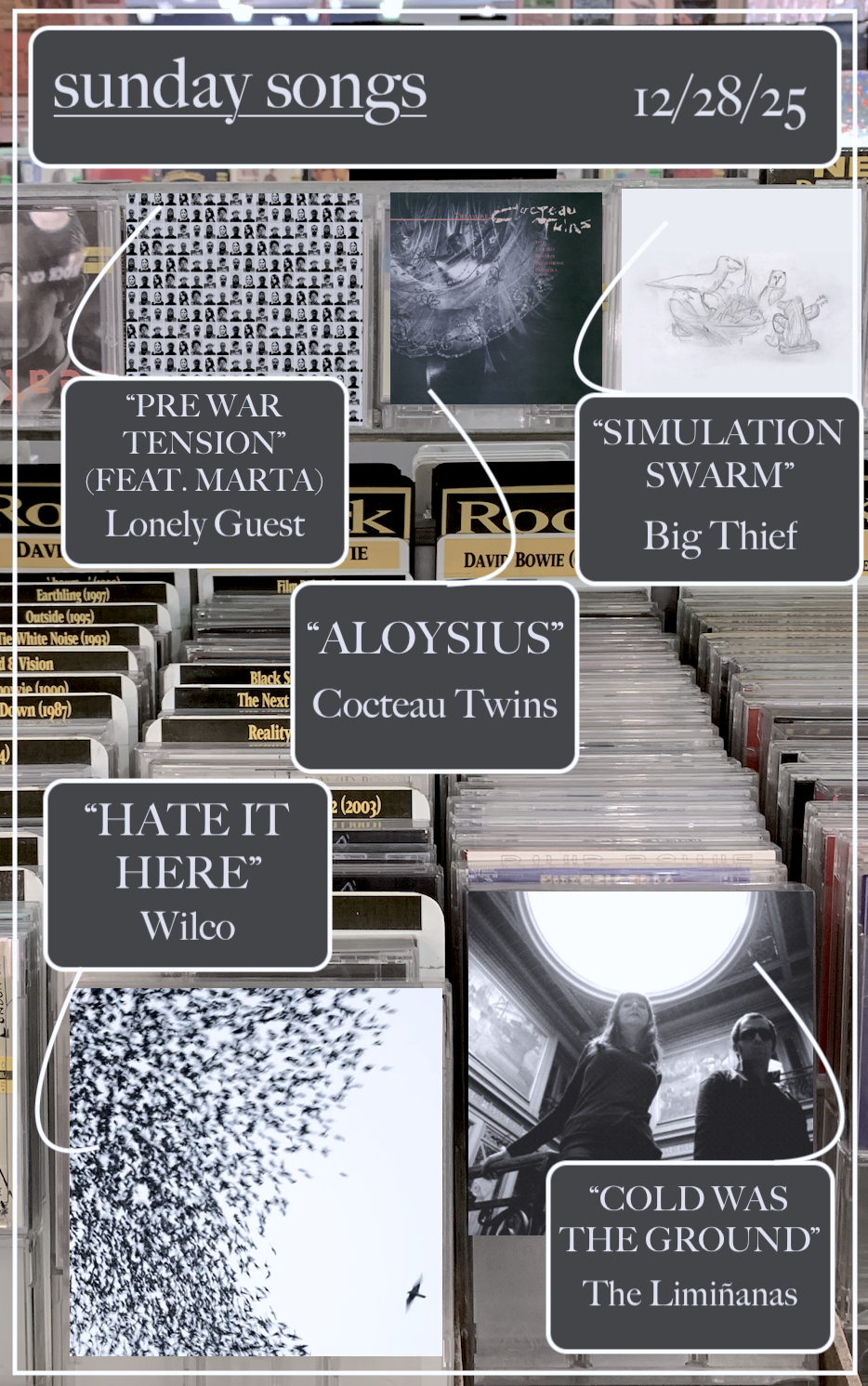
SUNDAY SONGS: 12/28/25
You know me—I’m a sucker for songs that are sweet, sincere, a little too sappy on occasion. I love a good ballad here and there. But there is a hair-thin line between being sincere and wholesome and being overly earnest and corny in a way that sounds disingenuous the minute you step an inch beyond that line. Being genuine doesn’t mean squinting more than usual when you sing into the mic and switching your guitar from electric to acoustic—unless the feeling’s there, it’s not going to sound sincere. So it’s always an acrobatic feat to make a song that’s earnest and sincere but doesn’t sound fake. Sometimes you have to be a bit of a cornball to get it across, but sometimes, being a cornball is better than thinking that you’re automatically moving people to tears by singing slightly louder.
I wouldn’t say that of Jeff Tweedy though, even if Sky Blue Sky’s legacy is that it’s the origin of the term “dad rock,” a kind of Frankenstein’s monster from Pitchfork writer Rob Mitchum, who now regrets what he created. Tweedy’s just a uniquely sincere kind of poet, no matter the lens he uses. “Hate It Here” is a long time coming on Sunday Songs ever since I discovered it this summer, after it became a setlist staple for Wilco on their most recent tour. The best way to describe it is that it’s wholesome without saccharine—Jeff Tweedy just misses his wife when she’s not there!! He’s lonely!! He loves his wife!! It’s this in song form:
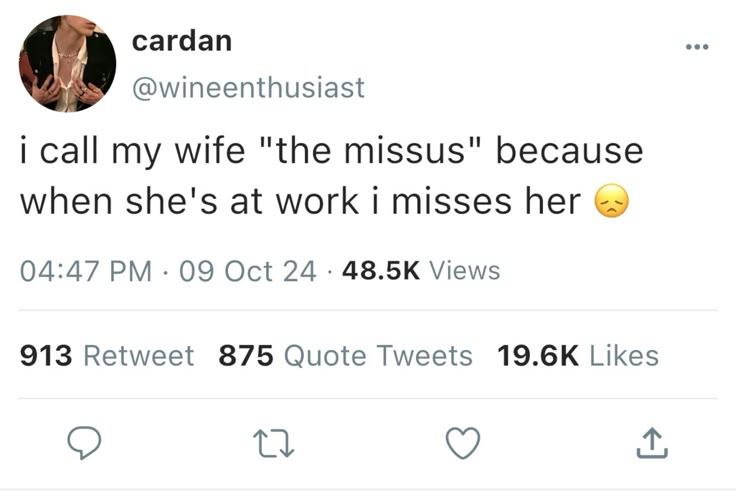
It veers towards the sappy, but it’s delivered with the kind of longing you only get from a happy, stable marriage and a genuine affection—it can’t come across as anything other than wholesome. And like the house that Tweedy’s idly pacing around, there are all manner of quirky musical furnishings—this isn’t in the studio version, but on tour, when Tweedy sings “I’ll check the phone,” Mikael Jorgensen does this little riff on the keyboard that sounds like a phone ringing. And let me tell you, it instantly made me go “OH MY GOD!! HE DID THE THING!! THE PHONE!! THE PHONE IS RINGING!!” It just goes to show the ounces of care that Wilco puts into every song, no matter if it’s about the depths of addiction, existential crises…or missing the wife. Because every song deserves the same love.
…AND A BOOK TO GO WITH IT:
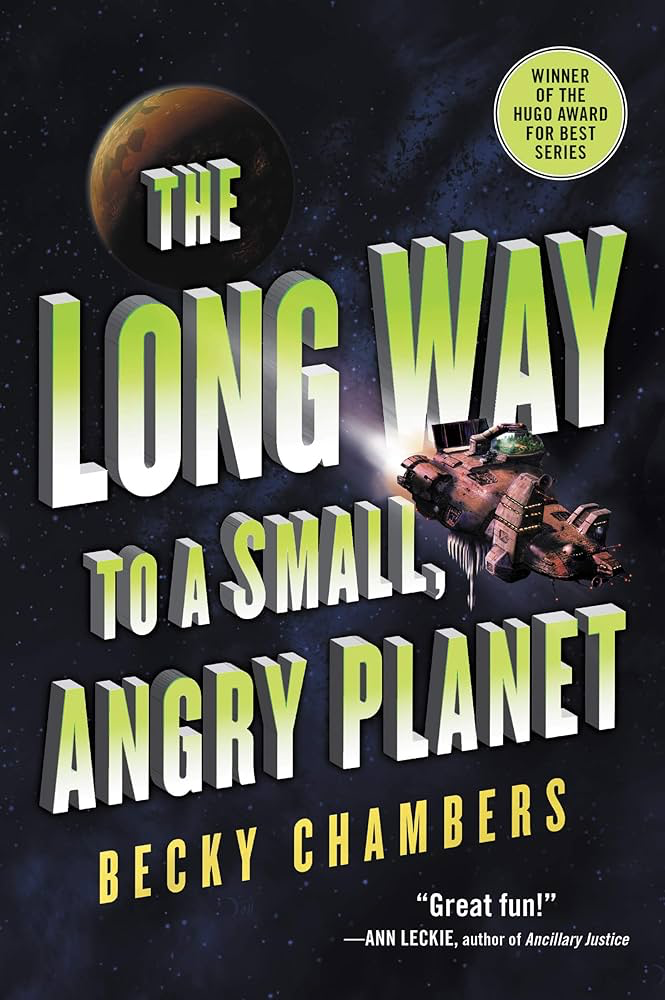
The Long Way to a Small, Angry Planet – Becky Chambers – …Ashby and Pei. Just saying.
“Cold Was the Ground” – The Limiñanas
I promise this’ll be the last of the music I’ve swiped from Bad Sisters for the foreseeable future. I can’t help it! Whoever was in charge of the music direction should’ve gotten a raise, both for the sheer volume of great songs included, but for the subtle focus on women, be it Melanie or Wet Leg, Nancy Sinatra or Bikini Kill.
If not for the fact that “Cold Was the Ground” plays in-scene while the Garvey sisters are listening to the radio, I fully would’ve thought that it was part of PJ Harvey’s score—those resonant, plucked strings at the beginning sound almost identical to the musical motifs she scattered throughout the series. It’s a song so perfect for the show’s atmosphere that the characters practically break the fourth wall and recognize it themselves—it plays on the radio while they’re disposing of a body, and they insist that Eva switch to another radio station and play something less blatantly topical. “Cold Was the Ground” is a sparse but cinematic song. If Fargo goes on for another season, this would fit perfectly in it; it has that same feel of an unsettling, Depression-era Americana standard, despite the Limiñanas being French. With Marie Limiñana’s breathy vocals, a husky whisper through the mist, you feel a kind of old-fashioned dread, evocative of a campfire story that you’re trying to pretend didn’t scare you, but becomes realer the more you look out into the dark night.
…AND A BOOK TO GO WITH IT:
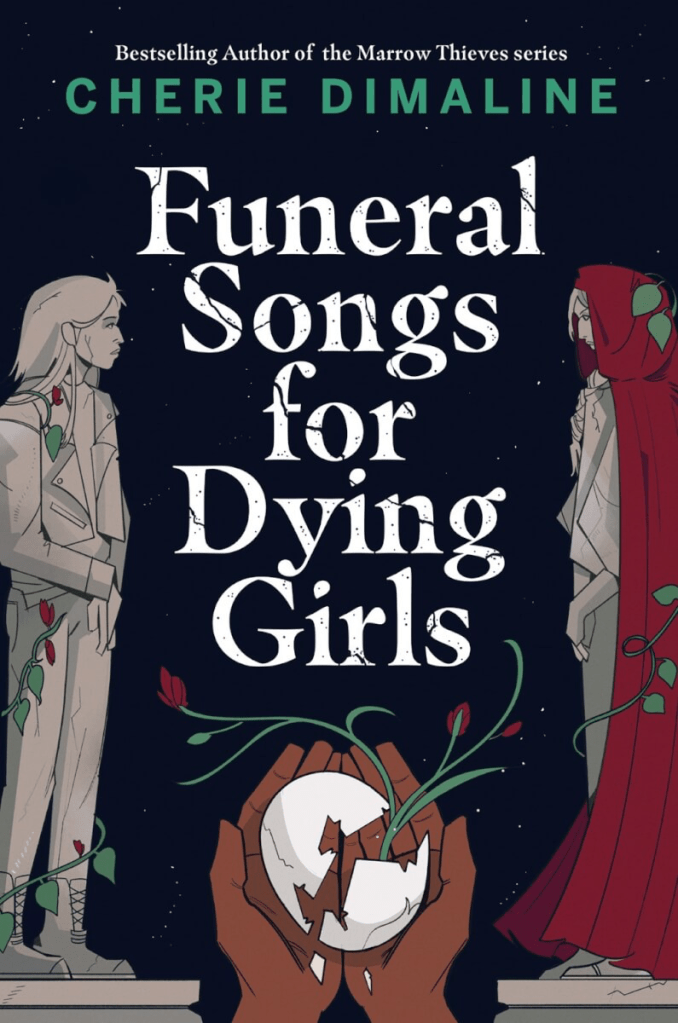
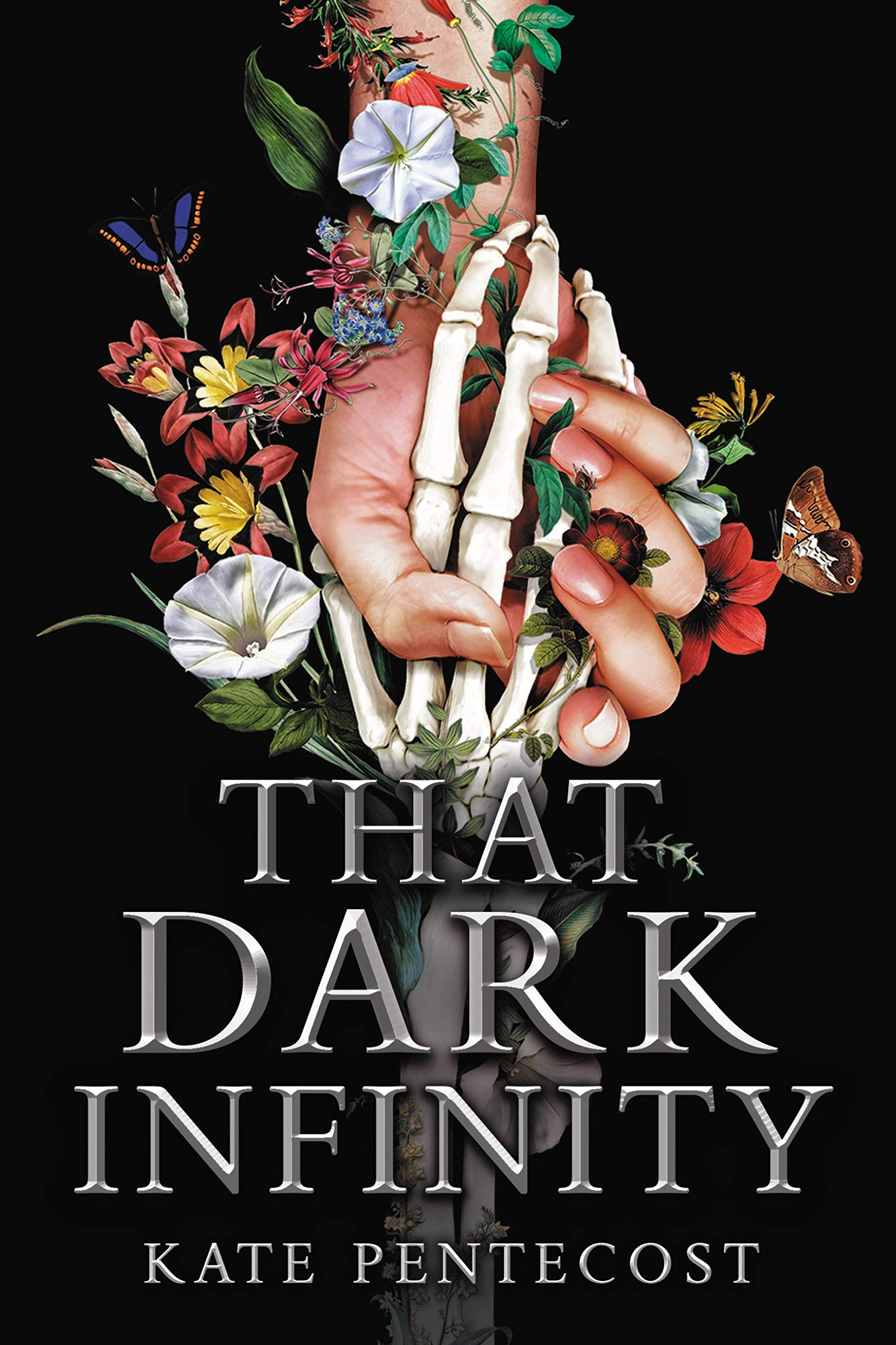
Funeral Songs for Dying Girls – Cherie Dimaline – “I was dreaming a note/In the cemetery/Shadows in my heart/And sadly/I still hear you cry…”
“Pre War Tension” (feat. Marta) – Lonely Guest
I just want to talk about the visual for the song here, because…why are we just zooming in on random parts of Joe Talbot’s face? Why is 1/3rd of this video just the camera slowly getting closer and closer to his hairline, and then zipping back down to his chin? I mean, zooming in on Marta’s eyes and smile during the “Saw it in your eyes/Sense it in your smile” line is a nice touch, but…everything else? Why does Joe Talbot’s picture look like a mugshot?? Why is Tricky’s picture so grainy compared to everybody else’s? No wonder those photos are so tiny on the Lonely Guest album cover…
Anyways. Lonely Guest is essentially just Tricky, but back in 2021, it was a collaborative side project under another name. I’ve only listened to a handful of songs from it, but it captures the modern incarnation of what Tricky’s music has bottled for me: agitation. He thrives on mining dread, anxiety, and all manner of creeping, looming feelings—Maxinquaye is a masterclass in taking that feeling and ballooning it up 10 times its normal size. Though “Pre War Tension” doesn’t musically give that feel—it’s more of a simple instrumental as far as Tricky goes—its guests do. Joe Talbot was the perfect mouthpiece for these lyrics, making the first verse sound like a less aggressive IDLES track; the opening lyrics (“There’s a Macy’s parade-sized pink elephant/In the room that renders me unintelligent”) sound straight off of Ultra Mono. But ultimately, it is still Tricky, and his signature rasp, spoken in an atonal whisper, articulates that tension of wanting to hunker down somewhere cold as the world around you slowly spirals towards ruination. Even Marta’s voice, the most even-keeled balance between Talbot and Tricky, has a kind of resignation to it despite its softness.
…AND A BOOK TO GO WITH IT:

Junker Seven – Olive J. Kelley – “Life devours/Then it sours/You wanna go/But you really can’t stay/Your trouble and strife…”
I doubt this is an applicable situation for anybody, but if you ever need to explain the definition of “sibilant” to someone (1. making or characterized by a hissing sound or 2. [of a speech sound] sounded with a hissing effect, for example s, sh), just use this song. This song was brought to you by the letter ‘S’: silly, saliva, sashimi, should’ve. Of course, I write down about half of those words without complete certainty that they’re in the lyrics, but either way, it’s a very sibilant song, silky and ethereal like the fabric draped over Treasure’s album cover. Due to that emphasis on ‘S,’ “Aloysius” is one of the more indecipherable Cocteau Twins songs for me—as used to their relative gibberish as I am, all of them blend together like watercolors with that consonant repetition. Frazer makes ‘S’ not even sound like a consonant anymore, with the airy treatment it gets, along with all of the vowels strung along with it. That’s the real talent of Frazer for me: words are malleable things in her hands, elevated beyond words and into strings of pearls.
…AND A BOOK TO GO WITH IT:
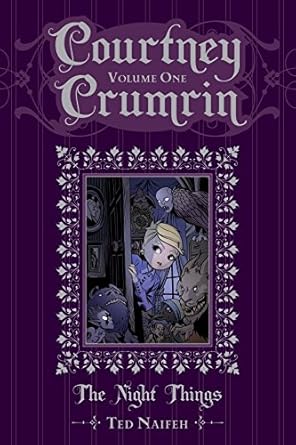
“Simulation Swarm” – Big Thief
I’ve manage to only double-dip on Sunday Songs sparingly through the years, but I’ve fallen for it again. To be fair, this one appeared before I was even writing about these and maybe 20 people saw them on my Instagram story, so we can pretend that this isn’t a repeat.
“Simulation Swarm” is so distinctly 2022 for me, and yes, I know, Dragon New Warm Mountain I Believe In You came out that year, but it’s a very specific part of 2022 for me. I remember listening to it while facing the lawn surrounding my freshman dorm in college, the sunlight on the fresh grass, the fear shaky in my legs as my headphones snaked over the worn strap on my purse. I was impressionable to my brother’s music taste then, and I still am now, but he and his girlfriend were guiding me through my first wobbly steps into college (god, THANK YOU GUYS), leaving Big Thief songs like crumbs along the way. I probably heard it at one of the coffee shops on campus too, but either way, if the local coffee shop run by college students isn’t playing Big Thief, what’s the point?
Cobbled together from a series of Lenker’s experiences—hospitalization, a childhood spent in a cult, and her separation from her brother—”Simulation Swarm” is so bursting with yearning that’s it’s difficult to pin down exactly how I feel about it on any given day. I’ve leaned towards an eagerness to escape myself, but it’s a tender little mood ring that burns a bit when you leave it on your finger for too long. Lenker’s lyrics are so poetic and surreal in nature that I can’t help but imagine a fantastical undercurrent to it; my heart always snags on the “last human teachers” bit, maybe just from the sci-fi image that it conjures up. Sure, the verse about “building an energy shield” in the backyard feels very much like kids playing pretend, but I can’t help but thinking of children on a faraway planet, scraping enough money together to make their energy shield out of scrap metal and hijack a spaceship and fly it far, far away, as far as they can get. That emotion, positive or negative, feels to me like the yearning for freedom—like the empty horses, it yearns to break free, and in the chorus, you get the feeling that something’s finally snapped, broken loose, and broken its chains: “I’d fly to you tomorrow/I’m not fighting in this war/I wanna drop my arms and take your arms/And walk you to the shore.”
…AND A BOOK TO GO WITH IT:
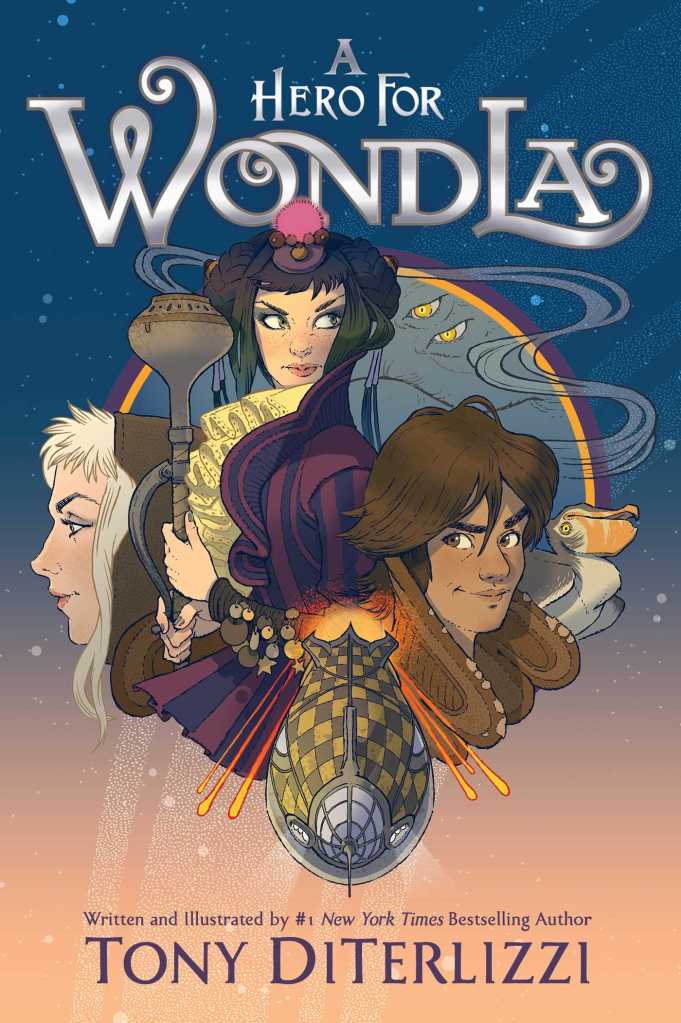
A Hero for WondLa (The Search for WondLa, #2) – Tony DiTerlizzi – “I remember building an energy shield/In your room, like a temple/Swallows in the windless field/Very thin, with your mother/Tall as a pale green tree…”
Since this post consists entirely of songs, consider all of them to be today’s song.
That’s it for this week’s Sunday Songs! Have a wonderful rest of your day, and take care of yourselves!


 The Bookish Mutant