Posted in Sunday Songs

Sunday Songs: 11/30/25

Happy Sunday, bibliophiles! I hope this week has treated you well.

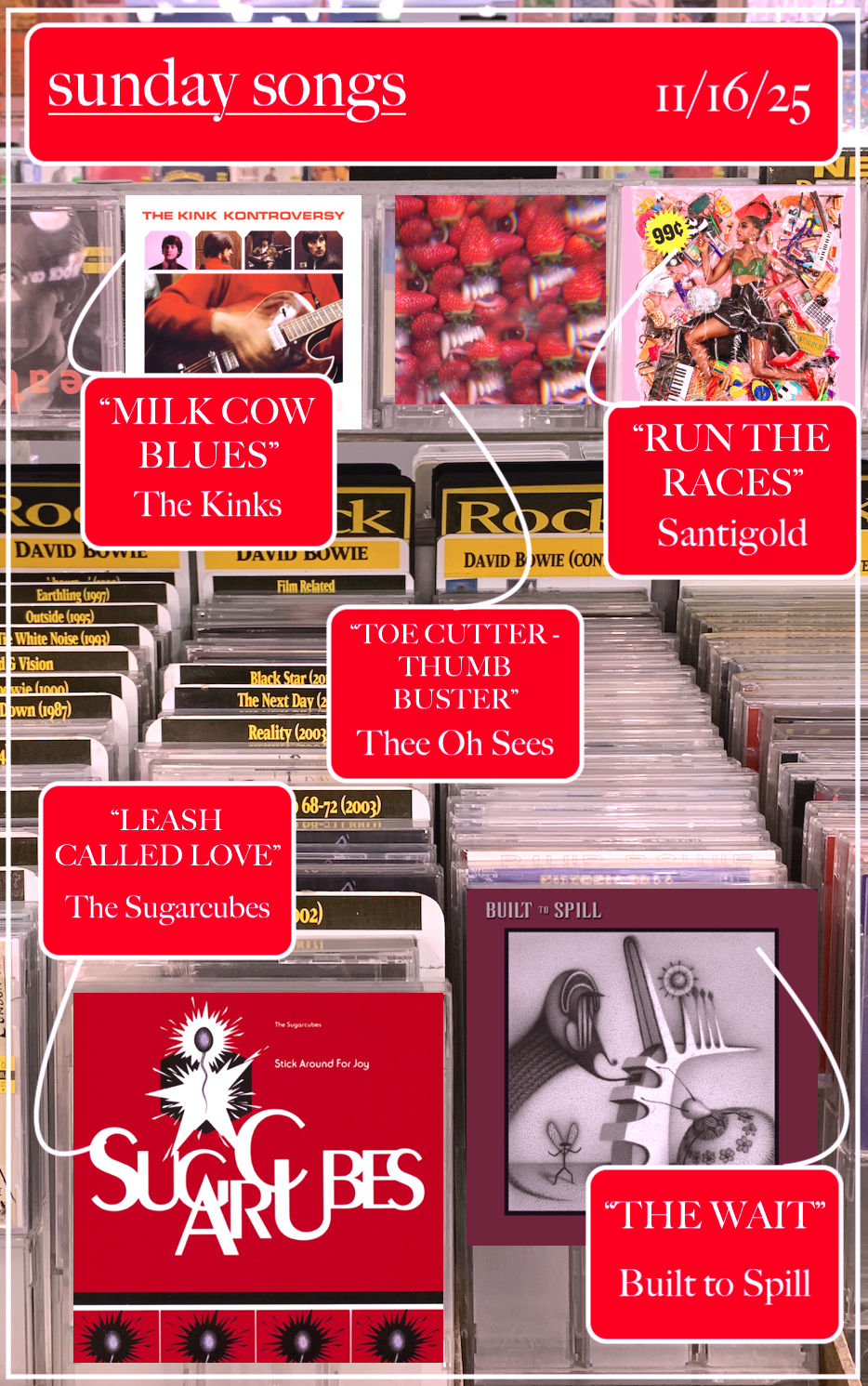
I’ve got at least one more post here before I inevitably have to crawl back into the finals burrow. Since I’ve been out of the office lately, here are my graphics from the past few weeks:
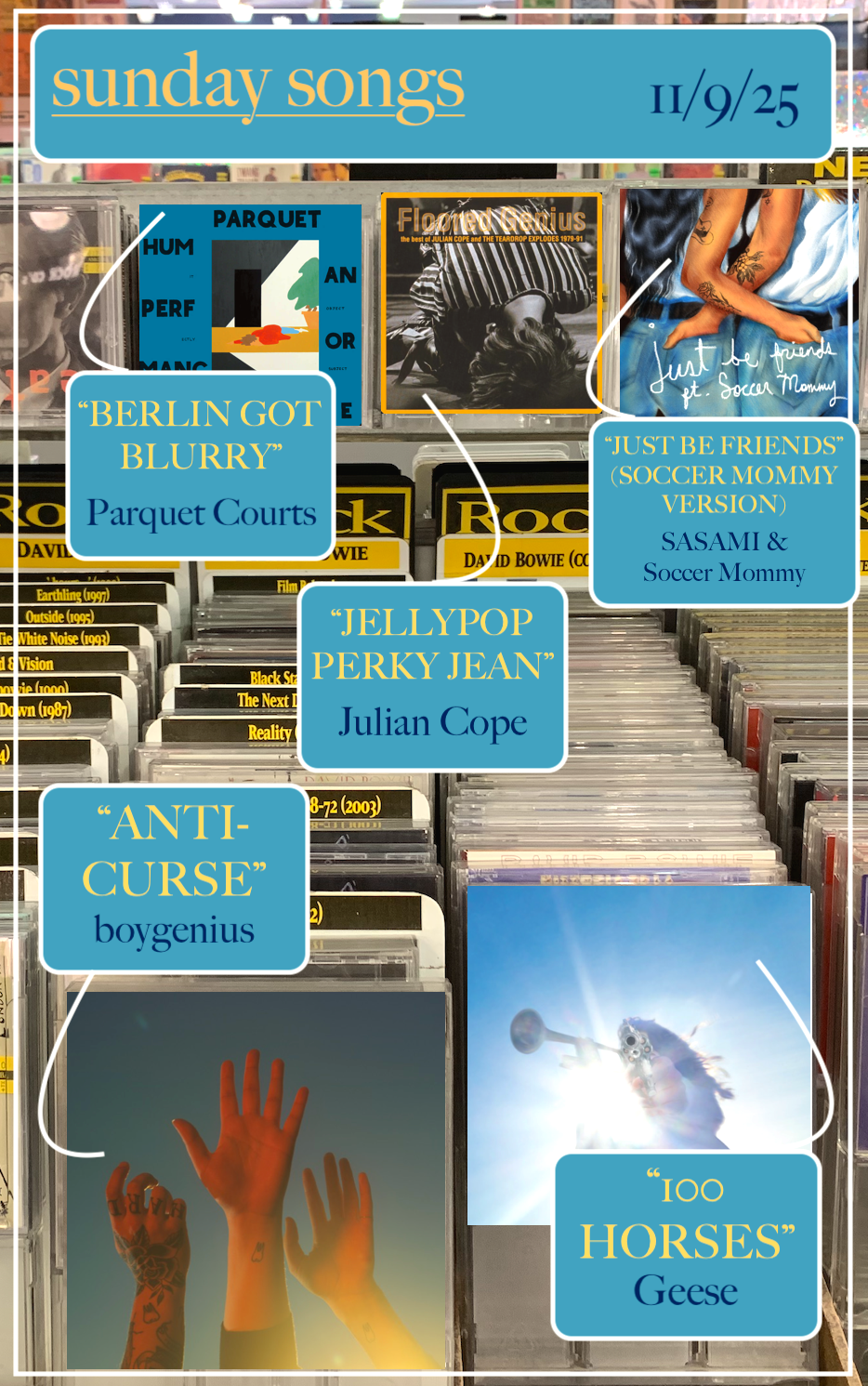
11/9/25:

11/16/25:

11/23/25:

This week: What half of Britpop’s Big Four frontmen are up to these days, peak goth drama, and I finally find out why Joe Talbot was hiding out in that Gorillaz exhibit like Where’s Waldo.

Enjoy this week’s songs!
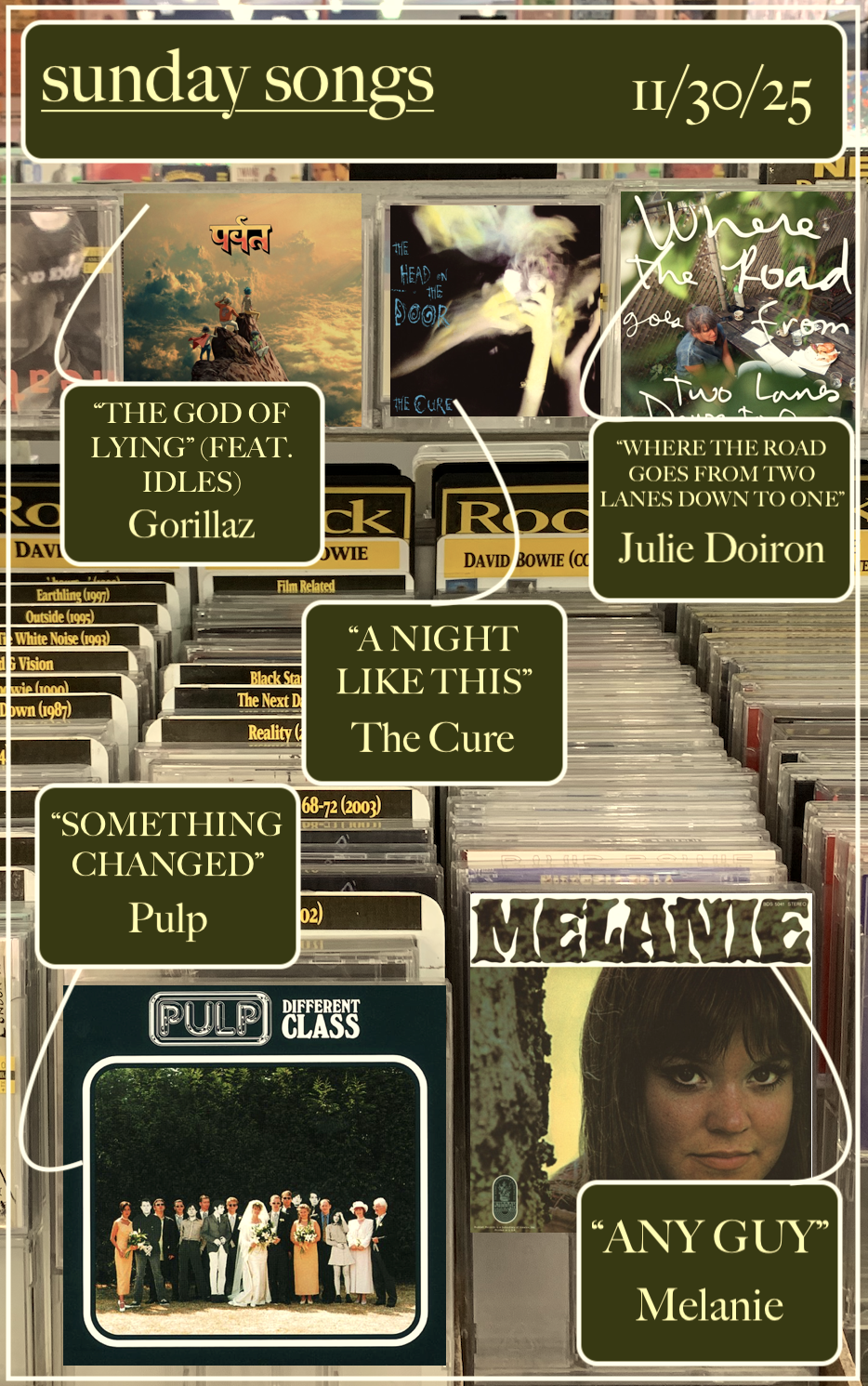
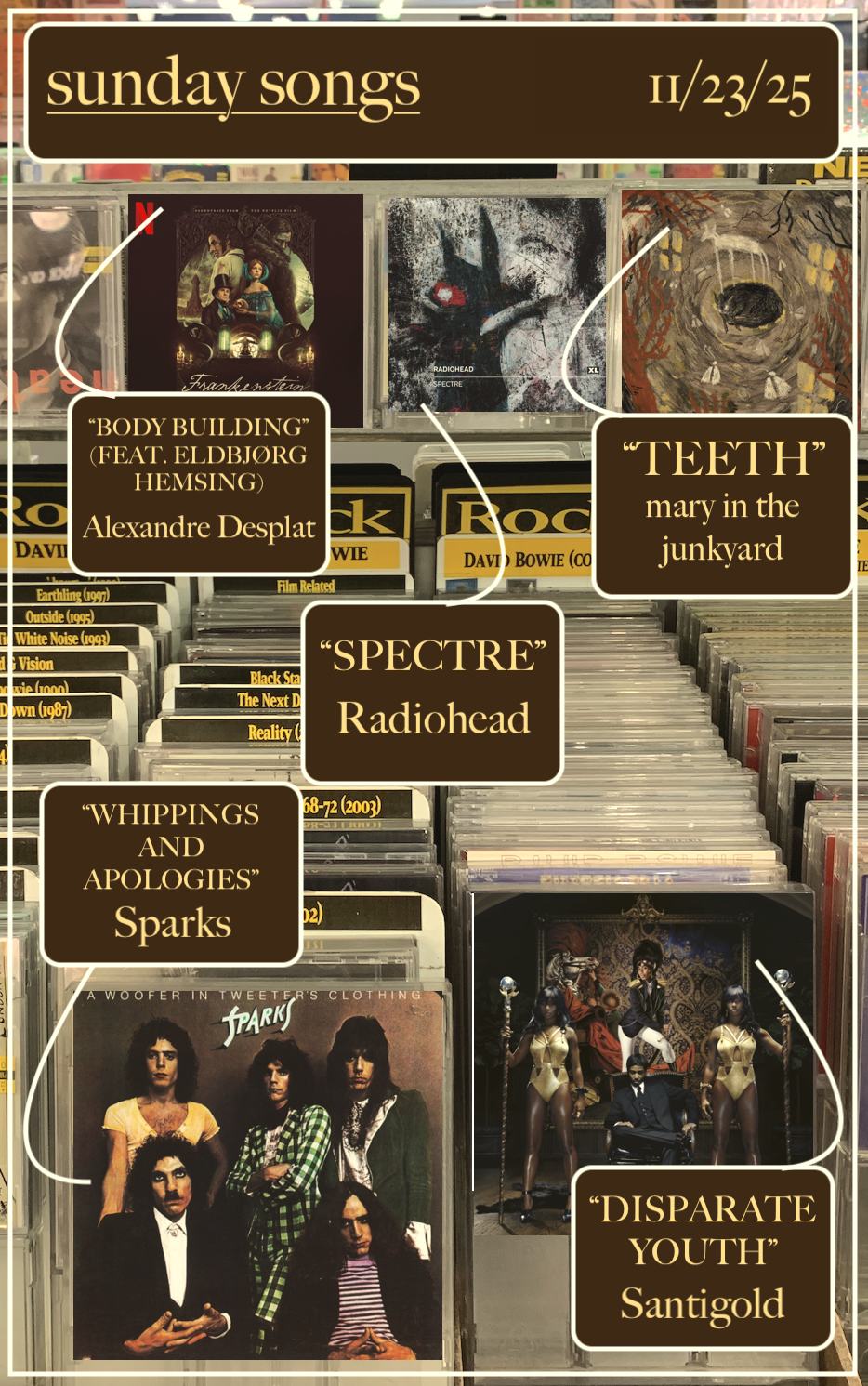
SUNDAY SONGS: 11/30/25

“Something Changed” – Pulp

Pulp recently put on an absolutely showstopping performance at NPR’s Tiny Desk Concert. I still have only a handful of Pulp songs that I really know, but even as a budding fan that initially knew only 1/4 songs in their setlist (that one being “This Is Hardcore,” yet another shoutout to my amazing dad for showing me that one!), their performance was an absolute joy. Even in the confines of said Tiny Desk, Jarvis Cocker has the most enigmatic, fluid stage presence that defies being simply Britpop and has transformed into a timeless charm. And now I have three more Pulp songs on my rotation!

“Something Changed” hooked me more than the rest, and it reminded me that I really just need to get over myself and listen to Different Class already. Themes of social and sexual frustration aside (see: “Live Bed Show”), Pulp seemed to have an uncanny ability to create such pure, resonant anthems without making them cloying or insincere. I never got around to talking about “Disco 2000” last year, but that song feels like the platonic ideal of a pure, passionate love song—it’s a small wonder that nobody’s used it in the end credits of a rom-com yet. (Maybe that’s for the best? It’d need a really good rom-com.) “Something Changed” has that same quality in softer shades, with Cocker crooning about the nature of chance against a backdrop of swelling, sunlit strings: “Do you believe there’s someone up above/And does he have a timetable directing acts of love?” For someone with a sense of humor as sardonic and often cynical as Cocker, it’s a display of sincerity that feels anything but inauthentic—you can tell that, to some degree, there’s a genuine feeling of being wonderstruck by the chances that led him to this point in time—and this whirlwind romance.

“Something Changed” starts at 8:05. While you’re here, though, the 7+ minute rendition of “This Is Hardcore” stopped me dead in my tracks. One of the best Tiny Desk Concerts this year, for sure.

…AND A BOOK TO GO WITH IT:
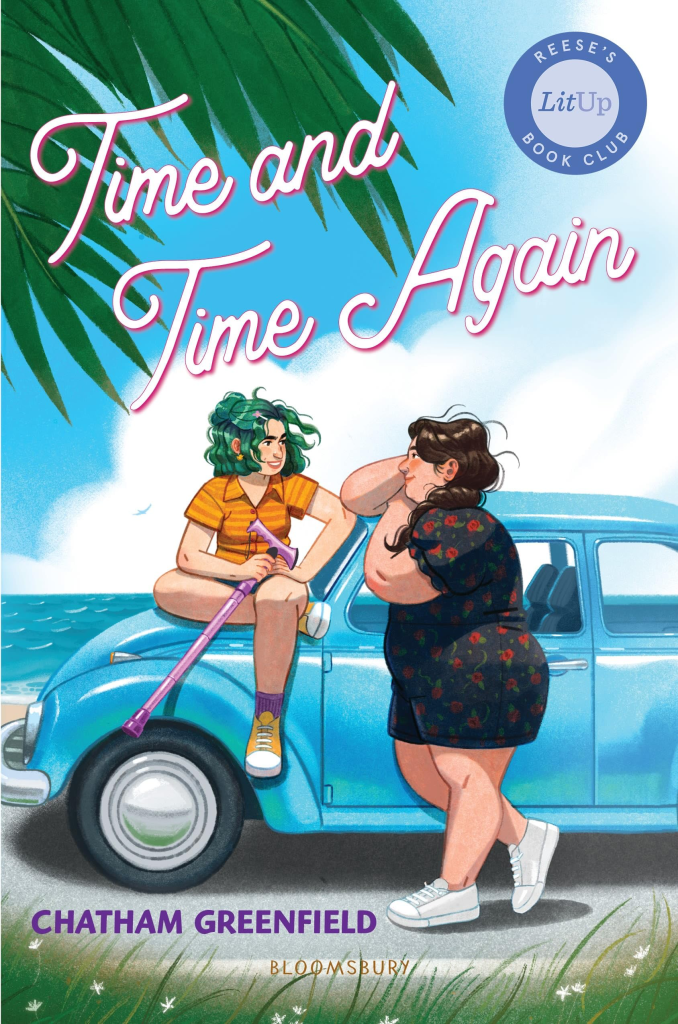
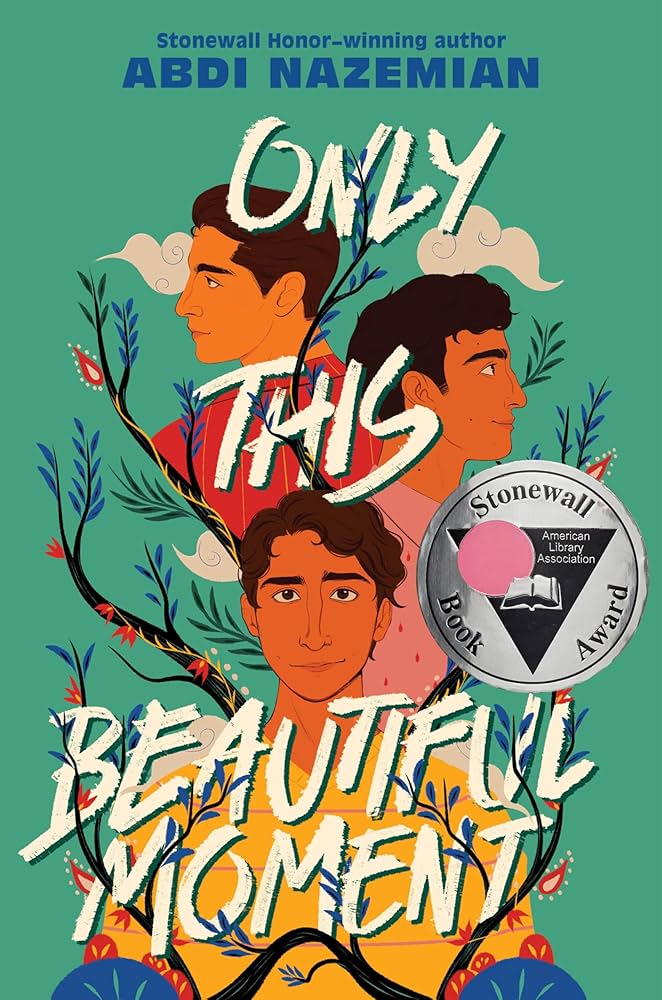
Time and Time Again – Chatham Greenfield“Oh, I could have stayed at home and gone to bed/I could have gone to see a film instead/You might have changed your mind and seen your friend/Life could have been very different but then/Something changed…”

“Any Guy” – Melanie

I never find Melanie songs organically, I just leech them off of TV shows about once a year (see: “Look What They’ve Done to My Song, Ma” thanks to We Are Lady Parts). This one in particular came from the season 1 finale of Bad Sisters, and without spoiling anything, it rang out as a bitterly triumphant anthem for the culmination of a season’s worth of work to try and eliminate a man equivalent to Satan incarnate from the face of the earth. Season 1 has been out for a few years, but I’ll still refrain from spoilers.

But some needle drops get better and better the more that you think about them. Melanie fit along with the musical feel of Bad Sisters, primarily featuring needle drops from great women-fronted bands and musicians (Bikini Kill, Nancy Sinatra, Wet Leg, and of course, the theme song and score composed by the iconic PJ Harvey). Many of them feel more atmospheric other than a handful of very purposeful ones, but “Any Guy” relates so much to the character of Grace to me. A lot of Melanie’s earlier fame centered around how childish she looked—this was pre-“Brand New Key” and people derailing childhood innocence into Freudian nonsense, but there was a clear correlation between what people saw as an unassuming young woman and the talent that resided inside of her. That image remains after her death, but for me, Melanie’s her best when she lets loose—think of the righteous fury at the end of “Look What They’ve Done to My Song, Ma!” That final belt at the end! Reckoning! “Any Guy” has that same explosive moment at the end; beneath the veneer of placid strings, Melanie stews about getting involved with a two-timing guy and feeling disposable, until her waver breaks into an impassioned howl of “Is she as pretty as me, huh?” Nothing’s better than when Melanie snaps and lets the full force of her voice free, and what better song to soundtrack a similarly unassuming, underestimated woman finally breaking free. Even when she’s singing of breaking away, there’s a waver in her voice, and that’s more Grace than anything—and there’s no shame in having a waver in your voice when you’ve finally mustered the courage to speak your mind.

…AND A BOOK TO GO WITH IT:
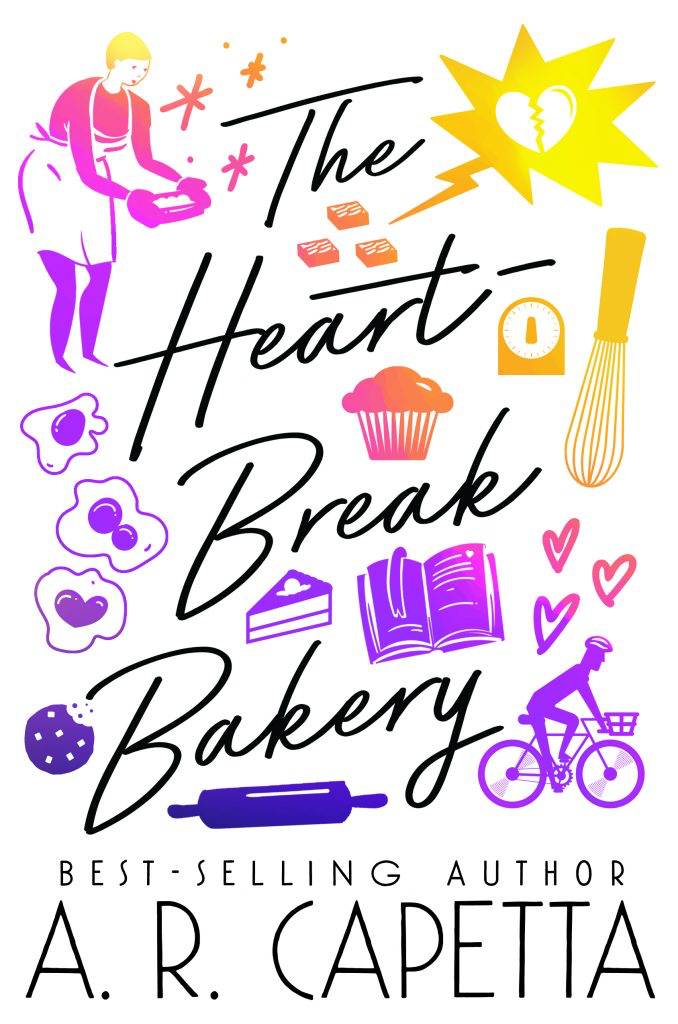
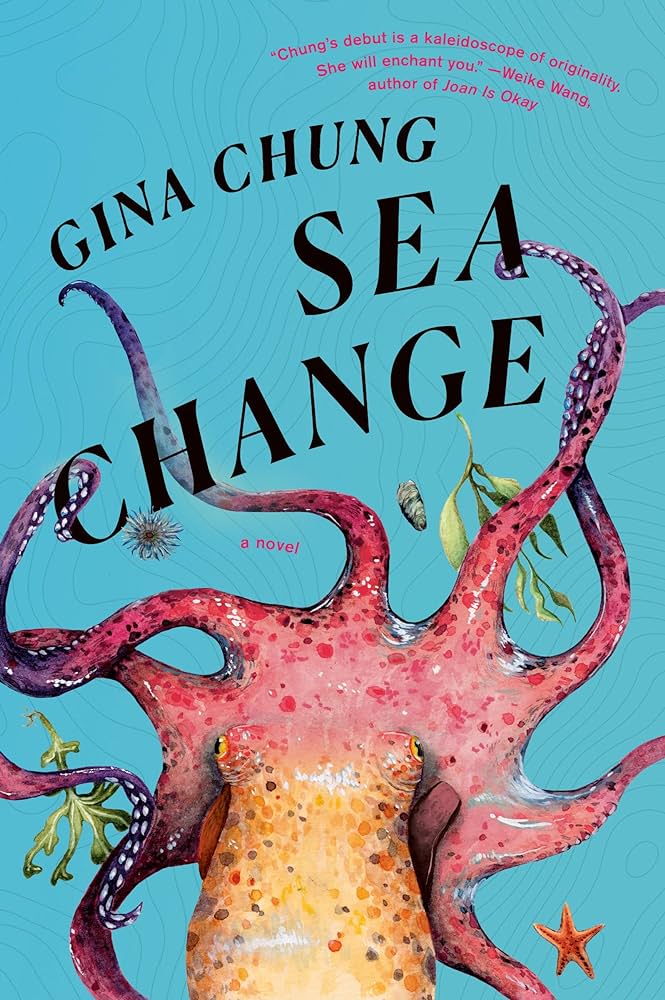
The Heartbreak Bakery – A.R. Capettabreakups, miscommunication, and one very fateful batch of magic brownies…

“The God of Lying” (feat. IDLES) – Gorillaz

Guess who’s getting tickets to L.A. the minute that they announce when the House of Kong exhibit is coming?? Prepare for me to be INSUFFERABLE and IN CALIFORNIA

Back when they did the story on the London House of Kong exhibit over the summer, they showed the collage on the wall of all of Gorillaz’s collaborators over the years. There were tons of familiar faces: De La Soul, Yasiin Bey, Shaun Ryder, St. Vincent, et cetera…but I swore that I could see Joe Talbot peeking out from between the faces. And it got me thinking…had I missed something? Mind you, this was before The Mountain was announced, so I had no idea what was a head. But now that it’s here, I’m so excited for this pairing! As is the ritual with most modern Gorillaz rollouts, the singles are hit or miss. “The Happy Dictator” was loads of fun, but “The Manifesto” is somehow two different songs, and none of them are particularly good. And here we see the post-Humanz Gorillaz “where’s Damon?” problem—it’s all the collaborators and barely him.

Thankfully, “The God of Lying” fixed this issue swiftly, with Albarn trading off verses with Joe Talbot of IDLES. Gorillaz have been mining the state of dystopian discontent that we’re in for quite some time now, but if there’s anyone more fit for an antidote, it’s Talbot. As he coolly assesses the sorry state of the world (“Are you deafened by the headlines?/Or does your head not hear at all?/Are you pacified by passion/Are you armed to the teeth?”), Albarn’s distorted voice professes that we’ve all reached for some comfort beyond the bad news, but that it’s so overwhelming that we can’t even comprehend that hope is still possible; we’re actively “running to the exit” because we somehow fear the notion of hope existing even while trapped in an endless cycle of doomscrolling and horrific news. Albarn said this to BBC Radio 1: “I suppose I’ve kind of got in my head what happened a few days ago with Mamdani in New York. And one of the things he said that really kind of stuck out for me is that ‘Hope is alive’. And in this track, Joe and I are kind of we’ve been chased by hope. And I thought, Oh, that’s nice.” First off, since I was hunkered down doing homework when it happened…THAT’S MY MAYOR! (I’ve been to NYC a grand total of one time in my life…anyways.) Second, what a poetic assessment—we haven’t just abandoned hope, we’re being pushed away from it, pacifying the weight of carrying every bad thing in the world with fleeting pleasures and addiction. It’s a poignant statement for both Albarn and IDLES, enduring proof that love remains to be the fing.

…AND A BOOK TO GO WITH IT:
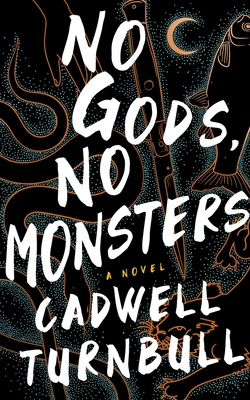
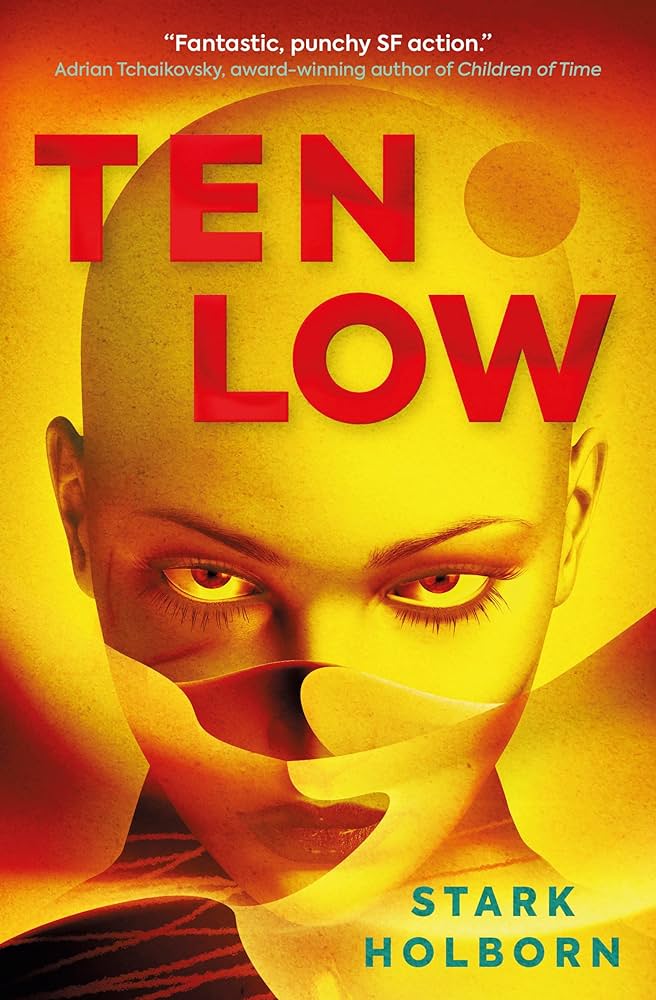
No Gods, No Monsters – Caldwell Turnbull“Are you pacified by passion?/Are you armed to the teeth?/Are you bubbling at the surface of what’s cooking underneath?/Are you dying for an answer for what they call good grief?”

“A Night Like This” – The Cure

Another album that I need to listen to: The Head on the Door, apparently! As the result of being brought up by gothy parents who went to high school in the ’80s, I’ve practically listened to the whole thing. The same can be said for a fair amount of their albums. (From The Head on the Door in particular, I have a specific memory of my parents showing me the “Close to Me” video and thinking that the puppets were really funny.)

How perfect it was that I remembered “A Night Like This” right after Halloween. Frankly, every season is The Cure season if you can get with the drama 24/7, but you can’t deny that it’s the ideal fall or winter soundtrack. This track in particular represents the peak of what I love about The Cure—oh my god, the drama. I mean that without any irony, because there’s such an art to throwing yourself into it fully without looking insincere. You have to make a bit of a fool of yourself to sell it, but Robert Smith never looked the part to me—it was so intentional, and so clearly from a place of love. Lyrically, that’s what sells the glut of the song for me, but musically, what pulled it back from my memory was that guitar tone—so incredibly rich and full, and yet cavernous in a way that it couldn’t be considered goth without. It’s the closest I feel a guitar can sound to a cello without Jonny Greenwooding it with an actual cello—there’s a depth to the sound that feels like it could only come from an instrument with a hollow body. It’s all an undeniable spectacle of romantic (capital R Romantic and the usual sense) passion.

…AND A BOOK TO GO WITH IT:
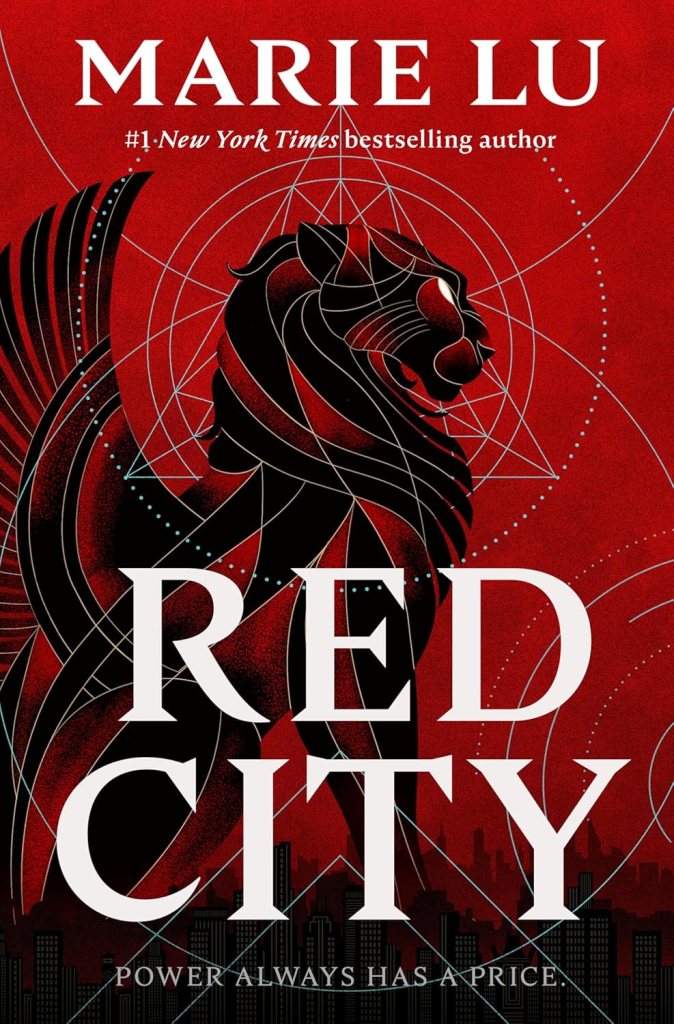
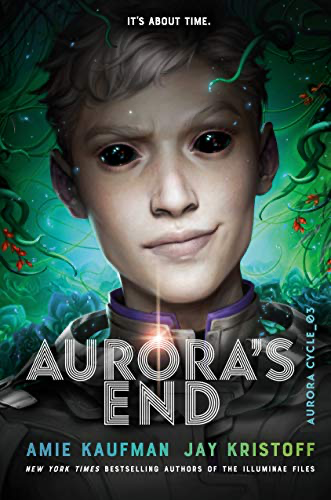
Red City – Marie Lu“It goes dark, it goes darker still/Please stay/But I watch you like I’m made of stone/As you walk away…”

“Where the Road Goes Down from Two Lanes to One” – Julie Doiron, Michael Feuerstack, Land of Talk, & Dany Placard

I just put Julie Doiron on the graphic since she’s the main artist on this song, but I wanted to credit the rest here. I just don’t think I could fit everybody else in the tiny text in that tiny little rectangle, and I’m not about to give anybody eyestrain.

I found out about this soothing song through Black Belt Eagle Scout, who played several shows with Julie Doiron earlier this month. (Happy to see that they’re well enough to play music again!!) Either way, I was immediately charmed by the nostalgic calmness of this song; it’s a six-minute, lazy stroll down memory lane, buoyed by a series of multilayered harmonies. As Doiron strings together a series of vignettes about crushes on boys and late-night driving, she gives them the feeling of blurry, sun-bleached photos with the edges curled up from wear. Towards the end, as all four of their voices fall artfully out of sync, repeating “Can you say it how I remember/Will you say it how I remember/Can you sing it how I remember/Will you sing it how I remember?”, it brings into sound the feeling of memories tangling together in your mind, timelines hazy and blurred, but just as pleasant as they were in the moment.

…AND A BOOK TO GO WITH IT:

Amelia, If Only – Becky Albertalli“Get in the van, we’re late for a show/Still got four more hours to go/Road maps, glovebox, no phone/I need to pull over, I wanna call home…”

Since this post consists entirely of songs, consider all of them to be today’s song.

That’s it for this week’s Sunday Songs! Have a wonderful rest of your day, and take care of yourselves!

Posted in Book Review Tuesday

Book Review Tuesday (6/10/25) – When the Tides Held the Moon

Happy Tuesday, bibliophiles!

I found this novel in an Instagram post about upcoming queer releases in 2025, and this one immediately caught my eye. You put a comparison to The Shape of Water in the tagline, and you bet I’m in. (If anything, it’s right between The Shape of Water and Nightmare Alley, given the setting.) Venessa Vida Kelley has delivered a vibrant and sensitive story of queer love and solidarity amongst weirdos.

Enjoy this week’s review!

When the Tides Held the Moon – Venessa Vida Kelley

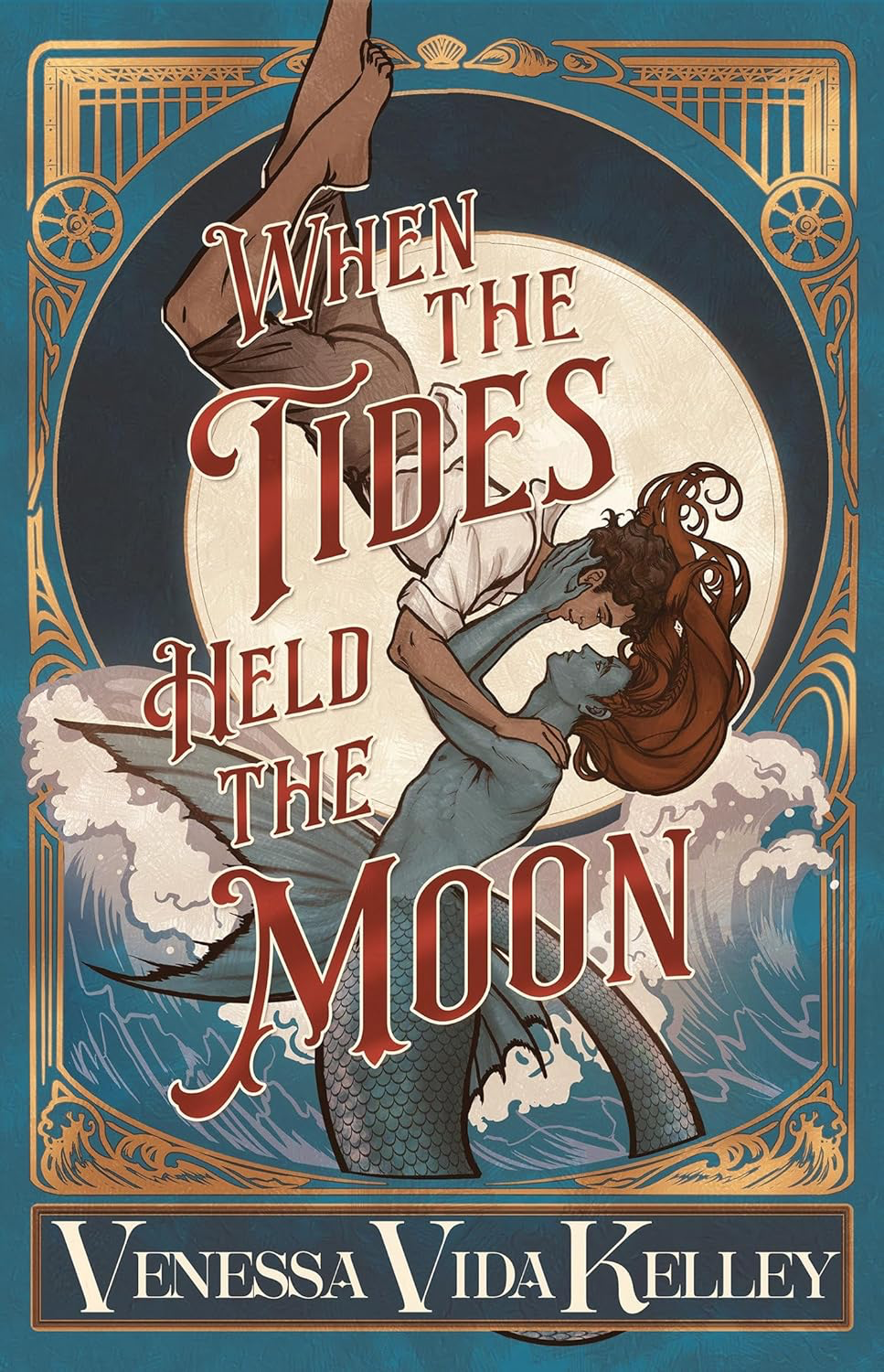
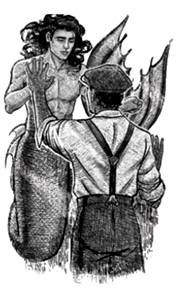
Orphaned and far from his homeland of Puerto Rico, Benny Caldera makes a living as an ironworker in 1910’s New York City, barely scraping together enough to stay afloat and out of reach of the taunts of his white coworkers. But when Sam Morgan, the owner of a sideshow, notices his handiwork, he commissions a strange project for him: a tank whose contents are unknown to him. Benny takes the opportunity for a new job, and finds an unexpected family in the sideshow’s performers. He soon finds out that the tank holds an impossible marvel: a captured merman. As Benny gains the merman’s trust, he finds himself drawn to him—and the merman to him. But when Morgan’s abuse to the merman turns deadly and the sideshow begins to crumble, it’s up to Benny to hatch a plan to save them all.

TW/CW: racism, homophobia, abuse (emotional and physical), violence, blood, ableism, xenophobia, mentions of sexual assault (off-page)

art by Venessa Vida Kelley

I may be a somewhat critical consumer, but listen…you dangle a comparison to The Shape of Water in front of me like a carrot, and goddamnit, I’m eating it right up. God forbid that a weird girlie such as myself consume even more media about found family, fish people, and the nature of marginalization!! That being said, nothing comes close to The Shape of Water, but that’s not the book’s fault. When the Tides Held the Moon is a beautiful novel in all of its parts.

When the Tides Held the Moon boasts a vibrant cast of characters, and it really felt like a feat for Kelley to balance all of them and still give them unique and complementary personalities. Besides Benny and Río, the cast is mostly rounded out by the fellow performers in the sideshow, of which there are many. Yet out of the nine (I think?) primary side characters, none of them ever felt like an afterthought. Each of them were not only rounded out, but had such thoughtfully planned interactions with all of the other characters—sometimes clashing, and sometimes meshing perfectly. There were individual romances and special friendships between the nine of them, but they were a shining example of found family done well. Despite their individual differences, their solidarity and kinship shone through on the page, making for a narrative that had no shortage of tenderness and heart.

The romance between Benny and Río shone in When the Tides Held the Moon. There was such a tenderness to both of them that gave the novel so much of its heart. I’m always a sucker for narratives about two outsiders falling in love, but I love the ways that their separate senses of outsiderness intertwined; they shared music, stories, and tales of their respective homelands. The slow burn romance was paced well, and never felt rushed. I do feel like the ending was a tad bit too close to The Shape of Water, without spoiling anything, but I think their individual way of solidifying their romantic relationship at the end of the novel separated itself enough in the end, making for a resonant, vibrant end to the novel and to their respective arcs. It was all just so wonderfully sweet, but never in a way that felt insincere or cloying—I just loved them!

When the Tides Held the Moon is an incredibly diverse novel, which was exactly how it should’ve been; even without nearly as much knowledge as Kelley has (this was a very well-researched novel and it shows), it would’ve been a disservice to show either New York City or the culture of sideshows as places that don’t have a history of diversity. Immigrants from many different countries (Puerto Rico, Ireland, India, and Russia to name a few) are at the forefront, as well as lots of queer people, disabled people, people of color, and people who overlap within these intersections. However, some novels have a tendency to have a very 21st century view of all of these things. When the Tides Held the Moon felt very historically sensitive in terms of the language it used around these characters, but not in a way that was sanitized. In fact, it didn’t hold back from depicting the kinds of horrific oppression that these characters faced. Yet it wasn’t straight-up trauma porn either—it was honest about the struggles marginalized people faced during this time period, but never in a way that felt like their trauma was being exploited for emotion. That emotion shone through naturally in the interactions that the characters had and the solidarity they fostered in the face of mutual oppression.

That being said, the major thing keeping When the Tides Held the Moon was some of the writing, particularly the dialogue writing. Even from someone with a fairly high tolerance for bombastic, dramatic dialogue (I love Ray Bradbury and the Claremont run of X-Men for similar reasons, if that gives you a good idea of where I’m at), Kelley’s dialogue often bordered on too much. As sensitive and nuanced as everything else about this novel was, the dialogue trended towards excessively cheesy and overdramatic more often than not. Though I adored Río as a character, his voice very much fell into that overly verbose, “wise”-sounding dialogue that you could slap on any fantasy character. Benny in particular had some of that pathetic “aw, gee, mister, gimme a break, why don’tcha” kind of overwritten voice that was in-character at best but almost grating at worst. The side characters had varying degrees of this affliction, but none of them necessarily jump out at me save for the very stereotypically New York mobsters (“he’ll be sleepin’ with the fishes,” etc…wait, there was SUCH a missed opportunity them to say that). The only exception I can think of was Matthias since it was established that it was his genuine personality and not a consequence of the writing. If this were any other novel, I would’ve tolerated this much less, but Kelley’s story had so much heart that I could partially let it slide…but not all the way.

All in all, a beautiful, sensitive novel about love and marginalization with a big heart. 4 stars!

When the Tides Held the Moon is a standalone and Kelley’s debut novel. She is also the author of the forthcoming graphic novel Manu Faces the Music, which is set to be released in 2026.

Today’s song:

That’s it for this week’s Book Review Tuesday! Have a wonderful rest of your day, and take care of yourselves!

Posted in Sunday Songs

Sunday Songs: 5/25/25

Happy Sunday, bibliophiles! I hope this week has treated you well.

This week: it’s all a trick question. I saw St. Vincent last week, but did she play the song I’m writing about this week? No. Did she play the David Bowie song I’m writing about this week, though?

…yup.

Enjoy this week’s songs!

SUNDAY SONGS: 5/25/25

“Heartthrob” – Indigo De Souza

Two years on the heels of All of This Will End (I say that like I’ve listened to it…I’ve listened to about half? Good stuff, though), Indigo De Souza is back with a new album out this summer, Precipice. I don’t know if I’m committed enough to listen immediately (I might go for Any Shape You Take first). To be honest, after briefly hearing whatever the hell that disastrous, autotuned misfire that was WHOLESOME EVIL FANTASY, I was hesitant to see what De Souza had done next. Thankfully, it was far from that. The album cover’s gorgeous, too—the naked skull creature is having its beach episode!

As cheesy as the music video is, “Heartthrob” seems for all the world to be a moment of healing for De Souza, and I’m so happy for her. The chorus of “I really put my back into it” describes the throttle of this track, a more pop-rock offering with trembling vocals but no shortage of determination. The pre-chorus describing De Souza’s experiences of abuse are jarring against the otherwise sunny, bubbly feel of the track, and yet that’s the point; De Souza said that they wrote the song about “process[ing] something that is often hard to talk about—the harmful ways I’ve been taken advantage of in my physical memory. ‘Heartthrob’ is about harnessing anger, and turning it into something powerful and embodied. It’s about taking back my body and my experience. It’s a big fuck you to the abusers of the world.” That passion radiates through every inch of the track through wavering warble and cheerleader-like shout, which De Souza delivers in equal measure. More than anything, “Heartthrob” feels like a release, an outpouring of joy, anger, and passion, a bubbling bottle uncorked. I can’t help but love the rallying cry of “I really put my back into it”—maybe it’s not my favorite song in the world, but for all of the unoriginality plaguing our landscape, it’s refreshing to see people like them pouring it all into their art.

…AND A BOOK TO GO WITH IT:

The Luis Ortega Survival Club – Sonora ReyesA story of feminist resistance and reclaiming your body and identity in the face of abuse.

“Oh My God” – St. Vincent

I had the absolute privilege of seeing St. Vincent for a second time last week. I know I’m obsessed, but it was seriously breathtaking—the setlist was incredible, her stage presence was so captivating, and her guitar playing always knocks me off my feet. I was right near the third row, and I nearly had a heart attack when she started crowdsurfing during “New York”…never thought I’d find myself getting choked up by that song (it’s nowhere near my favorite), but to be so close to her and in the presence of so much love and togetherness began to heal a part of me, if only for a night. Sure, the loungy rendition of “Candy Darling” she did at the end was a bit of a misfire, but if that was the worst part of the night, then it was a concert I’ll never forget.

So without further ado, here’s a song that…she didn’t play, and I suspect that she probably won’t revive unless she willingly goes into her deep cuts. A bonus track from Actor that was also released along with the “Marrow” single (which she did play that night and absolutely annihilated), its deceptively quiet intro hides a suppressed, roiling storm. Like much of Actor, it hides dread and unpleasantness beneath a veneer of delicate woodwinds and finger-picking, but conceals a spreading rot beneath it. The dread veers into focus with Annie Clark’s chorus of “‘Cause when the drink goes in/The devil comes out” after detailing all of the dishes gone without washing and the bathwater gone cold while she’s still in it. A faintly “Via Chicago”-like drum fill patters as the chorus grows in intensity, a chanting of “Oh my god” that never loses its delicacy but turns more from an indifferent remark to a quietly horrified exclamation, as though she sees the landscape of dying houseplants and unmade beds before her. Given that this was a bonus track, it seems that even then, this was a time that Clark wasn’t keen on returning to, but I do find some comfort in the fact that presumably, given that there’s around 16 years behind it, this is something that Clark has deliberately put in the past; MASSEDUCTION saw her dealing with substance abuse and other issues more upfront, but even that’s an era that seems behind her, even if All Born Screaming found her in a darker but seemingly different headspace. I’m glad that she was able to exorcise “Oh My God”—sometimes, you have to extricate those things from your life, but hiding the track in plain sight seems a strategic way to not return to a time you’re not keen on revisiting.

…AND A BOOK TO GO WITH IT:

So Lucky – Nicola Griffith“Oh My God” matches the dread of the protagonist, Mara, picking the pieces of her life after losing everything, as well as the lingering feeling that her life is in danger—from herself and from outside forces.

“Cry for Me” – Magdalena Bay

Everything I’ve heard about Imaginal Disk has been nothing short of worship: album of the year (2024), modern classic, cult classic…the list goes on. Imaginal Disk feels inherently tied to hype for me, even though I’ve only heard this song. Again, outsider perspective, Magdalena Bay just seemed to spring up out of nowhere. Before this, I’d only heard a handful of reviews several years ago, a remix they did of Soccer Mommy’s “Shotgun” (not a huge fan, honestly) and this interview they did with Stereogum ahead of Imaginal Disk talking about how much they love the weird CGI in the music video for Peter Gabriel’s “Steam” (which, honestly, so based of them. They really just said “let’s dress Peter up like Jack Nicholson’s Joker and then put his face on as many objects as possible. I don’t care if they’re ungodly cursed.” I love it so much.). There’s also a concept and a narrative I’m missing here—something about a person rejecting some sort of disk put into their head by aliens?—but I’ll do my best.

I was floundering for comparisons for “Cry for Me” at first, but then it hit me. Imagine if the Cardigans had access to 21st century technology in the ’90s, and then imagine them taking that and making some kind of weird disco. They’ve got their uber-’70s violin piano flourishes and bass lines paired with the most modern-sounding, cinematic synths. What’s cooked up is bizarrely good—the at first disparate contrast of Mica Tennenbaum’s air-light voice and the oily chrome of the synths makes for something that works together in surprising harmony. The disco bit sometimes veers into too much for me, but I can’t deny how deliciously catchy “Cry for Me” is—the song’s title is uttered like a seductive plea to cross into a world where everything is glittering and perfect, but once you bite into the fruits, the venom starts pumping through your veins. The crunching, bubbling shift in synths at the 2:00 mark make you feel like you’ve turned a corner on some kind of theme park ride—into what, you’re not sure. For the rowers keep on rowing, and they’re certainly not showing any signs that they are slowing…

BONUS: who the fuck let a keytar in the—oh, okay. Just this once. I’ll allow it. Maaaaaaybe. Magdalena Bay recently covered “Ashes to Ashes” on Triple J, and even though it’s up there with my favorite Bowie tracks, they clearly get how weird of a song it is:

…AND A BOOK TO GO WITH IT:

Drunk on All Your Strange New Words – Eddie Robsonagain, I’m not entirely clear on the concept, but if you want alien revelations with unintended side effects, look no further…

“Flowers on the Wall” – The Statler Brothers

Sometimes you remember certain songs at times that are too perfect for words.

“Last night, I dressed in tails pretending I was on the town/As long as I can dream, it’s hard to slow this swinger down/So please don’t give a thought to me, I’m really doing fine/You can always find me here and having quite a time…”

Depression, self-isolation, and making up scenarios transcends time, but getting this song absolutely hooked in my head while I was about a month into lockdown had to be divine intervention. Or something. Minus the more ’60s language, this could’ve been the contents of a long-distance FaceTime call right smack in the middle of 2020. I have a specific memory, give or take five years to the day (I’m just glad I can put some distance from it) of hearing nothing but this song in my head while I was supposed to be recalling something or other about U.S. History for the APUSH exam…a single essay question that I did on my laptop in my bedroom. (Don’t worry, I got a 4. I wasn’t really in dire straits.) Yes, feelings aren’t inherently attached to history, but “Flowers On the Wall” bottled something so succinctly and charmingly. Once it invited itself into my shuffle after years of not thinking about it, that feeling never went away—in a good way. Despite being so pandemic-feeling it never got sullied by it. I’ve never been one for this almost hokier country sound, but it fits the kind of exaggerated state that the narrator’s in—it’s exactly how I’d expect the inner voice of someone who spends their days playing solitaire and dressing up in a tux, never once leaving the house. It’s the catchiest song about extensively denying that you need to touch grass. Truly timeless.

…AND A BOOK TO GO WITH IT:

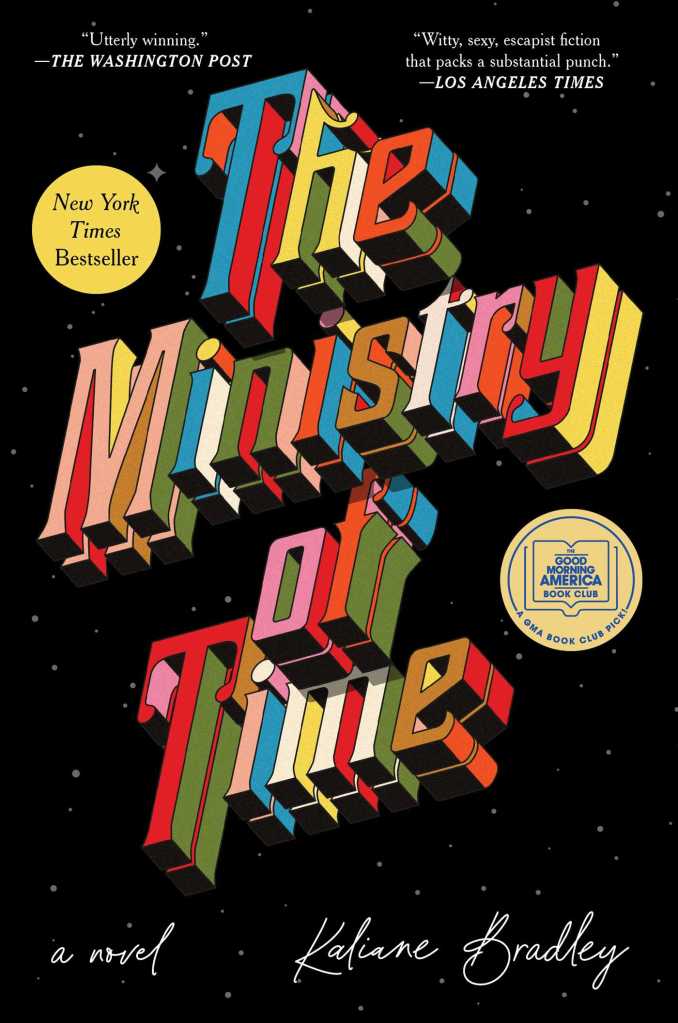
The Ministry of Time – Kailene Bradleywhat else is there to do when you’re [checks notes] a time-displaced polar explorer from the 1840’s who really shouldn’t leave the (21st century) house?

“DJ” – David Bowie

Diversity win! Bowie is breaking his and her heart!

“DJ” has been on the brain because, back to St. Vincent, they played this song not once but twice before she came onstage. Taste, especially from someone who has said that there’s no one she’d put above Bowie.

From Lodger, “DJ” retains some of the theatricality of his glam days, but well past the Ziggy Stardust days. He’s long shed that persona, as well as the abysmal leanings and drugs of the Thin White Duke, closing out the Berlin Trilogy with a slicker flourish that led into the ’80s (see: “Boys Keep Swinging”). It’s got a critical, sardonic eye that he retained from his earlier ’70s songwriting, magnifying the role of a DJ who becomes so swallowed in his career that he becomes it: “I am the DJ/I am what I play/I’ve got believers/Believing me.” According to Bowie, it was his take on the disco culture that had overtaken the ’70s: speaking to Melody Maker, he said, “The DJ is the one who is having ulcers now, not the executives, because if you do the unthinkable thing of putting a record on in a disco not in time, that’s it. If you have thirty seconds silence, your whole career is over.” Yet it’s so easy to see the through line back to himself—persona or not, you don’t have to chip away at much to find the one true Bowie within.

Even if “DJ” didn’t also spell out David Jones’ initials, this fear of becoming inextricable from his music and celebrity was a constant fear of his in the 1970s. 1979 saw Bowie recovering from his devastating cocaine addiction, and that almost-separation from it makes “DJ” feel like a less fatalistic version of “Cracked Actor,” in which he saw his future self as a washed-out, middle-aged actor relying on his past fame to pay the bills.”DJ” sees him inching away from “Forget that I’m 50/’Cause I just got paid” territory, but no less critical—and almost fearful—of being on the precipice of losing his career thanks to one less hit and being seen only as a vessel for the music. In the music video, he’s passed around by fans in the middle of the street; some hug him and seem to make genuine conversation, while others simply try to give him a kiss on the cheek (BRO?? not to get all gen z with it, but did he WANT that??). It’s all at once tenderly human and a little eery watching him weave through the crowd, some seeing a human, others seeing a celebrity. No matter the disaffected sarcasm in his words and lyricism, Bowie’s always there.

As for the music video…I don’t think there’s really any bad Bowie videos I can think of, and even the really bad ones are at least hilarious. But this one seems to fall on the wayside, and I don’t see why! The way that Bowie drapes himself down the blue shutters, the demolishing of the DJ equipment, the proto-Trait pink boiler suit/gas mask combination…he could work anything. Well…okay, definitely not this. Almost anything.

…AND A BOOK TO GO WITH IT:

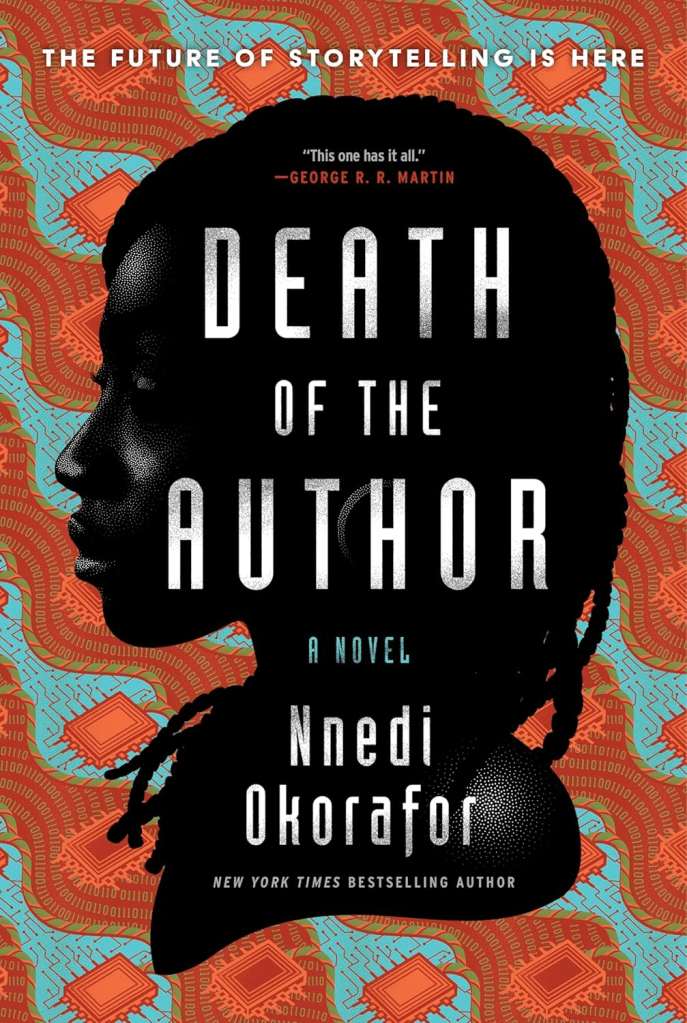
Death of the Author – Nnedi Okoraforanother work about the line between the author, their work, and how the two are interconnected, no matter the perceived separations (and the complications that arise from it).

Since this post consists entirely of songs, consider all of them to be today’s song.

That’s it for this week’s Sunday Songs! Have a wonderful rest of your day, and take care of yourselves!
Posted in Sunday Songs

Sunday Songs: 3/23/25

Happy Sunday, bibliophiles!

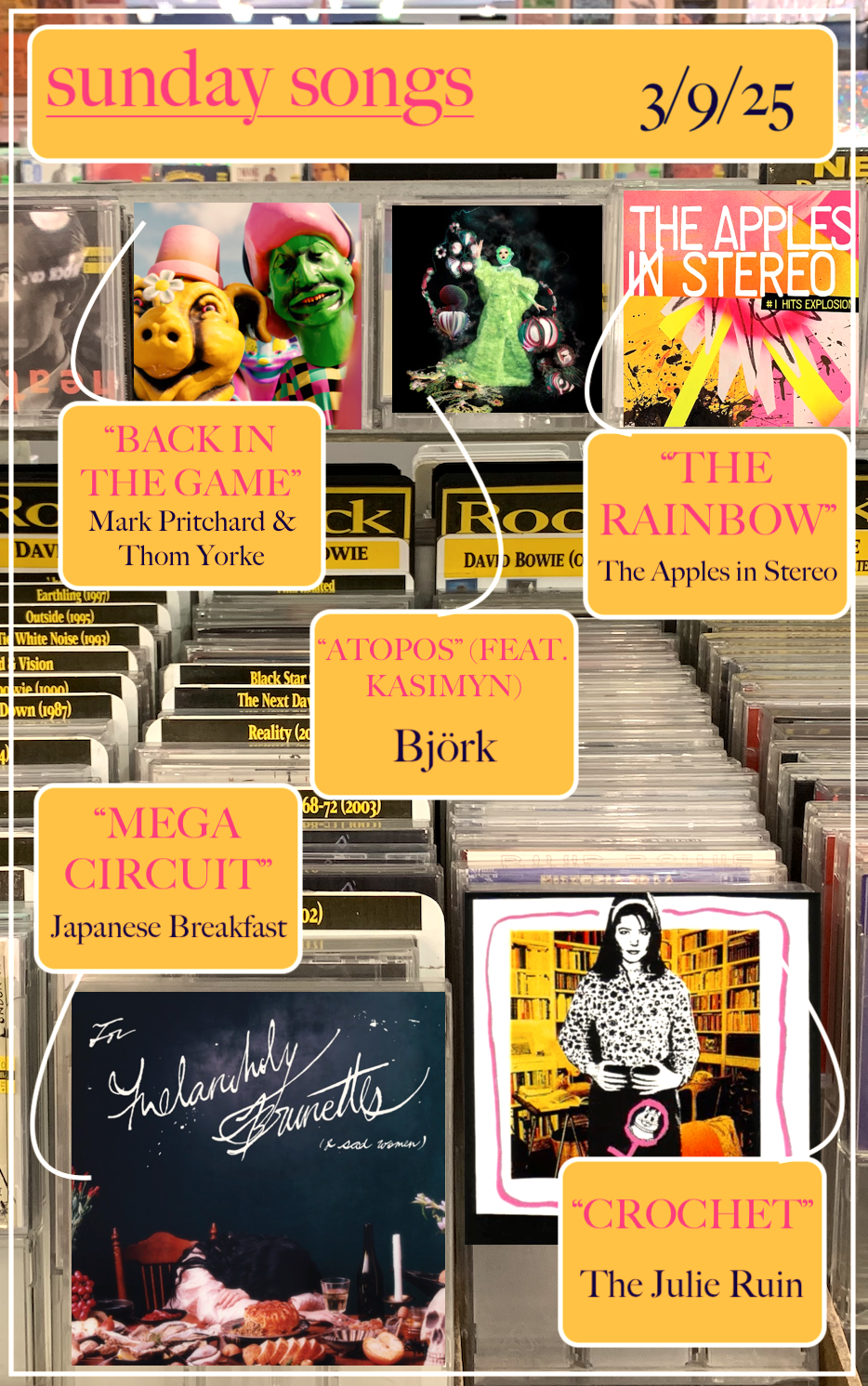
Since I haven’t been able to post in a few weeks, here are the Sunday Songs graphics from that time:

3/9/25:

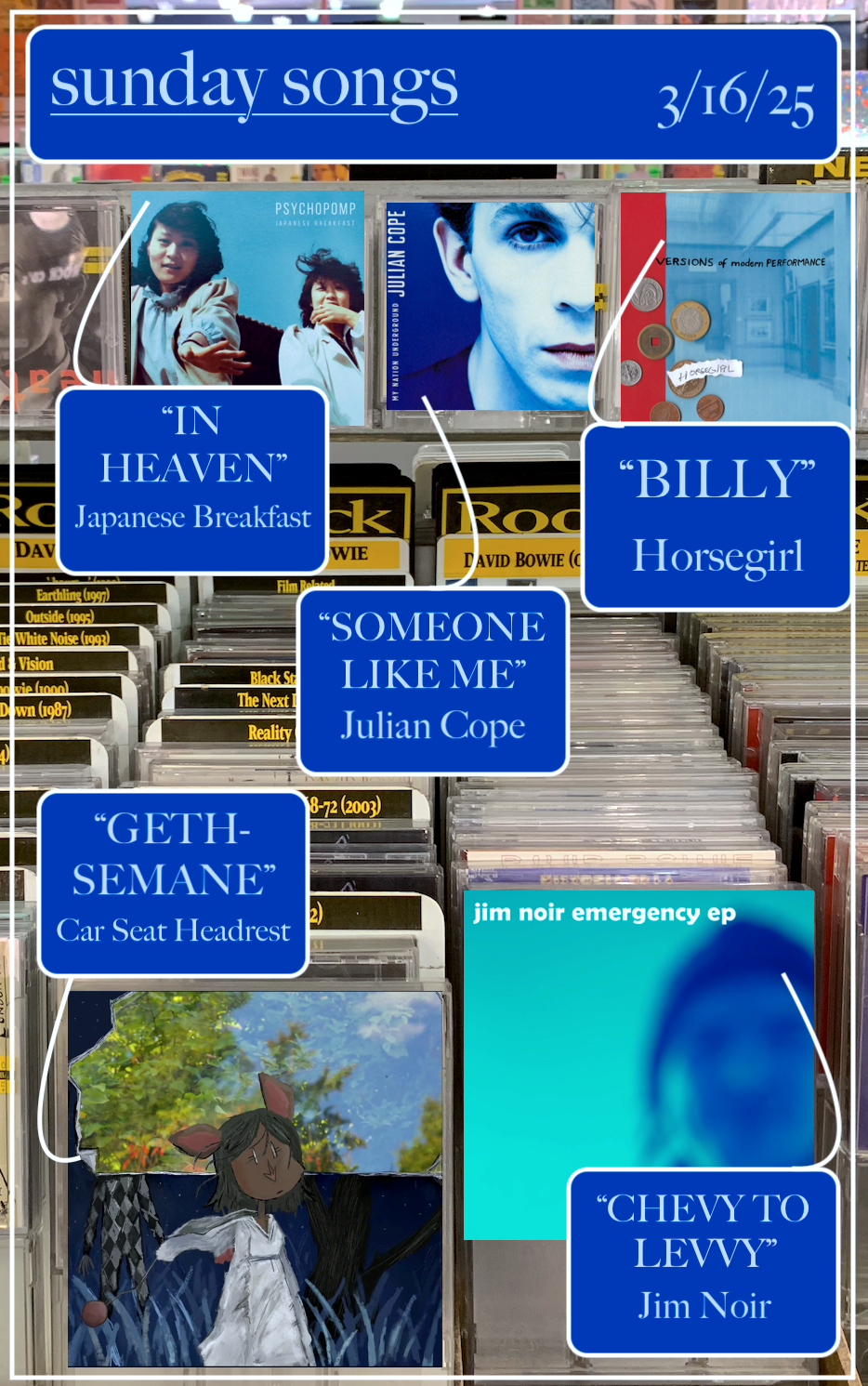
3/16/25 (or, NEW CAR SEAT HEADREST IN MAY, WE ARE SO BACK):

This week: you thought this would be a quick post after I haven’t been able to write regularly for two weeks? WOE, TEN MINUTE SONG BE UPON YE!

Enjoy this week’s songs!

SUNDAY SONGS: 3/23/25

“Love” – Hana Vu

One of the best surprises a concert can have in store is a good opener. There are infinite jokes about bad openers, half of which…well, might be dogging on perfectly fine artists trying to get their foot in the door, and half of them are true. I really do try to at least go into openers with an open (no pun intended) mind, because everybody has to start somewhere, no matter how big of an artist they’re opening for. But sometimes it’s just up to your taste. Even with some cringy performances, you can at least tell that they’re trying.

I saw Soccer Mommy about two weeks ago (stellar performance!!!! as always!! and the crowd had basic human decency this time, unlike the parasitic frat bros that populated her crowd last time) with Hana Vu as the opener. I kept my expectations low. I expected to just nod along and twiddle my thumbs, but I think I may have found an excellent artist! She came off quite shy, mumbling to the audience and asking us what we had for dinner, but once she started performing, it was clear that Soccer Mommy had a worthy match to her sound. However, if I had to compare Vu to anyone, it would be to Lucy Dacus—they have a similar brand of indie rock, both bearing warm, rich vocals and guitar-driven angst with no shortage of heart. Nothing can come close to “Night Shift,” but Vu clearly studied how that song goes supernova at the end. The closer to her most recent album, Romanticism, “Love,” like Vu’s performance before Soccer Mommy, starts out unassumingly, but quickly becomes a dramatic landslide aided with thundering drumbeats, strings, and Hana Vu bellowing as though into a cavern. The lyrics, as sparse as they are, come sung clutching a bleeding heart in both hands, staining everything within arm’s reach. It truly lives up to the drama of the album cover, with Vu draped in robes and with a sword pressed to her neck, modeled after Artemisia Gentileschi’s “Judith Slaying Holofernes.” Either way, Hana Vu has earned a tally in favor of the good opening bands I’ve seen—and a place in my more regular rotation of artists. A big thank you to Soccer Mommy for giving a platform to Vu’s talent, and thank you to Vu for the fantastic opening act!

…AND A BOOK TO GO WITH IT:

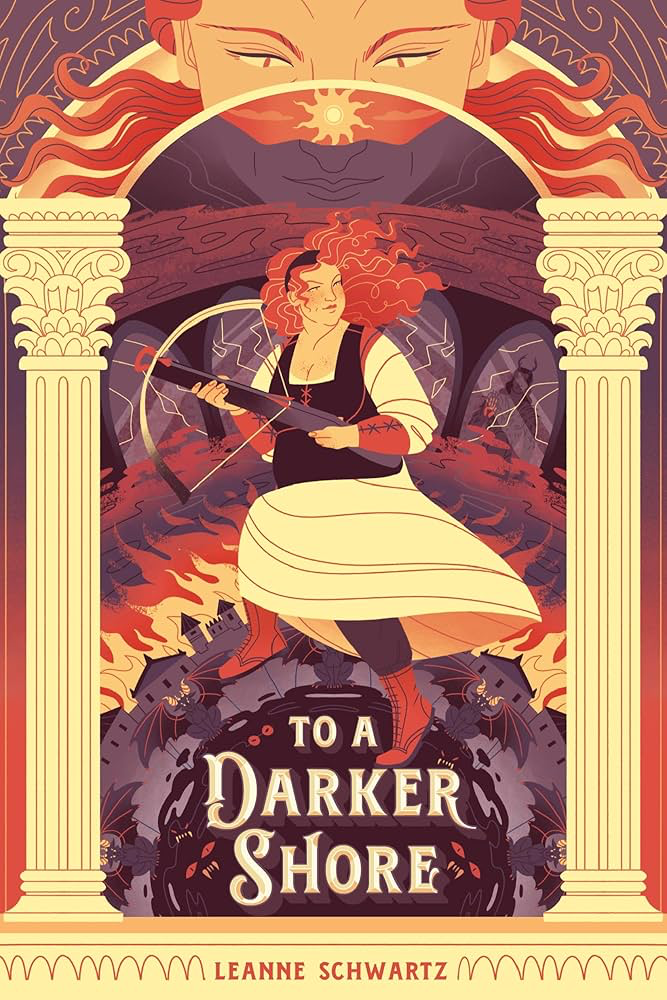
To a Darker Shore – Leanne Schwartz“I just want you to stay/You know I hate giving up/And oh, Well I guess it’s just me/Please don’t leave me alone/You know I can’t let you be…”

“Bad Timing” – Jim O’Rourke

Once my dad sent me this song, it was immediately relegated to my quiet instrumental study playlist. I shouldn’t say “relegated,” really. It’s a great song to peacefully study along with, but it keeps you on your toes. Ten minutes long and dense doesn’t make it sound appealing, but “Bad Timing” sounds like how those slow motion videos of flowers unfurling after the frost melts from their buds look. “Bad Timing” also proves my long song theory right with flying colors—the best ones have enough changes to keep you interested for ten minutes. This track in particular feels like two songs in one. The first is a homely, acoustic ditty, which peacefully bows out at the 2:50 mark, giving way to a chorus of plucked strings and, of all instruments that should sound shimmery, an accordion would be my last guess. Yet Jim O’Rourke pulls it off, making it shudder and glimmer along with the synths. You’re lured into a soft, ambient sense of security, but like rot climbing up the roots of a plant, O’Rourke tears away at the music, fiber by fiber, until the remnants are ablaze in distortion and ascending mayhem by the time you reach the eight and a half minute mark. It’s clear to me the magic O’Rourke made with producing almost all of Wilco’s albums—he has such a talent for taking a simple melody, stretching it out and contorting it as easily as a chef kneads dough. He put something entirely unassuming into the oven, and something wholly unexpected came out the other side once the experimental yeast rose.

On another note: I can’t for the life of me find who made the album art for Bad Timing, but it’s just so charming to me.

…AND A BOOK TO GO WITH IT:

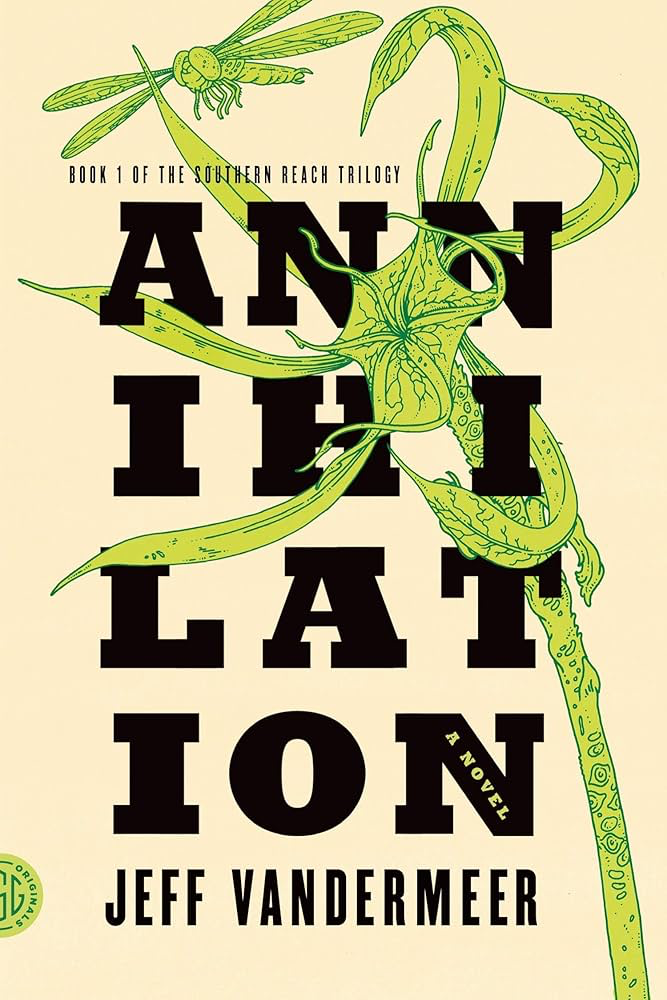
Annihilation – Jeff Vandermeereverything becomes slowly, gradually unrecognizable and strange, just like the progression of “Bad Timing”

“Ends Meet” – Panda Bear

Brian Wilson is alive and well, but what I’ve listened to of Sinister Grift feels like a glimpse into an alternate universe where Brian Wilson got temporally airlifted from the ’60s into the 2020s and had to find his way around. That, and if he’d been given nothing but a knapsack full of various synths and electronic knickknacks to carry with him on his time-out-of-time journey. “Ends Meet” is the definition of psychedelic, constantly fading in and out of focus like ripples over sunlit water. Noah Lennox’s voice also feels piped in from beneath the shallows of a reef—released this February as it was, everything I’ve heard of Panda has been carefully crafted to be specifically summery and aquatic, at least in sound (see: “Comfy in Nautica,” “Ferry Lady”*).

The existential lyricism feels at odds with the music at first glance: Lennox is confronting what we all have to confront at some point in our lives: we’re all gonna die, so what else is there to do? His answer is as simple and as difficult as any: appreciate everything in it, bad and good: “And when it is my time/Dig it all.” It’s a lesson I’ve been chipping away at for the better part of last year, what with my difficulty in staying present and not projecting myself into possible futures (not the time traveling Brian Wilson ones, unfortunately), but the way that Panda Bear takes it musically seems different than most. Sonically, “Ends Meets” feels so daydreamy and almost dissociative—its head isn’t in the clouds, it practically is the clouds. Even the face on the album cover of Sinister Grift looks like their mind is somewhere else entirely. But that in and of itself is putting that sentiment of being un-anchored into music and into words. It’s a jarring pairing in concept, tackling this subject matter with such an acid-tinged, vacation-like musical landscape, but to me, it’s the feeling of letting go of that burden, of knowing that all you can do in life is appreciate every facet of it.

*the “Ferry Lady” music video is about as trippy as you’d expect, so if you’re sensitive to flashing images or eye strain, you’ve been warned.

…AND A BOOK TO GO WITH IT:

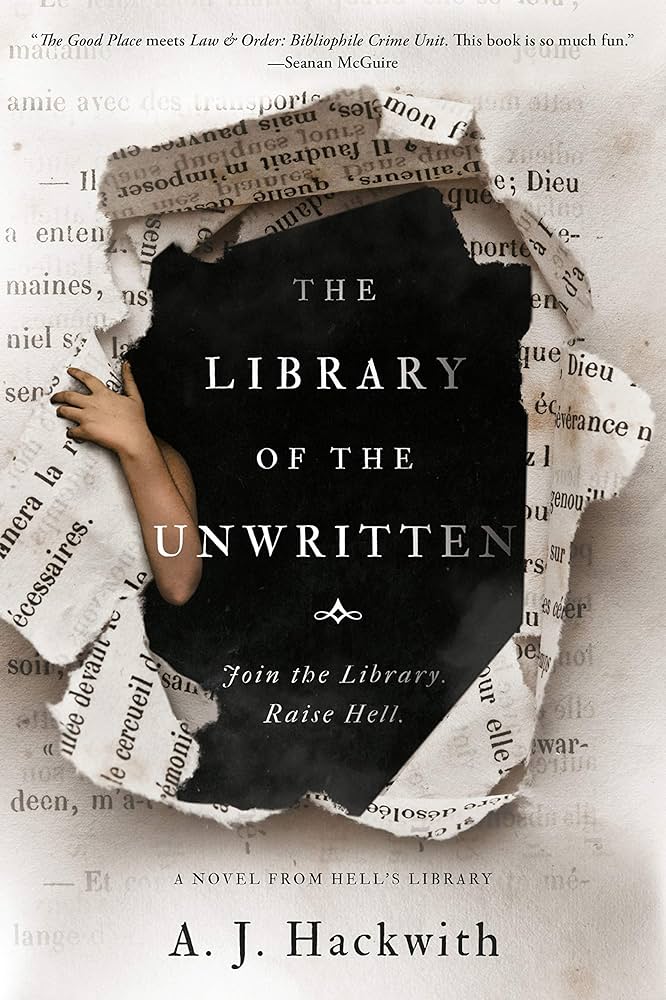
The Library of the Unwritten – A.J. Hackwith“They got a spot to bury you/It’s not news, you’re tremblin’ for what?/Just keep it in the groovе (Don’t let up)/But keep the doorways shut…”

“La Vie en Rose” (Édith Piaf cover) – Louis Armstrong & His Orchestra

I was never much of a Disney kid, but Wall-E, one of the first movies I saw in theaters as a kid, will always unlock a particularly special place in my heart. Star Wars was my true introduction to sci-fi, but the more I think about it, Wall-E was right up there in conditioning me to fall headfirst into the genre. Even now, in my twenties and watching Wall-E for a grade to analyze the gender dynamics for a class on Disney and gender…it broke me. I knew it would. Sure, Mark Fisher cites it by name in Capitalist Realism when he talks about how Hollywood has subsumed anti-capitalist resistance and yada yada yada, but…god, how could even the most shriveled soul not be moved by an almost newborn race of humankind returning to the same earth, babies treading over barren ground as the giddy captain gleefully lists off all the plants that can be grown in it? And you’re already crying? And then they hit you with “Down to Earth?” Diabolical.

Part of my class’s discussion on the gender dynamics of Wall-E, beyond how we’re socialized to see Wall-E and Eve as boy and girl even though they’re…intelligent machines with no gender to speak of, was how the viewer is socialized to show their relationship as romantic (and traditionally heterosexual) from the markedly older, “classic” media surrounding them. Notable songs and clips from Hello, Dolly! do the heavy lifting there, but in the barest sense, Louis Armstrong’s cover of “La Vie En Rose,” one of the more ubiquitously recognized love songs of this century, which plays when Wall-E first becomes romantically interested in Eve, adds to this effect. And while I see the argument, as women and gender studies/queer theory-pilled as I am, I really don’t think Wall-E is nearly as guilty as a whole cadre of other Disney movies who have improperly shaped particularly women and young girls’ views on how gender and romance should be. For me, “La Vie En Rose” feels as pure as Wall-E and Eve, in all of their innocent, nonsexual romance. Even as a little kid, only knowing Louis Armstrong from “What A Wonderful World” (and thinking that Grover from Sesame Street was behind the vocals), something about those piano flourishes unfurled a kind of petal inside of me. It’s one of the first examples I can name of a melody really scratching an itch in my brain. I’m next to illiterate when it comes to jazz, but Armstrong was clearly one of those rare people who could give his trumpet such an individual voice—by the end of the song, you could call it just as much of a vocalist as he is. Paired with the cinematography of Wall-E’s tire treads tracing neat lines in the trash-laden dirt, something about it felt so neat, so meant to be, a puzzle piece shifting into place. Both of them are clean, and yet not sanitized—they’re sweet, earnest, pure. A part of childhood me is warmed every time I hear this song, obviously, but even outside of that context, the soothing spell of this rendition is undeniable. As is Wall-E.

…AND A BOOK TO GO WITH IT:

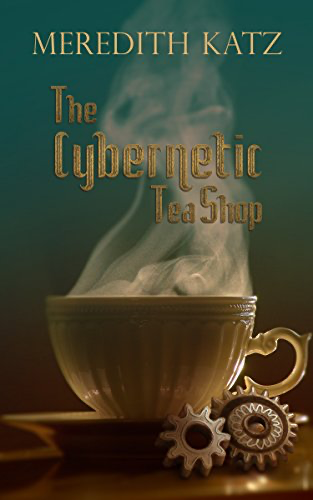
The Cybernetic Tea Shop – Meredith KatzLouis Armstrong’s take on “La Vie En Rose” is obvious coffee/tea shop music, but combined with my Wall-E association, why not return to this cozy, tender tea shop in a distant future?

“Here Comes Your Man” – Pixies

The music video for “Here Comes Your Man” has to be one of the more uncomfortable music video experiences I can think of, not because of any particular content, but more because you get the overwhelming feeling that nobody wants to be there. Every time they pan to Frank Black or Kim Deal (or Joey Santiago, honestly), they look like they’re trying to telepathically kill the cameramen, Professor X style. They don’t want to be there, the camera crew doesn’t want to be there, and they don’t want you there either…oh, my bad, sorry for the intrusion. I’ll see myself out. For good reason, though—they were averse to making music videos, and when their label pressured them to do so, they famously decided to stick it to the man and gape their mouths open like fish while the lyrics were playing. Given…well, everything I’ve heard about Frank Black, it could easily just be them being petty, but for an underground band who were achieving success they didn’t seem to want, it’s understandable.

I always feel a kind of odd shame when I like That One Song/Album That Got Popular with a certain band that the band openly hates with a passion. If I’d had the time to write a post last week, I would’ve said the same thing for Julian Cope and “Someone Like Me”My Nation Underground is one of his poppier albums, and one that he wasn’t satisfied with. (See also: “Me Myself & I,” a song I love, but that De La Soul inserts “we hate this song” into live performances of the lyrics…yeah, you get the picture.) For Pixies, they weren’t satisfied with this pop song to the point where they almost never performed it live. But…it’s so good. Sure, it’s simpler and more accessible than some of their work, but they knew how to make one of the most iconic alternative pop songs. Most alternative rock fans would probably be able to recognize that bassline immediately, all thanks to the timeless talent of Kim Deal. There’s layers to the genius of it—the harmonies of Deal and Black, the vague, surrealist lyrics about homeless people boarding a train before an earthquake, the faint comfort and hope in spite of that. The chorus of “here comes your man” was a last minute addition, but it’s always given a kind of solace for me, ever since I was a kid, before I understood the lyrics of the verse. Even with the bleak nature of the verse, it’s always implied a kind of salvation or relief to me. Bottom line: sometimes, even if That Song got popular, it’s obviously popular for a reason, but how talented a band’s craft is can often shine through in the charts.

Sometimes. We don’t talk about “Creep.”

…AND A BOOK TO GO WITH IT:

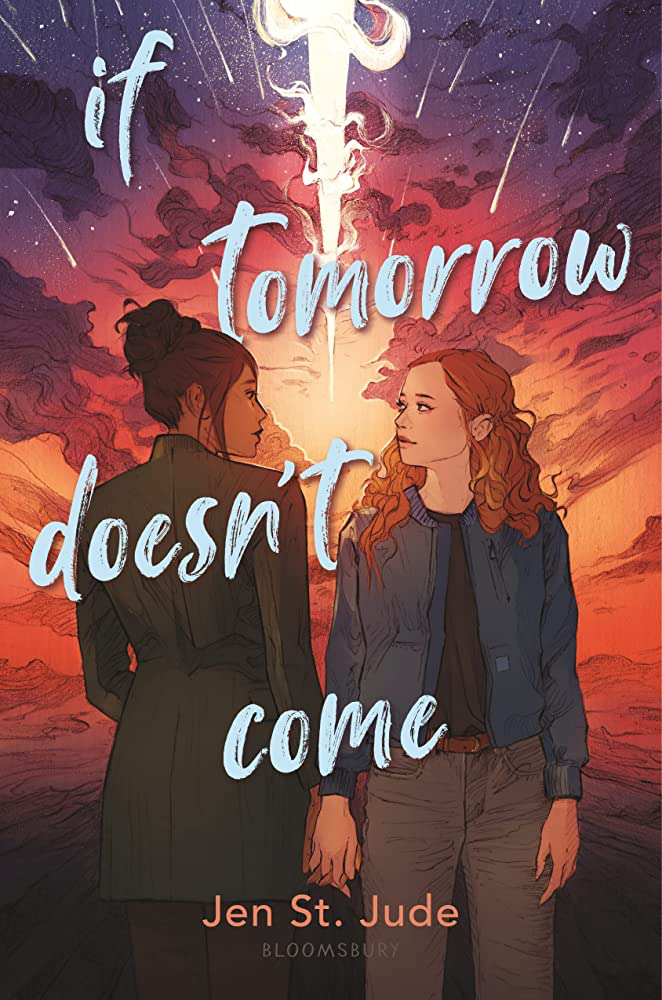
If Tomorrow Doesn’t Come – Jen St. Judea similar kind of disaster-oriented scenario to the song, of people scrambling to safety in the wake of a planet-destroying asteroid.

Since this post consists entirely of songs, consider all of them to be today’s song.

That’s it for this week’s Sunday Songs! Have a wonderful rest of your day, and take care of yourselves!
Posted in Sunday Songs

Sunday Songs: 11/3/24

Happy Sunday, bibliophiles! I hope this week has treated you well.

This week: next stop, Big Feels™️ central…totally haven’t been anxious for the past week and a half, how’d you guess?

Enjoy this week’s songs!

SUNDAY SONGS: 11/3/24

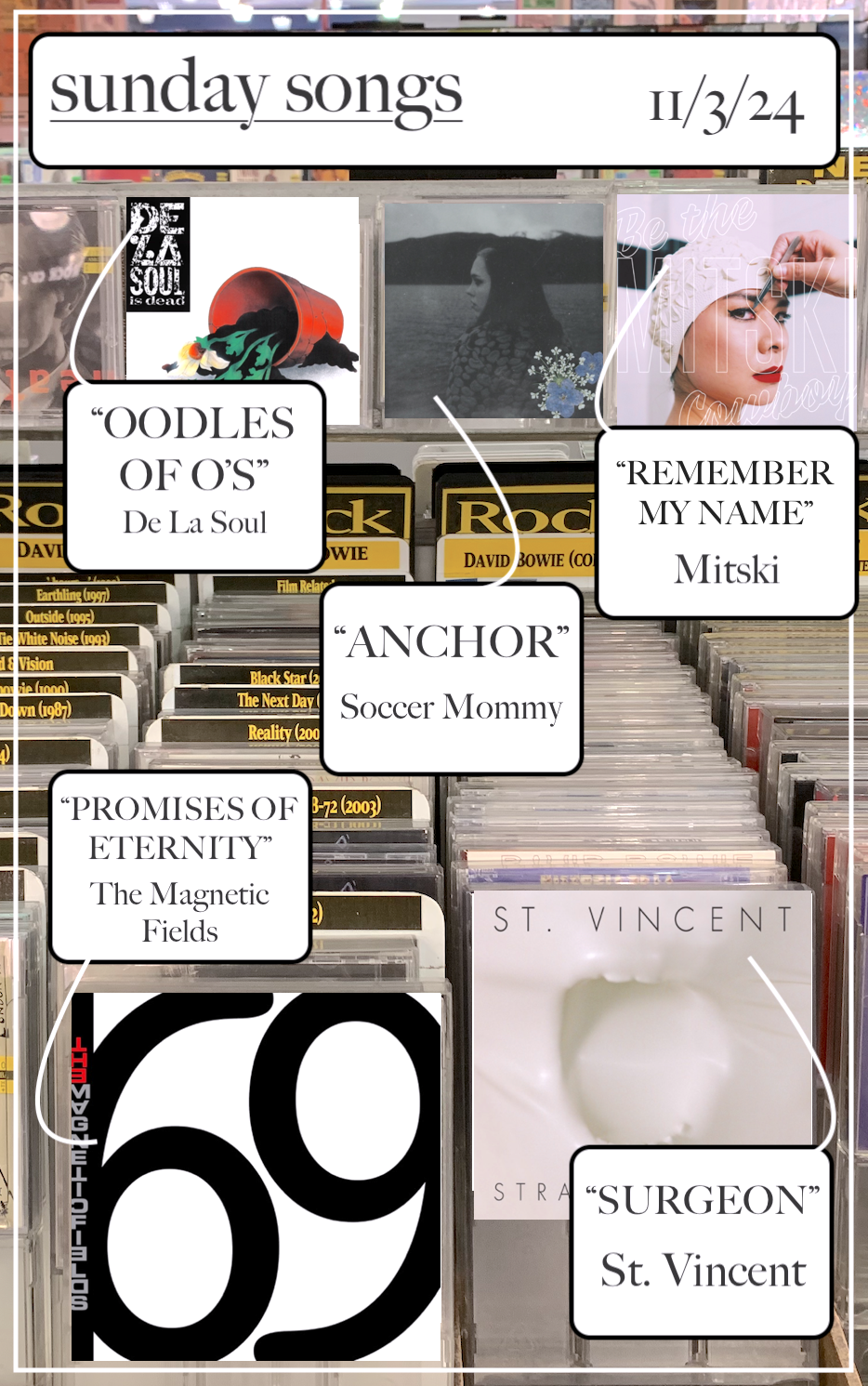
“Promises of Eternity” – The Magnetic Fields

I had the privilege of seeing The Magnetic Fields a second time last weekend; this year marks the 25th anniversary of an album that (from what I’ve heard) is not so much an album but a great balancing act of music itself: 69 Love Songs, a triple album consisting entirely of songs about love. (Make no mistake, they’re not all romantic. See: “How Fucking Romantic,” “Yeah! Oh, Yeah!” “I Think I Need a New Heart.”) I’ve yet to find the time to set aside a whole three hours and listen to the album in its entirety, but even a glimpse at around half of it over the course of my lifetime leaves me in awe of how Stephin Merritt and company pulled this off. Especially Merritt, as he wrote every single song—his songwriting never falters, but to not sputter out after 69 songs is a feat as awe-inspiring as his vocal range.

Somehow, “Promises of Eternity” slipped by my notice, but it hasn’t let me go since last weekend. Sung by Merritt on the album and by Anthony Kaczynski live, it immediately stuns. In both mediums, the synths just bowl you over—they don’t play as much as grandly announce their presence with the flourish of the same velvet curtain that the song speaks of. That chest-clutching drama defines the rest of the song—all of the lyrics detail the hypothetical collapse of the world if the narrator’s lover did not love them back: “What if no show ever happened again?/No seven, no eight and a half, no nine and no ten?” Most of Merritt’s singing has a sarcastic current to it that almost makes you question if the guy really believes in true love (though “The Book of Love” disproves that hypothesis quickly), but the way that he belts out “What if the clowns couldn’t be clowns?”, of all lines, gives you the feeling that he’s just fallen to his knees and is begging straight to your face. Apparently, the absence of clowns will signal the end? Who’s to say, really? Along with the circus imagery, the organ sound created by the synth makes “Promises of Eternity” feel like an elaborate, gilded carousel of lovesickness, with instrumentals that wouldn’t be out of place at a fairground, but lyrics fit for Romantic (in the Keats way, not the general way) poetry.

…AND A BOOK TO GO WITH IT:

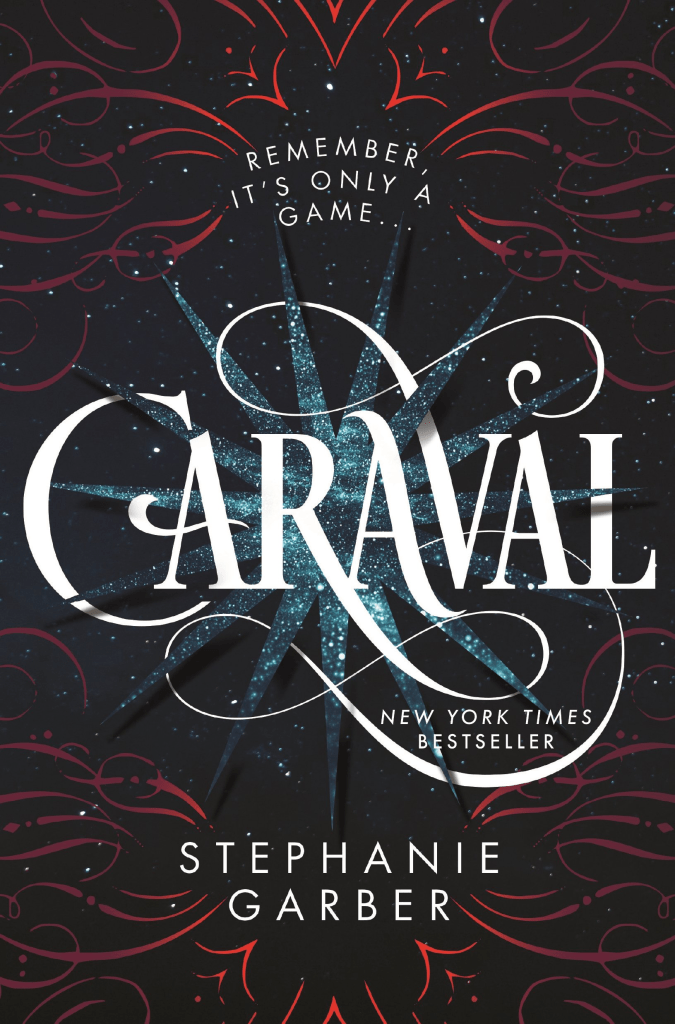
Caraval – Stephanie Garbercircus imagery aplenty, as is the levels of drama being off the charts.

“Surgeon” – St. Vincent

In the age where you can make a synth—and most any instrument, really—make almost any sound you want it to, I shouldn’t be surprised at the staggering achievements that music has made in the simple terms of what noises we can make. What sounds like “the future” feels entirely subjective when we’re talking about anything past the 2010’s—electronic music had exploded, and plus, what sounds futuristic to me might not sound futuristic to you.

My waxing poetic about St. Vincent has mostly been directed to her self-titled 2014 album, which, ostensibly fits that description for me. But with each successive listen to “Surgeon,” I’m blown away at just how much this sounds like the future. This was 2011, and aside from the percussion, most everything on this track sounds utterly alien. Watching the 4AD sessions recording that I linked above was genuinely eye opening—every few minutes, I just found myself going wait, that’s the instrument that’s making that weird noise? The synths are manipulated to the point where they could just as easily be the vocalizations of a children’s choir from another planet. Even the blink-and-you’ll-miss-it trill of a flute turns into a glitch in some kind of code. I can see the threads of Björk—especially Homogenic—throughout, yet it’s so distinctly Annie Clark. By far the most masterful of these manipulations should be obvious: Clark’s guitar solo beginning at 3:36 feels like she’s almost reached the extreme of what the instrument can sound like. It’s hardly even a solo anymore—it doesn’t just sound like a synth, it sounds like some kind of creature whose consciousness has been trapped in a computer and is howling to be freed. If you were to somehow visualize this music, I’d fully believe it if it came out fleshy and trailing with electrodes.

Oh, to spend a day in her mind…

…AND A BOOK TO GO WITH IT:

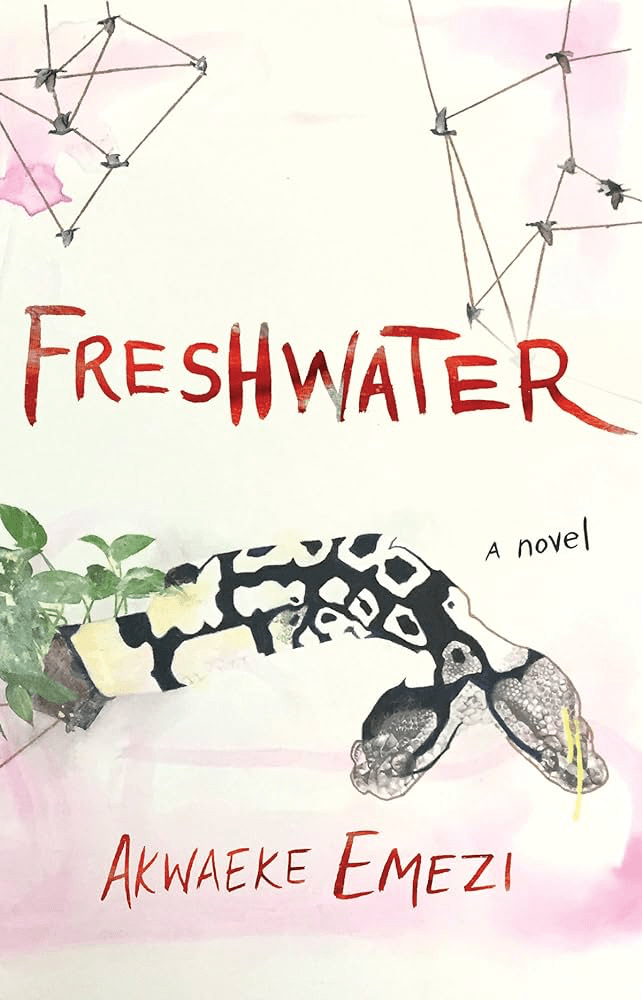
Freshwater – Akwaeke Emezistagnation, grappling with identities beyond the human, and the desire to free that identity with help of a surgeon.

“Oodles of O’s” – De La Soul

Is it possible for De La Soul to have a bad song? Well…okay, I haven’t gotten into their later catalogue, which seems to have a worse reputation (I don’t know, though, “Snoopies” is pretty fantastic), so that’s up for interpretation. But for me, De La Soul are one of those bands where almost every new song of theirs I find feels like digging up buried treasure. At least in the ’90s, their creativity seemed to come to them as easy it is for the average person to breathe. The lyrics? Deadly serious, but still full of whimsical, silly rhymes—nothing but De La Soul. The best part is that every single line ends in an o sound—quite literally oodles of o’s! The samples? That Tom Waits bassline sample is something to behold. This is my kind of hip-hop. Can’t say if their entire catalogue is perfect, but “Oodles of O’s” is. We need to bring back the word oodles. Carry on the spirit.

At the end of the day, it’s beautiful that this got the video that Dave wanted it to have, now around a year and a half after his passing. Maybe it’s not the grittiness he envisioned, but a donut shop more than makes up for it.

…AND A BOOK TO GO WITH IT:

Geekerella (Once Upon a Con, #1) – Ashley Postonadmittedly, a much fluffier take on fame, but an exploration of how it reduces you nonetheless.

“Anchor” – Soccer Mommy

With the workload I’ve been swimming through this semester, I’m not sure if I’ll get around to reviewing Evergreen, but rest assured—I LOVED it. After a few listens, Sometimes, Forever remains on top, but Evergreen is special. There’s a matured, bedroom-pop-grown-older familiarity to it, but as with every successive album, Sophie Allison always has something new to offer. Her fourth album is a cartography of grief, detailing the tangled web of loss, healing, and pining after your Stardew Valley wife, as it turns out. As with every one of her albums, it’s her introspection that shines—with every kind of grief that she experiences, it feels like a flag planted in the ground, a recognition of every hill and valley of the harrowing trek she’s been on, but recognition that it’s not the end, no matter how much of it is behind her.

In contrast to the largely acoustic (or at least traditionally guitar-driven) landscape of Evergreen, “Anchor” instantly singles itself out as the black sheep of the bunch. Though it covers some of the same ground as the rest of the album, the production doesn’t jump out at you so much as it pounces on you like some creature going after your ankles in the dead of night. I should’ve expected that Allison would retain some of the sound from Sometimes, Forever, but with how the rest of Evergreen sounded, it was a surprise—and a 100% welcome one. With synths and bells that wouldn’t sound out of place in a Chelsea Wolfe track, it has a jaggedness and fear that the rest of the album lacks. In a song about feeling so unmoored in the face of loss, it’s one of the most creative stylistic choices on Evergreen to me. In the same way that a simple object or scent or song can trigger a domino effect of memories that takes days or weeks to recover from, “Anchor” comes out of nowhere with its instrumentation. It has the static and crunch of watching yourself bolting through the woods through the lens of a trail cam, and that’s how grief can make you feel—cornered and in the dark.

…AND A BOOK TO GO WITH IT:

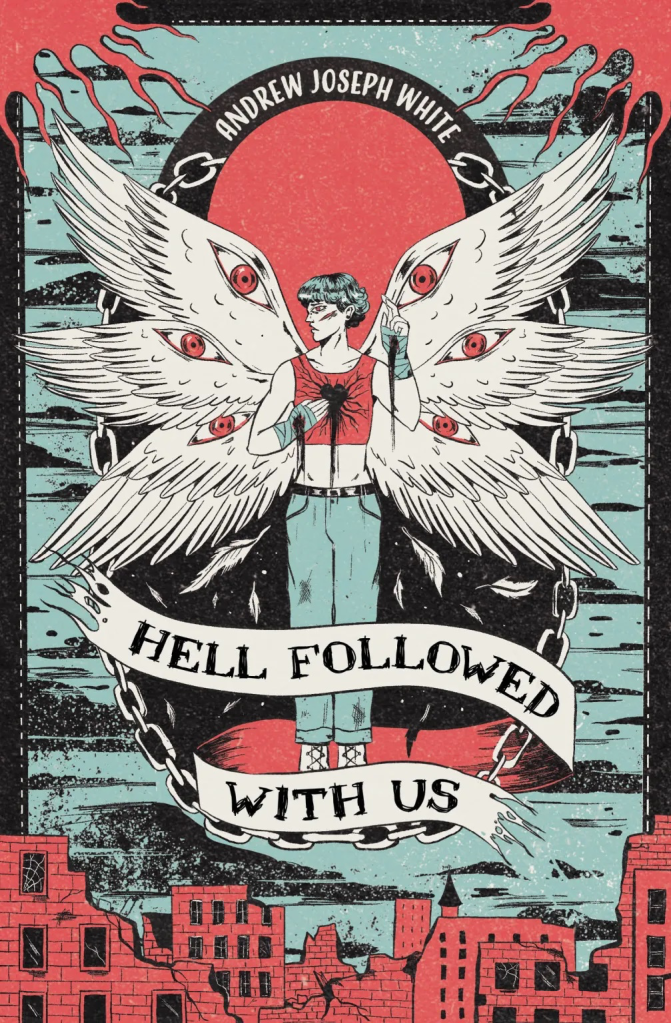
Hell Followed With Us – Andrew Joseph White“When we left the harbor/I was certain of my path/There’s no turning back/Now I long for something that/Could stop me in my tracks/An anchor to cast…”

“Remember My Name” – Mitski

Knowing that “Remember My Name” was released so close to the time that she almost quit music (back in 2019) really puts this song in perspective. Mitski’s still battling being in the spotlight, but this song presents the other side that’s been waging that war; deep down, she harbors a desire to be musically immortal, even at the steep cost: “I gave too much of my heart tonight/Can you come to where I’m staying/And make some extra love?/That I can save ’til tomorrow’s show.” With its crunching guitar riff that’s begging to be sampled and the way that the chorus consumes you in the same way that watching an approaching tornado on the horizon does, there’s so much urgency and volatility packed into just over two minutes. The best of Mitski speaks to that part of me that is so easily overcome by emotion and gives itself over to its throes—sometimes, whatever the situation, you do feel like you need something bigger than the sky. What works so well is that Mitski is dead serious—every song is an explosive, cathartic release. Of course, again, that’s probably what attracts so many parasocial weirdos to her shows, but I at least have the tact to not yell “MOMMY” at her, much less anybody else. That’s exactly the price of the fame she speaks of—she places her heart on a platter, people tear it to shreds, and the process repeats itself every day. I’m just glad that after The Land is Inhospitable and So Are We, she’s repaired that volatile relationship with music, or at least started to. Much as I love a good Mitski explosion, her best music comes when she’s healed, or at least processing it.

…AND A BOOK TO GO WITH IT:

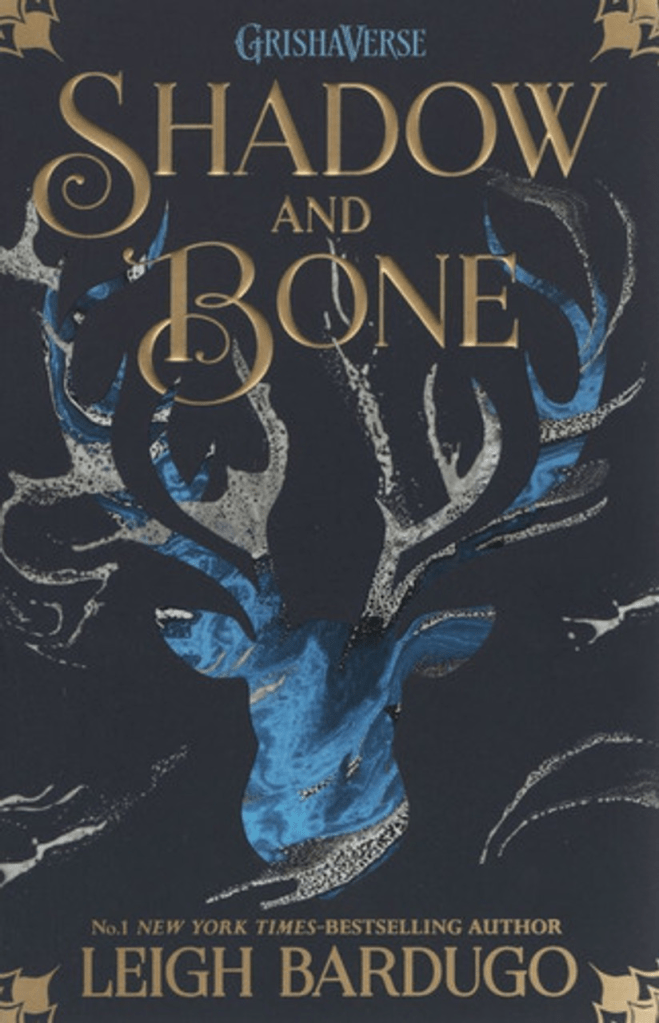
Shadow and Bone – Leigh Bardugo“I need something bigger than the sky/Hold it in my arms and know it’s mine/Just how many stars will I need to hang around me/To finally call it Heaven?”

Since this week’s post consists entirely of songs, consider all of them to be today’s song.

That’s it for this week’s Sunday Songs! Have a wonderful rest of your day, and take care of yourselves!

Posted in Book Review Tuesday

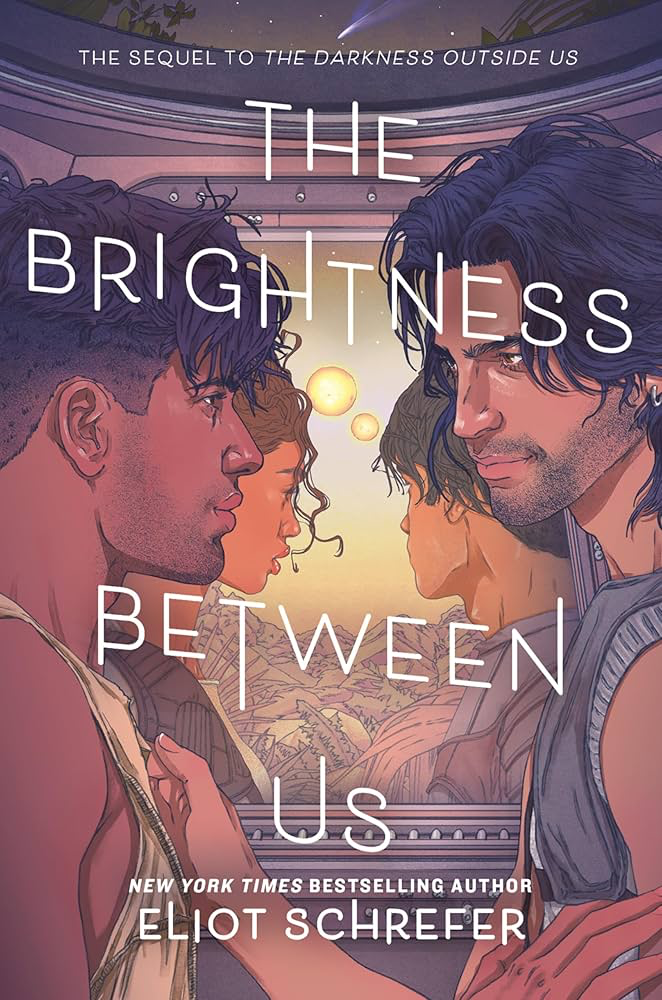
Book Review Tuesday (10/22/24) – The Brightness Between Us (The Darkness Outside Us, #2)

Happy Tuesday, bibliophiles!

We’re keeping up my sequel streak for the time being, so it seems. The difference between this and The Heart of the World is that I had no idea that The Darkness Outside Us, one of my favorite books of 2021, was even getting a sequel in the first place. That novel rocked my world—it really enraptured me in a way that not a whole lot of books ever have. But it was beautiful as a standalone—it had about as satisfying of an ending as you could ask for. So I was teetering towards hesitantly optimistic when I heard about The Brightness Outside Us, but in the end, I’m so glad I took the gamble; this novel is a different kind of twisty than its predecessor, but it’s worth taking the leap.

Enjoy this week’s review!

Now, tread lightly! This review contains spoilers for book one, The Darkness Outside Us. If you haven’t read it and intend on doing so, read at your own risk!

For my review of book one, The Darkness Outside Us, click here!

The Brightness Between Us (The Darkness Outside Us, #2)

In the 24th century, Ambrose Cusk is on the cusp of the greatest space mission mankind has ever embarked on. After losing his sister Minerva in a troubled gambit outside of the solar system, Ambrose is set to cross the universe itself in order to save her. But when he discovers that he won’t be on the ship—only clones of himself—he is determined to get to the bottom of what his true mission is—and what really happened to Minerva.

30,000 years in the future, the final clones of Ambrose and Kodiak have grown from the teenage clones they once were into fathers of two children. Owl and Yarrow live a peaceful but sheltered existence on the surface of Minerva. Owl yearns to learn what the rest of the planet holds, but her parents are keen on keeping her safe. But when her brother Yarrow begins acting strangely, the family suspects that a stranger thousands of years in the past may have sabotaged their mission.

TW/CW: violence, war, past mentions of child death, animal death, terrorism, intrusive thoughts

It didn’t even cross my mind that The Darkness Outside Us would have a sequel. I went into this novel with trepidation—how do you follow up a novel as twisty, complex, and heartwrenchingly beautiful as The Darkness Outside Us? By splitting the novel in two, as it turns out. I didn’t think that The Darkness Outside Us needed a sequel, but nonetheless, I’m glad I stuck around to see the result—of course Eliot Schrefer would have something fascinating up his sleeve.

The Brightness Between Us reminds me of how much I love a good “space colony gone wrong” story. As I said, I didn’t even think about The Darkness Outside Us getting a sequel, but this novel has the perfect setup for precisely this kind of plot. I should have trusted Schrefer from the start, given how masterful book one was, but wow, the Minerva plot amazed me! There was so much solid, hard sci-fi put into the terrain, climate, and wildlife of Minerva, and Schrefer did an excellent job of keeping the reader in the dark just enough to make everything suspenseful, even when the mysterious bones that Owl digs up in her exoplanet yard only turn out to be from a duck. From the research behind the wildlife, the weather, and the atmosphere, no stone was left unturned, each one its own Chekhov’s gun waiting to fire.

Although Owl wasn’t my favorite protagonist, she fits perfectly for the environment she’s in. Every “space colony gone wrong” needs a character who questions everything; there is always some part of the planet that has been unexplored, and someone needs to be curious and daring enough to want to discover what’s on the other side of the world. It can be even more effective when that character is a child; children are naturally curious, making it more than simply questioning authority—the authority is often their parental figures, and the excuses of them hiding things “for their safety” feel more tangible. Fifteen-year-old Owl was naturally curious, but also paired with her more obedient (at first) brother, Yarrow, giving her more resentment towards her parents. She wasn’t as likeable as Ambrose or Kodiak (I loved seeing them become parents), but they had the home field advantage of book one. But I can recognize when a character is perfect for the plot they’re in, and Owl was the perfect match for the plot of The Brightness Between Us.

After the pummeling of gut-wrenching twists that we call The Darkness Outside Us, the sequel was going to have to pull off a miracle to follow it up in terms of plot. The main twist was so earth-shattering that I thought it would be impossible to come up with anything better. I remain correct—I don’t think anyone, much less Schrefer, could come up with a twist that could top book one. But the main twist that we do have was excellent enough to propel me to finish the book in one sitting—just like The Darkness Outside Us! (The difference is that it was at a reasonable hour this time. I’ve matured since 2021, I promise.) Not only is this duology a love story 30,000 years in the making—it’s a conspiracy 30,000 years in the making! I loved the twist that Devon manipulated the frozen fetuses to develop violently aggressive traits as they grew—it gave even more stakes to an already gripping plot, and it made the days of present future half of the novel gripping as well. It gave the “space colony gone wrong” side of The Brightness Outside Us a truly unique twist—sabotage from 30,000 years in the past, and two versions of the main characters communicating across time to thwart it.

All this talk about the Minerva plot, and I haven’t even touched on the “present-day” Ambrose and Kodiak…oops. I don’t have a favorite child, I swear. The worldbuilding in this half of The Brightness Outside Us was my favorite part; getting a glimpse into the forgotten world that we only knew about in whispers in book one was fascinating. Schrefer’s vision of a world divided into a corporate hellscape of excess and a corporate hellscape of rigidity was one that was mapped out just as vividly as the alien world of Minerva. You really do see how it is that Ambrose and Kodiak got to be how they were at the start of book one. In terms of character development, it did tend to feel like listening to a broken record after book one, but that’s my only minor nitpick—Schrefer made sure that they had startlingly different—and almost as emotional—arcs as their clone counterparts in The Darkness Outside Us. Devon was a fascinating, slippery antagonist, and his sabotage was one of my favorite parts of the novel to witness unfolding.

All in all, a sequel that had a Herculean task to live up to its predecessor, but delivered a miracle in spite of the odds—just like Ambrose and Kodiak. 5 stars!

The Brightness Between Us is the second book in The Darkness Outside Us series, preceded by The Darkness Outside Us. Eliot Schrefer has also written several other books for children and young adults, including the Ape Quartet (Endangered, Threatened, Rescued, and Orphaned), The Lost Rainforest series (Mez’s Magic, Gogi’s Gambit, and Rumi’s Riddle), Queer Ducks (And Other Animals): The Natural World of Animal Sexuality, and many others.

Today’s song:

EVERGREEN COMES OUT THIS FRIDAY, ARE WE READY?

That’s it for this week’s Book Review Tuesday! Have a wonderful rest of your day, and take care of yourselves!

Posted in Sunday Songs

Sunday Songs: 9/29/24

Happy Sunday, bibliophiles! I hope this week has treated you well.

This week: high school throwbacks, off-kilter oddities, and a few too many people trying to explore each other’s minds than I’m comfortable with. Cool it, Charles Xavier…

Enjoy this week’s songs!

SUNDAY SONGS: 9/29/24:

“Piano Fire” (feat. P.J. Harvey) – Sparklehorse

It’s a Wonderful Life is one of those albums that took me a bafflingly long time to listen to. I know, I know, I did it to myself, but the fact that I didn’t pick it up when I was 15 and irreparably mired in Good Morning Spider astonishes me. It’s probably owed to the fact that I was also even more irreparably mired in OK Computer, which tends to overshadow things a tad bit. Looking back, maybe it was for the best that I wasn’t on an all-Sparklehorse diet at that age. I already looked pathetic scuffing my snow boots through the hall while blasting “Maria’s Little Elbows” through my earbuds between classes. I was 15, guys. It was 100% that serious, trust me.

What I can say is that I think I would have felt the same way about It’s a Wonderful Life at 15 as I do now—it’s a triumph of an album. Scattering through surreal urgency and subdued melancholy, it has every kind of Sparklehorse you’d like—along with a smattering of collaborators. It’s almost funny how different said collaborators are (take Nina Persson’s delicate backing vocals on “Gold Day” and then Tom Waits growling like a hulking ogre on “Dog Door”), but the power of Sparklehorse has always lain in the disparate elements Mark Linkous cobbles together. Like some kind of American Gepetto, he constructs all of his songs into tiny figures made of warped wood and bird bones, and what totters to life creaks with every step. They’re quaint creatures with acorns for heads and cigarettes and toothpicks for legs, but there’s no other way to love them save for exactly as they are.

Those he chooses to collaborate with feel much the same way. P.J. Harvey, of all people, was a left-field choice when I first heard about her featuring on “Piano Fire.” The only Sparklehorse song I could conceive being able to contain the kind of raw fury she exudes was “Pig,” and that had already come and gone by the time It’s a Wonderful Life came out. “Piano Fire,” however, is one of the most upbeat tracks on the album; you feel a racing urgency to it, immediately sprinting down an overcast beach the minute the first guitar chords kick in. Or maybe it’s the searing heat of airport tarmac that you’re sprinting across the minute you hear the opening line: “I got sunburnt waiting for the jets to land.” Sunburnt describes “Piano Fire” surprisingly well; it has the texture of an old photograph left out in the sun too long, all of the colors now bleached to unnatural, pale shades. Linkous almost takes a backseat on his own song, never raising his voice when he dishes out surreal vignettes of “Fiery pianos wash up on a foggy coast/Squeaky old organs have given up the ghost/Fire them up and kill the piano birds.” But that urgency is why P.J. Harvey is so perfect for this song; once the chorus kicks in, her soaring voice provides the jet fuel for this creaky old jet to careen off the runway and into a sky littered with the strangest birds you’ve ever seen.

…AND A BOOK TO GO WITH IT:

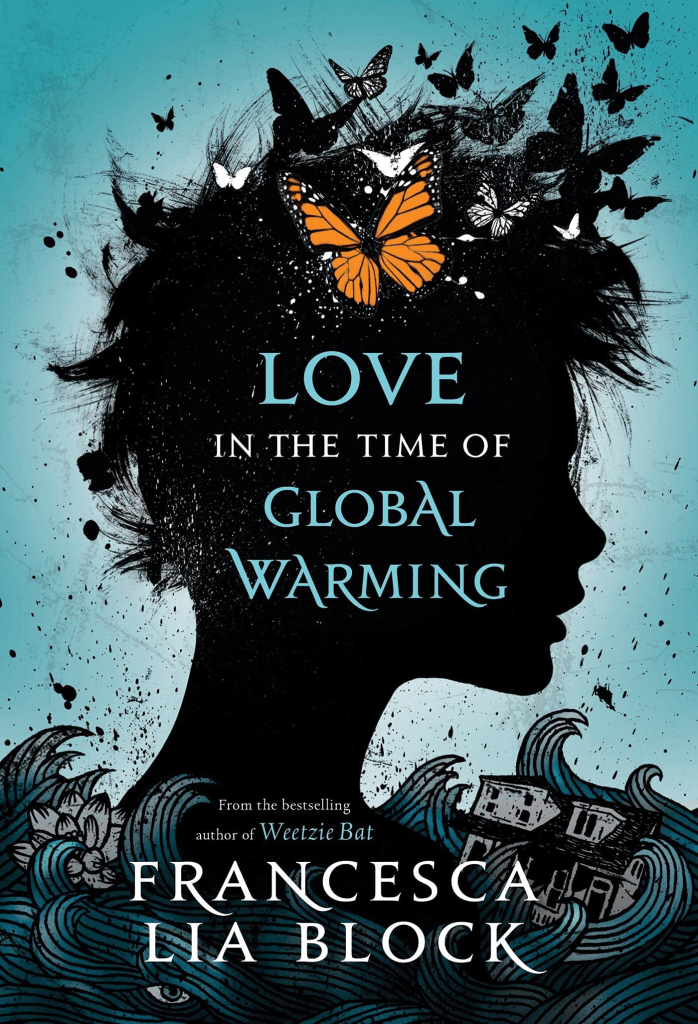
Love in the Time of Global Warming – Francesca Lia BlockBlock’s bizarre, dreamlike prose certainly fits with the surreal imagery that Linkous employs in this song—and the majority of his catalogue.

“Gigantic” – Pixies

In almost two and a half years of making these Sunday Songs graphics…this is the first time I’ve double-dipped. It was bound to happen eventually, not just because my music taste is finite, but because this song has lingered with me from a young age. I faintly remember being around five or six and hearing this song in my dad’s old car, driving in fading light down the road back to my house, and hearing the iconic chorus: “Gigantic, gigantic/Gigantic, a big big love.”

I’ve often talked about how simplicity in lyrics can convey more than the most complex songs in some cases, and if you need further proof, look no further than “Gigantic.” Most of that work is done by the immense, never-fading talent of Kim Deal, who sells every metric ounce of explosive love in this song; with every cry of “A big big love,” you get it—there’s no other words that can adequately describe the kind of secretive, all-consuming romance that swirls through every pluck of the bass. That opening bass riff is the shy, cracking open of a bedroom window when the parents are asleep, an invitation with a blushing, anticipatory smile. What follows never fails to knock me off my feet. I say “knock” and not sweep or lift me off my feet precisely because that’s what it feels like, as though the ground has opened up beneath you, and you’re falling headfirst into the unknown—contained in a kiss that consumes every cell of your body.

…AND A BOOK TO GO WITH IT:

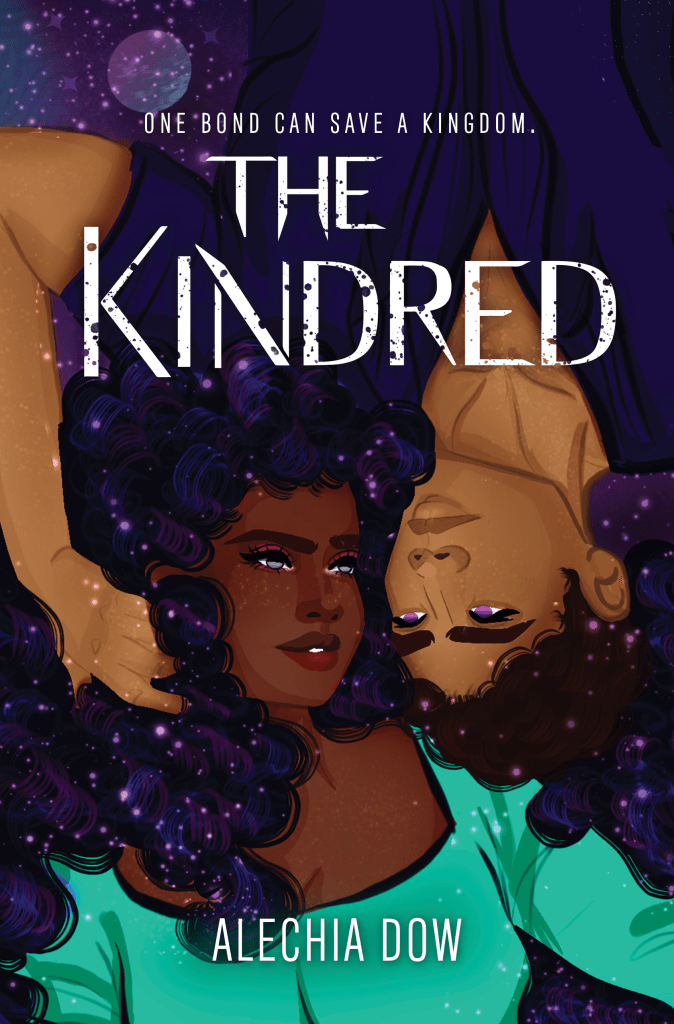
The Kindred – Alechia Dowall-consuming, explosive, and intergalactic love.

“Take Me To The River” – Al Green

I’m sure Al Green is a perfectly nice guy, but…that album cover and title is not it, man…”Al Green Explores Your Mind?” Can he…can he not?

The fact that they were just naming albums anything back in the day aside…how did I not know about this song for so long? I’ve loved the Talking Heads cover for years, but somehow, it never dawned on me to look it up and discover that it was a cover. There’s something to be said for the phenomenon of white artists’ covers of songs by Black artists overshadowing the originals, but this isn’t quite the case—from the looks of it, between the amount of times that this song has been covered (most recently by Lorde for a Talking Heads tribute album, oddly enough) and the royalties from [checks notes] those animatronic wall fish, it’s cemented itself as an enduring classic of soul. I’m sure Al Green isn’t complaining about the latter though, given that he’s gotten the most royalties from the fish cover. Yet no matter the strange journey that “Take Me To The River” has taken, none of it has overshadowed how deliciously groovy it is. It’s endured for five decades in counting precisely because it wastes no time in getting straight into its slinky, infectious funk. Green’s voice flies from slick to howling in seconds and recovers in record time, all in time with the blasts of an impeccable horn section. 50 years, and you can’t not bop your head. I’m still not jazzed about Al Green exploring my mind, but I can’t deny that he worked some undeniable, immortal magic with this one.

…AND A BOOK TO GO WITH IT:

The Final Revival of Opal & Nev – Dawnie Waltonthough the musical genres differ, the atmosphere and climate of the ’70s runs through both.

“Secretarial” – A.C. Newman

I’ve had a turnaround. I’ll be honest—even though I’ve liked several New Pornographers songs since I was young, “Secretarial” has always bugged me for some reason. I never hated it, but it was always one of those songs where, over the years, I developed a reflex of just skipping it whenever it came on shuffle. I didn’t question it for a while. Many years have passed, and for once, I didn’t skip…and here we are.

A.C. Newman—and most of The New Pornographers’ catalogue, by extension—has this songwriting style that’s just so distinctive in a way that I can’t put my finger on. Even if you separated his or Neko Case’s voice from the lyrics, I could hear a line like “So come on, let the sun in/We’ve been gunning for promotion/Postering the slogans on the roadsigns.” and immediately go “yup, A.C. Newman wrote that.” What makes it so distinct has bugged me for years, and to this day, I can’t fully put my finger on it. The closest I can say is that their specific diction has an inherently off-kilter quality to it. Newman is never overly verbose, but the way he arranges words is always slightly askew. His lyrics dwell in the thin limbo between obtuse poetry and sense, situated in a place where you can decently get the metaphor he’s going for, but instinctually, you know that those syllables just don’t go together neatly. “Secretarial,” like another other Newman product, might as well be a puzzle, in that sense, but one that was put together wrong with the pieces that only look like they should fit together, but stick and slide against each other. I’ve never been great with time signatures, but this one is angular enough to match the slanted lyrics. Even if you don’t know the guy, you can’t deny that it takes some serious talent to not just think of but pull off “Lady, it’s secretarial” as a hook.

…AND A BOOK TO GO WITH IT:

Lagoon – Nnedi OkoraforI’ve used this book more than once, but it was right there…

“One day you blew across the water/After racing through the countdown/Spewing ancient wisdom like your friend/The revelation had come and they were looking for me…”

“Henry” – Soccer Mommy

Oh, early Soccer Mommy…oh, “Henry.” This one sure soundtracked many a one-earbud-in free draw in art class my sophomore year. I think it was in the fall that I found this song as well; it carries a distinct smell of wet leaves and wood chips in the pumpkin patch. Cheesy as the title of this album, the self-released For Young Hearts, is, it’s not like it’s a lie. Here’s to many more high schoolers listening to this in art class.

It seems that “Driver” has put a pin in this tradition, but “Henry” is part of a long lineage of Soccer Mommy songs about the seduction of Bad Boys™️ (see also: “Death By Chocolate”). Of course, the natural conclusion was that the ultimate bad boy was to be conquered in “lucy,” that being…the devil himself. (God, I need to stop. I sound like a youth pastor.) But here in 2016, “Henry” chronicled the kind of guy who hung out behind the high school, smoking cigarettes in a leather jacket, and giving you a wicked smile as you passed. Sophie Allison’s younger voice, along with the plucky instrumentation (cannot get enough of that bass), makes you feel like you’re following a mischievous wood sprite through sunlit woods. Light and lovesick, it captures that heady, teenage love drug that makes every step stumble: “‘Cause Henry has a laugh like fire/And it’s spreading through the streets and burning on telephone wires/I don’t know just what it is/But he’s driving all the good girls bad with that evil smile of his.” Soccer Mommy’s had that golden, indie touch all along—”Henry” remains a classic to me.

…AND A BOOK TO GO WITH IT:

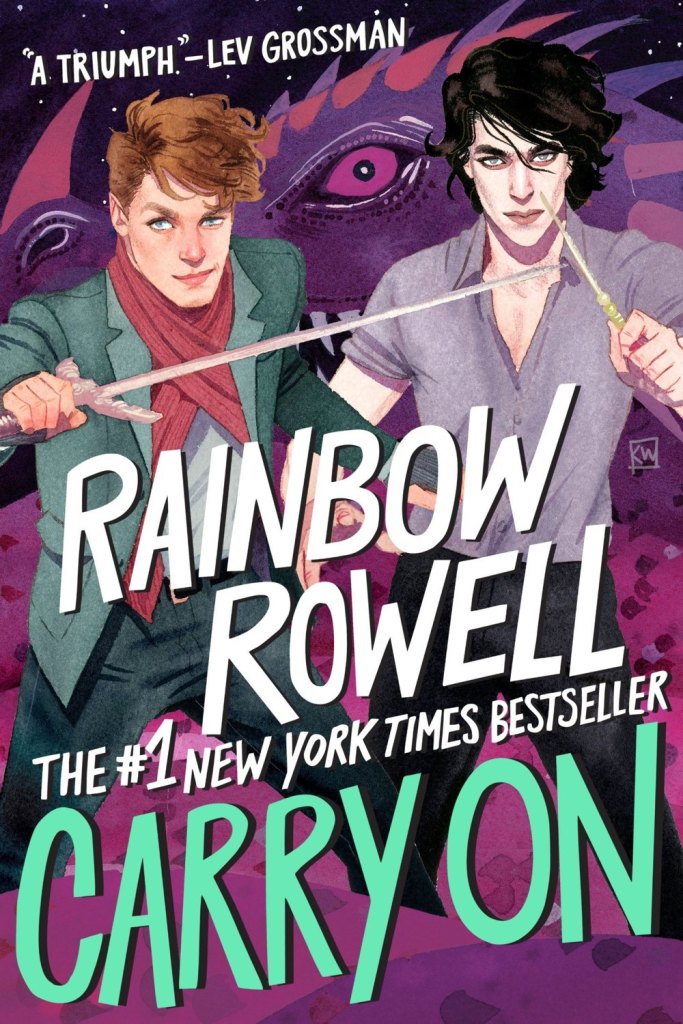
Carry On (Simon Snow, #1) – Rainbow Rowell“I don’t know/Just what it is/But he’s driving all the good girls bad with that evil smile of his…”

Since this song consists entirely of songs, consider all of them to be today’s song.

That’s it for this week’s Sunday Songs! Have a wonderful rest of your day, and take care of yourselves!

Posted in Sunday Songs

Sunday Songs: 9/22/24

Happy Sunday, bibliophiles! I hope this week has treated you well.

This week: I apologize in advance for every single driving mention and/or pun that I made in this post. I didn’t even notice it at a certain point…I just couldn’t…stop…

1:58-2:07

Enjoy this week’s songs!

SUNDAY SONGS: 9/22/24

“Bloody Ice Cream” – Bikini Kill

It’s been just under a month since I had the privilege of seeing Bikini Kill live, and even as someone who isn’t a hardcore fan of the band, I had SUCH a wonderful time! That’s owed in no small part to the commanding presence of Kathleen Hanna, not just in the history she carries, but in just how real she was. There she was, a pioneer of feminist punk, just onstage joking about how her bra was too tight and recounting a memory of rich girls pelting her with squirt guns before she walked into a job interview. Never at any moment was there a pretense of acting cool or punk. It was nothing but Kathleen Hanna, in all of her smudged-mascara and sequined glory. Bless Kathleen Hanna, really.

So when she introduced this song, which I was familiar with only in name, by saying that it was dedicated to “all woman writers,” you bet that I stood up and saluted her like it was the national anthem. And even as a fan on the sidelines, I’d accept “Bloody Ice Cream” as a new kind of anthem. It articulates in less than one and a half minutes what so many creators—chiefly women—are told about the profession: “The Sylvia Plath story is told/To girls who write/They want us to think/That to be a girl poet/Means you have to die.” The unspoken doctrine of your craft not being valid unless you sobbed and suffered over it permeates all kinds of media. I’ve been around so many people who think that trauma is the secret to good writing, whether it’s slapping it onto their characters or thinking that their hope in their message is invalid because it doesn’t show the bleakness of the real world. Counterpoint: ever experience happiness? Even once? Was that not in the real world?

The modern world may be far from perfect, but we have an understanding that could nurture and heal the Sylvia Plaths and Virginia Woolfs of tomorrow. And we have the recognition that there is no power greater than joy. In and outside of the writer’s world, we’re taught that to feel downtrodden is to experience the real world, competing each other for how exhausted we are, how much we have on our plates, and how sad and gloomy our projects are. Is this really what creativity is? It’s not like there’s no value in showing the darker aspects of life, but for how much it clogs the literary world, I feel like so many people have forgotten that writing—and imagination—isn’t just a contest for who can work themselves to the bone the most artfully. I write to put out the energy I want to see reflected in the world around me. And that energy is joy. The systems of oppression that surround us want to see people like us being so downtrodden that we have no energy to question them. So write. Write joy. Write what’s in your heart. Scream and dance like Kathleen Hanna. And don’t underestimate the value of kindness. They hate to see you joyous.

…AND A BOOK TO GO WITH IT:

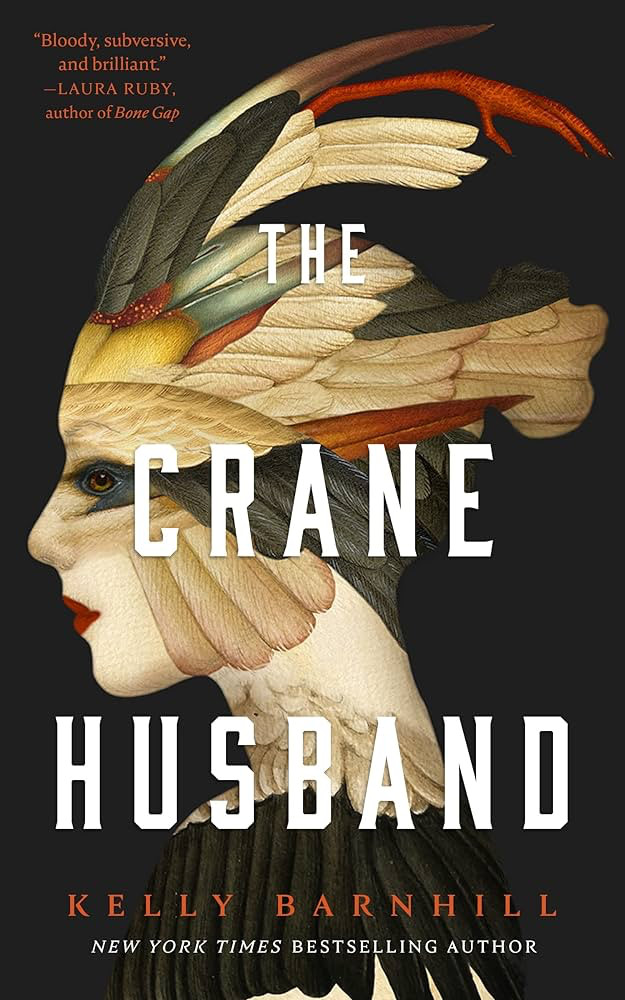
The Crane Husband – Kelly Barnhill“Who was it/That told me/All girls who write/Must suicide?”

“My Impure Hair” – Blonde Redhead

The best shoegaze sounds like you’re slipping in and out of a dream, that limbo best experienced from 1-4 in the morning when you’ve woken up from a dream, your eyes are gummy, and you’re not sure if the hazy shapes forming the walls and bed around you are part of another dream you’ve yet to wake up from. I guess that’s why it’s so easy for people to get high to this kind of music, but like…well, all things, sobriety is better suited to experiencing them. “My Impure Hair” is the closing track on 23 (I’m not even a diehard fan, but I just LOVE that album cover), and even from this tiny taste, it feels like an artfully placed closing track. It has the quality of a lullaby; every element, from the soft instrumentation to Kazu Makino’s vocals, is whispered, as though not to disturb a swaddled baby drifting off in their crib. Once you think you’ve heard a distinct sound, it bleeds into another like spilled watercolors, creating a pale wisp that floats, airless, on the passing wind.

…AND A BOOK TO GO WITH IT:

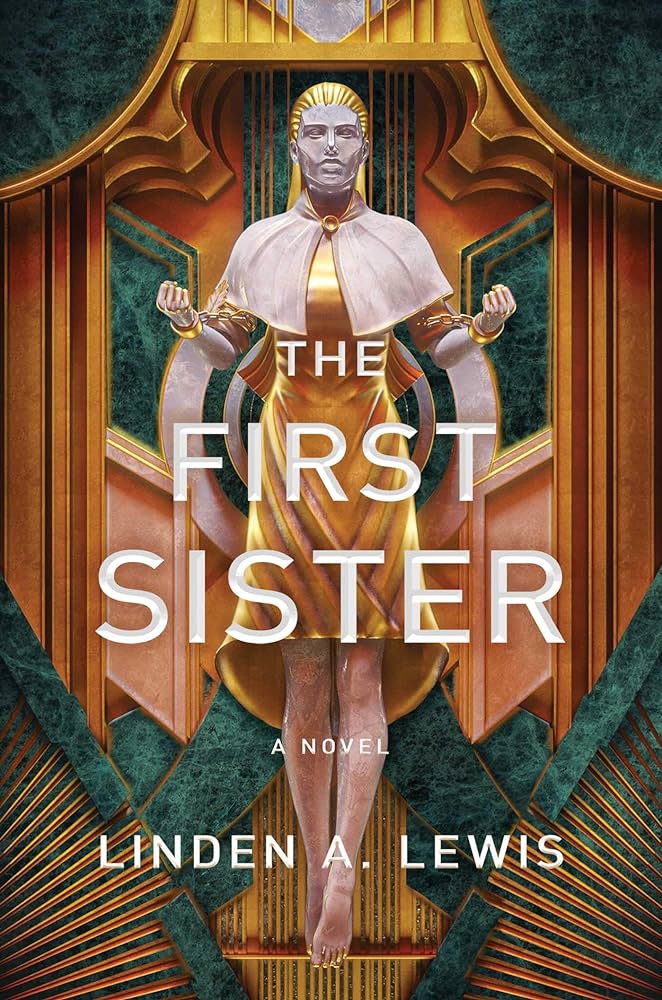
The First Sister – Linden A. Lewis“But in the end/We defend our decadence/You never wept like that/Whatever lost, I won’t forget about you…”

“Kanga Roo” – Big Star

Nothing baffles me more about “Kanga Roo” than the fact that, although it didn’t officially see the light until 1978, it was recorded sometime in 1974. I suppose there’s some ’60s psychedelic bands that got close to the sound here, but this kind of deterioration feels so modern. It doesn’t sound like 1974! It sounds like a less fuzzy Spacemen 3 or the first take of a Bends-era Radiohead b-side. One of the top comments on the official audio called it “the rough draft for Wilco’s Yankee Hotel Foxtrot, which is the most astute description I’ve ever seen ascribed to it—I don’t know how it never clicked, but suddenly, “Ashes of American Flags” makes eons more sense.

I can only imagine what hearing this in 1978 felt like—probably the musical equivalent of “mom, come pick me up, I’m scared” after expecting something more like “In The Street.” Jesus. That feeling certainly crept into me when I first heard this song, while driving home from a concert late at night, navigating a winding canyon road in near-pitch black. All of the shrill mechanical squeals sound much more menacing when you’re barely awake. “Kanga Roo” sounds like it’s actively pulling itself apart at the seams, a threadbare rag only attached to its halves by a few strands of fraying string. The drums are never on beat or consistent in volume, somebody’s banging on a cowbell for about 15 seconds, and all the electric guitars are doing is getting scratched and squealed into oblivion. It’s a bizarre experience, watching a song crumble like charcoal in a dead firepit the morning after a campfire. Yet there’s an innocence to it; Alex Chilton’s voice is the only clear sound in “Kanga Roo.” You’re hearing the instruments fighting for their lives while Chilton’s plainly singing “You was at a party/Thought you was a queen.” The iconic line that gave the song its name (“oh, I want you/Like a kangaroo”) almost makes no sense, and I’m not sure if Chilton has ever offered up an explanation, but somehow, I see it. I imagine one of those towering, buck kangaroos standing at full height, and feeling the desire to grasp someone in your arms with the strength of such a creature.

I included This Mortal Coil’s cover of “Kangaroo” in one of my past Sunday Songs that I didn’t get around to writing because I was occupied with moving and school; I have too much homework to fully go into who’s coming out victorious if we’re pitting the original against this one, but I’m at least partial to it for how sparse it feels, even with the soaring strings. It’s much more put-together than the original (not to disparage the artful chaos), but there’s something to be said for what it does with the negative space that the Big Star version drowns out. What can I say? They got me. They got me with the big feels.

…AND A BOOK TO GO WITH IT:

The Spirit Bares Its Teeth – Andrew Joseph Whitethe lyrics could match up with any number of books, but it’s the creaking, uneasy atmosphere that puts it squarely in this novel’s company.

“Driver” – Soccer Mommy

I’m so glad that Soccer Mommy has become a prominent enough artist that she has the means to do funny marketing campaigns, because whoever came up with the one for “Driver” had a stroke of genius. By calling a number that Sophie Allison posted, you could get a snippet of the track before it came out, followed by “how’s my driving?”-style call prompt. Maybe we are in an okay timeline.

Without a doubt, Sophie Allison has never been more sure of herself at the wheel. A departure from the expression of beauty in lingering grief that were the two lead singles, “Lost” and “M,” “Driver” presents a more lighthearted detour to the landscape of Evergreen. The backing guitars and effects have gained a grungier, grimier edge, but Allison’s sunshine puts them all in a dusty, golden light. As the guitars and drums thrum like gravel skipping across a dirt road, Allison turns her attention to the present loves of her life. You almost get the feeling that she’s slipping into the self-deprecation of her early career, but there’s nothing but affection for herself, but more in terms of her partner, who puts up with her “losing [her] concentration on every whim.” Allison presents herself as the more emotional, scatterbrained half of the couple, which her partner is playful about, but is also the one to ground her when she gets too far into her head with a reminder of “where are we going now?” She’s never completely blameless, but she’s full of nothing but love for her anchor that keeps her from veering off the path; it’s not like some of her earlier songs, like this would indicate that she’s in danger of slipping away entirely, but it’s an exercise in learning to rein yourself in—and find somebody who isn’t afraid to rest a hand on your shoulders and remind you where your feet are planted.

…AND A BOOK TO GO WITH IT:

Aurora Burning (The Aurora Cycle, #2) – Amie Kaufman and Jay Kristoffnot to get all 2020 Madeline on you all, but…the Kalauri in this song…I’m gonna keel over…

“I’m a five foot four engine waiting to move/I’m a test of his patience with all that I do/‘Cause I’m hot and he stays cool, I don’t know why/But he puts up with my moods/And he makes me smile when he says/’Where are we going now?'”

“Bishop’s Robes” – Radiohead

The connection of inspiration between Radiohead and The Smiths never surprises me, but sometimes, with bands that inspire another, you find a single song that you know is the missing link in the evolutionary tree, the line of ancestry concretely delineating their music as kin. More specifically, it makes sense next to their cover of “The Headmaster Ritual,” though “Bishop’s Robes” takes a much more subdued turn.

Yorke’s raw lyricism thrives in both simplicity and complexity; he can weave any number of stories with denser, more prosey lyrics, but he knows just what kind of simple, unadorned phrases to stab you in the gut with. In this case, it’s the chorus, repeated like a shaky-voiced prayer in a dark corner: “I am not going back.” It becomes more of a reminder than a statement, as though to convince his brain that no, he’s not back in his pre-teen years under the reign of his “bastard Headmaster.” Volumes have been written about the horrors and abuse of the British education system back in the day (see: pretty much anything by Pink Floyd)—and some continuing into now, I would imagine—but what sets “Bishop’s Robes” apart is the mood. It might be more accurate to call it a lack, as the most overwhelming feeling you get from this track is not anger but numbness. There’s a resignation to it, weighing down the music, as though, even in adulthood, the experience has sapped him: Yorke doesn’t have the energy to fling insults along the lines of “spineless swines” or “belligerent ghouls” at his abusive childhood tormentors—all he can do is “bastard.” And it’s that eyebagged, forlorn crawl that sells the lasting effect it had on him. After years of unyielding discipline, I can imagine the fear of not raising your voice—a haunting presence that permeates every note of this track, constantly looking over its shoulder to guard innocent contraband that doesn’t exist.

…AND A BOOK TO GO WITH IT:

Agnes at the End of the World – Kelly McWilliamssecrecy, escape, and the horrors of a perverted version of Christianity in the hands of the wrong man.

Since this post consists entirely of songs, consider all of them to be today’s song.

That’s it for this week’s Sunday Songs! Have a wonderful rest of your day, and take care of yourselves!
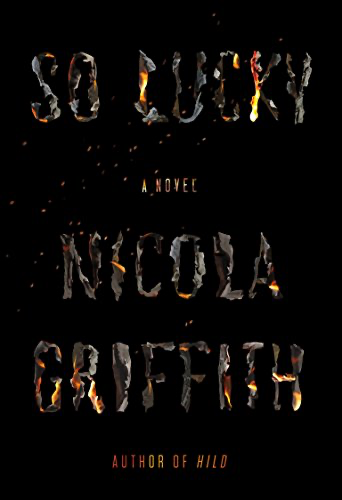
Posted in Book Review Tuesday

Book Review Tuesday (9/10/24) – The Sun and the Void

Happy Tuesday, bibliophiles!

Looks like I’m back! I’ve returned to college, and, as it always does, it has taken me some time to settle in. My ducks aren’t fully in a row, but they’re straightened enough that I’ve figured out when and where I’ll have times to squeeze in some writing. Key word is some: chances are I’ll stick to the two posts a week for a while now that I’ve got lots of schoolwork on my hands.

For this week’s Book Review Tuesday, I have a book that it’s almost miraculous that I liked as much as I did; at their worst, overly long epic fantasy novels are the bane of my existence. The Sun and the Void clocks in at nearly 600 pages, and I expected at least some of it to be a slog. Lo and behold, this novel held so much more in store—vibrant characters, Venezuelan-inspired mythology, and a daring quest across an inhospitable land.

Enjoy this week’s review!

The Sun and the Void (The Warring Gods, #1) – Gabriela Romero Lacruz

Reina has lived her life on the outskirts of society. Though her kind, the nozariels, have won their freedom, her tail and features mark her as an outcast. Reina returns to her estranged grandmother in dire need of healing—and answers. Now kept alive by means of dark, unpredictable magic, she is now the owner of a terrible secret: her grandmother is in league with a demon-god hungry for sacrifices, and one such sacrifice may be someone that she holds dear.

On the other side of the kingdom, Eva struggles to hide her true self. Her mixed heritage—part human, part valco—makes her a target. Soon after she is set to be married off to a man she barely knows, she falls in with a revolutionary. But this charming, volatile man has a darker side, a hunger for power that will not spare her if she stands in the way.

The paths of these women intersect as the clock ticks, and the fate of both of their worlds may hang in the balance…

TW/CW (from the author): alcohol, assault, blood, child death, childbirth, death, demons, emotional abuse, gore, infertility, kidnapping, pregnancy, racism, religion, sexually explicit scenes, mentions of slavery, violence

Ever since my tastes started drifting more into adult novels, I’ve had a history of getting a hundreds or so pages into an epic fantasy novel, losing my way, and coming out with only the vaguest sense of plot and one character. There’s some of it that’s on me, but it’s often a case of rambling; I’ve found many such novels to be more wordy than necessary and convoluted in their delivery of the worldbuilding. I lowered my expectations for The Sun and the Void for this very reason, though I clung onto it because of the promise of the Venezuelan and Colombian-inspired setting and anticolonial storyline (!!!!!!!!!!!!). Beyond being sick of generic, catch-all European settings in fantasy, my half-Colombian Spidey sense was tingling…and for good reason! The Sun and the Void is an overlooked gem of epic fantasy, with magic and action abound.

The vibrant setting that Romero Lacruz crafts was the clear star of The Sun and the Void. Her South American-inspired landscape was a breath of fresh air in a sea of vaguely European epic fantasies, breathing some much-needed life and diversity into the genre. Logistically, this region of South America—Venezuela and Colombia—also provides a variety of biomes to play with: we get flashes of deserts, forests, and glittering, tropical beaches, all with a fantastical dash of demons and monsters. That alone would have already put it a step above your average epic fantasy, but it was this series’ unique fantasy races that truly shone! As metaphors for oppression and who the dominant power in society deems “acceptable,” the nozariels and valcos were effective on that front. Their designs, however, were what made them so fun, making for memorable characters in looks and culture as well as personality.

In my experience, there are certain brands of epic fantasy that are allergic to accessible writing. When I say accessible, I don’t mean simple; accessible doesn’t mean the absence of artful prose or clever metaphor. For me, accessible prose is inventive, but not so caught up in making itself sound clever that it becomes a chore to read. Romero Lacruz’s writing is a fantastic case study in how to hit the balance between artful and digestible. Every action scene, political machination, and argument is rendered in ways that do feel like how people talk, and yet she never forgets to season her prose with unique metaphors and descriptors of the characters and their surroundings that keep you hooked—or, in my case, vigorously highlighting on my Kindle. At no point did the writing feel pompous or overly convinced of its own talent—it’s writing for writing’s taste, which is what writing should be.

Power dynamics were at the forefront of The Sun and the Void, and the explorations of them were some of the most impactful parts of the novel. Through the side characters, Romero Lacruz portrays the different way that power manifests itself in people; no matter how “noble” their causes, characters like Doña Ursulina and Javier became so obsessed with achieving their goals that it subtly began to eclipse all else. What was unique about The Sun and the Void, however, was how it was framed: through the eyes of vulnerable, sensitive women that get pulled under their spells. Such abusive dynamics meant that Reina and Eva were respectively drawn into the web of these other characters. At no point were they helpless—they were victim to people that promised them healing or freedom, and became so entangled in the schemes of others that they had to fight tooth and claw to find their way back to the light.

That being said, the weakest links in The Sun and the Void lay in the worldbuilding. Even though this novel is one of the few lengthy epic fantasies that I’ve read that miraculously doesn’t get overly convoluted, the price it paid was that some of the worldbuilding was left messy and sloppy once I took a closer look. The glossary was helpful, but it took quite a while to get used to some of the intricacies of the magic system. Terms are thrown around in a very slipshod way, and instead of the dreaded page-long block of worldbuilding exposition, we get…a few sentences, at most, before said facet of the magic system is barely mentioned for the rest of the novel. It’s an issue with followthrough—once something was mentioned, it often took 300 pages for it to make a brief appearance, only to poof back into the unexplained ether. It’s clear that there was a lot of thought behind the worldbuilding, but the issue was more of following the time-honored rule of Chekhov’s gun—Chekhov’s magic system, in this case. The gun did go off in the end, but it took so long to get to that moment that I completely forgot the significance of it being there in the first place.

All in all, an epic fantasy that defied the conventions of the genre—setting, writing style, and more—in all of the best ways. 4 stars!

The Sun and the Void is the first novel in the Warring Gods series, followed by The River and the Star, which is slated for release in 2025. The Sun and the Void is Romero Lacruz’s debut novel.

Today’s song:

BLESSED WITH ANOTHER NEW SOCCER MOMMY TRACK AND A NORTH AMERICAN TOUR NEXT YEAR!!!!!

That’s it for this week’s Book Review Tuesday! Have a wonderful rest of your day, and take care of yourselves!
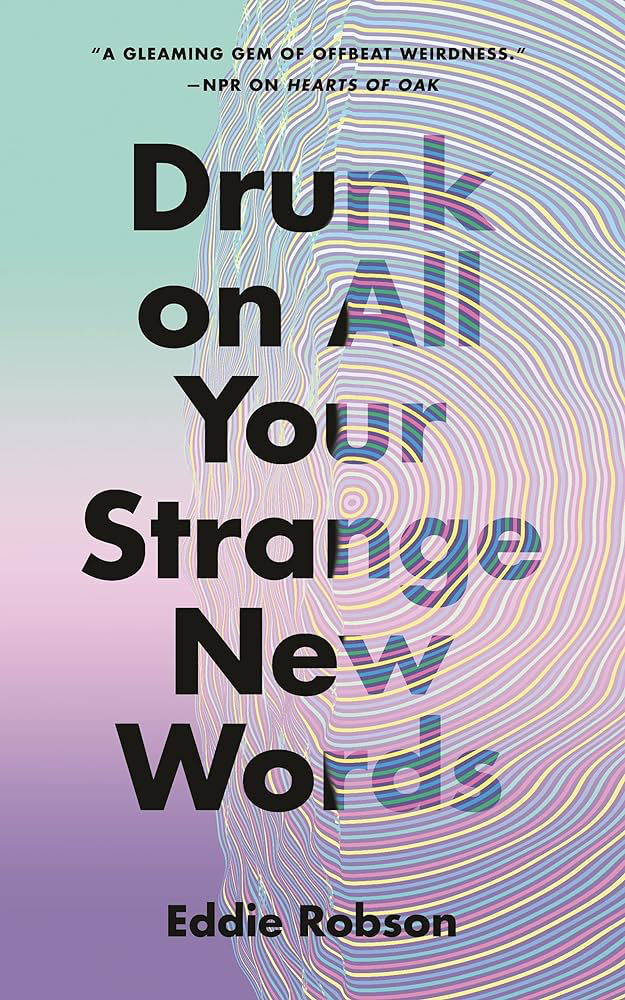
Posted in Sunday Songs

Sunday Songs: 6/16/24

Happy Sunday, bibliophiles!
First off: happy Father’s Day to my incredible dad! Not only are you such a wonderful role model for being a genuinely kind, accepting, and truly empathetic person, you’ve given me the gift of sharing music—what these posts are all about. To be able to share music with you back brings me all the joy in the world. I love you.

This week: 🚨SOCCER MOMMY HAS COME TO SAVE THE SECOND HALF OF 2024, THIS IS NOT A DRILL🚨

Enjoy this week’s songs!
SUNDAY SONGS: 6/16/24

“Lost” – Soccer Mommy

SOCCER MOMMY RETURNS!!! Given the short tour (that’s nowhere near me……..no, I’m totally not mad, no way) that she’s currently embarking on to support some of this new material, there’s a fourth album (sixth, counting the self-released albums) on the horizon, and hopefully on a happier date. Poor thing. I still haven’t gotten over the fact that her last album, Sometimes, Forever, was unintentionally released on the day that Roe v. Wade was overturned. Jesus.
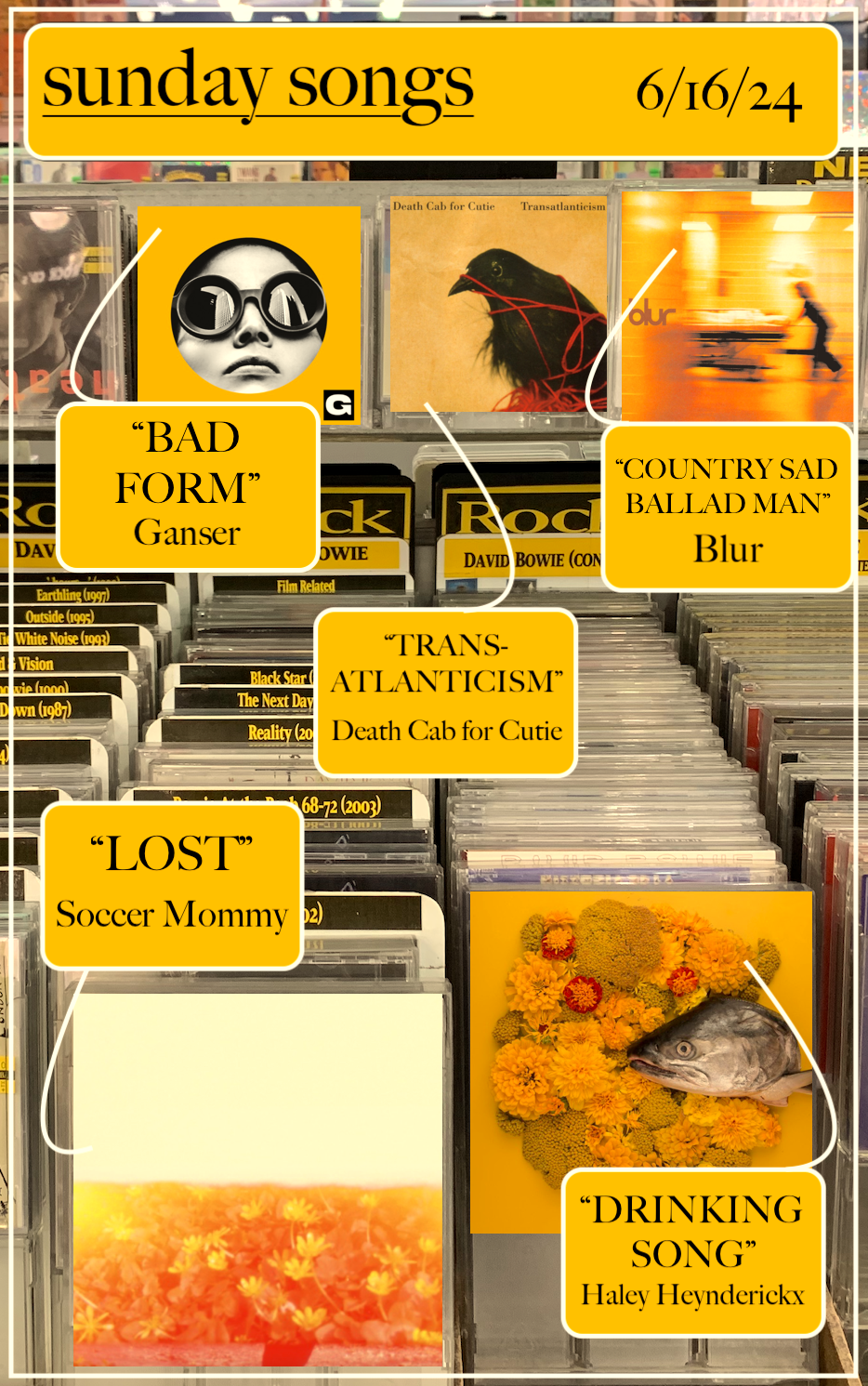
Something that I’ve admired over the years about Soccer Mommy is her willingness to experiment with her production. At their core, her songs have never changed their essence: honest, tender confessions of the trials of heartbreak, grief, and mental health. But the dressing is never the same twice, from color theory’s color-coded tonal shifts and synth-dusted melodies to the darker, more distorted soundscape of Sometimes, Forever. With the latter, Chelsea Wolfe wasn’t somebody that I’d readily compare to Soccer Mommy, but then she comes along with “Unholy Affliction,” and the comparison, at least on that track, is as clear as day. Just when you think she’s playing it safe, she comes out of nowhere with instrumentation that you’d never imagine attributed to her name—and almost every time, it still feels like nothing but Sophie Allison. There’s a boldness to her that’s rare in the genre; there is an expectation of sameness in the kind of indie circles she’s in, an expectation to box yourself into the image that the record label deems as “authentic” in order to stay in their good graces—and the good graces of fans who cling to their raw lyrics. Julien Baker, although her first two albums adhered to that, took a similar leap with Little Oblivions, and that, for me, was her best album to date.

But Soccer Mommy can’t help but be herself. “Lost” strays nearer to some of her sparer, more traditionally indie roots, but with production that feels spun from silk; inside of the glowing cocoon where Allison resides, threads of synth, birdsong, and yearning strings coalesce in what can only be described as the musical form of a grainy polaroid, a sunset tinged with ink, film, and bygone memories. Bygone memories, like much of her other material, is at the core of “Lost,” specifically bygone memories of those bygone. Given the trajectory of “yellow is the color of her eyes,” some have speculated that “Lost” is about her mother’s death, although Allison has chosen to not disclose the subject. whatever the case, I’m glad that Soccer Mommy doesn’t have the kind of rabid Swiftie fanbase that would relentlessly strip away at the press and at Allison herself to get to the bottom of who she’s mourning, because…that’s her own business, dammit. I’m glad us…whatever Soccer Mommy fans are called (does this fanbase have a name?) have the heart to give a human being space to breathe, because, judging from the lyrics (and all of color theory, frankly), Allison needs it. “Lost” distills grief in the truths of the cliche that every movie seems to repeat about grief: “I wish I’d had more time.” Most media leans on that universal kernel to hold the weight of such a complex, unmappable sensation, but Allison scratches at its heart; her grief rests not just in tangible objects, but in the reminders of the time never spent: “I’ve got a way/Of keeping her with me where I go/But how she feels, I’ll never know/It’s lost to me.” The pain of this track is in the insurmountable truth of never being able to fully know a person; of course you can never fully, truly know a person beyond yourself, but grief exacerbates that unsurmountable summit—even if you tell yourself that you could be a cartographer of a brain outside your own, that chance has all but slipped through your fingers. Grief has unrealistic expectations of you; in its throes, it tells you that you could have made up for all of the missed regrets in your lifetime, and that’s half of the knife in your gut. Half of the pain isn’t what didn’t happen, but what can’t happen, even in the alternate reality it presents. When she repeats “If I had another chance/I’d ask her then,” it doesn’t feel like a throwaway from a stale funeral in the MCU—it feels like the testimony of something still putting down the compass and fountain pen, knowing that this expedition was doomed from the start.

So, what, you ask, might us sad girls do while we wait for Soccer Mommy’s fourth LP, which will inevitably destroy us? Watch Allison and fellow storied sad girl Phoebe Bridgers unite to cover Elliott Smith:

…AND A BOOK TO GO WITH IT:

Only This Beautiful Moment – Abdi Nazemianbreaching generational lines to form an understanding of heritage, sexuality, and family.

“Drinking Song” – Haley Heynderickx

Contrary to the song title, Haley Heynderickx is (probably) not responsible for the kind of song that old men will sing in a pub while drunk for generations to come. I mean, that could be a possibility in some alternate universe. I’d like to see that. It’d make for an odd movie scene—nothing about this universe has changed, but instead of old Irish ballads, there’s a pub full of swaying people singing late-2010’s indie rock.

With a title like “Drinking Song,” I fully expected this song to be the prequel to “Oom Sha La La,” a telling of the period where “The milk [was] sour/I’ve barely been to college/And I’ve been doubtful/Of all that I have dreamed of.” Contrary to that, “Drinking Song” is a soft-spoken but resolute declaration of hope, delivered out a summer window while the crickets sing. Any darkness is the shroud of night, and all of the stars seem to bear witness to a constitution of better days to come: “And the edge of the world makes it seem/That everyone gone is still singing the same song/And I can believe in these things/That everyone’s singing along/The good and the bad and the gone.” There’s a kind of childlike optimism to the openness of Heynderickx’s declaration, but one with roots strong enough to hold it; with each repetition of “there’s a light at the end that I know,” that glow, like The Great Gatsby’s green light, pulses with more intensity with each incantation, until it becomes a portal to better times. It’s the opposite of negative overthinking; this song overflows with future vignettes of new cities to explore and new lovers to embrace, all held within the space of the back of your mind. “Drinking Song” is a snow globe containing every good future—all is too small to comprehend in the here and now, but with a little luck, you can hold them in your hands and watch them unfold before you.

…AND A BOOK TO GO WITH IT:

Sea Change – Gina Chungholding onto hope in a time of lovelessness and isolation.

“Bad Form” – Ganser

I like plenty of bands and artists whose catalogue consists of one or two songs tops (see: Wet Leg, Suki Waterhouse, etc.). What distinguishes said bands, for me, is that they’ve made a career out of making those two songs worth your time—they may only be two songs, but they play them well. Sure, “I Just Threw Out the Love of My Dreams” may be one of Weezer’s one, maybe two songs (and even that’s generous), but it’s such a bright and shining piece of machinery that you can’t help but gaze at said one song and know that, yeah, it may be the same song they’ve been peddling since 1994, but it’s one fantastic song.

The more I listen to Ganser, the more I realize that they fall into that camp. I hate to say that every time, but like I said, it’s not always an insult. Although they do have a good amount of deviation here and there, most of Just Look At That Sky, as much as I enjoyed it, is the same three off-kilter, drawled post-punk songs about being numb, exhausted, and angry, or some combination of the three. They’ve got a brand. Ganser, for me, stands out in that their three songs sound different enough from any given song that you can excuse them for relative lack of variety. None of their chords ever align pleasantly—it’s abrasive, grating, and honestly? Fun. As with “People Watching” (which I reviewed at the beginning of the month), Ganser makes the kind of punk that’s aware of how punk it sounds, and they lean into every inch of theatricality with their bleary-eyed drawls and itchy, buzz-saw guitar riffs, fuzzy and stinging like staring straight at the sun—just as like the climax of “Bad Form.” Ganser is a band that’s not afraid to make music that scratches your skin like un-filed, bitten nails, and if that’s their three songs, then three cheers for making three songs that are bold enough to sound unappealing.

…AND A BOOK TO GO WITH IT:

Ten Low (The Facts Sequence, #1) – Stark Holborn“I’m the other man/I’ll take the medicine/The room spins like a feather/Folding over and over…”

“Transatlanticism” – Death Cab for Cutie

I was first introduced to “Transatlanticism” when I was about 12 or 13. A few months after the first listen (and being irreparably entranced), I had an internship at a local flower shop, where the owner had Sirius XMU playing. This song came on at some point, and I’ll never forget the deeply concerned look she gave me when I told her, in the most 13-year-old way possible, how much I “loooooooooooved” this song. She was entirely justified.

Another thing that music criticism does that I’ve never understood: categorizing Death Cab for Cutie as emo. If I suspend my disbelief enough, I can see the basis being in the whine in Ben Gibbard’s voice, especially when he performs live, and the dramatic emotion is there, but…in what world does Death Cab for Cutie belong in the same breath as My Chemical Romance? Really? I could almost see them being the middle ground between emo and indie, with some of the lingering whine and drama, but the key with selling drama is what has always lost me with most emo music: it actually feels authentic. Never once does Gibbard sound like a suburban teenage boy who’s just discovered heartbreak and black eyeliner in one fell swoop. The whine, although it can fit into some of said teenage boy sensibilities (see: “We Looked Like Giants”), just seems more of a product of Gibbard’s natural range than it does a forced vehicle for airbrushed angst.

In theory, “Transatlanticism” fails my test of withstanding a long song; most of the time, in order for a long song to hold enough water past around the six minute mark, there has to be at least some sort of shift, whether that’s tonal, lyrical, or instrumental; it’s why “Cop Shoot Cop” by Spiritualized really feels like it’s over 17 minutes long, with its largely extended sleepwalk of monotony, whereas Nina Simone’s ten minute epic “Sinnerman” has the fervor and gusto, as well as an act structure similar to classical pieces, is a nail-biting journey that never lets go of your shirt collar. (To be fair to J. Spaceman, my guess is that the tedium is the intended effect, seeing as it’s about how his heroin addiction all but made him into a dead man walking. Knowing him, it’s fully intentional.) However, there’s songs like Blur’s “Tender”—nearly eight minutes long and without much change—that have the pure, undiluted heart to keep its sails billowing. You feel everything—it’s an IV drip straight through to the sparest, most instinctual emotions, heart-wrenching in its delicately-crafted simplicity. “Transatlanticism” takes a trick out of that same book; until the last third, all that accompanies Gibbard’s thinning, tender lament is about four piano chords, played over and over with a purposeful negative space between them. Come to think of it, negative space is exactly why “Transatlanticism” works so well. Transatlanticism as a whole is a concept album about long-distance relationships, and even without the lyrics, crushing as they are, you can sense the abyssal gulf cutting down the middle of this song. At the four-minute mark, after Gibbard has finished with the first repetition of “I need you so much closer,” a full minute passes of a single, instrumental strain: those same four chords, a spare guitar lick, and tiny tendrils of synth that faintly moan and rattle like dying machinery, as if trying to conceal their death rattles without bothering anyone. Transatlancism was aided with Brian Eno’s Oblique Strategies cards, and I wouldn’t be surprised if they drew the same cards that produced Bowie’s “Sense of Doubt”—”emphasize difference” and “try to make everything as similar as possible.”

The difference, in this case, is a shift in lyrical style; It’s all but silent compared to the lyrics in the first half, but that silence conveys the feeling of separation, of having a strand of your soul stretched across an ocean and not being able to see who’s on the other shore, just as heartbreakingly as words do. After Gibbard’s lament (“The rhythm of my footsteps crossing flatlands to your door/Have been silenced forevermore/The distance is quite simply much too far for me to row/It seems farther than ever before”), the exhaustion of sorrow leaves you with no strength to do anything but stare into the canyon wrought by distance, too far to even touch fingertips over. Simplicity is what kills me about this song; after that instrumental break, Gibbard repeats the “I need you so much closer” refrain, only to transform it to “I need you so much closer…so come on.” When all of the poetry’s drained, sometimes the most sparing lyricism destroys me. The ocean has spread its impossible distance before you, and all you can do is stare as far as you can, towards the bottom, with only the most baseline instincts of longing to keep you company. It’s such an artful buildup and approach to portraying such deep yearning—you feel that negative space as a tangible barrier. See what I mean about Death Cab for Cutie making their angst authentic? “Transatlanticism” hits me like a goddamn steam train every time without fail. Ow, dude, who kidnapped me and abandoned me in the onion-cutting factory?

…AND A BOOK TO GO WITH IT:

Aurora’s End (The Aurora Cycle, #3) – Amie Kaufman & Jay Kristoffow oof ow ouchie ow ow ow somebody hold me

“Country Sad Ballad Man” – Blur

And now, “Song 3.”

Blur’s self-titled album [slides Anthony Fantano glasses up bridge of nose] is an exercise in becoming the very thing you swore to destroy. After years of being right smack in the middle of the spotlight, participating in a manufactured battle of the bands, and pushing their mutual abuse of multiple substances to the edge, the band collectively decided that a change needed to be made. They packed their bags, temporarily relocated to Iceland, and hammered out a new album. The result was Blur, which had a much dingier, edgier, and altogether harder sound, with a lead single that famously parodied grunge, but then…circled around to being a smash success and an enduring stadium classic. That’s another story. (I’ll give you a hint: wooooooooohoo!) Yet, as much as they poked fun at American grunge, in all of its nihilistic, self-deprecating time in the sun, they slipped straight into the lifestyle, shedding their Britpop gloss for aggressive, alternative guitar, stubble, and, to the detriment of the whole band, excessive abuse of alcohol and heroin (see: “Beetlebum”).

Though the drug use is lamentable (to say the least), as all of the band members now agree, it was their mutual exhaustion and anger at being put through the British media meat grinder that allowed for such a hard—and delicious—left turn. On the verge of snapping, the band decided to put Parklife behind them and get grungy. It was bound to happen eventually, what with Graham Coxon’s adoration for the American alternative scene and the guitar sounds they were producing (should’ve listened to him earlier on that one…). Blur is all but absent of a bad track, crashing with the equivalent of a drum set tossed through a window one minute (“Chinese Bombs”) and slipping into acoustic melancholia in the next (“You’re So Great”). But “Country Sad Ballad Man,” for me, is a highlight I find myself sniffing out every six months or so. With one of the drier and more self-explanatory titles, this track feels like food left to rot out in a heatwave, festering and twangy. Every other lyric finds Damon Albarn stretching his voice into a creaky, scratching highs, as though mocking his own state of lying squarely at rock-bottom: “I haven’t felt my legs/Since the summer/And I don’t call my friends/Forgot their numbers.” The strings on Alex James’ upright bass come loose and unsteady, as though a few more takes of this song would’ve seen them snap off and collapse on the floor. Graham Coxon relishes in the alternative aggression that Britpop never fully allowed for, twisting riffs that seem to languish like drooping eyelids, dripping sweat and numbness. But the real freakout, one that must have been canned and compressed for ages, explodes in a vomit of wobbly distortion and screeching falsetto. It’s a vertigo-inducing outro that caves in like the mold-rotted roof of a wooden house, shattering in a hail of splinters and nails. In all of its spring-plucking chaos, there’s really no other lyric that fits it than Albarn’s self-aggrandizing, high-pitched screech of “I’ve done and fucked it!” yelled straight up from the well of rock bottom.

…AND A BOOK TO GO WITH IT:

So Lucky – Nicola Griffith“Yeah, I found nowhere/It got to know me…”

Since this post consists entirely of songs, consider all of them to be today’s song.

That’s it for this week’s Sunday Songs! Have a wonderful rest of your day, and take care of yourselves!