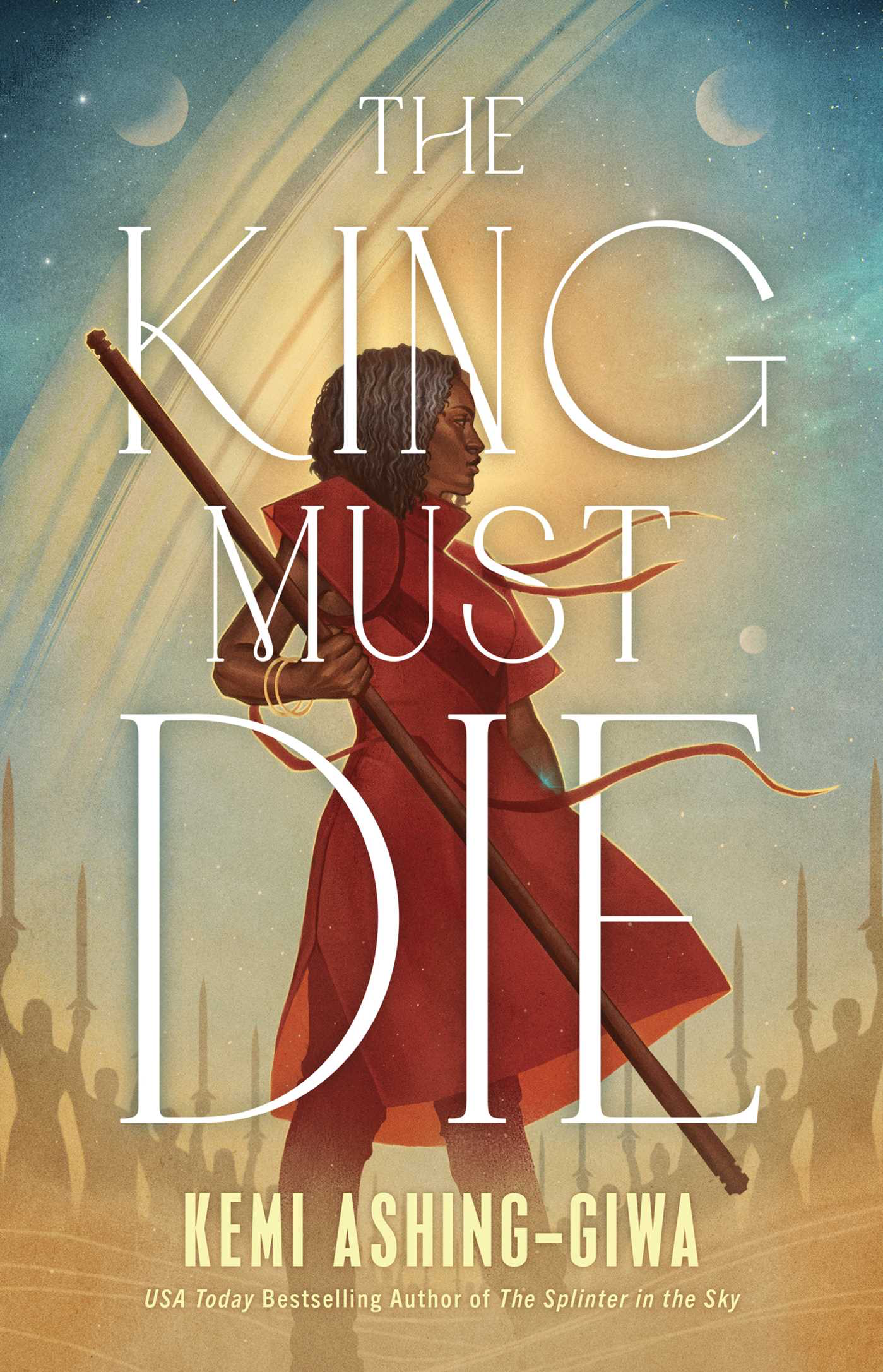
Posted in Book Review Tuesday

Book Review Tuesday (11/25/25) – Mad Sisters of Esi

Happy Tuesday, bibliophiles!

Guess who’s back…for only a week, probably. We’ll see. My college is on this maddening schedule that only gives us one (1) week after Thanksgiving Break and then it’s straight into finals, so I’ve been grinding for most of November. But now I’m on break, thank goodness!

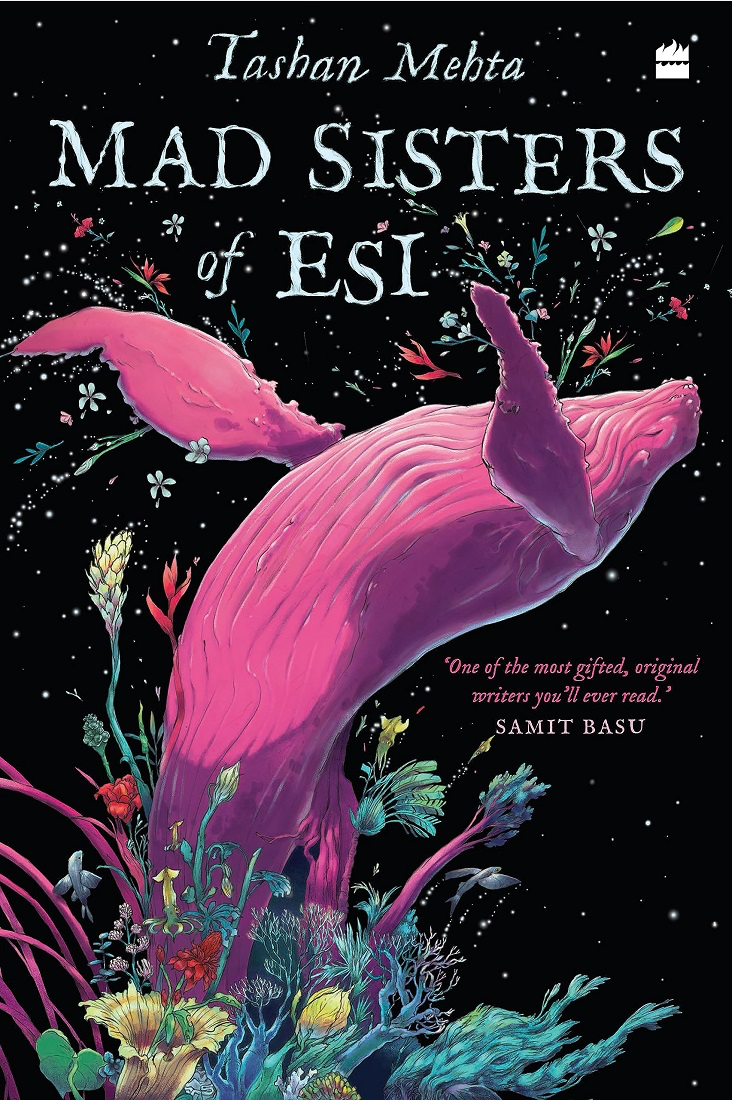
I found out about Mad Sisters of Esi while doing a research paper on the history of science fiction in India. It sounded intriguing—who doesn’t love an incomprehensibly large cosmic whale, after all? I’m not usually one for fantasy (citation needed) novels that are this dense and self-referential, but there was so much passion poured into every word that I couldn’t help but be dragged along for the bizarre ride.

Enjoy this week’s review!

Mad Sisters of Esi – Tashan Mehta

Myung and Laleh are inseparable sisters living inside the Whale of Babel, a whale the size of a galaxy, large enough to contain planets in the folds of its body. They have never known life outside of the Whale, save for the Great Wisa, their distant, unknown creator. Laleh is content to explore the endless lands inside the Whale’s body, but Myung yearns for something more. Her journey takes her to the far edges of the universe, but so far that she cannot find her way back to her only home. As Myung and Laleh attempt to find their way back to each other, they ponder the stories that got them to where they were, and if stories themselves can bring them back together.

TW/CW: loss of loved ones, grief, abandonment

If you’re wondering how I’ve been lately, I’m apparently saturating myself with “[]ad Sisters” media. Mad Sisters of Esi? Bad Sisters? What am I doing here? What’s going on with all these sisters?

I’m glad that this trend doesn’t have a name, but I love the trend of recent genre fiction coming to conclusion that “maybe [x] was the friends we made along the way” can actually be a very powerful message. Maybe storytelling was the friends we made along the way. God. What a book.

I was captivated by the premise of Mad Sisters of Esi, but I could have easily not been. It falls into those fantasy books that verge more on the literary side that are very self-serious about been multilayered, dense, and Deep with a capital D. Not that there’s anything wrong with it, but toeing the line between a story that’s actually meaningful and a book that’s 500+ pages of needlessly convoluted, pretentious nonsense that only serves as a monument for how supposedly complex of a plot the author could dish up. The latter are often all style and no substance, but the real frustrating part is that they’re so convinced of their substance that it deadens any meaning that it could’ve had. (See my review of The Spear Cuts Through Water. At least Simon Jimenez has other good books. Go read The Vanished Birds instead of that one.) It’s just a literary version of “look, Ma, no hands!” that rarely results in anything really substantive.

My main criticism of Mad Sisters of Esi is that it does stray into that territory sometimes. It never fully went over the edge for me, but there were moments were it got too convoluted for both my taste and the service of the narrative. Most of it was complex, but not needlessly so, but at a certain point, parts of it got dizzying. I definitely didn’t get everything about this book, and I feel like it’s almost the point. For me, what separates the two kinds of fantasy novel that I just described is…well, love. I could tell right away that Mehta didn’t write Mad Sisters of Esi to show off how complicated of a narrative that she could write—there’s a story, a tangible message, and a thrum of passion that spills through in every page. With every fictional academic article and magical town, I knew that Mehta’s world was born of love. Which, given the nature of this book’s themes, is exactly what it should have been. It’s a novel that’s all about love, storytelling, and the act of creation, and Mehta’s writing felt more than faithful to that premise.

Mad Sisters of Esi is full of meta commentary on the nature of storytelling. I’ll get more into that aspect later, but part of what sold those thematic elements was Mehta’s prose itself. Mehta is clearly someone who has studied her fair share of fairytales. Mad Sisters of Esi doesn’t just feel like a fairy tale in terms of the plot—Mehta’s prose has the same enchanting quality of a timeless fairy tale. The narrator bobs in and out, always with a cryptic lesson. The lush world is rendered in the most magical, wondrous detail. All of the descriptions surrounding Myung and Laleh make them sound like classic protagonists in an ancient tale. It was all very self-aware, but in a way that made the story feel fuller—and drew me in page by page. With Mehta’s strong hand, every location that Myung visited was bursting with bizarre, fantastical life—I was hooked on nearly every aspect.

If this novel has made me realize anything, it’s that we don’t have nearly enough cosmic whales in literature. We need more of them, frankly. Or maybe not—I’m torn on whether or not we should gatekeep them so they don’t get tired. I doubt they would, though. Either way, you can’t just promise a galaxy-sized whale full of planets and two sisters that live inside it and not deliver on that premise. Thankfully, Mehta did in spades. The world of Mad Sisters of Esi was a sight to behold. Every minute detail was somehow nonsensical and yet made perfect sense. It all felt very trippy and whimsical, and above all, so vibrant. I loved every quirk in every location that Myung visited in the vast universe; I’ve seen reviews compare it to The Phantom Tollbooth, and honestly, I have to agree—it has that same absurd, dreamlike quality more often than not. Beyond that, I love the integration of the academic articles and research papers about all of the bizarre events and people within this novel—it added such a fun layer of worldbuilding that made it all feel more grounded and real—as much as it could be, with all of the out-of-this-world (no pun intended) stuff that was going on.

With all of the emphasis on madness, I was really hoping there wasn’t going to be yet another story about art being all about suffering. From how incredible the first few chapters were, I was hopeful. But with everything about madness, madness, madness…doubt crept into my mind, for sure. I’m not confident that I fully got what Mehta intended, but I feel like this is what I took away from it. There is a little madness in every creation, even if you’re not actively suffering—how do you create a massive cosmic whale and not go a little crazy? Yet she emphasizes that even if you pour your all into your creation, that you run the risk of losing yourself, and that’s when your creation goes wrong. Mehta’s madness isn’t the suffering kind of madness—it’s about the passion. It’s about throwing all of your love into the act of creating, just so that the world is a little brighter and less boring than it was before, and to give your love a physical form. The reason that Myung is so lost out in the universe is that she strays from something that was created with nothing but love. That’s my two cents (is that expression even relevant anymore now that we don’t have pennies?), especially given how the novel concluded. That’s why the passion I felt from every page felt authentic—the passion is what it’s about, to love what you create and not destroy yourself in the process, because you too are made of love.

All in all, a dazzling and surreal space fantasy full of love, sisterhood, and whales. 4.5 stars!

Mad Sisters of Esi is a standalone, but Tashan Mehta is also the author of the novella The Liar’s Weave, and has contributed to several anthologies, including Magical Women, Solarpunk Creatures, and The Gollancz Book of South Asian Science Fiction, Vol. 2.

Today’s song:

That’s it for this week’s Book Review Tuesday! Have a wonderful rest of your day, and take care of yourselves!

Posted in Book Review Tuesday

Book Review Tuesday (4/8/25) – You Sexy Thing

Happy Tuesday, bibliophiles!

I’ll skip the prologue about how predictable it is that I picked up another queer space opera, and one with a ’70s music reference in the title at that. (SING IT WITH ME!! 🎶I BE-LIEVE IN MIRACLES—🎶) Nonetheless, I kept my expectations low, and I’m glad I did. Hilarious, heartbreaking, and heartwarming all at once, You Sexy Thing is the start of a true joy of a space opera trilogy!

Enjoy this week’s review!

You Sexy Thing – Cat Rambo

It’s been decades since Niko Larson and her fellow soldiers were able to break free of the Grand Military of the Hive Mind, where they were voiceless pawns in a never-ending war. Now, they run the Last Chance, a humble restaurant at the edge of TwiceFar Station, serving customers from all over the galaxy and from all walks of life. But when a mysterious, sentient ship destroys their livelihood before giving them a mysterious mission that they can’t refuse, Niko and her fellow chefs and restaurateurs must return to the fray they tried so desperately to escape—all with the heir to the Paxian Empire in tow.

TW/CW: sexual content, violence, blood, torture, kidnapping/imprisonment, war themes, abuse, genocide themes, death

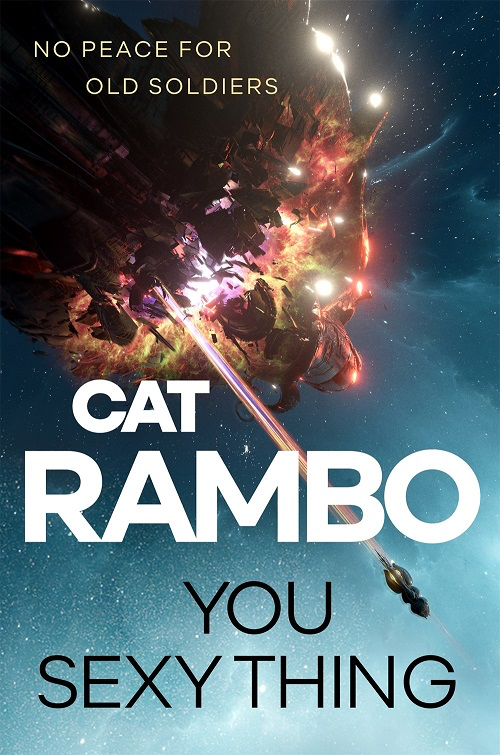
The entire time I was reading this book, I’d click on the Kindle cover and I’d immediately start hearing “You Sexy Thing.” It just kept coming back, like I was trapped in a sitcom gag with a signature musical cue. Probably the intended effect. Not complaining, though. Absolute banger.

What an excellent space opera this was! You Sexy Thing scratched so many of my favorite sci-fi itches, and one of the biggest ones was the aliens and creatures! CREATURES! CREATURES! I’d place You Sexy Thing as bordering on space fantasy, though I won’t go into a whole digression on what counts/doesn’t count as sci-fi or SF; that was mainly because of the ghosts, some magic use, and were-creatures. However, Rambo did an excellent job with all of the alien denizens of this galaxy! There was a fantastic balance of humanoid and more unfamiliar creatures, all of whom were delightful. Skidoo was a personal favorite, as I’m particularly fond of any kind of cephalopod-inspired aliens, but Petalia, even if their name was rather on-the-nose (in line with a lot of the humor of the book), had some fascinating details about their culture and plant-based physiology. Also, there’s a chimp. Gotta have a chimp to round out the crew, amirite? Thankfully, this one doesn’t go the way of Nope, and Gio is a perfectly reasonable individual. There’s also lots of casual queerness abound, which is always a plus.

Another thing I love in space opera is a good motley crew, and You Sexy Thing had a stellar one! Rambo’s choice (apparently a challenge from fellow sci-fi author Ann Leckie, if the epigraph is anything to go by) to have You Sexy Thing in an omniscient, third-person POV was a great solution for covering the thoughts of all of the characters, discarding the need for separate chapters for everyone. All of them had distinct and lovable (mostly) personalities that made them butt heads with some characters and mesh with others, while still retaining a sense of familial bonding. Even outside of the restaurant setting, they retained a hilarious rapport that was a joy to read. Dabry’s musings on cooking were a delight, Atlanta’s trouble fitting in with the crew made for some lovely interactions, and Niko’s continuous struggles to face her past made for some of the novel’s most emotional points. You Sexy Thing balanced levity with emotional weight to great effect, and had a fantastic cast of characters to split the difference.

Amidst all of the humor, You Sexy Thing explores some quite complex, nuanced emotion, which I appreciated. I don’t think Rambo fully explored the implications of everything that had been done to Petalia, and how returning to Niko’s company affected them, but what we got was appropriately complicated, messy, and painful to read—exactly how it should have been, given the circumstances. This story never strays away from the cross-cultural complications of relationships, grief, and more, which added to how fleshed-out and unique all of the characters felt. By the end, all of the betrayals were appropriately punches to the gut, but ones that were cushioned by the found family dynamic that had been built up by the end.

Like the characters, the worldbuilding was an absolute treat! I will say, some of it was rather scattershot—we frequently get references to alien species and places that don’t even show up after they’re mentioned, but since this is a trilogy, I might be able to get past that, assuming that they come up later. I’m mostly accepting it, knowing that a) this is a huge galaxy, and b) that the world will presumably be expanded upon. It only really peeved me when they failed to explain much about what said alien races looked like. Other than that, Rambo’s worldbuilding was fascinating to pick apart! Sometimes, individual concepts are more interesting than the whole, and that aspect was made manifest by many of Rambo’s concepts, from married couples (or friends) being able to meld into a single being to the biotechnology that made You Sexy Thing (the sentient ship) possible. Through it all, I got the sense that Rambo’s galaxy was a distinctly lived-in one, which made my reading experience all the better.

My only real complaint, if any, was Tubal Last. You Sexy Thing had moments of being purposely cheesy, from the in-your-face ’70s music references to the on-the-nose character names; the latter felt like a nice, tongue-in-cheek reference to some of the characteristics of older sci-fi. That quality extended to the villain, who was cartoonishly evil. I don’t necessarily mind a comically evil villain every now and then, but in contrast to the complexity and nuance of many of the characters, Tubal Last felt out of place, just another obstacle (a formidable one, but a very one-note one) for the crew to overcome. He was over-the-top, but not in a way that necessarily served the story, other than some slightly unique motivations.

Overall, You Sexy Thing was a blast from start to finish, with a lively, energetic galaxy and a cast of lovable characters and daring hijinks to fill it with. 4.5 stars!

You Sexy Thing is the first book in Cat Rambo’s Disco Space Opera series, followed by Devil’s Gun and Rumor Has It. They are also the author of Neither Here Nor There, the Tabat Quartet (Beasts of Tabat, Hearts of Tabat, and Exiles of Tabat), And the Last Trump Shall Sound (with Harry Turtledove and James Morrow), and many other full-length works and short stories. Rambo is also the former president of the Science Fiction and Fantasy Writers of America (SFWA).

Today’s song:

it’s taken me this long to finally listen to Jimmy’s Show all the way through…preparing for Jimmy’s Show 2? either way, it’s an absolute delight.

That’s it for this week’s Book Review Tuesday! Have a wonderful rest of your day, and take care of yourselves!
Posted in Book Review Tuesday

Book Review Tuesday (11/28/23) – Hunger Makes the Wolf

Happy Tuesday, bibliophiles!

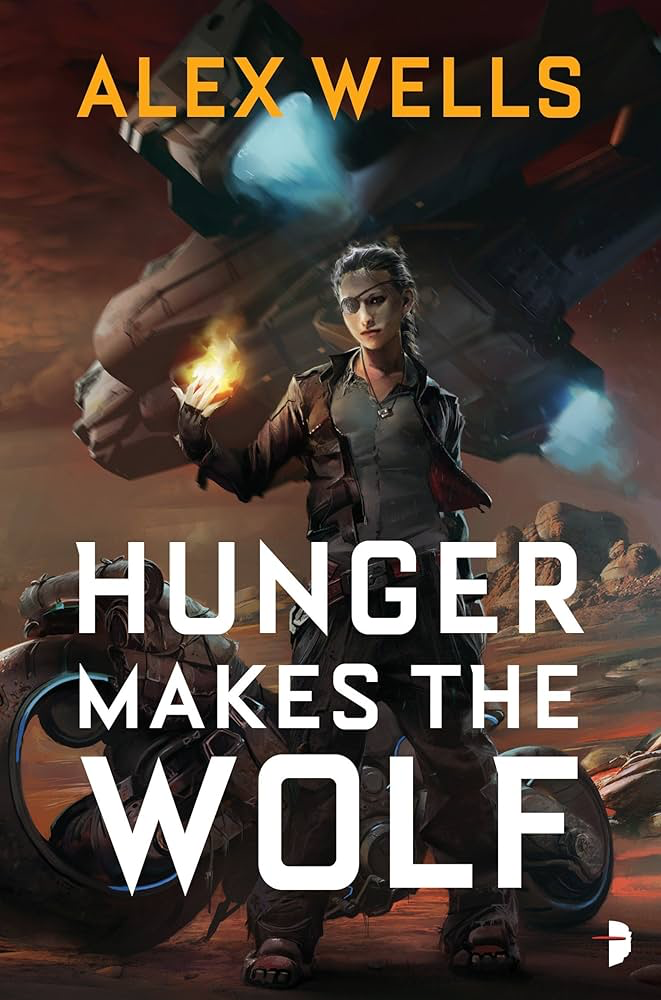
Hunger Makes the Wolf came on my radar when I was looking for more books with disability rep (as always), but I ended up buying it on my Kindle after my dad notified me that I had some unused Kindle points (thank you for reminding me!)—it was free with the points added on, so how could I resist? And while Hunger Makes the Wolf wasn’t perfect, it’s a ton of gunslinging, space-fantasy fun.

Enjoy this week’s review!

Hunger Makes the Wolf (The Ghost Wolves, #1) – Alex Wells

Hob Ravani ekes out a living in the deserts of Tanegawa’s World, a planet owned by TransRifts—the corporation who controls the market on interstellar travel in the whole galaxy. For 10 years, Hob has gotten by with the help of the Ghost Wolves, a group of bandits roaming the desert and finding money where they can. But when Hob discovers the body of Nick, the man who recruited her to join the Wolves, abandoned in the desert, she knows that she has to act before TransRifts discovers their operation—and discovers the powers that she’s kept hidden from sight.

TW/CW: murder, descriptions of injuries, descriptions of corpses, violence, loss of loved ones, human experimentation

Writing accents phonetically is a slippery slope that I’m not going to get fully into in this review. In this case, though, Alex Wells had decent success with making everyone who was meant to sound like they had a Southern accent actually sound like they had a Southern accent, which worked—this novel was a space Western, after all. That being said, the unintended consequence was that Wells’ spelling of Hob’s accent was that I imagined her voice more like Holly Hunter in Raising Arizona than the badass, hardened gunslinger that she was made out to be. It sort of worked, though.

As far as sci-fi subgenres go, I’m not usually huge on space Westerns; I’ve rarely seen them done exceedingly well (even The Mandalorian got more than a little repetitive eventually), but the best are at least fun. And that was what Hunger Makes the Wolf was—incredibly fun. It had all of the trappings of a debut novel, but what Wells did get right on the first time was that pacing. Although the action sequences were what made Hunger such a blast to read in the best parts, Wells also knew how to balance them out with quiet, more emotional moments, and also moments to slip in worldbuilding without absolutely walloping you with it. Wells’ action was really the star of the show here; their fight scenes had just the right amount of tension, levity, and butt-kicking to make for more than one delightful scene.

Recently, I’ve read several sci-fi books that were marketed as “space fantasy,” and none of them have really fit the bill. And yet, Hunger Makes the Wolf wasn’t necessarily marketed as such, but it does what the other novels lacked. Even amidst the classic sci-fi backdrop of corporate greed, massive spaceships, and gruesome human experimentation, there’s the element of the characters’ strange hidden powers. Naming said powers “witchiness” was already a win in my book, the charm of it really fits the Western atmosphere that Wells was going for—it hits that sweet spot of not sounding overly jargon-y or formal, but not too hokey, either. Every time one of the characters mentioned it, I couldn’t help but smile—especially in Hob’s aforementioned Holly Hunter voice.

Hunger Makes the Wolf is an incredibly ambitious novel, and the ambition is accentuated when you remember that this is Alex Wells’ debut. In some ways, it worked; Wells managed to juggle a safe amount of the worldbuilding without leaving the reader without context, but also without dumping it excessively. However, what Wells did not juggle as well was the sheer amount of characters that we jump between. Hunger was clearly meant to have a found family theme to it, which I’m normally a sucker for, but Wells just had so many extraneous characters on their hands that none of the character relationships felt fleshed out. If we had gotten more scenes with Hob and the rest of the Wolves, for instance, I would have believed that they really were as thick as thieves. Adding onto this, the perspective switches may not have been necessary; Mags, although she plays a prominent role, doesn’t have a perspective or voice that added anything substantial to the narrative. It’s a classic debut author case: Alex Wells had some spot-on ideas, but they bit off far more than they could chew.

All in all, a rollicking space fantasy with action aplenty, but with characters that left me wanting more. 3.5 stars!

Hunger Makes the Wolf is the first book in the Ghost Wolves duology, followed by Blood Binds the Pack. Hunger was Alex Wells’ debut novel; they are also the author of the short story Angel of the Blockade.

Today’s song:

FARGO IS BACK I AM FOAMING AT THE MOUTH OH MY GOOOOOOOD

That’s it for this week’s Book Review Tuesday! Have a wonderful rest of your day, and take care of yourselves!