Posted in Sunday Songs

Sunday Songs: 8/10/25

Happy Sunday, bibliophiles! I hope this week has treated you well.

This week: a David Bowie double feature (who could’ve seen that coming?), upcoming artsy albums, and more reasons why I really just wish I had dual British citizenship, because apparently all of the good music related stuff happens exclusively in the UK.

Enjoy this week’s songs!

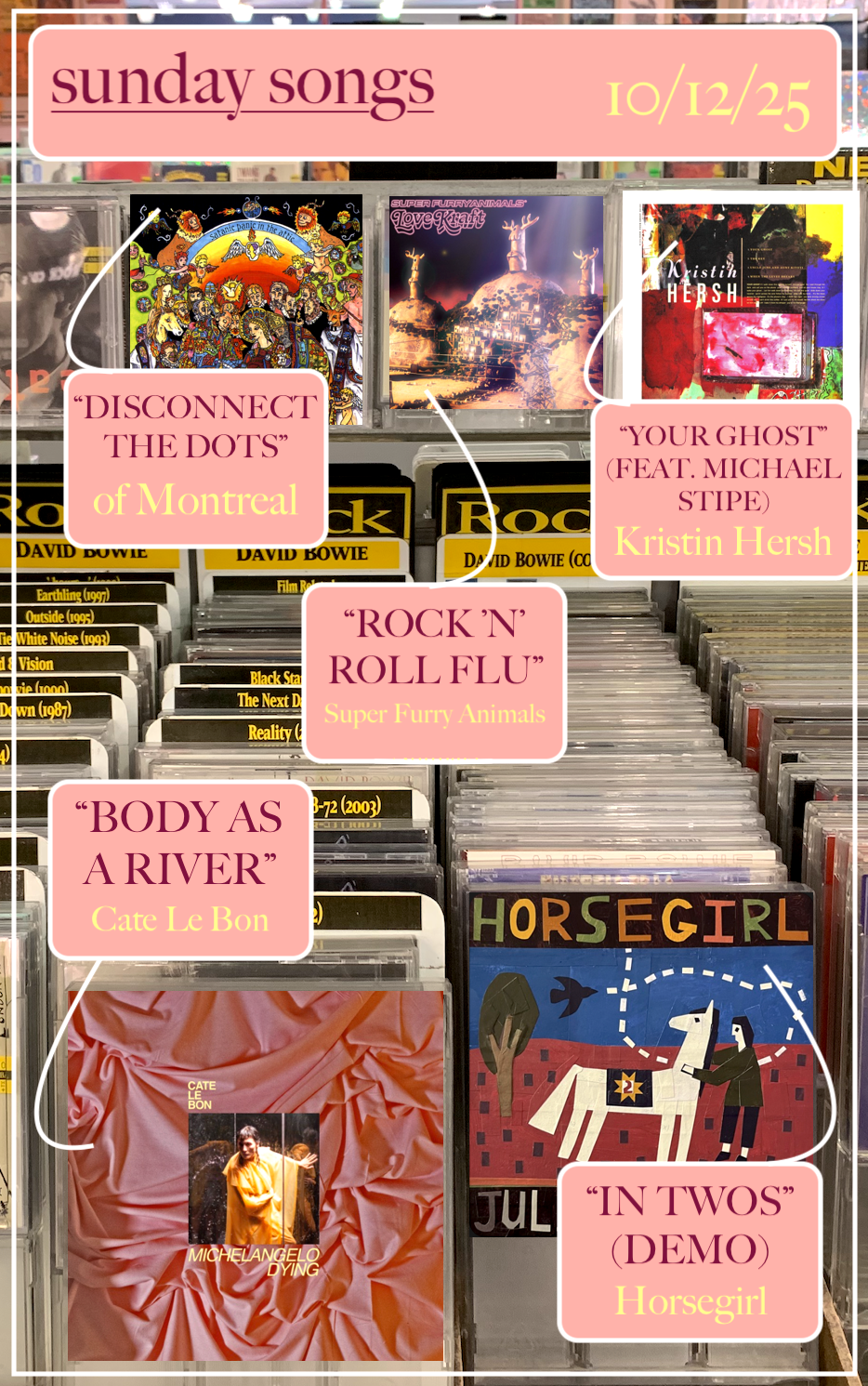
SUNDAY SONGS: 8/10/25

“Is It Worth It (Happy Birthday)?” – Cate Le Bon

I could really do with some more restrained excitement about Michelangelo Dying, but…these singles just aren’t letting me do it! They’re both so enchanting! I can’t get enough!! I’m really hoping they’re not the best of the bunch, but I have faith that Cate Le Bon has something quirkily artsy up her sleeve, if this and “Heaven Is No Feeling” are any indication.

“Is It Worth It (Happy Birthday)?” takes the palette of the album down a more subdued, melancholy route than “Heaven Is No Feeling,” trading the former’s synthy strut for glassy-eyed introspection. But even with the thematic shift, Le Bon’s signature modern touches are there. Awash in fizzling, electronic textures, this track is an outstretched bolt of lavish fabric, much like the pink background of the album cover. Silky and watery, it makes every instrument feel like it’s been drenched in sunlit water, from the gentle, barely perceptible bass to the saxophones. I’m not usually this big of a fan of saxophones, but the way Le Bon utilizes them, more for added sonic texture than for dramatic solos, make her world even more layered and delectable to pick apart. It’s distinctively her, but I can’t help but think of the dense, dreamy soundscapes of the Cocteau Twins when I listen to it. (“For Phoebe Still A Baby” jumps out in particular.) Yet drama is what this song quietly thrives on, as the lyrics muse on trying to make light out of abject sorrow: “Open up in hell/And dress the hall/It’s a holiday/It’s a birthday/Is it worth it?/Is it worth it?” The lyrics nearly get swallowed by the sheer magnitude of sounds woven into the production—including the signature, lilting cadence of Le Bon’s voice—but it almost seems exactly her intention. It feels both mean and inaccurate to call any of it window dressing, but next to the lyrics, all about trying to laugh heartbreak away and pretend it’s something that it’s not, it feels like exactly the kind of shrouding she’s singing about. At the end, she laments that she’s “Checking out/Even with my language in him,” just as the listener tries to extricate her from the vibrant sea of sound she’s crafted to shield herself. It’s easy to get washed away in, and if the rest of Michelangelo Dying is anything like this, I’ll be gladly losing myself in it come September.

…AND A BOOK TO GO WITH IT:

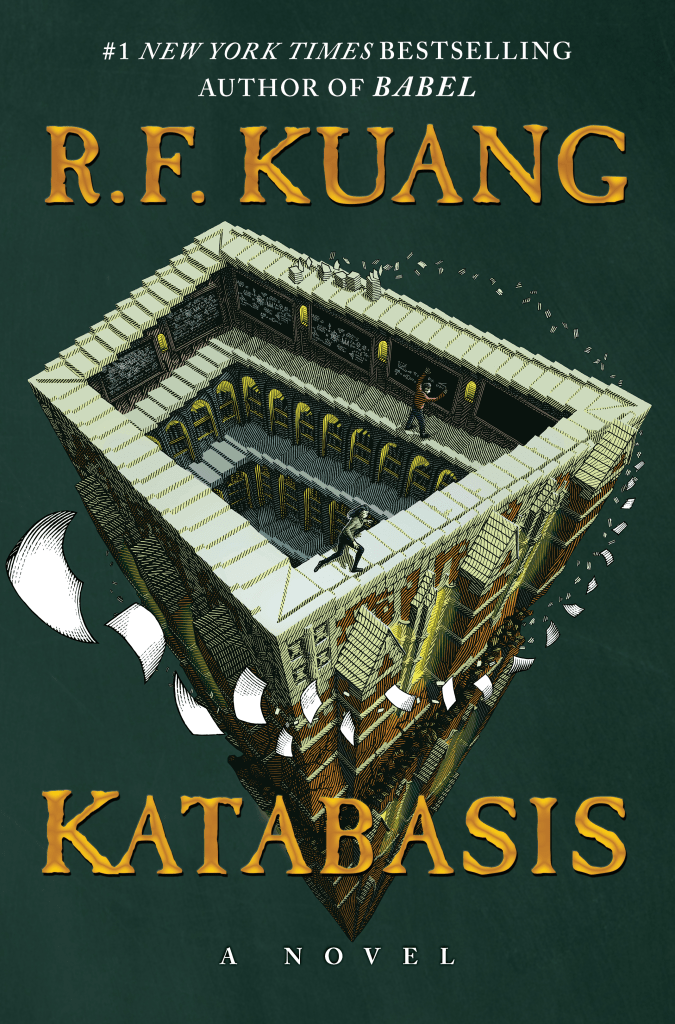
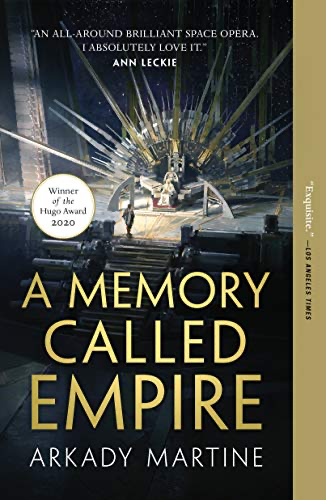
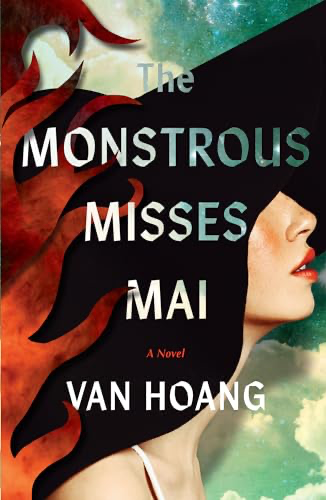
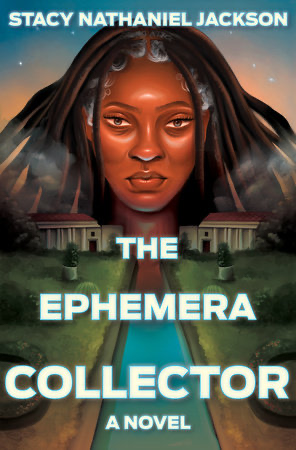
The Ephemera Collector – Stacy Nathaniel Jackson“Open up in hell/And dress the hall/It’s a holiday/It’s a birthday/Is it worth it?”

“Saviour Machine” – David Bowie

“David Bowie predicted ChatGPT” would’ve been a good headline for this post, but as much as I love him, he was far from the first to ponder about AI. But really…this song does basically predict ChatGPT, and in this song it’s “President Joe” who introduces it to the world, which is kind of a crazy coincidence. Had to do a double take when I first heard the lyrics, for sure. Drawing from much of the sci-fi media of his time, Bowie’s version of AI comes in the form of The Prayer, an AI system introduced by President Joe to make the population’s decisions easier for them, from stopping wars to simply thinking themselves. However, it’s The Prayer itself that calls for its own destruction, going insane after having such decisions weighing on its shoulders and pondering: “Please don’t believe in me/Please disagree with me/Life is too easy/A plague seems quite feasible now/Or maybe a war/Or I may kill you all!” Life is too easy for sure, now that everyone’s trying to flirt and make art and music and go through school entirely with AI. Sorry, but can’t you idiots stop and forgo convenience to experience the tedious pleasures of the human experience? Embarrassing. Jesus Christ. Remember, kids: you can’t stake your life on a savior machine.

“Saviour Machine” rings reminiscent of short stories of the likes of Ray Bradbury, but it also reflects the much darker tone of The Man Who Sold the World. Though it wasn’t like he hadn’t trod into darker lyrical subjects before, going from something like “Uncle Arthur” to an album comprised of insane asylums, the Vietnam War, and gay sex with Satan in the span of three years is a whiplash-inducing left turn for anyone. I don’t think it’s the edginess of the subject matter that makes it feel more mature, but the exploration—The Man Who Sold the World represents a critical turning point in Bowie’s storytelling ability, and he was willing to explore places that he hadn’t explored before, pushing himself out of his typical territory in order to create something wholly unique. It feels to me what he said when he spoke about art: “If you feel safe in the area that you’re working in, you’re not working in the right area. Always go a little further into the water than you feel you’re capable of being in. Go a little bit out of your depth, and when you don’t feel that your feet are quite touching the bottom, you’re just about in the right place to do something exciting.” Darkness was coincidental, and of course, not all of the album is necessarily dark—it was merely territory that he hadn’t scoured before, and that challenge led him to create some of his most innovative work, time after time, album after album. “Saviour Machine” feels like the prelude to that storyteller’s attitude, one that would guide him to untold heights in his career.

…AND A BOOK TO GO WITH IT:

The Outside – Ada HoffmannA few centuries in the future, when something like The Prayer gets out of control…

“Real Lovin” – Black Belt Eagle Scout

Katherine Paul has a distinctly whispery voice—everything they sing sounds like they’re singing it into a cool breeze. Most of her music pre-The Land, the Water, the Sky suits it perfectly; though she’s become more adventurous with her vocal capabilities later on, a lot of her songs had a slower, softer demeanor that suited the airiness of her voice. But if there’s any song to be characterized by this, it would be this one. I’d forgotten all about “Real Lovin” for years—I initially listened to At the Party With My Brown Friends around five years ago—until it popped back into my shuffle out of nowhere. Though Paul’s voice soars with more volume towards the end of the track, her whisper-singing is perfectly suited to the quiet tenderness of the lyrics: “Now that you can dream/What is it you see/When you wake up in the folds of blankets in your bed/In your room/In your house/By yourself?” It’s the sound of a sliver of dewy light sliding through the slats of shutters in the early morning as you blink away the threads of sleep. Paul’s voice is a comfortable sheet over me as I listen, and she delivers what’s easily the softest, tenderest uttering of “well that’s bullshit” I’ve ever heard in a song. But no matter the intensity, which rises with every passing minute as the instrumentals build up, I never have a doubt that Paul means exactly what she’s saying.

…AND A BOOK TO GO WITH IT:

Each of Us a Desert – Mark Oshiro“You’ve tried and tried/What seems a million times and you wonder how you’ll end up/Is it the moon?/Is it the stars?/Do they rule you and your heart?”

“Crocadillaz (feat. De La Soul and Dawn Penn)” – Gorillaz

While I froth at the mouth that I can’t go to the Gorillaz exhibit in London, I figured it would be fitting to talk about them…for the millionth time on this blog.

It was a strangely pivotal moment when, a week after Cracker Island released back in early 2023, three more songs were added to the lineup. I had middling thoughts about the album up until then; for me, it represented the point at which Gorillaz (and later Blur with The Ballad of Darren) became nearly indistinguishable from Damon Albarn’s solo work. There were a handful of fun tracks, but as a whole, it failed to hold as much water as something like their first three records, even with the star-studded list of collaborators. And when it seemed all hope was lost…Del the Funky Homosapien and De La Soul returned! (Two years later, “Captain Chicken” has no business being so good for a song with such a goofy title AND samples of chicken clucks. God, it’s so good.) Disregarding the “Momentz” haters (heathens, all of you), every time De La Soul and Gorillaz collaborate, a special kind of magic happens. Even with Trugoy the Dove’s too-soon death hanging over it, “Crocadillaz” was one of the unmistakable highlights of the album. For a song about constantly looking over your shoulder and the trappings of fame, it has a steady, easy calmness to it, propelled by Dawn Penn’s “Doo-doo-doo-doo-doo-doo-doo” chorus, which gets delightfully stuck in my head more often than not. Trugoy and Penn make for an unlikely but smooth pairing for this song, with the former providing the sharp-edged, quick-witted verses and Penn’s smooth, resonant vocals giving the song a simultaneously retrospective and playful chorus. I’m not usually a fan of the “Gorillaz but it’s just the collaborators” songs, but with a pairing as talented as these two, it’s easy to excuse.

…AND A BOOK TO GO WITH IT:

So Let Them Burn – Kamilah Cole“Could play the sheep, but beware of the wolf’s eye/Hypnotized by the crocodile’s smiles/The exchange is brief, but watch for the teeth…”

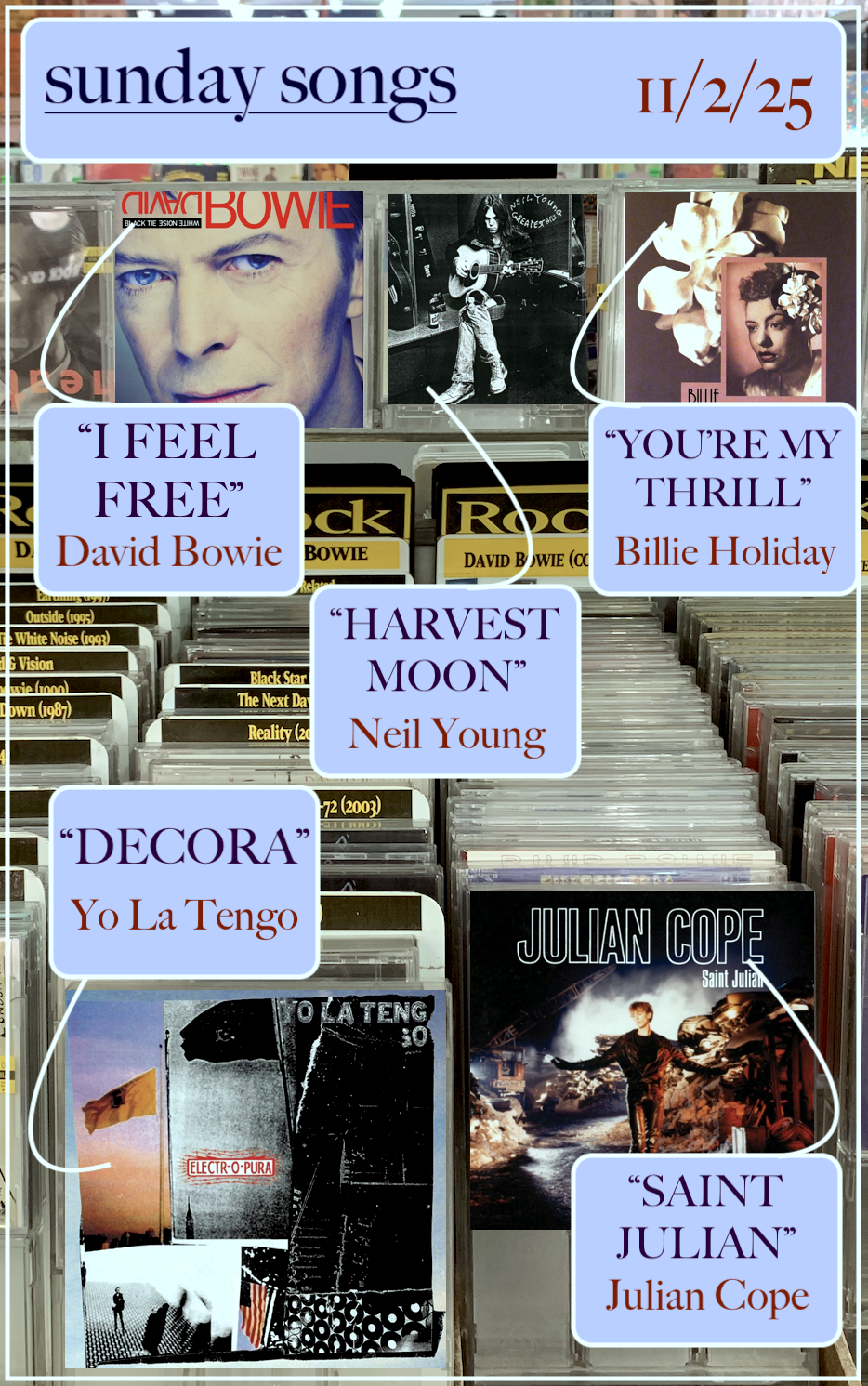
“Watch That Man” – David Bowie

Aladdin Sane has to be the most iconic album cover in David Bowie’s catalogue. If you know any album cover, it’s that one—the nondescript, asleep-looking Bowie with a glittering lightning bolt slashing across the front of his face. And that silvery bit on his collarbone—I always thought it was a bone fragment when I was a kid, and my dad thought it was something like mercury pooling on his skin. It raises questions! It sticks in your head! And yet, the album cover gets talked about much more than the actual album. Sure, it’s probably the weakest if we’re grouping it in with Hunky Dory and The Rise and Fall of Ziggy Stardust and the Spiders from Mars, but that’s because you’re grouping it with two of the greatest albums of all time. But it’s really such a disservice that the album only gets remembered for the cover—there are so many excellent cuts from the album, even if it never usually makes the cut for hit Bowie songs (except for maybe “The Jean Genie”). It’s slick as hell, incredibly funky…it just rocks. Listen to the album and you just know. And “Watch That Man” is what sets the tone, a rollicking dance floor rocker that begs for you to shake your hips with every word—not just the “shakin’ like a leaf” bit. Inspired by seeing the New York Dolls live, “Watch That Man” follows a lively party, with the lyrical camera roving over every participant as the music blasts. I never had any particular problem with the mix, but it was one of the more rushed songs on the album, and on reflection, doesn’t sound as clean as some of the other tracks—it’s all a bit muddy, with most of the instruments, Bowie’s voice included, being at a very similar volume. But for a song meant to emulate the rush of a concert or being on a crowded dance floor, it gets the job done spectacularly.

…AND A BOOK TO GO WITH IT:

Kings, Queens, and In-Betweens – Tanya Botejudancing, parties, and no shortage of glitter and makeup.

Since this post consists entirely of songs, consider all of them to be today’s song.

That’s it for this week’s Sunday Songs! Have a wonderful rest of your day, and take care of yourselves!

Posted in Sunday Songs

Sunday Songs: 8/3/25

Happy Sunday, bibliophiles! I hope this week has treated you well.

This week: even if Wilco wasn’t ever-present in The Bear, we’d have to physically restrain Jeff Tweedy just to stop him constantly cooking in that kitchen. Plus: lots of top tier album intros and some lyrics I probably should’ve reconsidered playing in the presence of my guitar teacher.

Enjoy this week’s songs!

SUNDAY SONGS: 8/3/25

“Lovely Head” – Goldfrapp

Both Alison Goldfrapp and Will Gregory had been musically active before they joined forces, but even then, to come right out the gate with a single like this is so impressive for a band just getting its start. “Lovely Head” was the first single that Goldfrapp ever released and eventually became the opening track for their debut album, Felt Mountain. The U.S. didn’t seem to see the wave of popularity it eventually gained, but in the U.K., it was used liberally in film, TV, and commercials in the early 2000’s. But if there was ever a song that was meant for all of those things, it’s this one. Everything about it is cinematic, from the Ennio Morricone-like whistling intro to the soaring, theremin-like melodies, which wasn’t actually a theremin at all—just Alison Goldfrapp’s voice filtered through a synthesizer. It’s just so deliciously eerie, cool and distant, with lyrics that seem romantic only from the furthest distance, but disaffected and almost scientific once you examine them more closely. “Frankenstein would want your mind/Your lovely head” is probably only romantic for…y’know, a serial killer, or something, but it’s the precise effect that I think the song is going for—a love song penned by a cold-blooded killer.

…AND A BOOK TO GO WITH IT:

Catherine House – Elisabeth Thomasan eerie atmosphere, eerie interactions with eerie people, all in an eerie, secretive college.

“Devereaux” – Car Seat Headrest

I promise I’ll shut up about Car Seat Headrest for a few more months after this week. Well…I can’t make any promises.

Though I never got around to writing an album review for The Scholars (or any other of the amazing albums that have come out this year…oops. Phonetics On & On is the only album to come out in 2025, folks! Rejoice!), I feel like it’d be a crime for me to not talk about “Devereaux” at some point. After the back-to-back slew of excellent singles, “Devereaux,” along with “Equals,” is the song I’ve come back to the most from The Scholars. It’s what duped me into thinking that the album was going to be a re-hash of Teens of Denial, but even though it calls back to the song, the rest of the album proved me dead wrong…though I wouldn’t complain about Teens of Denial 2: Electric Boogaloo. Despite being from the perspective of one of Will Toledo’s many characters, a crocodile named Devereaux, the themes of living under the roof of religious bigotry and longing for escape could’ve been plucked straight out of his early discography. Anthemic and pleading, I see it becoming a future crowd-pleaser at shows—the kind I’d see the fans emphatically jumping up and down to. Hell, I saw them doing that on this tour, and it was only the second song in the setlist. Toledo’s soaring vocals meld the yearning, melancholic lyrics into a cry of longing: “I wasn’t born to be this, I was born to fight dragons/With a cowl on my face/With an auspicious birthday.” If there was ever a more air-punch worthy song, chock-full of lyrics meant to be yelled into the spacious walls of a sturdy venue, or simply into the darkness of a firefly-tinged summer night, “Devereaux” is it.

…AND A BOOK TO GO WITH IT:

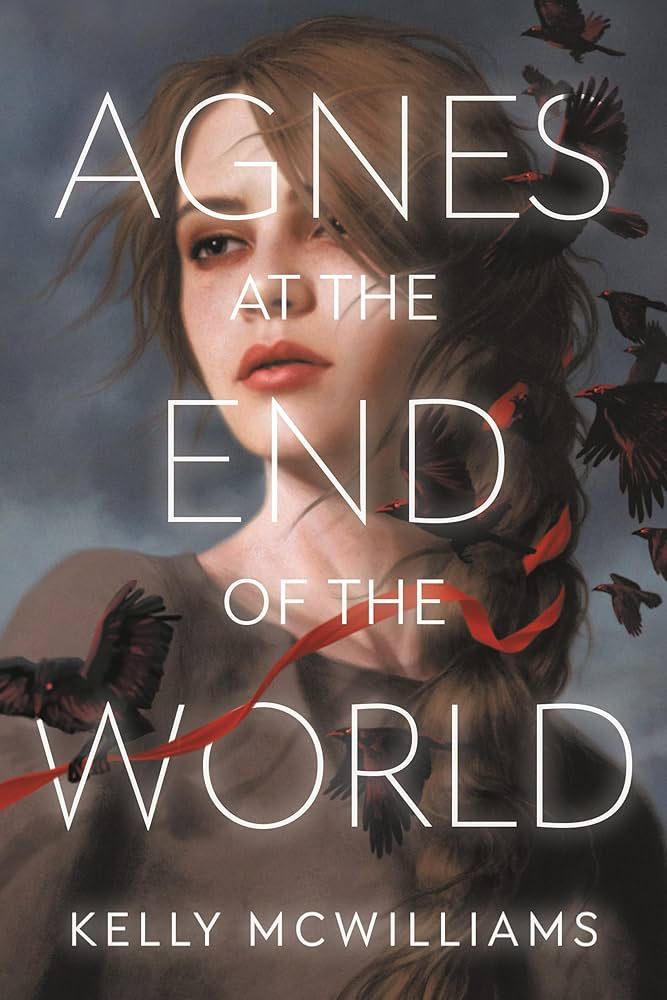
Agnes at the End of the World – Kelly McWilliams“In the land beyond me and you/A bunch of kids who don’t know what to do/We all wait in the silence to hear…”

“One Tiny Flower” – Jeff Tweedy

BREAKING: water is wet, the sky is blue (sky blue sky, even? [gets dragged offstage by a comically large cane]), and Jeff Tweedy cannot stop cooking. Seriously! Even within a band, how is it possible that in the last five years, this man has put out one solo album, two albums (one of which is a double album) and an EP with Wilco, three reissues of past albums, and now a triple album out this September? It’s been a while since I’ve read Tweedy’s book, How to Write One Song, but if that kind of insane output—not only prolific, but consistently good to boot—doesn’t convince you that he can, in fact, teach you how to write one song, then I don’t know what will.

I had a feeling why he continues to be so prolific. In my experience, creativity blossoms most when you’ve got something impelling it: not necessarily spite, anger, or negative emotion, but any kind of passion that pushes you to put something new out into the world. Give yourself into it too much, you lose the outside world, and you lose the reality that must be grounded to; lose sight of it, and you forget that everything pushing against you in the world, positive and negative, can be a source to revive that creativity. Tweedy put it this way in a statement about the album: “When you choose to do creative things, you align yourself with something that other people call God…and when you align yourself with creation, you inherently take a side against destruction. You’re on the side of creation. And that does a lot to quell the impulse to destroy. Creativity eats darkness.” Tweedy saw the veritable tsunami of strife, fascism, genocide, and all the other ills plaguing the world, and put up arms against it by means of art. For me, and for so many people who feel helpless, it’s all we can do. My mom shared this wonderful Ted Talk by Amie McNee about how making any kind of art, political or not, is an act of resistance in this hellscape just by virtue of the fact that you’re putting your time and attention into creativity and not giving money to corporations by endlessly scrolling on social media or participating in other capitalist activities. It comes to mind when I think about the upcoming Twilight Override: now that’s an act of resistance. 30 songs! That monstrous length is also intentional to Tweedy: “Whatever it is out there (or in there) squeezing this ennui into my day, it’s fucking overwhelming. It’s difficult to ignore. Twilight Override is my effort to overwhelm it right back. Here are the songs and sounds and voices and guitars and words that are an effort to let go of some of the heaviness and up the wattage on my own light. My effort to engulf this encroaching nighttime (nightmare) of the soul.” 30 songs is hard to keep consistency with, but nevertheless, I welcome Jeff Tweedy as the musical champion of (twi)light in the overwhelming darkness.

Out of the four singles that have been released so far, “One Tiny Flower” seems most like Tweedy’s mission statement with Twilight Override. It’s not his most lyrically complex song, but it evokes the most classic imagery of resistance and resilience possible: a tiny flower sprouting out from the concrete. It’s an ember of joy, a labor of intensive hard work to make the roots hold onto concrete, and a fuck you to whoever poured the concrete over the space where they didn’t want more plants to grow. Even without the rest of Wilco, “One Tiny Flower” reeks of Cousin, shifting from understated, softly sung acoustic melodies to a jingling, entropic dissolution before straightening itself back up again. The other three songs veer between different sides of Tweedy’s range, but if there are any more songs like this one, then I’ll be satisfied with Twilight Override.

…AND A BOOK TO GO WITH IT:

A Half-Built Garden – Ruthanna Emrysa quiet, hopeful tale of climate change and first contact.

“Psychosis is Just a Number” – Guerilla Toss

I’m surprised that I’ve never talked about Guerilla Toss on any of these posts, but I think it’s mainly because my main heyday listening to them ended right around the time when I started making these graphics, several months after their last album, Famously Alive, came out. I don’t tend to habitually revisit them, minus most of the tracks from Twisted Crystal (see: “Come Up With Me,” which I swear needs to be the theme song for a quirky Cartoon Network show with a plucky girl protagonist on a bicycle exploring a magical realm). But even though I’d never place them among my most-listened to bands, I’m always happy to hear something new from them. You’re Weird Now comes out this October, but the truth is, Guerilla Toss have been weird all along—and that’s what makes them special. They’re doing nothing but their own thing, pasting together surreal lyrics with electronic and rock beats frankensteined together. “Psychosis Is Just a Number” mashes together thrumming bass and a surprisingly smooth brass section—I’d never think to compare Oingo Boingo and Guerilla Toss musically, but the madcap, off-the-walls excitement of this track is so wonderfully reminiscent of them. They throw everything at you (the chorus is borderline overstimulating if you listen to it over and over) but that’s just how their unfiltered, raw excitement and creativity shines through.

…AND A BOOK TO GO WITH IT:

Finna – Nino Ciprithis is a highly specific situation, but strangely, Guerilla Toss seems like the ideal soundtrack to being trapped in an interdimensional, legally distinct IKEA full of monstrous furniture.

“The Width of a Circle” – David Bowie

I’ve loved “The Width of a Circle” for at least a few years, and I’ve been interested in learning how to play it on guitar. Unfortunately, though it has been a wonderful experience, I made a…uh, slight oversight, and didn’t realize how painfully awkward it would be to be in my guitar lesson and have my guitar teacher go through the whole “He swallowed his pride and puckered his lips/And showed me the leather bound ’round his hips” bit. Whoops.

As you probably gathered, “The Width of a Circle” is about as freaky as they come. Though the actual subject is somewhat ambiguous, it’s about Bowie encountering either God or Satan…and proceeding to have the most earth-shattering gay sex with him. (I’m more inclined to the Satan interpretation, as the figure fools the Bowie character into thinking he’s a humble, young God, then opens up the pits of Hell.) Even though The Man Who Sold the World didn’t get a ton of attention when it came out, it’s impressive that this got through any kind of censors and was released all the way back in 1970—just as impressive as the fact that Bowie was slaying in that dress on the front cover of the album. It’s honestly one of the queerest songs in his catalogue to me, and this was even before he made a whole album about a queer alien. The Man Who Sold the World didn’t gain much notoriety until Bowie’s career started picking up in earnest, but in retrospect, it’s the album where his storytelling really took a turn for the truly artful. Though the sound isn’t as cohesive, you can see the leap he took into going more daring places with his songwriting. “The Width of a Circle” truly is an epic in every sense of the word; originally two separate songs, it was tied together by the connective tissue of Mick Ronson’s jamming, expanding it into an eight minute long behemoth of a tale. The theatricality that would come to dominate Bowie’s work in only a few years blossoms here as he takes a journey through innocence and into shock and revelation. Even if it came to my disadvantage in that guitar lesson, this is the first time in Bowie’s career where his imagery takes on the quality of being so startlingly evocative—he’s a master of weaving worlds through song, and whether or not he’s selling them, each song is a Faberge egg of allusions and stunning songcraft.

…AND A BOOK TO GO WITH IT:

The Familiar – Leigh Bardugo“And I cried for all the others until the day was nearly through/For I realized that God’s a young man too…”

Since this post consists entirely of songs, consider all of them to be today’s song.

That’s it for this week’s Book Review Tuesday! Have a wonderful rest of your day, and take care of yourselves!

Posted in Sunday Songs

Sunday Songs: 7/27/25

Happy Sunday, bibliophiles! I hope this week has treated you well.

This week: Aquarium gravel music, driving-in-the-summer music, and music that I would’ve made a badly-animated Warriors AMV for in elementary school, if I had the capabilities.

Enjoy this week’s songs!

SUNDAY SONGS: 7/27/25

“Drunk Drivers/Killer Whales” – Car Seat Headrest

Yeah, yeah. I will not shut up about the Car Seat Headrest show two weeks ago. This is a threat. Consider this me gripping the sides of your head and forcing you to look at this screen and listen to a painfully awkward gay man’s earth-shattering voice cracks. You WILL listen.

After talking about how he doesn’t play much of his old music anymore, namely that of Teens of Denial, Will Toledo said that this song was one of the more optimistic songs he’d written during that period, where he described himself as an “angry young man.” This is going to sound incredibly corny, but stay with me. I knew all the words to “Drunk Drivers/Killer Whales” for years, but it wasn’t until then that it really hit me. That’s when I knew them. Granted, I was 13 and focused more on the enigmatic wails of Will Toledo and the raw wave of emotion that swept me up in the undertow, but I never quite considered that, in the midst of an album steeped in substance abuse, self-hatred, and depression, that this is a much more optimistic outlook on it all. (Speaking of said substance abuse, I really think that listening to Teens of Denial so much when I was younger was unironically very good drug prevention for me. Sure, a good 50-75% of their songs up to 2016 are about drinking and drugs, but they’re all about just how deeply miserable Toledo was while drinking and doing drugs. They need to implement this album in schools instead of D.A.R.E.) I wouldn’t be surprised if “Drunk Drivers/Killer Whales” was the last song of the album written; it takes a more retrospective look at the cycle of self-hatred and bad decisions that color Teens of Denial as a whole, and it offers a knowing look, a hug, and a rallying cry: “It doesn’t have to be like this.” From the outside looking in, Toledo looks at the wreckage of everything he’s done up to this point, and professes this to his own anxieties:

“Here’s that voice in your head/Giving you shit again/But you know he loves you/And he doesn’t mean to cause you pain/Please listen to him/It’s not too late/Turn off the engine/Get out of the car/And start to walk.”

GOD. OW. That’s another way homer. I suppose it’s taken years for it to hit me like it was likely intended to, but that’s probably for the best. I think of recent times, when I was so wrapped up in my own anxiety that I didn’t even realize that I could make the choice to work with it, to create a life for myself that would result in me being a happier, healthier person. I’m still on that road. Every day, it’s a little more effort. But it’s all worth it, brick by brick. As Toledo says, “But if we learn how to live like this/Maybe we can learn how to start again/Like a child who’s never done wrong/Who hasn’t taken that first step.” The power is always in your hands, whether you realize it or not. You can’t make every negative thing in your life disappear into thin air, but you can make those choices, take control of the wheel and start to steer your life in a better direction. It takes a monumental, gradual effort, but IT DOESN’T HAVE TO BE LIKE THIS. It never does. Looking back to a year ago, I can’t be more proud of myself for taking that leap, of leaning into my support system to try little by little to end the cycle of anxiety that I was falling into. This song couldn’t have come back to me at a better time. You can always learn to start again.

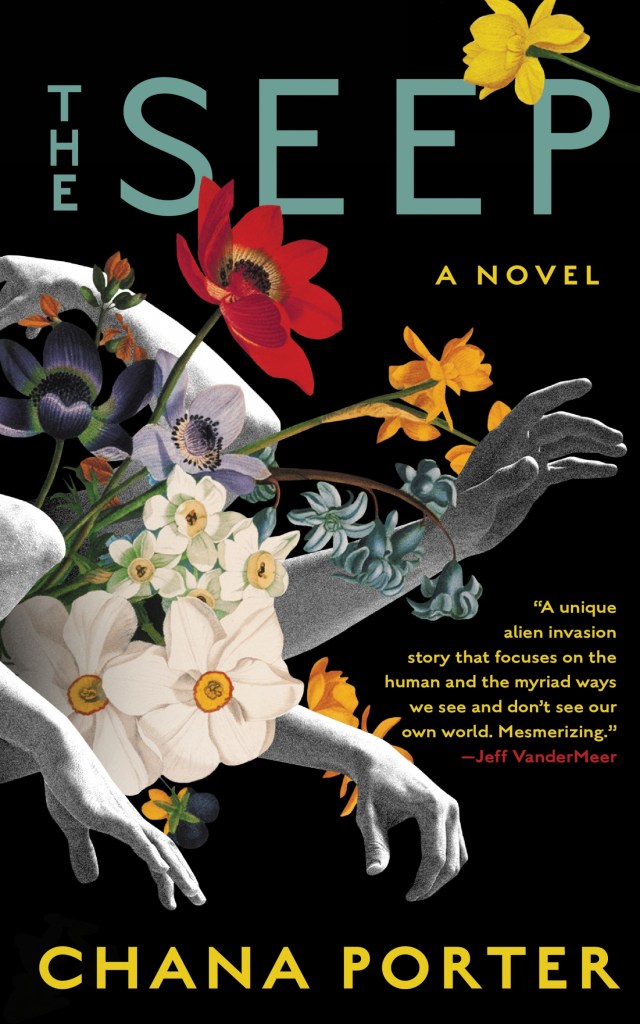
…AND A BOOK TO GO WITH IT:

The Seep – Chana Porterlearning to break free of a state of societal complacency in disguise as betterment, and learning to live with grief, love, and every other complicated emotion.

“Stay” – Shakespears Sister

There’s a brief window in every decade where the signature sounds haven’t yet been cemented. It’s a limbo that allows for the final bastions of the last decade’s sound to grab ahold. This song comes to mind, because this is quite possibly the most ’80s song of the ’90s.

My mom knew exactly what she was doing when she played this for me. I feel like I was around 8 or 9 when she first played it for me. I wished I remembered more of the specifics, because I definitely had some kind of elaborate Warrior Cats AMV planned in my head set to this, but I remember just being so enraptured. It was one of those songs that instantly marked its place in my memory: I was in the backseat of the car, at a gas station, and the sky was overcast, and I’d just had a revelation. My mom and I are definitely interlinked at critical points in my music history, and the more I think about it, “Stay” was absolutely one of them. Like…how did I not know that the album was called Hormonally Yours? I mean, what else is there to say other than fuck yea, that’s an album title??

“Stay” is pure drama, and as over-the-top and gloriously camp as it is, in the right amount, that’s my absolute catnip. Funny that I should mention catnip, because despite the ubiquitous lyrics, it was meant to be part of a concept album, all based around [checks notes] this ’50s sci-fi movie called Cat-Women of the Moon. (Hence this song.) “Stay” was intended to be about the love story between one of said Cat-Women and one of the human male crew members of the ship to the moon, with Marcella Detroit being the Cat-Woman in love and Siobhan Fahey taking the part of, one of the other Cat-Women who shuns their romance. Despite Shakespear’s Sister not being able to execute the concept album as they wanted to, “Stay” retains the high drama and yearning present in the original idea. Over-the-top as it is, I can’t help but be enraptured by it, the same way that I was when I was a little kid. The dueling voices of Detroit and Fahey craft a story of operatic proportions, cranking the yearning up to 11.

Even though the Cat-Women of the Moon never saw the light of day, what did survive is glorious—namely the music video for “Stay.” Instead, we’ve got a vague sci-fi setting, where Detroit is doting over a comatose man, and Fahey is Death tempting the man to come to the other side, complete with a star crown and some absolute Harley Quinn crazy eyes. It’s so camp. God, I love it.

Jenny Joyce could never.

…AND A BOOK TO GO WITH IT:

Death’s Country – R.M. RomeroI’m aligning more with the music video interpretation here, but what’s more high drama than going into the underworld to save your girlfriend from the brink of death?

“Re-Hash” – Gorillaz

Nothing like a great pop song about how much pop music sucks.

Gorillaz, at least in the early days, was a study in artificiality. The project famously came about because Damon Albarn and Jamie Hewlett had been watching a lot of reality TV and hearing the much more manufactured aspect of pop music at the time (“It’s the sweet sensation over the dub/A one-off situation that don’t wanna stop”), and wondered if they could take it to the extreme: an entirely artificial band. In a way, “Re-Hash” was them slyly taking a shot at what Albarn viewed to be the state of pop music at the time, before blowing it out of the water and making the most artful indie-pop music possible. That first album is almost a no-skip album, and there’s no shortage of tracks that I constantly revisit. I hadn’t listened to “Re-Hash” in quite some time, and I’d forgotten just how incredible of an opener it is. Admittedly, my association with their self-titled album will always be of summer, since I’m pretty sure I first listened to it in July or August back in high school, but everything about “Re-Hash” is soaked in sunshine, with a combination of acoustic guitars mixed with drum machines that begs for a rolled down window. That Ba-ba-ba-ba-ba-aaaaah repetition towards the last third of the song is just infectious—without a doubt, a very recent holdover the more playful side of Blur’s discography. What a propulsive start to such an iconic album.

…AND A BOOK TO GO WITH IT:

Hammajang Luck – Makana Yamamoto – I’m going more off of vibes and atmosphere than lyrics, but this would fit right in with the more lighthearted sides of Yamamoto’s sci-fi world.

“Miami” – Cate Le Bon

Oh my god, CATE LE BON!! Reward is an excellent album as a whole—I’d say that it’s just about equal to Pompeii as far as consistency, creativity, and the uniqueness of the soundscape. Although she’d begun to transition into the more synth-dominated part of her sound here, Reward has a more naturalistic feel to it. Even if the album cover didn’t have her bent over, walking over the contours of a time-worn cliff against an overcast sky, it has this inherent aura to it that feels like having the wind toss your hair as you walk along a pebbly beach as a storm brewing in the distance. The comparison that jumped out immediately to me was Damon Albarn’s The Nearer the Fountain, the More Pure the Stream Flows, an album with similarly rocky shore imagery on the album cover and throughout the lyrics. I wouldn’t expect such a feeling to brew in me from an album dominated by artsy brass and woodwinds and synth in equal measure (lots of great clarinet and saxophone action here, similar to Albarn).

In my exploration into her music, I’ve found a constant in Cate Le Bon’s more recent work: she’s damn good at making an opening track (see also: “Dirt on the Bed”). “Miami” sounds like being in a goldfish bowl. The bright, percussive synths in the background bubble like an aquarium filter, while others sound like water sliding against glass. Some of the more recognizable percussion hushes like aquarium gravel crunching in the palm of your hand. It’s all so strangely aquatic, even with the steady blast of saxophones in the background. It honestly feels far more appealing than the actual Miami, but then again, my only experience of Miami was a grotty hotel, so maybe that’s my overall Florida bias. But I’d be hard-pressed to think of a song on Reward that’s better suited to open up Le Bon’s peacefully avant-garde soundscape than this one. It lulls you into a state of calm while enticing you forward with breadcrumbs of her signature, off-kilter charm. The lilt of her voice is as much an element of the ecosystem as the brass or the synths; if anything, it’s the goldfish in this metaphor, her voice like the smooth, effortless flap of fins underwater.

…AND A BOOK TO GO WITH IT:

A Letter to the Luminous Deep – Sylvie Cathralla gentle and tender dispatch from a submerged world.

“You’re Damaged” – Waxahatchee

For all intents and purposes, I really should be into Waxahatchee. Stylistically, she’s often grouped in the company of Snail Mail, Adrianne Lenker, and Soccer Mommy, which should be a massive red cape to my sad indie rock bull. (In fact, my reigning association with her is this one tweet that reads “I would personally be afraid of snail mail because she’s friends with waxahatchee and waxahatchee looks like she open carries”) But the main thing that keeps me from enjoying her most of the time is her voice. It’s fully just personal preference, and I’m sure she’s very talented, but Waxahatchee feels like proof that singing in cursive isn’t exclusive to pop music. Please!! Sing without over-enunciating everything!! My god!!

Thankfully, there are exceptions to the rule. “You’re Damaged” fits snugly into the indie rock that I usually love, with Katie Crutchfield’s sparse, bare vocals. Here, her voice soars, free of expectations, dipping deftly from hard to soft as she runs circles around memories of a broken relationship: “And no I can not see into the future/No I cannot breathe underwater/Bit your last word, I call out to you/This place is vile, and I’m vile too.” It mirrors the album cover of Cerulean Salt, where Crutchfield is blurry and submerged underwater, her face obscured by her own hair and the ripples of the water; rambling through the misty glass shards of memory, she struggles to break away from an unhealthy relationship when she’s just as unhealthy as the other part, wanting them when everything around her screams for her to do the opposite. It’s the kind of song that only a raw voice and an acoustic guitar can capture, and it does so hauntingly.

…AND A BOOK TO GO WITH IT:

Desert Echoes – Abdi Nazemian – “And no I can not see into the future/No I cannot breathe underwater/Bit your last word, I Call out to you/This place is vile, and I’m vile too…”

Since this post consists entirely of songs, consider all of them to be today’s song.

That’s it for this week’s Sunday Songs! Have a wonderful rest of your day, and take care of yourselves!
Posted in Book Review Tuesday

Sunday Songs: 7/20/25

Happy Sunday, bibliophiles! I hope this week has treated you well.

This week: I get more heated than I ever expected to be about Edvard Grieg, my middle school sad bastard music comes out of its cave, and, uh…what’s that? LOVE SHACK, BABY! More at 6.

Enjoy this week’s songs!

SUNDAY SONGS: 7/20/25

“Love Shack” – The B-52’s

This one came late because of, once again, my insistence on sticking to these (loose) color palettes. But god, I was having a blast listening to this on repeat during Pride Month. I couldn’t go to any pride parades or anything because of a) preexisting plans and b) it was, quite literally, as hot as an oven. But the amount of times I listened to “Love Shack” honestly made up for it.

Sure, this isn’t nearly as weird as some of The B-52s’ other songs—in fact, it’s probably their most accessible song—but it really is fitting as one of their signature songs. The pop joy isn’t just a product of them being upbeat for airplay—it really was a triumphant moment for them, their comeback after tragedy struck the band in 1985 after the death of Ricky Wilson from AIDS-related complications. It was them coming back from the brink and declaring that in spite of tragedy, they would stick to their mission of bringing gleefully weird pop music to the world. It’s a catchy pop song, sure, but it was also a commitment to celebrate togetherness in spite of the greatest hardship a band could possibly endure. And for a song that’s mainly just remembered as the product of a particularly weird party band, that’s such a beautiful legacy to leave. But beyond that…oh my god, it’s just so camp. It’s just so fun! How can you not grin constantly when you hear this song? Fred Schneider’s just being Fred Schneider, Kate Pierson and Cindy Wilson are producing some of the best harmonies in pop music, and the whole “bang, bang, bang, on the door, baby” bridge? Who ISN’T shivering with antici……..pation at that? (And yes, that is RuPaul right there at 2:03 in the music video, as if this song couldn’t get any queerer.) I’m tempted to dismiss my instincts to get all women and gender studies with it about “Love Shack,” but if this isn’t queer joy—coming together in the face of a widespread tragedy that affected the LGBTQ+ community so fundamentally—then what is? LOVE SHACK, BABY!

…AND A BOOK TO GO WITH IT:

Like a Love Story – Abdi NazemianThe B-52’s aren’t the focus of this book (Madonna is, though), but this novel is set in 1989—the same year “Love Shack” was released—and centers around similar themes of queer identity and togetherness in the face of tragedy.

“Cupid” (Sam Cooke cover) – Jim Noir

While we all wait for Jimmy’s Show 2 to come out, Jim Noir has released an EP of covers, available on his Patreon! (It also includes a mashup of Pink Floyd’s “Breathe” and Super Furry Animals’ “Northern Lites,” which is pretty amazing.) He posted this cover of Sam Cooke’s “Cupid” several months before hand, and I lamented that he hadn’t made it available for release, because unexpectedly, it was perfectly suited for him. Jim Noir’s music is full of ’60s influences, but until now, I mostly thought it was reserved for bands like The Beatles or the Beach Boys, which more readily come through in his sunnier, twinklier melodies. I should’ve known how easily that would translate to another part of the ’60s—Sam Cooke’s classic love song. It’s hard to touch any of his songs for me, not necessarily because they hold a particularly special place in my heart, but because they’re so ubiquitously him—Cooke’s songs have a quality about them that make them feel fully-formed, able to be made by nobody but him. The key to Jim Noir’s success with the cover is that he doesn’t overdo it—he’s just Jim Noir, not Sam Cooke. It’s an understated cover, but that quality makes it more intimate and calming to me—there’s a soothing quality about it, from his harmonies to the soft background strings. That’s what makes it such a genius cover—Jim’s not being anyone but him, but staying true to the spirit of the original.

…AND A BOOK TO GO WITH IT:

Last Night at the Telegraph Club – Malinda LoI’m a few years off as far as the dates go, but give it a few years, and this would fit right in with the more tender, quiet moments of this novel.

“In The Hall of the Mountain King” (Edvard Grieg cover) – Erasure

I had no idea that this existed until a few days ago, and y’know what? It’s an absolutely wild pairing as far as covers go, but trust me, it sounds exactly how you’d picture it sounding. It’s just “In The Hall of the Mountain King” done entirely with synths. I do enjoy it, but I feel like it betrays the original song in a key way. The thing that most people remember about “In The Hall of the Mountain King” is that point (you know the one) where it goes absolutely, truly, off-the-wall bonkers, like they crammed chaos incarnate into whatever concert hall it was performed in. It’s about the gradual buildup!! The payoff!! It feels like a whole pack of firecrackers going off and ricocheting off the walls!! And Erasure…barely sped up the tempo? Which is a crazy move to pull when covering this…like, how does one cover “In The Hall of the Mountain King” and not go fucking nuts with it? You do you, Erasure, I guess, but…man, you already pulled the move of putting an Edvard Grieg cover as a bonus track, might as well go crazy with it!!

…AND A BOOK TO GO WITH IT:

The Stars Undying – Emery Robin…kinda hard to recommend a book to pair with a synth cover of classical music, but, uh…how about a sci-fi retelling based on the stories of Cleopatra and Julius Caesar? Will that suffice? Help me out here…

“Freakin’ Out” – Graham Coxon

So here’s what Graham Coxon was doing all that time when Blur was making Think Tank, which was…doing exactly what was barely on Think Tank: guitar freakouts (no pun intended). While his former bandmates were reveling in some of the more experimental sides of their musical taste and abilities, Coxon was sticking to what he loved and did best. Part of why I got so attached to Blur was his propulsive guitar playing, whether it was his bright, chugging melodies on Parklife or the darker, grungier sounds of their self-titled album or 13. “Freakin’ Out” isn’t his lyrically strongest song, but it’s got this driving, punk-inspired beat that never lets you go. Of course, in true Graham Coxon, he’s in a suit and glasses while playing all this—Weezer who? If there’s anything that Graham Coxon has committed to in the last few decades, after spending time with Blur during the height of Britpop and being pressured to conform to pop music standards, it’s being nothing but himself. We’re all better for him being a quiet, introspective person playing loud, upfront music.

…AND A BOOK TO GO WITH IT:

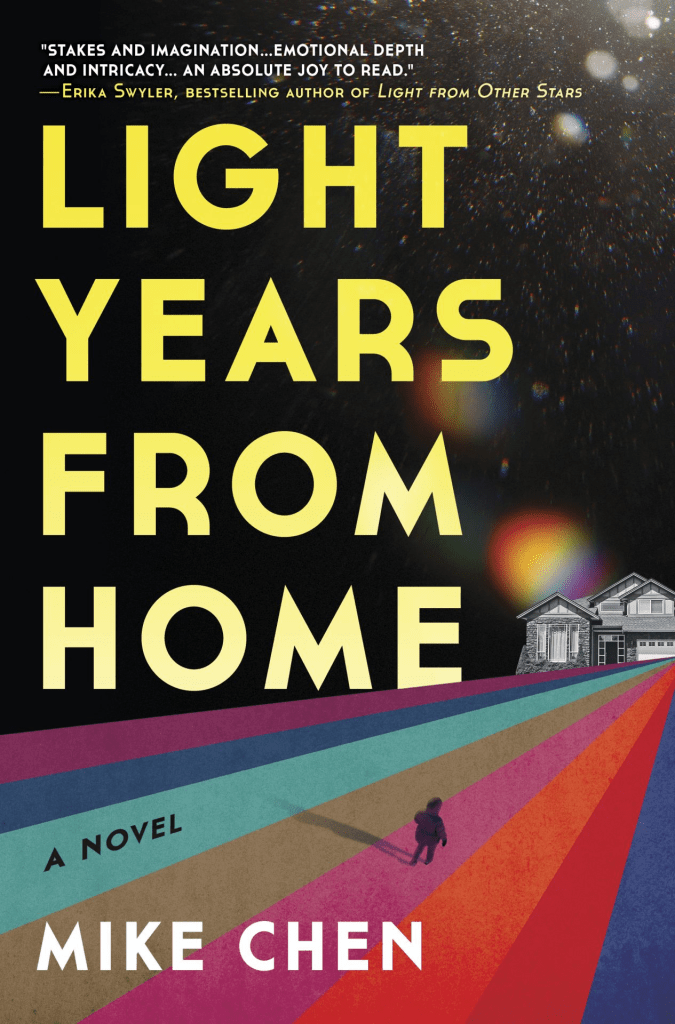
Light Years from Home – Mike Chen“Nothing to be, nothing to fear/Nothing to prove, nothing to say/Nothing to lose, nothing to gain/Nothing to feel, nothing to hate/Nothing is real, it’s all too late…”

“Happy News for Sadness” – Car Seat Headrest

The Car Seat Headrest I saw when I was 14 was a very different Car Seat Headrest than the one I saw last week. At one point in the show, Will Toledo opened up about how he didn’t like playing some of his older material, particularly that from Teens of Denial, because he was, as he said, “an angry young man of 23.” It struck me as so humble that he’s willing to admit that he’d moved on from that anger and strife and that he was committed to being in a stabler, happier place in his life. Teens of Denial remains one of my favorite albums of all time, an album that was at my side at my most lost and confused moments when I was a young teenager. Sure, I would’ve loved to hear “Cosmic Hero” (if not just to replace my video from 2018 where my off-key screeching drowned out the actual song) or something, but I’m happy that Will Toledo’s happy. And all of this was the preface for “Drunk Drivers/Killer Whales,” which he played to a crowd that knew all the words. Myself included. It was one of those nights where I could feel my younger self peering out from my chest, wiping the smudge away from her glasses, and dancing. I felt her dancing with me. I danced as hard as I could that night. It’s one of those times where a concert has felt, more than anything, like a warm hug, a reassurance across time to that little girl that she would be okay.

Car Seat Headrest has a notoriously rabid fanbase, small but mighty, the kind of people who’d unironically go up to you and say something like “Oh, you haven’t listened to the absolutely crusty-sounding old recordings he put out on Bandcamp and labeled ‘just awful shit?’ Fuckin’ poser!” And…yeah, with the kind of discography that Will Toledo has, it does lend itself to the kind of Charlie Kelly conspiracy theory board types. But the other side of that coin is that you get people who will ardently do the wave to a song that’s only available on Patreon. And that’s what made the show so riotously fun—the fervor of the fans for songs old and new, whether it was the stirring intro of “CCF (I’m Gonna Stay With You)” or the extended medley of older songs. (I’ll admit to being awakened like a sleeper agent when they started playing “Something Soon.”)

“Happy News for Sadness” was one of the excerpts from medley of older songs that they did for the encore, one that somehow escaped my unending curiosity when I was in middle school. I’d already found “No Passion” and “Sunburned Shirts,” so who knows how this slipped through my fingers. I feel like it might’ve been for the best, because I have a feeling that earsplitting, lower-than-lo-fi “BWEEEEEEEEEEEEEEEEEEEARGH” at 1:52 would’ve killed my headphones. “Happy News For Sadness” is as clear a glimpse into the sadder, angrier young man that defined much of Will Toledo’s career—the central chorus of “You can never tell the truth/But you can tell something that sounds like it” speaks to a lingering depression that’s been ever-present throughout his catalogue. Meandering through malaise and expired food doesn’t seem like something Toledo would revisit, given the speech he gave about Teens of Denial, but the fact that he’s able to reconcile with different eras of his own art in different ways feels like a mode of communication with the past. His songwriting was his way of telling the truth, and that truth resonated with so many people. To bridge that connection, to be able to look back and sing altered versions of the same song, is likely his way of making peace with it. Healing that younger part of yourself is different with each angle you tackle it from, but committing to that seems to be Toledo’s ongoing mission. I’m just lucky to be able to heal along with him and alongside hundreds of people.

…AND A BOOK TO GO WITH IT:

The Bad Ones – Melissa Albert“Nobody cares about/(But I’m still ugly on the inside)/Your life and the people in it/(But I’m still ugly on the inside)/So you can stop telling me it gets better…”

Since this post consists entirely of songs, consider all of them to be today’s song.

That’s it for this week’s Sunday Songs! Have a wonderful rest of your day, and take care of yourselves!
Posted in Sunday Songs

Sunday Songs: 7/13/25

Happy Sunday, bibliophiles! I hope this week has treated you well.

This week: it’s always the theme of this blog, but I feel like this roundup is a celebration of weirdos who are unafraid to express themselves in wild, creative ways. (Why yes, I am talking about Björk again, how did you guess?)

Enjoy this week’s review!

SUNDAY SONGS: 7/13/25

“Do Things My Own Way” – Sparks

I aspire to be like Sparks. I’m not even a die-hard fan or anything, but they just seem so aspirational in what they’ve done with their long, creative career. They’ve recently come out with their 26th (!!!) album at ages 79 (Ron) and 76 (Russell), and by all accounts, they’ve continued on their decades-long streak of doing nothing but their own thing. They haven’t achieved super mainstream fame, but the brothers have been producing their own brand of creativity, drawing from what seems to be their own never-ending well and the well of the present. Just look at their episode of What’s In My Bag? I seriously haven’t seen an episode of these with such a wide and diverse range of music, from K-Pop to John Coltrane to Kate Bush. They don’t seem to be stuck in the past—their personal brand of weirdness has just evolved over the decades.

At this point in their career, “Do Things My Own Way” feels like a statement of purpose from them, a propulsive anthem of confidence and being authentically yourself. Standing firm in its defiance, the track strides forward without a care for anyone or anything—nothing will shake the Mael brothers in their creativity. Anyone who’s in the way of them doing their thing is getting pushed out of the way—they’re not answering to anyone anymore. But even in that confidence, they acknowledge the rocky road that staying committed to yourself brings: “My advice, no advice/Gonna do things my own way/Roll the dice, roll the dice/Gonna do things my own way.” It’s always a gamble—there will always be people who look down at art like this as commercially inviable or not worth making. But as Sparks’ career has shown, it’s a risk worth taking. “Anywhere, anytime/Gonna do things my own way/I don’t care, I don’t care/Gonna do things my own way.” Another fantastic weirdo anthem for the books—thank you, Ron and Russell.

…AND A BOOK TO GO WITH IT:

To Shape a Dragon’s Breath – Moniquill Blackgoose“My advice, no advice/Gonna do things my own way/Roll the dice, roll the dice/Gonna do things my own way…”

“Wanderlust” – Björk

The Björk deep dive continues…although this is about two weeks after I actually listened to the album, owing to the color palette rules I’ve imposed on myself. Both Volta and Medulla seem to spar in the Björk fandom for one of her least-liked albums, and every time I remember that, I’m baffled. I guess Timbaland’s more pop-sounding production isn’t for everyone, but if this is pop (yeah yeah), then this is the most bizarre pop I’ve ever listened to. Recorded during Björk’s time spent on a houseboat with her family, there’s a stark juxtaposition of the natural with the mechanical. It works both as a sonic tool and as political statement, given this album’s threads of anti-war (“Earth Intruders”) and anti-imperialism (“Declare Independence”) sentiments. It’s so delicious to me as a musical statement; even though she’s spent her whole career melding electronic music with nature, she’s turned it into a strong statement that war and colonialism are invasive and fundamentally against nature. God, I love Björk. I can’t believe I’m the kind of person who would unironically say “erm, ackshually, the foghorn noises contribute immensely to the album’s narrative,” BUT THEY DO. THEY’RE LIVE RECORDINGS OF WHEN SHE WAS ON THE HOUSEBOAT!! GUYS!!

Björk has called “Wanderlust” the heart of Volta, and it’s easy to see why. In a fairytale kind of way, it streamlines her statement of purpose, both in her personal life and in her musical career. Even though “Earth Intruders” is the first track on the album, “Wanderlust” tells its story: “I am leaving this harbor, giving urban a farewell/Its habitants seem too keen on god, I cannot stomach their rights and wrongs/I have lost my origin and I don’t want to find it again/Whether sailing into nature’s laws and be held by ocean’s paws.” I don’t blame her, especially since the move was prompted by living in New York with her family during the Bush administration. But after she breaks free, she revels in exploration and cliff-diving into the unknown, relishing in the act of discovery and intrepid daring. It’s an unabashed ode to not just stepping, but full-on leaping out of your comfort zone and being unafraid to dive headlong into the new and strange.

I originally saw the music video back in May during the Alamo Drafthouse’s Birth, Movies, Death for The Legend of Ochi (a very underrated fairy-tale/finding a creature film with lots of top tier critters, setpieces, and Willem Dafoe deftly proving that masculinity is a very silly construct). Isaiah Saxon co-directed it, and it might be one of my favorite of Björk’s music videos. Dressed in a Studio Ghibli-looking costume, Björk races down the river on the back of a herd of musk oxen, with fantastical scenery that accompanies her as a fabric-like torrent of water pushes her ever-forward into the unknown. After seeing The Legend of Ochi, I can say that yeah, it’s very Isaiah Saxon, but more than that, it’s so Björk. I can’t think of a better pairing for the spirit of the song.

…AND A BOOK TO GO WITH IT:

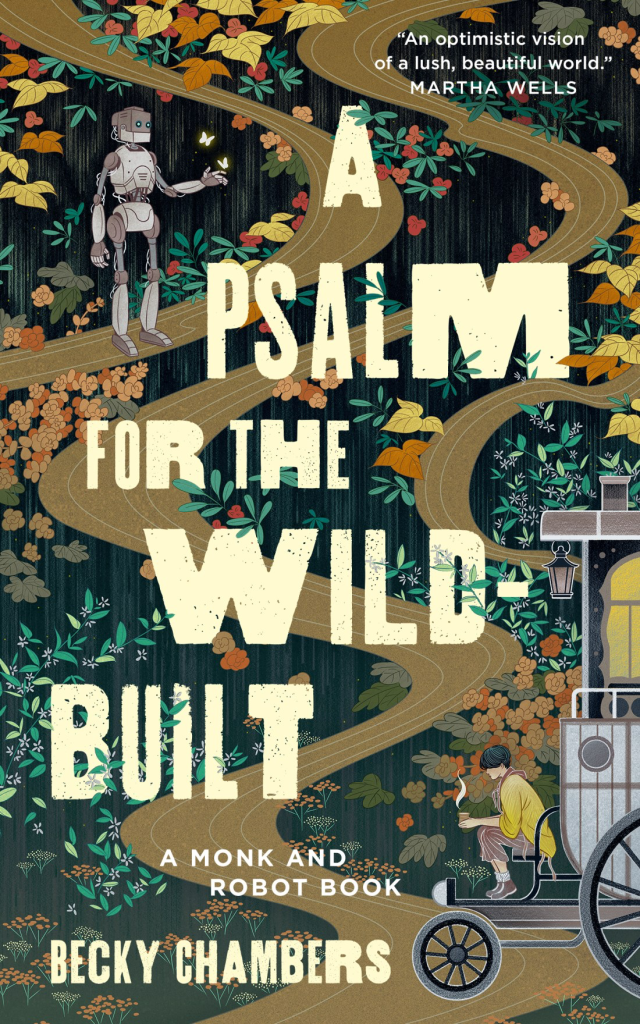
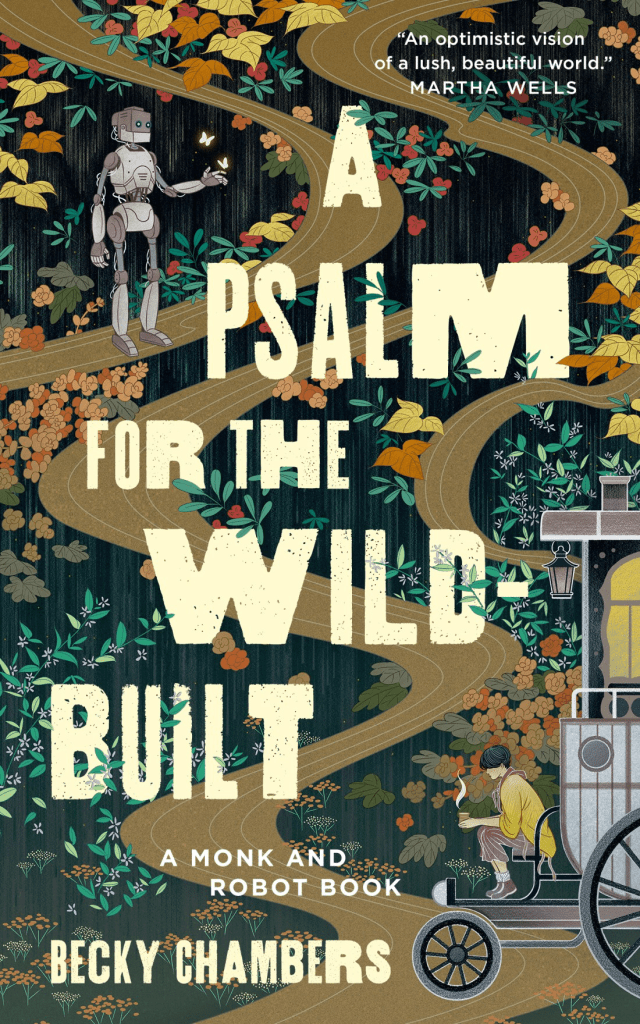
A Psalm for the Wild-Built – Becky Chambers“I am leaving this harbor, giving urban a farewell/Its habitants seem too keen on god/I cannot stomach their rights and wrongs/I have lost my origin and I don’t want to find it again/Whether sailing into nature’s laws and be held by ocean’s paws…”

“Questionnaire (Demo)” – Studda Bubba

No, this isn’t Instagram Reels music, although in the most abstract sense…I did find it on the Instagram explore page. But listen, if my Instagram is recommending me quirky little folk songs made by a group of Indigenous, trans clowns, then shit, maybe I am giving off the right vibe to the algorithm after all. Amidst the hellscape that is social media, at least sometimes I can find spots of humor and creativity. For once, I found someone with the whimsy in their soul to center the chorus a folk song around the concept of opening up a hyper-capitalist factory and paying workers with the meager stipend of a single NFT. It’s a tender balance between their soft harmonies and the abject silliness of their lyrics (they managed to slip “you wouldn’t download a car” in), but maybe that whimsy is part of what holds the glue of whatever good is left in the rotting, festering wound that is social media. Anything to get us through all this.

…AND A BOOK TO GO WITH IT:

The Last Gifts of the Universe – Riley Augustsoft and tender, the kind of music I’d imagine playing in the quiet scenes with Scout and Kieran on their ship.

“I Feel Ya’ Strutter” – of Montreal

A late pride month addition, but every month is pride month…especially on this blog. And there’s not a whole lot that’s gayer than a) an of Montreal song, and b) an of Montreal song that absolutely reeks of the ’80s output of both David Bowie and Prince. This is easily one of the grooviest of Montreal tracks that I’ve heard—it doesn’t have the quaint, plinking synth soundscape of something off of Hissing Fauna, Are You the Destroyer?, but instead boasts more of a slinky, guitar-driven sound. However, nothing can keep Kevin Barnes from having the most delightfully convoluted lyrics. During the verses, her rapid-fire delivery of the lyrics is almost dizzying, as though she crammed in as much as she possibly could: “I know there ain’t no one person that/Everybody else in the world hates or wants to die/Sometimes I do think it’s me/Like, I’m in a flight simulator/And I am crushing the birth of any potential memory, hey.” Like whew, take a breather! You deserve it! But it works once he pivots to the smoother tones of the chorus, where his Prince-like howl is on full display—and he works it. It’s an infectiously catchy tune that never feels to get me on my feet. Never in a million years would I think that the lyrics “We spoke of frontal lobe regression/This is not one of those” would make me shiver with antici…pation before such a wonderful breakdown. That’s the power of Kevin Barnes, right there.

…AND A BOOK TO GO WITH IT:

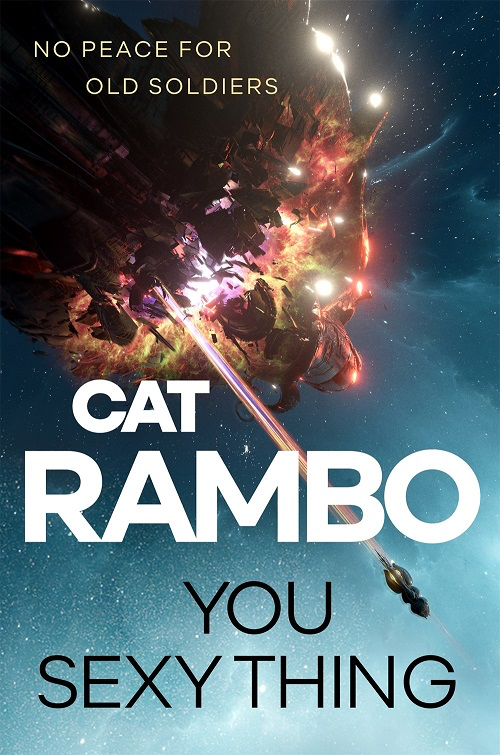
You Sexy Thing – Cat Rambo’70s/’80s music homage, passion, queerness…all in space.

“Metal” – Gary Numan

Happy Disability Pride Month, and remember, kids: you wouldn’t have synth pop as we know it without autism.

It’s often a negative trope to view certain autistic people as like robots; the comparison has long been used to dehumanize those who simply have trouble interacting with neurotypical society, equating a flat affect or a lack of outward emotion to being outright heartless. But if there’s anyone in pop culture who’s turned this on its head and embraced it, it’s Gary Numan. A key figure in new wave music and one of the pioneers of what we now know as synth-pop, Numan often used metaphors of machinery, robots, and androids to relate to his own experience growing up autistic. My sci-fi brain immediately latches onto the lyrics—it’s all a very classic, Do Androids Dream of Electric Sheep? story of a robot being created in a strange factory by ominous “liquid engineers” who tries to assimilate to human life, but is painfully conscious of the fact that “Here inside, I like metal/Don’t you?” It’s a very abjectly dystopian world, complete with the protagonist explaining that “I need my treatment, it’s tomorrow that they send me/Singing ‘I am an American’/Do you?”

But it’s the framing of the lyrics—all questions—that stand out to me in the context of neurodivergence, and of outsiderness in general. Almost all of them end in either a question (“do you?/did you?”) or an assumption of normalcy (“like you”). The protagonist has lived its life thinking that everything that has happened to it (being grown in a factory and having a heart made of batteries) is normal, and once it interacts with the human world, it slowly realizes that its experience is not a normal human experience, fundamentally out of sync with everyone else. And yeah, they’re robots, but if this isn’t a picture-perfect summation of what it feels like to be neurodivergent, I don’t know what is. I haven’t had this experience to the extent that Numan seems to have, but it’s always such an alienating feeling to realize that the way you interact with the world is fundamentally counter to most of the other people around you. It’s taken a long time for me to realize that I’m just operating on a different code, if you will, but there’s always the lingering feeling, enforced by so many people around you, that the way you interact with the world isn’t correct. Numan’s utterance of “I could learn to be a man/Like you” feeds into that desperation that somehow there’s a way to figure out how to operate neurotypically, what the secret is that they’ve all got down and you were never told. But here Numan is today, still touring in his sixties, gaining all kinds of accolades, and embracing his own autism. Here, he’s turned the outside view of him being inhuman into a way of understanding himself and the world around him, and made an iconic brand out of it—a brand no one could replace.

…AND A BOOK TO GO WITH IT:

The Outside – Ada Hoffmanthough I suppose Yasira is less robot and more liquid engineer, this is a similar story of an autistic woman and her quest to put the universe to rights.

Since this posts consists entirely of songs, consider all of them to be today’s song.

That’s it for this week’s Sunday Songs! Have a wonderful rest of your day, and take care of yourselves!
Posted in Sunday Songs

Sunday Songs: 7/6/25

Happy Sunday, bibliophiles!

This week: (Almost) three years of making Sunday Songs graphics! As for right now, baby’s on fire, better throw her in…la mer?

Enjoy this week’s review!

SUNDAY SONGS: 7/6/25

“Baby’s On Fire” – Brian Eno

I…oh, shit. It took me until I published this post to realize that I’ve talked about this song twice now on this blog. Welp…

Music hot take of the week: this song needs to be, like, 8 minutes long. At least. I love an album that has songs that smoothly transition into one another (as is the transition from “The Paw Paw [Redacted] Blowtorch”* to this track), but oh my god, it needs more time!! The way that the song builds up is so monumental—it’s a whole fizzing, crackling Rube Goldberg machine of compounding suspense. The intro needs to be at least a minute long to stretch it out, just to give the first lyrics the punch they need. It’s a glam rock/art rock masterpiece, but it feels like a study in buildup and release more than anything. The percussion stays steady throughout the entire song, giving way for every other instrument—most of which were apparently woefully out of tune when they recorded it—to spiral outwards into a tidal wave that doesn’t crash until three minutes in—it just looms for so long. Most of me wants that to be extended, but Eno is a master of creating such a layered atmosphere.

What most people rightfully remember “Baby’s On Fire” for, however, is that truly insane Robert Fripp solo. The Genius annotation on the lyrics where it denotes the solo simply says “holy fucking shit,” which I think sums it up better than most music critics have. It’s the moment that the tidal wave that Eno has built up fully crashes, sending a kaleidoscope of chaotic spray down on the listener. As the story goes, Fripp had the flu while recording this marvel of a solo…I can only imagine the kind of tricks he was able to pull off when his health was stable, because GOD. It really is chaos personified—you can never predict which direction it’s striking next, and the stark contrast between it and the consistent, steady build of Eno’s background instrumentals make it feel like modern art. I get the same feeling of listening to “Baby’s On Fire” as I do looking at abstract, geometric paintings. It’s a masterclass in contrast.

Eno’s lyrics, especially in this era, are rarely serious, mostly just surreal word-play. Dehumanization is at the heart of the story, with a figure actively ablaze whose suffering is being exploited for photos. Here’s where I feel like Eno’s genius working with glam rock really comes in. He’s got this disaffected, theatrical tone, but what he’s saying is so deeply sarcastic that I can’t help but read it as critique of how the fictional subject is being exploited while she’s actively suffering; “Photographers snip-snap/Take your time, she’s only burning” reads to me as the photographers seeing her pain as tabloid fodder, a spectacle to make money off of. His nasally, sarcastic tone feels like a cue to laugh at the clowns who would ignore her plight just to make an extra buck. But whether in the fictional realm or in reality, I’ve always admired that Brian Eno has always been committing to condemning dehumanization of all kinds, from the 1970’s right up until today. It’s always comforting when the best musicians have consciences to match.

*It’s more an outdated term than anything, and I really don’t think Eno used it with any disrespectful intent—it was normal for the time. However, it feels uncomfortable for me personally to type it here, so see for yourself.

…AND A BOOK TO GO WITH IT:

Some Desperate Glory – Emily Tesha fantastic sci-fi book that interrogates our casual comfort with dehumanization of others.

“davina mccall” – Wet Leg

BREAKING: Wet Leg actually has another song? I’m doing my best to not sound like a broken record whenever I talk about them, but I swear this feels like the most growth I’ve seen them have as far as songwriting range. It’s not a wild left turn for them, but it feels fresh.

Snuggled in between the ’90s and the 2010’s, somewhere between The Cardigans and early Wolf Alice, “davina mccall” stands out partly because it’s probably their first love song—and maybe their most sincere song. However fun they make their music, a lot of it is mostly the more maddening sides of modern life, whether it’s being bounced between stupid men or being apathetic and numb about the world. It’s never come across as abjectly doomery or irony-poisoned, mostly because they have a sense of humor about it. Yet they have kind of run themselves dry with the subject matter. I know that love songs are pretty much the most common kind of song you’ll hear these days, but for Wet Leg, it feels like a more vulnerable step. When your entire body of work is about being relatable and vulnerable about how silly and artificial modern life is, it feels significant for them to embrace the idea that vulnerability is not all phone addictions and bad sex. I might be getting too deep with it, but strip it all away, and “davina mccall” is just a lovely, summery love song, content to linger in the ordinary, quiet moments of romance.

Also, I can’t not talk about how delightful this music video is! Directed by Chris Hopewell—who I forgot I knew from the glorious stop-motion music video for Radiohead’s “There There,”—it reminds me of Fantastic Mr. Fox in the best possible ways. Luckily, none of them go the way of Thom Yorke in this video—the song’s too happy for that kind of thing. The members of Wet Leg are all rendered in claymation, and they all look an awful lot like Petey and the rest of his gang (at least it’s not weak songwriting this time). Wet Leg’s task force for bird-related crimes is nothing short of hilarious—and surprisingly sweet at the end.

…AND A BOOK TO GO WITH IT:

Love Letters for Joy – Melissa See“You know that I would/Do anything for you/It’s like a dream come true/Every day is spent trying to say something to make you smile…”

“Mer” – Chelsea Wolfe

I don’t talk about Chelsea Wolfe nearly as much as I should, even though, by my count, she’s featured on one of these posts/graphics…four times? Only four? Granted, she fell into that curse where every time I’d put one of her singles on a graphic, I’d be too busy to write about it. Shame, really, given that She Reaches Out to She Reaches Out to She was one of the best albums of 2024. Go listen to it—the album didn’t get nearly enough love as it deserved!!

As penance, let’s take a look back at one of her older tracks, 2011’s “Mer” from her album Apokalypsis, which has to have one of the most wondrously goth album covers ever (though her entire discography puts in a lot of great contenders). “Mer,” named for the French word for the sea, embodies its title, but not in the way you’d expect. The mer that Wolfe is channeling here isn’t the gentleness of waves lapping against the shore in July—it’s more the dread of looking out onto a roiling ocean as storm clouds gather over jagged, rocky cliffs. It’s a landscape that calls something along the lines of “Annabel Lee” for me. Even though I do play music, I’ve never been super keen about deciphering time signatures and the like, but I swear there’s something going on with “Mer”‘s timing—I swear there’s some syncopation going on with the percussion and the other instruments, but it all feels like each instrument is keeling ever so slightly to the side of the others, a sinking ship pulled in all directions. It all feels so off-kilter in Wolfe’s classic, sinister way. Even without the barely decipherable noises in the background, which for all the world sound like wailing Tim Burton-like spirits trapped in glass bottles, “Mer” would remain fundamentally eerie.

…AND A BOOK TO GO WITH IT:

House of Hollow – Krystal Sutherlandthough the sea doesn’t factor as much into this novel, the general eerie, misty atmosphere very much carries over.

“Big Drops” – Avery Tucker

I only found out that Avery Tucker was finally going solo when I was writing about girlpool back in June. Compared to the more pop direction that Harmony Tividad has embraced now, Tucker’s single reminds me more of mid-career, more guitar-driven girlpool—something close to Powerplant or the first half of What Chaos is Imaginary. As far as new directions go, the more electronic turn that girlpool took in their later years was hit or miss—when they hit it (see: “Like I’m Winning It”), they made fantastic, sultry, synthy indie-pop; when they missed (see: …uh, pretty much 75% of Forgiveness), it almost smothered their candid lyrics and how well they worked together as a duo. It felt plastic.

So I can’t help but be relieved that Tucker’s returned to the band’s roots. Even though he’s…well, he’s playing a tele during some of the acoustic parts of the song in the music video, which is admittedly a little silly, seeing Tucker back in his element makes the music feel more natural. Though some of his delivery and lyrics veer on being too earnest, “Big Drops” shines a light on some of the more candid, bare songwriting that made girlpool so memorable. Solely in his hands, he crafts a narrative from intimacy, late-night talking, and musing about unexpected events and the regrets that come from them. With the (mostly) acoustic guitar, it gives the song a tender, warm spaciousness that evokes the exact imagery he conjures—sitting on pool chairs, looking at the sky, and spouting off about your life.

…AND A BOOK TO GO WITH IT:

The Many Half-Lived Lives of Sam Sylvester – Maya MacGregor“Last night we talked about big drops/Big drop on the boardwalk ride/Big drop thinking about her life/Should we visit the two of them?/Or did the town get too violent?”

“My Baby (Got Nothing At All)” – Japanese Breakfast

In keeping with last year’s Sunday Songs anniversary, I am once again reviewing a song from a new movie that I haven’t even seen. (Update: I still haven’t seen I Saw the TV Glow. Someday…) Materialists doesn’t seem like my thing, but Japanese Breakfast certainly is. Ever since the trailer for the movie came out, I was enchanted by the way Michelle Zauner breathily sang “my baby.” I was fooled into thinking that this song was going to be on For Melancholy Brunettes (& sad women), so you can imagine my disappointment, as fantastic as that album was.

Regardless of whether or not you’ve seen Materialists, the swoony, rom-com feel comes away in waves on “My Baby (Got Nothing At All).” The more delicate range of Zauner’s voice shines through in this environment, accompanied by the gentle strum of acoustic guitars and swelling strings. As Zauner (and the protagonist of the movie, presumably?) affectionately admits that her lover is broke (but he gives it all to her anyway), she sings with the relaxed, daydreaming posture of someone leaning over a fire escape, watching the glow of the city lights below and the cool wind tossing her hair. As her voice climbs on the bridge (“You’re in love/There’s no doubt about it/There’s no use in messing up”), it cements the song as one of the more perfect rom-com songs—it’s not cloying or earnest, but it sounds appropriately like a lovelorn hand draped over a sighing forehead.

…AND A BOOK TO GO WITH IT:

Water Moon – Samantha Soto Yambaothe best parts of this novel have the same dreamy, swoony feel of watching the lights of a glittering city and falling in love.

Since this post consists entirely of songs, consider all of them to be today’s song.

That’s it for this week’s Sunday Songs! Have a wonderful rest of your day, and take care of yourselves!

Posted in Sunday Songs

Sunday Songs: 6/15/25

Happy Sunday, bibliophiles, and more importantly, Happy Father’s Day!! I always end up writing one of these posts on Father’s Day, what with it landing on a Sunday and all, but it’s fitting, given that my amazing dad is the one who not only is responsible for a lot of my music taste, but was also the one to encourage me to write these posts and wanted to hear my thoughts. So thank you to him, for all of the gifts he’s given to me, and to my family. I love you. 🩵

This week: before I go radio silent for a week for a road trip, how about a random kick in the pants from 2019? Plus, new Cate Le Bon, old(ish) Shins, and others.

Enjoy this week’s songs!

SUNDAY SONGS: 6/15/25

“Jellybones” – The Unicorns

Chances are, given my proclivities for Car Seat Headrest and other like lo-fi, awkward white boys, I probably would’ve stumbled upon The Unicorns eventually. It was an inevitability. Either way, I was introduced to it via Black Country, New Road’s episode of What’s In My Bag?, and I can’t call it much else other than a delight in the many times that I’ve listened to it since. “Jellybones” is a whimsical title as it is, but the rest of the song stays true to that silliness, complete with bone-related puns (“Drove up in my bone-ca-marrow,” ba-dum tsss); the entire song revolves around jellybones (an obscure sort of expression for nervousness) being a genuine malady worthy of going to the hospital and getting limbs amputated for. Everything has a juddering, garagey sound to it, from the engine-like startup to the guitars to the keyboards, which the intro warps into the sounds I feel like I’d hear aboard a clunky, malfunctioning spaceship on the cover of a ’50’s pulp magazine. 2:43 feels simultaneously too short and the perfect length for “Jellybones”—I need more, and yet this song could only ever be a sputtering little firecracker, spurting out sparks and then gently slipping out of existence.

…AND A BOOK TO GO WITH IT:

Madman Comics Yearbook ’95 – Mike AllredJellybones definitely seems like it could be a genuine illness in the Madman universe. (Least wacky Dr. Boiffard subplot, maybe?) Either way, the lyrics definitely fit with the kind of silliness in these comics.

“Heaven Is No Feeling” – Cate Le Bon

Getting the one-two punch (positive) of new Big Thief (to be discussed) and Cate Le Bon on the same day was almost too much…and just when I thought that we were finished with all of my most anticipated albums of the year! Cate Le Bon’s new album, Michelangelo Dying, comes out this September, and suffice to say, if it’s anything like this song, I’m all ears.

Taking cues from the synth-heavy sound of Pompeii, “Heaven Is No Feeling” opens with an intro too good for a track that’s right in the middle of the album: a murmur of “What does she want?” before launching into a flurry of rippling, watery synths and guitars slathered in enough effects to make them camouflage with the synths. In line with her very ’80s sound, there’s plenty of saxophone, but not enough that it overpowers any of the rest of the song. Gently groovy and keenly observational, Le Bon takes the position of a wallflower: there is a kind of emotional distance to it as she watches the subjects as they move like pawns across a chessboard: “I see you watch yourself/Walk the room/Stroking the air/Like this paint won’t dry.” As she observes the distant fallout of a failed love, the song feels like she’s watching someone through security camera footage, pretending to be distanced when she hasn’t fully gotten over the wreckage—much like the music video, where a buzzcutted Le Bon watches herself on an old TV. Every repetition of “I see you watch me” feels like a degree of separation from the body and from her feelings (surely that’ll end well…), and “heaven is no feeling” becomes a kind of blissful removal from one’s own emotions.

…AND A BOOK TO GO WITH IT:

The Infinity Particle – Wendy Xu“I see you watch me watch you/Watch me move away/You occupy the space/Like a ribbon untied…”

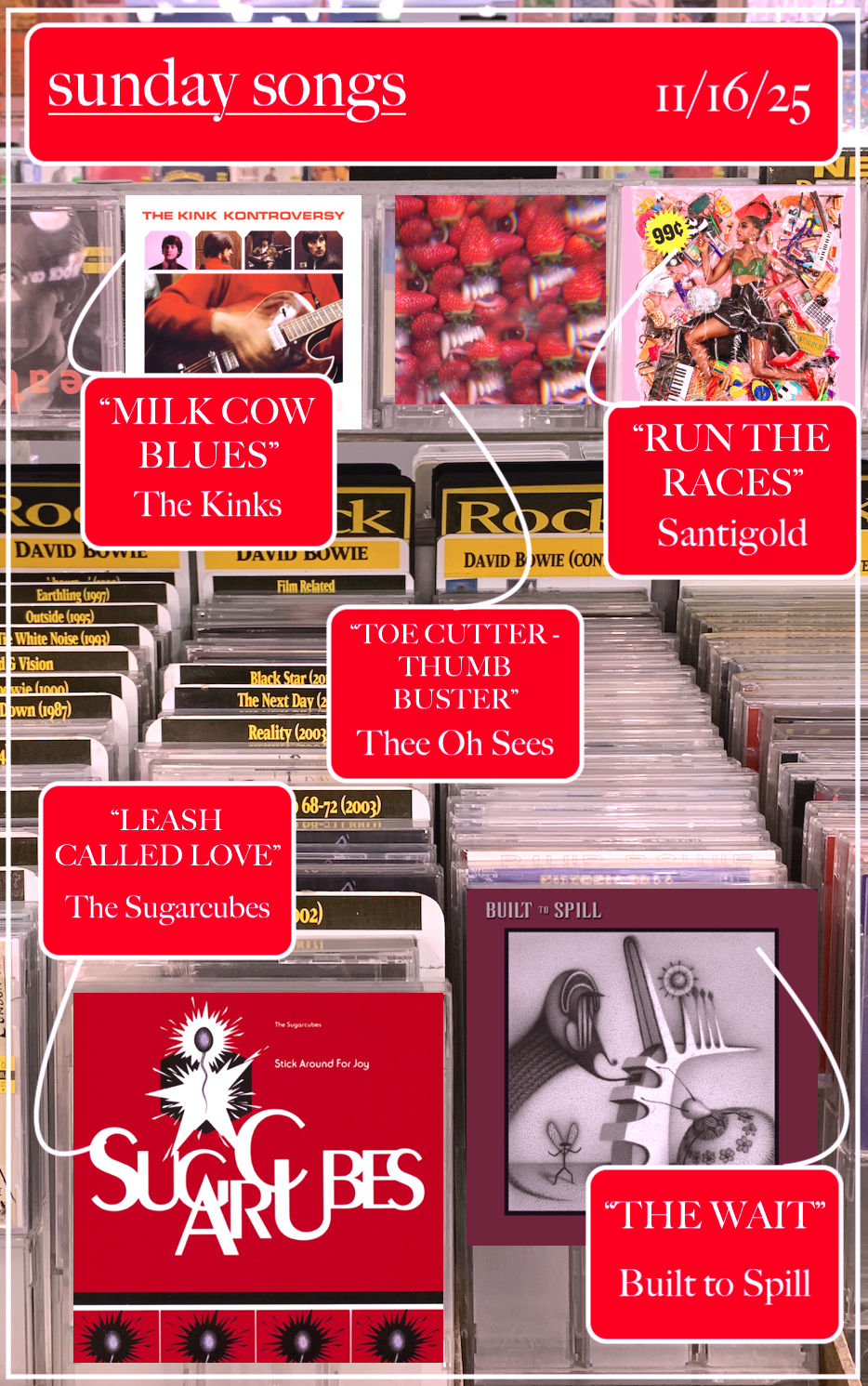
“Chasing Shadows” – Santigold

Santigold, man. Nobody’s doing it like her. I often think of 99 Cents as being one of the only happy albums of 2016, but next to Blackstar, A Moon-Shaped Pool, and Teens of Denial, anything looks happy. But what makes me keep coming back to songs from 99 Cents is how she used the veneer of happy, bubblegum pop songs to further her message—they remain peppy pop songs, but they’re all armed with critiques about consumerism and the music industry. Santigold has often talked about her negative experiences in the music industry, whether it’s how unaccommodating the industry is to mothers, especially where touring is concerned, or how her music did not qualify to some critics as “Black music.” Despite how candid she’s been about the physical and mental toll it’s taken on her, Santigold has only used that to become even more herself than ever. Her last album, Spirituals, went fully into Afrofuturism and current politics, and she’s expanded her creativity into a podcast, Noble Champions, where she brings guests to talk about everything from said nebulous category of “Black music” to social media addiction. (From the episodes I’ve intermittently listened to, she’s also had a whole host of amazing guests, including Yasiin Bey, Questlove, Tunde Adebimpe, Mary Annaïse Heglar, and so many more. The only problem is that there’s not more Santigold, frankly.) I saw her perform live last August, and it’s one of the only concerts I can think of where a singer has been truly kind and candid with her audience; decades in the industry didn’t stop her from signing people’s records in between songs.

Like the album cover, where Santigold is shrink-wrapped and slapped with a price tag along with all manner of plastic junk, “Chasing Shadows” reckons with the human toll of commodifying artists. Contrary to Pitchfork’s assessment that the song “basically plods along inoffensively until it ends” (I’m sorry, the fuck?), it’s one of the more steadfast songs on the album, still fast-paced but providing a cooldown between some of the more in-your-face pop songs. Rostam Batmanglij (formerly of Vampire Weekend) produced the track, and knowing that, I can hear him all over the beat—I say this affectionately, but it’s the most 2016 pairing ever. I love it. Through rapidly-uttered lyrics, Santigold reflects on how quickly the industry moves on so quickly from artists once they’re out of fashion, summarized by one of the finals the second verse: “Why they eating they idols up now/Why they eating they idols up, dammit?” Reflecting on seemingly being left behind, her solution, as always, is to defy the standard, continuing to do what she’s doing. The video mirrors this back: she asserts herself in multiple places inside various houses: at the head of a table at a decadent Christmas feast, standing upright and fully clothed in a bathtub, and towering over a child-sized table with a child-sized tea set. No matter the location, she stands firm, defiantly staring the camera, returning the gaze—of the music industry who tried to put her in a box, to racist and misogynist detractors, or to anyone who has ever doubted her. No matter what, she’s looking directly at you, as though to cement her irreplaceable space of individuality that she’s created for herself.

…AND A BOOK TO GO WITH IT:

Victories Greater Than Death – Charlie Jane Anders“One thing about time, it waits for nobody, you told me, isn’t that what they say/Been batting ‘gainst it and getting nowhere, just racin’ got nothing to say to nobody…”

“Cut Your Bangs” (Radiator Hospital cover) – girlpool

What in the 2019 did my shuffle just pull? I hadn’t even thought of this song in years, and boom, suddenly I’m back in high school art class, diligently obeying the “only one earbud in if you want to listen to music” rule while drawing X-Men fanart because I blew through whatever I was actually assigned. God.

High school…and my first introduction to girlpool through Apple Music. Sure, I’m fully on board with the fact that streaming has harmed musicians more than it has helped them, but for a lot of people, myself included, it opened the floodgates for discovering so many musicians back when I was in high school. girlpool was one of the big ones, prominently soundtracking my sophomore year of high school, from their earlier work on Before the World Was Big (which turns 10 this year, Jesus) to their more current (at the time) What Chaos is Imaginary. Almost six years after I discovered them, girlpool since released one final (disappointing) album, Forgiveness, broken up shortly after, and then…Avery Tucker’s come back with a good solo single, but Harmony Tividad seems to have pulled a Gwen Stefani and now makes pop songs with the most chronically online lyrics you’ve ever heard. How the times have changed. But good for her, I guess? You do you…

Even though girlpool had moved past this inception of their music by the time I got into them, they fit too perfectly into the sad, acoustic indie that comprised most of my music taste, and still kinda does today. “Cut Your Bangs” is a cover, but to this day, it remains one of the best parts of this inception of girlpool. In contrast to the faster, more rock sound of the original by Radiator Hospital, girlpool take the chorus’ ending of “the small stuff” literally, slowing it to a crawl in order to wring the most out of the quietly introspective lyrics. I remember not liking the original when I first heard it, and on reflection, I don’t hate it, but I still think it’s a situation where girlpool knew exactly what to do with it. All of the lyrics need a gentler space to breathe, and the twin harmonies of Tividad and Tucker make them stand out. To this day, the way their voices know exactly which lyrics need a plaintive murmur and which ones need a higher-pitched belt feels almost telepathic—at their best, what made girlpool so successful is that they had such an instantaneous communication that allowed them to switch from gentle to jagged in the blink of an eye, but never once lose their synchronicity.

…AND A BOOK TO GO WITH IT:

Some Girls Do – Jennifer Dugan“You say you’ll cut your bangs, I’m calling your bluff/When you lie to me, it’s in the small stuff…”

“Young Pilgrims” – The Shins

James Mercer just has such a unique way with words. As music history (and my personal music library) proves, there’s practically a million ways to say a sentiment along the lines of “I’m dissatisfied with my life and it’s cold and wet outside and I’m also depressed.” Mercer saw that and gave us these iconic lines:

“A cold and wet November dawn/And there are no barking sparrows/Just emptiness to dwell upon/I fell into a winter slide/And ended up the kind of kid who goes down chutes too narrow…” HE SAID THE LINE! GUYS, HE SAID THE LINE! CHUTES TOO NARROW!

Said barking sparrows came back to me completely at random, in the way that especially sharp lyrics or melodies do. Although Mercer’s narrator envies the “eloquent young pilgrims” passing by him, I struggle to find words other than eloquent to describe how he articulates such a near-universal feeling, a mess of regret and stagnation and the emptiness that comes with control slipping through your fingers and wanting to regain it. In a simple duet of acoustic and electric guitars, Mercer wrings some absolute poetry out of such a stagnant state, drawing every possible image from ice melting on a train window and the desire to “grab the yoke from the pilot and just/fly the whole mess into the sea.” I love a good literary-minded songwriter, which I guess it’s no surprise that I latched onto The Shins from such a young age. But with age, I appreciate the lyrics even more—James Mercer is one of those songwriters who prove that, at its best, music is eloquent poetry set to music. It doesn’t need to be (and rarely is), but when it hits that spot, I can’t help but relish it.

…AND A BOOK TO GO WITH IT:

Hammajang Luck – Makana Yamamoto“But I learned fast how to keep my head up, ’cause I/Know there is this side of me that/Wants to grab the yoke from the pilot, and just/Fly the whole mess into the sea…”

Since this post consists entirely of songs, consider all of them to be today’s song.

That’s it for this week’s Sunday Songs! Have a wonderful rest of your day, and take care of yourselves!
Posted in Sunday Songs

Sunday Songs: 6/8/25

Happy Sunday, bibliophiles! I hope this week has treated you well.

This week: getting emotional about Björk, queerness in the ’70s, and a delightful little critter living in the sewers somewhere in England.

Enjoy this week’s songs!

SUNDAY SONGS: 6/8/25

“drains” – mary in the junkyard

THEY’RE BACK!! Well, mary in the junkyard haven’t been gone for long, but nonetheless, I’m always excited about whatever new music they’ve got going. In fact, they’ve already had a fruitful year: a great feature on Richard Russell is Temporary, a shoutout on 2D’s Gorillaz G Mix 22, and a spot as one of the opening acts on Wet Leg’s UK and North American tours. I can only hope that their debut album is in the near future, but for now, they finally seem to be on the way to getting the attention they deserve!

“drains” continues the trajectory of their debut EP, this old house, which contained four songs full of ghosts, flies, rot, and angst dug out of the graveyard, living up to the description in their Instagram bio as “angry weepy chaos rock.” This time, the grime and goop they’re examining comes from the sewer; in the great music video, it’s personified as a tiny little clay creature that really does look quite innocent, but ends up wreaking some accidental havoc. With electric guitars that ring in a strangely plaintive way, “drains” stumbles about, written in a frustrated daze as the narrator struggles to put names to feelings—and to how her lover makes her feel. Not good, if the lyrics are any indication, and yet “drains” gets scratchier and more jagged as the truth becomes ever more apparent that they’re trapped in this cycle with them: “But if you bury yourself, I will dig you out again/That’s what lovers do/If you hurt yourself, I will take you under my wing/I’m your lover and I’m loving you.” Culminating in an exorcism of a scream, the chaos of the frustration is finally let loose and given form, like the clay critter clambering through the grime-coated pipes.

…AND A BOOK TO GO WITH IT:

I Am the Ghost in Your House – Mar Romasco-Moore“But I only came here to feel my body/I am a ghost, where are my bones?/How can you blame me for not being sorry?”

“Oceania” – Björk

Damn…Medúlla has me feeling all kinds of things. It was next in line in my scattered Björk deep-dive and I was highly anticipating it after Björk’s episode about it on Sonic Symbolism. I listened to it while knitting a scarf, and I thought of everything she described about the album, about prehistory and family and sitting around the fire and braids and ropes and weaving…and that hit me while I was knitting, doing the same activities that my ancestors, namely women, have done for thousands of years before me, and, and, and…yeah. Medúlla is very nearly a no-skip album (“Submarine” wasn’t my favorite). It’s one of those albums where you feel a pit opening in your stomach, but it seems to be opening up room for the energy to integrate itself into you. A good Björk album does that to a gal. And so many people think this is her worst album because it’s inaccessible? Sure, maybe her first three albums are more accessible (relatively), but do you really listen to Björk for accessible music?

I kind of agonized over which song I’d pick for this week (because you will be hearing more), but between this, “Who Is It (Carry My Joy on the Left, Carry My Pain on the Right)”, and “Desired Constellation,” this was the winner. Originally composed on pianos before Björk realized the sound she envisioned weren’t possible on pianos, “Oceania” imagines the all-encompassing consciousness of the ocean. Connecting the ocean to the album’s larger theme of motherhood is a no-brainer, because who was the mother of every life-form on the planet? Taking the nurturing spirit to the personal to the universal, Björk embodies an ocean full of love, but namely full of pride: “You have done good for yourselves/Since you left my wet embrace/And crawled ashore.” Despite her all-encompassing knowledge and reach (“You count centuries/I blink my eyes”), she retains an eye on every organism that has emerged from her waters, nurturing all of them and reminding them of where they came from; as the vocals temporarily drop out, she reminds us of the connection we all have: “Your sweat is salty/I am why.” AAAAUGH, excuse me for a moment…sorry, I just get overexcited about the wonder about how everything on Earth is intimately connected and that denying it is the root of pretty much every problem we have today…but what a song. Composed entirely of the human voice, a choir creates a rising chorus that seems to bubble to the surface like the trails made by dolphins as they race through the water. The ethereal clicks and hums compose a melody that really does feel primal, glittering as light dappling across the surface of the sea. Leave it to Björk to get so close to how water feels, in both the calmness of it enveloping your body and the delicate movements of invertebrates as they drift through the waves. I can hear both plankton and megafauna, all cradled in the arms of Mother Oceania.

It is a kind of primal universalism, but it came out of trying to write a song for the 2004 Olympics: they reportedly asked her “to do a kind of ‘Ebony and Ivory’ or ‘We Are the World’ type song…those are smashing tunes and all that, but I thought, ‘Maybe there’s another angle to this.'” And what’s more unifying than how we all come from the ocean? In the end, even technical difficulties couldn’t dull Björk’s stirring performance of Oceania at the 2004 Olympics in Athens:

…AND A BOOK TO GO WITH IT:

The Mountain in the Sea – Ray Naylerunexpected connections between the most intelligent creatures on land and the most intelligent creatures in the sea.

“CPR” – Wet Leg

The last time I talked about Wet Leg, I mentioned that, as much as I like them, they’ve only written about two, three songs tops. I was expecting about the same from “CPR,” and…they delivered. I say this with affection, because I mostly like this song, but they pretty much have every lyrical cliche in the book. Usually, they’ve got at least one little quirk that’s wryly funny against the normalcy of the other lyrics. This one has [checks notes] calling 911—sorry, 999, forgot that I’m in the colonies—because you’re in love. I feel a little mean saying that, but they’ve usually got something more. But for the most part, Wet Leg aren’t necessarily about the lyrics for me. The reason that “CPR” succeeds is all in the delivery—Rhian Teasdale’s sultry spoken word and the growling guitars in the background, mixed with siren-like synths make it worth listening to over and over. There’s a Britpop callback to their whole sound on this song (it feels both ’90s and a bit “St. Charles Square” to me), and listen, if there’s anything I’m always here for, it’s Graham Coxon-sounding guitars. Along with the creeping bassline, “CPR” is a hooky song on its own, but as the opening to moisturizer, I’m interested to see the direction it goes in, a trajectory that Teasdale speak-sings of, propelling herself off a cliff and into the unknown.

…AND A BOOK TO GO WITH IT:

A Tempest of Tea – Hafsah Faizal“Try to run/Head for the hills/If you’re a ghost, then oh my God/How can you give me the chills?”

“Two Legs” (Snail Mail Version) – This Is Lorelei

It feels so strange that I’ve only sparingly talked about Snail Mail on these posts since she’s played such a critical part in my musical lineage. I discovered her at the tail end of 8th grade, and through that weird summer before high school where I was questioning my sexuality, I listened to Lush, it became a favorite of mine, and I even met Lindsey Jordan after a show at the tiniest little club. She thought I was in college, somehow…I was 14. I left that show with the guitar pick she’d given me, a desire to pick up the guitar, and a bit more starstruck courage to come out. I followed her on another tour in my sophomore year of college, and caught her touring for Valentine a few years after.

I guess the part she plays in my life now is diminished since she hasn’t done a whole lot album-wise in almost four years. Other than that, though, she has technically done a lot: an EP of Valentine demos, an acting role in I Saw the TV Glow (that I still haven’t seen…oops), a Smashing Pumpkins cover, and a gig singing with Weezer back in 2023. One of the more recent singles she’s done is another cover—this time, a reworked version of This Is Lorelei (the solo project of Nate Amos from Water From Your Eyes)’s “Two Legs.” She’s switched up the key and added a sprinkling of Lush-sounding guitar flourishes. Since her vocal surgery several years ago, Jordan’s seemed to struggle with fitting her older catalogue into a reasonable range for her. But the easygoing tones of “Two Legs,” with its gentle twang and tenderly spoken lyrics are a sweetly comfortable fit for her. I doubt this is indicative of whatever new direction she’s taking, but this reworking was almost made for her.

Gwen & Art Are Not in Love – Lex Croucher“If you said you wanted two weeks/You know I’d give you nine/And they’d be yours and mine/Ain’t nothing gonna make us cry, we will not cry, love/If it made life easy for you, I would say goodbye/And love, if you said you needed two legs/I’d give you mine…”

“Lola” – The Kinks

I didn’t line this song up for pride month, but I might as well talk about it since it came back to me, in the way that a classic always does.

“Girls will be boys and boys will be girls/It’s a mixed-up, muddled-up, shook-up world/Except for Lola.”

It still blows me away that this was a hit song all the way back in 1970. Of course, it wasn’t without controversy, but to have a band put out something so blatantly queer on the airwaves that long ago never ceases to amaze me. I can only imagine the reaction of some uptight conservatives listening to the radio when “Well I’m not the world’s most masculine man/But I know what I am in the bed, I’m a man/And so was Lola” came on. Pearl-clutching ensues. “Lola” wasn’t the first queer song of its kind, but what stands out to me is that Ray Davies never once makes a joke out of Lola; there’s been some speculation over the years about whether Lola is/was inspired by a drag queen or a transgender woman (Davies later confirmed the latter), but either way, it details the protagonist falling in love with a woman, getting confused about why she “walk[s] like a woman and talk[s] like a man,” and realizing the truth about her identity. Although the protagonist does express a great deal of shock, he doesn’t outright disrespect Lola or make her the butt of a joke—he just accepts that the world is weird and variable, and that it’s fine for Lola to be who she is.

Perhaps it was because The Kinks were a relatively popular, mainstream, and notably heterosexual band that they were able to get a queer message on the air easier than other artists. For me, that doesn’t diminish the effect that “Lola” has and continues to have, given how maligned queer people—especially trans people—were at the time, and continue to be today. They could’ve just as easily made a fool out of Lola, but in this situation, it’s the sheltered, inexperienced protagonist that gets a laugh out of the audience. Lola’s not overly fetishized, either—she’s described as being attractive and sensual, but she’s not an outright sex object. Sure, some of the language is outdated (namely that Lola is still referred to as a “man” even though she’s likely a trans woman), but this is 1970 we’re talking about, of course the language isn’t going to be completely analogous to 2025. None of it comes off maliciously—it was just the language they had to work with at the time, and all of it was just to say that Lola, a trans woman at the margins of society, was deserving of love. Radical concept, eh?

…AND A BOOK TO GO WITH IT:

Last Night at the Telegraph Club – Malinda Lonot an exact match, but it’s a similar story of queer love against the odds of an oppressive era.

Since this post consists entirely of songs, consider all of them to be today’s song.

That’s it for this week’s Sunday Songs! Have a wonderful rest of your day, and take care of yourselves!
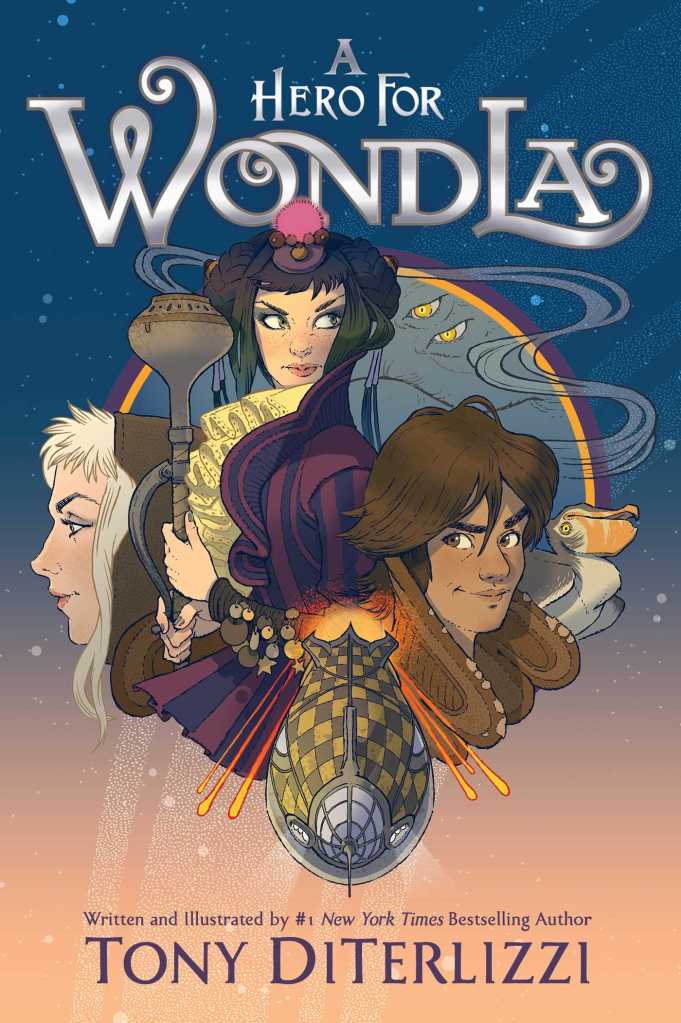
Posted in Sunday Songs

Sunday Songs: 6/1/25

Happy Sunday, bibliophiles, and more importantly, HAPPY PRIDE!! I’ll have more specifically pride-related posts coming soon, but for now: remember that no president or legislation can unmake your queerness. No one has that power over you. You are loved. You are cherished just the way you are. 🌈 I hope this week has treated you well.

This week: PLEASE NO NO NO I’M SORRY I KNOW PRETTY MUCH REPEATED THE SAME COLOR SCHEME WITHIN THE SPAN OF TWO WEEKS I’M SORRY PLEEEEEASE…does it help that I’ve double-dipped on St. Vincent for pride?

Enjoy this week’s songs!

SUNDAY SONGS: 6/1/25

“Shoot Doris Day” – Super Furry Animals

Three years after listening to it, I’d still put Rings Around the World as one of my favorite albums of all time. Still around #9, though I think things have shifted slightly in my lineup. I can’t make any promises, but I might revisit this post one of these days. Back then, I described the sound of the album as fully-formed, “like Athena bursting out of the skull of Zeus.” Admittedly, I do go crazy with the flowery language, but for once, I actually stand by it. Rings Around the World is one of those albums that makes you think it just sprung out of nowhere. It’s a living, breathing being of an album, so cohesive yet so readily embracing of every possibility. Like turning a Doobie Brothers-like melody into full on EDM in the course of seven minutes. Super Furry Animals are seriously something special. Just when you’ve thought they’ve got a pattern going, Gruff Rhys and company pop out new twists like whack-a-moles, ready with another kick to the senses.

“Shoot Doris Day” is one of those tracks, and no, Gruff Rhys isn’t out for blood (though Doris Day was alive and well when Rings Around the World came out)—it’s the camera form of shooting, thankfully. And like the high-drama cinema that inspired some of the lyrics (Rhys said he simply added them in to match the cinematic nature of the intro), the intro speeds out of nowhere, bursting into a swell of strings and clattering pianos, yet it fades away to acoustic guitars in mere seconds. The best quality of Super Furry Animals, to me, is their uncanny ability to keep their listeners on their toes. “Shoot Doris Day” is a song that repeatedly gives the listener a false sense of security, then pulls the rug out from them several times over. Rugs upon rugs upon rugs…until the disparate elements are reunited at the 2:07 mark, a swirl that meshes naturally as the song finally allows you to let your guard down, in time for an anthemic sway with equally anthemic lyrics: “I’ve some feelings that I can’t get through/I’ll just binge on crack and tiramisu.”

…as one does.

…AND A BOOK TO GO WITH IT:

Light Years from Home – Mike Chena book with two distinctly different genres that clash in surprising ways.

“Cissus” – David Byrne & St. Vincent

Another St. Vincent song that she…did not play live when I saw her, and probably won’t again unless she teams up with David Byrne again. Five years after Love this Giant soundtracked the early days of lockdown, I discovered Brass Tactics, an EP of remixes and live performances from the tour, as well as this outtake. With the same brassy march, David Byrne and Annie Clark take their keen teamwork to an unassuming image. I fully thought that, given the imagery of the album, there would be some strange turmoil at the heart of the song. But no, the cissus in question is a kind of vine, and one that Byrne and Clark chronicle as it grows and crawls over a stone wall. Their lyrics have the feel of Victorian poetry as they describe its journey: “Cissus, you keeper of the shadows/Scaling my stone, terrace aswarm in summer.” In their shared language, the gradual crawling and blooming of the cissus vine becomes a kind of heroic march worthy of a flag-bearing procession. And it absolutely is—there’s nothing I like more than when artists turn something as mundane as vines crawling up a wall into a brass-helmed display of utmost grandeur.

…AND A BOOK TO GO WITH IT:

Taproot – Keezy Youngas the subtitle says, this graphic novel is “a story of a gardener and a ghost,” and there are vines aplenty.

“For the Cold Country” – Black Country, New Road

I’ve had a surprisingly good streak of opening bands at concerts this year. Now joining the ranks of Hana Vu (for Soccer Mommy) and Tyler Ballgame (for Shakey Graves) are Black Country, New Road. They’d been floating on the edge of my periphery from years of pretentious music memes on my instagram explore page, but I never showed an interest in them. I was at least intrigued when they came onstage…with a lute, a saxophone, a keyboard tuned to sound like a harpsichord, and enough recorders to imitate a 5th grade recital. I fully thought that there was about to be some Arcade Fire funny business afoot, but boy, was I wrong. Mostly. I could not get on board with the recorders. But I can’t deny that Black Country, New Road are a talented bunch. At worst, they veer towards the proggy, “Dibbles the Dormouse Has Lost His Lucky Handkerchief (Movements I-IV)” for me, but at their best, they’re a truly inventive, adventurous group of musicians.

A comparison that sprung to mind after hearing all of the harpsichord tomfoolery was, of all bands, XTC. Sonically they’re fairly different, but Black Country, New Road take the same approach of modernizing a distinctly British, pastoral flavor into their music. Modern subjects rub shoulders with medieval ones, and it all has the misty feeling of drifting over the English countryside in the melting stages of late winter. Forever Howlong, has its ups and downs (one down namely being the recorder ensemble on the title track), but “For the Cold Country,” both live and in the studio, feels like the summation of the best of the band. Beginning with an “Abbey”-like chorus of vocalists Georgia Ellery, Tyler Hyde, and May Kershaw, the track meanders as it tells the acoustic, fog-touched tale of a wandering knight laying down his arms and wandering across the countryside. As the track progresses, it becomes a more orchestral march, the vocals galloping like the patter of horse hooves. But what made “For the Cold Country” my favorite of their songs is the cinematic sweep that comes in at the 2/3rds mark—as the knight confronts the ghost of his past self among frigid waters. The acoustic guitar creeps back in, only to give way to an explosive swell of instrumentals that seem to shake the dirt beneath the foundation that the song built, accompanying an unexpected storm and flashes of lightning. Live, it really felt like something had possessed the audience, all bathed in warm light as all of the instruments howled, but what pulls it all together is the feeling of being on a journey—pretentious as it is, I can’t deny the chills when it was all over, feeling as though I’d just been on a trek through freezing rain and snow. Forever Howlong is a solid album if you’d like to give it a go—again, even if it’s not fully for me, it’s a delightfully inventive and fun entry into 2025’s musical history.

…AND A BOOK TO GO WITH IT:

Godkiller – Hannah Kanerall of the characters in Godkiller certainly join up in a similar arc to this song, but I thought particularly of Elo, a knight who gives up his former mantle.

“Every Little Thing She Does is Magic” – The Police

I’m struggling to write anything terribly flowery or excessively pick apart the lyrics, because some songs just defy analysis. It’s not that “Every Little Thing She Does Is Magic” is some overcomplicated epic—it’s the exact opposite, and yet it’s just a perfect song. It’s a hit that deserved every minute of airplay it got in the ’80s and in my dad’s car when I was a little kid. As with what I’ve heard of…well, every Police song back in the day, this song went through more lives than your average cat, and the studio probably looked like one of those cartoon fights where there’s a squiggly ball of dust with several hands sticking out (and Stewart Copeland’s drumsticks) when they were recording it. Yet what came out is, fully acknowledging the cliche, absolutely magic. Some songs just instantly capture a kind of unbridled joy and innocence, and you can’t help but be taken along for the ride, no matter what state you’re in. Everything about it is so bright—the tone of the steel drums in the chorus, Sting’s ecstatic vocals, Copeland’s pattering drumming, the guitar tone…I’m not even a Police superfan, but I might go so far as to say that this is one of the more pure love songs of the ’80s. The lyrics are so timelessly starry-eyed—it never feels cloyingly sweet, but how can “Do I have to tell the story/Of a thousand rainy days since we first met?/It’s a big enough umbrella/But it’s always me that ends up getting wet” not charm you? It’s given me a warm, fuzzy feeling since childhood, and time has never dulled that magic.

…AND A BOOK TO GO WITH IT:

Roll for Love – M.K. Englanda pure, sweet love story with both romantic and fictional magic (in the form of DnD).

“Sugarboy” – St. Vincent

Two weeks of these posts since I actually saw St. Vincent, and now I actually have a song that she played to show for it.

I kind of hated MASSEDUCTION when it came out. To this day, I’m still firm in the belief that it’s St. Vincent’s worst album. Half the fandom might want to put my head on a pike for that, but for a singer with an established trend of matching albums to personas, there wasn’t much that was her about the album. The more I think about it, I can’t help but correlate that with the alienation and lack of personhood she felt at the time, what with being in a multitude of ill-fated relationships, namely with Cara Delevigne, the latter of whom caused British paparazzi to scout out the Clark family home in Texas to find out who she was and why she was dating a famous model. That disregard for her privacy and mental health resulted in an album that musically feels like it lacks a self. Peel back the latex and heels, and Annie Clark was hardly there—she was a shell of herself, clearly. Don’t get me wrong—there are some tracks on MASSEDUCTION that I frequently revisit to this day (see: “Hang On Me,” “Pills”) and even though 14-year-old me thought that this album was the letdown of the century, I still have a fair deal of nostalgia attached to the songs I liked.

“Sugarboy” was not one of those songs. For a while, I vaguely remembered it as one of the worst of the bunch, and it faded into mental obscurity. However, seeing it live has completely reoriented the song for me. Even though the MASSEDUCTION era was in the dust for both times I saw it live, “Sugarboy” transcended the ’70s setpieces of Daddy’s Home and was practically made for the rabid anger and fear of All Born Screaming. On the former, the backup singers lifted the lights off of the set pieces and waved them around like giant glowsticks as the song devolved into chaos. This tour didn’t see as many theatrics, but it was one of the most energetic songs of the setlist, which, given All Born Screaming, is really saying something. Upon reflection, this might be one of the best songs on MASSEDUCTION. The narrative of the album clearly has a through line, starting with a flicker of hopeful romance (“Hang On Me”), then immediately going into debauchery, drugs, sex, and materialism (“Masseduction“-“Los Ageless”), and then into the drawn-out crash and burn that ends with the harrowing “Smoking Section.” As the climax of the overindulgence, “Sugarboy” embodies the whirlwind of all of it, a kind of manic chaos as she both uses others and is in turn, used herself. The breakneck pace of the music, along with the shrieking, autotuned chorus behind her, feels like a fast-forwarded shot through a trashed ballroom—everything is in disarray, and the red smeared on people’s faces makes it impossible to tell blood from lipstick. The desperate cries of “I am a lot like you!/I am alone like you!” in the chorus are needles through the mindlessness, cries for help amidst the all-consuming sea of overindulgence. Even the studio version feels like being dragged along at inhuman speeds, ricocheting off the walls as the synths thrum through your ribcage. Like the lyrics say, she’s “hangin’ on from the balcony” (a reference to show antics that she frequently used to do), but her fingers are barely holding on from the adrenaline.

…AND A BOOK TO GO WITH IT:

Fireheart Tiger – Aliette de Bodard“Oh, here I go/A casualty/Hangin’ on from the balcony/Oh, here I go/Makin’ a scene/Oh here I am, your pain machine…”

Since this post consists entirely of songs, consider all of them to be today’s song.

That’s it for this week’s Sunday Songs! Have a wonderful rest of your day, and take care of yourselves!

Posted in Sunday Songs

Sunday Songs: 5/18/25

Happy Sunday, bibliophiles! I hope this week has treated you well.
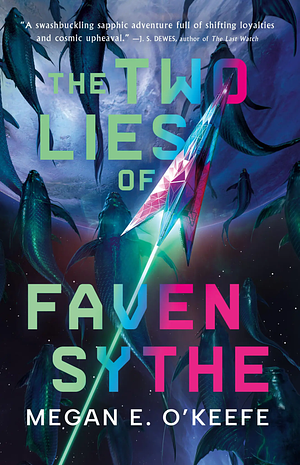
This week: do

you

SEEEEEEEEEEEEEEEEEEEE

THAT I’M SCARED

AND I’M LONELÆEEEEEEEEEEE

Enjoy this week’s songs!

SUNDAY SONGS: 5/18/25

“Innocence” – Björk

Saying that a certain Björk album feels bolder or more in-your-face than others feels redundant because most of them trend towards that direction. According to Sonic Symbolism, Volta was about being upfront, brightly-colored, and loud—in her personality, in her life, and in her political views (see: “Declare Independence”). Volta’s still in the weeds as far as my album bucket list goes, but I love the distinct flavor of it—flat neons and confidence. “Innocence” is a whole feast for me to pick apart in terms of sound. It stomps all over the place, leaving an asymmetrical trail in its wake, angular and herky jerky, but never more sure of itself. It’s the kind of song that makes me think that Björk’s suit on the album cover (designed by Bernard Willem) is about to turn into some kind of mech suit with flag-shooting cannons for hands. This is one of the songs on Volta that was produced by Timbaland, giving it a chrome-like sheen that could almost be pop, but could never deny the inherent weirdness that is Björk. At the beginning, the synths speed up as though winding up for a punch. The angular rhythm is an ouroboros, constantly made and remade again against Björk’s smoother vocals. There’s even a bit at 2:13 that I swear sounds like the Severance elevator noise. Every listen brings something new to the table—there’s all manner of Easter eggs lying around.

Lyrically, I can’t help but think of Debut. “Innocence” is a reckoning with the fearlessness of youth: “When I once was untouchable/Innocence roared, still amazes/When I once was innocent/It is still here, but in different places.” It’s hard not to think of the 1992 Björk that sang of “go[ing] down to the harbor/and jump[ing] between the boats” and ecstatically declaring that there was more to life than this. But the kind of confidence that she maintains at the time of “Innocence” is balancing that excitable youth with the fears that came as she matured: speaking to The Sun, she called the song “A handshake with fear.” For her, fear makes fearlessness even more tantalizing—now that she’s known the grips of it, she appreciates it even more. Even so, it’s still an extreme, but so is fear: “Fear of losing energy is draining/It locks up your chest, shuts down the heart/Miserly and stingy/Let’s open up: share!” Man. Did I need to hear that…for the millionth time. I feel like I’m the reverse, somehow. Of course, I’m not nearly at her maturity level, but I’ve been cautious my whole life. Still am. Fearlessness is freeing, and I only find that I can appreciate it when I have those fears right in front of me: I can see them, acknowledge them, and throw them to the wind, if only for a moment.

BONUS: The video above isn’t the official music video, but the 1st place winner of a fan contest that Björk held to make a music video, created by Fred & Annabelle. Here is the 2nd place winner for the video contest, made by Roland Matusek (Björk Kart?)

…as well as Björk talking about the inspiration behind the animation contest:

…AND A BOOK TO GO WITH IT:

The Battle for WondLa (The Search for WondLa, #3) – Tony DiTerlizzi“When I once was fearless/Innocence roared, still amazes/Untouchable innocence/It is still here, but in different places…”

“Sweet Thing” – David Bowie

It’s been about a year since I finally listen to all of Diamond Dogs in full, and I’m still blown away by how much David Bowie’s storytelling had developed. Throughout his life, Bowie accumulated an extensive library, often bringing books along with him to read on tour. (If you’re interested, John O’Connell compiled a list of some of the books that impacted him the most in Bowie’s Bookshelf. It’s a great read.) The more I think about it, the more I realize that Bowie approached songwriting like an author—whether or not there was a linear narrative, like the story of Hunger City in Diamond Dogs, he had not just melody in mind, but the exact emotion to wring out of which characters and when, and which motifs and allusions to scatter throughout. Obviously, these elements can exist outside of the realm of literature, but it’s so distinct from any given Bowie lyric, much less “Sweet Thing,” that he was a literary-minded man. No wonder I connected with him instantly.

In terms of Diamond Dogs’ tracklist, often with songs that are directly chain-linked to the others, I’m partial to “Future Legend/Diamond Dogs” (my favorite album opening of all time…nothing will ever go harder than that), but “Sweet thing” is the emotional core of Bowie’s narrative, without a doubt. Take a look at the first verse: “It’s safe in the city/To love in a doorway/To wrangle some screams from the dawn/And isn’t it me, putting pain in a stranger?/Like a portrait in flesh, who trails on a leash?” MAN. Glam rock had roots in theatre and the dramatic from the start, but this is one excerpt from Diamond Dogs that would have felt right at home on stage. As one of the entries in Bowie’s failed 1984 musical adaptation, it’s a loose twist on the ill-fated romance between Winston and Julia in Orwell’s novel; Bowie had to make some changes after the musical was dead in the water, rendering the characters nameless and the woman, seemingly, into a prostitute. Under the watchful eye of the “knowing one,” a kind of panopticon surveillance a la Big Brother, the narrator and the prostitute share painful, ill-fated, but fleeting love: “I’m in your way/And I’ll steal every moment/If this trade is a curse, then I’ll bless you/And turn to the crossroads…” With the imagery aplenty of doors and doorways, it’s an affair steeped in transition, an air of impermanence and separation present in every bittersweet moment. Bowie sells it all with one of the album’s most heart-wrenching moments: he draws out “Will you see/That I’m scared and I’m lonely?” with a stabbed, bleeding heart, hand outstretched, with full on musical theater drama. Yet never once does it feel false—Bowie can’t help but let some sincerity slip through the metric ton of personas and fiction. Alan Parker’s guitar soars in true glam-rock fashion, and somehow, the saxophones never feel out of place; Bowie’s world is all brass, rust, and forbidden love—a world fully realized that burst from the shell of Orwell to become a myth all its own.

BONUS: for the full experience, here’s the full story, told in a joining of “Sweet Thing,” “Candidate,” and “Sweet Thing (Reprise)”:

…AND A BOOK TO GO WITH IT:

Rakesfall – Vajra Chandrasekerathe 1984 pairing has run its course at this point, so here’s a story of epic-like love spanning across space and time.


“Pet Rock” – L’Rain

Another amazing find from my dad, “Pet Rock” thrives on being propped up. The music video shows a variety of pet rocks being set up and placed around a miniature dollhouse fitted with all manner of retro furniture, tiny instruments, and mini versions of L’Rain’s album I Killed Your Dog. (Now that’s a title for you…what’d you have to do that for??) The music thrums with distortion, barely contained chaos with a bubbly, Crumb-like atmosphere, faintly on the verge of psychedelic collapse. Taja Cheek’s vocals, like Lila Ramani, flicker in and out of clarity—the only time a finger pokes through the haze is when the guitar, before the instrumentals start unraveling, almost tricks you into thinking that there’s a light at the end of the tunnel. Like the dollhouse, “Pet Rock” has the feeling of a neon-colored haunted house (new Meow Wolf concept?)—everything appears structurally sound, but there’s all sorts of weirdness drifting just out of earshot.

The lyrics take a similar turn: after speaking of being propped up like said rock “Why would you go without me?/And make me something else?”), the lyrics go from a faint dread to something outright sinister: “Like a dead girl with shades on/Propped up by captors/I’m fine/I’ve got no one to talk to.” HUH?? Cheek told Alternative Press that the story was inspired by “an old story I’d been told about a woman who was riding the train but looked strange, and the reader eventually figures out that she’s dead, with glasses on, being propped up by the people that seem to have harmed her.” There’s a solid manipulation metaphor for you—rock or human, you’re not alive, just a nice little dolly to be moved around the dollhouse in whatever way suits you.

It’s just a rock! Or not quite, this time? Rocco takes a stand?
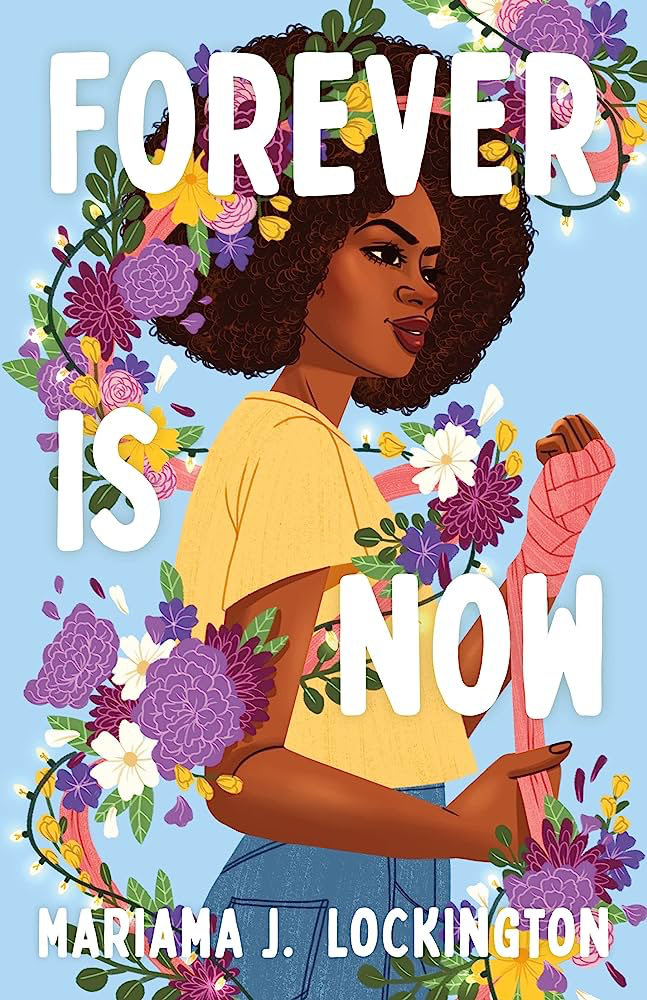
…AND A BOOK TO GO WITH IT:

Ninth House – Leigh Bardugo“Like a dead girl with shades on/Propped up by captors/I’m fine/I’ve got no one to talk to/It’s all my fault, I know…”

“Blossom (Got To Get it Out)” – Komeda

I seem to gain a tolerance for more uptight songs once I get older, but in retrospect, “Blossom” gets less uptight the more I listen to it. Sure, it’s about as high-strung as The Feelies, but it’s got this ’60s girl group feel to it that makes it inherently more playful. Komeda seems to fall into a kind of indie, ’90s niche taking their cues from the bubblegum pop from the ’60s (see also: The Rondelles); it’s jangly as all get-out, and features an almost Fred Schneider-esque chorus of spelling out “B-L-O-S-S-O-M” like a cheerleader’s chant. I’d argue that Komeda’s voices aren’t quite as enthusiastic as their forebears (and the instrumentals), but it’s got that vibrant, candy-colored spirit of the ’60s with a distinctly ’90s production—it’s much more fun now that I’ve revisited it.

What makes this song infinitely better for me is the fact that, under the title “B.L.O.S.S.O.M.,” this song was on Heroes and Villains, an album of songs inspired by The Powerpuff Girls, alongside The Apples in Stereo, Devo, Dressy Bessy, and Frank Black…what a time to be alive. This version is re-recorded, sped-up, and drum-machine-ified, and doesn’t resemble a whole lot about the original. The more electronic version isn’t jangly at all, but the very early 2000’s, rapid-fire instrumentals mesh with the 2d, supersonic speed of the Powerpuff Girls. I’m partial to the original, but at least you’ve got this absolute banger from The Apples in Stereo, right?

…AND A BOOK TO GO WITH IT:

Ocean’s Godori – Elaine U. Chovibrant, fast-paced, and with the kind of spaceships I can imagine blasting Komeda through their speakers.

“High” – The Cure

I wasn’t here to witness it, but it must’ve been such a jarring shift in the ’90s when the Cure became more embraced by the mainstream. My parents talk about how maddening it was to have their special, alternative music be ignored or made fun of in the ’80s and then all the normies started singing along to “Friday I’m In Love.” Jeez. The Cure could always make an incredible pop song, but it never ceases to baffle me that they went from being relatively underground to selling out arenas in such a short period of time. Now that rock is less adjacent to the mainstream these days, I can’t say I’ve had an experience that mirrors it. The only thing I can think of is all of the members of boygenius getting huge, but they aren’t nearly as weird as the Cure were. The eternal battle: wanting people to appreciate your weird music, but wanting to gatekeep it at the same time…

I can’t fully grasp the kind of frustration my infinitely-cooler-than-me in their ’20s parents had when Wish came out back in 1992. I fully adore “Friday I’m In Love,” even though I can recognize that it’s leagues less weird than the more creative parts of their catalogue. But if the fact that I remember “High” to this day must prove that they weren’t all that resentful. “High” was a mainstay throughout my childhood in many a car trip—I distinctly remember mishearing “licky as trips” as “licky as chips” (those damn Brits) and Robert Smith meowing (can you really have a Cure song without it?). I’m charmed to this day about the way Smith makes adjectives into nouns with each lyric—”sky as a kite” or “kitten as a cat” makes perfect sense in his lingo. What strikes me now is that The Cure, even at their darkest, always kept true to having emotion at their core. They were dramatic and goth, but they were always in touch with whatever was at heart, and painted it in every complicated color. “High,” like “Friday I’m In Love,” is proof that they can be just as sugary and playful as they can be brooding and raw, but to an extent, all of it feels true to them. Like the subject, who’s “happy as a girl/limbs in a whirl,” “High” is The Cure in a dreamy, lovelorn state, adrift in the clouds in the throes of ecstatic love. It’s not their most emotional love song, but it’s got a similar purity as “The Perfect Girl” or “Just Like Heaven”—”High” feels like a spiritual successor of that emotion, even if it’s not fully on the level of the latter two to me. To this day, this track remains as warm as sand between my toes or afternoon sunlight heating up the glass of the back seat of a car.

…AND A BOOK TO GO WITH IT:

Across a Field of Starlight – Blue Delliquanti“And when I see you take the same sweet steps/You used to take, I say/’I’ll keep on holding you in my arms so tight/I’ll never let you slip away…'”

Since this post consists entirely of songs, consider all of them to be today’s song.

That’s it for this week’s Sunday Songs! Have a wonderful rest of your day, and take care of yourselves!