Posted in Sunday Songs

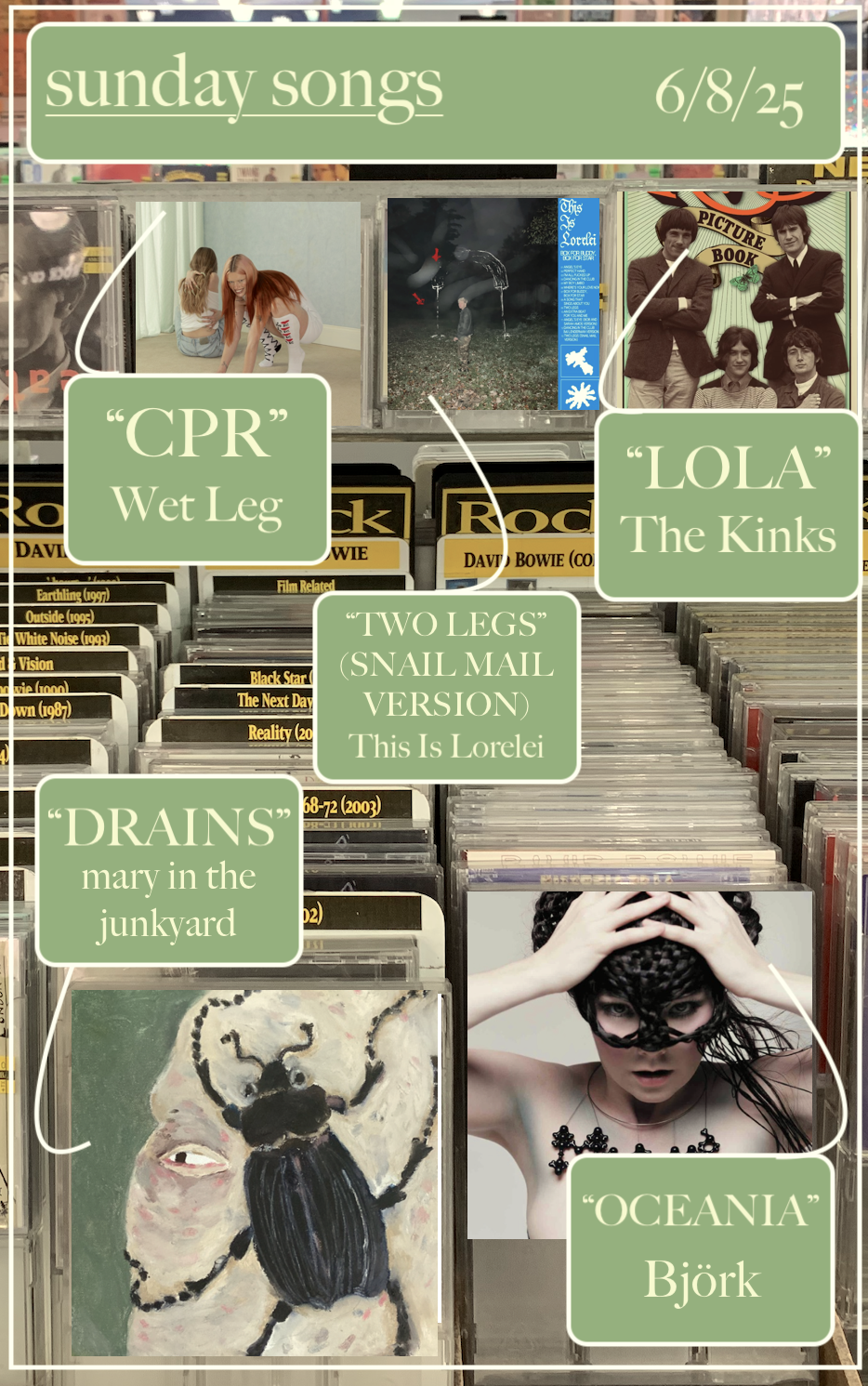
Sunday Songs: 6/8/25

Happy Sunday, bibliophiles! I hope this week has treated you well.

This week: getting emotional about Björk, queerness in the ’70s, and a delightful little critter living in the sewers somewhere in England.

Enjoy this week’s songs!

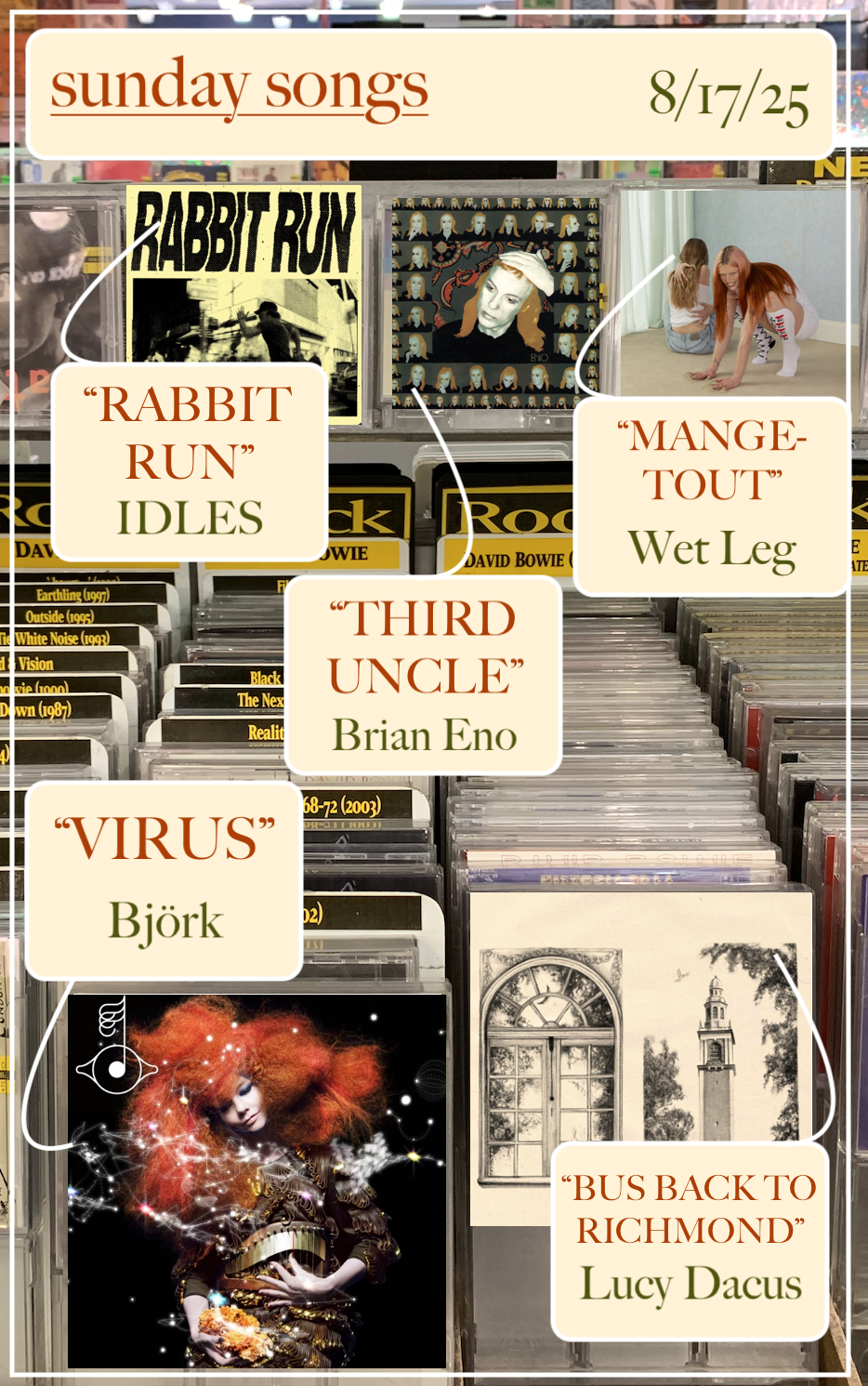
SUNDAY SONGS: 6/8/25

“drains” – mary in the junkyard

THEY’RE BACK!! Well, mary in the junkyard haven’t been gone for long, but nonetheless, I’m always excited about whatever new music they’ve got going. In fact, they’ve already had a fruitful year: a great feature on Richard Russell is Temporary, a shoutout on 2D’s Gorillaz G Mix 22, and a spot as one of the opening acts on Wet Leg’s UK and North American tours. I can only hope that their debut album is in the near future, but for now, they finally seem to be on the way to getting the attention they deserve!

“drains” continues the trajectory of their debut EP, this old house, which contained four songs full of ghosts, flies, rot, and angst dug out of the graveyard, living up to the description in their Instagram bio as “angry weepy chaos rock.” This time, the grime and goop they’re examining comes from the sewer; in the great music video, it’s personified as a tiny little clay creature that really does look quite innocent, but ends up wreaking some accidental havoc. With electric guitars that ring in a strangely plaintive way, “drains” stumbles about, written in a frustrated daze as the narrator struggles to put names to feelings—and to how her lover makes her feel. Not good, if the lyrics are any indication, and yet “drains” gets scratchier and more jagged as the truth becomes ever more apparent that they’re trapped in this cycle with them: “But if you bury yourself, I will dig you out again/That’s what lovers do/If you hurt yourself, I will take you under my wing/I’m your lover and I’m loving you.” Culminating in an exorcism of a scream, the chaos of the frustration is finally let loose and given form, like the clay critter clambering through the grime-coated pipes.

…AND A BOOK TO GO WITH IT:

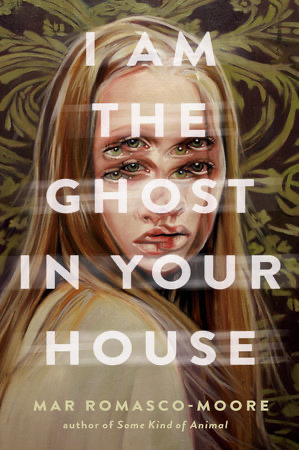
I Am the Ghost in Your House – Mar Romasco-Moore“But I only came here to feel my body/I am a ghost, where are my bones?/How can you blame me for not being sorry?”

“Oceania” – Björk

Damn…Medúlla has me feeling all kinds of things. It was next in line in my scattered Björk deep-dive and I was highly anticipating it after Björk’s episode about it on Sonic Symbolism. I listened to it while knitting a scarf, and I thought of everything she described about the album, about prehistory and family and sitting around the fire and braids and ropes and weaving…and that hit me while I was knitting, doing the same activities that my ancestors, namely women, have done for thousands of years before me, and, and, and…yeah. Medúlla is very nearly a no-skip album (“Submarine” wasn’t my favorite). It’s one of those albums where you feel a pit opening in your stomach, but it seems to be opening up room for the energy to integrate itself into you. A good Björk album does that to a gal. And so many people think this is her worst album because it’s inaccessible? Sure, maybe her first three albums are more accessible (relatively), but do you really listen to Björk for accessible music?

I kind of agonized over which song I’d pick for this week (because you will be hearing more), but between this, “Who Is It (Carry My Joy on the Left, Carry My Pain on the Right)”, and “Desired Constellation,” this was the winner. Originally composed on pianos before Björk realized the sound she envisioned weren’t possible on pianos, “Oceania” imagines the all-encompassing consciousness of the ocean. Connecting the ocean to the album’s larger theme of motherhood is a no-brainer, because who was the mother of every life-form on the planet? Taking the nurturing spirit to the personal to the universal, Björk embodies an ocean full of love, but namely full of pride: “You have done good for yourselves/Since you left my wet embrace/And crawled ashore.” Despite her all-encompassing knowledge and reach (“You count centuries/I blink my eyes”), she retains an eye on every organism that has emerged from her waters, nurturing all of them and reminding them of where they came from; as the vocals temporarily drop out, she reminds us of the connection we all have: “Your sweat is salty/I am why.” AAAAUGH, excuse me for a moment…sorry, I just get overexcited about the wonder about how everything on Earth is intimately connected and that denying it is the root of pretty much every problem we have today…but what a song. Composed entirely of the human voice, a choir creates a rising chorus that seems to bubble to the surface like the trails made by dolphins as they race through the water. The ethereal clicks and hums compose a melody that really does feel primal, glittering as light dappling across the surface of the sea. Leave it to Björk to get so close to how water feels, in both the calmness of it enveloping your body and the delicate movements of invertebrates as they drift through the waves. I can hear both plankton and megafauna, all cradled in the arms of Mother Oceania.

It is a kind of primal universalism, but it came out of trying to write a song for the 2004 Olympics: they reportedly asked her “to do a kind of ‘Ebony and Ivory’ or ‘We Are the World’ type song…those are smashing tunes and all that, but I thought, ‘Maybe there’s another angle to this.'” And what’s more unifying than how we all come from the ocean? In the end, even technical difficulties couldn’t dull Björk’s stirring performance of Oceania at the 2004 Olympics in Athens:

…AND A BOOK TO GO WITH IT:

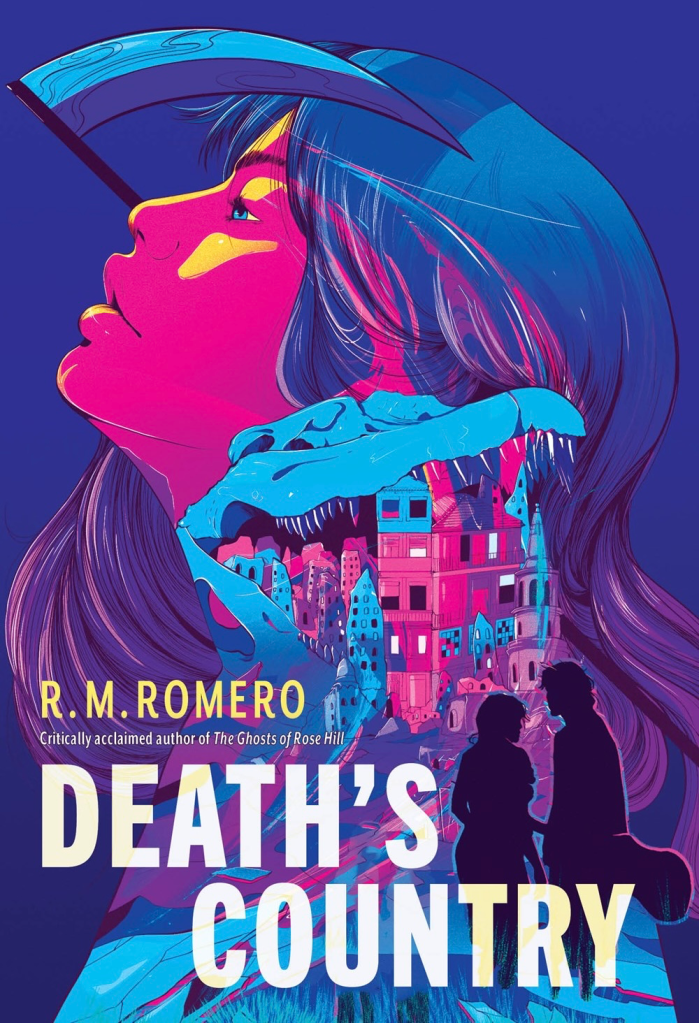
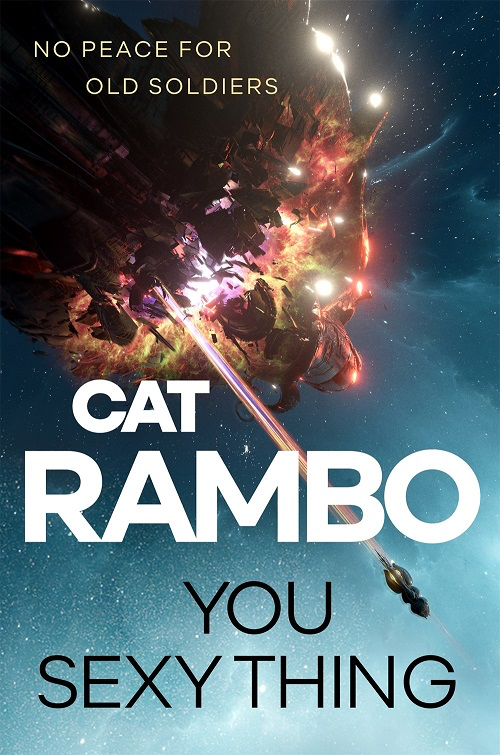
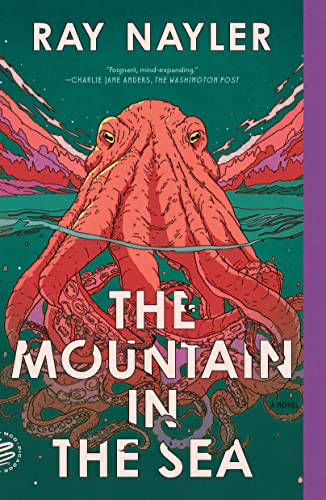
The Mountain in the Sea – Ray Naylerunexpected connections between the most intelligent creatures on land and the most intelligent creatures in the sea.

“CPR” – Wet Leg

The last time I talked about Wet Leg, I mentioned that, as much as I like them, they’ve only written about two, three songs tops. I was expecting about the same from “CPR,” and…they delivered. I say this with affection, because I mostly like this song, but they pretty much have every lyrical cliche in the book. Usually, they’ve got at least one little quirk that’s wryly funny against the normalcy of the other lyrics. This one has [checks notes] calling 911—sorry, 999, forgot that I’m in the colonies—because you’re in love. I feel a little mean saying that, but they’ve usually got something more. But for the most part, Wet Leg aren’t necessarily about the lyrics for me. The reason that “CPR” succeeds is all in the delivery—Rhian Teasdale’s sultry spoken word and the growling guitars in the background, mixed with siren-like synths make it worth listening to over and over. There’s a Britpop callback to their whole sound on this song (it feels both ’90s and a bit “St. Charles Square” to me), and listen, if there’s anything I’m always here for, it’s Graham Coxon-sounding guitars. Along with the creeping bassline, “CPR” is a hooky song on its own, but as the opening to moisturizer, I’m interested to see the direction it goes in, a trajectory that Teasdale speak-sings of, propelling herself off a cliff and into the unknown.

…AND A BOOK TO GO WITH IT:

A Tempest of Tea – Hafsah Faizal“Try to run/Head for the hills/If you’re a ghost, then oh my God/How can you give me the chills?”

“Two Legs” (Snail Mail Version) – This Is Lorelei

It feels so strange that I’ve only sparingly talked about Snail Mail on these posts since she’s played such a critical part in my musical lineage. I discovered her at the tail end of 8th grade, and through that weird summer before high school where I was questioning my sexuality, I listened to Lush, it became a favorite of mine, and I even met Lindsey Jordan after a show at the tiniest little club. She thought I was in college, somehow…I was 14. I left that show with the guitar pick she’d given me, a desire to pick up the guitar, and a bit more starstruck courage to come out. I followed her on another tour in my sophomore year of college, and caught her touring for Valentine a few years after.

I guess the part she plays in my life now is diminished since she hasn’t done a whole lot album-wise in almost four years. Other than that, though, she has technically done a lot: an EP of Valentine demos, an acting role in I Saw the TV Glow (that I still haven’t seen…oops), a Smashing Pumpkins cover, and a gig singing with Weezer back in 2023. One of the more recent singles she’s done is another cover—this time, a reworked version of This Is Lorelei (the solo project of Nate Amos from Water From Your Eyes)’s “Two Legs.” She’s switched up the key and added a sprinkling of Lush-sounding guitar flourishes. Since her vocal surgery several years ago, Jordan’s seemed to struggle with fitting her older catalogue into a reasonable range for her. But the easygoing tones of “Two Legs,” with its gentle twang and tenderly spoken lyrics are a sweetly comfortable fit for her. I doubt this is indicative of whatever new direction she’s taking, but this reworking was almost made for her.

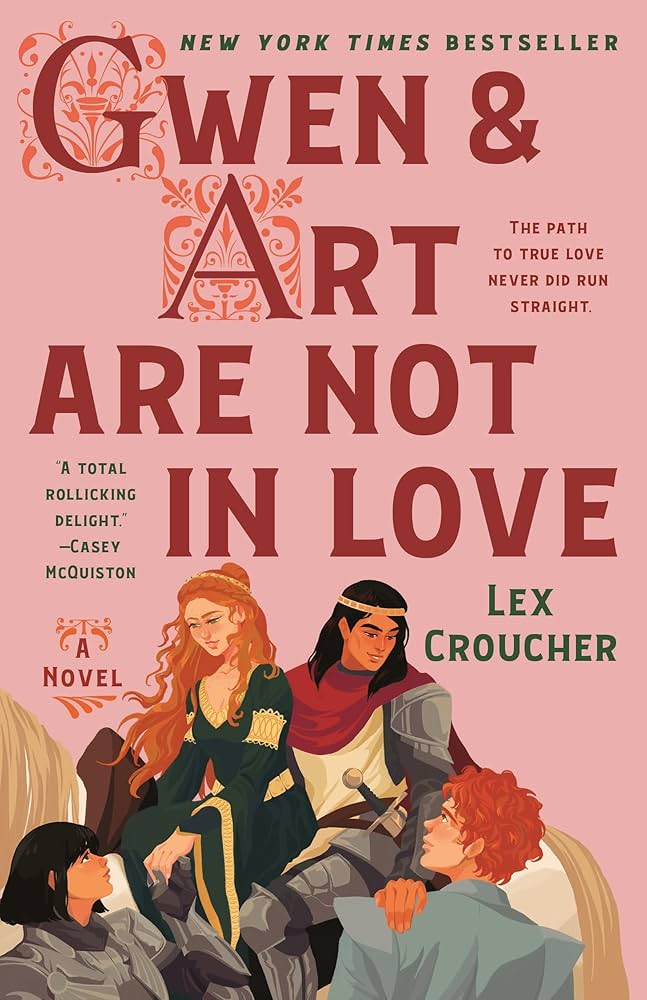
Gwen & Art Are Not in Love – Lex Croucher“If you said you wanted two weeks/You know I’d give you nine/And they’d be yours and mine/Ain’t nothing gonna make us cry, we will not cry, love/If it made life easy for you, I would say goodbye/And love, if you said you needed two legs/I’d give you mine…”

“Lola” – The Kinks

I didn’t line this song up for pride month, but I might as well talk about it since it came back to me, in the way that a classic always does.

“Girls will be boys and boys will be girls/It’s a mixed-up, muddled-up, shook-up world/Except for Lola.”

It still blows me away that this was a hit song all the way back in 1970. Of course, it wasn’t without controversy, but to have a band put out something so blatantly queer on the airwaves that long ago never ceases to amaze me. I can only imagine the reaction of some uptight conservatives listening to the radio when “Well I’m not the world’s most masculine man/But I know what I am in the bed, I’m a man/And so was Lola” came on. Pearl-clutching ensues. “Lola” wasn’t the first queer song of its kind, but what stands out to me is that Ray Davies never once makes a joke out of Lola; there’s been some speculation over the years about whether Lola is/was inspired by a drag queen or a transgender woman (Davies later confirmed the latter), but either way, it details the protagonist falling in love with a woman, getting confused about why she “walk[s] like a woman and talk[s] like a man,” and realizing the truth about her identity. Although the protagonist does express a great deal of shock, he doesn’t outright disrespect Lola or make her the butt of a joke—he just accepts that the world is weird and variable, and that it’s fine for Lola to be who she is.

Perhaps it was because The Kinks were a relatively popular, mainstream, and notably heterosexual band that they were able to get a queer message on the air easier than other artists. For me, that doesn’t diminish the effect that “Lola” has and continues to have, given how maligned queer people—especially trans people—were at the time, and continue to be today. They could’ve just as easily made a fool out of Lola, but in this situation, it’s the sheltered, inexperienced protagonist that gets a laugh out of the audience. Lola’s not overly fetishized, either—she’s described as being attractive and sensual, but she’s not an outright sex object. Sure, some of the language is outdated (namely that Lola is still referred to as a “man” even though she’s likely a trans woman), but this is 1970 we’re talking about, of course the language isn’t going to be completely analogous to 2025. None of it comes off maliciously—it was just the language they had to work with at the time, and all of it was just to say that Lola, a trans woman at the margins of society, was deserving of love. Radical concept, eh?

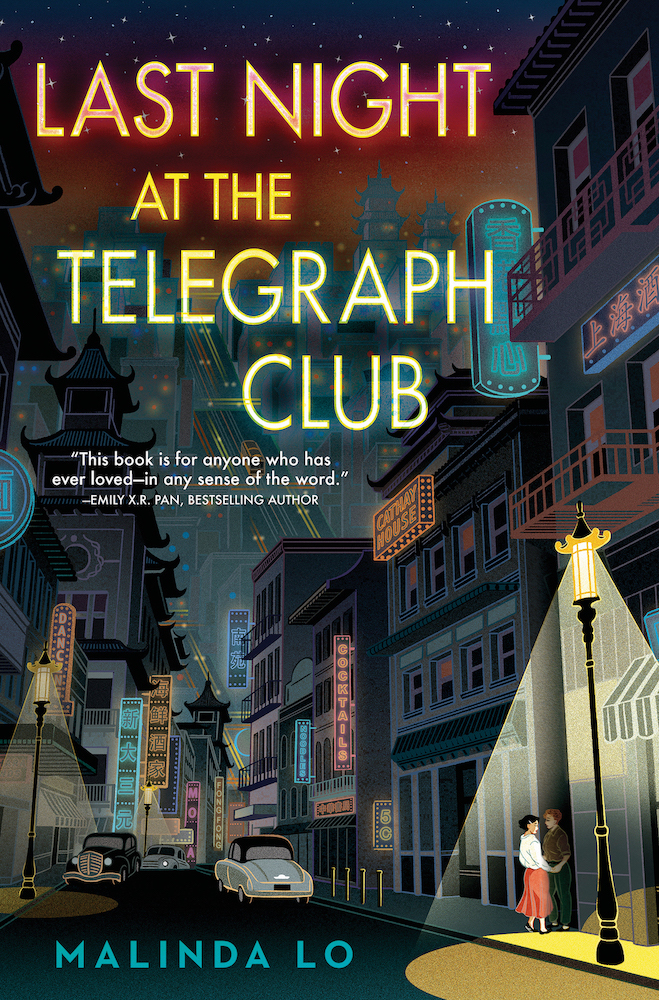
…AND A BOOK TO GO WITH IT:

Last Night at the Telegraph Club – Malinda Lonot an exact match, but it’s a similar story of queer love against the odds of an oppressive era.

Since this post consists entirely of songs, consider all of them to be today’s song.

That’s it for this week’s Sunday Songs! Have a wonderful rest of your day, and take care of yourselves!

Posted in Sunday Songs

Sunday Songs: 6/1/25

Happy Sunday, bibliophiles, and more importantly, HAPPY PRIDE!! I’ll have more specifically pride-related posts coming soon, but for now: remember that no president or legislation can unmake your queerness. No one has that power over you. You are loved. You are cherished just the way you are. 🌈 I hope this week has treated you well.

This week: PLEASE NO NO NO I’M SORRY I KNOW PRETTY MUCH REPEATED THE SAME COLOR SCHEME WITHIN THE SPAN OF TWO WEEKS I’M SORRY PLEEEEEASE…does it help that I’ve double-dipped on St. Vincent for pride?

Enjoy this week’s songs!

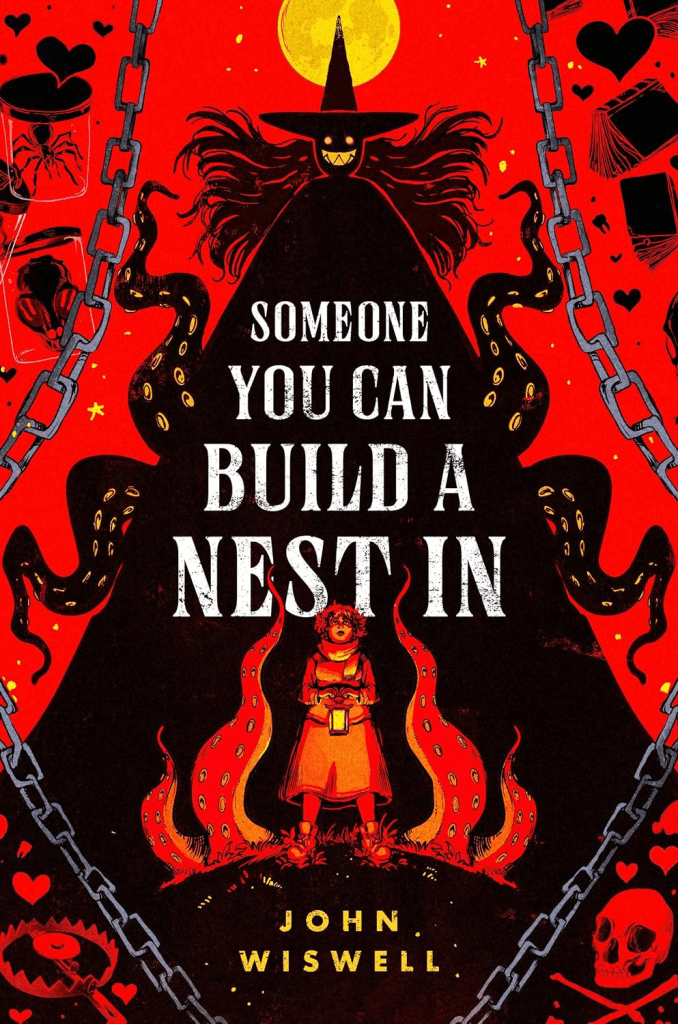
SUNDAY SONGS: 6/1/25

“Shoot Doris Day” – Super Furry Animals

Three years after listening to it, I’d still put Rings Around the World as one of my favorite albums of all time. Still around #9, though I think things have shifted slightly in my lineup. I can’t make any promises, but I might revisit this post one of these days. Back then, I described the sound of the album as fully-formed, “like Athena bursting out of the skull of Zeus.” Admittedly, I do go crazy with the flowery language, but for once, I actually stand by it. Rings Around the World is one of those albums that makes you think it just sprung out of nowhere. It’s a living, breathing being of an album, so cohesive yet so readily embracing of every possibility. Like turning a Doobie Brothers-like melody into full on EDM in the course of seven minutes. Super Furry Animals are seriously something special. Just when you’ve thought they’ve got a pattern going, Gruff Rhys and company pop out new twists like whack-a-moles, ready with another kick to the senses.

“Shoot Doris Day” is one of those tracks, and no, Gruff Rhys isn’t out for blood (though Doris Day was alive and well when Rings Around the World came out)—it’s the camera form of shooting, thankfully. And like the high-drama cinema that inspired some of the lyrics (Rhys said he simply added them in to match the cinematic nature of the intro), the intro speeds out of nowhere, bursting into a swell of strings and clattering pianos, yet it fades away to acoustic guitars in mere seconds. The best quality of Super Furry Animals, to me, is their uncanny ability to keep their listeners on their toes. “Shoot Doris Day” is a song that repeatedly gives the listener a false sense of security, then pulls the rug out from them several times over. Rugs upon rugs upon rugs…until the disparate elements are reunited at the 2:07 mark, a swirl that meshes naturally as the song finally allows you to let your guard down, in time for an anthemic sway with equally anthemic lyrics: “I’ve some feelings that I can’t get through/I’ll just binge on crack and tiramisu.”

…as one does.

…AND A BOOK TO GO WITH IT:

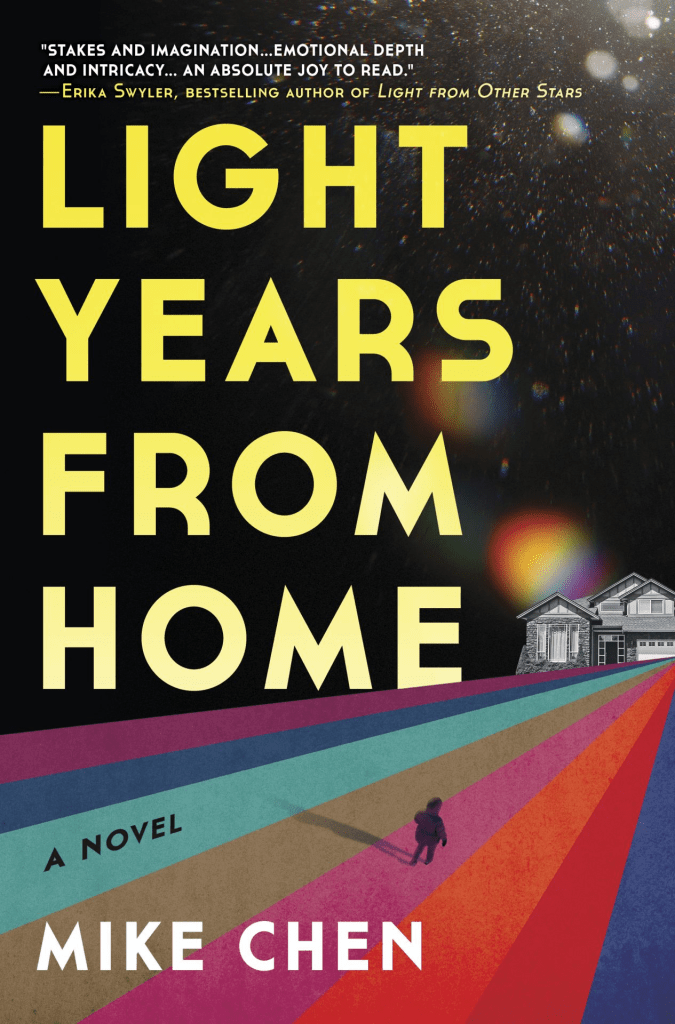
Light Years from Home – Mike Chena book with two distinctly different genres that clash in surprising ways.

“Cissus” – David Byrne & St. Vincent

Another St. Vincent song that she…did not play live when I saw her, and probably won’t again unless she teams up with David Byrne again. Five years after Love this Giant soundtracked the early days of lockdown, I discovered Brass Tactics, an EP of remixes and live performances from the tour, as well as this outtake. With the same brassy march, David Byrne and Annie Clark take their keen teamwork to an unassuming image. I fully thought that, given the imagery of the album, there would be some strange turmoil at the heart of the song. But no, the cissus in question is a kind of vine, and one that Byrne and Clark chronicle as it grows and crawls over a stone wall. Their lyrics have the feel of Victorian poetry as they describe its journey: “Cissus, you keeper of the shadows/Scaling my stone, terrace aswarm in summer.” In their shared language, the gradual crawling and blooming of the cissus vine becomes a kind of heroic march worthy of a flag-bearing procession. And it absolutely is—there’s nothing I like more than when artists turn something as mundane as vines crawling up a wall into a brass-helmed display of utmost grandeur.

…AND A BOOK TO GO WITH IT:

Taproot – Keezy Youngas the subtitle says, this graphic novel is “a story of a gardener and a ghost,” and there are vines aplenty.

“For the Cold Country” – Black Country, New Road

I’ve had a surprisingly good streak of opening bands at concerts this year. Now joining the ranks of Hana Vu (for Soccer Mommy) and Tyler Ballgame (for Shakey Graves) are Black Country, New Road. They’d been floating on the edge of my periphery from years of pretentious music memes on my instagram explore page, but I never showed an interest in them. I was at least intrigued when they came onstage…with a lute, a saxophone, a keyboard tuned to sound like a harpsichord, and enough recorders to imitate a 5th grade recital. I fully thought that there was about to be some Arcade Fire funny business afoot, but boy, was I wrong. Mostly. I could not get on board with the recorders. But I can’t deny that Black Country, New Road are a talented bunch. At worst, they veer towards the proggy, “Dibbles the Dormouse Has Lost His Lucky Handkerchief (Movements I-IV)” for me, but at their best, they’re a truly inventive, adventurous group of musicians.

A comparison that sprung to mind after hearing all of the harpsichord tomfoolery was, of all bands, XTC. Sonically they’re fairly different, but Black Country, New Road take the same approach of modernizing a distinctly British, pastoral flavor into their music. Modern subjects rub shoulders with medieval ones, and it all has the misty feeling of drifting over the English countryside in the melting stages of late winter. Forever Howlong, has its ups and downs (one down namely being the recorder ensemble on the title track), but “For the Cold Country,” both live and in the studio, feels like the summation of the best of the band. Beginning with an “Abbey”-like chorus of vocalists Georgia Ellery, Tyler Hyde, and May Kershaw, the track meanders as it tells the acoustic, fog-touched tale of a wandering knight laying down his arms and wandering across the countryside. As the track progresses, it becomes a more orchestral march, the vocals galloping like the patter of horse hooves. But what made “For the Cold Country” my favorite of their songs is the cinematic sweep that comes in at the 2/3rds mark—as the knight confronts the ghost of his past self among frigid waters. The acoustic guitar creeps back in, only to give way to an explosive swell of instrumentals that seem to shake the dirt beneath the foundation that the song built, accompanying an unexpected storm and flashes of lightning. Live, it really felt like something had possessed the audience, all bathed in warm light as all of the instruments howled, but what pulls it all together is the feeling of being on a journey—pretentious as it is, I can’t deny the chills when it was all over, feeling as though I’d just been on a trek through freezing rain and snow. Forever Howlong is a solid album if you’d like to give it a go—again, even if it’s not fully for me, it’s a delightfully inventive and fun entry into 2025’s musical history.

…AND A BOOK TO GO WITH IT:

Godkiller – Hannah Kanerall of the characters in Godkiller certainly join up in a similar arc to this song, but I thought particularly of Elo, a knight who gives up his former mantle.

“Every Little Thing She Does is Magic” – The Police

I’m struggling to write anything terribly flowery or excessively pick apart the lyrics, because some songs just defy analysis. It’s not that “Every Little Thing She Does Is Magic” is some overcomplicated epic—it’s the exact opposite, and yet it’s just a perfect song. It’s a hit that deserved every minute of airplay it got in the ’80s and in my dad’s car when I was a little kid. As with what I’ve heard of…well, every Police song back in the day, this song went through more lives than your average cat, and the studio probably looked like one of those cartoon fights where there’s a squiggly ball of dust with several hands sticking out (and Stewart Copeland’s drumsticks) when they were recording it. Yet what came out is, fully acknowledging the cliche, absolutely magic. Some songs just instantly capture a kind of unbridled joy and innocence, and you can’t help but be taken along for the ride, no matter what state you’re in. Everything about it is so bright—the tone of the steel drums in the chorus, Sting’s ecstatic vocals, Copeland’s pattering drumming, the guitar tone…I’m not even a Police superfan, but I might go so far as to say that this is one of the more pure love songs of the ’80s. The lyrics are so timelessly starry-eyed—it never feels cloyingly sweet, but how can “Do I have to tell the story/Of a thousand rainy days since we first met?/It’s a big enough umbrella/But it’s always me that ends up getting wet” not charm you? It’s given me a warm, fuzzy feeling since childhood, and time has never dulled that magic.

…AND A BOOK TO GO WITH IT:

Roll for Love – M.K. Englanda pure, sweet love story with both romantic and fictional magic (in the form of DnD).

“Sugarboy” – St. Vincent

Two weeks of these posts since I actually saw St. Vincent, and now I actually have a song that she played to show for it.

I kind of hated MASSEDUCTION when it came out. To this day, I’m still firm in the belief that it’s St. Vincent’s worst album. Half the fandom might want to put my head on a pike for that, but for a singer with an established trend of matching albums to personas, there wasn’t much that was her about the album. The more I think about it, I can’t help but correlate that with the alienation and lack of personhood she felt at the time, what with being in a multitude of ill-fated relationships, namely with Cara Delevigne, the latter of whom caused British paparazzi to scout out the Clark family home in Texas to find out who she was and why she was dating a famous model. That disregard for her privacy and mental health resulted in an album that musically feels like it lacks a self. Peel back the latex and heels, and Annie Clark was hardly there—she was a shell of herself, clearly. Don’t get me wrong—there are some tracks on MASSEDUCTION that I frequently revisit to this day (see: “Hang On Me,” “Pills”) and even though 14-year-old me thought that this album was the letdown of the century, I still have a fair deal of nostalgia attached to the songs I liked.

“Sugarboy” was not one of those songs. For a while, I vaguely remembered it as one of the worst of the bunch, and it faded into mental obscurity. However, seeing it live has completely reoriented the song for me. Even though the MASSEDUCTION era was in the dust for both times I saw it live, “Sugarboy” transcended the ’70s setpieces of Daddy’s Home and was practically made for the rabid anger and fear of All Born Screaming. On the former, the backup singers lifted the lights off of the set pieces and waved them around like giant glowsticks as the song devolved into chaos. This tour didn’t see as many theatrics, but it was one of the most energetic songs of the setlist, which, given All Born Screaming, is really saying something. Upon reflection, this might be one of the best songs on MASSEDUCTION. The narrative of the album clearly has a through line, starting with a flicker of hopeful romance (“Hang On Me”), then immediately going into debauchery, drugs, sex, and materialism (“Masseduction“-“Los Ageless”), and then into the drawn-out crash and burn that ends with the harrowing “Smoking Section.” As the climax of the overindulgence, “Sugarboy” embodies the whirlwind of all of it, a kind of manic chaos as she both uses others and is in turn, used herself. The breakneck pace of the music, along with the shrieking, autotuned chorus behind her, feels like a fast-forwarded shot through a trashed ballroom—everything is in disarray, and the red smeared on people’s faces makes it impossible to tell blood from lipstick. The desperate cries of “I am a lot like you!/I am alone like you!” in the chorus are needles through the mindlessness, cries for help amidst the all-consuming sea of overindulgence. Even the studio version feels like being dragged along at inhuman speeds, ricocheting off the walls as the synths thrum through your ribcage. Like the lyrics say, she’s “hangin’ on from the balcony” (a reference to show antics that she frequently used to do), but her fingers are barely holding on from the adrenaline.

…AND A BOOK TO GO WITH IT:

Fireheart Tiger – Aliette de Bodard“Oh, here I go/A casualty/Hangin’ on from the balcony/Oh, here I go/Makin’ a scene/Oh here I am, your pain machine…”

Since this post consists entirely of songs, consider all of them to be today’s song.

That’s it for this week’s Sunday Songs! Have a wonderful rest of your day, and take care of yourselves!
Posted in Sunday Songs

Sunday Songs: 5/18/25

Happy Sunday, bibliophiles! I hope this week has treated you well.

This week: do

you

SEEEEEEEEEEEEEEEEEEEE

THAT I’M SCARED

AND I’M LONELÆEEEEEEEEEEE

Enjoy this week’s songs!

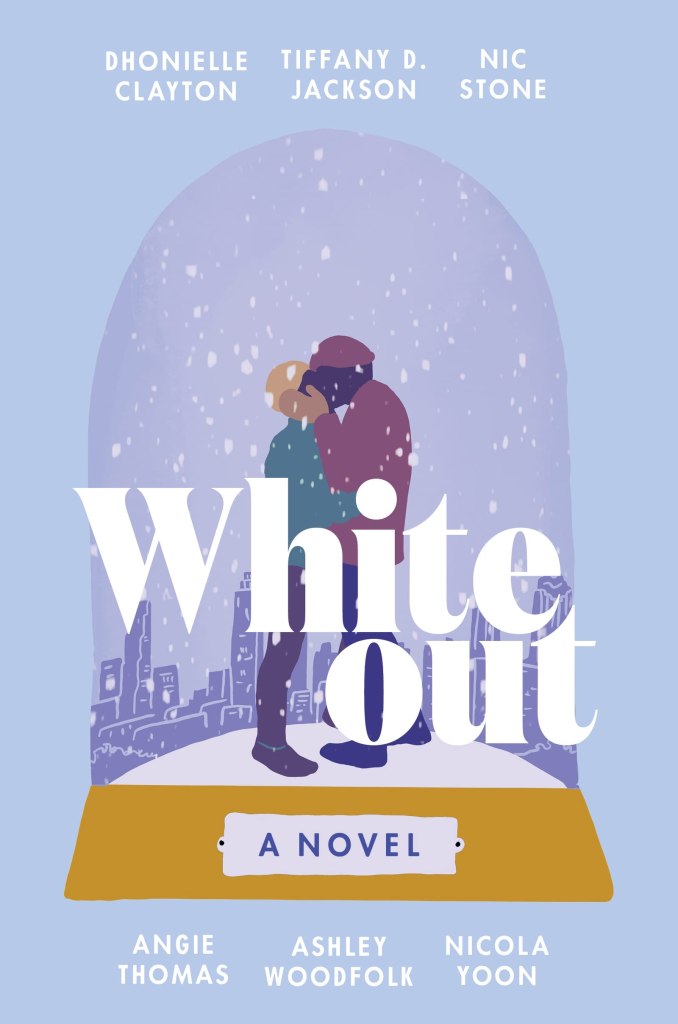
SUNDAY SONGS: 5/18/25

“Innocence” – Björk

Saying that a certain Björk album feels bolder or more in-your-face than others feels redundant because most of them trend towards that direction. According to Sonic Symbolism, Volta was about being upfront, brightly-colored, and loud—in her personality, in her life, and in her political views (see: “Declare Independence”). Volta’s still in the weeds as far as my album bucket list goes, but I love the distinct flavor of it—flat neons and confidence. “Innocence” is a whole feast for me to pick apart in terms of sound. It stomps all over the place, leaving an asymmetrical trail in its wake, angular and herky jerky, but never more sure of itself. It’s the kind of song that makes me think that Björk’s suit on the album cover (designed by Bernard Willem) is about to turn into some kind of mech suit with flag-shooting cannons for hands. This is one of the songs on Volta that was produced by Timbaland, giving it a chrome-like sheen that could almost be pop, but could never deny the inherent weirdness that is Björk. At the beginning, the synths speed up as though winding up for a punch. The angular rhythm is an ouroboros, constantly made and remade again against Björk’s smoother vocals. There’s even a bit at 2:13 that I swear sounds like the Severance elevator noise. Every listen brings something new to the table—there’s all manner of Easter eggs lying around.

Lyrically, I can’t help but think of Debut. “Innocence” is a reckoning with the fearlessness of youth: “When I once was untouchable/Innocence roared, still amazes/When I once was innocent/It is still here, but in different places.” It’s hard not to think of the 1992 Björk that sang of “go[ing] down to the harbor/and jump[ing] between the boats” and ecstatically declaring that there was more to life than this. But the kind of confidence that she maintains at the time of “Innocence” is balancing that excitable youth with the fears that came as she matured: speaking to The Sun, she called the song “A handshake with fear.” For her, fear makes fearlessness even more tantalizing—now that she’s known the grips of it, she appreciates it even more. Even so, it’s still an extreme, but so is fear: “Fear of losing energy is draining/It locks up your chest, shuts down the heart/Miserly and stingy/Let’s open up: share!” Man. Did I need to hear that…for the millionth time. I feel like I’m the reverse, somehow. Of course, I’m not nearly at her maturity level, but I’ve been cautious my whole life. Still am. Fearlessness is freeing, and I only find that I can appreciate it when I have those fears right in front of me: I can see them, acknowledge them, and throw them to the wind, if only for a moment.

BONUS: The video above isn’t the official music video, but the 1st place winner of a fan contest that Björk held to make a music video, created by Fred & Annabelle. Here is the 2nd place winner for the video contest, made by Roland Matusek (Björk Kart?)

…as well as Björk talking about the inspiration behind the animation contest:

…AND A BOOK TO GO WITH IT:

The Battle for WondLa (The Search for WondLa, #3) – Tony DiTerlizzi“When I once was fearless/Innocence roared, still amazes/Untouchable innocence/It is still here, but in different places…”

“Sweet Thing” – David Bowie

It’s been about a year since I finally listen to all of Diamond Dogs in full, and I’m still blown away by how much David Bowie’s storytelling had developed. Throughout his life, Bowie accumulated an extensive library, often bringing books along with him to read on tour. (If you’re interested, John O’Connell compiled a list of some of the books that impacted him the most in Bowie’s Bookshelf. It’s a great read.) The more I think about it, the more I realize that Bowie approached songwriting like an author—whether or not there was a linear narrative, like the story of Hunger City in Diamond Dogs, he had not just melody in mind, but the exact emotion to wring out of which characters and when, and which motifs and allusions to scatter throughout. Obviously, these elements can exist outside of the realm of literature, but it’s so distinct from any given Bowie lyric, much less “Sweet Thing,” that he was a literary-minded man. No wonder I connected with him instantly.

In terms of Diamond Dogs’ tracklist, often with songs that are directly chain-linked to the others, I’m partial to “Future Legend/Diamond Dogs” (my favorite album opening of all time…nothing will ever go harder than that), but “Sweet thing” is the emotional core of Bowie’s narrative, without a doubt. Take a look at the first verse: “It’s safe in the city/To love in a doorway/To wrangle some screams from the dawn/And isn’t it me, putting pain in a stranger?/Like a portrait in flesh, who trails on a leash?” MAN. Glam rock had roots in theatre and the dramatic from the start, but this is one excerpt from Diamond Dogs that would have felt right at home on stage. As one of the entries in Bowie’s failed 1984 musical adaptation, it’s a loose twist on the ill-fated romance between Winston and Julia in Orwell’s novel; Bowie had to make some changes after the musical was dead in the water, rendering the characters nameless and the woman, seemingly, into a prostitute. Under the watchful eye of the “knowing one,” a kind of panopticon surveillance a la Big Brother, the narrator and the prostitute share painful, ill-fated, but fleeting love: “I’m in your way/And I’ll steal every moment/If this trade is a curse, then I’ll bless you/And turn to the crossroads…” With the imagery aplenty of doors and doorways, it’s an affair steeped in transition, an air of impermanence and separation present in every bittersweet moment. Bowie sells it all with one of the album’s most heart-wrenching moments: he draws out “Will you see/That I’m scared and I’m lonely?” with a stabbed, bleeding heart, hand outstretched, with full on musical theater drama. Yet never once does it feel false—Bowie can’t help but let some sincerity slip through the metric ton of personas and fiction. Alan Parker’s guitar soars in true glam-rock fashion, and somehow, the saxophones never feel out of place; Bowie’s world is all brass, rust, and forbidden love—a world fully realized that burst from the shell of Orwell to become a myth all its own.

BONUS: for the full experience, here’s the full story, told in a joining of “Sweet Thing,” “Candidate,” and “Sweet Thing (Reprise)”:

…AND A BOOK TO GO WITH IT:

Rakesfall – Vajra Chandrasekerathe 1984 pairing has run its course at this point, so here’s a story of epic-like love spanning across space and time.


“Pet Rock” – L’Rain

Another amazing find from my dad, “Pet Rock” thrives on being propped up. The music video shows a variety of pet rocks being set up and placed around a miniature dollhouse fitted with all manner of retro furniture, tiny instruments, and mini versions of L’Rain’s album I Killed Your Dog. (Now that’s a title for you…what’d you have to do that for??) The music thrums with distortion, barely contained chaos with a bubbly, Crumb-like atmosphere, faintly on the verge of psychedelic collapse. Taja Cheek’s vocals, like Lila Ramani, flicker in and out of clarity—the only time a finger pokes through the haze is when the guitar, before the instrumentals start unraveling, almost tricks you into thinking that there’s a light at the end of the tunnel. Like the dollhouse, “Pet Rock” has the feeling of a neon-colored haunted house (new Meow Wolf concept?)—everything appears structurally sound, but there’s all sorts of weirdness drifting just out of earshot.

The lyrics take a similar turn: after speaking of being propped up like said rock “Why would you go without me?/And make me something else?”), the lyrics go from a faint dread to something outright sinister: “Like a dead girl with shades on/Propped up by captors/I’m fine/I’ve got no one to talk to.” HUH?? Cheek told Alternative Press that the story was inspired by “an old story I’d been told about a woman who was riding the train but looked strange, and the reader eventually figures out that she’s dead, with glasses on, being propped up by the people that seem to have harmed her.” There’s a solid manipulation metaphor for you—rock or human, you’re not alive, just a nice little dolly to be moved around the dollhouse in whatever way suits you.

It’s just a rock! Or not quite, this time? Rocco takes a stand?

…AND A BOOK TO GO WITH IT:

Ninth House – Leigh Bardugo“Like a dead girl with shades on/Propped up by captors/I’m fine/I’ve got no one to talk to/It’s all my fault, I know…”

“Blossom (Got To Get it Out)” – Komeda

I seem to gain a tolerance for more uptight songs once I get older, but in retrospect, “Blossom” gets less uptight the more I listen to it. Sure, it’s about as high-strung as The Feelies, but it’s got this ’60s girl group feel to it that makes it inherently more playful. Komeda seems to fall into a kind of indie, ’90s niche taking their cues from the bubblegum pop from the ’60s (see also: The Rondelles); it’s jangly as all get-out, and features an almost Fred Schneider-esque chorus of spelling out “B-L-O-S-S-O-M” like a cheerleader’s chant. I’d argue that Komeda’s voices aren’t quite as enthusiastic as their forebears (and the instrumentals), but it’s got that vibrant, candy-colored spirit of the ’60s with a distinctly ’90s production—it’s much more fun now that I’ve revisited it.

What makes this song infinitely better for me is the fact that, under the title “B.L.O.S.S.O.M.,” this song was on Heroes and Villains, an album of songs inspired by The Powerpuff Girls, alongside The Apples in Stereo, Devo, Dressy Bessy, and Frank Black…what a time to be alive. This version is re-recorded, sped-up, and drum-machine-ified, and doesn’t resemble a whole lot about the original. The more electronic version isn’t jangly at all, but the very early 2000’s, rapid-fire instrumentals mesh with the 2d, supersonic speed of the Powerpuff Girls. I’m partial to the original, but at least you’ve got this absolute banger from The Apples in Stereo, right?

…AND A BOOK TO GO WITH IT:

Ocean’s Godori – Elaine U. Chovibrant, fast-paced, and with the kind of spaceships I can imagine blasting Komeda through their speakers.

“High” – The Cure

I wasn’t here to witness it, but it must’ve been such a jarring shift in the ’90s when the Cure became more embraced by the mainstream. My parents talk about how maddening it was to have their special, alternative music be ignored or made fun of in the ’80s and then all the normies started singing along to “Friday I’m In Love.” Jeez. The Cure could always make an incredible pop song, but it never ceases to baffle me that they went from being relatively underground to selling out arenas in such a short period of time. Now that rock is less adjacent to the mainstream these days, I can’t say I’ve had an experience that mirrors it. The only thing I can think of is all of the members of boygenius getting huge, but they aren’t nearly as weird as the Cure were. The eternal battle: wanting people to appreciate your weird music, but wanting to gatekeep it at the same time…

I can’t fully grasp the kind of frustration my infinitely-cooler-than-me in their ’20s parents had when Wish came out back in 1992. I fully adore “Friday I’m In Love,” even though I can recognize that it’s leagues less weird than the more creative parts of their catalogue. But if the fact that I remember “High” to this day must prove that they weren’t all that resentful. “High” was a mainstay throughout my childhood in many a car trip—I distinctly remember mishearing “licky as trips” as “licky as chips” (those damn Brits) and Robert Smith meowing (can you really have a Cure song without it?). I’m charmed to this day about the way Smith makes adjectives into nouns with each lyric—”sky as a kite” or “kitten as a cat” makes perfect sense in his lingo. What strikes me now is that The Cure, even at their darkest, always kept true to having emotion at their core. They were dramatic and goth, but they were always in touch with whatever was at heart, and painted it in every complicated color. “High,” like “Friday I’m In Love,” is proof that they can be just as sugary and playful as they can be brooding and raw, but to an extent, all of it feels true to them. Like the subject, who’s “happy as a girl/limbs in a whirl,” “High” is The Cure in a dreamy, lovelorn state, adrift in the clouds in the throes of ecstatic love. It’s not their most emotional love song, but it’s got a similar purity as “The Perfect Girl” or “Just Like Heaven”—”High” feels like a spiritual successor of that emotion, even if it’s not fully on the level of the latter two to me. To this day, this track remains as warm as sand between my toes or afternoon sunlight heating up the glass of the back seat of a car.

…AND A BOOK TO GO WITH IT:

Across a Field of Starlight – Blue Delliquanti“And when I see you take the same sweet steps/You used to take, I say/’I’ll keep on holding you in my arms so tight/I’ll never let you slip away…'”

Since this post consists entirely of songs, consider all of them to be today’s song.

That’s it for this week’s Sunday Songs! Have a wonderful rest of your day, and take care of yourselves!
Posted in Sunday Songs

Sunday Songs: 5/11/25

Happy Sunday, bibliophiles! First off, a very happy Mother’s Day to my wonderful mom. She inspires me to be a better and more creative person every day, and I don’t think I’d be putting pen to paper (in the drawing and writing sense) nearly as much without her guidance and creative inspiration. So thank you for all your support, hard work, and love. I am so, so lucky. 🩵

School’s out, and it should be back to our scheduled programming soon enough. Of course, every time I take a break, I end up rambling tenfold to make up for the absence…apologies in advance. This is what happens when you let me get ahold of a new Car Seat Headrest album.

Since I’ve been in the finals doldrums for a bit, here are my graphics from the past few weeks:

4/27/25:

5/4/25:

This week: BRO DOESN’T EVEN REALIZE THIS IS RESPECTABLE STREET! 🫵😂

Enjoy this week’s songs!

SUNDAY SONGS: 5/11/25

“Reality” – Car Seat Headrest

The more I think about The Scholars, the more I realize that this is the extreme of Car Seat Headrest’s qualities. Will Toledo has always been a scholar, and a deeply self-indulgent one. I don’t mean that derogatorily at all—his songs are just packed to the gills with references: often Biblical and also encompassing musical and literary greats. Although his life is still interwoven within the narrative (“Is it you or the sickness that’s talking?” on “The Catastrophe [Good Luck With That, Man]”), The Scholars is a veritable library in and of itself.

Not only are the usual suspects of Biblical references and allusions to music and literature, and Toledo’s past work are there, but The Scholars is Car Seat Headrest’s furry rock opera, an omniscient epic taking place at the fictional Parnassus University. There’s a full summary of it in a libretto that’s only available if you buy the vinyl, but thanks to the saints at Genius who, I’ve been able to piece together some of the narrative; it consists of vibrant characters coming out of the closet to their parents, participating in various subcultures around the college, a rival clown college, and a band of punk troubadours. All this culminates in [checks notes] the Dean of Parnassus University getting poisoned after the students from the rival clown college invade. It’s a trip…but I wish it was more readily available! When I say that The Scholars is self-indulgent, I love it in the sense that Will Toledo has created such an inventive, sprawling world between the notes of this album, and that he’s let his ambition run wild, in terms of the scale of the story and the prog sensibilities of the album. He clearly appreciates the value of letting people solve riddles and puzzles, but he’s left hardly any clues to piece together the narrative if we don’t have the libretto. I’d just like it to be more accessible—not in the sense of being more “listener friendly,” but in the sense that I want to actually be able to access the story. There’s clearly so many layers to The Scholars, and I’m dying to know more of the nuance.

That being said, even if you don’t know the story of the Rise and Fall of CCF and the Clowns from Parnassus University, The Scholars is a treat. For the first half, I was almost duped into thinking that the band had almost dipped back into Teens of Denial territory, which was twofold. On the one hand, Teens of Denial has a deeply special place in my heart, a staple of my fourteen-year-old girlhood and one of my favorite albums of all time. After the missteps of Making a Door Less Open, The Scholars is a return to form in some ways. As good as the first half was, I was afraid that it was too much so—even with the rock opera behind it, songs like “Equals” did rather feel like the same stories of drugs and regret that populating Teens of Denial. Yet after “Gethsemane,” “Reality” takes a turn into the more sprawling—and always fascinating. Trading off vocals between Toledo and Ethan Ives, it plunges into pure, 21st-century rock opera, complete with the avalanche of drama and pounding guitars that comes in at around the five-minute mark. I swear that some of the chord progressions remind me of “Cosmic Hero,” another one of my favorite epics from the band, but it’s painted into an unending landscape. Through all eleven minutes, I get the feeling of the culmination of all of the story’s events before the climax—it’s a drawn-out feeling, but one of certainty: they can’t escape what they’ve made, and they must move forward with acceptance of their fate; the whispered utterance of “no stage left” feels like an admittance that they can’t see what they’ve done, but there’s no escape from the consequences: they can’t see the audience. I’m circling back to self-indulgence, but the term sounds so negative: this just feels like Toledo unleashing the multitude of narratives within him. Is it easy to sit down and listen to songs that are nearly 20 minutes long? No, even for me. Yet as esoteric as it is, “Reality,” and this album, is worth your while, if you’ve got the time to set aside. Bottom line: be self-indulgent with your art. It doesn’t matter if there’s a small audience or no audience—you create what you think the world is missing, and the right people will find it.

…AND A BOOK TO GO WITH IT:

The Scholars 28-page libretto, only available when you purchase the vinyl – not trying to be snarky about it, genuinely. But heck, it’s pretty much a play in and of itself, complete with stage directions in the liner notes.

“Respectable Street” – XTC

This has to be the first Britpop song.

It’s long been accepted that XTC helped mold the Britpop movement as we know it—in fact, he almost had a direct hand in it, as he was Blur’s first choice to produce Modern Life is Rubbish; he produced a handful of the original mixes before departing from the project. But XTC made Britpop 12 years earlier. As much as I adore Blur’s sound and lyrical style from Modern Life up until about The Great Escape, hearing “Respectable Street” makes me realize exactly where they were coming in. I wouldn’t go so far to call some of it a rip-off…well, I almost would. I love Blur too much for that. Blur did develop their own style within this method, but at first, their claim to fame was largely due to songs like these. Not only does this song take a microscope to the arbitrary hypocrisies littering an uptight, quintessentially British neighborhood, but Andy Partridge has the vocal swagger to carry it all. Damon Albarn had the looks, but the line delivery is all Partridge, full of snark and with a cheeky wink as he lays out all of the double standards and not-so-well-kept secrets: “Sunday church and they look fetching/Saturday night saw him retching over our fence.” Of course, almost half of the jabs got butchered by the radio edit (“Now they talk about abortion” was replaced with “absorption,” which makes no sense, but…not a whole lot sounds like abortion, I guess?), but no amount of censorship would dull Partridge’s signature, acerbic style. Piled on with in-your-face production and the quick strikes of guitars, and you’ve got a song that inspired a generation—and hasn’t gotten the least bit old.

Also, about the promo above: I just know that set sounded heinous…I’m gonna go out on a limb and say, however talented all these guys are, that most of them did not know how to play cellos or violins. Definitely the point. Still, it must’ve sounded like middle school band practice in there…

…AND A BOOK TO GO WITH IT:

Mrs. Caliban – Rachel Ingallsnothin’ like an escaped frog creature to spice up your respectable street, eh?

“Puerto Rico Way” – The 6ths

Stephin Merritt’s writing continues to be something to behold. Even though Mark Robinson (of Unrest fame) is at the vocal helm here, this is one of the 6th’s songs that’s most indicative of Merritt’s ability to not just set a scene, but make something so objectively seedy and nasty-sounding into the most cheerful, sun-bleached indie pop you’ve ever heard. Take the first few lines:

“The sun pissing in the streets/Of some hungover place/Dances with two left feet upon her face/But soft! She is fast asleep/Beneath her mosquitoes/You would never want to know what she knows…”

First off, the imagery of the sun “pissing in the street” is a stroke of genius, evoking the lazy way that sunlight bends and dapples along the subject’s face—something so objectively beautiful turned wayward and gross, an effect that’s stacked once the drunkenness is emphasized by it “dancing with two left feet.” The environment in “Puerto Rico Way” is so bloated with alcohol and oppressive heat, but it carries itself like all of Merritt’s indie pop songs—with more confidence than it should have, given the disappointing, warmed-over love he often writes about. On the track list, it rides the high of “Here in My Heart,” which could add to the cheeriness, but this track carves out a slice of hope, even if Martina doesn’t accept the narrator’s dance, in this “hungover place.” (The drunk, free-spirited, redheaded Martina does read like a manic pixie dream girl, so maybe it wasn’t meant to be after all. Martina’s so crazzzzzzzy! Love her!!!) The admission that “Oh love, it would’ve been ideal” implies that no, she didn’t, but that indie pop-timism (I’ll see myself out) creates a wrapped towel of sunburnt nostalgia, a photograph bleached in the sun, of a fleeting dance and a fleeting girl.

…AND A BOOK GO WITH IT:

The Monstrous Misses Mai – Van Hoang“She’s drunk every single day/She’s young most of the time/She’s spent all of the rent on her decline…”

“Sheela-Na-Gig” – PJ Harvey

It’s always fascinating to look at songs that seem ostensibly quite feminist, but had none of that intention behind them. Take “Army of Me,” a song that I’ve always interpreted as being about feminine resistance, but was more about Björk trying to get her lazy brother to get up and do something with his life. The lyrics are quite self-empowered, easily interpreted as women breaking free from male-ordered subservience. The feminist leanings are there, but it’s only a sliver of the truth. Do I still feel empowered when I listen to it? Of course. But it’s not the whole story.

The same is true of “Sheela-Na-Gig.” The title references a type of Celtic fertility figure, an image of a laughing woman posing with her genitalia bared outwards. As such, the narrator goes through a sort of comedy of errors as she gets rejected over and over after flaunting her sexual qualities to no avail (“Look at these/my childbearing hips”). It’s easy to take it as a kind of internalizing what men want in women, exhibiting it, and then being turned away when it’s not to their standards; there’s an element of slut-shaming in the male figures not wanting the narrator because she’s “unclean.” The chorus of “Gonna wash that man right outta my hair” (interpolated from South Pacific) is empowered, especially after being kicked to the curb so many times by judgmental men. But PJ Harvey never intended it to be feminist song: as she told Melody Maker in 1992, “I wanted that sense of humour in the song…being able to laugh at yourself in relationships. There’s some anger there but, for me, it’s a funny song. I wasn’t intending it to be a feminist song or anything. I wanted it to have several sides.” And there is something funny about that—if you’ve been rejected with all of the repetition and swiftness of Wile E. Coyote falling off a cliff, all you can do is look back and laugh.

It is a sort of death of the author situation; “Sheela-Na-Gig” hasn’t necessarily been lauded as some feminist anthem (and Harvey said in the same interview above that she didn’t want to be “lumped in” with more forwardly feminist bands), but even a quick glance at any reviews of the song shows that’s how many people tend to take it. In the context of PJ Harvey’s other songs, which are incontestably about misogyny and her struggles as a woman in a male-dominated industry (and world) (see: “50ft Queenie”), “Sheela-Na-Gig” seems to fit into that puzzle. I don’t want to wave that over people’s heads like they interpreted it incorrectly, either—it’s not like I got the aspect on my first listen. (I credit that to Trash Theory.) Personally, I didn’t think all of it was necessarily funny at first, although being as Gen Z as I am, I’ve only heard the phrase “childbearing hips” used sarcastically, so I took that as such. After going through literary theory, I’ve definitely been on the fence-sitting side as far as whether or not to go full death-of-the-author on any given song; the reader’s interpretation does shape the work, but I find it foolish to take it without considering the author’s intent. With “Sheela-Na-Gig,” I think there’s a lot that can be empowering, but what may be most empowering to me is finding the humor in being a woman. The semi-autobiographical narrator swings and misses repeatedly, but doesn’t let any judgement get under her skin. All of the ferocious power chords signal that she’s ready to dust herself off and try again. In the present moment, the narrator hasn’t yet learned, but the fact that PJ Harvey has looked back and learned herself seems more the point to me: having the self-awareness to feel bad for your past self, but be able to laugh at their mistakes. There’s power in being able to look back and laugh instead of wallow in sorrow—when you’re a woman, it’s all you can do sometimes. It may not necessarily be feminist, but it sure is a part of life.

…AND A BOOK TO GO WITH IT:

Shit Cassandra Saw – Gwen E. Kirbychronicling the varied experiences of women with wry humor—and honesty.

“Ate the Moon” – Tunde Adebimpe

It’s been almost a month since Thee Black Boltz came out, and the question remains: is this enough to sate us through the dreaded TV on the Radio drought? For the most part, I’d say yes—but it’s a separate, branching effort. Though it proves that Tunde Adebimpe was the beating heart of the band, he’s more than formidable on his own, minus Dave Sitek’s production and piled on with more synths. Though it’s not without its misses, Thee Black Boltz feels like Adebimpe stretching his fingers out in all different directions, but never stretching them beyond what makes me come back to TV on the Radio so often.

With a central theme of overwhelm during times of crisis and searching for light—creativity—amidst the choking smog, Adebimpe turns to synths and more danceable beats (see: “Somebody New,” a bolder, dancier gamble that mostly paid off in spite of the autotune) in order to pull through. “Ate the Moon” is about that overwhelm, if the title doesn’t already clue you in. Swallowed by anxious spiraling and visions of horror, the narrator scrambles for answers, but finds only regret: an echoing, childlike voice proclaims after the “the man who ate the moon” chorus that “and he choked, of course, because he bit off more than he could chew. Such a dummy!” “Dummy” echoes and is pitched down as it fades out, distorted into a trickster baring a triumphant, toothy grin as it disappears into the darkness like the Cheshire Cat. “Ate the Moon” certainly has some of what I think the albums pitfalls are: the lyricism is on the simpler, more obvious side. Not inherently a drawback, but after something as rawly and artfully written as “Tonight,” it feels cheap for him to rhyme “fire” and “desire” for the millionth time. It’s like Jeff Tweedy using someone being “cool enough to be ice cream” as a metaphor after being such an unparalleled poet otherwise. But like “Ice Cream,” it’s easy to love “Ate the Moon.” With the instant hit of Adebimpe’s boxing gloved punch of a voice and the synths and guitars that have been sewn into an electronic gestalt, it’s one of the most unique songs on the album, an adrenaline-pumped trip into the downward spiral of autonomy-less fear.

…AND A BOOK TO GO WITH IT:

Death of the Author – Nnedi Okorafor“Seems I was iII-prepared/For the fall that finds me here/Sad extremes running through my head/Knocked my blues into the red…”

Since this post consists entirely of songs, consider all of them to be today’s song.

Posted in Sunday Songs

Sunday Songs: 4/20/25

Happy Sunday, bibliophiles, and happy Easter for those celebrating! 🐣 I hope this week has treated you well.

This week: stories from concerts, songs I heard before concerts, and songs that enticed me because of a cat on the album cover.

Enjoy this week’s songs!

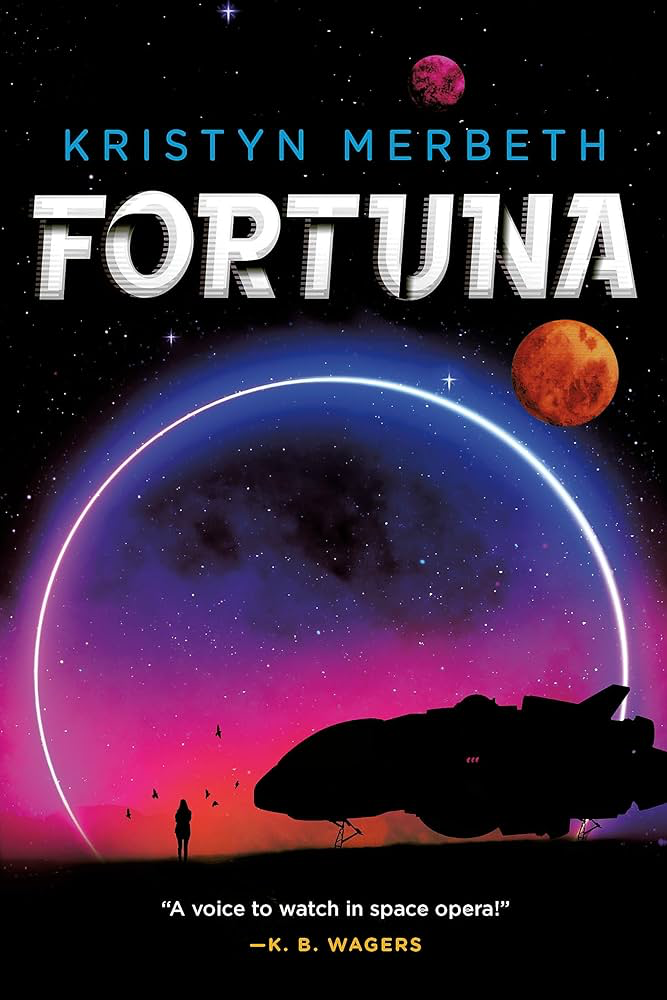
SUNDAY SONGS: 4/20/25

“DOA” – St. Vincent

I’ve got a confession to make. As die-hard of a St. Vincent fan as I am, it took me some time to warm up to this song. I never hated it, but it wasn’t an instant favorite. I haven’t seen Death of a Unicorn yet (though the trailer intrigued me…), but something that always bothers me about songs made for movies and TV is when they obliquely reference either the plot points of the movie or how the characters are feeling. Hot take, but it’s part of why I didn’t care for the original soundtrack of Arcane—it basically did that for most of the character’s conflicts and arcs. (That, and it’s a matter of my music taste. Don’t let that deter you from watching Arcane though, it’s a breathtaking show! Having Im*gine Dr*gons do the theme song was just the worst possible decision they could’ve made. Just skip the intro.) You can make a song subtly extrapolating on a movie’s themes and have it fit naturally! (See: “Strange Love,” “Sticks & Stones”) Hell, she’s done it before with the original songs for her concert-film-turned-thriller The Nowhere Inn! Granted, I haven’t seen the movie, but opening the song with “Right as I had stopped believing in miracles/In comes a unicorn right in front of me” is…right there. So is the unicorn, I guess.

From then on out, “DOA” easily saves itself. It’s an absolute ’80s freakout from start to finish. The synths are so dense and bubbly that St. Vincent’s voice easily drowns in them—it’s like they’re the main vocal, and that kind of chaos, especially towards the latter half, is what makes the song so rich. “DOA” leads me to believe that somewhere, there’s a better, kinder alternate universe where MASSEDUCTION sounded more like this. It strikes the balance that album never got, with lightning-quick synth palpitations duel with Annie Clark’s classic, punchy guitar breakdowns. Piercing yelps cut through the dense, purple fog shrouding the song—again, I haven’t seen Death of a Unicorn, but it certainly brings to mind what I might feel if I was being pursued through the woods by a dubiously carnivorous unicorn. Given the film’s purported balance of campy concepts and dark execution, “DOA” is the perfect merging of the two aesthetics.

…AND A BOOK TO GO WITH IT:

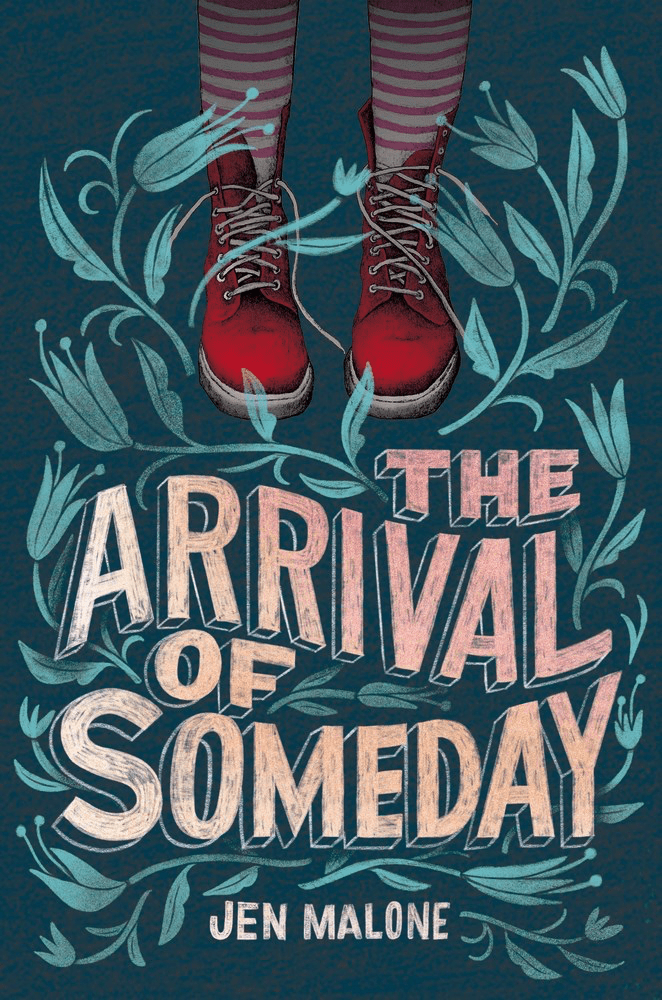
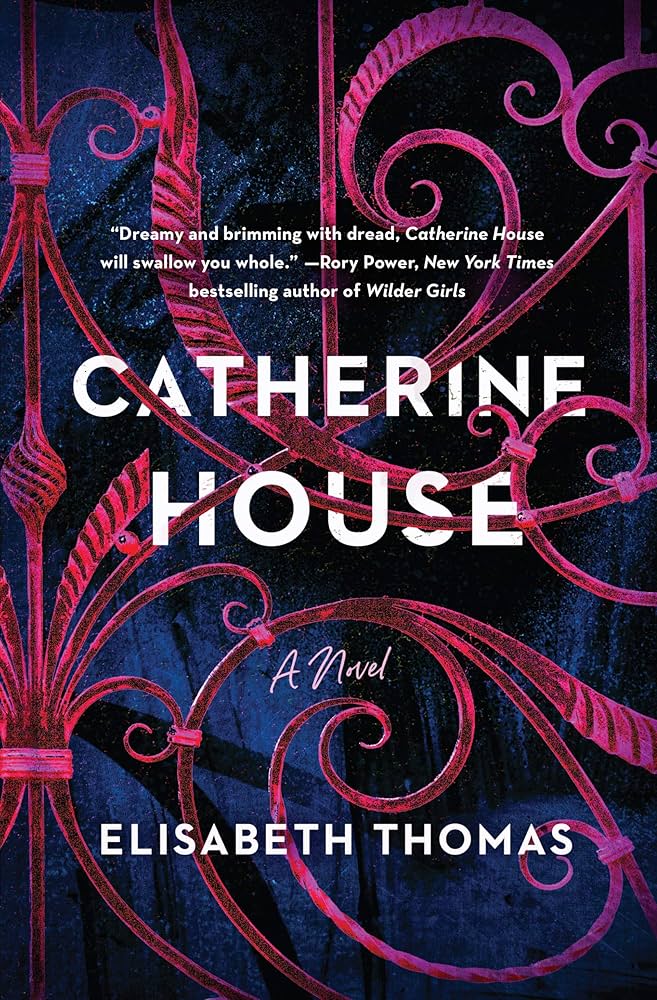
Catherine House – Elisabeth Thomasa similarly out-of-time feel, as well as dabbling with strange, magical substances.

“Skully” – Jawdropped

No way, I’d never listen to a band just because I saw a picture of them where one member had a Ladies and Gentlemen We Are Floating in Space shirt. Me? Nah, never. I’m a woman of taste…it was the album cover and the shirt that convinced me to at least listen.

I heard of Jawdropped by way of Stereogum; they reviewed the first singles off of their forthcoming debut (!!) EP, Just Fantasy, and I figured I might as well give it a go. Thankfully, they’ve got more to them than just a cute sphinx on their album cover and one guy with a Spiritualized shirt! I keep coming back to “Skully,” the opening track, which is about as propulsive as an opening track can get. It’s truly one of those songs where they’ve mastered how to make guitars cascade down like an avalanche on the first go, which is something not every band can say for themselves—especially not on a debut EP. Between the instrumental chaos of the chorus, they ease the verse into calm, a beast of burden tugged out of a sprint, in order to let the harmonies of Roman Zangari and Kyra Morling take the spotlight. But it’s that colossal cascade that makes “Skully” so excited; they don’t strike me as particularly similar to Spiritualized (this may be a bit too loud for shoegaze), but Jawdropped has a similar quality of encasing the listener in a fizzling, crackling bubble of sound. For all of 2:48, you’re cocooned on a moment’s notice—and it’s a cocoon worth revisiting time after time.

…AND A BOOK TO GO WITH IT:

The Ones We’re Meant to Find – Joan He“I wait for you like a dog/Anxiously pacing/But you’re here when things fall apart/It’s just your nature/ We’re always stuck at the start…”

“Miss You” – The Rolling Stones

If I just put this song on in the background, I can ignore the cringy, “hip” lyric videos that The Rolling Stones started putting out after their newest album. I can’t stand that soulless, faux-graffiti/DIY aesthetic…I just can’t separate them from how painfully hard they’re trying to stay relevant to The Kids™️…

Anyways. We’ll pretend it’s 1978 and Official Lyric Videos For the Youth won’t be a thing for many decades to come. Like “Crooked Teeth,” “Miss You” was one of those songs where I’d have that opening riff (not the lyrics, this time) ping-ponging around in my head. It lingered in the fog of my childhood, but too far to discern anything clear. So thank you to the instagram for The Laughing Goat (and Rita) for making me remember it after however many years it was! And then, mere days afterwards, they played this song, amongst several other seventies rockers (see: “I Saw the Light”). “Miss You” was going to reach me either way. Some Girls seems to have come at the time when the Stones had cemented that sleaze was part of their brand, and subsequently became said sleaze. Despite “I guess I’m lying to myself/It’s just you and no one else,” it’s a song that lies squarely in the kind of horniness that defined them throughout the late ’60s and the ’70s. Even if he’s denying them, the way he croons the line about the “Puerto Rican girls that’s dying to meetchoo” betrays the partying and sex that later became as much a part of him as the press originally made them out to be when pinning them against the goody-two-shoes (citation needed) Beatles. There’s a Lou Reed-like drawl to the way he turns to a half-whisper as he speaks of stalking Central Park in the dead of night like some kind of werewolf, yet it couldn’t be more Jagger; the bluesy, “hoo hoo hoo-ooh hoo-ooh ooh” refrain almost becomes an abated, wolfish howl against this backdrop, roiling with angst.

…AND A BOOK TO GO WITH IT:

The Final Revival of Opal & Nev – Dawnie WaltonI try to refrain from talking about this book whenever I mention something from the ’70s, but this kind of bluesy rock fits in with the scene that it describes.

“Lindy-Lou” – The 6ths

Back to The 6ths after last week, I’m dipping my toes into Hyacinths and Thistles, Stephin Merritt’s 2000 follow-up to Wasp’s Nests, and slightly less of a tongue twister, if you say it slowly enough. (Maybe?) In contrast, there’s still some of the same synth-pop love songs, other than…the last track being nearly a half-hour long? Not sure if I know what’s going on there, and as much as I love Merritt, I’m not sure I want to know. In contrast to the ’90s indie-rock guest list, we’ve got everybody from Melanie (sadly, kind of a miss) to Gary Numan (wild pick, but great)—Merritt had his feelers out everywhere, to varying degrees of success. From the few songs I’ve sampled, “Lindy-Lou” was one of the undoubted hits, sung by Miho Hatori, one of the founding members of Cibo Matto, but best known to me as the original voice of Noodle from Gorillaz. As with Anna Domino and Mary Timony for you, she lends her tender vocals to a song gleaming with dreamy-eyed innocence. Accompanied only by keyboard, this seems to stare wistfully from a balcony as the wind toys with its hair, Amelie-style. It’s never cloying in its sweetness, but it’s so soft and intimate, the musical equivalent of a sweatered shoulder to lean on.

BONUS: somehow, I had no idea this existed beforehand, which is crazy, considering how much Car Seat Headrest has been a part of my life…back in 2013, in the car seat headrest-recording days, Will Toledo covered this song!

…AND A BOOK TO GO WITH IT:

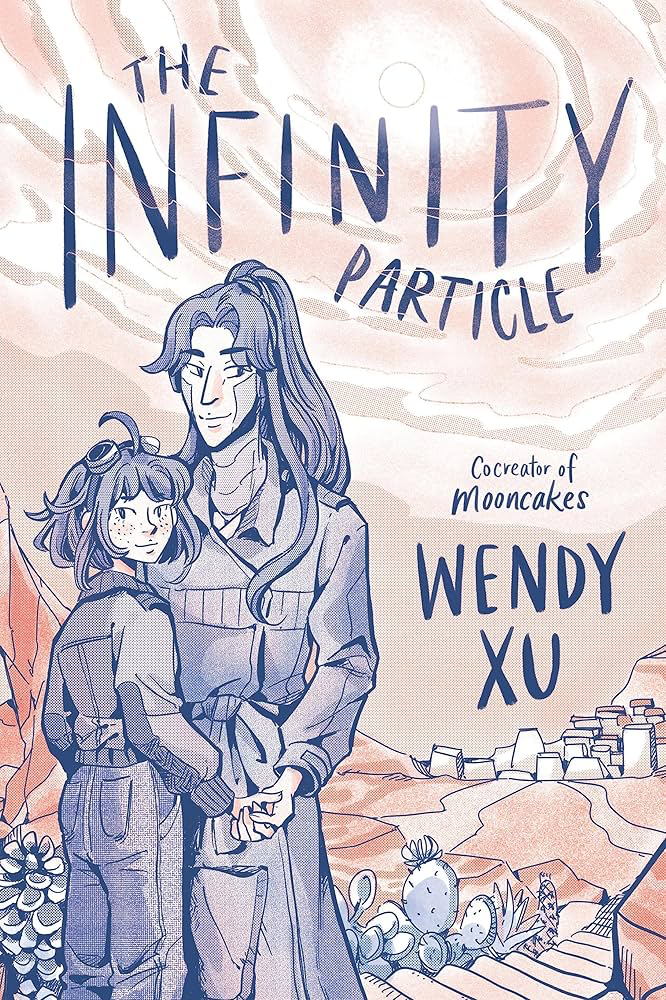
The Infinity Particle – Wendy Xuquiet, tender love between a student and a lonely android.

“Family and Genus” – Shakey Graves

I’ve now seen Shakey Graves…2.5 times. I don’t fully count the second time, as it was at a crowded festival and I had no way of seeing him, so my mom and I listened to him at a safe distance behind the wall of drunk people. I amended it this time by shouldering my way up to the front row for round 3, as Shakey Graves is touring for the tenth anniversary of And the War Came! Other than the two drunk people who tried to get me to give up my seat (one even offered me $100), this show fully made up for not being able to see him last time. Shakey Graves, seen unobstructed for the first time since 2023!

What struck me at this show in particular was how genuine he is as a songwriter. So many artists in the folk and country-adjacent genre put on this kind of persona of being a wanderer with no permanent home, forever married to the road and dismissive of being bound to any one location. Alejandro Rose-Garcia has fully leaned into this persona (see: “Built to Roam”). Yet he’s the only one I’ve seen who makes it genuine. He’s roamed his fair share, but he’s never dismissive of the journey or the people who helped him along the way. Throughout the show, he paid tribute to friends and enemies throughout his life, his wife and newborn daughter, and for “Family and Genus,” raised a toast to family and friends that make the roaming easier—and more interesting. He’s a troubadour storyteller, but he never tells a lie. I keep coming back to how genius “Family and Genus” is—even as one of his most popular songs (I’m sure the Elementary TV spot helped), the craft is so intricate and lovingly stitched—just as the relationships he penned this as an ode to. Where the studio version’s “ohs” on the chorus sound like a choir of trickster ghosts, he imbues every raw ounce of love into them, turning it into a raucous crowd-pleaser that makes you feel that family, the sinew and atoms binding us together. And his rapid-fire fingerpicking on his guitar never ceases to amaze me—the fact that Rose-Garcia has barely gotten his flowers as the masterful guitarist that he is remains a disservice to his ingenuity. Hearing the echo of hundreds of voices around me, a handful I have the treasure and pleasure of calling family (minus said obnoxious drunk people), and countless others that I’ve never seen again after that night, solidified his statement of purpose.

…AND A BOOK TO GO WITH IT:

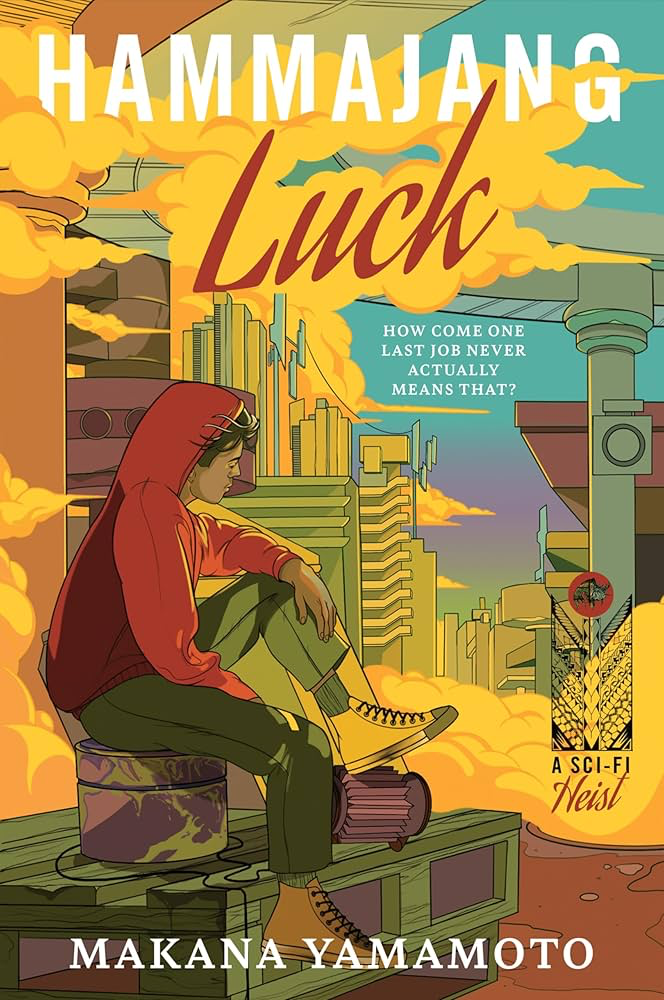
Hammajang Luck – Makana Yamamoto“If I ever wander on by/Could, could you/Flag me down and beg me to/Drop what I’m doing and sit beside you?”

Since this post consists entirely of songs, consider all of them to be today’s song.

That’s it for this week’s Sunday Songs! Have a wonderful rest of your day, and take care of yourselves!
Posted in Sunday Songs

Sunday Songs: 4/13/25

Happy Sunday, bibliophiles! I hope this week has treated you well.

This week: your yearly dose of “Madeline blubbering about the unknowable beauty of the universe and also Björk (in no particular order.”

Enjoy this week’s songs!

SUNDAY SONGS: 4/13/25

“Cosmogony” – Björk

Not to be dramatic or anything, but I am currently writing this through tears. Every time I pull up the live version of this from the Biophilia concert film, I start crying. Damn you, Björk, could you not carve out the softest, tenderest bits of my soul with a melon baller for once?

Maybe I am the soft, snowflake humanities major that Trump wants to extract from higher education, but I find I understand science best when you bring out its inherently human qualities. We went wrong when we perpetuated the stereotype of the sciences, and scientists by extension, as cold and removed from emotion, because to separate the two is to deny the connectivity of nature, of the universe, and of the particles that quite literally make up all of us. (Which is why SciAll is doing incredible work to humanize the field, and even better that my awesome brother is making content for them!! Shameless Todd family plug, now back to your scheduled program.) Sure, I do believe the stereotype whenever I pass by the absolute brutalist hellscape that is my college’s engineering building, but that isn’t representative of all of STEM. I’ve never gotten physics. I’ve never fully understood it, only bits and pieces. But the other day, I read a great book called Uncommon Measure, a memoir about time and music, which likened quantum entanglement—the way that particles just know how others around them will move—to falling in love with her husband while they learned to dance Argentinian tango in college, and trusting her body to remember the steps and the movements of her partner. Do I understand quantum entanglement any more? Slightly, but I’d still fail a course on it. But I’m on my way, because of that emotion. The moment we lose that connection between ourselves and the very makeup of our universe, we forget ourselves. Quite literally, ourselves.

Now that I’ve finished Sonic Symbolism, my Sunday Songs have admittedly become months of Björk worship in a trenchcoat, but getting this nuanced view on her music-making process has seriously invigorated me. I’ve yet to fully listen to Biophilia, but it’s high on my list. The album was conceived along with an app that aimed to teach children about music through concepts of science; for instance, chords and learning which chords work best with each other is demonstrated by a visualization of tectonic plates. And if that’s not enough, David Attenborough, THE MAN HIMSELF, recorded an intro for the app, which was also featured on the Biophilia tour. Though the app is sadly defunct, it remains a critical piece of Björk’s creative legacy, as well as a tool that was specifically shown to benefit neurodivergent children in learning these concepts. In the grand scheme of things, “Cosmogony” was the menu that held the rest of the app together, a screen where you could navigate to different parts of Björk’s simulated universe. (And even if that didn’t exist, the aesthetic language of the album, with Björk’s voluminous wig that’s the color of oxidizing copper.)

That fusion of the arts and sciences, as well as the inherent humanism that Björk brings to her craft, is what makes “Cosmogony” so special; the song details three creation myths from around the world (Miwok Native American, Sanskrit, and Aboriginal Australian), and she adds the Big Bang theory, which she jokingly referred to as “a creation myth that is 100 years old,” but pointed out that “all creation myths at the time of their making were science.” The song begins with a kind of transcendental choir that rises in pitch, mimicking the motion of eyes searching the stars. It’s the only music that has ever captured the feeling I often felt while taking an astronomy class last year. As I stared up at the planetarium, watching as simulations of the known universe expanded outward ad infinitum, I had this bizarre, incomparable cocktail of emotions—fear, wonder, and somehow, comfort. It’s impossible to feel a single emotion at the revelation that our universe is infinitely large and full of places we cannot even begin to reach or imagine, is it? Space is a cold, unwelcome vacuum, but it is fertile with endless possibility. And that’s where Björk punches me in the gut every time, dredging out the wonder, comfort, and ecstasy of being surrounded by billions upon trillions of stars and planets: “Heaven, heaven’s bodies/Whirl around me/Dance eternal.” I’d say somebody hold me, but I am being held. All of us are, by the arms of the universe.

…AND A BOOK TO GO WITH IT:

The Search for WondLa – Tony DiTerlizziI can easily imagine this as Eva Nine sees the Rings of Orbona for the first time, coming to terms with her own clashing creation myths.

“Crooked Teeth” – Death Cab for Cutie

Bring back those stop-motion, collaged indie rock music videos from the 2000’s! We lost something when that trend went away. They’re all so inventive and fun, and they all have that token darkly funny moment before going right back to silly little cutouts of floating astronauts and whatnot. (See also: “Can You Feel It?”)

Song lyric of the week, unofficially: “You’re so cute when you’re slurring your speech/But they’re closing the bar and they want us to leave.” This song is an absolute indie hit, and it deserves that status: a three and a half minute-long pocket of sad white boys, clever lyrics, and lovely harmonies. That’s probably why I found myself occasionally remembering the chorus of “‘Cause you can’t find nothing at all” every few years and forgetting the rest of the song. Shame that I forgot the rest, really, because that’s not even the catchiest bit. Admittedly, I find the “I’m a war between head versus heart” bridge rather corny compared to some of the more poetic bits of this song, but that’s because of how descriptive every line is. Ben Gibbard really knows how to make every line count, from the lyricism down to the precise inflection of each word. The way his voice creeps through the notes makes the expression “turn of phrase” make sense—every sentences seems to twist like vines. All of it becomes “the home in my heart” built with rotten wood that leads into the first chorus; much like the collection of landmarks that Gibbard describes, it’s a blurred, drunken stumble through a mutually destructive relationship that keeps losing its water, no matter how many strips of tape you put over the holes in the kiddie pool. Yet all of it is irresistible, as is the last dregs of romance that have drained out of whatever hot mess Gibbard is chronicling.

…AND A BOOK TO GO WITH IT:

Vicious – V.E. Schwab“‘Cause I built you a home in my heart/With rotten wood, and it decayed from the start/’Cause you can’t find nothing at all/If there was nothing there all along…”

“I Saw the Light” – Todd Rundgren

There’s a sliding scale of what degree of early ’70s that I enjoy. On the one end, you’ve got glam rock: your Bowies, Bolans, Brian (Eno)s, etc. It all depends on that warm guitar tone. By the time you get here, you’ve got the guitar tone, but then you’ve inched into the same breath as Steely Dan, and…okay, that might be where I draw the line. (Admittedly, “Peg” is better than it should be.) That’s about when you get into that yacht-rock kind of cheese that I can’t quite stand. This one Todd Rundgren song, however…safe. Can’t deny how catchy it is, god! Another delightful tidbit of the ’70s I tend to enjoy is the pianos—I’m not sure if it’s the specific kind of piano or just the sound quality, but there’s something so charming about that tinny kind of piano that’s punctuates the background. Each bend Rundgren hits on the guitar strings feels like a sway of the hip, a twist of the leg striding across the dancefloor. Sure, he specifically meant for it to be a hit and not much else (and apparently cranked it out in 20 minutes while addicted to Ritalin), but it works perfectly as such. “I Saw the Light” has a joyful groove that’s been undeniable for 50+ decades, but exists in amber as nothing but 1972: smooth, romantic, and oh so bright in that guitar tone.

…AND A BOOK TO GO WITH IT:

Seven Devils – Laura Lam and Elizabeth Maysongs with lyrics that are on the…more generic side (sorry, Todd) don’t give me as much rope, so it’s mood I’m going off of for this one, a messy, romantic space opera.

“CCF (I’m Gonna Stay With You)” – Car Seat Headrest

Car Seat Headrest is back, and they’re making obscenely long songs again!! Nature is healing!! (And apparently, these aren’t even the longest? The second to last track is purportedly 19 MINUTES LONG? “Famous Prophets (Stars)” has some competition…) So is Will Toledo, evidently—I’m so glad he and the band are taking it slowly on this tour (which I am SO elated to have tickets for), but I’m glad that he’s gotten to a place with his long COVID that he can make some more angsty masterpieces.

It really does seem like The Scholars will be some of Car Seat Headrest’s boldest work to date. Toledo conceived of this album as a rock opera, inspired by the likes of Tommy and The Rise and Fall of Ziggy Stardust and the Spiders from Mars, centered around the fictional Parnassus University. Each song centers around a student; the excellent, nearly 11-minute long epic of a single, “Gethsemane,” for instance, follows Rosa, a medical student who dabbles in necromancy and discovers that she can absorb the pain of others. Aside from said Gethsemane, Toledo also said that he was inspired by his own journey into Buddhist practices while he dealt with long COVID and his lifelong, conflicting feelings surrounding his spirituality. It’s an incredibly ambitious cocktail of ideas and about as spacious as a university campus, but it seems like the pent-up work of five years of not releasing any new material and the flood of ideas that I’m sure came along with it.

If there’s one thing that Car Seat Headrest has perfected the art of, it’s making album intros. They’re all about giving you that antici……pation, but the payoff is even more rewarding than the almost cinematic buildup. Even on weaker albums such as 2020’s Making a Door Less Open, “Weightlifters” had a kind of thesis about the album’s musical motifs, and on the iconic Teens of Denial, “Fill in the Blank” sets the upbeat, angsty tone with ease. “CCF (I’m Gonna Stay With You)” reminded me immediately of “Vincent” and its echoing intro, but what follows is an explosive display of the band’s collective talent. Toledo, Ethan Ives, Seth Dalby, and Andrew Katz’s synchronicity creates a soundscape deserving of a sprawling rock opera, and Toledo’s poetic lyricism is befitting of Beolco, the playwright character this song is written from the perspective of. Long COVID couldn’t beat the healing salve that is Will Toledo’s voice, which simultaneously retains notes of his youth but has undeniably steadied and matured. “CCF (I’m Gonna Stay With You)” has threads of Teens of Denial all over the place (aforementioned “Vincent” similarities, and the horns reminded me of “Cosmic Hero”), but something about it has an inherently spacious vision beyond the storytelling—this is a whole universe that they’ve created, and I, for one, am elated to discover it. MY BODY IS READY.

…AND A BOOK TO GO WITH IT:

Hell Followed With Us – Andrew Joseph White – “When I come down off this cross of mine/A hairsbreadth apart and as far as the sky/Then back on my spine, there was a line that my idols crossed that I could not cross/On the other side is love, and right here is loss…”

“Here In My Heart” – The 6ths

Another addition to artists who cannot stop cooking: Stephin Merritt. Not only does he have some impressive vocal range and an excellent body of work with The Magnetic Fields, he’s a part of several other side projects—one of which, The 6ths, where he barely even sang, but just did arrangements and lyrics, and had a whole host of amazing indie artists sing for him. Dean Wareham (“Falling Out of Love [With You]”), Chris Knox (“When I’m Out of Town”), Mary Timony (“All Dressed Up in Dreams”), and Mark Robinson (“Puerto Rico Way”) are just a handful of the guests on this album, Wasp’s Nests. (However, he did sing himself on the also fantastic “Aging Spinsters.”) All of them are folded into the lovelorn synth tapestry that Merritt has woven, and though the voices vary, all of it is so distinctly him. The love (or love-related) songs he pens are usually of the lost love variety, but “Here In My Heart” is about as pure as they get; even if the love in question is far away, the yearning spills out of the chorus like thousands of butterflies. Every electronic twinkle glows warmly with love, the kind that makes your chest light up like in Fantastic Mr. Fox, but the glow never feels fake—it’s an ecstatic, crush outpouring that never loses its sheen. Anna Domino’s voice, as twinkling and delicate as the synths, blends in as a shimmering blot of light in the constellation of this starry-eyed love song.

…AND A BOOK TO GO WITH IT:

The Sound of Stars – Alechia DowThe lovesickness and synth textures fit with the hopeful joy of this novel.

Since this post consists entirely of songs, consider all of them to be today’s song.

That’s it for this week’s Sunday Songs! Have a wonderful rest of your day, and take care of yourselves!
Posted in Sunday Songs

Sunday Songs: 4/6/25

Happy Sunday, bibliophiles! I hope this week has treated you well.

This week: I wish I’d gotten this unintentionally all-women lineup (or, all frontwomen, at least) for March, but every month is Women’s Month! (Especially now…reach out to your representatives about the SAVE Act, for the love of god. Protect your right to vote!) Also, the broad spectrum of romance: rollerskating past a cute person’s window on one end, and beating up creepy guys in the club on the other. Duality of woman.

Enjoy this week’s songs!

SUNDAY SONGS: 4/6/25

“Brand New Key” – Melanie

Somebody needs to start a hypothetical support group for carefree, childhood-inspired songs that get slapped with distinctly “adult” interpretations (see: “Lookin’ Out My Back Door,” a delightful song about imagination that everybody chalks up to LSD). Yeah, yeah, you can’t control how your work will be interpreted, but for the love of god, EVERYTHING ROD-SHAPED ISN’T AN INNUENDO. Quit summoning Freud with an ouija board…why can’t we as a culture let go of darkening everything inspired by childhood? Everybody just seems content to label anything childish as naïve, whack it with a frying pan, and justify its essence by saying that there’s a “mature” meaning behind it…can you not digest a little unadulterated happiness without your edgelord pills?

Anyways. As Melanie tells it, the song was inspired by eating McDonald’s after an extensive fast: “no sooner after I finished that last bite of my burger …that song was in my head. The aroma brought back memories of roller skating and learning to ride a bike and the vision of my dad holding the back fender of the tire.” It’s such a weightless song—from the minute the opening riff kicks in, it never walks—it skips between jump-ropes. “Brand New Key” is just so charmingly joyous to me. Melanie boldly announces herself with a smile that never fades as the song retains a timeless bounce that makes every step into a little shimmy, every turn of the shoulders into a carefree sway. Yet even with the folksy instrumentals, the kind that should give this song a one-way ticket into Wes Anderson’s next movie, it’s Melanie’s voice that makes “Brand New Key.” She takes on the persistence of the song’s narrator with a self-assured confidence—she can roller-skate anywhere she pleases, and she’ll do it with gusto. The way she crows the iconic line in the second verse—”For someone who can’t drive, I’ve been all around the world/Some people say I’ve done alright for a girl”—can’t inspire any emotion other than pure, fist-pumping joy. “Brand New Key” isn’t exactly some sort of revolutionary work of feminism (and that might be as much of a stretch as the innuendo), but I can’t help but think of Melanie’s boldness and relentless devotion to her creative vision, so soon after she’d performed at Woodstock at the age of 22 and begun to make a name for herself as an artist. “Brand New Key” has gone down in history more as a novelty song than anything, but it’s stuck for a reason—I can’t help but bob up and down with joy with every successive play.

…AND A BOOK TO GO WITH IT:

The Heartbreak Bakery – A.R. CapettaThe romance isn’t a one-to-one match, obviously, but the carefree spirit of young love (and bicycle-riding) remains the same.

“Most Wanted Man” – Lucy Dacus

Now that the dust has settled and I’ve listened more to Forever is a Feeling, it’s still a good album, but not the good I can usually expect from Lucy Dacus. After my first listen, I came away with the thought that the singles were better than the album as a whole, but also that she’d almost sold out, that dreaded stage in an artist’s career. It’s not like she wasn’t indie-popular before, but now she’s on the verge of popular popular, dueting with Hozier popular. I don’t believe Dacus, with her penchant for turns of phrase too clever to fully fit any kind of mold, will ever go fully mainstream. But with the relatively toned-down spirit of Forever is a Feeling, I can’t help but think that it was the doing of a major label that made some of these songs…almost tame. Even though the same amount of emotional explosion remains under the surface, for half of the songs, it almost feels curtailed. She’s never allowed an impassioned belt or more than a small guitar solo at the end of a song. I’m not saying that she was, y’know, absolutely screamo or anything, but she knew how to give even the smallest moments the weight of the world. This album should’ve been the perfect opportunity, given that it’s crafted from heartfelt vignettes of falling in love with Julien Baker (SO HAPPY FOR THEM!!! my boys…I wish them all the best!! 🥹). Maybe it’s just personal. It’s always weird to see indie artists get popular. Who knows.

That being said, it’s not like Forever is a Feeling was a bad album by any stretch. Lyrics? Always top-notch. And when it was able to delve into the deepest well of emotion (see: “Lost Time”), it got plenty of moments of true, misty-eyed beauty and affection. “Most Wanted Man” was one of the immediate standouts, and not just because of the tempo. With it’s upbeat, guitar-driven sway, Dacus constructs a tattered, energetic scrapbook styled like a blurry-viewed movie montage of moments with Julien Baker: “Tied in a double knot/Just like our legs all double knotted/In the morning at the Ritz/$700 dollar room, still drinking coffee from the Keurig/We’re soaking up the luxuries on someone else’s dime.” Dacus called it the song on the album that’s most overtly about her relationship with Baker, and it’s full of unbridled joy for what they’ve had, but also for the adventures they’ve yet to have together, repeating a starry-eyed refrain of “I’ll have time to write the book on you.” Besides the healing reference to “Everybody Does” (“Gripping my inner thigh/Like if you don’t, I’m gonna run”…right in the 2020 Madeline) and Baker herself contributing harmonies, it’s a song brimming with hope, of seizing the moment, and yet holding the excitement of spending your life with someone in your heart. Major label or no, they can’t stop Lucy Dacus from penning the most heartfelt songs about relationships, be they romantic or platonic.

…AND A BOOK TO GO WITH IT:

The Falling in Love Montage – Ciara SmythA similarly energetic and tender (and sapphic!) story of love and adventuring.

“Overrated Species Anyhow” – Deerhoof

I know an album intro when I see one…and I heard this single before Deerhoof announced their new album, Noble and Godlike in Ruin. It’s short, anthemic, it feels like a nice thesis…and it’s a good thesis to boot: “Love to all my aliens/Lost, despised, or feared/You are why I wrote these passages.” I feel like that scene in Into the Spiderverse at Peter Parker’s funeral where one of many strangers in a Spider-Man masks tells Miles Morales that “he’s probably not talking about you,” but I will gladly be accepted as one of said aliens. Hey, “Future Teenage Cave Artists” got me through a pretty nasty bout of anxiety, and I cherish it to this day.

Thus far, some of the album seems to be about frontwoman Satomi Matsuzaki’s experience as an immigrant in America alongside all of the hateful rhetoric that is (and has always been) multiplying; Admittedly, I balked at the use of the word “savages” in the way that it’s used here, but I can see it as being a reclamation of a term that has been historically lobbed against immigrants. (Still not ideal, but I can at least see the justification of it.) “Overrated Species Anyhow” feels almost choir-like, meant to be sung as a kind of incantation of sanctuary; amidst the chaotic melding of birdsong, “Via Chicago”-like drumming, and a cascade of rippling instrumentals, the track serves as both an outstretched hand to the othered and an opening of the album’s curtain. I don’t think I’m dedicated enough of a fan to go into Noble and Godlike in Ruin, but this offering is a lovely, delightfully weird one, as Deerhoof always is.

…AND A BOOK TO GO WITH IT:

A People’s Future of the United States – edited by Victor LaValle (anthology) – at times, frightening (and sometimes too feasible) visions of the future, but all containing stories of marginalized resistance.

“catch these fists” – Wet Leg

Wet Leg’s self-titled 2022 debut isn’t a particular favorite of mine, but it marked its place right when I graduated high school—it was full of droll, commandingly danceable anthems for that short time in my life. Yet even then, I got the sense that their songs were on the repetitive side. They’re a bit like Weezer, in a way—they have maybe two or three songs, but all of them are great. They know what they’re good at. Now that Rhian Teasdale and Hester Chambers have announced their next album, moisturizer (are all of their albums going to be synonyms for “wet?” damp, coming in 2028!), it seems as though they’re trodding on the same path. Here’s the thing: it’s a good path. I feel like it’d be too harsh to call them one trick ponies, because they’ve got at least two or three, but those tricks? They’re infectious, catchy, and begging to be played over and over. “catch these fists” may be covering the same ground they’ve covered for three years (unsatisfying romance, drugs, clubbing, shitty men), but they inject it with energy that would make anyone want to get up and have some fisticuffs. The disaffected, rhythmic way that Teasdale intones the lines of “Can you catch a medicine ball?/Can you catch yourself when you fall?” provide a slinking hook for a song with a killer right hook that never loses its potency.

…AND A BOOK TO GO WITH IT:

Into the Crooked Place – Alexandra Christoan action-packed match for the high energy (and fist-fighting) in this song.

“Rise and Shine” – The Cardigans

Whew, we’ve got another whiplash transition here…not necessarily from the tempo, but without a doubt, the lyrics. I guess if we’re going linearly, we’re healing? You gotta beat scummy men hitting on you to a pulp sometimes, but then you’ve got to go reconnect with nature and regain your faith in humanity the next morning. Healing! We’re circling back to Melanie’s unfettered happiness in no time.

Leave it to The Cardigans to bring that pure levity. “Rise & Shine” was the first song that they recorded with Nina Persson as the lead vocalist, which…the fact that they considered anyone else but her is astounding, given how enduring and clear her voice has proven to be, but it seems that it’s the reason they began their upward descent to fame. It later came on their debut album, Emmerdale, and the track feels as free as the album cover’s dog bounding through a field of grass. With its jangly guitars and tambourine percussion, there’s an inherent scent of summer that they’ve bottled inside every note as Persson sings of reconnecting with nature: “I want to be alone for a while/I want to Earth to breath to me/I want the ways to grow loud/I want the sun to bleed down.” Despite the angst aplenty that they’d later become masters at (see: “Step On Me”), this kind of upbeat, optimistic spirit became an undercurrent of their music that keeps me returning time after time. Even when Nina Persson’s in abject misery, they at least make you want to dance, right?

…AND A BOOK TO GO WITH IT:

The Teller of Small Fortunes – Julie Leong“I want to be alone for a while/I want earth to breathe to me/I want the waves to grow loud/I want the sun to bleed down…”

Since this post consists entirely of songs, consider all of them to be today’s song.

That’s it for this week’s Sunday Songs! Have a wonderful rest of your day, and take care of yourselves!
Posted in Sunday Songs

Sunday Songs: 3/30/25

Happy Sunday, bibliophiles! I hope this week has treated you well.

This week: new music from 2025—both released this year and overheard before a Soccer Mommy show.

Enjoy this week’s songs!

SUNDAY SONGS: 3/30/25

“Triumph of a Heart” – Björk

I’ve finished the Sonic Symbolism podcast, and all it’s left me with is a rabid desire to do a deep dive of the rest of Björk’s albums. Medúlla is enticing as it’s the next one chronologically (even though I’ve given up on listening to her albums chronologically), but also because of the uniting concept behind it. Inspired by primal, prehistoric imagery of motherhood, family, and storytelling around campfires, Medúlla was constructed almost entirely from the human voice. Aside from some synths and piano, it’s almost all a-capella, but not in the way that you’d think. Each voice becomes percussion, scattered onomatopoeia, and rising tidal forces that lift something primal from your soul. And every possible voice ends up featuring on this album—Tanya Tagaq (throat singing), Rahzel, Dokaka (beatboxing), and Mike Patton (deep backing vocals that Pitchfork described as “demonic”) all feature in the varied vocal tapestry. I ended up being too busy to write about “Pleasure Is All Mine,” but that song, in its simultaneous feminist ode and playful toying with women’s capacity to be selfless, really does succeed in digging into something innate, almost instinctual within me.

In concept, “Triumph of a Heart” is almost as ridiculous as the music video. (Fun fact: Björk’s cat husband in this video spawned the “I should buy a boat” meme from way back when.) Forming the percussion of the song, alongside Dokaka’s melodic beatboxing, is what can only be described as restrained raspberry noises and sounds that are almost akin to somebody who’s only heard a cat once trying to make cat sounds. Yet it all works in such a familiar yet alien synchronicity that comes together in a way that only Björk can make it. The track is an ode to how music can make you feel and the joy of dancing, a pleasure shared since early humans were able to whack sticks together and harmonize around the fire; maybe it’s an obvious choice for this album, but using only bodily instrumentation is the perfect medium to explore the visceral nature of music and dance, the way that it sometimes vibrates your soul: “The nerves are sending shimmering signals/All through my fingers/The veins support/Blood that gushes impulsively towards/The triumph of a heart.” I always see such sentiments of people undervaluing the arts, even as they consume it by the truckload and think nothing of it; it’s not a viable, useful profession, more fodder for AI and mindless listening. It’s so easy for us to forget that art in all its forms, the same as the need for medicine and food, is innate to us, and has been since we were gathered in the shelter of the first fires.

As a bonus: here’s some behind the scenes footage of the recording of “Pleasure Is All Mine”:

…AND A BOOK TO GO WITH IT:

Binti – Nnedi Okoraforthis novella also falls into that merging of preserving cultures that have survived for thousands of years and alien technology, and it blends into a bizarre, delightful trilogy.

“Honey Water” – Japanese Breafkast

For Melancholy Brunettes (& sad women) sadly fell under the She Reaches Out to She Reaches Out to She curse on this blog, which roughly translates to “I wanted to write about at least 2-3 of the singles, but they all ended up landing on weeks where I didn’t have time to write.” Shame, really, because “Orlando in Love” and “Mega Circuit” were silk-drapingly romantic and creepily artful, respectively. Now that I’ve listened to the whole album, at its best, it embodies those qualities, oscillating from semi-autobiographical, tragic stories to some of the more fictional songwriting that Michelle Zauner drew on for Jubilee. She simultaneously leans into the notion of the “sad girl” while critiquing the fact that women are so often pigeonholed into this description (see the title), embroidering her own dramatic melancholy with orchestral arrangements and references to Greek mythology. Though it wasn’t always successful and the end dragged (see: “Men in Bars,” an faux-earnest, ballad-y duet with…Jeff Bridges? Huh?), For Melancholy Brunettes was, for the most part, an artistic leap that was a good 75%-80% successful in its feats of daring. It acknowledges its place amongst the traditionally emotional role of female musicians, but also acknowledges the light that peers in through the cracks (see: “Here Is Someone”—for maximum enjoyment, transition it with “Frosti” by Björk).

“Honey Water” was one of the standout tracks. I never thought of Japanese Breakfast as someone who could necessarily conjure up eeriness. Sure, she’s written plenty about all manner of unpleasant feelings, but I’ve never gotten dread as one of the most prominently featured ones. Zauner’s signature, breathy whisper takes on the feeling of a carnivorous plant laden with dew, ready to ensnare all manner of insects. Yet she’s not the one doing the ensnaring in this song—the narrative, toeing the line between fiction and reality, as her songs often do, speaks of an unfaithful lover repeatedly leaving her for someone else: “The lure of honey water draws you from my arms so needy/You follow in colonies to sip it from the bank/In rapturous sweet temptation, you wade in past the edge and sink in/Insatiable for a nectar, drinking ’til your heart expires.” The dread that Zauner dredges up is more a kind of stagnation, the sinking feeling of seeing the inevitable unfold around you, and yet somehow feeling powerless to move—or leave. The closing refrain, as the guitars rise in a crashing, insectoid drone, echoes Slaughterhouse-Five’s famous tidbit: “So it goes/I don’t mind”; the narrator convinces herself that all of her partner’s unfaithful transgressions are a fact of life. That tired powerlessness is what makes the dread so palpable, the music swallowing her as she mutters the last repetition of her exhausted mantra.

…AND A BOOK TO GO WITH IT:

The Familiar – Leigh Bardugo“In rapturous sweet temptation, you wade in past the edge and sink in/Insatiable for a nectar, drinking ’til your heart expires…”

“God Knows” – Tunde Adebimpe

Remember how I was halfway chiding myself for hoping that Thee Black Boltz was just going to be TV on the Radio 2: Electric Boogaloo? Now that “God Knows” is out, I think that might honestly just be what the album is like regardless of expectations. “Magnetic” introduced us to a familiar, nostalgic sound full of energy, “Drop” was the point where Adebimpe seems to diverge, and now we’ve got “God Knows,” which sounds straight off of Nine Types of Light or even Dear Science. It’s giving me some perspective on how much Adebimpe made TV on the Radio—Dave Sitek constructed the scaffolding, but Adebimpe was the heart of it all, without a doubt. Balancing sharp acoustic strumming with synths that ripple and bubble, this track adds to “Drop” in the sense that both songs feel like they’re floating. It fits with the album cover for me—as Adebimpe clings to his geode island in the middle of an undefined void, he’s buoyed through it, like an ocean, propelled by nothing but the endlessly catchy hooks he’s been producing of late. “God Knows” stands out to me as the strongest of the three offerings so far—like “Magnetic,” it’s been sharpened to its tightest point to make indie rock tracks that wouldn’t be out of place 10 or even 20 years ago. Tunde is timeless.

…AND A BOOK TO GO WITH IT:

Full Speed to a Crash Landing – Beth Revis“God knows you’re the worst thing I’ve ever loved/And you’re bad news/But we still got to have our fun…”

“Whole Love” – Wilco

Man, YouTube comments are so funny sometimes. I hope the Latina woman who posted “I love this white song, don’t tell my homegirls I listen to this” is doing okay and still listening to Wilco happily. Wilco really is the great unifier.

Here’s an album that I’ve probably listened to in full, but only remember about half of. The Whole Love soundtracked many a car ride to school or piano lessons and whatnot back in 2011. I even remember popping my dad’s borrowed CD into my old Hello Kitty CD player while I was playing with my Build-A-Bears in my room. That should give you a picture of the kind of hipster child I was, but I digress. The resulting tour was also the first time I saw Wilco—and my very first concert, at Red Rocks at the age of eight. So even if I haven’t mapped it out fully, The Whole Love was integral to my childhood, whether it was watching the music video for “Born Alone” on my dad’s old laptop (I distinctly remember saying that it “made my head spin”) or sitting on my dad’s shoulders on that summer night. Really, it boils down to my dad. Raising me on all that Wilco made me turn out alright, I think.

Back to “Whole Love” in particular. The song already carries a metric ton of nostalgia for me, but it never gets old with any successive playing. As far as The Whole Love goes, it feels like one of the more accessible tracks—it’s classic Wilco, but with the artsy twist that the album presents. There’s a passage in Steven Hyden’s This Isn’t Happening: Radiohead’s ‘Kid A’ and the Beginning of the 21st Century that talks about the significance of album openers setting the tone for the album as a whole. Hyden points to “Art of Almost” as an example—with all of the Thom Yorke-esque synth weirdness, it signals to the listener that this is gonna be the weird Wilco album. That experimental nature leeches into the most “accessible” sounding tracks—like this one. Even as Jeff Tweedy brings his gentle, acoustic sway into fruition, the background can only be described as fluttering—they jitter and judder like the freshly-dried wings of just-hatched butterflies, creating tiny fractals in the background. Yet even if you stripped that weirdness away, “Whole Love” would still be a classic—whether it’s craft or my nostalgia talking, there’s something so innately comforting about the layered harmonies, folded on top of one another like layers of fine fabric.

…AND A BOOK TO GO WITH IT:

The Heart of the World (The Isles of the Gods, #2) – Amie Kaufman“And I know that I won’t be/The easiest to set free/And I know that I won’t be the last/Cold captain tied to the mast…”

“Get Away” – Yuck

This song played before Soccer Mommy came on when I saw her a few weeks back, and for a split second, I confused it for some Apples in Stereo song that I somehow hadn’t heard in my childhood. Turns out, there’s probably no Apples in Stereo song that I missed when I was a kid, hence why I didn’t recognize it. (Cut me some slack, it was loud in there…) Yuck doesn’t have the same electronically-oriented whimsy as the Apples in Stereo, but they seemed to branch off of the indie sound of the early 2010’s, with their synth-like guitars, ’90s distortion, and the nasally vocals of Daniel Blumberg. Those guitars were what made me nearly mistake them for the Apples in Stereo, but they’re clearly more students of, say, Sonic Youth or Dinosaur Jr. But they had that sun-soaked, 2010’s indie aesthetic down to a science; even without the yellow filter on their music video, “Get Away” just oozes the sensation of a dream of being on a road with no speed limits while the sun beats down through the windshield. Even as Blumberg laments that he can’t get away, wrestling with negative thoughts, the track speeds along with a carefree freedom, kicking up gravel as it forges its own path. Certainly fits right in with Soccer Mommy’s sound too—she’s got an eye for good indie, that’s for sure….

…and so does the Academy, apparently? You’re telling me that this guy just won an Oscar for his original score for The Brutalist? That’s a connection I didn’t expect to make in this post…good for you, Daniel Blumberg!

…AND A BOOK TO GO WITH IT:

The Many Half-Lived Lives of Sam Sylvester – Maya MacGregor“Summer sun says get out more/I need you, I want you/But I can’t get this feeling off my mind/I want you, I need you…”

Since this post consists entirely of songs, consider all of them to be today’s song.

That’s it for this week’s Sunday Songs! Have a wonderful rest of your day, and take care of yourselves!
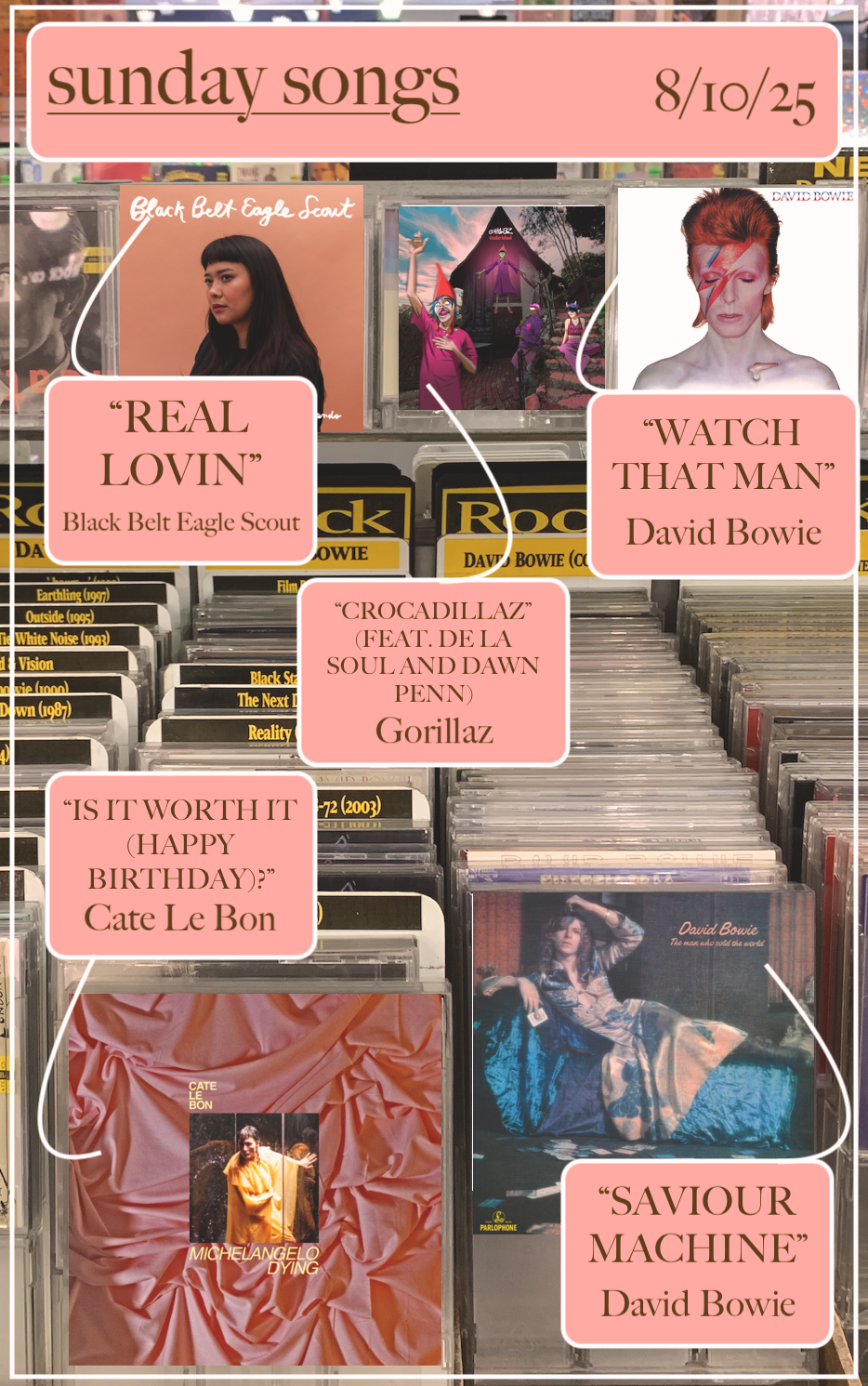
Posted in Sunday Songs

Sunday Songs: 3/23/25

Happy Sunday, bibliophiles!

Since I haven’t been able to post in a few weeks, here are the Sunday Songs graphics from that time:

3/9/25:

3/16/25 (or, NEW CAR SEAT HEADREST IN MAY, WE ARE SO BACK):

This week: you thought this would be a quick post after I haven’t been able to write regularly for two weeks? WOE, TEN MINUTE SONG BE UPON YE!

Enjoy this week’s songs!

SUNDAY SONGS: 3/23/25

“Love” – Hana Vu

One of the best surprises a concert can have in store is a good opener. There are infinite jokes about bad openers, half of which…well, might be dogging on perfectly fine artists trying to get their foot in the door, and half of them are true. I really do try to at least go into openers with an open (no pun intended) mind, because everybody has to start somewhere, no matter how big of an artist they’re opening for. But sometimes it’s just up to your taste. Even with some cringy performances, you can at least tell that they’re trying.

I saw Soccer Mommy about two weeks ago (stellar performance!!!! as always!! and the crowd had basic human decency this time, unlike the parasitic frat bros that populated her crowd last time) with Hana Vu as the opener. I kept my expectations low. I expected to just nod along and twiddle my thumbs, but I think I may have found an excellent artist! She came off quite shy, mumbling to the audience and asking us what we had for dinner, but once she started performing, it was clear that Soccer Mommy had a worthy match to her sound. However, if I had to compare Vu to anyone, it would be to Lucy Dacus—they have a similar brand of indie rock, both bearing warm, rich vocals and guitar-driven angst with no shortage of heart. Nothing can come close to “Night Shift,” but Vu clearly studied how that song goes supernova at the end. The closer to her most recent album, Romanticism, “Love,” like Vu’s performance before Soccer Mommy, starts out unassumingly, but quickly becomes a dramatic landslide aided with thundering drumbeats, strings, and Hana Vu bellowing as though into a cavern. The lyrics, as sparse as they are, come sung clutching a bleeding heart in both hands, staining everything within arm’s reach. It truly lives up to the drama of the album cover, with Vu draped in robes and with a sword pressed to her neck, modeled after Artemisia Gentileschi’s “Judith Slaying Holofernes.” Either way, Hana Vu has earned a tally in favor of the good opening bands I’ve seen—and a place in my more regular rotation of artists. A big thank you to Soccer Mommy for giving a platform to Vu’s talent, and thank you to Vu for the fantastic opening act!

…AND A BOOK TO GO WITH IT:

To a Darker Shore – Leanne Schwartz“I just want you to stay/You know I hate giving up/And oh, Well I guess it’s just me/Please don’t leave me alone/You know I can’t let you be…”

“Bad Timing” – Jim O’Rourke

Once my dad sent me this song, it was immediately relegated to my quiet instrumental study playlist. I shouldn’t say “relegated,” really. It’s a great song to peacefully study along with, but it keeps you on your toes. Ten minutes long and dense doesn’t make it sound appealing, but “Bad Timing” sounds like how those slow motion videos of flowers unfurling after the frost melts from their buds look. “Bad Timing” also proves my long song theory right with flying colors—the best ones have enough changes to keep you interested for ten minutes. This track in particular feels like two songs in one. The first is a homely, acoustic ditty, which peacefully bows out at the 2:50 mark, giving way to a chorus of plucked strings and, of all instruments that should sound shimmery, an accordion would be my last guess. Yet Jim O’Rourke pulls it off, making it shudder and glimmer along with the synths. You’re lured into a soft, ambient sense of security, but like rot climbing up the roots of a plant, O’Rourke tears away at the music, fiber by fiber, until the remnants are ablaze in distortion and ascending mayhem by the time you reach the eight and a half minute mark. It’s clear to me the magic O’Rourke made with producing almost all of Wilco’s albums—he has such a talent for taking a simple melody, stretching it out and contorting it as easily as a chef kneads dough. He put something entirely unassuming into the oven, and something wholly unexpected came out the other side once the experimental yeast rose.

On another note: I can’t for the life of me find who made the album art for Bad Timing, but it’s just so charming to me.

…AND A BOOK TO GO WITH IT:

Annihilation – Jeff Vandermeereverything becomes slowly, gradually unrecognizable and strange, just like the progression of “Bad Timing”

“Ends Meet” – Panda Bear

Brian Wilson is alive and well, but what I’ve listened to of Sinister Grift feels like a glimpse into an alternate universe where Brian Wilson got temporally airlifted from the ’60s into the 2020s and had to find his way around. That, and if he’d been given nothing but a knapsack full of various synths and electronic knickknacks to carry with him on his time-out-of-time journey. “Ends Meet” is the definition of psychedelic, constantly fading in and out of focus like ripples over sunlit water. Noah Lennox’s voice also feels piped in from beneath the shallows of a reef—released this February as it was, everything I’ve heard of Panda has been carefully crafted to be specifically summery and aquatic, at least in sound (see: “Comfy in Nautica,” “Ferry Lady”*).

The existential lyricism feels at odds with the music at first glance: Lennox is confronting what we all have to confront at some point in our lives: we’re all gonna die, so what else is there to do? His answer is as simple and as difficult as any: appreciate everything in it, bad and good: “And when it is my time/Dig it all.” It’s a lesson I’ve been chipping away at for the better part of last year, what with my difficulty in staying present and not projecting myself into possible futures (not the time traveling Brian Wilson ones, unfortunately), but the way that Panda Bear takes it musically seems different than most. Sonically, “Ends Meets” feels so daydreamy and almost dissociative—its head isn’t in the clouds, it practically is the clouds. Even the face on the album cover of Sinister Grift looks like their mind is somewhere else entirely. But that in and of itself is putting that sentiment of being un-anchored into music and into words. It’s a jarring pairing in concept, tackling this subject matter with such an acid-tinged, vacation-like musical landscape, but to me, it’s the feeling of letting go of that burden, of knowing that all you can do in life is appreciate every facet of it.

*the “Ferry Lady” music video is about as trippy as you’d expect, so if you’re sensitive to flashing images or eye strain, you’ve been warned.

…AND A BOOK TO GO WITH IT:

The Library of the Unwritten – A.J. Hackwith“They got a spot to bury you/It’s not news, you’re tremblin’ for what?/Just keep it in the groovе (Don’t let up)/But keep the doorways shut…”

“La Vie en Rose” (Édith Piaf cover) – Louis Armstrong & His Orchestra

I was never much of a Disney kid, but Wall-E, one of the first movies I saw in theaters as a kid, will always unlock a particularly special place in my heart. Star Wars was my true introduction to sci-fi, but the more I think about it, Wall-E was right up there in conditioning me to fall headfirst into the genre. Even now, in my twenties and watching Wall-E for a grade to analyze the gender dynamics for a class on Disney and gender…it broke me. I knew it would. Sure, Mark Fisher cites it by name in Capitalist Realism when he talks about how Hollywood has subsumed anti-capitalist resistance and yada yada yada, but…god, how could even the most shriveled soul not be moved by an almost newborn race of humankind returning to the same earth, babies treading over barren ground as the giddy captain gleefully lists off all the plants that can be grown in it? And you’re already crying? And then they hit you with “Down to Earth?” Diabolical.

Part of my class’s discussion on the gender dynamics of Wall-E, beyond how we’re socialized to see Wall-E and Eve as boy and girl even though they’re…intelligent machines with no gender to speak of, was how the viewer is socialized to show their relationship as romantic (and traditionally heterosexual) from the markedly older, “classic” media surrounding them. Notable songs and clips from Hello, Dolly! do the heavy lifting there, but in the barest sense, Louis Armstrong’s cover of “La Vie En Rose,” one of the more ubiquitously recognized love songs of this century, which plays when Wall-E first becomes romantically interested in Eve, adds to this effect. And while I see the argument, as women and gender studies/queer theory-pilled as I am, I really don’t think Wall-E is nearly as guilty as a whole cadre of other Disney movies who have improperly shaped particularly women and young girls’ views on how gender and romance should be. For me, “La Vie En Rose” feels as pure as Wall-E and Eve, in all of their innocent, nonsexual romance. Even as a little kid, only knowing Louis Armstrong from “What A Wonderful World” (and thinking that Grover from Sesame Street was behind the vocals), something about those piano flourishes unfurled a kind of petal inside of me. It’s one of the first examples I can name of a melody really scratching an itch in my brain. I’m next to illiterate when it comes to jazz, but Armstrong was clearly one of those rare people who could give his trumpet such an individual voice—by the end of the song, you could call it just as much of a vocalist as he is. Paired with the cinematography of Wall-E’s tire treads tracing neat lines in the trash-laden dirt, something about it felt so neat, so meant to be, a puzzle piece shifting into place. Both of them are clean, and yet not sanitized—they’re sweet, earnest, pure. A part of childhood me is warmed every time I hear this song, obviously, but even outside of that context, the soothing spell of this rendition is undeniable. As is Wall-E.

…AND A BOOK TO GO WITH IT:

The Cybernetic Tea Shop – Meredith KatzLouis Armstrong’s take on “La Vie En Rose” is obvious coffee/tea shop music, but combined with my Wall-E association, why not return to this cozy, tender tea shop in a distant future?

“Here Comes Your Man” – Pixies

The music video for “Here Comes Your Man” has to be one of the more uncomfortable music video experiences I can think of, not because of any particular content, but more because you get the overwhelming feeling that nobody wants to be there. Every time they pan to Frank Black or Kim Deal (or Joey Santiago, honestly), they look like they’re trying to telepathically kill the cameramen, Professor X style. They don’t want to be there, the camera crew doesn’t want to be there, and they don’t want you there either…oh, my bad, sorry for the intrusion. I’ll see myself out. For good reason, though—they were averse to making music videos, and when their label pressured them to do so, they famously decided to stick it to the man and gape their mouths open like fish while the lyrics were playing. Given…well, everything I’ve heard about Frank Black, it could easily just be them being petty, but for an underground band who were achieving success they didn’t seem to want, it’s understandable.

I always feel a kind of odd shame when I like That One Song/Album That Got Popular with a certain band that the band openly hates with a passion. If I’d had the time to write a post last week, I would’ve said the same thing for Julian Cope and “Someone Like Me”My Nation Underground is one of his poppier albums, and one that he wasn’t satisfied with. (See also: “Me Myself & I,” a song I love, but that De La Soul inserts “we hate this song” into live performances of the lyrics…yeah, you get the picture.) For Pixies, they weren’t satisfied with this pop song to the point where they almost never performed it live. But…it’s so good. Sure, it’s simpler and more accessible than some of their work, but they knew how to make one of the most iconic alternative pop songs. Most alternative rock fans would probably be able to recognize that bassline immediately, all thanks to the timeless talent of Kim Deal. There’s layers to the genius of it—the harmonies of Deal and Black, the vague, surrealist lyrics about homeless people boarding a train before an earthquake, the faint comfort and hope in spite of that. The chorus of “here comes your man” was a last minute addition, but it’s always given a kind of solace for me, ever since I was a kid, before I understood the lyrics of the verse. Even with the bleak nature of the verse, it’s always implied a kind of salvation or relief to me. Bottom line: sometimes, even if That Song got popular, it’s obviously popular for a reason, but how talented a band’s craft is can often shine through in the charts.

Sometimes. We don’t talk about “Creep.”

…AND A BOOK TO GO WITH IT:

If Tomorrow Doesn’t Come – Jen St. Judea similar kind of disaster-oriented scenario to the song, of people scrambling to safety in the wake of a planet-destroying asteroid.

Since this post consists entirely of songs, consider all of them to be today’s song.

That’s it for this week’s Sunday Songs! Have a wonderful rest of your day, and take care of yourselves!
Posted in Sunday Songs

Sunday Songs: 3/2/25

Happy Sunday, bibliophiles! I hope this week has treated you well.
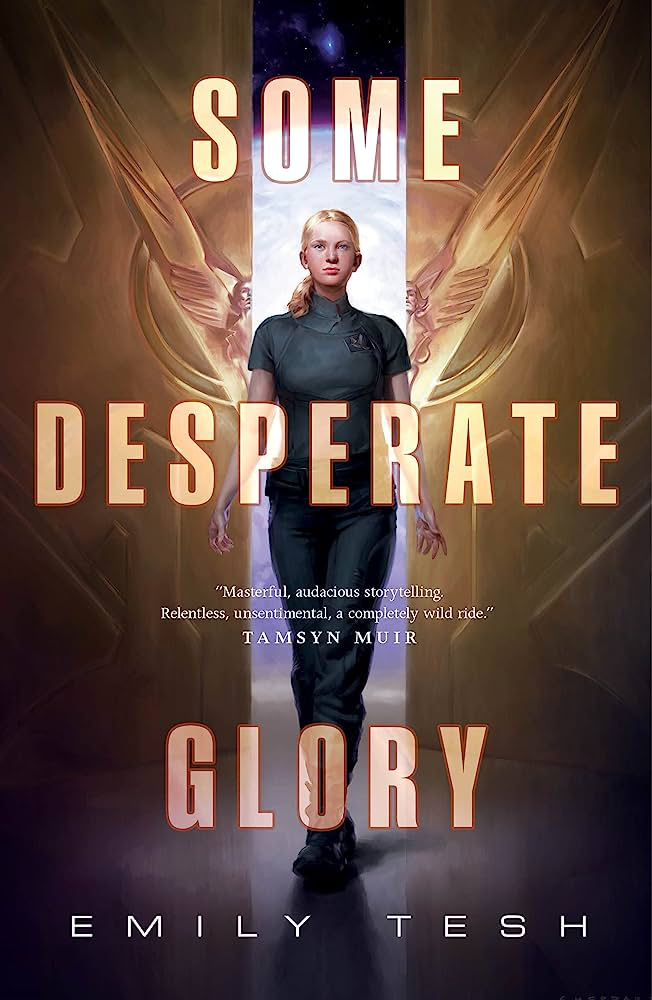
This week: were it not for me yapping about Horsegirl earlier this week, this post would be unfathomably long…sorry. Stick around for my rambling hitting concerning levels the minute I have more free time.

Enjoy this week’s songs!
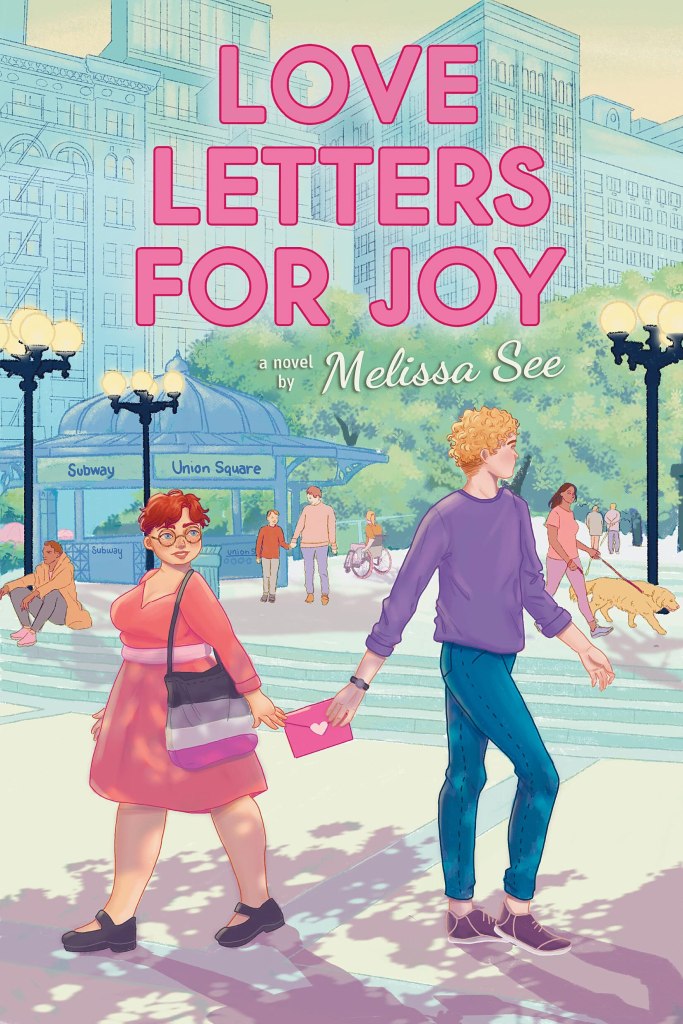
SUNDAY SONGS: 3/2/25

“Less Than You Think” – Wilco

Since A Ghost Is Born got its anniversary reissue a few weeks back, I took the time to listen to the album in its entirety for the first time…surprising, I know! That being said, I’d basically listened to all but two tracks on the album, but I hadn’t gotten to listen to it all the way through in the right order. After a childhood being fed Wilco by my dad about as much as I was fed milk as a baby (both were nourishing and necessary for my development), only two tracks remained: “Wishful Thinking” and this track. It’s songs like “Less Than You Think” that make me remember how much of a poet Jeff Tweedy is. I don’t say that about every singer; in the abstract, music is poetry set to song, but it doesn’t often feel that way. In this case, it’s understandable that the poetry of “Less Than You Think” gets lost in the other masterpieces in Wilco’s catalogue. But it’s not just a case of an underrated track—there’s a reason this one gets lost in the fray so often. For three minutes, it’s any normal Wilco song—one of their sadder ballads, but standard Wilco fare…
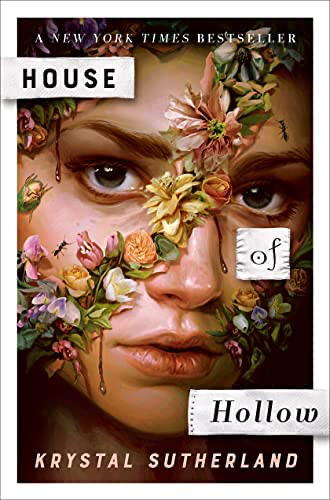
…and then you realize that there’s 12 minutes left.

That 12 minutes is entirely composed of a shrill, grating stretch of electronic droning and background noise from the studio. To say that it’s excruciating to listen to, especially with the volume up after listening to the actual song part, is almost an understatement. It’s unpleasant in every sense of the word. Yet that’s precisely the point. Not to be the “🤓☝️ erm ackshually, this nigh-unlistenable 12 minutes of noise has a deep meaning that’s essential to the understanding of the song,” but…it does. It’s unlistenable because it’s meant to be unlistenable—Tweedy and the rest of the band used this song to recreate the experience of having chronic migraines, a condition Tweedy has had all his life, but was exacerbated by his painkiller addiction: “I don’t know why anyone would need to have that expressed to them musically. But it was all I had.” Tweedy put “Less Than You Think” out anyway, knowing that it’d be “the track everyone will hate,” saying that “I know ninety-nine percent of our fans won’t like that song, they’ll say its a ridiculous indulgence. Even I don’t want to listen to it every time I play through the album. But the times I do calm myself down and pay attention to it, I think it’s valuable and moving and cathartic. I wouldn’t have put it on the record if I didn’t think it was great.” And he’s right. Being so experimental with this catharsis brings us so much closer to the experience than words ever could, as much as a master wordsmith as Tweedy is. Catharsis for a pain as profound as this doesn’t have to be listenable or tolerable to be worth putting out into the world—it’s catharsis, after all. Sure, I’ve skipped it every time I’ve listened to it since, but once again…that’s the point. We’re meant to sympathize with Tweedy’s pain, but even he admits that it’s not exactly easy listening. (Some absolutely diabolical individual in the YouTube comments called it “the best song to tee up on the bar jukebox right before you leave…” Satan, is that you?)

But that glorious, incandescent three minutes before you get the worst headache you’ve ever experienced? Deeply moving, in an entirely different way. They got me. They got me good with the sad bastard music. The piano is played with such a heaviness that you can only imagine it being played with lead weights strapped to each finger. Delicate taps of the dulcimer climb up an invisible ladder, each strike coinciding with Tweedy’s repetition of “Lightly tapping/a high-pitched drum.” And for a song that Tweedy knew would be an instant skip for most of his listener, he packed it with some of A Ghost is Born‘s most downright poetic lyrics:

“As your spine starts to shine
You shiver at your soul
A fist so clear and climbing
Punches a hole in the sky
So you can see
For yourself
If you don’t believe me
There’s so much less
To this than you think…”

Yeah, I pulled a Lisa Hannigan again. I’m tempted to just copy and paste all of the lyrics. Punches a hole in the sky? More like punches a hole in my soul, ow. Though the lyrics toy with the chaos of the universe and the clarity of realizing that maybe everything hasn’t been choreographed by a higher power, I can’t help but connect it with Tweedy’s migraines—all the talk of shivering and “Your mind’s a machine” sounds an awful lot how I imagine living with both migraines and addiction must feel: a cycle of dullness and excruciating pain, exposing how much of the brain has been devoted to going through the motions. As for the solemn resignation to atheism, it connects to that experience—it seems pain that immeasurable makes you either seek out or entirely swear off of religion without a happy medium. With or without words, Tweedy conjures a pain he had to exorcise from his person, yet is able to resonate if you’re willing to dig through the earth to find it. Sometimes you have to make art from agony in order to make the burden lighter, whether or not you give it to the world. In any case, Jeff Tweedy makes the pain worth weathering.

…AND A BOOK TO GO WITH IT:

Two Girls Staring at the Ceiling – Lucy Franktold in sparse verse, these two characters go through a similar pain as they work through chronic pain diagnoses in the same hospital.

“Big Time Sensuality” – Björk

Today, on: Madeline listens to Björk’s discography wildly out of order…we’ve come to Debut. It’s another one of those albums that I’d listened to about half of already, but it was just track after track of honed energy and happiness…seriously, this album couldn’t have come at a better time in my life. I think listening to Post about this time last year and Debut now feel aligned with my life in some way. A lot of Björk’s experience at the time was drawn from moving from Iceland to the UK in her late twenties, and being adventurous, putting out her feelers, and embracing the newness of it all, taking everything in (see: “Enjoy”). In some ways, I feel a connection to that kind of exploration. Now that I’ve shed most of the apprehension of freshman year (though definitely not all), I feel like I’m slowly beginning to grow into a new place, a new home, a new environment. I know I’m a little dramatic about that…I’m going to a college that’s less than an hour away from my hometown, so I can’t quite compare. But there came a time when I realized I was living in a whole new place, and I’d barely scratched the surface of everything in it. After the initial crisis, I’ve begun dragging my friends to whatever new place that I can find. Baby steps, but I’m slowly cataloguing new restaurants that I’ve tried. New routes to class. New coffee places on campus, now that Starbucks jumped on the DEI-stripping bandwagon. I’m not throwing myself headfirst into a new city, immersing myself in the early ’90s rave nightlife like Björk did, but I can’t help but connect to that apprehension, that excitement of really knowing you’re somewhere new, physically and emotionally. I’d do well to take it to heart the more I grow up.

“Big Time Sensuality” embodies Björk’s absorption of ’90s house music while in London, and even though it’s far from the weirdest part of her catalogue, you can’t take the weird out of Björk. Even amidst the house beats behind her, you can’t erase the skyrocketing highs and growls that, even for her firs solo effort, were already staples of her vocal style. Despite what the title would have you believe, there’s nothing necessarily sexual about it, yet it retains the ecstasy you’d think it would have. This ecstasy, however, comes from a common theme on Debut: reaching out and taking risks to soak the fullest out of life: “I don’t know my future after this weekend/And I don’t want to.” Its heart is imbued with the rush of friendship, throwing your passion into your music, and independence in a few environment: Björk told David Hemingway that the song’s inspiration came from “[Creating] pretty deep, full-on love relationships with friends…I can be a coward a lot of the time and there comes a moment when I write a song when I get quite brave.” “Big Time Sensuality” throws itself face first into uncharted waters, all with a dimple-stretching grin. Björk’s already diverse vocal range embodies the chorus of “It takes courage to enjoy it/The hardcore and the gentle.” And the music video, directed by Stéphane Sednaoui, embodies that daring joy, with Björk dancing on the back of a truck bed driving through New York City, baring her grin for all to see.

…AND A BOOK TO GO WITH IT:

A Closed and Common Orbit (Wayfarers, #2) – Becky ChambersLovelace’s journey of having a body, separating herself from her old identity, and being a part of the sapient world mirrors much of the eager excitement of Debut.

“I Am The Fly” – Wire

All the cool people like Wire. I’m not saying that to assert that I’m [snaps fingers] hip (that alone proves that I’m really not). It’s more that if you rattle off any creative, clever band from the past three to four decades, they all name Wire as an influence–Sonic Youth, R.E.M., and Soundgarden are just a handful of people touched by their music, and you can hear their genealogy in grunge, hardcore punk, and even Britpop. (Heavy on the Britpop. See Elastica’s “Line Up,” one of several songs that Wire took Elastica to court over claims of plagiarism.) Want proof? How about Wire playing with Jon Spencer and St. Vincent back in 2015? See what I mean? They’re the great uniters. All the cool people like Wire.

For all intents and purposes, Wire left their more punk sound behind with Pink Flag (see “12XU”), trading it for a minimalist, synth-dominated sound on Chairs Missing. To my ear, it sounds like the musical equivalent of brutalism; to the touch, every texture is rough as concrete, but every edge is sanded down to absolute straightness. Graham Lewis’ thick bass dominates the sound, rippled through with guitars, handclaps, and a wall of synth so dense that it becomes more percussion than the actual drums. I can’t help but hear some leftover punk not in the sound, but in the lyrics. Houseflies don’t sound particularly punk at first glance (nor does Graham Lewis’ apparent thing for writing about winged insects on this album)—they’re more for being stepped on by a pair of massive docs than the subject of a song. But yet, this simple animal becomes so deeply punk: “I am the fly in the ointment/I can spread more disease than the fleas/Which nibble away at your window display.” At its core, punk is has always been about disruption, whether that’s in the abrasive quality of the music or grating against the establishment. A fly is a fundamental nuisance, a tiny speck of a creature that, as the song says, spreads disease so easily, ripping up the threads in the fabric of something pristine and perfect. No matter how many swings you take at them with a flyswatter, they always come out, reproducing rapidly…just like disease, and just like resistance. Even with the dry intonation of the lyrics, it reads to me as a deeply proud song, a finger crossed behind the back and a smirk on the face as the time bomb counts down its last second. It’s a promise, and it’s a declaration of purpose: disturbance.

…AND A BOOK TO GO WITH IT:

Countess – Suzan Palumbo“But there’s an air-pellet hole/I can crawl through to you/I am the fly in the ointment/I can spread more disease than the fleas/Which nibble away at your window display…”

“Frontrunner” – Horsegirl

See my review of Horsegirl’s new album, Phonetics On and On; bottom line, I LOVE HORSEGIRL. WE ARE BETTER FOR THEIR EXISTENCE.

…AND A BOOK TO GO WITH IT:

If You Still Recognize Me – Cynthia So“In the morning, when you’re sleeping/I can’t wait and I can’t wait to compromise…”

“Amelia” – Cocteau Twins

How does it feel? How does it feel for those of you with the right names to share a name with a Cocteau Twins track? For all of the Loreleis, Amelias, Beatrixes, Ivos, Carolyns, etc…do you realize how lucky you are?

Out of all of the Cocteau Twins songs I’ve heard, “Amelia” is one that embodies their general qualities the most, taken almost to an extreme. Regardless of whether or not I could hear the lyrics even if they weren’t nonsensical, they’re sunken so deep into the production that they become a kind of fog-like mist. The unmoored, bass-less flow of the track reminds me of something off of Victorialand, a record where bassist Simon Raymonde was notably missing. Liz Fraser’s vocals are as textural as ever, uttering a whole menagerie throat-fluttering bird calls amidst a barrage of gated reverb that descends upon you like the patter of heavy rain on a windshield. Next to some of their other tracks, it feels slightly less cohesive—the intensity of the gated reverb, reverb’d into high heaven as it is, doesn’t completely mesh with the airiness of the vocals or the other instrumentation. Somehow, it’s almost comforting—the Cocteau Twins stand out to me as a band who truly found their niche and stuck to it, digging in their heels to make that niche as unique and them as possible in the most artistic and adventurous way. Weirdly, it comforts me that it took them time to get their rhythm down, and even then, their earlier steps still blow me away. “Amelia” certainly does—the sheer variety of vocal styles that Fraser layers over one another is proof that even on a record that the band famously hated, their nascent talent couldn’t help but shine in its own way.

…AND A BOOK TO GO WITH IT:

Meru – S.B. DivyaI can only imagine that the experience of being a god-like Alloy and floating in space sounds something like the Cocteau Twins.

Since this post consists entirely of songs, consider all of them to be today’s song.

That’s it for this week’s Sunday Songs! Have a wonderful rest of your day, and take care of yourselves!