Posted in Sunday Songs

Sunday Songs: 1/14/24

Happy Sunday, bibliophiles! I hope this week has treated you well.

I…whoops, well, I forgot to mention this last week, but I’ve been writing Sunday Songs for a year now! This experience has given me a ton of room to learn about both myself and how I write about music (lesson #1: I should not write these posts in a single day), but I hope you all have enjoyed it as much as I have been. And I think the book pairings make it more fun, so I hope you’re all getting something out of them as well.

TRIGGER WARNING: one of these songs addresses abortion, so if you find this triggering, skip through the section on “Bellyache.”

Enjoy this week’s songs!

SUNDAY SONGS: 1/14/24

“The Girl Who Fell to Earth” – Gaz Coombes

To begin this post: shoutout to a) musician parents who create the most beautiful pieces of music in honor of their children (David Bowie set an unattainable precedent for that kind of thing, as he regularly did, but it doesn’t negate everything else), and b) parents who wholeheartedly support their neurodivergent children. The latter is a low bar, but you’d be surprised at how many people don’t reach it. So thank you firstly to my wonderful parents, and also thank you to Gaz Coombes.

I’m in the opinion that Gaz Coombes is severely under-appreciated; I’m guessing a lot of people mostly remember him from Supergrass, and what they remember of Supergrass is “Alright,” which, of course. It’s a fantastic song. (Also proof that the Clueless soundtrack was nothing but bangers.) But there was so much creativity and joy that was branded into the rest of Supergrass’ career, and that extended far beyond to Coombes’ more recent solo career. I’m still newish to it, but even from a handful of songs heard over the course of a decade or so, it’s clear that he just cannot stop making incredible songs, whether it’s a one-off covers album with fellow Supergrass bandmate Danny Goffey (maybe all that creativity was reserved for the music, because…man, there’s something weirdly uncomfortable about naming your band the Hotrats…) or the solo albums he’s steadily been putting out since the early 2010’s. They aren’t all hits, but when Coombes hits it just right, it feels like a call to arms, even if it’s lyrically different. There’s always a chugging, purely rock rush, an instantly swelling gravitas he brings to his best works, whether its the echoing call of “Long Live the Strange” or the instantly palpable urgency of “Detroit.”

“The Girl Who Fell to Earth” captured in my heart like the latter two songs, but not necessarily in the same way. There’s no assault of rushing guitars and choir on this one, and that’s not what it needs. It’s much quieter, and deeply tender that hit a note that I wasn’t expecting it to hit when I saw the title and my lizard brain went “oooooh ehehehehe space” and clicked on it on a whim. It scratches a highly specific, primal itch that not a lot of songs manage well. It’s one thing to make a song about being an outsider and making a song that caters to outsiders—I eat those up regularly, mark my words. But songs about loving an outsider—giving them care and appreciating them in spite of what others see as flaws—claw into my heart more deeply that I’d care to admit. No, it’s fine. I’ll admit it. I am not only deeply weird and proud of it, but also deeply sentimental. I walked into this song like Wile E. Coyote walking straight off a cliff, hovering in midair, and then dropping to the unfathomable, unforgiving depths below, only to come up with a comically large bruise on my head. (“Oh, look! There’s a large triangle of Swiss cheese in the vicinity! Surely there will be no strings attached…wait, where’d the sun go—”) There’s a reason I played “Beautiful Freak” by Eels into oblivion when I was in middle school. I wasn’t subtle. (Neither was my habit of watching Hellboy II: The Golden Army about once a month.) As much as later middle school me tried to fashion myself as somebody who wasn’t reliant on anybody (it was easier to do that when I had mostly shitty friends), I feel like a fundamental part of being an outsider is wanting to see yourself elsewhere—enough that it doesn’t become mainstream again, but enough to know that you’re not alone in this incomprehensible mess of a world that wasn’t made for us. I was a softie at heart, and that has never changed. It doesn’t matter what kind of love it is—we do want to be loved, in the end, somehow. And it’s made even more precious when you grow up and think that the world will never love you back. Every kind of love can be applied to this song, similarly to “Beautiful Freak”—it’s a universal arm around the shoulder to anyone who has ever felt othered, a clarion of warm acceptance towards the complexities of being on the fringes. (This song was apparently featured in a show called Modern Love, so they seem to have taken it the romantic way.) But knowing that Gaz Coombes wrote this about his autistic daughter makes the tenderness in my heart balloon even more than the initial emotion of that first listen. It gives me hope, to say the least, that there are people out there who are wholeheartedly accepting neurodivergent children in a world that still highly stigmatizes autism, among other conditions. Not that I ever thought that Gaz Coombes was horrible before this, but I respect him so much more not just because “The Girl Who Fell To Earth” exists, but also that he’s giving his daughter the childhood she deserves.

To all the girls who fell to Earth: you’re not alone.

…AND A BOOK TO GO WITH IT:

Heart of Iron (Heart of Iron, #1) – Ashley Poston – off topic, but it’s crazy to see how much Ashley Poston has taken off in the past few years! This will always be my favorite book of hers, but I’m so glad to see that she’s finally getting the acclaim she deserves.

Some sort of sci-fi romance was always going to be the pairing for this song, but the minute I heard “warrior child”…yup. Step right up.

“Rocket’s Tail” – Kate Bush

If you told me to guess the artist of a song that’s unexpectedly emotionally soul-vibrating but was literally just inspired by a cat, I’d immediately guess that Kate Bush had made it. She doesn’t always hit it for me, but when she does, I just about collapse. Of course she just saw her cat being a silly little creature and decided to squeeze the most primal emotion out of it. Just for kicks and giggles, y’know?

Just like she made the grooviest song about getting transformed into a kite against your will (at age 19, no less), she somehow got one of the only (mostly) a capella songs that makes me really feel things from “I’ve got a cat named Rocket and he’s cute lol,” basically. Like most of her songs, what’s on the surface isn’t necessarily what matters; it would have been 100% on brand for her to intentionally write a song about strapping a canister of gunpowder to your back and becoming one with the rocket, but what Rocket the cat apparently inspired her was the fleeting joy in spontaneity—to her, ”there’s nothing wrong with being right here at this moment, and just enjoying this moment to its absolute fullest, and if that’s it, that’s ok, you know. And it’s kind of using the idea of a rocket that’s so exciting for maybe 3 seconds and then it’s gone.” That alone would have made for an excellent song, but there’s nothing like the chorus that opens the song—the harrowing, wavering harmonies of Trio Bulgaria, for whom Kate Bush partially wrote the song to showcase their voices, transport me back to some early, Pleistocene state. I feel like I’ve been summoned to hoist up my spear and join my clan to take down a mammoth, or something. Bush just generates that effect with many of her harmonies—the songs that I love most of hers are the ones that tap into the urge to drop everything, grow my hair long, and sprint through the woods in a flowing, white dress. (see: not to be That Pretentious Music Person, but my favorite song of hers, the B-Side “Burning Bridge.”) The harmonies she concocts, whether or not it’s her singing, are incredibly effective on that front. I would’ve bought into all of this song if it was all that it was, but of course, Kate Bush, being Kate Bush, knew that the only thing better than “Rocket’s Tail” was “Rocket’s Tail” with the most glorious guitar solo kicking in right at the moment the rocket launches. Performed by Dave Gilmour, no less. That’s how you make a song.

…AND A BOOK TO GO WITH IT:
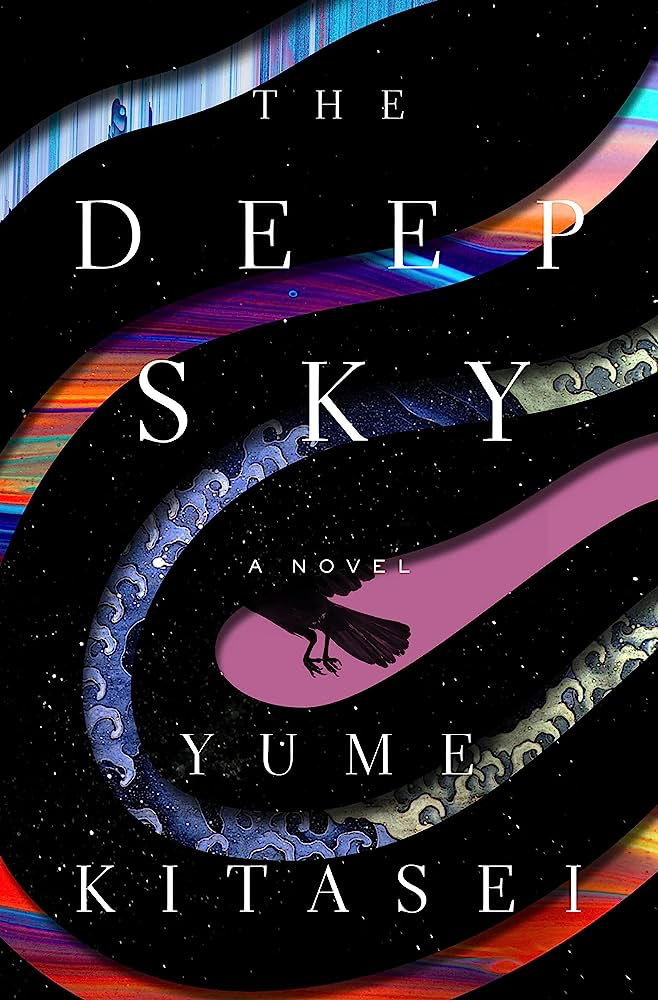
The Deep Sky – Yume Kitaseithe pure, emotional resonance of “Rocket’s Tail” lends itself to this song—can’t you imagine this song playing between vignettes of Asuka’s crisis on Earth and the launch into space?

“Bellyache” – Echobelly

Ever since my Blur Breakdown™️ back in mid-2021, I’ve been grasping at all of the Britpop I can get my hands on. (Well…not all the Britpop. Not to be That Blur Fan™️, but every Oasis song I’ve hear just make me seethingly angry. Also, I can’t shake the gut feeling that both Noel and Liam Gallagher look like they’d call me every applicable slur without hesitation.) Granted, Blur has mostly dominated my extended Britpop Breakdown™️, but I’ve dabbled in a fair bit of Pulp (probably concerning how many times I listened to “TV Movie” back in 2022) and Suede, and I’ve been neck-deep in Supergrass and Super Furry Animals since I was old enough to comprehend music as a concept. Part of what most agree defined the genre was social commentary—specifically on British life, as the name suggests, but for at least until it became more of a tabloid battle of the bands mess, that was the foundation that albums like Parklife (AAAAAAAAAAAALL THE PEOPLE) and songs like “Common People” (I haven’t seen Saltburn yet but I’ve heard about the Pulp joke…genius) were built upon. But even though said commentary was appropriately potent and often as clever as can be, there’s only so much you can do with it in a genre that was fronted by mostly white men. I’ve yet to get into the more women-fronted faces of Britpop (Elastica and Sleeper and such), but Echobelly caught my eye not just because it was women-fronted; again, in a sea of mostly white men, here was a band fronted by Indian-born Sonya Madan, and featuring Debbie Smith—a Black woman—as one of the band’s guitarists.

And even from the sparse handful of songs I’ve sampled from them, it’s already clear that Madan succeeded in her mission to highlight the areas of social commentary and topics that not just Britpop, but much of mainstream music in general, rarely shed light on. Not only that, but many of them weren’t just lyrically clever, but clever enough that they’re not immediately evident on the first listen. A first go-around at “Bellyache” seems like something about a relationship gone sour—the chorus’ repetition of “What do I care/what do I care now that it’s over” could easily point in that direction. Much of the instrumentation points to that kind of embittered bite—the clean guitars are undeniable, but all cloaked in a layer of scratchiness and grime that makes it feel as grainy and obscured as the background of Everyone’s Got One (an album title that was partially created to make the acronym “E.G.O.”). But Madan specifically wrote this song about a friend getting an abortion—the lyrics hit me right in the face the minute that I found that out, but it speaks to Madan’s songwriting ability; not only was this a pretty taboo subject to address at the time, especially as one of EGO‘s lead singles, but it transformed such a deeply traumatic experience into something that could fly under the radar when needed, but still retained the emotional weight needed to address it. Just because it’s not immediately evident doesn’t mean that it doesn’t portray the trauma of both Madan and her anonymous friend. It’s obvious that there’s no easy way to write about this subject, but personally, Madan’s method is as tactful a way that I can think of.

…ANDA BOOK TO GO WITH IT:

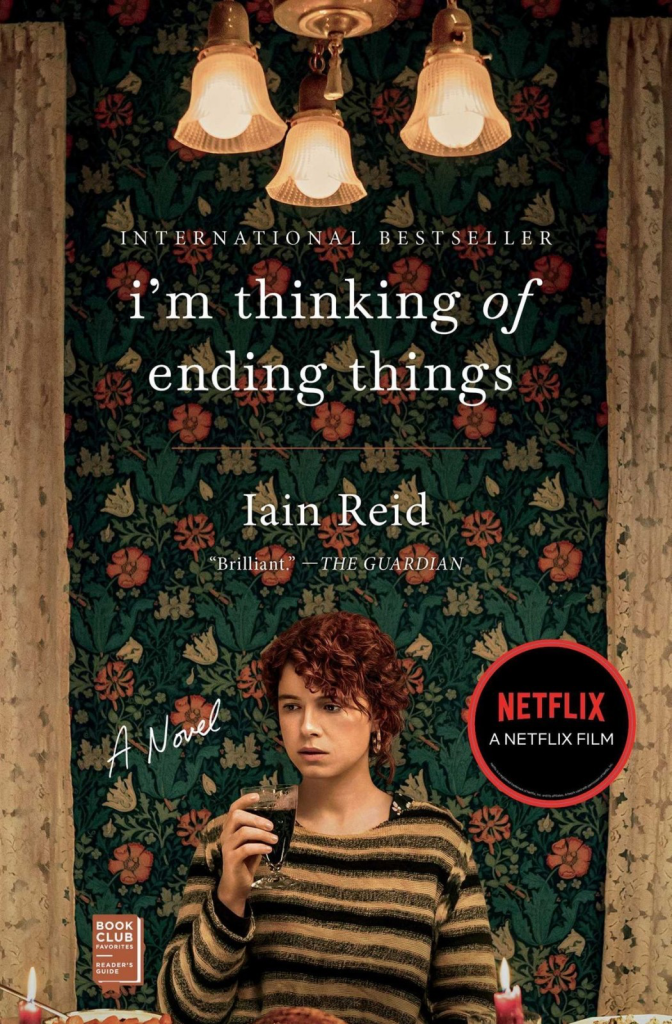
I’m Thinking of Ending Things – Iain Reidalthough the trauma itself is different from the song, this novel crafts a similar sense of unease and discomfort—and addresses trauma in a similarly clever way.

“Beehive” – Mark Lanegan Band

This is the last song I’d pick for a coming of age movie, but I just have such a vivid memory attached to it from when I was in middle school. I was with all the girls in my class at a friend’s house before the graduation dance, at the end of 7th grade. We were all having snacks in her backyard. It was probably mid-May, warm with the promise of summer. And I was on her swing set, swinging as high as I could, and all that was going through my head was this song. Not a firecracker summer yet, but pretty close. The manicured grass was damp and glowing with the light of the afternoon fading into evening. Middle school as it was, everything felt greener.

Even though “Beehive” has been coming back to me in waves since that moment when I was 13, I’d never seen the music video until then. I almost wish I hadn’t seen it, since the image that I have in my head of it is so clear; it feels like there should be gray walls in a dilapidated house, blinds being rattled in the wind from freezing wind, household objects flying like a tornado around a crouching, shadowed figure, and speakers crackling with lightning, like the song says. Basically like this scene from Legion. But the trailer park vampire couple fits in their own way. Let’s hope that they get back home before the sun comes up. Stay safe, y’all.

Somehow, I’ve mostly appreciated Mark Lanegan through his solo work—I distantly know about his work with the Screaming Trees and Queens of the Stone Age, but most of what I hold closest is from more recent albums like this. I always think of how strange it is that I felt the sadness that I did when he passed back in 2022—in the grand scheme of things, I really only know a handful of his songs, and yet the ones I do know have etched themselves so distinctly in the musical map of my lifetime, even in the most fleeting of memories (see also: “Carnival”). They weren’t necessarily the kind that helped me through dark times or lifted me up in the bright ones, but they were just so clear that they were uniquely there, like the kind of painting you see at an art museum that hangs itself up in your brain the minute you lay eyes on it. (It was also late February when I heard the news, freezing and slushy, and we were driving home from the airport, so part of the miserable air can probably be attributed to February™️ and the sensory hell of the Denver Airport. Neither are pleasant.) “Beehive” just has such a specific atmosphere to it that I can’t attach to any other song. Even if the background of the minimalist Gargoyle album art wasn’t that shade of light gray, it would instantly call to mind that roiling, warmish shade of gray of the sky brewing up a storm above a beach with churning waves carving fingerprints onto the shore. I remember it like I remember being in Boca Grande some years back, watching storm clouds churn into themselves above the graying ocean through the window of a hotel room. Lanegan’s gravelly, raw-throated rasp buzzes just like the bee’s nest in his head, making the imagery of “lightning coming out of the speaker” and “press[ing] my body against the window/In an electric storm” uncommonly vivid in my head. It’s a song worth dragging your chair up to listen to, no matter your experience with Mark Lanegan.

…AND A BOOK TO GO WITH IT:
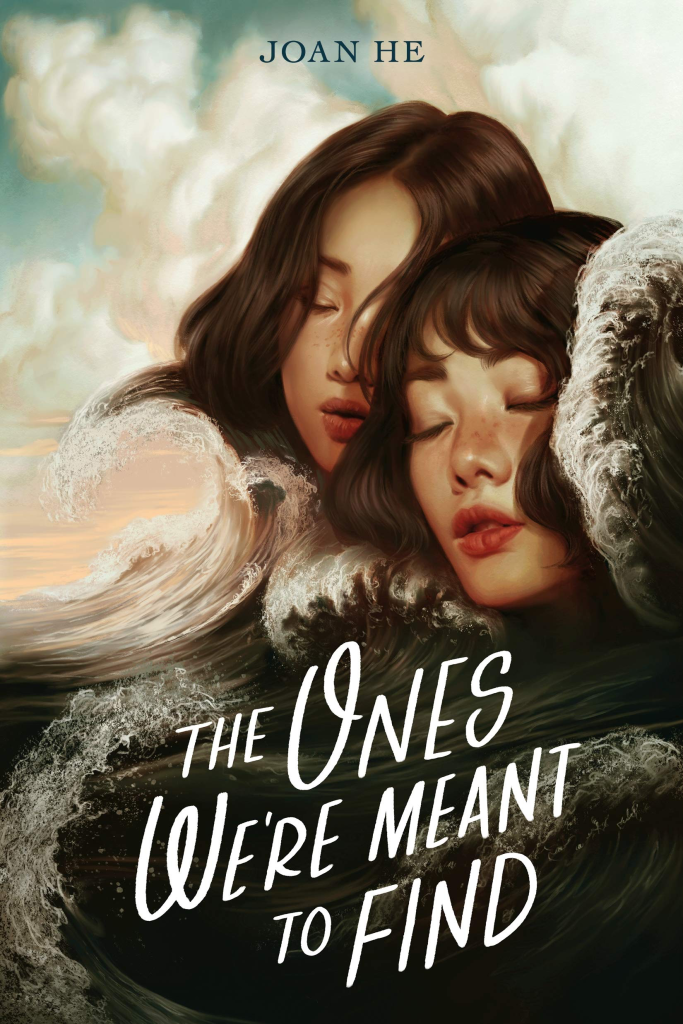
The Ones We’re Meant to Find – Joan Henot a lot of songs have the combination of sounding like a summer storm and crackling electricity at the same time. Not a lot of books pull off both either, but this one does.

“Why’d You Only Call Me When You’re High?” – Arctic Monkeys

I sit at my laptop, pasting the link to this song into this post. I change into a tennis skirt, docs, and a striped top. You suddenly see the world with a slightly grainy filter. You can’t place the color, but something has shifted. Only two words come to mind: “Tumblr” and “aesthetic.”

I leave.

…AND A BOOK TO GO WITH IT:

Stars and Smoke – Marie Lusimilar atmosphere of nightlife, late-night calls, and romance.

Since this post consists entirely of songs, consider all of them to be today’s song.

That’s it for this week’s Sunday Songs! Have a wonderful rest of your day, and take care of yourselves!

Posted in Sunday Songs

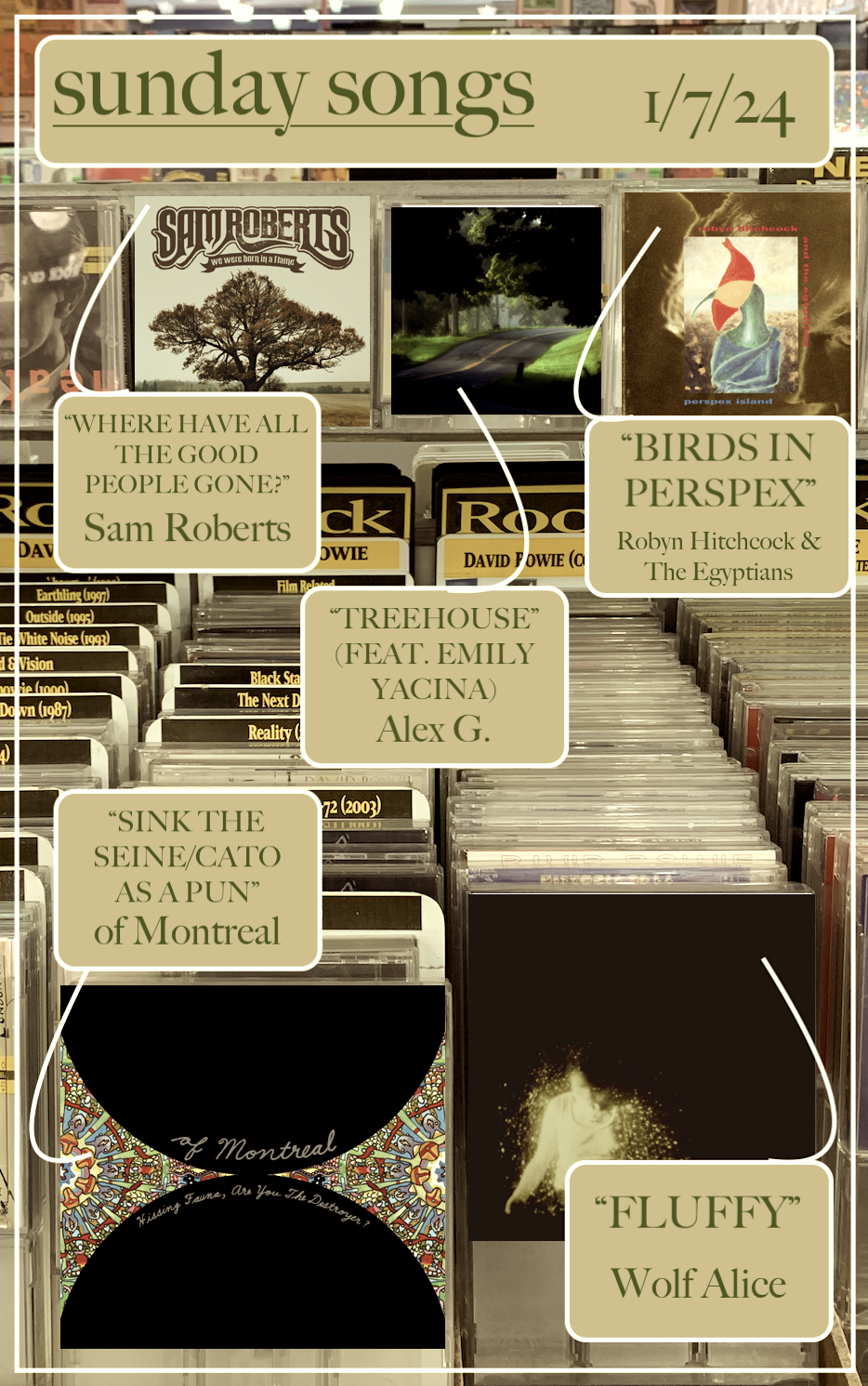
Sunday Songs: 1/7/24

Happy first Sunday of 2024, bibliophiles! I hope the first week of the year has treated you well.

We’re starting off the year with: songs I’ve rediscovered from scattered parts of my childhood, songs that feel like childhood, and more song titles referencing Norway in a single album than anybody bargained for. Certainly not me. Only thought that Kevin Barnes only sprinkled them in three at a time.

Enjoy this week’s songs!

SUNDAY SONGS: 1/7/24

“Sink the Seine/Cato as a Pun” – of Montreal

I don’t know how it took me this long to listen to Hissing Fauna, Are You the Destroyer? given how much of Montreal dominated my taste in my freshman year of high school. Chances are it’s because Radiohead came along shortly after and I never recovered, but it’s still taken me an embarrassingly long time to come back to this album in its entirety. And yes, it’s pretentious as all get out—the album (as well as anything from of Montreal’s catalogue) is full of songs with titles like “Heimdalsgate Like a Promethean Curse,” “A Sentence of Sorts in Kongsvinger” and “We Were Born Mutants Again with Leafling.” (There is a song that’s over 10 minutes long in the mix, how’d you guess?) But aside from the in-built pro that you don’t need to put “of Montreal” after the song titles when you google them (I’d be hard-pressed to find another, completely original song called “Labyrinthian Pomp”), it’s pretentiousness that I can indulge in; there’s no denying that Kevin Barnes is showing off their literary/historical/etc. chops, but it’s both so clever and so catchy that there’s no denying the goodness in it.

Even within an album where almost every title warrants English class-level analysis (and then turns out to be not that deep half the time), there’s always time to dance. (Go back to “Heimdalsgate” and “Sentence.”) If there’s anything that Barnes has mastered in their prolific career, it’s how to make any kind of crisis catchy, be it religious, romantic, existential, or otherwise. I’ve lumped “Sink the Seine” and “Cato as a Pun” together because they’re essentially the same song, but I don’t mean that in a derogatory way at all—although the album is made so that each song smoothly transitions into the other, the brevity of “Sink the Seine” and the underlying themes that bleed into “Cato as a Pun” make it a very singular narrative within the plentiful dirty laundry aired in Hissing Fauna. “Sink the Seine” starts out with an almost fawn-voiced Barnes searching for the person they once knew after distance has grown between them—I’m assuming the Seine they’re referring to is the river, but there’s a desperate drowning that they’re at first willing to do—the impossible task of sinking a river in their quest to find the past in a present form. But by the time “Cato as a Pun” rolls around—and, contrary to the people arguing on lyric websites here and there, is apparently just referring to someone’s cat named Cato—it’s much more bitter and up-front; now, the desperation has grown into wanting this person to “play with [their] head” just to obscure the fact that so much of a gulf has grown between them. Barnes has frequent, literary bangers when it comes to their usually purple prose-y lyrics, but there’s no denying that their talent is no less evident in their undressed lyrics—”What has happened to you and I?/And don’t say that I have changed/’Cause man, of course I have.” Efficacy in getting your message across isn’t a one-way street—just ask Kevin.

…AND A BOOK TO GO WITH IT:

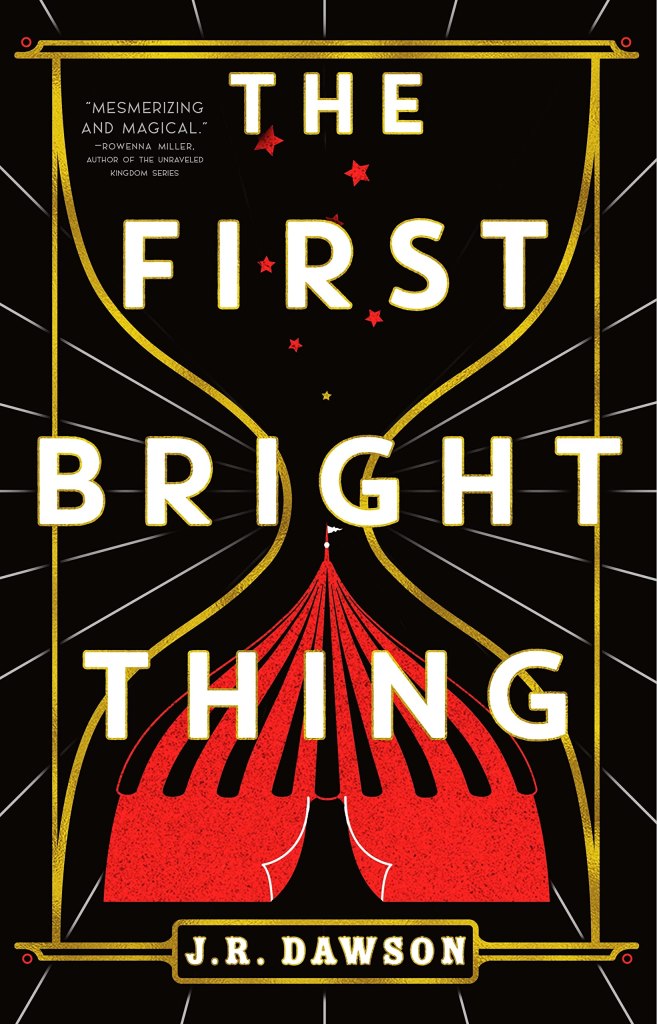
The First Bright Thing – J.R. Dawsonboth of these songs combined bring the complicated relationship between the Ringmaster and the Circus King in this novel—especially the distance and plentiful mind games.

“Fluffy” – Wolf Alice

Nothing like a neutered cat to inspire a song, huh? Or at least the video, at any rate…either way, it’s funny. Pour one out for poor old Fluffy.

I may not be a fan of pop-punk (why does it even exist? It’s like they just said “let’s make punk commercial, even though that’s exactly what punk isn’t supposed to be”), but I’m still a sucker for a loud, screamy song about recklessness and breaking away from the mold. It’s the kind of music that makes for good additions to character playlists. This one’s gonna wind up on one of mine someday, mark my words. Up until this point, my introduction to Wolf Alice was through what seems to be the more disparate ends of their musical spectrum; way back in middle school, I got attached to their indie friendship anthem “Bros” through the radio (and what a joy it was to hear it again in season 2 of Heartstopper), and a few years back, I heard the much more refined, but heavier “Smile,” from their most recent album, Blue Weekend. “Fluffy” is on the heavier side, for the most part, and it feels like one of the better takes on the age-old “I wanna get out of this town” song (see again: pop-punk). It’s got none of the whine that usually comes along with the subject matter, and the jagged, bitter bite that it was missing all along. You really do feel like this song was born in a dilapidated junkyard, or even the rusty back alley that parts of the music video were filmed in. If anyone else did the sarcastic shout of “Sixteen/so sweet!” in the chorus, I’d roll my eyes without a doubt, but Ellie Rowsell gives it the raspy, pent-up rage that many a musician has been going for. And there’s nothing like pounding, crunchy guitars to accompany that. This is angst done right, for sure.

…AND A BOOK TO GO WITH IT:

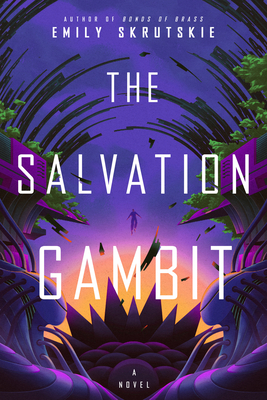
The Salvation Gambit – Emily Skrutskiethe thrill-seeking lyrics, combined with all those crunching guitars, are the perfect fit for Murdock, this novel’s fiery protagonist, in both the past and the present.

“Where Have All The Good People Gone?” – Sam Roberts

Here’s another one I have to thank my dad for—somehow, I find myself missing this song, even though it’s finally in my ears after going so long without hearing it.

“Where Have All The Good People Gone?” was a distant drifter in my childhood—I swear that I have a memory gathering cobwebs in the back of my mind of hearing this song playing from the speaker on our old TV, back when we played our music from my parents’ chunky iPod. And I feel like even if I had known Sam Roberts’ name (and the name of this song) beforehand, I wouldn’t have thought anything of it. Poor dude’s cursed with one of the ultimate “just some guy” names aside from…I dunno, John Smith? When you google his name, this particular Sam Roberts, as far as his solo career is concerned, doesn’t show up until the 5th link. (At least his Sam Roberts Band shows up first. There’s that. Then it’s mostly a radio personality named Sam Roberts??) But it seems like he has plenty of acclaim in his native Canada, so I guess we Americans are most of the ones scratching our heads to try and come up with his name. Even this song didn’t pop out to me as familiar until I heard him sing the chorus—”where have all the good people gone?” And then it clicked. Random childhood memory that I didn’t even know that I’d stored: accessed. Elvis Costello was the comparison that immediately came to mind—it certainly has a much more distinctly 2000’s indie/folk-rock flavor, but lyrics like “Oh, the Milky Way/Has gone a little sour/The leaves dried and the flower fell away” or “The modern world is a cold, cold world/And all I meet are cold, cold girls” (maybe you’re the problem? Kidding, but…) just reek of that practiced tightness that Costello represents for me. But as opposed to the smart suits and sunglasses of Costello (or…the green shirts, even),”Where Have All The Good People Gone?” is all stomping boots, jean jackets, and patches of dust, and not in the country pastiche kind of way. It has no trouble feeling exactly how it wants to feel.

…AND A BOOK TO GO WITH IT:

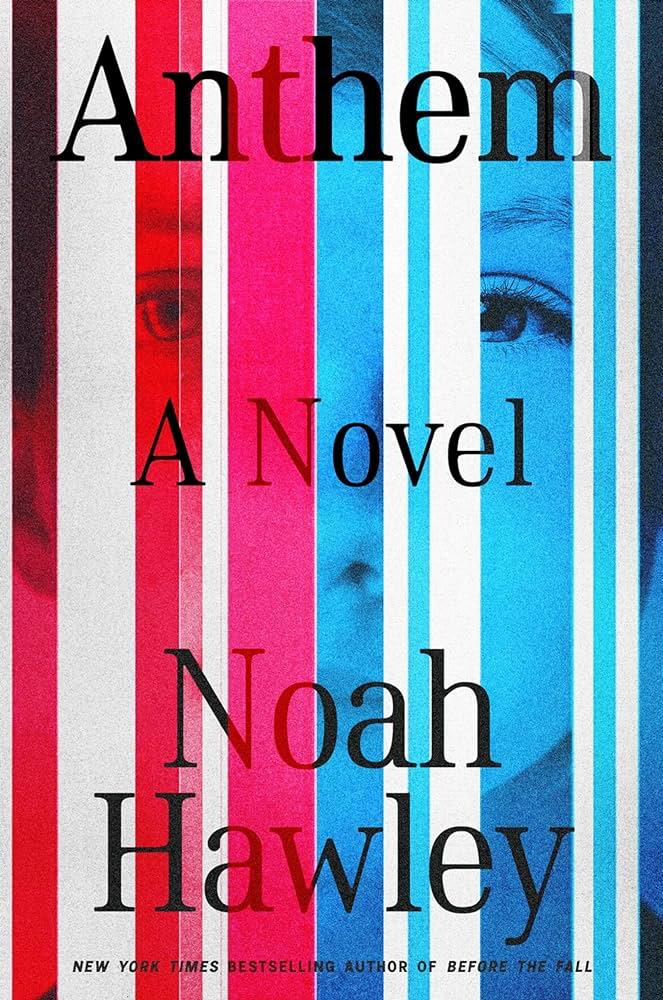
Anthem – Noah Hawleythis book is decidedly leagues more bleak and fatalistic than Sam Roberts seems to be, but at its core, it asks the same question: where have all the good people gone?

“Treehouse” (feat. Emily Yacina) – Alex G.

Somehow, this didn’t surface in the weeklong period in early 2020 where I ferreted through a few Alex G songs on a whim and then forgot about him. He’d always been a specter on my Apple Music—every time I went back to Car Seat Headrest, he was always lurking there in the “similar artists” bar. What I’ve listened to of his sort of gleans that comparison, but from the looks of it, his earlier stuff seems more reminiscent of Car Seat Headrest. Thus why I’m almost a little scared to get in too deep with his music, after the irreparable change in my brain chemistry that happened when I first heard “Drunk Drivers/Killer Whales” on the radio when I was 13. I’m an adult now, I doubt I can have that kind of pure, concentrated angst keeling me over without major consequences…

Yet in spite of all that, this song is one of the most calmingly innocent things I’ve encountered in the past few months. I don’t know how much of it is because Alex G himself isn’t fully at the wheel—all of the vocals are sung by Emily Yacina, and from my limited scope of Alex G, I feel like his flat, indie drawl doesn’t quite fit with the playful, childlike quality of this song, but I guess he recognized that enough to put this song in Yacina’s hands. Somehow, the bedroom construction of this song—nothing but synths and drums machines—distorts Yacina’s voice in such a way that she sounds like she has braces, which makes the song feel even more like a vignette of childhood—”What do you think of my treehouse?/It’s where I sit and talk really loud/Usually, I’m all by myself.” It makes me feel like there should be a slightly off-putting Tim Burton character (probably voiced by Winona Ryder) inviting you into her treehouse and playing games with you; it’s easy to get the feeling that the character in the song is eager to have any kind of friendship. It’s pure, but never in a saccharine way—it’s like someone put some footage from a home video into song, just kids running off into the woods and playing with sticks.

…AND A BOOK TO GO WITH IT:

I love this part – Tillie Waldenlike Jay Som, Tillie Walden’s style of beauty in simplicity lends itself to this kind of doe-eyed bedroom pop.

“Birds in Perspex” – Robyn Hitchcock and the Egyptians

I’m not about to rescind my statement about how of Montreal’s quirky song titles make them much easier to search on YouTube, but they’re not the only ones. Again, I ask: who else has made a completely original song called “Birds in Perspex”?

Over the past few months, I’ve been picking up Robyn Hitchcock songs here and there in an attempt to school myself before I see him at the end of the month (!!). Most of what I end up skimming around, save for his more recent material (he’s been consistently cranking out music with various bands and as a solo artist since the ’70s…absolutely prolific king), ends up turning up as some nostalgic tidbit from my childhood that I’d entirely forgotten about. Riffling about his catalogue almost feels like I did when I was a kid looking for bugs in the yard—there’s something odd and wonderful hidden under every rock. Take “Birds in Perspex.” I clicked on it on iTunes just because of the oddball title, but I didn’t expect for the full force of miscellaneous childhood car rides to come speeding back at me. Like my faint recollection of “Tender” before I heard it again in high school (for at least a decade, all I remembered was the “come on, come on, come on/get through it” part), the tiniest slice of the chorus had been bonking around in my head on and off for years—I recognized “Birds in Perspex” the minute I heard “come alive” in the chorus. Just like most of his songs, there’s a charmer’s whimsy about it that, it seems, has never faded with age; behind the glossy, folky strumming, Hitchcock immediately admits that “Well I take off my clothes with you/But I’m not naked underneath/I was born with trousers on.” Y’know. Just another day at the office. Presumably after a rather eventful encounter with Balloon Man. As the song goes on, it’s so bizarrely romantic that you feel like you’d be seduced if he’d written this song about you. Robyn Hitchcock has the kind of voice fit for a black turtleneck. a cigarette, and love notes stuffed with rose petals, but I’m honestly so much more glad that he stuck with his whimsical weirdo style.

…AND A BOOK TO GO WITH IT:

Magonia – Maria Dahvana Headleyan equal amount of confident weirdness and birds to Hitchcock and co. Also, giant bats.

Since this post consists entirely of songs, consider all of them to be today’s song.

That’s it for this week’s Sunday Songs! Have a wonderful rest of your day, and take care of yourselves!
Posted in Sunday Songs

Sunday Songs: 12/31/23

Happy Sunday, bibliophiles!

Whew, here we are on New Year’s Eve! What a year it’s been, huh? The fact that there’s 2/5ths depressing songs in this batch was entirely unintentional, but I’m of the firm opinion that the last one is a good way to close out 2023. Also—no, somehow the Phoebe Bridgers song this week isn’t one of the depressing ones, bizarrely. Who would’ve thunk.

Enjoy the last songs of 2023!

SUNDAY SONGS: 12/31/23

“Garden Song” – Phoebe Bridgers

This song, like a good song does, came back like an old, loyal dog when I needed it most. But before I get into it, I remembered that I reviewed Punisher when it came out. So let’s see what I thought about it back in 2020:

This was the first single to be released out of the whole album. When I first listened to it, something about it got under my skin, but as I’ve listened to it more, something about it has grown on me (no pun intended). A nostalgic, dreamlike opener to the album. (Rating: 7/10)

…huh. Well, I thought I’d have…more to work with there, but 2020 me wasn’t necessarily wrong. I’d certainly bump up the rating up to at least an 8 or an 8.5, though. It’s what this song deserves, upon a few more years of reflection. It’s a way-homer once you get past the age of 16.

Yes, there is some sad bastard music coming soon in this post (buckle up), but contrary to what…95% of Phoebe Bridgers’ discography would have you believe, this isn’t one of them. Pigeonholing an artist into being just a “sad girl” has a multitude of pitfalls, but one of them is that automatically assuming that slow = sad. In fact, I think this is one of her most hopeful songs. I remember taking a while to warm up to it at first—the startlingly low, Matt Berninger-esque backing vocals, probably several octaves below Bridgers, felt off at first. (In fact, the voice belongs to Jeroen Vrijhoef, her tour manager, who she described as sounding like “Dutch Matt Berninger.”) It’s a stark contrast—Vrijhoef’s rumbling bass almost becomes the unstable ground that Bridgers’ frayed-silk high notes treads over, but it grows on you after a while.

One thing that writing these posts this year has taught me is that I can see more clearly how I approach music; it’s always the music itself first, and unless something immediately jumps out at me (or if I come in expecting it), the lyrics follow on subsequent listens. That’s certainly what’s happened with this song. The dreamlike calmness has never failed to soothe me, but the lyrics have a soothing quality to them as well. The sleepily rambling second verse, where Phoebe Bridgers describes a meandering dream, has the murmur that you would only expect when she’s just woken up and is scrawling the non-sequitur fragments into her journal. (Not to project onto a complete stranger, but I feel like she’s the kind of person to keep a dream journal. I just get that vibe.) But even beyond that, “Garden Song” really is about growth. It’s the soft space where you can look back on your life, recognizing the good and bad, and see it as the soil for other things to grow. It’s the sad smile that you can see as you recall the painful times in your life, but also the comfort in realizing that your sprout has gone beyond that and bloomed, and the hope that there’s blooming yet to do. I find myself going back to 2020, a few months after Punisher came out, when it seemed like all of the lead-weight things pinning my shoulders down would never lift, and inevitably feeling heavy again, but remembering where I’m sitting now, and where my feet have taken me since then. The path was winding and full of twists, but it led us all here. As Bridgers herself said, “…if you’re someone who believes that good people are doing amazing things no matter how small, and that there’s beauty or whatever in the midst of all the darkness, you’re going to see that proof, too. And you’re going to ignore the dark shit, or see it and it doesn’t really affect your worldview. It’s about fighting back dark, evil murder thoughts and feeling like if I really want something, it happens, or it comes true in a totally weird, different way than I even expected.” There’s no denying the darkness, but it is never all there is.

“Garden Song” came back to me towards the end of finals, and of course, I had to sit a while in my spinny chair and sit with it. To me, it’s the perfect song to take with us to the new year—to reflect on how you’ve grown through everything, and that there is so much left to grow through. I’ll leave it with these lines:

“I don’t know how, but I’m taller
It must be something in the water
Everything’s growing in our garden
You don’t have to know that it’s haunted
The doctor put her hands over my liver
She told me my resentment’s getting smaller
No, I’m not afraid of hard work
I get everything I want
I have everything I wanted.”

…AND A BOOK TO GO WITH IT:

The Long Way to a Small, Angry Planet – Becky Chamberseven if the gentle, muted instrumentals didn’t perfectly mesh with the homey atmosphere of this novel, the stargazingly hopeful attitude certainly would.

“Ruined” – Adrianne Lenker

Alright, here’s a blanket. This one’s from another sad girl, and it’s very much actually sad.

If there’s one thing that Adrianne Lenker can write well, it’s a heartbreak song. Unlike most of her solo work that I’ve listened to, there’s no acoustic guitar in sight. This time, Lenker has opted for something equally sparse and solemn: the classic solo piano ballad, aided by some faint, synthy notes in the background, apparently credited as “crystals.” It could’ve easily blended in with the acoustic-dominated landscape of most of her other music, but somehow, the slowly marching piano chords leave the song room to take every rattling breath. Thanks to the music video…I…yeah, I think I’ve now seen more of Adrianne Lenker than I ever needed to see, but this song provides more of that in the metaphorical sense, which I much prefer. She’s a soul-bearer. Something about the plaintive, ever-present waver in her voice seems to age her—it’s not like much time has passed between her solo work, but the shake in her voice seems to indicated that whatever inspired this song aged something inside of her, certainly. Poor thing. Whether or not this song will eventually be a part of an album or remain adrift in Lenker’s discography, it would make a wonderful, thematic addition to the end of an album—it wouldn’t even need to be the very last song, but it would fit in at least the final three or four. The opening lines lend themselves to an album fading into the ether, of both love and music slipping through your fingers—”I wish I’d waved when I saw you/I just watched you passing by.”

…AND A BOOK TO GO WITH IT:

Even Though I Knew the End – C.L. PolkI don’t think Adrianne Lenker would mind the inclusion of vampires, but this is certainly the kind of love that ruins you.

“I’m Not Feeling Human” – The Olivia Tremor Control

My musical wish for 2024: BRING BACK SLIDE WHISTLES, DAMMIT!

I’ve been riding off my dad’s high of Elephant 6 musicians after he recently watched the Elephant 6 Recording Co. documentary (hence the recent spike in Apples in Stereo-related content). There’s something so pure about so much of the music that they put out in the early days. Well…okay, maybe not on Neutral Milk Hotel’s part, but Robert Schneider (of the Apples) and Will Cullen Hart and Bill Doss (of The Olivia Tremor Control) certainly knew how to juice playful simplicity out of synths and all manner of catchy melodies. The Apples in Stereo have a space-age, almost scientific quality to their pop songs, but to me, The Olivia Tremor Control has always come across as something just as whimsical, but in the way of flat colors and simple shapes that bounce around. I’ll die on the hill that this song deserves some kind of Chicka-Chicka Boom Boom-style music video to go along with it. The patchwork of goofy instruments scattered around (including the aforementioned, glorious slide whistle) gives it a delightful whimsy that calls to mind stacks of building blocks. Even the slight discomfort of the lyrics seem to be delivered with a wry smile—”Don’t I feel, don’t I feel like a mineral?/Don’t I feel, don’t I feel like a vegetable?” Maybe it’s the rhymes, or maybe just the fact that I’ve always found the phrase “animal, vegetable, or mineral” funny for no reason (I blame it on what little I remember from The Magician’s Nephew), but even vague alienation has a childlike whimsy to it in the hands of The Olivia Tremor Control. Probably the slide whistle, though.

…AND A BOOK TO GO WITH IT:

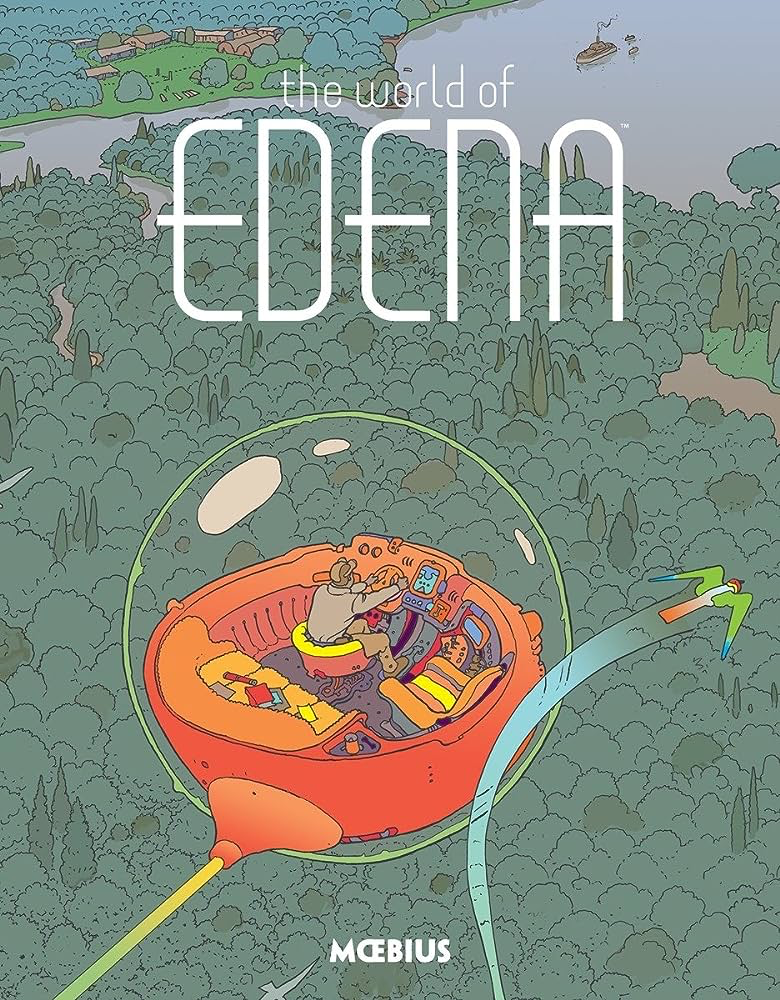
The World of Edena – Mœbiuscolored in with the same flat but vibrant colors that “I’m Not Feeling Human” is shaded in.

“Crash” – The Primitives

Okay, we’ve got one more peppy song before the depression hits…let’s ride the high while it lasts.

“Crash,” other than being a nostalgic, smiling thing popping up in my brain’s whack-a-mole system of remembering songs, feels like the better side of late ’80s pop. By then, the oversaturated synths and gated reverb had probably spread faster than the plague; I can’t speak from experience, given that…y’know, I wasn’t alive, but it had to have gotten obnoxious by that point. This song could have easily been that, but The Primitives seemed to know just the right balance to hit to make something instantly catchy, but that also managed to date itself in a way that wasn’t plasticky and corny. It’s distinctively ’80s without being distinctively ’80s, if you get what I mean. The guitars are bright, but not polished into oblivion, and yet there’s no denying the authentic, cartoon stars coming off of the opening riff. It’s practically begging to soundtrack a confident, reckless heroine with a slick jacket and and a pair of rollerblades, the kind with sparks that fly off with every turn she makes. Tracy Tracy, dolled up like some kind of new wave Marilyn Monroe in the music video, knows that she never needed to over-exaggerate her voice—the warmth of it, combined with the fiery embers self-contained in a tidy two and a half minutes, made for a song that’s unmistakable as a hit.

And they put this song in Dumb and Dumber? Huh?

…AND A BOOK TO GO WITH IT:

Little Thieves – Margaret Owen Vanja Schmidt is certainly the kind of reckless firebrand that doesn’t know when to slow down—and it takes her to some unexpected places…

“Motion Picture Soundtrack” – Radiohead

Another thing I have my wonderful dad to thank for: we watched a few episodes of Joseph Campbell’s The Power of Myth (it’s all on Youtube, go watch it), and besides the plentiful, earth-shattering truth bombs, for lack of a better phrase, about the nature of life and myth (and how those two aren’t really separate things after all), a quote from the second episode stood out to me when I was reminded of this song. At about 42:48, after he and Bill Moyers are discussing the manifestation of god in everything, and by extension, machines, Campbell examines the inner framework of a computer and remarks, “have you ever looked inside one of those things? You can’t believe it! It’s a whole hierarchy of angels…and those little tubes, those are miracles.” For the sake of not derailing this post so I can actually publish it on Sunday, I’ll holding back from expanding on all of the aforementioned Campbell capital-T Truth bombs, which he seems to produce with the same frequency as the other Campbell’s soup cans, but I can’t help but think of this song when I think of computers and angels. There’s no other word besides “angelic” to describe the distorted chorus of electric voices that begins at 2:15. That sound couldn’t have come from any other place save for the miraculous angel tubes. There’s some kind of gospel to this song, I swear.

Unless something absolutely drastic and apocalyptic happens, I doubt I’ll ever stop singing the praises of Radiohead. I’m long past caring about how inevitably insufferable I am as a result, but all the language I have about them ends up being hyperbolic. Kid A is probably somewhere amongst my favorite albums—I haven’t formally organized them past top 10, but I’d say that this lands somewhere in the 20s or 30s, at least. OK Computer, even if their chronological placement has doomed them to comparisons as long as there are music critics to do so, will always be the favorite child in my mind, but the special quality of this album can’t be understated. Like Punisher, another red, blue, and black-colored album that I listened to during the summer of 2020, it’s a signpost for a hyper-specific time in my life, and one of the most cohesive showcases of the talents of Thom Yorke and company. But as much as “Everything In Its Right Place” and “Idioteque” hold uncontested places in my heart, “Motion Picture Soundtrack” will wield the ultimate trophy as far as Kid A goes, and for my standards of music in general. Right now, it’s my favorite album closer of all time. (Before anybody says anything, I know, ackshually ☝️🤓 “Untitled” is technically the closer, but at this point, it’s basically a cooling-down extension to this song). As I brought up before, there’s an undeniable air of gospel about it—the synths that press in at the beginning sound like pipe organs run through a dystopian starscape, and if that’s the case, then the choir is certainly the angels dwelling just out of view in the pews.

“Motion Picture Soundtrack” was marinating in Thom Yorke’s massive cauldron of glorious music since the mid-nineties, where it was an acoustic lament befitting of The Bends. After that, it became a deeply solemn piano ballad somewhere in the depths of the OK Computer sessions, but I, for one, am glad that this is the definitive version, even if we were robbed of what was originally the third verse: “Beautiful angel/pulled apart at birth/Limbless and helpless/I can’t even recognize you.” (OW.) “Motion Picture Soundtrack” was always meant for cosmic grandeur; even though the opening mentions of “red wine and sleeping pills” ground us in the dim hours of planet Earth, the sprawling emotion of it all is the definition of all-consuming. It feels like the final leap off the cliff from death to rebirth, watching your feet slip and the gravel crumble beneath them as the electric, harp-like notes fill your ears like an endless field of stars. Within the infinite sprawl of sorrow, you can’t help but see the staggering beauty of life itself blossom in front of you. I’ll go out again and say it: I doubt we’ll ever come close to the tearjerking final line of Kid A: “I will see you in the next life,” and the pleading waver of Yorke’s soul-caressing voice makes it resonate all the more.

Kid A is probably the pinnacle of hopeless sad bastard music, but I can’t help but feel some kind of embryonic hope resting in the egg yolk of this song. “I will see you in the next life” is a release from all the mindless, sorrowful things that the rest of the verses lay out, and the promise of a starry new beginning. The closing of a chapter, the setting of a book back on the shelf, knowing that if you ever go back and read it, nothing will ever fully be the same, but knowing that isn’t always a bad thing.

What a way to end the year, huh? Just like “Garden Song,” I’m glad this song returned to me when it did. Radiohead is the gift that keeps on giving (me too many feelings to handle).

…AND A BOOK TO GO WITH IT:

The Darkness Outside Us – Eliot Schreferthis book takes “I will see you in the next life” very seriously. One of my favorite love stories of all time, and one of my favorite sci-fi books of all time as well.

Since this post consists entirely of songs, consider all of them to be today’s song.

That’s it for the last Sunday Songs of the year! Have a wonderful rest of your day, and take care of yourselves.

Posted in Sunday Songs

Sunday Songs: 12/24/23

Happy Sunday, bibliophiles, and a very merry Christmas Eve to all those celebrating!

As far as my book reviews go…yeah, well, I’ve been a bit of a Scrooge, but you can’t blame me. The finals reading slump comes for us all. Some days you just have to air out the dirty laundry. But despite the dreary color palette that ended up happening this week, I hope there’s enough jolliness here to assure you that yes, my festive cheer remains steadfast, and so does my love of ’70s guitars.

Enjoy this week’s songs!

SUNDAY SONGS: 12/24/23

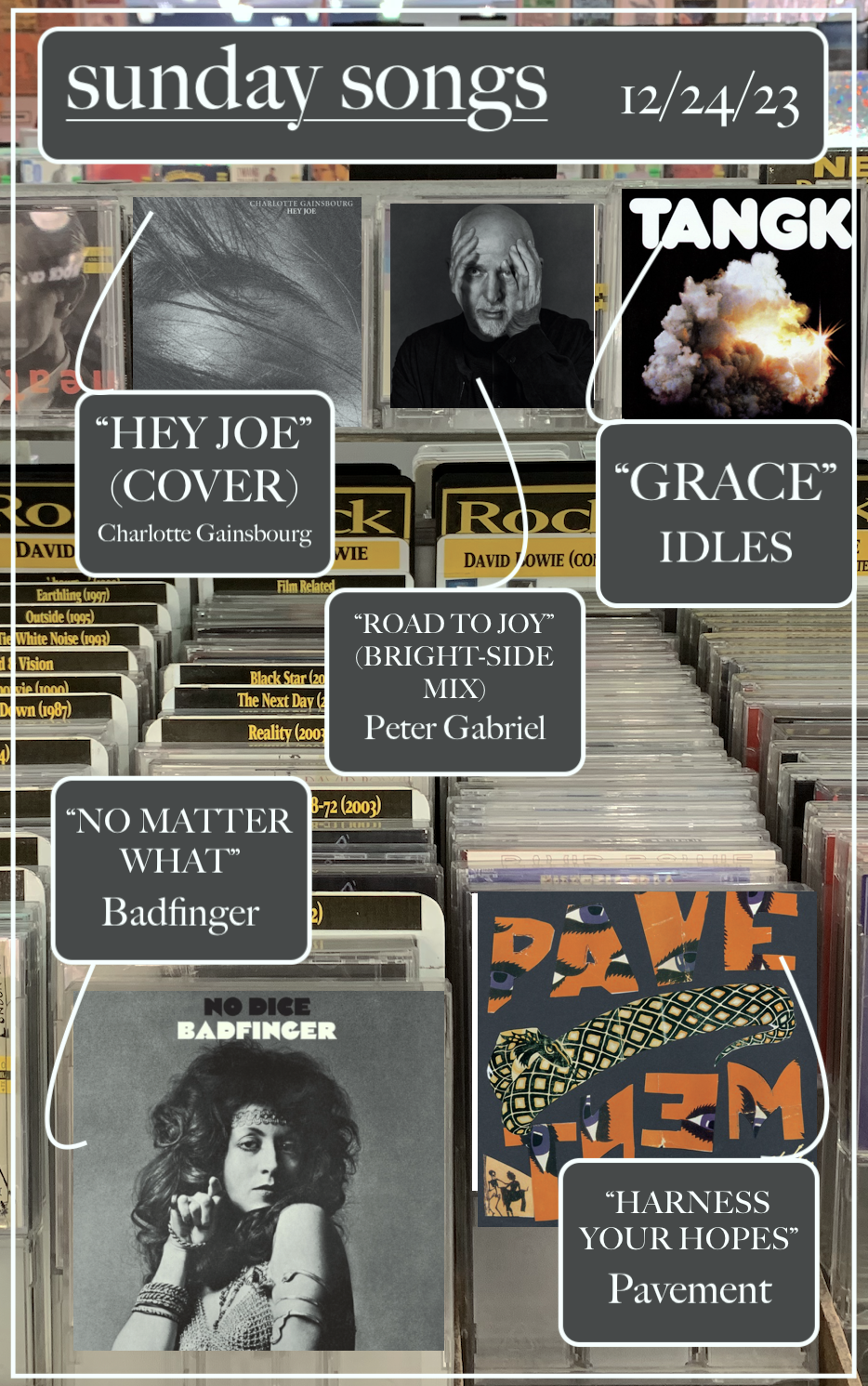
“No Matter What” – Badfinger

1970 was probably the worst year for trying to beat the “copying the Beatles” allegations, and the fact that these guys named themselves after an early title for “With A Little Help from My Friends” (originally titled “Bad Finger Boogie”…yeah, the name change was a good idea, John) doesn’t help their case. But I feel like being signed to Apple Records and having both Paul McCartney and George Harrison separately produce two of their other hits gets them a Get Out of Jail Free card. This once.

That aside, it also doesn’t help their case that Pete Ham sounds like the slightly growly middle ground between Paul McCartney and John Lennon, and the same nearly goes for the backing vocals, which try to hit somewhere between Lennon and Harrison. But it’s not every day that you can hit it that close to such legends, and it’s commendable no matter how (oops) you look at it. I’ve really underhyped all of this, but…there’s seriously something about this song. I swear that “No Matter What” is laced with something…oh, maybe it’s the guitars. My god, it’s barely 1970, and the ’70s guitars already sound so crisp…so full…do not get me started. But even if the guitars weren’t so sharp and full of dance-inducing warmth, there’s something so undeniably pure about this song. It’s no lyrical groundbreaker or generational anthem, but there’s a contagious joy to it—a good pop song does that. ”No Matter What” is the perfect end-credits song—the guitars start chugging in at the final shot of the movie, and everything goes black the minute that Pete Ham begins to sing. Come on, now. You can’t not go along with the clapping at 2:18. Beauty in simplicity. These guys get a pass for having either the best or the worst band name of all time. I genuinely can’t decide.

…AND A BOOK TO GO WITH IT:

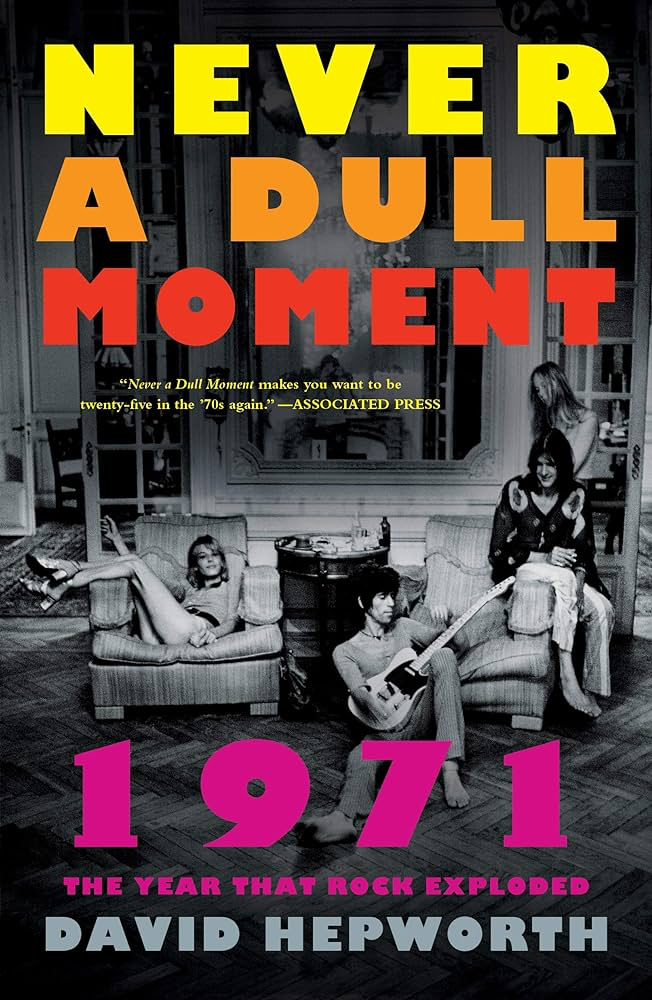
1971 – Never a Dull Moment: The Year Rock ExplodedI…dammit. I totally thought No Dice came out in 1971. I was two months off—November of 1970. Oops. But either way, this book is a little drily written for a book that claims to “never have a dull moment,” but it’s nonetheless a fascinating insight into the absolute goldmine of good music in 1971. (There was never a better high note than ending the year with the release of Hunky Dory.)

“Harness Your Hopes” – Pavement

Apparently I have another “I Just Threw Out the Love of My Dreams” situation on my hands here, since this blew up on TikTok sometime back in 2020 (after Spotify’s autoplay seems to have dug it up out of nowhere), and I didn’t find out until now. Maybe that was the period when the thumbnail for the music video kept popping up on YouTube and I ignored it until it went away? Little did I know what I was in for…

Also like “I Just Threw Out the Love of My Dreams,” I can only describe “Harness Your Hopes” as pure, bottled joy. As soon as the sighing, psychedelic-tinged intro gives way to some truly squeaky-clean guitars, I felt a rush of sheer happiness course through me. Stephen Malkmus seriously pumped this song with nothing but whimsical joy…and yet it was a B-Side? Not only that, but a B-Side that faded into more obscurity than the indie obscurity they were (probably) going for, so much so that Malkmus didn’t even recognize it when he heard it playing in a bakery? Nuts. Seriously. Not that I have any beef with the guy, but when you produce something as curiously delightful as this, you don’t let it slip through your fingers. It has that freeform, Marc Bolan kind of nonsensical lyricism written all over it, with more than a little pretentious affectation (“Leisure, a leisure suit is nothing/It’s nothing to be proud of/In this late century”), but somehow, it feels less pretentious when most of the lyrics don’t make a ton of sense as a whole. (Or maybe there’s some super deep hidden meaning that only Stephen Malkmus and co. can decipher, and it’s nothing to us normies…who knows) And like Bolan, it’s the kind of wordplay that occasionally leads to something unexpectedly romantic—”And I’m asking you to hold me/Just like the morning paper/Pinched between your pointer, your index, and your thumb.”

And paired with Malkmus’ strained, cracking voice on one end and the guitars (so clean that they’re practically still kicking up bubbles) on the other, it’s a capsule of warmth, practically radiant. Bottled joy, truly.

Speaking of Stephen Malkmus’ voice…

skip to 2:11

Please tell me I wasn’t the only one in theaters who laughed way too hard at this (besides my mom). Please.

…AND A BOOK TO GO WITH IT:

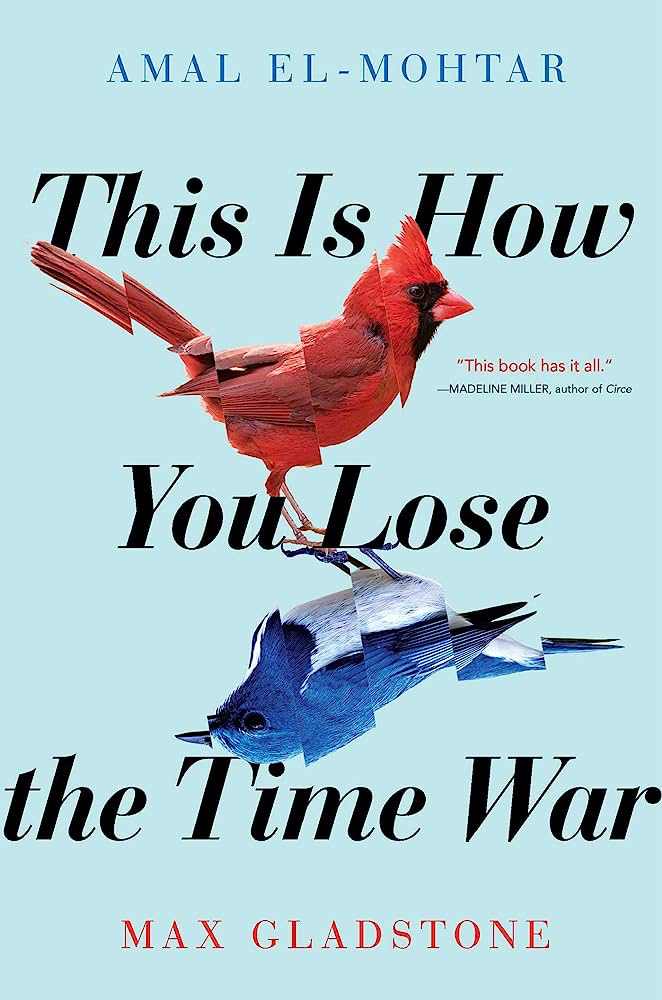
This Is How You Lose the Time War – Amal El-Mohtar and Max Gladstonefor the most part, this novel lends itself more to something more cosmically sweeping and Romantic in both senses of the word (probably Spiritualized?), but lines like “and I’m asking you to hold me/Just like the morning paper/Pinched between your pointer, your index, and your thumb” might as well be straight out of the letters between Red and Blue.

“Hey Joe” (cover) – Charlotte Gainsbourg

hnnnnnnnnnnngh me when Noah Hawley puts a song in Fargo that connects thematically in a deeply creative way hnnnnnnngh

good god I love this season of Fargo. no complaints, this show has made me feel alive again

where were Roy and Gator Tillman on January 6th

…AND A BOOK TO GO WITH IT:

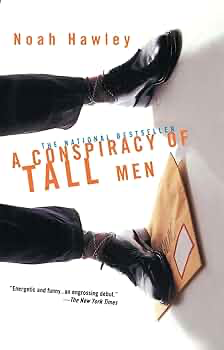
A Conspiracy of Tall Men – Noah Hawleymaybe I’m cheating since I got this song from Noah Hawley. It’s fiiiiiiine. To be fair, this is his debut novel and predates the first season of Fargo by a full 16 years (it’s kind of a mess, but lovably so…mostly), but it’s got all the cross-country conspiracies and paranoia you could ever want.

“Road to Joy” (Bright-Side Mix) – Peter Gabriel

I meant to review this all the way back in June or July, when this single was first released…I forget what about it made it slip out of the roster, but I knew that it had to come back eventually. Now that all of I/O is out…it’s a great album, but I can’t help but be a little disappointed at how it was constructed. I thought that the deal was that the final organization of the songs was going to be a surprise, and that they’d be reshuffled from the order they were released in with each full moon this year, but the order just ended up being the same order they were released in. (I stand by my belief that “Playing for Time” would have been the perfect closing track.) I have similarly mixed feelings about the Bright/Dark-Side Mixes—I haven’t listened to the In-Side mix yet, but I also thought that each mix of the 12 songs would be more radically different, but the differences between the mixes are often very subtle. Some of them fit more clearly than others (ex. “I/O” is clearly more fit for Bright-Side, while “The Court” lends itself more to Dark-Side), but the tweaks between mixes are sometimes barely distinguishable.

That’s not to say that I/O isn’t a great album—it’s a beautiful picture of one of the most innovative artists alive today moving into old age and still being able to produce a relentlessly creative vision of love, mortality, and the nature of connectivity. Now that I’ve seen it live, the experience is all the more enriched, what with the stunning visuals that went along with it, as well as Peter Gabriel toeing the line between a theatrical showman (how’s reenacting the creation of life itself for a show opener?) and the wise, humble figure we’ve known him to be over the years. Songs like this one really showcased both the energy and creativity that clearly haven’t waned with age. “Road to Joy” is a highlight, without a doubt; for me, this one lends itself more to the Bright-Side mix, with the funky, “Fame”-esque guitar riffs and energetic burst of the chorus, like Gonzo firing off cannons without warning. But if the pink-shaded joy doesn’t immediately jump out at you, you know what should? The fact that this song is proof of yet another deeply creative project that Peter Gabriel’s been cooking up since the production of OVO—so, give or take, around 23 years. The man just can’t be stopped. But according to Gabriel, “Road to Joy” is part of a story about the human mind, and this song chronicles a character being woken up after experiencing locked-in syndrome; the triumphant declaration of “You were sure I was gone” has the defiant flair of someone beating the odds, and it’s impossible not to feel the joy from that.

…AND A BOOK TO GO WITH IT:

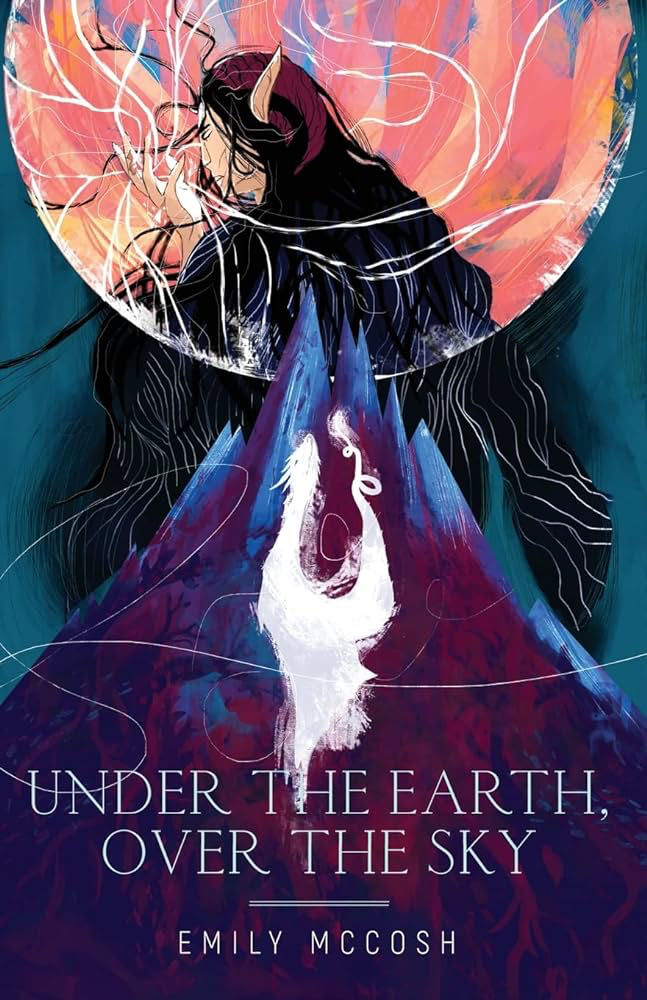
Under the Earth, Over the Sky – Emily McCoshnothing like adopting a human son to awaken your frosty, dormant heart and put you on…the road to joy, maybe? Certainly some “love call[ing] through the walls.”

“Grace” – IDLES

“Grace” has made my expectations for TANGK skyrocket, but whether or not the album turns out to be as adventurous as I feel like it’s going to be, I think I’m almost certainly going to enjoy it. It’s a change in form, even if a fleeting one.

I thought I knew what Joe Talbot sounded like when he wasn’t singing; “A Hymn” certainly gives us a hint, but there’s still the restrained growl to it that roars to life when he’s normally screaming on every other song. But “Grace” showcases his voice at its most vulnerable. Somehow, before the chorus kicked in, I almost mistook it for Mike Hadreas from Perfume Genius. I was scrambling to find the featured list for this, because…there was no way that this is the same guy who screamed at us all to never fight a man with a perm all those years ago. And I love this change in form. IDLES always mean bah-bah-business (in case you cannot tell from their tone) with their message, but this stripped-down feel that “Grace” shifts into suits their ethos just as well as their harder songs—Talbot described the song as “a call to be held,” and the quiet vulnerability really does feel like a gentle embrace. And it’s here that you can see what their change in producer has done to the sound—TANGK was co-produced by none other than Nigel Goodrich (of Radiohead fame!!), and the staccato of the drum machine and the wash of cloudy haze peeking out from under the curtain shines in the quiet places on this track. Talbot’s voice lowers into wavering smoothness, as though he’s singing from a place where no one can hear him, save for when he declares the song’s rallying cry: “No God/No king/I said, love is the fing.”

Man…I’m so excited for this album. IDLES have said repeatedly that their mission was to make an album that was purely about love and warmth—as Talbot said, “I needed love. So I made it. I gave love out to the world and it feels like magic. This is our album of gratitude and power. All love songs. All is love.” And if that isn’t exactly what we need…not to be all hippy-dippy about it, but as much as I indulge in my sad bastard music, I’m gonna go out there and say that IDLES is exactly what we need right now. I hate it that I have to say “not to be all hippy-dippy” when I’m talking about love and warmth and being kind and loving life…you’ve heard me go off about grimdark and frankly, how astoundingly dumb it is that we often think that sadder = deeper and that being happy or consuming happy media equates to stupidity somehow, but I’ll say it again. There’s nothing stupid or naïve about wanting love, giving love, and having love in your heart. IDLES get it. Love is the fing.

…AND A BOOK TO GO WITH IT:

Since this post consists entirely of songs, consider all of them to be today’s song.

That’s it for this week’s Sunday Songs! Have a wonderful rest of your day, and take care of yourselves!
Posted in Sunday Songs

Sunday Songs: 12/17/23

Happy Sunday, bibliophiles! I hope this week has treated you well.

I’m finally out of finals hell! Hopefully I’ll have more time to write and read in the next month or so, but I’ll certainly be sleeping. As a celebration: songs for the beach, songs for the ocean, and songs for when you need to cry and dramatically drape a hand over your forehead. You’re totally in a movie for the latter. Totally.

Enjoy this week’s songs!

SUNDAY SONGS: 12/17/23

“Let You Break My Heart Again” – Laufey & Philharmonia Orchestra

Seems like I’m somewhat late on the Laufey train, but then again, she’s young and she’s certainly got tons of records ahead of her, so I suppose I’m not that late. She has, however, swept the internet for doing something almost unthinkable—her noble cause of bringing jazz to Gen Z. It’s an incredible cause to spearhead in your musical career, what with jazz being up there with country at the butt of every “I listen to everything but this” joke and not selling well as a genre for decades. I say this as somebody who falls into the former category with both of those genres, but from the scope of what I’ve heard, Laufey’s brand of jazz isn’t the kind of bland smooth jazz you hear in a spa and never hear about again. It’s the kind of dramatic, emotional vocal jazz sung by the likes of Ella Fitzgerald and Billie Holliday—two artists who she cites as some of her biggest musical influences.

Some of her other tracks (“From the Start” and “Falling Behind” comes to mind) spread like wildfire across social media this year, but although they weren’t enough to lift out of slightly out-of-the-ordinary background music for me, I’ll admit that my heart’s been fully captured by “Let You Break My Heart Again.” It’s the absolute best sort of high drama; the swelling instrumentation of the Philharmonia Orchestra in concert with Laufey’s low, honeyed voice make it just the sort of thing to listen to while imagining yourself leaning out the window and pretending you’re in a movie. It practically begs for flowing dresses and a hand artfully draped over your forehead. (Oh! I’m fainting…into your arms…) I’ve never been one for Disney, much less their musicals, but this song almost seems like the kind of princess’s solo number that stands the test of time. I’m also not a jukebox musical kind of person, but having this as the emotional climax while the lead actress laments into the spotlight doesn’t sound like a terrible idea. With every soft flutter in her voice, you can feel the yearning and heartache creep through the windowsill like golden-hour sunlight. I just can’t help but dramatically twirl around and collapse into my (imaginary) ballgown with every listen.

In closing, the genius who paired this song with this video deserves a raise at whatever job they’re in:

…AND A BOOK TO GO WITH IT:

The Invisible Life of Addie LaRue – V.E. Schwabfor all your dramatically-draping-yourself-from-the-window-in-a-flowy-dress needs. And for the heartbreak.

“Glowworm” – The Apples in Stereo

I keep having to say this, because it needs to be said: The Apples in Stereo seriously tapped into the wellspring of indie-pop magic, and we barely seem to have acknowledged that. No other band of their ilk, that I can think of, has managed to consistently produce the sheer amount of glimmering pop capsules that they have in the lifespan of their band. Under-appreciated genius, for sure.

“Glowworm” falls into that perfect category of songs that seem to be shaded in the same colors of the album cover. In this song’s case, this song glows with the same bright yellow-greens of the album art for Fun Trick Noisemaker, just like the gentle, greenish flicker of the titular glowworms and fireflies. And like the bugs it’s named after, this song feels like a swarm of gentle lights illuminating the summer night, sparking and glowing with lively energy (no pun intended). Robert Schneider’s soft voice jumps and bounces around the almost nursery rhyme-like opening lyrics (“Put a penny in the pot/Put a nickel in your pocket/Every nickel that you’ve got/Is a nickel in the slot”), opening like a storybook into a glittering tale of yearning after a reckless lover—”You just had to spend it all/Every hour, every minute/You had to make it all/Wonderful, beautiful.” Like the fleeting glow of the worm, it’s a there-and-gone kind of love—”You lived to burn.” But the ecstatic burn is one that you can instantly feel in your heart—the song makes you travel on a trail of light up into the night sky, just like fireflies.

…AND A BOOK TO GO WITH IT:

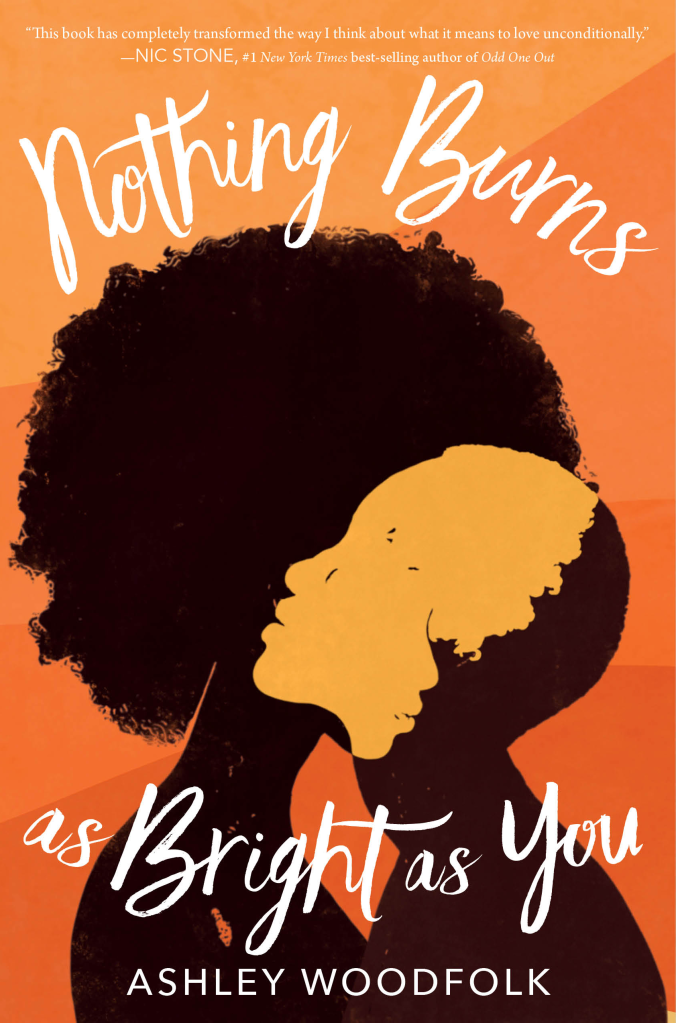
Nothing Burns as Bright as You – Ashley Woodfolkthe song is decidedly more lighthearted (at least, that’s how it sounds) than the book, but the feeling of falling in love with a fiery, reckless person remains the same. This book, however, deals with the fallout.

“Genius of Love” – Tom Tom Club

“Genius Of Love” has found its way everywhere—most prominently sampled in Mariah Carey’s “Fantasy” (oh, look, we’re mentioning her in December without mentioning…okay, I’m not gonna say it, that’s too easy)—and I feel like it has almost made us forget how delightfully bonkers it is. Heck, here I am in my dorm, looking at the boygenius picture that I cut out of a magazine and pasted on the wall, and it’s captioned with “genius of love.” It’s everywhere. If this song had a physical representation, it would probably be some kind of collage, but the kind that looks mindless from a distance—a bit of yarn here, some googly eyes there, and some brightly-colored but dried-out markers to color the background—but with a closer look, clearly has all the intention in the world. And yet, it’s such a meticulous pop song. I’d expect nothing less from half of the Talking Heads.

I mean, this starts off with Tina Weymouth doing a playful spoken-word segment with the affectation of a 50’s housewife in a grainy commercial: “What you gonna do when you get out of jail?/I’m gonna have some fun/What do you consider fun?/Fun, natural fun.” The delivery of that last line seriously makes me think that I’m about to be sold some kind of unnaturally green jello salad or something. But it all works so ridiculously well together. After the whole housewife bit, Weymouth’s gorgeous voice really has the chance to shine—the sincere sweetness of it makes every repetition of “I’m in heaven/With my boyfriend, my laughing boyfriend” seem nothing but genuine, like there’s a halo of cartoon hearts and bluebirds circling around her head. And the synths—they really feel like you can touch them. They pulsate and bubble and twinkle in every part of your ear. It’s no wonder that this song is one of the most sampled songs of the 80’s, especially in hip-hop and R&B from the 90’s up until as recent as last year. I’m getting mixed signals from the internet about the exact amount of times it’s actually been sampled—the sources range from around 50 to a whopping 179, but either way, the legacy of “Genius of Love” cannot be overstated. The synth heard ’round the world.

…AND A BOOK TO GO WITH IT:

Victories Greater Than Death (Unstoppable, #1) – Charlie Jane Andersthis was a super tough one, but I figured that Charlie Jane Anders’ sparkling, neon space opera world would mesh nicely with all those bubbly synths.

“O.K., Meet Me Underwater” – Jay Som

I’ve had a brief kick of collecting random Jay Som singles for my hoard, and I haven’t regretted a single second of it. Even if the songs weren’t as good as they are, I’d still come out the other side with song titles like this. This one is like a “Crocodile Tears and the Velvet Cosh” situation—if there every is another song called “O.K., Meet Me Underwater,” it’ll be copying this one.

Besides being so charmingly memorable, “O.K., Meet Me Underwater” has the advantage of being made for a Jay Som song. Her trademark of slightly off-kilter electric guitars and synths and the water-smooth ripple of how it all sounds together was made for a song title like this. All of the instrumentals already could have sounded like they were recorded from just under the surface, only slightly to the left of being muffled by a stream of bubbles rising from the depths. As Jay Som sings the chorus of “If you’re feeling okay/Meet me underwater,” every word feels like it’s being spoken just before she dips her head back down into the waves, beckoning you to follow her to some kind of colorful coral reef kingdom befitting of the cheerful glimmer of her music. Even that deliciously bouncy riff starting at 1:04 sounds like something you’d hear in the background of an ocean-themed episode of Really Wild Animals (PLEASE tell me somebody else remembers those), or even just some cartoon they play in the background of an aquarium, complete with smiling dolphins and clam shells opening and closing to the beat. The neon yellow on the cover of the single doesn’t do nearly enough justice to the summery glow of this song—you’d need a whole, pastel-oceanic palette to capture the whole song.

…AND A BOOK TO GO WITH IT:

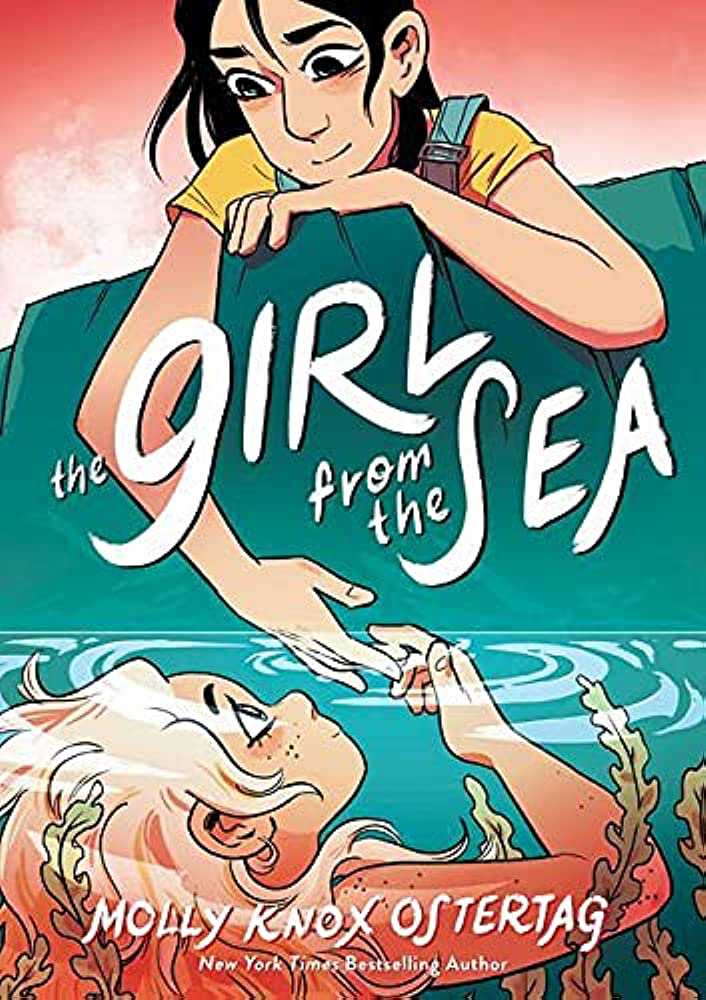
The Girl from the Sea – Molly Knox Ostertagnot to double-dip on the Jay Som/graphic novel comparisons, but…it’s right there. Meet me underwater.

“Catamaran” – Allah-Las

I know a somewhat clever band name when I see one, but I also see a contentious one when I see it as well. The wordplay is great, but upon further reading, it looks like the Allah-Las, a band consisting of predominantly white, non-Muslim dudes from California, mostly picked the name because it was “holy-sounding.” They have faced some criticism for the name from the Muslim community over the years, and they’ve clarified that they never meant any ill will or disrespect by it, but even then, there’s still an undeniable uncomfortableness about a bunch of white guys from LA slapping the name on themselves with what seemed like very little thought behind it.

That aside, if there’s one thing white guys from California are good at doing, it’s making songs about the beach, and man, the Allah-Las nailed it. It’s not necessarily the kind of bouncy Beach Boys song that you’d expect from that descriptor—”Catamaran” takes plentiful notes from the other side of the sixties, a summertime, surfy beach walk by way of the Kinks. It’s got all the ingredients for a slightly left-of-the-dial 60’s dial bubbling in the pan—bright, jangly guitars, gentle percussion, and the kind of lyrics that sound like they could have just as easily slipped out of the mouth of the likes of Jim Morrison: “I’m an oyster pearl’s locked up in a shell/You better bring that diving bell.” What plucks the Allah-Las out of the 60’s is the kind of flat, disaffected vocals running rampant in every white guy who has ever pursued a career in indie pop—like TV Girl, it gets on my nerves for the most part, but in the sun-baked sepia of the rest of the song, it almost makes sense.

…AND A BOOK TO GO WITH IT:

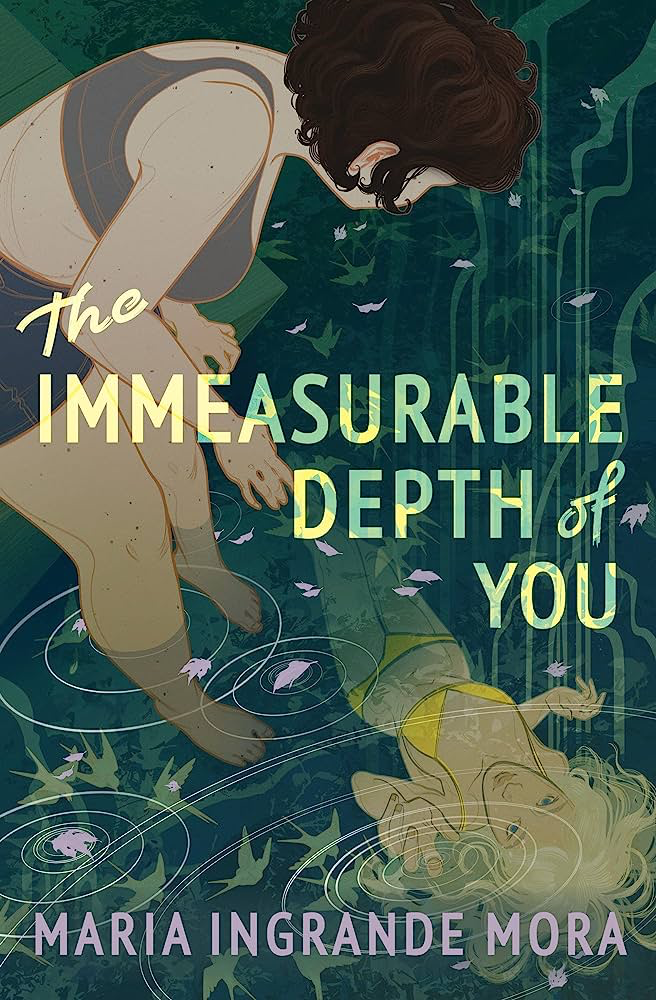
The Immeasurable Depth of You – Maria Ingrande Morabefore everything goes sideways, this would be an appropriate soundtrack to being in an old houseboat floating in the Florida mangroves.

Since this post consists entirely of songs, consider all of them to be today’s song.

That’s it for this week’s Sunday Songs! Have a wonderful rest of your day, and take care of yourselves!
Posted in Sunday Songs

Sunday Songs (12/10/23) + something new!

Happy Sunday, bibliophiles!

Apologies for the lack of Sunday Songs last week; the only reason I was able to get the other two posts I made last week was because they were both at least 95% pre-written—otherwise, they would have been gone, reduced to atoms, by the absolute chaos hell week of pre-finals. (Why is the period right before finals always the worst? No, it’s…no, that’s just coming back from break and having to Do Things. Yeah.) Either way, that time has given me some space to think about a change that I’ve been kicking around for a bit—adding some more to my Sunday Songs. Although these posts were originally inspired by my brother, it’s really been a fruitful experience to write about music more—The Bookish Mutant is still a book blog, but I’d be remiss if I denied that part of me. And yet…the books always come back. It’s in my nature. So now, you get your songs with a book paired to each—similarities in plot, similarities in vibes, or just similarities that bounced around my head for no reason other than free association. Bon appetit!

I so wanted to talk about last week’s songs, but as I said, last week was chaos, so I never got the time to write anything about them. But because they’re still fantastic songs, have them + last week’s graphic:

12/3/23

Enjoy this week’s songs (and books!)

SUNDAY SONGS: 12/10/23

“Bruises” – Lisa Germano

I’ve only listened to two full Lisa Germano albums (Excerpts from a Love Circus, where this song is from, and its follow-up, Slide), and I’ve discovered a method to listening to them; if you don’t want to feel the milieu of misery seep into you like mold, give it only one or two listens all the way through. Let it sit, then the individual songs (and their genius) return to you in smaller bites. That’s what’s tugged me back to the parts of Excerpts for the past month and a half since I listened to the full album for the first time—said misery notwithstanding, there’s something undeniably intoxicating about almost every track.

While it’s just as rust-smelling and heavy as most other Lisa Germano song you can pull out of a hat, what makes “Bruises” stand out is the folksy, almost Celtic sway that surrounds it. After the interlude of plaintive mewling, courtesy of her cat Dorothy (originally meant to bookend “A Beautiful Schizophrenic (‘Where’s Miamo-Tutti?’ by Dorothy)”, arguably the album’s most “mom, come pick me up, I’m scared” track), the first thing that jumps out at you is the dipping lilt of the violins; they passionately bay and lurch like dancers against the steadiness of the acoustic guitars and humming, cavernous synths, the same that frame another favorite of mine from the album, “Baby On The Plane.” And Germano’s voice, mainly defined by its wispiness in many of her songs, rises to meet the violins, her high notes ringing out in strained, rasping harmony as she cries out the chorus of “bruises, bruises, bruises, bruises,” dragging out the last repetition as easily as guiding the strings of a marionette. Her harmonies twist together like ghosts rising out from the cracks of the underworld, weaving through the violin strings. “Bruises” has the creaking sway of a rocking chair, but not in the way of being curled into grandmother’s lap while she reads a story; like “Crash,” the looping, ouroboros rhythm seeps into Germano’s words of repetition and depression, mindlessly going through the motions; the exhausted delivery of “make it better, alright” hammers in her struggle to wake from the stupor, sleepwalking through life as she struggles to even get out of bed in the first place. It has the rhythm of a slow dance, but all of the dancers are stumbling over their own feet, heads hanging, hands slipping apart and missing cues and steps.

…AND A BOOK TO GO WITH IT: Summer Bird Blue – Akemi Dawn Bowman – even though this novel deals specifically with grief, the combination of Bowman’s very real, very heavy depiction of the lows of Rumi’s mental health and the way the melody seems to bob up and down like the waves of the ocean make this a solid fit in my eyes.

“Ptolemaea” – Ethel Cain

I’ve only come up with more recent songs as examples for this, but there’s something about adding animal sounds near the end of songs to add to the eeriness—sounds that wouldn’t normally be dread-inducing, but amp up the dread of the song. The most prominent example I can think of is the dogs barking at the end of Mitski’s “I’m Your Man”—the dog/hounds theme of the song notwithstanding, as soon as you start to hear them desperately baying in the background, interwoven with crickets and other nighttime sounds, you instantly get the feeling that something is very, very wrong. Fun way to end an album, huh?

The animals used in “Ptolemaea” are much more plainly sinister from the start—with the moaning, creeping dread that immediately swallows you only seconds into the song, the swarm of buzzing flies that trickle into your ears like a slow drip of poison shortly after is an immediate alarm bell. When I heard the flies, I heard them circling around something rotten. Something putrid is not too far away, and the flies have come to land on your skin feed on you next. Uncomfortably landing on your skin is something that “Ptolemaea” instantly does—it’s a truly astounding piece of art, but it’s astoundingly icky for all of its six plus minutes. And yet there’s something instantly, drowningly consuming about it—the instrumentation in the last half has a hard rock, almost goth tidal wave that wants to bring you down with it into the cold, unforgiving depths. And like a dog-eared, pocket Bible with a battered cover and flaking pages, the sonic layers seem infinite, from the chilling, low incantations of perverse, religious verses, to the blood-curdling cry of “STOP!” that marks the song’s halfway point. I can’t help but be in absolute shock at this song—I seem to remember being openmouthed with giddy surprise when That Part kicked in while driving with my brother. I can’t listen to this song too often, lest I get consumed by the creeping dread, and I also feel guilty having those giddy feelings about the second half of this song, when it’s so clearly alluding to some form of abuse and/or sexual assault. But from what I know about the whole Ethel Cain project, it was born out of a desire to explore a history of religious trauma, abuse, and queerness, and that is, at its best, is one of the best qualities of art—to weave all these things into something new to reach out to others; in Cain’s case, the results are unfathomably harrowing, but undoubtedly masterful.

…AND A BOOK TO GO WITH IT: Extasia – Claire Legrand – would you like your creeping dread and explorations of queer girlhood and religious trauma with a side of towering entities in the woods?

“Kill Them With Kindness” – IDLES

Don’t you love doing mundane, peaceful things and listening to albums that are the exact opposite of mundane and peaceful? Nothing like cleaning up the bathroom and quietly rearranging my bulletin board while Joe Talbot is screaming in my ears.

I finally, finally got around to listening to Ultra Mono over break, and for the most part, it was sheer fun all the way through. Apparently, it’s regarded a little lower in the ranks for some IDLES fans; in contrast to some of their other albums, this seems to be where they went full in on the aggressively positive theme, and for a lot of people, it seemed to come off as corny. And…yeah, I don’t buy it. I understand the gripes about “War,” the album’s first track—the onomatopoeia is fun, but it doesn’t make sense at all. And as much as I enjoy it, I see where a lot of the criticism comes for “Ne Touche Pas Moi“—Riot Grrl did aggressive songs about consent first, and IDLES seems to have respected that history, but there’s something to be said for a bunch of aggressive, sweaty British men who look like they could beat you to a pulp singing about “Your body is your body/And it belongs to nobody but you.” (Plus, at least they had a woman—Jehnny Beth—shout the rallying cry of “ne touche pas moi.”) I’d feel safe walking home at night with these dudes. But either way, this is how I see it: we have a sea of songs this aggressive, but that are all about how edgy you are and how much everything sucks, so as far as I’m concerned, IDLES are a breath of fresh air. The screamy edgelords and their corresponding emotions have their place (sometimes), but they’ve had their moment in the sun. KINDNESS!

As the title suggests, this song pretty much sums up the entire IDLES ethos—aggressive positivity. If you isolated the lyrics from the song, you’d probably get some accusations along the lines of “you dirty hippie(s),” but that’s what makes it so memorable—it’s earnest, it’s loud, and it’s relentlessly optimistic. But this killing with kindness isn’t the kind you associate with smiling, doing nothing, and letting yourself be stagnant or stepped on—as Talbot declares, “Ain’t no doormats here/It doesn’t mean you have to bow, or say “Your Highness”/Just kill ’em with kindness/If you wanna beat the machine, keep your teeth clean.” And what better to cement that than circles of dancing, anthropomorphic flowers and a grinning, rubberhose-style Joe Talbot spoon-feeding some kind of kindness serum to a scowling beefcake who was beating up a bunch of other guys just a few minutes earlier? It’s nothing short of delightful. IDLES are a blessing.

…and I’m seeing them in May!! WOO!!

…AND A BOOK TO GO WITH IT: Chameleon Moon – RoAnna Sylverit’s not in the title, but it’s in the subgenre. What better word to describe both this and IDLES but hopepunk?

“It Had To Be You” (Isham Jones Orchestra cover) – Harry Connick, Jr.

I’m 100% admitting to my status as a poser with regards to this song, because I haven’t even seen When Harry Met Sally, the movie where this version of “It Had to Be You” originally comes from. That being said, “baby fish mouth” has been permanently ingrained into my psyche thanks to my parents.

A fact that I always forget whenever I listen to this song: not only has Harry Connick, Jr. had a flourishing jazz career that starts as far back as recording in the studio for the first time at age 10, he’s also…

…yeah, oh my god. Dean has insane pipes.

…AND A BOOK TO GO WITH IT: The Spare Man – Mary Robinette Kowal I was 100% grasping at straws for this one, but The Iron Giant would have objectively been cheating (and for once, the movie is objectively better than the book in every conceivable way). To be fair, I don’t read a whole lot of historical fiction, particularly the kind that would lend itself to this kind of big band drama, but with the lighthearted, noir feel (in space!) of this book makes me convinced that this song could’ve been in playing in the background of the bar on the opulent space liner where The Spare Man is set.

Lose” – Jay Som

In terms of Jay Som’s catalogue, it seems that this song is one teeter away from disappearing into the ether—it was part of the Polyvinyl 4-Track Singles series (which has included artists such as Kishi Bashi, The Dodos, and of Montreal over the years) back in 2017, but as of now, the official audio on YouTube has only 10 likes (including mine, teehee) and nothing comes up when you google the lyrics. Well, nothing relevant. The top result is for the lyrics of “The Bus Song” (always fantastic), but by the time you start scrolling through several other Jay Som songs that aren’t “Lose”, it turns into…Jay Z and Coldplay, for some reason? Oof. Kinda rough. And although I’m all for being a petty hater and being bitter about songs I like getting popular and/or songs I like starting to be liked by popular people, there is no need for this song to keep going under the radar. It’s too delicately wonderful for such under-appreciation, dammit!

In my mind, the ascending notes that make up “Lose” fall somewhere between Wilco and the Beatles. It’s got that meticulous, stair-step climb in both the rhythm and the main riff that could have made up the framework for something off of Star Wars or Revolver just as easily. It’s a progression that immediately crawls into your brain, and I’d be lying if I didn’t enjoy every minute that it took up the space inside of mine. Jay Som’s signature dreamy haze of grainy lo-fi makes it sound like you can hear the gentle pitter-patter of rain trickling against the windows of wherever the song was recorded—regardless of whether or not it actually was raining, the flickering warmth that permeates through all of her songs shows its face here. Somehow, it’s the perfect soundtrack for being under a blanket forth while it rains outside. You’ve got a flashlight propped up in the corner, and it makes everything look gently orange and yellow as you uncomfortably squeeze yourself against the side of the couch you propped your blankets up against. There’s a bag of snacks somewhere, and now, your pillow feels just right.

…AND A BOOK TO GO WITH IT: A City Inside – Tillie Waldenmore in vibes than anything, but Walden’s art style, with its muted, flat hues and beautiful simplicity, lends itself to this drifting air of most of Jay Som’s music, even if this single didn’t have the album art that it has.

Since this post consists entirely of songs, consider all of them to be today’s song.

That’s it for this week’s Sunday Songs! Have a wonderful rest of your day, and take care of yourselves!
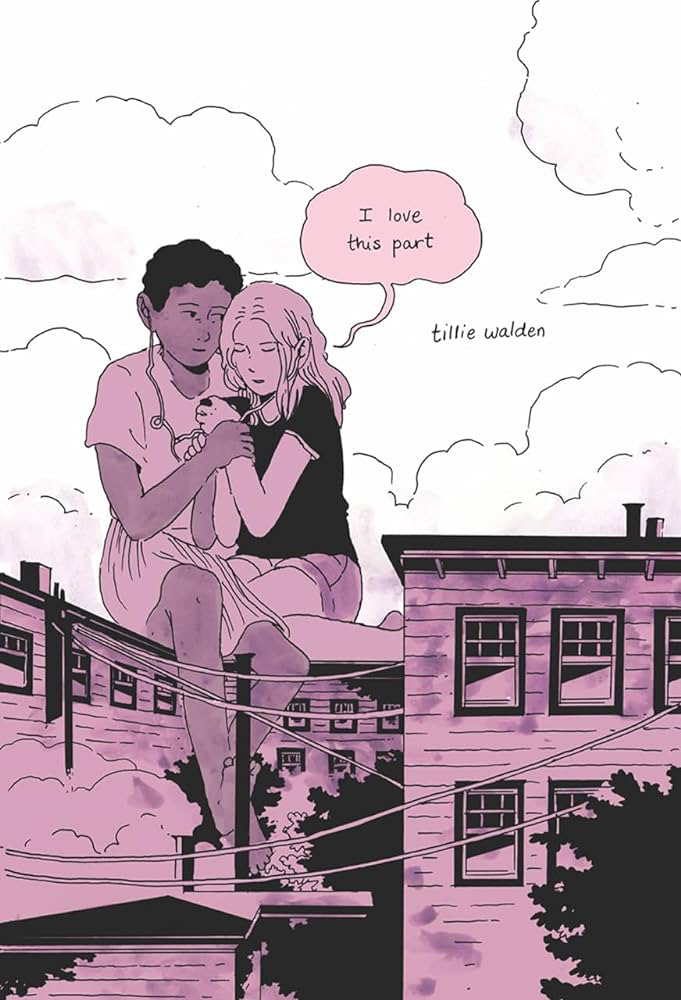
Posted in Sunday Songs

Sunday Songs: 11/19/23

Happy Sunday, bibliophiles! I hope this week has treated you well.

This week: another song I stole from Wilco, and a smattering of calm, autumnal folk. And then there’s IDLES.

Enjoy this week’s songs!

SUNDAY SONGS: 11/19/23

“You Got the Stuff” – Bill Withers

Even though he isn’t here to read this (rest in peace), and I doubt he would even if he was, I owe an apology to Bill Withers. When I asked Siri about the insanely funky song that Wilco was playing before their show back in October, I thought…Bill Withers? Like…the “Lean On Me” Bill Withers? The song we all had to sing in either elementary school or at camp? From here on out, I take back any preconceived notions I’ve had about the man, because this song slaps. I severely underestimated him.

To be fair, from the looks of it, “You Got the Stuff” seems funkier than most of his R&B/Soul-leaning catalogue, but when he did funk, he made it the funkiest funk possible. The minute the drum machine fades and the thick, bass-like synths kick in, it’s like I’ve been possessed to move my body for exactly seven minutes and 16 seconds. I haven’t heard of a contagious groove like this song has in ages, something so instantly captivating that hooks you and immediately tosses you on the dance floor. And it’s seven minutes of this. And the last three and a half minutes of that seven minutes is just bass and an absolutely glorious flexatone. (Many embarrassing google searches went into finding the source of that comically cartoonish “doi-oi-oi-oing” noise. I’m not proud of what I did.) It really is a cartoonish sound that this instrument makes, and yet it fits right in with the thumping bass and Bill Withers’ faint, rhythmic breathing and the occasional “ooh, baby.” Three and a half minutes of just that. It feels like a buildup to something bigger, but it doesn’t need to build up to anything—the unique rush of that stretch of the song keeps the funk alive for longer than I thought it could. And it’s crazy to think that this was chosen as a single for this album (‘Bout Love)—even for someone like Withers, putting the one song that goes over seven minutes long as one of the lead singles is a bold move. It did only get to #85 on the Billboard charts at the time, but it’s a hit in our hearts.

What I’m trying to say is that Bill Withers is forgiven for the setlist of my 3rd grade program. Good god, I love this song.

“Dancer” – IDLES & LCD Soundsystem

As much as I, in theory, dress a fair bit punk (on the days where I have my pin jacket) and generally like the leanings of the political attitude, I’ve never been able to get fully behind it—the combination of the abrasion (both musical and lyrical) and the contrarian, infighting parts of it have made it so I’ve never felt fully aligned with it. I’m only punk up to my jacket, my boots (they’re not very good for extended walking, so I wear them sparingly…there’s only so long I can commit to the bit), and my socialist tendencies. More in spirit than anything else. Same reason that even though I regularly have at least one day a week where I dress in all black and go all out on the eyeliner, I can’t fully commit to being goth, because I’ll then go up to my friends and say “HIIIIIIIIIIIIII :)” in the most decidedly un-goth way. And plus, contradicting everything about yourself sounds kinda tiring, unless you’re Hobie Brown and you make it look cool (and that’s because he was this cool the whole time). And yet, every single IDLES song makes me absolutely foam at the mouth. I love them. I’ve been putting off actually listening to a full album of theirs for who knows why, but their spin on punk—still plenty aggressive, but resoundingly hopeful and positive in their ethos (see “Mr. Motivator”). Joe Talbot himself has repeatedly insisted that they aren’t a punk band, so…okay, I’m not all that punk. But that combination of all the fiery energy of punk with their riotous joy and their wholehearted embrace of vulnerability and love is what endears me to them so much. The absolutely delicious Britishness and bisexuality of it all certainly helps too.

Hearing that “Dancer” was a collaboration with LCD Soundsystem kind of floored me—where could the epitome of tight, high-strung white boy music fit in with this? The mesh, however, is as smooth as it could ever be. There’s a constrained tightness about the opening riff that feels all at once caged in and expansive—the James Murphy touch reveals itself more and more on each listen, aside from the obvious backing vocals on the chorus. Either way, “Dancer” has just about everything I love in an IDLES song. Joe Talbot’s signature aggressively theatrical line deliveries never fail to put a smile on my face—every repetition of “and the sweat” (I can almost hear him raising his eyebrows every time he says sweat) and “so to speak” (imagine that as spitty and Britishly as you will) make listening to the whole song feel like an elaborate performance, a…dance, if you will. There’s an undeniably sensual feel of it all, a visceral pulse to the calculated choreography of each line. It’s a song I’ve never been able to skip since I downloaded, and even though I’ve still yet to listen to any of their full albums (SOON, though), I’ve got hope that Tangk will be more of the same.

New IDLES and The Smile next January…man, I’m gonna implode. It’s been fun, everybody.

“Black Wave” – The Shins

…this is certainly an interesting transition. Whoops.

Certain bands are often seasonal for me—some bands are more spring, summer, fall, or winter than others. (Hence my seasonal playlists). But some bands immediately evoke a more specific point in time. For me, The Shins were always a late fall, early winter band; they feel like fall, but only after the first frost has crept in and stripped the trees bare. There a few leaves left, but they’re all brown and brittle, crumpled underfoot. It’s snowing, but not a January blizzard—maybe just sleet that doesn’t accumulate, if you’re lucky. You’re warm, sitting by the fire. The trees look skeletal now.

So I’m glad I rediscovered “Black Wave” when I did—it’s one of those songs that lingered in my periphery for years (I grew up in a very pro-Shins household), but I’d gotten so complacent in hearing it everywhere that I didn’t even think to ask about its name. But it’s the perfect November song—as most of what I’ve heard from the spectacularly titled Wincing the Night Away is. James Mercer layered effects over his gentle, wordless warble as the song begins, making a rippling, Bon Iver-like echo. Even with a colored named in the title, “Black Wave” is decidedly painted in deep, warm colors; shades of brown and maroon, accented by orange and gray. The opening image of “this goose is cooked” cements the feeling of being huddled around a fire; I imagine the goose being cooked on a spit, the skin crackling as the embers lick it. Mercer’s voice drifts and out of focus, as though on a chilly wind. And like the wind, the song doesn’t so much end as disappear, like the image of a cryptid shifting through blurry footage to fade into the winter woods beyond.

“More Than This” – Peter Gabriel

Since I first listened to Up back in March (oh, the album art is just some water droplets on a gray backgr—oH MY GOD PETER WHY ARE YOU LOOKING AT ME LIKE THAT), it’s been an album that I always fall back on. “Growing Up” was already a faint childhood memory and “Darkness” immediately stole my heart, but the more I listened, the more songs I’ve stuffed in my back pocket—the grossly timely, sleazy groove of “The Barry Williams Show” and the chest-rattling resonance of “Signal to Noise” that makes my soul leave my body every time I hear it. (Real chill stuff for walking to class, amirite?)

There’s something to be said for my hypocrisy of creating dozens of oddly specific playlists and then just listening to my whole library on shuffle, but shuffle always revives songs like this. (Although this one did go on my oddly specific clone playlist next to Roxy Music.) So much of Up has this graying, industrial feel to it, but Peter Gabriel, the genius that he is and continues to be, uses that gravelly darkness (no pun intended) not necessarily to be edgy, but to convey that feeling of hopelessness—the consumption of fear in “Darkness” and the betrayal and desperation of “Signal to Noise.” “More Than This” opens with imagery of “I woke up and the world outside was dark/All so quiet before the dawn/Opened up the door and walked outside/The ground was cold.” I can’t help but think of the quiet bridge of “Darkness,” where the fear wanes and he walks into the woods to find his fear “curled up on the floor/just like a baby boy.” That industrial atmosphere—furthered by distorted, grainy samples of guitars that he and Daniel Lanois messed with in production for the album—immediately sends a hood of coldness over you, the roughness of concrete and frozen ground. And yet, amidst said cold ground and sinking ships, this is where Gabriel finds connection—in the absence made by everything hopeless about this world, there is still a beating heart pulsing beneath our feet, and it’s not the Telltale Heart kind. It’s the connection in knowing that you are surrounded by a community, and surrounded by the love that it breeds. Amidst it all, there’s more than this. It feels like the answer to Roxy Music’s “More Than This”—that song pondered what could exist outside of the all-consuming sorrow, and Peter Gabriel blows aside the curtain of fog to show the many arms reaching out to you, offering their guidance and warmth. It also feels like the prequel to “i/o”—”More Than This” song is the realization of connectivity, and “i/o” fully embraces it, going from a community of people to the connectivity to the Earth and all of its creatures.

“More Than This” was a wonderful surprise to re-stumble upon—the music recaptured me at first, but with every listen, it feels more like an anthem. Not only are you not alone, you have never been alone, and if you can only look beyond yourself, you can find joy in connection. The choir slowly snaking into the backing vocals towards the end of the song…almost gets me choked up, like you’re seeing the fog lifted and the love revealed.

“Fellows” – Daughter of Swords

Another calm one to end this week’s song lineup. It’s getting cold outside, the hearth is ready, and I intend to rock you to sleep with this gentle melody. Grab your blankie, kids.

My halfway deep dive into The A’s (see last week’s songs) only went as far as a few songs on the album, but it also led me to Daughter of Swords, Alexandra Sauser-Monnig’s solo work with a gloriously tarot-sounding stage name. Like The A’s, the tidbits I skimmed through from her album Dawnbreaker (title also goes hard) ventured into territory that was too twangy for my taste, but quiet moments like “Fellows” stood out to me in their calmness. The sea of lo-fi graininess that “Fellows” is drowning in coats the acoustic guitar plucking in a state of drifting, only anchored by the gentle, lilting waver of Sauser-Monnig’s voice. From the moment that faint, ominous noise scratches at the background (it sounds like a train whistle to me, but I could be wrong), you feel like you’re stepping into a sepia-tinted photograph, all hazy edges and soft, grassy ground. Alexandra Sauser-Monnig has the perfect voice for this kind of folk—as she sings about all of said fellows (who get noticeably taller and skinner as the song goes on…I guess she’s figuring out her type? Is Jack Skellington next? No judgment, but he’s taken…), her voice rings out amidst the grainy sea. It can ring when it needs to, but it has the effect of bedtime tea: calm enough to rock you to sleep, but rich enough to savor the herbal flavor as you close your eyes.

Since today’s post consists entirely of songs, consider all of them to be today’s song.

That’s it for this week’s Sunday Songs! Have a wonderful rest of your day, and take care of yourselves!
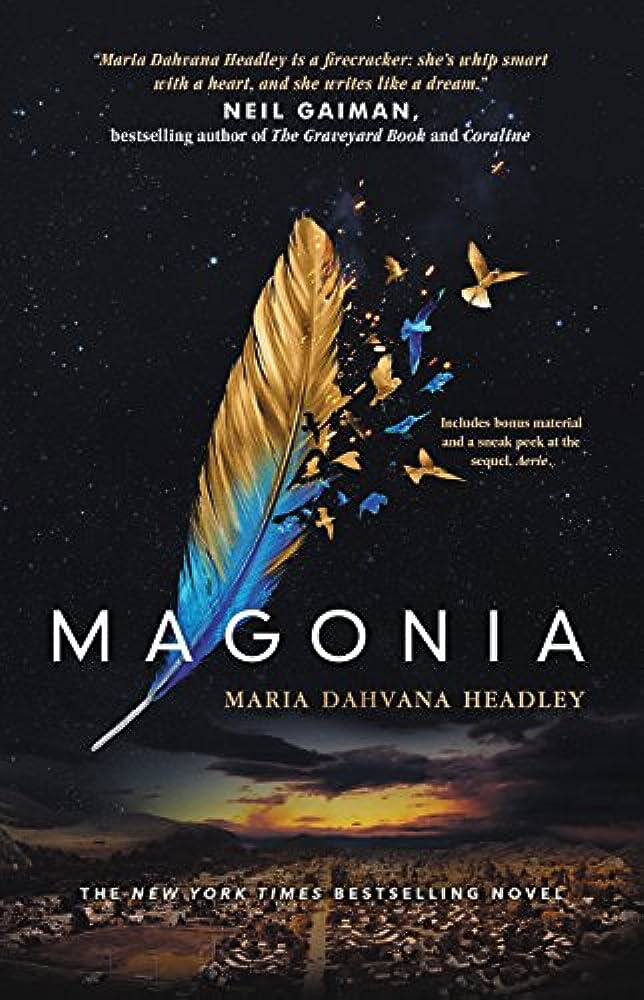
Posted in Sunday Songs

Sunday Songs: 11/12/23

Happy Sunday, bibliophiles! I hope this week has treated you well.

11/12/23: another satisfying date where the month and the day add up to the year. Glorious. Savor these days. And to soundtrack those days, why not listen to some nice, orange songs? (Half of which I stole from Wilco’s pre-show playlist, but that’s beside the point).

Enjoy this week’s songs!

SUNDAY SONGS: 11/12/23

“Saturday Come Slow” – Massive Attack

CONTENT WARNING FOR THE MUSIC VIDEO: most of the music video consists of an interview with a former Guantanamo Bay prisoner recounting the torture and inhumane conditions of the prison, so if this is triggering for you, proceed at your own discretion. That part of the video begins at 3:32.

I’m slowly (no pun intended) getting into Massive Attack, mostly thanks to my brother and my dad. This one is all thanks to my brother, who confessed to us while we were in line for Peter Gabriel last month that he had no idea until then who was singing on the track. His first thought was Gruff Rhys (makes sense), but apparently not—Damon Albarn does the lead vocals for this song.

That was all the convincing I needed to download it. You know me.

I’ve noticed a phenomenon in any later Damon Albarn project (of which there have been two this year) where there’s a point where it ceases to sound like Gorillaz or Blur, and just sounds like Damon Albarn. Gorillaz usually remedies some of this with its rotating cast of guest features, but on something like Blur’s newest album, The Ballad of Darren, there’s very little to distinguish it from his solo work. As I said in my initial thoughts on the album back in July, it’s still good music, but it lacks what makes Blur Blur, even though all the moving parts are present. But how does that flip when Damon Albarn is the feature instead of the one in charge of the features? “Saturday Come Slow” has an aura to it that could only be produced by the likes of Massive Attack; the slow build of it has an unmistakable air of foreboding, as if the Saturday coming slow is a shadow wiggling its too-long fingers over your shoulder. Fitting that Albarn croons about “the limestone caves/in the southwest lands,” imagery that calls to mind barren, sheer things towering over you. It’s a kind of eery creeping that meshes with the howling echo of his voice, but that you don’t quite get with Gorillaz or Blur; Gorillaz can get plenty spooky in a fun way, but they were never meant to be creepy—they’re a pop act at heart, and even though they’ve tread territory that pop hasn’t normally trod on for the 20+ years they’ve been active, it doesn’t have the foreboding build of this song. Blur, on the other hand, got plenty weird and unnerving in their experimental years (see: “Caramel,” “Trailerpark”), but their brand of unnerving came more from the claustrophobic atmosphere of off-kilter samples and synths that built up its cramped exoskeleton. The dread of “Saturday Come Slow” comes from how spacious it feels—like those limestone caves, that sense of foreboding comes from the primal sense of being surrounded by something larger than yourself—and being walled in by it, with only the echo of your voice to accompany you.

“Lucinda” – A Certain Ratio

This is the first of two songs this week that I stole from the playlist that played before Wilco’s phenomenal show at the Mission Ballroom back in October. An indicator of a really good show can be found in its playlist—if you keep going back and forth between you and everyone else who came along trying to Siri every song that comes on, then you know it’s gonna be a good show. Same thing happened with when I saw Spiritualized last year. That whole playlist was in heavy rotation for a solid month and a half afterwards. (Lesley Gore and Daniel Johnston: duality of man.)

The first thing that anybody has to notice about the song is the bass. That bass. Sweet Jesus, it’s so good. “Lucinda,” once the chorus kicks in, has not one but two basslines, all working in the thicket, most delicious tandem possible. Jez Kerr leads the charge with a sound that feels thick enough to cut with a butterknife—it propels the sound to new heights, taking what might have otherwise been a bare-bones, post-punk dance song to something hypnotically head-nodding. The bass might as well be the vocals—Martha Wilson’s tight vocals are soft and fleeting, but it’s Kerr’s bass that really takes center stage in “Lucinda.” It’s more than a head-nodder—it’s a whole-body-swayer, buttery and enigmatic enough to send waves through your whole system. Thanks, Wilco.

“Hold Em” – Maker

I’m not like other girls…I didn’t find out about this song through Abbott Elementary. I found out about it through my mom, who…found out about it through Abbott Elementary. It’s good stuff. The song and Abbott Elementary, from the laughter I’ve heard from the bedroom whenever she watches it.

Whatever the case, “Hold Em” was destined for theme music from the start. The beat and instrumentation has that kind of meticulous touch to it. Smooth really is the best word to describe it: the groove that persists through this song never wanes, but never feels the need to amp up the intensity. With the persistent but boxed-in drumbeat and the humbly soft bassline, it lulls you into an instant rhythm, but the kind of rhythm understated enough to allow for some freeze-frames and title screens as the opening credits roll through. And yet, it never feels understated: it’s bold. It feels like there’s constant pops of color bursting through your ears. It’s infectious. And that’s what would make it a great theme song: catchy enough to remember, but smooth enough to share the stage with a visual element.

“Move Your Feet” – Junior Senior

I have nothing to say for myself. It slaps. Just Dance 2 and its effects on society.

Look, the original spot for this slot was gonna be “The Day I Tried to Live,” but I figured we’d stave off that depression for a few weeks. I’m going to talk about it eventually (because it’s still a fantastic song), but it’s getting dark at 5pm and I still haven’t adjusted. We don’t need that energy right now. Move your feet. Feel united.

“Swing and Turn Jubilee” (cover) – The A’s

We’ll end on a softer note with the other song that I stole from Wilco, or, at any rate, whoever was behind their playlist. Drastically different than “Lucinda” (and most of this week’s songs), but nonetheless beautiful.

In the style of Kim Deal, The A’s are a side project of a side project; consisting of Amelia Meath and Alexandra Sauser-Monnig, the A’s came about after both of them took breaks from previous bands and solo careers—they both hail from North Carolina and had crossed paths in the music industry, and thus this project came to be. I haven’t listened to any of their work (save for…[checks notes] Sylvan Esso? That Sylvan Esso? The annoying Sirius XMU Sylvan Esso? Can’t be…) outside of this band, but the two of them together made for hauntingly beautiful harmonies. Watching them on their recent Tiny Desk Concert solidifies the image even more—they’re like charmingly unnerving cartoon characters, with their matching leaf-print dresses, black lipstick, and giant sunglasses. I wouldn’t be surprised if they eventually became those old ladies from Coraline in their latter years.

“Swing and Turn Jubilee” is part of their album Fruit, an album of almost all covers (save for the original song “When I Die”), ranging from cowboy and folk standards to Shelley Duvall (more on the latter in a few weeks, mark my words). Some of the other songs that they performed on Tiny Desk definitely get too into that yodel-ay-hee-hoo, Buster Scruggs a-capella vibe for me, but in any case, there’s no denying the magic that happens when their harmonies collide. “Swing and Turn,” even if I hadn’t first heard it from Wilco, would have been an instant stand-out, if a quiet one; their performance is just their voices, Sauser-Monnig on guitars, and Meath making percussion by tapping her thick-soled sneakers into a basket of stones. Doesn’t get much folkier than that. Most of these kinds of Appalachian folk songs that I hear from movies or from covers (so covered that the original songwriter is lost to time) are the kind that have a kind of desperate, underlying sorrow to them that permeates even the sweetest love song. Living in the bare bones of the U.S. just does that to a person, I guess. But there’s something about this take on “Swing and Turn” that turns the sorrow into tenderness. It doesn’t give me that icky, Dust Bowl malaise; to be fair, most iterations are faster and more upbeat than most other songs of its ilk, but the restrained, slow pace of The A’s take on it fooled me into thinking so. But it’s partly due t how plainly sweet the lyrics are: “Hardest work I’ve ever done/was working on a farm/Easiest work I’ve ever done/was falling into your arms.” The gentle honey of Meath and Sauser-Monnig’s soft harmonies seem to take me in their arms themselves, like I’m being rocked to sleep.

Either way, these kind of modern folk covers are just begging to be put somewhere in either Fargo (NEW SEASON IN A WEEK AND A HALF WHO’S HYPED) or the next Coen Brothers project. If your whole deal is melancholy covers of already melancholy and unnerving folk songs, you’re just asking for it, at that point.

Since this week consists entirely of songs, consider all of them to be today’s song.

That’s it for this week’s Sunday Songs! Have a wonderful rest of your day, and take care of yourselves!

Posted in Sunday Songs

Sunday Songs – 11/5/23

Happy Sunday, bibliophiles! I hope this week has treated you well.

Did somebody order a monthly blue period double-dipped with Peter Gabriel? Because you guys are not gonna believe what showed up on my doorstep this morning…

Enjoy this week’s songs!

SUNDAY SONGS: 11/5/23

“The Tower That Ate People” – Peter Gabriel

COME AND GET IT! TWO FOR ONE PETER GABRIEL DEAL! TWO FOR THE PRICE OF ONE!

If there’s a vaguely overarching theme for this week’s songs that I can throw together, it’s that Peter Gabriel gets so much weirder than people give him credit for. I suppose that’s the curse of any musician whose earlier hits get the spotlight while the later, more experimental parts of their career go on the wayside in terms of engagement, but are as full of life and creativity as anything else they’ve produced (see also: David Bowie, Kate Bush). To be fair, we’re so used to aging artists that continue to pump out more of the same in hopes of keeping the fire of fame going (say, what’s going on with The Rolling Stones lately?), but equating aging to a decline in musical artistry is shallow either way. Again: I just saw Peter Gabriel a few weeks back, and here he is at 73 delivering some of the most spectacular performances—both visual and musical—that I’ve seen from any musician on stage.

The album, 2000’s OVO, is technically his soundtrack work, and was conceived for a multimedia show that ran in the Millennium Dome for 999 shows in that same year. Gabriel’s work on it interfered with his next album, the criminally underrated Up, which ended up coming out in 2002, a year after it was set to be released. The through lines between the two are clear; “The Tower That Ate People” (good god, what a title) has an industrial, almost Massive Attack-like crawl to it, propelled by a looped guitar riff. Gabriel’s voice comes out as a shrouded growl, making it all the more convincing when he opens the song with “There’s a bump in the basement/there’s a knocking on the wall.” The electronic grinding as he sings of “the pumping of the pistons” makes the music swell. It’s a clanging machine, but it never loses an ounce of that cinematic, Peter Gabriel touch—especially not the prolonged silence after he declares “We’re building up/Until we touch the sky,” letting everything fade to lumbering, echoing footsteps. I can only imagine what the stage show was like. I’m jealous that I wasn’t one of the lucky few who got to see this live on the i/o tour, because can you imagine the feeling of this reverberating straight through your ribs?

“We Looked Like Giants” (Death Cab for Cutie cover) – Car Seat Headrest

THEY’RE BACK!! THEY’RE BACK!!!! So what if it’s a cover—it’s a perfect fit.

Even without as much Death Cab for Cutie knowledge (much less about the album that they’re commemorating—before this, all I knew was the title track. Owie.), it’s easy to see that pairing them with Car Seat Headrest was a fit as perfect as puzzle pieces sliding together. Despite “We Looked Like Giants” being a cover, it feels like the whole song is harkening back to the Teens of Denial glory days, with its crashing guitar breakdowns and angst so dense you could squeeze it out of a dish towel. The lyrics feel even more like it was made for them—”When every Thursday/I’d brave the mountain passes/And you’d skip your early classes/And we learned how our bodies worked.” Certainly makes…every single song from Twin Fantasy make more sense. Even without the slam of an intro that the original version boasts, the tension and momentum that Will Toledo and company bring to this song fills it with the nervous energy that has defined the band for so long—it’s a song teetering on its tiptoes, balancing out both arms as it contemplates the edge. Toledo’s signature, honeyed wail takes the song to dizzying heights, making the collision course back to Earth as the final seconds plunge into silence all the more riveting. I always get all sappy about Teens of Denial and all of the memories of listening to it the summer before I started high school, and this song brings all of the good parts of that back—slip this before “Fill In the Blank,” and I wouldn’t even blink. Leave it to Car Seat Headrest to toe the line between an unchanged cover and one that makes the cover all their own.

“The Family and the Fishing Net” – Peter Gabriel

I’ve done it. I’ve finally surmounted the task of going through all of Peter Gabriel’s albums (minus his soundtrack work). Peter Gabriel summer has come to an end. Peter Gabriel 4: Security was the last one for entirely arbitrary reasons, but it’s fantastic—and a lot creepier than most people give it credit for.

Take this song. Immediately, it sonically calls back to “Intruder,” with its ominously creeping instrumentals, off-kilter chanting and an unsettling chorus of flutes that open the song. Slowly, you start to process the lyrics, and the chill starts creeping down your spine. “Icing on the warm flesh cake?” Yep. Mom, come pick me up, I’m scared. But if you take just a quick look through, you can see the true genius of this song—I was super curious about the meaning, and I was floored by the concept behind it.

“Vows of sacrifice (vows of sacrifice)/Headless chickens (headless chickens)/Dance in circles (dance in circles)”. It sounds like the makings of a cult. But Peter Gabriel specifically created “The Family and the Fishing Net” as a wedding song. Vows of sacrifice? For richer, for poorer, in sickness and in health. Headless chickens? Could just as well be serving a roast dinner at the ceremony. Dance in circles? We’ve all done that at a wedding or two, haven’t we? That’s where the lyrical genius comes in—it’s not just that he’s subverting Western wedding imagery and making it sound like a cult ritual, there’s a level of exoticization that he brings to it that makes it clever in a conscious way that lines up with his worldly sensibilities. It feels like a response to every song that’s ever demonized and exoticized ordinary (and often sacred) rituals of indigenous people around the world. And given that much of this album has that worldly ethos (see also: “San Jacinto,” “Wallflower”), it’s a perfect addition. As much as I tend to rag on old white guys, Peter Gabriel should be one of the paragon examples in writing songs—and any kind of writing—outside our worldviews, just for the simple fact that he cares to listen about people’s lived experiences. It’s not just writing about some strange, foreign goings-on that he witnessed in his travels—Gabriel took the time to make sure that he understood and uplifted the people and cultures that he encountered. That’s what makes this song feel so important—he recognized the detriment in writing songs from an ignorant distance, and used that aspect of the history of Western music to create one of the creepiest—and most clever—songs in his catalogue.

Also, to the anonymous YouTube commenter who said that she wanted to have this play when she walked down the aisle: I salute you. I’d pay to see that.

“She Plays Bass” – beabadoobee

So it turns out that the she who plays bass is beabadoobee’s actual bassist, and…yeah. They’re aren’t romantically involved, but that still has to be bizarre to be playing bass on a song about yourself. At least all parties seem to be okay with it? Knock on wood that beabadoobee’s backing band doesn’t get into any kind of Fleetwood Mac funny business.

That aside, here’s another entry into my thesis that beabadoobee makes the perfect music for teen rom-coms. From her 90’s-inspired Space Cadet EP (hmm, wonder why there’s a song called “I Wish I Was Stephen Malkmus”…), it’s an ode to yearning, longing, and bright, shiny guitars. Bea Kristi described the song as “a Cure rip-off,” a description that she admitted to Robert Smith himself when they met at the BRIT awards back in 2020. Either way you want to describe it, there’s no denying the brightness of it—despite the black and white cover of the single, “She Plays Bass” is rife with neon colors and cartoon stars. I halfway get the Cure bit—definitely more like “Friday I’m in Love” or “Let’s Go to Bed” than their other music—but what I do get is delightfully guitar-driven indie longing, sparkling and starry-eyed. If “Glue Song” plays in the end-credits of said rom-com, maybe this plays as the intimidatingly cool love interest is introduced. Just a thought.

“Black Hole” – boygenius

What? You thought I was gonna shut up about the rest after talking about “Powers”? You fools…

“Black Hole” is an easy song to have on loop—it’s part of the 3/4 of this EP where every song is freakishly hypnotic, but they’re all around two and a half minutes long, so they just suck you down with them forever, like water sucked down the sink drain. Or…maybe, something else? Mayhaps…a black hole? But the black hole in this song is a more recent revelation—”You can see the stars, the ones/The headlines said this morning were being spat out/By what we thought was just/Destroying everything for good.” The black hole in question is a fascinating one: caught by the Hubble telescope in early April of this year, NASA observed that this supermassive black hole was leaving a trail of stars in its destructive wake that stretched over 200,000 light years long. It’s the perfect, beautiful moment to write a song about. Hopefully this bodes well for me because I’m taking an astronomy class next year: I’ve always struggled with astronomy in school previously, but it makes me tear up that we live in a universe that we will never fully know everything about. That there will always be new things to discover about the vastness of space and the world around us and beyond us until the day I die.

Back to the song: it’s poetry. More specifically, it’s two separate poems. Julien Baker takes the reins in the first poem, with her musings about looking at the stars. The gently clattering electronic instrumentals sound appropriately starry, with the hum of synths leading into Baker’s voice, then transitioning into a tinny, ascending scale on a keyboard just before everything shifts. This is the second poem. It feels like the camera has whipped around as the drums and synths intensify, panning around to Lucy Dacus as Phoebe Bridgers lingers just out of the frame, opaque camera shots flickering at high speed over them as the camera zooms in on their faces. Hearing Dacus take the high notes and Bridgers taking the low, the opposite of their normal range, is an odd treat—it makes Bridgers’ voice seem like a ghost, barely there unless you really pay attention, while Dacus acts as the piercing lighthouse beacon cutting through the fog. All of their lines are enchantingly neat, spaced apart like they’re all collected in separate bins. Apart from the initial confusion (and fleeting clunkiness) of the first two lines (“White teeth/black light/White tee/brown eyes”—”teeth” and “tee” sound way too similar, especially when preceded by the same adjective), I’ve been eating up the emotionally-charged precision of it all. As each line is cut off the chopping block, the drum machine thrums on, just as meticulous as the delivery of each lyric. And I am nothing if not a sucker for songs on an album (or an EP, in this case) that transition into the other as though they’re the same song. Especially with this and “Afraid of Heights” being so short, it feels all the more like a single song. Pure artistry.

Since this post consists entirely of songs, consider all of them to be today’s song.

That’s it for this week’s Sunday Songs! Have a wonderful rest of your day, and take care of yourselves!

Posted in Sunday Songs

Sunday Songs: 10/29/23

Happy Sunday, bibliophiles! I hope this week has treated you well.

Here we are, almost at Halloween, the most wonderful time of the year! And to celebrate, I’ve brewed up a very special post for you, complete with…

…a Christmas color palette.

Hear me out. I didn’t intend to schedule the Christmas colors this week. It just happened. And it’s currently snowing where I am. Please. Please hear me out guys

Will last week’s Sunday Songs graphic cheer you up, then? It’s nice and autumnal…(and it’s got some nice songs, if I do say so myself. Would’ve written about them, but I was exhausted.)

LAST WEEK’S SUNDAY SONGS:

And now, enjoy this week’s songs!

SUNDAY SONGS: 10/29/23

“Maquiladora” – Radiohead

I’ve long since accepted my status as a die-hard Radiohead fan, but I’ve noticed that most diehard Radioheads fans tend to put The Bends in time out in the corner in favor of Kid A and OK Computer. It’s understandable to a certain point—OK Computer is my second favorite album of all time, and Kid A is one of the most important records in modern rock history. But I’ll always have a soft spot for most everything that came out of the Bends era. Yes, it’s far more of a conventional rock record and there’s little of the experimentation that Radiohead became known for, but it’s consistently emotional and chock-full of some beautiful, punchy guitar work. Who can deny the grandeur of “Fake Plastic Trees?” Who can deny that “Planet Telex” is one of the coolest rock album openers of the 90’s, if not of all time? Come on now.

But there were a host of EPs (that I need to explore) that came out shortly before the full album released, with sprinklings of songs that would later appear on it (in this case, the iconic “High & Dry” and “Planet Telex”). Besides having some fantastic cover art (I think I had a dream in early high school where I had it on a shirt), this EP really has something of a hidden gem. The minute the distorted guitars kick in, my first thought was similar to hearing “Burning Bridge” by Kate Bush for the first time—how the hell was this a B-side? How was this not on the album and something like…I don’t know, “Bones” didn’t get relegated to throwaway EP status? It’s incredible. It has to be, since it’s in such legendary company, but “Maquiladora” is worthy of it. The grinding, tidal wave texture of the combined guitars of Thom Yorke, Johnny Greenwood, and Ed O’Brien is always a Radiohead trademark, but it really screams out on this track—the minute they kick it, it’s like watching yourself being buried in rubble, but with a smile on your face. Thom Yorke hasn’t quite wrestled the squeaky cracks out of his voice, but somehow, it sells the crunching angst of the sound ten times more. Everything cascades down around you as you watch it crumble, and the result is an explosion of sound that makes The Bends such a staple of the 90’s. It’s hard, it’s crunchy, and even the softer, twinkling moments screech along like a car past the speed limit, leaving trails of exhaust in its wake. Again: how this track wasn’t on the album is beyond me. Good god. It could’ve been perfectly sandwiched between “High & Dry” and “Fake Plastic Trees.” I’m just saying.

“I Just Wanna Get Along” – The Breeders

Speaking of punchy, early-to-mid 90’s rock…do I smell a coincidentally great transition? (It’s all gonna fizzle out by the time we get to the next song, don’t worry…)

My god, I love the 90’s. I love the 90’s. I really need to listen more of The Breeders, because this hits an especially sweet spot for me. It toes the line between abrasive and absolute tightness; it’s got a punk sensibility to it, but with a sanded edge that smooths it into something truly meticulous in how much it rocks. For a song that’s only a minute and 44 seconds long, it has such a punch to it that could only be so self-contained; it’s rare that I like a song and don’t want to extend it if it’s so short. Some songs were meant to be a smack in the face and then fade away like a sparkler fizzling out. And this song has just the same bite as a sparkler—the double guitar act of twins Kim and Kelley Deal, combined with the thrumming bass of Josephine Wiggs, makes for a deliciously spiky, driving sound. Kim Deal’s deadpan vocals only elevate it—the dry delivery of the line “if you’re so special/why aren’t you dead?” feels like spitting a wad of chewed-up gum in the trash in the most gloriously 90’s way. Deal delivers the song’s title in the same way; it’s not a chant so much as it is a rolled eye and a shrug as you reapply red lipstick in the mirror. There’s a sharply stamped period at the end of each repetition: “I just wanna get along. I just wanna get along.” It oozes confidence, but not in an arrogant way: it’s the kind of confidence of pulling yourself onto a motorcycle without a word and leaving everyone else in the dust.

“Bliss” – Annie Clark

“Bliss” starts at 0:32 in this video.

I’ve done it. I’ve reached peak obscurity in one of these posts. Streaming? No can do. Available to purchase? Doubtful. All we’ve got is a few YouTube videos where the “full” version is still missing a song (or two?), complete with some crusty pixelation on the album art. Mwah.

I am become annoyingly into St. Vincent, scroller of wikipedia rabbit holes. Even though I first heard about this EP during my initial St. Vincent superfan period in about sixth grade, I hadn’t gotten around to listening to it until now. Ratsliveonnoevilstar is St. Vincent before she was St. Vincent; she released the EP in early 2003, when she was a student at the Berklee College of Music. Most of the only copies that exist are floating somewhere around Berklee and possibly on eBay. What remains accessible is three to four songs—Wikipedia only lists three, but “Good Morning” (the first song in the above video) is only on this YouTube version, and “Breathing” seems lost to the ether. And from what Clark herself has said about the EP, it’s likely to stay that way:

“It was horrible. I did that my sophomore year or something. I haven’t listened to that in a really long time. I would say I should have put a little more Bill Callahan and a little less Herbie Hancock in it.”

And upon listening to it, I’m glad I listened to it then and not in middle school, because I sincerely doubt that I would’ve lasted more than 2 minutes at age 12. Now, I can say this affectionately, as someone who is around the age Clark was when she made this EP: this is the most college student thing I’ve ever listened to. She’s made her voice theatrically lower than how her voice sounds as a grown woman, and most of the EP is a very particular brand of over-the-top avant-garde, jazzy-sounding circularity. Most of it’s pleasant to listen to, but it still has an air of “look at me, College Student, producing High Art™️.” But it’s not all bad. Songs like “Bliss” are still full of the meticulous threads that led to the wonderfully clever art-pop of Marry Me five years later. It’s a portrait of a very artsy young musician, one who hadn’t hit her stride yet, but was brimming with inspiration and determination. Clark had a very specific sound in mind, and she was well on her way to nailing it. It’s certainly not your ordinary acoustic college student EP—I guess that’s bound to happen if you’re going somewhere like Berklee, but either way, there’s something endearing about this effort; it’s far from perfect, but it’s the seedling that would go on to sprout one of the most iconic musical careers of the 21st century. #26 on Rolling Stone’s 250 Greatest Guitarists of All Time list? Those lists may be exceedingly subjective, but come on. More than deserved.

I love the sound of old men foaming at the mouth in the Rolling Stone comments section in the morning.

“Backslider” – Toadies

There’s no bond like the bond between a high school girl and a simple but spectacular song that she learned how to play by herself on guitar. It’s a perfect warm-up song; part of why I’ve loved playing guitar more than piano is that I’ve feel more connected with the material that I can use for keeping my fingers dextrous. And when I was first learning this and slowing the song down on YouTube, it doesn’t sound silly like a bunch of other songs do (play “Drive My Car” on 0.5x speed, I dare you)—this just sounded so perfectly bluesy.

I suppose this could be the closest to Halloweeny that this week’s songs come to, but I really should’ve gone with something like “Possum Kingdom” if we wanted some real Halloween. Alas, “Backslider” was on the brain more. But that’s not a complaint—I’ve been coming back to this, the aforementioned vampire song, and “I Come From the Water” since 8th grade, and I have nothing but fond memories of them. That chugging, grinding guitar never fails to hook me just like it did when I was 14; there’s a dark grime clinging to every Toadies song I’ve ever heard, muddy and hazily dark, like the humidity that clings to your forehead at night in the South. (A feeling that they probably knew well, what with the band hailing from Texas.) The flies lingering around the band in the video really tie it all together. It’s a sludgy, eery texture that pairs with everything I’ve heard of theirs, but especially with this, a series of vignettes of Todd Lewis’ Southern, Christian upbringing and the creeping dread ever-present within it. All crammed in just over two and a half minutes, all of that grime and dread is as tight as ever—not polished, but sculpted into something fully-formed.

“Glue Song” – beabadoobee

Since I first posted about beabadoobee way back in July, I’m veeeery slowly sprinkling some of her songs into my rotation. And although not everything’s my speed, I’m not regretting this mini deep-dive into her music! Again, if anyone has any starting points as far as album goes, be my guest! Onto the Sisyphean album bucket list…

An open letter to anybody looking to make a high quality teen rom-com: please, this needs to go at the very end. Imagine that: you see the two protagonists look into each other’s eyes, their hands slowly slip into each others, they smile. The opening strings kick in, camera cuts back to them looking into each other’s eyes. Roll credits as beabadoobee’s voice hits. Perfection, right? I’m starting to see why so much of her catalogue is made up of love songs—from what I can tell, that kind of sweetness has been her trademark for years. “Glue Song” is one of her newest efforts, and it’s easy to see that she’s known for that kind of love song craft. She has the perfect voice for these kind of tenderhearted, smiley ballads—gently high-pitched, feathery, and glimmeringly sweet like honey. As soon as she declares that “I’ve never known someone like you,” I can’t help but believe it. And just like the orchestral arrangements in the background of “the way things go,” the strings and horns trilling in the background elevate “Glue Song” into the perfect bite of cheek-blushingly, dress-twirlingly lovey-dovey declarations. It would be easy to make something like this incredibly sappy, but Bea Kristi’s light voice is light enough to feel like she isn’t trying to pack a ton of unneeded sugar into every note—she knows the balance, and she keeps it simple, gentle. It’s just the right amount of sweetness—enough to melt on your tongue, but not so much that it rots your teeth.

Bonus: she also released a version of “Glue Song” as a duet with Clairo—it’s just as lovely!

Since this post consists entirely of songs, consider all of them to be today’s song.

That’s it for this week’s Sunday Songs! Have a wonderful rest of your day, and take care of yourselves!