

Happy Sunday, bibliophiles! I hope this week has treated you well.
This week: do
you
SEEEEEEEEEEEEEEEEEEEE
THAT I’M SCARED
AND I’M LONELÆEEEEEEEEEEE
Enjoy this week’s songs!
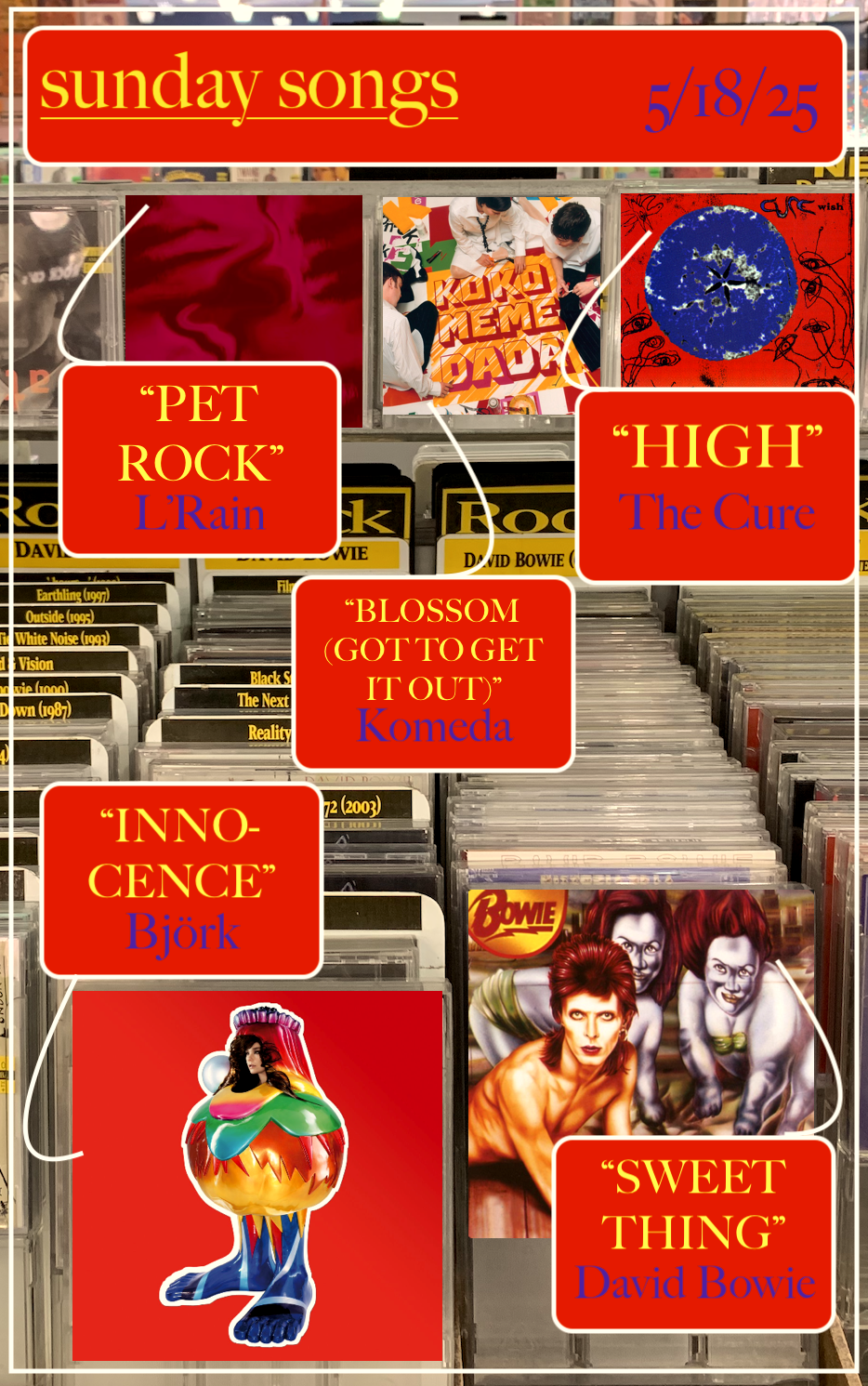
SUNDAY SONGS: 5/18/25
Saying that a certain Björk album feels bolder or more in-your-face than others feels redundant because most of them trend towards that direction. According to Sonic Symbolism, Volta was about being upfront, brightly-colored, and loud—in her personality, in her life, and in her political views (see: “Declare Independence”). Volta’s still in the weeds as far as my album bucket list goes, but I love the distinct flavor of it—flat neons and confidence. “Innocence” is a whole feast for me to pick apart in terms of sound. It stomps all over the place, leaving an asymmetrical trail in its wake, angular and herky jerky, but never more sure of itself. It’s the kind of song that makes me think that Björk’s suit on the album cover (designed by Bernard Willem) is about to turn into some kind of mech suit with flag-shooting cannons for hands. This is one of the songs on Volta that was produced by Timbaland, giving it a chrome-like sheen that could almost be pop, but could never deny the inherent weirdness that is Björk. At the beginning, the synths speed up as though winding up for a punch. The angular rhythm is an ouroboros, constantly made and remade again against Björk’s smoother vocals. There’s even a bit at 2:13 that I swear sounds like the Severance elevator noise. Every listen brings something new to the table—there’s all manner of Easter eggs lying around.
Lyrically, I can’t help but think of Debut. “Innocence” is a reckoning with the fearlessness of youth: “When I once was untouchable/Innocence roared, still amazes/When I once was innocent/It is still here, but in different places.” It’s hard not to think of the 1992 Björk that sang of “go[ing] down to the harbor/and jump[ing] between the boats” and ecstatically declaring that there was more to life than this. But the kind of confidence that she maintains at the time of “Innocence” is balancing that excitable youth with the fears that came as she matured: speaking to The Sun, she called the song “A handshake with fear.” For her, fear makes fearlessness even more tantalizing—now that she’s known the grips of it, she appreciates it even more. Even so, it’s still an extreme, but so is fear: “Fear of losing energy is draining/It locks up your chest, shuts down the heart/Miserly and stingy/Let’s open up: share!” Man. Did I need to hear that…for the millionth time. I feel like I’m the reverse, somehow. Of course, I’m not nearly at her maturity level, but I’ve been cautious my whole life. Still am. Fearlessness is freeing, and I only find that I can appreciate it when I have those fears right in front of me: I can see them, acknowledge them, and throw them to the wind, if only for a moment.
BONUS: The video above isn’t the official music video, but the 1st place winner of a fan contest that Björk held to make a music video, created by Fred & Annabelle. Here is the 2nd place winner for the video contest, made by Roland Matusek (Björk Kart?)
…as well as Björk talking about the inspiration behind the animation contest:
…AND A BOOK TO GO WITH IT:
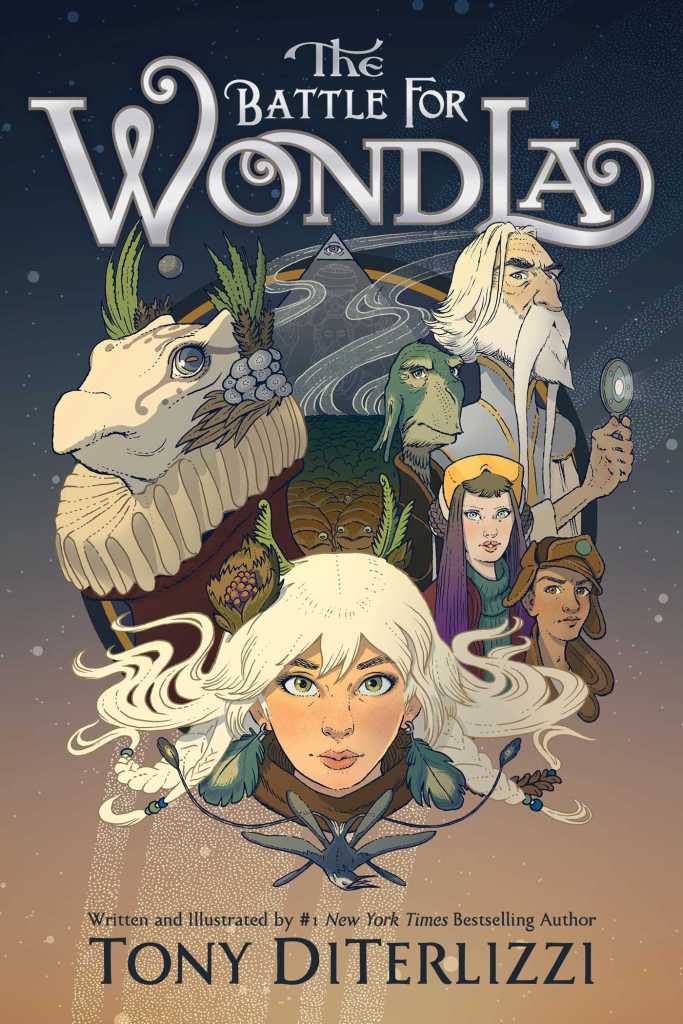
The Battle for WondLa (The Search for WondLa, #3) – Tony DiTerlizzi – “When I once was fearless/Innocence roared, still amazes/Untouchable innocence/It is still here, but in different places…”
It’s been about a year since I finally listen to all of Diamond Dogs in full, and I’m still blown away by how much David Bowie’s storytelling had developed. Throughout his life, Bowie accumulated an extensive library, often bringing books along with him to read on tour. (If you’re interested, John O’Connell compiled a list of some of the books that impacted him the most in Bowie’s Bookshelf. It’s a great read.) The more I think about it, the more I realize that Bowie approached songwriting like an author—whether or not there was a linear narrative, like the story of Hunger City in Diamond Dogs, he had not just melody in mind, but the exact emotion to wring out of which characters and when, and which motifs and allusions to scatter throughout. Obviously, these elements can exist outside of the realm of literature, but it’s so distinct from any given Bowie lyric, much less “Sweet Thing,” that he was a literary-minded man. No wonder I connected with him instantly.
In terms of Diamond Dogs’ tracklist, often with songs that are directly chain-linked to the others, I’m partial to “Future Legend/Diamond Dogs” (my favorite album opening of all time…nothing will ever go harder than that), but “Sweet thing” is the emotional core of Bowie’s narrative, without a doubt. Take a look at the first verse: “It’s safe in the city/To love in a doorway/To wrangle some screams from the dawn/And isn’t it me, putting pain in a stranger?/Like a portrait in flesh, who trails on a leash?” MAN. Glam rock had roots in theatre and the dramatic from the start, but this is one excerpt from Diamond Dogs that would have felt right at home on stage. As one of the entries in Bowie’s failed 1984 musical adaptation, it’s a loose twist on the ill-fated romance between Winston and Julia in Orwell’s novel; Bowie had to make some changes after the musical was dead in the water, rendering the characters nameless and the woman, seemingly, into a prostitute. Under the watchful eye of the “knowing one,” a kind of panopticon surveillance a la Big Brother, the narrator and the prostitute share painful, ill-fated, but fleeting love: “I’m in your way/And I’ll steal every moment/If this trade is a curse, then I’ll bless you/And turn to the crossroads…” With the imagery aplenty of doors and doorways, it’s an affair steeped in transition, an air of impermanence and separation present in every bittersweet moment. Bowie sells it all with one of the album’s most heart-wrenching moments: he draws out “Will you see/That I’m scared and I’m lonely?” with a stabbed, bleeding heart, hand outstretched, with full on musical theater drama. Yet never once does it feel false—Bowie can’t help but let some sincerity slip through the metric ton of personas and fiction. Alan Parker’s guitar soars in true glam-rock fashion, and somehow, the saxophones never feel out of place; Bowie’s world is all brass, rust, and forbidden love—a world fully realized that burst from the shell of Orwell to become a myth all its own.
BONUS: for the full experience, here’s the full story, told in a joining of “Sweet Thing,” “Candidate,” and “Sweet Thing (Reprise)”:
…AND A BOOK TO GO WITH IT:
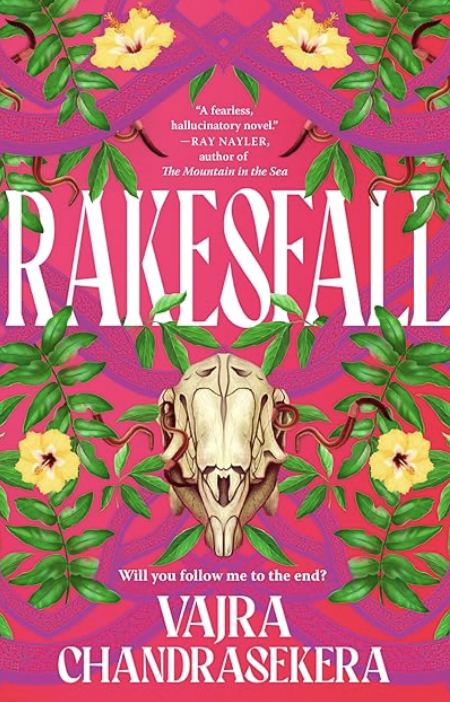
Rakesfall – Vajra Chandrasekera – the 1984 pairing has run its course at this point, so here’s a story of epic-like love spanning across space and time.
Another amazing find from my dad, “Pet Rock” thrives on being propped up. The music video shows a variety of pet rocks being set up and placed around a miniature dollhouse fitted with all manner of retro furniture, tiny instruments, and mini versions of L’Rain’s album I Killed Your Dog. (Now that’s a title for you…what’d you have to do that for??) The music thrums with distortion, barely contained chaos with a bubbly, Crumb-like atmosphere, faintly on the verge of psychedelic collapse. Taja Cheek’s vocals, like Lila Ramani, flicker in and out of clarity—the only time a finger pokes through the haze is when the guitar, before the instrumentals start unraveling, almost tricks you into thinking that there’s a light at the end of the tunnel. Like the dollhouse, “Pet Rock” has the feeling of a neon-colored haunted house (new Meow Wolf concept?)—everything appears structurally sound, but there’s all sorts of weirdness drifting just out of earshot.
The lyrics take a similar turn: after speaking of being propped up like said rock “Why would you go without me?/And make me something else?”), the lyrics go from a faint dread to something outright sinister: “Like a dead girl with shades on/Propped up by captors/I’m fine/I’ve got no one to talk to.” HUH?? Cheek told Alternative Press that the story was inspired by “an old story I’d been told about a woman who was riding the train but looked strange, and the reader eventually figures out that she’s dead, with glasses on, being propped up by the people that seem to have harmed her.” There’s a solid manipulation metaphor for you—rock or human, you’re not alive, just a nice little dolly to be moved around the dollhouse in whatever way suits you.
It’s just a rock! Or not quite, this time? Rocco takes a stand?
…AND A BOOK TO GO WITH IT:
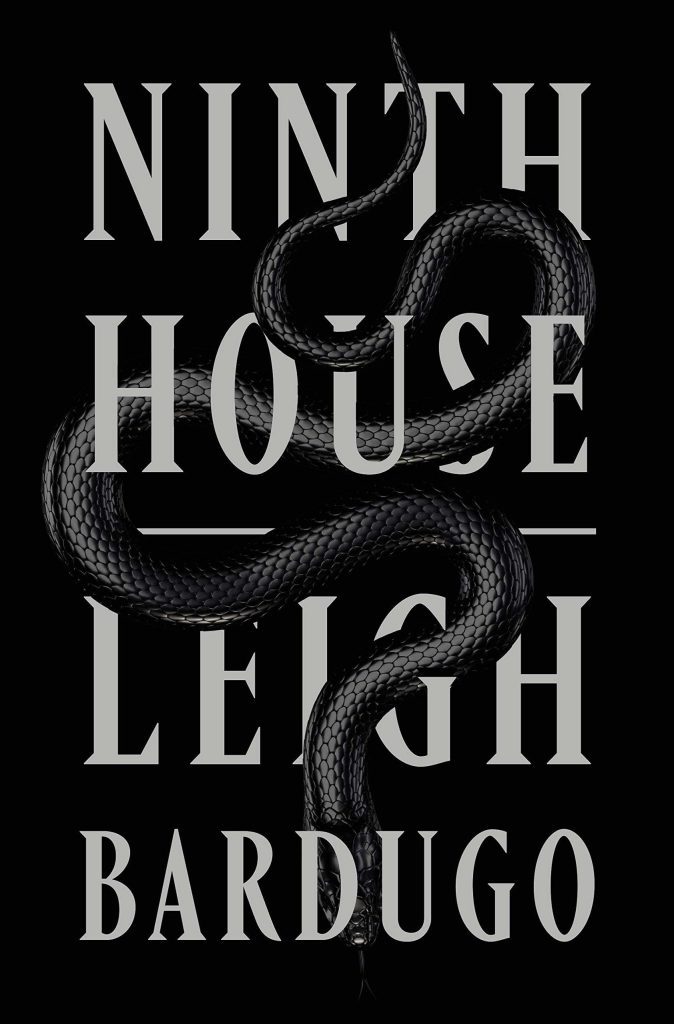
Ninth House – Leigh Bardugo – “Like a dead girl with shades on/Propped up by captors/I’m fine/I’ve got no one to talk to/It’s all my fault, I know…”
“Blossom (Got To Get it Out)” – Komeda
I seem to gain a tolerance for more uptight songs once I get older, but in retrospect, “Blossom” gets less uptight the more I listen to it. Sure, it’s about as high-strung as The Feelies, but it’s got this ’60s girl group feel to it that makes it inherently more playful. Komeda seems to fall into a kind of indie, ’90s niche taking their cues from the bubblegum pop from the ’60s (see also: The Rondelles); it’s jangly as all get-out, and features an almost Fred Schneider-esque chorus of spelling out “B-L-O-S-S-O-M” like a cheerleader’s chant. I’d argue that Komeda’s voices aren’t quite as enthusiastic as their forebears (and the instrumentals), but it’s got that vibrant, candy-colored spirit of the ’60s with a distinctly ’90s production—it’s much more fun now that I’ve revisited it.
What makes this song infinitely better for me is the fact that, under the title “B.L.O.S.S.O.M.,” this song was on Heroes and Villains, an album of songs inspired by The Powerpuff Girls, alongside The Apples in Stereo, Devo, Dressy Bessy, and Frank Black…what a time to be alive. This version is re-recorded, sped-up, and drum-machine-ified, and doesn’t resemble a whole lot about the original. The more electronic version isn’t jangly at all, but the very early 2000’s, rapid-fire instrumentals mesh with the 2d, supersonic speed of the Powerpuff Girls. I’m partial to the original, but at least you’ve got this absolute banger from The Apples in Stereo, right?
…AND A BOOK TO GO WITH IT:
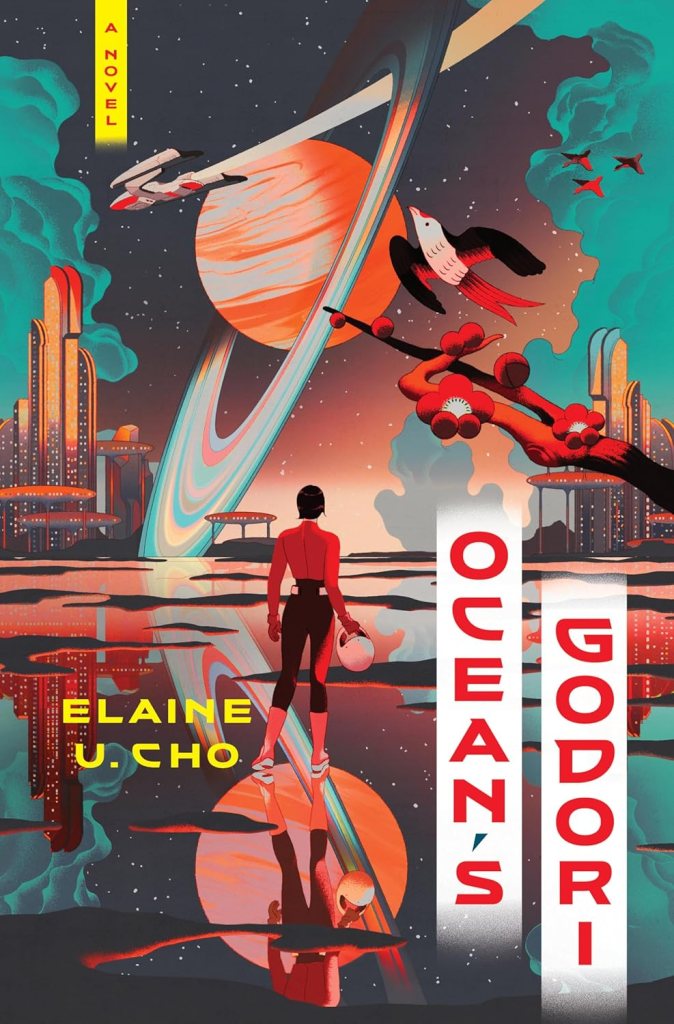
Ocean’s Godori – Elaine U. Cho – vibrant, fast-paced, and with the kind of spaceships I can imagine blasting Komeda through their speakers.
I wasn’t here to witness it, but it must’ve been such a jarring shift in the ’90s when the Cure became more embraced by the mainstream. My parents talk about how maddening it was to have their special, alternative music be ignored or made fun of in the ’80s and then all the normies started singing along to “Friday I’m In Love.” Jeez. The Cure could always make an incredible pop song, but it never ceases to baffle me that they went from being relatively underground to selling out arenas in such a short period of time. Now that rock is less adjacent to the mainstream these days, I can’t say I’ve had an experience that mirrors it. The only thing I can think of is all of the members of boygenius getting huge, but they aren’t nearly as weird as the Cure were. The eternal battle: wanting people to appreciate your weird music, but wanting to gatekeep it at the same time…
I can’t fully grasp the kind of frustration my infinitely-cooler-than-me in their ’20s parents had when Wish came out back in 1992. I fully adore “Friday I’m In Love,” even though I can recognize that it’s leagues less weird than the more creative parts of their catalogue. But if the fact that I remember “High” to this day must prove that they weren’t all that resentful. “High” was a mainstay throughout my childhood in many a car trip—I distinctly remember mishearing “licky as trips” as “licky as chips” (those damn Brits) and Robert Smith meowing (can you really have a Cure song without it?). I’m charmed to this day about the way Smith makes adjectives into nouns with each lyric—”sky as a kite” or “kitten as a cat” makes perfect sense in his lingo. What strikes me now is that The Cure, even at their darkest, always kept true to having emotion at their core. They were dramatic and goth, but they were always in touch with whatever was at heart, and painted it in every complicated color. “High,” like “Friday I’m In Love,” is proof that they can be just as sugary and playful as they can be brooding and raw, but to an extent, all of it feels true to them. Like the subject, who’s “happy as a girl/limbs in a whirl,” “High” is The Cure in a dreamy, lovelorn state, adrift in the clouds in the throes of ecstatic love. It’s not their most emotional love song, but it’s got a similar purity as “The Perfect Girl” or “Just Like Heaven”—”High” feels like a spiritual successor of that emotion, even if it’s not fully on the level of the latter two to me. To this day, this track remains as warm as sand between my toes or afternoon sunlight heating up the glass of the back seat of a car.
…AND A BOOK TO GO WITH IT:
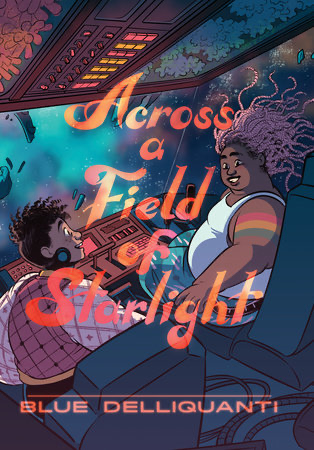
Across a Field of Starlight – Blue Delliquanti – “And when I see you take the same sweet steps/You used to take, I say/’I’ll keep on holding you in my arms so tight/I’ll never let you slip away…'”
Since this post consists entirely of songs, consider all of them to be today’s song.
That’s it for this week’s Sunday Songs! Have a wonderful rest of your day, and take care of yourselves!


 The Bookish Mutant