Posted in Sunday Songs, Uncategorized

Sunday Songs: 3/10/24

Happy Sunday, bibliophiles! I hope this week has treated you well.

Don’t let the black color scheme full you—we’ve got a mostly joyful bunch, and if not joyful, at least upbeat. This week: what happened when I listened to Apple Music’s “Love” station on a whim, things that are wholly good and pure, and reflecting on the things that made middle school survivable.

Enjoy this week’s songs!

SUNDAY SONGS: 3/10/24

“After Hours” – The Velvet Underground

The story of “After Hours” famously goes that Lou Reed wrote this song, but knew it was too pure and innocent for him to possibly sing, so he enlisted Mo Tucker, the Velvet Underground’s drummer, for the task. As much as I love Lou Reed, he did the world a great service by not singing this song—in his hands, there’s no doubt that it would’ve felt like some kind of melancholic “Perfect Day” prequel, but at least he was self-aware enough to realize it. And there’s nobody more fit to sing it than Tucker. Her voice is beautiful, but it’s the voice of someone who rarely sings, if at all, and sings softly when she does. But that’s exactly the kind of voice that “After Hours” calls for. It’s a bashful, rosy-cheeked song, the kind that shyly peers out from behind the curtain to watch the bustling city below. There’s an embarrassment to it, but not the kind that makes you wince—it’s a diary confession written as the last threads of light are fading from the sky, the last pure thoughts filtering out of your brain. It’s so simple, and yet that’s why it digs at such a unique place in my heart—it’s not quite universal, but it’s just the kind of special to nestle up against me like a drowsy cat. There’s practically no end to the influence that The Velvet Underground has had on rock music, but I feel like “After Hours” is overlooked in that aspect—without it, where would the glorious pantheon of wistful women and their acoustic guitars come from?

Bonus: because somewhere down the line we collectively recognized that this song is best performed by female drummers, here’s a performance by Meg White of the White Stripes:

…AND A BOOK TO GO WITH IT:

Heartstopper – Alice Osemananother pure, sweet morsel of tenderness.

“Broken Man” – St. Vincent

It’s happening. IT’S HAPPENING. IT’S HAPPENING!!!

All Born Screaming? Uh, yeah, I sure am. The squeal I let out at 7 A.M. when my mom shared this new single could probably be heard through my whole dorm. I’m just glad that my RA didn’t catch on. After a solid month of teasing, first with the ceremonial removal of the Daddy’s Home blonde wig, then with throwbacks to her performance of “Lithium” with the surviving members of Nirvana at the Rock and Roll Hall of Fame (to the people saying “oH, shE’s sO oFf-KeY” about this one: did you all just forget how Kurt Cobain sang, or what?) and her performance of “Krokodil” at Coachella in 2012, we finally have the St. Vincent rock album that we’ve always wanted. I’ve gone past the point of trying not to hype myself up for this one—somehow I feel like it’s not gonna be another MASSEDUCTION incident, because everything about this album— the aesthetic around it, and its collaborators (Dave Grohl on drums in this track, and Cate LeBon featuring on another)—feels like it’s going to rock. Annie Clark always seems to have a clever, cheeky album title up her sleeve, but All Born Screaming has to be one of the harder ones. And the album art…well, yeah. Let’s get the elephant out of the room—it’s great album art, but the timing was…not good, as it came just days after Aaron Bushnell self-immolated to call attention to the ongoing Palestinian genocide. (Rest in power. Chip in where you can.) But at the same time, there’s no way that Clark or her team could have predicted that kind of thing. I really don’t feel like she’s at fault here—it’s bad timing, sure, but none of us can be expected to foresee everything in the news.

Back to the song…I need to be stopped. Somebody needs to hold me back…or, at any rate, somebody should’ve held me back on the Thursday morning when “Broken Man” came out, because I listened to nothing but that song from approximately 7-11 A.M, and I had to go about three days before I could listen to it again. I’ve learned nothing. But now that I’ve ridden the initial high, I’m reveling in the new direction that St. Vincent has started to go towards with All Born Screaming. Most of the comparisons I’ve seen wind up somewhere in the neighborhood of Nine Inch Nails, P.J. Harvey, and Rage Against the Machine, and I can see all of those, especially with the former two—the industrial grind of Trent Reznor and the feral, growling vocals of P.J. Harvey are wound all over this track. Like the album art, it’s painted in the colors of ashes, still hot to the touch and rough between your fingertips. Clark has toed this line more often than not (see “Krokodil”), but we’ve gotten an album where she’s fully embraced her heavier side—one that she’s always had the capacity for, but somehow bottled up before throwing herself into All Born Screaming, the first album that she produced herself. It oscillates smoothly between hectic, metronome-ticking pop, uncomfortably sung from inside of a steel crate as she taunts the listener with her head peering out of the lid. It feels like a callback to the frenetic, pent-up energy of her self-titled record [slides Anthony Fantano glasses up the bridge of my nose], but with even more fury—every other lyric feels like a spit-laden taunt: “Who the hell do you think I am?/Like you’ve never seen a broken man?” With each verse that goes by, every word is spat with more intention, more vitriol, swerving between her silky, whisper-vocals to a full-on, sweat-drenched growl as the song closes. And this song’s breakdown is one of the most exciting of her songs in recent years; crashing in with Dave Grohl’s legendary drumming, you can’t describe this song with anything other than “fiery”: it’s a primal scream of a song, burning, biting fervor engulfed in flames. And I can’t help but get excited about the choreography in the music video—as flames dance across her neat, white button-up and slicked-back ponytail, her arms play a game of “the floor is lava” with her torso, jerkily twisting to avoid some point of contact. An eagle-eyed YouTube commenter compared it to her choreography for “Rattlesnake,” and…oh god, now I’m way too excited. Daddy’s Home is the best of her more recent work, if we’re going post-self-titled [slides glasses up even further] but…don’t do it. Don’t give me hope.

…AND A BOOK TO GO WITH IT:

Gearbreakers – Zoe Hana Mikuta – industrial landscapes abound and all-around badassery to spare.

“Red’s Ok” (from Hellboy II: The Golden Army) – Danny Elfman

Fast-forward to 8:20 for “Red’s Ok.”

Hi. Gonna try and be calm about this one. As calm as I can be when I feel the raw, untamed power of my middle school Hellboy hyperfixation coursing through my veins. The deluxe edition of the Hellboy II soundtrack showing up on my Apple Music suggestions on an unsuspecting Sunday morning was certainly a kick in the pants that sent me hurtling back to 2017 at alarming speeds, and I have yet to reach terminal velocity.

I don’t know what prompted the release—last year would’ve been fine, given that Hellboy II turned 15 that July. Who knows. Just up and popped out of nowhere. But man, I am so glad that it did. Having this expanded edition just goes to show how many gaps were left out of the original soundtrack, even if many of them (including this song) are under a minute long. I’m convinced that there was some kind of rush in putting together the original soundtrack, since now we know that the random tidbits that didn’t seem to come from anywhere that were tacked onto the end of “Finale” were, in fact, two alternate versions of songs that were almost used in the troll market scene. Again: who knows how that happened. But now, the score feels as whole as ever—those short-and-sweet tidbits fill in the crucial gaps, the silly, almost jazzy flourishes to plump up some moments of witty banter (of which there are many), fleshed out a soundtrack that’s cemented itself in the nostalgia catalogue of my mind. “Red’s Ok,” in particular, is the wonderful variation on the tasteful electric guitar motif, shown just as we see Hellboy emerging from the wreckage of a car he’s just landed on top of, wielding the Good Samaritan in the film’s most honest-to-god movie poster moment. And we get the full, 7-minute long cut of “Where Fairies Dwell.” I was born in the right generation. Born too late to see the rockstars I like, born too early to explore space…but born just in time to be able to listen to “Fuck-Used”. Bless.

My good feelings towards Elfman himself have started to fade after the allegations that came out last year, and this doesn’t change that, but I can’t deny the talent that went into this soundtrack, as well as the countless others he’s crafted over the years. Admittedly, his work has become so entangled in my life that, even though I’m all for theoretically separating the art from the artist, the truth is often far more complicated than putting the allegations in one box and their art in the other. I don’t necessarily know if it’s a personal flaw that I can’t detach from people that easily (lord knows I haven’t been able to listen to Arcade Fire as often as I used to without feeling a little moral revulsion). It’s not like J.K. Rowling’s transphobia and other prejudices manifested out of thin air directly after she wrote Harry Potter. And yet, I’d be the world’s worst liar if I denied how dear this film is to me. 13-year-old me saw this and saw an image of found family, of freaks who banded together in a world that was bent on destroying them, of freaks showing affection and forgiveness towards the world and each other, and it stuck. It did something to me. It showed me a possibility of a future that I could live out. At least it’s just the soundtrack in this case, and not the film itself. That’s all safe. I don’t even want to entertain the notion of Guillermo del Toro having any metaphorical skeletons in his closet, because given what the guy’s house looks like, he definitely has some plastic ones lying around. But it seems like he’s the type to keep it to that.

So I’ll be excited for the middle schooler in me. When this came out, I painted my nails and listened to this as they dried, remembering that there was a part of me back then that should be cherished—the one that didn’t care what anybody thought, and the one that watched this movie at least once a month.

…AND A BOOK TO GO WITH IT:

Hellboy II: The Art of the Movie – Guillermo del Toro yeah, this was the obvious pick, but what else was I gonna do? Put in the movie novelization? Imagine swapping out “Dr. Manning, suck my ectoplasmic schwanzstucker” for “Manning, you’re a jerk.” Unconscionable.

“POP POP POP” – IDLES

It’s been almost a month since TANGK was released, and I find myself drawn to it over and over again, simply because it’s so IDLES in a way that I haven’t seen from them. Like I said when I talked about “A Gospel” back when the album was released, it’s a beast that’s half old and half new, but brimming with the same ethos of kindness with a hard-edged sound. While “A Gospel” and “Grace” were the album’s pinnacles of vulnerability, “POP POP POP” just seems like the place where Nigel Godrich went nuts—it feels like IDLES trying to make a Radiohead song, but never once does it feel like a blatant imitation. It has an angular, jerky smoothness to it, with the combination of synths that buzz like a hive of insects with Joe Talbot’s voice—the lyrics aren’t screamed like he tends to do, but with a dry, disaffected drawl that signals irony, but knowing IDLES, it’s a sign of bare sincerity just as any other bellow he lets out. On the inside, the lyrics are similar to most of the material on this album—a shield of kindness against a wave of hatred: “Strong like bull/Vulnerable (vulnerable)/Keep my people up/That’s my tool.”

But there’s something resolute about the way that “POP POP POP” is delivered—it’s almost like he’s drawing not from a place of repeating himself, but convincing himself of his mission. I’ve seen a fair amount of people in internet music circles roll their eyes at IDLES for acting like their lyrics are more radical than they are, which…I halfway understand. A lot of their subject matter in their music isn’t exactly new in terms of political fodder to spin into music. But is there really anything new, political or otherwise, that you can write a song about? I find myself thinking of Audre Lorde and her essay “Poetry is Not a Luxury,” where she states that “…there are no new ideas. There are only new ways of making them felt, of examining what our ideas really mean on Sunday morning at 7 AM…[while] making war, giving birth.” I get why people are put off by IDLES seemingly acting like their ideas are new (I’ve never gotten that impression, but that’s just me), but personally, that was never what was radical about them—it’s their approach to kindness. It’s unclear whether this is the exact criticism that may have spawned “POP POP POP,” but the final verse, chanted like a prayer as the hive of synths descends into a buzzy, Kid-A maelstrom, feels like Talbot convincing himself of the message that he and the band have always pioneered: “Imposter, imposter, living in my head/Am I the spider in your bed?/A dead canary and a thief for a king/A cheerleader valiant/But I will sing about love, love…” And as his voice gets overlaid, the final chant that rings out is the tagline for the later track “Grace” and this album’s tour: “love is the fing.” It feels like reassurance in a sea of self-doubt, a reminder of a message to be held dear, a mission statement lost in the mist but found again when it came time to look back and remember why they created it in the first place. And as with the ending of this song, what persists is four essential words: “love is the fing.” You look back into all of the mess that your creativity has taken you, and what you find at the center is the love that motivated you to create in the first place.

…AND A BOOK TO GO WITH IT:

Kindling – Traci CheeI just reviewed this one, so it’s pretty fresh in my mind, but the last, more distorted lyrics made me think of these characters and their struggles to grow out of their trauma and persist—”Imposter, imposter, living in my head/Am I the spider in your bed?/A dead canary and a thief for a king/A cheerleader valiant/But I will sing about love, love…”

“Just One Look” – Doris Troy

The other day, I decided to listen to Apple Music’s Love station on a whim—I was drawing before bed, and I wanted something new to listen to. It ended up having mostly hits, some misses (one of the hits was “After Hours,” but I’m honestly concerned about the fact that there was…an Elliott Smith song on there? Not the weirdest Apple Music pick, but I don’t know if that screams “love”…), but it was the reason that I stumbled upon this song, which I am so grateful for. Scratch that—I’m grateful, but more than anything, I’m more surprised than anything that I’d never heard of her before then, given the company that she kept: she was first discovered by James Brown, and later collaborated with everybody from The Rolling Stones to Pink Floyd (she contributed backing vocals to Dark Side of the Moon, my god…). With all that, a musical based on her life, and a number one hit, you’d think we would be hearing more about her, but alas, nope. Whether or not that’s just another testament to how history treats Black women or the fact that she stepped away from the mainstream music industry after the ’70s is up in the air, but either way, I’m glad the Love station brought me to her.

I’ve always had a soft spot for that late ’50s-early ’60s soul. As much as I laud other artists for having intricately crafted lyrics, sometimes, it’s simplicity that wins out—and that was exactly what labels like Motown were the best at producing. Artists like The Temptations, the Ronettes, and others feel like they’ve distilled love—one of the most complex human emotions—down to its barest essentials. Every song becomes something so tender and universal that it feels like a warm blanket for the soul. Along with the rich vocals that often came with it, and you’ve got one of my favorite musical soft spots—I’ll take shreddy guitars any day, but sometimes, all I need is some wholesome love. That’s exactly how “Just One Look” feels—brimming with warmth, and the perfect tempo for slow-dancing in the kitchen. Only seconds into the song, and you can hear exactly why Troy’s fans gave her the nickname “Mama Soul”—soulful is the only adequate word to describe her rich, soaring voice. Combined with the air light touch on the piano keys, and I’ve got another comfort song in my collection—there’s something to be said for simplicity.

…AND A BOOK TO GO WITH IT:
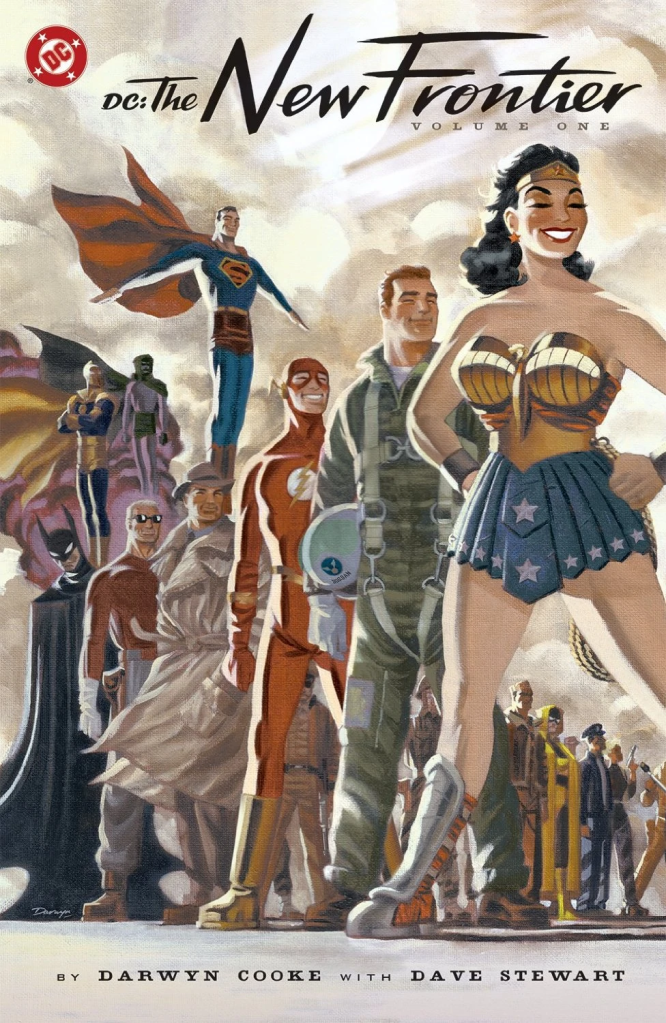
DC: The New Frontier, vol. 1 – Darwyn Cookethe lyrics for this song are so universal that they could cover any kind of romance, so instead, I went for the time period; the late ’50s-early ’60s setting of The New Frontier is settled right in the same era.

Since this post consists entirely of songs, consider all of them to be today’s song.

That’s it for this week’s Sunday Songs! Have a wonderful rest of your day, and take care of yourselves!

Posted in Monthly Wrap-Ups

February 2024 Wrap-Up 🫀

Happy Thursday, bibliophiles! Happy Leap Day too, I suppose.

Already the end of February, huh? Good riddance honestly. Not that I had a bad month, but I’m just ready for all this gross, slushy weather to be over with.

Let’s begin, shall we?

GENERAL THOUGHTS:

February’s definitely still been busy, but now that I’m more used to my schedule and able to keep myself on track, it’s all good. Things are getting into gear with my classes, I’ve been able to make time to write and make art and hang out with friends, and the weather is starting to warm up. Key word is starting. We’ve had snow almost every Friday or weekend without fail for…probably a month or two? Colorado. The meteorological indecision never ends. But luckily, other than that first week, I’ve been able to blog somewhat steadily.

Reading has been similarly good—sadly, most of the books I’ve read for school so far haven’t been my favorites (apologies in advance to all the Jane Austen fans here), but other than that, there have been very few misses! I also shifted my focus to books by Black authors this month for Black History Month, and I’ve read both familiar and new-to-me authors and had tons of fun. I also ended up having two five-star reads in a month, so I’d call it good! I’m glad that I’ve been able to keep up my reading schedule, because there’s so many books I’m excited to read soon! A whole bunch of holds from Libby have been pouring in, all of which I’ve been eagerly anticipating…

Other than that, I’ve just been cranking out tons of writing, drawing here and there, watching Abbott Elementary, BEEF (absolutely SHAKESPEAREAN lemme tell you), The Bear (ngl I’m mostly just in it for the needle drops), and Constellation (WHAT IS GOING ON 😀), and being in a near-constant state of being on my toes since I never know when we’re gonna get dumped with snow.

Oh, and I think we have the best possible end to a month that I’ve had in several months…BABE. WAKE UP. NEW ST. VINCENT JUST DROPPED. WE’RE GETTING THE ALBUM, TODAY’S THE DAAAAAAAAAAAY

APRIL 29TH CANNOT COME SOON ENOUGH.

READING AND BLOGGING:

I read 17 books this month! Definitely more than I expected to read, but I’m about at the point in the year where I’m familiar enough with my schedule that I can squeeze in more time for reading. There were definitely a few stinkers in the mix, but I had not one but two five star reads this month, which was pretty incredible! My eternal thanks to Audre Lorde and R.F. Kuang.

2 – 2.75 stars:

Harlem Shuffle

3 – 3.75 stars:

Your Plantation Prom Is Not Okay

4 – 4.75 stars:

We Are the Crisis

5 stars:

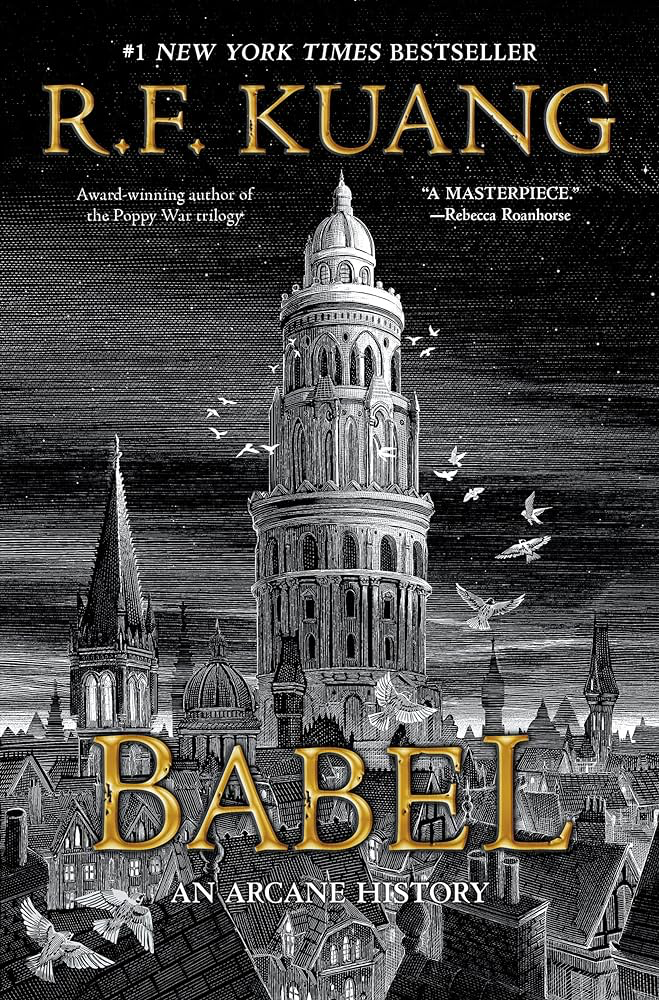
Babel

FAVORITE BOOK OF THE MONTH: Sister Outsider5 stars

POSTS I’M PROUD OF:

POSTS FROM OTHER WONDERFUL PEOPLE THAT I ENJOYED:

SONGS/ALBUMS I’VE BEEN ENJOYING:

I’ve listened to this an unhealthy amount of times
NEW CHELSEA WOLFE WOOOOOOO
it always comes back to Bowie
AND NEW IDLES we are truly blessed
obsessed now
fantastic album

Today’s song:

“All born screaming” YEAH I CERTAINLY AM. MY GOOOOOOOOODDDDDDDDDDD THE QUEEN HAS RETURNED

That’s it for this month in blogging! Have a wonderful rest of your day, and take care of yourselves!

Posted in Sunday Songs

Sunday Songs: 2/18/24

Happy Sunday, bibliophiles! I hope this week has treated you well.

Welp. Back to the black and white (mostly) color palettes again. Oops. But ’70s David Bowie heals all wounds, right? Right?

Enjoy this week’s songs!

SUNDAY SONGS: 2/18/24

“Do You Want To” – Franz Ferdinand

From all accounts, it seems like Franz Ferdinand peaked at this album, You Could Have It So Much Better. But I feel like it’s understandable, on some level. You try to replicate something as iconic as “Take Me Out” or this, and you risk flying too close to the sun. Lightning can’t strike twice. Well, I guess it can, if you count this and “Take Me Out,” but…okay, three times?

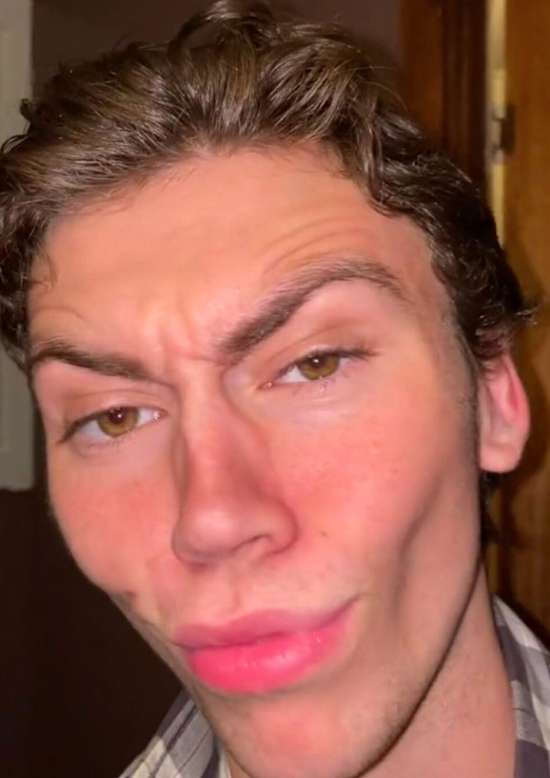
This song. It’s so stuffed with infectious hooks that it’s practically a thanksgiving turkey. It’s pumping with allure and adrenaline, and not a single bit feels wasted. You hear the first 20 seconds and think “oh, that’s a great start to the song,” but lo and behold, every single band member pulls of their top hats to reveal a second, even more spectacular hook to propel it to unforeseen heights. And from that meteoric rise, “Do You Want To” feels like the most delightfully slick, guitar-driven gold mine of 2000’s indie rock. It’s a song that wrenches you by the hand into a nighttime world of leather jackets, impeccable hair, and shiny guitars. Lyric-wise, it’s nothing that the band hasn’t covered, but lyrics were never their legacy—the absolute sheen of it all overpowers the rest of it, and it’s the kind that you can keep on repeat for hours and never get tired of. For a few years, Franz Ferdinand seemed to have perfected that kick of leather-jacket, smooth indie rock, and even though it seemed to have burned out a decade or so down the line, for a moment, their talent was clear—and explosive. The only sin that “Do You Want To” ever committed was not having a third hook hidden beneath their other top hats—the last thirty seconds (“Lucky, lucky/You’re so lucky”) are just begging for at least one more burst of smooth guitar that sounds like it’s been fired out of a cannon. It’s such a frustrating ending. With that kind of buildup, how could they not be extending the song for a finale as glorious as the entrance? Either way, the three and a half minutes that we do have is joyous enough. Almost enough to make me forgive Alex Kapranos for permanently freezing his face in this expression for no good reason:

…AND A BOOK TO GO WITH IT:

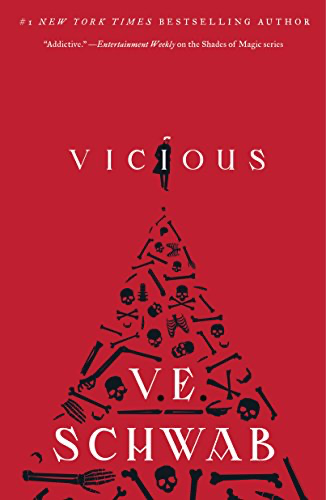
Vicious – V.E. Schwabcome to think of it, a lot of V.E. Schwab’s male protagonists fit a similarly charismatic and boundary-pushing (mostly in terms of magic and science, anyway), but this novel absolutely fits the slick, Franz Ferdinand vibe.

“Fascination” – David Bowie

Frustrated that “Do You Want To” ends right before it should theoretically go on for at least two more minutes? Fear not! At least David Bowie wasn’t afraid to make his timeless grooves almost six minutes long.

Welp. I don’t know how Young Americans wasn’t on my album bucket list already, but it sure is on it now. The iconic title track and “Fame” should’ve convinced me, but somehow it was “Fascination” that pushed me over the edge. It reminds me just what I love about the ’70s; the production is nothing but slick and slinky, full of vibrance and a groove that never even comes close to sputtering out for all five minutes and 48 seconds. God, the saxophone. I don’t usually find myself saying that about saxophones, but oh my god. It’s not a song that just makes you feel like dancing—you’re all but transported to a dance floor somewhere, amidst loose ties and sunglasses and warm lights bathing everyone’s faces. Strangely, the only thing that doesn’t scream vibrant or groovy is Bowie’s voice. The more you focus on it, the eerier it feels. Even though his voice was a decade or so from becoming as rich and resonant as he was later known for, it had thinned out even more so that he was in his youth. Young Americans was recorded during the height of his crippling cocaine addiction, and you can hear it in this song more than any other on the album. I could just be projecting, given how he was able to belt out the classic “ain’t there one damn song that can make me…break down and cry?” on the same album, but whether or not it was purposeful to add to the slick, sultry air of the album and his persona, it’s not a stretch to make. His voice often takes a back seat to the sheer power of the backup singers, and despite the seduction written all over “Fascination,” I can’t help but think of the exhaustion that eventually led him to pack his bags for Berlin in a few years’ time. No judgement, but it’s kind of the reason why I’m always a little suspicious of people who say that The Thin White Duke is their favorite Bowie persona. Iconic as all the others in both looks and musical output, but…I don’t know, it feels like a red flag that the Bowie you remember most fondly is the Bowie that was characterized by exhaustion, excessive substance abuse, and behaviors that he later condemned as a byproduct of the worst period of his life. I just feel like if that’s your favorite Bowie…again, no judgment, but calm down, you edgelord. You’re not impressing anybody. Music isn’t automatically deep just because the artist was at rock bottom when they made it.

Nonetheless, it is a truly fantastic, masterful song. David Bowie was just almost incapable of having an album without at least one good song, even if it was the more commercial ’80s albums.

…AND A BOOK TO GO WITH IT:

The Final Revival of Opal & Nev – Dawnie Waltonsteeped in mid-’70s rock, I suspect the fictional music that Opal & Nev made was partially inspired by Bowie’s work around the same time.

“A Gospel” – IDLES

TANGK is a bizarre album in the best possible way. IDLES seem to have partially (but never fully, this is still IDLES we’re talking about) shed the punk sensibilities that they’re known for, and in its wake, Joe Talbot and company have gone on to explore uncharted territory for the band. Tracks like “Gratitude” and “Hall & Oates” prove that they’ll never stop being their aggressively positive selves, but TANGK has given them room to grow. How much of it we can credit to Nigel Godrich is up in the air, but either way, it’s a fascinating evolution.

Emotional vulnerability and healthy masculinity have always been cornerstones of the IDLES image, but never have they been so soft and bare on “A Gospel.” Looking back, the Ultra Mono track “A Hymn” feels like its spiritual predecessor, both in title and nature, but even then, this is the first time that IDLES have ever felt quiet. No screaming, no bass, no rasp roughening Talbot’s voice. “A Gospel” presumably finds Talbot after his recent divorce, solemnly wallowing in the aftermath: “Delete my number/I’m no more/Ignore my eyes, babe/They’re just sore.” (“I’m not crying, it’s just been raining…on my face…”) But true to IDLES’ commitment to love and mutual understanding, he harbors no ill will towards his own partner, gently offering solace and closure instead of the biting words that are all too common in these kinds of songs: “I know you better/I’m your half/Just tell me darling/And I’ll be your past.” It’s sad that it’s so rare that you find songs about relationships that aren’t malicious towards the partner in some way; in some cases, the other party is in the wrong, but we’ve had so many songs about conniving women (from men who are likely the problem) and whatnot that finding a song like this feels like a needle in a haystack. “A Gospel” seems to come, refreshingly, from a place of genuine remorse; you can feel the embarrassment in Talbot’s confessional lyrics, but they’re never overly self-deprecating or, on the other hand, aggressive. It’s a melancholy song, but it feels like the most amicable breakup song I’ve heard. Talbot has repeatedly said that the thesis of TANGK revolves around love, and although “A Gospel” takes it from a more distraught angle, it’s still love—being able to step away from a situation where you know you’re in the wrong, and encouraging a peaceful resolution.

…AND A BOOK TO GO WITH IT:

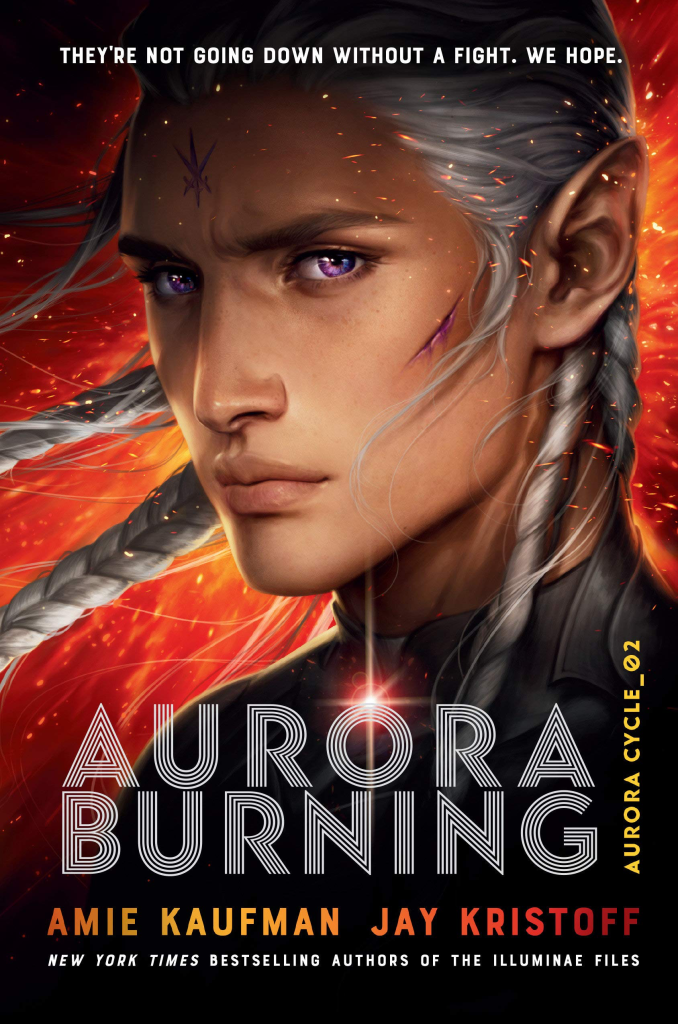
Aurora Burning (Aurora Cycle, #2) – Amie Kaufman and Jay Kristoffno spoilers, but I was distinctly reminded of a certain character after the fallout of a certain reveal near the end of the novel. Ouch.

“Virginia Woolf Underwater” – Chelsea Wolfe

No matter what Chelsea Wolfe album I listen to (you’ll definitely be hearing about her latest next week), it almost always makes me come back to some of the material off of Unknown Rooms. I adore Chelsea Wolfe’s shreddier, overtly goth style, but unfortunately, I drank the sad girl Kool-Aid long ago and I can never come back, so here I am, back at the acoustic album. There’s no doubt that Wolfe can wring out emotion whether or not she’s playing electric or acoustic. She’s at her best when she’s conjuring a swarm of bats from oblivion with a full assault of instrumentals, but the power always lingers. Like my favorite of her songs, “Boyfriend” (also from this album): naught but guitar and Wolfe’s ghostly rasp, it evokes the same rise of power and overwhelming emotion as anything else she’s written. In the end, it all feels cavernous.

“Boyfriend” is plenty bleak, but there’s something about “Virginia Woolf Underwater” that feels so much more so; although it’s just as sparse as any other track on this album, the discordant nature of it all ties the despair of it together, with off-kilter chords punctuated by a tambourine. Only later do the orchestral strings come in, but they feel just as cold as the rest of the song. Alluding to Virginia Woolf’s early death by drowning, the song feels as distorted as voices floating in the water. Wolfe’s voice drifts in and out of focus. The lyrics imagine Woolf’s state: “Everything you’ve owned is gone/Everything you know is wrong/Everyone you’ve loved has left/Everything you’ve touched is dead.” Given Woolf’s struggles with depression and trauma from the second World War towards the end of her life, it’s not a stretch to think that she was thinking thoughts along these lines. That’s what makes the song tragic, but there’s something touching about how Chelsea Wolfe was able to connect to her all these years later, and was moved enough to write her an elegy of sorts. It’s a cross-temporal love letter, a call through the ether to tell not just Woolf that she understands, but for others to relate to and know that they are not alone in their experiences. Only fitting that now, 12 years after the release of Unknown Rooms, that her newest album is titled She Reaches Out To She Reaches Out To She. What better way to sum up Chelsea Wolfe’s brilliant career?

…AND A BOOK TO GO WITH IT:

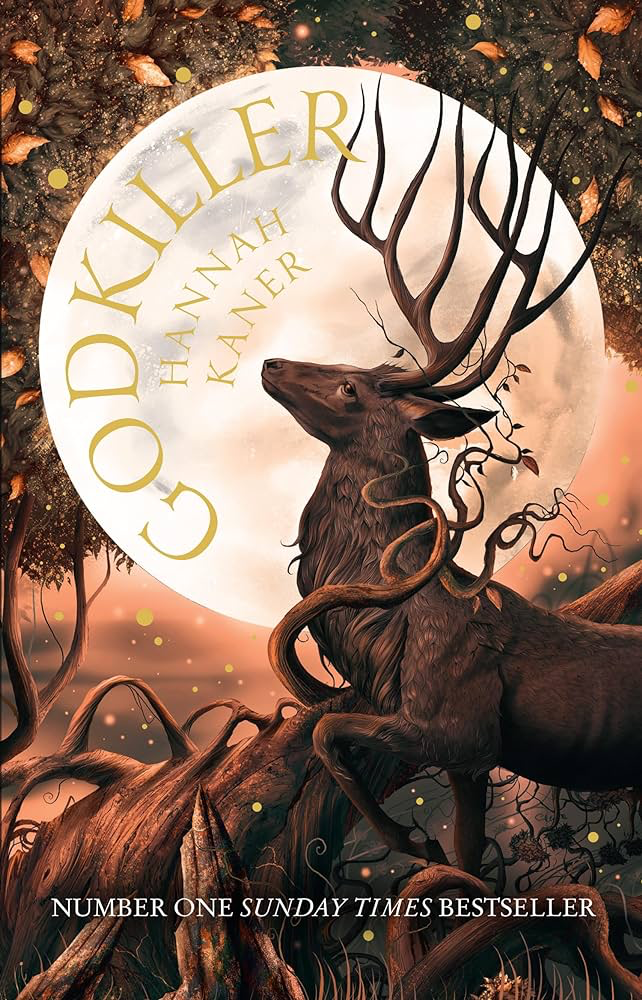
Godkiller (Fallen Gods, #1) – Hannah Kanerthis story similarly begins with Kissen, who has lost everything, and the novel follows her finding her purpose…with some killing gods on the side.

“Floating on a Moment” – Beth Gibbons

I feel like I should be more invested in the fact that Beth Gibbons is releasing a solo album this May. Then again, I still haven’t picked myself up and listened to Dummy, so I feel like that’s the top priority. The only thing keeping me from it is the Sisyphean album bucket list I’ve created for myself, so we’ll see when I get around to it. Soon, given that at least a quarter of it had me in a nearly unbreakable chokehold in early 2022.

“Floating On A Moment” feels further removed from the trip-hop that Portishead was known for, opting for a more stripped-down form. Synths and samples have been exchanged for acoustic guitars and a choir, and the result is slow and gentle, like water trickling from the gutter. Admittedly, I expected something weirder from Gibbons, but I don’t not like this song—it’s good, but it’s not the kind of slow that’s always compelling (that would be Portishead). It’s good when you’re in the moment (no pun intended) and listening to it, but on the outside…I hate to say it, but it feels a little predictable? The fact that it’s track two on Lives Outgrown seems kind of bizarre unless the whole album is going to be this slow, or if it just has a slow start. What’s weirder is that “Floating On A Moment” is centered around the fleeting nature of time and staying in the present, and yet it’s so slow…I guess it could fit with the image of time slipping through your fingers, but this song feels anything but fleeting. If anything, it’s the slow drip of a memory recalled, an alternate reality pondered, a gradual crawl through the recesses of the mind. All that’s to say that this isn’t a bad song. For what it is, “Floating On A Moment” is as gentle as they come, something to have in the background. Again: I hate that I’m saying that about Beth Gibbons, of all people, but we don’t have the whole picture of Lives Outgrown. We’ll see what she’s got up her sleeve.

Even though the pervasion of AI art in music videos is maddening to me (at this point, it’s less about the fact that it’s AI and more that the “style” just looks objectively ugly), the AI elements of the music video for “Floating On A Moment” suit how the song feels; everything melting into a gloopy mess is a hallmark of AI animations at this point, but that kind of melting, combined with the real-life footage of Gibbons, melds surprisingly well with the slick, melting quality of the song.

…AND A BOOK TO GO WITH IT:

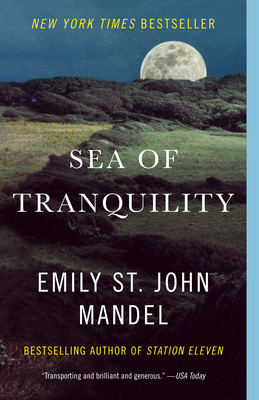
Sea of Tranquility – Emily St. John Mandela quiet and understated but detailed vision of past, present, and future.

Since this post consists entirely of songs, consider all of them to be today’s song.

That’s it for this week’s Sunday Songs! Have a wonderful rest of your day, and take care of yourselves!

Posted in Sunday Songs

Sunday Songs: 12/24/23

Happy Sunday, bibliophiles, and a very merry Christmas Eve to all those celebrating!

As far as my book reviews go…yeah, well, I’ve been a bit of a Scrooge, but you can’t blame me. The finals reading slump comes for us all. Some days you just have to air out the dirty laundry. But despite the dreary color palette that ended up happening this week, I hope there’s enough jolliness here to assure you that yes, my festive cheer remains steadfast, and so does my love of ’70s guitars.

Enjoy this week’s songs!

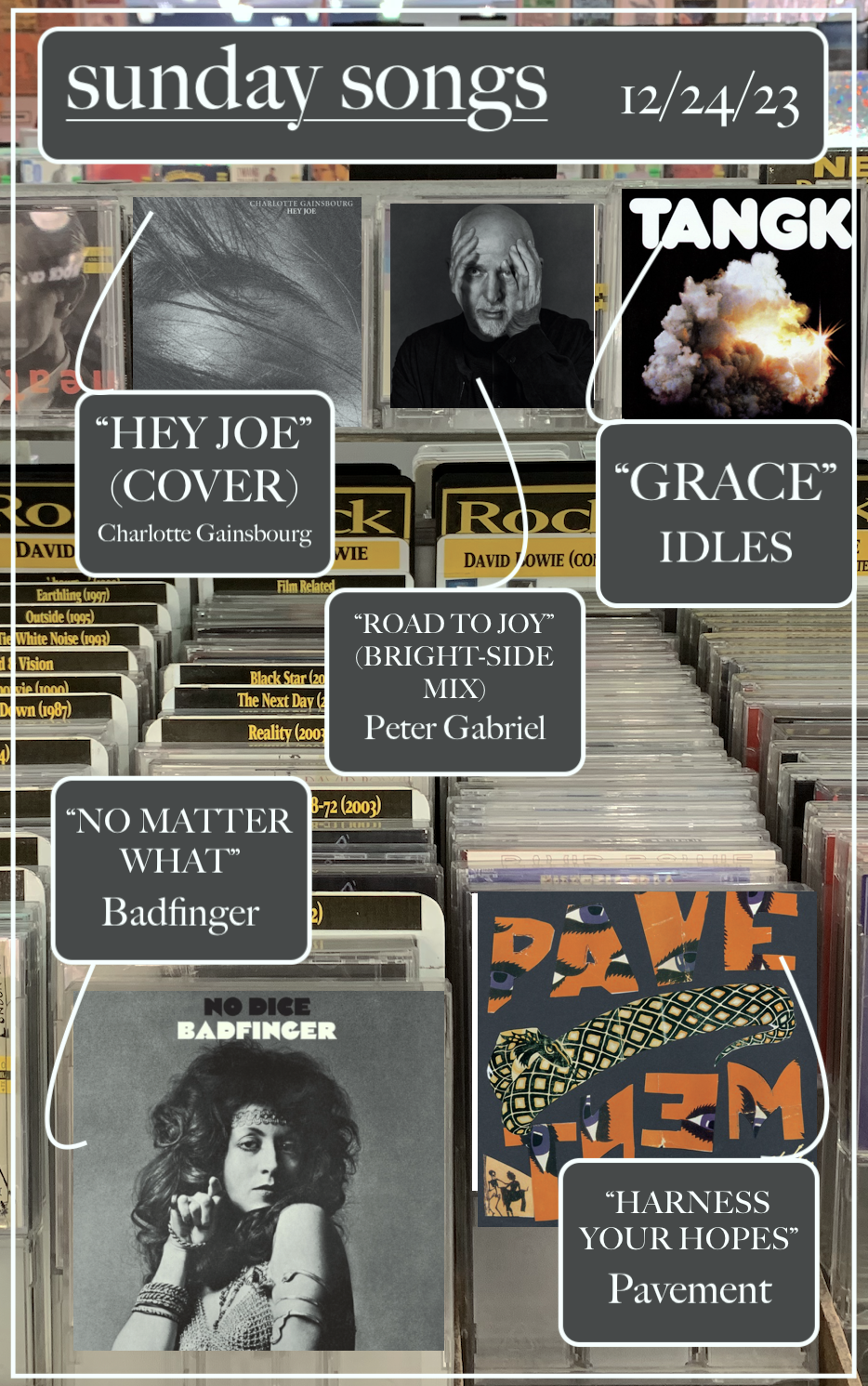
SUNDAY SONGS: 12/24/23

“No Matter What” – Badfinger

1970 was probably the worst year for trying to beat the “copying the Beatles” allegations, and the fact that these guys named themselves after an early title for “With A Little Help from My Friends” (originally titled “Bad Finger Boogie”…yeah, the name change was a good idea, John) doesn’t help their case. But I feel like being signed to Apple Records and having both Paul McCartney and George Harrison separately produce two of their other hits gets them a Get Out of Jail Free card. This once.

That aside, it also doesn’t help their case that Pete Ham sounds like the slightly growly middle ground between Paul McCartney and John Lennon, and the same nearly goes for the backing vocals, which try to hit somewhere between Lennon and Harrison. But it’s not every day that you can hit it that close to such legends, and it’s commendable no matter how (oops) you look at it. I’ve really underhyped all of this, but…there’s seriously something about this song. I swear that “No Matter What” is laced with something…oh, maybe it’s the guitars. My god, it’s barely 1970, and the ’70s guitars already sound so crisp…so full…do not get me started. But even if the guitars weren’t so sharp and full of dance-inducing warmth, there’s something so undeniably pure about this song. It’s no lyrical groundbreaker or generational anthem, but there’s a contagious joy to it—a good pop song does that. ”No Matter What” is the perfect end-credits song—the guitars start chugging in at the final shot of the movie, and everything goes black the minute that Pete Ham begins to sing. Come on, now. You can’t not go along with the clapping at 2:18. Beauty in simplicity. These guys get a pass for having either the best or the worst band name of all time. I genuinely can’t decide.

…AND A BOOK TO GO WITH IT:

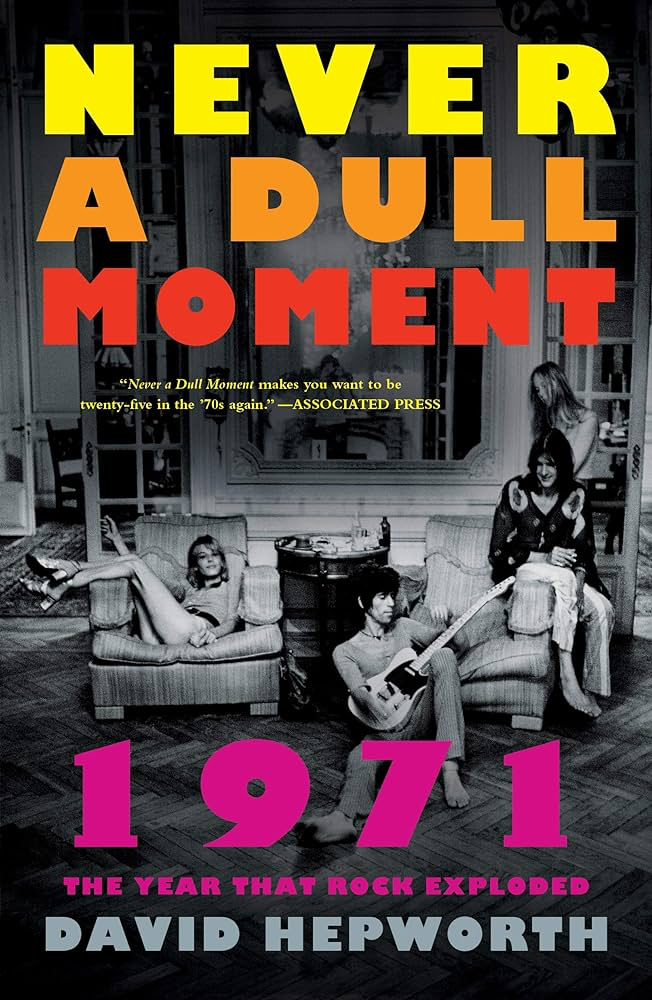
1971 – Never a Dull Moment: The Year Rock ExplodedI…dammit. I totally thought No Dice came out in 1971. I was two months off—November of 1970. Oops. But either way, this book is a little drily written for a book that claims to “never have a dull moment,” but it’s nonetheless a fascinating insight into the absolute goldmine of good music in 1971. (There was never a better high note than ending the year with the release of Hunky Dory.)

“Harness Your Hopes” – Pavement

Apparently I have another “I Just Threw Out the Love of My Dreams” situation on my hands here, since this blew up on TikTok sometime back in 2020 (after Spotify’s autoplay seems to have dug it up out of nowhere), and I didn’t find out until now. Maybe that was the period when the thumbnail for the music video kept popping up on YouTube and I ignored it until it went away? Little did I know what I was in for…

Also like “I Just Threw Out the Love of My Dreams,” I can only describe “Harness Your Hopes” as pure, bottled joy. As soon as the sighing, psychedelic-tinged intro gives way to some truly squeaky-clean guitars, I felt a rush of sheer happiness course through me. Stephen Malkmus seriously pumped this song with nothing but whimsical joy…and yet it was a B-Side? Not only that, but a B-Side that faded into more obscurity than the indie obscurity they were (probably) going for, so much so that Malkmus didn’t even recognize it when he heard it playing in a bakery? Nuts. Seriously. Not that I have any beef with the guy, but when you produce something as curiously delightful as this, you don’t let it slip through your fingers. It has that freeform, Marc Bolan kind of nonsensical lyricism written all over it, with more than a little pretentious affectation (“Leisure, a leisure suit is nothing/It’s nothing to be proud of/In this late century”), but somehow, it feels less pretentious when most of the lyrics don’t make a ton of sense as a whole. (Or maybe there’s some super deep hidden meaning that only Stephen Malkmus and co. can decipher, and it’s nothing to us normies…who knows) And like Bolan, it’s the kind of wordplay that occasionally leads to something unexpectedly romantic—”And I’m asking you to hold me/Just like the morning paper/Pinched between your pointer, your index, and your thumb.”

And paired with Malkmus’ strained, cracking voice on one end and the guitars (so clean that they’re practically still kicking up bubbles) on the other, it’s a capsule of warmth, practically radiant. Bottled joy, truly.

Speaking of Stephen Malkmus’ voice…

skip to 2:11

Please tell me I wasn’t the only one in theaters who laughed way too hard at this (besides my mom). Please.

…AND A BOOK TO GO WITH IT:

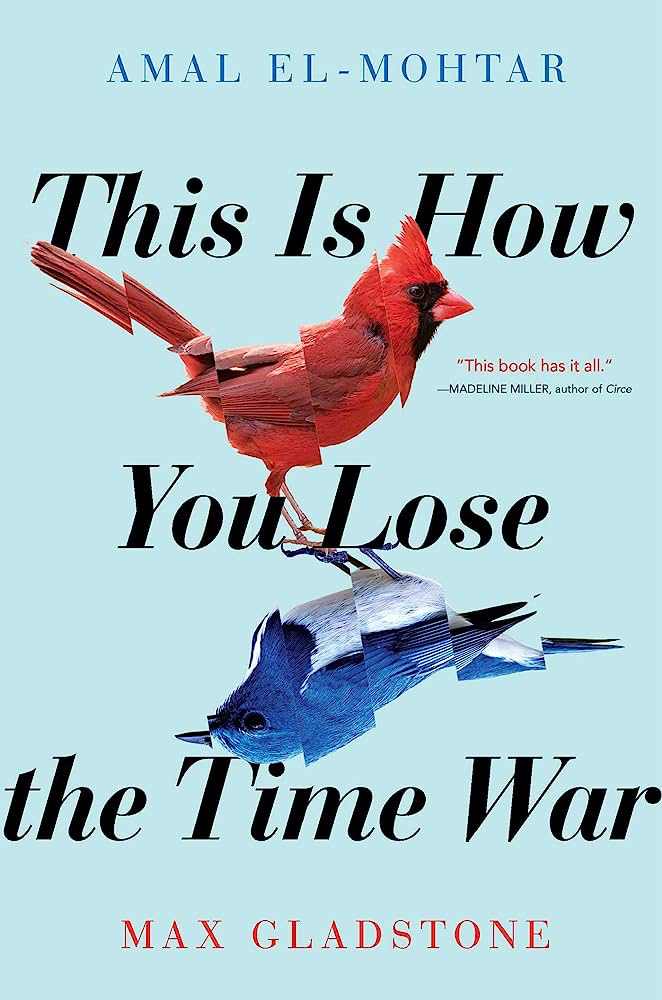
This Is How You Lose the Time War – Amal El-Mohtar and Max Gladstonefor the most part, this novel lends itself more to something more cosmically sweeping and Romantic in both senses of the word (probably Spiritualized?), but lines like “and I’m asking you to hold me/Just like the morning paper/Pinched between your pointer, your index, and your thumb” might as well be straight out of the letters between Red and Blue.

“Hey Joe” (cover) – Charlotte Gainsbourg

hnnnnnnnnnnngh me when Noah Hawley puts a song in Fargo that connects thematically in a deeply creative way hnnnnnnngh

good god I love this season of Fargo. no complaints, this show has made me feel alive again

where were Roy and Gator Tillman on January 6th

…AND A BOOK TO GO WITH IT:

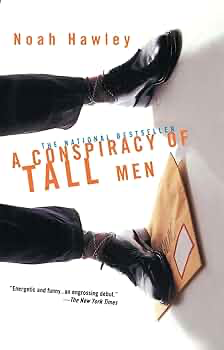
A Conspiracy of Tall Men – Noah Hawleymaybe I’m cheating since I got this song from Noah Hawley. It’s fiiiiiiine. To be fair, this is his debut novel and predates the first season of Fargo by a full 16 years (it’s kind of a mess, but lovably so…mostly), but it’s got all the cross-country conspiracies and paranoia you could ever want.

“Road to Joy” (Bright-Side Mix) – Peter Gabriel

I meant to review this all the way back in June or July, when this single was first released…I forget what about it made it slip out of the roster, but I knew that it had to come back eventually. Now that all of I/O is out…it’s a great album, but I can’t help but be a little disappointed at how it was constructed. I thought that the deal was that the final organization of the songs was going to be a surprise, and that they’d be reshuffled from the order they were released in with each full moon this year, but the order just ended up being the same order they were released in. (I stand by my belief that “Playing for Time” would have been the perfect closing track.) I have similarly mixed feelings about the Bright/Dark-Side Mixes—I haven’t listened to the In-Side mix yet, but I also thought that each mix of the 12 songs would be more radically different, but the differences between the mixes are often very subtle. Some of them fit more clearly than others (ex. “I/O” is clearly more fit for Bright-Side, while “The Court” lends itself more to Dark-Side), but the tweaks between mixes are sometimes barely distinguishable.

That’s not to say that I/O isn’t a great album—it’s a beautiful picture of one of the most innovative artists alive today moving into old age and still being able to produce a relentlessly creative vision of love, mortality, and the nature of connectivity. Now that I’ve seen it live, the experience is all the more enriched, what with the stunning visuals that went along with it, as well as Peter Gabriel toeing the line between a theatrical showman (how’s reenacting the creation of life itself for a show opener?) and the wise, humble figure we’ve known him to be over the years. Songs like this one really showcased both the energy and creativity that clearly haven’t waned with age. “Road to Joy” is a highlight, without a doubt; for me, this one lends itself more to the Bright-Side mix, with the funky, “Fame”-esque guitar riffs and energetic burst of the chorus, like Gonzo firing off cannons without warning. But if the pink-shaded joy doesn’t immediately jump out at you, you know what should? The fact that this song is proof of yet another deeply creative project that Peter Gabriel’s been cooking up since the production of OVO—so, give or take, around 23 years. The man just can’t be stopped. But according to Gabriel, “Road to Joy” is part of a story about the human mind, and this song chronicles a character being woken up after experiencing locked-in syndrome; the triumphant declaration of “You were sure I was gone” has the defiant flair of someone beating the odds, and it’s impossible not to feel the joy from that.

…AND A BOOK TO GO WITH IT:

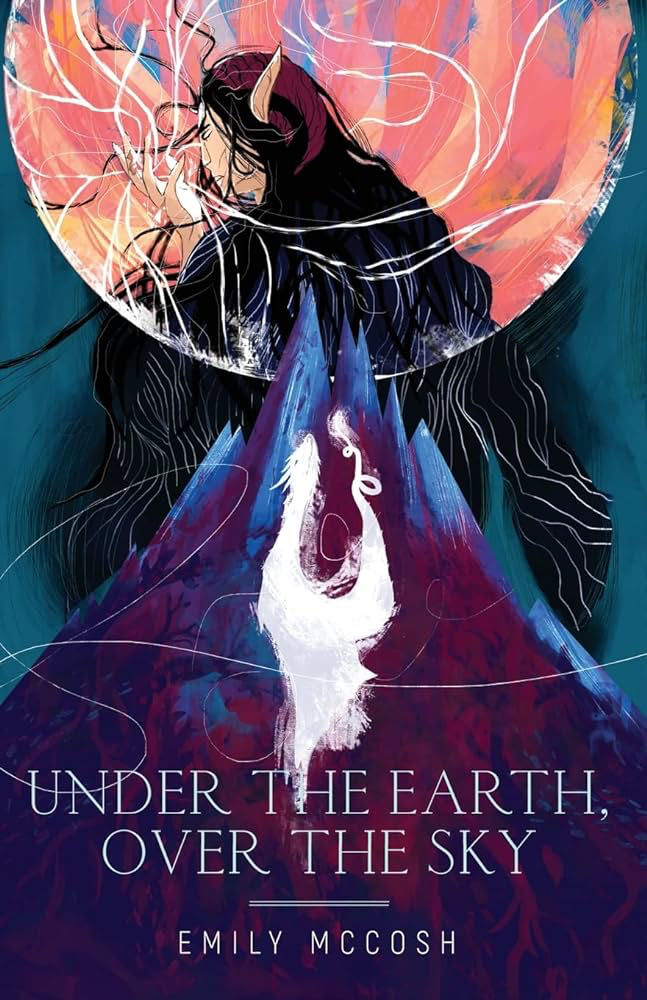
Under the Earth, Over the Sky – Emily McCoshnothing like adopting a human son to awaken your frosty, dormant heart and put you on…the road to joy, maybe? Certainly some “love call[ing] through the walls.”

“Grace” – IDLES

“Grace” has made my expectations for TANGK skyrocket, but whether or not the album turns out to be as adventurous as I feel like it’s going to be, I think I’m almost certainly going to enjoy it. It’s a change in form, even if a fleeting one.

I thought I knew what Joe Talbot sounded like when he wasn’t singing; “A Hymn” certainly gives us a hint, but there’s still the restrained growl to it that roars to life when he’s normally screaming on every other song. But “Grace” showcases his voice at its most vulnerable. Somehow, before the chorus kicked in, I almost mistook it for Mike Hadreas from Perfume Genius. I was scrambling to find the featured list for this, because…there was no way that this is the same guy who screamed at us all to never fight a man with a perm all those years ago. And I love this change in form. IDLES always mean bah-bah-business (in case you cannot tell from their tone) with their message, but this stripped-down feel that “Grace” shifts into suits their ethos just as well as their harder songs—Talbot described the song as “a call to be held,” and the quiet vulnerability really does feel like a gentle embrace. And it’s here that you can see what their change in producer has done to the sound—TANGK was co-produced by none other than Nigel Goodrich (of Radiohead fame!!), and the staccato of the drum machine and the wash of cloudy haze peeking out from under the curtain shines in the quiet places on this track. Talbot’s voice lowers into wavering smoothness, as though he’s singing from a place where no one can hear him, save for when he declares the song’s rallying cry: “No God/No king/I said, love is the fing.”

Man…I’m so excited for this album. IDLES have said repeatedly that their mission was to make an album that was purely about love and warmth—as Talbot said, “I needed love. So I made it. I gave love out to the world and it feels like magic. This is our album of gratitude and power. All love songs. All is love.” And if that isn’t exactly what we need…not to be all hippy-dippy about it, but as much as I indulge in my sad bastard music, I’m gonna go out there and say that IDLES is exactly what we need right now. I hate it that I have to say “not to be all hippy-dippy” when I’m talking about love and warmth and being kind and loving life…you’ve heard me go off about grimdark and frankly, how astoundingly dumb it is that we often think that sadder = deeper and that being happy or consuming happy media equates to stupidity somehow, but I’ll say it again. There’s nothing stupid or naïve about wanting love, giving love, and having love in your heart. IDLES get it. Love is the fing.

…AND A BOOK TO GO WITH IT:

Since this post consists entirely of songs, consider all of them to be today’s song.

That’s it for this week’s Sunday Songs! Have a wonderful rest of your day, and take care of yourselves!

Posted in Sunday Songs

Sunday Songs: 11/19/23

Happy Sunday, bibliophiles! I hope this week has treated you well.

This week: another song I stole from Wilco, and a smattering of calm, autumnal folk. And then there’s IDLES.

Enjoy this week’s songs!

SUNDAY SONGS: 11/19/23

“You Got the Stuff” – Bill Withers

Even though he isn’t here to read this (rest in peace), and I doubt he would even if he was, I owe an apology to Bill Withers. When I asked Siri about the insanely funky song that Wilco was playing before their show back in October, I thought…Bill Withers? Like…the “Lean On Me” Bill Withers? The song we all had to sing in either elementary school or at camp? From here on out, I take back any preconceived notions I’ve had about the man, because this song slaps. I severely underestimated him.

To be fair, from the looks of it, “You Got the Stuff” seems funkier than most of his R&B/Soul-leaning catalogue, but when he did funk, he made it the funkiest funk possible. The minute the drum machine fades and the thick, bass-like synths kick in, it’s like I’ve been possessed to move my body for exactly seven minutes and 16 seconds. I haven’t heard of a contagious groove like this song has in ages, something so instantly captivating that hooks you and immediately tosses you on the dance floor. And it’s seven minutes of this. And the last three and a half minutes of that seven minutes is just bass and an absolutely glorious flexatone. (Many embarrassing google searches went into finding the source of that comically cartoonish “doi-oi-oi-oing” noise. I’m not proud of what I did.) It really is a cartoonish sound that this instrument makes, and yet it fits right in with the thumping bass and Bill Withers’ faint, rhythmic breathing and the occasional “ooh, baby.” Three and a half minutes of just that. It feels like a buildup to something bigger, but it doesn’t need to build up to anything—the unique rush of that stretch of the song keeps the funk alive for longer than I thought it could. And it’s crazy to think that this was chosen as a single for this album (‘Bout Love)—even for someone like Withers, putting the one song that goes over seven minutes long as one of the lead singles is a bold move. It did only get to #85 on the Billboard charts at the time, but it’s a hit in our hearts.

What I’m trying to say is that Bill Withers is forgiven for the setlist of my 3rd grade program. Good god, I love this song.

“Dancer” – IDLES & LCD Soundsystem

As much as I, in theory, dress a fair bit punk (on the days where I have my pin jacket) and generally like the leanings of the political attitude, I’ve never been able to get fully behind it—the combination of the abrasion (both musical and lyrical) and the contrarian, infighting parts of it have made it so I’ve never felt fully aligned with it. I’m only punk up to my jacket, my boots (they’re not very good for extended walking, so I wear them sparingly…there’s only so long I can commit to the bit), and my socialist tendencies. More in spirit than anything else. Same reason that even though I regularly have at least one day a week where I dress in all black and go all out on the eyeliner, I can’t fully commit to being goth, because I’ll then go up to my friends and say “HIIIIIIIIIIIIII :)” in the most decidedly un-goth way. And plus, contradicting everything about yourself sounds kinda tiring, unless you’re Hobie Brown and you make it look cool (and that’s because he was this cool the whole time). And yet, every single IDLES song makes me absolutely foam at the mouth. I love them. I’ve been putting off actually listening to a full album of theirs for who knows why, but their spin on punk—still plenty aggressive, but resoundingly hopeful and positive in their ethos (see “Mr. Motivator”). Joe Talbot himself has repeatedly insisted that they aren’t a punk band, so…okay, I’m not all that punk. But that combination of all the fiery energy of punk with their riotous joy and their wholehearted embrace of vulnerability and love is what endears me to them so much. The absolutely delicious Britishness and bisexuality of it all certainly helps too.

Hearing that “Dancer” was a collaboration with LCD Soundsystem kind of floored me—where could the epitome of tight, high-strung white boy music fit in with this? The mesh, however, is as smooth as it could ever be. There’s a constrained tightness about the opening riff that feels all at once caged in and expansive—the James Murphy touch reveals itself more and more on each listen, aside from the obvious backing vocals on the chorus. Either way, “Dancer” has just about everything I love in an IDLES song. Joe Talbot’s signature aggressively theatrical line deliveries never fail to put a smile on my face—every repetition of “and the sweat” (I can almost hear him raising his eyebrows every time he says sweat) and “so to speak” (imagine that as spitty and Britishly as you will) make listening to the whole song feel like an elaborate performance, a…dance, if you will. There’s an undeniably sensual feel of it all, a visceral pulse to the calculated choreography of each line. It’s a song I’ve never been able to skip since I downloaded, and even though I’ve still yet to listen to any of their full albums (SOON, though), I’ve got hope that Tangk will be more of the same.

New IDLES and The Smile next January…man, I’m gonna implode. It’s been fun, everybody.

“Black Wave” – The Shins

…this is certainly an interesting transition. Whoops.

Certain bands are often seasonal for me—some bands are more spring, summer, fall, or winter than others. (Hence my seasonal playlists). But some bands immediately evoke a more specific point in time. For me, The Shins were always a late fall, early winter band; they feel like fall, but only after the first frost has crept in and stripped the trees bare. There a few leaves left, but they’re all brown and brittle, crumpled underfoot. It’s snowing, but not a January blizzard—maybe just sleet that doesn’t accumulate, if you’re lucky. You’re warm, sitting by the fire. The trees look skeletal now.

So I’m glad I rediscovered “Black Wave” when I did—it’s one of those songs that lingered in my periphery for years (I grew up in a very pro-Shins household), but I’d gotten so complacent in hearing it everywhere that I didn’t even think to ask about its name. But it’s the perfect November song—as most of what I’ve heard from the spectacularly titled Wincing the Night Away is. James Mercer layered effects over his gentle, wordless warble as the song begins, making a rippling, Bon Iver-like echo. Even with a colored named in the title, “Black Wave” is decidedly painted in deep, warm colors; shades of brown and maroon, accented by orange and gray. The opening image of “this goose is cooked” cements the feeling of being huddled around a fire; I imagine the goose being cooked on a spit, the skin crackling as the embers lick it. Mercer’s voice drifts and out of focus, as though on a chilly wind. And like the wind, the song doesn’t so much end as disappear, like the image of a cryptid shifting through blurry footage to fade into the winter woods beyond.

“More Than This” – Peter Gabriel

Since I first listened to Up back in March (oh, the album art is just some water droplets on a gray backgr—oH MY GOD PETER WHY ARE YOU LOOKING AT ME LIKE THAT), it’s been an album that I always fall back on. “Growing Up” was already a faint childhood memory and “Darkness” immediately stole my heart, but the more I listened, the more songs I’ve stuffed in my back pocket—the grossly timely, sleazy groove of “The Barry Williams Show” and the chest-rattling resonance of “Signal to Noise” that makes my soul leave my body every time I hear it. (Real chill stuff for walking to class, amirite?)

There’s something to be said for my hypocrisy of creating dozens of oddly specific playlists and then just listening to my whole library on shuffle, but shuffle always revives songs like this. (Although this one did go on my oddly specific clone playlist next to Roxy Music.) So much of Up has this graying, industrial feel to it, but Peter Gabriel, the genius that he is and continues to be, uses that gravelly darkness (no pun intended) not necessarily to be edgy, but to convey that feeling of hopelessness—the consumption of fear in “Darkness” and the betrayal and desperation of “Signal to Noise.” “More Than This” opens with imagery of “I woke up and the world outside was dark/All so quiet before the dawn/Opened up the door and walked outside/The ground was cold.” I can’t help but think of the quiet bridge of “Darkness,” where the fear wanes and he walks into the woods to find his fear “curled up on the floor/just like a baby boy.” That industrial atmosphere—furthered by distorted, grainy samples of guitars that he and Daniel Lanois messed with in production for the album—immediately sends a hood of coldness over you, the roughness of concrete and frozen ground. And yet, amidst said cold ground and sinking ships, this is where Gabriel finds connection—in the absence made by everything hopeless about this world, there is still a beating heart pulsing beneath our feet, and it’s not the Telltale Heart kind. It’s the connection in knowing that you are surrounded by a community, and surrounded by the love that it breeds. Amidst it all, there’s more than this. It feels like the answer to Roxy Music’s “More Than This”—that song pondered what could exist outside of the all-consuming sorrow, and Peter Gabriel blows aside the curtain of fog to show the many arms reaching out to you, offering their guidance and warmth. It also feels like the prequel to “i/o”—”More Than This” song is the realization of connectivity, and “i/o” fully embraces it, going from a community of people to the connectivity to the Earth and all of its creatures.

“More Than This” was a wonderful surprise to re-stumble upon—the music recaptured me at first, but with every listen, it feels more like an anthem. Not only are you not alone, you have never been alone, and if you can only look beyond yourself, you can find joy in connection. The choir slowly snaking into the backing vocals towards the end of the song…almost gets me choked up, like you’re seeing the fog lifted and the love revealed.

“Fellows” – Daughter of Swords

Another calm one to end this week’s song lineup. It’s getting cold outside, the hearth is ready, and I intend to rock you to sleep with this gentle melody. Grab your blankie, kids.

My halfway deep dive into The A’s (see last week’s songs) only went as far as a few songs on the album, but it also led me to Daughter of Swords, Alexandra Sauser-Monnig’s solo work with a gloriously tarot-sounding stage name. Like The A’s, the tidbits I skimmed through from her album Dawnbreaker (title also goes hard) ventured into territory that was too twangy for my taste, but quiet moments like “Fellows” stood out to me in their calmness. The sea of lo-fi graininess that “Fellows” is drowning in coats the acoustic guitar plucking in a state of drifting, only anchored by the gentle, lilting waver of Sauser-Monnig’s voice. From the moment that faint, ominous noise scratches at the background (it sounds like a train whistle to me, but I could be wrong), you feel like you’re stepping into a sepia-tinted photograph, all hazy edges and soft, grassy ground. Alexandra Sauser-Monnig has the perfect voice for this kind of folk—as she sings about all of said fellows (who get noticeably taller and skinner as the song goes on…I guess she’s figuring out her type? Is Jack Skellington next? No judgment, but he’s taken…), her voice rings out amidst the grainy sea. It can ring when it needs to, but it has the effect of bedtime tea: calm enough to rock you to sleep, but rich enough to savor the herbal flavor as you close your eyes.

Since today’s post consists entirely of songs, consider all of them to be today’s song.

That’s it for this week’s Sunday Songs! Have a wonderful rest of your day, and take care of yourselves!