

Happy Sunday, bibliophiles!
First off: happy Father’s Day to my incredible dad! Not only are you such a wonderful role model for being a genuinely kind, accepting, and truly empathetic person, you’ve given me the gift of sharing music—what these posts are all about. To be able to share music with you back brings me all the joy in the world. I love you.
This week: 🚨SOCCER MOMMY HAS COME TO SAVE THE SECOND HALF OF 2024, THIS IS NOT A DRILL🚨
Enjoy this week’s songs!
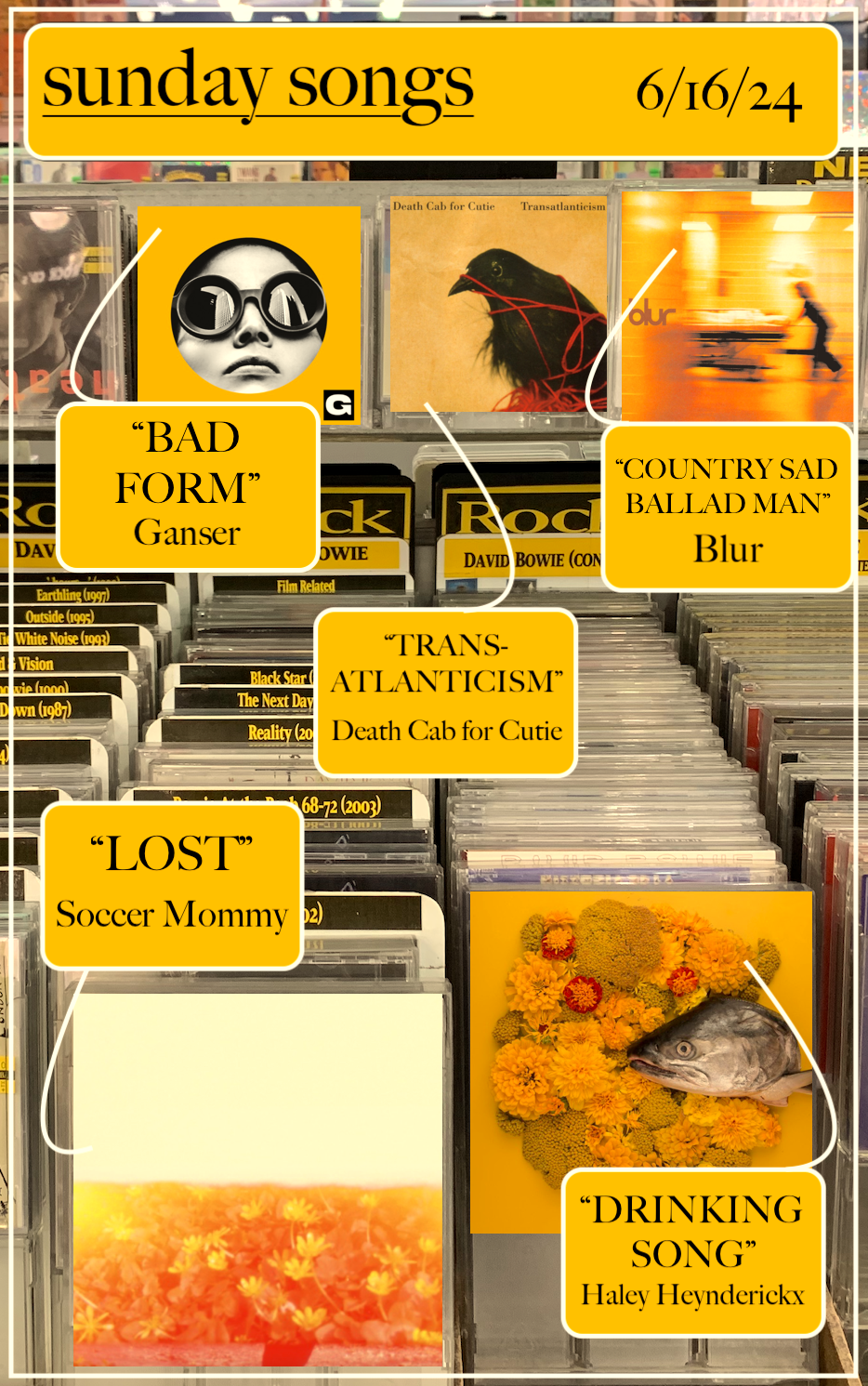
SUNDAY SONGS: 6/16/24
SOCCER MOMMY RETURNS!!! Given the short tour (that’s nowhere near me……..no, I’m totally not mad, no way) that she’s currently embarking on to support some of this new material, there’s a fourth album (sixth, counting the self-released albums) on the horizon, and hopefully on a happier date. Poor thing. I still haven’t gotten over the fact that her last album, Sometimes, Forever, was unintentionally released on the day that Roe v. Wade was overturned. Jesus.
Something that I’ve admired over the years about Soccer Mommy is her willingness to experiment with her production. At their core, her songs have never changed their essence: honest, tender confessions of the trials of heartbreak, grief, and mental health. But the dressing is never the same twice, from color theory’s color-coded tonal shifts and synth-dusted melodies to the darker, more distorted soundscape of Sometimes, Forever. With the latter, Chelsea Wolfe wasn’t somebody that I’d readily compare to Soccer Mommy, but then she comes along with “Unholy Affliction,” and the comparison, at least on that track, is as clear as day. Just when you think she’s playing it safe, she comes out of nowhere with instrumentation that you’d never imagine attributed to her name—and almost every time, it still feels like nothing but Sophie Allison. There’s a boldness to her that’s rare in the genre; there is an expectation of sameness in the kind of indie circles she’s in, an expectation to box yourself into the image that the record label deems as “authentic” in order to stay in their good graces—and the good graces of fans who cling to their raw lyrics. Julien Baker, although her first two albums adhered to that, took a similar leap with Little Oblivions, and that, for me, was her best album to date.
But Soccer Mommy can’t help but be herself. “Lost” strays nearer to some of her sparer, more traditionally indie roots, but with production that feels spun from silk; inside of the glowing cocoon where Allison resides, threads of synth, birdsong, and yearning strings coalesce in what can only be described as the musical form of a grainy polaroid, a sunset tinged with ink, film, and bygone memories. Bygone memories, like much of her other material, is at the core of “Lost,” specifically bygone memories of those bygone. Given the trajectory of “yellow is the color of her eyes,” some have speculated that “Lost” is about her mother’s death, although Allison has chosen to not disclose the subject. whatever the case, I’m glad that Soccer Mommy doesn’t have the kind of rabid Swiftie fanbase that would relentlessly strip away at the press and at Allison herself to get to the bottom of who she’s mourning, because…that’s her own business, dammit. I’m glad us…whatever Soccer Mommy fans are called (does this fanbase have a name?) have the heart to give a human being space to breathe, because, judging from the lyrics (and all of color theory, frankly), Allison needs it. “Lost” distills grief in the truths of the cliche that every movie seems to repeat about grief: “I wish I’d had more time.” Most media leans on that universal kernel to hold the weight of such a complex, unmappable sensation, but Allison scratches at its heart; her grief rests not just in tangible objects, but in the reminders of the time never spent: “I’ve got a way/Of keeping her with me where I go/But how she feels, I’ll never know/It’s lost to me.” The pain of this track is in the insurmountable truth of never being able to fully know a person; of course you can never fully, truly know a person beyond yourself, but grief exacerbates that unsurmountable summit—even if you tell yourself that you could be a cartographer of a brain outside your own, that chance has all but slipped through your fingers. Grief has unrealistic expectations of you; in its throes, it tells you that you could have made up for all of the missed regrets in your lifetime, and that’s half of the knife in your gut. Half of the pain isn’t what didn’t happen, but what can’t happen, even in the alternate reality it presents. When she repeats “If I had another chance/I’d ask her then,” it doesn’t feel like a throwaway from a stale funeral in the MCU—it feels like the testimony of something still putting down the compass and fountain pen, knowing that this expedition was doomed from the start.
So, what, you ask, might us sad girls do while we wait for Soccer Mommy’s fourth LP, which will inevitably destroy us? Watch Allison and fellow storied sad girl Phoebe Bridgers unite to cover Elliott Smith:
…AND A BOOK TO GO WITH IT:
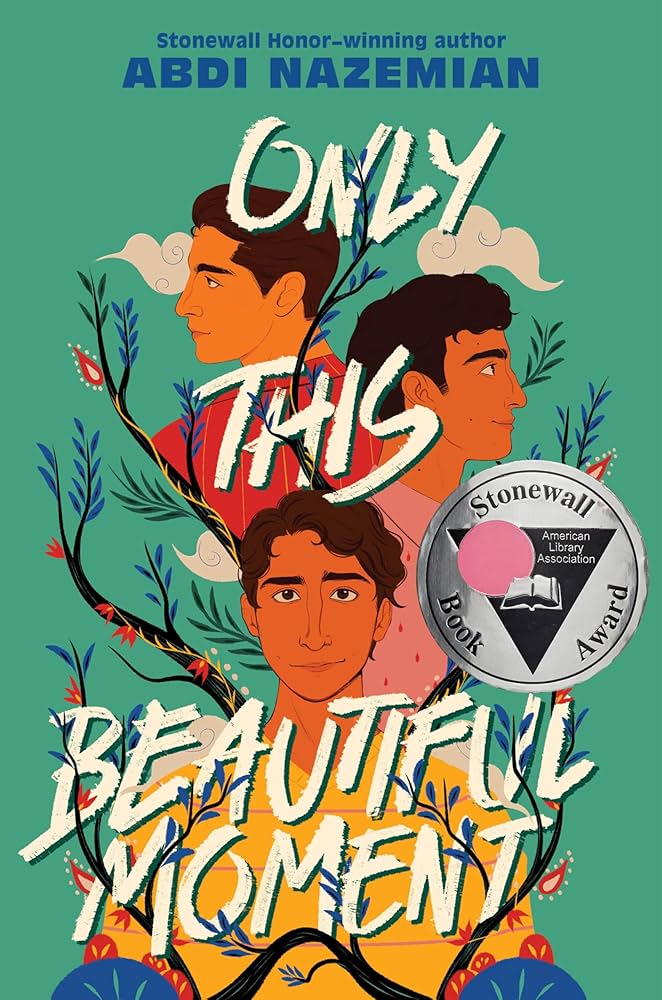
Only This Beautiful Moment – Abdi Nazemian – breaching generational lines to form an understanding of heritage, sexuality, and family.
“Drinking Song” – Haley Heynderickx
Contrary to the song title, Haley Heynderickx is (probably) not responsible for the kind of song that old men will sing in a pub while drunk for generations to come. I mean, that could be a possibility in some alternate universe. I’d like to see that. It’d make for an odd movie scene—nothing about this universe has changed, but instead of old Irish ballads, there’s a pub full of swaying people singing late-2010’s indie rock.
With a title like “Drinking Song,” I fully expected this song to be the prequel to “Oom Sha La La,” a telling of the period where “The milk [was] sour/I’ve barely been to college/And I’ve been doubtful/Of all that I have dreamed of.” Contrary to that, “Drinking Song” is a soft-spoken but resolute declaration of hope, delivered out a summer window while the crickets sing. Any darkness is the shroud of night, and all of the stars seem to bear witness to a constitution of better days to come: “And the edge of the world makes it seem/That everyone gone is still singing the same song/And I can believe in these things/That everyone’s singing along/The good and the bad and the gone.” There’s a kind of childlike optimism to the openness of Heynderickx’s declaration, but one with roots strong enough to hold it; with each repetition of “there’s a light at the end that I know,” that glow, like The Great Gatsby’s green light, pulses with more intensity with each incantation, until it becomes a portal to better times. It’s the opposite of negative overthinking; this song overflows with future vignettes of new cities to explore and new lovers to embrace, all held within the space of the back of your mind. “Drinking Song” is a snow globe containing every good future—all is too small to comprehend in the here and now, but with a little luck, you can hold them in your hands and watch them unfold before you.
…AND A BOOK TO GO WITH IT:
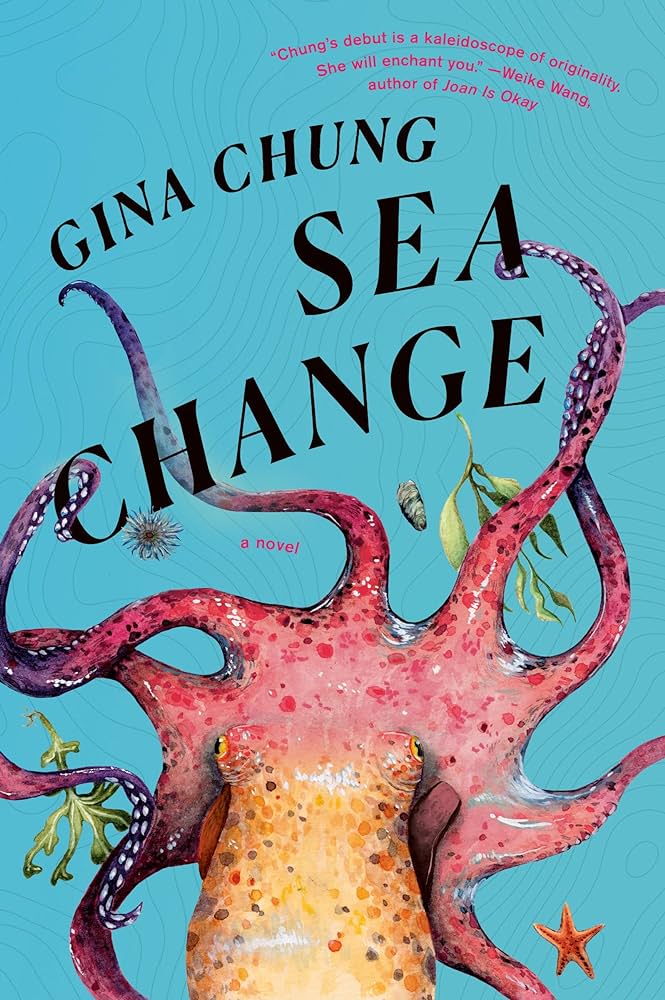
Sea Change – Gina Chung – holding onto hope in a time of lovelessness and isolation.
I like plenty of bands and artists whose catalogue consists of one or two songs tops (see: Wet Leg, Suki Waterhouse, etc.). What distinguishes said bands, for me, is that they’ve made a career out of making those two songs worth your time—they may only be two songs, but they play them well. Sure, “I Just Threw Out the Love of My Dreams” may be one of Weezer’s one, maybe two songs (and even that’s generous), but it’s such a bright and shining piece of machinery that you can’t help but gaze at said one song and know that, yeah, it may be the same song they’ve been peddling since 1994, but it’s one fantastic song.
The more I listen to Ganser, the more I realize that they fall into that camp. I hate to say that every time, but like I said, it’s not always an insult. Although they do have a good amount of deviation here and there, most of Just Look At That Sky, as much as I enjoyed it, is the same three off-kilter, drawled post-punk songs about being numb, exhausted, and angry, or some combination of the three. They’ve got a brand. Ganser, for me, stands out in that their three songs sound different enough from any given song that you can excuse them for relative lack of variety. None of their chords ever align pleasantly—it’s abrasive, grating, and honestly? Fun. As with “People Watching” (which I reviewed at the beginning of the month), Ganser makes the kind of punk that’s aware of how punk it sounds, and they lean into every inch of theatricality with their bleary-eyed drawls and itchy, buzz-saw guitar riffs, fuzzy and stinging like staring straight at the sun—just as like the climax of “Bad Form.” Ganser is a band that’s not afraid to make music that scratches your skin like un-filed, bitten nails, and if that’s their three songs, then three cheers for making three songs that are bold enough to sound unappealing.
…AND A BOOK TO GO WITH IT:
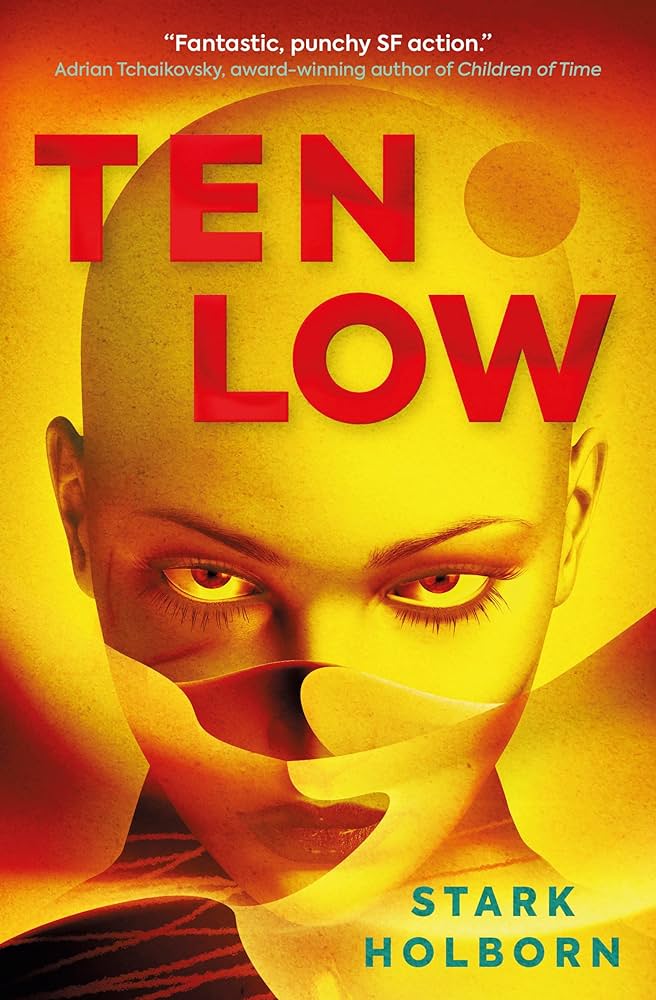
Ten Low (The Facts Sequence, #1) – Stark Holborn – “I’m the other man/I’ll take the medicine/The room spins like a feather/Folding over and over…”
“Transatlanticism” – Death Cab for Cutie
I was first introduced to “Transatlanticism” when I was about 12 or 13. A few months after the first listen (and being irreparably entranced), I had an internship at a local flower shop, where the owner had Sirius XMU playing. This song came on at some point, and I’ll never forget the deeply concerned look she gave me when I told her, in the most 13-year-old way possible, how much I “loooooooooooved” this song. She was entirely justified.
Another thing that music criticism does that I’ve never understood: categorizing Death Cab for Cutie as emo. If I suspend my disbelief enough, I can see the basis being in the whine in Ben Gibbard’s voice, especially when he performs live, and the dramatic emotion is there, but…in what world does Death Cab for Cutie belong in the same breath as My Chemical Romance? Really? I could almost see them being the middle ground between emo and indie, with some of the lingering whine and drama, but the key with selling drama is what has always lost me with most emo music: it actually feels authentic. Never once does Gibbard sound like a suburban teenage boy who’s just discovered heartbreak and black eyeliner in one fell swoop. The whine, although it can fit into some of said teenage boy sensibilities (see: “We Looked Like Giants”), just seems more of a product of Gibbard’s natural range than it does a forced vehicle for airbrushed angst.
In theory, “Transatlanticism” fails my test of withstanding a long song; most of the time, in order for a long song to hold enough water past around the six minute mark, there has to be at least some sort of shift, whether that’s tonal, lyrical, or instrumental; it’s why “Cop Shoot Cop” by Spiritualized really feels like it’s over 17 minutes long, with its largely extended sleepwalk of monotony, whereas Nina Simone’s ten minute epic “Sinnerman” has the fervor and gusto, as well as an act structure similar to classical pieces, is a nail-biting journey that never lets go of your shirt collar. (To be fair to J. Spaceman, my guess is that the tedium is the intended effect, seeing as it’s about how his heroin addiction all but made him into a dead man walking. Knowing him, it’s fully intentional.) However, there’s songs like Blur’s “Tender”—nearly eight minutes long and without much change—that have the pure, undiluted heart to keep its sails billowing. You feel everything—it’s an IV drip straight through to the sparest, most instinctual emotions, heart-wrenching in its delicately-crafted simplicity. “Transatlanticism” takes a trick out of that same book; until the last third, all that accompanies Gibbard’s thinning, tender lament is about four piano chords, played over and over with a purposeful negative space between them. Come to think of it, negative space is exactly why “Transatlanticism” works so well. Transatlanticism as a whole is a concept album about long-distance relationships, and even without the lyrics, crushing as they are, you can sense the abyssal gulf cutting down the middle of this song. At the four-minute mark, after Gibbard has finished with the first repetition of “I need you so much closer,” a full minute passes of a single, instrumental strain: those same four chords, a spare guitar lick, and tiny tendrils of synth that faintly moan and rattle like dying machinery, as if trying to conceal their death rattles without bothering anyone. Transatlancism was aided with Brian Eno’s Oblique Strategies cards, and I wouldn’t be surprised if they drew the same cards that produced Bowie’s “Sense of Doubt”—”emphasize difference” and “try to make everything as similar as possible.”
The difference, in this case, is a shift in lyrical style; It’s all but silent compared to the lyrics in the first half, but that silence conveys the feeling of separation, of having a strand of your soul stretched across an ocean and not being able to see who’s on the other shore, just as heartbreakingly as words do. After Gibbard’s lament (“The rhythm of my footsteps crossing flatlands to your door/Have been silenced forevermore/The distance is quite simply much too far for me to row/It seems farther than ever before”), the exhaustion of sorrow leaves you with no strength to do anything but stare into the canyon wrought by distance, too far to even touch fingertips over. Simplicity is what kills me about this song; after that instrumental break, Gibbard repeats the “I need you so much closer” refrain, only to transform it to “I need you so much closer…so come on.” When all of the poetry’s drained, sometimes the most sparing lyricism destroys me. The ocean has spread its impossible distance before you, and all you can do is stare as far as you can, towards the bottom, with only the most baseline instincts of longing to keep you company. It’s such an artful buildup and approach to portraying such deep yearning—you feel that negative space as a tangible barrier. See what I mean about Death Cab for Cutie making their angst authentic? “Transatlanticism” hits me like a goddamn steam train every time without fail. Ow, dude, who kidnapped me and abandoned me in the onion-cutting factory?
…AND A BOOK TO GO WITH IT:
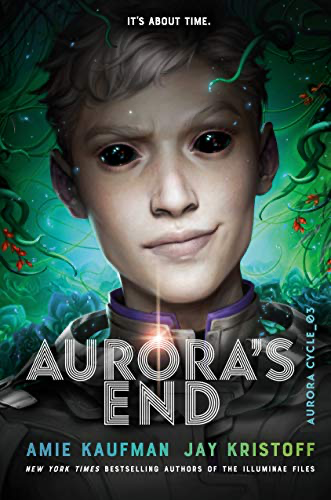
Aurora’s End (The Aurora Cycle, #3) – Amie Kaufman & Jay Kristoff – ow oof ow ouchie ow ow ow somebody hold me
“Country Sad Ballad Man” – Blur
And now, “Song 3.”
Blur’s self-titled album [slides Anthony Fantano glasses up bridge of nose] is an exercise in becoming the very thing you swore to destroy. After years of being right smack in the middle of the spotlight, participating in a manufactured battle of the bands, and pushing their mutual abuse of multiple substances to the edge, the band collectively decided that a change needed to be made. They packed their bags, temporarily relocated to Iceland, and hammered out a new album. The result was Blur, which had a much dingier, edgier, and altogether harder sound, with a lead single that famously parodied grunge, but then…circled around to being a smash success and an enduring stadium classic. That’s another story. (I’ll give you a hint: wooooooooohoo!) Yet, as much as they poked fun at American grunge, in all of its nihilistic, self-deprecating time in the sun, they slipped straight into the lifestyle, shedding their Britpop gloss for aggressive, alternative guitar, stubble, and, to the detriment of the whole band, excessive abuse of alcohol and heroin (see: “Beetlebum”).
Though the drug use is lamentable (to say the least), as all of the band members now agree, it was their mutual exhaustion and anger at being put through the British media meat grinder that allowed for such a hard—and delicious—left turn. On the verge of snapping, the band decided to put Parklife behind them and get grungy. It was bound to happen eventually, what with Graham Coxon’s adoration for the American alternative scene and the guitar sounds they were producing (should’ve listened to him earlier on that one…). Blur is all but absent of a bad track, crashing with the equivalent of a drum set tossed through a window one minute (“Chinese Bombs”) and slipping into acoustic melancholia in the next (“You’re So Great”). But “Country Sad Ballad Man,” for me, is a highlight I find myself sniffing out every six months or so. With one of the drier and more self-explanatory titles, this track feels like food left to rot out in a heatwave, festering and twangy. Every other lyric finds Damon Albarn stretching his voice into a creaky, scratching highs, as though mocking his own state of lying squarely at rock-bottom: “I haven’t felt my legs/Since the summer/And I don’t call my friends/Forgot their numbers.” The strings on Alex James’ upright bass come loose and unsteady, as though a few more takes of this song would’ve seen them snap off and collapse on the floor. Graham Coxon relishes in the alternative aggression that Britpop never fully allowed for, twisting riffs that seem to languish like drooping eyelids, dripping sweat and numbness. But the real freakout, one that must have been canned and compressed for ages, explodes in a vomit of wobbly distortion and screeching falsetto. It’s a vertigo-inducing outro that caves in like the mold-rotted roof of a wooden house, shattering in a hail of splinters and nails. In all of its spring-plucking chaos, there’s really no other lyric that fits it than Albarn’s self-aggrandizing, high-pitched screech of “I’ve done and fucked it!” yelled straight up from the well of rock bottom.
…AND A BOOK TO GO WITH IT:
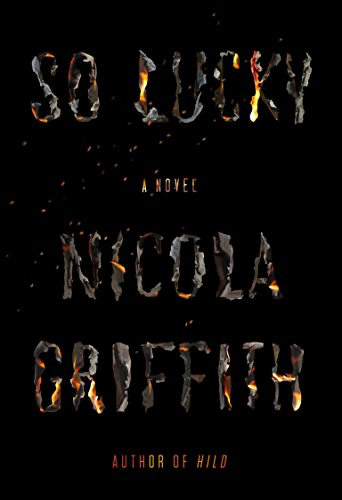
So Lucky – Nicola Griffith – “Yeah, I found nowhere/It got to know me…”
Since this post consists entirely of songs, consider all of them to be today’s song.
That’s it for this week’s Sunday Songs! Have a wonderful rest of your day, and take care of yourselves!



 The Bookish Mutant