Posted in Sunday Songs

Sunday Songs: 3/3/24

Happy Sunday, bibliophiles! I hope this week has treated you well.

This week: spring green for March, old dogs, and the consequences of the fact that at least 90% of my friends are gay and their music tastes rub off on me.

Enjoy this week’s songs!
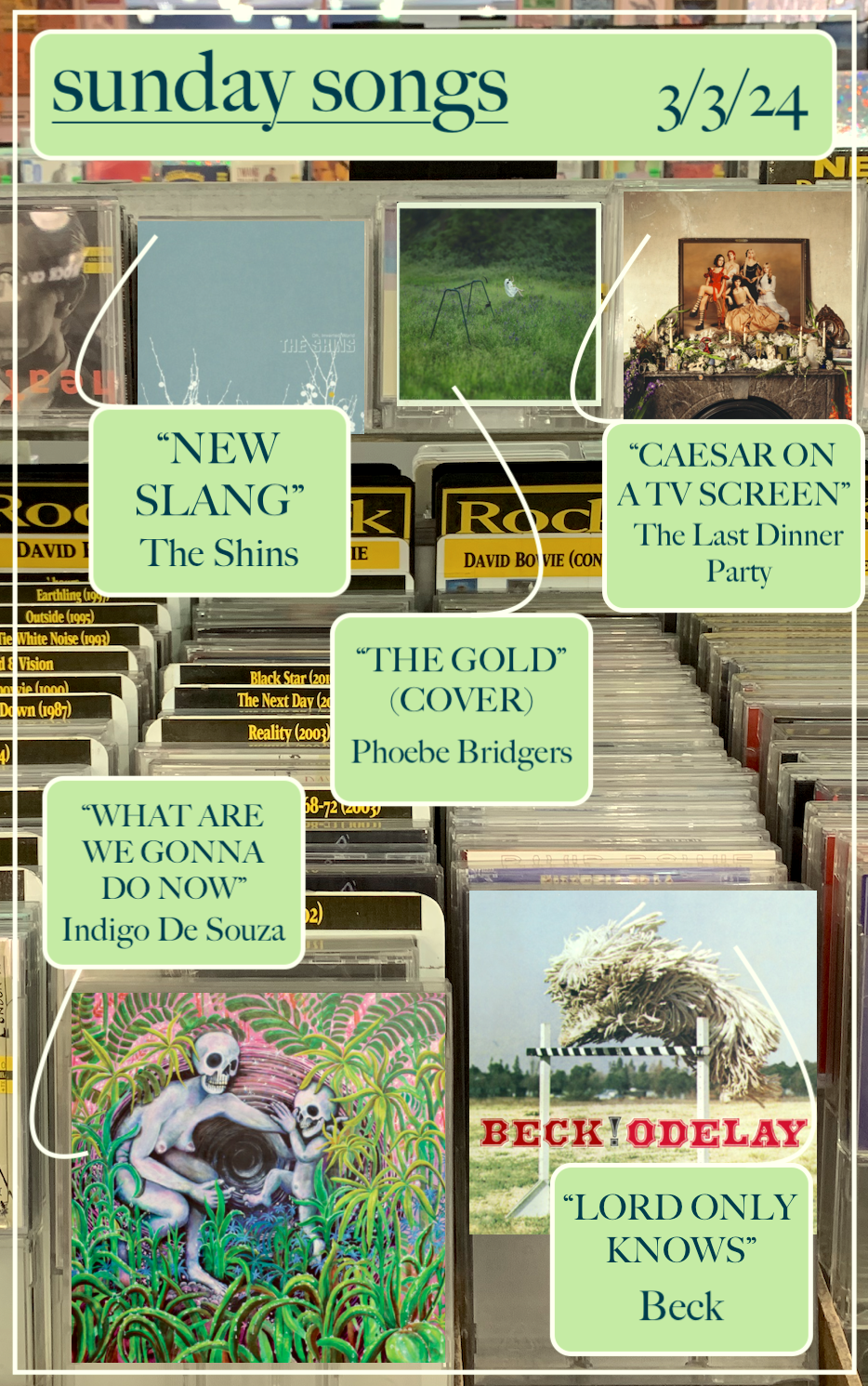
SUNDAY SONGS: 3/3/24

“What Are We Gonna Do Now” – Indigo De Souza

This just in: the sad girl kool-aid has never left my system, and it likely never will. Buckle up.

“What Are We Gonna Do Now” lives squarely in the liminal space of uncertainty, as the title implies. It feels like the tense opening to a film; I could just be stuck on this imagery of the line “and we’re still on call with the nurses,” but I can’t help but imagine an opening shot panning out from the slow spikes of a heart monitor, slowly letting out beeps as Indigo De Souza’s voice gently drips like an IV with that lingering, trailing question: “what are we gonna do now?” Almost everything is gradual about this song, as if the verses were frozen in time: a picture of a person standing on the street while snowflakes suspended in midair decorate the space around them. De Souza’s voice dips and dives into nooks and crannies that only a cat could fit into, army-crawling through the shadows as she describes the wear and tear of a relationship in the middle of turmoil—not necessarily on the verge of a fracture, but in the middle of the storm that they aim to push through together. Exhaustion and frustration tinges it (De Souza’s delivery of “and I’m never cooking up what you’re craving” remains one of my favorite parts of the whole song), but it’s never the kind so intense that would throw their love out the window—it’s the determination of trying to find out exactly how to fix things, and scrabbling around, searching for answers in desperation. Like the ebb and flow of love, the instrumentals swerve from a near standstill to a rousing, guitar-driven chorus and back to quiet again, but after the first verse, nothing is the same; it has the same kind of barely-contained chaos of songs like Wilco’s “Via Chicago” and Mitski’s “The Deal,” with a sense that the anxiety of making amends and grasping for solutions. As De Souza’s airy voice rises like she’s gasping for air after emerging from the ocean, trembling drums and tambourines slip in and out of time, ever so slightly off-kilter and teetering, like one sneeze would send them all into disarray. Unlike the former two songs, though, it never fully gives in, but the unraveling is always at the back of the song’s mind, like an overflow of fearful thoughts as they try to pick up the pieces, but a sense of deep-breathing control as De Souza picks themselves back up.

…AND A BOOK TO GO WITH IT:
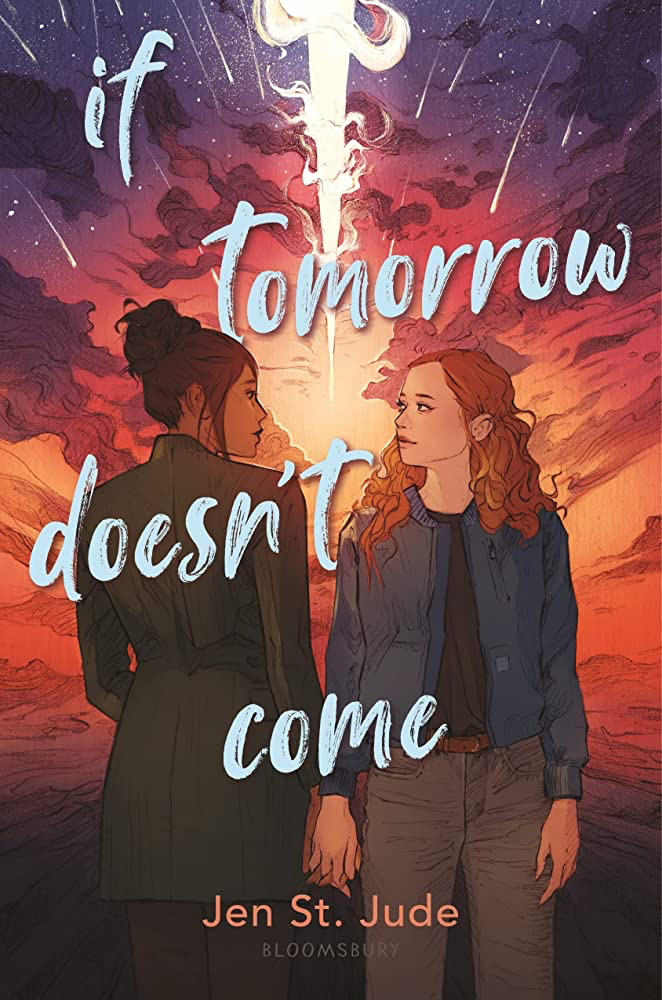
If Tomorrow Doesn’t Come – Jen St. Judeone of the few apocalypse novels that really makes it a mission to focus on the human aspect.

“Lord Only Knows” – Beck

Full disclosure: I definitely ruined this album for myself. I knew it was going to be a good album, and it 100% is, but I’d already listened to about 3/4 of it, so there were no surprises left. All of the songs I remembered were already favorites, and the ones I hadn’t yet discovered weren’t as instantly classic as the others (sorry, “Derelict”). But that’s on me. Maybe on my parents for playing it so much in the car over the years, but mostly on me. Whoops.

That’s not to say that Odelay is a bad album at all—in fact, it’s quite the opposite. It makes me miss the old Beck, the one who didn’t scrub everything to an unnecessary polish, but instead made his music like a sculpture made from bits and bobs found in the junkyard—a bit of a tire here, an old, rusty car hood there, some nuts and bolts sprinkled on top for a finishing touch. It’s a collage, but not necessarily in the way that artists like De La Soul or The Beastie Boys make their collages: while their infinitely clever concoctions feel like they oil every sample into a unified organism of unlikely pieces, Beck’s method (for a while, at least) was to make every spare and found part stick out like sore thumbs, but so much so that all those sore thumbs eventually made a hand so absurd that it makes you think how does that even function as a hand? And yet it’s the perfect hand. There’s no other way that “Hotwax” would work without “I’m the enchanting wizard of rhythm.” In fact, the absurdity of all these samples make this mutant (no pun intended) record so memorable—nobody was doing it quite like Beck. Take this song, which starts out with a rasping scream, then descends into twangy and almost docile acoustic-guitar driven rock. It’s not the heat-waved calm that “Jack-Ass” (my favorite track on the album) exudes, but it’s got that same lazy drawl to it, every word curled at the edges like scraps of paper singed by a campfire. Odelay hadn’t yet reached critical mass of clever silliness that made ’90s-2000’s Beck so fun (that would be Midnite Vultures), but he had plenty of fun to spare—I always find myself laughing at the final lines that Beck sings as the track fades out like a car driving out of view, obscured by the wobbling lines of a heat wave: “Going back to Houston/Do the hot dog dance/Going back to Houston/To get me some pants.” You just can’t deliver the word “pants” with that much emphasis and have it not be funny. Them’s the rules. I apparently have the humor of a five-year-old, but evidently, so does Beck, and we’re all the better for it.

…AND A BOOK TO GO WITH IT:

Fortuna (Nova Vita Protocol, #1) – Kristyn Merbethall of the same lazy, summer-eyed charm, but make it space opera (as things usually are on this blog).

“New Slang” – The Shins

Whenever I go to write about The Shins, I always end up going straight for the purple prose. It’s like the way I get with Radiohead, except they invoke something akin to religious fervor in me. I’m too far gone. But there’s something about James Mercer and his perpetually rotating cast of characters that evokes the lyrical side of my writing. Perhaps it’s that part of me connecting to that part of him, because he’s certainly got songwriting chops for days.

“New Slang” has been lingering in my life for decades; I faintly associate it with a period sometime in elementary or middle school. I think it may have been at the end of a playlist I listened to frequently. The Shins are never all that far from my mind, but this was the perfect song to shuffle out of the blue, soft and smiling like an old dog with white patches threaded into the fur of its snout. And I ran right up to pet that dog—god, I missed this song. Hello, old friend. Mercer has long since mastered the art of the old heartstring-tugging acoustic song, and while its as hipstery as it gets, there’s a calmness to it, a serenity like no other. And yet, for all intents and purposes, it’s James Mercer’s equivalent of a pop-punk “I’m getting out of this town” song; the lyrics were inspired by his experiences separating from Albuquerque, New Mexico, where the first iterations of The Shins had tried to take root. Disillusioned by a scene that he described as “macho, really heavy, and aggressive,” Mercer and company branched outwards, where their lyrical folk could have more meaning. “New Slang” was Mercer’s way of “flipping off the whole city,” as he described it (“Gold teeth and a curse for this town”), but there’s something beautiful in how quietly this song shoots its bitter middle finger. It’s not the jerky angst of separation that pop-punk lends to the subject, but instead the moment of looking back into the sunset, knowing that everything you’ve left behind is in the dust with the approaching night. Perhaps that’s where that serenity I feel comes from—the serenity of knowing that what’s in the past is in the past, and that it has no control over your life anymore. It’s underfoot, only tire tracks in the dirt now. You can’t help but feel a wave of peace at the thought.

…AND A BOOK TO GO WITH IT:

Trouble Girls – Julia Lynn Rubinwhile Lux and Trixie’s reasons for ditching their town are more complicated, there’s no less of a feeling that they’re giving it the finger the whole way out.

“The Gold” (Manchester Orchestra cover) – Phoebe Bridgers

Full disclosure: I hate the original version of this song. Hate it. It stinks of that kind of that faux-earnest, country-leaning pop that forced itself down everyone’s throats in the mid-2010’s like a contagion. If this weren’t obviously a breakup song, I know my music teacher would have made my 5th grade class sing this. I hate to relentlessly dog on a song, but also…Christ. This made me throw up in my mouth a little.

Phoebe Bridgers, on the other hand? A godsend. Leave it to her to make the original lyrics, some of which were actually good sound good, and not like they were being shoved down through the godforsaken Mumford & Sons strainer. I will give Manchester Orchestra (posers, they’re not even from Manchester…) some credit: “you’ve become my ceiling” is genuinely a beautiful lyric. But I just wish it wasn’t being delivered with that smarmy, offensive excuse for authenticity. Again: Phoebe Bridgers is our savior. She grounds this song enough to make the turmoil within it feel real. Never once did this song need belting, stadium-rock grandeur: it needed clarity, a sense of calm amidst the chaos, and a steady hand on an acoustic guitar. It’s got slightly more effects than Bridgers usually allots to a song of this tempo, but it hits the balance of flourish and that acoustic sincerity that she’s come to be known for. It’s a breakup song, but although some of those call for grandiose declarations of sorrow, some of them need time to sit in silence and wallow it in, and that’s exactly the treatment that Bridgers gave “The Gold.” I’ll just go ahead and pretend that she wrote it. Yup. Manchester Orchestra? Who is she?

…AND A BOOK TO GO WITH IT:

Vinyl Moon – Mahogany L. Brownesimilarly, this novel in verse deals with the fallout of a relationship built on mistrust.

“Caesar on a TV Screen” – The Last Dinner Party

Before I listened to the full song, I distinctly remember seeing a snippet of this song advertised somewhere on Instagram and thinking something along the lines of “god, this is pretentious.” And I stand by that. It’s still pretentious. But in context, it’s a good listen.

I’ve heard a decent amount of buzz surrounding The Last Dinner Party, usually falling in one of two camps: that they’re out to save rock and roll and bring it back to its glory days, or that they’re just…okay? The former argument, while I like it in concept, reeks of the kind of mentality that “modern music isn’t good anymore” because it’s not all Pink Floyd, which…okay, cool if you like Pink Floyd, but also…creative rock didn’t die as soon as Y2K hit? You just have to look a little harder now that rock isn’t the reigning influence on popular music anymore. In the modern day, we treat rock music like we often treat women: as something to be saved, when all along, it’s been doing just fine, thank you. I doubt we’ll ever go back to those days, and maybe we shouldn’t—there’s no way you can completely replicate a movement in its full, temporal context, and maybe that’s okay. I’m all for bringing back glam rock, but chances are, anything you try to resurrect is going to feel displaced in our modern day context. You can take inspiration from them, but personally, it’s a hard thing to recreate in all of its flesh and blood.

Which…seems like a good deal of what The Last Dinner Party are going for. Frontwoman Abigail Morris has regularly emphasized how much she and the band enjoy being pretentious (if having their debut album titled Prelude to Ecstasy wasn’t enough of an indication), and if that’s what’s bringing them joy, then all power to them! They’re talented musicians, for sure. Weirdly, the other two songs of theirs that I listened to just sounded like…any old indie pop song, which I kind of hate to say, but if you’re all about “saving rock n roll” and just putting out that, then I feel like you have to keep your mission consistent. But you certainly get that feel from “Caesar on a TV Screen.” As far as the structure goes, it feels slightly disjointed, but the more I watch the music video, I get what they’re going for—a song with a distinct, three-act structure, emulating the epic, Shakespearean twists and turns that inspired it. There’s loads of drama to spare, from the rush of strings in the third act to Morris’ impassioned howl of “everyone will like me!” at the song’s exiting flourish, like she’s brandishing a prop sword with every word. It’s dripping with that kind of theatrical, ’70s and ’80s drama—there’s Queen written all over it, and I can’t help but think that some of that drama was informed by Kate Bush. And…yeah, Freddie Mercury, Kate Bush, and David Bowie, the latter of whom the band have repeatedly cited as one of their primary influences, are probably some of the most colossal shoes to fill in terms of musical artistry. But there’s no doubt that The Last Dinner Party are a skilled bunch in their own right—and god, they look like they’re having the time of their lives. It’s exactly the kind of excess, maximalism, and drama that their band name implies.

…AND A BOOK TO GO WITH IT:

Strike the Zither (Kingdom of Three, #1) – Joan He“When I was a child, I never felt like a child/I felt like an emperor with a city to burn” HMMM…

Since this post consists entirely of songs, consider all of them to be today’s song.

That’s it for this week’s songs! Have a wonderful rest of your day, and take care of yourselves!

Posted in Sunday Songs

Sunday Songs: 10/1/23

Happy Sunday, bibliophiles! I hope this week has treated you well.

OCTOBER! Crunchy leaves and warm coffee and leather jackets and Halloween. That’s the most wonderful time of the year, if you ask me. And for the occasion, I’ve got a fall-colored graphic, complete with some sparing mentions of autumn and Lisa Germano.

Enjoy this week’s songs!

SUNDAY SONGS: 10/1/23

“The Deal” – Mitski

I went into The Land is Inhospitable and So Are We with my expectations low—as much as I like Mitski, I was prepared for another Laurel Hell that I didn’t necessarily regret listening to, but only came away liking about half of the songs. But I’ve seen consensus among diehard Mitski fans and people like myself, who know a handful of Mitski but nothing expansive—we’re all starting to agree that this album might just be her best work yet.

After several years of turmoil that saw Mitski on the verge of leaving the music industry altogether, The Land is Inhospitable sees her reclaiming a space for herself, while reckoning with the past that led her to silencing herself as she tried to endure the trials of being a musician in this creative climate. The whole album is full of some of her most grand, expansive soundscapes, more haunting and commanding than anything she’s produced in years. It feels like Mitski letting herself go, haunted by the multitude of ghosts and hounds at her back, but unleashing years of feeling and fury. Take this song, my personal favorite of the album (“My Love Mine All Mine” was a close second). As she describes a Robert Johnson-esque deal with the devil “on a midnight walk alone,” we discover that the deal was never to see her soul for fame or talent—it was for someone to take the burden of her soul away from her (“will somebody take this soul?”) The whole song is a harrowing plea for peace, no doubt taken from many sleepless nights. As ever, Mitski’s voice soars to meet every sky-reaching promise, unfolding like an ornate wedding dress with its ribcage-echoing depth and weight. And this song is the exact reason why I feel like The Land is Inhospitable is her most adventurous album yet. The instrumentals are truly mercurial, shifting from simple acoustics to an abrupt, all-consuming cacophony as the chorus kicks in, barely contained. And speaking of barely contained, can we talk about how beautiful the outro is? It’s my favorite kind of barely contained chaos, as though Mitski is scrambling to keep the battering drums and frantic movement under wraps before the song ends, but can’t help but let some of it pour through the cracks. I can’t help but be reminded of 1:53-2:34 of “Via Chicago,” with its moaning guitars disguising Glenn Kotche’s explosive outburst of drums. (It’s 100% worth putting a Wilco concert on your bucket list just to witness that live. Trust me.) And of course, it mirrors the line “your pain is eased/but you’ll never be free.” It always lingers.

Either way, I’m glad that Mitski is starting to heal, and that we have this excellent album to show for it. She deserves more than all the weirdos screaming “MOMMY” at her constantly. The horrific curse of making emotionally vulnerable music your brand, I suppose.

“Born For Loving You” – Big Thief

I’m still newish to Big Thief, but this song delightfully baffles me. I almost thought it was a cover—it seems simultaneously harmonious and out of place next to all of the other Big Thief songs I’ve heard. Somehow, I love that about this song.

“Born For Loving You” feels timeless in its warm simplicity. At its heart, it’s an earnest, folksy love song, plain about its intentions and the smile on its face. But it’s doesn’t bear that kind of earnestness that makes you cringe from the manufactured nature of it—there’s so much about this song that’s genuinely endearing to me with each subsequent listen. Adrianne Lenker frames the premise of the song in a tender collage of vignettes, from “After the first light flickered outta this motel/1991, mama pushin’ like hell/Tangled in blood and vine” to splashes of blissful childhood: “From my first steps, to my first words/To waddlin’ around, lookin’ at birds.” Every time I listen, I can’t help but imagine the fading graininess of old home movies, of giggling, squinty-eyed babies taking their first steps out into the summer grass as their parents follow in their footsteps, arms outstretched. Lenker delivers every line with a straining waver, with the band gently painting soft, acoustic brushstrokes behind her. It’s a song for peering out the car window at a sunset, letting the wind play with your hair as you think about all the things that led you to be here, right here, with the people that you love.

“The Darkest Night of All” – Lisa Germano

I know you’re all sick of me heralding the coming of sad girl fall since August, but since it’s actually fall now, I’ve got an excuse. Nothing says fall like a black-orange color scheme and some good, old fashioned baby doll heads.

After YouTube practically pied me in the face with this song, I couldn’t help but listen. For the first few times, “The Darkest Night Of All” felt like either an opening or a closing track. Turns out that I was halfway right—this song closed out her 1993 debut Happiness (touché), and even without knowing anything else from the album, this song does its job better than any other could. Even though it’s clear from the lyrics that she hasn’t nailed her darkly clever style completely, it’s evidence that Lisa Germano’s skill at crafting a vivid atmosphere was always there. This song couldn’t have been named anything else—it really does feel like watching a starless night from out the window, bleary-eyed and wishing for sleep to come. With its echoing, gauzy synths wrapping their arms around the track, it feels like the cool tucking of a too-thin blanket over your head. You can’t picture anything but sleepless darkness when this song plays. Germano’s younger voice, thin and breathy like tissue paper, can’t help but make me think of Julien Baker—I don’t know if she listened to her, but I can’t get the resemblance out of my head. Paired with Germano’s gentle piano playing and mournful accordions, “The Darkest Night of All” sits in a strange limbo between a lullaby and a dirge, cloaked in nighttime either way. And what a way to close out the album—the fading synths and her final whisper of “the night” like a secret in your ear?

“Easy Thing” – Snail Mail

Nothing like a new(ish) Snail Mail song to make my day. Even if it’s a demo, there’s nothing better.

Lindsey Jordan described “Easy Thing” as “a track that didn’t make the cut, but holds a special place in my heart.” And the more I listen to it, the more it feels like the bridge between her two albums. It’s bathed in a the cool breeze of autumn, lazily meandering around, anchored by Jordan’s plaintively plucked notes on the guitar. The lyrics meander over to the bitter, love-gone-sour malaise of Valentine (“making out’s boring,” “was there really something/or were we just drunk?”), but the delicate, meticulous guitar work reeks of the shining melodies of Lush. You could have placed this somewhere between “Stick” and “Let’s Find an Out” and I wouldn’t have batted an eye. And although I love this song dearly, I can see why it never made the cut; it doesn’t necessarily tread any new musical or lyrical ground that wasn’t already in Valentine—the same lost love, the same reminiscing. I could see why it would have gotten lost somewhere between “Madonna” and “c. et al.” But it’s a song that still deserves to see th light of day, but standing alone was the best choice for it to sprout. Now the only question left is where it’ll fit amongst the other Valentine demos on this EP.

“Come On (Let the Good Times Roll)” – The Jimi Hendrix Experience

Yep. Time for an emotional shower. I didn’t think about the order when I was making the graphic, but this is probably the best possible palate-cleanser for the lethal Mitski-Lisa Germano beatdown. Am I not merciful?

Even though I’m always mad about how stingy the Hendrix estate has been with lending off the rights to his music (every day, I not only wish for a world in which the Doctor Strange movies were actually as weird as they were meant to be, but also for a world where Jim Hendrix was their soundtrack), maybe it’s for the best that the MCU never corrupted this particular rush of late 60’s, pure, classic rock straight to the soul. This one would’ve fit right into one of the Guardians of the Galaxy movies, but again: I’m glad this song isn’t associated with Chris Pratt making some corny “it’s behind me, isn’t it…😳” type of joke after getting into some comical alien shenanigans. (Can you tell that I’m bitter about Marvel? No? Blame Disney. I’m suffering over here.) Either way, this song—and most of Jimi Hendrix’s body of work in general—feels somehow pure, like it came into being with every note in the riff already glitteringly mastered. I’ve used the “Athena bursting forth from the skull of Zeus” metaphor to death in reference to Super Furry Animals, for the most part, but if anyone else is deserving of it, it’s certainly Hendrix. The sound production feels thick enough to stretch my hand through, and each lightning-fast note ripped in the dazzlingly intricate riffs feels like the most intentional thing on Earth, just for a few minutes. It’s a 4:09 stretch of speedy blues that you can’t help closing your eyes and smiling along to. Jimi just has that effect.

BONUS: I meant to put this in last week…oops. Either way, boygenius released a gorgeous animated music video for my favorite track off the record, “Cool About It” (which I talked about back in April). The animations are by Lauren Tsai. Have a watch! (Who else is very normal about the fact that they’re releasing another EP on the 13th??)

Since this post consists entirely of songs, consider all of them to be today’s song.

That’s it for this week’s Sunday Songs! Have a wonderful rest of your day, and take care of yourselves!

Posted in Sunday Songs

September 2023 Wrap-Up ☕️

Happy Saturday, bibliophiles!

It’s finally fall! September has been busy for me, but it’s all worth it to see the leaves starting to turn.

Let’s begin, shall we?

GENERAL THOUGHTS:

September always ends up being kind of hectic for me, and college has certainly exacerbated that. Working out your schedule while trying to work on yourself is always a fun time. But it’s been nice, all things considered. Between the homework, I’ve had a few days where I could soak up the sunshine with an iced coffee and enjoy the last few dregs of warmth. Said dregs of warmth were too hot for my liking (why is it in the 80s at the end of September WHY), but luckily, it’s supposed to start feeling like fall sometime next week. I also declared a women and gender studies minor along with my creative writing major, so I’m super excited for next semester!

Reading and blogging-wise, it’s been slow going, but I’m now in a good place to start writing more regularly, which is always nice to have back in the routine. It’s the first time in years that I’ve been behind on my Goodreads goal, but I purposefully made it lower since college is a thing that exists in my life now. Plus, I got to re-read The Martian Chronicles for a science fiction class that I’m assisting, and any time that I get to read Ray Bradbury is a win.

Other than that, I’ve just been trying to squeeze in time for drawing, listening to all of the wonderful new music that September had to offer (Shakey Graves, Mitski, Soccer Mommy, Wilco—all excellent), watching even more Taskmaster (SEASON 14 NOW!), and waiting for the day when I can finally break out all of my fall outfits.

READING AND BLOGGING:

I read 15 books this month! (16, if you count me reading Palmer Eldritch twice. Readability was never a concern for Philip K. Dick.) It was always going to be a shorter reading month since I’m still settling into college, but I read more than I thought I did! I’ve been able to read some great books. I tried to throw a few books for Latinx Heritage Month and Bisexual Visibility Week into the mix.

2 – 2.75 stars:

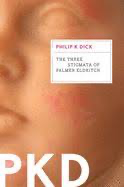
The Three Stigmata of Palmer Eldritch

3 – 3.75 stars:

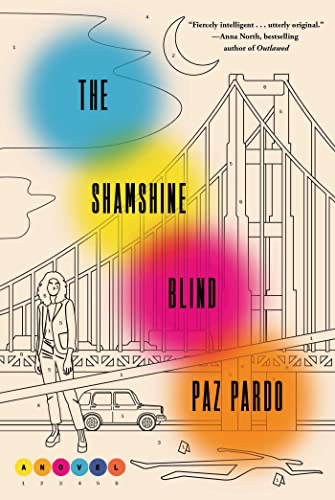
The Shamshine Blind

4 – 4.75 stars:

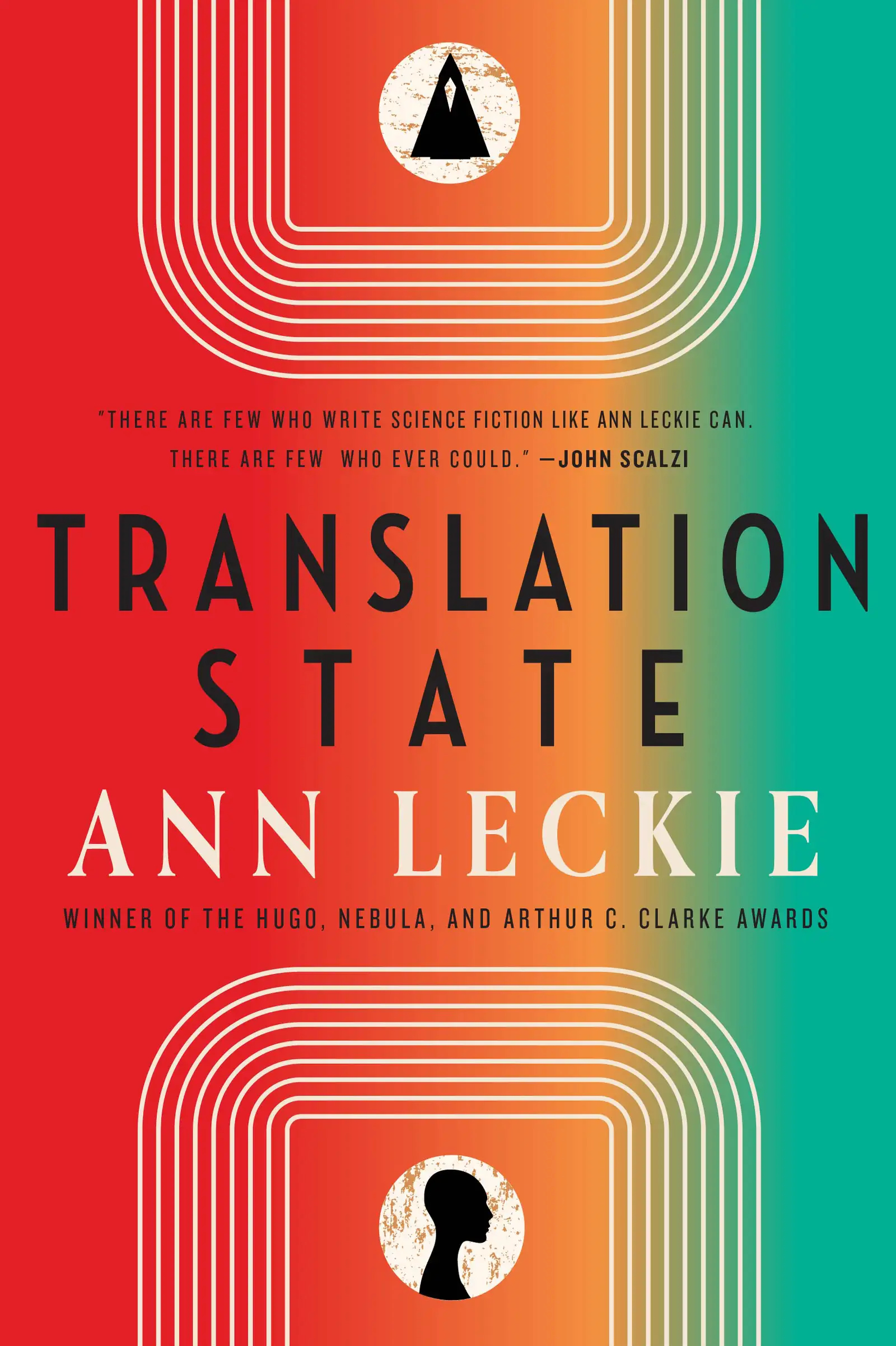
Translation State

5 stars:

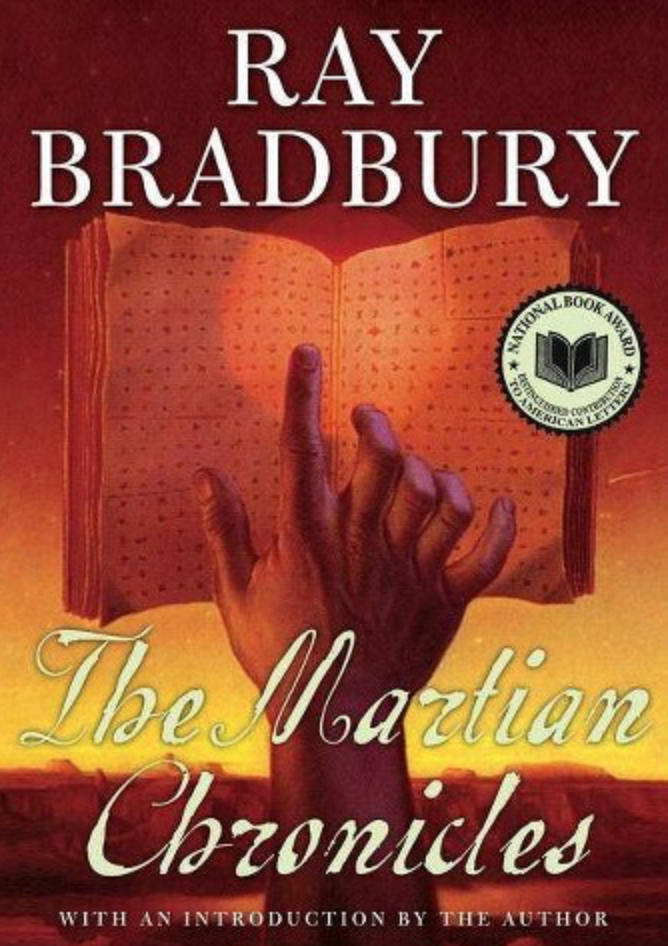
The Martian Chronicles

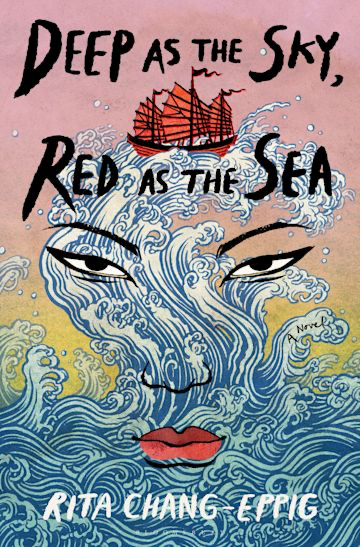
FAVORITE BOOK OF THE MONTH (not counting re-reads): Deep as the Sky, Red as the Sea4 stars

Deep as the Sky, Red as the Sea

POSTS I’M PROUD OF:

POSTS FROM OTHER WONDERFUL PEOPLE THAT I ENJOYED:

SONGS/ALBUMS THAT I’VE BEEN ENJOYING:

:,)
walking to class while listening to A Tribe Called Quest is one of life’s many simple joys
love is stored in The Cure
such a gorgeous album
SO much good music coming out this September
I feel like this has to be Mitski’s best work yet
MY WIFE HAS A COVERS EP

Today’s song:

Wilco’s new album is gorgeous, this has been a PSA

That’s it for this month in blogging! Have a wonderful rest of your day, and take care of yourselves!
Posted in Mini Reviews

MINI REVIEWS | Birthday Books (Gifts + What I Blew my Paycheck On)

Happy Tuesday, bibliophiles!

It might still be a week or so before I completely return to some semblance of my normal schedule, but I’m starting to get to the point where I know where I’m going and what I’m doing. And as much as I hate the constant home football games we’ve been having, at least it means that my already quiet floor is even quieter, so I can get my homework done in a serene environment—and write these reviews as well!

Since my birthday last month, I’ve taken all of the books I got—ones that I bought on my birthday and gifts from family—back to my dorm, where I slowly (yes, slowly, settling into college is weird) devoured them over the course of several weeks. I’m happy to say that it was a fantastic batch—not every one was the best book I’ve ever read, but it’s chiefly in the 4-star range. I got a 5-star book out of these as well! And now they sit proudly on my little dorm bookshelf, ready to be reviewed.

Let’s begin, shall we?

THE BOOKISH MUTANT’S BIRTHDAY MINI REVIEWS

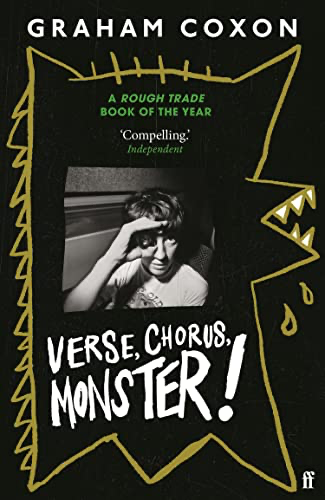
Verse, Chorus, Monster! – Graham Coxon

from Goodreads:

Verse, Chorus, Monster! is the memoir of iconic British musician and Blur co-founder Graham Coxon, charting a life of music, fame, addiction and art. Before the noise and clamour of the Britpop era, Coxon was a shy Army kid tempering his anxiety through painting and a growing love of music. As he honed his artistic skill at school, his band with school friend Damon Albarn, fellow student Alex James, and a drummer called Dave Rowntree began to get noticed. But there are things they don’t tell you before you get famous. There are monsters out there. And some may even be lurking inside yourself.

TW/CW: substance abuse/addiction, themes of mental health issues

I’ve been trying to branch out into more nonfiction over the past few years, but even if I wasn’t, I would have picked this up eventually either way. My Blur awakening back in 2021 made sure of that. So of course I was excited to see that Graham Coxon was coming out with a memoir—he’s always struck me as such a sensitive, creative person, and Verse, Chorus, Monster! fortunately cemented that, for the most part!

I always have a lingering fear that celebrity memoirs will somehow ruin my image of them, but with this one, I still hold that Graham Coxon seems like such a deeply insightful and sensitive soul. This glimpse into his mind was all at once raw and touching; the frequent sections about his struggles with anxiety and alcoholism were difficult to read, but I’m so glad to have verbal confirmation that he’s been getting better as of late, and that he’s starting to work on himself in that respect. Beyond that, there’s just so much about this memoir that was immediately endearing. The insight into one of the main creative forces behind one of my favorite bands (and a fantastic solo artist in his own right) was fascinating to hear from the front lines, and I loved the pieces we got of his creative process—opening the book with the spark of inspiration that lead to the hook of my favorite song (“Tender”) was the quickest possible way to win me over. And it’s easy for memoirs to have a sense of humility that’s manufactured, but Coxon’s personality really did come off as genuinely humble.

All in all, an excellent memoir by a truly admirable creative force—and a refreshingly humble one. 4 stars!

This is How You Lose the Time War – Amal El-Mohtar and Max Gladstone

from Goodreads:

In the ashes of a dying world, Red finds a letter marked “Burn before reading.”

So begins an unlikely correspondence between two rival agents in a war that stretches through the vast reaches of time and space.

Red belongs to the Agency, a post-singularity technotopia. Blue belongs to Garden, a single vast consciousness embedded in all organic matter. Their pasts are bloody and their futures mutually exclusive. They have nothing in common—save that they’re the best, and they’re alone.

Now what began as a battlefield boast grows into a dangerous game, one both Red and Blue are determined to win. Because winning’s that you do in war. Isn’t it?

A tour de force collaboration from two powerhouse writers that spans the whole of time and space.

TW/CW: blood, violence, murder, self-harm, descriptions of bodies/corpses, torture, poisoning, war

Hoowhee, brother. This one was good.

Time War had floated on the edges of my radar for years ever since it came out, but I ultimately decided to pick it up on the recommendations of one of my professors and one of my best friends. And their high praise—and the high praise of so many others—was more than well-deserved.

For such a short novella, Time War packs a truly unforgettable gut punch, vibrant and rich with emotion. Who knew that these two characters identified only by colors would consume so much of my days when I read this? I can’t praise this book enough. The prose is beyond rich, truly enchanting and expansive, fitting for the cosmic scale that this story is set in. It has an almost gothic sensibility to it, even with the firmly sci-fi trappings—what’s more romantic, dramatic, and emotional than two lovers reaching for each other across the vastness of space and time itself? But even with this grand scale, This is How You Lose the Time War is one of the most deeply human stories that I’ve read in ages. It taps into that innate desire to love and be loved, or even to just have someone to talk to as the world around you is collapsing. In spite of the grand, cosmic conflict and multiple universes colliding, nothing can come in the way of our desire for love and connection. It’s one of those stories where plot details—names and how this time-spanning war started—mean nothing in the face of the deep resonance of the characters.

Hold me. I need a minute…

What else is there to say? Go read this, what are you even doing? 5 stars!

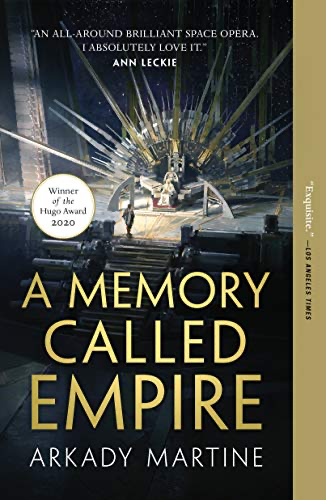
A Memory Called Empire – Arkady Martine

from Goodreads:

Ambassador Mahit Dzmare arrives in the center of the multi-system Teixcalaanli Empire only to discover that her predecessor, the previous ambassador from their small but fiercely independent mining Station, has died. But no one will admit that his death wasn’t an accident—or that Mahit might be next to die, during a time of political instability in the highest echelons of the imperial court.

Now, Mahit must discover who is behind the murder, rescue herself, and save her Station from Teixcalaan’s unceasing expansion—all while navigating an alien culture that is all too seductive, engaging in intrigues of her own, and hiding a deadly technological secret—one that might spell the end of her Station and her way of life—or rescue it from annihilation.

TW/CW: themes of colonialism/imperialism, murder/attempted murder, violence

College isn’t all sunshine and rainbows, but man, it’s fun sometimes. I got an A on a literary theory assignment where I compared this book to an essay we read in class. I love being an English major.

If the fact that I used A Memory Called Empire for a literary theory assignment doesn’t make you think that there’s a ton of great stuff to chew on in this book, I’m not sure how else to convince you. It’s fantastic space opera, but it errs more on the side of a political thriller—a common enough combination these days, but one that was so well-executed in this case. Reckoning with the history of colonialism in science fiction has been on the rise—and for a very good reason—but A Memory Called Empire had such an interesting take on it. This is the first of these kinds of novels that I’ve seen tackle the seduction of colonialism; along with the actual murder mystery afoot, Mahit Dzmare is also being pulled—both physically and mentally—into the clutches of the reigning Teixcalaanli Empire, and is being groomed into the ruling culture as she tries to stay afloat and protect her space station from imminent colonization. The character work is nothing short of excellent, the worldbuilding is top-notch, and the suspense is palpable from start to finish. It’s all a treat.

This book has gotten quite a lot of hype over the years, but it really is all that—alluring, suspenseful, and nothing short of insightful. 4 stars!

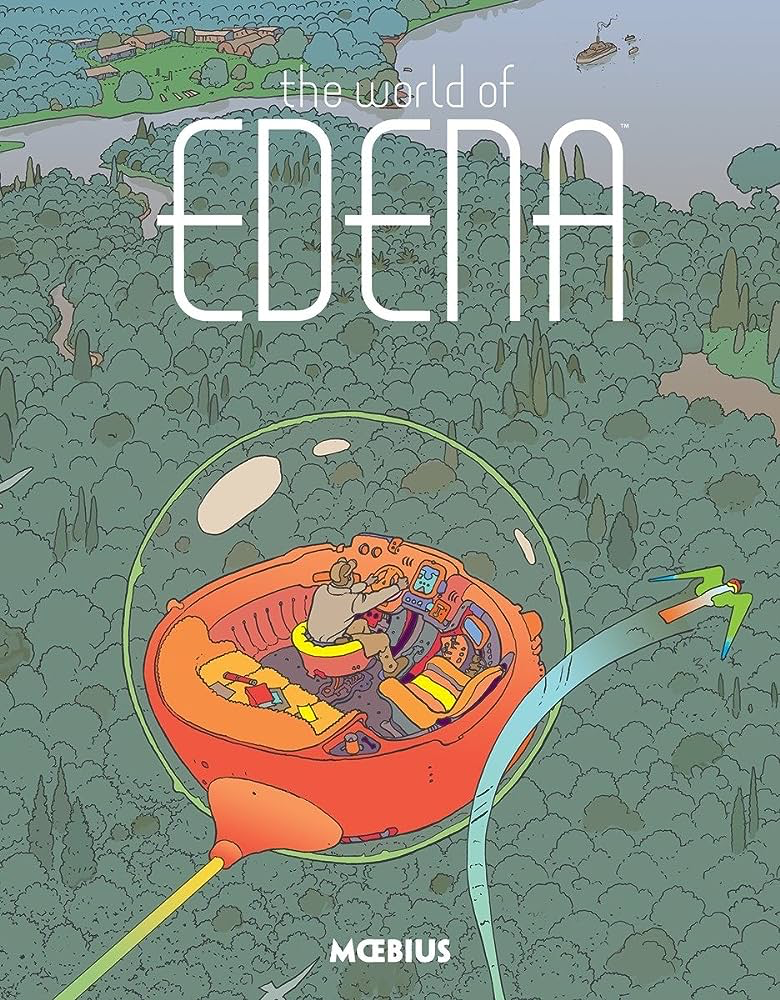
The World of Edena – Mœbius

from Goodreads:

Stel and Atan are interstellar investigators trying to find a lost space station and its crew. When they discover the mythical paradise planet Edena, their lives are changed forever. The long out-of-print Edena Cycle from Moebius gets a deluxe hardcover treatment! Moebius’s World of Edena story arc comprises five chapters–Upon a Star, Gardens of Edena, The Goddess, Stel, and Sra–which are all collected here.

TW/CW: nudity, mild sci-fi action

I’ve been meaning to get into Mœbius for years now; ever since I reactivated my pinterest and went on a deep dive of sci-fi art, I’ve been drawn to the enigmatic, meticulous, and downright wondrous quality of his art. (I feel like it would’ve happened eventually—turns out that he was a major influence on Tony DiTerlizzi, and especially his inking style in the Search for WondLa trilogy, which has shaped me beyond repair.) I started here with Edena, and I put it on my birthday list.

I still hold that he may be one of my favorite artists. His style is so ethereally captivating, and I found many a piece that I’ve used for my desktop wallpaper in the past few years inside Edena. His landscapes are instantly transporting, and there’s not a single character design lacking in whimsical charm. The story itself…slightly less so? It’s like a sci-fi Yellow Submarine, but if the script was due in an hour and he’d forgotten all about it until then. Given the circumstances, it’s understandable; Edena apparently started out as a car ad (???), and then it took on a life of its own, completely unplanned. There’s inconsistencies aplenty with both the story and the art, but for the most part, it was just so wild that I enjoyed the ride. If it gives you some idea of what happens, Mœbius pulls the classic “IT WAS ALL A DREAM” move that ends up resolving (if you can call it that) the whole mess. It’s nuts. But there were so many pockets that I wished we could have explored more. There were some super interesting gender themes going on—I wish we got to know why Stel and Atan were on their gender-neutral hormone supplements, for a lack of a better word, but the resulting transformation into their Adam and Eve roles (hence the name) was so fascinating, especially since this only came out in the late eighties or so. (Of course, Atan/Atana effectively becomes a damsel in distress post-transformation, but that’s a whole other can of worms. Ouch.)

In short, The World of Edena was beautiful, if not a bit of a mess. Luckily, the mess was endearing, for the most part, or at least fun. 3.75 stars, rounded up to 4!

Firekeeper’s Daughter – Angeline Boulley

from Goodreads:

As a biracial, unenrolled tribal member and the product of a scandal, Daunis Fontaine has never quite fit in—both in her hometown and on the nearby Ojibwe reservation. When her family is struck by tragedy, Daunis puts her dreams on hold to care for her fragile mother. The only bright spot is meeting Jamie, the charming new recruit on her brother’s hockey team.

After Daunis witnesses a shocking murder that thrusts her into a criminal investigation, she agrees to go undercover. But the deceptions—and deaths—keep piling up and soon the threat strikes too close to home. How far will she go to protect her community if it means tearing apart the only world she’s ever known?

TW/CW: racism, murder, sexual harassment and assault, misogyny, rape, death, gun violence, descriptions of injury, substance abuse

Originally, I put off reading this book because a) I’m not usually much of a YA mystery/thriller person, and b) the mountain of hype was certainly intimidating. I ended up reading Warrior Girl Unearthed because the plot fascinated me more from the start, and I loved it so much that I ended up buying Firekeeper’s Daughter after all. And, once again, I’ve been struck with the luck of hyped books being all worth the hype.

Every part of Firekeeper’s Daughter is excellent, from the effortless way that Angeline Boulley weaves a scene and setting together to the never-ending suspense that kept me guessing for page after page, twist after twist. Making a setting as tangible and populated as hers was is no easy feat—and it suited every other aspect of this book in every conceivable way. You can’t have a corrupt, hidden history of a town without the town itself. The sense of community—and the rifts driven into it—were some of the best I’ve seen in YA fiction in quite a while. Part of that wouldn’t have been possible without Boulley’s equally excellent character work; Just like their community, every character feels nothing short of authentic and multilayered. This all made the twists so much more effective—with such layered characters, I learned to expect the unexpected. And even with the ongoing expansion of diversity in YA as a whole, I feel like I haven’t seen as many novels centering Native American or Indigenous characters and stories, so I’m glad that this book exists in that sense as well. (Shoutout to Darcie Little Badger and Moniquill Blackgoose as well!) And Daunis is mixed-race as well! Yay!!!

If you’re questioning whether or not Firekeeper’s Daughter is worth the never-ending hype: trust me, it’s worth a read. 4 stars!

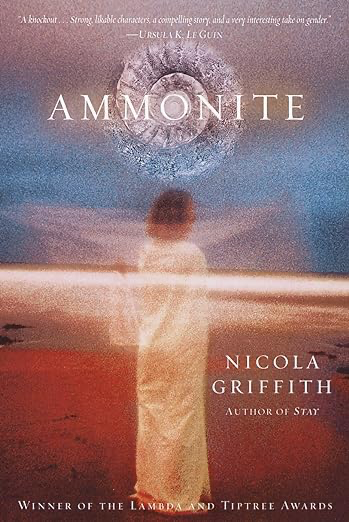
Ammonite – Nicola Griffith

from Goodreads:

Change or die. These are the only options available on the planet Jeep. Centuries earlier, a deadly virus shattered the original colony, killing the men and forever altering the few surviving women. Now, generations after the colony has lost touch with the rest of humanity, a company arrives to exploit Jeep–and its forces find themselves fighting for their lives. Terrified of spreading the virus, the company abandons its employees, leaving them afraid and isolated from the natives. In the face of this crisis, anthropologist Marghe Taishan arrives to test a new vaccine. As she risks death to uncover the women’s biological secret, she finds that she, too, is changing–and realizes that not only has she found a home on Jeep, but that she alone carries the seeds of its destruction. . .

TW/CW: death, violence, animal death, gore

I picked this one up after how much I loved So Lucky, also by Griffith. Thing is, I had no idea that a) this book was written almost 30 years before So Lucky (although this cover should’ve tipped me off to that), and b) that, even with the genre difference, that this would be a very different kind of book. At this point, nothing tops So Lucky for me, but Ammonite was still a fascinating book in its own right.

If you’re going into this book expecting what most would consider traditional science fiction, you’ll be sorely disappointed. Most of it follows Marghe, who is tasked with delivering a vaccine to an isolated colony of women whose community was decimated by a mysterious illness that wiped out all of the men. At its heart, Ammonite is firmly a survival story; it’s a story of the wilderness, of venturing into the unknown, and adapting to the world around you. There are moments of suspense, moments of tenderness, and moments of absolute fear. Another reviewer described it as “Dune but gay,” and other than the more traditionally sci-fi elements of the former, the comparison was spot-on. Ammonite also has the fact that it’s much slimmer than Dune going for it, but given how long Dune is, that’s not saying much. But I think what has seemed to make this book so groundbreaking is its take on gender dynamics. The cast is entirely women, but when all of the men are taken by the illness, the remaining women don’t automatically form a pacifist, hippie commune; there are flawed women, there are good-hearted women, there are warlike women, and everything in between. This banishing of broad generalizations about gender, I think, is what makes Ammonite feel so ahead of its time.

Sidenote: this was written in the nineties, so Nicola Griffith had to have known about goth people…right? Just saying, calling the barely-described alien megafauna “goths” made me envision a giant, towering version of Robert Smith, not, y’know, whatever she wanted us to picture.

All in all, a very unique take on sci-fi and survival with some groundbreaking gender dynamics that have held up for the past 30 years. 3.5 stars!

Abe Sapien, vol. 4: The Shape of Things to Come – Mike Mignola

from Goodreads:

A mutated Abe Sapien fights carnivorous monsters crawling out of the desert sand, a fortified militia that’s walled Phoenix off from the rest of the world, and a vicious zombie swarm, while a mad necromancer rises over the monster-infested ruins of Seattle. Collects issues #6-#7 and #9-#11 of the series.

TW/CW: gore, blood, violence, racism, body horror

I haven’t caught up on the actual Abe Sapien series since…[checks notes], eight grade, I think. Jesus. I just remembered flying to New York when I was about 14 and reading the first volume. But even then, I think I subconsciously chose a good place to pick up with it, since there’s a pretty clear gulf between the first three and vol. 4—before and after Abe gets mutated, shot, and quits the B.P.R.D. Just another day at the office for the guy, y’know?

Suffice to say, I was somewhat disappointed by this volume. It was still enjoyable, and even though I was never the biggest fan of Fiumara’s art, the more stylized look suits Abe’s stretched-out, mutated form. Other than that, there wasn’t a whole lot here that I found terribly memorable. Abe goes through the exact same arc as Hellboy upon leaving the B.P.R.D., but it never seems to culminate in much development on his end. Plot-wise, it’s the same ol’, I’m afraid—Abe goes into a random, apocalypse-ravaged town in the middle of nowhere, and, surprise surprise, it’s time to fight some zombies and witness a copious amount of fungus-related body horror. Somehow, the latter works better when it’s the whole B.P.R.D. trying to deal with it—the group dynamic is what makes B.P.R.D. consistently shine, and as much as I love Abe, I’m not sure if he could carry a story like that when it’s the same format they’ve been using on and off for several years. Abe is one of my favorite Mignolaverse characters, and it’s such a shame that he’s never gotten to shine as much in his solo comics. And judging from the reviews on the later volumes, it seems like the quality tanked until we got the band back together for The Devil You Know. Shame.

All in all, an entetraining trade, but one that ultimately did a disservice to one of the Mignolaverse’s most beloved characters. 3.25 stars.

Today’s song:

I swear, this has to be some of Mitski’s best work in YEARS

That’s it for this batch of mini reviews! Have a wonderful rest of your day, and take care of yourselves!