Posted in Book Review Tuesday

Book Review Tuesday (2/3/26) – The Hundred Thousand Kingdoms

Happy Tuesday, bibliophiles, and happy Black History Month!

As I’ve done for the past few years, all of my reviews for the month of February will be for books by Black authors. (Stay tuned for my annual Black History Month recommendations list!) I’ve been a fan of N.K. Jemisin for many years now. I was especially blown away by her Broken Earth trilogy, and I figured I would read this to see where she started out. I liked enough of it, but strangely, the flaws reassured me—in order for you to make something as mind-bending as The Fifth Season, you have to start somewhere. The Hundred Thousand Kingdoms happens to be that somewhere.

Enjoy this week’s review!

The Hundred Thousand Kingdoms (The Inheritance Trilogy, #1) – N.K. Jemisin

Yeine Darr never imagined herself in Sky—the opulent floating city of the Arameri, who rule over countless kingdoms. After the sudden death of her mother, Yeine discovers a royal inheritance that she never knew of. Now, in the world of political machinations, scheming, and dark magic, Yeine must fight her way through kings and gods alike. But Yeine has only scratched the surface of the secrets that have been concealed from her—and their consequences may shatter all of the Hundred Thousand Kingdoms.

TW/CW: rape, pedophilia, violence, slavery, torture, loss of loved ones, sexual content

Though she’s had some misses in her later career, N.K. Jemisin is one of the more inventive speculative fiction writers out there. The Broken Earth trilogy was so nuanced and mind-bending, and it was for sure one of the more creative adult fantasy series that I’ve ever come across. Yet somehow, even though I didn’t enjoy The Hundred Thousand Kingdoms as much as her other novels, it’s oddly comforting. You’ve got to write a weaker book before you get on the level of The Fifth Season.

The Hundred Thousand Kingdoms is a cold book. That’s not necessarily a bad thing. In fact, I think it works in the main character’s favor. This novel is all about isolation, alienation, and othering, and that’s exactly how it manifests in our protagonist, Yeine. Jemisin’s exploration of her being an outsider—in terms of her age, her race, and her unfamiliarity with Sky itself—centered so much about the distance that she felt between herself and the people she’s suddenly meant to cause peers. Yeine is a flawed characters, but you see the exact circumstances that make her this way; groomed to demurely accept microaggressions and be derided and tossed around, she’s shrunk herself so far into a corner that she’s ceased to be herself. Jemisin didn’t shy away from making Yeine a flawed character, but what made her at least partially worth rooting for was seeing how intricately her backstory was constructed. At best, The Hundred Thousand Kingdoms is a no-holds-barred exploration of how being subsumed into an empire does not just to your country, but to your psyche.

Over the years, Jemisin has built a name for herself in socially conscious fantasy, and The Hundred Thousand Kingdoms is, without a doubt, where it all began. Though I don’t think I’ll continue with the trilogy (more on that later), this novel excelled in talking about the politics of its world. Aside from Yeine’s alienation, I loved how Jemisin showed through the worldbuilding just how much the nations of the Hundred Thousand Kingdoms are willing to turn the other cheek to, be it war, racism, abuse, or slavery. It’s a dizzyingly large structure full to the brim with conniving politicians, but with the added bonus of warring gods to complicate things in Jemisin’s world. Even beyond the worldbuilding, what Jemisin does best is depict the staggering scale of an empire, and the intimidation that it causes. When the enemy seems too vast and layered to take down, it can force you into submission, or even absolute hopelessness. That hopelessness feeds into Yeine’s character arc once she’s faced with the Hundred Thousand Kingdoms, and her gradual conquering of it made for a poignant, timely character arc, especially for a novel written almost exactly 16 years ago.

The Broken Earth trilogy had this kind of fairytale-like narrator who stepped into the narrative to occasionally interrupt the main storyline. It was an artful, cryptic part of Jemisin’s storytelling that gave those novels a unique flavor. The Hundred Thousand Kingdoms was clearly the trial run of this tool, because it was…nearly the same. At first, I was excited to get that signature N.K. Jemisin storytelling, but as much as I liked it in the first half, I’m not sure if it really worked for this novel. I won’t spoil The Fifth Season, because even though it’s been out for many years now, that twist is too good to ruin for new readers; but with that narrative framing in mind, it works exactly in tandem in the story. However, for The Hundred Thousand Kingdoms, it didn’t fully make sense. I did like it in the sense of a trickster narrating the story, but for the kind of fantasy this is—much more about politics than prophecy—it seemed less of a narrative device and more just window dressing to spruce up what was already there. I’m all for those kind of elements normally, but I think it works better for a destiny, prophecy-oriented fantasy like The Fifth Season more than it does the more grounded, political machinations of this novel.

One of the main things that kept me from enjoying The Hundred Thousands Kingdoms all the way was the romance. Even calling whatever happened in this novel “romance” is generous. Everything between Yeine and Nahadoth was just…weird on a number of levels. Their first sex scene was written in such a way that I fully thought that Yeine was getting raped, and their dynamic never recovered from that perception. Either way, even with Yeine being the vessel for the most powerful goddess in this universe, there was obviously an uneven power dynamic at play, but I don’t think Jemisin wrote it consciously enough. Their relationship felt the same as the relationships between the domineering, condescending politicians of the Hundred Thousand Kingdoms, and yet somehow, it was automatically romantic for them. These kind of power dynamics are something that Jemisin has explored in her later works and written with much more nuance and aplomb; once again, I guess you have to start somewhere, because this was a mess. There could’ve been some sort of Stockholm syndrome kind of thing going on with Yeine, but once again, no nuance—even though she’s a traumatized character, depicting it through a solely romantic lens was a mistake. Additionally, the final sex scene with Yeine and Nahadoth was painfully overwritten to the point where it was almost funny. Plus, the relationship that Yeine had developed with T’vril felt much more natural and beholden to a fleshed-out romance—where did Nahadoth even come from?

Also, because I can’t let go of this—yeah, I know, Sieh is technically an adult mind in a child’s vessel (there’s a fantasy explanation for this), but in what world did that weird ass kiss between Sieh and Yeine need to happen? Reverse Poor Things, much? Eugh.

All in all, a flawed but ambitious debut from one of the cleverest fantasy authors working today. 3.25 stars.

The Hundred Thousand Kingdoms is the first novel in the Inheritance Trilogy, followed by The Broken Kingdoms and The Kingdom of Gods. N.K. Jemisin is also the author of several other sci-fi and fantasy novels for adults, including the Broken Earth trilogy (The Fifth Season, The Obelisk Gate, and The Stone Sky), the Great Cities duology (The City We Became and The World We Make), the anthology How Long ’til Black Future Month? and DC Comics’ Far Sector.

Today’s song:

saw Robyn Hitchcock on Sunday night—what an absolute treasure!!! this was a standout

That’s it for this week’s Book Review Tuesday! Have a wonderful rest of your day, and take care of yourselves!

Posted in Books

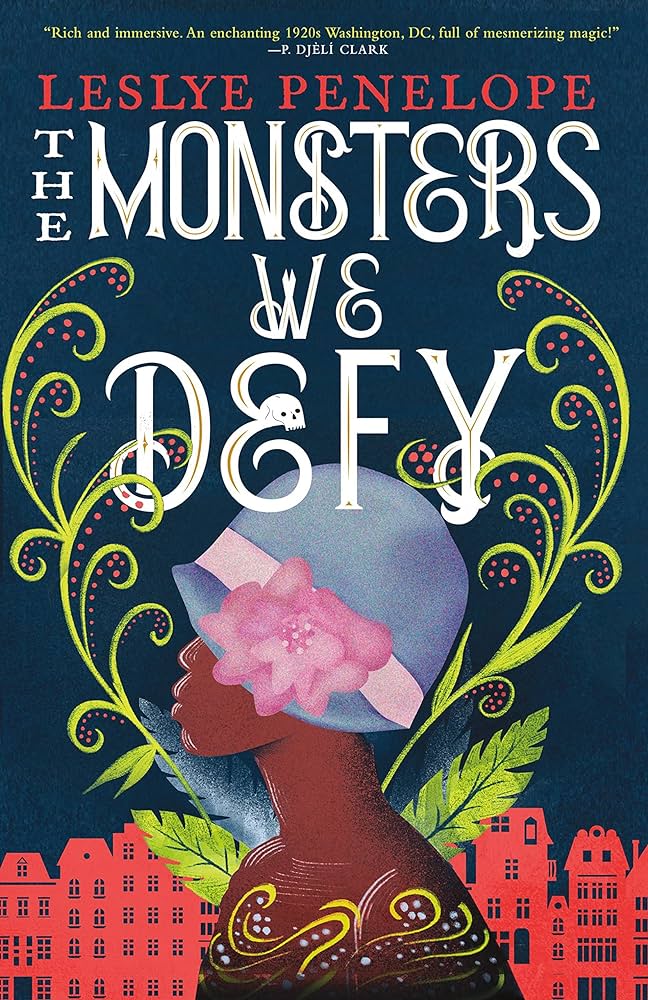
The Bookish Mutant’s Books for Black History Month (2024 Edition)

Happy Tuesday, bibliophiles!

Apologies for the lack of a Book Review Tuesday this week; like with Sunday Songs, I’ve just had a busy few days, and I wasn’t able to put anything together in time, but I was creating this post in advance, so I figured today would be a good day to post it.

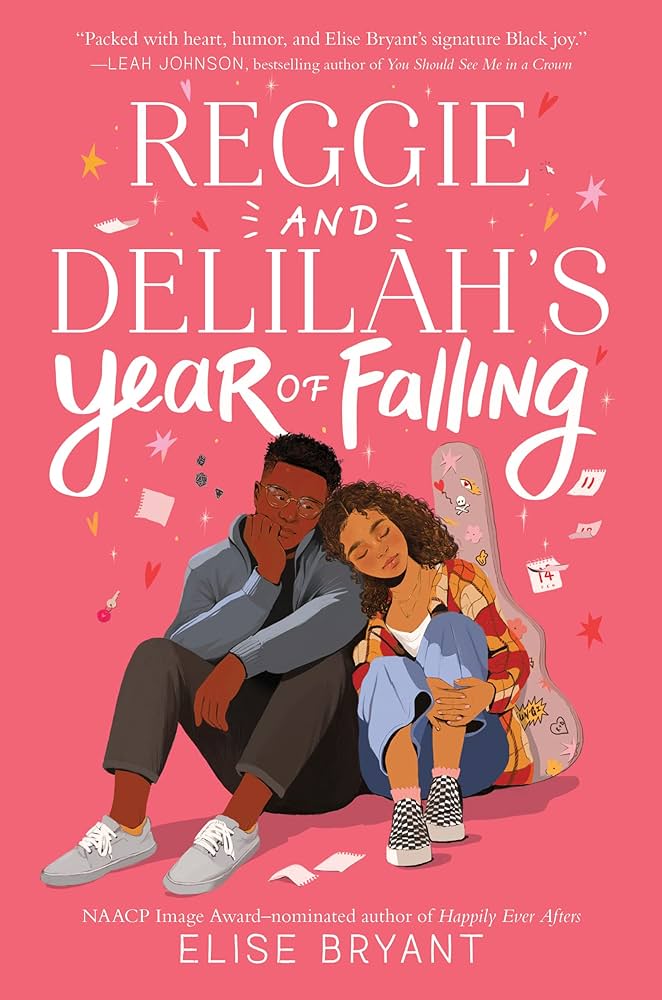
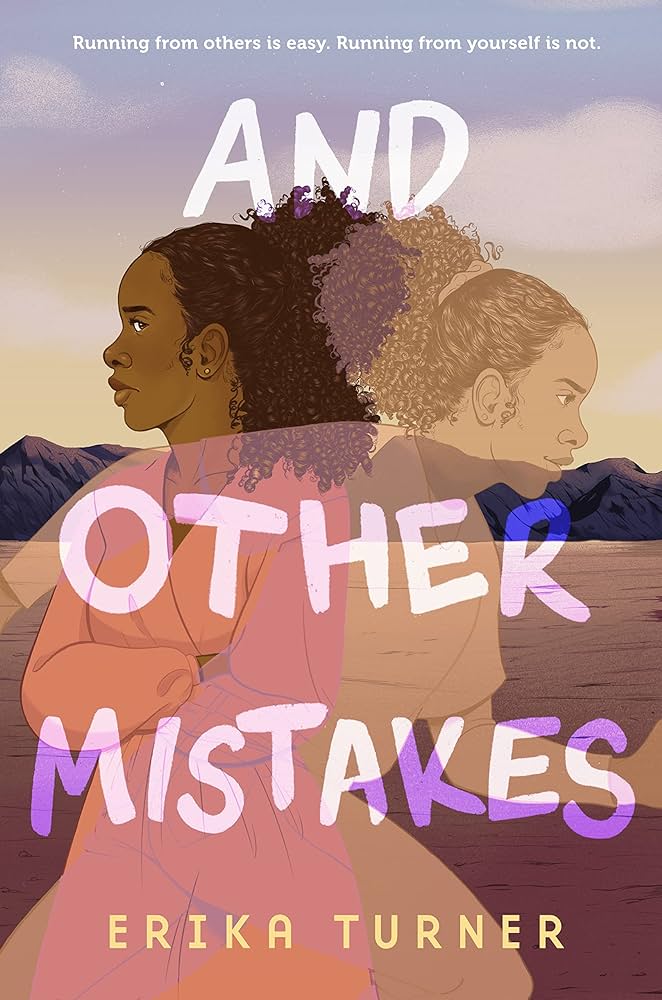
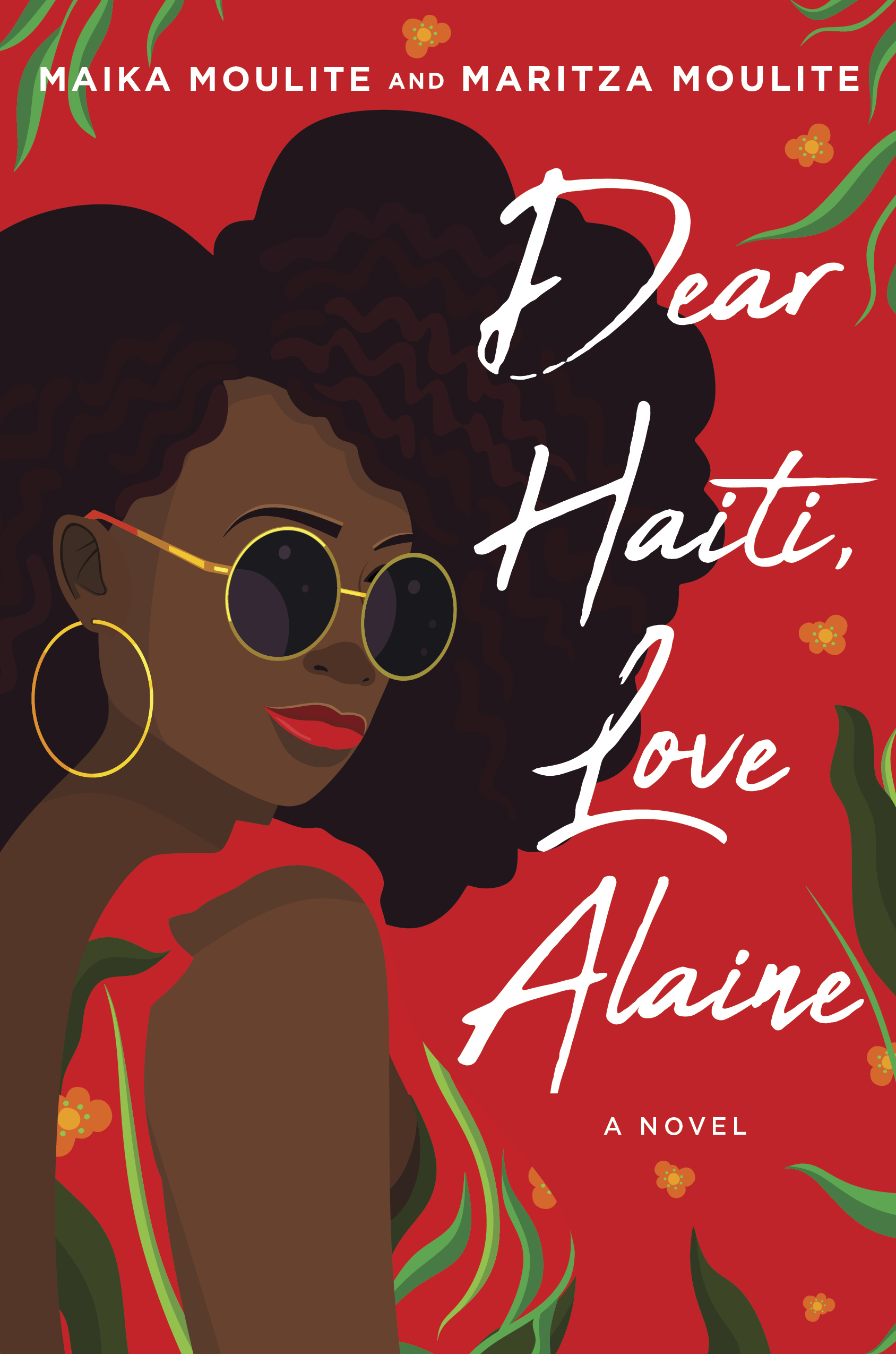
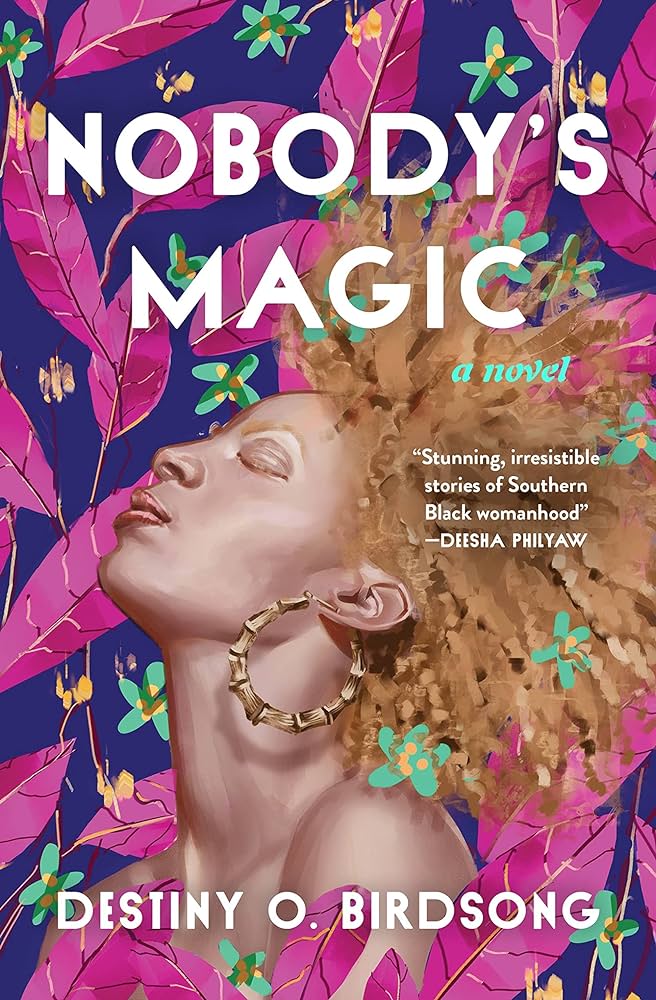
Here in the U.S., February is Black History Month! Since I’ve started making these recommendation lists back in 2021 (and focusing on reading more diversely in general), I’ve discovered so many incredible authors, and now that I’m reading YA and adult novels in almost equal measure, my scope has broadened so much more. (Note: I’m still frugal about my media space on WordPress, but this list, like last year’s, contains both YA and adult novels, even though the header image just says YA.) But as with every single year, it’s more crucial than ever to uplift Black voices—not just to amplify them and other marginalized groups in the fields of literature and publishing (especially when the industry sees diversity as nothing but a box to be checked off, more often than not), but especially since we’re living in a climate here in the states (and elsewhere) that is intent on erasing both our systemic racism (past and present) and silencing Black voices. And one of the most accessible ways to fight this poisonous rhetoric is to read—to open your eyes, to learn for yourself, and to share what you have learned with others. In a landscape where anything other than the white, cishet, abled majority wants to ban any voice that isn’t theirs, reading is an act of resistance.

For my lists from previous years, click below:

Let’s begin, shall we?

THE BOOKISH MUTANT’S BOOKS FOR BLACK HISTORY MONTH

FANTASY:

SCIENCE FICTION:

REALISTIC FICTION:

TELL ME WHAT YOU THINK! Have you read any of these books, and if so, did you enjoy them? What are some of your favorite books by Black authors that you’ve read recently? Let me know in the comments!

Today’s song:

thanks again to my brother for exposing me to this one!

That’s it for this recommendation list! Have a wonderful rest of your day, and take care of yourselves!

Posted in Book Review Tuesday

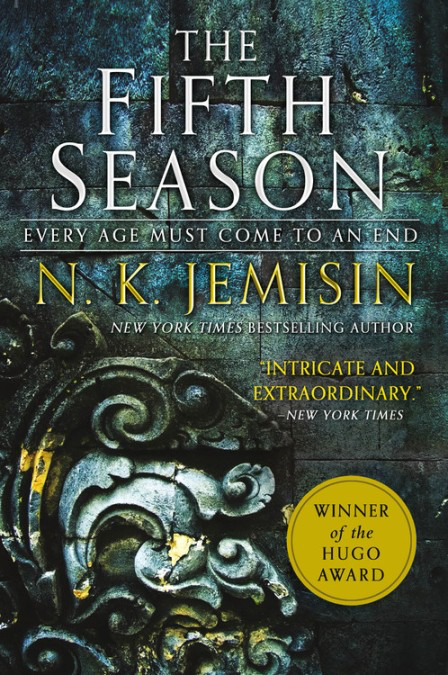
Book Review Tuesday (3/7/23) – The Fifth Season (The Broken Earth, #1)

Happy Tuesday, bibliophiles!

I forget what triggered it, but a few years back, I piled a bunch of N.K. Jemisin’s books onto my TBR. I just finished up the Great Cities duology recently and enjoyed it (though The World We Make I enjoyed less so), but I was still excited to read the Broken Earth series from all of the praise it’s been given. I’m usually wary of overly long fantasy books, but The Fifth Season defied all of my expectations and delivered one of the most well-crafted fantasies I’ve read in recent years.

Enjoy this week’s review!

The Fifth Season (The Broken Earth, #1) – N.K. Jemisin

In the land of the Stillness, natural disasters are an inevitable part of life. Every so often, the land goes through cycles of extreme weather, where the earth tears itself apart and the land is blanketed in ash and darkness.

This Fifth Season has arrived once more, and with it comes a world in chaos. Amidst the chaos is Essun, a woman on the run after witnessing her husband murder her young son. Her last hope is her daughter, whose whereabouts are unknown. But in a land filled with unknown disasters and people willing to turn on the orogenes—those with the power to control the earth—Essun must overcome unimaginable hurdles to find her daughter and bring her to safety.

TW/CW: murder, infanticide, abuse, mentions of genocide, slavery, implied rape (child), descriptions of injury/blood, sexual coercion, kidnapping, human experimentation

This is my own bias here, but as a principle, I’m automatically weary of overly long fantasy books; that length usually means something along the lines of either a) excessive, infodumped worldbuilding , b) long stretches of the story without much plot, or c) a combination of both. But The Fifth Season proved me SO wrong on that front—Jemisin dodged both of those traps effortlessly, resulting in one of the most inventive fantasy books I’ve read in years.

My first exposure to N.K. Jemisin was through the Great Cities duology, and I was surprised at how starkly different the writing styles were; The City We Became was witty, but rather ham-fisted more often than not, which somewhat suited the story she was telling. The writing of The Fifth Season was a much better fit for the story’s tone: it hit the balance of being to-the-point and fantastical, a style which, given some of the very dark themes that this novel explores, gives it the respect that it deserves. After finishing this novel, I’m more inclined to this style, but above all, reading the two is proof of her versatility of a writer—Jemisin can bridge the tonal gap and make it look ridiculously easy.

About the worldbuilding—The Fifth Season boasts some of the most detailed and compelling worldbuilding that I’ve seen in a fantasy series, but compelling is the part that I want to emphasize. It’s one thing to flesh out your world, but if the detail you give it is arbitrary and irrelevant to the story you’re trying to tell, it becomes redundant. But Jemisin gives the world of the Stillness a rich, believable history, and considers every consequence imaginable of the constraints in her world. Every ramification of the concepts in her world are considered, and they’re shown in organic ways, from the (gruesome) depictions of how the humans have systemically oppressed the orogenes (also a very sharp social commentary) to the biological consequences of a world constantly gripped by extreme natural disasters. Jemisin left no stones unturned, and it paid off in such an enjoyable way.

And if there’s one thing that N.K. Jemisin can do exceptionally well, it’s make me despise a character with every cell of my being. Her protagonists are compelling, but she’s so skilled at making characters that absolutely make your skin crawl. Both Schaffa and Alabaster were case studies in manipulation, and so many of their scenes, especially when they interacted with Damaya and Syenite, respectively, it was genuinely hard to read, but still so authentic to how authority figures often manipulate those below them, especially if they’re young women. Bottom line: they both sucked, but N.K. Jemisin did a disturbingly good job of making them suck so realistically.

I debated on whether or not to discuss this last part, but it’s really best to go in blind—even if I put a spoiler warning and discussed it, I don’t think I could get across how mind-blowingly well-crafted the main twist with the different POVs was. It’s…AGH. IT WAS JUST SO WELL-DONE. I CAN’T SPEAK COHERENTLY ABOUT IT. Again, even if the worldbuilding is confusing. GO INTO THIS BOOK BLIND. YOU WON’T REGRET IT. IT’S AMAZING. TRUST ME. And a sidetone—props to N.K. Jemisin for seamlessly pulling off a 2nd person POV, and, once again, making it look easy.

All in all, a fantasy novel that defied my expectations on nearly every front, resulting in one of the most enjoyable reads I’ve had all year. 4.25 stars!

The Fifth Season is the first book in the Broken Earth trilogy, followed by The Obelisk Gate (book 2) and The Stone Sky (book 3). Jemisin is also the author of The Great Cities series (The City We Became and The World We Make), the Far Sector series for DC Comics, and many other books.

Today’s song:

this song is delightful, and it’s also proof that the middle school boys who used axe body spray instead of showering have always existed in some form or another

That’s it for this week’s Book Review Tuesday! Have a wonderful rest of your day, and take care of yourselves!

Posted in Monthly Wrap-Ups

February 2023 Wrap-Up ⛷

Happy Tuesday, bibliophiles!

I’m running out of winter emojis for these wrap-ups…what else am I supposed to do when this month has been so consistently cold and miserable? Totally can’t tell how ready for spring and summer I am, can you? Nuh uh, no way…

The snow has made for some pretty beautiful scenery, though. I will say that.

GENERAL THOUGHTS:

February’s been a quiet month for the most part (although the high winds last week made me feel like I was in The Wizard of Oz, and not in a good way), which I alway appreciate. The great thing about taking mainly humanities classes is that midterms are a lot less stressful—most of my classes just have papers, so they’re far less daunting. And it’s been great to have comics and sci-fi as my reading material—even though my science fiction class has had its ups and downs, I loved re-reading All Systems Red and re-watching Blade Runner 2049 for homework.

I felt like my reading slowed down, but looking at the numbers, it really didn’t. School reading has started to make up a significant portion of what I read now that I’m in more English classes, but I’ve read a lot of interesting novels and graphic novels—Bitch Planet, Monstress, and now re-reading Kindred, to name a few. But I did read a bunch of great novels for Black History Month in my free time, and I’ve discovered so many wonderful books! I just finished The Fifth Season, and I’m kind of invested in the series now…

Other than that, I’ve been watching Only Murders in the Building (✨fabulous✨), Our Flag Means Death (not as funny as people made it out to be, but the last two episodes HURT), and Flight of the Conchords (THEY CALL ME THE HIPHOPOPOTAMOUS, MY LYRICS ARE BOTTOMLESS…[cough]), drawing, playing guitar, skiing for the first time in over a year (so much fun, but also so much soreness), and listening to new music from Black Belt Eagle Scout and Gorillaz. So much new music out (that’s on my radar) already…

READING AND BLOGGING:

I read 20 books this month! I feel like school reading has taken up a good chunk of what I’ve read this month, even if it’s been re-reads, but what I’m loving about college is that I’m reading more novels that I’m interested in (with the exception of Do Androids Dream of Electric Sheep?…ew), so that’s a plus.

2 – 2.75 stars:

Do Androids Dream of Electric Sheep?

3 – 3.75 stars:

Ms. Marvel: Fists of Justice

4 – 4.75 stars:

The Fifth Season

FAVORITE BOOK OF THE MONTH (NOT COUNTING RE-READS): Nothing Burns as Bright as You4.5 stars

POSTS I’M PROUD OF:

POSTS FROM OTHER WONDERFUL PEOPLE THAT I ENJOYED:

SONGS/ALBUMS THAT I ENJOYED:

the first half of this month was nothing but Super Furry Animals, and that’s not a complaint at all
and when the dust settled after said Super Furry Animals, all that was left but two older St. Vincent singles that I put on repeat
“Panopticom” was pretty good, but THIS has me really excited for i/o
GUESS WHO’S BACK
such a lovely album!!!
you thought you could escape Blur on this blog? fools

Since I’ve already posted once today, check out this week’s Book Review Tuesday for today’s song.

That’s it for this month in blogging! Have a wonderful rest of your day, and take care of yourselves!