
Happy Sunday, bibliophiles!
This week: inside you, there are three wolves: one is only skin, one is only in my dreams, and the other is only you…
Enjoy this week’s songs!

SUNDAY SONGS: 3/15/26
This song’s a way-homer, but it’s a hell of a long way home. It’s difficult to pitch this song, because yeah, how do you convince somebody to willingly listen to a nearly 17-minute long song whose main instrument is the harp with a decidedly squeaky-voiced vocalist? I doubt it’d convince you further if I said that it took me at least two listens to really get it. But when I did, I got it. I don’t think I’ve ever been captivated by a song this long, or this proggy. I say “prog” because there’s an element of this that its detractors would probably dismiss as self-indulgent, artsy-fartsy bullshit, and that its defenders would call epic. Prog of any subgenre is hit or miss for me, but I think what’s valuable about it is that it emphasizes art for art’s sake—it’s not afraid to get sprawling in service of creating music that defies mainstream traditions. I doubt that there was anything else like the harp-dominated, esoteric folk of Joanna Newsom released in 2005. Most of the imagery surrounding it feels medieval, and there’s a certain bardlike quality to how Newsom presents herself (especially on the album cover of Ys). But to me, it strikes me as strangely Appalachian, more rooted in the pioneer times of the U.S. in the 19th century than anything—particularly in this song, it’s the more folky instrumentation, the mentions of somewhat modern war imagery (even if it’s in an in-song dream sequence), and, somewhat irrelevantly, the way that Newsom says “swimmin’ hole.”
But really, “Only Skin” has genuinely made me go a bit bananas. Admittedly, I was exposed to this song through separate TikTok trends, but frankly, it’s wild that a song as weird as this got any traction. But this song is downright captivating. At best, I feel like I’m picking it apart in the same way that I would some esoteric classic in my English classes; other times, I feel like the voice in my head is about to bust a vein, announcing different elements of the track like a WWE announcer: “AND THERE’S ANOTHER TEMPO CHANGE! FELLAS, WE’VE GOT ANOTHER TEMPO CHANGE—AND HERE COMES BILL CALLAHAN WITH THE STEEL CHAIR!” (And yeah, that was wild to find out too—he has a brief but prominent feature about 13 minutes into the song.) Newsom has this distinct voice that squeaks so much in the first few seconds of the song that I genuinely though it was studio feedback, but I love that nontraditional quality of it—she peeps and howls and mewls, defying all notions of how the feminine voice is supposed to sound. She has this kind of sprite-like quality about her that makes her already stunning lyricism even more like a fable or a fairytale—there’s whole handfuls of lyrics that stop me in my tracks: “Back on the patio/watching the bats bring night in,” “The retreat of their hairless and blind cavalry,” “And I watched as the water was kneading so neatly/Gone treacly” are just a handful of the gems that Newsom has scattered through the rich earth of this track. I could probably go on for at least two paragraphs longer just picking apart all of the poetic devices scattered throughout, but this part of the post is already getting unwieldily long. But the real emotional oomph is the juxtaposition with the more devastatingly bare lines, things like the waver in her voice when she repeats the motif of “That’s an awfully real gun.” It all has a very Kate Bush quality about it, both in the vocal and lyrical styles—as well as her stories of women.
She breathes wonder and fear and devotion and snapped rage into every line—it’s so dense that I can only scrabble for certain meanings. As far as I can tell, Newsom is the kind of enigmatic artist who ostensibly does write true stories, but obfuscates them under at least seven layers of fiction so that they’re all but impenetrable. There’s hints of personal relationship turmoil, something that her ardent fans have been desperately trying to puzzle out in the 20 years since this album was released. In my mind, I can see some kind of 19th-century narrative of a desperate woman married to a man wracked by trauma. She breaks her back trying to provide for him, and he only responds with demanding more and more still of her, without any thought to what she’s going through. I don’t blame said TikTok trends for choosing the part that they did: the part beginning at 13:02 (yeah, sorry) is the most striking part of the song, the climax where the woman reaches her breaking point. You’ve heard me ramble about the watering-down of female rage…but if you want real, desperate, breaking-point female rage? Step right up. Holy shit. This part is the musical equivalent of the straw that broke the camel’s back, the final response of the protagonist as she confronts him about how much she sacrificed just to keep him happy: “All my bones, they are gone, gone, gone/Take my bones, I don’t need none.” I get goosebumps every time I listen to it. This is why it’s worth all 16 minutes and 53 seconds—even if you don’t appreciate the highs and lows of the journey itself, the payoff from that buildup is worth every note. Like Oingo Boingo’s “Change,” it goes through movements, but all in service of a staggeringly intricate musical narrative.
I think those reminders of Oingo Boingo and Kate Bush, at least in terms of their mindset if not in their musical style, is what makes “Only Skin” such a spectacular song to me. Art for art’s sake implies a kind of self-indulgent quality, but there’s nothing much more admirable to me than putting out art that’s nothing but the vision in your brain, removed from all sense of trend-chasing or conventionality. If not for the musical freaks of the world, we wouldn’t have art as singularly unique as this. Art needs not appeal to everybody—just you, in the end. And if it finds an anchor in somebody else, then all the better. But it’s got to be for you.
…AND A BOOK TO GO WITH IT:
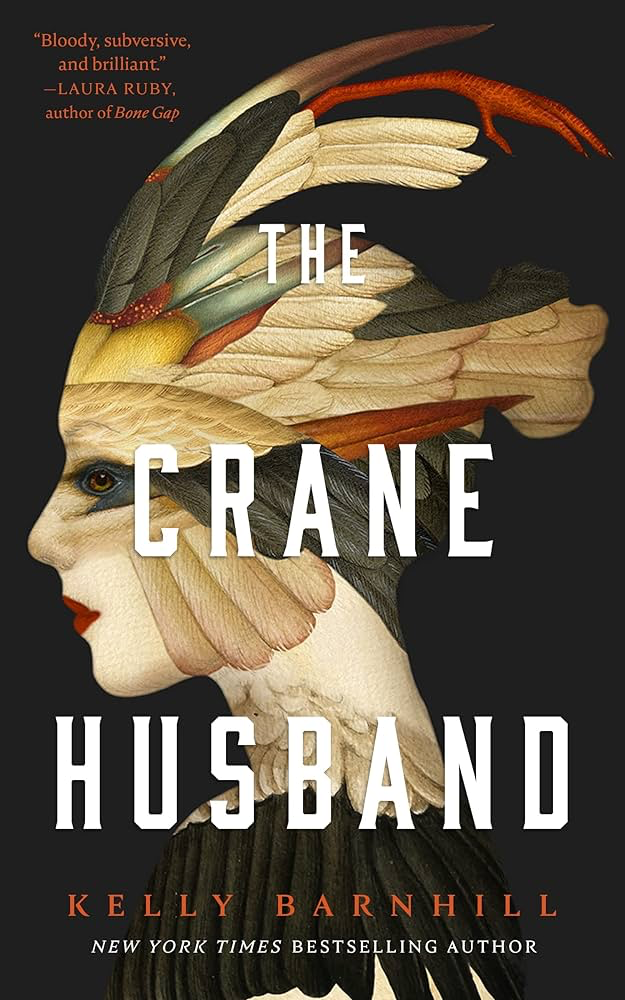
The Crane Husband – Kelly Barnhill – “All my bones, they are gone, gone, gone/Take my bones, I don’t need none/Cold, cold, cupboard, lord, nothing to chew on/Suck all day on a cherry stone…”
“Only In My Dreams” – The Marías
What I appreciate about The Marías’s Tiny Desk Concert was that María Zardoya did what I love with a Tiny Desk Concert from an act that’s been around long enough to accumulate a larger discography; she called the setlist a “tasting menu” of their career, with selections spanning from their newest album to their earliest releases. It gave me the perfect jumping-off points for getting into their music. “Only In My Dreams” is off of their very first EP, Superclean, Vol. 1. It’s always so intriguing when you can see the nascent signs of a band’s sound beginning to solidify so early on. Sure, the lyrics aren’t as refined (and the music video veers on being corny), but already, their distinctive flavor of dream pop was right there, waiting to be chiseled away. If this track is proof of anything, it’s that when you have a clear vision of what’s you, it’ll always shine through in the music, and time will only expose it further—it certainly did so for The Marías.
…AND A BOOK TO GO WITH IT:
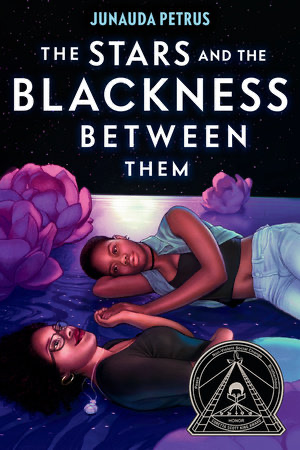
The Stars and the Blackness Between Them – Junauda Petrus – “You’re everything I need/To bare this fear/The demons in my bedThey’re always here/It’s only just a dream…”
“Savior Complex” – Phoebe Bridgers
“Savior Complex” was a favorite of mine when Punisher came out…what do you mean, almost 6 years ago? I remember watching that music video in December of 2020 and, as I did with everything in reach, looked at it with a very Fargo Season 4 lens, but to be fair, they have the commonality of a black and white vignette of a bloodied Irish man in a sketchy hotel with a dog that follows him everywhere. (Rabbi Milligan is everywhere for those with eyes to see him.) Listening back to this song is making me marvel at just how immersive Phoebe Bridgers’ atmospheres are. Her best songs feel like being inside of snow globes, but every snowflake feels just as real as one would in the outside world. There’s an ice-skating rink somewhere in that snow globe, somewhere in the middle of a city, where the flickering lights of the skyscrapers illuminate the ice. “Savior Complex” evokes the palate of the dead of night in December, with starry flourishes from the celeste, Rob Moose’s orchestral arrangements, and the understated murmur of Bridgers’s acoustic guitar. Like the album cover, it evokes the feeling of being absolutely alone, out in the middle of nowhere—lonely and liberating in equal measure. Yet Bridgers’s wintry whisper of a voice is what anchors “Savior Complex” in the end, with her stripped-to-the-bone lyrics: “I’m a bad liar/With a savior complex/All the skeletons you hide/Show me yours, and I’ll show you mine.” As poisonous as the relationship sounds, every utterance of “show me yours, and I’ll show you mine,” feels like a secret you’re being let in on.
…AND A BOOK TO GO WITH IT:

Camp Zero – Michelle Min Sterling – “Baby, you’re a vampire/You want blood and I promised/I’m a bad liar/With a savior complex…”
“Fourteen Black Paintings” – Peter Gabriel
Us is full of gems. I almost called them hidden gems, but most of them are pretty easy to identify as gems on the first listen. But amongst gems, some songs get overshadowed in the process. Practically every song on this album hits me like a train, so it’s exceedingly difficult to compete when about half of the album makes me feel like this after I listen to it. But I’ve found that in the three and a half years since I’ve listened to the album, there’s always another layer to peel back. “Fourteen Black Paintings” doesn’t necessarily have the gut punch of “Come Talk to Me” or “Secret World” or even the grooves of “Digging in the Dirt,” but to me, it thrives on simplicity. It’s one of the sparser songs on the album, but all of the lyrics speak for themselves, plain and simple:
“From the pain come the dream/From the dream come the vision/From the vision come the people/From the people come the power/From this power come the change.”
That’s it. That’s the entirety of the lyrics in this four and a half minute-long song, other than Gabriel’s hypnotic murmuring. It has the same, dense arrangements and international instrumentation (that haunting instrument you hear at the beginning is a duduk, an Armenian flute), and yet, it’s all so muted and subtle that it tends to relegate itself to the background. Yet it’s proof that even Gabriel’s most seemingly simple songs are anything but throwaways; though it doesn’t have the same striking emotional highs as some of the other tracks on the album, Gabriel’s soaring vocals make up for any need for them. In fact, it’s quite like the fourteen black paintings that Gabriel is referencing in the first place: fourteen black paintings by Rothko, all housed in the Rothko Chapel in Houston, Texas; though they seem like blocks of solid black to the casual observer, the brushstrokes within prove their deliberate and intricate construction. Quietly throbbing and pulsating, “Fourteen Black Paintings” remains an upfront declaration on the nature of power and resistance.
…AND A BOOK TO GO WITH IT:
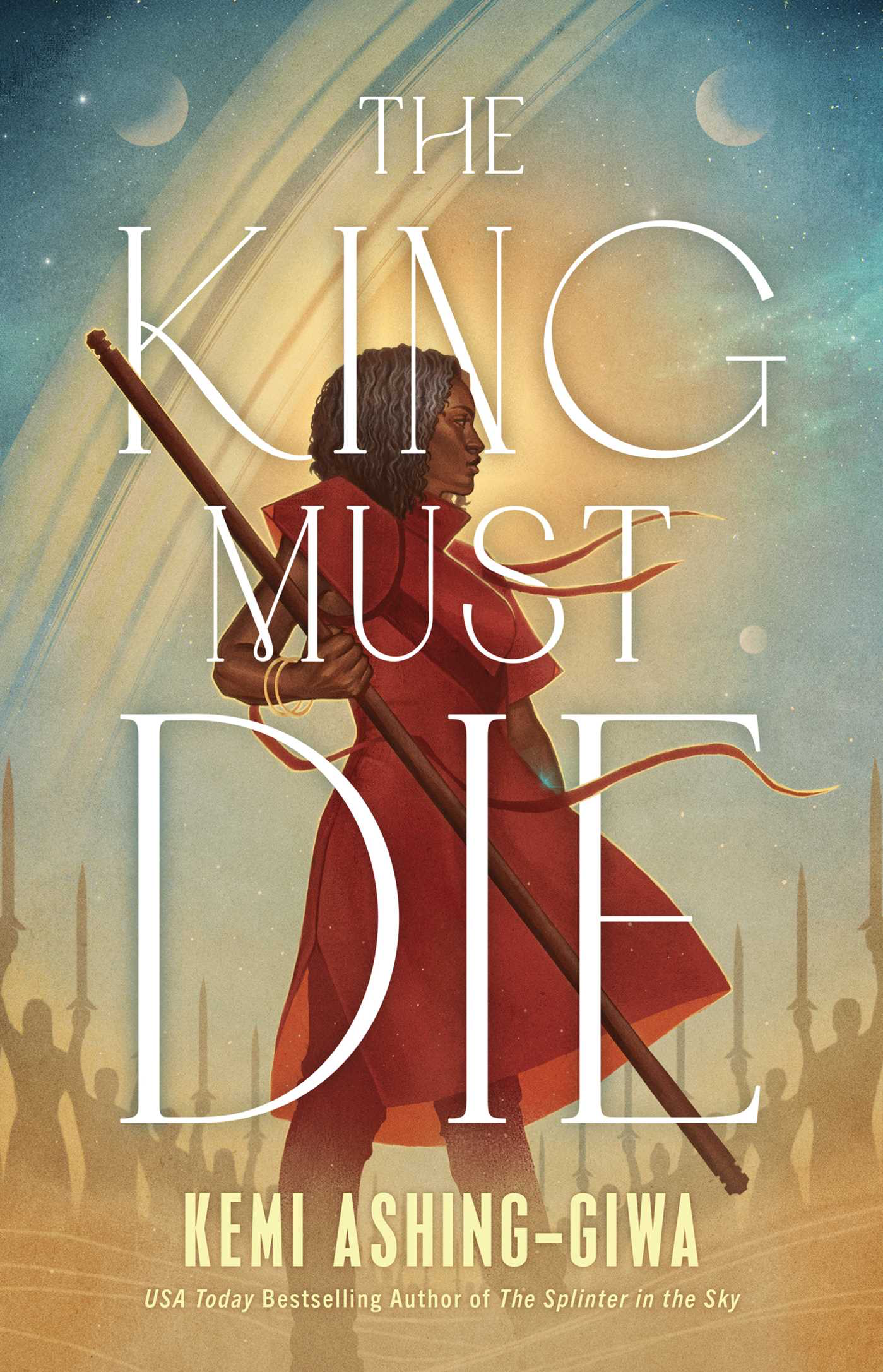
The King Must Die – Kemi Ashing-Giwa – “From the vision come the people/From the people come the power/From this power come the change.”
“I’m Only You” – Robyn Hitchcock & The Egyptians
Consider this the millionth post where the gist just ends up being “Jesus, can Robyn Hitchcock leave some of that top-tier songwriting for the rest of us?” Predictably, I’m still stuck on the show I saw him at back in February, and I was delighted to learn that pretty much every other member of my family got as knocked off their feet as I was after hearing the line “I’m a house that burns down every night for you.” There’s a line that’ll stick in your head forever. Here’s the real kicker about “I’m Only You,” though: I’d say at least 95% of the lines are like that. “I’m a policeman working in an empty house?” “I’m a snow-covered mountain in an empty room?” “I’m a liquid you’re dissolving in?”
There’s so much in here about empty structures and becoming a vessel just to hold somebody else, but I found an interesting dichotomy with the lyrics: they’re all either about being said vessel (“I’m a liquid you’re dissolving in”) or being built for a purpose, but being abandoned (“I’m a distant steeple on a long-deserted plain”). It’s such a striking contrast between becoming empty or being surrounded by emptiness—and what a stunning metaphor for being devoted to somebody to the point of total self-sacrifice, only to find that you’re only a shell without them there.
…AND A BOOK TO GO WITH IT:
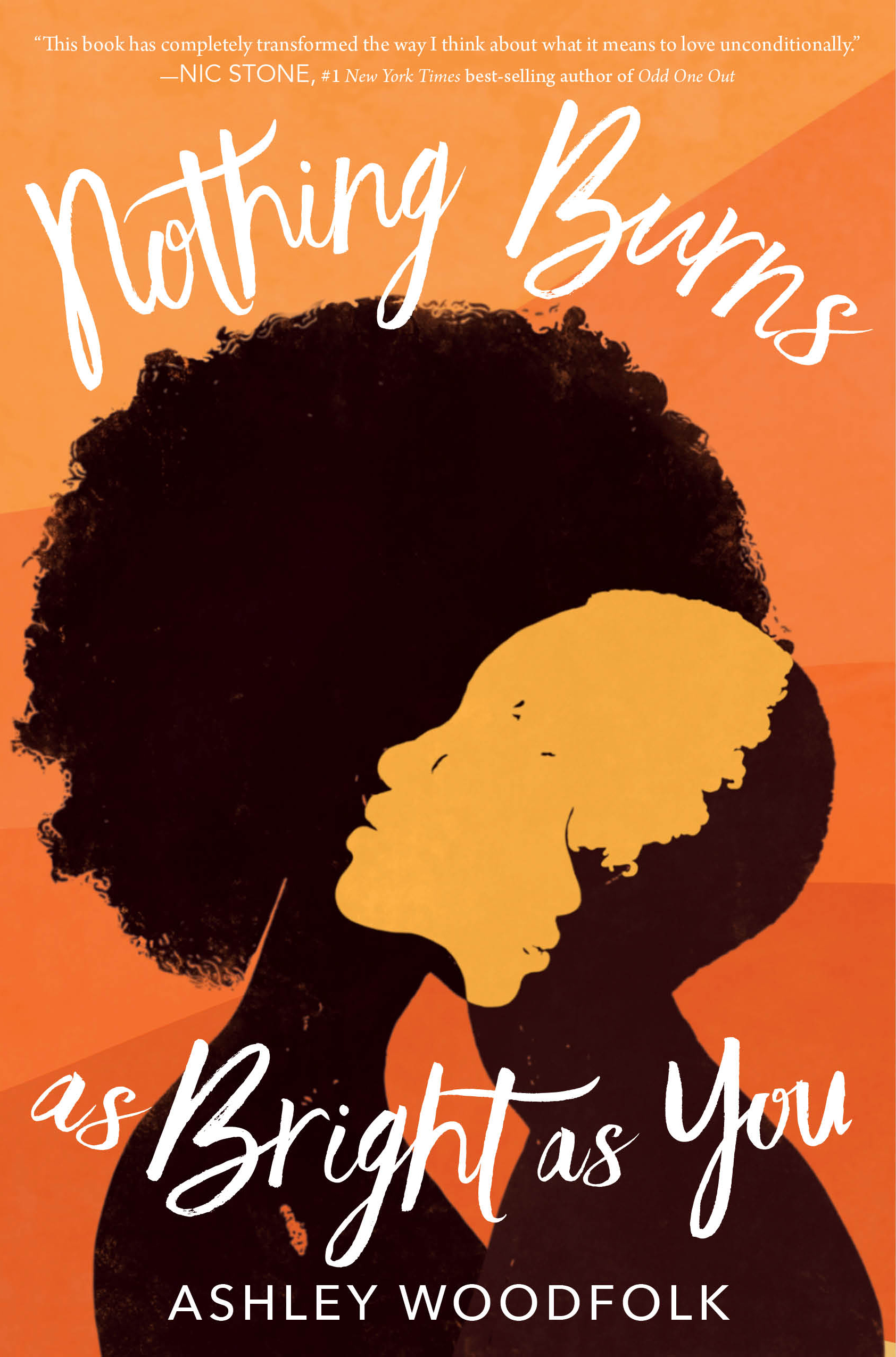
Nothing Burns as Bright as You – Ashley Woodfolk – “I’m a mirror cracked from side to side/I’m a snow-covered mountain in an empty room/I’m a house that burns down every night for you…”
Since this post consists entirely of songs, consider all of them to be today’s song.
That’s it for this week’s Sunday Songs! Have a wonderful rest of your day, and take care of yourselves!








 The Bookish Mutant