Posted in Sunday Songs

Sunday Songs: 3/1/26

Happy Sunday, bibliophiles! I hope this week has treated you well.

This week: lots of watery songs this week—you’re either in a swimming pool or standing mysteriously in the pouring rain, so pick your poison.

Enjoy this week’s songs!

SUNDAY SONGS: 3/1/26

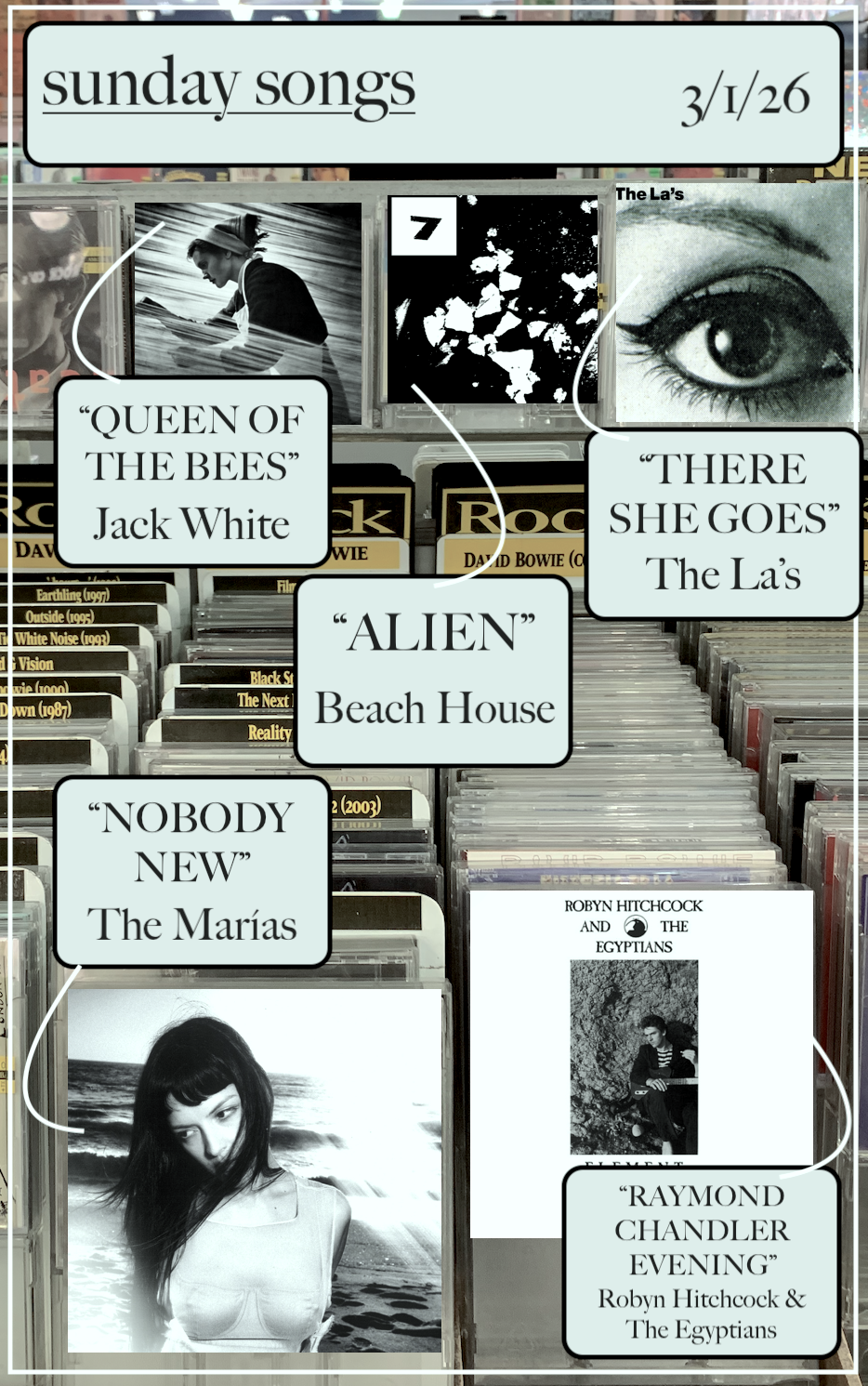
“Nobody New” – The Marías

Apparently, 2025 was an exceptionally fruitful year for women who make music that sounds like you’re underwater (see also: Cate Le Bon). There’s a broader spectrum of both vibes and aesthetic here without a doubt, but in separate ways, María Zardoya and Le Bon have made music that sounds like dunking your head into crystal-clear water and watching tiny fish dart past your face. Of course, Cate Le Bon’s completely on another planet, but although The Marías don’t snag me nearly as much as she does (and nobody makes aquarium gravel music like Cate Le Bon), they’ve clearly perfected their own art of making music that sounds like light reflecting off the bottom of a swimming pool.

Here’s another contender for my list of songs with specific lyric pronunciations that scratch a very specific itch in my brain; pretty much everything that comes out of Zardoya’s mouth is downright ethereal, but the way she sings “nadie como tú” in the chorus feels like a massage on the tired folds of my brain. Gently wistful and listless, “Nobody New” has the heavy-eyed feeling of the first thoughts that tumble through your head after you drag yourself out of a dream you can’t quite remember. It’s sleepy, but in a way that instantly draws you in—in my limited experience, the best Marías songs feel like slipping into the sea, but fully embracing the swell of the waves as they crest over your head. It’s simultaneously weightless, like hair billowing underwater, but sagging with the weight of yearning.

…AND A BOOK TO GO WITH IT:

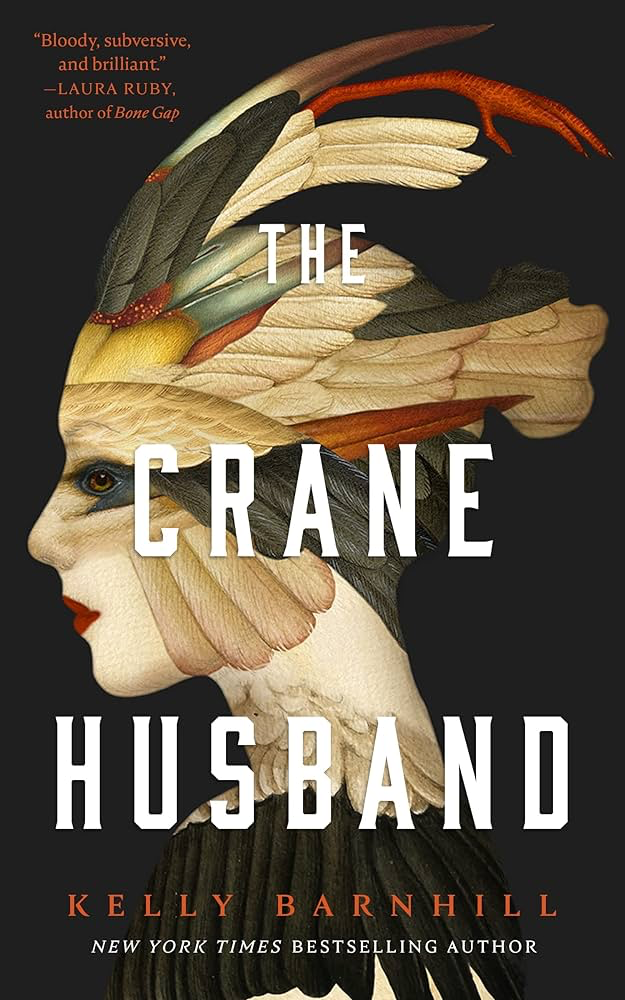
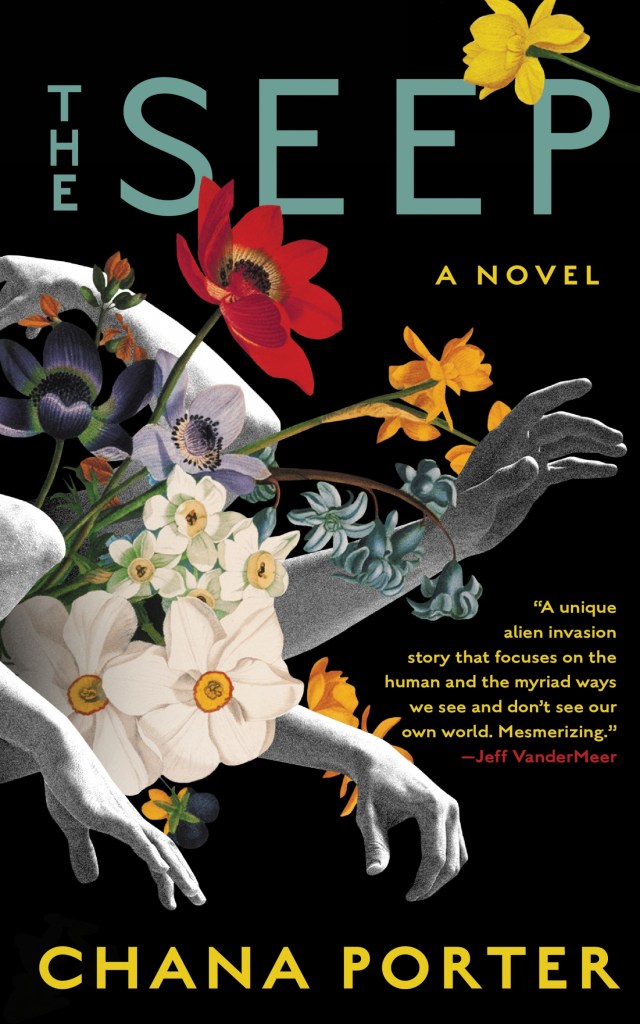
The Seep – Chana Porter“Baby, I promise/There’s nobody new/I’m being honest/There’s no one like you…”

“Raymond Chandler Evening” – Robyn Hitchcock & The Egyptians

I often lament that perfect songs are too short. I’m the last person I’d expect to say that about a Robyn Hitchcock song that barely scrapes past the two minute mark is just the right length. “Raymond Chandler Evening” only repeats its chorus once, and it’s generous to even call it a chorus when there’s only just verses apart from it. But some songs were meant to be a brief but potent punch, and “Raymond Chandler Evening” is one of them. It’s a series of polaroids strung together from the atmosphere of a noir detective novel—fitting, since the song itself is a tribute to detective fiction author Raymond Chandler. Every darkly humorous turn of phrase creates a vivid image that can only seen in black and white, from the abandoned body to the rain-soaked pavements. The only burst comes from Hitchcock’s description of the “yellow leaves [that] are falling/in a spiral from the sky.” It smells like rain. But interspersed within that noir backdrop is some of Hitchcock’s most wry lines: “I’m standing in my pocket/And I’m slowly turning gray” and “There’s a body on the railings/That I can’t identify/And I’d like to reassure you/But I’m not that kind of guy.” Hitchcock knows exactly how to package so much vitality and wit into such a short amount of time—as usual, Hitchcock doesn’t get the flowers that he deserves by and large. But the song was included in the comic The Crow, and a Cyberpunk 2077 side quest also paid homage to it in title, so it’s made more than a few ripples in pop culture—and rightfully so.

…AND A BOOK TO GO WITH IT:

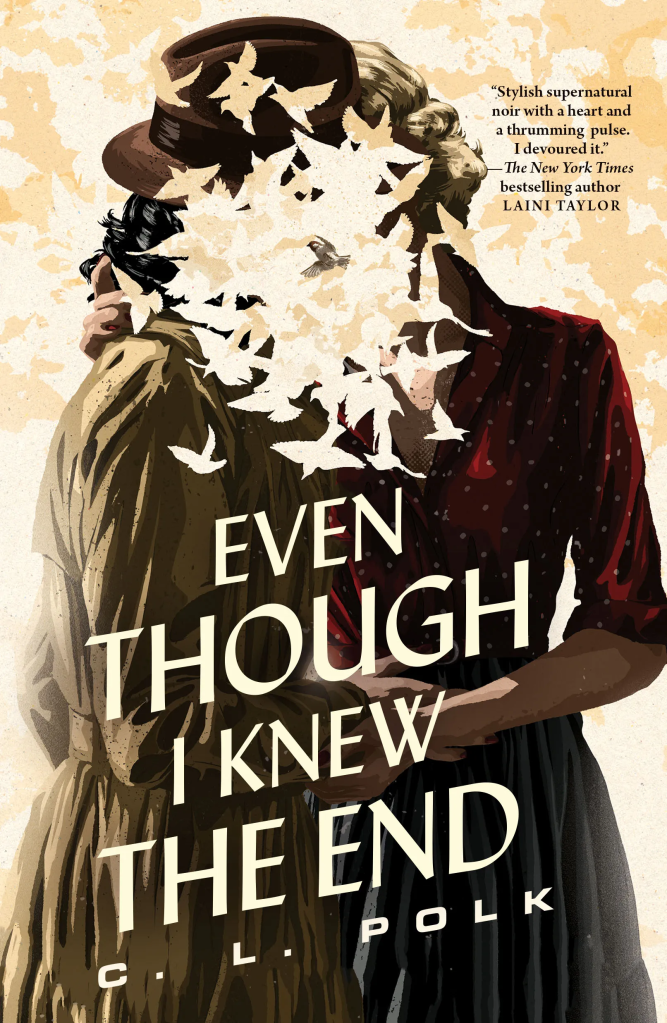
Even Though I Knew the End – C.L. Polk“It’s a Raymond Chandler evening/And the pavements are all wet/And I’m lurking in the shadows/’Cause it hasn’t happened yet…”

“Queen of the Bees” – Jack White

I wish that there was a real, tangible reason for Jack White to get on my nerves. Scratch that—maybe it’s good that it’s just his personality that’s grating. It could be way worse. I’ve just never recovered from how much of a pretentious prick he came off as in It Might Get Loud. But he’s recently created his own publishing house and absolutely shredded with IDLES…the man makes it harder and harder to hate him every day.

After No Name proved to be rather samey (I saw a promotional poster last year that said “the best rock record of 2024 has no name“…lmao), it was official that I was just kind of sick of Jack White. After the adventurous two-for-one deal that was Fear of the Dawn and Entering Heaven Alive, White’s sonic range started becoming the same song over and over. So I let him fade into the background…and somehow forgot about this gem from Entering Heaven Alive. How could I have possibly forgotten about this song? “Queen of the Bees” is one of my favorites of his. He’s putting on every ounce of bluesy airs, but this time, but it doesn’t feel as posturing as some of his other stabs at the genre. So much of his solo work is very bluesy, but there’s a point where he almost becomes a caricature of himself (we once again circle back to It Might Get Loud). But “Queen of the Bees” feels like an honest embodiment of the genre. It’s a slick, charming strut where every strike of the mallet against the xylophone feels like a Cab Calloway-style cartoon feeling a visual chill up its spine. White’s rasping croon, though indebted to past rockers, comes straight from the soul, surpassing mere tribute. Yes, almost everything about the man is a meticulously curated performance, but I’ll give him this: he never half-asses anything. Everything you get from him is a labor he puts every ounce of his passion into.

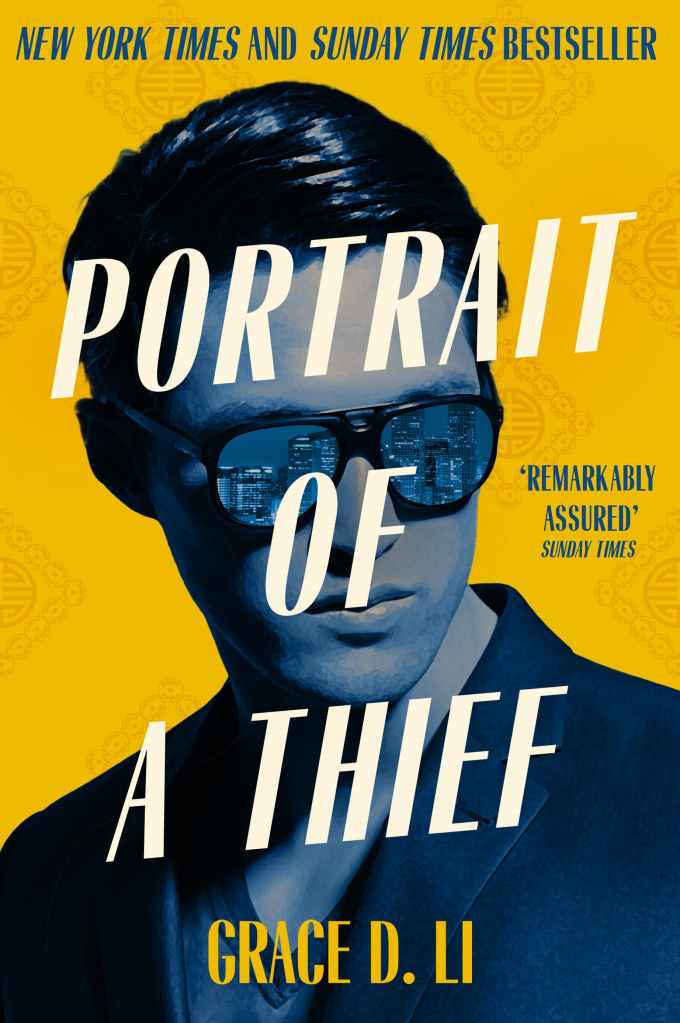
…AND A BOOK TO GO WITH IT:

Portrait of a Thief – Grace D. Li“I’ll butter your toast/While you’re taking it easy/My tea needs honey/’Cause it’s not so good/And who cares if I’m misunderstood/’Cause I love you…”

“Alien” – Beach House

NOTE: definitely proceed with caution before watching the music video if you have epilepsy or any kind of photosensitivity issues.

Sometimes there’s no use in giving a big preamble about how I found this song. The other day, I just thought to myself, “isn’t there a Beach House song called ‘Alien?’ Wonder what that’s like,” and here we are. I’m just glad that it’s good—but then again, I’ve never met a Beach House song that I didn’t like. Them naming a song “Alien” is almost redundant, because all of their songs that I know have an equal degree of spaciness, and this track is no different. But it’s pure shoegaze indulgence; the distortion roars like the engine of a rocket careering through space, while Victoria Legrand’s vocals are whispers clinging to the soaring jet trail hurtling through the stratosphere. The lyrics verge on being surreal, but the castoff “helpless and glimmering” feels exactly how it is to be carried away on the comet’s tail of this song.

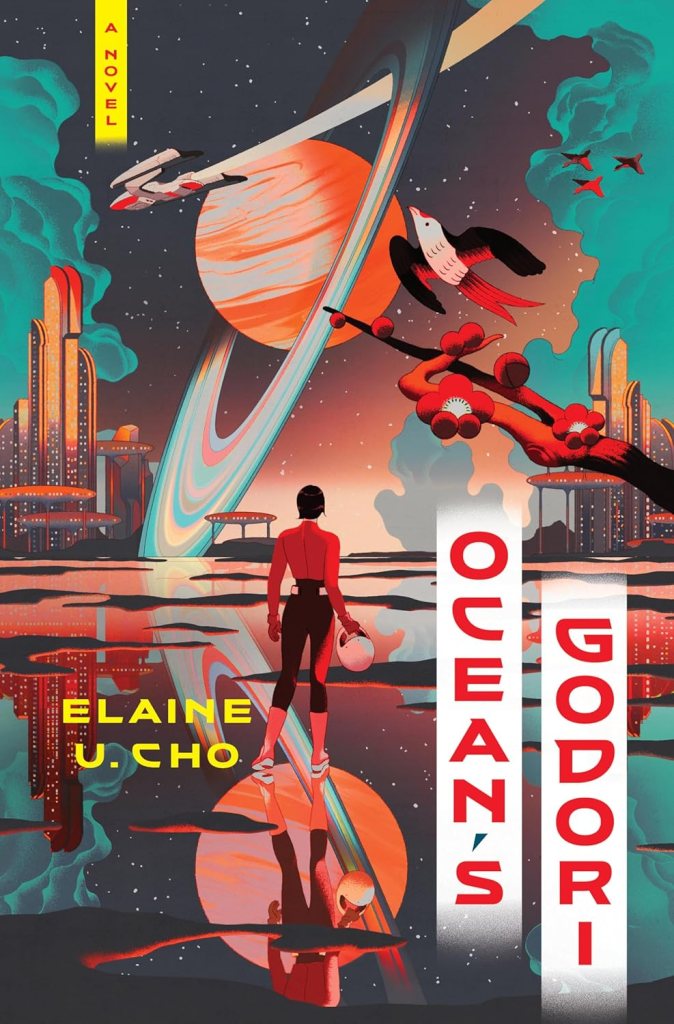
…AND A BOOK TO GO WITH IT:

Ocean’s Godori – Elaine U. Chothis track would fit in with the shining, sci-fi world of this novel: glistening, but with traces of rust and grime around the edges.

“There She Goes” – The La’s

“There She Goes” has to be one of the more ironic stories in rock music history. It’s considered by legions of musicians, music critics, and music directors for every rom-com under the sun to be a perfect song. It heralded a renewed appreciation of the ’60s styles of The Beatles and The Kinks, but is often credited with being one of the songs that jumpstarted Britpop in the early ’90s. Yet by all accounts, its architect, Lee Mavers, hated it. Even when you brush past the inevitable “this song is popular and mentions veins once, it’s gotta be about drugs” (it’s been confirmed by multiple band members that it isn’t about heroin) rumors, there’s so much mythos swirling around this song; most of them are about frontman Lee Mavers, who hates the band’s one and only album. The characterizations span from troubled perfectionist at best to irascible and impossible to work with at worst, cycling through dozens of producers and band members just to achieve the unreachable, perfect sound in his head. It has to be a tragedy to never have that satisfaction be reached, and to have your legacy be the runoff from those fruitless sessions. And yet…how the hell could “There She Goes” be considered a failure? This ought to be the guidebook for a pop song—catchy, charming without being cloying, and guaranteed to make you nostalgic. This song is a must if you want to make your bus ride into a rom-com montage. It’s jangle pop royalty, and rightfully so—nobody jangles like The La’s, and not many have jangled quite so well since.

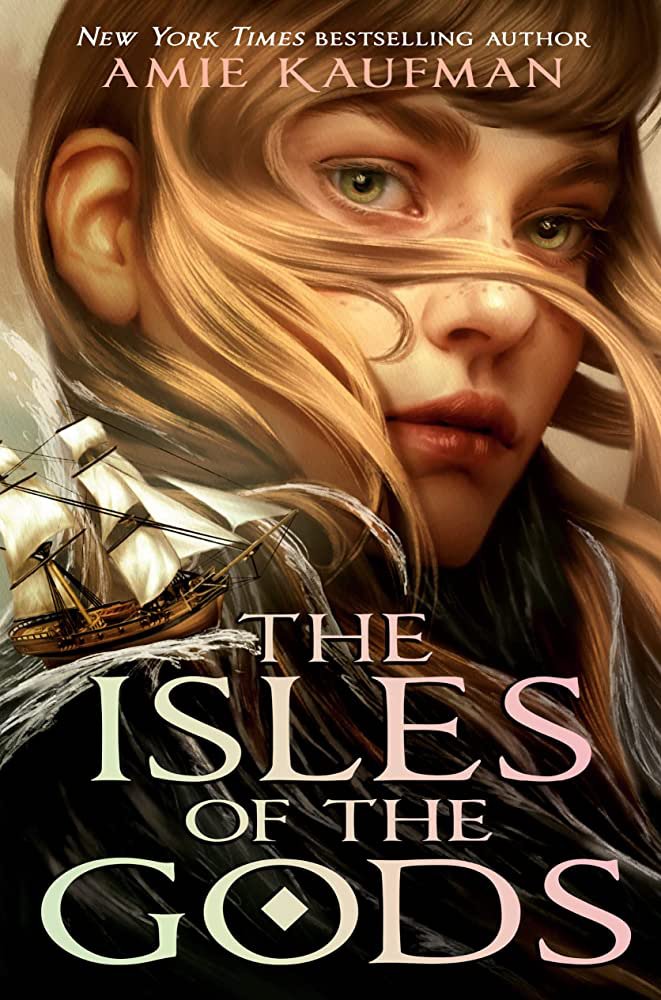
…AND A BOOK TO GO WITH IT:

The Isles of the Gods – Amie Kaufman“There she goes/There she goes again/She calls my name, pulls my train/No one else could heal my pain…”

Since this post consists entirely of songs, consider all of them to be today’s song.

That’s it for this week’s Sunday Songs! Have a wonderful rest of your day, and take care of yourselves!

Posted in Book Review Tuesday

Book Review Tuesday (2/24/26) – Every Variable of Us

Happy Tuesday, bibliophiles!

I’ve read a lot of great books this month, but a lot of the ones I’ve read recently are sequels to books that I haven’t reviewed, so it feels weird to review a book 2 or 3 when I haven’t even review book 1. Hence why there have been more negative reviews this month. However, I do feel like I have to get my feelings about Every Variable of Us off my chest, because it promised something so positive, but crashed in burned in so many ways. It was a sore disappointment for sure.

Enjoy this week’s review!

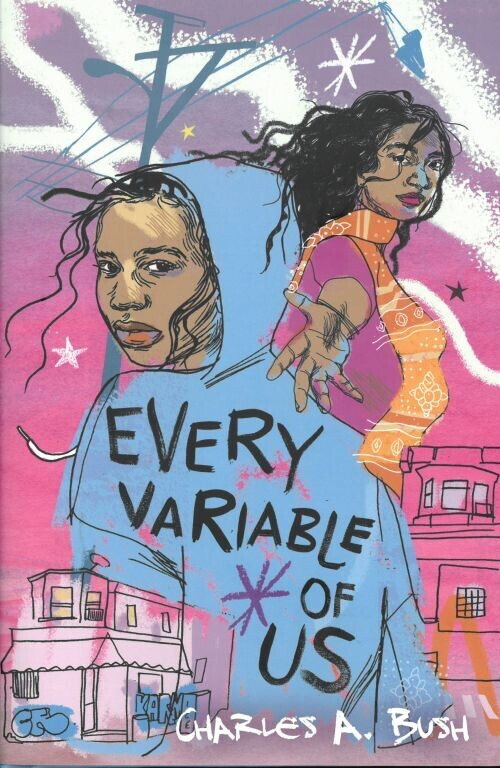
Every Variable of Us – Charles A. Bush

Alexis Duncan loves basketball—and she’s counting on it to get her the scholarship she needs to escape her impoverished neighborhood and turbulent home life. But when she’s injured in a shooting and can no longer play basketball, her dreams are crushed. With no other option, she turns to Aamani, the new student in her school. Aamani encourages Alexis to join their school’s STEM team to get the scholarship she needs. Alexis is skeptical—she knows nothing about the sport, and she’s reluctant to fit in with the nerdier crowd. But as her skills—and her confusing crush on Aamani—develop, Alexis realizes that there may be more to her than meets the eye.

TW/CW: racism, gun violence, homophobia, Islamophobia, xenophobia, ableism (internalized/external), drug abuse/addiction themes, mentions of child abuse

I’m a little ashamed to be giving this novel such a negative review, but I firmly believe that negative reviews have their place. This novel was clearly a labor of love for Bush, being a debut novel about a queer, Black, and disabled girl, a story that’s exceedingly difficult to get out there in this climate. There’s probably some kids out there who think that this is just the book for them. Without a doubt, Every Variable of Us is an important book to have out there. But I think there’s a lot of valid criticism to be had for this novel, and it’s important to note that a book being diverse doesn’t absolve flaws in its writing…of which this novel had many.

In theory, I think Alexis is a great character to have for a YA audience; there’s this expectation in the genre that even your characters can’t be flawed in terms of their worldview, because that might be “problematic.” It’s good for teens to see a character that starts off narrow-minded and comes out the other side more tolerant or understanding. I tried to roll with Alexis’s inner monologue with that in mind. There’s a lot that you have to put up with—in the beginning of the book, Alexis is…practically everything-phobic: Islamophobic, racist towards other minorities, fatphobic, homophobic, and ableist. There’s a clear setup for her to learn from her mistakes and be more understanding of other people’s cultures, and in turn, accept her own status as a disabled, bisexual person. However, there doesn’t end up being much development on her part, when both the novel and the marketing want us to believe that she undergoes this dramatic arc and becomes a whole new person. Alexis becomes more tolerant towards queerness and Aamani’s Indian heritage and traditions, but save for that (and her success in becoming an asset to the STEM team and getting a scholarship), her arc is practically a straight line. Her lack of self-reflection wouldn’t have been a problem if Bush wanted the reader so badly to think that she’d magically changed into a better person, when in reality, she was in a very similar place to where she was at the beginning of the novel. I’m all for flawed characters, but don’t tell me that a character’s had this monumental shift in her worldview when she really hasn’t.

Which brings me to the complicated issue of the diversity of this book. I really appreciate that Bush put a lot of effort into making Every Variable of Us have a diverse cast. However, a lot of the diverse characters ended up feeling like props to reinforce lessons for Alexis about being tolerant about other marginalized people. To be fair, Aamani had more development than the rest, but there were moments when she was clearly only there to teach Alexis about Indian people and Hindu traditions, as well as queerness. It was more blatantly evident in characters like Matthew; I appreciated the note at the beginning where Bush acknowledged that he’s not autistic and wanted to represent autism as respectfully as possible. I can’t speak to the autism rep specifically, but as a neurodivergent person, I found Matthew to be decently represented. That being said, it very much felt like he was there just so that he could challenge Alexis’s ableist worldview. At a certain point, I could see the checklist in Bush’s head: “oh, wait! Maybe we can add an Asian character here, jot that down!” Diversity can only be successful when its intent is to provide representation of minorities, but also minorities as people, not teaching moments for the main character; otherwise, it becomes disingenuous. Every Variable of Us unfortunately fell straight into this trap.

I’ve talked about this with several YA books, but there’s a very vocal camp in the YA world that’s staunchly against pop culture references in the story. I’ve never really understood the argument—why not have your characters engage with media that current teenagers like and/or that you liked as a teenager? Why not have something that a teenager can relate to or be introduced to because of this book? However, there is very much a wrong way to do it, and that’s to cram every possible reference into the narrative for no reason. Dear Wendy is another example where that approach nosedived (too many references, not enough actual story), but it pains me to say that Every Variable of Us is also a masterclass on how not to write pop culture references into the narrative. Every other sentence had a reference. Even when I was Alexis’s age, and deeply, deeply nerdy (especially about some of the same things that Aamani is passionate about, namely Marvel comics), my inner and outer monologue didn’t contain an Avengers reference every 10 seconds. It got to such a ridiculous point—nobody, not even nerdy people, talks like that at all. As a result, almost all of the characters ceased to become real to me. People just do not speak like that. It’s like Bush was trying to relate to every possible teenager by thinking of every possible thing that a teenager could like, and then translating it into dialogue, making it exceedingly hammy.

That issue of trying to relate to every possible teenager felt like the core of my issues with Every Variable of Us. It’s an issue that I often see in a lot of debut novels: authors want to cram every possible thing that they’re passionate about into a single novel; at best, it’s a labor of love, and at worst, it’s quite bloated. This novel suffered from this without a doubt. He just tried to tackle far too many issues, and as a result, the analysis of them was often surface-level. Bush talks about gang violence, abuse, having a parent with an addiction, homelessness, suddenly developing a disability, religious bigotry, and queerness all in one novel. While it’s admirable to write about this much (and there are of course people who live in these circumstances), Bush clearly didn’t have the page time to do justice to all of them without only giving an underdeveloped take on all but maybe…two or three of these issues. I do appreciate the handful of moments where the exploration of these topics actually did land; the moment at the end with Alexis’s mother was one of the only parts of the book that was emotionally impactful to me. But for the most part, this was just way too much for a single debut novel to be doing. In an attempt to try and address every issue that he seems to be outspoken about, Bush ends up hardly addressing them at all.

If there’s a lesson to be learned here, it’s that you can’t please everybody with a single novel, whether it’s the audience you’re appealing to or the groups that you’re trying to represent. Charles A. Bush just seemed too concerned with trying to make every possible reader in every parallel universe happy, which stretched the narrative thin. I get that there’s an insurmountable amount of pressure with a debut novel, but you do not need to please everybody! It’s okay! Breathe!

All in all, a debut novel that tried too hard to do too much, and ended up spiraling into a mess as a result. 1.75 stars.

Every Variable of Us is a standalone, and Charles A. Bush’s debut novel.

Today’s song:

That’s it for this week’s Book Review Tuesday! Have a wonderful rest of your day, and take care of yourselves!

Posted in Sunday Songs

Sunday Songs: 2/22/26

Happy Sunday, bibliophiles!

This week: even though I mention both Water Moon and Underwater Moonlight in this post, they’re somehow not paired together…sorry. Plus, songs about grief, love, and illegally keeping wild animals in your apartment.

Enjoy this week’s songs!

SUNDAY SONGS: 2/22/26

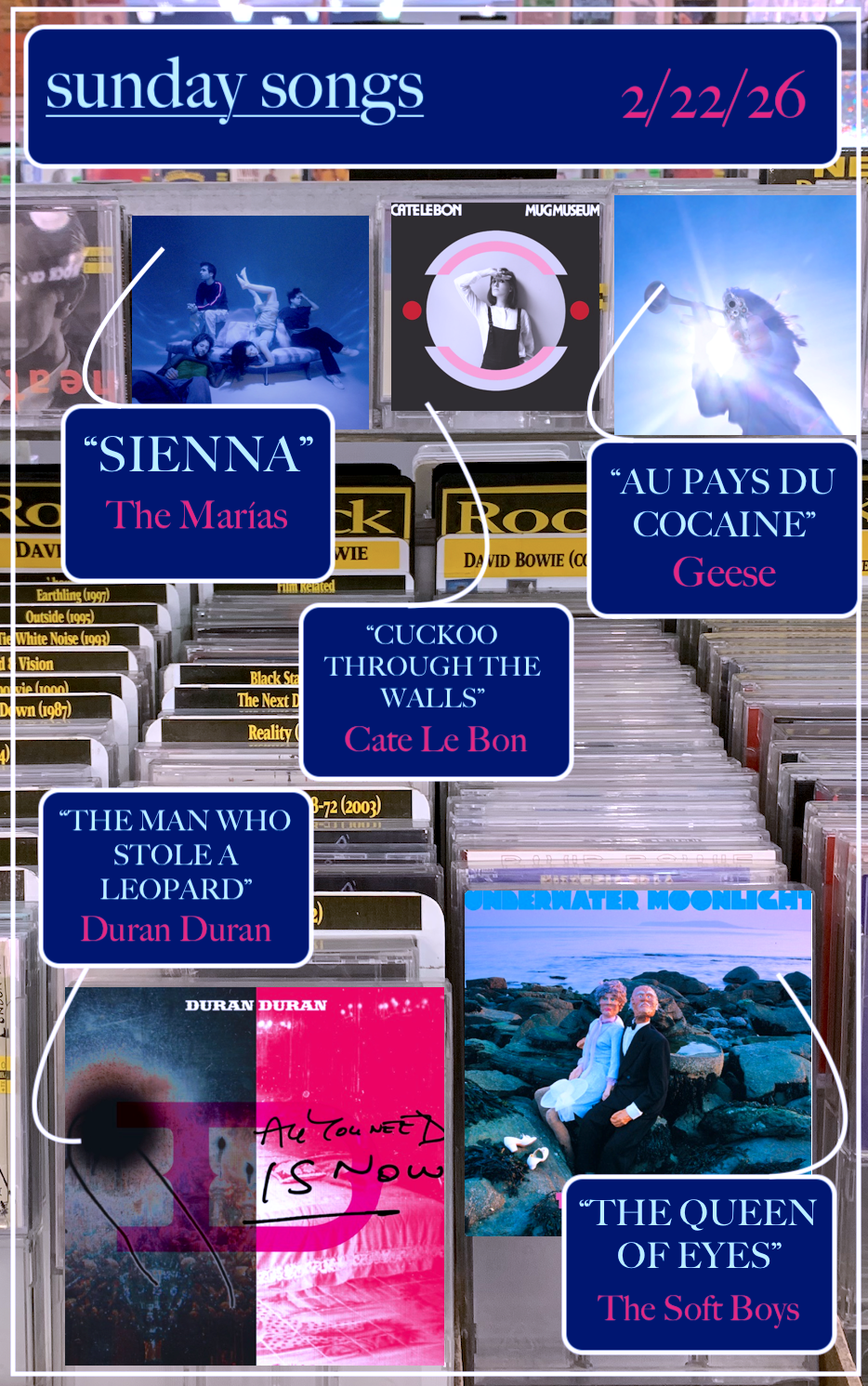
“The Man Who Stole a Leopard” – Duran Duran

I didn’t expect to be putting such critical Madeline Todd lore here on the blog, but it was recently dredged up from the annals of my mind after not thinking about it for, at minimum, a decade. So here you are.

I’ve been something of a Durannie from a young age. Second-generation Durannie on my mother’s side, if you will. My mom was at the critical point of fandom for Duran Duran, being a tween (and then a teen) in their heyday, and from an early age, she passed down that love to me. I have lots of fond memories of watching their music videos from a DVD on our old TV, along with listening to their CDs while we played with Barbies, some of which my mom had passed down to me as well. That brings us to All You Need Is Now, which came out when I was in elementary school; a lot of the tracks have heaps of nostalgia attached to them, including “The Man Who Stole a Leopard,” which I loved at the time. Fast forward a few years, and I now had my own iPod nano that I could listen to music with at night. “The Man Who Stole a Leopard” made its way onto the first playlist that my dad lovingly made. But at night, this song transformed into something that scared the shit out of me. Specifically, the violin sample beginning at 5:52. “Scared the shit out of me” is an adequate description, but what might be more accurate is that it gave me the absolute willies. My heebies were jeebied, dude. Something about the mild distortion of the violins, under cover of darkness, sounded so fundamentally wrong to my 10-year-old mind, huddled under blankets. Thankfully, I got my dad to remove the song from the playlist, and the nightmare ended.

Naturally, this was a very pleasant thing to remember when I woke up at 4 am a few weeks back. But when I revisited “The Man Who Stole a Leopard,” I found that my memory had completely distorted my perception of that violin sample that freaked me out all those years ago. Admittedly, I get a kind of knee-jerk sense of dread in the lead up to it, but I was pleasantly surprised that it sound completely innocuous to me—a little distorted and reverby, but just a handful of fuzzy chords to give a flourish to the outro. I’m now hovering where I was in the pre-iPod era, when I was allured by this song. Despite what the fabricated (yes, FABRICATED, I’ve been living a lie since 2011) news broadcast might lead you to believe, this tale of the man who stole a leopard and kept it in his apartment is entirely fictional. (Granted, some of the wording in the broadcast clues me in to the fictionality of it now, but it’s still fairly convincing, especially considering that they got the real newscaster Nina Hossain to record it.) What stands out to me about this track, along with most of the tracks I fondly remember from All You Need Is Now, is that there’s hardly a sense of Duran Duran trying to put their youthful, ’80s glory days in amber and imitate it. Sure, there’s a very “Hungry Like the Wolf” sensibility to the subject matter, but its prolonged runtime (6:15) and more eery atmosphere better fits their earliest albums, before they became perennial pop icons of the ’80s. Like a prowling cat, it’s a drawn-out, seductive crawl through a tale of toxic seduction and love that isolates you from all else. But from all of these memories, there’s one crucial lesson I have to take from this: things tend to sound a lot more sinister when you’re in the dark. Shed some light on it, and this track—like so many other things—will lose the fangs you thought they had. What a relief it is to not be 10 anymore. I love this song.

…AND A BOOK TO GO WITH IT:

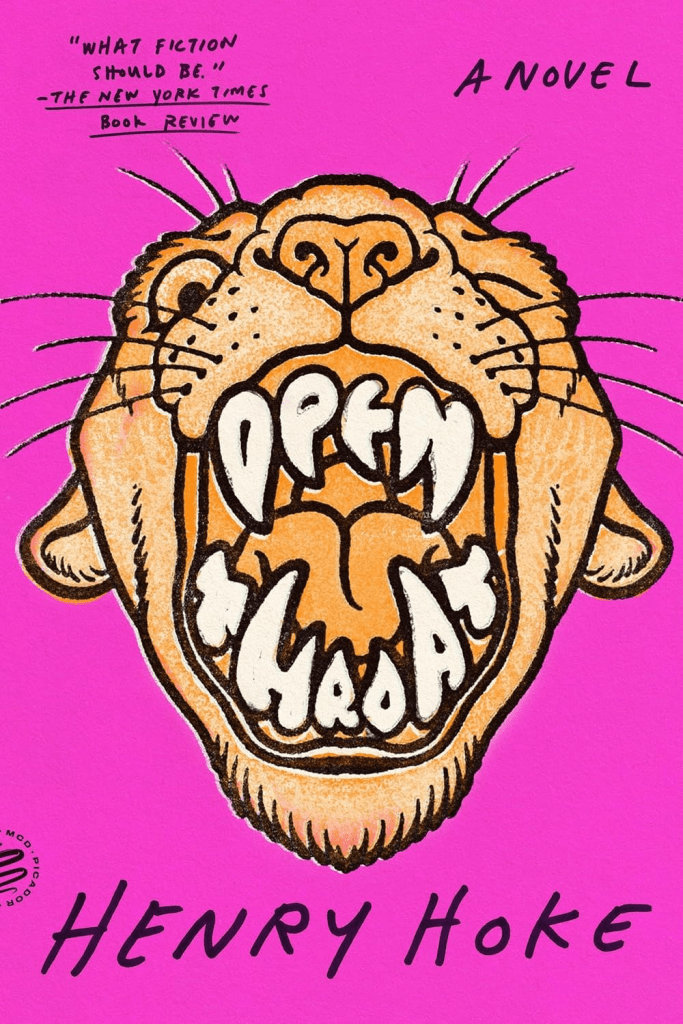
Open Throat – Henry HokeI think there’s enough overlap between a big cat being inside human houses and almost being domesticated to bridge the gap between a leopard and a mountain lion. Literary fiction isn’t always my favorite, but this was an excellent read.

“Queen of Eyes” – The Soft Boys

At its worst, a lot of punk music and culture became a caricature of itself; There was such a dogged determination to “sticking it to the man” that, in declaring that they were different from the mainstream, they created a different kind of conformity in sound and style. If you’re not exactly like x, y, or z, you weren’t punk. As insufferable as that is in retrospect (and today, presumably, though I don’t keep up with a lot of modern punk), it did breed a veritable garden of absolute weirdos who weren’t punk enough in a myriad of ways—bands like XTC and The Soft Boys, whose quirky members adhered in some ways to punk’s musical style, but were too sincere—and literary-minded—for punk, because punks don’t write about statues who come alive and wander out to sea. I’ve definitely been influenced by some aspects of punk bands and aesthetics over the years, especially when I started becoming more aware of politics; however, I feel like the bands I identify more with are the ones that were a little too soft, melodic, or just authentic enough for punk. And I think that’s where my expression falls too—I’ve always identified, in terms of my makeup and my clothes and my politics and my music, with “alt,” just because it’s an umbrella term for anyone who falls outside of those strictly-defined, often social media-enforced lines in the sand between one aesthetic from another. My music taste was bound to fall here eventually.

I’d loved about half of Underwater Moonlight ever since I saw Robyn Hitchcock for the first time, but now that I’ve started collecting vinyl, I picked up a copy of the album when I saw him again at the beginning of the month—AND GOT IT SIGNED BY THE MAN HIMSELF!! I’m still in shock, honestly, so on the off chance that you’re reading this, Mr. Hitchcock—thanks again. It’s been in the background of my life consistently for the past month, and I can’t think of any downsides, other than my neighbors hearing the lyrics of “Old Pervert” through the walls. (Look, it’s not my fault that they made a song called “Old Pervert” but also made it an indisputable banger.) I was agonizing over which song to include here, since they’ve all more or less been on a loop in my brain, but “Queen of Eyes” stuck out to me, probably the sunniest inclusion on the record, especially on the heels of the jagged, leering stylings of “Old Pervert.” Even this early on, Hitchcock was nothing but himself: his half-nonsensical, half sweetly sincere and lovesick lyrics are wrapped in a wallpaper collaged from the psychedelic Beatles, Syd Barrett, and something that could have only come from his brain and his alone. Bright, jangly, and infectiously catchy, it embodies this line from the booklet that came from my record booklet, written by David Fricke: “the Soft Boys dared to ask: did punk rock and the end of the 1970s…also have to mean the end of joy, literacy, and bright voices?” That torch remains the same one that Hitchcock has carried for the rest of his prolific career. What struck me while listening to Underwater Moonlight is that this same spirit has always been there—his sprightly musical vitality has only brightened since his early forays into music.

…AND A BOOK TO GO WITH IT:

A Song of Salvation – Alechia Dow“Here I am again, it’s no surprise/Locked in orbit ’round the queen of eyes…”

“Sienna” – The Marías

Expect a lot more about The Marías in the coming weeks—they’ve been a very calm anchor in the chaos of…well, everything in my life. I’ve spent the past week digging more into their music, but this song was one of the first I discovered, in no small part because it was the soundtrack to a recent art trend that went around Instagram and TikTok. (The one I linked is from @zaiciart on Instagram, who has such a wonderful style!) From what I’ve heard of the album, Submarine really was the best possible name—every song feels like it’s been submerged, crafted from trails of bubbles and that special kind of whispery echo that happens to your voice when you’re trying to talk to your friends in the pool. María Zardoya has such a uniquely ethereal voice, so much so that it was genuinely jarring to hear her normal, lower speaking voice on their (excellent) Tiny Desk concert. “Sienna” is a wistful track, but one that only really harpoons you in the gut out of nowhere once you look into the lyrics—the backdrop is the fallout of Zardoya’s previous relationship, but specifically mourning the baby she imagined having with her partner: “she would have done all these things like us. But because we broke up, Sienna will never exist,” Zardoya said about the origin of the track. The track’s ghostly qualities crystallizes once you know that meaning—this entire future that Zardoya imagined is nothing but mist now; it’s fitting that, as this future fades away, so does the song, and Submarine as a whole—”Sienna” is the last breath before the album closes, an exhale of resignation before Zardoya’s wishes become ephemeral.

…AND A BOOK TO GO WITH IT:

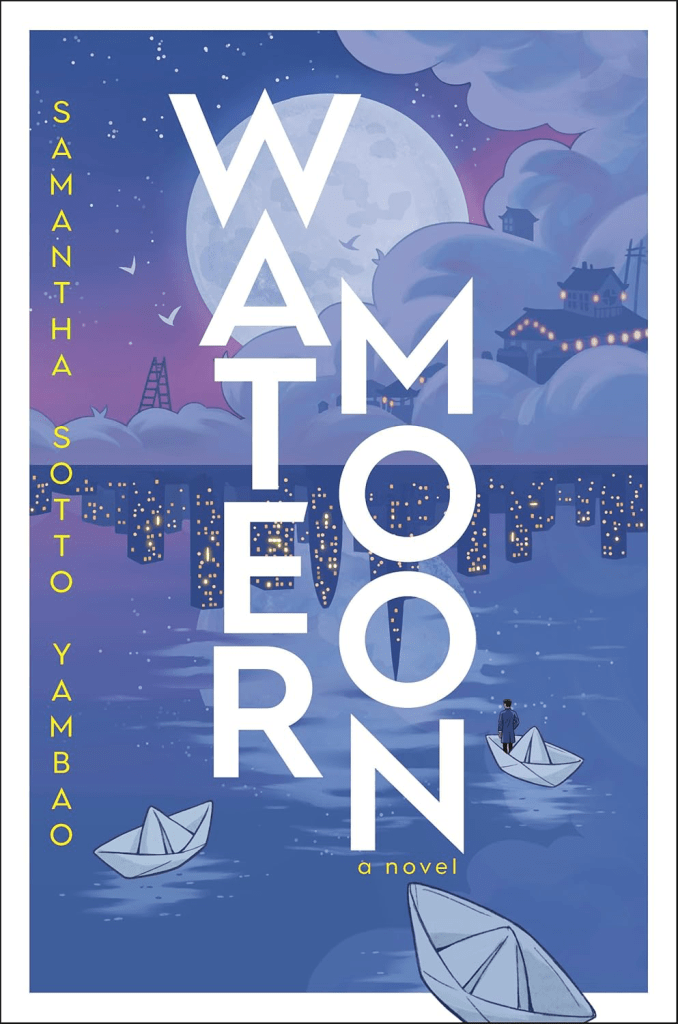
Water Moon – Samantha Sotto Yambao“And I smile when I think of all the times we had/On the beach in the winter, when the waves were mad/Down by the water, crystal clear/See her face in the forest, then it disappears…”

“Cuckoo Through the Walls” – Cate Le Bon

Sunday Songs has basically become one of those Scooby-Doo villain reveal scenes. You rip off the “Sunday Songs” mask, and it’s just a weekly excuse for me to blabber on about Cate Le Bon. You fools all fell for my trap!

Did Cate Le Bon just casually come out of the womb with years’ worth of fully-formed talent? I still have two albums of hers that I haven’t listened to, but I swear that she’s incapable of making a bad album. Mug Museum feels a lot more like a standard indie rock album than her more recent works, but even the more (marginally) accessible style couldn’t keep her from her quirky engine firing on all cylinders. Moments of somber contemplation (“Mug Museum”) are hand in hand with ragged rage (“Wild”), and yet all form the weave of Le Bon’s experiences surrounding the album. Most of it deals with the death of her grandmother and how Le Bon processed her sudden absence from the matrilineal line; for her, it was less about what her grandmother meant to her as an individual and more about how her family rearranged and shifted in wake of her absence. The titular Mug Museum is a kind of haunted house of sorts where memories live: she called it “an imaginary place where relationships are looked at and thought upon.” Walking through this album does feel like strolling through a museum built inside of someone’s old house; small objects hold centuries of memories, and every strand on a curtain or crack in a window holds a deep history. “Cuckoo Through The Walls” is one of the tracks that I felt exemplified this feeling the best. Its more restrained, steady pace feels like tentatively peering through all the corners of said aging, dusty house, glancing at the light illuminating unseen gaps in the floorboards. Le Bon describes a state where these memories have anchored her to the house, to the point where she almost becomes the house itself: “And I watched the dinner drown/I drank for hours/Never leave the house/Cuckoo through the walls/Lay still on the ground/Exhale the sound of symphonies.” Like her signature, left-of-center takes on the most universal emotions, her grief doesn’t keen, but sinks into all the hollows of her mind and body—and that might be more of an honest depiction of it than most songwriters are willing to take.

…AND A BOOK TO GO WITH IT:

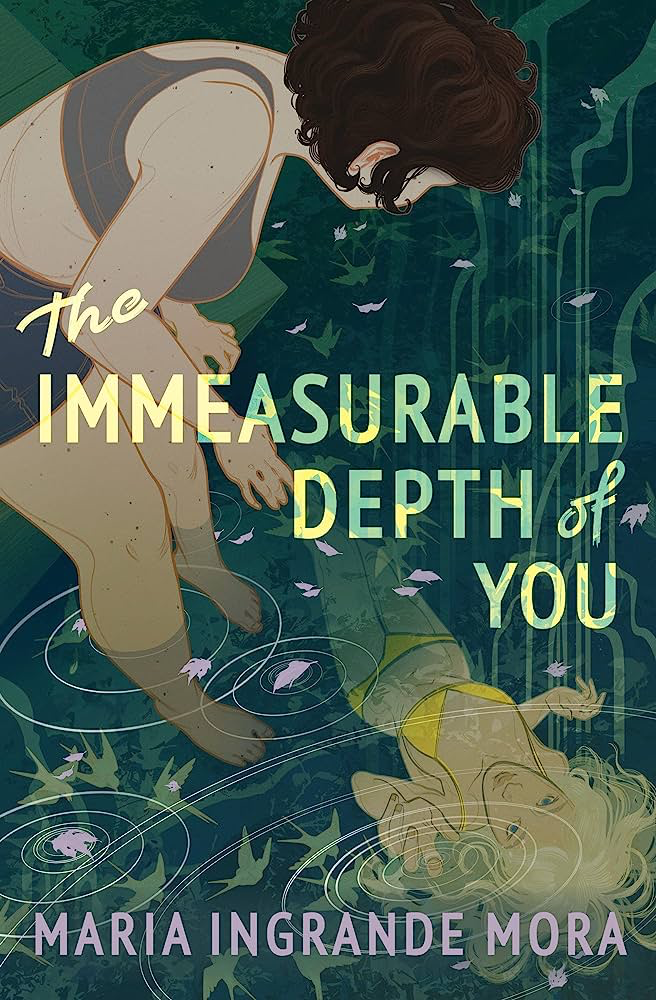
The Immeasurable Depth of You – Maria Ingrande Mora“I will not sing your name/And tie my heart to Jupiter/And watermelon dreams/I felt the fear of change…”

“Au Pays du Cocaine” – Geese

Alright, you got me. The jury’s still out if Getting Killed is getting lobbed onto the mounting pile of albums I want to listen to, but “Au Pays du Cocaine” makes me understand a modicum of the hype. Sometimes an album invades your Instagram feed for no reason, but half the time, there’s at least something to it, even if that something boils down to only a song or two. This song just makes me feel…safe. Yes, it’s seems more to be about a relationship with someone who’s ruined their life, but it feels so safe to me. It sounds like the friends you give you a ride when it’s too far to walk, and the people who texted me and offered their showers when the hot water shut off in my apartment. It’s a hastily-built up lean-to to give you a fleeting moment of shelter in the rain. The middle ground between my feelings about “Au Pays du Cocaine” and the more literal lyrics is that it’s a promise: believing that people can change, and being ready for them when they do. I’ve learned the hard way that for some people, you just have to let them heal on their own terms, but that you by no means have to forgive them, or even be there for that healing. There’s a hard-won freedom in that realization. But this song is for the ones that are worth sticking around for—the people you love despite their faults. It’s rare to find those people worth sticking around for, but maybe that’s why I feel such solace in this song—those people are few and far between, but this song is for them.

…AND A BOOK TO GO WITH IT:

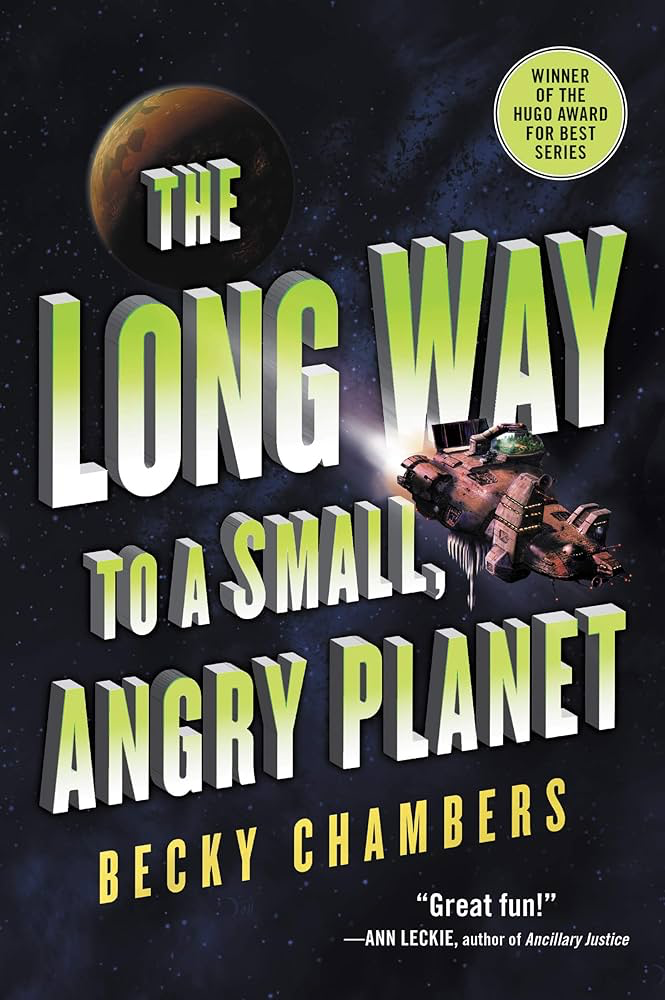
The Long Way to a Small, Angry Planet – Becky Chambers“You can be free/You can be free and still come home/It’s alright/I’m alright…”

Since this post consists entirely of songs, consider all of them to be today’s song.

That’s it for this week’s Sunday Songs! Have a wonderful rest of your day, and take care of yourselves!
Posted in Book Review Tuesday

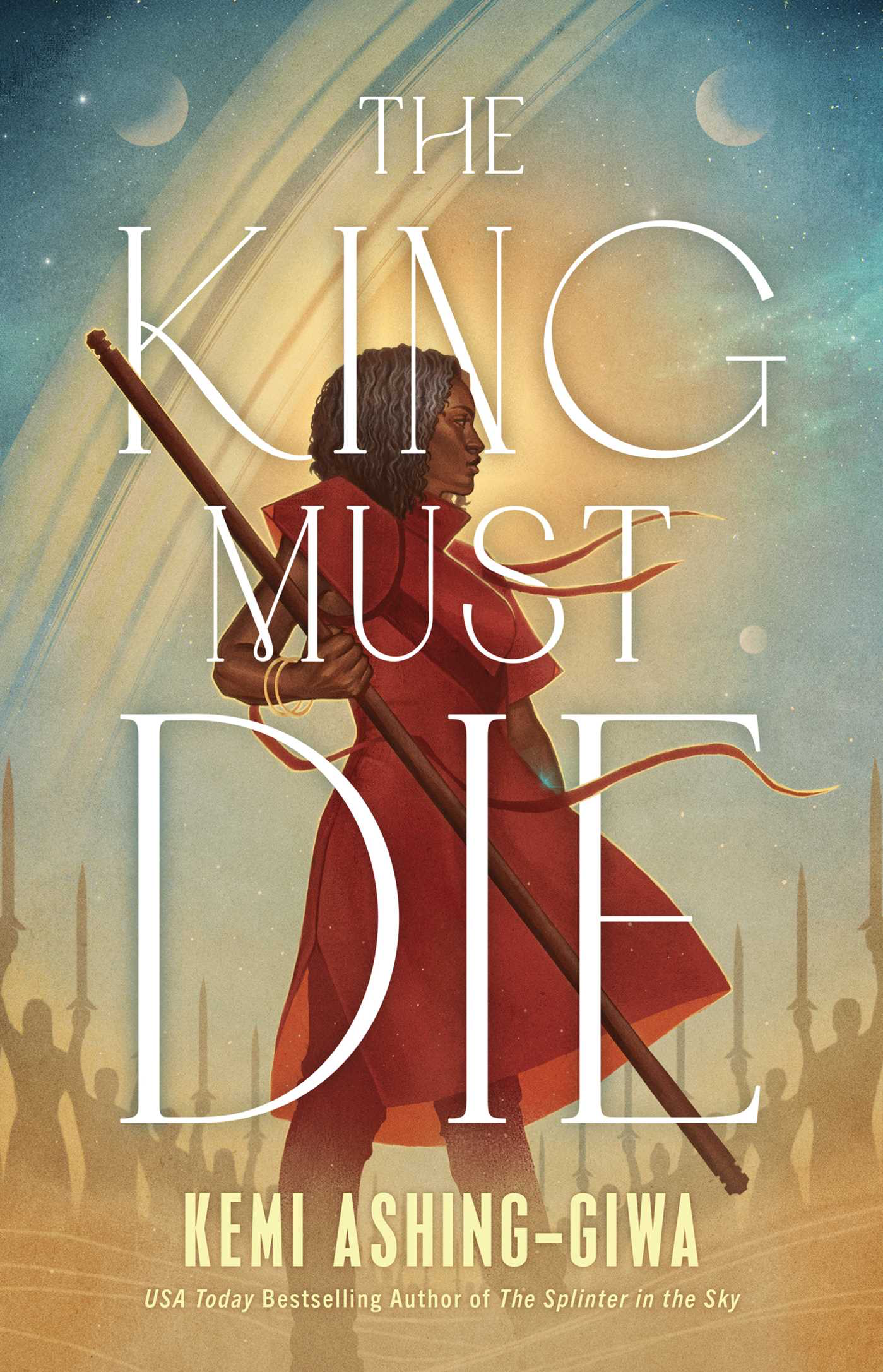
Book Review Tuesday (2/17/26) – The King Must Die

Happy Tuesday, bibliophiles!

Confession time: I was not a fan of Kemi Ashing-Giwa’s debut, The Splinter in the Sky. I didn’t think I would read any of her other books. But my hunger for sci-fi knows no bounds, and when I saw this, I was intrigued enough by the premise to give her writing a second shot. Thankfully, the gamble paid off—The King Must Die was an unexpected delight, full of rebellion, blood, and the friendships that somehow spring up from those other two things.

Enjoy this week’s review!

The King Must Die – Kemi Ashing-Giwa

Newearth was once humanity’s last hope, a planet terraformed by incomprehensible, alien overlords. Now, it’s on the verge of destruction, with dwindling resources divided unfairly amongst the struggling poor and the Sovereign that rules over them. What’s more, the Sovereign has the power of the omnipotent, alien Executors on their side, willing to do their divine bidding at a moment’s notice, leaving a path of destruction in their wake. Fen, the daughter of anti-imperialist rebels, is on the run after the assassination of her fathers. With a target on her back, she flees for a neighboring rebel faction. But when Alekhai, the ruthless heir to the Sovereign, stumbles directly into the plans of the rebellion, Fen is faced with a brutal choice: join forces with him, or let the rebellion fall prey to the Sovereign.

TW/CW: murder, loss of loved ones, gore, blood, violence, descriptions of injuries, torture

I almost passed on this novel when I saw that it was by the same author as The Splinter in the Sky. But sometimes, every once in a while, it’s worth it to give an author another chance; if not for second chances, I wouldn’t have loved Grace Curtis’s Floating Hotel, for instance! I’m glad I took the chance with Kemi Ashing-Giwa, because The King Must Die was an action-packed, adrenaline-filled story of rebellion and intrigue.

My issue with The Splinter in the Sky was that the story did not feel original. A recurring thought I had while reading it was that it had poorly copied A Memory Called Empire‘s homework—there wasn’t enough about the story that was original. I can excuse some of it, since this was her debut novel, but debut novels can have a story that doesn’t border on being a rip-off. That being said, I do remember liking some of Ashing-Giwa’s prose. Thankfully, she’s worked on both of those fronts, creating an original story to go with said prose, and the prose itself has been leveled up significantly! Ashing-Giwa had such a vibrant way of describing the imagined world of Newearth and the many people within it, so much so that I could easily see myself walking through its war-torn jungles. Her dialogue is snappy without being corny, and her metaphors added a poetic flair to an often bloody and dreary landscape. The King Must Die is a marked improvement from Ashing-Giwa’s debut, fleshing out what I felt lacked in her writing on the first time around.

Whenever I say that an adult novel is a good transitory novel between YA and Adult age groups, it always seems backhanded. I guess that’s because literary circles still turn their noses up at YA for the most part. Listen—even though I’ve aged out of the target audience, I read a fair amount of YA (although adult novels have eclipsed them), I write YA, and I have a deep respect for it as an age group (it’s not a genre!). There’s a difference between YA (novels that genuinely portray the complex emotions of teenagers and their circumstances) and YA (tropey slop banking on the latest fanfiction/TV trends). And I think there’s something about The King Must Die that felt like it could be an excellent book to introduce older teens to more adult genre fiction. Sure, the kill count and amount of blood in general is very much adult, but Ashing-Giwa hits that balance between the political intrigue that’s more present in Adult novels with the character drama that I associate more with YA. It has the fast pace that I associate with some of my favorite YA sci-fi romps that I ate up in high school, but with a level of maturity that would have been lost on me at that time. It’s difficult to balance this kind of complicated worldbuilding and politics while also having this character drama, but The King Must Die had both in spades.

The main part that felt YA (affectionate) to me was the character dynamics. The dynamic between Fen and Alekhai is a classic YA setup; she’s a runaway rebel, and he’s the heir to the empire she wants to destroy. Will sparks fly? …no, evidently, but they did make for some seriously compelling character dynamics. I appreciated that, although there were multiple opportunities for Fen to be paired off with any number of characters, all of them were platonic, and they still gave me that juicy, delectable drama that’s usually only reserved for romances. Fen had such excellent chemistry with Mettan, Sinjara, and the other rebels, but what stood out the most was her relationship with Alekhai. I love a good redemption story for a villain, but it’s even more impressive given how much that Ashing-Giwa establishes about him that honestly…shouldn’t be that redeemable. But his development over the course of the story culminated in something so emotional, and the slow cracking of his shell from a ruthless, indestructible royal to someone who only wanted love in return was incredibly poignant.

The King Must Die is still sci-fi for sure, but I’d place it somewhere in the nebulous category of space fantasy. There are some elements that solidly ground it in science fiction: the alien Makers and their terraformed planet, for one, but also some of the technology. However, much of the action that we see on the ground was very fantasy, what with battles waged with intricate swords and quarterstaffs. I loved the strange, often horrifying beasts that we encounter throughout, though I would’ve liked explanations about how they fit into the ecosystems; we get a lot of tidbits of creatures that supposedly went extinct centuries ago, but are showing up for…reasons, and are never brought up again. As a whole, there were a handful of holes in the parts of the worldbuilding that didn’t relate to a) the politics or b) the terraformed Newearth, but for the most part, the world of The King Must Die was a compelling one without a doubt.

In general, I liked the ending and the epilogue; on a more technical level, Ashing-Giwa is excellent at writing battle scenes that really pump up your adrenaline. Some of the imagery, as well as Askrynath’s dialogue, reminded me of the final battle in the throne room in Hellboy II: The Golden Army, which, if you know me well, is a compliment of the highest order. Conceptually, I like how the ending and epilogue resolved—through selflessness and collective community work, the empire was dismantled and a more fair system was set up on Newearth. However, it felt wrapped up far too neatly. An empire that size—especially one with the backing of incomprehensibly all-powerful aliens—doesn’t crumble in a day. I wanted to see more of the messiness of rebuilding a new world in the ashes of the old one—the transition just felt too clean to be realistic. To be fair, The King Must Die is already pushing 500 pages, so I get it if that didn’t make the final cut. Nonetheless, it was a satisfying ending—just too satisfying for my liking, and for the tone of the story itself.

All in all, a sci-fi adventure that balanced genuine political critique with fast-paced action and dramatic, snappy dialogue—it’s rare to find a book that succeeds with both. 4 stars!

The King Must Die is a standalone, but Kemi Ashing-Giwa is also the author of The Splinter in the Sky and the novella This World Is Not Yours.

Today’s song:

That’s it for this week’s Book Review Tuesday! Have a wonderful rest of your day, and take care of yourselves!
Posted in Sunday Songs

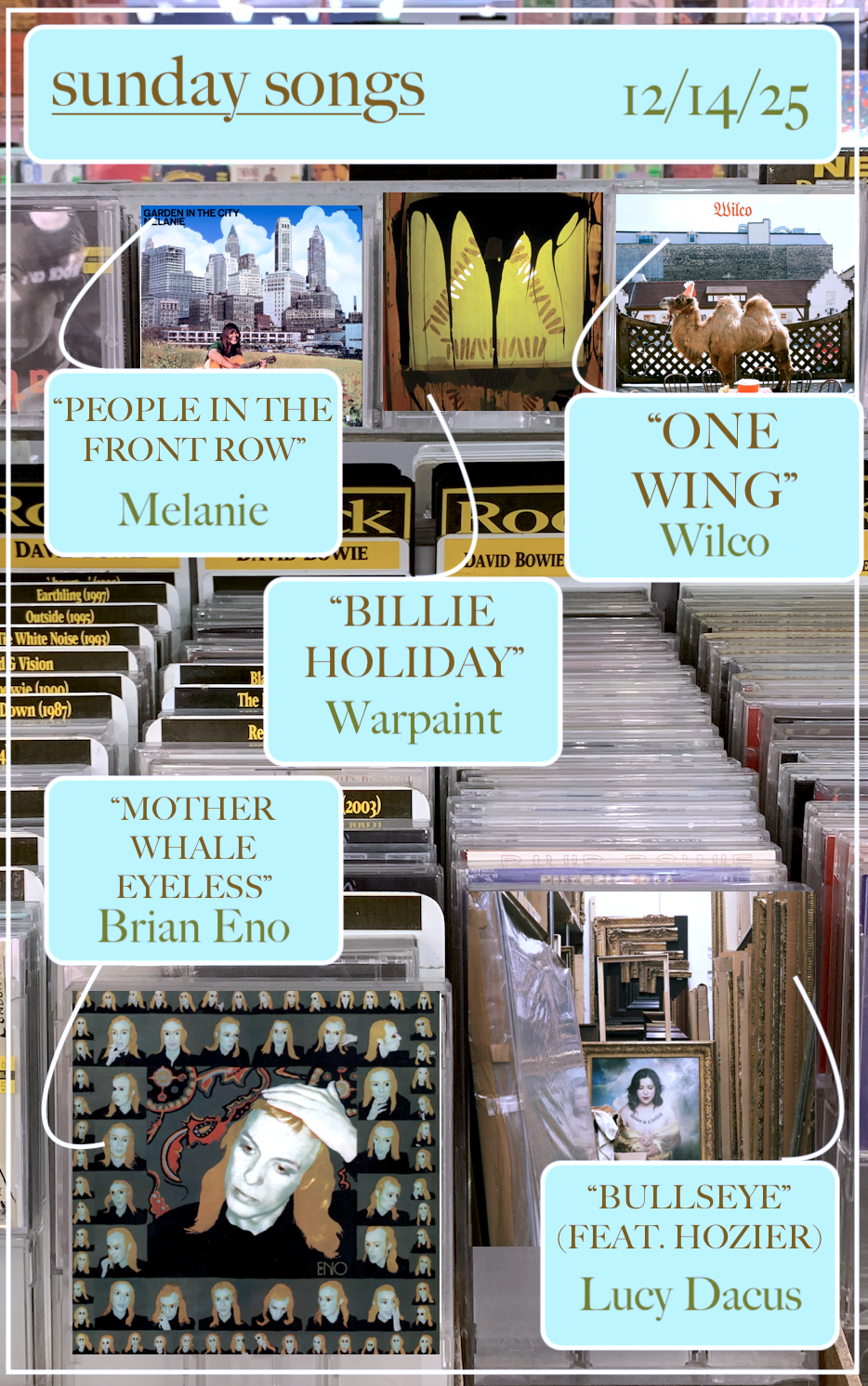
Sunday Songs: 12/14/25

Happy Sunday, bibliophiles! I hope this week has treated you well.

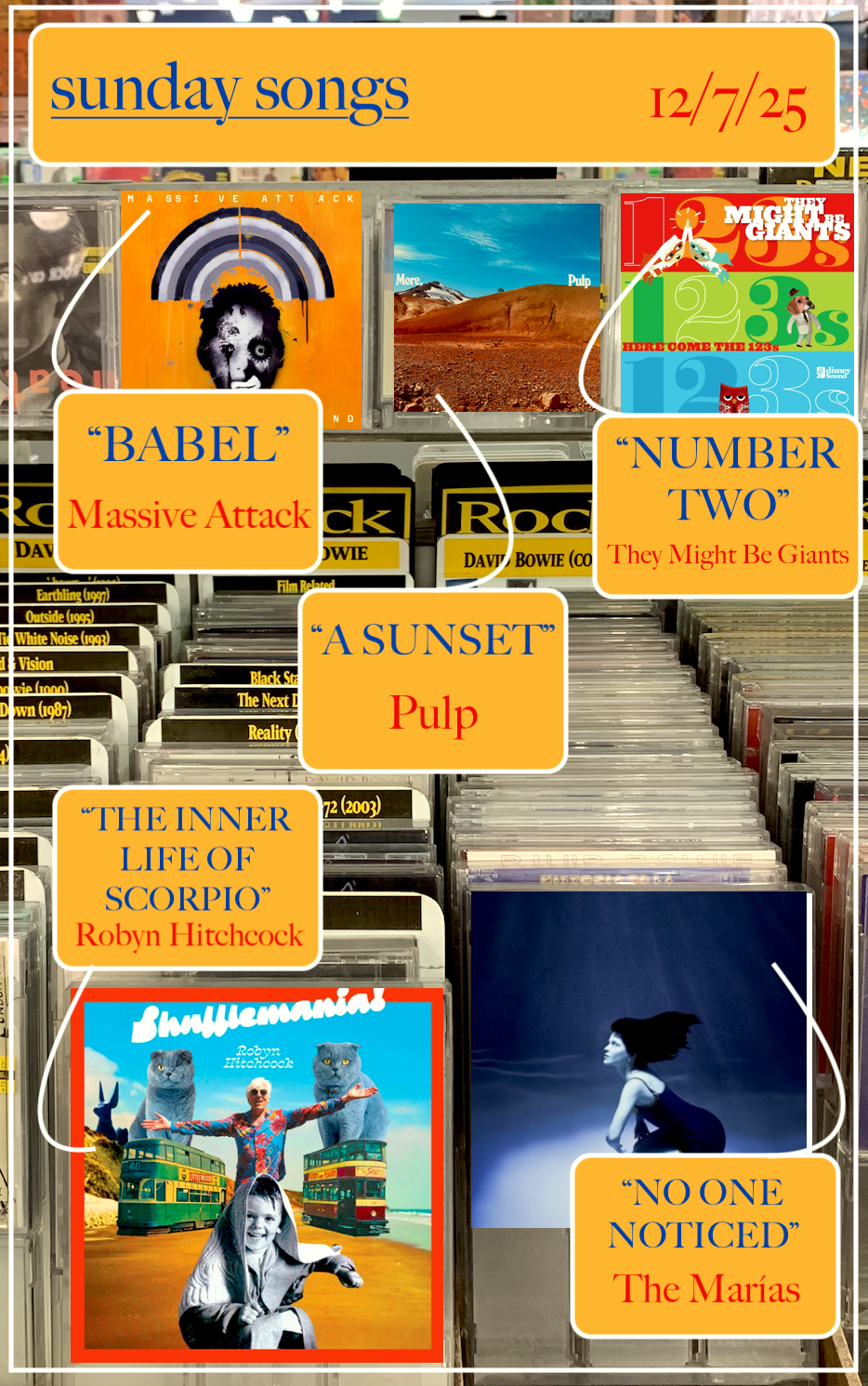
Since I had to hunker down for one more week for finals, here’s my graphic from that week:

12/7/25:

This week: Even more songs from Bad Sisters, circling back to Forever is a Feeling, and getting unexpectedly chucked back to November 2019.

Enjoy this week’s songs!

SUNDAY SONGS: 12/14/25

“Mother Whale Eyeless” – Brian Eno

Sorry, folks. It’s too early for me to draft my New Year’s Resolutions, but they probably won’t include “shut the fuck up about Brian Eno.” You’re in for a long few years.

Back in November, at the behest of my older brother, I finally got around to listening to Taking Tiger Mountain (By Strategy). Pardon the hyperbole, but to call it just an album feels like a disservice, mostly because there’s just so much crammed in there. It’s a whole stuffed Thanksgiving turkey of esoteric references and inspirations; the main defining threads are loosely centered around the Chinese Communist Revolution and general themes of warfare, but even that somehow doesn’t scratch the surface. Plane crashes, a Belgian town whose population is outnumbered by the patients in its local mental asylum, and a play dating back to the Chinese Communist Revolution (from which the album took its name) are just some of the scattered subjects that Eno covers in its 48-minute runtime. He verges from a campy satire of the military on “Back in Judy’s Jungle” to punk-precursor “Third Uncle” to the deeply moving “Taking Tiger Mountain,” a song that closes the album with the same huddled, melancholic yet triumphant feelingI always get listening to The Beach Boys’ cover of “Old Man River.” (Blame it on Fantastic Mr. Fox.) And yet, with all of those disparate images clanking about, it’s so cohesive. The thread, I think, is both Eno coming into his own as a solo artist, as well as his riotously creative imagination—it’s an album with such a distinctive style that could never be authentically replicated, no matter how hard somebody might try. There can never be another Eno, and there can never be another Tiger Mountain. It’s just so singular in its uniqueness.

Something that bubbled up in me while listening to Taking Tiger Mountain by Strategy was that although many of the lyrics are abjectly nonsensical, I found myself getting emotional out of nowhere. For “Taking Tiger Mountain,” I could pinpoint a more easily categorized reason—it’s got the feeling of relief, of victory at a steep cost, of the tearful end of a film. The other that got me misty on the first listen was “Mother Whale Eyeless.” Eschewed by the delightfully stream-of-consciousness lyrics, there’s something about a fundamental change—many have interpreted it as a relationship that can’t go on and the mounting fear of the inevitable implosion. Either way, something’s on the horizon, and it’s a shadow of dread—as in a “cloud containing the sea,” or the formidable shadow a whale might cast upon a school of passing fish. Yet what gets me about this song is that there’s some sort of near-euphoric feeling of ascent to it—you get the feeling like it’s piercing the very atmosphere like a rocket breaking the sound barrier; the only way it can go is higher, higher, higher still. There’s something anticipatory about it, yet there’s no explosive finale—you just break the sound barrier and are left with the fallout. The fallout is the euphoric journey that Eno takes you on, through winding turns buoyed by his Oblique Strategies (you’ll really get the meaning about his emphasis on repetition and/or lack thereof after listening to this song). Phil Manzanera’s guitar soars, aching of Low-era Bowie before it even existed, and Phil Collins’ pattering drums add jet fuel to the anticipatory nature of the track. (Also, I swear the electronic background noises in the very beginning sound a lot like the intro to St. Vincent’s “Big Time Nothing.” Just me?)

But the centerpiece for me is the refrain sung by Polly Eltes. This is where I got choked up out of nowhere. The entrance of Manzanera’s fuller guitar work allows for a breather and opens up the curtain for Eltes’ voice, in which she sings: “In my town, there is a raincoat under a tree/In the sky, there is a cloud containing the sea/In the sea, there is a whale without any eyes/In the whale, there is a man without his raincoat.” (I swear her voice reminds me a little of Régine Chassagne.**) There’s an uncanny feeling of poignant simplicity of it; it feels like a nursery rhyme, or a proudly recited line of an epic poem. To me, it almost feels like a declaration of purpose: an open defiance of interpretation, a thesis that even the most dreamlike and esoteric lyricism can be just as emotional as something that tackles a subject head-on. Either way, there is no denying the feeling that “Mother Whale Eyeless” gives me.

…AND A BOOK TO GO WITH IT:

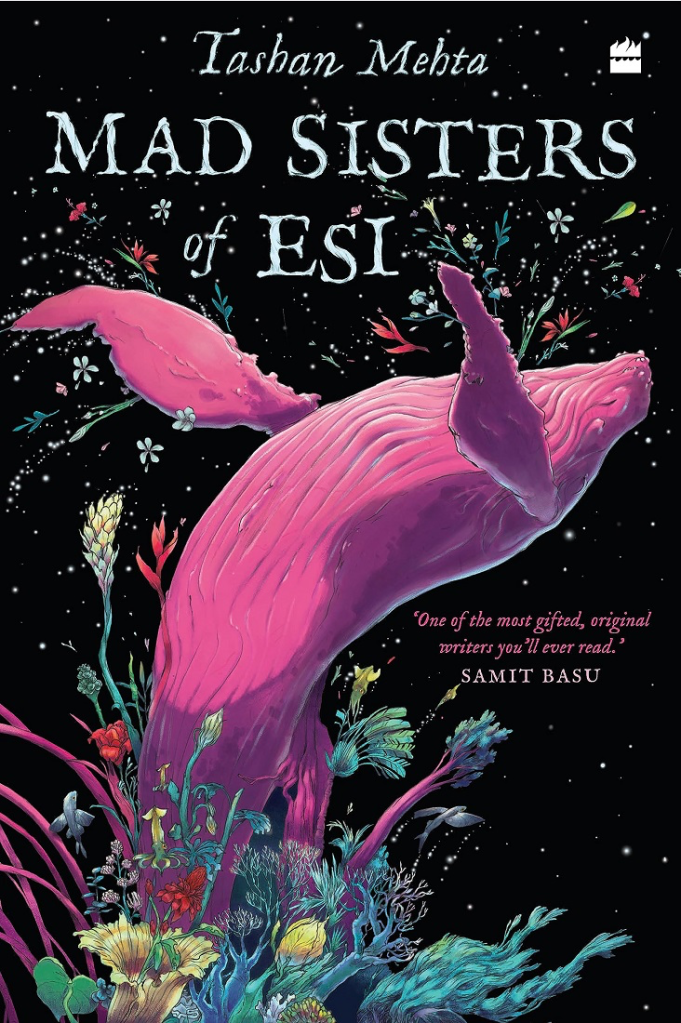
Mad Sisters of Esi – Tashan MehtaI promise I’m not putting this in here solely because of the whale…but I’m not saying they’re not connected. Either way, that surreal, imaginative quality of Eno pairs well with Mehta’s writing.

“Bullseye” (feat. Hozier) – Lucy Dacus

When Forever is a Feeling first came out, I felt like her having a Hozier feature added to the feeling that Lucy Dacus had begun to sell out. I suppose the overlap between their fanbases (read: gay people) was essentially a circle, so it probably was inevitable anyway. No disrespect to Hozier though—very talented guy, and I love his voice, but his music isn’t always my cup of tea.

To my surprise, “Bullseye” has become one of my most played songs from the album. There’s something so tender about it that reminds me of Dacus’ older work. I think what sets Dacus’ songwriting is that every emotion comes through in the most unexpected vignettes—the opening lines of “Next of Kin” (“Reading in the phone booth/Sucking on a ginger root”) come to mind. She has such a keen, observational eye that decorates her songs with the most unique setpieces, like some kind of musical bowerbird building a nest. While the ones in “Bullseye” stand out as more obviously romantic (carving locks into initials on bridges, reading annotations in your lover’s books), it’s so clear how much it shapes her songwriting. She admits it herself: “Found some of your stuff at my new house/Packed it on accident when I was movin’ out/Probably wrong to think of them as your gifts to me/More like victims of my sentimentality.” She’s a kind of museum curator of fleeting, stolen moments, which make up the core of “Bullseye.” And although Hozier isn’t normally my cup of tea, his voice with Dacus’ makes up such rich, heartstring-tugging harmonies that give the song an added layer of tender warmth.

Though I wasn’t able to catch her on this tour, the highlight has been seeing her perform this song, not just because of how lovely it is. She’s been making it her mission to duet with as many people as possible—David Bazan, Samia, Stuart Murdoch, and Jay Som, among others!

…AND A BOOK TO GO WITH IT:

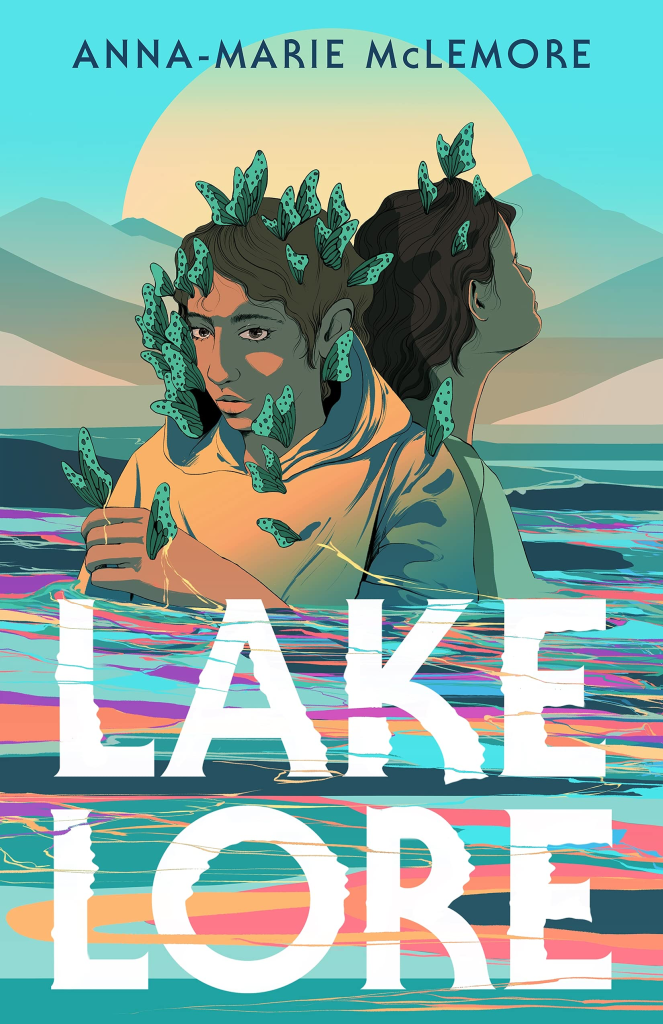
Lakelore – Anna-Marie McLemore“You’re a bullseye, and I aimed right/I’m a straight shot, you’re a grand prize/It was young love, it was dumb luck/Holdin’ each other so tight, we got stuck…”

“People in the Front Row” – Melanie

For the next two songs, we enter what I’m calling the Bad Sisters section. If I had a nickel for every Melanie song I’ve ripped from a season finale of Bad Sisters, I’d have two nickels, etc., etc.

Like many of Melanie’s more iconic songs, “People in the Front Row” is an anthem for sticking to your guns, even in the face of critics. It’s much more literal than others, and although her voice falters in wobbly ways, given the belts she’s capable of, it’s full of the same impassioned fervor of hits like “Look What They’ve Done to My Song, Ma.” The odd laugh-singing aside, it’s such a poignant, determined ode to the people who support your art through thick and thin, no matter how much critics kick you down.

…AND A BOOK TO GO WITH IT:

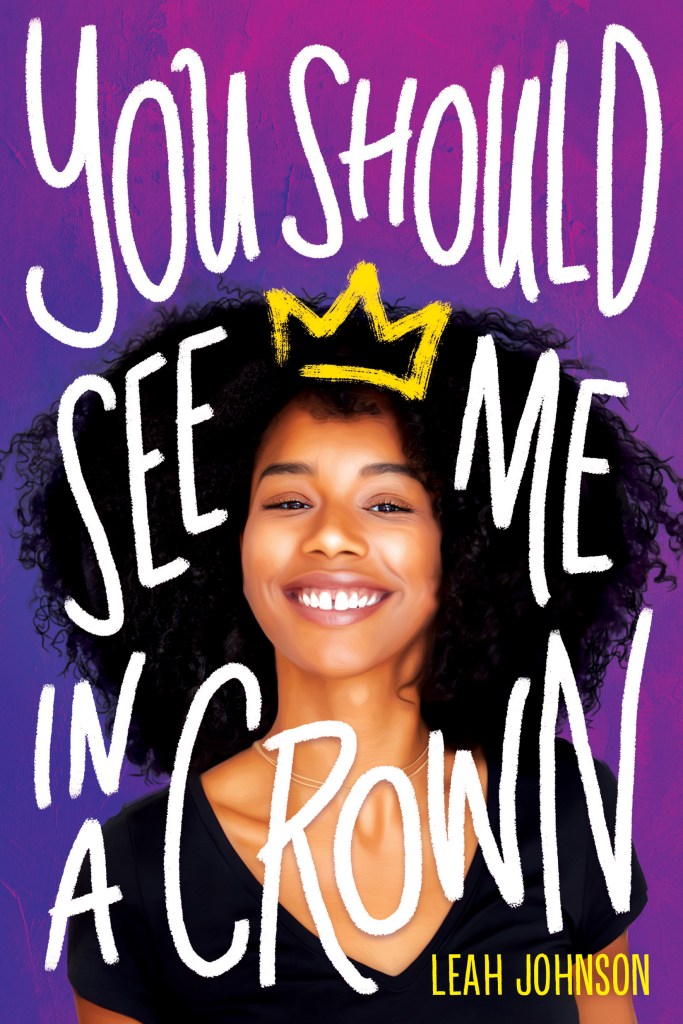
You Should See Me in a Crown – Leah Johnson“You know I looked around for faces I’d know/I fell in love with the people in the front row/Oh, how my predicament grew/Now I got friends, and I think that my friends are you…”

“Billie Holiday” – Warpaint

Warpaint have historically been hit-or-miss for me; I’ve loved their cover of David Bowie’s “Ashes to Ashes” since middle school, but most of their music has been rather lukewarm for me. I have a specific memory of trying to listen to their self-titled album on a whim several years ago and being, disappointedly, quite bored. But every once in a while, they’ll snag me out of nowhere (see also, from this EP: “Burgundy”).

This one came out of the blue in a scene in season 2 of Bad Sisters, ironically placed, given the context; it matches the eerie, melancholic tone of the scene, in which Becka finds out that she’s unexpectedly pregnant and, instead of telling her boyfriend, does what any sensible person does and…cheats on him with the guy that she’s insisted she’s over with. Naturally. (What the hell, Becka?? She’s a hot mess, if you couldn’t already tell.) There’s a deep irony behind using this song, which repeats various platitudes about staying loyal: “Nothing you can buy could make me tell a lie to my guy/Nothing you could do could make me untrue to my guy/I gave my guy my word of honor to be faithful and I’m gonna/You best be believing, I won’t be deceiving my guy.” [Ron Howard voice] Becka did, in fact, deceive her guy.

Maybe there’s a layer of irony to that beyond Bad Sisters, as although the melody is entirely original, around half of the lyrics, including the ones above, are interpolated from Mary Wells’ “My Guy.” When that much of the song is interpolated, it almost feels like cheating, even if the proper credit was given to Wells (as well as Smokey Robinson, who wrote the song). Yet it’s an entirely different atmosphere that they’re placed in, like a zoo animal let loose in a completely foreign biome; as opposed to Wells’ cheery, Motown organs, “Billie Holiday” is draped in reverb, misty strings, and acoustic guitars. It’s like wandering through a thick fog, where Wells’ song is as bright and clear as day. I suppose it’s a similar deal to Spiritualized’s use of “Can’t Help Falling in Love,” but that, to me, felt much more transformative, and used only one verse (as opposed to the three verses of Wells’ that Warpaint used). Easy way out it may be, but at least the end product is appropriately distinct, and compellingly dreamy.

…AND A BOOK TO GO WITH IT:

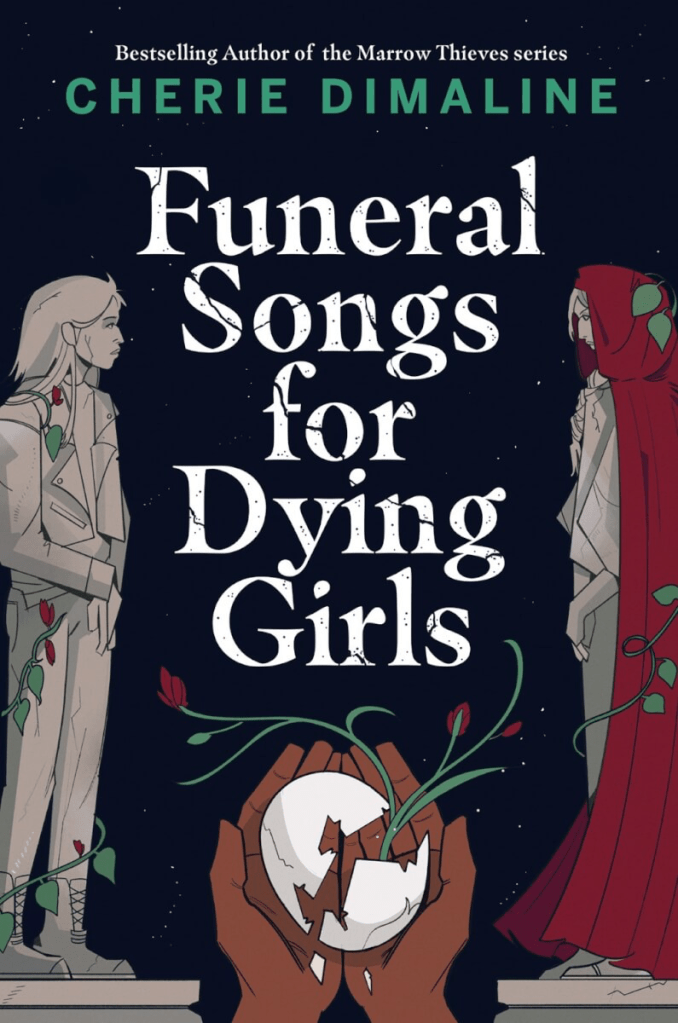
Funeral Songs for Dying Girls – Cherie Dimaline“As I walk this line, I am bound by the other side/And it’s for my heart that I’ll live/’Cause you’ll never die…”

“One Wing” – Wilco

Do you ever have those moments where a song hits you out of the park with some deeply vivid place in time that you didn’t see coming? Leave it to Wilco to throw another unexpectedly emotional curveball right into my face out of nowhere. Instantly, I had this feeling of being cold, of being in a gray parking lot. My mind placed it in November of 2019, by some uncanny instinct. I can’t place why, but I only just remembered that I had a borderline religious experience at the front row of a Wilco concert…in November of 2019. Maybe that parking lot was in the chill of the Mission Ballroom at night. My brain, inexplicably, just knew to place it at this time, even if “One Wing” isn’t in the setlist.

The brain truly fascinates me sometimes. There’s a part of me that wants to know everything about why it remembers what it does, and why it innately attaches feelings and memories to music out of nowhere. But somehow, I feel like that would ruin the magic of these fleeting, unexpected moments. I love the way my brain plays with memory and image the way it does, the way even the faintest whiff of an old tube of lipgloss or the notes of Nels Cline’s guitar is instantly transportive. I think it would ruin everything if I knew the precise logic of why my brain shuffles the cards and comes up with these vivid, dreamlike images. Sometimes, I think we ought to bask in that mystery. Tip our hats to the strange phenomena, etc. What a lovely, strange organ we have.

Oh, wait, I’m talking about a song, right? Oops. And what a song it is—I don’t know how this one completely passed me by, but Wilco always has the most moving surprises up its sleeve. From what I’ve heard of Wilco: The Album (featuring “Wilco (The Song),” there’s a lot of conflicting themes—said band theme song, more songs about murder, and determined love songs; but for an album like that, it makes sense for the songs to run the gamut of the range of the band. Next to “I’ll Fight,” “One Wing” makes clear sense—I’m not sure if it’s directly about Tweedy’s relationships, but there’s a clear undercurrent of wanting to rekindle faltering love and repairing something broken. (I’ve also seen interpretations that the “wings” allude to the divisions in American politics—literally the left and right wings—and while the broken relationship makes more sense to me personally, it makes me see things in a new light. A precursor to “Cruel Country” and “Ten Dead,” maybe?) That late-fall chill feels deliberate in the face of the haunted longing in “One Wing”—as the chorus picks up steam, it feels like icy wind buffeting against your cheeks, plucking tears from your eyes as you cling to someone for comfort. Nels Cline’s guitar, with a soaring tone reminiscent of A Ghost is Born, is as plaintive as Jeff Tweedy’s lyricism, all channeled into a plea for forgiveness against the friction of the world: “One wing will never ever fly, dear/Neither yours nor mine/I fear we can only wave goodbye.” It digs at such a tender, weak part in my soul…ouch, Jeffie.

…AND A BOOK TO GO WITH IT:

The Seep – Chana Porter“We once belonged to a bird/Who cast his shadow on this world/You were a blessing and I was a curse/I did my best not to make things worse for you…”

*”oh, haha, a goofy kid’s song!” without a shred of irony, this is an absolute banger. Somehow, it ended up being my most-listened to song for November, according to Apple Music. Never underestimate the power of They Might Be Giants writing about numbers.

**In other music news I haven’t gotten around to talking about…I try not to be in the active practice of hoping for people to get divorces, but I am so, so glad Régine Chassagne got out of there.

Since this post consists entirely of songs, consider all of them to be today’s song.

That’s it for this week’s Sunday Songs! Have a wonderful rest of your day, and take care of yourselves!