Old news: I’m desperate for good cozy sci-fi, and most of that desperation comes from the fact that nobody does it like Becky Chambers, but publishers will slap “perfect for Becky Chambers fans!” on literally any sci-fi book with a hint of several people crammed on a ship. It has to stop. Floating Hotel looked like it might actually live up to those expectations, but I was hesitant because I didn’t enjoy Grace Curtis’ debut, Frontier. But I’m glad I gave Floating Hotel a chance, because it was just what I needed!
The Grand Abeona Hotel knows no borders, no political affiliations, and no galaxy or planet to call home. But for many, the Grand Abeona is their home away from home—a safe haven where nobody cares who you are and why you’re here. Run by Carl, the aging manager who first came to the hotel as a stowaway, the Grand Abeona is home to a vibrant cast of characters, all of whom will have paths that will unexpectedly intersect. And as small mysteries begin piling up in the far corners of the Grand Abeona, Carl and the hotel’s misfit staff must pull the pieces together before the hotel itself is put in harm’s way.
In retrospect, there’s really no better book that I could have read on my Kindle, which has the Grand Budapest Hotel on the case. Some things were just meant to be.
I doubt anyone will ever top Becky Chambers in terms of cozy sci-fi, but Grace Curtis comes close—and that’s exactly why I’m so glad that I gave her another chance. Though it’s not without its mystery and relatively high-stakes subplots, Floating Hotel is a cup of tea for the soul: quiet, observant, and downright warm and charming.
My main issue with Frontier was that it promised action, but delivered next to nothing; it’s not that I don’t like books without action, but when your book’s tagline is “love, loss, and laser guns,” you kind of…have to deliver there, no? After reading Floating Hotel, it’s clear that quieter, cozy sci-fi is what Curtis was meant to write; aside from the rebellion subplot, which was relatively under-the-radar and wasn’t a major issue until the last 20% of the novel, this novel had comfortably low stakes. Although there was a fair amount of turmoil in the empire established in the world of Floating Hotel, you really do feel like the Grand Abeona is a safe haven from all of the ills of the galaxy. There, nobody cares who you are, so long as you have a story to tell.
Another issue with Frontier was that, with all of the characters and subplots it juggled, a lot of the plot points blended together, giving the reader little time to connect with anybody. If my leap from Frontier’s 2-star rating to my 4-star rating of Floating Hotel wasn’t indication enough, Curtis has significantly improved on that aspect of her writing in the space between the two novels! This novel similarly juggles a multitude of characters—many of whom only get one chapter in the vast sea of POVs—but all of them have a unique place in the story. None of the backstories or motivations felt forced, and all of them connected back to how the Grand Abeona has healed them as people; through all of their eyes, whether it’s a waitress, a piano player, or a professor visiting for a conference, you can see just how important of the Grand Abeona is as a safe haven. Floating Hotel is one of the few books with more than 10 (I think?) POVs that has truly worked for me, and it’s a combination of really being able to connect each one to the hotel and its story, and it incorporates other characters organically before we even get their POVs—the interconnectedness was so smooth that I didn’t mind the massive amount of voices displayed.
Curtis clearly understands the cozy part of cozy sci-fi that so many people who market books as “cozy” never seem to get—the near absence of stakes. For the majority of the novel, it’s a very down-to-earth, slice-of-life kind of plot where all of the mysteries are more humorous than troubling; I mean, one of the main subplots of the first half of the novel is trying to find the culprit of an anonymous admirer leaving love letters in the lobby index. And I ate it up. It’s just so gentle!! Is the fate of the galaxy at stake? Absolutely not! The hotel staff is just getting together once a week to watch terrible movies for nostalgia’s sake!! Peak cozy sci-fi right here, folks!! There are queer and disabled characters abound (WOOHOO!!), but neither homophobia nor ableism are plot points at all! They’re just going about their lives!! This is the stuff!!
What both Curtis and Becky Chambers get right about cozy sci-fi as well is that cozy doesn’t necessarily equal apolitical. In the background, there’s plenty of discussions of imperialism with the tyrannical empire crawling with shady cloning and nepotism (take a guess at how those two things tie together…). Curtis isn’t afraid to take stabs at capitalism, environmental destruction, xenophobia (I love the subplot about the empire banning media about aliens because it would compromise the perceived superiority of the human race), and so much more over the course of the novel, and it elevates it exponentially. It emphasizes another truth (for me, at least) about cozy sci-fi, and being a gentle person in general—cozy or quiet does not equal docile or unwilling to speak out about injustice. To quote IDLES, another bastion of kindness: “Ain’t no doormats here/It doesn’t mean you have to bow, or say “Your Highness”/Just kill ’em with kindness.”
All in all, a gentle and masterful piece of cozy sci-fi, and a marked improvement from Grace Curtis’ debut. Consider my faith in her writing restored! 4 stars!
Floating Hotel is a standalone, but Grace Curtis is also the author of Frontier.
Today’s song:
am I ashamed of listening to this on repeat while writing the third book in my sci-fi trilogy? absolutely not.
That’s it for this week’s Book Review Tuesday! Have a wonderful rest of your day, and take care of yourselves!
Happy Sunday, bibliophiles! I hope this week has treated you well.
Took me this long to get to a blue period…it didn’t happened until almost three months in the year, but of course it’s the one that ends up having Faith No More and Kermit the Frog in the same breath. Duality of Madeline.
In an outcome that should be surprising to no one, Chelsea Wolfe’s new record, She Reaches Out To She Reaches Out To She, absolutely rocks. Dare I say it might be one of her best albums in years? Birth of Violence was a solid album, but I remember it having some lulls, but then again, I haven’t listen to it since its release in 2019. I haven’t listened to her entire discography, but I’ve never met a Chelsea Wolfe album I didn’t like, but there are some that nudge their way past the others to the tidal wave of goth revelry that she’s come to be known for. I’ve meant to review at least a handful of the excellent singles that came out of this album, but I remember specifically that “Whispers In The Echo Chamber” came out at a time when I got unexpectedly swamped…when there were a bunch of fantastic blue songs I wanted to talk about. Oopsie. No time like the present, amirite?
In terms of themes, Wolfe always has something poetic up her sleeve, whether she’s making the skeleton of her album out of Jungian analysis or Tarot. They’re all deeply personal, but She Reaches feels more intimately so; here, she grapples with separation of all kinds: from past relationships, from present systems, and from future pathways that her life could lead her down. But as she’s draining the gore of all the past messiness out of her system, she’s burning bridges and building her new phoenix of a self out of the charred remains. Back to “Whispers In The Echo Chamber,” where she declares “this world was not designed for us,” (GO OFF QUEEN), whispering like a mysterious necromancer into the ear of the magic-oblivious king. The album finishes on “Dusk” and its promises of “Watch[ing] this empire as it burns and dissipates/Haunted, on fire, on the wings that we create” (GO OFFFFFFFFFFFFFFF), with Wolfe finally detaching herself from this lowly, undeserving mortal plane, and giving a final, cold look to us mortals before disintegrating into a cloud of vampire bats. God, I love her. With such stacked competition, I was grasping for a real favorite on the album, but I cannot stop coming back to “House of Self-Undoing.” After the triumphant declaration of independence in “Whispers,” the second track finds Wolfe extricating herself from the turmoil that she sought to free herself from (“In the house of self-undoing/I saw your face”). Most of the heavier tracks on She Reaches are heavy in the way of Wolfe’s goth dark theatricality and billowing cloaks, but “House of Self-Undoing” is pure rock, grinding with percussion like speeding footsteps and guitars smoother than hotel bedsheets. There’s a nervous, frantic energy that claws its way out of every note, just as Wolfe’s lyrics point to, as the boldness of separation gives way to the physicality of fleeing the old and bursting into the new. It’s the journey of clawing up through the earth and spitting out the dirt in your mouth, before your caked fingernails break the surface to find the sunlight.
…AND A BOOK TO GO WITH IT:
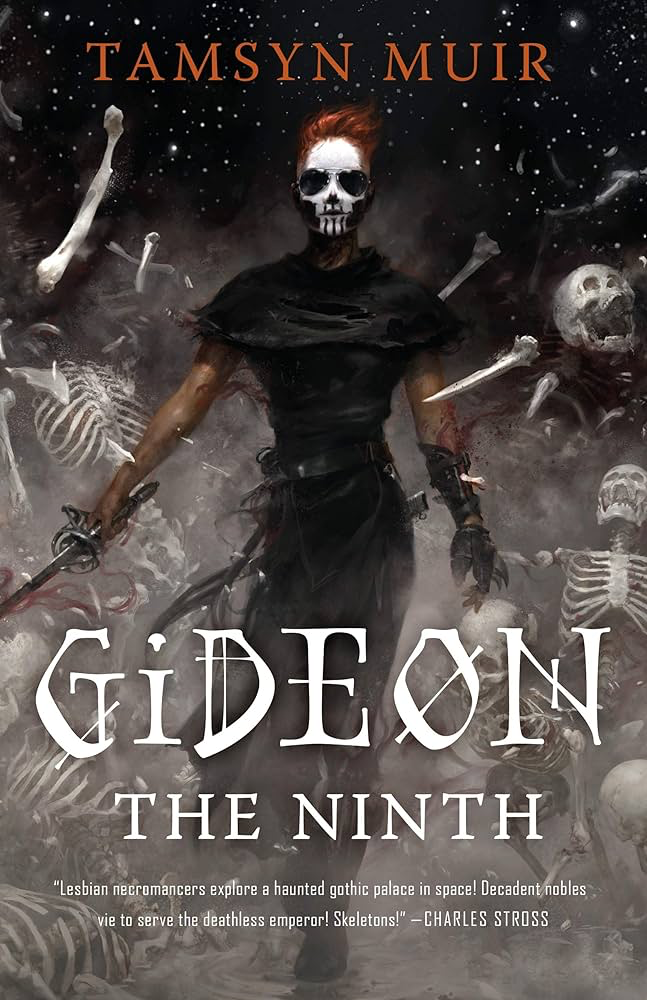
Gideon the Ninth (The Locked Tomb, #1) – Tamsyn Muir – as much of a disappointment Harrow the Ninth turned out to be, I can’t deny how fun this book was. The general underworld/undead imagery is already fitting enough, but the themes of separation from a past life are the icing on the cake.
The only proper way to describe “Midlife Crisis” is something along the lines of a feat of acrobatics. There’s so many twists, turns, and midair flips that this song executes one after the other that just makes you wonder about the mad scientist’s lab that it was surely cooked up in, because surely something bizarre and outside of human comprehension went into polishing this track to a shine. God, it just goes sohard.
Like Post, “Midlife Crisis,” over 30 years after its release, sounds like everything and nothing, but in this case, what a decent portion of the world of hard rock took from Mike Patton’s vocal acrobatics and spit out was…nu metal. Jesus. Urgh. I’ll dispense from my rant about why nu metal gets on my nerves since it’s more of a personal vendetta than one that has any kind of logical basis (listen, you try and do 50 push-ups at Tae Kwon Do while Linkin Park is blasting through the speakers), but they would’ve had nothing if not for this song. You can hear exactly where Korn got their Cookie Monster gibberish-vocals from on a single go-around on this song. What sets Mike Patton apart from them, however, is the range that he crams into these astounding four minutes; you’ve got said grimy Cookie Monster vocals, but just as quickly, he turns a corner into a soaring smoothness that makes you wonder if somebody slipped him the world’s most powerful cough drop in the time it took him to switch over. Going from those kinds of extremes so quickly and seemingly without breaking a sweat…if that’s not talent, I don’t know what is. And the scorn that this song radiates—”You’re perfect, yes, it’s true/But without me, you’re only you.” DAMN. Also, for the longest time, I thought that the line afterwards was “you’re menstruating hard” and not “your menstruating heart,” which…yeah, the actual line makes much more sense, but somehow, I feel like Patton seems like the type of guy to just say a line like “YOU’RE MENSTRUATING HARD 🗣🗣🗣🗣” with that delivery out of the blue. It was ’90s hard rock. Somehow, it works. Faith No More struck gold with this gift of a song, for sure.
…and I haven’t even gotten to the synth breakdown at 2:22. Good lord. Speaks for itself, really.
…AND A BOOK TO GO WITH IT:
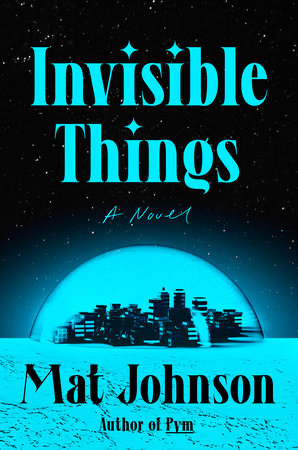
Invisible Things – Mat Johnson – scorn, grime and polish in equal measure, and a bunch of alien abductees recreating Trump-era American in a bubble city on Europa. Time to party, right?
I meant to talk more about Plastic Beach back in December when I first listened to it, but I can’t not come back to it, like most Gorillaz albums that I’ve listened to in full. (Maybe not Song Machine. Like…half of Song Machine. And not Cracker Island. Okay, the first three Gorillaz albums.) Besides being a sweeping showcase of both Albarn’s overflowing musical talent and the storytelling about a tech-invaded future and rampant consumerism, Plastic Beach, I think, is the first album that cemented their reputation for having a continuously stacked list of guest artists. I sincerely doubt that there will ever be another band to have Snoop Dogg, the surviving members of The Clash, and Lou Reed on the same album, and that’s not even because Lou Reed is no longer with us. The minute that I found out that there was a song that had both De La Soul and Gruff Rhys from Super Furry Animals on it, my soul just about left my body. There’s just no band quite like Gorillaz in the way they can unite and fuse genres and appeal to so many without selling their souls. I fully believe that Gorillaz are the people’s band. The arty people like them. The pretentious music nerds like them. The jocks like them. The alt people like them. I have a distinct memory of these two bros in my senior year chem class going through their Spotify, and then one of them declared “BRO, THIS IS OUR SONG,” and I fully expected something absolutely rancid, but no. It was “Dare.”DARE. Gorillaz is one of the few bands that have something for everybody, and not in the way that people say that they like “every genre” of music. Albarn’s many strengths in this part of his life hasn’t just been the varied influences that he brings to his music, but the way that he gives them a chance to have their say—Gorillaz is an amalgam of so many gems from so many places, and yet, save for some of their newer albums, hardly any of it doesn’t feel like them.
Onto “Sweepstakes.” This is one of the two Mos Def features on Plastic Beach (the other being “Stylo,” which was incredible live, by the way), and I’m frankly baffled that this one doesn’t get the attention that some of the other tracks on the album do. I’d risk it all to see this one live, especially if they actually bring out Mos Def and the Hypnotic Brass Ensemble onstage. In the video above, Mos Def comes out in…basically an Abraham Lincoln getup, if we count the beard, announcing prizes like a slick auctioneer, before launching into the truly charged, energy-pumped vibrations of this song. Energized is the only word you can ascribe to this song, really. From the beginning, the drum machine thrums a beat that hiccups so deliberately that you can’t help but start jumping. Bringing these three creative forces together on the song was the perfect recipe for a classic—Albarn’s penchant for engineering iconic dance beats, Mos Def’s commanding gravitas that he brings to each lyric, and the creeping, tidal force of the Brass Ensemble as the joyous, urgent burst of horns emerge from the curtain of synths like the chestburster clawing its way out of Kane’s body. It’s a song that begs to be heard, meant to be blasted down the streets in waves of confetti and marching feet—and that’s not just because of the brass that commands the latter half of the song. And for a song about mindless consumerism, exploitation and the duping of the working class by the rich (“‘Who’s the winner?’ Said the dealer/Every player, ‘Yeah, me'”), the infectious triumph is the most intentional thing about this track. Only fitting that The Hypnotic Brass Ensemble’s track “War” would be used for the Hunger Games movies only a few years after this. You’re a winner!
…AND A BOOK TO GO WITH IT:
Prime Meridian – Silvia Moreno-Garcia – telling the working class that they can do anything they set their heart to while the ruling class ignores them completely and colonizes Mars, anyone? Sound familiar?
Guess I just can’t stop listening to XTC, huh? In case you were wondering (because you totally were, I’m sure), “The Ballad of Peter Pumpkinhead” continues to have me in an unbreakable chokehold, but this one is good competition.
’60s inspiration can be found in almost any XTC song you can pull out of a jar, even if you ignore The Dukes of Stratosphear, which were just them under another name marketed as a “lost find” of the ’60s (and then ended up outselling any of their XTC records…ouch). For me, “1000 Umbrellas” immediately screams The Beatles, specifically in 1967—somewhere between Sgt. Pepper and Magical Mystery Tour. It’s pure theatre; even if the album, Skylarking, wasn’t a vague concept album, it practically begs for some kind of dramatic performance. Can’t you just imagine a scene of an aerial view of a bunch of pedestrians holding umbrellas in the rain, and Andy Partridge right smack in the middle of them, lamenting the loss of love as the rain pours down on him? Maybe the umbrellas morph into those pastel, spinning teacup rides as Patridge sings “And one million teacups/I bet couldn’t hold all the wet/That fell out of my eyes/When you fell out with me?” I particularly love how the orchestral arrangements seem to rise and fall, tilting just barely out of neatness and into delirium as Partridge wails, stumbling right along with the beleaguered strings section. On the heels of “Ballet for a Rainy Day,” the rain turns from the kiss of spring to cold, damp misery (a word that he frequently drags out like a ridiculed prisoner in medieval times) and like the swells of the orchestra, Partridge moans and wails like an actor trudging across the stage, the spotlight following him as he holds his broken umbrella against the downpour. I swear that this song needs a broadway-style, “It’s Oh So Quiet” music video—the imagery is jus too vivid for it to go without it.
And then we’re right back to having a jolly old time with “Season Cycle.” Duality of Skylarking.
Yeah. Well. If you need me to pay for your insurance following this whiplash, I’ll fork it over. But this is more of a palate-cleanser, right? Guess I ought to keep you on your toes. Or maybe you just need a bit of a break from Mike Patton growling about your menstruating heart. Take a breather. Find the rainbow connection.
Honestly, this song came on here solely since I’ve been thinking about The Muppets lately, and how glad I am that I had such an absurd and clever slice of positivity in my childhood. There seriously will never be another creator quite like Jim Henson, but it’s worth it to take his felt-covered gospel to heart: to keep imagination and joy close to your heart, always, whether or not you have an equally whimsical puppet on your hand.
…AND A BOOK TO GO WITH IT:
Any comforting book from your childhood – whatever made you feel good when you were younger should do the trick.
Since this post consists entirely of songs, consider all of them to be today’s song.
That’s it for this week’s Sunday Songs! Have a wonderful rest of your day, and take care of yourselves!
Happy Sunday, bibliophiles! I hope this week has treated you well.
It’s finally starting to feel like spring again. The birds are singing, the grass looks much less dead, the sky is bright and decidedly un-cloudy, and Those Dudes™️ are still wearing nothing but tank tops, shorts, and flip flops in 30 degree weather. Which, I should clarify, is an outfit choice that has not changed from a few weeks ago, when it was cold enough for ice to form in my water bottle. I wish I was kidding.
But we are filled with springtime warmth and joy this week! The sun is shining! For once! Joyous whimsy prevails!
Like a many other music nerds out there, I celebrated last Friday (March 3) by listening to De La Soul’s 3 Feet High and Rising, finally back on streaming, along with their other first 5 albums, after decades of legal troubles. I’d been hearing tracks like “The Magic Number” and “Me Myself and I” from early childhood, and I got worried that I’d hyped myself up far too much, but this album is as groundbreaking is as everybody says it is. Despite the years of misinterpretation and the record label’s hippie branding of the group (and “Me Myself and I” becoming their equivalent of “Creep,” so much so that all of their non-televised performances of it are always introduced by them telling the crowd to chant “we hate this song!”), it’s been taken all the way to the Library of Congress as a pivotal piece of music history. I’m not up to date on my hip-hop history, but even without that context, it’s easy to see what a sea change this was for a genre—it’s the work of three friends, barely out of high school, with the goal of having fun and playing with samples. And it’s a masterpiece.
This spirit is something that the delightfully goofy “A Little Bit of Soap” embodies. It’s not even a minute long (part of which is still taken up by a piece of the game show skit that continues through the album), it samples an obscure 60’s pop song of the same name, and the lyrics are just about B.O. And it’s GREAT. It proves that those middle school boys who barely showered and used AXE body spray to cover up the shame have existed since time immemorial. There’s something to be said about shorter songs like this, ones that clearly exist just for fun—creativity, for me at least, is primarily to amuse myself before it turns into something else. And that seems like exactly what Posdnuos, Trugoy, and Maseo were trying to do—having fun with each other, and making something innovative in the process. Happiness and genuine joy and fun should never be dismissed as low art just because it’s not “deep”—that mentality is the enemy of creativity.
And it’s been a month now since we’ve lost Trugoy the Dove. One the one hand, it’s deeply tragic that he never got to live to see his music return to the world, but I’m comforted by the fact that he at least could rest easier knowing that the years of legal battles had come to an end, and that De La Soul would finally be able to reach the wider audience that it always deserved. You will be missed. 💗
When Bret said “Then ************ Granny Smith ******** ******** ** an avocado ********mango ********” ? Man, I felt that. I really did. “He’s gonna wake up in a smoothie”? Never before has such an assertive display of power and dominance been made in music history. Bret McKenzie is the ultimate alpha male. Sigma, even. Take notes. Fear him. It’s gonna get vicious and malicious. (He wants his Red Delicious.)
I already talked about this song briefly in my review for Cracker Island,but I can’t praise this song enough. Never in my very brief years of Earth would I predict that I would have a song with looped chicken clucking sound effects on repeat, but life is full of surprises, and Gorillaz is here to deliver. I thought the days of Gorillaz collaborating with Del the Funky Homo Sapien (as Del the Ghost Rapper) were gone before my time, and whether or not this is a nostalgia grab, the 20+ years of waiting has paid off. Just like every track they made together on Gorillaz, Albarn and Del have created another pop masterpiece, just under two minutes but packing a punch than most of Cracker Island itself. Some songs are too long or too short for their own good, but like “A Little Bit of Soap,” “Captain Chicken” is the perfect, short-and-sweet time capsule of two exceptional musicians sounding like they’re both having the time of their lives. This is the fun, pure Gorillaz spark that most of Cracker Island was missing for me, but this song is out now, and I don’t think it’s a reach to say that we’re all grateful for this little gem.
I’ve got a confession—I love all of the Beatles in their own way to some extent, but I’d put John Lennon as my least favorite, as much as I love his voice. Probably heresy, and who wouldn’t love his message of peace, but after watching Get Back recently, he just seemed kind of insufferable? There’s no denying his musical genius, but every joke he made there just felt more like trying to be funny than actually being funny. And I haven’t even gotten to the wife-beating aspect. Yech. Don’t go deep-diving into 50% of singers from the 50’s to the 90’s, kids. Disappointment awaits.
None of that is excused, but it’s songs like this that make me go back on the obvious musical prowess of people like John Lennon. I think Rubber Soul is the only Beatles album left on my list that I want to listen to, and it’s songs like “Girl” that make me want to listen to it. In this day and age, it’s hard to see how groundbreaking it was, but at the time, it was rare for a pop band as big as they were in 1966 to make a love song quite like this. It’s not the (undoubtedly catchy) sunshine and rainbows of their first few albums; it’s more than a little folksy, and it starts to dig into a melancholia that the genre had barely touched with a ten-foot pole at that point. Every detail makes it such a strange, wonderful pop song—John Lennon’s hissing inhalations in the chorus, the eerily beautiful harmonies of Lennon, McCartney and Harrison (which I can never praise enough), and the guitar work, which was apparently played with the capo extra high on the neck to make the sound resemble a bouzouki. From what I’ve heard, Rubber Soul served as the Beatles’ gateway into their truly innovative work, delving into pure psychedelia on Revolver, which came out later that same year, and to this day, “Girl” and many of the album’s other track are a time capsule to the Beatles just before they leapt off the precipice and into the musical unknown.
Nothing like the realization that Amy Adams was in this movie hitting you like a train directly on the heels of ugly crying to Arrival, amirite? That’s some whiplash. Needless to say, that’s some impressive range.
And if you take one thing away from both this song and this post, it’s that Bret McKenzie did NOT have to go that hard with the Muppets soundtrack. I’m just picturing the guy just coming into the studio with a notepad, eyes glowing red and levitating, and laying the lyrics to this and/or “Man Or Muppet” down on the table, and everybody just refusing to question it. I can still remember having this as the first song on a scratchy CD, and only ending up hearing it and “Eight Days a Week” because it conked out on me after track 2. I have many fond memories of sunny afternoons listening to this song while organizing the Calico Critters house that I got for my birthday that year. The voice of a generation. What can I say? Life’s a fillet of fish.
Since this post consists of all songs, consider all of them to be today’s song.
That’s it for this week’s Sunday Songs! Have a wonderful rest of your day, and take care of yourselves!





 The Bookish Mutant