Happy Tuesday, bibliophiles!
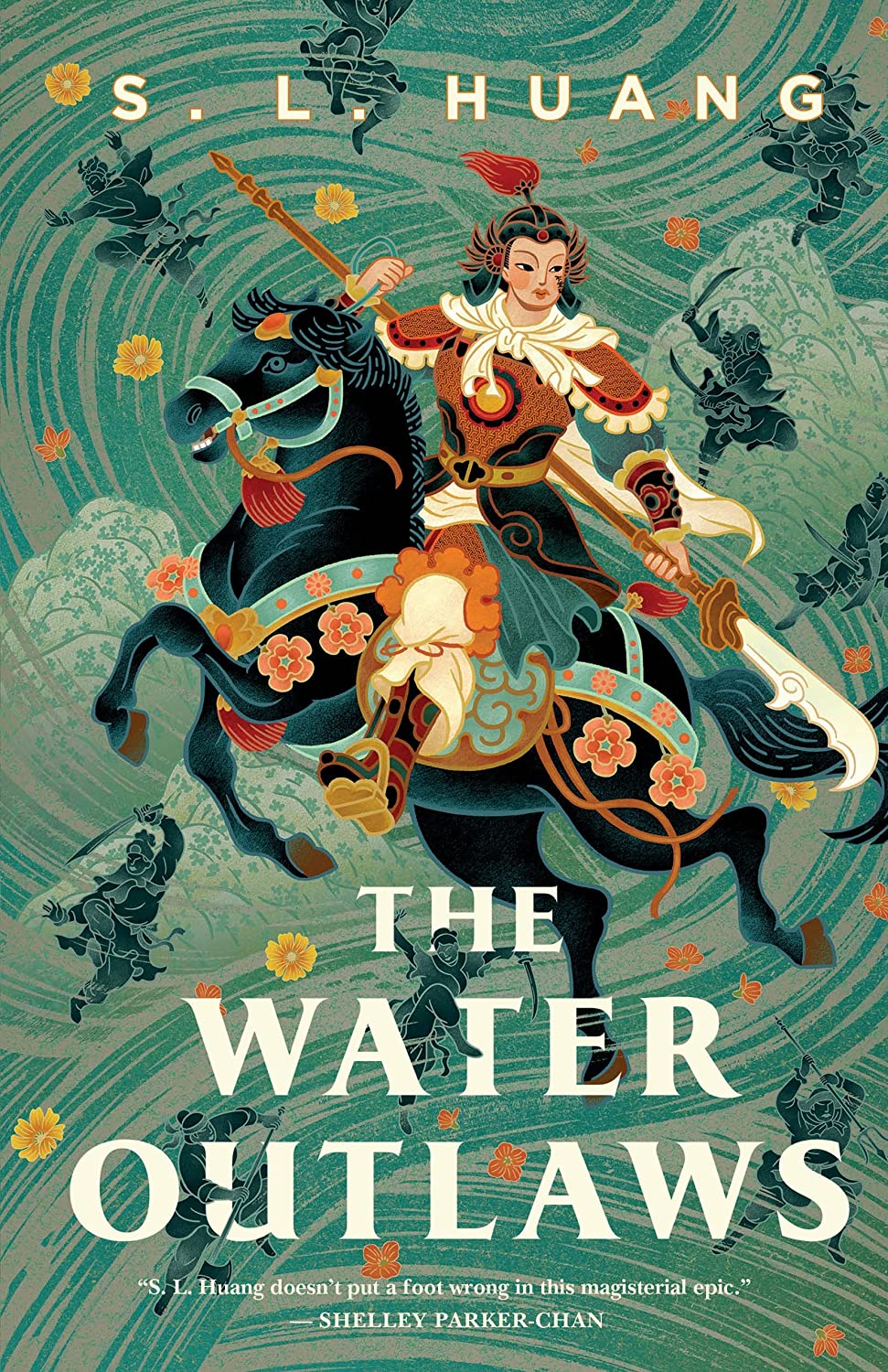
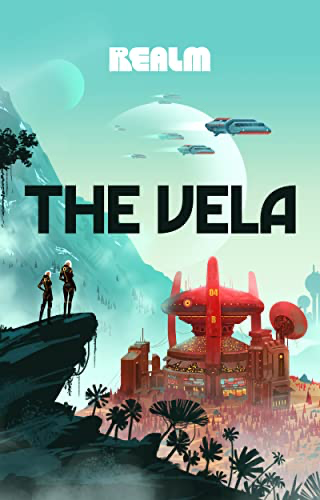
I discovered S.L. Huang through The Vela and The Water Outlaws, and I was intrigued enough by their writing to put The Language of Liars on my TBR. It was the most compelling premise I’d seen in any of their novels—and it quickly proved to be their best.
Enjoy this week’s review!
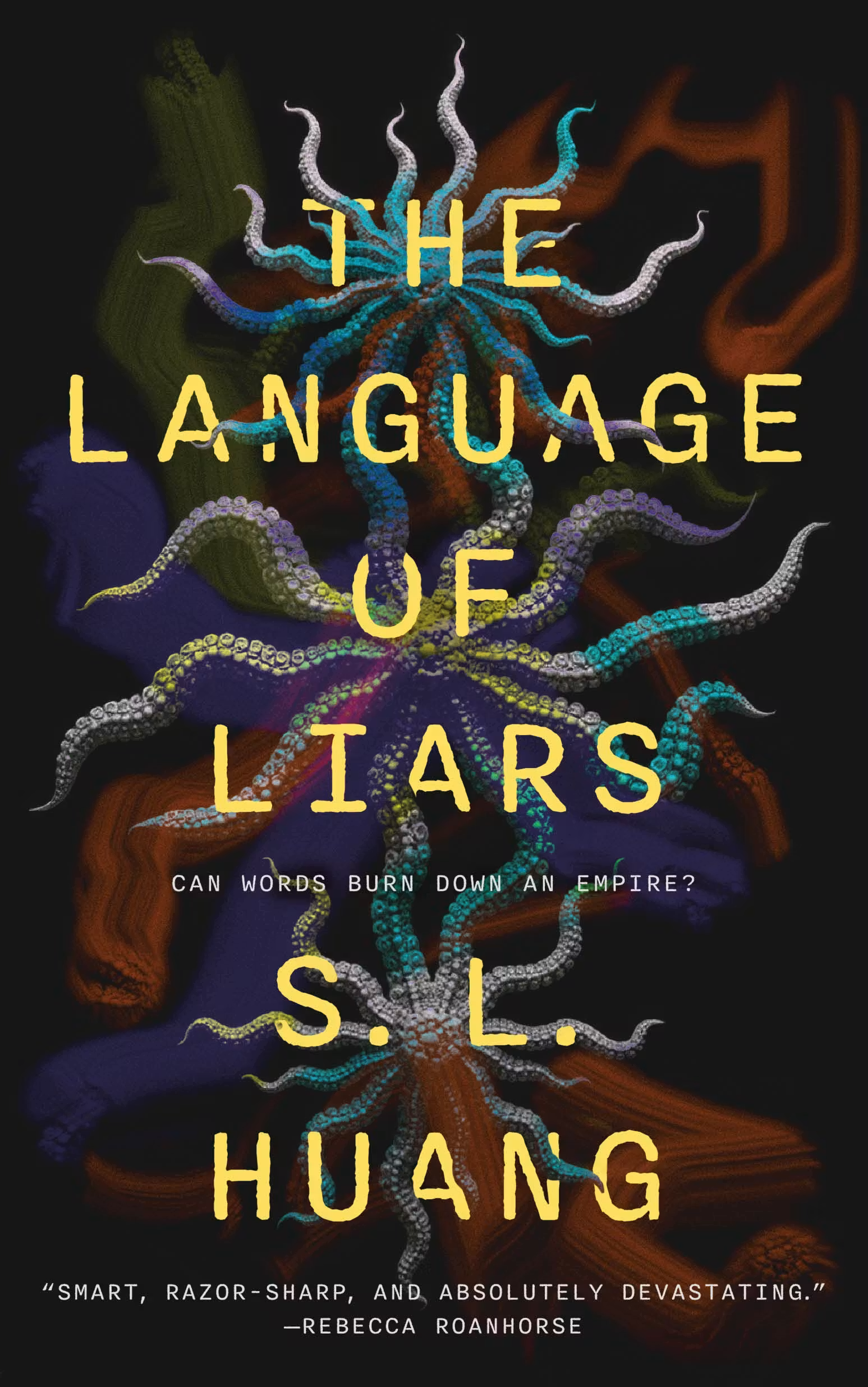
The Language of Liars – S.L. Huang
The Star Eaters are the key to making sure that galactic civilization runs—they are the only species who can mine the element required for space travel. But so little is known about them—scientists haven’t been able to figure them out and linguists have not been able to decipher their language. The only way—or so Ro has been told—is to jump into their minds, inhabiting their bodies in order to pick apart their enigmatic existence. Ro has been assigned to jump into the mind of a Star Eater, and he carries a monumental amount of responsibility on his shoulders. But the more Ro figures out about the Star Eaters, the more he realizes that this mission was never about understanding, and that the sinister ulterior motives may spell a horrible fate for him and his team.
TW/CW: genocide, torture, imperialism/colonialism, slavery, police brutality, violence
TREAD LIGHTLY! This review contains spoilers, so if you haven’t read this novella and plan to, read at your own risk.
I’ve only read one full novel by S.L. Huang, but after reading The Language of Liars, I’m convinced that this is their best work yet. Few other novellas are able to pack so much top-notch worldbuilding, twists, and emotions into so few pages, but this one did. I’ve been thinking about it for days.
I enjoyed The Water Outlaws, but I wasn’t quite as invested in the story as I was with The Language of Liars. What carried over from that novel was Huang’s distinct writing style. They excel in extruding the raw emotion from the most minute, overlooked moments. Every little thing is important to Huang, and that made The Language of Liars into a truly unique novella. The care they put into each metaphor carried over to the care they put into each minor character. The inhospitable, alien world and all of its contradictory rules were written tensely—and intensely. I find myself thinking of Octavia Butler’s famous note to herself, where she vows to “make people FEEL, FEEL, FEEL!”; Huang certainly carries on Butler’s legacy in that regard—as well as their commitment to making anti-colonial sci-fi that truly makes you think.
The world of The Language of Liars is a truly intricate one, but Huang pulled off the exceedingly tricky feat of establishing it a) in less than 200 pages, and b) doing it without unwieldy chunks of exposition. Part of why I think Huang was so successful was because of the tidbits at the beginning of each chapter: passages from books, news segments, and quotes from fictional politicians all buttressed this world, making it feel real in the spaces between the narrative. Beyond that, Huang did an excellent job of not only pulling off this marvel of worldbuilding, but making it compelling. There’s a whole host of fascinating species, all with their own cultures and wars that the narrative is able to dip its toes into without derailing the plot. I especially loved all of the cultural quirks of Ro’s species, and the creature design in me loved how Huang went beyond “these aliens look like rabbits” to integrating rabbit-like behaviors into their language and culture.
I debated whether or not to reveal the big twist of The Language of Liars in this review because it knocked me off my feet and I don’t want to ruin that for other people. And yet, it’s so hard to discuss this novella without talking about it, and I desperately want to talk about it. As it turns out, this cutthroat social system of the Star Eaters is entirely a fabrication, and the reason that the Star Eaters’s culture is so enigmatic and unknowable is that it cannot be known—all of the remaining Star Eaters’s consciousnesses have been hijacked by other alien spies like Ro. It gutted me. The other civilizations were so desperate to “understand” (read: figure out so they could adequately exploit) the Star Eaters that they committed a mental genocide on the entire species, and everything about their culture that could’ve been discovered has been lost forever. It’s a seismic blast of a twist. And it makes such a potent point about the nature of imperialism and the history of anthropology and linguistics—sometimes, something as innocuous as attempting to understand another culture or language can quickly be turned into tools of exploitation and slavery. Though there was the faintest (faintest) glimmer of hope at the end, that haunting conclusion has stayed with me for weeks. Not only did I not see it coming, but the way that Huang executed it made everything fall into place horribly—it takes a hard left turn into psychological horror, in my opinion, but it’s the horror of imperialism.
The Language of Liars isn’t necessarily about disability, but Ro is hinted to be neurodivergent. I hesitate to put an exact name to it, as he’s an alien with entirely different physiology and brain chemistry. (That being said, some of the traits that Huang names are similar to autism, namely a difficulty grasping social cues and aversions to certain food textures.) However, I think a part of the twist that stood out to me is that the entire premise felt innately neurodivergent. Here you have Ro, who goes undercover into the mind of an alien creature to get to the bottom of their language and culture, and is shoved headfirst into a world of intricate, often contradictory social cues. Say the wrong thing, and you’ll be punished, and yet everybody else is unwilling to share what it is that makes words or phrases “wrong.” And as the twist tells us, this intricate, contradictory system of words is a house of cards that’s easily toppled: nobody knows what to do or what to say in the end, only that one wrong word could mean death. Everybody’s just performing normalcy, but it all falls apart at the drop of a hat. The Language of Liars felt so neurodivergent to me, and Ro’s journey of struggling to figure out this thankless construction of language hit home for me in more ways than one.
All in all, an inventive and haunting novella that packs a startling amount of power into less than 200 pages. 4.25 stars!
The Language of Liars is a standalone, but S.L. Huang is also the author of The Water Outlaws, the Cas Russell series (Zero Sum Game, Null Set, and Critical Point), and several other novels for adults.
Today’s song:
That’s it for this week’s Book Review Tuesday! Have a wonderful rest of your day, and take care of yourselves!