
Happy Sunday, bibliophiles! I hope this week has treated you well.
This week: who would win in a fight: righteous haterism or unfettered whimsy? Neither, actually. They’re both more powerful when they’ve joined forces.
Enjoy this week’s songs!
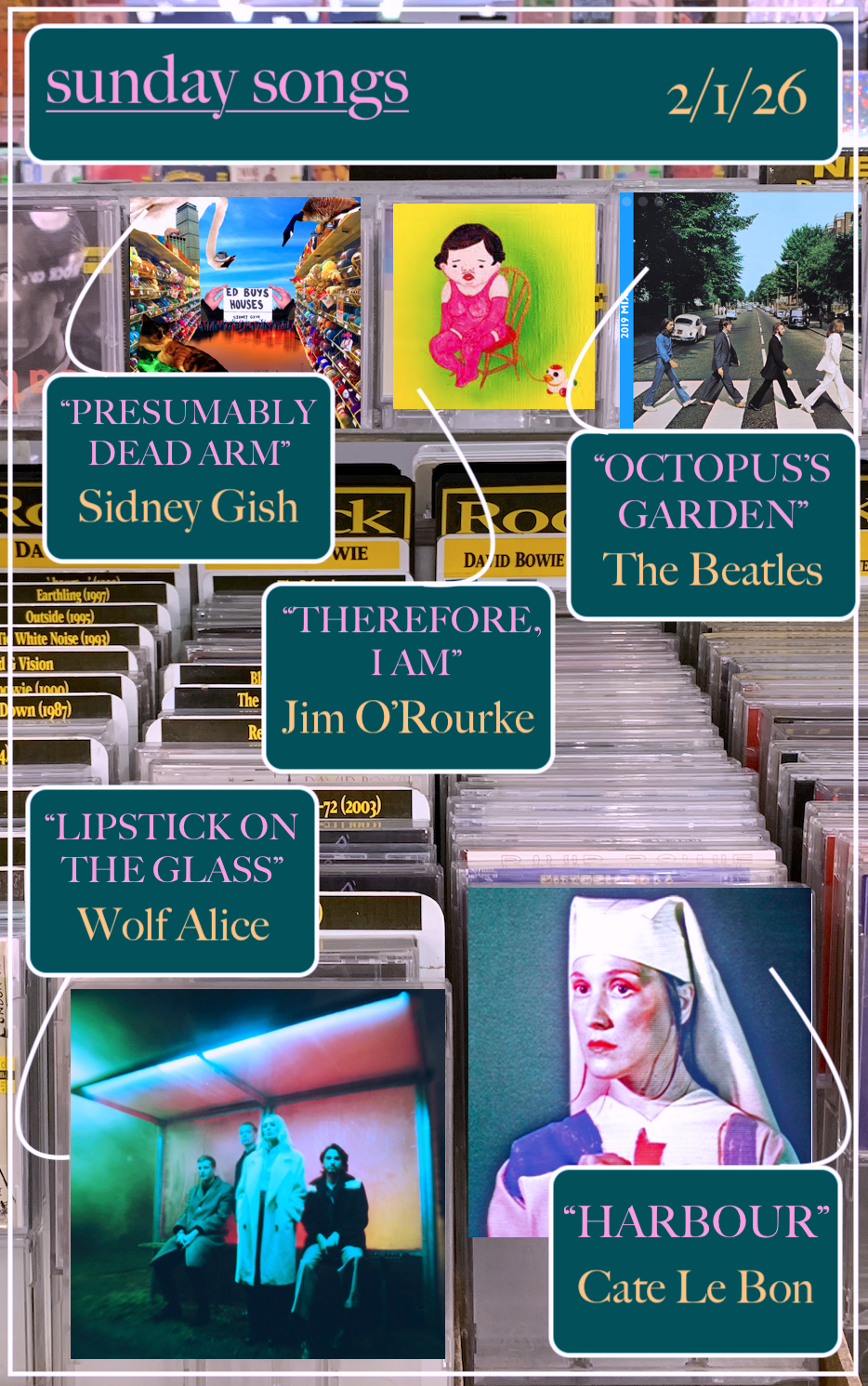
SUNDAY SONGS: 2/1/26
“Lipstick on the Glass” – Wolf Alice
It feels redundant to say that this is a very 2010’s song for it coming out of the 2020’s—”Lipstick On The Glass” only came out in 2021, and Wolf Alice were active all throughout the 2010’s anyway. And yet, I can’t shake how much they’ve crystallized that 2010’s indie sound. This song feels like a cousin of Eisley’s “Currents,” a favorite of mine in middle school, which came out in 2013. Both of them feel very cloudy and foggy, but adorned with clear, angular sparks that stick out of the mist like fragments of crystal. Even through the almost Cocteau Twins-kaleidoscope in the chorus, Wolf Alice have set up a system of lighthouses: the sharp percussion, and Ellie Roswell’s vocals, that range from a husky whisper to a diving bird of prey cutting through the sky. Free-floating and without much of an anchor, “Lipstick On The Glass” ha such a sense of urgency despite the deliberate blending of most of its musical shapes and textures into each other, making for an exciting, cinematic blend—especially when the chorus first kicks in. That beat drop is even more gratifying paired with Roswell’s lyrics, succumbing to the siren song of an old lover. But even after that beat drop, “Lipstick On The Glass” is beguiling all the way through.
…AND A BOOK TO GO WITH IT:
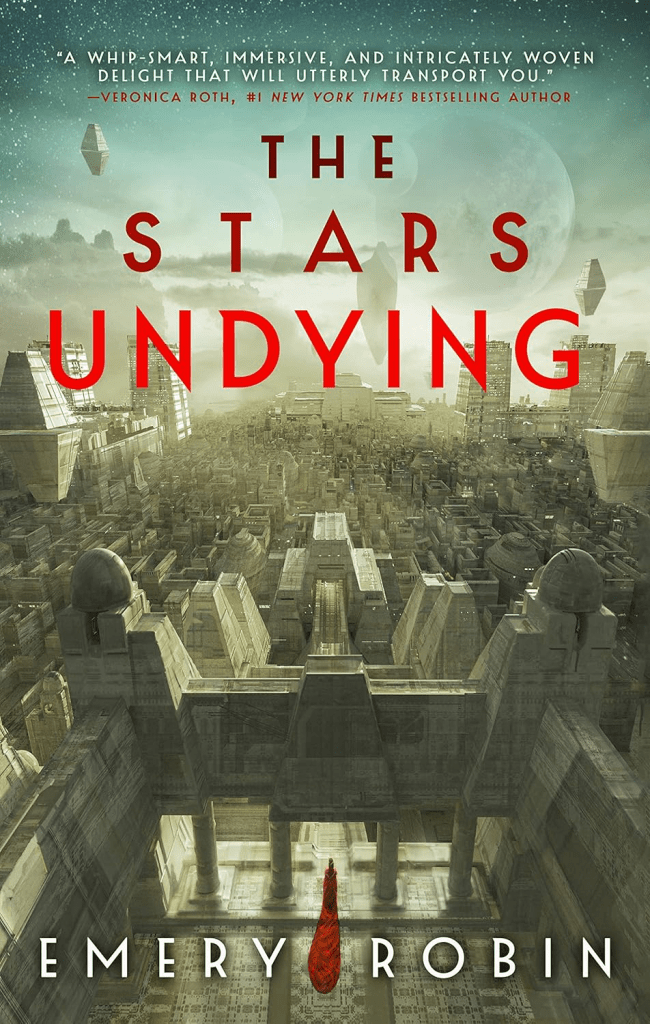
The Stars Undying – Emery Robin – “Oh, my body does deceive me/Just as did yours/Though we’re fighting different wars/In our ways…”
Straightforward for Cate Le Bon usually means that it’s still delightfully strange. When I first listened to Pompeii, “Harbour” was actually one of my least favorites—I never disliked it, but it wasn’t as in-your-face inventive as some of the others on the first listen. It’s a case of every song on the album being excellent, so the benchmark is extra high from the get-go, making songs like this get lost in the dust. To be fair, after experiencing “Dirt on the Bed” for the first time tends to overshadow all else when you listen to Pompeii, but that’s no excuse for leaving a song like this to languish. I maintain that it’s one of the weaker songs on the album, but at this point, a weak Cate Le Bon would be a career highlight in your average artist’s hands.
Pompeii as a whole has a pretty even, calm pace, as adorned with all kinds of weirdness as it is. “Harbour” got lost for me because it didn’t have the same strangeness on the surface, but the more I listen, the more layers I find hidden within it. That’s the joy of Cate Le Bon for me—even her more radio-friendly songs conceal everything from watery, pre-Michelangelo Dying synths to spurts of saxophone that sound like the happier cousin of the brass blasts at the end of “Dirt on the Bed.” Pompeii as a whole is quite ’80s, but not in the way of shoving neon synths down your throat—it’s just a more subtle exploration of the sound rather than a way to farm nostalgia; even so, the specific use of saxophones in “Harbour” veered too close to the latter territory on my first listen. Once again, the bar just breached the stratosphere, given how seamlessly Le Bon has been able to integrate saxophones (and brass in general) into her music without it being full on “Careless Whisper” cheese. Now, though she’s used it in better ways, it’s still a cut above the rest. That goes for “Harbour” as a whole—she’s a master at manipulating seemingly ordinary elements and twisting them just far enough to the left to make you do a double-take. She’s full of surprises.
…AND A BOOK TO GO WITH IT:
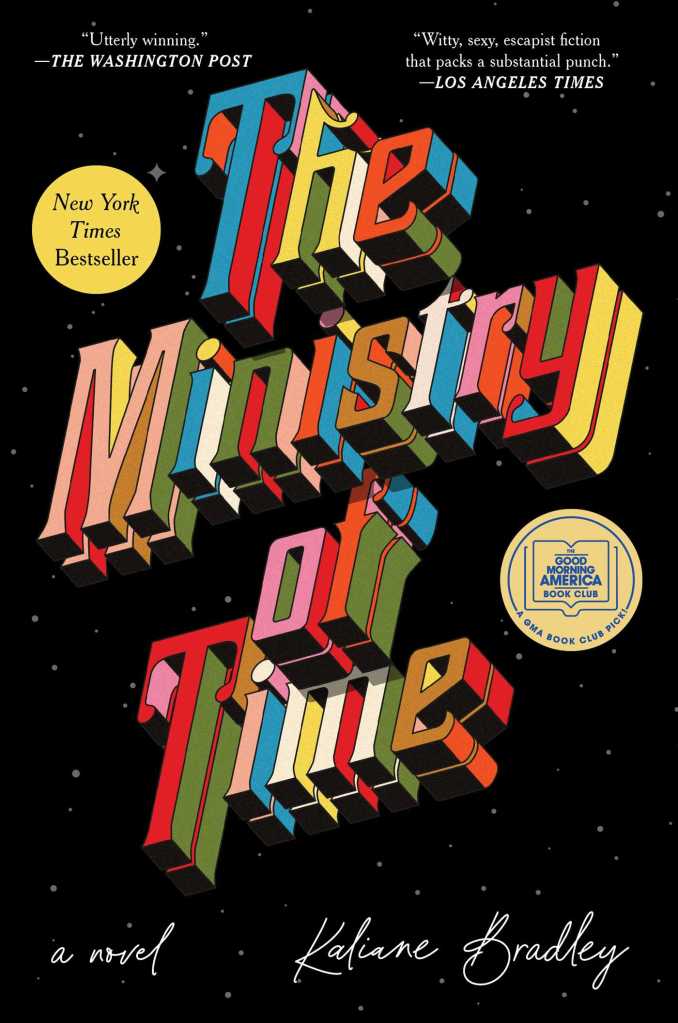
The Ministry of Time – Kaliane Bradley – “What you said was nice/When you said my face turned a memory/What you said was nice/When you said my heart broke a century…”
“Presumably Dead Arm” – Sidney Gish
I’m back with another unexpected kick back into late 2019 from my shuffle…OOF. This one came during the period where I discovered some the fruitful harvest of offbeat indie rock after I got Apple Music. The floodgates were open, allowing me to listen to way too much girlpool…and this.
The thing that stands out to me about Sidney Gish is that I think she’s a key part of a newer aesthetic that will probably be defined more in retrospect. She’s the spitting image of a certain brand of Gen Z, internet-bred musician who records their music on their laptops and cut their teeth with covers on YouTube. (Gish, for the record, has a very sweet cover of The Magnetic Fields’s “All My Little Words” that she recorded in her shower that stars her pet rabbit. That should give you an idea of her general vibe.) They’ve all got purposely poorly photoshopped album art and quirky, vaguely surreal lyrics. For Gish, I think she’s at least an inch above the rest because her lyricism is, for the most part, very distinctly her and not necessarily just there to service a meme-y aesthetic. Yet I’m almost certain that it’ll date her music instantly, given a decade or so. Ed Buys Houses is still a solid, unique album, but there’s no doubt that it’ll be more and more distinctly 2016 as time passes.
I think “Presumably Dead Arm” was the first song of Gish’s that I ever listened to, and to this day, the charm of it mostly holds up. The sound is so distinctly late-2010’s, complete with the fuzz you get from recording music off of an aging laptop speaker. Now that it’s 2026, I can’t see the title without hearing it in the same cadence as this, yet even so, it’s just such a softly charming little tune. It has a very late teenage kind of wistful melancholy to it, but with the added through line of finding said presumably dead arm in a graveyard (and taking it to prom). Between laments about isolation and drunk and high friends, Gish’s distinct flavor of lyricism shines through: “I’d rather let the poor kid sleep/But he’s tripping balls, he’s tripping testes/LSD, post-wisdom teeth/He got lost in the shower/And he barely knows the hour.” But what hits me now, seven years after I initially found this song, is the genuine fear hidden behind some of the lyrics, the kind you can only get when you’re approaching your 20’s and don’t have a clue what you’re going to do about growing up: “And all these pretend spouses are a happy storybook/That’ll turn to stark non-fiction in the time it took/For me to notice that I’m old, which means I’ll be thirty and happy/Likely married to personified business-casual khakis.” As silly as some of those lines are, they’re delivered with such an urgency that for a fleeting moment, I feel them like a skipped heartbeat in my ribcage. It’s uncanny, how quickly Gish can switch from abject silliness to existentialism. But that’s very Gen Z—and very Sidney Gish, in the end.
…AND A BOOK TO GO WITH IT:
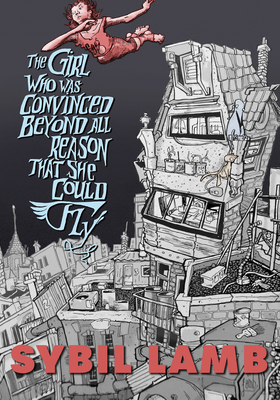
The Girl Who Was Convinced Beyond All Reason That She Could Fly – Sybil Lamb – an underrated oddball of the book world, as Sidney Gish is to indie rock.
“Therefore, I Am” – Jim O’Rourke
I’m all for having compassion and empathy in your heart, but there’s a special, beautiful place in this world for songs that innately feel like a massive middle finger. Sometimes it’s healthy to indulge the spite and blast your fuck-you song. And if you’re looking for a good fuck-you song, then boy, do I have the song for you.
I mainly knew Jim O’Rourke from his far calmer, instrumental world and his role as the longtime producer for much of Wilco’s discography. I knew that he had a solo career, but I honestly thought that it was more along the “Bad Timing” side than this. Apparently he’d been so steeped in his more experimental musical roots for so long and decided to try his hand at a more straightforward indie rock album, and came out the other side with Insignificance. It’s a shame that he doesn’t tap into lyric-oriented music and sing more—he’s got a great voice. And I’m not saying the stuff about the lyrics because they’re some poetic, soul-searching kernel of wisdom. They just happen to be some of the most artfully vitriolic disses I’ve heard put to song. Take this one:
“We are on a sinking ship/But I’d like to stay on board and shoot the cannons at you.”
DAMN. DEDICATION. On my first listen, I just kept hearing this over and over with each successive lyric:
I would not want to be on the receiving end of that. I pity whoever Jim O’Rourke was beefing with circa 2000. “As you can see/I’m a happy guy”—are you sure, Jim? For a song sung so calmly, every line is a gleeful slap in the face—it’s not just a fuck-you to whoever it may concern, but an open brag about how much his life has improved ever since they ended things. The instrumentals have a very Brian Eno, repetition-oriented feel to them (with a guitar tone that scratches every good itch in my musical brain, I might add), and yet even without any screaming or hammering guitars to pieces on stage, it manages to be so cleverly bitter under such an unassuming guise. Perfect cure-all for any and all breakups, toxic friendships, or just thinking about the excess of scummy authority figures all around. I need some Riot Grrl bands to cover this. God, it’s so fun.
…AND A BOOK TO GO WITH IT:
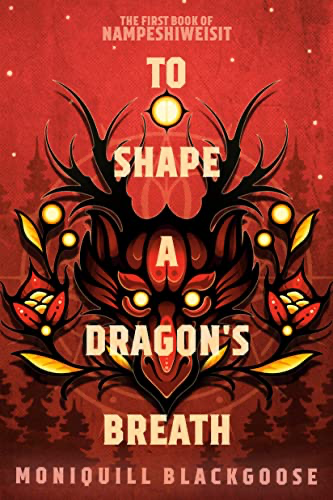
To Shape a Dragon’s Breath – Moniquill Blackgoose – “Why do you hide behind somebody else?/There’s one too many in this room/And I think it’s you…”
“Octopus’s Garden” – The Beatles
I know the whole situation of 3/4 of the Beatles being at each other’s necks during the Abbey Road/Let It Be sessions while Ringo Starr just made a song about an octopus has been memed to death. But really? We should all aspire to be like Ringo in that scenario. Observe the chaos around you and defy it openly with silliness and childlike wonder. Being labelled as the goofy Beatle must’ve had its perks, because I doubt anybody would’ve expected “Octopus’s Garden” to have as lasting of an impact as it did. It’s a classic, both in the Beatles sense and in the sense of most every child since 1970 having fond memories of it. And it’s a classic for a reason. Unlike some of the other more obliquely “joke” Beatles songs (see: “Wild Honey Pie,” which, I’m gonna say it: a thing of sheer beauty), the production is staggeringly good. It came on shuffle the other day, and when I just expected to have a little laugh with Ringo, I got blown away at just how tight of a composition it is—the piano arrangement? George Harrison’s guitar riffs? The harmonies? EVERYTHING? For a song that often gets dismissed as one of the more shallow songs in their catalogue, “Octopus’s Garden” has all manner of hidden layers to it, like bits of seashells hiding just beneath the surface of the waves.
…AND A BOOK TO GO WITH IT:
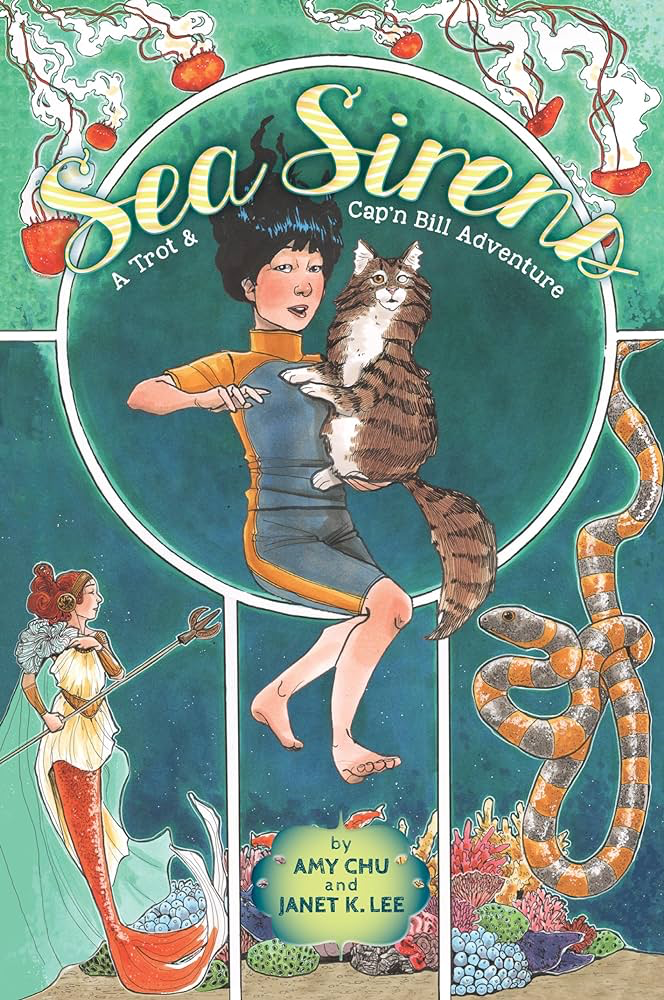
Sea Sirens – Amy Chu and Janet K. Lee – I’m convinced that this book is set exactly where Ringo Starr set “Octopus’s Garden.” We found it, gang. We found the Octopus’s Garden…
Since this post consists entirely of songs, consider all of them to be today’s song.
That’s it for this week’s Sunday Songs! Have a wonderful rest of your day, and take care of yourselves!


 The Bookish Mutant