Posted in Sunday Songs

Sunday Songs: 5/11/25

Happy Sunday, bibliophiles! First off, a very happy Mother’s Day to my wonderful mom. She inspires me to be a better and more creative person every day, and I don’t think I’d be putting pen to paper (in the drawing and writing sense) nearly as much without her guidance and creative inspiration. So thank you for all your support, hard work, and love. I am so, so lucky. 🩵

School’s out, and it should be back to our scheduled programming soon enough. Of course, every time I take a break, I end up rambling tenfold to make up for the absence…apologies in advance. This is what happens when you let me get ahold of a new Car Seat Headrest album.

Since I’ve been in the finals doldrums for a bit, here are my graphics from the past few weeks:

4/27/25:

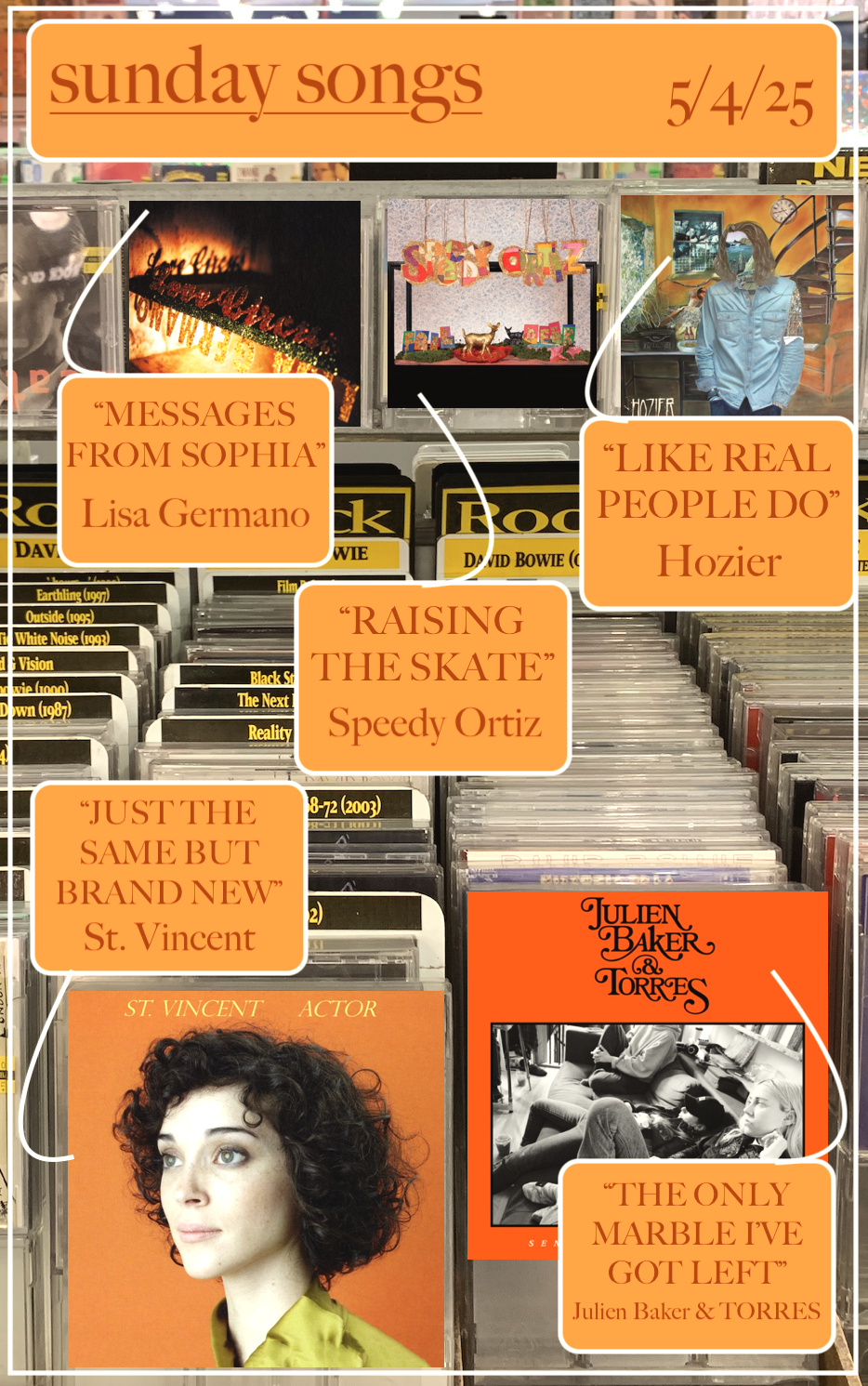
5/4/25:

This week: BRO DOESN’T EVEN REALIZE THIS IS RESPECTABLE STREET! 🫵😂

Enjoy this week’s songs!
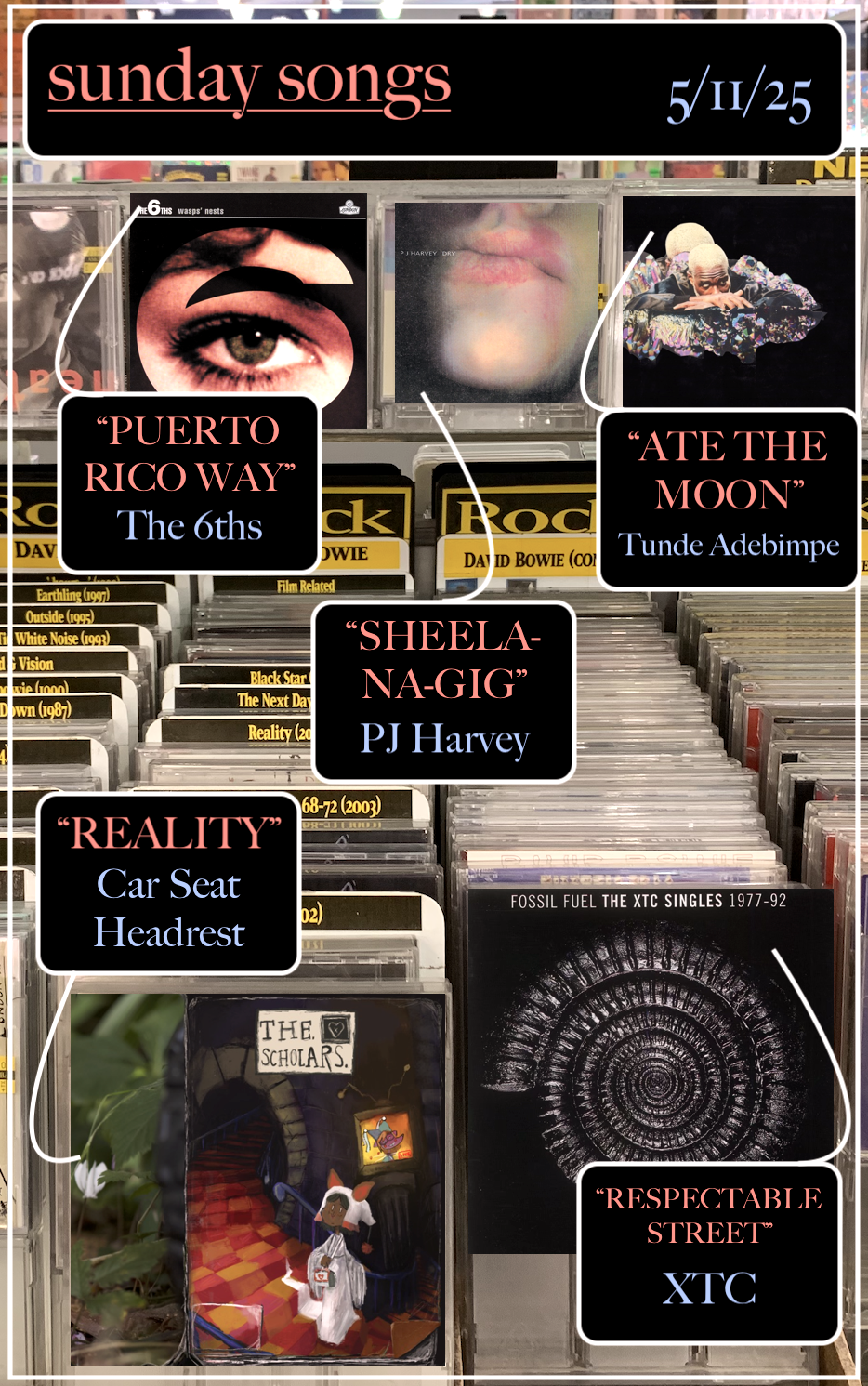
SUNDAY SONGS: 5/11/25

“Reality” – Car Seat Headrest

The more I think about The Scholars, the more I realize that this is the extreme of Car Seat Headrest’s qualities. Will Toledo has always been a scholar, and a deeply self-indulgent one. I don’t mean that derogatorily at all—his songs are just packed to the gills with references: often Biblical and also encompassing musical and literary greats. Although his life is still interwoven within the narrative (“Is it you or the sickness that’s talking?” on “The Catastrophe [Good Luck With That, Man]”), The Scholars is a veritable library in and of itself.

Not only are the usual suspects of Biblical references and allusions to music and literature, and Toledo’s past work are there, but The Scholars is Car Seat Headrest’s furry rock opera, an omniscient epic taking place at the fictional Parnassus University. There’s a full summary of it in a libretto that’s only available if you buy the vinyl, but thanks to the saints at Genius who, I’ve been able to piece together some of the narrative; it consists of vibrant characters coming out of the closet to their parents, participating in various subcultures around the college, a rival clown college, and a band of punk troubadours. All this culminates in [checks notes] the Dean of Parnassus University getting poisoned after the students from the rival clown college invade. It’s a trip…but I wish it was more readily available! When I say that The Scholars is self-indulgent, I love it in the sense that Will Toledo has created such an inventive, sprawling world between the notes of this album, and that he’s let his ambition run wild, in terms of the scale of the story and the prog sensibilities of the album. He clearly appreciates the value of letting people solve riddles and puzzles, but he’s left hardly any clues to piece together the narrative if we don’t have the libretto. I’d just like it to be more accessible—not in the sense of being more “listener friendly,” but in the sense that I want to actually be able to access the story. There’s clearly so many layers to The Scholars, and I’m dying to know more of the nuance.

That being said, even if you don’t know the story of the Rise and Fall of CCF and the Clowns from Parnassus University, The Scholars is a treat. For the first half, I was almost duped into thinking that the band had almost dipped back into Teens of Denial territory, which was twofold. On the one hand, Teens of Denial has a deeply special place in my heart, a staple of my fourteen-year-old girlhood and one of my favorite albums of all time. After the missteps of Making a Door Less Open, The Scholars is a return to form in some ways. As good as the first half was, I was afraid that it was too much so—even with the rock opera behind it, songs like “Equals” did rather feel like the same stories of drugs and regret that populating Teens of Denial. Yet after “Gethsemane,” “Reality” takes a turn into the more sprawling—and always fascinating. Trading off vocals between Toledo and Ethan Ives, it plunges into pure, 21st-century rock opera, complete with the avalanche of drama and pounding guitars that comes in at around the five-minute mark. I swear that some of the chord progressions remind me of “Cosmic Hero,” another one of my favorite epics from the band, but it’s painted into an unending landscape. Through all eleven minutes, I get the feeling of the culmination of all of the story’s events before the climax—it’s a drawn-out feeling, but one of certainty: they can’t escape what they’ve made, and they must move forward with acceptance of their fate; the whispered utterance of “no stage left” feels like an admittance that they can’t see what they’ve done, but there’s no escape from the consequences: they can’t see the audience. I’m circling back to self-indulgence, but the term sounds so negative: this just feels like Toledo unleashing the multitude of narratives within him. Is it easy to sit down and listen to songs that are nearly 20 minutes long? No, even for me. Yet as esoteric as it is, “Reality,” and this album, is worth your while, if you’ve got the time to set aside. Bottom line: be self-indulgent with your art. It doesn’t matter if there’s a small audience or no audience—you create what you think the world is missing, and the right people will find it.

…AND A BOOK TO GO WITH IT:

The Scholars 28-page libretto, only available when you purchase the vinyl – not trying to be snarky about it, genuinely. But heck, it’s pretty much a play in and of itself, complete with stage directions in the liner notes.

“Respectable Street” – XTC

This has to be the first Britpop song.

It’s long been accepted that XTC helped mold the Britpop movement as we know it—in fact, he almost had a direct hand in it, as he was Blur’s first choice to produce Modern Life is Rubbish; he produced a handful of the original mixes before departing from the project. But XTC made Britpop 12 years earlier. As much as I adore Blur’s sound and lyrical style from Modern Life up until about The Great Escape, hearing “Respectable Street” makes me realize exactly where they were coming in. I wouldn’t go so far to call some of it a rip-off…well, I almost would. I love Blur too much for that. Blur did develop their own style within this method, but at first, their claim to fame was largely due to songs like these. Not only does this song take a microscope to the arbitrary hypocrisies littering an uptight, quintessentially British neighborhood, but Andy Partridge has the vocal swagger to carry it all. Damon Albarn had the looks, but the line delivery is all Partridge, full of snark and with a cheeky wink as he lays out all of the double standards and not-so-well-kept secrets: “Sunday church and they look fetching/Saturday night saw him retching over our fence.” Of course, almost half of the jabs got butchered by the radio edit (“Now they talk about abortion” was replaced with “absorption,” which makes no sense, but…not a whole lot sounds like abortion, I guess?), but no amount of censorship would dull Partridge’s signature, acerbic style. Piled on with in-your-face production and the quick strikes of guitars, and you’ve got a song that inspired a generation—and hasn’t gotten the least bit old.

Also, about the promo above: I just know that set sounded heinous…I’m gonna go out on a limb and say, however talented all these guys are, that most of them did not know how to play cellos or violins. Definitely the point. Still, it must’ve sounded like middle school band practice in there…

…AND A BOOK TO GO WITH IT:
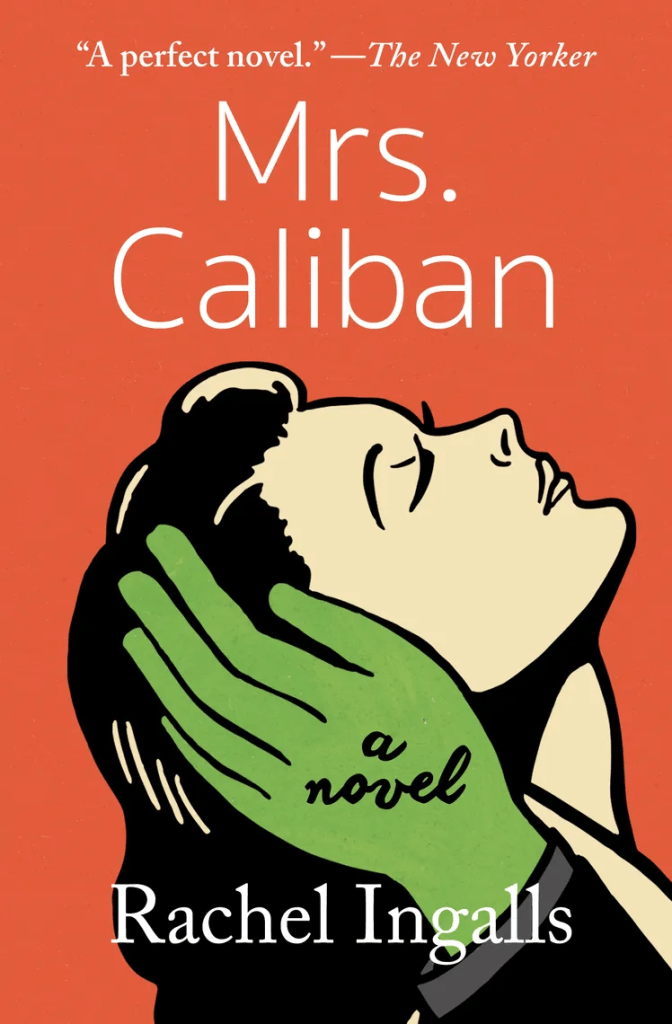
Mrs. Caliban – Rachel Ingallsnothin’ like an escaped frog creature to spice up your respectable street, eh?

“Puerto Rico Way” – The 6ths

Stephin Merritt’s writing continues to be something to behold. Even though Mark Robinson (of Unrest fame) is at the vocal helm here, this is one of the 6th’s songs that’s most indicative of Merritt’s ability to not just set a scene, but make something so objectively seedy and nasty-sounding into the most cheerful, sun-bleached indie pop you’ve ever heard. Take the first few lines:

“The sun pissing in the streets/Of some hungover place/Dances with two left feet upon her face/But soft! She is fast asleep/Beneath her mosquitoes/You would never want to know what she knows…”

First off, the imagery of the sun “pissing in the street” is a stroke of genius, evoking the lazy way that sunlight bends and dapples along the subject’s face—something so objectively beautiful turned wayward and gross, an effect that’s stacked once the drunkenness is emphasized by it “dancing with two left feet.” The environment in “Puerto Rico Way” is so bloated with alcohol and oppressive heat, but it carries itself like all of Merritt’s indie pop songs—with more confidence than it should have, given the disappointing, warmed-over love he often writes about. On the track list, it rides the high of “Here in My Heart,” which could add to the cheeriness, but this track carves out a slice of hope, even if Martina doesn’t accept the narrator’s dance, in this “hungover place.” (The drunk, free-spirited, redheaded Martina does read like a manic pixie dream girl, so maybe it wasn’t meant to be after all. Martina’s so crazzzzzzzy! Love her!!!) The admission that “Oh love, it would’ve been ideal” implies that no, she didn’t, but that indie pop-timism (I’ll see myself out) creates a wrapped towel of sunburnt nostalgia, a photograph bleached in the sun, of a fleeting dance and a fleeting girl.

…AND A BOOK GO WITH IT:
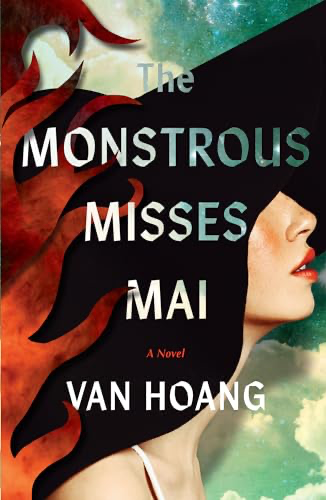
The Monstrous Misses Mai – Van Hoang“She’s drunk every single day/She’s young most of the time/She’s spent all of the rent on her decline…”

“Sheela-Na-Gig” – PJ Harvey

It’s always fascinating to look at songs that seem ostensibly quite feminist, but had none of that intention behind them. Take “Army of Me,” a song that I’ve always interpreted as being about feminine resistance, but was more about Björk trying to get her lazy brother to get up and do something with his life. The lyrics are quite self-empowered, easily interpreted as women breaking free from male-ordered subservience. The feminist leanings are there, but it’s only a sliver of the truth. Do I still feel empowered when I listen to it? Of course. But it’s not the whole story.

The same is true of “Sheela-Na-Gig.” The title references a type of Celtic fertility figure, an image of a laughing woman posing with her genitalia bared outwards. As such, the narrator goes through a sort of comedy of errors as she gets rejected over and over after flaunting her sexual qualities to no avail (“Look at these/my childbearing hips”). It’s easy to take it as a kind of internalizing what men want in women, exhibiting it, and then being turned away when it’s not to their standards; there’s an element of slut-shaming in the male figures not wanting the narrator because she’s “unclean.” The chorus of “Gonna wash that man right outta my hair” (interpolated from South Pacific) is empowered, especially after being kicked to the curb so many times by judgmental men. But PJ Harvey never intended it to be feminist song: as she told Melody Maker in 1992, “I wanted that sense of humour in the song…being able to laugh at yourself in relationships. There’s some anger there but, for me, it’s a funny song. I wasn’t intending it to be a feminist song or anything. I wanted it to have several sides.” And there is something funny about that—if you’ve been rejected with all of the repetition and swiftness of Wile E. Coyote falling off a cliff, all you can do is look back and laugh.

It is a sort of death of the author situation; “Sheela-Na-Gig” hasn’t necessarily been lauded as some feminist anthem (and Harvey said in the same interview above that she didn’t want to be “lumped in” with more forwardly feminist bands), but even a quick glance at any reviews of the song shows that’s how many people tend to take it. In the context of PJ Harvey’s other songs, which are incontestably about misogyny and her struggles as a woman in a male-dominated industry (and world) (see: “50ft Queenie”), “Sheela-Na-Gig” seems to fit into that puzzle. I don’t want to wave that over people’s heads like they interpreted it incorrectly, either—it’s not like I got the aspect on my first listen. (I credit that to Trash Theory.) Personally, I didn’t think all of it was necessarily funny at first, although being as Gen Z as I am, I’ve only heard the phrase “childbearing hips” used sarcastically, so I took that as such. After going through literary theory, I’ve definitely been on the fence-sitting side as far as whether or not to go full death-of-the-author on any given song; the reader’s interpretation does shape the work, but I find it foolish to take it without considering the author’s intent. With “Sheela-Na-Gig,” I think there’s a lot that can be empowering, but what may be most empowering to me is finding the humor in being a woman. The semi-autobiographical narrator swings and misses repeatedly, but doesn’t let any judgement get under her skin. All of the ferocious power chords signal that she’s ready to dust herself off and try again. In the present moment, the narrator hasn’t yet learned, but the fact that PJ Harvey has looked back and learned herself seems more the point to me: having the self-awareness to feel bad for your past self, but be able to laugh at their mistakes. There’s power in being able to look back and laugh instead of wallow in sorrow—when you’re a woman, it’s all you can do sometimes. It may not necessarily be feminist, but it sure is a part of life.

…AND A BOOK TO GO WITH IT:
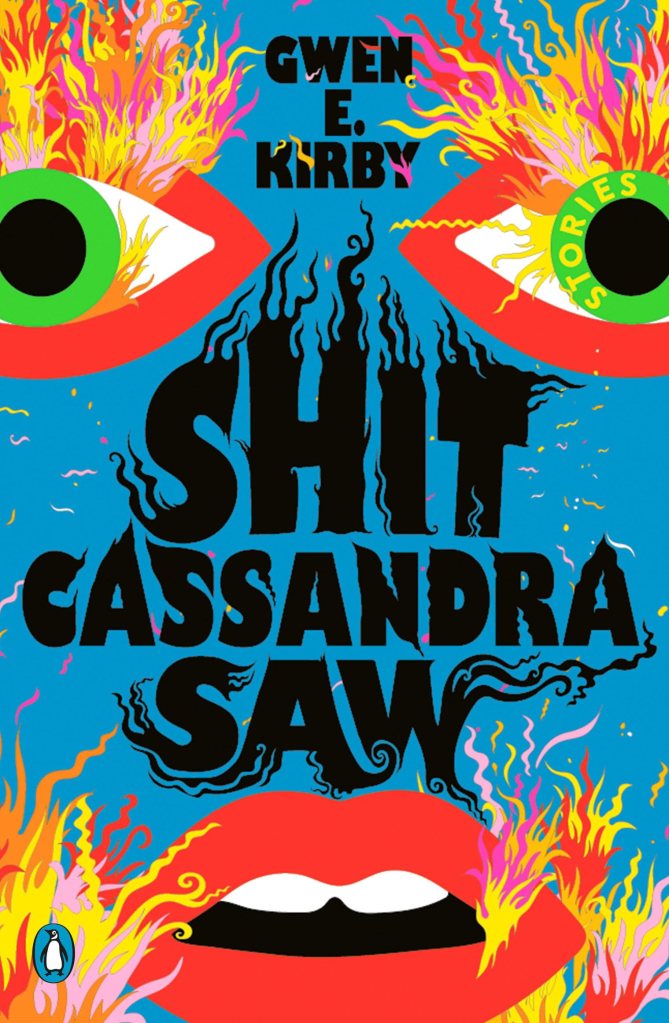
Shit Cassandra Saw – Gwen E. Kirbychronicling the varied experiences of women with wry humor—and honesty.

“Ate the Moon” – Tunde Adebimpe

It’s been almost a month since Thee Black Boltz came out, and the question remains: is this enough to sate us through the dreaded TV on the Radio drought? For the most part, I’d say yes—but it’s a separate, branching effort. Though it proves that Tunde Adebimpe was the beating heart of the band, he’s more than formidable on his own, minus Dave Sitek’s production and piled on with more synths. Though it’s not without its misses, Thee Black Boltz feels like Adebimpe stretching his fingers out in all different directions, but never stretching them beyond what makes me come back to TV on the Radio so often.

With a central theme of overwhelm during times of crisis and searching for light—creativity—amidst the choking smog, Adebimpe turns to synths and more danceable beats (see: “Somebody New,” a bolder, dancier gamble that mostly paid off in spite of the autotune) in order to pull through. “Ate the Moon” is about that overwhelm, if the title doesn’t already clue you in. Swallowed by anxious spiraling and visions of horror, the narrator scrambles for answers, but finds only regret: an echoing, childlike voice proclaims after the “the man who ate the moon” chorus that “and he choked, of course, because he bit off more than he could chew. Such a dummy!” “Dummy” echoes and is pitched down as it fades out, distorted into a trickster baring a triumphant, toothy grin as it disappears into the darkness like the Cheshire Cat. “Ate the Moon” certainly has some of what I think the albums pitfalls are: the lyricism is on the simpler, more obvious side. Not inherently a drawback, but after something as rawly and artfully written as “Tonight,” it feels cheap for him to rhyme “fire” and “desire” for the millionth time. It’s like Jeff Tweedy using someone being “cool enough to be ice cream” as a metaphor after being such an unparalleled poet otherwise. But like “Ice Cream,” it’s easy to love “Ate the Moon.” With the instant hit of Adebimpe’s boxing gloved punch of a voice and the synths and guitars that have been sewn into an electronic gestalt, it’s one of the most unique songs on the album, an adrenaline-pumped trip into the downward spiral of autonomy-less fear.

…AND A BOOK TO GO WITH IT:
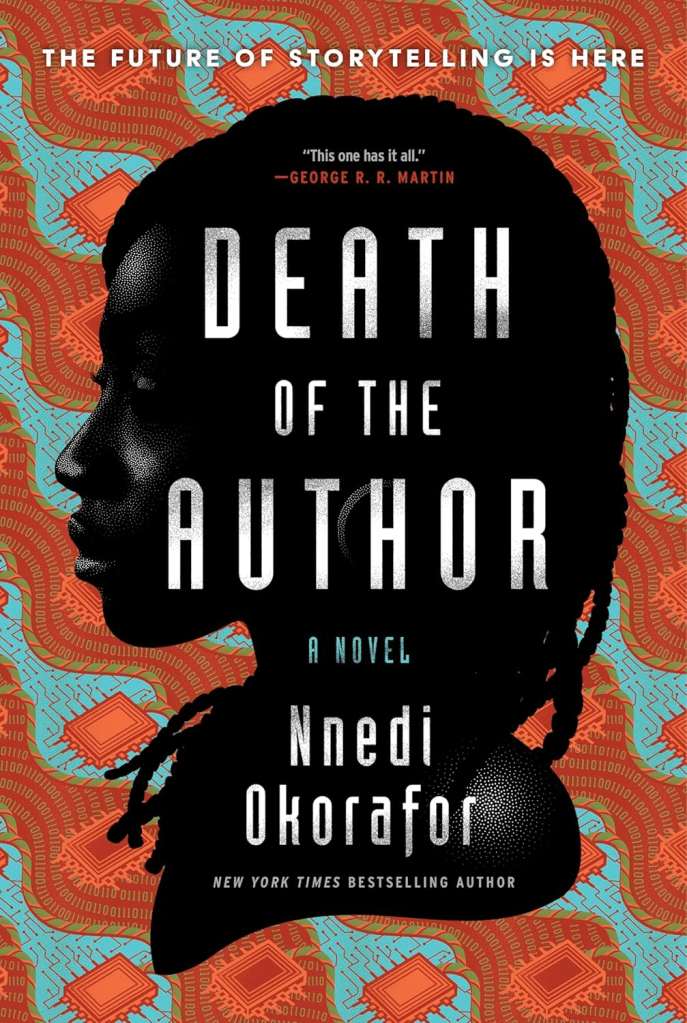
Death of the Author – Nnedi Okorafor“Seems I was iII-prepared/For the fall that finds me here/Sad extremes running through my head/Knocked my blues into the red…”

Since this post consists entirely of songs, consider all of them to be today’s song.

Posted in Sunday Songs

Sunday Songs: 4/7/24

Happy Sunday, bibliophiles! I hope this week has treated you well.

This week:

Choose the best answer: You can blow with:

a) This

b) That

c) Us

d) All of the above

Enjoy this week’s songs!

SUNDAY SONGS: 4/7/24

“Flea” – St. Vincent

Affirmation of the week: I have listened to this song a healthy amount of times. At least I didn’t pull the “listen but nothing but this song for almost four hours straight” stunt that I did with “Broken Man.” See? I’m better now. I’m savoring this one, and by “savoring,” I mean “listening to it slightly less, but still putting it on repeat for at least half an hour when it comes on shuffle.” What new St. Vincent does to an mf.

“Broken Man” is shining proof that All Born Screaming has a good chance of being my album of the year, but somehow, Annie Clark outdid herself even more with this latest single. I’m glad that “Broken Man” and “Flea” are tracks three and four on the album, respectively; even past the fact that they fit so slickly together, I like the idea that the title and closing tracks are a secret—she’s got something insane up her sleeve. I can just tell. After “Broken Man”‘s torrent of fury, vengeance, and Dave Grohl’s drumming, “Flea” makes the transition into the outright bloody—not bloody in the sense of the trail of destruction that “Broken Man” left, but in the sense of parasitism. Clark described the upcoming All Born Screaming as being bred in “That kind of isolation [that] breeds paranoia and loneliness…loneliness can breed violence.” Now I can see exactly where the whole “post-plague pop” label she stuck on it comes from. “Flea” slinks along on tiny, pointed legs, thrumming with a racing heartbeat and an insatiable thirst for blood; the repetition of “Once I’m in, you can’t get rid of me” is sung lower and raspier, a threat paired with a predatory lick of the lips. The kind of loneliness and violence Clark described seems to be exactly where this kind of sinister lust comes from—being isolated for so long could easily make love turn to lust, and lust consequently to hunger, so drained of human touch that what was once affection has become leeching for nutrients at the other person’s expense. And everything about “Flea” sounds frighteningly hungry, down to the parched-throat rasp with which Clark delivers the verses. When she ends verse two with a dried-out confession of “I look at you, and all I see is meat,” followed by a faint belch in the background, I suddenly got the feeling that I was being watched by something waiting to tear me limb from limb and suck me dry. It’s intense, but it’s the kind of intoxicating thrill ride that I’ve taken with Clark for nearly ten years. And the chorus finds the narrator covered in someone else’s blood, begging for just one more bite; the desperation sloughs off like a second skin, every blood-soaked belt starved and howling. It’s a kind of visceral musicianship that I haven’t seen from St. Vincent in years; although Daddy’s Home was certainly raw, it was the kind of raw you get from getting someone enough wine to spill about their childhood trauma and laugh it off. All Born Screaming is about as raw as flesh itself—it’s all the clearer that Clark has no intention of pulling punches, and that’s exactly what makes a St. Vincent song so iconic. “Rattlesnake” and “Severed Crossed Fingers” don’t illicit waves of emotion in me for nothing—they’re hearts laid bare in the street. In other words: Clark is at her best when she’s herself. Should be a given, but it’s more evident in some albums than others.

God, April 26th can’t come any sooner…

…AND A BOOK TO GO WITH IT:

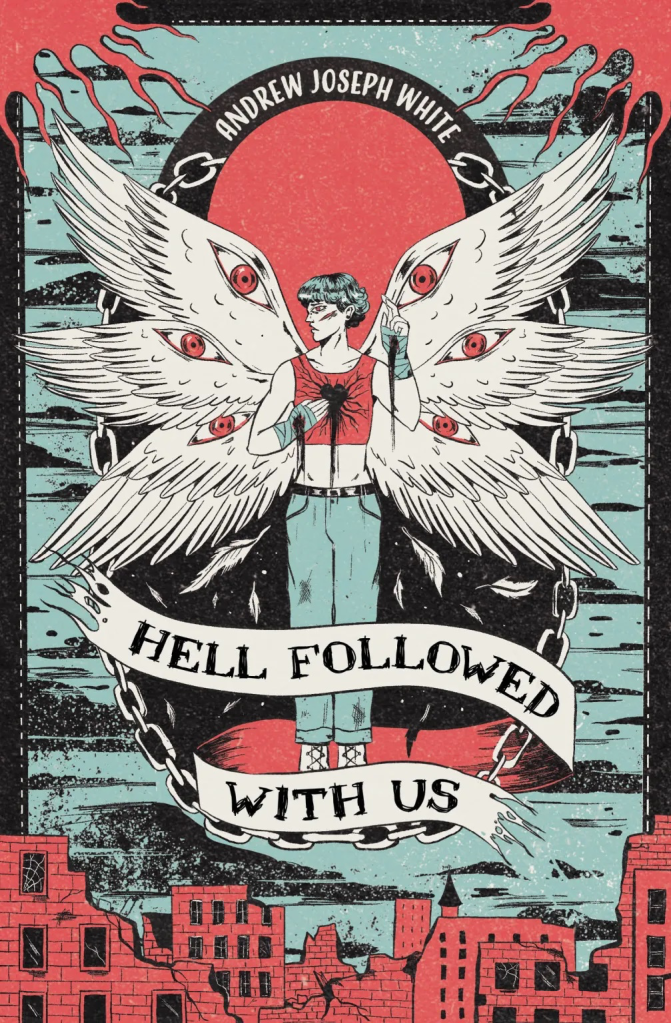
Hell Followed With Us – Andrew Joseph Whitedepending on how All Born Screaming goes, I might preemptively merge this with “Hell Is Here”…

“Tonight” – TV on the Radio

Aaaaaaaaaand, that’s one more album on the Sisyphean Album Bucket List. Between the “Wolf Like Me” (the best song there is about werewolves after this), the deeply moving “Province” with its David Bowie feature (YOU HEARD ME!!), and this, I now know that Return to Cookie Mountain has to make its way into the rotation. I have Chelsea Wolfe to thank for this one; at her fantastic show at the Gothic Theater in March, she played this before the show—I wouldn’t be surprised if she was a fan before, but I suspect that it’s a kind of thank you to the fantastic Dave Sitek, who produced her truly fantastic new album, She Reaches Out To She Reaches Out To She. Also, with a title like Return to Cookie Mountain, I feel like I just have to listen.

What “Tonight” made me realize about TV on the Radio is how effectively—and quickly—they can craft an atmosphere. Some of the most layered ones I can think of are from their early career, namely the first version of “Staring at the Sun” that appeared on their debut EP, Young Liars. Instead of the shorter version that made the cut for Desperate Youth, Bloodthirsty Babes, this one has a thirty second intro (that feels longer, honestly) that consists of just the a cappella vocals of the band, interspersed with an excerpt from a Spanish-speaking radio station. Even though the chatter on the radio station seems cheerful and singsong, the drawn-out gives it a prolonged air of foreboding and sorrow to come, like the next thing we hear will be the somber announcement of someone’s death. Thankfully, that doesn’t happen, but the first lyrics we hear on the heels of that are “Cross the street from your storefront cemetery,” which, bam. That’s how you start a song. When it comes to both of those aspects, “Tonight” operates in a similar way, creating an atmosphere that’s haunting before the instruments even kick in. With the whine of a distant siren and the ever-so-slightly distorted collision of wind chimes, “Tonight” instantly transports you to a place of brown grass and barren vastness, pockmarked by dead trees strung with glass bottles and the faint sounds of the road in the distance. The music seems to lumber with every step, a beleaguered creature that lurches with every step, as if its limbs are tied down with the wind chimes you hear tinkling throughout the song. Hollow whistles harmonize with a moaning clarinet and Tunde Adebimpe’s clarion call of a voice, all at once ragged and brimming with vitality. A fair amount of the buzz surrounding TV on the Radio when they got their start were vocals comparisons of his to Peter Gabriel, and it’s an apt one—they have a similar quality of being roughly visceral, but booming with emotion. Dave Sitek is also credited with “magic” on this song, which I cannot find a musical definition for the life of me, but if there’s anything that you would credit the man for, it’s that. He has the touch.

I often get so caught up in the atmosphere that I only mine the lyrics later, but the lyrics in “Tonight” pop out so prominently on the first listen; as the wind chimes huddle for warmth, Tunde Adebimpe’s voice cuts through them like a steak knife through fabric—”My mind is like an orchard/Clustered in frozen portraits.” How does this man do it? Every single line in this song is a literary gem in and of itself, and it’s not just because of the repeated references to Edgar Allan Poe’s “The Telltale Heart”—like heartbeats rumbling through flimsy floorboards, the lyrics never fail to send chills up my spine: “Her rusty heart starts to whine/In its tell tale time.” My rusty heart sure does whine whenever those lyrics wash over me. And like the sparse nature of the atmosphere, the lyrics tell of a spare mental space, one so full of sorrow and unpleasant memories that, like the telltale heart, cannot be pushed from the mind. The song still haunts me in a largely melancholy way, but it has an uplifting sentiment at its heart. I can’t help but think of Soundgarden’s “The Day I Tried to Live” and its similar atmosphere of doom, but its lyrical heart being the fact that despite all of the horrible things crashing down around you, there will always be something left to live for, so all you can do is push through. Adebimpe’s sentiment feels like wading through a slurry of unpleasantness that never seems to end (“Blossoms that bloom so fine, just to drop from the vine/I’ve seen them all tonight), but he makes the light at the end of the tunnel shine as bright as it can: “The time that you’ve been afforded/May go unsolved, unrewarded/Some nameless you cannot know, may be coming to show you/Unbridled love and light.” No matter how much you have to push down and wade through, never doubt that good things are coming. It’s something I struggle to hold to heart, but I’ve added this song as an unexpected guiding light. I can never know the future. It scares me. But there is certainty in the love lingering beyond my current time. There is always love.

…AND A BOOK TO GO WITH IT:

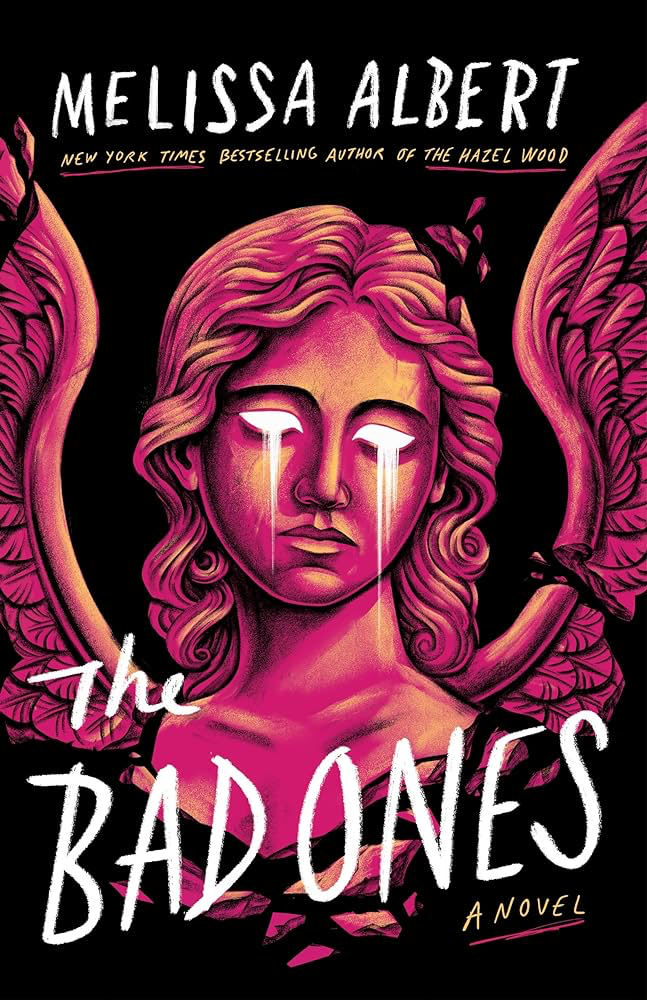
The Bad Ones – Melissa Alberta similarly haunting atmosphere woven from swirling memories.

“the rot” – Dean Blunt

Contrary to my graphic, this is not, in fact, that well-intentioned but ultimately regrettable black square everybody posted back in 2020. My text box accidentally cut out the 2 on Black Metal 2, the only thing distinguishing it from the cover of Black Metal, which is…also just a black square. Gotta admire Dean Blunt for committing to the bit.

I stumbled across this song thanks to Arlo Parks, who chose Black Metal 2 as one of her picks on her episode of Amoeba Records’ series What’s In My Bag?, where she also talks about my bloody valentine and happens to be wearing one of the coolest Radiohead shirts I’ve ever seen. The songs she discusses there—“VIGIL” and “the rot”—serve as bookends, the opener and closer of Black Metal 2, respectively. Both of them have the atmosphere of a massive curtain thrown over your eyes—you’re immediately thrown somewhere else in a space that Blunt has created; no time is wasted in transporting you into his world. While “VIGIL” has the tidal-wave mounting tension of strings to prop it up, “the rot” is the last, gentle minutes of a plane ride home. It’s a distinctly sunset song: you’re slumped back in your seat, golden light is spilling through the window, and you have the sense, more than ever, that a chapter is closing, but not necessarily in a negative way. You can tell that there’s a myriad of different instruments, but all of them are toned down to a faint crawl, strings gently winding, acoustic guitars drifting away like insects in the early evening. “the rot” in particular has such a gorgeous vocal contrast between Blunt and guest artist Joanne Robertson; like Phoebe Bridgers and Jeroen Vrijhoef on “Garden Song,” what grounds the song is the stark difference, although that of Blunt and Robertson feels much more natural and less jarring than the latter. Where Blunt has the warmth and thickness of the ocean lapping over a volcanic shore, Robertson’s words float like the breeze stirring the water. Both of them drift like motes of dust into the air, closing out Black Metal 2. Without even having listened to the whole album, I can tell how successful “the rot” is as a gentle closer.

…AND A BOOK TO GO WITH IT:

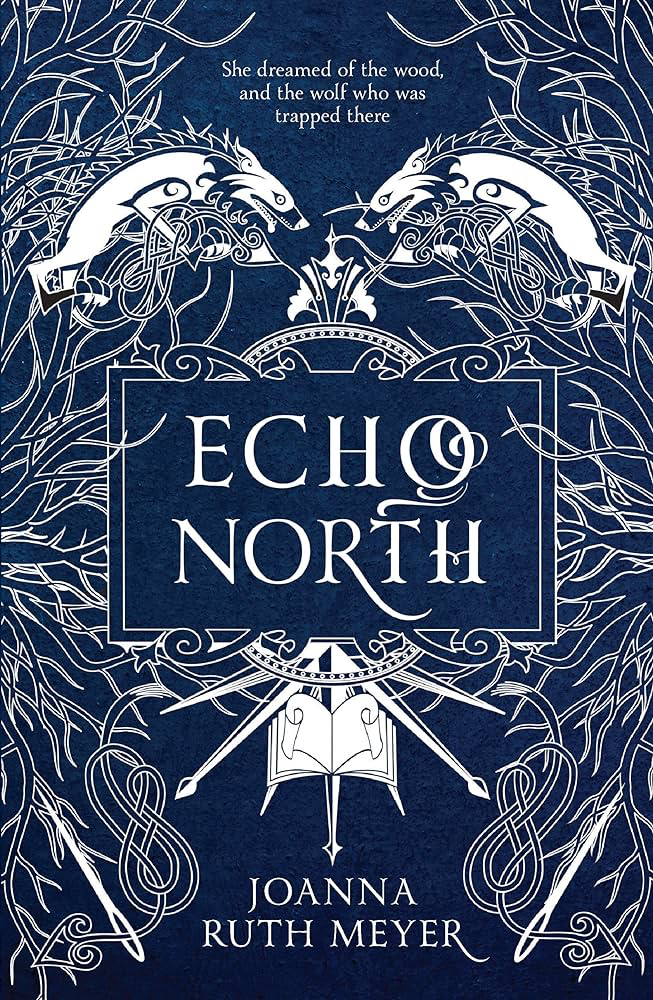
Echo North – Joanna Ruth Meyer – the frost, like the rot, lures you into the woods and makes you chase after old dreams.

“Weapon of Choice” – Fatboy Slim

Me when I walk without rhythm (I didn’t attract the worm):

…AND A BOOK TO GO WITH IT:

Dune – Frank Herbertas is written.

“Satellite of Love” – Lou Reed

Ugh, I’m so glad this song came back intro my regular rotation recently. The outro did wonders for amping me up for my astronomy midterm.

It’s been about four years since I’ve consciously started listening to this song, but I’m sure my dad played it in the car long before that. But I’ll always love this era of Lou Reed, and you know who I’ll also always love? David Bowie. And Bowie, along with Mick Ronson (Bowie’s guitarist in the Spiders from Mars) co-produced Transformer, which has spent a woefully long time on my album bucket list. It’s smack dab in that early-’70s sound that I just live for, and I’ve already heard a handful of the classics from the album already—“Walk On the Wild Side” and “Perfect Day,” to name a few. But “Satellite of Love” remains my favorite thus far, and it’s not just because I collect space-related songs like a bower bird collects shiny rocks and trinkets. As with…well, almost every Lou Reed song, “Satellite of Love” is tinged with melancholy; it tells of love watched from a distance, the aftermath of a breakup watched from below like a stargazer looking at a meteor shower. The offbeat admission of “I love to watch things on TV” feels like an admission of what Reed thought that the relationship had turned into—just something to pass the time and make the eyes go limp. I can’t help but think of Lisa Hannigan—I can’t be sure if this was her exact inspiration, but I wouldn’t be surprised if the chorus of “Passenger” came from a similar metaphor of distant love adrift in the sky—”Oh, my satellite/Oh, my passenger.” For once, Lou Reed is the one that doesn’t sound abjectly in mourning—wistful, sure, but there’s still some light shining in the corner of his eyes, even if it’s just the reflection of a star. For me, the outro is what pumps just the barest pulse of hope into “Satellite of Love”—the piano begins to gallop, clapping and snapping dominates the percussion, and Reed begins a harmony with a wailing, angel-voiced Bowie. Reed remains anchored to the ground, but Bowie, naturally, ascends skyward with every note. There’s something about it that feels like he’s extending a hand from somewhere in the night sky, inviting us to join in the chorus.

…AND A BOOK TO GO WITH IT:

All Systems Red (The Murderbot Diaries, #1) – Martha Wellsthe detached observation of love (and humanity in general) is much more humorous than wistful in nature here, but we can’t deny that Murderbot likes to watch things on TV.

Since this post consists entirely of songs, consider all of them to be today’s song.

That’s it for this week’s Sunday Songs! Have a wonderful rest of your day, and take care of yourselves!

Posted in Monthly Wrap-Ups

March 2024 Wrap-Up 🌾

Happy Sunday, bibliophiles, Happy Trans Day of Visibility, and Happy Easter for those celebrating!

Mentally, I’m still at the beginning of the semester, but somehow midterms are over and I’ve just gotten back from break…ignoring that…

Let’s begin, shall we?

GENERAL THOUGHTS:

I’ve continued to be busy in most of my academic aspects of life, but I’ve managed to stay on top of it—midterms season wasn’t as bad as I thought it was going to be, and it certainly helped that we got an accidental four-day weekend thanks to a snowstorm so drastic that my college called two snow days in a row. I’ve lived in Colorado my whole life, and I’ve never experienced a double snow day…good times, gotta say. I didn’t leave my dorm for all of that Thursday and spent my time playing Minecraft and drinking hot chocolate. A win is a win. But now, the weather’s warming up, and I’m looking forward to soaking it all in.

I honestly thought that this month was going to be my worst reading month, but I read a lot more than I expected; spring break definitely gave me a boost, and March has ended up being my best reading month of 2024 so far! Rating-wise, it’s a different story (certainly more stinkers in this batch), but there were plenty of excellent reads before and after my brief reading slump. Blogging has been about the same—again, school has made it so that I’m mostly sticking to my usual book reviews and Sunday Songs, but I’ve had fun writing them all the same.

Other than that, I’ve just been drawing, playing Minecraft (WE’RE FINALLY GETTING THE DOG UPDATE), studying, watching The Bear, The Completely Made-Up Adventures of Dick Turpin (STAND AND DELIVAH), Abbott Elementary, and Constellation (I haven’t been this stressed out and baffled by a show since Dark, and that’s really saying something), series 17 of Taskmaster, Dune: Part 2 (may thy knife chip and shatter), seeing Chelsea Wolfe live (!!!!! THE QUEEN), and reverting from human to hibernating grizzly bear the minute snow started falling.

READING AND BLOGGING:

I read 19 books this month! I thought it would end up being a lot less than that, but spring break gave me much more time to read. As far as ratings, this has probably been my worst reading month (first DNF and 1-star rating of the year…), but that doesn’t mean that I didn’t read a ton of fantastic books!

1 – 1.75 stars:

The Sevenfold Hunters

2 – 2.75 stars:

Pangu’s Shadow

3 – 3.75 stars:

Womb City

4 – 4.75 stars:

Wuthering Heights

FAVORITE BOOK OF THE MONTH: The Bad Ones4.25 stars

POSTS I’M PROUD OF:

POSTS FROM OTHER WONDERFUL PEOPLE THAT I ENJOYED:

SONGS/ALBUMS THAT I’VE BEEN ENJOYING:

APRIL 26TH CANNOT COME SOON ENOUGH
returning to my sad bastard roots
shoutout to this absolute weirdo and his lyrics
alright I FINALLY listened to this album, great stuff
and the best song title goes to…
such a delightfully summery album
already loved TVOTR, but chelsea Wolfe turned me on to this one. haunting…

Today’s song:

listen this is a banger but don’t think I wouldn’t deck Morrissey in the face without hesitation

That’s it for this month in blogging! Have a wonderful rest of your day, and take care of yourselves!