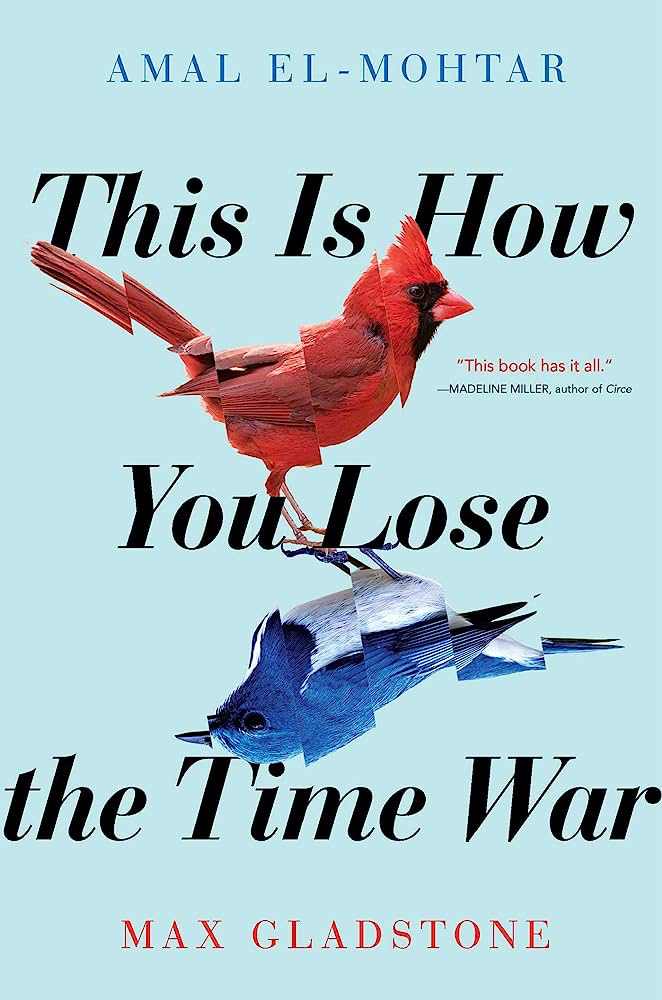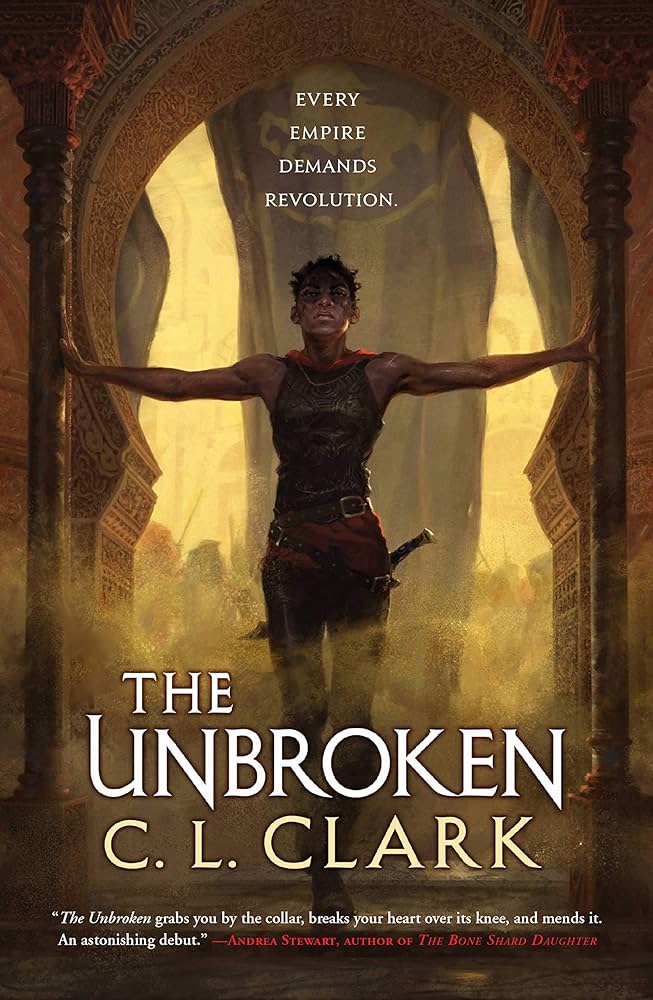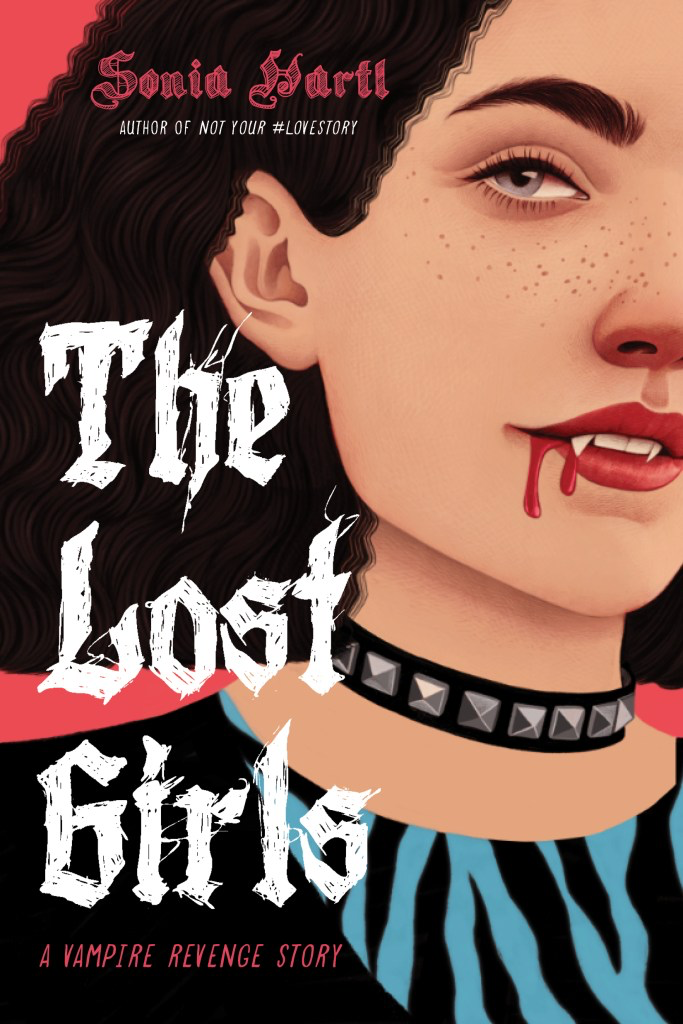
I had a ton of fun with Jordan Ifueko’s Raybearer duology, but somehow I completely missed that she released a novel last August in the same universe! It was an absolute treat to be back in Ifueko’s world, and The Maid and the Crocodile proved a valuable asset to her fantasy universe.
Small Sade is desperate for any job that she can find. With her crooked foot and vitiligo, the people of her village think she is cursed and touched by spirits. Eventually, she finds work as a maid, but not before an act of desperation sees her bound to a powerful god, known only as the Crocodile. As she moves up in the ranks, she realizes that she is a Curse Eater—her profession as a maid not only cleans the houses of her clients, but changes their fates. Juggling her newfound ability and a world on the brink of revolution with only the Crocodile as her guide, Small Sade must learn to forge her own path before someone else decides it for her.
TW/CW: ableism, self-harm/mentions of suicide, descriptions of injuries, classism, mentions of sexual assault, abuse, loss of loved ones
I can excuse a handful of pop culture references here and there, but after that god-awful Minecraft trailer, if I hear “the children yearn for the mines” ONE MORE TIME, I’m gonna snap…Jordan Ifueko, this was a great book, but that tested me…especially with the climactic scene that it temporarily undercut.
That aside, it was an absolute treat to return to the world of Raybearer with The Maid and the Crocodile! I didn’t think to re-read the duology before going back into it (I never seem to do that unless it’s with a book I’m really invested in), but I was so easily immersed into the world nonetheless! For both casual and eagle-eyed readers, there are Easter eggs aplenty—several characters from the duology make cameo appearances (SANJEET!!! MY GUY!!!!), and the nuances of the world stay the same, for the most part. It was an easy transition, which isn’t always easy to do. I loved how The Maid and the Crocodile expanded on the world as well! Ifueko really has a strength in writing ordinary characters forced into extraordinary, powerful positions, and Small Sade is no exception. However, she’s much more different than Tarisai, which I appreciated—there’s much more of a sense of her having to work towards the top, and her humored yet determined tenacity was what made her so special of a character. Through her, we see Oluwan City from more ordinary eyes, which makes the themes of the story so much more clearer.
I couldn’t have read The Maid and the Crocodile at a better time, and not just because it was a fun read. Its themes about the nature of change and revolution are critical—IT’S ALL ABOUT LOVE! It’s so refreshing to see a character who wants to help society change for the better not out of revenge or a vague “evil government bad [does not elaborate]” motivation, but out of love. Small Sade’s motives stem from wanting to care for the people she loves and wanting to see that love reciprocated in the world around her. Change rooted from love is a perspective that I rarely see in YA, even though its plots have centered around dismantling governments and revolutionary change for decades. I’m so tired of saying “in times like these,” but I mean it—in times like these, narratives about radical change being rooted in love—for your people, for your country, and for your culture—are critical to understanding what change can truly do.
Whenever you have a disabled character in a non-modern setting, even if it’s fantasy, you always run the risk of amping up the internalized ableism. Small Sade, who is shunned and deemed “spirit-touched” because of her crooked foot (she uses a cane for mobility) and her vitiligo, faces a great deal of ableism. It’s not as though plots about overcoming ableism (NOT the disability, mind you) aren’t worth telling, but in non-modern and fantasy settings, it does get slightly tired to have all disabled characters in these settings go through versions of the same arc. I loved how Ifueko handled Small Sade’s character—she resists ableism, but most importantly, she is a person beyond her experiences of ableism. Her experience of discrimination informs her story, but it is not the entirety of her character. Small Sade is defiant, self-reliant, and deeply caring—she’s so fully-fleshed out, which is a rarity for disabled characters. So hats off to Ifueko for an excellently-written disabled character!
However, though it had its moments, I was never fully invested in the romance between Small Sade and Zuri. I got that they had a connection, but I feel like he showed up too few times for the relationship to really work. Small Sade had eons more character development than he ever had the chance to. I get that a curse slowly turning you into a crocodile tends to do this to a guy, but at times Zuri felt rather codependent—up until the last 50 pages or so, Small Sade felt more like a means to an end for him, and his redemption was too underdeveloped for me to be fully invested in it. I appreciated their mutual resolution, but it was too late for it to feel fully satisfying. Given how strongly written the relationship between Sanjeet and Tarisai was in the Raybearer duology, I really expected Ifueko to deliver more with The Maid and the Crocodile. Small Sade and Zuri had moments, but not enough for me to be invested in them romantically.
All in all, a worthy addition to Jordan Ifueko’s Raybearer universe, full of heart, curses, and hope. 3.75 stars, rounded up to 4!
The Maid and the Crocodile is a standalone, but is set in the world of the Raybearer duology (Raybearer and Redemptor). Jordan Ifueko is also the author of the 2022-2023 run of Marvel’s Moon Girl and Devil Dinosaur, and has also contributed to Jim Henson’s Storyteller: Tricksters.
Today’s song:
That’s it for this week’s Book Review Tuesday! Have a wonderful rest of your day, and take care of yourselves!
Happy Sunday, bibliophiles! I hope this week has treated you well.
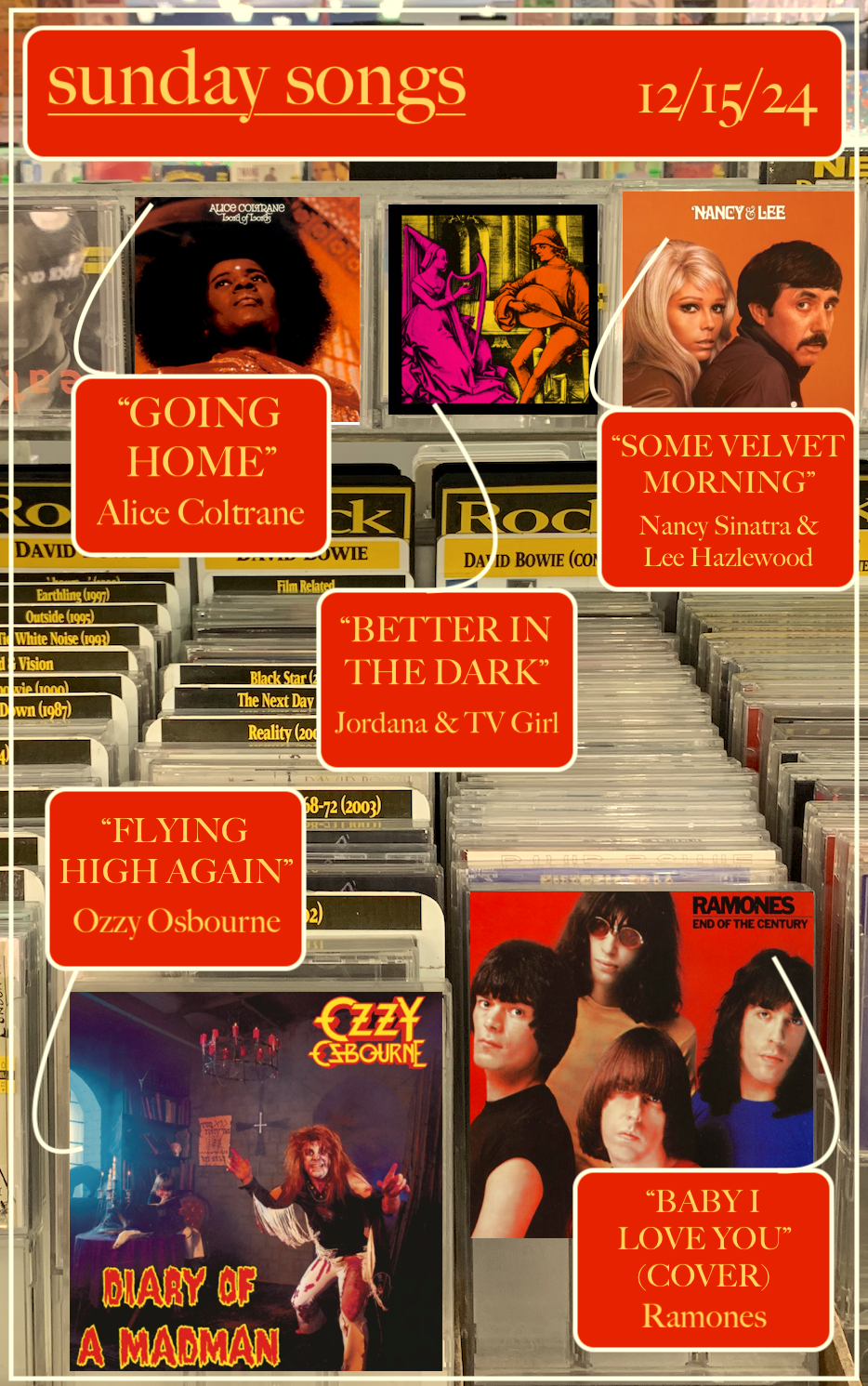
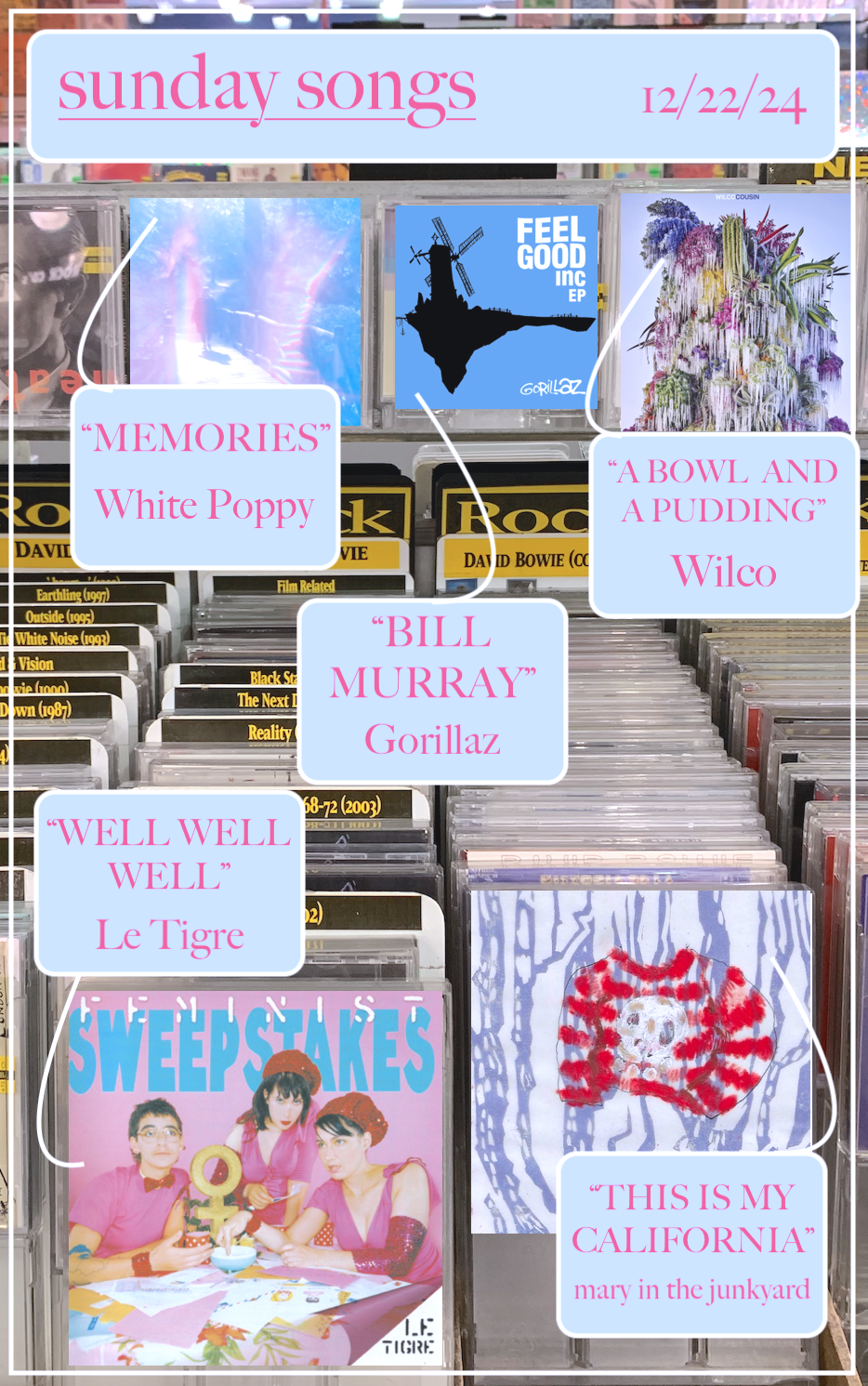
Before I begin, here are the Sunday Songs from the past two weeks, as I had to crawl my way through finals hell and didn’t have time to write here. As with Hounds of Love, I PROMISE that I’ll end up talking about Before and After Science: Ten Pictures someday, because that album is spectacular. In the meantime…
There’s nothing like looking through YouTube comments on this video and slowly piecing together that there was some kind of huge argument under them circa 2008 that, because of it beingso far back, is impossible to trace the beginning or end of because the reply function gets weird to track after 10 years or so. Not to be defeatist about these things, but it seems that so long as there arises new technology, humans will find a way to use them to engage in pointless arguments. Given the band, there’s probably some butthurt republican of yesteryear at the end of it, but the point still stands. (But also, who the hell goes into a Le Tigre song and thinks “ah, yes, this will align with my conservative views?”)
Le Tigre is going to prove a vital wellspring to tap into for the next four years or so. In these dark times, we look to the gospel of Kathleen Hanna. (Also to my mom, who was the one who remembered “Well Well Well” in the first place). This is one of the songs where Le Tigre’s switch from Bikini Kill’s guitars to synths makes perfect sense—it’s a song of going through the motions, not unlike a machine. Hanna and Johanna Fateman deliver the lyrics with all of the enthusiasm of reading an instruction manual: “Well, what do you like/And what do you need?/How should I act/And who should I be?” Never have I heard a song so delightful in its over-the-top performance of being perfunctory: there’s no pleasure to any of it.
Which brings me to the subject matter—given some of the subtle (and not so subtle) sexual references in the music video (which was incredibly made, so kudos to Elisabeth Subrin and her direction), there’s an overtone of women being expected to exist only to please men, especially when sex is concerned. It’s all about men’s pleasure, and as with the lyrics, there’s no regard of what the woman wants—it’s all just “What, where, when, how, when, who?” on the woman’s part. Even if, sadly, that one Ben Shapiro tweet is fake (we all know that the sentiment behind it is probably true), even now women are expected to always be receptive, anticipate of every single need of men, and exist only to fulfill their needs. Obviously, it extends far beyond sex and into any aspect of life, as any woman or AFAB person knows all too well. That’s part of the genius of Subrin’s music video—aside from the fact that the fonts and animations are gloriously early-2000’s, the corporate atmosphere of it does capture the restriction of being under those patriarchal expectations: going through the motions and constantly awaiting another mindless task that brings you no pleasure. Genius.
…AND A BOOK TO GO WITH IT:
The Luis Ortega Survival Club – Sonora Reyes – the story of an entitled boy who thinks that he can get away with anything—and the students who push back against his chauvinist actions.
A promise for the new year, or at least for the next few weeks: this is not the last you’ll be hearing of mary in the junkyard here on The Bookish Mutant. The band name (who’s mary and why’s she in the junkyard?) was what originally grabbed me, but discovering them turned out to be those once-in-a-blue moon finds—they combine a reverence for 90’s alt-rock with an artsy sensibility that’s distinctly 21st century, unafraid of letting their melodies collapse like a crushed-tin can and reform as an entirely different creature. They’re good. They’re the product of a collapse of sorts—founding members Clari Freeman-Taylor and David Allison were originally part of Second Thoughts, a band that found success on TikTok but grew increasingly stifled by the music that made them popular. Their move? Break up, switch around some members, and start anew.
“this is my california” is one of their gentler, more restrained efforts (you’ll see what I mean next week…stay tuned), but even their restraint feels fresh somehow. I’ve pinpointed several comparisons for mary in the junkyard, but the one that immediately comes to mind for this track is Luna. From the easygoing, sidewalk-ambling pace to the warm pulsation to guitars to…well, you can’t blame them for the California part. It doesn’t help that “this is my california” rings close to “California (All the Way),” but it doesn’t feel like a rip-off—in fact, that wide body of songs about California makes the pairing enhance the lyrics. Freeman-Taylor has never been to California, but described it in an interview with Northern Transmissions as “a paradise or idea of success that didn’t really resonate with me.” Her California, as it I’m sure it is for hundreds of people, owing to Hollywood and its side effects, is an ideality, but one that’s just out of reach—”My dream/Comes from the pale light of a bright blue screen.”
It feels like a critical part of growing up and realizing that your lifestyle doesn’t align with what you once thought it did. You’re stuck in that place and think that you’re the only one feeling this way, but you realize that the path before you is even clearer than before. That image of California is a place for other people’s dreams, but not yours—there’s a physical distance, too. Certainly fits with that separation from the earlier sound they were boxed into before forming this band. These lines sounded wistful to me at first, and there’s plenty of wist to go around, but one of the last ones sounds more liberatory now than anything: “If you go to California/We will not stay in touch/I’ve never been to California/And I will keep it as such.” I feel this song echoing through me in every transition—getting away from my middle school classmates in high school, then realizing in college that my high school classmates wanted a different kind of college lifestyle than I did and forging my own path. Not everybody needs California. Lots of natural disasters and whatnot.
If anyone on this Earth is deserving of being named Crystal, I think it’s a musician who makes a song like this. Her name is Crystal Dorval, and I really, really wish I remembered how I discovered her song, for the life of me. It was all a haze. I realize I’m talking like an aging stoner recounting the sixties. But no, it was the COVID lockdown, and to this day, I’ve never touched drugs of any kind, unless you count coffee. I floated from album to album, song to song, not quite absorbing all of them, but all of them sticking to me anyway. “Memories” is one such artifact from that time. I don’t remember where I found it, but it sticks—unpainfully and untainted thankfully—as a distinctly May 2020-or-thereabouts artifact.
“Memories” is one of those rare songs where the feel of the song, the album title and the album cover collide to create the most cohesive picture of the music possible; the pale blue and pink filter on the cover, combined with a lens flare that punctures the image of a person walking down a bridge into a forest, is as rippling and light as the music itself—Paradise Gardens is the name of the album, and, very likely, where that bridge leads. (Was this what George Bluth Sr. was missing all along?) As crystalline as Crystal Dorval’s name, “Memories” twinkles along in a dreamlike haze, untethered save for the thick baseline keeping it anchored. Even that anchor ripples with the rest of the glimmering, the edges blurred along with Dorval’s echoing vocals, which do sound like the whispers echoing from inside of a glittering geode split open. It took me until my Cocteau Twins summer to bridge the gap, but if you’re searching for something close to a modern analogue, look no further. Nobody can top them, of course, but Dorval has most certainly attended the Liz Frazer School of Dreamlike Music. I suspect the reason that she didn’t get a perfect score was because her lyrics are decipherable and have a concrete meaning. Either way, if you need to drift off for four minutes and five seconds, climb aboard.
…AND A BOOK TO GO WITH IT:
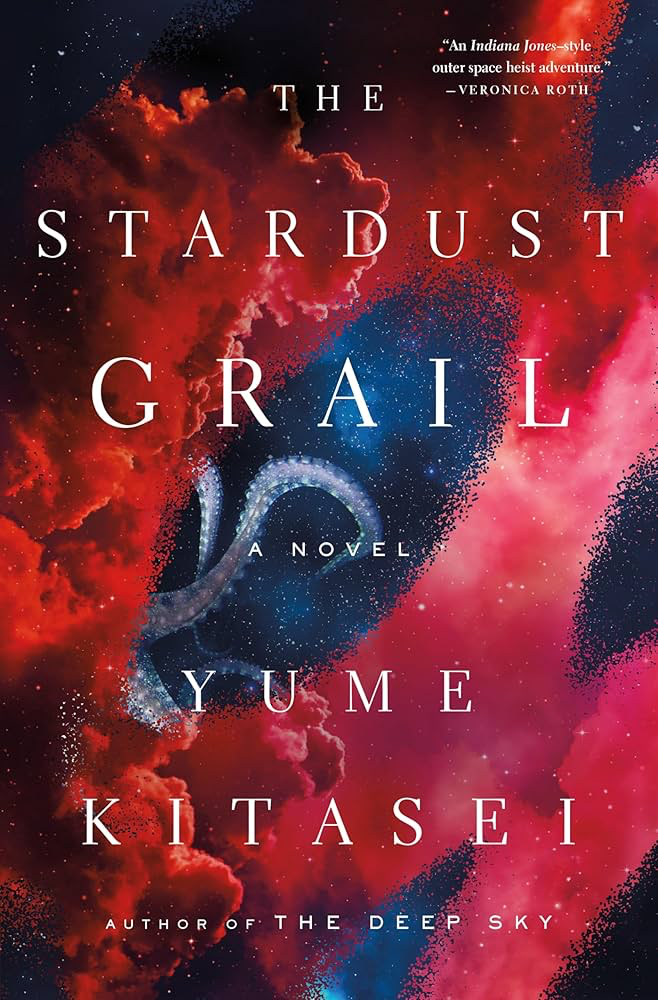
The Stardust Grail – Yume Kitasei – the album cover for Paradise Gardens, as well as the dreamy feel of the music, ripples in a similar way to how I imagined Auncle’s chromatophores. I promise it makes sense.
The joys of being a fan of a band with a treasure trove of B-Sides (or D-Sides, I should say) never end. It’s intimidating to see two whole albums of B-Sides from Gorillaz in particular, but if anything positive can be said about the Apple Music algorithm, it reminds me that they exist.
Being the B-Side for “Feel Good Inc.” has to be the worst job in the world for a song. It’s a dirty job, but someone’s got to do it. When I say that “Bill Murray” is an afterthought, I don’t mean it in a derogatory way at all. It does feel distinctly like a B-Side, but some songs are meant to be B-Sides—products from restless minds that were never meant to be center stage, but create a more nuanced picture of what came out of their famously fruitful sessions. Even the title is a bit of an afterthought—the lyrics aren’t much to go off of, but Jamie Hewlett suggested the name off the cuff after seeing his name in a magazine while discussing the song with Damon Albarn. Even though it only came to fruition during Demon Days, it traces its origins back to 1999, for the recording of Gorillaz’s self titled album. “Bill Murray” screams Phase 1, and that’s what so charming about it to me—Albarn’s wistful vocals, backed by The Bees, call back to the plaintive high notes of “Man Research (Clapper),” while the easygoing rhythm could fit right in with “Slow Country.” Had it been sandwiched between, say, “Sound Check (Gravity)” and “Double Bass,” it could have been a smooth transition—a temporary cooldown for an album brimming with energy. But on its own, “Bill Murray” proves that even the songs that Gorillaz cast aside in its early days were constructed with nothing but passion and intricacy.
As I said, even Gorillaz’s afterthoughts had plenty of polishing up on their own. Here’s an extra from the special edition of Bananaz, where you can see Albarn, Hewlett, and The Bees recording this song, complete with the usual antics (and chicken noises).
…AND A BOOK TO GO WITH IT:
Full Speed to a Crash Landing – Beth Revis – “Bill Murray” seems right at home in the atmosphere of this novella—even amidst all of the climactic space opera machinations, Ada has time to quip and slip into her easygoing personality.
Cousin, huh? It truly is the gift that keeps on giving. As full of hidden miracles as Cruel Country was, I think I’ll side with Cousin at the end of the day if we’re picking sides as far as 2020’s Wilco albums. (But why pit two Tweedys against each other?)
The more Cousin reveals itself to me, the more the album art makes sense. The original art is a photograph by sculptor Makoto Azura; this piece is Frozen Flowers 2023, and it’s one of his many botanical sculptures, many of which are frozen and propped into snowy landscapes. As much of a visual learner as I am, his sculptures immediately draw me to the sense of touch; with every separate flower frozen into its neighbor, I can imagine the ridges of icicles under my fingertips, of the curve of each individual petal and leaf as they were compressed into coldness. It’s so befitting of Cousin because the whole album is an exercise in textures. As with each individual shade of the vibrant botanicals in the sculpture, unique sounds blister and twirl next to each other, from the ear-popping cacophony (and possible all-time album opener, for me) “Infinite Surprise” to the dusty dewdrop softness of “Sunlight Ends.”
“A Bowl and A Pudding” was one of the Cousin tracks that flew under the radar for me. The bar was unreasonably high after some of the tracks that I mentioned, as well as “Pittsburgh.” No skips, the more I think about it, and this track adds to that pantheon. In comparison to some of the more in-your-face textures on the album, this song is more understated; it’s more of the woolen fibers of a sweater or the gentle trickle of water after you’ve left the faucet running by mistake. It’s softly cyclical. The acoustic guitar notes swallow themselves, the fingerpicking as gentle as sunlight through a window. Tweedy’s lyrics are similarly cyclical, every one parroting the other in whispers, laying bare the dissolution of a relationship. That calmness makes the title feel like a still life. It’s up to you whether the bowl and the pudding are two separate items or if the pudding is in the bowl by design…or maybe that’s the point of the lyrics. Is it? Is the togetherness of the bowl and the pudding meant to reflect the separation and alienation that Tweedy narrates as someone he loved slips away from him? The bowl loves the pudding because it fills up the empty space that was molded to hold something. The pudding loves the bowl for the security, but does the pudding want something more? Can it be contained? Is the pudding in question the kind that is even served in a bowl in the first place? Is the bowl sick of being created solely as a vessel to hold other things?
Oh, god. Got too English major with it. A note to my parents: I guess this means that my degree is going to good use?
I came into Pompeii with plenty of curiosity, having finally gotten around to listening to Cate Le Bon after hearing her work producing Wilco’s latest album, Cousin, and her vocal feature on St. Vincent’s “All Born Screaming.” Vaguely remembering the buzz and air of weirdness around Pompeii, I decided to listen to it first.
Pompeii and “Dirt on the Bed” have reminded me of why a spectacular album intro can be both a blessing and a curse. If nothing surpasses the first track, then the rest of the album can never recover—or at least reach the heights of the first song. You can enjoy yourself, but never as much as you did after one song. Just one. It’s a horrible dilemma. Pompeii was fantastic from the start, but after the first four songs, nothing’s quite the same—great, but like my experience with R.E.M.’s Green, nothing tops the back-to-back splendor of the first four songs. And that splendor is set in motion by the crawling intro, “Dirt on the Bed.” As the title suggests, it has the dread of something unclean creeping into the house, like a nun on the scent of sin in a shuttered Catholic girl’s school. An off-kilter, stumbling chorus of brass blooms in moldy bursts, an airborne sickness pulsating through each thrum of the bass. Now I know exactly why St. Vincent chose to work with Le Bon—”Dirt on the Bed” is especially evidence of this, but all I could think of during Pompeii is that it felt like St. Vincent had remained lyrically and instrumentally in Actor, but slowly adorned her music with synths. They’re so similar to each other, down to their folkier, precocious indie beginnings that blossomed into full-on devotion to strangeness. This is modern art pop at some of its best, unabashedly weird and precise in every flourish. “Dirt on the Bed” makes even more sense when you see it as a product of a pandemic-produced album; it paces listlessly, putting on a smile as it tries to scrub every trace of illness and dread from a spotless house. Even as calmly as Le Bon sings each lyric, foreboding seeps through every misty horn blast.
That’s how an album intro is done. After several more listens, I’d say that nothing comes quite as close to it, but “Dirt on the Bed,” “Moderation,”“French Boys,” and “Pompeii” is SUCH an undefeated stretch of songs. Pompeii is worth a listen just for that, as is the album’s verySt. Vincent closer, “Wheel.”
…okay, I can’t possibly be normal about this because I cry a little every time I hear it. Either way, there’s an undiluted purity about this song that makes any kind of analysis feel like ten steps in the wrong direction. It’s a paramount example of how easily beauty and simplicity can intertwine, and it cuts more deeply than some songs I know with hundreds of metaphors.
It’s very nearly perfect. Karen O tends to do that.
One of the first times I remember hearing this song was in the car with my dad, as I come across many a good song. Looking back, since I was so young, it must have been a trip back into Sparklehorse’s catalogue shortly after Mark Linkous’ tragic passing. But as we drove home that night, the windows buffeted by snow or sleet, my dad made a wry remark about the lyrics: “he’s not feeling too good, huh?”
With every emotion comes an infinite number of ways to express it, not just confined to song. There’s the kind of songwriting that outright says that you’re sad, while others cloak it in metaphor. Neither is better than the other, but what Mark Linkous did feels like a category all its own, albeit closer to category #2. Many of the lyrics of “It’s A Wonderful Life” (if there was ever a more sarcastic title) are nonsensical, as his lyrics often are (“I wore a rooster’s blood/When it flew like doves”), but nestled between these impenetrable tidbits, the ones that do make sense land like anvils to the gut. I’ve never heard such sadness and shame articulated in the line “I’m the dog that ate your birthday cake.” Dare I say it’s one of my favorite song lyrics ever? It’s up there, just for such an unadorned, bare line to have such an instantly devastating effect; You can picture that dog, not knowing that it’s not supposed to eat human food and not processing that there’s a child sobbing at their ruined birthday, but being able to detect the shame all the same, but never know the reason why. It cowers, but it doesn’t know why it’s feeling this way. Linkous delivers it with all of that shame, clouded in the atmospheric cage of keyboards that prickle with heat lightning.
With that kind of lyricism, it came as a massive shock that this wasn’t one of his classic pieces of melancholy. In fact, Linkous wrote it as a jab at critics who panned an image of overarching depression over his catalogue: “I got fed up with people in America thinking that my music is morose and depressing and all that. That song is like a “fuck you” to journalists, or people who are not smart enough to see what it is.” And…listen, I’m a guilty party. I still think that Sparklehorse is one of the preeminent purveyors of high-quality sad bastard music, and he had enough strife in his life to justify every tear-jerking lyric. Yet this new light makes the lyrics I thought were nonsensical fall into place. Linkous describes the rest of the song as follows: “In the end, it was more about how every day, you should pick up something, no matter how minuscule or microscopic it is, and when you go to bed, you can say I was glad that I was alive to see that. That’s really what it’s about.” Wearing rooster’s blood when it flew like doves becomes a fleeting, once-in-a-lifetime capture of lightning in a bottle, and being the only one who can ride that horse th’yonder suddenly rings out as a humbly sung badge of honor. It was never sarcastic—it’s a wonderful life. I won’t ever be able to hear “I’m the dog that ate your birthday cake” without the sadness it insinuates, so maybe I’m just as much a part of the problem as the journalists he was taking a shot at, but the main takeaway for me is how versatile of a lyricist he is—if you look closely enough, he makes the absurdities of life both tragic and humbly hopeful.
Either way you absorb “It’s A Wonderful Life,” you can’t deny how otherworldly it sounds. Even years after I first heard and subsequently clung to this song, I can only name maybe one other artist who has ever come close to sounding like this—Lisa Germano, who, whether or not the two knew of each other, has a similar modus operandi of making music that sounded like rotting wood and empty doll’s heads. Lyrically and sonically, almost nobody sounds like Sparklehorse, and I suspect it’ll take a miracle for anyone to come close.
It seems I’ve only gotten through one strand in the massive haystack in terms of the INCREDIBLY prolific career of Sparks, which started in 1967 (under several different names) and had its most recent entry last year. Edgar Wright made a documentary about their musical exploits, and the list of artists they’ve influenced seems to span an infinite number of genres, all the way up to Horsegirl in 2023. So, having only heard two of their songs (including this one): hats off to you guys, really! Being that flagrantly weird for almost six decades is nothing short of impressive, and I can’t help but admire their musicianship in that regard.
“Girl from Germany” scratches my eternal itch for early-’70s glam rock, although it’s not all glam—it’s more glam in the sense that Brian Eno was glam at the same time, not quite like Bowie or Bolan were glam. Squeaky-clean, warm guitars as far as the eye can see and a healthy dose of theatricality cloaks this track make for a song that’s deliciously meticulous in every aspect. Russell Mael affects high-pitched vocals that wouldn’t be out of place in The Rocky Horror Picture Show while Ron Mael’s keyboard melodies glitter like light reflected off a glass of wine. And like Brian Eno, they used such a theatrical machine to touch on touchy subjects—in this case, in the climate of the early ’70s, bringing home a German girl to relatives who were mired in the horrors of World War II: “Well, the car I drive is parked outside, it’s German-made/They resent that less than the people who are German-made.” Even if every affectation is theatrical to the core, it’s still a prejudice that resurfaces today—assuming that any given person is an extension of the government and horrors of their homeland, and having to grapple with the cultural fallout of such a simple gesture of love.
Having only heard one song (this one) from Black Foliage: Animation Music, I’ve already logged it into my slipshod mental list of album titles that perfectly describe the music they contain. The Olivia Tremor Control have always been masters of musical density, making soundscapes that unfold like intricate pop-up books, each layer of noise a painted paper cutout in an endless jungle. “Hideaway,” so far, is the pinnacle of that density; with each successive strain of woozy, turn-of-the-century homage to ’60s psychedelia, you’re pulled into a lush forest of plants that unfold just enough to let the tiniest slivers of light through. It’s not just the black foliage that hits the mark so fittingly—the “animation music,” as Will Cullen Hart called it, is “all the stuff floating around…To me, that’s what [animation music] is: sort-of a sound and space, personified—just flying around to greet you in a friendly way.” All at once, the xylophone chimes and trumpet blasts give “Hideaway” the feel of both the colored-pencil animations in Fantastic Planet and the bouncing characters in Schoolhouse Rock!, a papery and breathless expedition into a darkened forest of cartoonish proportions.
I don’t think I’d be alone in saying that we were all feeling apocalyptic in 2020. Fitting that Deerhoof would put out this album in June of that year, a concept album about teenagers making art amidst the collapse of society. Not intentional timing, I’m sure, but maybe too raw all the same. I wonder what it must have been like to listen to Future Teenage Cave Artists during lockdown, but what I can glean is from listening to Horsegirl; on their episode of What’s In My Bag? (worth watching for this and Sparks, The Feelies, and Brian Eno, among others), this was one of the albums that they picked, and drummer Gigi Reece shyly showed off that they’d stitched “Deerhoof” onto the flap of their book bag. So, besides thanking them for their excellent album, Versions of Modern Performance, thank you to Horsegirl for turning me onto this all-consuming song!
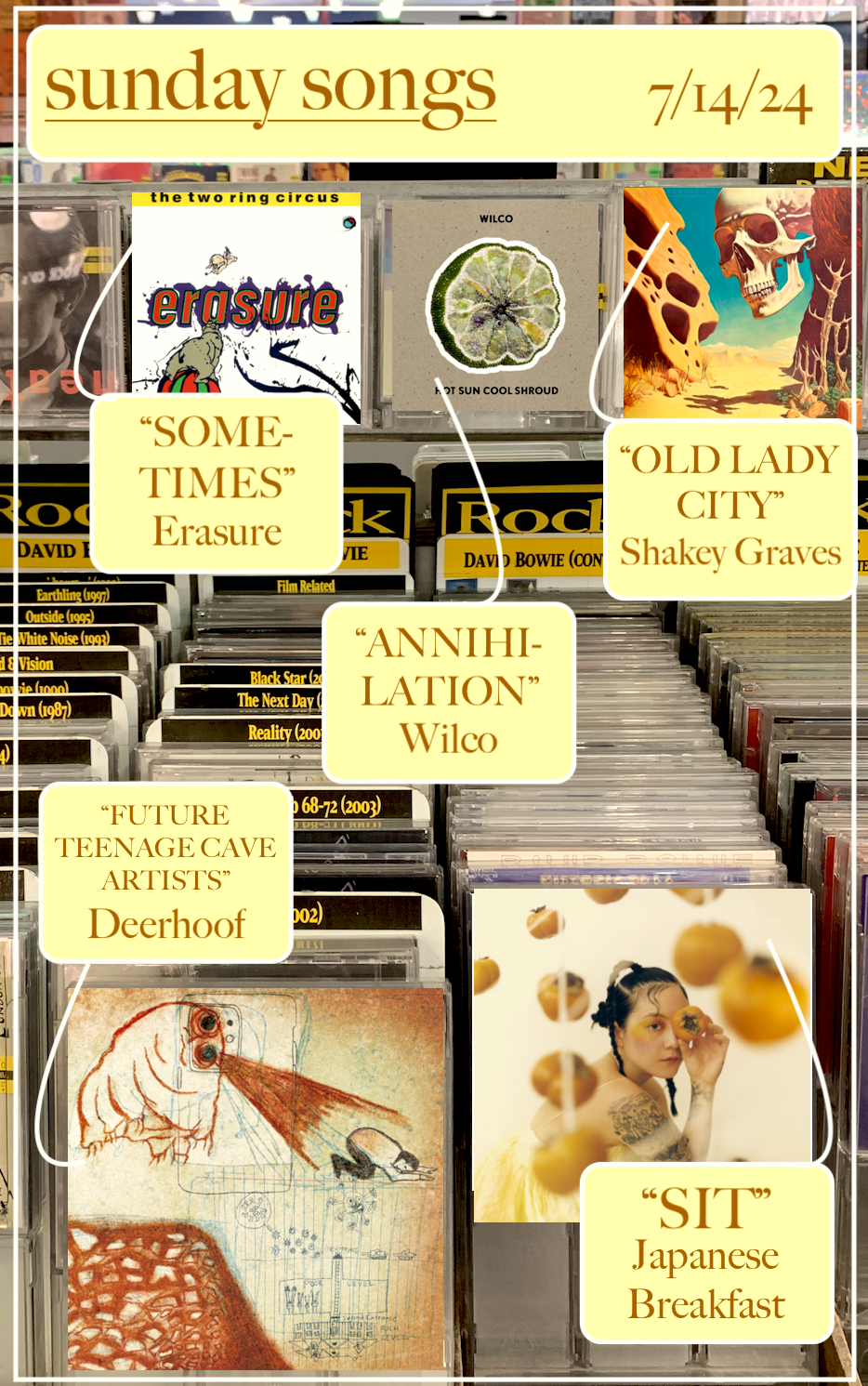
The title of Future Teenage Cave Artists reveals exactly what the concept behind the album is: during the collapse of society, cruelty and murder runs amok, but amidst all of this strife, a band of nomadic teenagers hold onto hope and make art. “Future Teenage Cave Artists” is that mission statement made manifest. The whole album was reportedly recorded entirely on laptops and phones (hence the iPhone/tardigrade hybrid on the album cover, drawn by Deerhoof’s vocalist, Satomi Matsuzaki), and I never thought such a simple act could have enhanced the song so much. The shaky, distorted quality of the recording sells the dystopian setting, like we’re not streaming music, but listening to it on some ancient, warped tape recorder leftover from the age of man. It gives it an almost uncanny quality, as though you’re holding onto the last vestiges of this music, and that the battery life on your device is going to run out at any second. It’s so urgent in its hope that I can’t help but play it over and over—amidst this societal collapse, every lyric is a declaration of defiance and purpose: “Gonna paint an animal on a cave wall/Gonna leave it there forever while empires fall.” Concept song or not, I didn’t expect this song to strike such a deeply resonant chord with me; not only does this society feel like it might collapse at any second, but even if it weren’t, we’re surrounded by people who lambast any kind of art as a career—what are you gonna do with that degree? Are youeven going to make any money off of that? And in our capitalist landscape, I do have to get myself some money, but it’s separated the real purpose of art from art, the job—threading a piece of your soul out into the fabric of the world, and making art that reflects your image of the world, making contact with a well deep inside (and outside) of yourself. “Future Teenage Cave Artists” is a defiant ode to the lasting, breathless joy of making art—upfront and urgent, and running on an engine of joy. You can’t get a much better rallying cry than what Matsuzaki fills the jerky outro with: “try my sci-fi!”
Having the pretentious music taste that I do, I remember when Jubilee was everywhere in the summer of 2021. Persimmons, Jeff Tweedy covers, and rave reviews as far as the eye could see. Back then, I had a faint memory of hearing in interview with her on NPR sometime in middle school, but it was ultimately the combination of Jeff Tweedy’s cover of “Kokomo, IN,” my mom’s deep-dive into Michelle Zauner after reading Crying in H-Mart, and a friend’s video of Zauner playing “Paprika” with a massive gong on stage to finally give this storied album a try.
“Paprika” remains my favorite, but “Sit” came out of left field; in all of the shining praises of Jubilee, I never heard anybody talking about it. With its almost shoegazy distortion, humming and throbbing like a swarm of restless cicadas, Zauner’s voice pierces the haze like a lighthouse though the fog. Every lyric is spoken like a final message communicated from an ethereal barrier between dreams, the last words of a stranger your brain fabricated while you were sleeping that will haunt you for weeks afterwards. And like a haunting dream, Zauner sings of the memory of somebody that has clung to her with the strength of burrs, no matter how hard she tries to shake them away: “It’s your name in my mouth I’m repeating/It’s the taste of your tongue I can’t spit out.” They walk through her life with all of the transience of a hologram, a trick of the light that appears in every corner, in unexpected places with unexpected people. And what perfect instrumentals to meld with this; any sense of clarity only comes when Zauner is faced with the reality that she’s “caught up in the idea of you,” but as soon as it dips back into painful reminiscence, she’s consumed by the buzzing distortion, closing her eyes as she’s pulled back into the undertow of memory and fantasy. It’s a track with more weight behind it than most people seem to give it credit for. You can’t lift its impenetrable, stinging fog—the fog is the point.
I’d posit that there’s almost no queer experience that is entirely universal, as the queer community is as multifarious as the identities that it encompasses. But one thing that I think most queer people can relate to is looking back on their life before coming out and thinking how did everybody not know I was gay? How did I not know I was gay? There’s an embarrassing amount for me, including but not limited to lesbian Barbie weddings and a pair of blindingly rainbow running shoes I wore almost daily in 6th grade. But the fact that I had such an extended Erasure phase when I was about 8 or 9…yeah, there’s no heterosexual explanation for that. That CD of Union Street that I briefly kept in my room and played on my Hello Kitty CD player was probably the first to catch on. The gays yearn for the synths.
I have nothing but admiration for Erasure, not just as queer icons, but for being so consistent in their musical exploration. Well…exploration probably isn’t the right word, since they’ve been making variations on the same sound since 1986. But never once has it seemed like they’re doing it out of trying to feel young or reliving fantasies of when they were at the height of their popularity. Andy Bell and Vince Clarke are just artists that were built for the late ’80s—nowhere else could they have flourished so vibrantly. The drama. The synths. The yearning, my god. They’re not just from the ’80s—they are the ’80s. They’ve been acting like it’s the ’80s for every single decade since, never once hopping on trends or changing their sound because they know exactly what they excel at. Listen to any song they’ve put out in the past 10 years, and it’s clear that they’ve still got it. But the cosmic alignment that placed Bell and Clarke in the late ’80s was beyond fate—nowhere else could you have “Sometimes”, with its lovelorn pining…and Andy Bell dancing in the pouring rain with a soaked white t-shirt. Does it get any better than that?
HOT WILCO SUMMER IS HERE!!! Well, it’s been here for about two weeks, but I’m stubbornly committed to these color schemes. But the weather right now is more akin to the Hot Sun, Cool Shroud we’re talking about, so there’s no time like the present. Urgh. I’m not sure much more of this 90 degree heat I can take…
Hot Sun, Cool Shroud – EP proves just how wildly versatile Wilco are. I can’t think of a single band active today that are not only as prolific as they are, but as consistent in quality—and creativity. The prickling apprehension and Nels Cline’s pipe burst of a guitar solo on “Hot Sun” feed straight into “Livid,” a chase sequence-ready metal instrumental that rockets through the air, ricocheting off the walls like a deflating balloon set loose, complete with a barrage of Galaga-like flourishes. “Inside the Bell Bones” has the quiet, uncertain clatter of frigid water dripping from a cave ceiling, and “Ice Cream” and “Say You Love Me” ground the EP to a more emotional conclusion.
But I keep coming back to the chainlink that ties all of these vastly different songs together—”Annihilation.” Next door to “Ice Cream,” it kicks off the second half of Hot Sun, Cool Shroud, returning to a classic kind of Wilco that tugs a particularly tender heartstring. Even if it doesn’t have the sheer gut-punch of “Say You Love Me,” it reminds me of the more grounded moments of The Whole Love. Unlike “Livid”‘s riotous tailspin, this track spirals through the clouds, kept afloat by the wings of love: “A kiss like this/Is endless tonight/This kind of annihilation/Is alright.” Jeff Tweedy’s vocals bring another lyric of his to mind, from 2019’s “Hold Me Anyway”: “light is all I am.” There’s not an oomph behind it, like his voice often has, but this song is so airy and urgent that it can’t be sung any other way. Tweedy described the soundscape of Hot Sun, Cool Shroud as “a summertime-after-dark feeling…All the pieces of summer, including the broody cicadas,” and that makes the lovestruck urgency of “Annihilation” make perfect sense: it’s a secret kiss under the boardwalk as the sun goes down, the lights of the carnival slowly dying as the setting sun sets the sky alight. In that moment, there is nothing but the moment, in all of its humid, breezy warmth.
…AND A BOOK TO GO WITH IT:
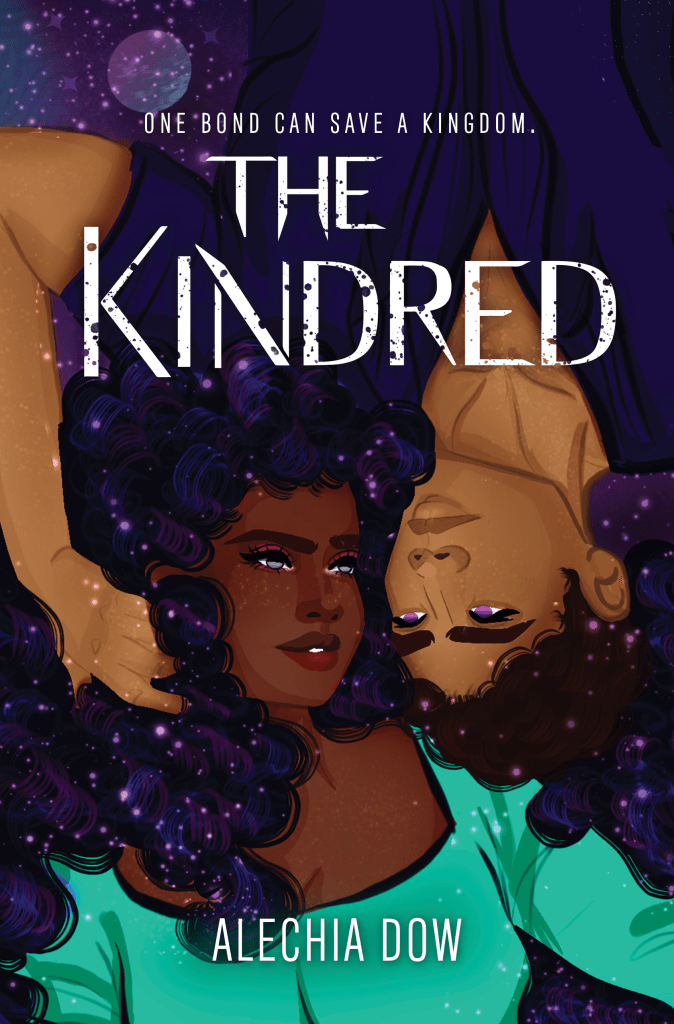
The Kindred – Alechia Dow – “We’re boiling angels/Let’s kiss for hours/Equal power/Let’s make it art/This kiss is ours…”
I’d all but forgotten about “Old Lady City” since I first listened to Deadstock:A Shakey Graves Day Anthology, and it seems that…judging from the lack of lyrics anywhere (which on the internet, the manifestation of too many people with too much time on their hands, is a rarity), so did everyone else. Tough crowd. But it’s so unlike any other Shakey Graves that I’ve heard, not even on Movie of the Week. Shakey Graves has never been afraid of being spooky, but this is a kind of off-kilter eery that he didn’t stray towards until now, or however long ago this was originally recorded. Maybe it was too risky to put it on an album for this reason, but this grittier, spookier side is one that I thoroughly enjoy. With vocals by Buffalo Hunt (Alejandro Rose-Garcia’s wife), “Old Lady City” is a scorched, rickety ball of spikes, no edges sanded down. In between twisted strains of nursery rhymes, purposeful breathing, and Buffalo Hunt’s cartoon witch-like cackle, the lo-fi recording makes for a crunching, off-kilter interlude. Rose-Garcia’s vocals are almost nowhere to be seen, but they float in ghostly tendrils in between the splinters, burnt paper, and charcoal of this B-Side.
…AND A BOOK TO GO WITH IT:
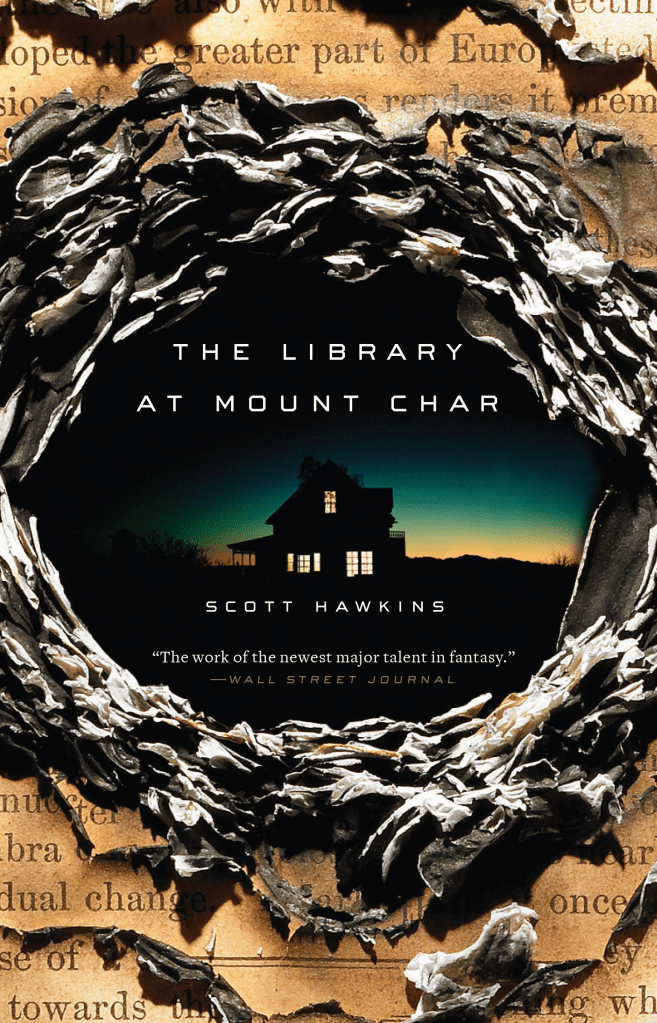
The Library at Mount Char – Scott Hawkins – a raw and rickety story that’s more than its appearances let on, just like its protagonist. (Doesn’t hurt that the book cover matches the feel of the song too.)
Since this post consists entirely of songs, consider all of them to be today’s song.
That’s it for this week’s Sunday Songs! Have a wonderful rest of your day, and take care of yourselves!
Halfway through 2024…no! No we aren’t 😀😀😀😀😀😀😀😀😀😀😀😀😀😀😀😀
Let’s begin, shall we?
GENERAL THOUGHTS:
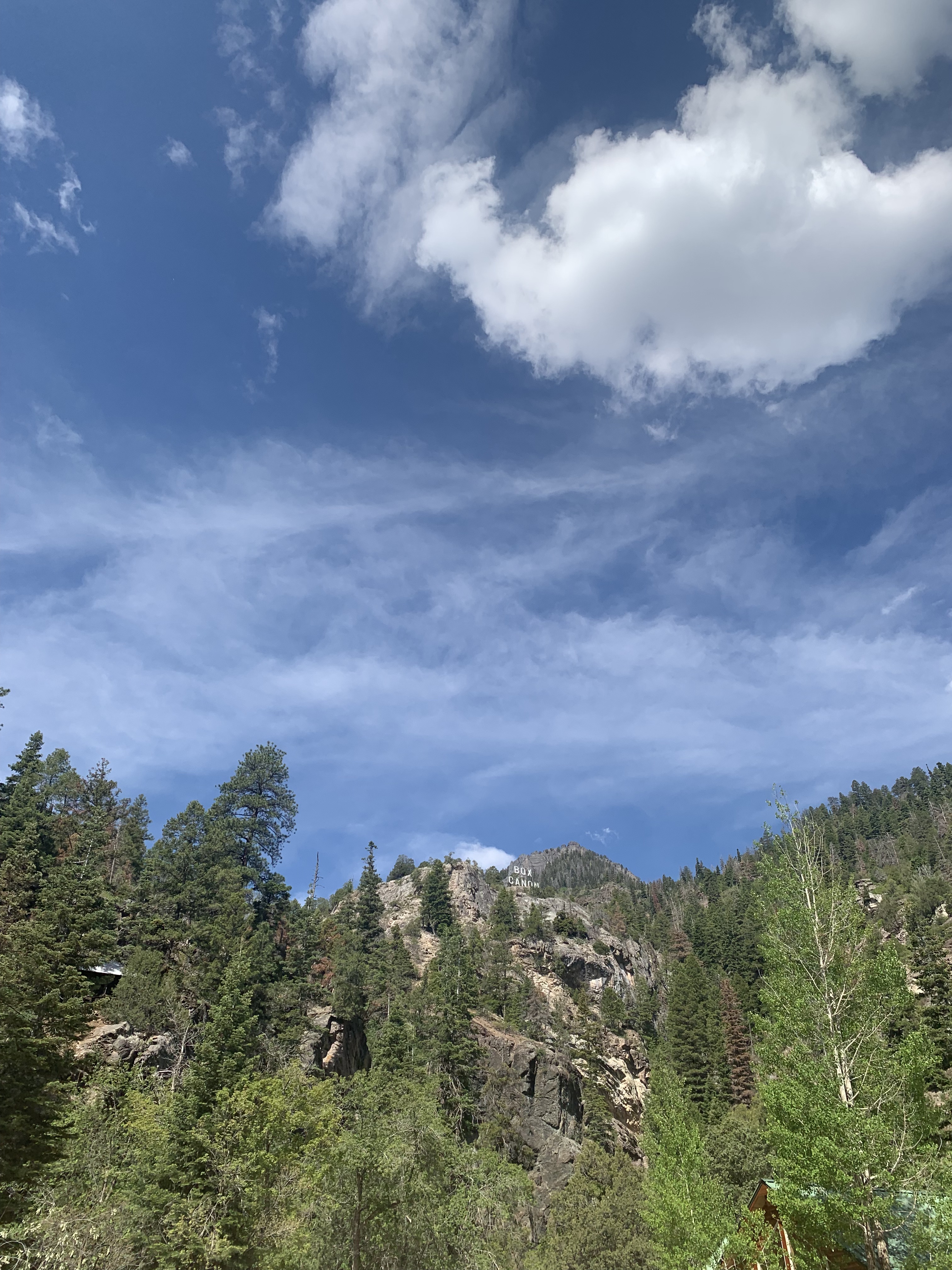
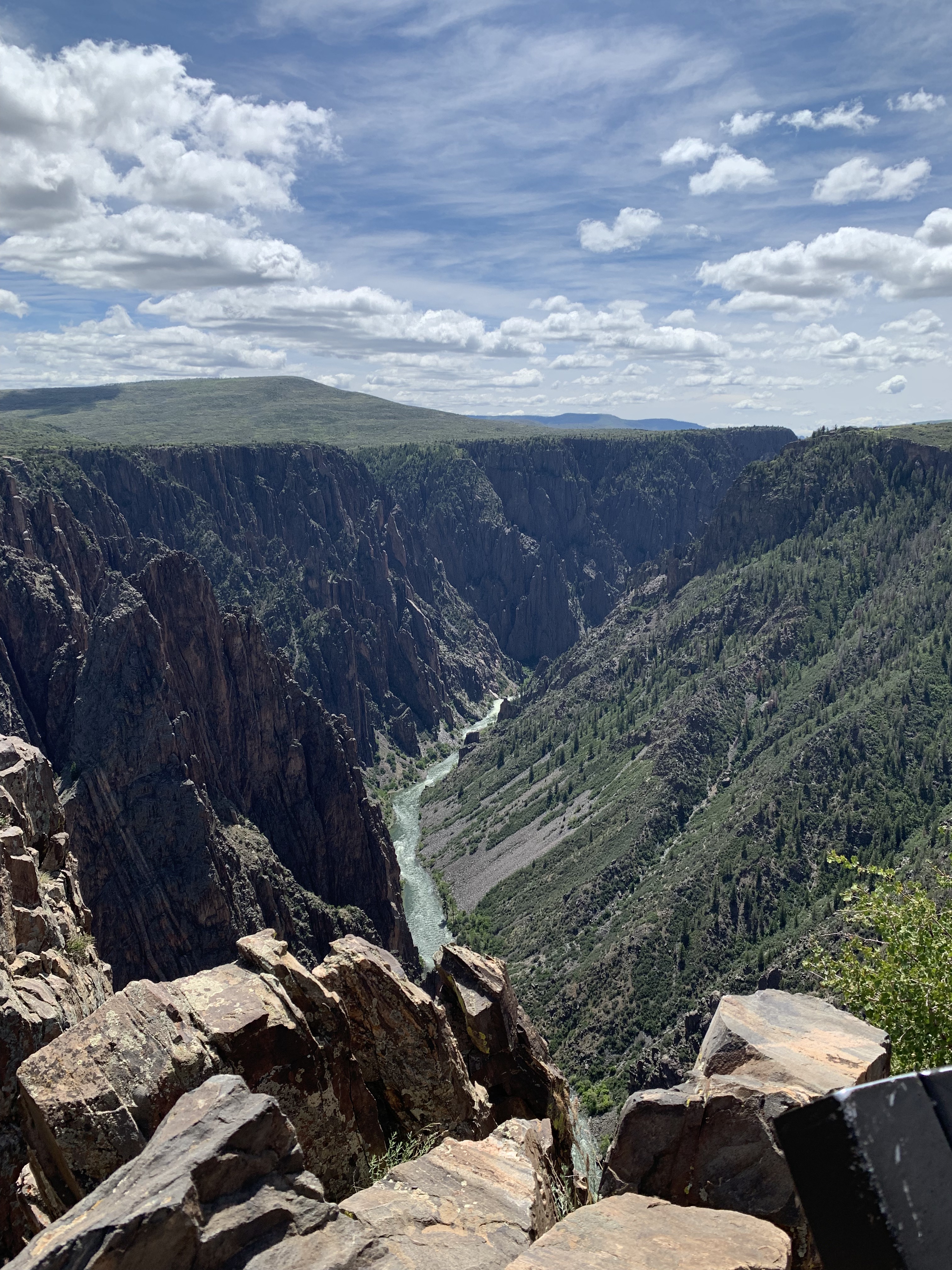
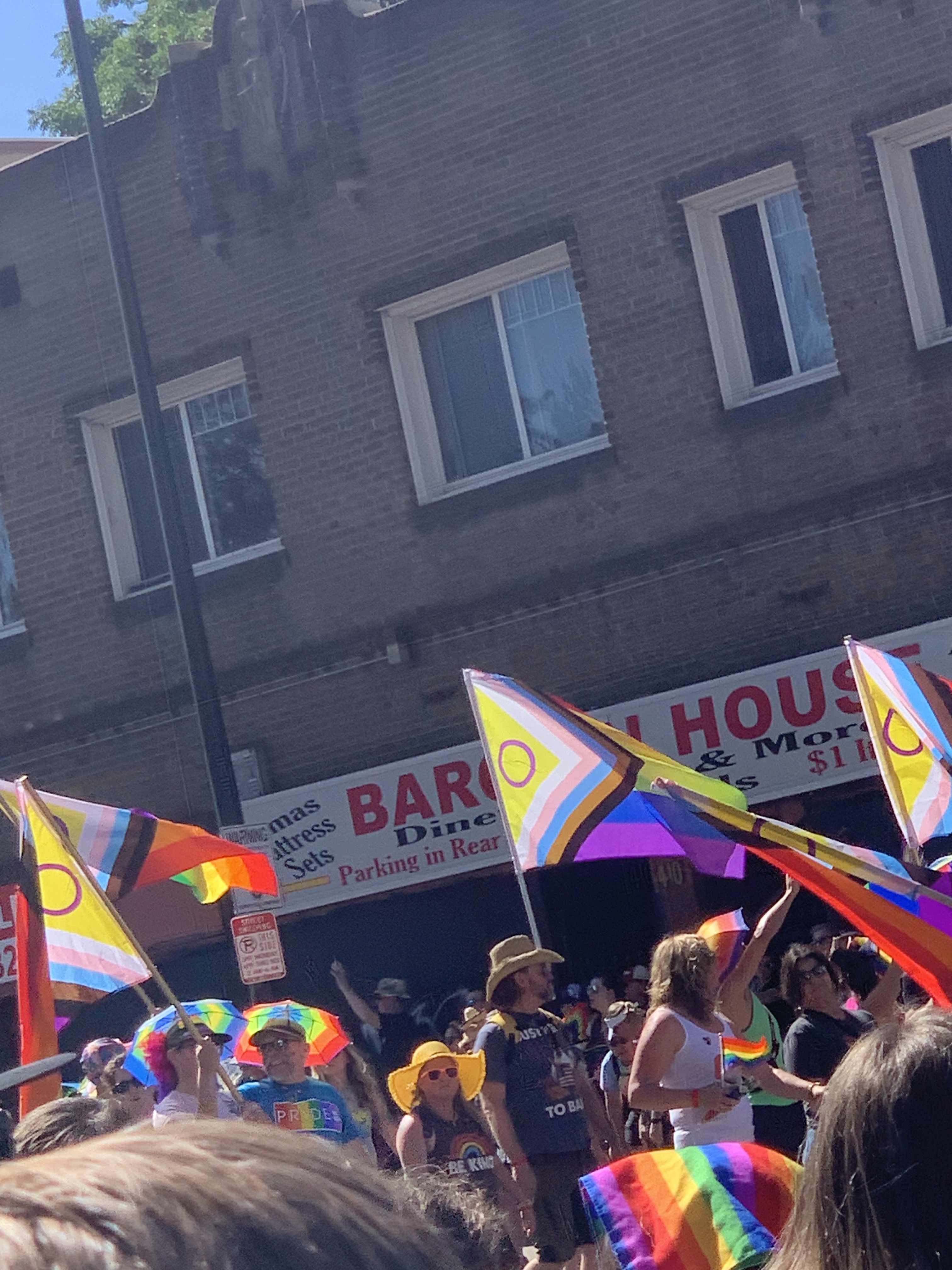
After how busy and hectic my sophomore year of college was, June has been a time to recharge in more ways than one. I went on a quiet vacation at the beginning of the month (Ouray and Black Canyon of the Gunnison—the latter is a very underrated national park, I highly recommend it!), and I’ve taken the rest of the month to…well, rest. I’ve tried to be on social media less and focus on art, writing, and generally nourishing my creativity. In preparation for Camp NaNoWriMo (I only ever do the July camp these days because November and April are both abysmally busy times for me now that I’m in college), I’ve decided to round out my sci-fi trilogy and write the first draft of book three; at this point, I’ve beefed up the outline like a grizzly bear before hibernation, so at least I’ll have some sense of direction…wish me luck!
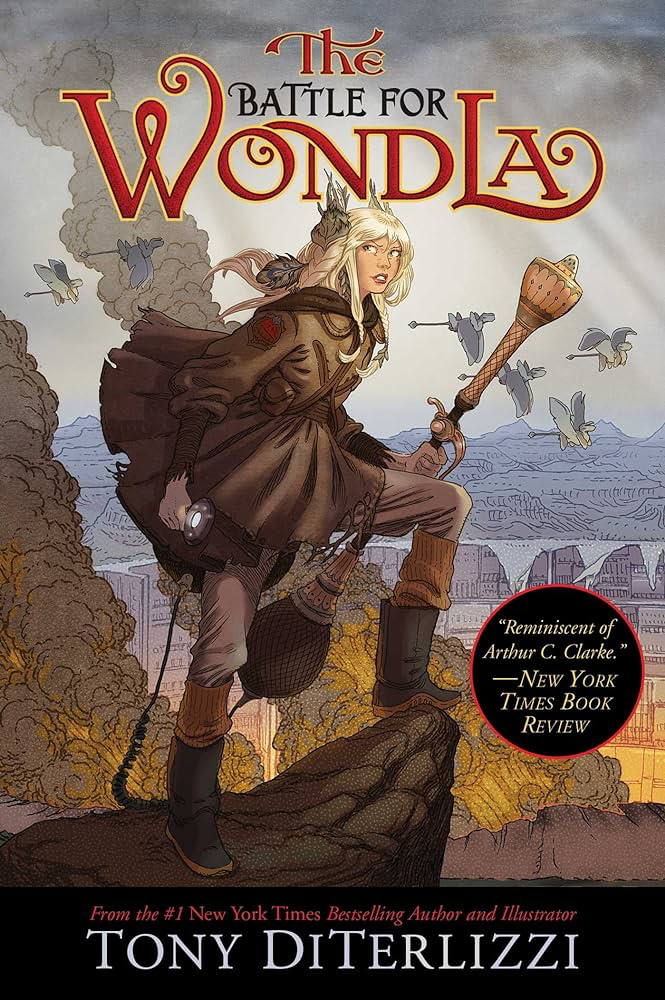
My reading month started out slower, and it’s had some dips, as always, but I ended up reading loads of fantastic queer books for pride month! Predictably, one of my vacation souvenirs wasn’t something related to where we went…no, I bought a copy of The Familiar at a local bookstore (support ’em!) knowing that it would take eons for my hold to arrive at the library. Worth it. I also figured it was as good a time as any to re-read my favorite series from when I was a kid—the WondLa trilogy. My verdict? It healed my soul and reinvigorated my creativity. Some kid’s books don’t age well, but WondLa never gets old.
Other than that, I’ve just been making art, playing guitar, going to pride (so much fun!), watching Hacks, Succession (nearly finished with season 1, and all it’s done is made me fear business majors even more than I already do), and…morbidly, Apple TV+’s new show that they decided to call WondLa. I’m three episodes in, and it’s like watching a train wreck. Expect a retrospective on the WondLa trilogy and possibly a review of…whatever that show is that definitely isn’t WondLa.
On a lighter note, photos from my vacation and pride:
OurayBlack Canyon of the Gunnison50th anniversary of Denver Pride!
(The bear on the title of the post is in honor of a bear we saw crossing the road in Black Canyon. Could also represent bears in general? Happy pride.)
READING AND BLOGGING:
I read 18 books this month! It’s been another relaxed reading month, and although I had a slump towards the end of the month, I read several incredible books for pride month!
Happy Sunday, bibliophiles! I hope this week has treated you well.
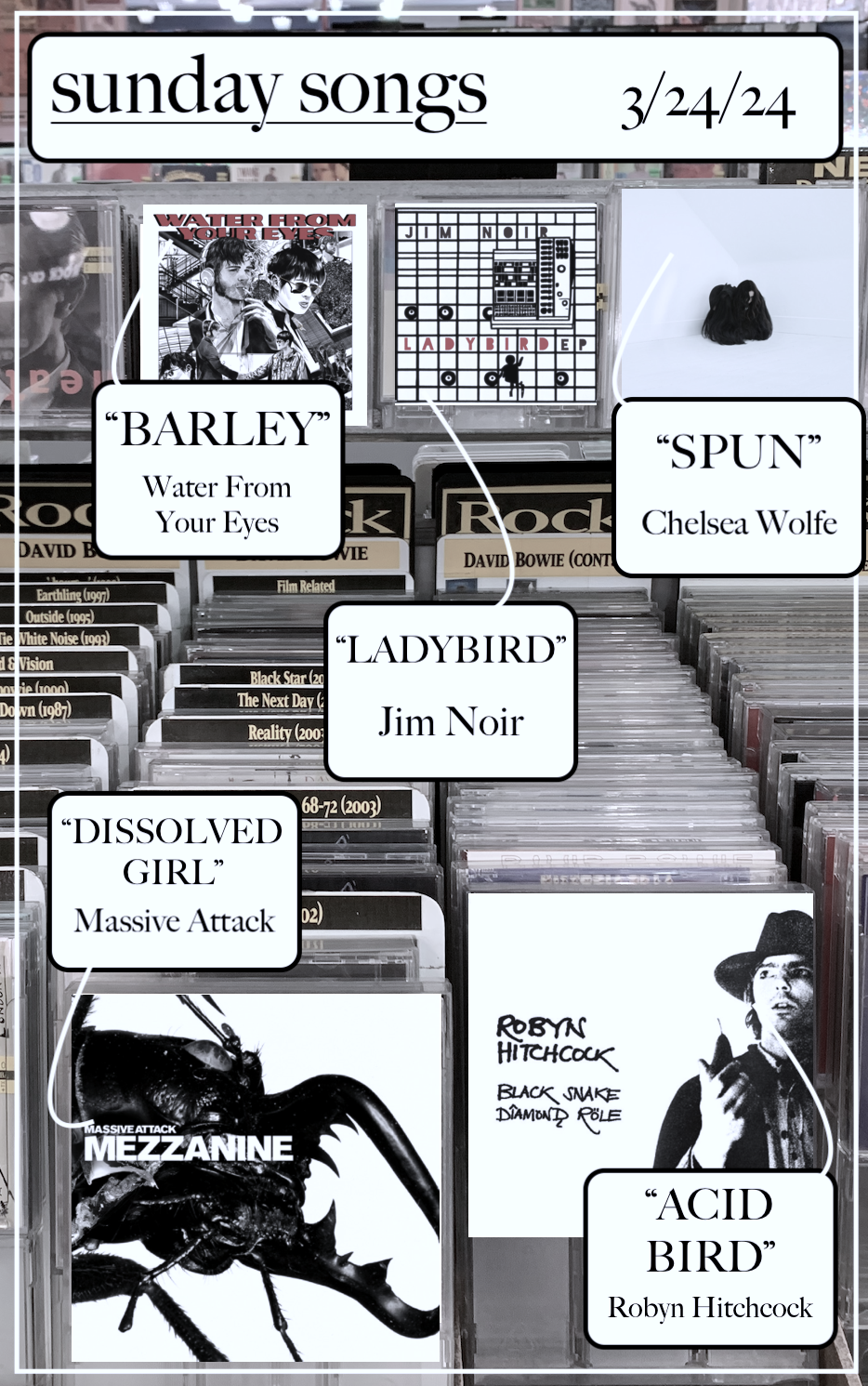
This week: sit down, kiddo. Soon you’ll be a mature adult, so your father and I have decided that you’re ready to learn about the (acid, lady) birds and the bee(tle)s.
Like Odelay, I’ve very much screwed myself over when it comes to this album; as my brother was showing this song to me in the car (thank you, by the way), I talked to him about the album, and after we talked about all of the songs I’ve heard off of Mezzanine, we concluded that I’ve…basically listened to the whole thing, save for some of the apparently duller songs and some instrumental breaks. Oops. My brother’s advice was to go through the album in its entirety anyway, so I’ll still take that advice. Eventually. The Sisyphean album bucket list persists.
I have a special soft spot for songs that sound like their album art. Most of the tracks on Mezzanine have a similarly creeping feel, but “Dissolved Girl,” to me, feels the most like Nick Knight’s photograph of a shiny, almost glistening stag beetle; the initial photo was taken by Knight at London’s Natural History Museum. Minus the pincers, it almost looks like the exoskeleton of a xenomorph—also a fitting image for the creeping feel of some of Mezzanine’s tracks. Much of the album retains that prickly feel of looking at the fine hairs adorning the beetle’s legs, but this song, especially the intro, captures it best. I can almost imagine that same beetle in captivity, scuttling around across a blank canvas in erratic patterns, like a shot from an old nature documentary. Its antennae twitch, it pauses in thought, then scuttles off into a corner again, only to emerge a few seconds later. Looking back, I’m ashamed that I completely missed that fact that this track was also featured in The Matrix. Granted, I was also so caught up in the glorious cheese of that movie that there wasn’t much else to focus on except for a) that one absolute monster of an H.R. Giger fever dream scene, and b) the fact that Keanu Reeves can barely act (sorry, dude, I’m sure you’re a nice guy). But like the stag beetle’s shell, that sleekness blends in with the landscape that the Wachowski Sisters crafted all those years before. I’ve tricked myself into thinking that there were raindrops or dewdrops on said beetle’s shell, but no—it was a trick of the light, and a trick of the music. “Dissolved Girl” runs over your skin like frigid water and catches all the colors of light like an oil spill, darkly alluring in the dapples patterned across it. Sarah Jay Hawley’s voice isn’t just sultry—it’s a puff of rasping steam from a rusty teakettle, blossoming into strange clouds as it’s swallowed by synths and guitars that were made for dramatic entrances and nothing more. It really is dissolving, but it seems to reform itself every passing second, an ouroboros of electronic deja vu.
…AND A BOOK TO GO WITH IT:
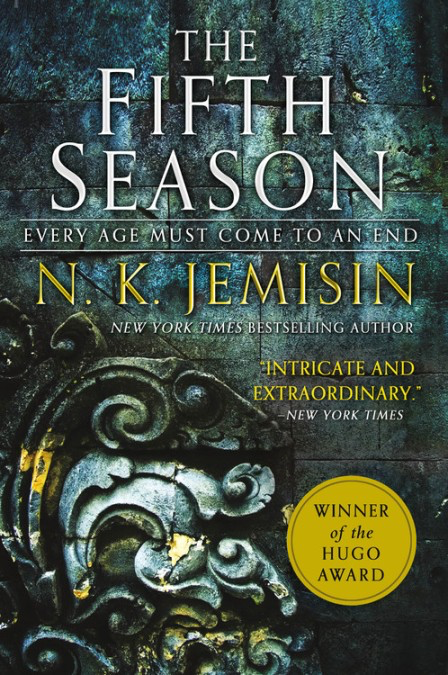
The Fifth Season – N.K. Jemisin – the lyrics don’t reflect the connection so much as the feeling of it does—uncertainty, circularity, and deja-vu abound.
Note to any aspiring songwriters who may come across this post: I accidentally typed “acid birthday” into YouTube while looking this song up, so there’s a good song title right there. It already sounds ten times ickier in subject matter already, but…it sure is a song title.
Robyn Hitchcock seems to have been planted in the rich, fertile soil of ’60s musical inspiration from the start. Listen to any of his songs from his solo works or from one of his many groups over the years, and that bright, whimsical jangle always pops out of the woodwork. But before I saw him back in January, I found out that he’d played several short shows where he only played sets of Syd Barrett covers, and the comparison clicked instantly. Personally, I’m glad that Hitchcock took the good parts from Barrett’s legacy and never went off the deep end, but if there was ever a perfect fit, the two’s musical and lyrical styles were practically made for each other. There’s no doubt that plenty of artists have found drugs to be an outlet for imagination, but it’s always temporary; I never mean to make light of addiction and the very real consequences it can have on a person and their loved ones, but every time I hear about any of these instances, it’s a short-lived outlet. We know where it tragically led Barrett (rest easy) and many other artists of his time, but often, these things have been discovered have always been dormant—maybe it was the drugs that exposed them, but that kind of creativity lingers in all of us. We all have different ways of finding it, and all we can do is learn to live with it carefully—the very things that we perceive as opening it can destroy it just as quickly. At least we can look to Hitchcock as an example—it seemed he knew early on that his wild creativity was at the wheel, and he’s managed to preserve it for decades.
That kind of easygoing, ’60s feel is etched all throughout his decades-long, insanely prolific career, but some of the earliest notes of it, to me, can be found in his first solo album, Black Snake Diamond Role, and in particular, “Acid Bird.” Aside from the unmistakably sixties jangle of it all, from the lazily swaying chords to the way that the guitar is almost made to sound like the limbo between a guitar and a sitar. And like the entirety of Hitchcock’s career, this song is full of oddball wordplay, entirely nonsensical, but somehow sensible, in the sense that, having seen him live, he had every intention of putting these words together in this exact order. It’s unmistakably late ’60s psychedelia—I can hear the lyricism of Pink Floyd’s “See Emily Play” and the instrumentation of…well, probably any late ’60s Beatles song you can think of, and yet, it couldn’t be anybody else but Robyn Hitchcock. Going even later, I’ve always thought of his wordplay as so much like Marc Bolan, like he has access to some bizarre fantasy world that can only be described to us mortals in words that don’t fully make sense when strung together in the order that they are. I’m just glad that Hitchcock has dedicated his career to mapping it in all of its hills, valleys, and acid birds.
If you laid out all of the elements of “Barley” bare, it would fit a pretty common definition for really pretentious music. You’ve got your discordant synths, you’ve got your avant-garde, nonsensical lyrics, you’ve got some off-kilter guitar riffs for good taste, and you’ve got disaffected vocals courtesy of Rachel Brown, who sounds for all the world like they did not want to be there. But this song feels more in the vein of play than construction—the minimalism and freeform feel of it all feel like just that: freeform. It feels like this song was conceived in 5 minutes tops, and I’ve grown to enjoy that quality about it. I keep bringing up Beck in this post for reasons unknown to me, but the technique of Water From Your Eyes (or, alternatively, what sigma male gymbros call tears) seems to be similar: stick a bunch of parts together with a bit of synths and Elmer’s glue, then create the most earwormy eyesore you’ve ever heard. I say “eyesore” only because it’s the best word that comes to mind—it doesn’t sound pleasant, and yet, it sounds good. Between Brown’s vocals, the hectic instrumentations, and the urgency of it all, “Barley” feels like the squirming child of Guerilla Toss and Wilco’s “Spiders (Kidsmoke)“—drolly sung, but full of lyrics that could be prophetic, and as jagged and crawling as all get-out. I’d never thought I’d compare those two, but that’s the beauty of this song—it’s a strange, stiff chimera of a song, and I love it and all of its jerky, weak-kneed beauty.
…AND A BOOK TO GO WITH IT:
Aug 9 – Fog – Kathryn Scanlan – a similar connection of loose bits and bobs, this time in the form of poetry made from what remained of a stranger’s diary that Scanlan found at an estate sale.
Before the switch from monthly EPs to releasing the excellent record Rotate as half of Co-Pilot, a lot of the EPs he was putting out were starting to feel thinned out; even at the beginning of the project, many of the tracks were throwaways that he later polished up, but as time went on, some of the whimsical, lighthearted creativity that he’s known for seemed to have bled out somewhere down the line. The last few EPs felt a little hollow—the last thing I’d expect of Jim Noir, the same mind that could make a song about putting off going to the store to get tea (if there was ever a more British concern) into a sunny, ’60s-flavored synthfest. I wouldn’t be surprised if he was saving his musical time and energy for Co-Pilot during the weaker run of EPs (justifiably so, I mean, God, what a record), but I did miss the more creative tidbits. It seems that some time away has given him time to shake things up, and now we have Ladybird – EP, which I can happily say is a delight! I found myself particularly drawn to the title track; there’s still a hesitant restraint about it, but it has every hallmark of a catchy Jim Noir tune—cymbal heavy drumming, humming vocals, and of course, bleep-bloop aplenty. Gotta have that good bleep-bloop. The background is decorated with sounds that almost ring like a submarine’s radar, and the rest of it hums with buzzy energy, nervously scuttling about like the insect it’s named for. It’s hesitantly bouncy, with eyes that seem to dart about every few minutes before ducking behind the nearest door. I wouldn’t call it his masterpiece, but it gives me hope that this could be the start of the album that he’s been teasing for…almost two and a half years now, I think? If Rotate is all we get, then I’d certainly be happy, but I find myself wanting another win for Jim Noir. It’s what he deserves.
…AND A BOOK TO GO WITH IT:
Binti – Nnedi Okorafor – “I’m surrounded by things I’ve never needed so much/I’d rather give it away instead of finding it’s not enough…” right there, huh?
As I’m writing this, it’s been about a day since I saw Chelsea Wolfe a second time for the She Reaches Out To She Reaches Out To She tour. Insufferable crowd and headache-inducing opening band notwithstanding (2/3 times that I’ve seen shows at this venue, the crowd has been gross and disrespectful, so…hopefully not a curse), she and her band put on an incredible show; obviously, nothing’s going to compare to my first experience seeing her at the Stanley Hotel, which is about as goth as one can get even if Wolfe isn’t present, but what this show had going was the fact that one of her songs was performed whilst some kind of trick of the light made her look like she’s standing astride some kind of fiery, inter-dimensional portal. What I’m trying to say is that she absolutely brought down the house. As usual.
Somehow, I thought that “Spun” would be on the setlist, and I listened to it a handful of times before the show, but…I guess I remembered wrong? It wasn’t one of the songs I was sorely looking forward to seeing, but I do feel a little silly now that the song I’ve picked for this week is the one she didn’t play. Well, any excuse to talk about Chelsea Wolfe is a good excuse, so here we are. Seems I need to add Spun to the album bucket list, since almost everything off of it has been nothing short of arresting. “16 Psyche” was the first song from Spun I heard, back when my tender, 14-year-old brain was as impressionable and soaked up melodramatic lyrics like a sponge (listen, there’s nobody else who can deliver “my heart is a tomb/my heart is an empty room” but her); now that I’ve seen it live, it’s one of her most captivating tracks. But “Spun” is captivating in an entirely different way; where “16 Psyche” takes a nosedive into cloak-billowing wails and drama almost immediately, “Spun” has the pace and feel of mold crawling up the walls. Staunchly on the more metal side of Wolfe’s brand of goth-metal (I promise I’m not stringing buzzwords together, that’s just her brand), the industrial drums and guitars march like a legion of robots summoned from hell, armor cracked as they trudge through the flames. Fleeting moments of said drums speeding up provide a cliff for the instruments to dive off, then leap straight down into the lake of fire, a tenuous equilibrium shattered when you least expect it. “Spun” prowls with its hackles raised, poised to bolt from a history best left in the flames: “I lift my eyes, I slow my gait/And I never wanna see you again.” But the final breaths of “Spun” are exhales released from a clenched chest, fittingly whispered by Wolfe as though she’s speaking in tongues: “And all and everything or nothing.”
…AND A BOOK TO GO WITH IT:
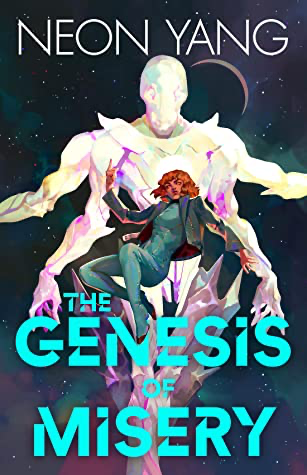
The Genesis of Misery – Neon Yang – the title already sounds like something that Chelsea Wolfe would name an album, but even if that weren’t true, this novel is chock-full of fiery forges, prophetic madness, and the voices of angels (or are they?)
Since this post consists entirely of songs, consider all of them to be today’s song.
That’s it for this week’s Sunday Songs! Have a wonderful rest of your day, and take care of yourselves!
Happy Sunday, bibliophiles! I hope this week has treated you well.
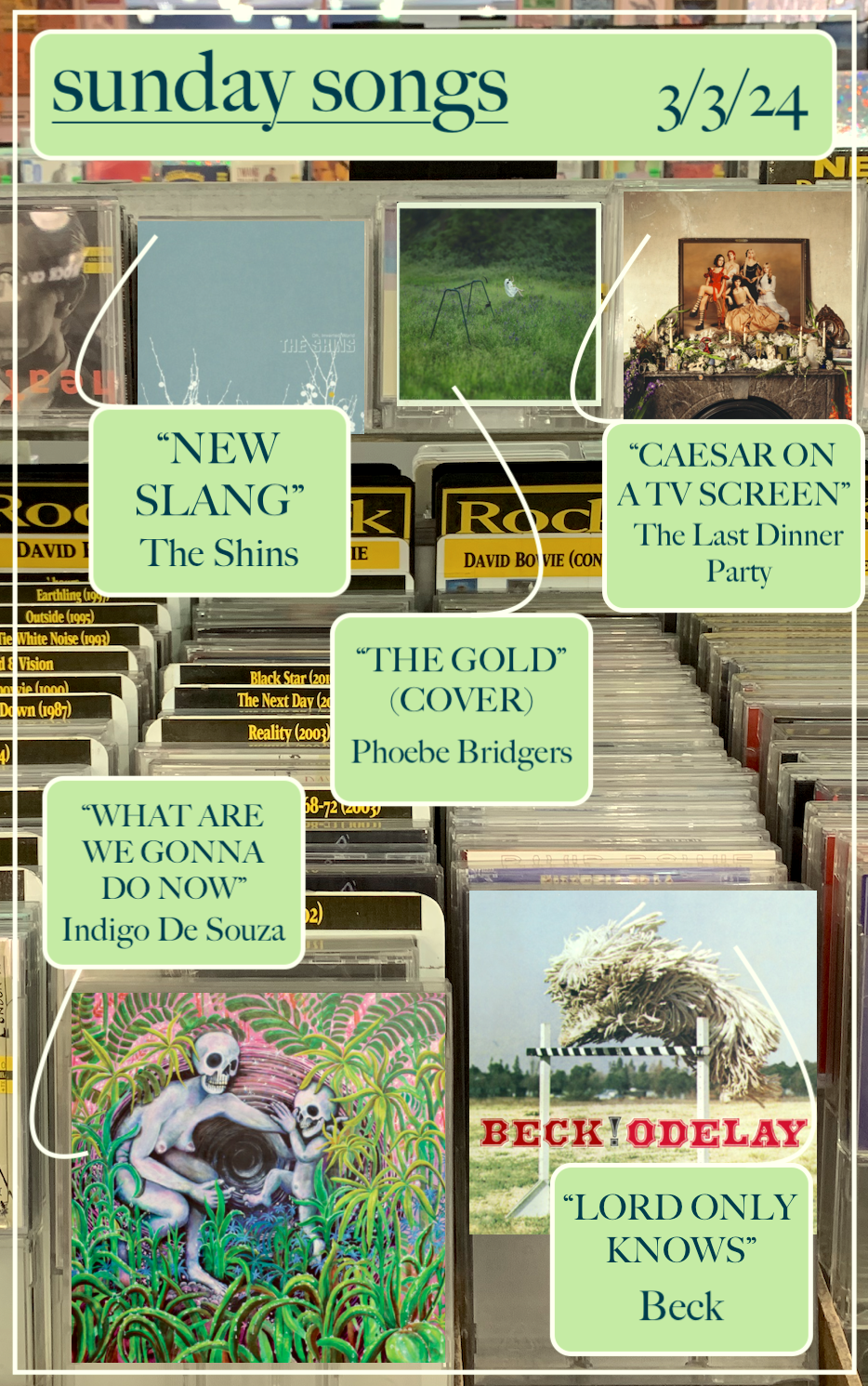
This week: spring green for March, old dogs, and the consequences of the fact that at least 90% of my friends are gay and their music tastes rub off on me.
This just in: the sad girl kool-aid has never left my system, and it likely never will. Buckle up.
“What Are We Gonna Do Now” lives squarely in the liminal space of uncertainty, as the title implies. It feels like the tense opening to a film; I could just be stuck on this imagery of the line “and we’re still on call with the nurses,” but I can’t help but imagine an opening shot panning out from the slow spikes of a heart monitor, slowly letting out beeps as Indigo De Souza’s voice gently drips like an IV with that lingering, trailing question: “what are we gonna do now?” Almost everything is gradual about this song, as if the verses were frozen in time: a picture of a person standing on the street while snowflakes suspended in midair decorate the space around them. De Souza’s voice dips and dives into nooks and crannies that only a cat could fit into, army-crawling through the shadows as she describes the wear and tear of a relationship in the middle of turmoil—not necessarily on the verge of a fracture, but in the middle of the storm that they aim to push through together. Exhaustion and frustration tinges it (De Souza’s delivery of “and I’m never cooking up what you’re craving” remains one of my favorite parts of the whole song), but it’s never the kind so intense that would throw their love out the window—it’s the determination of trying to find out exactly how to fix things, and scrabbling around, searching for answers in desperation. Like the ebb and flow of love, the instrumentals swerve from a near standstill to a rousing, guitar-driven chorus and back to quiet again, but after the first verse, nothing is the same; it has the same kind of barely-contained chaos of songs like Wilco’s “Via Chicago” and Mitski’s “The Deal,” with a sense that the anxiety of making amends and grasping for solutions. As De Souza’s airy voice rises like she’s gasping for air after emerging from the ocean, trembling drums and tambourines slip in and out of time, ever so slightly off-kilter and teetering, like one sneeze would send them all into disarray. Unlike the former two songs, though, it never fully gives in, but the unraveling is always at the back of the song’s mind, like an overflow of fearful thoughts as they try to pick up the pieces, but a sense of deep-breathing control as De Souza picks themselves back up.
Full disclosure: I definitely ruined this album for myself. I knew it was going to be a good album, and it 100% is, but I’d already listened to about 3/4 of it, so there were no surprises left. All of the songs I remembered were already favorites, and the ones I hadn’t yet discovered weren’t as instantly classic as the others (sorry, “Derelict”). But that’s on me. Maybe on my parents for playing it so much in the car over the years, but mostly on me. Whoops.
That’s not to say that Odelay is a bad album at all—in fact, it’s quite the opposite. It makes me miss the old Beck, the one who didn’t scrub everything to an unnecessary polish, but instead made his music like a sculpture made from bits and bobs found in the junkyard—a bit of a tire here, an old, rusty car hood there, some nuts and bolts sprinkled on top for a finishing touch. It’s a collage, but not necessarily in the way that artists like De La Soul or The Beastie Boys make their collages: while their infinitely clever concoctions feel like they oil every sample into a unified organism of unlikely pieces, Beck’s method (for a while, at least) was to make every spare and found part stick out like sore thumbs, but so much so that all those sore thumbs eventually made a hand so absurd that it makes you think how does that even function as a hand? And yet it’s the perfect hand. There’s no other way that “Hotwax” would work without “I’m the enchanting wizard of rhythm.” In fact, the absurdity of all these samples make this mutant (no pun intended) record so memorable—nobody was doing it quite like Beck. Take this song, which starts out with a rasping scream, then descends into twangy and almost docile acoustic-guitar driven rock. It’s not the heat-waved calm that “Jack-Ass” (my favorite track on the album) exudes, but it’s got that same lazy drawl to it, every word curled at the edges like scraps of paper singed by a campfire. Odelay hadn’t yet reached critical mass of clever silliness that made ’90s-2000’s Beck so fun (that would be Midnite Vultures), but he had plenty of fun to spare—I always find myself laughing at the final lines that Beck sings as the track fades out like a car driving out of view, obscured by the wobbling lines of a heat wave: “Going back to Houston/Do the hot dog dance/Going back to Houston/To get me some pants.” You just can’t deliver the word “pants” with that much emphasis and have it not be funny. Them’s the rules. I apparently have the humor of a five-year-old, but evidently, so does Beck, and we’re all the better for it.
Whenever I go to write about The Shins, I always end up going straight for the purple prose. It’s like the way I get with Radiohead, except they invoke something akin to religious fervor in me. I’m too far gone. But there’s something about James Mercer and his perpetually rotating cast of characters that evokes the lyrical side of my writing. Perhaps it’s that part of me connecting to that part of him, because he’s certainly got songwriting chops for days.
“New Slang” has been lingering in my life for decades; I faintly associate it with a period sometime in elementary or middle school. I think it may have been at the end of a playlist I listened to frequently. The Shins are never all that far from my mind, but this was the perfect song to shuffle out of the blue, soft and smiling like an old dog with white patches threaded into the fur of its snout. And I ran right up to pet that dog—god, I missed this song. Hello, old friend. Mercer has long since mastered the art of the old heartstring-tugging acoustic song, and while its as hipstery as it gets, there’s a calmness to it, a serenity like no other. And yet, for all intents and purposes, it’s James Mercer’s equivalent of a pop-punk “I’m getting out of this town” song; the lyrics were inspired by his experiences separating from Albuquerque, New Mexico, where the first iterations of The Shins had tried to take root. Disillusioned by a scene that he described as “macho, really heavy, and aggressive,” Mercer and company branched outwards, where their lyrical folk could have more meaning. “New Slang” was Mercer’s way of “flipping off the whole city,” as he described it (“Gold teeth and a curse for this town”), but there’s something beautiful in how quietly this song shoots its bitter middle finger. It’s not the jerky angst of separation that pop-punk lends to the subject, but instead the moment of looking back into the sunset, knowing that everything you’ve left behind is in the dust with the approaching night. Perhaps that’s where that serenity I feel comes from—the serenity of knowing that what’s in the past is in the past, and that it has no control over your life anymore. It’s underfoot, only tire tracks in the dirt now. You can’t help but feel a wave of peace at the thought.
…AND A BOOK TO GO WITH IT:
Trouble Girls – Julia Lynn Rubin – while Lux and Trixie’s reasons for ditching their town are more complicated, there’s no less of a feeling that they’re giving it the finger the whole way out.
Full disclosure: I hate the original version of this song. Hate it. It stinks of that kind of that faux-earnest, country-leaning pop that forced itself down everyone’s throats in the mid-2010’s like a contagion. If this weren’t obviously a breakup song, I know my music teacher would have made my 5th grade class sing this. I hate to relentlessly dog on a song, but also…Christ. This made me throw up in my mouth a little.
Phoebe Bridgers, on the other hand? A godsend. Leave it to her to make the original lyrics, some of which were actually good sound good, and not like they were being shoved down through the godforsaken Mumford & Sons strainer. I will give Manchester Orchestra (posers, they’re not even from Manchester…) some credit: “you’ve become my ceiling” is genuinely a beautiful lyric. But I just wish it wasn’t being delivered with that smarmy, offensive excuse for authenticity. Again: Phoebe Bridgers is our savior. She grounds this song enough to make the turmoil within it feel real. Never once did this song need belting, stadium-rock grandeur: it needed clarity, a sense of calm amidst the chaos, and a steady hand on an acoustic guitar. It’s got slightly more effects than Bridgers usually allots to a song of this tempo, but it hits the balance of flourish and that acoustic sincerity that she’s come to be known for. It’s a breakup song, but although some of those call for grandiose declarations of sorrow, some of them need time to sit in silence and wallow it in, and that’s exactly the treatment that Bridgers gave “The Gold.” I’ll just go ahead and pretend that she wrote it. Yup. Manchester Orchestra? Who is she?
…AND A BOOK TO GO WITH IT:
Vinyl Moon – Mahogany L. Browne – similarly, this novel in verse deals with the fallout of a relationship built on mistrust.
Before I listened to the full song, I distinctly remember seeing a snippet of this song advertised somewhere on Instagram and thinking something along the lines of “god, this is pretentious.” And I stand by that. It’s still pretentious. But in context, it’s a good listen.
I’ve heard a decent amount of buzz surrounding The Last Dinner Party, usually falling in one of two camps: that they’re out to save rock and roll and bring it back to its glory days, or that they’re just…okay? The former argument, while I like it in concept, reeks of the kind of mentality that “modern music isn’t good anymore” because it’s not all Pink Floyd, which…okay, cool if you like Pink Floyd, but also…creative rock didn’t die as soon as Y2K hit? You just have to look a little harder now that rock isn’t the reigning influence on popular music anymore. In the modern day, we treat rock music like we often treat women: as something to be saved, when all along, it’s been doing just fine, thank you. I doubt we’ll ever go back to those days, and maybe we shouldn’t—there’s no way you can completely replicate a movement in its full, temporal context, and maybe that’s okay. I’m all for bringing back glam rock, but chances are, anything you try to resurrect is going to feel displaced in our modern day context. You can take inspiration from them, but personally, it’s a hard thing to recreate in all of its flesh and blood.
Which…seems like a good deal of what The Last Dinner Party are going for. Frontwoman Abigail Morris has regularly emphasized how much she and the band enjoy being pretentious (if having their debut album titled Prelude to Ecstasy wasn’t enough of an indication), and if that’s what’s bringing them joy, then all power to them! They’re talented musicians, for sure. Weirdly, the other two songs of theirs that I listened to just sounded like…any old indie pop song, which I kind of hate to say, but if you’re all about “saving rock n roll” and just putting out that, then I feel like you have to keep your mission consistent. But you certainly get that feel from “Caesar on a TV Screen.” As far as the structure goes, it feels slightly disjointed, but the more I watch the music video, I get what they’re going for—a song with a distinct, three-act structure, emulating the epic, Shakespearean twists and turns that inspired it. There’s loads of drama to spare, from the rush of strings in the third act to Morris’ impassioned howl of “everyone will like me!” at the song’s exiting flourish, like she’s brandishing a prop sword with every word. It’s dripping with that kind of theatrical, ’70s and ’80s drama—there’s Queen written all over it, and I can’t help but think that some of that drama was informed by Kate Bush. And…yeah, Freddie Mercury, Kate Bush, and David Bowie, the latter of whom the band have repeatedly cited as one of their primary influences, are probably some of the most colossal shoes to fill in terms of musical artistry. But there’s no doubt that The Last Dinner Party are a skilled bunch in their own right—and god, they look like they’re having the time of their lives. It’s exactly the kind of excess, maximalism, and drama that their band name implies.
Even though he isn’t here to read this (rest in peace), and I doubt he would even if he was, I owe an apology to Bill Withers. When I asked Siri about the insanely funky song that Wilco was playing before their show back in October, I thought…Bill Withers?Like…the “Lean On Me” Bill Withers? The song we all had to sing in either elementary school or at camp? From here on out, I take back any preconceived notions I’ve had about the man, because this song slaps. I severely underestimated him.
To be fair, from the looks of it, “You Got the Stuff” seems funkier than most of his R&B/Soul-leaning catalogue, but when he did funk, he made it the funkiest funk possible. The minute the drum machine fades and the thick, bass-like synths kick in, it’s like I’ve been possessed to move my body for exactly seven minutes and 16 seconds. I haven’t heard of a contagious groove like this song has in ages, something so instantly captivating that hooks you and immediately tosses you on the dance floor. And it’s seven minutes of this. And the last three and a half minutes of that seven minutes is just bass and an absolutely glorious flexatone. (Many embarrassing google searches went into finding the source of that comically cartoonish “doi-oi-oi-oing” noise. I’m not proud of what I did.) It really is a cartoonish sound that this instrument makes, and yet it fits right in with the thumping bass and Bill Withers’ faint, rhythmic breathing and the occasional “ooh, baby.” Three and a half minutes of just that. It feels like a buildup to something bigger, but it doesn’t need to build up to anything—the unique rush of that stretch of the song keeps the funk alive for longer than I thought it could. And it’s crazy to think that this was chosen as a single for this album (‘Bout Love)—even for someone like Withers, putting the one song that goes over seven minutes long as one of the lead singles is a bold move. It did only get to #85 on the Billboard charts at the time, but it’s a hit in our hearts.
What I’m trying to say is that Bill Withers is forgiven for the setlist of my 3rd grade program. Good god, I love this song.
As much as I, in theory, dress a fair bit punk (on the days where I have my pin jacket) and generally like the leanings of the political attitude, I’ve never been able to get fully behind it—the combination of the abrasion (both musical and lyrical) and the contrarian, infighting parts of it have made it so I’ve never felt fully aligned with it. I’m only punk up to my jacket, my boots (they’re not very good for extended walking, so I wear them sparingly…there’s only so long I can commit to the bit), and my socialist tendencies. More in spirit than anything else. Same reason that even though I regularly have at least one day a week where I dress in all black and go all out on the eyeliner, I can’t fully commit to being goth, because I’ll then go up to my friends and say “HIIIIIIIIIIIIII :)” in the most decidedly un-goth way. And plus, contradicting everything about yourself sounds kinda tiring, unless you’re Hobie Brown and you make it look cool (and that’s because he was this cool the whole time). And yet, every single IDLES song makes me absolutely foam at the mouth. I love them. I’ve been putting off actually listening to a full album of theirs for who knows why, but their spin on punk—still plenty aggressive, but resoundingly hopeful and positive in their ethos (see “Mr. Motivator”). Joe Talbot himself has repeatedly insisted that they aren’t a punk band, so…okay, I’m not all that punk. But that combination of all the fiery energy of punk with their riotous joy and their wholehearted embrace of vulnerability and love is what endears me to them so much. The absolutely delicious Britishness and bisexuality of it all certainly helps too.
Hearing that “Dancer” was a collaboration with LCD Soundsystem kind of floored me—where could the epitome of tight, high-strung white boy music fit in with this? The mesh, however, is as smooth as it could ever be. There’s a constrained tightness about the opening riff that feels all at once caged in and expansive—the James Murphy touch reveals itself more and more on each listen, aside from the obvious backing vocals on the chorus. Either way, “Dancer” has just about everything I love in an IDLES song. Joe Talbot’s signature aggressively theatrical line deliveries never fail to put a smile on my face—every repetition of “and the sweat” (I can almost hear him raising his eyebrows every time he says sweat) and “so to speak” (imagine that as spitty and Britishly as you will) make listening to the whole song feel like an elaborate performance, a…dance, if you will. There’s an undeniably sensual feel of it all, a visceral pulse to the calculated choreography of each line. It’s a song I’ve never been able to skip since I downloaded, and even though I’ve still yet to listen to any of their full albums (SOON, though), I’ve got hope that Tangk will be more of the same.
New IDLES and The Smile next January…man, I’m gonna implode. It’s been fun, everybody.
…this is certainly an interesting transition. Whoops.
Certain bands are often seasonal for me—some bands are more spring, summer, fall, or winter than others. (Hence my seasonal playlists). But some bands immediately evoke a more specific point in time. For me, The Shins were always a late fall, early winter band; they feel like fall, but only after the first frost has crept in and stripped the trees bare. There a few leaves left, but they’re all brown and brittle, crumpled underfoot. It’s snowing, but not a January blizzard—maybe just sleet that doesn’t accumulate, if you’re lucky. You’re warm, sitting by the fire. The trees look skeletal now.
So I’m glad I rediscovered “Black Wave” when I did—it’s one of those songs that lingered in my periphery for years (I grew up in a very pro-Shins household), but I’d gotten so complacent in hearing it everywhere that I didn’t even think to ask about its name. But it’s the perfect November song—as most of what I’ve heard from the spectacularly titled Wincing the Night Away is. James Mercer layered effects over his gentle, wordless warble as the song begins, making a rippling, Bon Iver-like echo. Even with a colored named in the title, “Black Wave” is decidedly painted in deep, warm colors; shades of brown and maroon, accented by orange and gray. The opening image of “this goose is cooked” cements the feeling of being huddled around a fire; I imagine the goose being cooked on a spit, the skin crackling as the embers lick it. Mercer’s voice drifts and out of focus, as though on a chilly wind. And like the wind, the song doesn’t so much end as disappear, like the image of a cryptid shifting through blurry footage to fade into the winter woods beyond.
Since I first listened to Up back in March (oh, the album art is just some water droplets on a gray backgr—oH MY GOD PETER WHY ARE YOU LOOKING AT ME LIKE THAT), it’s been an album that I always fall back on. “Growing Up” was already a faint childhood memory and “Darkness” immediately stole my heart, but the more I listened, the more songs I’ve stuffed in my back pocket—the grossly timely, sleazy groove of “The Barry Williams Show” and the chest-rattling resonance of “Signal to Noise” that makes my soul leave my body every time I hear it. (Real chill stuff for walking to class, amirite?)
There’s something to be said for my hypocrisy of creating dozens of oddly specific playlists and then just listening to my whole library on shuffle, but shuffle always revives songs like this. (Although this one did go on my oddly specific clone playlist next to Roxy Music.) So much of Up has this graying, industrial feel to it, but Peter Gabriel, the genius that he is and continues to be, uses that gravelly darkness (no pun intended) not necessarily to be edgy, but to convey that feeling of hopelessness—the consumption of fear in “Darkness” and the betrayal and desperation of “Signal to Noise.” “More Than This” opens with imagery of “I woke up and the world outside was dark/All so quiet before the dawn/Opened up the door and walked outside/The ground was cold.” I can’t help but think of the quiet bridge of “Darkness,” where the fear wanes and he walks into the woods to find his fear “curled up on the floor/just like a baby boy.” That industrial atmosphere—furthered by distorted, grainy samples of guitars that he and Daniel Lanois messed with in production for the album—immediately sends a hood of coldness over you, the roughness of concrete and frozen ground. And yet, amidst said cold ground and sinking ships, this is where Gabriel finds connection—in the absence made by everything hopeless about this world, there is still a beating heart pulsing beneath our feet, and it’s not the Telltale Heart kind. It’s the connection in knowing that you are surrounded by a community, and surrounded by the love that it breeds. Amidst it all, there’s more than this. It feels like the answer to Roxy Music’s “More Than This”—that song pondered what could exist outside of the all-consuming sorrow, and Peter Gabriel blows aside the curtain of fog to show the many arms reaching out to you, offering their guidance and warmth. It also feels like the prequel to “i/o”—”More Than This” song is the realization of connectivity, and “i/o” fully embraces it, going from a community of people to the connectivity to the Earth and all of its creatures.
“More Than This” was a wonderful surprise to re-stumble upon—the music recaptured me at first, but with every listen, it feels more like an anthem. Not only are you not alone, you have never been alone, and if you can only look beyond yourself, you can find joy in connection. The choir slowly snaking into the backing vocals towards the end of the song…almost gets me choked up, like you’re seeing the fog lifted and the love revealed.
Another calm one to end this week’s song lineup. It’s getting cold outside, the hearth is ready, and I intend to rock you to sleep with this gentle melody. Grab your blankie, kids.
My halfway deep dive into The A’s (see last week’s songs) only went as far as a few songs on the album, but it also led me to Daughter of Swords, Alexandra Sauser-Monnig’s solo work with a gloriously tarot-sounding stage name. Like The A’s, the tidbits I skimmed through from her album Dawnbreaker (title also goes hard) ventured into territory that was too twangy for my taste, but quiet moments like “Fellows” stood out to me in their calmness. The sea of lo-fi graininess that “Fellows” is drowning in coats the acoustic guitar plucking in a state of drifting, only anchored by the gentle, lilting waver of Sauser-Monnig’s voice. From the moment that faint, ominous noise scratches at the background (it sounds like a train whistle to me, but I could be wrong), you feel like you’re stepping into a sepia-tinted photograph, all hazy edges and soft, grassy ground. Alexandra Sauser-Monnig has the perfect voice for this kind of folk—as she sings about all of said fellows (who get noticeably taller and skinner as the song goes on…I guess she’s figuring out her type? Is Jack Skellington next? No judgment, but he’s taken…), her voice rings out amidst the grainy sea. It can ring when it needs to, but it has the effect of bedtime tea: calm enough to rock you to sleep, but rich enough to savor the herbal flavor as you close your eyes.
Since today’s post consists entirely of songs, consider all of them to be today’s song.
That’s it for this week’s Sunday Songs! Have a wonderful rest of your day, and take care of yourselves!
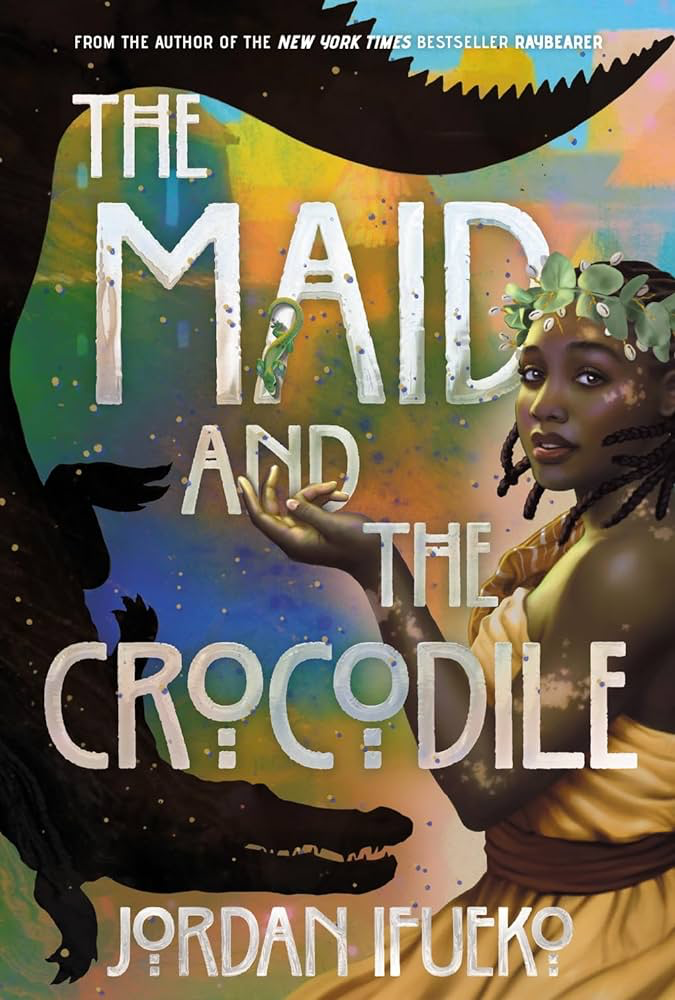
Happy Sunday, bibliophiles! I hope this week has treated you well.
11/12/23: another satisfying date where the month and the day add up to the year. Glorious. Savor these days. And to soundtrack those days, why not listen to some nice, orange songs? (Half of which I stole from Wilco’s pre-show playlist, but that’s beside the point).
CONTENT WARNING FOR THE MUSIC VIDEO: most of the music video consists of an interview with a former Guantanamo Bay prisoner recounting the torture and inhumane conditions of the prison, so if this is triggering for you, proceed at your own discretion. That part of the video begins at 3:32.
I’m slowly (no pun intended) getting into Massive Attack, mostly thanks to my brother and my dad. This one is all thanks to my brother, who confessed to us while we were in line for Peter Gabriel last month that he had no idea until then who was singing on the track. His first thought was Gruff Rhys (makes sense), but apparently not—Damon Albarn does the lead vocals for this song.
That was all the convincing I needed to download it. You know me.
I’ve noticed a phenomenon in any later Damon Albarn project (of which there have been two this year) where there’s a point where it ceases to sound like Gorillaz or Blur, and just sounds like Damon Albarn. Gorillaz usually remedies some of this with its rotating cast of guest features, but on something like Blur’s newest album, The Ballad of Darren, there’s very little to distinguish it from his solo work. As I said in my initial thoughts on the album back in July, it’s still good music, but it lacks what makes Blur Blur, even though all the moving parts are present. But how does that flip when Damon Albarn is the feature instead of the one in charge of the features? “Saturday Come Slow” has an aura to it that could only be produced by the likes of Massive Attack; the slow build of it has an unmistakable air of foreboding, as if the Saturday coming slow is a shadow wiggling its too-long fingers over your shoulder. Fitting that Albarn croons about “the limestone caves/in the southwest lands,” imagery that calls to mind barren, sheer things towering over you. It’s a kind of eery creeping that meshes with the howling echo of his voice, but that you don’t quite get with Gorillaz or Blur; Gorillaz can get plenty spooky in a fun way, but they were never meant to be creepy—they’re a pop act at heart, and even though they’ve tread territory that pop hasn’t normally trod on for the 20+ years they’ve been active, it doesn’t have the foreboding build of this song. Blur, on the other hand, got plenty weird and unnerving in their experimental years (see: “Caramel,”“Trailerpark”), but their brand of unnerving came more from the claustrophobic atmosphere of off-kilter samples and synths that built up its cramped exoskeleton. The dread of “Saturday Come Slow” comes from how spacious it feels—like those limestone caves, that sense of foreboding comes from the primal sense of being surrounded by something larger than yourself—and being walled in by it, with only the echo of your voice to accompany you.
This is the first of two songs this week that I stole from the playlist that played before Wilco’s phenomenal show at the Mission Ballroom back in October. An indicator of a really good show can be found in its playlist—if you keep going back and forth between you and everyone else who came along trying to Siri every song that comes on, then you know it’s gonna be a good show. Same thing happened with when I saw Spiritualized last year. That whole playlist was in heavy rotation for a solid month and a half afterwards. (Lesley Gore and Daniel Johnston: duality of man.)
The first thing that anybody has to notice about the song is the bass. That bass. Sweet Jesus, it’s so good. “Lucinda,” once the chorus kicks in, has not one but two basslines, all working in the thicket, most delicious tandem possible. Jez Kerr leads the charge with a sound that feels thick enough to cut with a butterknife—it propels the sound to new heights, taking what might have otherwise been a bare-bones, post-punk dance song to something hypnotically head-nodding. The bass might as well be the vocals—Martha Wilson’s tight vocals are soft and fleeting, but it’s Kerr’s bass that really takes center stage in “Lucinda.” It’s more than a head-nodder—it’s a whole-body-swayer, buttery and enigmatic enough to send waves through your whole system. Thanks, Wilco.
I’m not like other girls…I didn’t find out about this song through Abbott Elementary. I found out about it through my mom, who…found out about it through Abbott Elementary. It’s good stuff. The song and Abbott Elementary, from the laughter I’ve heard from the bedroom whenever she watches it.
Whatever the case, “Hold Em” was destined for theme music from the start. The beat and instrumentation has that kind of meticulous touch to it. Smooth really is the best word to describe it: the groove that persists through this song never wanes, but never feels the need to amp up the intensity. With the persistent but boxed-in drumbeat and the humbly soft bassline, it lulls you into an instant rhythm, but the kind of rhythm understated enough to allow for some freeze-frames and title screens as the opening credits roll through. And yet, it never feels understated: it’s bold. It feels like there’s constant pops of color bursting through your ears. It’s infectious. And that’s what would make it a great theme song: catchy enough to remember, but smooth enough to share the stage with a visual element.
I have nothing to say for myself. It slaps. Just Dance 2 and its effects on society.
Look, the original spot for this slot was gonna be “The Day I Tried to Live,” but I figured we’d stave off that depression for a few weeks. I’m going to talk about it eventually (because it’s still a fantastic song), but it’s getting dark at 5pm and I still haven’t adjusted. We don’t need that energy right now. Move your feet. Feel united.
We’ll end on a softer note with the other song that I stole from Wilco, or, at any rate, whoever was behind their playlist. Drastically different than “Lucinda” (and most of this week’s songs), but nonetheless beautiful.
In the style of Kim Deal, The A’s are a side project of a side project; consisting of Amelia Meath and Alexandra Sauser-Monnig, the A’s came about after both of them took breaks from previous bands and solo careers—they both hail from North Carolina and had crossed paths in the music industry, and thus this project came to be. I haven’t listened to any of their work (save for…[checks notes] Sylvan Esso? That Sylvan Esso? The annoying Sirius XMU Sylvan Esso? Can’t be…) outside of this band, but the two of them together made for hauntingly beautiful harmonies. Watching them on their recent Tiny Desk Concert solidifies the image even more—they’re like charmingly unnerving cartoon characters, with their matching leaf-print dresses, black lipstick, and giant sunglasses. I wouldn’t be surprised if they eventually became those old ladies from Coraline in their latter years.
“Swing and Turn Jubilee” is part of their album Fruit, an album of almost all covers (save for the original song “When I Die”), ranging from cowboy and folk standards to Shelley Duvall (more on the latter in a few weeks, mark my words). Some of the other songs that they performed on Tiny Desk definitely get too into that yodel-ay-hee-hoo, Buster Scruggs a-capella vibe for me, but in any case, there’s no denying the magic that happens when their harmonies collide. “Swing and Turn,” even if I hadn’t first heard it from Wilco, would have been an instant stand-out, if a quiet one; their performance is just their voices, Sauser-Monnig on guitars, and Meath making percussion by tapping her thick-soled sneakers into a basket of stones. Doesn’t get much folkier than that. Most of these kinds of Appalachian folk songs that I hear from movies or from covers (so covered that the original songwriter is lost to time) are the kind that have a kind of desperate, underlying sorrow to them that permeates even the sweetest love song. Living in the bare bones of the U.S. just does that to a person, I guess. But there’s something about this take on “Swing and Turn” that turns the sorrow into tenderness. It doesn’t give me that icky, Dust Bowl malaise; to be fair, most iterations are faster and more upbeat than most other songs of its ilk, but the restrained, slow pace of The A’s take on it fooled me into thinking so. But it’s partly due t how plainly sweet the lyrics are: “Hardest work I’ve ever done/was working on a farm/Easiest work I’ve ever done/was falling into your arms.” The gentle honey of Meath and Sauser-Monnig’s soft harmonies seem to take me in their arms themselves, like I’m being rocked to sleep.
Either way, these kind of modern folk covers are just begging to be put somewhere in either Fargo (NEW SEASON IN A WEEK AND A HALF WHO’S HYPED) or the next Coen Brothers project. If your whole deal is melancholy covers of already melancholy and unnerving folk songs, you’re just asking for it, at that point.
Since this week consists entirely of songs, consider all of them to be today’s song.
That’s it for this week’s Sunday Songs! Have a wonderful rest of your day, and take care of yourselves!
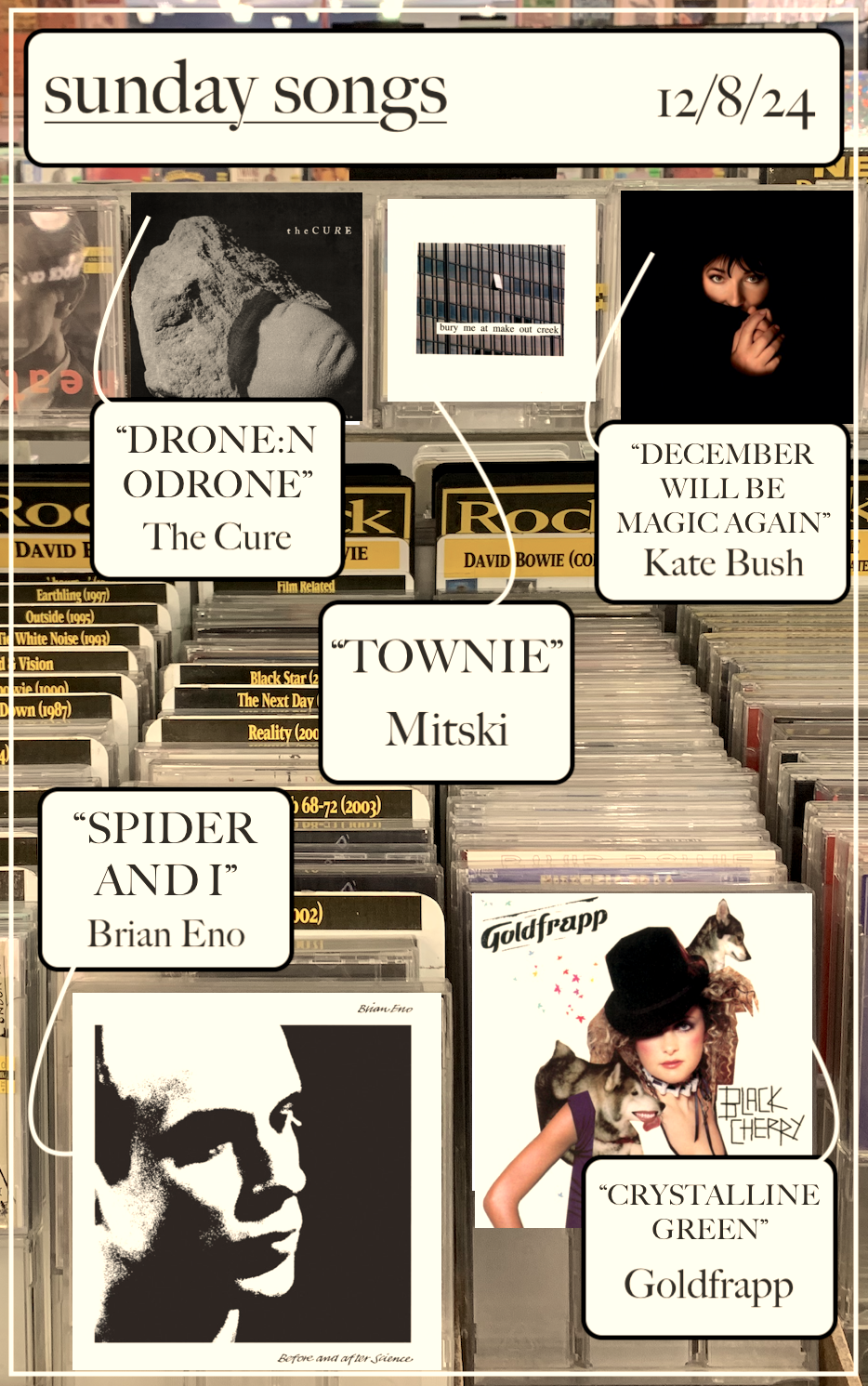
Happy Tuesday, bibliophiles, and more importantly, happy Halloween!
I really should be used to this by now, but getting this much snow two days before Halloween always feels so wrong. I like snow this time of year generally, but not when I have a costume to wear.
Let’s begin, shall we?
GENERAL THOUGHTS:
Usually a month this busy would dampen my overall feeling of it, but for once, it really hasn’t! That’s the magic of the Halloween season, I suppose. I’ve had a ton more stuff to do on the heels of midterm season, and even though I’m still somewhat busy (hence the scant amount of posts I’ve been able to make this month), I’m still enjoying myself.
However, even though most of the month has been favorable for me, my reading…hasn’t been as much so. Since the beginning of the month, I’ve been in a slump that I’ve only just been able to get out of in the last week or so. After the first few days, I just fell into a bad spell of especially mediocre books—for a solid two weeks, I didn’t run into much that I ended up rating higher than 3.5 stars. But I’ve slowly gotten out of the dry spell, and the end of the month has been filled with some fantastic reads!
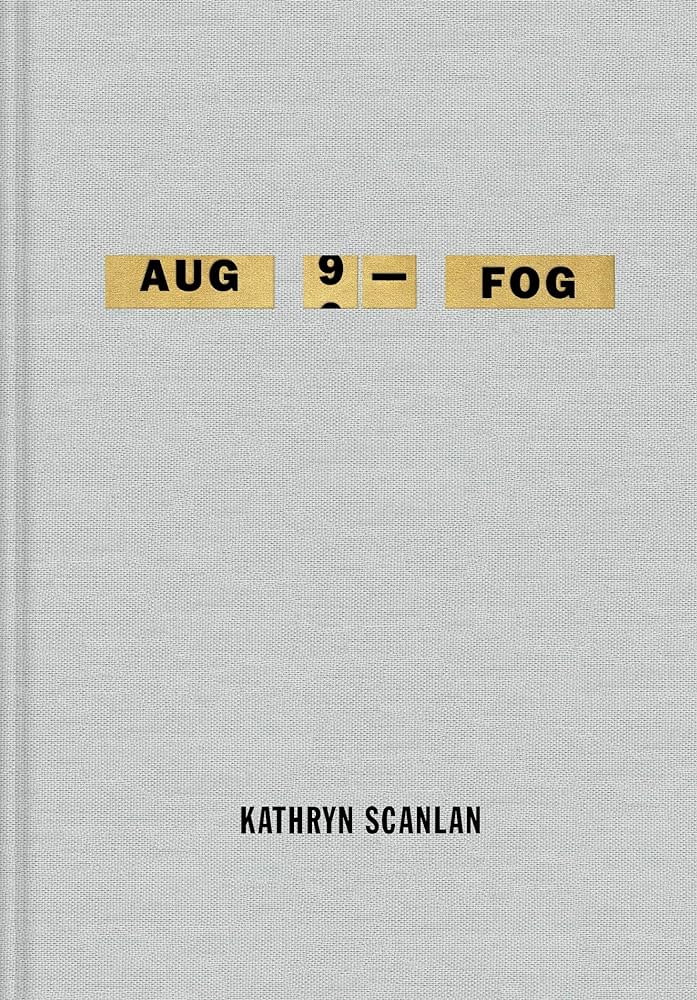
I’ve also tried to get back into the rhythm of fiction writing, since I’ve fallen off the wagon for that since school started. Although I haven’t been able to adhere to the schedule to a T, I’ve allotted a good time of night towards writing at least 1,000 words a day, and that got me to the end of my first draft of the second book in my main sci-fi project! This one ended up being almost 82,000 words! Pretty proud of myself. Sadly, as I’m getting older, November has become a worse and worse year to try and crank out 50,000 words, so I’m not doing NaNoWriMo this year. The July Camp is a much more reliable time for me. In the meantime, I’m hoping to polish up some of my short stories to send off for publication…
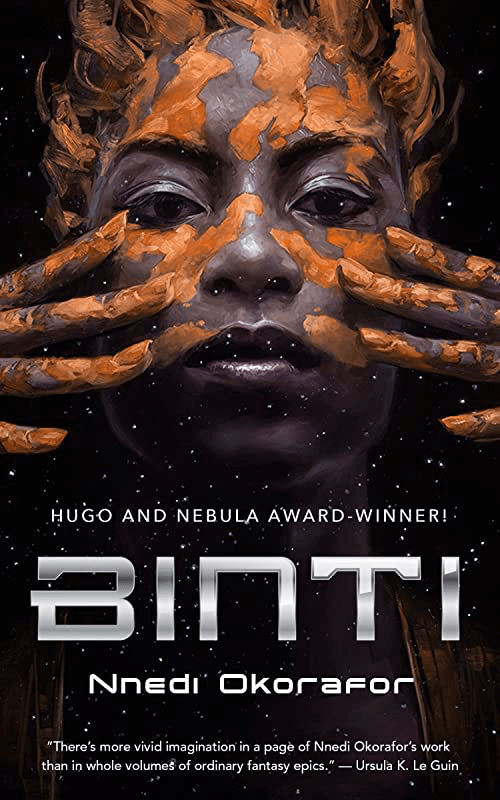
Aside from that, though, there have been SO many fantastic things going on. First off, Sir Patrick Stewart (!!!!!) stopped by my school for his book tour, and it was incredible! I wish I had more pictures to show for it (we weren’t allowed to take any), but he just had the kindest, warmest presence, and it was such an honor to hear him speak about his life. What an incredible man.
After that, I had the amazing luck of being able to see Peter Gabriel and Wilco in the same week! Both were such phenomenal shows in their own ways—seeing Peter Gabriel when I thought I’d never even see him tour was the most transformative, beautiful experience, and seeing one of my favorite bands perform their best setlist yet (and seeing them from the front row!!) was just as wonderful.
Peter Gabriel at the Ball ArenaWilco at the Mission Ballroom
Other than that, I’ve just been getting back in the rhythm of drawing, playing some guitar now and then, taking far too many pictures of the pretty leaves on campus, drinking my fill of apple cider, watching Taskmaster (FINALLY GOT THROUGH SEASON 15! THE BINGING HAS CEASED!) and catching up on Only Murders in the Building (please stop pairing Mabel up w randos, she deserves so much better), and soaking up the fall weather. At least I was until we got snow 2 days before Halloween. Oops.
READING AND BLOGGING:
I read 16 books this month! This month was slow going, and I ended up in a somewhat extended reading slump, but there were bright spots here and there.