Happy Sunday, bibliophiles! I hope this week has treated you well.
This week: sort of doing a 180 on Let’s Dance, and reverting to my high school self via Stranger in the Alps.
Enjoy this week’s songs!

SUNDAY SONGS: 6/28/26
Seeing old photos of Roxy Music always cracks me up…5/6 of them look goofy as hell in all that leather and animal print, and then there’s Brian Eno over here casually serving enough looks to feed a family of four. Good god, I don’t think anybody’s gotten that closet to valiantly fighting male-pattern baldness and winning. The receding hairline fought hard, but damn if Brian Eno wasn’t fighting just as hard.

Okay, maybe I should go easier on the other members of the band, because “Virginia Plain” reminds me of why I love early ’70s glam rock so dearly. This song is just immaculate. It’s at that perfect, Ziggy-era moment in time right before glam fully broke into the mainstream. It’s all swagger, sheen, and pure skill—it’s a blast, but this song feels chiseled and streamlined to a meticulous level. Most of the Roxy Music songs I’ve heard instantly recall The Rocky Horror Picture Show to me, and Bryan Ferry’s seductive vocals feel so proto-Frank-N-Furter—I’d be surprised if Tim Curry didn’t take a few cues from him for his performance; the lyrics are classic glam as well (“You’re so sheer/You’re so chic/Teenage rebel of the week”). Phil Manzanera’s acrobatic guitar work soars, but it effortlessly shape-shifts from classic, guitar-based rock to electronic freakouts in mere seconds, leaving the space between the two eerily natural. I can’t imagine being alive in the ’70s and hearing Brian Eno’s space-age keyboards get unleashed in “Virginia Plain”—it would’ve cracked my mind in two, for sure. Some old British guy in 1972 definitely had a heart attack watching this. But to me, “Virginia Plain” embodies the best of glam rock: a sound that was meant to send a shock to the system, but pushed boundaries creatively as well as socially. It’s all shiny, leather boots and smudged eyeshadow, full to the brim with hard-earned confidence.
…AND A BOOK TO GO WITH IT:
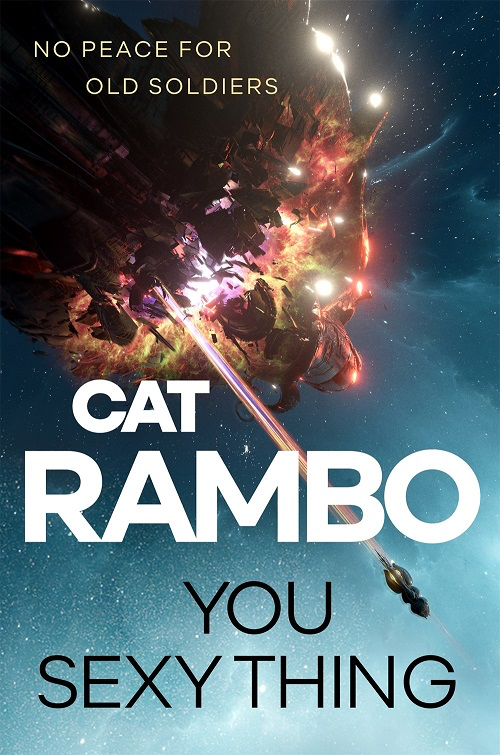
You Sexy Thing – Cat Rambo – I know this series is called Disco Space Opera, but…it’s just the vibes. The overwhelming vibes.
“Would You Rather” – Phoebe Bridgers
CW: domestic violence
Unfortunately for you all, the pharb sleeper agent that’s been inactive since about 2023 has been reawakened. You’ve been warned.
One of the hallmarks of early Phoebe Bridgers tracks is that they often had male duet partners who were an odd fit, vocally—they’re all good singers, but their vocal ranges and styles run counter to Bridgers’s style (see also: “Garden Song”). I think that was the initial reason that, when I first listened to Stranger in the Alps back in high school, that I was turned off from “Would You Rather”; Conor Oberst duets with Bridgers in the chorus—he’s objectively a talented singer, but his nasally voice just does not mesh with Bridgers. The same can be said for the music video, directed by Phoebe Bridgers’s younger brother, Jackson Bridgers…her penchant for gallows humor aside, what’s Conor Oberst doing with that stupid grin on his face while lip-syncing along to “in a suicide pact with our family and friends” at 1:53? Read the room, my dude…
But as with several songs on Stranger in the Alps that didn’t grab me on the first listen, “Would You Rather” only gets better—and more devastating—with each listen; her best instrumentation sounds like watching embers from a campfire become stars in the sky, and the delicate plucking at 1:05 is one such beautiful moment. According to Bridgers, “Would You Rather” was inspired by a mix of events—her childhood home burning down and her brother being suspected as the culprit, as well as an undercurrent of domestic violence; even for someone so usually candid about her experiences, I’m not surprised that neither she or the song has divulged any details of the latter. Sometimes the only way to be vulnerable is to always have the safety net of metaphor—to protect yourselves and the ones you love. Yet at the heart of it seems to be their bond as siblings: the chorus of “Come to find out/I’m a can on a string, you’re on the end/We found our way out/Of the suicide pact of our family and friends” emphasizes the lifeline that they’ve built with each other in spite of the strife that surrounded them growing up. There’s a bedraggled, burdened hope to it; despite the sense of being trapped by family, their mutual connection is what keeps them afloat in the end.
If you or a loved one is/has been a victim of domestic violence, click here for a link to the National Domestic Violence Hotline.
…AND A BOOK TO GO WITH IT:

Where Sleeping Girls Lie – Faridah Àbíké-Íyímíde – “Come to find out/I’m a can on a string, you’re on the end/We found our way out/Of the suicide pact of our family and friends
I owe you an apology, Let’s Dance (1983), I wasn’t familiar with your game.
It’s easy to think of the album as David Bowie’s sellout pop album, the one where he cast aside all the pretense of experimental daring and weirdness that he’d built up with the Berlin Trilogy and Scary Monsters (And Super Creeps), not to mention the infamous “David Bowie Straight” magazine cover for an accompanying issue of Rolling Stone. Here’s the thing: yes, it is a pop album. But it’s not as if Bowie wasn’t making pop music for a significant portion of his career in the ’70s. Sure, The Rise and Fall of Ziggy Stardust was stranger than most things on the airwaves, but it was pop. This was just his ’80s pop record, and like the albums before it, Let’s Dance has so many enduring hits to spare. Sure, it’s more sparse than some of his other albums, and there’s clearly a few afterthought tracks that were just made to make it complete, with its slim eight-track, 40-minute runtime (lookin’ at you, “Shake It”). But let’s be real: it’s hard to measure up when the first track on this album is “Modern Love.” Come on.
“Without You” is often regarded by critics as one of said afterthoughts to beef up Let’s Dance. I get where they’re coming from. For a songwriter like David Bowie, the lyrics are…well, yes, even as a fan, it’s a bit bland. But I feel like a three-year gap between releases after a powerhouse like Scary Monster (And Super Creeps) justifies it. Anybody would have to recharge after that. But “Without You” feels like Bowie’s take on a slow, yearning pop song, and he hits it out of the park. Strung with guitar flourishes that glimmer like string lights, “Without You” is a warm and wistful yearner, aided by the rich, graceful deepening of Bowie’s voice as he aged into his forties. Is it as instantly memorable or well-constructed as “Modern Love” or “Let’s Dance?” Maybe not, but it’s a damn good pop song.
As a bonus: even though they’re two distinct songs, Perfume Genius also has a great song called “Without You,” and for what it’s worth, it’s a good pairing with this song.
…AND A BOOK TO GO WITH IT:
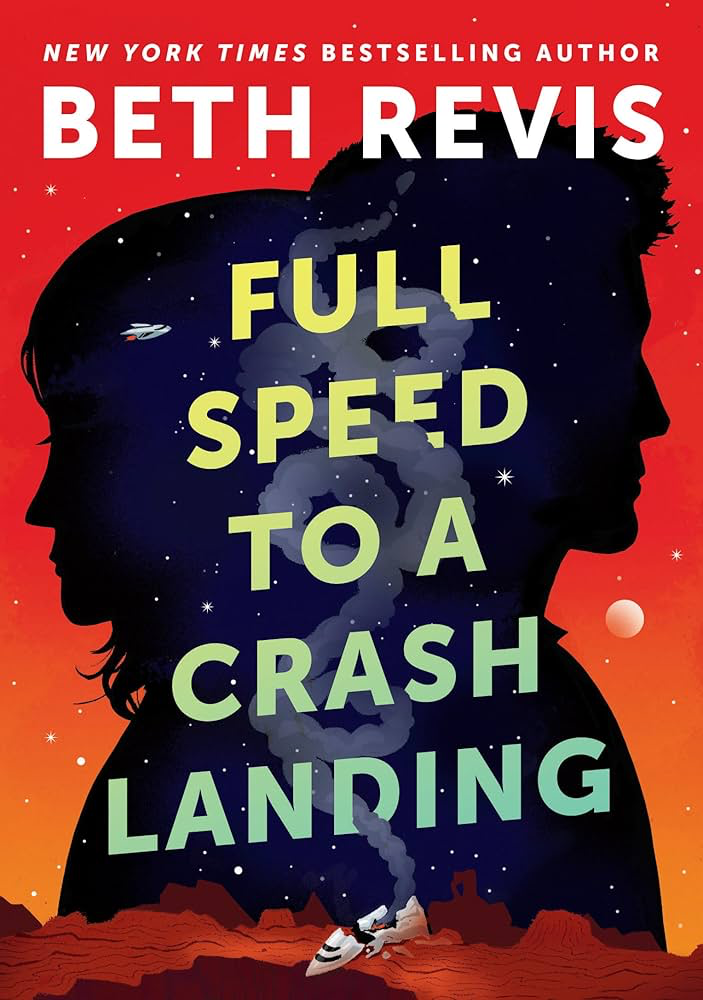
Full Speed to a Crash Landing – Beth Revis – “Just when I’m ready to throw in my hand/Just when the best things in life are gone/I look into your eyes…”
5 a.m. really is the perfect hour for this song. “5AM Waltz” is woozy in every sense of the word. Awash in reverb, the first two thirds feel like you’re stumbling around the kitchen in the middle of the night, trying to find the light-switch; it’s almost enough to feel directionless, but the directionlessness feels fully intentional. There’s lots of hyphenated genres that you find hints of—trip-hop, dream-pop, indie-pop—but whatever you’d call it, “5AM Waltz” is downright melodic and atmospheric, an exercise in crafting something memorable from less than two minutes.
…AND A BOOK TO GO WITH IT:

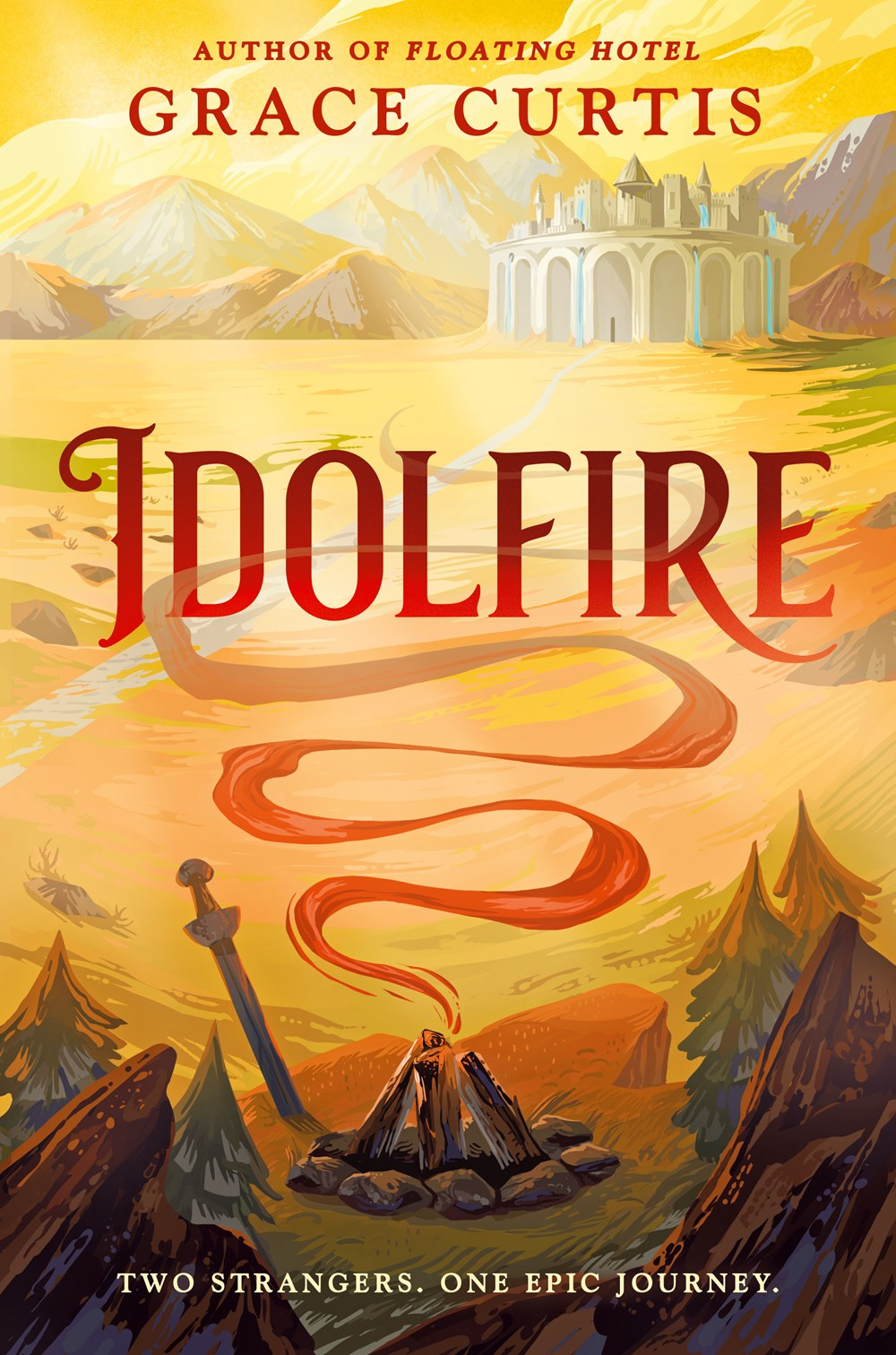
Floating Hotel – Grace Curtis – fitting background music for a giant hotel in space, right?
Chances are, if you haven’t listened to a ton of Graham Coxon’s solo work (like me), this song won’t give you a good idea of how his sound generally is. “Oochy Woochy” doesn’t sound anything like the frenetic, anxious indie-rock that he usually writes. But I think it’s proof of him being one of the members of Blur who was most willing to take risks with their sound, and it translated instantly when he had more creative freedom. I mean, this is basically a jazzy saxophone loop with a hip-hop-inflected beat. The lyrics amount to only “Oochy woochy/Yeah, baby,” with the later drawled like James Acaster. And it’s so fun. It’s the perfect walk-on song. That prolonged silence at the beginning allows the full force of the saxophones to bowl you over, and from there, it’s just such a fun, carefree groove to get lost in. Even the little quacking sounds punctuating the beat are strangely natural. He’s got range.
…AND A BOOK TO GO WITH IT:
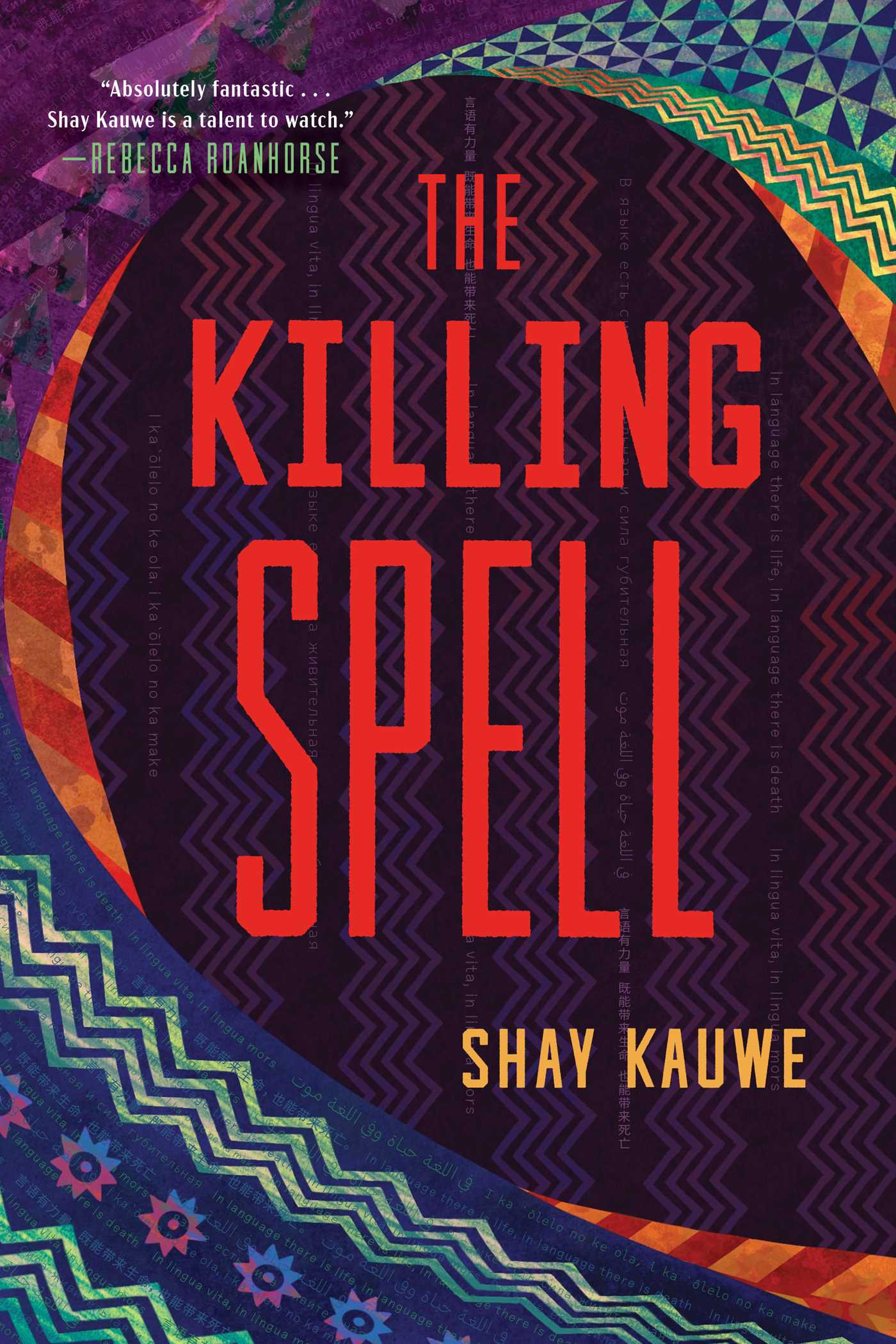
The Killing Spell – Shay Kauwe – the ideal soundtrack for plunging into a crowded ballroom…somewhere in a post-apocalyptic L.A. with magic and murder running amok.
Since this post consists entirely of songs, consider all of them to be today’s song.
That’s it for this week’s Sunday Songs! Have a wonderful rest of your day, and take care of yourselves!