Posted in Book Review Tuesday

Book Review Tuesday (9/16/25) – Mistress of Bones

Happy Tuesday, bibliophiles!

Guess who’s back/back again…with a negative review. Oopsies.

Yeah, sorry. I feel like this always happens, and I hate that it’s happening a) right when I come back to blogging in earnest and b) at the start of Latine Heritage Month. I swear this has happened so many times. (Don’t worry! I made a whole post about so many more books by Latine authors that are actually worth a read!) But a gal’s gotta review some bad books sometimes, and remember, kids: a book’s diversity doesn’t immediately mean that there aren’t any issues with the writing.

I’ve been hearing about Mistress of Bones around the blogosphere, and the premise seemed like some classic, YA fantasy fun. I regret to inform you that I’ve once again been duped into reading a very lackluster and generic fantasy book. There’s some slack I’m willing to give this novel because it’s Maria Z. Medina’s debut, but god, I haven’t read such a hot mess in quite some time.

Enjoy this week’s review!

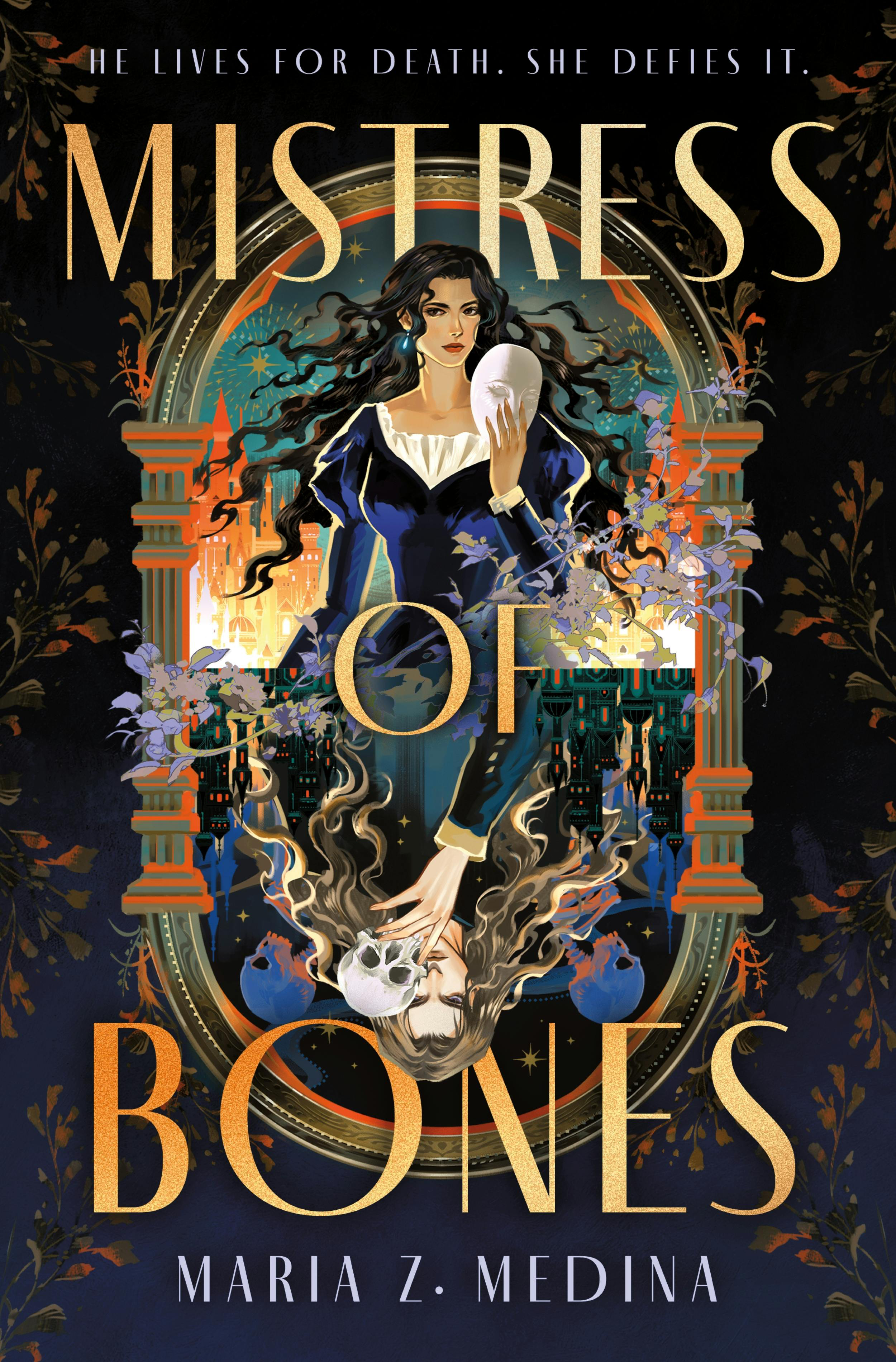
Mistress of Bones – Maria Z. Medina

Azul de Arroyo cares for little more in life than her beloved older sister, who had an early death at fourteen. But by channeling the bone magic of her people, she was able to resurrect her at a young age. But when her sister is killed again, she has no choice to journey to the capital city in order to steal back her sister’s bones and return her to life. Soon, Azul has run afoul of the Emissary of Lord Death; her escapades have not gone unnoticed, and he’s got his eye on her. The rules of Death cannot be reversed so easily, and he’ll do anything to stop her—however pulled he is to her. Dragged into a tangled web of dark magic and court intrigue, Azul must do everything in her power to bring her sister back—even at the cost of the world.

TW/CW: animal death, loss of loved ones, violence, gore, murder

DNF at about 60%. I just couldn’t take it. I really tried to make it through this one, but at a certain point, I realized just how fleeting life is, and wanted to spend that life with something other than this novel.

Listen. There’s a certain amount of slack I’m willing to give a novel like this based on a) the fact that it’s a debut novel, and b) how hard it is to get published as a marginalized author. Every novel is, to some extent, a labor of love, and I’m sure this was the truth for Mistress of Bones. I don’t mean to discount the work of Medina and anybody else involved. But god, this was a MESS. Labor of love as writing always is, this needed at least two more rounds of editing. At LEAST.

The problem with the setup of Mistress of Bones wasn’t that it had a nonlinear timeline. I don’t even know if I would call it nonlinear, but there aren’t adequate words to describe…quite what the situation with this novel is. It’s less nonlinear and more just thousands of flashbacks in a trenchcoat posing as a novel. I didn’t mind them in the prologue, and in fact, I did actually enjoy the way the prologue set up the narrative and the tone of the story. It was appropriately spooky and it set up Azul’s character nicely—it got the job done. However, this novel ended up being 50% flashbacks. Mind you, they weren’t just to the same period as the prologue, but jumping to entirely random years in the past. None of it made any logical sense, and not even in a convoluted way—it wasn’t complex, the plot points were just scattered every which way. At that point, if that much of your plot is propped up by taking random detours into the past, there’s something desperately wrong with the plot. Take the flashbacks away, and the plot was just the writing equivalent of a pile of crumpled-up tissues on the ground.

I’m usually one for bombastic dialogue; in fact, I’d like to think that I have a good tolerance, given the steady diet of classic sci-fi novels and ’80s X-Men comics I consumed when I was in high school. If done right, campy dialogue can enhance the atmosphere and the writing style in many ways. But Mistress of Bones missed the mark by miles. The key to its downfall was how self-serious it all was. Once again: I still read a good amount of YA, and there’s a certain amount of drama that you’ve got to accept from the get-go. But Medina constantly had teenagers exclaiming “Bah!” like Romantic English poets and then spouting off the corniest lines of dialogue known to man without an inch of self-awareness. (Thomas Thorne-core, and I don’t mean that in a good way. iykyk.) It was just so self-serious that it defeated the purpose of amping up the drama. What’s more is that all of the characters had the exact same voice. I expected it to be just reserved for the spooky edgelord male YA love interest, but no…they were ALL involved in this. If you’re aiming for drama, you at least have to do it right.

Speaking of the characters…they were also woefully mishandled. I’m wise enough in my older years (read: my early twenties) to know that hardly any YA fantasy book marketed with a Six of Crows comparison delivers. But this was a special kind of mismarketing. First off, only Azul, the Emissary, and Nereida really got any page time. There were a handful of other purportedly important characters skittering about somewhere, but they got so little page time that I lost interest in them and their minimal sway over the plot. Not only that, but even between the main characters, they all had virtually the same voice. They all had that pompous, overly self-serious tone that I spoke about earlier, but there was almost zero variation between any of them. You mean to say that a witch, the emissary of death himself, and a seventeen year old girl would have the exact same speaking voice? It’s almost like they were indistinguishable from each other on purpose—I can’t think of any other explanation for the breadth of how far this hot mess spreads.

Beneath it all, I can’t really say that there was much about Mistress of Bones that grabbed my attention. There were a few quirks in the worldbuilding that kept me reading for a good length, but they were barely sustained. I’m always excited to see Latine-inspired worlds and cultures in genre fiction, but it barely extended past the Spanish-inspired names. I was intrigued by the whole concept of the floating continents and the gods that mandated this seismic shift, but it barely seemed to have any bearing on the plot or the characters. The Emissary of Death should’ve had significant sway over the plot and over Azul’s actions, but the title only served to give him more edgelord love interest points. Looking back, I think this issue boils down most of my problems with Mistress of Bones as a whole: it was all setup with no payoff. We were promised a multilayered, multi-POV fantasy with romance and intrigue, and we only got the bones of those things (no pun intended). It was all skeleton, with no skin or muscle tissue to make the novel into something that could function on its own.

All in all, a novel full of messy, undelivered promises masquerading as a plot. 1.5 stars.

Mistress of Bones is Maria Z. Medina’s debut novel and the first novel in the Mistress of Bones duology; no information is currently available about the sequel.

Today’s song:

GORILLAZ AND SPARKS, THIS IS NOT A DRILL

That’s it for this week’s Book Review Tuesday! Have a wonderful rest of your day, and take care of yourselves!

Posted in Book Review Tuesday

Book Review Tuesday (5/20/25) – Rebel Skies

Happy Tuesday, bibliophiles!

Update: I do have something nice to say, so I’ll say something. Beyond the heinous Studio Ghibli AI trend (and if anybody here thought that was “cute,” even when the White House twitter did it, get thee away from this blog), people tend to narrow Studio Ghibli down to a very shallow, cutesy aesthetic that discounts the heart of Hayao Miyazaki’s incredible visions. Rebel Skies was one of the few pieces of media inspired by Miyazaki that clearly gets him—rich worldbuilding with whimsy and darkness in equal measure. Yet even if you take that comparison away, Rebel Skies is a YA book to be reckoned with, full of heart, spirit, and skyships.

Enjoy this week’s review!

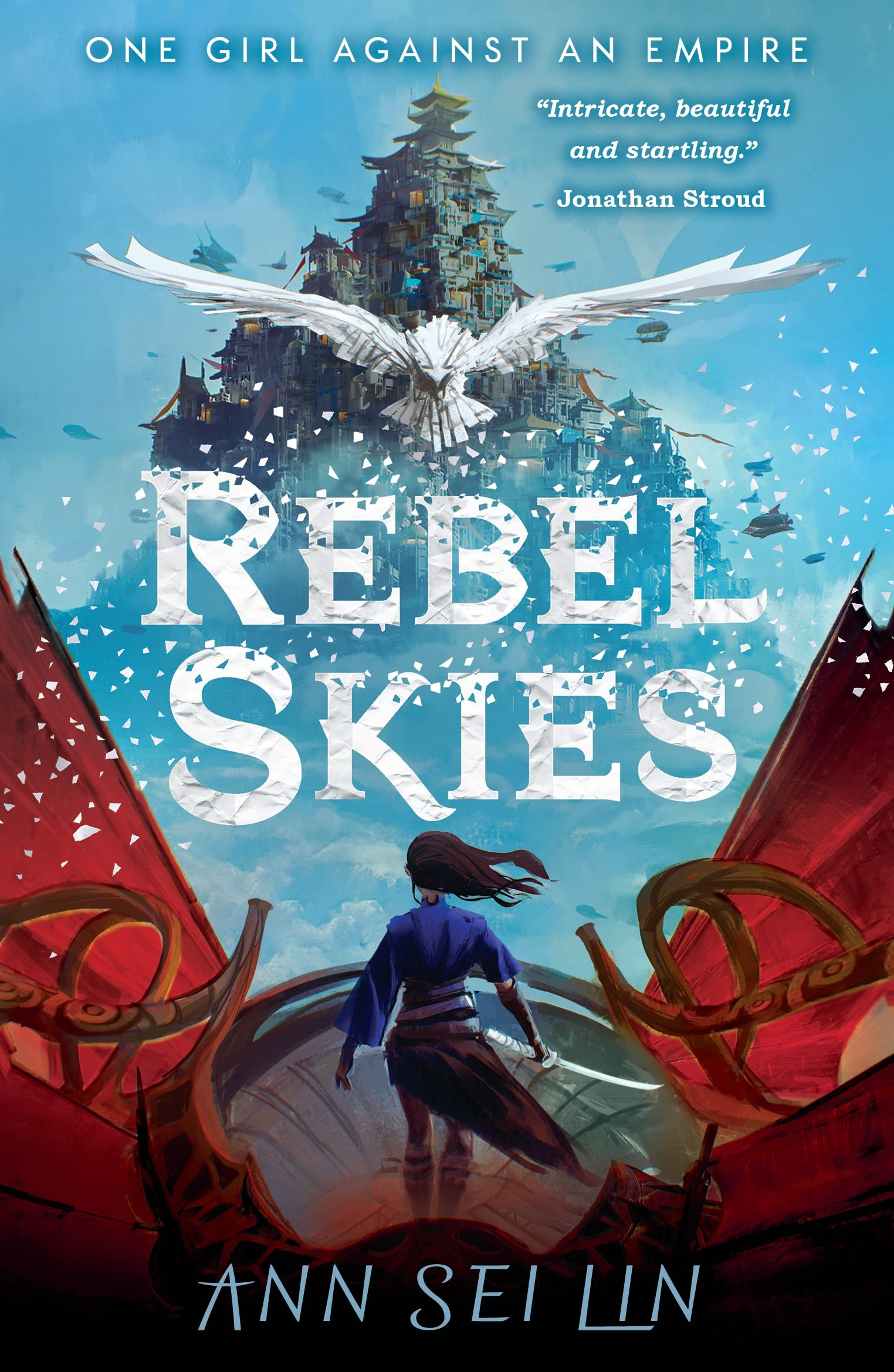
Rebel Skies (Rebel Skies, #1) – Ann Sei Lin

In the Sky Cities, no one is more revered—and feared—more than Crafters: those who possess the power to draw magic from paper and make creatures come to life. Kurara, a young servant aboard a flying ship, has barely honed her powers, only using them for party tricks. But when her best friend, Haru, is revealed to be a Shinigami—a creature made of paper—and grievously injured, Kurara flees to a skyship in order to find answers. There, she hones her Crafting with Himura, an ornery Crafter with secrets of her own. As she gets to know the motley crew of her ship, Kurara discovers that Haru’s identity isn’t the only secret that’s been kept from her—and that there are enough to bring down the Empire.

TW/CW: fire, animal death, torture, death, descriptions of injury

Ann Sei Lin seems to know as well as anyone that we need a bit more whimsy in YA fantasy. The edgelord stuff has gotten boring. It’s fantasy, come on now! I get that if magic was the norm, people might not be impressed by it, but there has to be some wonder in your life, right?

First off, the worldbuilding was tons of fun! Though the Studio Ghibli-inspired elements are plentiful, if I had to summarize the world of Rebel Skies, it wouldn’t be with that. If anything, it’s more of a steampunk version of Kubo and the Two Strings. You’ve got Nausicaä-esque airships and floating cities (which both felt very Philip Reeve as well) combined with paper-based magic, and all of the possibilities you can think of along with it—paper animals, paper people, and monstrous paper beasts. (Oh, and the paper animals can talk. Gotta toss some talking animals in there.) I’m not usually one for steampunk, but this isn’t your garden-variety “slap gears and tiny hats on everything in Victorian England and call it a day” steampunk—not only is the world inspired by Asian cultures (mainly Japan), the blend of magic and machinery married easily, and often whimsically. Though the colors I imagined trended towards rusty and earth-toned, Lin couldn’t have made her world more vibrant—and multilayered; not only were there base-level divisions between the people who lived on the ground and the people who lived in the sky, there were all sorts of customs, stereotypes, and quirks that were given to each, which in turn influenced how all the mismatched patchwork of characters interacted with each other.

For me, it doesn’t get much better than the worldbuilding informing the themes of the book. Not only did I love all of the intricacies of the paper magic in Rebel Skies, I love how Lin used it to explore the theme of autonomy, and especially the lack of it. Kurara herself has been ordered around as a servant, and she sees the same thing being done to the magical beings around her; she sees how Himura treats Akane, his shikigami fox, and questions whether or not he’s really so content to devote his entire existence to serving Himura. Add that to the visceral trauma of discovering that her best friend is made of paper and has been seemingly puppeteered from afar, and the reigning empire is performing cruel experiments on its shikigami, and Kurara’s ultimate motive to both her personal journey and her journey to wrong the rights of her world lies in autonomy, and having a reciprocal, ethical relationship to her magic. It’s an excellent metaphor and an excellent addition of nuance to the worldbuilding—if the world relies on unbalanced relationships, how can I shift them so as not to do to others what others have done to me?

You all know by now how much of a sucker I am for a good found family story, and while Rebel Skies didn’t completely fulfill that promise, I love the group dynamic between all of the characters. Even though the subplot of Sayo and Kurara warming up to each other felt a bit rote, I liked the progression that their characters had. Kurara and the rest of the pirates were lots of fun, and they gave the skyship a lively, lived-in feel. I’m also a sucker for the trope of older, gruff characters taking excitable younger characters under their wing; Himura was a solid addition to the canon, but I feel like he’s hiding too much to truly be a mentor to Kurara. I’m interested to see where it goes in Rebel Fire, but my gut says that it’s going to be some kind of subversion. We’ll see. Either way, Rebel Skies’ motley crew lived up to its description, making the setting all the more lively and adventurous.

As someone who read voraciously in my childhood and longed for some kind of bridge between middle grade and the too-broad age range of YA (12 to 18 is so arbitrary and baffling, you’ll not hear the end of it from me), Rebel Skies automatically won me over. It’s categorized as YA, but it feels right in the middle of MG whimsy and adventure and more YA stakes and themes. Kurara, even as a teenager, has a childlike sense of wonder, and although some of her interactions came off as slightly more childish than her age, it hits a charming balance of innocence and discovery that feels like the ideal bridge between the age jump between the two categories. As a longtime YA reader, it hits a natural sweet spot, but in its balance of darker, more YA elements with the same kind of voice as older MG, Lin has written a book that could serve as both a younger YA reader’s introduction to the genre and an easy pleaser for the YA reader.

That being said, the one major flaw in Rebel Skies is that I didn’t see why Himura’s POV was necessary. He was a solid character, but this novel was clearly Kurara’s story. I enjoyed hearing his voice and Lin wrote it well, but I don’t think his input to the story served a purpose other than giving his side of events…that we’d already been shown through Kurara’s POV. We get that Kurara’s been slow in her training, and then Himura repeats it as such. We do get plot information that we wouldn’t have otherwise gotten from Kurara, but if that’s the only reason that Himura gets his own chapters, then what’s the point? There could be multiple interesting ways for Kurara to get this information that could deepen or complicate the relationship she has with Himura—she could overhear a conversation or sneak a look at some of his documents, for instance, and he could catch her in the act, adding more conflict to the plot. Again, he was a perfectly fine character, but aside from the interludes, Rebel Skies wasn’t meant to be a dual-POV novel. It’s the Kurara show, c’mon!

Overall, a memorable fantasy book with lush worldbuilding, a lively cast of characters, and a unique voice that balances middle grade adventurousness with the more matured nuance of YA. 4 stars!

Rebel Skies is the first book in the Rebel Skies trilogy, followed by Rebel Fire and Rebel Dawn. Rebel Skies is Ann Sei Lin’s debut novel.

Today’s song:

I’m totally new to BCNR, but I saw them open for St. Vincent the other night, and they were great performers!! this was probably my favorite of theirs.

That’s it for this week’s Book Review Tuesday! Have a wonderful rest of your day, and take care of yourselves!
Posted in Book Review Tuesday

Book Review Tuesday (2/18/25) – Drown Me with Dreams (Sing Me to Sleep, #2)

Happy Tuesday, bibliophiles!

QUICK ANNOUNCEMENT: because I’m trying to divorce myself from Amazon as much as I can, I’m finally moving over from Goodreads to The Storygraph. From now on, my reviews will be available there @thebookishmutant.

I started the Sing Me to Sleep duology last year, and now that book 2 is out, I figured I would pick it up for Black History Month, but also so I could finally get some resolution! And I sure got a resolution…one that wasn’t as enjoyable as the first book, but nonetheless a twisty, romantic ending to a fantasy duology that balanced fun and social commentary.

Now, tread lightly! This review may contain spoilers for book one, Sing Me to Sleep. For my review of Sing Me to Sleep, click here!

Enjoy this week’s review!

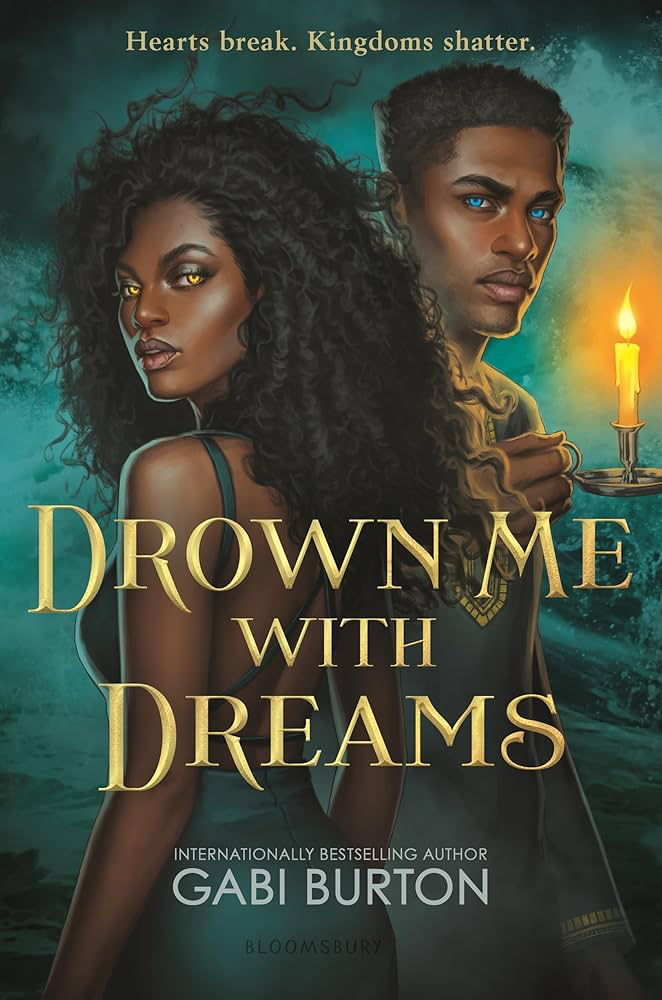
Drown Me with Dreams (Sing Me to Sleep, #2) – Gabi Burton

Saoirse is on the run. Now that her siren identity has been exposed, she must flee to the other side of the wall that divides Keirdre from the rest of the world. Taking sanctuary with the budding Resistance, Saoirse discovers a world full of different species that Keirdre drove out of its kingdom, all waiting for the day that they can take back what is rightfully theirs. But tensions are brewing, and war is imminent. On the other side of the wall, King Hayes, her secret love, awaits, but do his loyalties remain with Saoirse? And will Saoirse be able to fend off the rising tides of war?

TW/CW (from Gabi Burton): murder, graphic violence, discrimination/segregation (fantasy), genocide themes, blood, descriptions of injury, imprisonment

You would think that a book that’s over 400 pages would have plenty of time to work out all of the wrinkles in the plot and the worldbuilding…apparently not. In a perfect world, Drown Me with Dreams would be a great second book in a trilogy, but in this world, it was a duology concluder that tried to do far too much. That doesn’t mean that it was bad by any stretch of the imagination, but it was certainly a step below Sing Me to Sleep.

Oops. I end up stumbling into books with startling relevance to the current climate, and oh my god, am I sick of using that phrase. But. Drown Me with Dreams does an excellent job of expanding on its themes of resistance, racism, and misinformation! Saoirse has now figured out that there’s a wide world beyond the walls of Keirdre that has been obscured by the racist regime in her home kingdom; now that she knows the truth, she’s exposed to a myriad of perspectives and has to do the work herself to deconstruct the lies she’s been fed all of her life. She meets dozens of new mythical species that have been respectively discriminated against by Keirdre, and finds out firsthand how many falsehoods that the ruling powers have upheld for decades. The simultaneous revelations and discomfort of Saoirse discovering the truth is such a wonderful thing for a YA fantasy book like this to explore—in the end, it’s up to us, in our varying experiences in the real world, to discover the truth about how our governments can shape (and mis-shape) the narratives we grow up on. I also love the themes of solidarity present—fantasy or not, I love that the kind of feminism that Drown Me with Dreams champions is the kind that holds celebrating individual experience and solidarity under shared oppressions in equal regard. It’s the kind of unity that I believe will push feminism forward, and it made for a powerful statement in Drown Me with Dreams.

Even though Saoirse and King Hayes were kept apart for the first half of the novel, Drown Me with Dreams had a great resolution to their romance! Was it classic, YA fantasy romance cheese? Yes. Was it good cheese? Absolutely. To paraphrase one of my high school English teachers, there’s a difference between gourmet cheese and “American cheese-food.” I’ve been a YA reader for quite some time now, and there’s a difference between cringeworthy cheese and high-quality cheese. Drown Me with Dreams falls into the latter category, 100%. There’s angsty angry-kissing aplenty, but it’s written believably. If anyone is looking to do slow-burn, enemies-to-lovers romance right, look no further. Saoirse and Hayes weren’t just given enough time to have their romance develop—the stakes of their forbidden love were built up for the whole series, and their chemistry together made for some high quality smoldering. It’s not trying to be enemies-to-lovers in the way that most BookTok fantasy books try and fail to do—Burton’s given us a well-developed romance you can root for, and it made Drown Me with Dreams a standout read in that department.

In my review for Sing Me to Sleep, I mentioned that the book’s main flaw was that it was juggling far too many characters. In that same review, I commended Burton’s ability to craft a rich, layered fantasy world. Both of those aspects collided in Drown Me with Dreams with disappointing results. In Drown Me with Dreams, we finally see the world beyond Keirdre, and it’s full of all of the creatures that Keirdre drove out—dryads, goblins, sprites, you name it. On the surface, I was so excited to see this aspect of the world, but two main issues arose. The first was that we were introduced to a truckload of characters, almost 80% of which had barely anything memorable about them other than the fact that they were from a “new” species. Some of them were slightly consequential, but only just. I had so much trouble keeping track of all of them, which definitely muddied my reading experience. The second problem was that all of this worldbuilding was crammed into a single book—with a kingdom and world this expansive, it needed at least another book to develop fully, which hindered how fleshed out the world ended up being, after all of these promises of it being fascinating and new. (Also, I get the point about racist narratives being made with the goblins, but…what was the reason for making goblins into glorified elves? Why did they need to be conventionally attractive?)

Which brings me to my second major gripe: this series should not have been a duology. Not only are we introduced to a staggering amount of worldbuilding that only amounts to a single book, the same goes for the plot. A full resistance movement, the tensions within said resistance movement, the looming threat of war from multiple sides, and the fallout from said monumental war are crammed into 424 pages…should be enough, right? Most of what I described only happens in the last 2/3rds of the book, and nothing gets nearly the attention it deserves. We get dragged along with a pointless red herring of a love triangle (only for Saoirse to end up with her main romantic interest and for the other guy to just DIE GRUESOMELY? I didn’t really care about the guy, but pour one out for Carrik), and all of the interpersonal conflict rarely lasts, only providing detours on what should’ve been a rich plot on its own. As with the worldbuilding. Drown Me with Dreams should have had at least one more book to expand on everything. It’s a case of Burton biting off far more than she could chew, to unfulfilling results.

All in all, a duology-concluder that didn’t deliver on its epic worldbuilding promises and rushed its climax to a dizzying degree, but delivered on its past themes and promised romance. 3.5 stars!

Drown Me with Dreams is the second and final book in the Sing Me to Sleep duology, which begins with Sing Me to Sleep.

Today’s song:

so uh guess who’s obsessed with the apple tv+ björk concert film

That’s it for this week’s Book Review Tuesday! Have a wonderful rest of your day, and take care of yourselves!
Posted in Book Review Tuesday

Book Review Tuesday (2/11/25) – The Maid and the Crocodile

Happy Tuesday, bibliophiles!

I had a ton of fun with Jordan Ifueko’s Raybearer duology, but somehow I completely missed that she released a novel last August in the same universe! It was an absolute treat to be back in Ifueko’s world, and The Maid and the Crocodile proved a valuable asset to her fantasy universe.

Enjoy this week’s review!

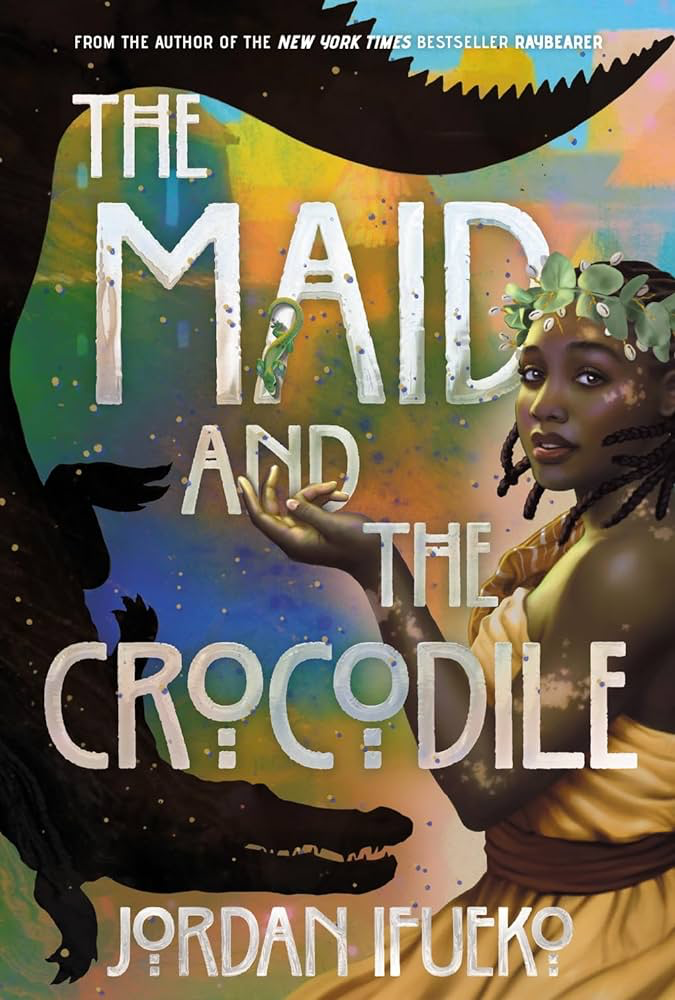
The Maid and the Crocodile – Jordan Ifueko

Small Sade is desperate for any job that she can find. With her crooked foot and vitiligo, the people of her village think she is cursed and touched by spirits. Eventually, she finds work as a maid, but not before an act of desperation sees her bound to a powerful god, known only as the Crocodile. As she moves up in the ranks, she realizes that she is a Curse Eater—her profession as a maid not only cleans the houses of her clients, but changes their fates. Juggling her newfound ability and a world on the brink of revolution with only the Crocodile as her guide, Small Sade must learn to forge her own path before someone else decides it for her.

TW/CW: ableism, self-harm/mentions of suicide, descriptions of injuries, classism, mentions of sexual assault, abuse, loss of loved ones

I can excuse a handful of pop culture references here and there, but after that god-awful Minecraft trailer, if I hear “the children yearn for the mines” ONE MORE TIME, I’m gonna snap…Jordan Ifueko, this was a great book, but that tested me…especially with the climactic scene that it temporarily undercut.

That aside, it was an absolute treat to return to the world of Raybearer with The Maid and the Crocodile! I didn’t think to re-read the duology before going back into it (I never seem to do that unless it’s with a book I’m really invested in), but I was so easily immersed into the world nonetheless! For both casual and eagle-eyed readers, there are Easter eggs aplenty—several characters from the duology make cameo appearances (SANJEET!!! MY GUY!!!!), and the nuances of the world stay the same, for the most part. It was an easy transition, which isn’t always easy to do. I loved how The Maid and the Crocodile expanded on the world as well! Ifueko really has a strength in writing ordinary characters forced into extraordinary, powerful positions, and Small Sade is no exception. However, she’s much more different than Tarisai, which I appreciated—there’s much more of a sense of her having to work towards the top, and her humored yet determined tenacity was what made her so special of a character. Through her, we see Oluwan City from more ordinary eyes, which makes the themes of the story so much more clearer.

I couldn’t have read The Maid and the Crocodile at a better time, and not just because it was a fun read. Its themes about the nature of change and revolution are critical—IT’S ALL ABOUT LOVE! It’s so refreshing to see a character who wants to help society change for the better not out of revenge or a vague “evil government bad [does not elaborate]” motivation, but out of love. Small Sade’s motives stem from wanting to care for the people she loves and wanting to see that love reciprocated in the world around her. Change rooted from love is a perspective that I rarely see in YA, even though its plots have centered around dismantling governments and revolutionary change for decades. I’m so tired of saying “in times like these,” but I mean it—in times like these, narratives about radical change being rooted in love—for your people, for your country, and for your culture—are critical to understanding what change can truly do.

Whenever you have a disabled character in a non-modern setting, even if it’s fantasy, you always run the risk of amping up the internalized ableism. Small Sade, who is shunned and deemed “spirit-touched” because of her crooked foot (she uses a cane for mobility) and her vitiligo, faces a great deal of ableism. It’s not as though plots about overcoming ableism (NOT the disability, mind you) aren’t worth telling, but in non-modern and fantasy settings, it does get slightly tired to have all disabled characters in these settings go through versions of the same arc. I loved how Ifueko handled Small Sade’s character—she resists ableism, but most importantly, she is a person beyond her experiences of ableism. Her experience of discrimination informs her story, but it is not the entirety of her character. Small Sade is defiant, self-reliant, and deeply caring—she’s so fully-fleshed out, which is a rarity for disabled characters. So hats off to Ifueko for an excellently-written disabled character!

However, though it had its moments, I was never fully invested in the romance between Small Sade and Zuri. I got that they had a connection, but I feel like he showed up too few times for the relationship to really work. Small Sade had eons more character development than he ever had the chance to. I get that a curse slowly turning you into a crocodile tends to do this to a guy, but at times Zuri felt rather codependent—up until the last 50 pages or so, Small Sade felt more like a means to an end for him, and his redemption was too underdeveloped for me to be fully invested in it. I appreciated their mutual resolution, but it was too late for it to feel fully satisfying. Given how strongly written the relationship between Sanjeet and Tarisai was in the Raybearer duology, I really expected Ifueko to deliver more with The Maid and the Crocodile. Small Sade and Zuri had moments, but not enough for me to be invested in them romantically.

All in all, a worthy addition to Jordan Ifueko’s Raybearer universe, full of heart, curses, and hope. 3.75 stars, rounded up to 4!

The Maid and the Crocodile is a standalone, but is set in the world of the Raybearer duology (Raybearer and Redemptor). Jordan Ifueko is also the author of the 2022-2023 run of Marvel’s Moon Girl and Devil Dinosaur, and has also contributed to Jim Henson’s Storyteller: Tricksters.

Today’s song:

That’s it for this week’s Book Review Tuesday! Have a wonderful rest of your day, and take care of yourselves!
Posted in Book Review Tuesday

Book Review Tuesday (1/28/25) – The Marble Queen

Happy Tuesday, bibliophiles!

Graphic novels haven’t been all I’ve been reading this month, but I’ve certainly been on a kick of reviewing them. Unfortunately, this one wasn’t nearly as good as The Infinity Particle, but it’s apples and oranges to compare them. I really need to stop putting everything with “sapphic” and “fantasy” in the description on my TBR, because while I love those two things together, they aren’t automatically the recipe for a good book. Sadly, The Marble Queen is proof of that.

Enjoy this week’s review!

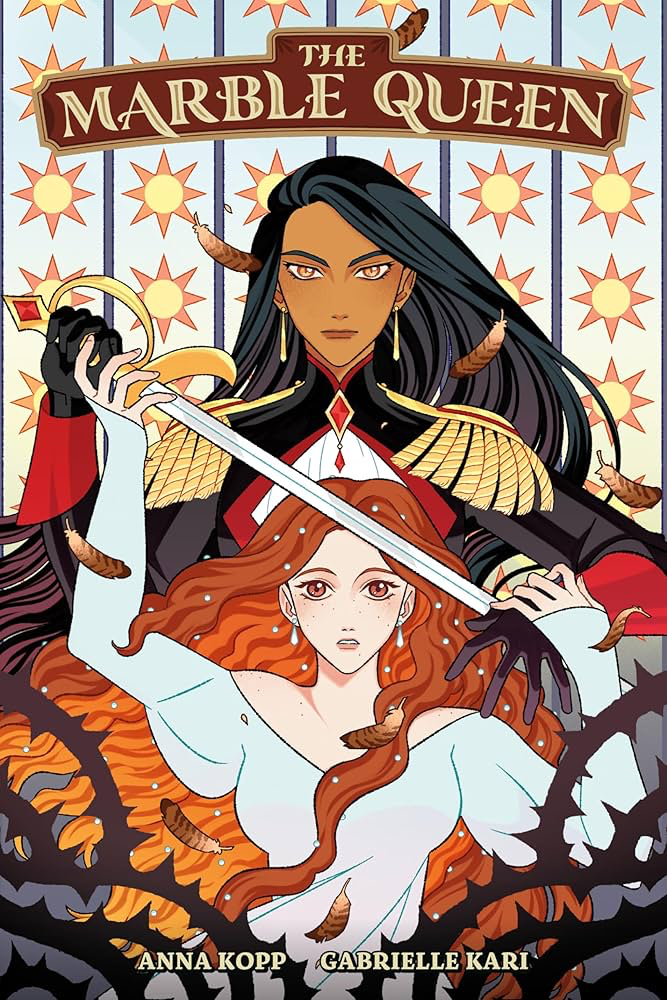
The Marble Queen – Anna Kopp and Gabrielle Kari

Princess Amelia lives in a kingdom in turmoil. Accosted on all sides by pirates and on the brink of war between its neighboring nations, Marion is on the verge of collapse. Only a miracle can save it—and that miracle may be to marry Amelia off to the prince of the neighboring kingdom of Iliad. But soon, she finds out that there was a mistake—it was not the prince she is being married off to, but the new queen, the stunning Salira. Stuck in a foreign kingdom with no control over her destiny, Amelia searches for answers. But with political forces from all sides conspiring against them, she must ally with Salira in order to save both of their kingdoms from ruin.

art by Gabrielle Kari

TW/CW: blood, violence, loss of loved ones, anxiety, poisoning (attempted)

I went into this graphic novel thinking I’d get a sapphic fantasy. The sapphics? They’re here. The fantasy? Not so much. The writing and artwork? The latter picked up some of the slack left by the rushed writing, but not enough. Given more page time and refinement, The Marble Queen could have been something promising, but it was clearly a case of too many plot ideas in a shell that could not hold all of them.

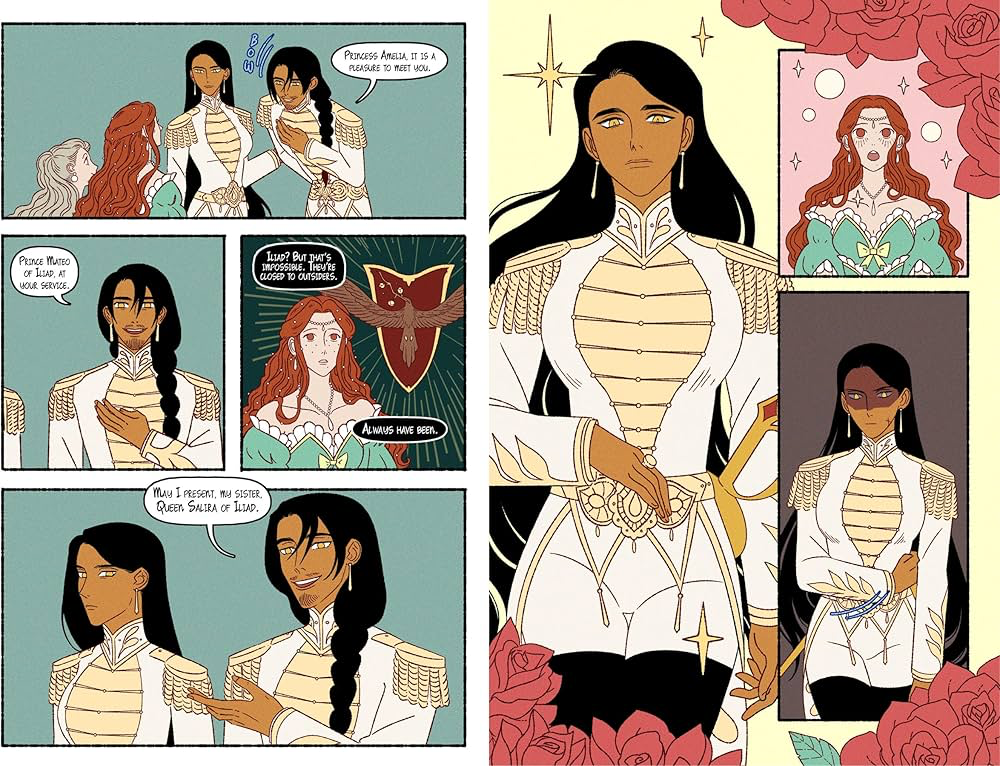
If you’re looking for fantasy, The Marble Queen will likely disappoint. If you’re looking for something more along the lines of a regency romance with political intrigue thrown in, you might be more satisfied. The Marble Queen has plenty of ballroom dancing, flowy dresses, court intrigue, and pirates, but nothing that would necessarily separate it from something in our history. There was a vague, throwaway sequence about some crystals beneath Iliad that supposedly had magical powers, but it ended up having zero consequence to the plot—it felt like Kopp threw it in just so that she could say “See? See? This is fantasy, we promise!” Also, so many of the place names felt so randomly plucked and too close to real world things—kingdoms called Marion (not necessarily a common name, but similar enough to Marianne/Maryanne that it loses the fantastical feel) and Iliad (I don’t think I have to explain that one) made the worldbuilding feel even lazier. The Marble Queen’s artwork also had a lack of immersion—other than the glimpses we got of the palace and the outside world, many of the characters were shown on flat, monochrome backgrounds, making it difficult to get a full picture of the world. Had this been historical fiction with a loose basis in some of our cultures, it might have been more effective.

Additionally, The Marble Queen was all over the place in terms of plot. I got the impression that Kopp and Kari had a plethora of ideas for what to do with the story, but not nearly enough time to execute them. As a result, every subplot felt smushed together like sardines in a tin can—so many of them were there, and yet almost none of them had room for proper mobility. I was particularly intrigued by Amelia’s anxiety and her feelings of isolation in Iliad. Her fear and alienation, although given a fair amount of space in the first half of the novel, had the potential to be poignant, but since it was shoved in unceremoniously against at least six other subplots, it had to room to grow into a compelling, sensitive story. The same went for the political intrigue—I liked it in concept, but the plot with Stefan had so little room to develop that by the time the reveal came, I’d guessed it about 30 pages earlier. In between all this, we get rapid-fire scenes of training montages, poisoning attempts, emotional backstory with not nearly enough grace given to the grief they should have held, said random bit about magical crystals that doesn’t end up being relevant at all, and a pirate that was clearly supposed to be a “fan favorite” character, but only got about 5 pages of character interactions tops. Given more polishing, The Marble Queen could have been a successful story, but it had no sense of direction, which made me struggle to keep my interest in the characters.

Said plot, more overstuffed than a Thanksgiving turkey, is why I think the romance didn’t work for me either. I did get that the arrangement was meant to be rushed, but when so many extraneous plot events were happening around Amelia and Salira, I never bought the chemistry that Kopp so badly wanted to convince the reader that existed between them. We’re supposed to believe that Amelia and Salira are slowly falling in love, but there’s hardly any indication in the dialogue that a connection is being made, save for a heavy dose of panels of Amelia with sparkly eyes and anime blushing. We’re supposed to sympathize with Salira because of the untimely death of her first girlfriend, but we hardly get an indication that she’s uncomfortable during the wedding, and after the explanation to Amelia, she comforts her, and then they make out in front of a painting of her ex-girlfriend and move on. Again, this was a victim of The Marble Queen‘s full-to-bursting plot—a romance that could have been compelling was ruined by a plot that moved too fast and contained too much of the wrong things.

The art was…alright, I suppose. That gorgeous cover set my expectations too high. I could get on board with the almost-Manga art style, and I did enjoy some of the expressions that the characters made. Although the color palette was warm and pleasant, it was largely flat—there was a significant lack of shading and depth, which can sometimes work, but in a story and world this fantastical, some of it was necessary. Additionally, Kari had a tendency to overexplain some of the gestures of the characters. Instead of having some creative (and sometimes silly) depictions of sound effects, there were direct writings of, say, “rise,” “kneel,” or “stab” when characters stood up, knelt or got stabbed, or repetitions of “beautiful” when Amelia first sees Salira. In moderation, some of this could have worked, but in such large amounts (and in places where these things could have easily been inferred by…well, just looking at the artwork), they grated on me.

That being said, I loved Gabrielle Kari’s character designs! She did an excellent job of making the characters expressive and distinctive in their respective looks. Anime blushing aside (I could let it slide after a while), all of the characters had wonderful stylistic quirks and tells, making them fun to follow around their kingdom, even when the writing itself slacked off. The design language wasn’t just clear, but enjoyable to see between the kingdoms; I loved the contrast of Amelia’s flowing, flouncy dresses in contrast to the tighter, more soldierly attire of the royals of Iliad. It added what some of the writing failed to add with the themes of her alienation and isolation—she was clearly an outsider, in both her foreign mannerisms and personality and the way she stuck out in the crowd.

All in all, a fantasy (?) graphic novel with the potential for epic drama, but got dragged down by an overstuffed plot that squeezed the life out of the characters. 2 stars.

The Marble Queen is a standalone, but Anna Kopp is also the author of Lifeblood, as well as many Minecraft novels for younger readers. Gabrielle Kari is also the illustrator of No Holds Bard, written by Eric Gladstone.

Today’s song:

NEW TUNDE ADEBIMPE IN APRIL, LET’S GOOOOOOOOOO

That’s it for this week’s Book Review Tuesday! Have a wonderful rest of your day, and take care of yourselves!
Posted in Book Review Tuesday

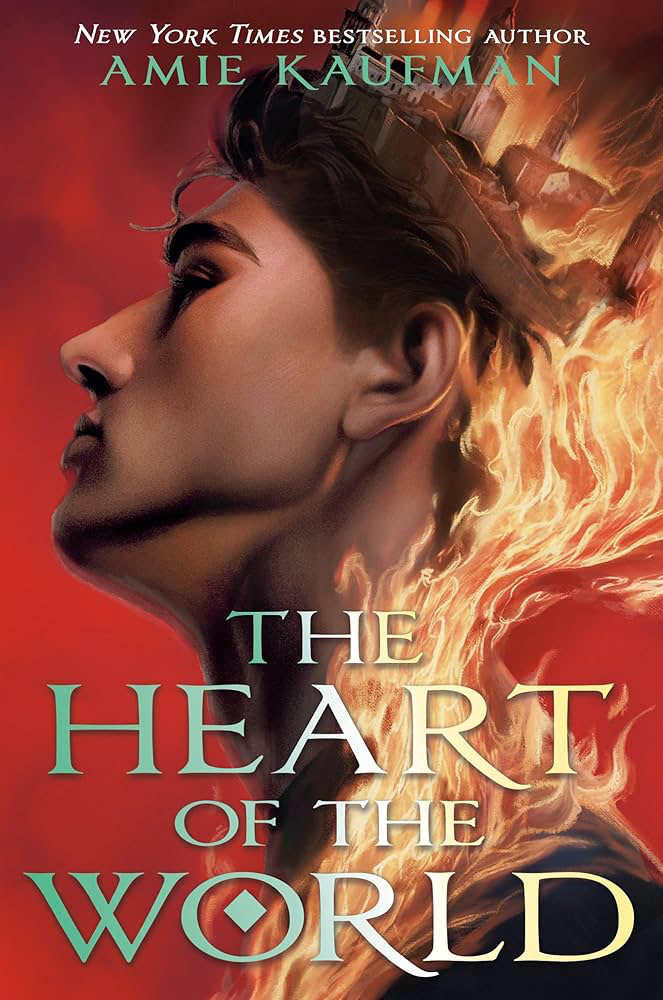
Book Review Tuesday (10/15/24) – The Heart of the World (The Isles of the Gods, #2)

Happy Tuesday, bibliophiles!

The day has finally come…the Isles of the Gods duology has concluded. The end of a (short) era. I’m all over anything that Amie Kaufman writes, and even though fantasy isn’t my top genre, she made me fall in love with her brand of it. Naturally, The Heart of the World was one of my most anticipated releases of the year, and while it fell barely short of book 1, it stuck the landing to become a fulfilling conclusion to a duology full of heart.

Now, tread lightly! This review contains spoilers for book one, The Isles of the Gods. If you haven’t read it and intend to do so, read this review at your own risk!

For my review of The Isles of the Gods, click here!

Enjoy this week’s review!

The Heart of the World (The Isles of the Gods, #2) – Amie Kaufman

Selly Walker has failed.

When she, Leander, and Keegan tried in vain to seal away the gods from the mortal world, they created a conflict much worse than they could have ever imagined. Now, Leander is the mortal messenger of Barrica, goddess of war. Possessed by power beyond human comprehension and puppeteered by a being of unearthly sway, he knows that war is brewing—and that allowing Barrica into the mortal realm would kill him in the process. Selly, now deeply in love, will risk anything to make sure that Leander is unscathed, but little to they know that the rival god Macean has his own Messenger—and that he’s hungry for war.

TW/CW: violence, blood, murder, loss of loved ones, neglectful parent

Man, Amie Kaufman just can’t resist writing relationship dynamics where one becomes all-powerful and the other is Just Some Guy, huh? Not to call Selly just some (gal), but…Aurora Cycle fans, we see it, right?

It’s not like me to rate a solo Amie Kaufman book in the 4-star range. Well, sort of. The Isles of the Gods was a 4.75 for me, but that was easily rounded up to 5. I expected The Heart of the World to be more of the same, and it almost was. Almost. Its fatal flaw was that it took so long to get back on its feet after the chaos and craziness that was the ending of book 1. That was so campy (in an Indiana Jones way) and explosive that it must have been so hard to ground the beginning afterwards. An additional problem is that this book is 400 pages long, which meant that, for the first fifth to a quarter of the novel, it bordered on dragging. Kaufman’s writing didn’t suffer, and neither did the characters, but The Heart of the World took so long to regain its sea legs that it never fully recovered.

From there, however…I have no notes. Even if that first fifth (or thereabouts) dragged in terms of plot, it excelled in terms of character development. Leander’s arc was among the most well-developed of the novel—as it should have been, given that he’s on the cover and all. As I said before, unceremoniously foisting godlike power onto ordinary people and watching them try and grapple with the consequences is Amie Kaufman’s bread and butter. Leander’s internal struggle of being both a puppet of Barrica and being tossed around by the royal family—his family—and being treated like an overpowered chess piece made for some enticing internal struggles. I hesitate to say that his relationship with Selly was a genderbent carbon copy of Kal and Auri, but…the similarities were there. However, what sets them apart is the differences in Leander and Selly’s characters. Unlike Auri, Leander was slick and confident before he he was forced to embody Barrica’s power—thinking he had sway and power was nothing compared to having a taste of uncontrollable, immortal power, and it fundamentally rearranged who he was as a person. Selly, on the other hand, was already out of her depth and new to the relationship, but clung to the glimpse of the real Leander, and knew that she couldn’t risk losing him—or their shared home. I trust Amie Kaufman enough to know that she wouldn’t copy and paste a relationship dynamic, and the more I think about it, the less it feels like a rehash—Selly and Leander were so sweet together, and this wrench in their romance was one that created an intricate rift to explore.

Speaking of Selly being out of her depth…good god, I just want to give her a hug. Lord. Kaufman already gave her a great obstacle in trying to find her way through the palace life and feeling like a fish out of water while trying to navigate impending war. Then she had to resolve the arc about Selly looking up to her dad…who, as was faintly hinted at in The Isles of the Gods, turned out to be using her for her magic, then abandoned her. My poor girlie…either way, it was written so sensitively. After the smoke screen of her dad pushing her to foster her magic fell away, Selly realizes that he’s just been using her as a tool to bolster the family name, and Kaufman was able to hammer in just how crushing that was for her. All her life, she’s been in his service, and all of these years she’s waited for him to return, and you just knew that he only came back to her because Barrica had him and the rest of his crew under her spell. Their reunion was hollow, just like the remainder of their relationship. Once she began to come too grips with it, however, it was beautiful to see Selly assert that she would no longer be somebody else’s pawn—just like Leander. Waiter! Waiter, more parallels, please!

In my review of The Isles of the Gods, I said that I was miffed at the book being tagged LGBTQ+ when all we got was a background lesbian couple that was about the equivalent of that one scene in The Rise of Skywalker. (You know the one.) I couldn’t help but be disappointed. Let me say on the record that I stand corrected! The additional queer queen and consort aside (diversity win! This warmongering queen likes women!), we’ve also got some wonderful queer representation in Jude. Another minor complaint that I had about The Isles of the Gods was that Jude didn’t have an awful lot to do, even though he was one of five of the POV characters. Not only does he have a beautiful, tearjerking character arc, HE’S QUEER! AND HE’S HAS A WONDERFUL BOYFRIEND! After all that this poor guy has been through, I’d say that’s the ultimate reward. I had a feeling that something had to be queerer about The Isles of the Gods, but I’m so glad that Jude finally got his due diligence in terms of character development and focus—and queerness. We love a battle-scarred guy with a secret stash of fantasy books.

Another character arc I loved seeing resolved…Laskia! Along with Leander and Selly, she’s part of the unofficial “spent their lives being moved around like chess pieces” trio, and seeing her come into her power—without the help of Macean—was a beautiful redemption arc. Laskia was driven to villainy by a desire to be loved, constantly shoved in the shadow of her sister Ruby, and like Leander and Selly, she let herself believe that she was in control. For her, the ultimate act of heroism was to become her own person—to steer her own course in life. Looking back, that’s what the whole Isles of the Gods duology feels like it’s been about. The ultimate form of magic is to know your power, to know that you have control of your life, and that despite the pressures telling you to sail one way or another, you’re the captain of your own ship. 🫡

In the end, if there’s anything that Amie Kaufman can write like nobody’s business, it’s a final battle. It was so tightly paced and action-packed that it nearly made me forgive how slow of a start The Heart of the World had. An aspect that The Heart of the World introduces is how the gods and goddesses factor in (Kaufman’s descriptions of which were arresting, as was expected), but it gave stakes to the battle that truly made it feel like thousands of lives hung in the balance. And to conclude it all in an assertion that spending your life grieving will never make any new love grow? And how that grief can feel so desolate that nothing else can grow there? And that remembering the connections that you have in the here and now is how you can move forward? And…and…and…dammit, Amie Kaufman, you did it again. You can only hide behind so many cheery “hi my friends!” before the jig is up. YOU HAVE TO STOP RUNNING A STEAMROLLER THROUGH MY FEELINGS LIKE THIS.

All in all, a duology concluder that faltered slightly in its early stages, but stuck the landing with buckets of action—and many a resonant message to spare. 4.5 stars!

The Heart of the World is the final book in the Isles of the Gods duology, preceded by The Isles of the Gods. Amie Kaufman is the author and co-author of several series for children and young adults, including the Elementals trilogy (Ice Wolves, Scorch Dragons, and Battle Born), the Illuminae Files (co-authored with Jay Kristoff – Illuminae, Gemina, and Obsidio), the Aurora Cycle (co-authored with Jay Kristoff – Aurora Rising, Aurora Burning, and Aurora’s End), the Other Side of the Sky duology (with Meagan Spooner – The Other Side of the Sky and Beyond the End of the World), and many others.

Today’s song:

We Are Lady Parts brought me here…

That’s it for this week’s Book Review Tuesday! Have a wonderful rest of your day, and take care of yourselves!
Posted in Book Review Tuesday

Book Review Tuesday (10/1/24) – Death’s Country

Happy Tuesday, bibliophiles, and happy October!

Since today is both in the middle of Latinx Heritage Month and the start of spooky season proper, I figured I would deliver on both fronts. I’d heard a lot of buzz about this one, especially the fact that it had polyamorous representation—something I rarely see in literature, much less in YA. Genre fiction written in verse is also uncommon, so I had to pick up this book since it combined both of them. The result was something that was inventive at every turn.

Enjoy this week’s review!

Death’s Country – R.M. Romero

Andres Santos is ready for a new start. After moving to Miami from São Paulo, he’s keen on leaving his past behind—especially his brush with mortality after nearly drowning and seeing the face of Death itself. He barely escaped by making a deal with Death for a second chance at life. Now, he’s a part of a happy, poly triad, deeply in love with spunky photographer Renee and joyous dancer Liora. But when a car crash puts Liora in a coma, Andres and Renee know that the only option is to confront Andres’ past—by returning to the Underworld where he once bargained for his very life.

TW/CW: car crash/coma, emotional abuse, suicide, self harm, eating disorders, fantasy violence

The minute that David Bowie was mentioned, I tried so hard not to go headfirst into liking this novel. My expectations were average, and I wanted to be surprised. And then “Space Oddity” became a recurring motif. You know me, I ate that up.

For the most part, I’ve rarely seen genre fiction and novels in verse mix. The latter is usually reserved for telling realistic fiction stories and occasional historical fiction, though I’ve only seen one or two examples of the latter. But using this method outside of fiction is something that, now that I’ve read Death’s Country, I feel should be utilized more often. Poetic language lends itself to describe the dark, fantastical setting of this novel and fantastical settings in general, and Romero’s is no exception; even if it doesn’t fill up the entire page, the flowing language renders the setting in luscious detail. Given that romance is also at the beating heart of this novel, Romero’s decision of putting it in verse made the romance feel all the more like the center of the narrative. Once more, her language didn’t just put the spotlight on it—the sparsity of the amount of words on the page truly made it feel like the center of the universe.

Even with the leaps and bounds that literature, mainly YA, has made in terms of queer representation, I’ve seen hardly any with polyamorous representation. (The only other one that I can remember is Iron Widow, which I also recommend!) What I liked about how Death’s Country handled it was that it was a polyamorous story, but that it wasn’t necessarily about polyamory; those stories have a place, but sometimes, the most powerful representation comes from seeing yourself in fantastical stories usually reserved for white, cishet, etc. protagonists. There are great discussions about the stigmas surrounding polyamory (cheating, slut-shaming, etc.), but they were only a part of the story, not the whole. The more that I think about it, a poly triad makes this story work in a way that it might not have with a couple; having two people, not just one, braving the Underworld for their girlfriend in a coma, presented a unique twist on a story that’s been retold countless times, and presented an opportunity to explore multiple perspectives of love under duress.

I went into Death’s Country expecting a meditation on death (obviously), but what I didn’t expect was such an insightful metaphor about how we idealize those we love in death. The Underworld in Death’s Country is almost a vehicle for reproducing what people deem most memorable about them: not just how they die, but how they were seen in death. Liora, who was adored unconditionally by both Andres and Renee, has been molded into a romanticized version of herself that, upon closer inspection, barely resembles the real Liora. Most of that is thanks to the manipulation of The Prince, but we later find out that even he is a reflection of the dark side of Andres’ love—that kind of unquestioning idealization that strips a real person into a glowing facsimile of who they once were. This provided an insight into these kinds of retellings (Death’s Country is a loose retelling of the myth of Orpheus and Eurydice) that they don’t normally touch on; death changes the people you love physically, but also mentally—in the perceptions of others that come to define them once their physical body is gone.

However, I feel like Death’s Country could have used a dual POV to execute the emotion to its absolute fullest. The only perspective we get is Andres, while we never get into the headspace of Renee, who is journeying with him through the underworld alongside him for the entire book. I wasn’t as big of a fan of Andres as a protagonist (I found him to be on the abrasive side at worst), but Romero’s writing of him was never sloppy or badly-executed in a technical sense. I just had the strongest sense that Renee had just as much of a story to tell as him! I get that Andres was specifically the one who made a deal with Death for another shot at life, but Liora isn’t just his girlfriend—she’s Renee’s girlfriend too. She needed more backstory, but I have a strong feeling that Death’s Country would have been enhanced if she’d also had more of a voice.

All in all, an inventive, fantastical novel-in-verse with plenty of fresh twists on otherwise well-trodden literary ground. 4 stars!

Death’s Country is a standalone, but R.M. Romero is also the author of The Dollmaker of Krakow, The Ghosts of Rose Hill, A Warning About Swans, and the forthcoming novel Tale of the Flying Forest.

Today’s song:

A NEW CURE ALBUM?? what a time to be alive

That’s it for this week’s Book Review Tuesday! Have a wonderful rest of your day, and take care of yourselves!
Posted in Book Review Tuesday

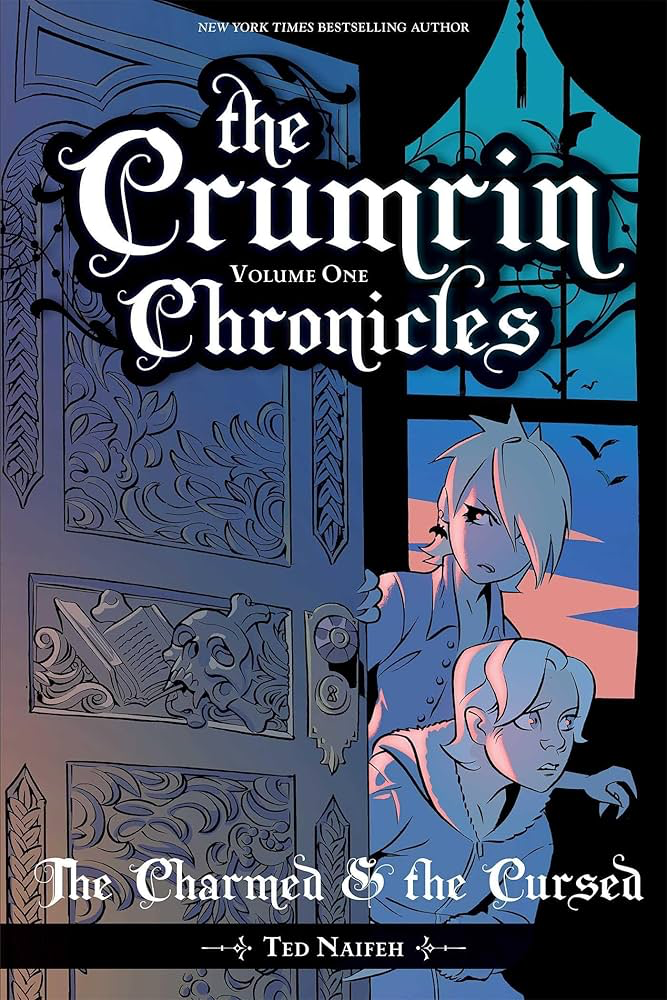
Book Review Tuesday (9/17/24) – The Crumrin Chronicles, vol. 1: The Charmed and the Cursed

Happy Tuesday, bibliophiles!

2024 really is the year of healing my inner middle schooler…I can feel the Courtney Crumrin obsession jolting back into my body…

I’ve been a fan of Courtney Crumrin from a young age—maybe a little too young, considering how quickly the subject matter gets dark, for better or worse. You know what? Definitely better. It was one of my favorite comics growing up, and Naifeh’s talent in both the writing and illustrating department has had a permanent impression on me, and spurred on my love of paranormal comics even before my Hellboy obsession was kicked into high gear. This continuation of Courtney’s story was one that I’d nearly forgotten about, but delighted in as a longtime fan—a worthy continuation of the story of the most dangerous witch in Hillsborough.

Enjoy this week’s review!

The Crumrin Chronicles, vol. 1 – The Charmed & The Cursed

Wilberforce Crumrin was trapped in the faerie realm for a century, while his older brother Aloysius got to live out a full life in the mortal world. Now rescued from his curse of never aging, Will finds himself under the wing of his adoptive older sister, a feared witch by the name of Courtney Crumrin. To help her little brother adjust to the mortal world, Courtney gifts Will with a charmed locket that will make everybody who encounters him go to great lengths to be his friend. But the love he receives from his classmates is hollow, and soon, Will must learn to discern who his real friends are.

TW/CW: fantasy violence, bullying, anaphylactic shock, loss of loved ones

When I say “I support women’s rights and women’s wrongs,” I mean Courtney Crumrin. Let a middle school girl with an ungodly amount of magical powers rain righteous fury down on a bunch of corrupt older men if she wants to.

I’m so glad that my mom reminded me that The Crumrin Chronicles existed, because it was high time that my middle school Courtney Crumrin obsession got reanimated. These new installments of the story prove that Ted Naifeh’s still got it, whether you’re talking about the stellar, eerie writing or his distinctively angular art style. In every way, it’s a treat for any longtime Courtney Crumrin fan!

Several years after the events of The Final Spell, Will has been rescued from the faerie realm, and now has to acclimate to the mortal world—which has progressed over a century from when he last saw it. The shift in the series’ name reflects the shift in the protagonist—it will always be about Courtney, but it’s clear that this is Will’s story through and through. I’m loving the ways that Naifeh has begun to develop Will’s character; apart from his delightfully old-fashioned mannerisms (ex. calling everybody “chaps,” constant exclamations of “jolly good” and whatnot), you truly get the sense that he’s a fish out of water in every way—he knows nothing about this new world that he’s in, and on top of that, he constantly has to pretend that he’s in the loop with everyone else.

In the shift from Courtney to Will as the protagonist, Courtney has also filled the role of Uncle Aloysius in the original series. What with their parents remaining as bafflingly clueless as they always were, Courtney is the only person Will can turn to for advice and comfort—she’s the only person in his life who knows the truth about his origins. Courtney, now with several years of maturity (and honing her powers) behind her, has grown more reclusive, but no less of a formidable force, both for fury and for love. Her being in a more secondary role doesn’t dull the truly awesome impact of the magic-wielding moments she gets; age has only focused and sharpened the reach of her wrath, and she uses it to its full extent when it comes to protecting the ones she loves—especially her little brother.

Protecting said little brother is what drives the central conflict of The Charmed & The Cursed; the inciting incident is brought on by a charm that Courtney places on Will that will make all of his classmates love him, thereby making his transition to modern school easier…in theory. Even if it does go awry, it teaches Will a valuable lesson about true friendship—and gives him a few real friends along the way. But the gesture alone felt so true to Courtney; she knew firsthand what it was like to be the new kid and not have anybody to show her the ropes, both socially and magically. What she and Will both learn by the end is that, in terms of the horrors of middle school, nobody can protect you from that. It’s a fact of life that puberty and making friends are rough, but sometimes, it’s up to you to decide who your real friends are.

Side characters usually aren’t a strength of Courtney Crumrin—by nature, Courtney really doesn’t have friends, save for her crotchety, geriatric warlock uncle, some talking cats, and a handful of fantastical creatures who come and go (and often either turn on her or die horribly. Fun times. Guess who hasn’t gotten over Skarrow…), but the ones that Naifeh introduces in The Charmed & The Cursed have a lot of promise! I immediately saw a bit of my younger self in Tucker, and as a kind of foil to Will, she works wonderfully; in contrast to Will, who wants to understand the real world he’s now trapped in, all she wants to do is escape it. Both of them show each other a version of reality—Tucker shows Will how his “friends” really see him, while Will shows Tucker that maybe the real world does have something in it for her. Putting a goth girl in this universe was an obvious choice, but I love Cinnamon too—and her burgeoning romantic relationship with Tucker!

The magical conflict (a CEO who happens to be a vampire, and this time, not in the metaphorical sense) was very much just a setup to stoke the flames for the rest of the series, but that doesn’t mean it wasn’t a fantastic ride. Between the callbacks to Courtney Crumrin’s Monstrous Holiday to Courtney getting to unleash the full extent of her magic, I was grinning to ear the entire time! The callbacks didn’t feel shoehorned into the narrative either—the element that does return does so for a logical reason, and there are enough new solutions to the vampire problem at hand that it doesn’t feel like a straight-up rehash. It’s loads of fun—and it provided a fascinating setup for what seems to be the main conflict of The Crumrin Chronicles.

All in all, a return to a comic I remember fondly that was clearly created with nothing but love. 5 stars!

The Crumrin Chronicles: The Charmed & The Cursed is the first volume in the Crumrin Chronicles series, followed by The Crumrin Chronicles: The Lost & The Lonely, and The Crumrin Chronicles: The Wild & The Innocent, which will be released on October 1, 2024. This series is a sequel to the Courtney Crumrin series, which consists of The Night Things, The Coven of Mystics, The Twilight Kingdom, Courtney Crumrin’s Monstrous Holiday, The Witch Next Door, The Final Spell, and the prequel Tales of a Warlock, which tells the story of Uncle Aloysius. Ted Naifeh is also the author and illustrator of several other comic books, including The Good Neighbors (written by Holly Black), Polly and the Pirates, Princess Ugg, and many more.

Today’s song:

FINALLY listened to all of It’s a Wonderful Life yesterday!! Sparklehorse and P.J. Harvey was a combination I never knew I needed so badly…

That’s it for this week’s Book Review Tuesday! Have a wonderful rest of your day, and take care of yourselves!

Posted in Book Review Tuesday

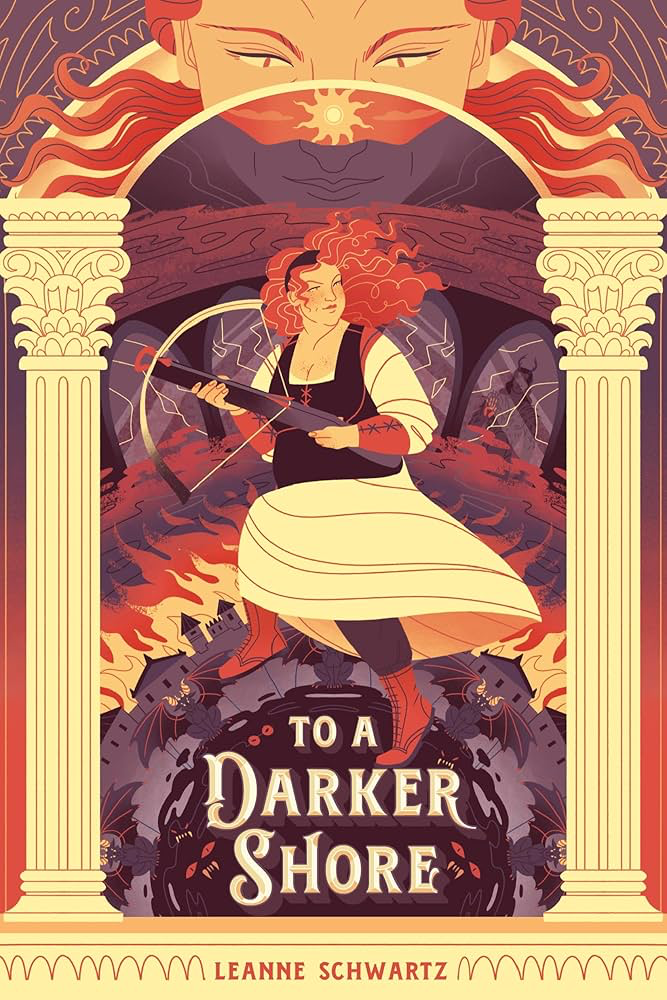
Book Review Tuesday (7/30/24) – To a Darker Shore

Happy Tuesday, bibliophiles!

I was first exposed to Leanne Schwartz through A Prayer for Vengeance, and enjoyed her YA fantasies that centered autistic and plus-size protagonists. I’d forgotten that she’d written another book featuring an autistic protagonist, and I figured it would be perfect for Disability Pride Month. While it didn’t blow me away, To a Darker Shore had a lovely setting with immersive writing and the journey of a courageous girl who would quite literally walk through hell to save her best friend.

Enjoy this week’s review!

To a Darker Shore – Leanne Schwartz

If there’s one thing that Alesta has known her whole life, it’s that she knows that she has something to prove. Poor, autistic, and plus-size, she means nothing to the townsfolk, save for what she can provide as a sacrifice to their hungry god, Hektorus. So she throws herself into intricate inventions, hoping they can earn her favor with the king. But when a test flight of one of her flying machines goes awry at an exhibition, Alesta knows she’s bound for hell. Yet it’s Kyrian, who helped her test the machine, that takes the fall, now condemned to hell instead of her. Alesta will do anything to bring Kyrian back…even if it means venturing into the treacherous depths of Hell itself.

TW/CW: loss of loved ones, misogyny, fatphobia, ableism, violence, blood/gore, claustrophobia, panic attacks, grief, homophobia

Why does WordPress keep trying to autocorrect “Alesta” to “Alert?” I can only imagine how it was while Schwartz was writing the book in the first place…

Even though Leanne Schwartz isn’t my favorite author, I love her apparent goal of putting out YA fantasy novels with plus-size, queer, and neurodivergent characters at the forefront. A Prayer for Vengeance didn’t blow me away, but it was an enjoyable read nonetheless; to an extent, I feel a similar way about To a Darker Shore, but it’s clear that her writing has improved greatly in the span of two books!

Schwartz’s lovely prose was clearly the star of To a Darker Shore. Throughout the novel, there’s a stark contrast between the fantasy, Renaissance Italy-inspired whimsy and the monstrous realms of hell, but Schwartz handled each of them with the appropriate weight they deserved. The first part of the novel did a wonderful job of immersing me in Alesta’s kingdom, and with every description of the coastline surroundings and the bustling cities, I was instantly transported. Schwartz’s balance of humor and weighty subjects (ableism, fatphobia, and purity culture, to name a few) was handled with aplomb—the strength of all of these aspects is how balanced they were. Additionally, To a Darker Shore’s writing felt like the perfect transition between Middle Grade and YA; apart from some violence and strong language, the accessible writing style and the narrative voice of Alesta could be a great bridge for younger YA readers to start in the genre.

Alesta was also a fantastic protagonist to propel the reader through this treacherous journey into hell! Schwartz did an excellent job of relying on showing to build up to the suspense of losing her best friend; by the time Alesta’s quest through hell begins, you truly do understand her relentless devotion to rescuing her friend, even if when they reunite, hell has permanently altered him. She stopped at nothing to make sure Kyrian made it out of hell alive, and you believed every part of her friendship and steadfast adherence to her mission. Her relentless spirit not only gave the story stakes (I certainly got the sense both she and Kyrian would fall apart without the other), but a reason to follow her along—at its best, there were times when I was invested in the story just because Alesta cared so deeply for succeeding in her impossible mission. Although I liked A Prayer for Vengeance, Leanne Schwartz’s way of writing her protagonists has improved since then, and Alesta is living proof.

I came away from To a Darker Shore with mixed feelings about the worldbuilding. On the one hand, I enjoyed the Renaissance Italy-inspired setting; Alesta is compared to Leonardo Da Vinci in the synopsis, and I loved the aesthetic of her wooden flying machines and the various magical contraptions that she constructed. The worldbuilding surrounding the religion that concerns most of the novel was also well-executed. Schwartz did an excellent job of setting up exposition in a variety of ways, ranging from stories that Alesta had grown up with to descriptions of religious festivals that served to explain some of the mythology. However, even with the obviously Christian inspiration that this religion was based in…why call it Heaven and Hell if it’s an entirely different religion? I get the comparisons here, but it kind of took me out of it to have a whole fantasy religion and then have the exact same names of Christian concepts in it. Considering how detailed most other aspects of this religion were, it comes off a bit lazy—either make it a more direct analog to Christianity, or give Heaven and Hell different (and more creative) names, in my opinion.

Additionally, there were quite a few side characters that surrounded Alesta that didn’t seem like they had anything to do. Along with the dreaded time skip that came out of nowhere [hisses like a vampire with holy water chucked on it], we were just as abruptly introduced to some of Alesta’s other friends. It wouldn’t have been a problem if they had any role in the novel other than to tell the reader that Alesta has made friends after Kyrian’s sacrifice. They were pushed aside as soon as Alesta ventured into hell (a section that takes up about a third of the novel), and therefore had no room to have distinct personalities or roles other than being Alesta’s friends. Since To a Darker Shore is centered so prominently around the unbreakable friendship between Alesta and Kyrian, it would have been better to scrap them entirely—or at least not give them a role that Schwartz seemed to place disproportionate importance on.

All in all, a YA fantasy that took some shortcuts with its side characters and worldbuilding, but was nonetheless a satisfying story of friendships strong enough to survive hell itself. 3.5 stars!

To a Darker Shore is a standalone, but Leanne Schwartz is also the author of A Prayer for Vengeance.

Today’s song:

no idea how I forgot about this one, but I’m so glad I did!! a nostalgic childhood staple, for sure.

That’s it for this week’s Book Review Tuesday! Have a wonderful rest of your day, and take care of yourselves!
Posted in Book Review Tuesday

Book Review Tuesday (5/21/24) – Squire

Happy Tuesday, bibliophiles!

Squire has faintly been on my radar on-and-off for the two years that it’s been out. I figured it would be something fun, but I didn’t expect such a hard-hitting, timely, and wholly beautiful graphic novel full of vibrant characters and sharp social commentary.

Enjoy this week’s review!

Squire – Sara Alfageeh and Nadia Shammas

Aiza wants nothing more than to be a Squire—she’ll be able to become a knight revered in legends and lore and send money home to her family, who are barely scraping by. And as a member of the Ornu ethnic group, she’s considered a second-class citizen by the empire of Bayt-Sajji, and becoming a Squire and joining the Knighthood is the only way to become a citizen. At first, she’s elated to join the ranks of the recruits, but after failing her first test, she’s relegated to the night watch. But she’s soon discovered by Doruk, the groundskeeper, whose past may lead her to discoveries about the Knighthood that may change everything. Soon, Aiza realizes that she’s become a part of the same machine that’s destroying her people, and must make a decision—loyalty to her heritage, or loyalty to the empire.

art by Sara Alfageeh

TW/CW: war themes, racism, violence, colonialism/imperialism themes, amputation (forced)

Whew. This hit me so much harder than I anticipated. But I am all the better for it—I’m so, so glad that this graphic novel exists, especially since it’s aimed at a younger YA audience.

Squire has some of the sharpest critique of imperialism in YA that I’ve seen since Maggie Tokuda-Hall’s The Mermaid, the Witch, and the Sea duology. It’s all the more poignant since the main character is so young—we never get an estimate, but it seems Aiza is on the younger side of the 12-17 age range for Squires. It’s an intimate portrait of watching everything you know about patriotism, faith, and empire be deconstructed in front of your eyes, and how that radicalizes a person—especially a young person—into enacting positive change. It holds no punches, and that’s exactly what it’s meant to do: imperialism is not something to be sugarcoated, even for younger reasons, and Squire does all of this and more.

Seeing all of this through Aiza’s eyes was what made Squire so unique. Her journey throughout the novel is as complicated as they get; at a young age, she has to grapple with the fact that the only way to gain recognition and help her family survive is to betray her own people. It’s a decision that she feels is straightforward at first, but having been fed on heroic, medieval-style propaganda, she feels in her heart that she’s right. It’s only when she fails to meet the standards of the empire that she sees the error in her ways, and her crisis begins: how can she hold an empire that she’s been groomed to love and an identity that has shaped her life in equal regard? Not such a simple decision, especially when you’re 13 or 14—and when you realize that this empire has been carrying out raids on the very same people that you once called family and friends, who the empire likens to mongrels and scum. Alfageeh and Shammas executed her journey, in all of its emotional messiness, with such care and beauty; you really feel for Aiza as she watches the reality that the empire constructed for her crumble, and her eventual mission to pursue justice was a truly resonant call to action for our times.

For the first 30% of Squire, I didn’t think that I would end up rating it 5 stars. I loved Alfageeh’s art, toeing the line of stylized and realism with ease, with each character displaying a unique emotional range. For the first third of Squire, it’s mostly seeing Aiza go through her training—a lot of running around in the countryside and playing at being a Knight. But the minute the tone shifts, it shifts dramatically—and for good reason: this is when Aiza’s image of the empire is turned to dust. Never once did the tone shift feel unrealistic; not only did it represent the drastic fall of Aiza’s faith in herself (and the Knighthood) after failing her first round of tests, but it felt true to her age and situation. If I’d been in the same situation at that age, I would have lashed out just like she did, that classic mix of sadness, anger, and deep-seated frustration at trying so hard, only to miss your goal by a hair.

Squire’s cast of characters were equally vibrant, and beautifully rendered by both Alfageeh and Shammas. Shammas’ writing made them feel like real teenagers grappling with circumstances out of their control. Like Aiza, each of them went through a complicated journey before joining Aiza and her cause; some had reason to believe that empire was beneficial to them, others never wavered in their faith until the end. Above all, they felt like confused kids—and that’s what they were. But the relationship that stood out most to me was that of the mentor relationship between Aiza and Doruk. After some hesitation, Doruk begins to see himself in Aiza—a child abandoned by the empire and forced to see the might that she once viewed as heroic being turned against her own people. I’m always a sucker for stories with ambitious, energetic kids being guided by disgruntled, older mentors, but in this case, it was a relationship that was crucial to Aiza’s development. Here was someone who had been ground through the same machine as she was and come out the other side knowing the truth; Doruk knew he had the power to change things, and mentoring Aiza in secret was his way of rebelling: teaching. God. God. Somebody hold me.

Squire’s climax was one of the book’s strengths, not just in its execution but in its symbolism, if the latter was in your face. (I’d argue that it’s supposed to be in your face—explosively annihilating a symbol of imperialism doesn’t really scream “quiet” to me.) The unity of Aiza and her band of misfits shone through after page after page of delicate development, and the conclusion, as dramatic as it was, really was the only way the book could end: in flames. What a beautiful note to end on—the physical representation of imperialism and blind patriotism, both as a character and a location, going up in flames as a result of the justice and drive of ordinary people. Yes. YES! I’ve seen some reviews that it’s a very straightforward way of going about imperialism as a whole, but I think what Squire has the power to do is be an introduction to the horrors of imperialism for younger readers just getting into the genre. Especially in these horrific times, Squire gives older MG and younger YA readers a picture of imperialism digestible enough to apply to both history and the present (especially the present). And I can’t think of any other novel fitting of the job: it’s a heavy load to carry for so many young readers, but I am so, so glad that Squire exists.

All in all, a timely and deeply emotional portrait of imperialism and war that is sure to touch the hearts of readers young and old. 5 stars!

And by the way, if it wasn’t already clear: Free Palestine.

Squire is a standalone; Nadia Shammas is also the author of Ms. Marvel: Stretched Thin, Confetti Realms, Where Black Stars Rise, and several other comics. Sara Alfageeh is also the illustrator of Not Yet: The Story of an Unstoppable Skater, and has contributed to Once Upon an Eid, Bingo Love, vol. 1: Jackpot Edition, and many other comics.

Today’s song:

I LOVE MY MOM!! (in the sense that I love my mom, and also this album, I Love My Mom.)

That’s it for this week’s Book Review Tuesday! Have a wonderful rest of your day, and take care of yourselves!