Posted in Book Review Tuesday

Book Review Tuesday (5/7/24) – Off With Their Heads

Happy Tuesday, bibliophiles! I’ve returned from finals hell!

I’ve been a massive fan of Zoe Hana Mikuta ever since I fell in love with her Gearbreakers duology a few years back. Off With Her Heads is her most recent novel, having just come out in late April, and even though I would’ve read it no matter what genre it was in, the idea of her writing a novel loosely based on Alice in Wonderland intrigued me—and it did not disappoint.

Enjoy this week’s review!

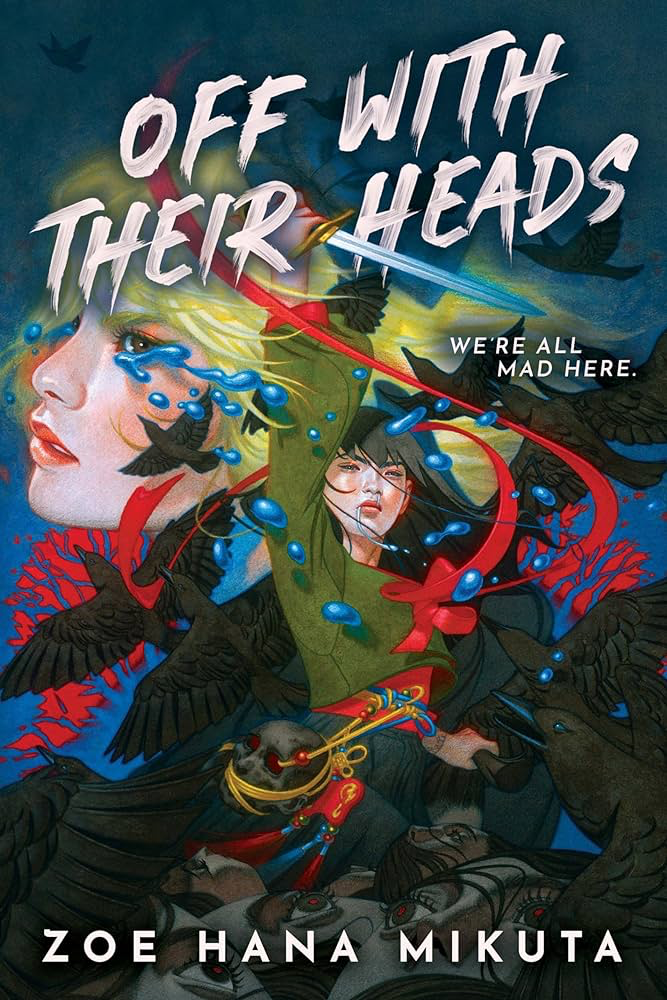
Off With Their Heads – Zoe Hana Mikuta

Wonderland is full of monsters.

After a deadly plague ravaged the land, most of the remaining witches and magic-users have transformed into monstrous Saints: bloated, bloodthirsty beasts that scour the land looking for fresh meat. Carousel Rabbit and Iccadora Alice Sickle were brought up in a world of predators and plague, orphaned at a young age and eventually escaping their decrepit orphanage together, madly in love with each other. But their obsession tore them apart, and their paths diverged.

Now, Caro has become the Red Queen’s royal butcher, killing Saints and watching as the Queen stitches together Saints of her own through dark, flesh-binding magic. Alice has been on her own for years, slaughtering Saints to get by. With every Saint that she kills, she treads closer and closer to the Red Queen’s throne—and to Caro, who Alice will stop at nothing to bring down to size. But what she finds in the Red Queen’s palace may be even greater of a threat than the love that once tore her to shreds…

TW/CW: loss of loved ones (past), murder, graphic violence, body horror, disease, blood, gore

Dark fairytale (or fairytale-adjacent) books used to be everywhere on the YA landscape. It’s the kind of stuff I ate up from about ages 12 to 16, to various degrees of quality. What they had in common, however, were universally horrible covers. God. They’ve circled back around to being hilarious now, but you could just snag any book off of the YA fantasy shelf at Barnes & Noble, and it would have a cover with an airbrushed white girl with flowy hair and an equally flowy gown either spinning gracefully or fixing your stare with a photoshopped smolder. And the gown was usually melting into…I don’t know, feathers or blood or some shit. It was all very emo. Since then, this subgenre has slowly begun to die down in popularity (or maybe not? My tastes have probably just shifted). Whether or not Off With Their Heads is the slow beginning of that subgenre’s resurgence in YA remains to be seen, but either way, I’m glad that we’ve got much prettier covers for the next generation of budding YA readers. It’s what they deserve. (Give it up for Tran Nguyen’s gorgeous cover art!)

After the Gearbreakers duology, I figured that I would read just about anything that Zoe Hana Mikuta writes. Even if Godslayers was a bit of a lackluster series concluder, it was still a fun read. Even if it isn’t her best work, you’re going to have a good time reading it regardless. Gearbreakers got a fair bit grim, as dystopias are wont to do, but Off With Their Heads is the darkest that Mikuta has ever gone (so much so that it almost borders on new adult and not YA), and she writes it with a unique talent. Whether or not the urge was pent-up, this novel revels in the “dark” of the “dark fairytale retelling,” drenching Alice in Wonderland in bloodlust, obsession, and backstabbing. However, what a lot of the dark fairytales of yesteryear interpreted darkness as was just being edgy; most everything was for shock value and appealing to the “what if this fairytale was………BAD and EVIL” urge that ropes in all the 13-year-olds and it didn’t go far beyond that. But this genuinely feels like horror, and not being an edgelord for edginess’ sake. It’s gory, it’s grim, and it’s bloody, but more in the interest of horror than shock—these characters are surviving a truly horrific world, and it turns them into horrific people for understandable reasons. There’s a distinction to be made there, and Mikuta certainly recognized it. (Also, it’s worth noting that Off With Their Heads is unflinchingly queer, which, given that most of said older fairytale retellings only added in queerness when it was a side character that would inevitably die, is a vast improvement. The bar is low, but it’s noteworthy that it’s being exceeded nonetheless. Let’s go, lesbians!)

I’ve seen a lot of reviews call Caro and Alice “morally gray,” and…I have some thoughts. I almost see it. Almost. But if they were gray, it would be an incredibly dark gray, if anything. Maybe they were morally gray at the beginning, but by the time we get to the present timeline, they’ve both become such awful people that they’re nearly indistinguishable from the one evil person that they’re respectively allured by (Caro) and disgusted by (Alice)—the Red Queen. To paraphrase Obi-Wan Kenobi (hey, I missed my chance on May 4th), they’ve both become the very thing they swore to destroy. They’re both just despicable people, but their differences are written in such a way that their different breeds of horridness play off of each other fascinatingly; Caro’s become this world’s version of a class traitor and idolizes the pinnacle of evil, while Alice has become so consumed with revenge that she’ll justify just about anything. Add in the fact that the root of their personal vendettas lie in their past romantic relationship, and you’ve got a dynamic that was delicious to pick apart for all 400+ pages of the novel. Again, it all makes sense for the truly cutthroat circumstances they were brought up in—they’re products of their surroundings, in the worst possible way.

Even as someone who doesn’t engage with a ton of horror media in general, I know that the key to executing it is making the suspense feel real, especially if the threats in your world are entirely fictional and alien to the audience. Mikuta had a multitude of ways that kept the suspense palpable, and all of them hooked me over the course of the novel. I’m not sure why it is that the “There are [x] remaining Saints” count excited me so much at the beginning of each chapter, but it was a failsafe way to keep track of both the danger and the kill count of the various characters—the tangible effects of the butchering they’re described as doing. Having those numbers up front also provided a sense of scale; in the present timeline, the Saints numbered in the thousands, giving an idea of just how dangerous being in Wonderland truly is—you can’t go for a walk in the woods without encountering a bloated, bloodthirsty, and quite possibly engineered monstrosity on the prowl for flesh. It’s a constant danger—and Mikuta make it feel much more dangerous just by having a chapter subheading.

However, what brought down some of my suspension of disbelief was the worldbuilding. Clearly, there was attention to detail, but only in the ways that Mikuta saw fit. There were tidbits here and there that I wished were expanded on—I loved the concept of the original Alice dreaming being this world’s creation myth, but we never got anything more out of that past the prologue. Outside of things like the Saints and the royal lineage, the worldbuilding was rather messy. I get that Off Their Heads is a very loose retelling at best—just using Alice and Wonderland and its characters as a jumping-off point for the setting—but there were so many convoluted and contradictory bits that I wasn’t completely invested. It’s mentioned that there’s a Jabberwocky court amongst the gentry of Wonderland who are described as humanoid, and yet the girls find a Jabberwocky in the woods described monstrously that has clear intention to kill them. Either that was a poorly-described Saint, or there’s some inconsistencies that need to be addressed. The reworking of Alice in Wonderland-related names into the characters were also a bit sloppy and corny; I get that there’s got to be some signal to the source material, but they were often so obvious, and barely related to the original character that they just made me cringe. I expected more from Mikuta on this front—slapping on character names just to remind the reader that, yes, this is a retelling, doesn’t seem like her style. I almost think it would have worked better if all of the Alice in Wonderland pretense was stripped away and made into a dystopian fantasy world.

Overall, an unflinchingly horrific retelling that displays Mikuta’s love and talent for suspense and obsessive sapphics—but her pitfalls in worldbuilding. 3.75 stars, rounded up to 4!

Off With Their Heads is a standalone, but Zoe Hana Mikuta is also the author of the Gearbreakers duology (Gearbreakers and Godslayers), and an untitled novel slated for release in 2025.

Today’s song:

That’s it for this week’s Book Review Tuesday! Have a wonderful rest of your day, and take care of yourselves!

Posted in Book Review Tuesday

Book Review Tuesday (4/9/24) – A Tempest of Tea

Happy Tuesday, bibliophiles!

I enjoyed Hafsah Faizal’s Sands of Arawiya duology when it came out, but when I heard that she was doing a fantasy heist novel with vampires and tea involved…yep. I’m in. No questions asked. And like her previous books, A Tempest of Tea was full of heart, humor, and more than a little blood.

Enjoy this week’s review!

A Tempest of Tea (Blood and Tea, #1) – Hafsah Faizal

Arthie Casimir runs a tight ship. By day, she runs a tearoom, but as soon as night falls, it’s a hub for vampires. It’s her only livelihood, and the one thing keeping her off the streets. But her secret is slowly spilling out—and the only way to keep it under wraps—and running in the first place—is to make a deal with some of the most dangerous vampires in the city. And infiltrating their inner circles isn’t a job for just one person. With a ragtag crew at her back, Arthie finally has an in—but will they be able to get out in one piece?

TW/CW: loss of loved ones (past), blood, gore, violence, themes of colonialism, racism, human trafficking/kidnapping (past), fire

Everybody, say it with me: every YA fantasy novel with an ensemble cast and a heist plot isn’t ripping off Six of Crows! Every YA fantasy novel with an ensemble cast and a heist plot isn’t ripping off Six of Crows!

Sure, the inspiration is there (it’s hard not to be inspired by Leigh Bardugo, after all), but like The Gilded Wolves or Into the Crooked Place, the similarities end with a fantasy heist plot with multiple POVs. (The same cannot be said for Among Thieves. BOOOOOO.) I already had high hopes that Hafsah Faizal had the skill to pull off a fantasy heist of her own, and she more than delivered—A Tempest of Tea was nothing short of a delight from start to finish.

Hafsah Faizal has a knack for creating lovable characters, the kind that easily bounce off one another and produce no shortage of genuinely clever banter. I’m glad to say that this quality carried over tenfold into A Tempest of Tea! Arthie was such a compelling protagonist to follow; her wit and determination made her the perfect mastermind for the Athereum heist, and her charm made every line of dialogue a treat. Her relationship with the equally charming Jin made for a pair with instant chemistry—they were similar enough that they meshed with each other excellently, but different enough to make them unique assets to the team that they were building. Flick, though the least developed of the three, was just as compelling—I find myself wanting so much more of her backstory! I imagine we’ll get more of that in book 2, but having that part of her somewhat hidden gave her so much more appeal, especially given that she was instrumental to the heist.

The setting was equally lovable in all of its lush descriptions! Already, it’s just pure fun to begin with—a historical, London-like setting with vampires embedded in the culture—what’s not to like? There’s really not a whole lot of magic, but just by introducing vampires and having them affect Arthie’s world in the ways that they did made A Tempest of Tea so much fun to pick apart. A lot of those shifts were evident in the changes Arthie made to her teahouse (and bloodhouse) when night fell—subtle hints like those made the world feel so much more real—and under a very palpable strain. The vampires themselves weren’t the most original take on vampires I’ve ever seen (not really much to distinguish them from any other vampire), but Faizal’s way of writing them is what made them stand out—they were often alluring, but in a way where the predatory side of them was transparent, but their influence of the characters was as well.

Part of why I was so excited for Faizal to do a heist novel was that her style seems like it was made for that all along. She has such a cinematic, action-packed writing style that made the Sands of Arawiya books such an adventure. It seems like more years of writing experience under her belt have benefitted her greatly—all that time honing her writing made A Tempest of Tea a finely crafted heist novel! All of the beats were there, and though they were familiar, Faizal’s writing practically jumps off the page, making the atmosphere seep through the ink and drag you right along with Arthie and her band of outcasts and criminals. There’s tons of well-choreographed action, but just the right amount that it didn’t overwhelm the narrative. Up until the ending (more on that later), the pacing was similarly excellent—the balance of character development/backstory, worldbuilding, and delicately constructing the plot made for a book that I had to force myself to not read in one sitting.

However, my only major issue—and the only thing keeping me from giving it the full four stars—is how the culmination of the heist was executed. We got all of the tension of sneaking into the Athereum and some of the confrontation, but the execution of it felt incredibly rushed. I could almost stretch my suspense of disbelief enough to side with Faizal and say that it was supposed to feel like a blur, but that’s reaching, even for me. There were far too many twists and turns crammed into a single scene, and for all of the somewhat quiet scenes that went on earlier in the novel, I could have used some more page space to spread all of these events out. It was discombobulating, but not in a way that felt stylistic or intentional in any way. It also dampened the emotional impact of the ending—we’d been going so fast that I barely registered that the book had actually ended when it did.

All in all, an action-packed heist fantasy that faltered in some execution at the end, but flourished in its cinematic writing and characters. 3.75 stars, rounded up to 4!

A Tempest of Tea is the first book in the Blood and Tea duology, with an untitled sequel tentatively slated for release in 2025. Hafsah Faizal is also the author of the Sands of Arawiya duology (We Hunt the Flame and We Free the Stars), and has contributed short stories to the anthologies Eternally Yours and The Grimoire of Grave Fates.

Today’s song:

That’s it for this week’s Book Review Tuesday! Have a wonderful rest of your day, and take care of yourselves!

Posted in Book Review Tuesday

Book Review Tuesday (3/12/24) – Our Crooked Hearts

Happy Tuesday, bibliophiles!

I’ve been a huge fan of Melissa Albert ever since I fell in love with The Hazel Wood series way back when (2018? No way…I feel old…). I forget how or why it’s taken me so long to pick up her follow-up, Our Crooked Hearts, but it was worth the wait—this novel made me remember exactly what endeared me to Albert’s writing in the first place!

Enjoy this week’s review!

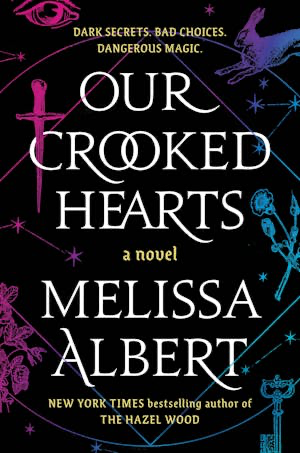
Our Crooked Hearts – Melissa Albert

Ivy has found herself at the center of string of unexplainable events. An eviscerated rabbit in her driveway. Secrets buried in the backyard. And now, a nude woman in the middle of the road that Ivy and her boyfriend almost hit with their car. The more she digs into these strange happenings, the more they lead to her mother, who dabbled in forbidden magic when she was a teenager. Ivy, now the age that her mother was when she started tapping into the supernatural, wonders if this magic has come back with a vengeance—and if there’s a way to control it before it comes back for her mother.

TW/CW: animal death/abuse/torture, blood, gore

I don’t know why it took me this long to pick up Our Crooked Hearts and how I could’ve possibly gone three years without reading something of Melissa Albert’s, because wow. This one toes the line between magical realism and horror, but either way you took it, there’s no doubt that Albert is the master of YA magical realism!

Let’s start with Albert’s obvious strength: the lyrical nature of her prose. Though Our Crooked Hearts wasn’t steeped in fairytales like the Hazel Wood duology was, it was no less enchantingly written. Every line feels like its own fairytale, full to bursting with metaphors so unique I found myself highlighting up and down the page. Albert has the ability to weave magic into the smallest of things, from the small moments in the suburbs to the unexplainable events that litter the plot like strange trinkets found on the side of the road. The Hazel Wood was already luscious, but Our Crooked Hearts feels like a maturation of everything that makes Albert’s writing good: a recognition of the magic in everything, but also of the darkness behind the glitter.

The way that Albert writes magic itself was just as compelling! Though the magic system itself is not gone into depth, it’s understood to be the kind of magic that only awakens in the shadows, summoned by girls left to their own devices without any clue of the consequences. I understood some of the unexplained bits to be a byproduct of how little Dana, Fee, and Marion understood of what they were getting themselves into—they knew about as much as we do. Like the relationships running through this novel (more on that later), it is an undercurrent to every decision that they make, rooted in revenge but later a series of bandages to throw over every little breadcrumb they leave behind by accident. On that note, I loved that this wasn’t simply a revenge story—it started as such, but that revenge grew into something so monstrous that it was spread down through generations. Hmm, sure feels like a metaphor to me…

Our Crooked Hearts is written in a dual POV between timelines, following our protagonist, Ivy, and her mother, Dana; Ivy’s perspective finds her in a quiet suburb, while Dana’s perspective is set in Chicago in the ’90s. I loved how the two of them evolved in tandem—dual POVs aren’t especially difficult to pull off, but having them set in different timelines was such a wonderful move to not only elevate the story, but deepen the mother-daughter relationship at the heart of the novel. In terms of literary fiction, I feel like there’s a trend of multigenerational novels (somehow they’re all set in New York) where they hop between time periods and family members; sometimes they’re successful (see: Elizabeth Acevedo), but often, they miss the nuance of familial connection and just focus on being literary. This is far from literary fiction (complimentary), but what this novel does that a lot of others don’t is make the timelines feel distinct. Ivy and Dana have radically different personalities, and though their journeys of dabbling in forbidden magic are similar, their goals—and endpoints—were so different that I found myself fully invested in both of them.

Mother-daughter relationships are at the heart of Our Crooked Hearts, and the dual POV makes for such a fascinating examination of when such relationships become toxic, and the events building up to the toxicity once Dana began raising Ivy. Dana’s perspective was one of constantly being pulled along—by her friends, by authority figures, and by forbidden magic beyond her comprehension. The guilt that resulted from living a life predicated almost entirely on the decisions of other people tragically informed how Ivy grew up—picking up the pieces, and discovering the pieces of her mother along the way. Without spoiling the ending, I loved how it was resolved—there’s no immediate absolution of guilt once familial ties are brought up (unlike a certain recent Disney film beginning with E), but there’s an understanding to how and why things turned out the way they did. Ivy is still left to sift through the wreckage, but all that she thought was lost was not far beyond reach.

Also, one thing that Melissa Albert can always be counted on is top-tier music references. All she had to do was mention Dana putting Liz Phair on the jukebox, and I was already foaming at the mouth.

All in all, a horrific and lyrical observation on magic and teenage girlhood, mothers and daughters. 4 stars!

Our Crooked Hearts is a standalone, but Melissa Albert is also the author of The Hazel Wood duology (The Hazel Wood, The Night Country, and the companion novel Tales from the Hinterland) and The Bad Ones. She is also the founder of the Barnes & Noble Teen Blog.

Today’s song:

That’s it for this week’s Book Review Tuesday! Have a wonderful rest of your day, and take care of yourselves!
Posted in ARC Reviews

ARC Review: Kindling – Traci Chee

Happy Tuesday, bibliophiles!

And you may ask yourself…me? Doing ARC reviews again? Kind of. I did stop doing them in late high school because my schedule was getting too busy to stay on top of them, and now, I’m even busier than I was back then, so I doubt I’ll go back to Edelweiss. But I entered myself into a Goodreads giveaway for Kindling, and I was lucky enough to receive a physical ARC! I’m glad to say that Traci Chee’s latest fantasy novel doesn’t disappoint—innovative and heartbreaking in equal measure.

Enjoy this ARC review!

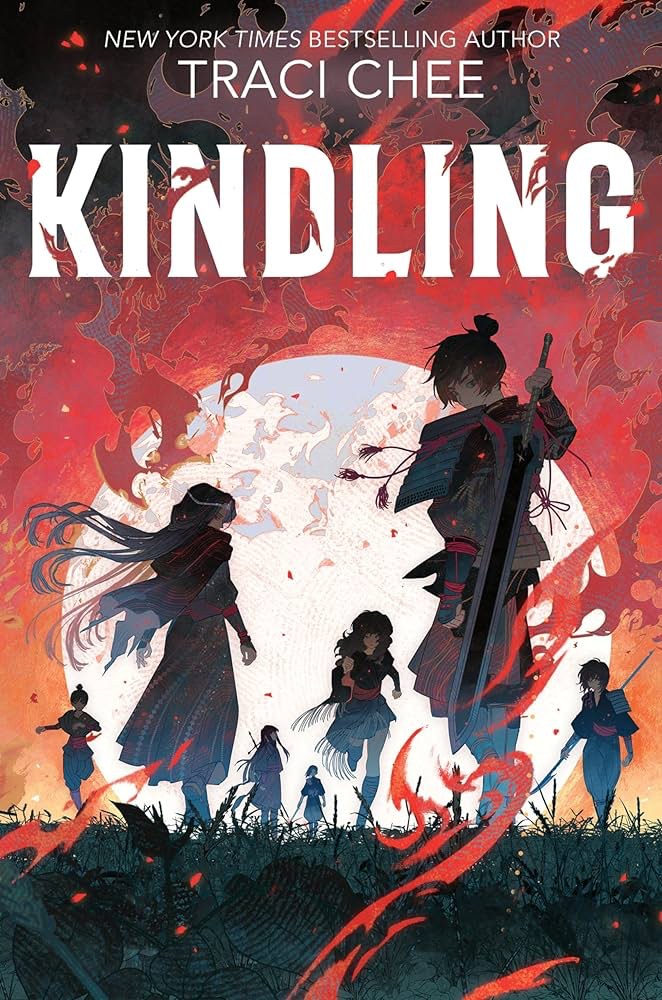
Kindling – Traci Chee

The war is over, but in the wreckage are kindlings. They are child soldiers, pawns imbued with unimaginable powers who fought and died on the front lines, all for a war effort they could not comprehend. Now, there is peace, but it is uneasy—the violence has not ceased, and those who were left stranded by the war have nowhere left to go. From the ashes, seven former kindlings have come out of the woodwork, ready to fight one last battle to ensure the safety of their country—and their futures.

I received this copy in a Goodreads giveaway. Thank you to HarperCollins publishing and Goodreads for this ARC!

TW/CW: graphic violence, child soldiers, blood, war themes, PTSD, loss of loved ones

Without a doubt, this is Traci Chee’s most experimental—and most tragic—book to date. It’s a book that manages to execute so many feats of acrobatics and lands every single one of them; in every way, Kindling is a success!

First off: the element that probably grabbed everyone straightaway. Not only does Kindling have seven POVs, all of them are written in second person. Both of those tricks are already a hefty load to take on, but to execute them both at the same time? That’s just madness. And yet Traci Chee pulls it off with flying colors. A lot of second-person fiction that I’ve read uses it as a way to draw the reader in, but after that, there’s nothing innovative about the story beyond a difficult POV to the story. But Chee utilizes it in such a unique way—it’s not just a clever trick, but a way to make us feel closer to these characters. You are the one witnessing these atrocities, war ravaging the land. You are the one watching your friends die. There’s an instant connection. And for the most part (with some exceptions), Chee manages to make all of the characters feel distinct while pulling off second person. Now that’s impressive.

I always love novels that explore the aftermath of war, or at least some kind of conflict; in a sea of both fantasy and sci-fi novels that have neat, happy endings in the wake of devastating wars, Chee really seems to understand the messiness of picking up the pieces after such a tragedy has ripped the world of Kindling apart. Everything happens after the war that changed the characters’ lives, and everything is still in chaos and turmoil. Aside from the “one last fight” trope, used as an homage to the inspirations for this novel (Seven Samurai and The Magnificent Seven), it gave a ripe opportunity to explore trauma—not just the inherent trauma that comes with being a child soldier, but the trauma of grappling with PTSD at a very young age, and the trauma of being deified by the war effort, in Amity’s case. Never at any point is Kindling an easy read—and that’s exactly the way it should be.

Kindling is squarely a found family novel, but Chee explores an aspect of it that is often overlooked—found families formed through trauma. Each of the characters, most of which are appropriately fleshed out, are given the individuality and arcs that they deserve, but all of them are informed by the war, and their status as ex-Kindlings is what binds them—and motivates them. They’re sticking together for survival, but the friendships that they form in the heart of hardship are what makes the core of this novel so emotional. There are so many tender moments shared between the characters, and they made the stakes of this novel so much more palpable—you felt, more than ever, that they really were children, and that they would never be the same after being used as pawns of war.

SPOILERS AHEAD

Tragically, Traci Chee also demonstrates in this novel the two most crushing ways of writing fictional deaths. Particularly with Emara and Amity, Chee is skilled at timing them just right to make the most impact on both the reader and the characters. Emara’s death was the most sudden, and it having it happen so quickly after building up that she might have been safe was a way to not just shake the characters, but up the stakes—if Emara wasn’t safe, then neither were the rest of them. Amity, on the other hand, was set up from the beginning to die from Kindling burnout (the result of overuse of her magical powers), but you got to know her so deeply and intimately that, even though you knew from the beginning that she was doomed, her death felt just as tragic as it would have been if it was completely unexpected, like Emara. What I’m trying to say is that this book destroyed me. Traci Chee knows how to do it a little too well.

All in all, a novel that balanced tenderness and tragedy in equal amounts, making for a poignant novel about war and the bonds that bind us. 4 stars!

Release date: February 27, 2024

Kindling is a standalone, but Traci Chee is also the author of the Sea of Ink and Gold trilogy (The Reader, The Speaker, and The Storyteller), We Are Not Free, and A Thousand Steps Into Night.

Today’s song:

That’s it for this week’s book review! Have a wonderful rest of your day, and take care of yourselves!

Posted in Book Review Tuesday

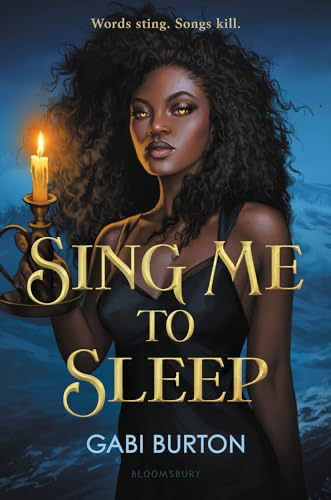
Book Review Tuesday (2/13/24) – Sing Me to Sleep

Happy Tuesday, bibliophiles!

I always love stories about mermaids and sirens, so Sing Me to Sleep instantly went on my TBR when it came out last June. Sing Me to Sleep presented a land-bound take on sirens that proved fascinating, and resulted in a tense, seductive YA fantasy!

Enjoy this week’s review!

Sing Me to Sleep – Gabi Burton

Saoirse is hiding a deadly secret. She’s a siren, driven by the urge to kill and seduce, which has made her into the perfect assassin. Her talents took her all the way to the good graces of the royal family of Kierdre, but they don’t know of her true identity—and she must hide it at all costs, lest she incur the wrath of their creature-hating king. But working as one of the personal bodyguards to Prince Hayes has its perks, and soon, Saoirse finds herself questioning her loyalties—and drawn towards a prince who would kill her if he discovered her true self.

TW/CW: genocide (past), kidnapping, fantasy violence, murder, poisoning, drowning, stabbing, torture

I’m not going to bog down this review by starting it with another rant about how jaded I am with epic and high fantasy, but I’ll leave it at the fact that this was the reason that my expectations for Sing Me to Sleep were so average. But I ended up blowing through this novel, and I haven’t done that in weeks—it’s just pure fun.

I won’t lie—I was a little disappointed when I realized that Sing Me to Sleep took place primarily on land when they had a siren protagonist. Mermaids and sirens are an instant draw for me, so I was excited to explore some of those magical aspects and how Burton realized them in her fantasy world. However, once I got into the novel, I ended up enjoying how Saoirse’s siren status affected her when she was confined to land, from the call of the sea every time she came near it to being momentarily thrilled by having her head dunked underwater while being tortured for information. Burton’s handling of Saoirse’s hidden thirst for male blood was similarly well-executed; it set a kind of time bomb of sorts whenever she was around her targets, and made the stakes feel tangible and not just an aside thrown in to remind the reader that she’s a siren. The way that Burton utilized these aspects made for a novel with just the right amount of stakes, with tension in all the right places.

Sing Me to Sleep hinged on the twist of Saoirse, trained to seduce and take advantage of men before killing them to satisfy her bloodlust, accidentally falling for Prince Hayes and not knowing what to do with herself. I was banking on it being a little cheesy (this is YA fantasy, after all), but I really appreciated how slow Burton took it with the budding romance! Not only was the forbidden aspect of it enhanced by the aforementioned handling of Saoirse being a siren, Burton didn’t go headfirst into the romance, like so many authors end up doing while trying to pull off enemies-to-lovers. The initial hatred and disdain felt genuine, and Saoirse’s inner conflict when she realized that she was falling for one of her marks was appropriately a shock to her senses. Although I didn’t particularly care for Prince Hayes as a character, Saoirse’s reactions to him felt true to what enemies-to-lovers should be. I’m interested to see how the romance will play out in the sequel…

Again: I’ll spare you my gripes with epic fantasy as a whole, but unlike of much of the fantasy I can remember reading recently, Sing Me to Sleep had the beginnings of some fascinating fantasy worldbuilding! The novel does a great job of establishing all of the different magical races and subsequently detailing the history of discrimination and subjugation amongst them. Burton did have quite a lot on her plate, but for the most part, she juggled it well, making for a world with limits that made sense and enough hints within to make me want to read the sequel just to see how some of the hidden elements get explored. Half the hard part of worldbuilding is making it something that the reader is actually motivated to read once you’ve done all the heavy lifting to create it, and Burton succeeded on that front!

However, while Burton did well with juggling several moving parts in her worldbuilding, I’m not sure if I can say the same for her characters. Although Saoirse was a compelling protagonist with motives that were appropriately fleshed-out, most of the others—of which there were a ton—left a lot to be desired. Besides Hayes, if we got any trace of their personalities, it was left at one character trait (or physical description) to distinguish them, and not much else. Combine that with the expectation that there were dozens of these characters running around that we had to remember to get all of the plot, and it just made for a mess as far as remembering why any of them were important save for their job descriptions. If some of them had been cut out, it would have solved the whole problem—it’s just a case of Burton biting off much more than she could chew, which is entirely understandable for a debut novel.

All in all, an action-packed fantasy full of tension, forbidden love, and bloodlust. 4 stars!

Sing Me to Sleep is Gabi Burton’s debut novel and the first novel in the Sing Me to Sleep duology, concluded by Drown Me with Dreams, which is slated for release this August.

Today’s song:

That’s it for this week’s Book Review Tuesday! Have a wonderful rest of your day, and take care of yourselves!
Posted in Books

The Bookish Mutant’s Books for Black History Month (2024 Edition)

Happy Tuesday, bibliophiles!

Apologies for the lack of a Book Review Tuesday this week; like with Sunday Songs, I’ve just had a busy few days, and I wasn’t able to put anything together in time, but I was creating this post in advance, so I figured today would be a good day to post it.

Here in the U.S., February is Black History Month! Since I’ve started making these recommendation lists back in 2021 (and focusing on reading more diversely in general), I’ve discovered so many incredible authors, and now that I’m reading YA and adult novels in almost equal measure, my scope has broadened so much more. (Note: I’m still frugal about my media space on WordPress, but this list, like last year’s, contains both YA and adult novels, even though the header image just says YA.) But as with every single year, it’s more crucial than ever to uplift Black voices—not just to amplify them and other marginalized groups in the fields of literature and publishing (especially when the industry sees diversity as nothing but a box to be checked off, more often than not), but especially since we’re living in a climate here in the states (and elsewhere) that is intent on erasing both our systemic racism (past and present) and silencing Black voices. And one of the most accessible ways to fight this poisonous rhetoric is to read—to open your eyes, to learn for yourself, and to share what you have learned with others. In a landscape where anything other than the white, cishet, abled majority wants to ban any voice that isn’t theirs, reading is an act of resistance.

For my lists from previous years, click below:

Let’s begin, shall we?

THE BOOKISH MUTANT’S BOOKS FOR BLACK HISTORY MONTH

FANTASY:

SCIENCE FICTION:

REALISTIC FICTION:

TELL ME WHAT YOU THINK! Have you read any of these books, and if so, did you enjoy them? What are some of your favorite books by Black authors that you’ve read recently? Let me know in the comments!

Today’s song:

thanks again to my brother for exposing me to this one!

That’s it for this recommendation list! Have a wonderful rest of your day, and take care of yourselves!

Posted in Book Review Tuesday

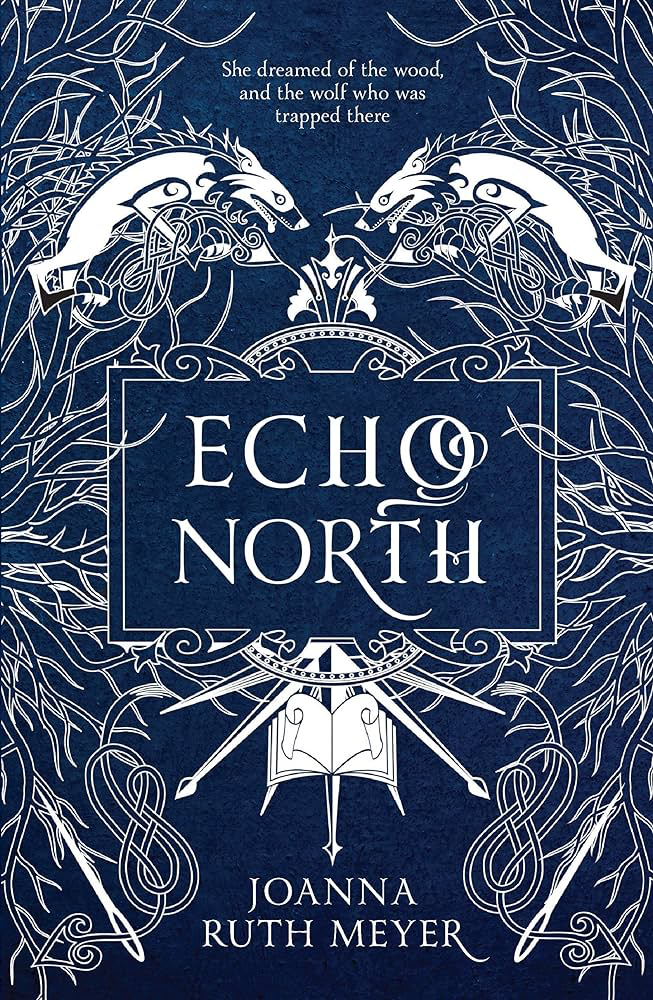
Book Review Tuesday (1/23/24) – Echo North

Happy Tuesday, bibliophiles! Here we are on the first satisfying day of the year (to me, at least)—January 23rd, 2024. 1 + 23 = 24. It’s the little things.

After I thoroughly enjoyed Into the Heartless Wood, I went looking for every other Joanna Ruth Meyer book that I could get my hands on. I’m still more sci-fi than fantasy at heart, but god, I’m a sucker for a good fairytale, and Echo North scratched that itch in the most heartstring-tugging way possible.

Enjoy this week’s review!

Echo North – Joanna Ruth Meyer

When she was seven years old, Echo Alkaev was attacked by a white wolf caught in a trap, leaving her face permanently scarred. For years, she lived under the protection of her father’s love, despite the taunting and abuse she suffered at the hands of her peers because of her appearance. But one winter night, her father leaves for the city and doesn’t return. Echo sets off into the woods to find him once more, only to come face to face with the same white wolf who attacked her all those years ago. Desperate to find her father, she agrees to a deal with the creature: if she lives with him for one year, he will bring her father back. But the wolf’s home is a strange realm full of rooms to be sewn together like fabric, and Echo is unsure if she’s in over her head…

TW/CW: blood/gore, animal attack, animal death, ableism, emotional abuse, murder

I am nothing if not a sucker for a high-quality modern fairytale. Joanna Ruth Meyer captured my heart the minute I finished Into the Heartless Wood, and I’m overjoyed to say that Echo North is just as masterful of a modern fairytale, clever and emotional in equal measure.

January was really the perfect time to read this novel—everything about Echo North was so deeply wintry in a truly delicious way. Fitting that it was in the negatives and snowy when I was reading this last week. All this is to say is that Meyer’s prose was truly atmospheric—for me, one of the markers of a good fairytale is being immersed in whatever strange and sinister world that the author has penned. Echo North juggles various settings, and all of them are rendered in exquisite detail. All of the descriptions, from the humble village that Echo calls home the Wolf Queen’s frozen kingdom, are so full of life that I could practically smell the crispness of the snow and feel the prickling touch of snowflakes on my cheeks. It’s already a hefty task to write just a single, central setting so vividly, but Meyer’s prose made every single place brim with life.

Speaking of settings…the wolf’s library was one of my favorite settings that I’ve read in…oh, years, I think? Aside from being an incredibly inventive twist on the typical Beaty and the Beast retellings, it’s so richly detailed and full of twists—I never grew tired of spending time in it. The mirror-books were delightful, and I loved how they became tangible pocket dimensions of sorts in Meyer’s hands; after all, books tend to have that quality, and I loved how this book basically made it more physical to be able to visit the place and characters within the books. Additionally, the rooms of the library slowly unwinding and having to actually sew them back up with a giant spool of magical thread so that they don’t fall apart was just fascinating—and it lent itself to some pretty tense stakes early on in the novel. Truly unique stuff.

I also love how disability was handled in Echo North! Echo has facial scars (as a result of a wolf attack in her childhood…that ends up circling back to a prominent part of the novel), and her journey of self-acceptance was truly heartwarming. It’s not the first novel to have a journey of self-acceptance like this, nor will it be the last; the notable difference was where the pity came in. Meyer specifically wrote it so that we pitied Echo not because of her scars, but because of how her family and peers treat her because of the scars. She grows to hate her scars in her early childhood, but the more independent she gets, the more accepting she is of herself—and uncaring of the opinions of others, and having to encounter so many different figures over the course of the novel only amplifies her sense of self-empowerment. I was hinging on this novel having a romantic subplot (which was excellent, by the way), but I loved that Echo’s scars neutrally factored into it—they were simply a part of her, and Hal loved all of her, as she loved all of him.

And…oh god. The old magic. The old magic got me. I don’t care how many people call stories about the power of love corny, but Echo North did it gorgeously. There are so many different kinds of love, both positive and negative, familial and romantic, that this novel explores, but it’s true: unconditional love has the power to move mountains. And love did tear down mountains—it’s the kind of love that makes no excuses and has room for everyone so long as they return it. This, in concert with the themes about Echo’s scars, made it all the more poignant—the ones who matter most are the ones who love all the parts of you. Having that as the crux of the climax got me a little emotional, I’ll admit. Love. LOVE. Love is the old magic!!! Love is the fing!!! :,)

All in all, a deeply emotional and lusciously written fairytale full of blizzards, wolves, and love in unexpected places. 4.5 stars!

Echo North is the first novel in the Echo North duology, followed by the companion novel Wind Daughter. Joanna Ruth Meyer is also the author of the Beneath the Haunting Sea series (Beneath the Haunting Sea and Beneath the Shadowed Earth) and Into the Heartless Wood.

Today’s song:

schooling myself before I see Robyn Hitchcock on Friday night!!

That’s it for this week’s Book Review Tuesday! Have a wonderful rest of your day, and take care of yourselves!
Posted in Book Review Tuesday

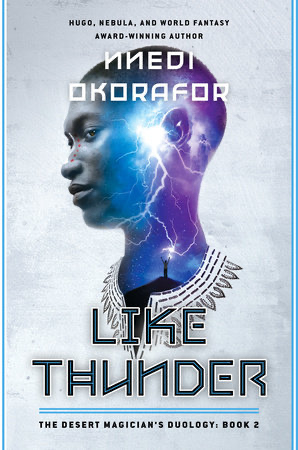
Book Review Tuesday (1/9/24) – Like Thunder (The Desert Magician’s Duology, #2)

Happy Tuesday, bibliophiles!

After I finished Shadow Speaker back in December, I was eager to see what the newly published sequel, Like Thunder, had in store. It was finally available at the library recently, and it was one of my first reads of this year. And though it retained some of the issues that Shadow Speaker had, it was still a worthy sequel and end to the duology.

TREAD LIGHTLY! This review may contain spoilers for book one, Shadow Speaker. If you haven’t read it and intend to, read at your own risk.

For my review of Shadow Speaker, click here!

Enjoy this week’s review!

Like Thunder (The Desert Magician’s Duology, #2) – Nnedi Okorafor

2077. Three years after Ejii and Dikéogu saved Earth from the threat of Chief Ette and forced him to sign the truce to bring no harm to the Changed, Dikéogu has realized that the fight is not over. Estranged from his parents and living on his own, he knows that the truce is due to expire, and that the humans are growing more hostile to the Changed by the day. After disaster strikes and puts those that he love in danger, he sets off to find the one person he knows that can help save the day: Ejii. But when they reunite, saving the world—for the second time—is more difficult that either of them bargained for.

TW/CW: genocide, slavery, ableism, murder, death, loss of loved ones

In general, I was still a fan of this book, but strangely, even though a lot of my minor gripes with Shadow Speaker were resolved, they were often filled in with elements that ended up bringing down the narrative. That’s not to say that Like Thunder wasn’t a worthy sequel—it absolutely was, and it was a fitting way to finally end the Desert Magician’s Duology, all these years after Shadow Speaker was initially published.

The worldbuilding was, without a doubt, the strongest aspect of Shadow Speaker, and Like Thunder expanded on it in all the ways that it should have! Through Dikéogu’s eyes, we get to see parts of the Desert Magician world that Shadow Speaker left behind, and they greatly enhanced the ongoing narrative of change and prejudice. Not only do we get an expansion of the effect of what kind of powers possessed by the Changed, we also see the direct effects that being Changed has on people apart from the main characters that we saw in book one. Time was clearly on Nnedi Okorafor’s side here, since she presumably had so many years apart from Shadow Speaker to craft all of the world’s eccentricities, but even if there wasn’t such a large gap between now and then, I have faith that her worlds would have been fleshed out anyway—if there’s one thing that Okorafor has excelled at over the years, it’s crafting a detailed world.

A lot of this worldbuilding contributed to the themes that Like Thunder built up, and it serves as an incredibly powerful narrative about genocide. Now that the three-year treaty between Chief Ette and the Changed has expired, he doesn’t hide the hostility that he’s been waiting to unleash since then. No matter what perspective that it’s written from, genocide is always a difficult and delicate subject to write about, and Okorafor took great care in depicting it unapologetically—it’s brutal, authentic, and horrifying, just as it should have been. In general, I preferred Ejii’s perspective to Dikéogu’s (more on that later), but Dikéogu’s voice was well-suited to handling this kind of subject matter; he had the anger that the subject warrants, and his rage not only fueled his journey, but the emotion behind this depiction.

That being said, I wasn’t the biggest fan of Dikéogu being the main POV character in Like Thunder. Although seeing the effects of the treaty dissolving through his eyes was enlightening and his anger fueled much of the novel (and for good reason), in much of the down time of the novel, I found him to be borderline obnoxious. Most of it manifested in his treatment of a lot of the female characters in the novel—once he reunited with Ejii, he had this attitude that he was still owed her after all these years, and it got on my nerves to no end. I wouldn’t have minded a romantic subplot between the two of them, but Dikéogu’s insistence on being incredibly possessive of her soured the whole thing for me. His perspective was needed to a point, but I felt like he worked better as a side character.

Going off of that, there were a lot of cheap elements in Like Thunder that sullied the narrative for me. When I think of Nnedi Okorafor, I think a lot about subversion—subversion of genre conventions, subversion of tropes, etc. But throughout the novel, there were just so many elements that felt pointless and served no purpose—and were so common that it almost seemed beneath Okorafor to add them in the first place. We get the age-old “killing the main man’s girlfriend for the plot” trope; I think it was meant to convey some of the horrors of the genocide going on, but it was already pretty evident that Dikéogu’s life was significantly changed and he already knew the horrors of genocide firsthand, so there was no point in having that subplot at all, especially since it was blatantly shoved in there to try and advance Dikéogu’s narrative arc. And the love triangle…why? Why? Once we got to that part, combined with Dikéogu’s possessiveness of Ejii, it just felt like filler drama—it didn’t advance the plot at all, and it seemed like a cheap way to generate drama as well. It just seemed like a disservice to Okorafor’s inexhaustible creativity.

All in all, a satisfying conclusion to a solid sci-fi/fantasy duology that excelled in its worldbuilding, but suffered in its use of overused and stale tropes. 3.5 stars!

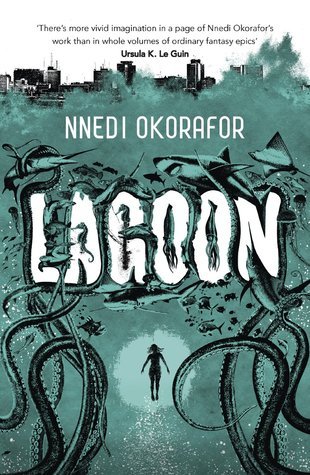
Like Thunder is the second and final installment in the Desert Magician’s Duology, preceded by Shadow Speaker. Nnedi Okorafor is also the author of Lagoon, the Binti series (Binti, Home, and The Night Masquerade), Noor, Remote Control, and several other books for teens and adults.

Today’s song:

NEW SMILE WOOOOOOOOOOOOOOOO

That’s it for this week’s Book Review Tuesday! Have a wonderful rest of your day, and take care of yourselves!
Posted in Book Review Tuesday

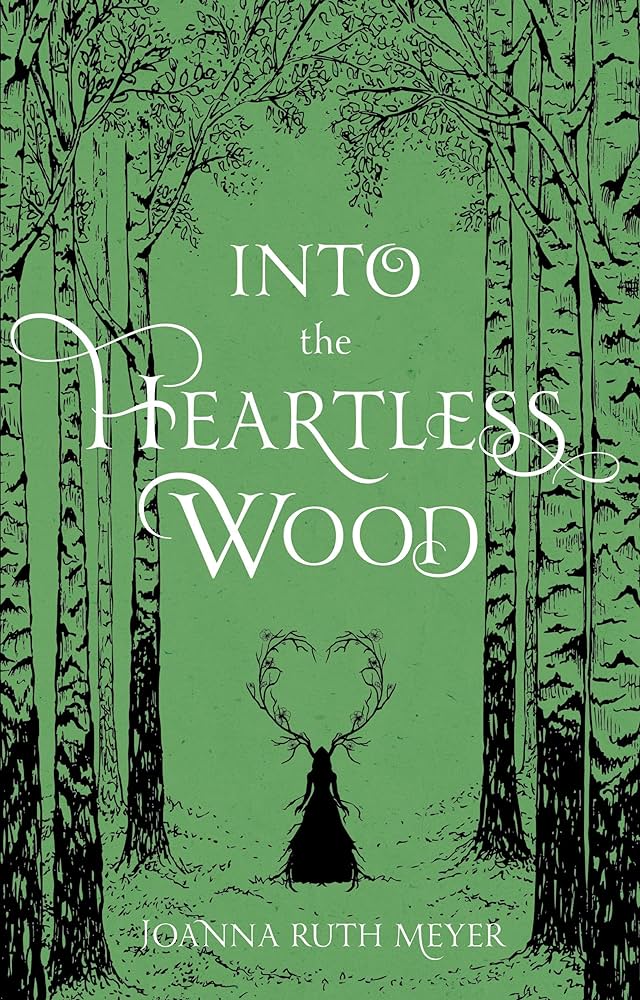
Book Review Tuesday (1/2/24) – Into the Heartless Wood

Happy Tuesday, bibliophiles! First post of the year, phew…

I went into Into the Heartless Wood with no expectations—it was the very end of the year, and I just happened to be in a fantasy mood, mostly brought on by The Siren, the Song, and the Spy and The Stardust Thief. I’m glad I had zero expectations, because Into the Heartless Wood was deeply beautiful and emotional, and it had just the right elements to make for a modern fairytale.

Enjoy this week’s review!

Into the Heartless Wood – Joanna Ruth Meyer

Owen Merrick knows better than to venture into the witch’s wood. The forest within is where the tree-sirens dwell, monstrous creatures capable of tearing down cities and ensnaring even the most sensible people with their fatal song. The woods took Owen’s mother when he was young, and ever since, he’s vowed never to return. But after his little sister wanders into the wood and incurs the wrath of the tree-sirens, one of them spares their lives. Owen and the tree-siren both begin to feel a pull towards each other. In secret, Owen visits the tree-siren, but their relationship is one that may spell disaster for the human and siren kingdoms. A war is brewing, and they may be caught in the middle.

TW/CW: blood, gore, child endangerment, suicide, torture, vehicle crash/derailment, war themes

Into the Heartless Wood was just something I picked up because I was in an extended fantasy mood for most of last week, but it blew me away at how emotional and heartbreakingly tender it was. I thought I’d given up on Beauty and the Beast retellings, but to be honest, I had no idea that this was a retelling until after I’d finished the whole thing, and maybe that’s what made it so memorable. All it stuck to was the central theme of the story—everything else was Joanna Ruth Meyer, and that everything else was beautiful.

This is more of a general statement on fantasy/supernatural romances in general, but it feels like every pairing in it ends up where the woman is human, and the man is the non-human creature or monster. It’s on most of the shirtless dude (but this time he’s a werewolf/vampire/etc.) romances that I see advertised, and it’s in a lot of popular YA fantasies. It’s always the king or prince of the fae that the otherwise practical human girl falls for. And even though it’s my favorite movie, The Shape of Water fits too. You get the idea. We hardly ever let women be monsters. Not to get real College with it, but there’s something to be said for the fact that we can’t stand to make women monsters—and therefore unattractive in some way—because otherwise, they wouldn’t be tidy little sex objects anymore. Women are hardly ever in the position of the monstrous character because a lot of writers can’t stand the thought of a woman’s characteristics or redemption arc not being tied to her beauty.

That’s part of why Into the Heartless Wood stood out to me so much. Something as simple as a gender-swap has done this novel an immense service. Seren, the tree-siren love interest, is monstrous in the basic sense, but her inner conflict and the history that led up to who she is was written in such a painfully tender way. Even if she wasn’t meant to be the love interest, you would still feel so deeply for her. The way that her POV chapters switched from verse to prose depending on her circumstances was so artfully subtle, and Meyer had no trouble navigating between the two, even as Seren herself struggled to separate herself from the woods. The conflict between Seren and her sisters, as well as the inner conflicts of her place in the world and the struggle to become something more than a pawn of her mother, made her not just fleshed-out, but a character I was rooting for from page one. (I always feel sympathetic towards the monsters, but the point still stands.) Owen was the perfect match for her—his sensitivity and fearful yearning for something beyond the ordinary fit Seren’s search for meaning beyond the wood perfectly.

The Kingdom of Tarian was also fleshed out just right! I’m assuming most of it was Welsh-inspired, judging from the names of places and characters, but I liked the integration of the industrial aspect of Tarian, and not automatically opting for a medieval setting, as most fantasies tend to do. (It’s all well and good, but it gets tiring once 95% of the high fantasy books you’ve read end up with the same setting with minor tweaks.) The industrialization enhanced the nature/mankind conflict that the novel sets up; from the beginning, there’s a stark contrast between the human world of steam trains and semi-modern warfare and the wood, with its wild, man-eating tree witches, and it made the central, generational conflict between the Witch of the Wood and the king of Tarian seem even more grave, even if the lives of both protagonists and their families weren’t at stake.

What wrapped all of this together was both the prose and verse of Joanna Ruth Meyer. Both ways, her writing was truly lyrical, achingly poetic in even the most fleeting of scenes. The emotion that was baked into the fiber of this story made the almost Romeo & Juliet-like romance of Owen and Seren feel all the more revolutionary—teenagers always feel like their love stories are what make the world go ’round, but Meyer made you believe every word of it and root for the lovers every step of the way. Every bit of both love and heartbreak was heartstring-tugging—there’s nothing like a story of lovers giving each other the courage to break away from the mold set by the world(s) around them. Works like a charm.

All in all, an achingly romantic and heartbreaking fantasy that had me hanging on every word. 4.5 stars!

Into the Heartless Wood is a standalone, but Joanna Ruth Meyer is also the author of the Echo North series (Echo North,Wind Daughter, and the companion Wolf Daughter & The Oldest Magic), and the Beneath the Haunting Sea series (Beneath the Haunting Sea and Beneath the Shadowed Earth).

Today’s song:

big thank you to my brother for sending me this one!!

That’s it for this week’s Book Review Tuesday! Have a wonderful rest of your day, and take care of yourselves!
Posted in Book Review Tuesday

Book Review Tuesday (12/26/23) – The Siren, the Song, and the Spy (The Mermaid, the Witch, and the Sea, #2)

Happy Tuesday, bibliophiles! Also, a belated Merry Christmas and a Happy Kwanzaa to those celebrating!

To my parents: I tried so hard not to finish this in one day. I tried. But it was just too good. Just like how I devoured The Mermaid, the Witch, and the Sea around two and a half years ago, its sequel, The Siren, the Song, and the Spy captured my heart, and added some intricate depth, timely commentary, and no shortage of emotion to Maggie Tokuda-Hall’s fantasy world. Also to my parents: thank you so much for the incredible Christmas present!

WARNING: this review may contain spoilers for The Mermaid, the Witch, and the Sea—tread lightly!

for my review of book 1, click here!

Enjoy this week’s review!

The Siren, the Song, and the Spy (The Mermaid, the Witch, and the Sea, #2) – Maggie Tokuda-Hall

After the Pirate Supreme and their crew wounded the Emperor’s fleet, they have gone into hiding, growing the Resistance that they hope will end the colonial rule that has trapped them for decades. In the ruins of the battle, Genevieve, a loyal daughter of the empire, has washed up on the Red Shore. Now in the company of strangers, she must decide where her loyalties truly lie—and decide for herself if the empire has lied to her all along. Back on the mainland, Alfie is a spy in the Imperial Palace, hoping to tear it down from the inside. But when everyone is hiding false intentions, who can he trust in his quest to see the Resistance win?

Meanwhile, the Sea readies for battle, looking for vengeance after years of the Emperor robbing her of her daughters…

TW/CW: colonialism, genocide, blood, murder, self-harm (ritual), racism, animal death (off-page), ableism

I would have been satisfied if The Mermaid, the Witch, and the Sea was a standalone—it had an ambiguous, hopeful ending, and it’s rare to see novels that willingly keep their worlds in one book after an ending styled like that. Usually, when authors go and make said ambiguous but satisfying endings not so ambiguous by expanding the story and the world, it feels hollow—the sequel doesn’t always live up to the original, and sometimes, it just feels like a cash grab. The Siren, the Song, and the Spy is none of these things. It does what every sequel (and duology-closer) should do—it makes the already beloved characters, world, and plot all the more intricate and vast, but has no trouble sticking the landing and wrapping things up.

I think The Siren has the most POVs I’ve ever seen in a single book; some POVs only appear once or twice, but even still, I can think of at least ten (maybe more, I didn’t go back and count) that this novel cycles through over the course of just 320 pages. Usually, any number of POVs over five or six is too much for any author to handle; some characters don’t get developed the way they should, and some of them don’t need the page time or the internal dialogue that other characters need to make the story move forward. Normally, uneven emphasis on certain characters is also a flaw of multiple-POV novels. However, what Tokuda-Hall succeeded in was knowing when characters needed attention and when they didn’t; some chapters are dedicated to side characters, but they’re few and far between, and often shorter than the main character chapters. And somehow, by a stroke of luck, all of them felt necessary to the narrative—and all of them were compelling. Even minor antagonists got their time in the spotlight, but Tokuda-Hall used those moments to her advantage—sometimes, these chapters were more to reveal secrets than to peer inside characters’ heads. It’s a skill that very few authors have, but The Siren proved that Maggie Tokuda-Hall is incredibly adept at the art of the multiple-POV novel.

With Evelyn and Florian mostly out of the picture, The Siren develops many of the side characters present in The Mermaid—many of whom got necessary backstories, and often, something of a redemption arc. I didn’t expect to start rooting for Alfie after everything that he did in The Mermaid, but Tokuda-Hall did an excellent job of making him come to realize the error in his ways, and at least partially put him on the path to improvement. I don’t fully believe that he can ever be fully forgiven, and Tokuda-Hall acknowledges that, but what she’s also very skilled at is created complicated characters—”morally gray,” as much as it’s become a buzzword in both book communities and publishing these days, really is the best word for it. The difference is that Tokuda-Hall actually seems to know what the term really means. Introducing a batch of new characters (and not taking the easy route and killing a bunch of them off) was also a tricky task to surmount for Siren, but both the new characters and locations elevated the novel a ton; Koa and Kaia worked incredibly off of each other as siblings with wildly different personalities, and they meshed easily with some of the already established characters like Genevieve. And as with Mermaid, Siren is full of diversity—most of the new characters are people of color (as are most of the characters in the novel), and we also have Kaia, who has one hand, and a character who uses neopronouns.

Speaking of Genevieve…

I was already excited to see what Genevieve would do next after how Mermaid left off, but that was mostly because of how cunning of a character she was. At first, it didn’t seem necessary to me for her to have a redemption arc—she could have been such a sneaky minor villain, and I would’ve enjoyed seeing that develop. But her character arc was so much more than redemption—it was one of the most well-written case studies in colonial brainwashing and subsequent decolonization that I’ve read in years. What with her POV jumping back and forth between the past and the present, you can see exactly the kind of manipulation that went into her being duped into believing in Lady Ayer and the Emperor, betraying her own identity in the process. Her change of heart wasn’t straightforward either—it was plenty messy, and it wasn’t until she actually witnessed a full-on genocide that she realized what the empire was actually doing all along, but the messiness in the middle was what made her arc so memorable. Decolonizing one’s identity is anything but straightforward, and Genevieve’s journey of restructuring her beliefs and identity was rocky—as it should have been. Genevieve alone should be proof of Maggie Tokuda-Hall’s incredible skill in crafting authentic, messy characters.

On the subject of colonization and decolonization, I also appreciate the realistic—and unrelentingly anti-colonial—approach that Tokuda-Hall took to bringing down the empire. The stakes built up over both books made them feel like a real threat, and not just a hollow “evil empire” that’s only evil because the author takes great pains to tell you so. (Basing this empire off of multiple real-life examples of colonialism probably helped, but my point still stands.) The initial takedown was was incredibly emotional, and appropriately incorporated the awesome forces of the Sea. But after that final battle, what stuck out to me the most was the epilogue; it was very brief and appropriately hopeful, but what it emphasized was so important to understanding the process of decolonization—it’s messy. Even several years after the fact, everything isn’t magically fixed—things take time to rebuild, and not everybody instantly changes their minds. In such a short amount of time, Tokuda-Hall managed to portray an essential reality of colonialism that most sci-fi and fantasy narratives miss: change isn’t instantaneous, and the limbo between changes in power is a long, messy process.

All in all, a worthy sequel that proves Maggie Tokuda-Hall’s many, incredible special talents as an author—juggling dozens of POVs with ease, writing flawed characters with complicated arcs, and giving both colonialism and decolonization with the nuance that’s often missing from fantasy and sci-fi portrayals of the subject. 4.5 stars!

The Siren, the Song, and the Spy is the sequel to The Mermaid, the Witch, and the Sea, and is the end of the duology. Maggie Tokuda-Hall is also the author of several picture books and graphic novels, including Also an Octopus, Love in the Library, Squad, and the forthcoming The Worst Ronin.

Today’s song:

That’s it for this week’s Book Review Tuesday! Have a wonderful rest of your day, and take care of yourselves!