Posted in Book Review Tuesday

Book Review Tuesday (1/7/25) – The Infinity Particle

Happy Tuesday, bibliophiles!

First book review of 2025, and so far, the best book I’ve read this month! Granted, we’re only a week into the month, but it still counts for something, right? loved Mooncakes, which Wendy Xu illustrated, but I had no idea until recently that she had published a solo graphic novel—and a sci-fi one! What resulted was an incredibly emotional read to start the year off with: robot romance and explorations of how relationships make the universe work.

Enjoy this week’s review!

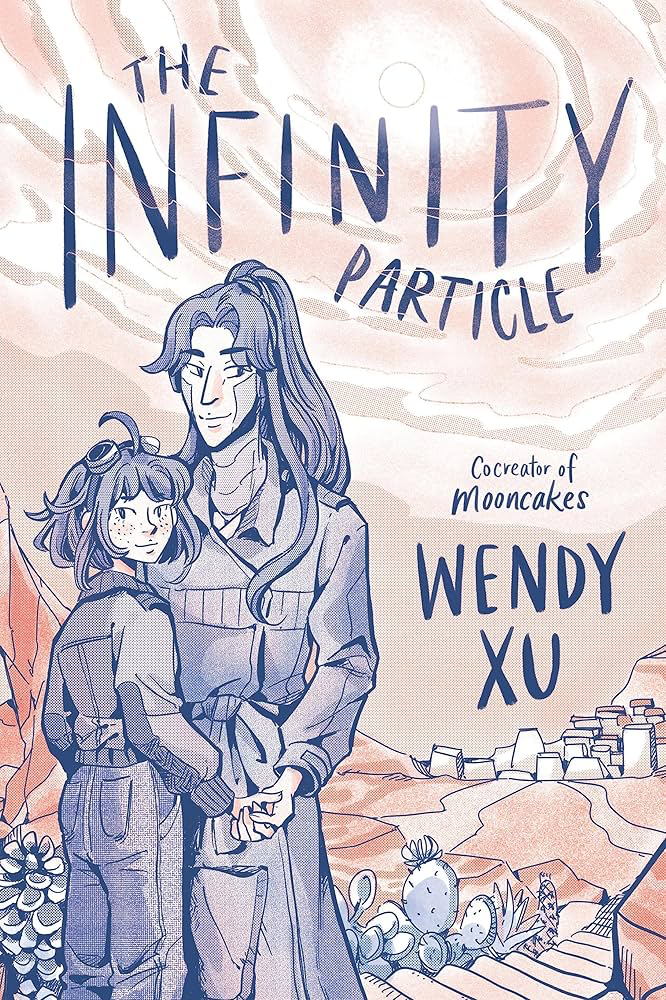
The Infinity Particle – Wendy Xu

Clementine Chang is headed for Mars. In the distant future, it’s a place of peace and industry, and it’s precisely the place that Clem wants to start her new life. A clever inventor, Clem has a knack for working with AI. She hopes to continue her education under Dr. Marcella Lin, a legendary AI engineer who inspired her work. But Dr. Lin is not what she seems—and she’s hiding a secret from the scientific world: a lifelike, humanoid AI that she refers to as her son. His name is Kye, and he yearns for a life outside of the one that Dr. Lin programmed for him. As Clem gets acquainted with him, she discovers that Dr. Lin’s intentions in making him were not as noble as she once thought—and that she may be falling in love with her former hero’s creation.

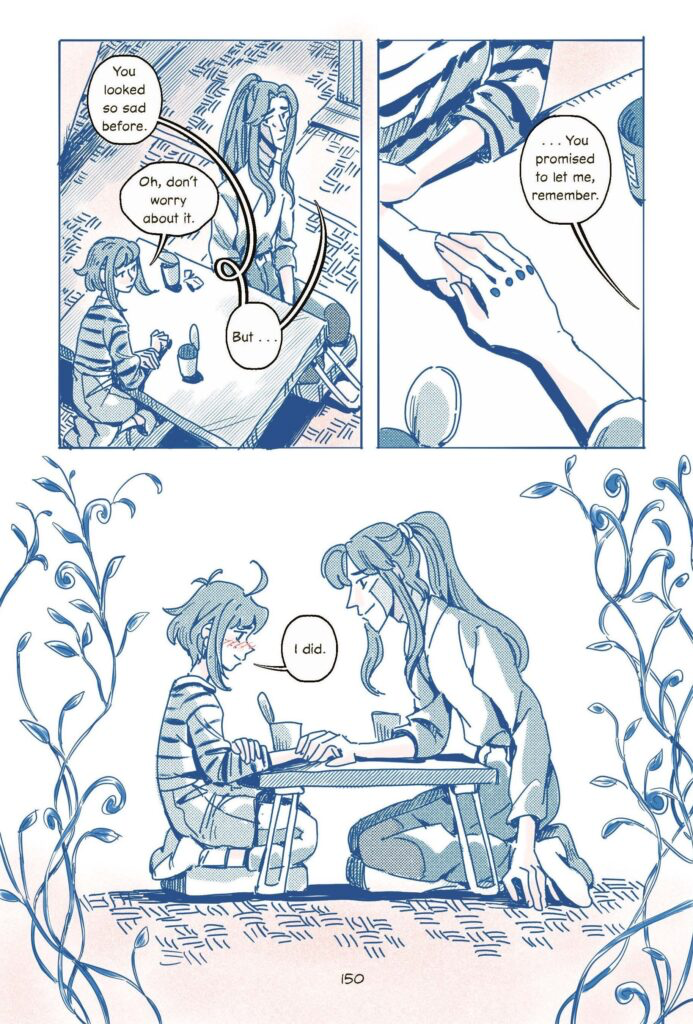
art by Wendy Xu (p. 150)

TW/CW: emotional abuse (past/present)

You know me. I’m a sucker for a good Frankenstein story. Oh, so you brought a conscious being into existence, expected it to be completely obedient to you and your whims, and didn’t expect anything to go wrong? Surely this will not have a domino effect of consequences…

That being said, The Infinity Particle isn’t just a Frankenstein story. We’ve been inundated with stories about AI and the ethics of giving robots human-like consciousnesses since day one of sci-fi’s conception (back to Frankenstein), but The Infinity Particle does what many of those stories try and fail to do: make the story human. It weaves both engineering and the complicated legacies of familial trauma into a story that is ultimately about relationships: that of parents and children, but also of young lovers. It’s a story of breaking cycles and of forging something newer and better out of their ashes. All of it is worth your time.

Wendy Xu’s vision of Mars in the distant future is one that I want to live in, which isn’t something I often say about sci-fi novels. The world of The Infinity Particle is a cozy, comforting one. In spite of the more emotional moments of the story, Xu’s setting is one you can get lost in. Rendered in a pastel color palette that’s easy on the eyes, it’s a world full of greenhouses, cafés, and cobblestone paths. Here, Mars is the perfect place for a museum date—except here, the museum features all manner of robots from bygone centuries. Although there are ethical conflicts with some of the AIs (this forms the central conflict of the novel), none of Xu’s AIs are malicious creatures—they’re all in the form of cuddly cats or owls, and in the case of Clem’s custom companion, a cat-moth hybrid. (SENA!! WE LOVE SENA!!) It’s a world I was eager to escape to, and one that I could dwell in forever.

Clem’s motivations were part of what made this story stand out. As she begins to dig deeper into Dr. Lin’s true motives for creating Kye, the way her former hero treats her AI creation begins to mirror how she was treated as a child; the emotional abuse from her mother is very similar to the emotional abuse by Dr. Lin to Kye. The Infinity Particle is a fantastic example of how very far-fetched, sci-fi concept can be used as incredibly emotional metaphors. We have Clem, who is a clone of her mother and was raised to live out the dreams that her mother could not, and Kye, an AI made to replace Dr. Lin’s son and live out her fantasies. Admittedly, the clone part was very on the nose, but the way that Xu delivered with care, giving The Infinity Particle an undeniable heart. In part, The Infinity Particle is a story of how trauma always echoes into the present, and how it can create ripples that both tear apart and rebuild relationships with others.

That shared trauma is part of what made the romance between Clem and Kye one that I was rooting for from page 1. Not only were they the most adorable couple (museum dates! Philosophical conversations in greenhouses!), their shared connection allowed them to help each other in ways that made the relationship blossom. Clem had experience with having to escape from the same kind of emotional abuse that Kye was undergoing, and as they realized that connection, their relationship deepened. However, it wasn’t just that aspect that made their relationship so lovable. Their chemistry was some of the best I’ve read in a YA novel in a long time—they were both such curious and sensitive people, and that combined curiosity not only drove the plot, but the course of their romance. Every shared moment was sweet, but never saccharine—The Infinity Particle was just a warm hug (and a kiss on the cheek) in so many ways, this being one of the most prominent.

However, even though Dr. Lin was objectively in the wrong, I appreciated the way that The Infinity Particle humanized her; never once were her actions condoned, but in the end, she wasn’t a purely evil person—she was a person who slipped so far into grief that she failed to realize how she was treating those around her. She did horrible things that could not be undone, but she was also capable of healing. It’s an incredibly difficult line to toe between acknowledging a character’s humanity and acknowledging that their actions were inexcusable; most media gets it wrong (I am looking directly at Encanto), but in the short time that was given to this plot, Xu did a graceful job of hitting that balance. Dr. Lin did some unspeakably terrible things, but deep down, she is still human. My one (minor) complaint is that this was squeezed into the end and didn’t have as much time to develop as some other parts of the novel, but it was executed thoughtfully nonetheless.

And the epilogue…hnnnnnnnngh do I love a good “the fabric of the universe is made up of love” story AUUUUUUUUGH

All in all, a heartwarming, sensitive, and thoughtful story of love, robots, and what it means to have—and to want—a mind and a life of your own. 4.5 stars!

The Infinity Particle is a standalone, but Wendy Xu is also the co-creator of Mooncakes and the creator of Tidesong.

Today’s song:

I feel like I remember this song about every 5 years and realize how much I’ve missed it…

That’s it for this week’s Book Review Tuesday! Have a wonderful rest of your day, and take care of yourselves!

Posted in Book Review Tuesday

Book Review Tuesday (10/22/24) – The Brightness Between Us (The Darkness Outside Us, #2)

Happy Tuesday, bibliophiles!

We’re keeping up my sequel streak for the time being, so it seems. The difference between this and The Heart of the World is that I had no idea that The Darkness Outside Us, one of my favorite books of 2021, was even getting a sequel in the first place. That novel rocked my world—it really enraptured me in a way that not a whole lot of books ever have. But it was beautiful as a standalone—it had about as satisfying of an ending as you could ask for. So I was teetering towards hesitantly optimistic when I heard about The Brightness Outside Us, but in the end, I’m so glad I took the gamble; this novel is a different kind of twisty than its predecessor, but it’s worth taking the leap.

Enjoy this week’s review!

Now, tread lightly! This review contains spoilers for book one, The Darkness Outside Us. If you haven’t read it and intend on doing so, read at your own risk!

For my review of book one, The Darkness Outside Us, click here!

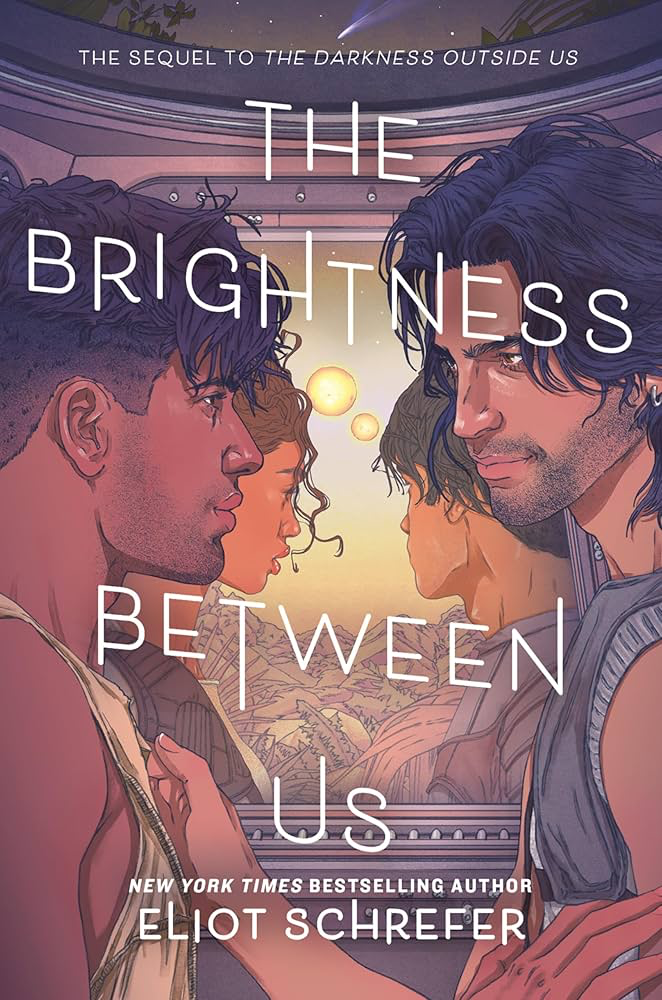
The Brightness Between Us (The Darkness Outside Us, #2)

In the 24th century, Ambrose Cusk is on the cusp of the greatest space mission mankind has ever embarked on. After losing his sister Minerva in a troubled gambit outside of the solar system, Ambrose is set to cross the universe itself in order to save her. But when he discovers that he won’t be on the ship—only clones of himself—he is determined to get to the bottom of what his true mission is—and what really happened to Minerva.

30,000 years in the future, the final clones of Ambrose and Kodiak have grown from the teenage clones they once were into fathers of two children. Owl and Yarrow live a peaceful but sheltered existence on the surface of Minerva. Owl yearns to learn what the rest of the planet holds, but her parents are keen on keeping her safe. But when her brother Yarrow begins acting strangely, the family suspects that a stranger thousands of years in the past may have sabotaged their mission.

TW/CW: violence, war, past mentions of child death, animal death, terrorism, intrusive thoughts

It didn’t even cross my mind that The Darkness Outside Us would have a sequel. I went into this novel with trepidation—how do you follow up a novel as twisty, complex, and heartwrenchingly beautiful as The Darkness Outside Us? By splitting the novel in two, as it turns out. I didn’t think that The Darkness Outside Us needed a sequel, but nonetheless, I’m glad I stuck around to see the result—of course Eliot Schrefer would have something fascinating up his sleeve.

The Brightness Between Us reminds me of how much I love a good “space colony gone wrong” story. As I said, I didn’t even think about The Darkness Outside Us getting a sequel, but this novel has the perfect setup for precisely this kind of plot. I should have trusted Schrefer from the start, given how masterful book one was, but wow, the Minerva plot amazed me! There was so much solid, hard sci-fi put into the terrain, climate, and wildlife of Minerva, and Schrefer did an excellent job of keeping the reader in the dark just enough to make everything suspenseful, even when the mysterious bones that Owl digs up in her exoplanet yard only turn out to be from a duck. From the research behind the wildlife, the weather, and the atmosphere, no stone was left unturned, each one its own Chekhov’s gun waiting to fire.

Although Owl wasn’t my favorite protagonist, she fits perfectly for the environment she’s in. Every “space colony gone wrong” needs a character who questions everything; there is always some part of the planet that has been unexplored, and someone needs to be curious and daring enough to want to discover what’s on the other side of the world. It can be even more effective when that character is a child; children are naturally curious, making it more than simply questioning authority—the authority is often their parental figures, and the excuses of them hiding things “for their safety” feel more tangible. Fifteen-year-old Owl was naturally curious, but also paired with her more obedient (at first) brother, Yarrow, giving her more resentment towards her parents. She wasn’t as likeable as Ambrose or Kodiak (I loved seeing them become parents), but they had the home field advantage of book one. But I can recognize when a character is perfect for the plot they’re in, and Owl was the perfect match for the plot of The Brightness Between Us.

After the pummeling of gut-wrenching twists that we call The Darkness Outside Us, the sequel was going to have to pull off a miracle to follow it up in terms of plot. The main twist was so earth-shattering that I thought it would be impossible to come up with anything better. I remain correct—I don’t think anyone, much less Schrefer, could come up with a twist that could top book one. But the main twist that we do have was excellent enough to propel me to finish the book in one sitting—just like The Darkness Outside Us! (The difference is that it was at a reasonable hour this time. I’ve matured since 2021, I promise.) Not only is this duology a love story 30,000 years in the making—it’s a conspiracy 30,000 years in the making! I loved the twist that Devon manipulated the frozen fetuses to develop violently aggressive traits as they grew—it gave even more stakes to an already gripping plot, and it made the days of present future half of the novel gripping as well. It gave the “space colony gone wrong” side of The Brightness Outside Us a truly unique twist—sabotage from 30,000 years in the past, and two versions of the main characters communicating across time to thwart it.

All this talk about the Minerva plot, and I haven’t even touched on the “present-day” Ambrose and Kodiak…oops. I don’t have a favorite child, I swear. The worldbuilding in this half of The Brightness Outside Us was my favorite part; getting a glimpse into the forgotten world that we only knew about in whispers in book one was fascinating. Schrefer’s vision of a world divided into a corporate hellscape of excess and a corporate hellscape of rigidity was one that was mapped out just as vividly as the alien world of Minerva. You really do see how it is that Ambrose and Kodiak got to be how they were at the start of book one. In terms of character development, it did tend to feel like listening to a broken record after book one, but that’s my only minor nitpick—Schrefer made sure that they had startlingly different—and almost as emotional—arcs as their clone counterparts in The Darkness Outside Us. Devon was a fascinating, slippery antagonist, and his sabotage was one of my favorite parts of the novel to witness unfolding.

All in all, a sequel that had a Herculean task to live up to its predecessor, but delivered a miracle in spite of the odds—just like Ambrose and Kodiak. 5 stars!

The Brightness Between Us is the second book in The Darkness Outside Us series, preceded by The Darkness Outside Us. Eliot Schrefer has also written several other books for children and young adults, including the Ape Quartet (Endangered, Threatened, Rescued, and Orphaned), The Lost Rainforest series (Mez’s Magic, Gogi’s Gambit, and Rumi’s Riddle), Queer Ducks (And Other Animals): The Natural World of Animal Sexuality, and many others.

Today’s song:

EVERGREEN COMES OUT THIS FRIDAY, ARE WE READY?

That’s it for this week’s Book Review Tuesday! Have a wonderful rest of your day, and take care of yourselves!
Posted in Books

The Bookish Mutant’s Books for Black History Month (2024 Edition)

Happy Tuesday, bibliophiles!

Apologies for the lack of a Book Review Tuesday this week; like with Sunday Songs, I’ve just had a busy few days, and I wasn’t able to put anything together in time, but I was creating this post in advance, so I figured today would be a good day to post it.

Here in the U.S., February is Black History Month! Since I’ve started making these recommendation lists back in 2021 (and focusing on reading more diversely in general), I’ve discovered so many incredible authors, and now that I’m reading YA and adult novels in almost equal measure, my scope has broadened so much more. (Note: I’m still frugal about my media space on WordPress, but this list, like last year’s, contains both YA and adult novels, even though the header image just says YA.) But as with every single year, it’s more crucial than ever to uplift Black voices—not just to amplify them and other marginalized groups in the fields of literature and publishing (especially when the industry sees diversity as nothing but a box to be checked off, more often than not), but especially since we’re living in a climate here in the states (and elsewhere) that is intent on erasing both our systemic racism (past and present) and silencing Black voices. And one of the most accessible ways to fight this poisonous rhetoric is to read—to open your eyes, to learn for yourself, and to share what you have learned with others. In a landscape where anything other than the white, cishet, abled majority wants to ban any voice that isn’t theirs, reading is an act of resistance.

For my lists from previous years, click below:

Let’s begin, shall we?

THE BOOKISH MUTANT’S BOOKS FOR BLACK HISTORY MONTH

FANTASY:

SCIENCE FICTION:

REALISTIC FICTION:

TELL ME WHAT YOU THINK! Have you read any of these books, and if so, did you enjoy them? What are some of your favorite books by Black authors that you’ve read recently? Let me know in the comments!

Today’s song:

thanks again to my brother for exposing me to this one!

That’s it for this recommendation list! Have a wonderful rest of your day, and take care of yourselves!

Posted in Book Review Tuesday

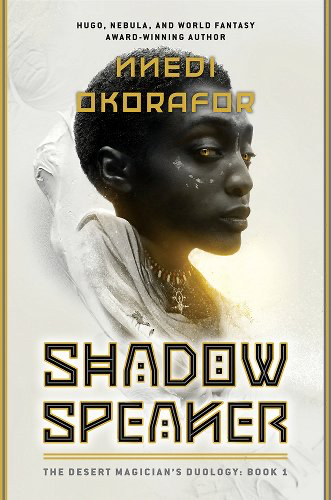
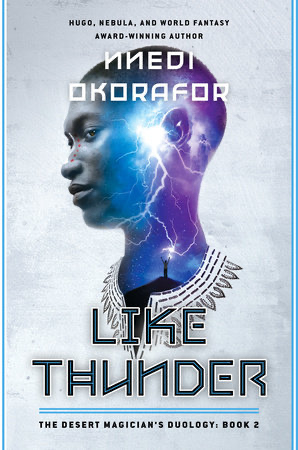
Book Review Tuesday (1/9/24) – Like Thunder (The Desert Magician’s Duology, #2)

Happy Tuesday, bibliophiles!

After I finished Shadow Speaker back in December, I was eager to see what the newly published sequel, Like Thunder, had in store. It was finally available at the library recently, and it was one of my first reads of this year. And though it retained some of the issues that Shadow Speaker had, it was still a worthy sequel and end to the duology.

TREAD LIGHTLY! This review may contain spoilers for book one, Shadow Speaker. If you haven’t read it and intend to, read at your own risk.

For my review of Shadow Speaker, click here!

Enjoy this week’s review!

Like Thunder (The Desert Magician’s Duology, #2) – Nnedi Okorafor

2077. Three years after Ejii and Dikéogu saved Earth from the threat of Chief Ette and forced him to sign the truce to bring no harm to the Changed, Dikéogu has realized that the fight is not over. Estranged from his parents and living on his own, he knows that the truce is due to expire, and that the humans are growing more hostile to the Changed by the day. After disaster strikes and puts those that he love in danger, he sets off to find the one person he knows that can help save the day: Ejii. But when they reunite, saving the world—for the second time—is more difficult that either of them bargained for.

TW/CW: genocide, slavery, ableism, murder, death, loss of loved ones

In general, I was still a fan of this book, but strangely, even though a lot of my minor gripes with Shadow Speaker were resolved, they were often filled in with elements that ended up bringing down the narrative. That’s not to say that Like Thunder wasn’t a worthy sequel—it absolutely was, and it was a fitting way to finally end the Desert Magician’s Duology, all these years after Shadow Speaker was initially published.

The worldbuilding was, without a doubt, the strongest aspect of Shadow Speaker, and Like Thunder expanded on it in all the ways that it should have! Through Dikéogu’s eyes, we get to see parts of the Desert Magician world that Shadow Speaker left behind, and they greatly enhanced the ongoing narrative of change and prejudice. Not only do we get an expansion of the effect of what kind of powers possessed by the Changed, we also see the direct effects that being Changed has on people apart from the main characters that we saw in book one. Time was clearly on Nnedi Okorafor’s side here, since she presumably had so many years apart from Shadow Speaker to craft all of the world’s eccentricities, but even if there wasn’t such a large gap between now and then, I have faith that her worlds would have been fleshed out anyway—if there’s one thing that Okorafor has excelled at over the years, it’s crafting a detailed world.

A lot of this worldbuilding contributed to the themes that Like Thunder built up, and it serves as an incredibly powerful narrative about genocide. Now that the three-year treaty between Chief Ette and the Changed has expired, he doesn’t hide the hostility that he’s been waiting to unleash since then. No matter what perspective that it’s written from, genocide is always a difficult and delicate subject to write about, and Okorafor took great care in depicting it unapologetically—it’s brutal, authentic, and horrifying, just as it should have been. In general, I preferred Ejii’s perspective to Dikéogu’s (more on that later), but Dikéogu’s voice was well-suited to handling this kind of subject matter; he had the anger that the subject warrants, and his rage not only fueled his journey, but the emotion behind this depiction.

That being said, I wasn’t the biggest fan of Dikéogu being the main POV character in Like Thunder. Although seeing the effects of the treaty dissolving through his eyes was enlightening and his anger fueled much of the novel (and for good reason), in much of the down time of the novel, I found him to be borderline obnoxious. Most of it manifested in his treatment of a lot of the female characters in the novel—once he reunited with Ejii, he had this attitude that he was still owed her after all these years, and it got on my nerves to no end. I wouldn’t have minded a romantic subplot between the two of them, but Dikéogu’s insistence on being incredibly possessive of her soured the whole thing for me. His perspective was needed to a point, but I felt like he worked better as a side character.

Going off of that, there were a lot of cheap elements in Like Thunder that sullied the narrative for me. When I think of Nnedi Okorafor, I think a lot about subversion—subversion of genre conventions, subversion of tropes, etc. But throughout the novel, there were just so many elements that felt pointless and served no purpose—and were so common that it almost seemed beneath Okorafor to add them in the first place. We get the age-old “killing the main man’s girlfriend for the plot” trope; I think it was meant to convey some of the horrors of the genocide going on, but it was already pretty evident that Dikéogu’s life was significantly changed and he already knew the horrors of genocide firsthand, so there was no point in having that subplot at all, especially since it was blatantly shoved in there to try and advance Dikéogu’s narrative arc. And the love triangle…why? Why? Once we got to that part, combined with Dikéogu’s possessiveness of Ejii, it just felt like filler drama—it didn’t advance the plot at all, and it seemed like a cheap way to generate drama as well. It just seemed like a disservice to Okorafor’s inexhaustible creativity.

All in all, a satisfying conclusion to a solid sci-fi/fantasy duology that excelled in its worldbuilding, but suffered in its use of overused and stale tropes. 3.5 stars!

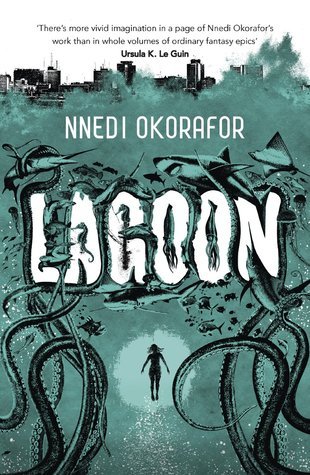
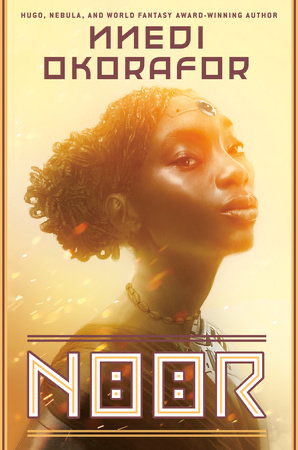
Like Thunder is the second and final installment in the Desert Magician’s Duology, preceded by Shadow Speaker. Nnedi Okorafor is also the author of Lagoon, the Binti series (Binti, Home, and The Night Masquerade), Noor, Remote Control, and several other books for teens and adults.

Today’s song:

NEW SMILE WOOOOOOOOOOOOOOOO

That’s it for this week’s Book Review Tuesday! Have a wonderful rest of your day, and take care of yourselves!
Posted in Book Review Tuesday

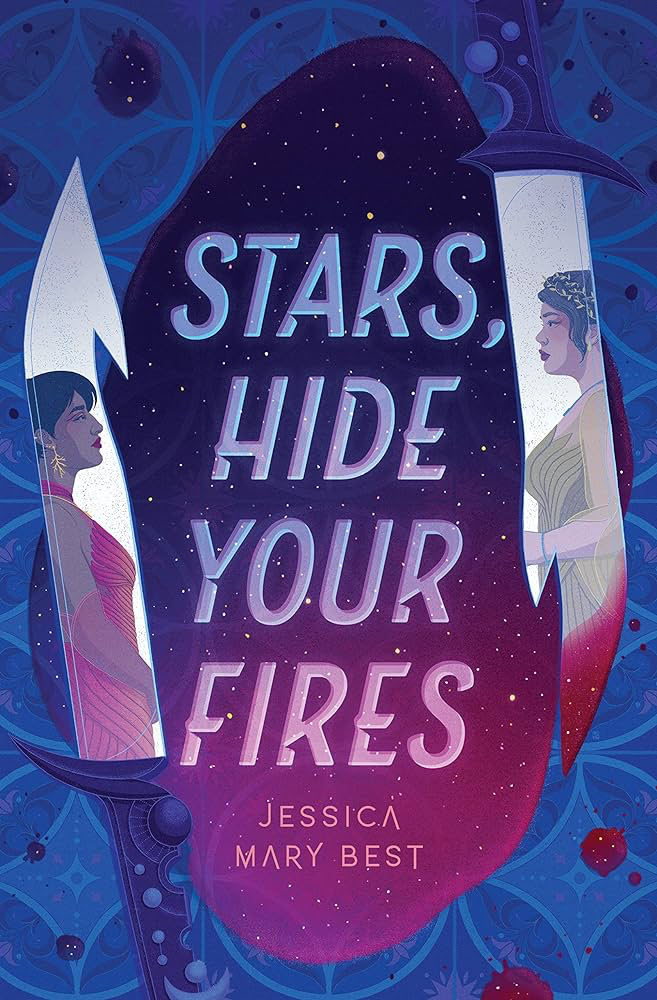
Book Review Tuesday (10/24/23) – Stars, Hide Your Fires

Happy Tuesday, bibliophiles!

Here I am with a proper book review this week! I’m not exhausted now! However, I’ve still been in something of a reading slump for a fair portion of the month. Behold the consequences.

Knives Out in space? Yep. I am not immune to propaganda. I fell for that one. The gorgeous cover helped. Duped by a pretty cover again. I’m always on the hunt for YA sci-fi that really delivers, but even though Stars, Hide Your Fires was an entertaining read, it largely fell into the “ballrooms in space” trap that so much of the subgenre suffers from.

Enjoy this week’s review!

Stars, Hide Your Fires – Jessica Mary Best

Cass knows her place. As a thief scraping out a living on a backwater moon, she knows that there’s no escape that the life that the Emperor and his family have made for people like her. But when she sees the chance to hitch a ride to the Palace Station, she knows she’s hit it big. Steal enough jewelry, and she’ll be able to escape the planet forever. But when the Emperor is mysteriously murdered and suspicion lands on her, Cass must find a way to escape the space station—and clear her name.

TW/CW: murder, blood, sci-fi violence

I really need to stop going after YA sci-fi books where most of the plot takes place in some kind of ballroom or palace. After a certain point, it just gets so bogged down in the flowy dresses, jewelry, and court intrigue modeled after…I don’t know, Ancient Rome, probably, that it barely feels like sci-fi anymore. It’s really a travesty. But even though Stars, Hide Your Fires was far from perfect, it didn’t fall into every single one of the pitfalls I just described. It at least had a few elements that almost set it apart. Almost.

I’ll give Best this—for the first quarter of the book or so, Stars, Hide Your Fires did actually feel like science fiction. Although we didn’t get into the full extent of the worldbuilding, I did like the setup of the class difference just from showing the differences between two planets. You really did get a sense for Cass’ situation, and the setting of the dead, backwater moon really emphasized not only that, but the stakes that Cass later had to follow up on. Best’s writing sold the dusty, gloomy setting that dominates the first quarter of the book, and in comparison to all of the glittery ballroom business that comes later, it was a well-written contrast.

I’d also have to hand it to Best for keeping Stars, Hide Your Fires so tightly paced! Even though I lacked much connection to the plot, I’d be remiss if I didn’t acknowledge how neat it was—that part really felt sanded to a polish. All of the beats lined up straight into place, and with the exception of some dawdling in the middle, it at least held my attention for most of the novel. If anything, Stars, Hide Your Fires had some solid timing—Jessica Mary Best clearly had her line of dominoes ready to fall from the start, and the suspense was palpable.

That being said, other than the first and last quarters, I barely got the sense that this was science fiction. It’s one of those books where it could have just as easily been a historical drama or even fantasy if you took away the space setting. Sci-fi is my go-to, and usually, I’d like for a novel to present at least something partially new, whether it be a subversion of a typical setting, a unique kind of technology, or even some aliens to populate the universe. (ALIENS! ALIENS! ALIENS!) But other than being set in space, Stars had nothing to its name in that department. You could have just as easily made the palace a grounded palace on Earth, and hardly anything about the plot would have changed. Cass’ home moon could have been a different country, the spaceships could have been trains, the escape routes that she took could have been back alleys or indoor ventilation ducts. Even though it’s billed as sci-fi, Stars, Hide Your Fires doesn’t have anything to show for it other than being in space.

Additionally, I felt hardly any connection to the plot or characters. That was in no small part thanks to how unoriginal much of it was. You’ve got a generic setup of a tyrannical empire, but you don’t get much of a sense of what exactly is tyrannical about what they’re doing, other than being generally evil and a bit of monkey business with clones. To oppose them is an equally generic rebellion, and other than them being billed as heroic, you don’t really have much motivation to root for them since their goal is defeating said empire and not much else. Cass doesn’t have any ties to either, but other than her poorer background, there’s not much to her, either. My, a loner, rebellious pickpocket? Where have I seen that before? That’s the sad thing about this novel—if we’d had some original elements to any of the plot points, it could have been really fun. I’m all for a heist in space, but you’ve got to have the sci-fi chops to pull it off. And there’s some slack I’m willing to give Best since this is her debut novel, but it was still disappointing on that front.

All in all, an entertaining YA novel that could have elevated itself above simply “entertaining” if it had boasted any kind of original elements. 3 stars.

Stars, Hide Your Fires is a standalone; it is also Jessica Mary Best’s debut novel.

Today’s song:

thank you to whoever was in charge of the Wilco pre-show playlist on Sunday night for this

That’s it for this week’s Book REview Tuesday! Have a wonderful rest of your day, and take care of yourselves!

Posted in Book Review Tuesday

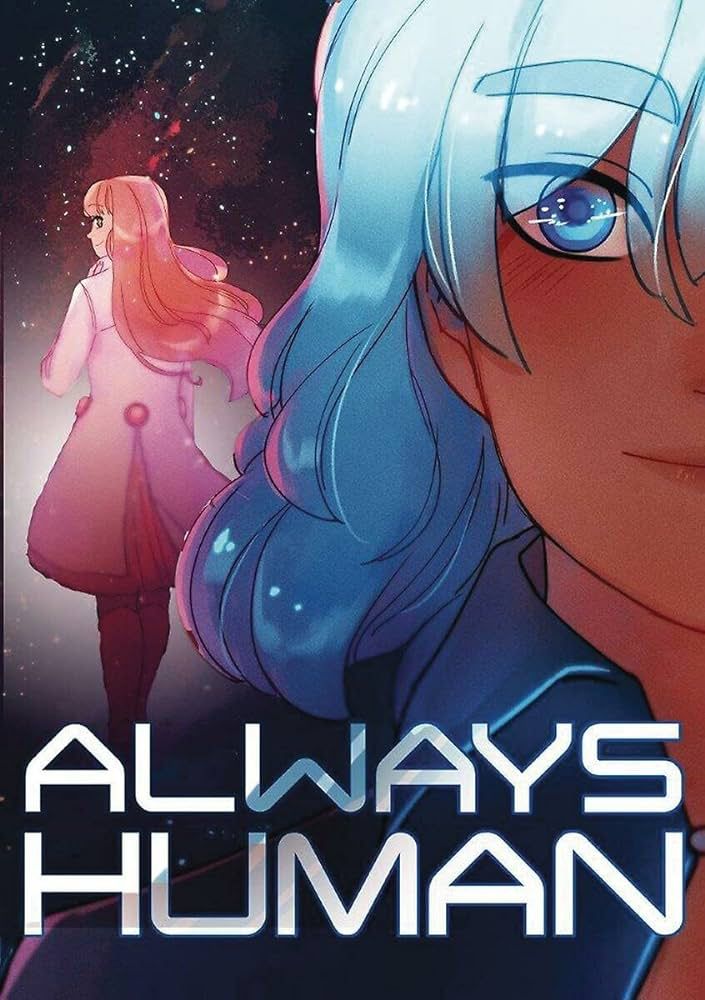
Book Review Tuesday (10/10/23) – Always Human

Happy Tuesday, bibliophiles!

Always Human came onto my radar around three years ago—probably from my fellow bloggers—but I’d forgotten about it until I came across it at my college’s library. I’m always a sucker for cozy sci-fi, and I never say no to a graphic novel, so of course I picked this book up. But while it was sweet and had some great commentary on disability, it didn’t quite scratch my sci-fi itch in all the right ways.

Enjoy this week’s review!

Always Human – Ari North

Sunati lives in a world of body modification. With simple, easy-to-use technology, she can change any part of her appearance that she wishes—even enhancing her memory so that she won’t have to study for tests. But not everybody has it as easy as Sunati. Austen has Egan’s syndrome, which means that her immune system rejects any kind of body modification. When the two meet by chance, it’s love at first sight. And although they are different in all kinds of ways, it won’t take long before they realize that they were made for each other.

Art by Ari North

TW/CW: nothing that I can find—Always Human is very gentle, and I’d be hard-pressed to find anything triggering about it. Enjoy!

Always Human is sweet. It was a soft, tender palate-cleanser, but I didn’t find myself getting very attached to any of it. It’s cute, and I’d say it’s worth a read, but it lacked the emotional weight to fully immerse myself in the characters or the world.

Let’s start out with the positives. It’s rare that fictional, sci-fi disabilities actually mirror the experience of disabled people, but Always Human did an excellent job of portraying Austen’s disability. Austen has Egan’s syndrome, a fictional autoimmune disorder where her body rejects any kind of body modification, which is central in the futuristic world where Always Human is set. Throughout Sunati and Austen’s developing romance, this novel makes the very important case that disabled people do not exist to inspire you, and that going through life as a disabled person isn’t some grand feat. It’s something that Sunati has to contend with when talking about Austen, and watching her learn made at least some of the romance work.

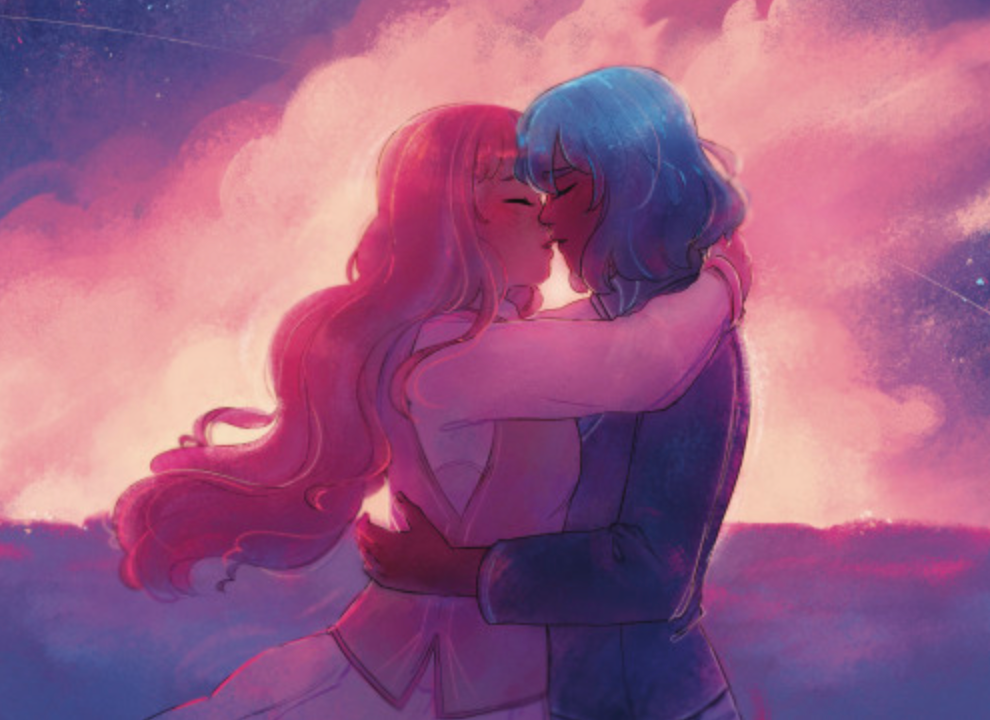
Additionally, I loved how vibrant the art style was! I’m not usually one for the quasi-manga style that North draws in, but every panel really did pop. The vibrant pinks and blues truly shone, which simultaneously sold the joyous glow of young love and the bright, technology-centric world that Sunati and Austen inhabit. Just like the story itself, there are no hard edges: everything is soft and cloudy, calling sunsets, cotton candy, and hope to mind. It suited the story exceptionally well—Ari North absolutely looked like she knew what she was doing.

However, there was one part of the art that didn’t sit as pleasantly with me. Although the colors consistently popped, the character movements…did not. Their poses looked so consistently stiff. And listen. I’m an artist. I get it. Drawing dynamic poses is so hard. Game recognizes game. But the characters’ movements looked so wooden, no matter what pose they were drawn in. These static poses failed to immerse me fully in the story—if they don’t look like they’re really moving, how can I believe that anything else is? I’m saying this to myself as well as Ari North: maybe a few more of those nice references on Pinterest would have livened up the art.

Always Human made the jump from WebToon to print after seemingly wild success on the former, but I’m not sure if the plot format survived the leap. The broken-up chapters would theoretically work if I were getting them, say, once a week, but all together, they didn’t feel quite as coherent. I’m all for cozy sci-fi and slice-of-life stories, but what makes the ones I like work is that there’s still some kind of end goal, however low-stakes it may be, that the characters are heading towards. Always Human felt rather meandering in that sense. It really felt like the plot was being made up as North went along, and the result was quite lukewarm. Even the romance, which the plot clearly hinged on, was set up and happened so quickly that the rest of the story didn’t hold much water. If the romance had been slowly developed over the course of the graphic novel, I would have felt much more engaged. Thus, I never really felt the emotion that North was trying so hard to get across—it all felt rushed and half-baked. Insta-love is never the answer, kids.

All in all, a light and fluffy sci-fi comic that boasted vibrant color and cogent points about disability, but felt rather stiff in both the art and the plot. 3 stars.

Always Human is the first volume in the Always Human series; the series concludes with Love and Gravity.

Today’s song:

adore this album, but also, I can’t listen to it too many times in a row, y’know?

That’s it for this week’s Book Review Tuesday! Have a wonderful rest of your day, and take care of yourselves!
Posted in Uncategorized

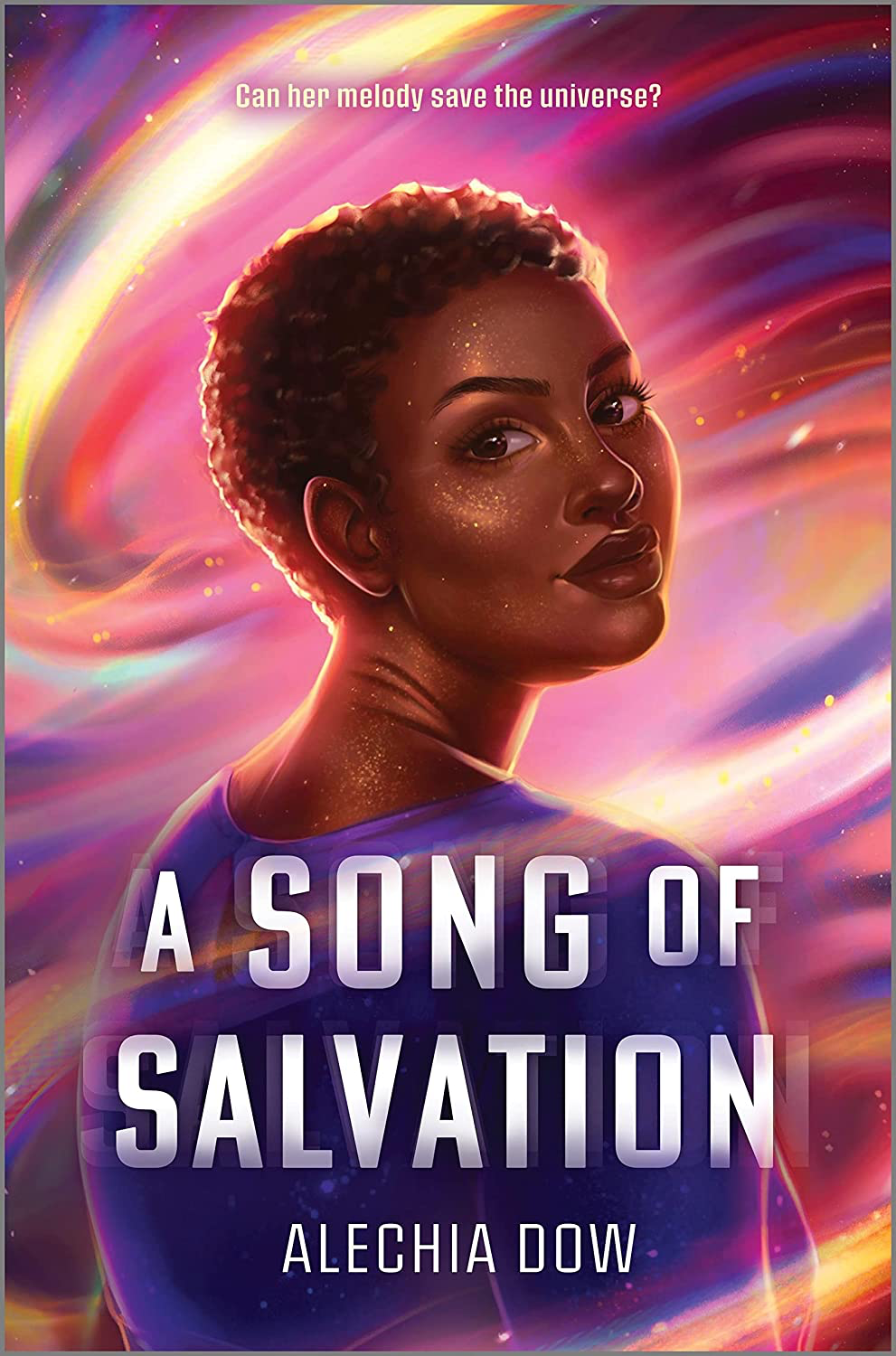
Book Review Tuesday (7/25/23) – A Song of Salvation

Happy Tuesday, bibliophiles! Everybody say happy birthday to Hobbes, who turns 7 today:

I’ve been following Alechia Dow ever since The Sound of Stars was a 5-star read for me way back in 2020; I’ve loved reading her brand of hopeful, queer YA sci-fi with Black characters at the forefront, and so I was so excited to hear that A Song of Salvation was set in the same universe as her first two books! Unfortunately, I found it to be more lackluster than her first two books, but that doesn’t mean that I still enjoyed it.

Enjoy this week’s review!

A Song of Salvation – Alechia Dow

Zaira Citlali knows her purpose. As the reincarnation of the goddess Indigo, she has been granted with their powers—but cannot seem to harness them. What’s worse, her mortal enemy, the destruction god Ozvios, remains at large, and as he creates war all across the galaxy, he’s eyeing Zaira as a prime sacrifice. But Zaira won’t go down without a fight, even if it means rushing to control her powers. With the help of Wesley, a disgruntled smuggler who just wants to get the job done, and Rubin, a celebrity podcaster that Wesley definitely doesn’t find ridiculously attractive, she must find her way to Terra, the center of intergalactic conflict, to ensure that the song of the universe remains intact.

TW/CW: themes of war, genocide, colonialism/imperialism, murder

I liked this book. But I wanted to like it so much more. Ever since The Sound of Stars, I’ve been trying to get my hands on every Alechia Dow that comes out—normally, I love her special brand of sweet, vibrant sci-fi with Black, queer characters at the forefront. But putting this book next to The Kindred has made me realize that I’m liking her books less and less with each one that comes out. And that makes me really sad. It almost makes me scared to re-read The Sound of Stars, which was a 5-star read for me, just out of fear that it won’t be as impactful for me now as it was back in 2020. All that is to say that A Song of Salvation was still a solid read, but a visible downgrade from both The Sound of Stars and The Kindred. It doesn’t feel like her best work at all.

I’ll start with the positives: if anything, A Song of Salvation was still fun and well-crafted. Dow’s space opera universe where queer characters of color are in charge of their own destinies and get to star in their own star-crossed romances is always a treat to step inside of. The new context and worldbuilding that Song adds to this already vibrant world made it even more fleshed out and real, and Dow was adept at handling all of the intergalactic politics as war descended upon the universe. It’s all richly layered and detailed, with no stone left unturned in terms of the eccentricities of everything going on. And of course, sci-fi with high(ish) stakes but with ultimately hopeful and happy resolutions are always a win. Before I get into my main gripes, I should clarify that I did enjoy the book—it was still a fun read, and better than a fair portion of YA sci-fi—but having read Dow’s other novels, it left me wanting more.

What was endearing to me about The Sound of Stars and The Kindred (the latter to a lesser extent) were the characters—Ellie and Morris felt so resonant, and Felix and Joy, even if they were slightly less so, were still a joy (no pun intended) to be around. Given that Dow’s books have leaned more on the side of character-driven, I expected Song to have the same kind of characters and character development, but unfortunately, I found it lacking. Zaira, Wesley, and Rubin were all fun characters, in the abstract, but it felt like Dow didn’t give them the same love and care that she did for her other characters. They all seemed to have a baseline personality trait each: Wesley is grumpy, Rubin is flamboyant, etc. There wasn’t a whole lot to Zaira, either—it genuinely saddens me to say this, but she feels like every single “reincarnated god/goddess/has the power of a deity” kind of character, whose only traits seem to be that they’re overpowered. And for all of the “I can’t control my powers :(” talk, she seemed to miraculously save the day most every time? That’s not to say that they weren’t all at least entertaining, though; they had a good group dynamic, and Wesley and Rubin were cute together. (Did anybody else feel like Rubin was a toned-down, YA version of Ruby from The Fifth Element? The name and everything…I can’t be the only one to see that…)

Plot-wise, A Song of Salvation struggled to remain relevant for at least half of the book; it felt like a lot of running about with no consequence to the story (and, y’know, the looming intergalactic war?). The second half more or less suffered from the same problem, but it hinged so much on the cameos from the previous books. Don’t get me wrong—it was really sweet to see Ellie, Morris, Joy, Felix, and all of the others, but the more that they showed up, the more it felt like they were being used as crutches to keep longtime readers interested in the story. And for such endearing, well-developed characters, having them used like this was such a shame. They were too well-written to just be cameos. It really felt like such a shame.

All in all, a fun addition to Alechia Dow’s sci-fi universe, but one that relied too much on the wondrousness of its predecessors to stand on its own. 3.5 stars.

A Song of Salvation is the companion to Alechia Dow’s other YA sci-fi novels, The Sound of Stars and The Kindred; they are not a concrete trilogy, but they are all set in the same universe, and can be (and probably should be, just to understand everything) read as such. Dow is also the author of the forthcoming middle grade novel Just A Pinch of Magic (slated for release this October) and All’s Fair(y) in Love & War (slated for release in 2025).

Today’s song:

haven’t been able to stop listening to this gaaaaah

That’s it for this week’s Book Review Tuesday! Have a wonderful rest of your day, and take care of yourselves!

Posted in Books

The Bookish Mutant’s Books for Disability Pride Month (2023 edition) ♿️

Happy Friday, bibliophiles!

Here in the U.S., July is Disability Pride Month! Although I’ve seen some more recognition for it in the past few years, I find myself saying this over and over—disability issues are left behind in intersectional feminism far too often. The larger representation in media of disabled people as otherwise white and cishet, the lack of accessibility at many pride events, and the hurdles that most disabled students have to go through in order to get accommodations at school is proof. And yet, around 27% of Americans have some sort of disability—myself included. As the literary world has slowly shown more stories with disabled characters, it’s more important than ever to uplift disabled voices.

Like some of my other themed lists this year, I’ve decided to expand it beyond YA, because I’d be remiss if I didn’t include some of the amazing Adult and MG reads with disabled rep over the years. I’ve separated all of these recs by age group, and included their genres, my rating, and the type of disability rep.

(SHOUTOUT TO NOT IF I CAN HELP IT, I FINALLY HAVE A MORSEL OF SPD REP)

for my lists from previous years, click here:

  • 2022 (+ on having SPD and the lack of representation)
  • 2021

Let’s begin, shall we?

THE BOOKISH MUTANT’S BOOKS FOR DISABILITY PRIDE MONTH (2023 EDITION)

YA:

ADULT:

MIDDLE GRADE:

TELL ME WHAT YOU THINK! Have you read any of these books, and what did you think of them? What are your favorite books with disabled rep? Let me know in the comments!

Today’s song:

That’s it for this year’s Disability Pride recs! Have a wonderful rest of your day, and take care of yourselves!

Posted in Uncategorized

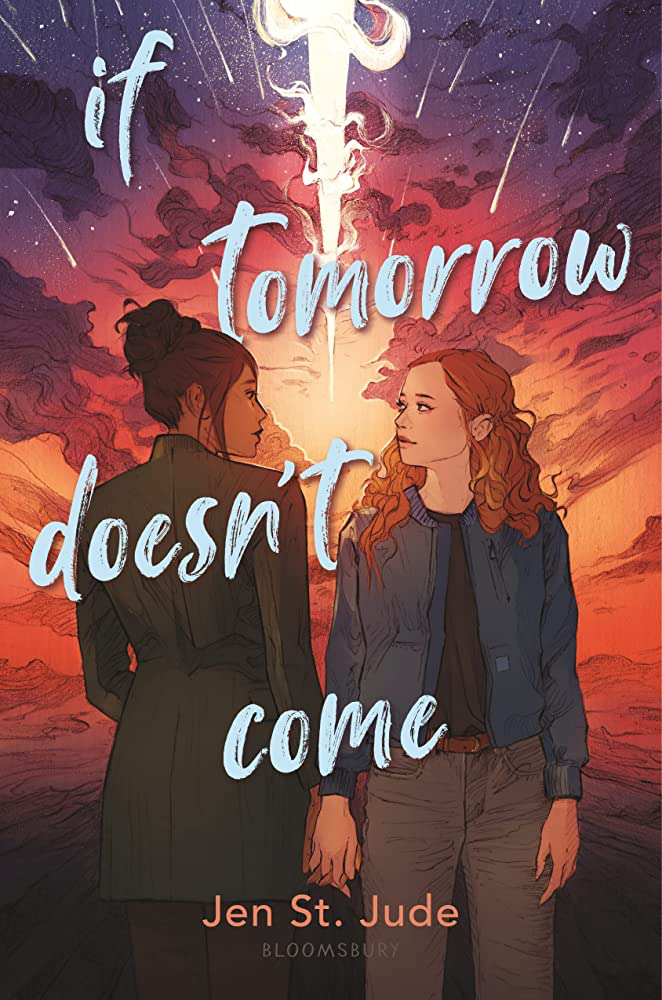
Book Review Tuesday (6/6/23) – If Tomorrow Doesn’t Come

Happy Tuesday, bibliophiles!

This book came out around a month ago, and I figured it would be a great read to start off pride month (after a very disappointing biography of Josephine Baker). If Tomorrow Doesn’t Come was my first exposure to Jen St. Jude (it’s her debut, after all), but after this, I’m ready to watch for anything else she writes.

Enjoy this week’s review!

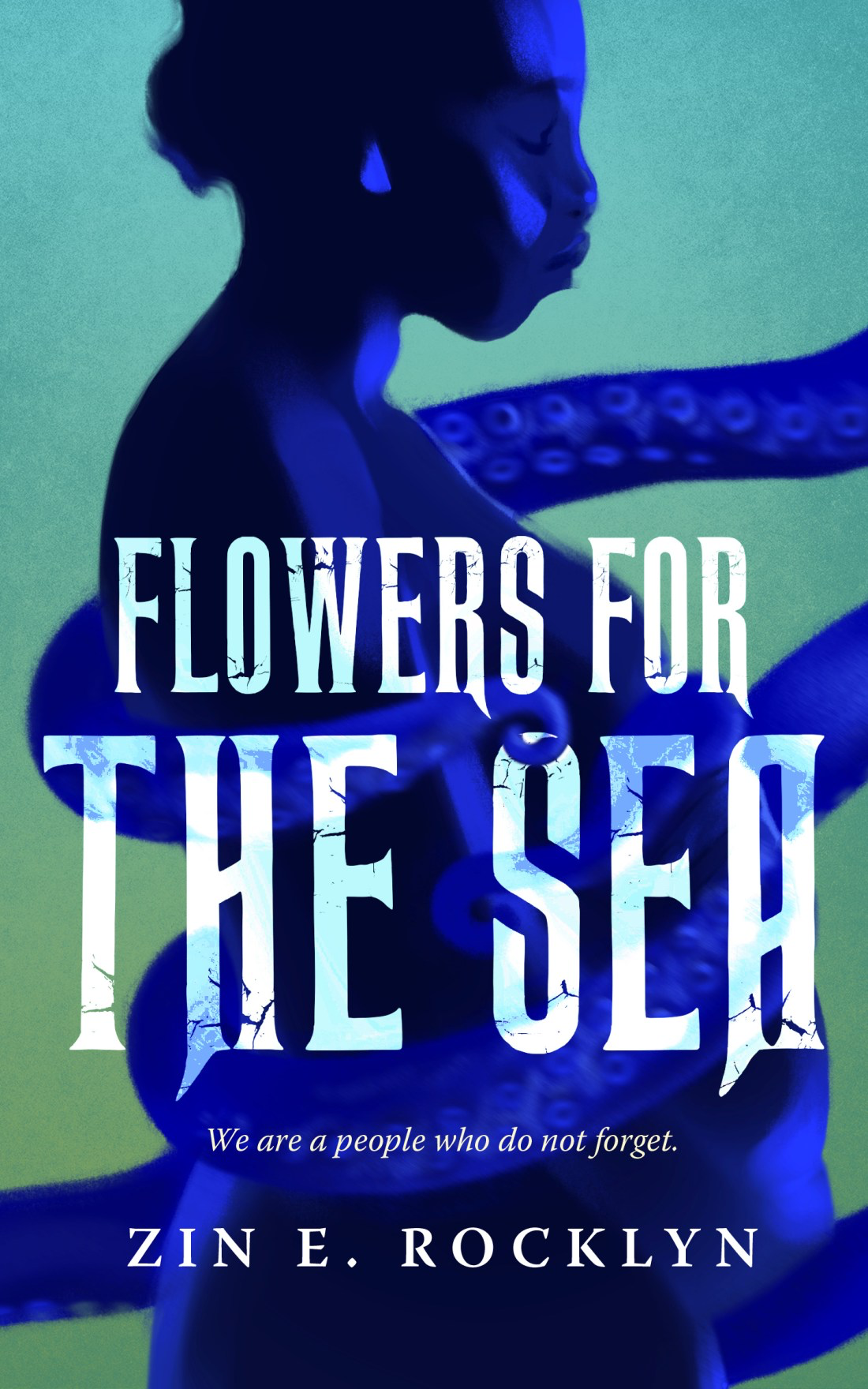
If Tomorrow Doesn’t Come – Jen St. Jude

The news has just broken that an asteroid capable of wiping out the population is headed towards Earth in nine days. Avery Byrne had planned to drown herself on her college campus that day—being closeted from her religious parents, the mounting pressure of college, and undiagnosed depression had become too much to bear. But now, she’s forced to flee her college and face her family. Among them is Cass, her best friend and longtime crush, who she’s been hiding the truth from for years. With nine days until the end of the world, Avery must come face to face with everything that she wanted to run from, but must also realize the hope at the end of the world—maybe she finally has time to make things right.

TW/CW: suicide, suicide attempt(s), suicidal ideations, homophobia, religious bigotry, mental health issues (depression), natural disasters/end of the world scenarios (impending asteroid impact)

This is a heavy one. That can’t be understated enough—I always put trigger warnings before my reviews now, but these ones are really important to keep in mind. If Tomorrow Never Comes is a devastating novel—but a deeply important one, as long as you’re in the mental headspace for it.

That being said, one of the best parts about this novel is how Jen St. Jude handles such topics. It would’ve been easy to romanticize or otherwise dramatize Avery’s very real struggles with mental health and queer identity, but everything was handled with such care and grace. It’s clearly a very personal novel; nothing is glossed over, but nothing is overblown to amp up the tension needlessly. We’re very slowly coming out of the post-13 Reasons Why romanticization of suicide and mental health issues, so it’s very important that books like these exist to counteract that—presenting these subjects exactly as they are.

All of the relationships were also done so well in this novel! Each character was crafted with so much care, and the interactions that each one had with the other really made them stand out. The forced reunion of Avery, her friends, and her extended family in the event of the asteroid created so many moments that felt refreshingly human—messy and hard to read at times (part of the ending made me cry, full disclosure), but authentic and genuine. Again—in the face of an onslaught of very dramatic apocalypse-oriented YA in the past, it’s so nice to see one that’s full of emotion, but more in the way of real, interpersonal relationships and not 2012 love triangles in the face of impending doom.

That being said, I did have one major problem with this novel. I liked the format that St. Jude had where the novel was split into Avery’s past and present, but the flashback chapters felt somewhat stilted compared to the present day chapters. They leaned a lot more on telling—giving us information about Avery’s life, friends, and family in a very rote way, as opposed to letting all that bloom naturally. It’s even stranger considering that the present chapters didn’t have this problem at all—maybe it was just some kinks to work out when writing in Avery’s past tense. With all of the heart that this novel had, it just left me wishing for something as fluid as the other chapters.

I’ve seen some people complaining about the ending, but I feel like this novel couldn’t have ended any other way. This novel was always going to be about relationships during the apocalypse, and the mechanics of the apocalypse weren’t meant to be the star of the show. I will admit that I had to turn back to check that yes, this really was the end, it felt like the quiet, tender ending that this novel deserved.

All in all, an emotional and deeply personal story of love at the end of the world. 3.75 stars, rounded up to 4!

If Tomorrow Doesn’t Come is a standalone, and it is Jen St. Jude’s debut novel.

Today’s song:

SAW THE YEAH YEAH YEAHS LIVE LAST NIGHT IT WAS MAGICAL

That’s it for this week’s Book Review Tuesday! Have a wonderful rest of your day, and take care of yourselves!
Posted in Uncategorized

YA Book Recommendations for Pride Month (2023 Edition) 🏳️‍🌈🏳️‍⚧️

Happy Monday, bibliophiles!
Here we are again in pride month! It certainly is a joyous time of year, but in the past few years, it’s been a difficult one, too. All across the country, we have seen waves of anti-LGBTQ+ legislation, and the rhetoric that queer people are unnatural and wish to convert your children has spread like wildfire. We’ve also seen a dangerous increase in book bans—particularly by queer authors and authors of color. Books with diverse perspectives aren’t harming children—depriving children of these books is the dangerous part. Now more than ever is it important to read diversely: there’s never any harm in seeing a different perspective through literature. And if you’re really that concerned about “protecting the children,” maybe you should advocate for stricter gun laws instead of worrying about drag queen story hour.

In past years, I’ve split this post up into multiple (organized by genre), but I decided to make it all one post this year to keep it all more organized.

For my previous pride month lists, see below:

KEY:

  • MC: main character
  • LI: love interest
  • SC: side character

Enjoy this month’s Pride Month book recommendations!
🏳️‍🌈🏳️‍⚧️THE BOOKISH MUTANT’S YA PRIDE MONTH RECOMMENDATIONS (2023 EDITION)🏳️‍🌈🏳️‍⚧️

CONTEMPORARY, REALISTIC FICTION, AND NOVELS IN VERSE:

SCIENCE FICTION:

HISTORICAL FICTION:

FANTASY, MAGICAL REALISM, AND PARANORMAL:

TELL ME WHAT YOU THINK! What are your favorite queer reads that you’ve read recently? Have you read any books on this list, and what did you think of them? Tell me in the comments!
Today’s song:

That it for this year’s pride month recommendations! Have a wonderful rest of your day, and take care of yourselves!