
Happy Tuesday, bibliophiles!
Here I was thinking that I hadn’t had a 5-star read in so long, and bam…two in a row! I was expecting to enjoy The Stardust Grail because I loved The Deep Sky, Yume Kitasei’s debut. To my delight, it turned in a much more space opera direction, but not only that—it had one of the most heartwarming sci-fi universes that I’ve had the privilege of experiencing!
Enjoy this week’s review!
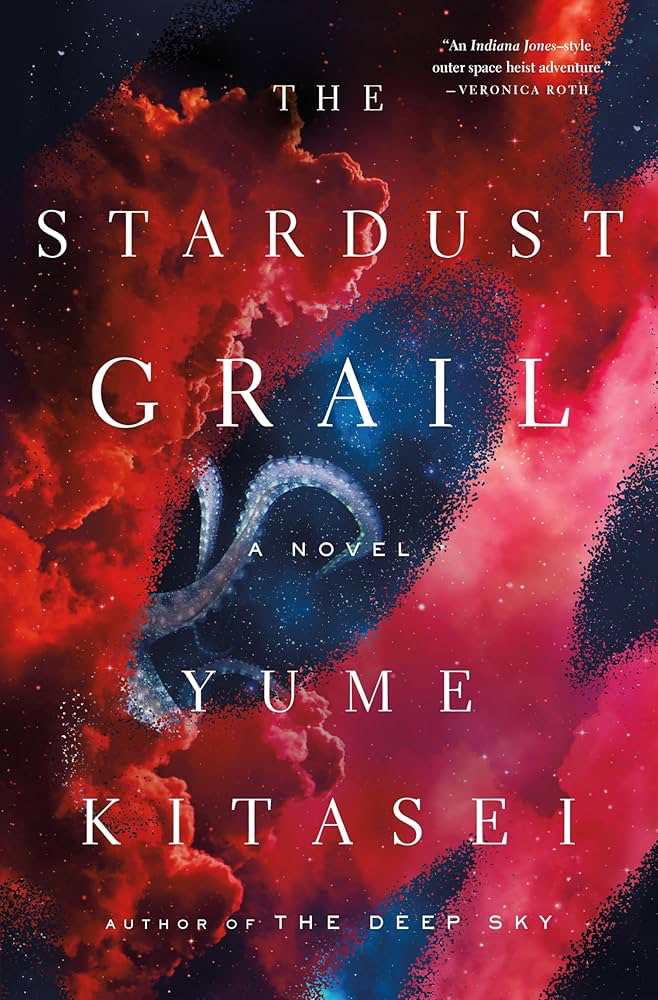
The Stardust Grail – Yume Kitasei
Maya Hoshimoto is a grad student, pouring her life into her studies on an Earth university far from her colony home. But what her university doesn’t know is that her extensive background in alien cultures comes from a history of art theft, stealing alien artifacts and returning them to their rightful owners. When a friend from her past offers her one last job, Maya is ready to refuse—until she learns that the artifact in question could mean that her friend’s species could be brought back from the brink of extinction. Plunged back into her old life, Maya now faces her hardest job yet—putting an entire alien species on the line.
TW/CW (from Yume Kitasei): themes of colonialism/imperialism, genocide, chronic illness (migraines), torture, suicidal ideation (brief), violence/gore, torture/confinement, war themes, pandemic
I loved The Deep Sky, but it was more literary than my usual tastes in sci-fi. I went into The Stardust Grail expecting more of the same, knowing I’d enjoy it, but I did not anticipate it being the perfect book for my constant space opera hankering! Heartwarming friendships, intergalactic hijinks, and excellent creature design—I’m ecstatic to report that The Stardust Grail has it all!
You all knew I was going to go after the creature design first. THE CREATURE DESIGN!! THIS IS THE ABSOLUTE CREAM OF THE CROP HERE!! My only issue is that we didn’t get to see all of the alien species that Kitasei set up, but to be fair, with a story jam-packed with rival parties and factions, it would’ve been a chore to have to incorporate every single one of them. (Maybe what we need is a companion novel in this universe? WE NEED TO MAKE IT HAPPEN!) Back to my point—even in sci-fi, it’s a difficult task to make aliens feel truly alien, not just in looks, but in culture, lifespans, and general quirks. The Frenro, and Auncle in particular, felt bizarre in the best possible way. I love a good cephalopod-like creature, but Kitasei did an excellent job of portraying not just xer mannerisms and what made xem unique as a species, but having those in contact with Maya’s more human sensibilities—there’s a ton of cultural confusion, even though they’ve been friends for at least a decade, but both Kitasei and the characters themselves handle it with a humorous grace. I also loved the design of the Belzoar—again, arachnid-like aliens are also tons of fun, but like the Frenro, they had enough distinguishing qualities to separate them from just being giant spiders.
I could go on and on about how much I adored these characters! Even if I didn’t have a soft spot for alien characters in the first place (being marginalized and generally an outcast will do that), Auncle would be my favorite by far—xe was just so delightful in their joyous dialogue and relentless optimism, but xer deep history of tragedy, both personal and in the context of xer species, was handled with all of the respect that it deserved—xe was joyous in spite of it all, because joy is all you’ve got in some cases. (AMEN!!) Maya was a fantastic protagonist—like Auncle, Kitasei did an excellent job of giving the reader the full breadth of her motivations and past that led her to the place where she is now. Her devotion to a fair galaxy and to help the Frenro made for a beautiful quest, and her feeling of outsiderness amongst both humans and aliens resonated deeply with me. (Given the themes of mixed-race identity in The Deep Sky, I wouldn’t be surprised if that was another analog. YES!!!) Wil and Medix were charming and lovable as side characters, and all of the colorful denizens of the galaxy were equally so—not a single character felt flat or out of place.
In her personal review of the novel on Goodreads, Yume Kitasei cites Star Wars—A New Hope in particular—as her primary inspiration for writing The Stardust Grail and much of her other science fiction. The Deep Sky was much more on the literary side of sci-fi, and while I loved it, I’m hoping that Kitasei keeps in this direction for her next few books. (I’ll read anything she writes at this point, but my statement still stands.) As a fellow space opera girlie and an avid Star Wars fan, the passion of both Kitasei’s personal life and her love for those movies shines through in The Stardust Grail. Kitasei took all of the right lessons from George Lucas and company. Not only do we have a vibrant galaxy full of characters who are just as vibrant, this novel hits the right balance of emotional weight and campy, truly fun action. Speaking of George Lucas…another obvious inspiration in the latter third of the novel was the Indiana Jones franchise, and those action scenes were the best kind of fun amidst an otherwise deeply grounded and emotional novel. Never at any point do the emotion and serious themes contradict the aforementioned action, nor the other way around—all of it is earned, and all of it feels like a worthy tribute both Star Wars and other such space opera works.
Speaking of said serious and emotional themes…as I said earlier, The Stardust Grail has such grace in the way that it handles the myriad of themes that it explores. From Maya’s lasting effects of an alien illness that linger into her life to her experience as an outsider, being raised on a colony isolated from Earth, every topic is treated with the weight it deserves. Imperialism and the ownership of art is the primary theme of the novel, and it’s unabashedly anti-colonial, which I adored. However, it didn’t just say “colonialism bad” and leave it at that—just as in the real world, nothing in The Stardust Grail is without nuance. With dozens of alien species and factions amongst said species, everything is gray, even in the case of their main mission. Would it have been fine if all there was to The Stardust Grail is “colonialism bad?” Sure, I agree. But the fact that Kitasei chose to explore all of the layers to the various conflicts and perspectives made it so much more worthwhile.
All in all, a deeply emotional and heartwarming tale of resistance, friendship across cultural barriers, and retaining joy in spite of it all. 5 stars!
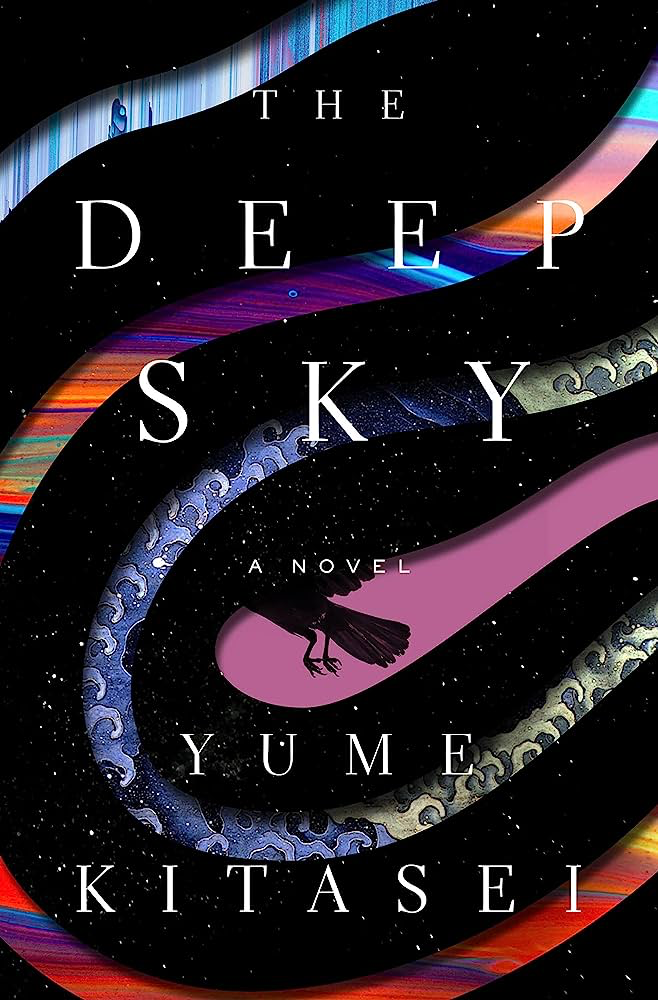
The Stardust Grail is a standalone, but Yume Kitasei is also the author of The Deep Sky.
Today’s song:
That’s it for this week’s Book Review Tuesday! Have a wonderful rest of your day, and take care of yourselves!

 The Bookish Mutant