
Posted in Book Review Tuesday

Book Review Tuesday (5/5/26) – Saltcrop

Happy Tuesday, bibliophiles!

GUESS WHO’S BACK…WITH A BACHELOR’S DEGREE! 🎓 YIPPEE!! Either way, I’ll be back to my normal posting schedule for the foreseeable future, as I’m now done with finals and all of my graduation festivities.

I’ve been a fan of Yume Kitasei since her debut, The Deep Sky. Her second novel, The Stardust Grail, was a 5-star read for me—it’s truly a gem, if you haven’t read it already. (After re-reading it last month, I’m firmly convinced that we need another book set in that universe. Her worldbuilding was so expansive!! It needs a companion novel!! Please!!) So I was ecstatic to hear that she was writing another sci-fi novel. It seems she’s been jumping between all kinds of sci-fi subgenres: a literary thriller with The Deep Sky, space opera with The Stardust Grail, and now dystopia with Saltcrop. And though it didn’t blow me away like The Stardust Grail did, Saltcrop is still a worthy, timely testament to Kitasei’s talents.

Enjoy this week’s review!
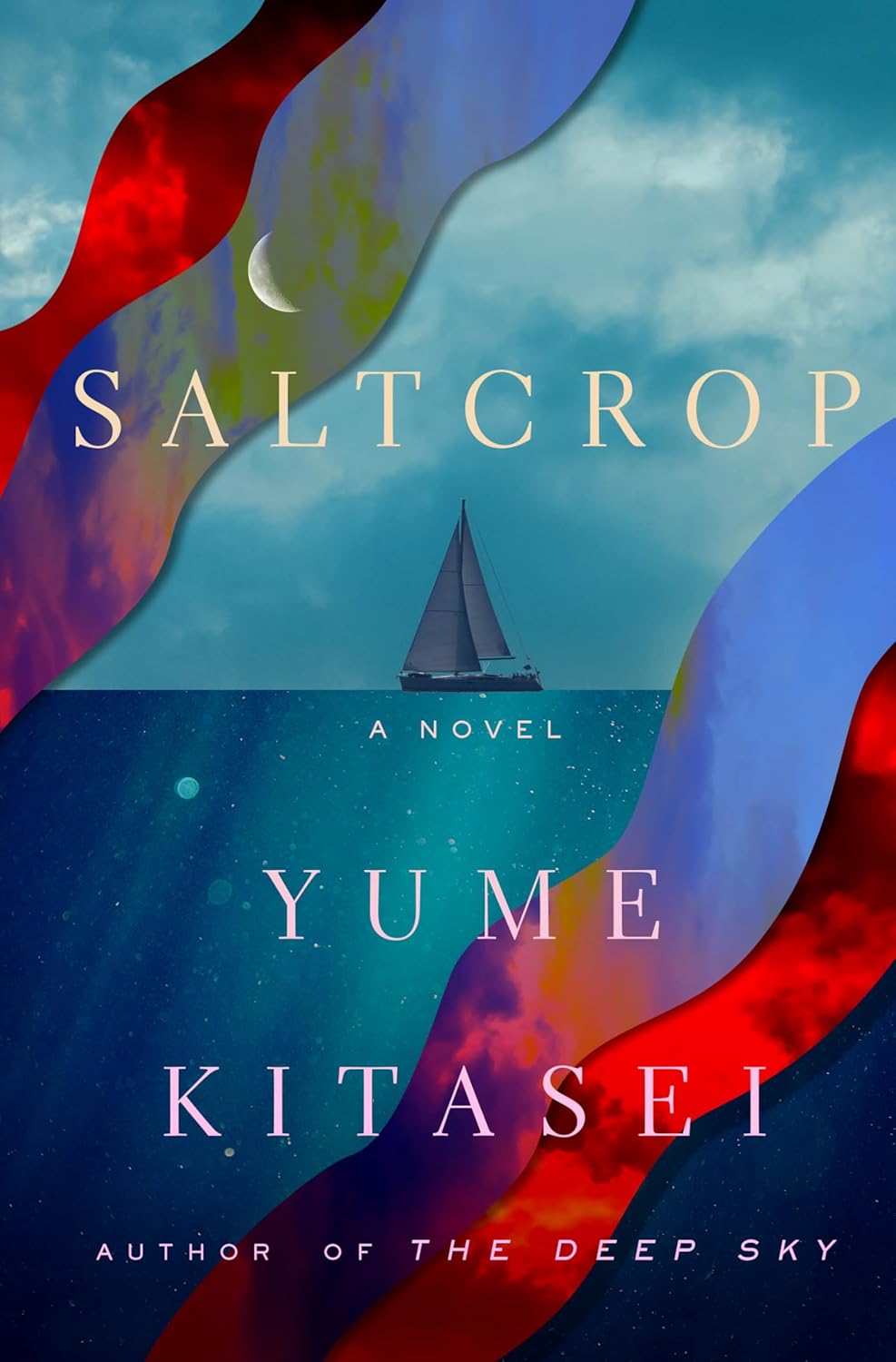
Saltcrop – Yume Kitasei

In a world ravaged by climate change, the three Shimizu sisters–Nora, Carmen, and Skipper—eke out a living with their aging grandmother. But Nora has been missing for months without an explanation. Carmen has faith that Nora will turn up soon, but Skipper suspects foul play. The sisters voyage out into uncertain waters to find Nora, but when they stumble into an intricate conspiracy that’s more than they bargained for, they must decide whether the journey was worth it at all—and if Nora is even out there in the first place.

TW/CW: medical content, body horror, death of parents, abuse, violence, murder, illness, animal death, chronic illness themes

One of the coolest things about watching Yume Kitasei’s career expand, from a reader’s perspective, is her willingness to try almost anything within the sci-fi genre. Her first novel was a more literary, sci-fi thriller; her second, a daring space opera with influences from Star Wars and Indiana Jones. Saltcrop is wholly different than both of them, and perhaps the greatest thing about it is that Kitasei never seems to run out of ideas, and that she’s unafraid to chase them.

Saltcrop is full of heart, and to me, that was its main strength. What formed this heart was the central relationship between Skipper, Carmen, and Nora. Even though 1/3 sisters was notably missing for 2/3rds of the novel, her presence was palpable; all that was possible due to the subtle interactions that Kitasei wove through Skipper and Carmen, both past and present. Their clashing but united dynamic as sisters propelled the novel in such a poignant way. Though you know from the start that Skipper and Carmen would cross the ocean for their sister (and they do), Kitasei never falters in giving you the sense of the complex but steadfast love that they have for each other. It feels like a middle finger to all of the dystopian media that posits that the apocalypse will somehow deteriorate our inherently human urge to love and help each other. Siblings will be siblings, even when climate change floods the world—Kitasei means that in every sense possible.

The setting of Saltcrop is familiar: a flooded dystopian world rendered unrecognizable by climate change, where the poor eke out a hardened existence while the rich continue to get richer. It’s a plot we’ve heard many times before, but Kitasei’s touch made it much more human. Aside from the exploration of the sisters’s relationships, I think what made Saltcrop’s plot and worldbuilding so memorable were the vignettes that made it human. Kitasei’s flooded world was peppered with stories of ordinary people, dead and alive, who made a living in spite of nearly inhospitable circumstances. It doesn’t shy away from the dark and ugly parts of this world (namely the spread of illness and corporate greed) Combine that with the clearly exhaustive research she did about agriculture, epidemiology, and genetic modification that got especially relevant in the last half of the novel, and Saltcrop was one of the most lived-in dystopias that I’ve read in quite some time.

I said earlier that Saltcrop is fairly different from her previous two novels, but in terms of writing, I think it trends closer to The Deep Sky, which is to say that it leans more into the literary side of her prose. And if there’s anybody I trust with more literary prose, it’s Kitasei. Her eye for poignant, needle-sharp descriptions that lodge themselves into your heart is stronger than ever—there are casual gut-punches laid about everywhere. Even in the heart of a climate-ravaged dystopia, there were almost Fargo-like interludes where reality and memory warp, which was all the more potent considering the themes of remembrance in Saltcrop. (The bear scene in the middle especially comes to mind.) Like the plot, Kitasei’s prose turned an environment that we’ve seen many times before into something wholly fresh and enlivened.

I’ll admit, I have some mixed feelings about the ending. On the one hand, I loved how the sisters rallied together to try and bring down the antagonist corporation, which routinely swallowed all of their attempts at resisting; the gradual, quiet victory was hopeful, and felt realistic to the long and rocky road to justice that we see with these kinds of issues. However, I feel like there were so many unanswered questions at the end; without spoiling anything, it felt like the setup to another novel, but there was so much left unsolved and unsaid, and yet Kitasei gave it the tone of a bittersweet ending, but a concrete ending all the same. It only felt wrapped up in the sense of the corporation plot, but beyond that, it felt unfinished. I’m all for an ambiguous ending, but with such a key piece of the puzzle missing, it didn’t feel satisfying in the slightest.

All in all, a startlingly human post-apocalyptic story of sisterhood and survival. 4 stars!

Saltcrop is a standalone, but Yume Kitasei is also the author of The Deep Sky and The Stardust Grail.

Today’s song:

genuinely criminal that this isn’t available on streaming, but this is, hands down, one of the best Wilco covers out there

That’s it for this week’s Book Review Tuesday! Have a wonderful rest of your day, and take care of yourselves!

Posted in Book Review Tuesday

Book Review Tuesday (8/6/24) – The Stardust Grail

Happy Tuesday, bibliophiles!

Here I was thinking that I hadn’t had a 5-star read in so long, and bam…two in a row! I was expecting to enjoy The Stardust Grail because I loved The Deep Sky, Yume Kitasei’s debut. To my delight, it turned in a much more space opera direction, but not only that—it had one of the most heartwarming sci-fi universes that I’ve had the privilege of experiencing!

Enjoy this week’s review!

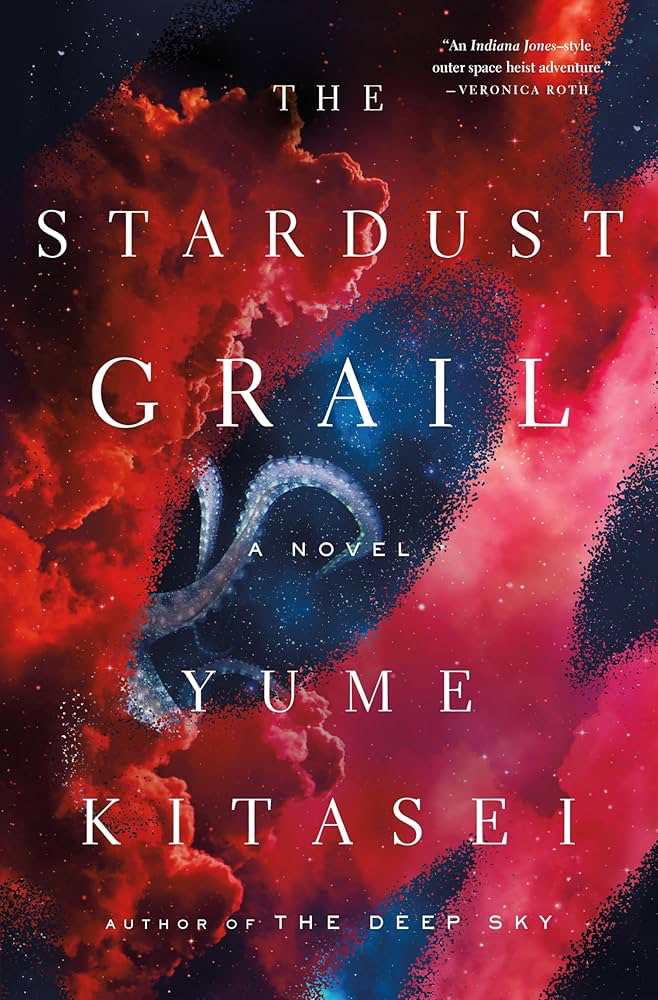
The Stardust Grail – Yume Kitasei

Maya Hoshimoto is a grad student, pouring her life into her studies on an Earth university far from her colony home. But what her university doesn’t know is that her extensive background in alien cultures comes from a history of art theft, stealing alien artifacts and returning them to their rightful owners. When a friend from her past offers her one last job, Maya is ready to refuse—until she learns that the artifact in question could mean that her friend’s species could be brought back from the brink of extinction. Plunged back into her old life, Maya now faces her hardest job yet—putting an entire alien species on the line.

TW/CW (from Yume Kitasei): themes of colonialism/imperialism, genocide, chronic illness (migraines), torture, suicidal ideation (brief), violence/gore, torture/confinement, war themes, pandemic

I loved The Deep Sky, but it was more literary than my usual tastes in sci-fi. I went into The Stardust Grail expecting more of the same, knowing I’d enjoy it, but I did not anticipate it being the perfect book for my constant space opera hankering! Heartwarming friendships, intergalactic hijinks, and excellent creature design—I’m ecstatic to report that The Stardust Grail has it all!

You all knew I was going to go after the creature design first. THE CREATURE DESIGN!! THIS IS THE ABSOLUTE CREAM OF THE CROP HERE!! My only issue is that we didn’t get to see all of the alien species that Kitasei set up, but to be fair, with a story jam-packed with rival parties and factions, it would’ve been a chore to have to incorporate every single one of them. (Maybe what we need is a companion novel in this universe? WE NEED TO MAKE IT HAPPEN!) Back to my point—even in sci-fi, it’s a difficult task to make aliens feel truly alien, not just in looks, but in culture, lifespans, and general quirks. The Frenro, and Auncle in particular, felt bizarre in the best possible way. I love a good cephalopod-like creature, but Kitasei did an excellent job of portraying not just xer mannerisms and what made xem unique as a species, but having those in contact with Maya’s more human sensibilities—there’s a ton of cultural confusion, even though they’ve been friends for at least a decade, but both Kitasei and the characters themselves handle it with a humorous grace. I also loved the design of the Belzoar—again, arachnid-like aliens are also tons of fun, but like the Frenro, they had enough distinguishing qualities to separate them from just being giant spiders.

I could go on and on about how much I adored these characters! Even if I didn’t have a soft spot for alien characters in the first place (being marginalized and generally an outcast will do that), Auncle would be my favorite by far—xe was just so delightful in their joyous dialogue and relentless optimism, but xer deep history of tragedy, both personal and in the context of xer species, was handled with all of the respect that it deserved—xe was joyous in spite of it all, because joy is all you’ve got in some cases. (AMEN!!) Maya was a fantastic protagonist—like Auncle, Kitasei did an excellent job of giving the reader the full breadth of her motivations and past that led her to the place where she is now. Her devotion to a fair galaxy and to help the Frenro made for a beautiful quest, and her feeling of outsiderness amongst both humans and aliens resonated deeply with me. (Given the themes of mixed-race identity in The Deep Sky, I wouldn’t be surprised if that was another analog. YES!!!) Wil and Medix were charming and lovable as side characters, and all of the colorful denizens of the galaxy were equally so—not a single character felt flat or out of place.

In her personal review of the novel on Goodreads, Yume Kitasei cites Star Wars—A New Hope in particular—as her primary inspiration for writing The Stardust Grail and much of her other science fiction. The Deep Sky was much more on the literary side of sci-fi, and while I loved it, I’m hoping that Kitasei keeps in this direction for her next few books. (I’ll read anything she writes at this point, but my statement still stands.) As a fellow space opera girlie and an avid Star Wars fan, the passion of both Kitasei’s personal life and her love for those movies shines through in The Stardust Grail. Kitasei took all of the right lessons from George Lucas and company. Not only do we have a vibrant galaxy full of characters who are just as vibrant, this novel hits the right balance of emotional weight and campy, truly fun action. Speaking of George Lucas…another obvious inspiration in the latter third of the novel was the Indiana Jones franchise, and those action scenes were the best kind of fun amidst an otherwise deeply grounded and emotional novel. Never at any point do the emotion and serious themes contradict the aforementioned action, nor the other way around—all of it is earned, and all of it feels like a worthy tribute both Star Wars and other such space opera works.

Speaking of said serious and emotional themes…as I said earlier, The Stardust Grail has such grace in the way that it handles the myriad of themes that it explores. From Maya’s lasting effects of an alien illness that linger into her life to her experience as an outsider, being raised on a colony isolated from Earth, every topic is treated with the weight it deserves. Imperialism and the ownership of art is the primary theme of the novel, and it’s unabashedly anti-colonial, which I adored. However, it didn’t just say “colonialism bad” and leave it at that—just as in the real world, nothing in The Stardust Grail is without nuance. With dozens of alien species and factions amongst said species, everything is gray, even in the case of their main mission. Would it have been fine if all there was to The Stardust Grail is “colonialism bad?” Sure, I agree. But the fact that Kitasei chose to explore all of the layers to the various conflicts and perspectives made it so much more worthwhile.

All in all, a deeply emotional and heartwarming tale of resistance, friendship across cultural barriers, and retaining joy in spite of it all. 5 stars!

The Stardust Grail is a standalone, but Yume Kitasei is also the author of The Deep Sky.

Today’s song:

That’s it for this week’s Book Review Tuesday! Have a wonderful rest of your day, and take care of yourselves!
Posted in Book Review Tuesday

Book Review Tuesday (11/7/23) – The Deep Sky

Happy Tuesday, bibliophiles!

The Deepy Sky came out this July, and I’ve been seeing a ton of buzz about it around the blogosphere since. I’m always in for a sci-fi thriller, and this one delivered in that aspect, as well as the wonderful mixed-race rep!

Enjoy this week’s review!

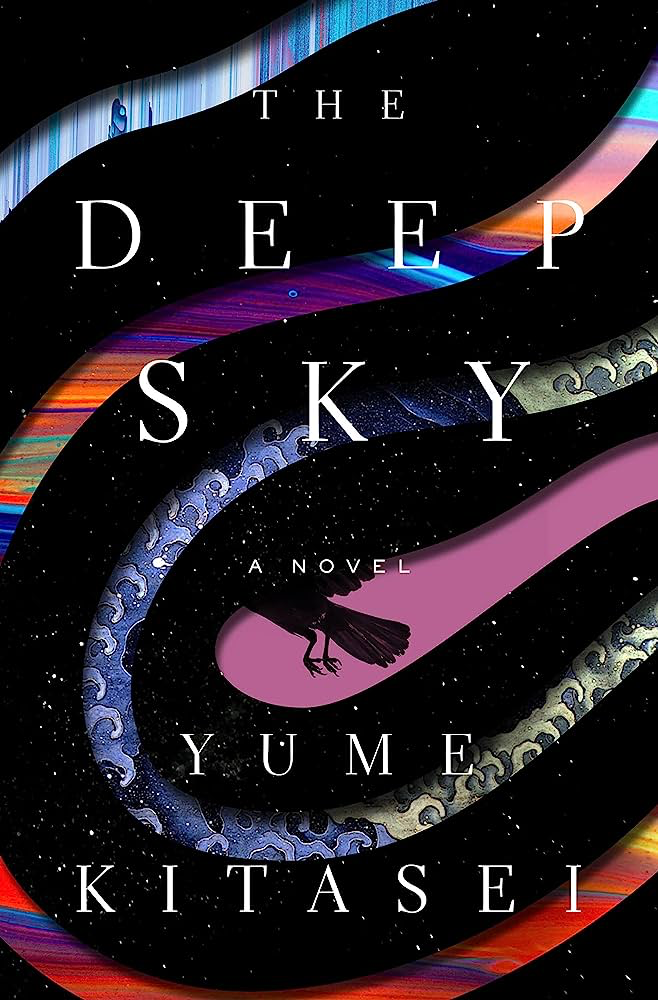
The Deep Sky – Yume Kitasei

Asuka has been chosen as a representative on a mission to deep space, where she will help give birth the next generation of Earth’s children. But she has been chosen to represent Japan—a country she barely knows, as a half-Japanese, half-Latina girl raised in the United States. Feeling like an imposter to an unfamiliar country, she accepts her duty and joins the crew of the Phoenix. But a deadly explosion onboard the ship leaves her the only surviving witness. With all eyes on her once more, Asuka must get to the bottom of the explosion before the perpetrator strikes again.

TW/CW: racism, terrorism, miscarriage/fertility themes, death of a child

“Literary” sci-fi rarely does it for me; most of what I’ve read barely scrapes past the 3.5 star rating for me, at best. Often, what happens is that the sci-fi element gets significantly watered down for the sake of marketability, drama, and a place in a celebrity’s book club (see: Sea of Tranquility, In the Quick). But The Deep Sky had the chops to make itself unique—and incredibly poignant.

The sci-fi plot of The Deep Sky is pretty standard as far as story elements go, but Kitasei’s approach to it made it feel fresh. It’s the setup for a myriad of sci-fi thrillers: you’ve got a large crew voyaging through the depths of space, only for a tragic accident to leave everyone onboard in suspicion, with no way to get back to Earth. It’s not necessarily a new approach plot-wise that keeps it going—it’s the emotional core that Kitasei brings to it. You’re really able to see deeply into Asuka’s head, deeper than a lot of authors dare to go with these kinds of stories; it’s a great way to increase the stakes without having to complicate the mystery of the story.

Also, LET’S HEAR IT FOR MIXED-RACE REPRESENTATION!! I’ve been on a roll with books with amazing mixed-race characters and stories lately (see also: Leslie Marmon Silko’s Ceremony—a very different book, but no less poignant), and as a mixed-race person, I’m so glad that narratives like these exist. Kitasei’s depiction of the imposter syndrome that Asuka faces about her identity is twofold—not only is there the level of it that comes with her being of Japanese and Mexican descent in the U.S., but also in the fact that she has to represent Japan—a country that she’s barely been to—in this mission. It really did make me feel so, so seen. Kitasei’s portrayal of having these intersecting identities and them coming at odds with how others want to box you in was deeply moving and authentic, and I cannot thank her enough for that.

Back to the subject of literary sci-fi. A lot of these types of novels that I’ve read deal with intersecting, nonlinear timelines, which may or may not have to do with actual time travel (case dependent). For the most part, it worked incredibly in Kitasei’s favor—even outside what we can consider the “main” plot, the pieces that we get of Asuka’s life before the deep space mission were almost more intriguing than the actual murder mystery in space. Kitasei’s character work is incredibly detailed and nuanced, and having most of this novel be driven by character and family was a choice that made me enjoy it that much more. These types of sci-fi thrillers normally lend themselves to very distant characters, and minimal character work by proxy (outside of “trust no one”), so this was a breath of fresh air in that sense.

That being said, the nonlinear timeline was also what brought part of the novel down for me. There’s much more emphasis placed on the time before the mission than the actual mission, making the murder mystery plot feel like an afterthought. The way that these timelines were spaced out meant that we went long stretches without checking in on what’s supposed to be the novel’s inciting incident, which made the stakes feel much lower than they were meant to be. The tension got appropriately amped towards the end, but other than that, there really wasn’t as much thriller as I was expecting going in. Maybe this is just a matter of how The Deep Sky was marketed, but I did wish we got a little more of the “main” plot.

All in all, a rare gem of a literary sci-fi novel where every page brimmed with emotion and suspicion. 4 stars!

The Deep Sky is a standalone; it is also Yume Kitasei’s debut novel.

Today’s song:

listened to my first Arlo Parks album, and I’m a fan!! this was my favorite, for sure

That’s it for this week’s Book Review Tuesday! Have a wonderful rest of your day, and take care of yourselves!