Posted in Book Review Tuesday

Book Review Tuesday (12/9/25) – Planetfall

Happy Tuesday, bibliophiles! My finals are pretty much over, so it looks like I’ll be coming back.

Yeah, I thought I’d broken my “comes back from break, immediately writes a negative review” streak too. As always, I maintain that a balance is necessary.

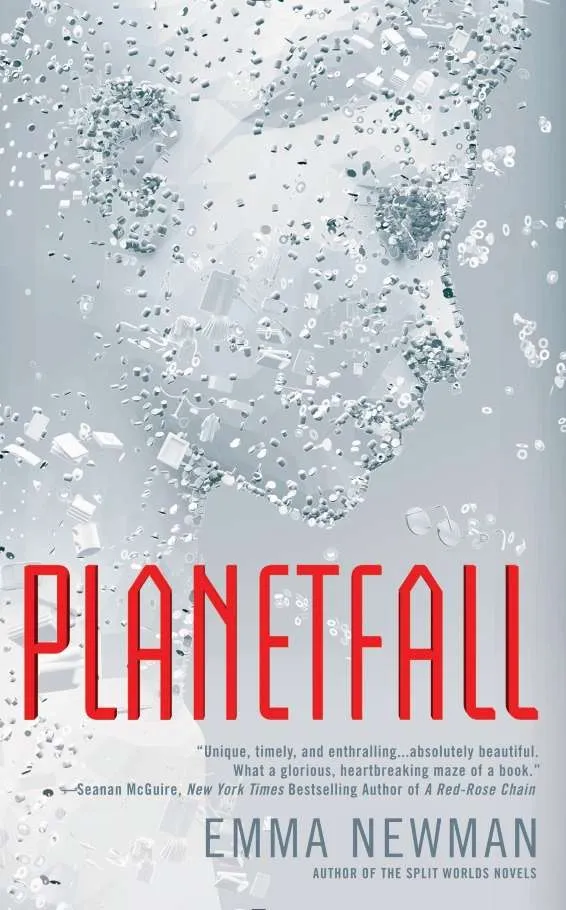
For the most part, my quest to find more diverse sci-fi has been successful and has led me to find so many remarkable new books and authors. However, there are always some misses along the way, because as always, diversity isn’t a guarantee that a book will have a sound plot and characters. I’d seen Planetfall come up on several lists of science fiction with solid queer and disabled rep, so of course I snapped up a copy at the library when I had the chance. Unfortunately, Planetfall was lukewarm at best, and a jumble of unfulfilled promises at worst.

Enjoy this week’s review!

Planetfall (Planetfall, #1) – Emma Newman

22 years ago, escaping the brink of certain extinction, the last remains of humanity formed a colony deep in the cosmos, on a mysterious planet home to a strange alien structure. Leading them was Lee Suh-Mi, a godlike figure who has retreated in recent years to live inside of the alien structure. Renata “Ren” Ghali, an engineer, has spent her life toiling away to make this new haven habitable for humanity. But when a stranger arrives on their doorstep bearing an uncanny resemblance to Suh-Mi, Ren must question everything she knows about her new planet—and her supervisors.

TW/CW: panic attacks/mental illness (PTSD, anxiety) themes, ableism, grief, death, murder, descriptions of injury, death of a child, substance abuse (alcohol)

Once I got past the halfway mark of Planetfall, my recurring thought was “This is just Prometheus if it sucked.” Prometheus is already a divisive film (I’ll always have a soft spot for it, I don’t care), but this novel feels like what would happen if you separated Prometheus from the Alien franchise…and then surgically extracted everything that was interesting about it.

I will say, even though my overall experience with Planetfall wasn’t the best, there were some significant positives. Newman’s prose had moments of being very clever and poetic, though they were few and far between. I liked the inclusion of Renata’s mental illness, and the pushback of the narrative of disability/mental illness needing a cure, especially in sci-fi settings. The casual inclusion of lots of characters who were queer and/or people of color was also a plus.

Yet once you get beyond that, there isn’t much to like about Planetfall. One of the worst things to fall short on in genre fiction in general is the sense of place. If you’re in the real world, you can let go of descriptions on the basis that your reader exists in this world and knows how it functions; when you’re creating something entirely new—say, an alien planet—grounding the reader in the setting is almost always an absolute necessity. I was so excited to explore the alien colony that Newman set up, but hardly any of it was expounded upon. Other than a few throwaway descriptions of Ren hearing alien creatures’ mating calls (how do you not follow up on that?? Tell me about the creatures!) while trying to fall asleep at night, I have almost no clue about how this planet looks. I think there’s…some caves? Maybe? All I can say with certainty is that there’s an ominous alien structure. That’s about all I can tell you. That also extends to the interior of the colonists’ base—I’m lost as to even what that looks like, even though that’s where we spend most of the novel.

This novel’s biggest pitfall is that it sets up far too many things—both in terms of plot and theme—and there’s practically no payoff for any of it. Newman clearly wanted to say something about religious fanaticism, but her analysis didn’t get further than “religious fanaticism is bad,” which, while that’s obviously true, really merits going deeper than that. The plotline about Ren’s guilt and mental illness was the closest Planetfall had to having something tangible to say, but even that got lost amidst the tangled mess of half-baked threads. Given the prominence of guilt and religion in this novel, there could’ve been something compelling for Newman to explore, but those dots were barely connected, if at all. The same is true of the plot. The entire foundation of the colony is upended? Nah, we’re dealing with that later, I guess. There’s a whole thread where they find evidence of an alien language, and…nothing happens. I kid you not. They just drop that thread and leave it there. If you go into Planetfall thinking that any of the plot threads will be resolved, prepare yourself for disappointment. Reading this novel made me feel like Darla from Finding Nemo shaking Nemo in a plastic bag, desperately trying to get him to “wake up!” Spoiler alert: it never did.

Part of what accentuated that feeling of narrative unresolution was the fact that the characters weren’t developed nearly enough for me to even care what happened to them. Ren came the closest, but I suspect it was more because she was actively being horribly mistreated by some of the other characters. I’m not sure if I know a lot about her other than what happens to her, even though Planetfall happens entirely from her point of view. To Newman’s credit, her guilt was written quite evocatively, and that was where I felt the glut of my sympathy for her. She was less of a character and more of a chess piece for things to unceremoniously happen to. Had she been characterized beyond her crushing guilt, I might have been much more interested in the story—guilt is an emotion, not a character trait.

The same can be said for all of the other characters. All Mack really did was act badly enough for Newman to have an excuse to slide him in as the antagonist in the eleventh hour. Sung-Soo didn’t have any discernible traits other than the fact that he upends what the colonists had believed for decades. Speaking of other colonists…other than maybe four other named characters, where were they? With the lack of description, I fully would’ve believed you if you told me that there were only seven people tops on this planet. Planetfall was just so painfully bare-bones in most regards. All of the promises of a good story are here, from the themes to the plot, but it’s all promises and no deliverance. It’s the literary manifestation of doing the least to get your readers to believe that there’s a story going on.

All in all, a sci-fi novel that promised intrigue, mystery, and devastating secrets, and delivered on…none of those things. 2 stars.

Planetfall is the first book in the Planetfall series, followed by After Atlas, Before Mars, and Atlas Alone. Emma Newman is also the author of several other series, including The Split Worlds (Between Two Thorns, Any Other Name, All is Fair, A Little Knowledge, and All Good Things), the Industrial Magic duology (Brother’s Ruin and Weaver’s Lament), The Vengeance, and many others.

Today’s song:

That’s it for this week’s Book Review Tuesday! Have a wonderful rest of your day, and take care of yourselves!

Posted in Book Review Tuesday

Book Review Tuesday (8/12/25) – The Full Moon Coffee Shop

Happy Tuesday, bibliophiles! Apparently today marks ten whole years since I started with this blog…granted, it was a pretty far cry from what it is today, but it’s a marvel that I’ve kept it going for this long. Thanks for tagging along, everyone! 🫡

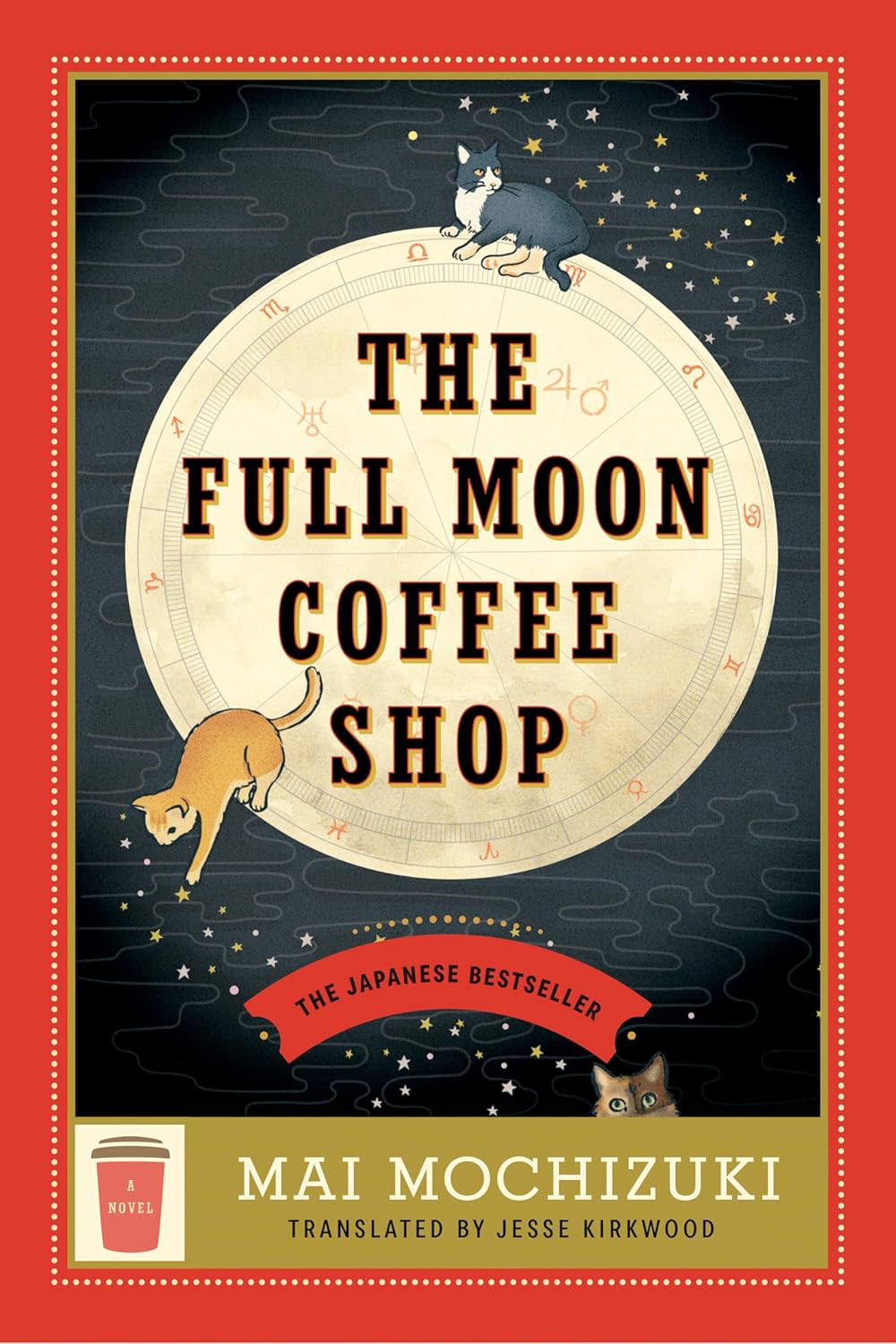
In my ongoing quest to read more translated books, I’ve stumbled upon a lot more Japanese books about cats than I anticipated. Granted, they’ve varied greatly, but it’s a pattern. Not that I’m complaining—I’ll read most anything involving cats! Which is partly why I decided to read The Full Moon Coffee Shop. It sounded downright whimsical, and to some degree it was, but ultimately, that quality was dulled by the formulaic nature of…well, pretty much everything else.

Enjoy this week’s review!

The Full Moon Coffee Shop – Mai Mochizuki (translated by Jesse Kirkwood)

The Full Moon Coffee Shop is no ordinary café. It only appears during the night of the full moon. Its waitstaff are talking cats, and you can never order what you want—they only serve you what you need. And if you find yourself in the Full Moon Coffee Shop, you’re in need of direction in life. Weaving together the interconnected stories of five unlikely strangers, the Full Moon Coffee Shop may be the answer to their burning questions—and the healing they desperately need.

TW/CW: cheating/affairs, sexism, grief

One of the biggest letdowns in reading: finding a book that seems super cute and whimsical, and then said whimsy is there in name only. You can’t just give us an incorporeal coffee shop manned by talking astrologer cats and then be so unconvinced by your own whimsy! God.

The worst thing that a cozy book can be is preachy. Having a low-stakes novel centered around life lessons, healing, and character growth doesn’t mean that you have to have a Learning Moment™️ worded like a PSA every few chapters. It’s a pitfall that’s easy to fall into with cozy fiction, but it’s one that takes away the magic for me. For novels that are meant to be about taking quiet moments that are often taken for granted and giving them more weight and value to the narrative, having everything explained to you seems so contrary to what “cozy” means to me. I just resent books that try to show character development decently, and then ruin it all by assuming that the reader doesn’t have the capacity to figure out what just happened and regurgitating it word-for-word. This was the main problem with this novel—it assumed so little of the reader and spelled everything out in the least subtle way. Every chapter of The Full Moon Coffee Shop pulled a “And what did we learn today, kids?” moment at the end without fail, and it just got so tedious so quickly. It just felt so preachily worded and repetitive, dulling any emotional impact this story could’ve had.

I feel so conflicted when talking about the writing of The Full Moon Coffee Shop. I read it in translation, so I really don’t know who’s to blame for the quality of the writing. I don’t know if Mai Mochizuki’s original text was dryly written to begin with or if Jesse Kirkwood’s English translation somehow dulled some of Mochizuki’s writing style and rendered it blander than before! I have no clue! Gaaaaaaaah! In any case, The Full Moon Coffee Shop was written so stiffly for a book that billed itself as so whimsical. The characters’ inner monologues all feel very rote and one-note and there’s hardly any sensory descriptions to immerse the reader in the setting. The writing let me down the most when we were introduced to the coffee shop itself, the most unique part of the novel; while I enjoyed the concepts of everything, from the celestial-themed desserts to the talking cat waitstaff, it was all described with the sparsest possible detail, the bare minimum word count to get the reader to visualize a new image. The Full Moon Coffee Shop is a slim novel, so it’s not like more detailed descriptions would’ve made it overly long—I was barely immersed in both the real-world and magical settings. The same can be said for the characters, who were barely developed beyond a problem they needed solving. The writing just felt like the bare minimum of describing…well, everything.

For me, one of the main issues with The Full Moon Coffee Shop was just how formulaic everything was. I had the same issue with What You Are Looking For is In the Library, a similarly cozy book about finding direction in life, but in that case, the stories were so repetitive and short and seemed to be saying the exact same thing, so my patience ran thin much earlier than with this novel. Once again, cozy doesn’t necessarily mean predictable—it should mean something that’s low-stakes, not repetitive. The Full Moon Coffee Shop felt like hearing the same story three times over; character is dissatisfied with life, character discovers coffee shop, character gets their natal chart read, character has a revelation and magically figures out how to fix their life. Rinse and repeat for 200 pages. You can see how tired that got. I appreciated that Mochizuki at least attempted to switch things up for the last story, but it didn’t do much to my interest in the story. All that changes is that it’s framed through the characters thinking that the coffee shop experience is a dream. Sadly, that amounted to little more than a perspective change and a switch to a handwritten font. It just got so repetitive and boring after a while, and even though the stories focused on different problems, Mochizuki rarely had anything new to say.

I hadn’t read a ton of reviews of The Full Moon Coffee Shop going in, but it seems a lot of people had problems with the heavy emphasis on astrology. The presence of astrology in and of itself wasn’t an issue for me, but it was more how said astrology was woven into the novel that got on my nerves. “Woven” is a generous word—even as someone who’s at least sort of into astrology, I felt absolutely sledgehammered over the head with every minute detail of it. After a certain point, The Full Moon Coffee Shop just became Astrology for Dummies. You know that meme of the kid pretending to read the Bible, but there’s a Minecraft book peeking out of the Bible? That’s what it felt like. It’s less of a novel and more somebody talking at you about the natal charts of complete strangers for 200 pages. I guess it might be beneficial to assume that your reader doesn’t know much about astrology, but Mochizuki got so bogged down in explaining every minute detail of every character’s astrology that the real meat of the story got lost. For me, it took away from the heart of the story, which should’ve been getting insights into the characters and their healing journeys. I feel like astrology easily could’ve been a fascinating aspect of the novel if not for how unsubtly it was shoehorned in—there could’ve been a chance to give it some narrative significance rather than spending 50 pages explaining astrology to the reader like they’re 5 years old.

Despite the formula of The Full Moon Coffee Shop getting on my nerves, I at least appreciated some of the messaging that the cats gave to the characters on how to fix their lives, particularly in the second chapter. However, the advice that the cats gave Mizuki seemed downright weird. I get that she’s not having success in her career, but the cats telling her to get with the times and not write what she loves just seemed so odd to me. There could’ve been something so poignant about success not being everything and her failures only being a small part of her career, but the cats were just talking to her like they were corporate executives telling her to be hip with the kids! Not only did that rub me the wrong way, the story itself seemed to refute the cats’ advice as well. Mizuki ends up finding success when she injects her signature style into a project that she was only doing for the money, thereby finding success in being herself and putting her own personal spin on things! Crazy concept! So why even have the cats tell her that in the first place, if that’s not even the lesson that the novel leads us to believe that Mizuki takes away from it?

All in all, a cozy novel that billed itself as tender and sweet, but ended up being unsubtle, preachy, and unconvinced of its own lessons. 2 stars.

The Full Moon Coffee Shop is the first in the Full Moon Coffee Shop series, followed by Best Wishes from The Full Moon Coffee Shop. Mai Mochizuki is also the author of the Holmes of Kyoto series.

Today’s song:

That’s it for this week’s Book Review Tuesday! Have a wonderful rest of your day, and take care of yourselves!
Posted in Book Review Tuesday

Book Review Tuesday (6/3/25) – The Death I Gave Him

Happy Tuesday, bibliophiles!

Here’s a continuation of my recent sci-fi mood…I’ve been looking to add more sci-fi to my TBR, because I seem to exhaust my supply faster than I can keep up. The premise of The Death I Gave Him being a queer, sci-fi/thriller retelling of Hamlet enticed me, but sadly, this novel didn’t deliver—not on the retelling front, and not entirely on the thriller part either.

Enjoy this week’s review!

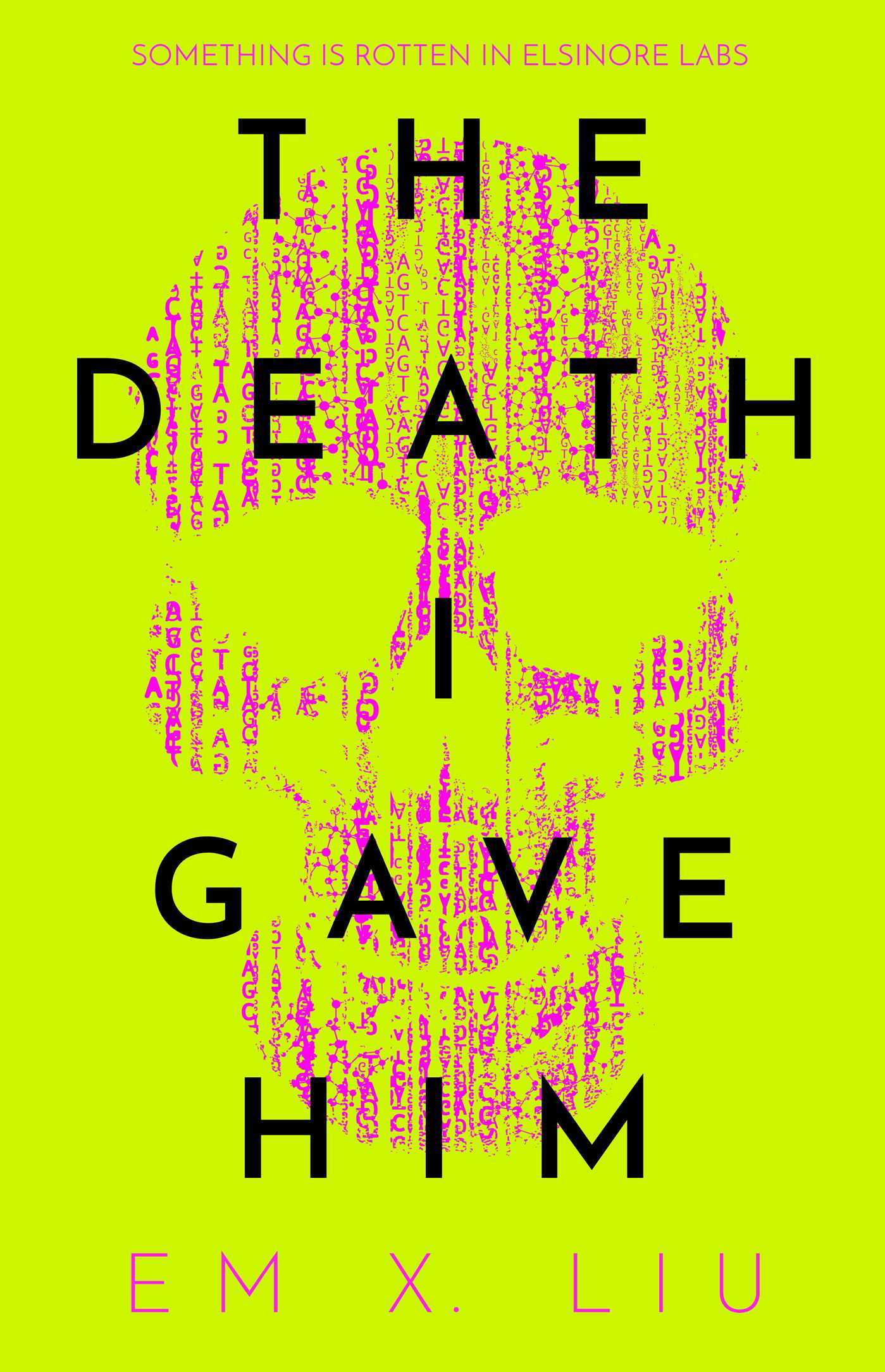
The Death I Gave Him – Em X. Liu

Hayden Lichfield is intent on carrying out the mission that his father is pioneering—the Sisyphus Formula, a substance that could one day reverse death itself. Enticed by immortality and down on his luck, Hayden throws himself into his work. But when his father is found murdered in Elsinore Labs, Hayden has no idea who to turn to—and who wanted to murder the man who wanted to beat death. Trapped in his room with only his AI, Horatio, to trust, Hayden scrambles for answers, and everyone around him is a suspect. But is it not just Hayden’s friends, but his father that have been lying to him all along?

TW/CW: murder, blood, descriptions of injury, suicidal ideation, grief, death of a parent

Trying to describe whether or not The Death I Gave Him qualifies as a retelling feels like the Ship of Theseus. If all of your characters’ names allude to Hamlet and you set your story in Denmark, but not much else relates to Hamlet, is it still a Hamlet retelling? How much Hamlet does one need to remove for it to still feel like a retelling? Sadly, Em X. Liu is proof that there is a limit to how much you can remove before it stops feeling like a retelling. It’s Hamlet in name only.

Having read Hamlet less than a year ago, I went into The Death I Gave Him with a fairly fresh memory. However, if not for the more obvious name changes (Hamlet becomes Hayden, Polonius becomes Paul, etc.) and the fact that it’s set in Denmark, I really wouldn’t have thought that this was a Hamlet retelling. I’m fine with loose retellings, but I don’t think it should’ve been billed as such. The whole Denmark setting definitely felt like very a “see? This is Hamlet, I promise!” move and wasn’t relevant to the plot whatsoever. I’m fine with loose retellings, but I feel like the similarities end with what I just described above. I’m not sure if this even qualifies as a retelling so much as people named after characters in Hamlet. Also, none of these people were nearly crazy enough to be in a Hamlet retelling. You’ve got to have someone go at least a little insane to have a proper Hamlet retelling. Hayden got a wee bit depressed and existential towards the end, but there wasn’t nearly enough “something is rotten in the state of Denmark” insanity to make it feel like a true tribute to Shakespeare. It just felt like a rather emotionally stunted novel even though it’s based off of something so dramatic. Some tonal liberties are inevitable for any given adaptation, but these ones just didn’t feel true to Hamlet, which made the more obvious Hamlet references feel more like preventative measures to make sure that people remembered that this was a Hamlet retelling.

Having mixed formats (interview excerpts, security camera footage, etc.) can be a great tool to add some additional context—and a unique flavor—to a novel, and I think it works especially well with thrillers, which The Death I Gave Him partially was. However, I don’t think Liu properly executed this format. Granted, it’s difficult to pull off, but when it’s executed well, it adds another layer of mystery to what is hopefully another layer of mystery. The problem Liu seemed to have is that, with the exception of the security camera footage, all of the other perspectives sounded exactly the same. All of the interviews, document excerpts, and “fictional” interludes by Horatio were in the same tense and the same POV, which basically rendered the format useless. Beyond that, these interviews and whatnot were from multiple people, but they all had virtually the same narrative voice. By the end of the novel, it didn’t even matter where the excerpts were coming from—they all sounded the same. If you’re going to pull off this kind of format, you have to make each component sound unique—if everything sounds the same, what’s the point in specifying which chapter is an interview and which one is a fictional account?

Also, none of the characters seemed to have much of a purpose outside of being props, aside from Hayden, Horatio, and maybe Felicia if I’ve being generous. Even though we get a significant portion of the novel through her interviews and written segments, I never even got a specific read on her voice since it was so similar to every other character’s. Paul, Rasmussen, and Charles were just there until they conveniently weren’t. The timeless fun of Hamlet comes from seeing everybody scheming against each other and different motives clashing against each other, but everybody was just rendered into very similar characters with too similar motives to each other for the mystery to really be worth it.

The same was true of the plot. I was committed to The Death I Gave Him because I was excited by the premise and wanted to see how the plot unfolded. I will say that Liu did a great job of setting the scene and cramming us in said locked room of this locked-room mystery. However, very little happened in said locked room—other than a handful of scattered moments, the place was quite slow, and the ratio of information that was revealed to the amount of pages it correlated to was way off—it felt like we only got significant revelations every 100 pages, and The Death I Gave Him is a little over 300 pages. There needed to be much more intrigue and complicating factors and clashing motives for this novel to work as a mystery; what we had was quite lackluster.

All in all, a sci-fi retelling of Hamlet that missed the mark on its source material and its new plot. 2 stars.

The Death I Gave Him is a standalone, but Em X. Liu is also the author of the novella If Found, Return to Hell and several short stories in various anthologies and magazines.

Today’s song:

That’s it for this week’s Book Review Tuesday! Have a wonderful rest of your day, and take care of yourselves!
Posted in Book Review Tuesday

Book Review Tuesday (5/13/25) – The Knockout

Happy Tuesday, bibliophiles!

I always feel bad whenever I come back after period of hibernation only to come back with a negative review. I just have to get it all out sometimes! I’ll probably have something nice to say by next week.

Say it with me, kids: just because a book has diverse representation doesn’t erase the flaws in its writing! Sadly, The Knockout was not the one-two punch that the title promised: it tried to hard to sound hip and teenager-y, and nosedived spectacularly.

Enjoy this week’s review!

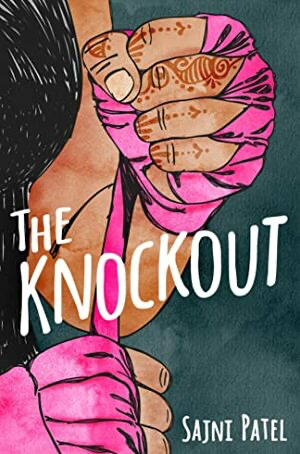
The Knockout – S.A. Patel

Kareena Thakkar knows her power. She’s been building up her skills in Muay Thai, and she’s good enough to qualify for the US Muay Thai Open—an event that could take her to the Olympics if she wins. But even though it’s where her passion lies, Kareena is divided between her Muay Thai world, her peers’ desires for her to be traditionally feminine and act the way a good Indian girl should. With her ill father and the Olympics on the line—as well as a cute boy, Kareena must decide which world she’d rather stay in—or if she needs to divide those worlds after all.

TW/CW: bullying, terminal illness, misogyny, medical content

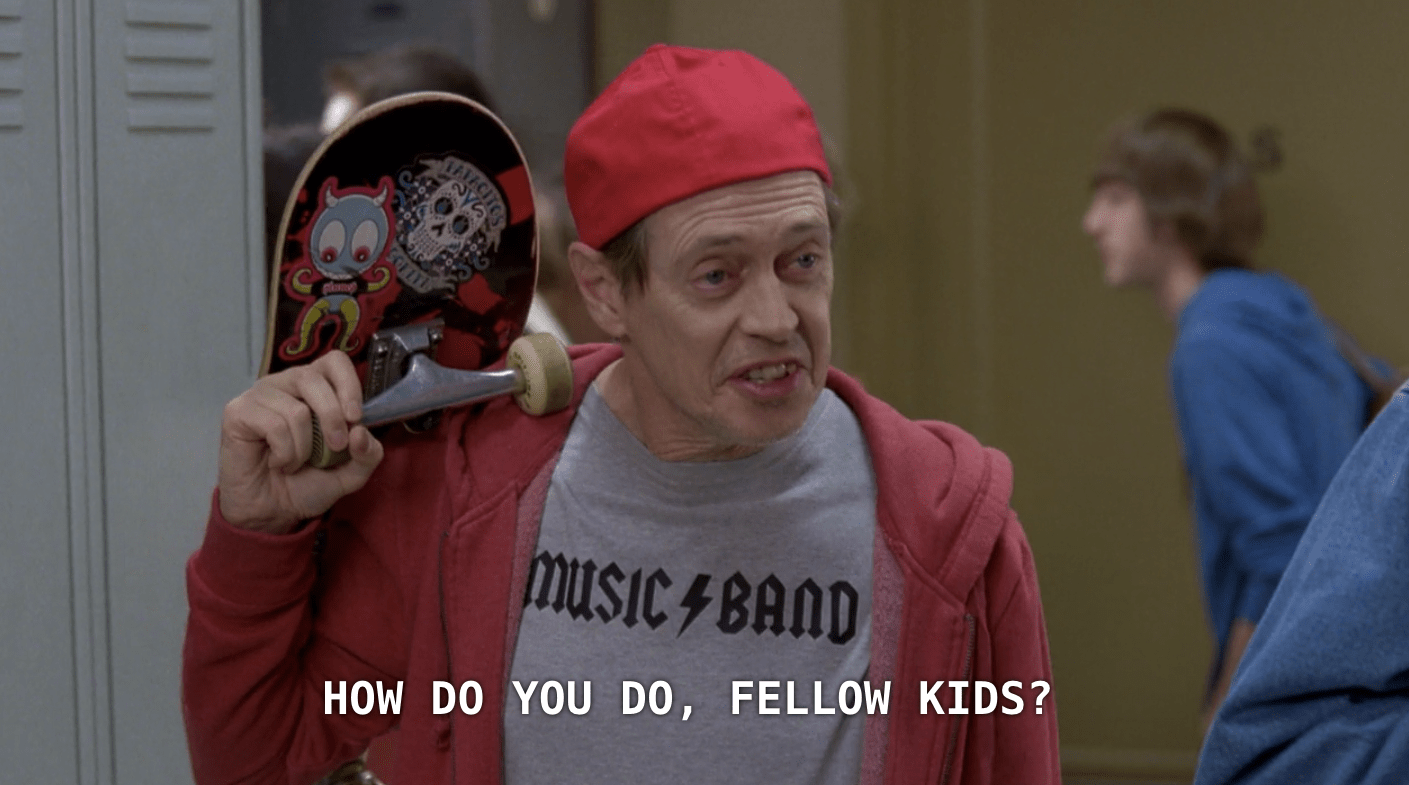
Look. I read YA frequently, knowing that it’s a market of books about teenagers mostly written by adults. Even by that standard, I haven’t read a book so deeply how do you do, fellow kids? as The Knockout in some time. I wanted to badly to root for Kareena, but her insufferable voice—and by extension, Patel’s writing—made it a real ordeal.

Kareena’s voice was the most glaring issue that The Knockout had. Firstly, she didn’t sound or act like a 17-year-old. If anything, between her language and her maturity, she sounded closer to 13 or 14. The kind of stiff, teen movie comebacks she doled out to her bullies were nowhere near the kind of experience a person would have at 17—especially someone who had been through as many struggles as her. In my experience, what you need to do when writing teenagers (or any character who’s younger than you) is to emphasize how you (or your peers) remember feeling—what you’d prioritize, what was important to you, how you would react to situations, etc. Writing like a teenager is about the emotion, because there are a lot of them running around your brain at that age. Sure, it’s hard to nail the voice, and granted, I don’t have the age distance from Kareena that Patel has. But there’s lots of easy ways to not do it, and some of those are a) extensively leaning on what you think is “hip” slang, and b) automatically skewing the character’s voices as young as possible within the teenage range. Between the unnecessary censorship of cursing here and there and her childish outbursts, Kareena was not believably 17. Additionally, Patel’s insistence at integrating what she thought to be “current” Gen Z slang was painfully bad. If anything, it dated The Knockout leagues more than making it relevant. It’s not the teenage experience, but instead the teenage movie experience, simply parroting what adults think teenagers sound like. It positions itself as current and relatable while never encapsulating what it was like to be a teenager, making what should’ve been the heart of the novel hollow.

As with Kareena’s supposed 17 years of age, I was never convinced of the stakes in The Knockout. When Patel established how good Kareena was at Muay Thai, all it did was make Kareena feel unnecessarily overpowered. I normally only say that about fantasy or sci-fi novels, but she was just too good to the point that every fight she did seemed to be a fleeting moment of struggle before she absolutely pummels her opponent. This continued throughout the duration of the novel. Even though Kareena had the Olympics on the line, I never once got the sense that this was hard for her. Her training seemed to be the only time she struggled—other than that, she just flew through the US Muay Thai open without a problem. If she actually experienced tangible setbacks within her practice or the Muay Thai open, I would’ve been more motivated to root for her. Yet everything seemed to be handed to her on a platter, making the stakes feel almost nonexistent. I knew from the start that Kareena would get everything that she wanted, and while I appreciate the value of having diverse characters succeeding in their narratives, it made for a book with no stakes.

Bullying is a major plot point in The Knockout, but I don’t think that Patel succeeded in making all of it completely believable. As far as Kareena getting bullied by her other Indian-American peers for not being “Indian” enough went, that was one of the few parts of the book that was successful; unlike the main plot, it gave Kareena’s struggles some tangible weight. However, I wasn’t fully convinced that her doing Muay Thai was something so outrageous that she thinks that she’ll be bullied by the whole school for it. I get that it’s not a traditionally feminine sport, but with the way that Kareena talked about Muay Thai, you would think that she’s coming out of the closet. Even with the cliched interactions between Kareena and her peers, I just couldn’t imagine her being bullied for it, and not just because if someone were to slam her into a locker, teen movie-style, she’d slam right back. Kareena being a Muay Thai champion didn’t feel nearly as dirty as a secret as Patel lead us to believe, which made some of the novel’s more personal stakes less believable as well.

Additionally, I have mixed feelings about the romance between Kareena and Amit. It didn’t fully sidetrack the book for me, but I wasn’t fully invested either. I did like that Amit was instrumental in helping Kareena reconnect with parts of her Indian culture, but I don’t think he had much of a personality beyond what he did for Kareena. They seemed to have almost all the same interests, and Amit didn’t have anything to distinguish himself other than not doing Muay Thai. He was just a blank slate with similarities to Kareena baked in so that there could be some instant “chemistry” between the two of them. The only tension in the romance was when Kareena met his more traditional family, so the tension didn’t even lie with him—it was all outside factors that threatened the integrity of the relationship. The only differences I can really think of about Amit and Kareena is that he comes from a more traditional family and he’s…well, a different gender. That’s it. He wasn’t a person, he was just a boyfriend. I do think that this kind of story is good with a romantic subplot, especially considering that it’s YA realistic fiction, but like almost everything else in The Knockout, I could not get invested whatsoever.

That being said, I do have some positives for the book. I’ve seen a lot of books, especially YA ones, where the main character has to choose between their traditional culture and the more “appealing” American culture. The Knockout, by contrast, had Kareena be raised by two parents who weren’t connected to their culture in a conventional way—they were flexible with letting their daughter be who she wanted to be without sacrificing their Indian heritage in the process. Kareena was disconnected from her roots in some ways (which she begins to remedy in this novel), but both she and her parents emphasize that there’s no single way to be Indian. I can’t speak to any cultural accuracies, of course, but I loved this as a message for a YA book in this context—there’s no one way to be any identity, be it in terms of gender, ethnicity, race, or anything else. Paired with the expectations of femininity that society puts on Kareena, it’s a wonderful message. I also really liked that Kareena had a combination of multiple interests that weren’t traditionally feminine—in addition to Muay Thai, she’s also passionate about computer science. Sadly, all this was overshadowed by the flaws in most of the novel, but if you took all that away, at least The Knockout has something beneficial to say. I just wish it was said in a less cliched, more authentic way.

All in all, a book with a positive message if you soldiered through it, but was bogged down by childish dialogue writing and characters (even by YA standards) and a lack of all-around believability. 2 stars.

The Knockout is a standalone. She is also the author of several books for teens and adults, including Isha, Unscripted, The Design of Us, First Love, Take Two, The Trouble With Hating You, Sleepless in Dubai, My Sister’s Big Fat Indian Wedding, and the Venom series (A Drop of Venom and A Touch of Blood).

Today’s song:

That’s it for this week’s Book Review Tuesday! Have a wonderful rest of your day, and take care of yourselves!
Posted in Book Review Tuesday

Book Review Tuesday (1/28/25) – The Marble Queen

Happy Tuesday, bibliophiles!

Graphic novels haven’t been all I’ve been reading this month, but I’ve certainly been on a kick of reviewing them. Unfortunately, this one wasn’t nearly as good as The Infinity Particle, but it’s apples and oranges to compare them. I really need to stop putting everything with “sapphic” and “fantasy” in the description on my TBR, because while I love those two things together, they aren’t automatically the recipe for a good book. Sadly, The Marble Queen is proof of that.

Enjoy this week’s review!

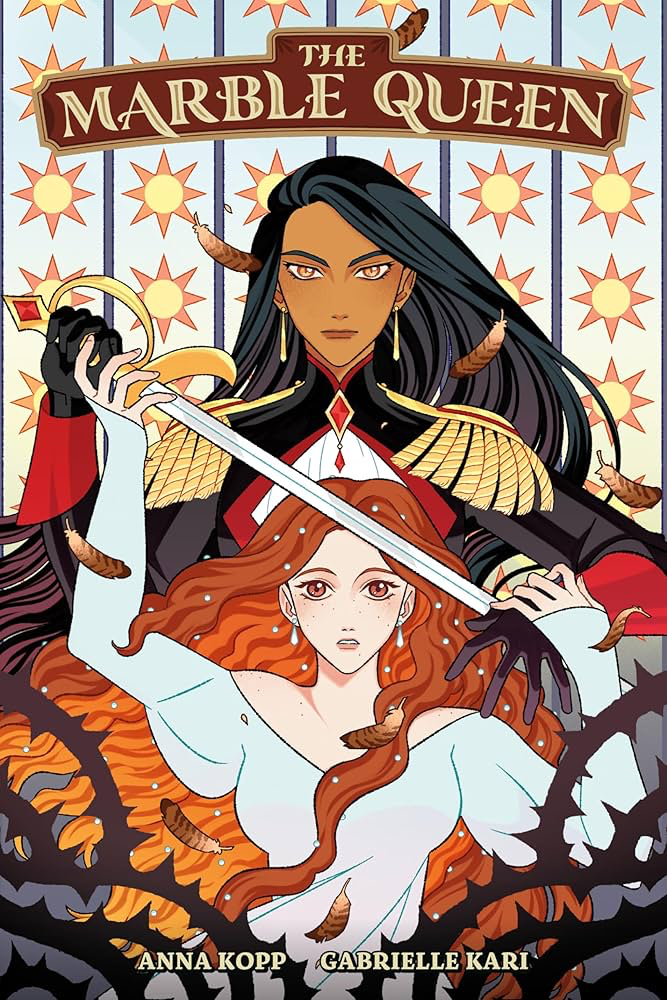
The Marble Queen – Anna Kopp and Gabrielle Kari

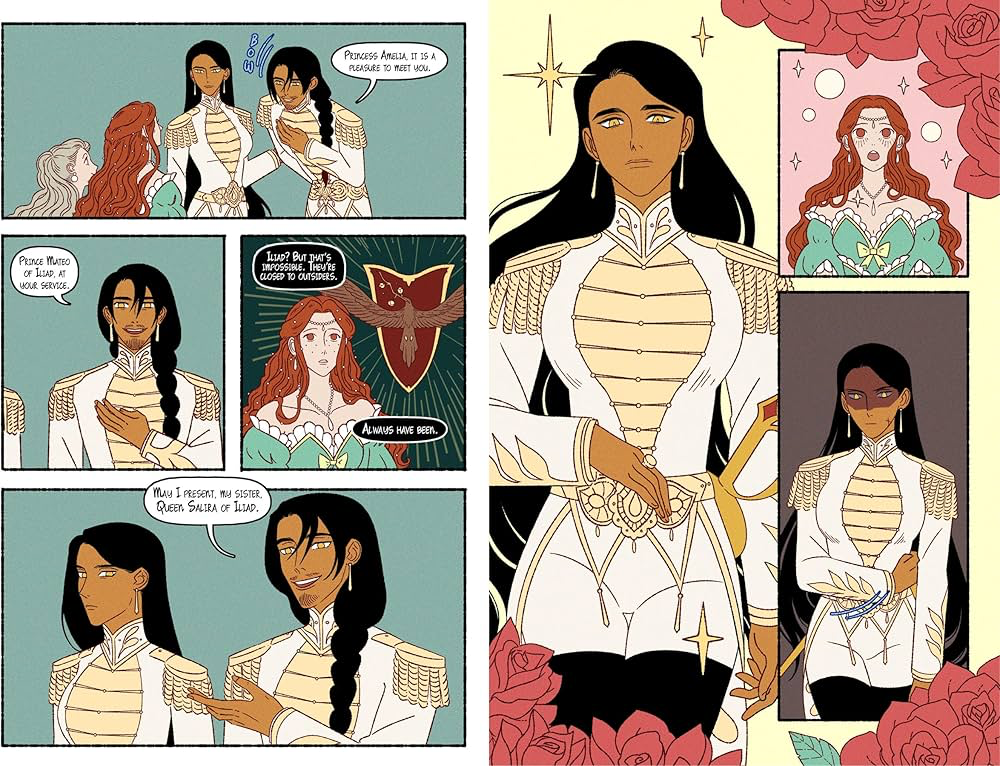
Princess Amelia lives in a kingdom in turmoil. Accosted on all sides by pirates and on the brink of war between its neighboring nations, Marion is on the verge of collapse. Only a miracle can save it—and that miracle may be to marry Amelia off to the prince of the neighboring kingdom of Iliad. But soon, she finds out that there was a mistake—it was not the prince she is being married off to, but the new queen, the stunning Salira. Stuck in a foreign kingdom with no control over her destiny, Amelia searches for answers. But with political forces from all sides conspiring against them, she must ally with Salira in order to save both of their kingdoms from ruin.

art by Gabrielle Kari

TW/CW: blood, violence, loss of loved ones, anxiety, poisoning (attempted)

I went into this graphic novel thinking I’d get a sapphic fantasy. The sapphics? They’re here. The fantasy? Not so much. The writing and artwork? The latter picked up some of the slack left by the rushed writing, but not enough. Given more page time and refinement, The Marble Queen could have been something promising, but it was clearly a case of too many plot ideas in a shell that could not hold all of them.

If you’re looking for fantasy, The Marble Queen will likely disappoint. If you’re looking for something more along the lines of a regency romance with political intrigue thrown in, you might be more satisfied. The Marble Queen has plenty of ballroom dancing, flowy dresses, court intrigue, and pirates, but nothing that would necessarily separate it from something in our history. There was a vague, throwaway sequence about some crystals beneath Iliad that supposedly had magical powers, but it ended up having zero consequence to the plot—it felt like Kopp threw it in just so that she could say “See? See? This is fantasy, we promise!” Also, so many of the place names felt so randomly plucked and too close to real world things—kingdoms called Marion (not necessarily a common name, but similar enough to Marianne/Maryanne that it loses the fantastical feel) and Iliad (I don’t think I have to explain that one) made the worldbuilding feel even lazier. The Marble Queen’s artwork also had a lack of immersion—other than the glimpses we got of the palace and the outside world, many of the characters were shown on flat, monochrome backgrounds, making it difficult to get a full picture of the world. Had this been historical fiction with a loose basis in some of our cultures, it might have been more effective.

Additionally, The Marble Queen was all over the place in terms of plot. I got the impression that Kopp and Kari had a plethora of ideas for what to do with the story, but not nearly enough time to execute them. As a result, every subplot felt smushed together like sardines in a tin can—so many of them were there, and yet almost none of them had room for proper mobility. I was particularly intrigued by Amelia’s anxiety and her feelings of isolation in Iliad. Her fear and alienation, although given a fair amount of space in the first half of the novel, had the potential to be poignant, but since it was shoved in unceremoniously against at least six other subplots, it had to room to grow into a compelling, sensitive story. The same went for the political intrigue—I liked it in concept, but the plot with Stefan had so little room to develop that by the time the reveal came, I’d guessed it about 30 pages earlier. In between all this, we get rapid-fire scenes of training montages, poisoning attempts, emotional backstory with not nearly enough grace given to the grief they should have held, said random bit about magical crystals that doesn’t end up being relevant at all, and a pirate that was clearly supposed to be a “fan favorite” character, but only got about 5 pages of character interactions tops. Given more polishing, The Marble Queen could have been a successful story, but it had no sense of direction, which made me struggle to keep my interest in the characters.

Said plot, more overstuffed than a Thanksgiving turkey, is why I think the romance didn’t work for me either. I did get that the arrangement was meant to be rushed, but when so many extraneous plot events were happening around Amelia and Salira, I never bought the chemistry that Kopp so badly wanted to convince the reader that existed between them. We’re supposed to believe that Amelia and Salira are slowly falling in love, but there’s hardly any indication in the dialogue that a connection is being made, save for a heavy dose of panels of Amelia with sparkly eyes and anime blushing. We’re supposed to sympathize with Salira because of the untimely death of her first girlfriend, but we hardly get an indication that she’s uncomfortable during the wedding, and after the explanation to Amelia, she comforts her, and then they make out in front of a painting of her ex-girlfriend and move on. Again, this was a victim of The Marble Queen‘s full-to-bursting plot—a romance that could have been compelling was ruined by a plot that moved too fast and contained too much of the wrong things.

The art was…alright, I suppose. That gorgeous cover set my expectations too high. I could get on board with the almost-Manga art style, and I did enjoy some of the expressions that the characters made. Although the color palette was warm and pleasant, it was largely flat—there was a significant lack of shading and depth, which can sometimes work, but in a story and world this fantastical, some of it was necessary. Additionally, Kari had a tendency to overexplain some of the gestures of the characters. Instead of having some creative (and sometimes silly) depictions of sound effects, there were direct writings of, say, “rise,” “kneel,” or “stab” when characters stood up, knelt or got stabbed, or repetitions of “beautiful” when Amelia first sees Salira. In moderation, some of this could have worked, but in such large amounts (and in places where these things could have easily been inferred by…well, just looking at the artwork), they grated on me.

That being said, I loved Gabrielle Kari’s character designs! She did an excellent job of making the characters expressive and distinctive in their respective looks. Anime blushing aside (I could let it slide after a while), all of the characters had wonderful stylistic quirks and tells, making them fun to follow around their kingdom, even when the writing itself slacked off. The design language wasn’t just clear, but enjoyable to see between the kingdoms; I loved the contrast of Amelia’s flowing, flouncy dresses in contrast to the tighter, more soldierly attire of the royals of Iliad. It added what some of the writing failed to add with the themes of her alienation and isolation—she was clearly an outsider, in both her foreign mannerisms and personality and the way she stuck out in the crowd.

All in all, a fantasy (?) graphic novel with the potential for epic drama, but got dragged down by an overstuffed plot that squeezed the life out of the characters. 2 stars.

The Marble Queen is a standalone, but Anna Kopp is also the author of Lifeblood, as well as many Minecraft novels for younger readers. Gabrielle Kari is also the illustrator of No Holds Bard, written by Eric Gladstone.

Today’s song:

NEW TUNDE ADEBIMPE IN APRIL, LET’S GOOOOOOOOOO

That’s it for this week’s Book Review Tuesday! Have a wonderful rest of your day, and take care of yourselves!
Posted in Book Review Tuesday

Book Review Tuesday (12/18/23) – You Have a Match

Happy Tuesday, bibliophiles!

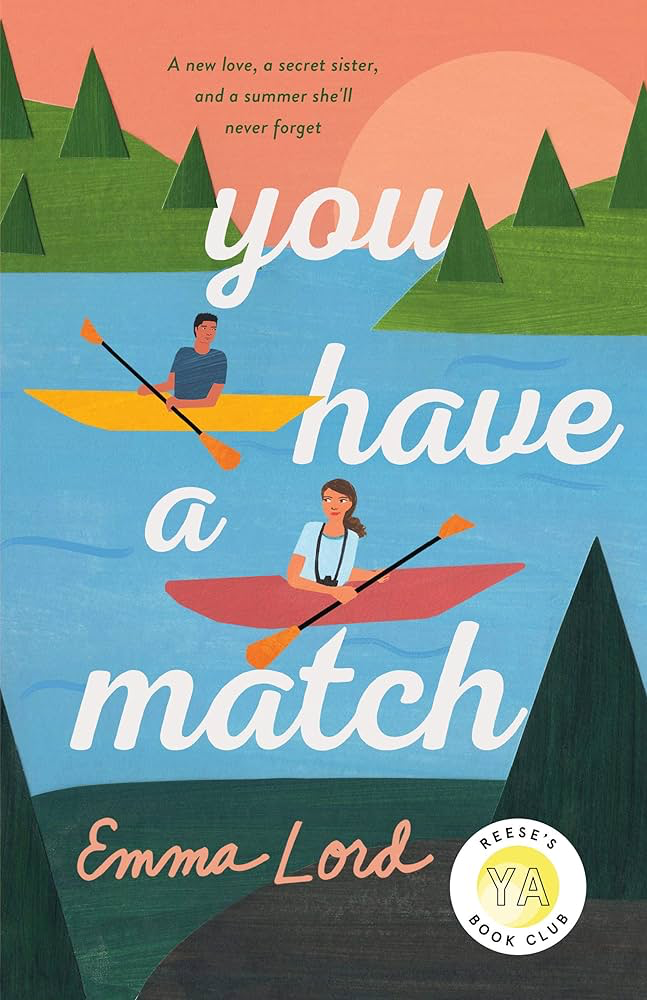
Ever since I read Tweet Cute and loved it about three years back, I’ve been meaning to read Emma Lord’s follow-up, You Have a Match, for ages. I’m not sure if I can just chalk it up to “I shouldn’t read anything that’s languished on my TBR for more than 3 years” because it seems like most of the Goodreads reviewers I’m seeing found it just as disappointing, but either way, this one was a miss for me.

Enjoy this week’s review!

You Have a Match – Emma Lord

Abby mainly decided to give a DNA service a go as a joke. But the results tell her that she has a secret sister—Savannah Tully. And Savannah isn’t just an ordinary sister—she also happens to be an influencer with a seemingly perfect life. Desperate to find out about the sister her parents hid from her, she hatches a plan to meet up with her at summer camp. But distractions from Leo, her best friend (or something more?) and co-chef at the camp, and drama between her and Savannah threaten to throw a wrench in her plan to find out why her parents separated her sister.

TW/CW: grief/loss, mentions of substance abuse, anxiety, mentions of abandonment, brief descriptions of injury and illness (broken bones, pneumonia)

I was banking on You Have a Match being at least decent just because of the memory of how good Tweet Cute was, but I really should’ve run for the hills the minute I saw the Reese’s YA Book Club sticker on it. But whether or not I’m looking at Tweet Cute through rose-colored glasses or if Emma Lord just took a dip in quality, You Have a Match was not nearly as sweet—or even enjoyable—as its predecessor.

The main issue with You Have a Match was that it didn’t seem to know what it wanted to be. The premise (and partially the title, although it definitely applies to both) was advertised mostly as a kind of coming-of-age story of sisterhood, but the book itself also wanted to shove a fully-developed romance plot in between it all. The thing is, both of these stories could have been great as separate books—one about finding your lost sister, one about falling in love at summer camp. And I really believe that Lord could’ve succeeded with both of those stories. But even though it could have been possible to merge the two, You Have a Match felt like it didn’t know where to put the emphasis. As a result, the story felt like it needlessly jumped all over the place, making both of the plots cease to be cohesive. It really feels like a case of Lord biting off far more than she could chew.

As a result, the romance that was supposed to happen between Abby and Leo definitely suffered. So much attention was brought to the plot with Savannah and her friends that there was no room for their chemistry to develop, and by the end of the novel, none of the romance felt fleshed out in any way. All of it hinged on the reader believing the information that was very much told (certainly not shown…) that they’d had a beautiful friendship for years, and even that wasn’t enough to save the absolutely lukewarm romantic aspects of this book.

The pacing of You Have a Match didn’t help either of these issues—in fact, it was probably the reason that they were exacerbated. Once the characters got to camp, none of the timing made any sense. It felt like we were just being bounced along like a pinball from subplot A to subplot B without any room to breathe or make sense of what was happening. Everything felt transient and borderline pointless; 309 pages (for the Kindle edition) isn’t that short of a page count, but some points really did feel like filler. This is probably what could have solved the “this book doesn’t know what it wants to be” issue—cut all the filler and focus on developing the relationships between the characters, and chances are, I would’ve enjoyed it so much more.

Part of what endeared me to Tweet Cute was that the social media parts rarely came across as a Gen X author trying too hard to sound “hip.” As much as it can be, it felt real enough that the humor and romance could come through via that aspect. However, whatever internet savviness that Lord had was lost somewhere in the dust between Tweet Cute and You Have a Match. Maybe it was the shift in focus from Twitter to the whole mess that is the concept of Influencers, but it felt incredibly shallow in comparison. Despite her (eventual) redeeming qualities, Savvy came across as the most unoriginal, cardboard-cutout idea of an influencer (fit, makes green smoothies, immaculate hygiene, does yoga, etc.), but Lord could have easily subverted that idea with something that set her apart. All of the nuance came down to “influencers are people too, my life isn’t always perfect :(” and never went any further. Especially with the fact that Abby and Savvy were sisters all along, I feel like this could’ve gone so much deeper—or, at least, in a more interesting direction.

All in all, a coming-of-age, summer camp rom-com that wasted almost all of the potential that it had. 2 stars.

You Have a Match is a standalone, but Emma Lord is the author of several other novels, including Tweet Cute, Begin Again, When You Get the Chance, and the forthcoming novels The Break-Up Pact and The Getaway List.

Today’s song:

if I listen to this enough time, will I just forget that winter exists?

That’s it for this week’s Book Review Tuesday! Have a wonderful rest of your day, and take care of yourselves!
Posted in Book Review Tuesday

Book Review Tuesday (12/5/23) – The Witch King

Happy Tuesday, bibliophiles!

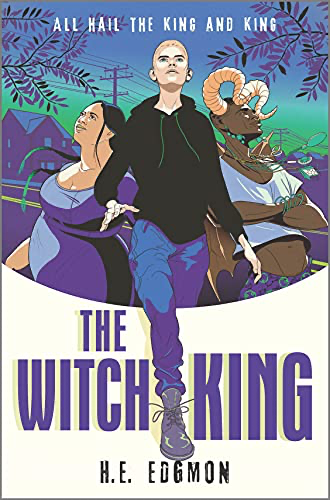
Far be it from me to start the month off with a negative review, but that’s just how my December started off. Eh. Should be a lesson to me for trying to read something that’s been on my TBR for 3+ years—my tastes generally don’t change dramatically in that amount of time, but my standards for writing and plot certainly did. That’s all to say that The Witch King was a promising, inclusive fantasy that quickly proved itself to be not worth my time.

Enjoy this week’s review!

The Witch King (Witch King, #1) – H.E. Edgmon

Wyatt Croft is a witch, and in the North American realm of the fae, witches are the enemy. Years ago, Wyatt’s magic got out of control, forcing him to flee back to the human world and go into exile. But his betrothal to Emyr, the prince of the fae, has not dissolved, and Emyr is back on the hunt for him. Forced back into the world of the fae, Wyatt must come to terms with his engagement—one that may hold the lives of all of North America’s witches in the balance. And his feelings for Emyr may be coming back, as much as he wants to hide them…

TW/CW: transphobia, deadnaming/misgendering, blood, gore, abuse (physical and verbal), panic attacks, substance abuse, PTSD themes

DNF at 36%.

The Witch King has made me realize that I need to expand my criteria for DNFing books; most of my DNFs are 1-star books—the ones that are just so bad that I can’t finish them. In comparison to a lot of the other books on my DNF shelf, The Witch King wasn’t comparably as bad. But the difference is that at a certain point, it was just so clear to me that this book was not worth my time. I really wanted to like it, but once I got past the first third, there wasn’t any point in me finishing this book. A DNF is not always a 1-star read, but a 1-star read is not always a DNF. It’s like geometry but easier to explain.

I wanted to emphasize that I really wanted to like The Witch King. But in the 3+ years that this book has languished on my TBR, it’s clear that my standards have changed. The foreword by Edgmon was incredibly touching, and it’s so clear that this was the book of their soul—there’s no denying the love that went into this book. And it’s so, so important to support trans authors like him, but it’s just as important to remember that even when you read diversely, a book’s diversity doesn’t automatically fix every plot hole and writing issue. There’s some slack I’m willing to give Edgmon because this was his debut, but The Witch King really left a ton to be desired.

It’s clear that Edgmon put a lot of thought into constructing Wyatt’s character, but in his quest to make him as relatable as possible, Wyatt turned from simply “relatable” to an incompetent mess. Even as a queer person, there’s only so many “I am a gay little worm who makes terrible life decisions” (actual quote from the book) jokes I can take. Jesus Christ. The word “cringe” is outright abused these days, but I feel like this is a valid quality to ascribe to the writing of The Witch King, since most of the humor feels so overdone and unfunny. If your type of humor consists of Tumblr jokes from 2017, then boy, do I have the book for you. All of the attempts to make Wyatt seem more human and fallible made him just feel like a pathetic mess incapable of seeing past his personal faults and (many) mistakes. It absolutely grated on me after a certain point. The rest of the writing wasn’t all bad, but good god, Wyatt’s characterization made me want to jump ship almost immediately.

Since I abandoned ship after the first third, there’s probably some context that I inevitably missed, but the worldbuilding of the North American fae really left a ton to be desired. Apart from the rivalry between witches and fae, there really wasn’t much of an explanation as to how the fae worked in tandem with the human world: where do the borders between human and fae begin and end? How do the two interact? And more importantly, what are the different interactions between the different species of fae? There were a bunch of different creatures that were just thrown at you in the background with zero explanation, never to be seen again. There’s a difference between convoluted worldbuilding and worldbuilding that just isn’t properly thought-out, and this fell firmly into the latter camp. It was all just a hot mess. I’ve read several reviews saying similar things about the worldbuilding, so…I guess it never did get better beyond what I read? Oof.

That being said, I really appreciate the diversity that Edgmon wrote into The Witch King. Having a trans main character is so important, and as much as Wyatt got on my nerves, characters like him need to be in the spotlight. Edgmon presented a lot of character that were very diverse in terms of race, gender, and sexuality, and while it seems like the representation wasn’t all accurate and some of Edgmon’s depiction of social issues wasn’t handled as well as it could’ve been (glad I didn’t get to that part, I guess…), it’s always good to have a range of characters like that. It’s about all I have to say about The Witch King that’s positive, but it’s worth being highlighted.

All in all, a diverse fantasy debut that sadly crashed and burned in its characterization and lazy worldbuilding. 2 stars.

The Witch King is the first book in the Witch King duology, followed by The Fae Keeper. Edgmon is also the author of the Ouroboros series, which consists of Godly Heathens and Merciless Saviors.

Today’s song:

That’s it for this week’s Book Review Tuesday! Have a wonderful rest of your day, and take care of yourselves!
Posted in Book Review Tuesday

Book Review Tuesday (4/18/23) – The Spear Cuts Through Water

Happy Tuesday, bibliophiles!

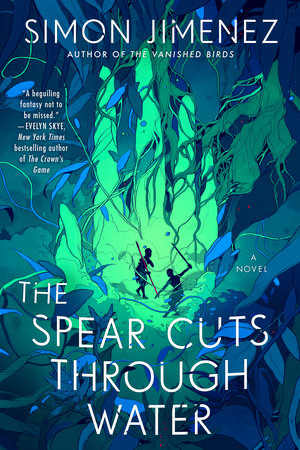
I was in a fantasy mood recently, so I decided to pick up The Spear Cuts Through Water after hearing some rave reviews from other bloggers. The gorgeous cover only added to the sell. But in the end, this novel ended up being a major disappointment—a murky, 500+ page slog that was only enjoyable for fleeting moments. I really need to stop setting myself up for disappointment with all these overly long high fantasy books…

Enjoy this week’s review!

The Spear Cuts Through Water – Simon Jimenez

The Emperor of the Moon Throne has terrorized the land of the Strangled Throat for centuries, aided by his three reckless sons, aptly dubbed The Terrors. But like everything else that he has seized, the Emperor’s power comes from an age-old moon god who has been locked under the palace against her will. But a god is not meant to be kept in captivity.

So she escapes. Aided by Jun, a disgraced palace guard, and Keema, a warrior from a distant, mysterious land, she sets off on a journey to find her freedom. But the Moon Throne will not let go of her so easily…

TW/CW: ableism, cannibalism, child abuse, murder, body horror, substance abuse, mentions of sexual assault (off-page), torture, loss of loved ones

This is one of those instances where I feel like I’ve read a completely different book than all of the 5-star reviewers. I really wanted to like it—and there were a few things that I did like—but ultimately, it felt like a 20-minute prog-rock song in book form: well-written, but so unneccesarily convoluted and full of itself that it became insufferable.

Before I go on my tirade, I will acknowledge that there were some wonderful, very bold and skilled parts of this novel. Jimenez’s writing had moments of being both beautiful and insightful—there were a few anchors to pull me through the slog, and his prose had moments of being incredible. 2nd person is always a bold choice, but unlike other aspects of this novel, it was executed very well, succeeding at being both immersive and fresh without feeling like it was bold just for the sake of being so.

“Bold” is generally I word that I could ascribe to most of this book. A lot of it was written in a fresh, nontraditional way, and I appreciated its execution in some sections. But a lot of it just felt like showing off—having unconventional chapter breaks and an infuriating structure just for Jimenez to show that he was capable of doing so. Most of these ended up being to the novel’s detriment. The random “chapter” breaks (there really weren’t any chapters in this book?), which mostly just ended up being sized-up font that was, essentially, what should have just the first sentence of the paragraph. And since they were all just first sentences of the paragraph, there were 2-3 of these breaks per page. POVs got switched without warning and without explanation, making the reading experience overcomplicated where it could’ve been an easy fix. It just felt like it was biting itself in the foot in the name of art—it could have been a beautiful story, if it wasn’t so intent on showing off how “different” it was.

As a result, so much of this novel got lost. Even though I was fairly lost trying to discern whose POV is it this time, I did notice one thing while reading The Spear Cuts Through Water—where’d the worldbuilding go? Other than the vague notion of a fantasy world (gods and goddesses, some talking animals/spirits, etc.), I had no idea of the layout of the world, the regions of the world, any kind of cultural cues or conventions, any kind of magic system…it just wasn’t there. At all. The same goes for the characters—they were all but cardboard, moved around like pawns for seemingly no reason. (I get that they were under oath by the Moon God, but the point still stands. They didn’t need to be that stiff.) Other than the reveal about Keema, nothing compelled me about either of them, or any of the other passing side characters. This novel was just so intent on chasing itself in circles that it forgot the essential elements that a novel needs.

All in all, a fantasy with great potential, but that ended up losing itself under layers of attempts to be daring and new. 2 stars.

The Spear Cuts Through Water is a standalone, but Simon Jimenez is also the author of The Vanished Birds.

Today’s song:

LOVE this album, this feels like a perfect match for “There’s No Other Way”

That’s it for this week’s Book Review Tuesday! Have a wonderful rest of your day, and take care of yourselves!
Posted in Book Review Tuesday

Book Review Tuesday (3/14/23) – Nightwatch on the Hinterlands

Happy Tuesday, bibliophiles!

I was a huge fan of K. Eason’s Thorne Chronicles when I first read them, so you can imagine my excitement when I found out that she was starting a companion series set in the same universe! (I didn’t find out until a few weeks ago, but that’s beside the point.) I jumped on the chance to put it on hold at the library, and I finally got to read it recently; however, I found Nightwatch on the Hinterlands to be an entirely different type of story than Rory Thorne, which, in this case, was its downfall.

For my double review of How Rory Thorne Destroyed the Multiverse and How the Multiverse Got Its Revenge, click here!

Enjoy this week’s review!

Nightwatch on the Hinterlands – K. Eason

It’s been decades since any of the riev—battle-mechas designed for the war effort—have done any harm to civilians. For years, they’ve been decommissioned or redesigned for labor purposes. So when Lieutenant Iari arrives at the scene of a crime and realizes that a riev may have been the perpetrator, she knows that the mystery will lead down a trail that she never anticipated treading. Along with Gaer, an ambassador-turned-spy, Iari must play a dangerous game amongst her planet’s criminal underbelly, one that may lead to something greater than a simple murder.

TW/CW: murder, blood, descriptions of injury, xenophobia (fictional—cast is almost exclusively aliens)

I was a massive fan of the Thorne Chronicles, but after reading Nightwatch on the Hinterlands, I’m sorely disappointed in the direction that K. Eason decided to go with this series—my most common thought while reading this novel was why include this?

As a starting point: why these characters? I liked Iari well enough in How the Multiverse Got Its Revenge, and she does have the potential to have an interesting story, but I didn’t get enough information in Multiverse to really care about her. I didn’t remember much about Gaer either, and he was a well-written and likable character, at the very least, but there wasn’t much that carried over from the previous books to make me care enough about him. These characters were virtually all that carried over from the Thorne Chronicles into this new series (The Weep), and that was where my disinterest began.

In concept, I like Eason’s decision to set Nightwatch in the seedy, criminal underbelly of the world that was touched on in the Thorne Chronicles. It’s a classic sci-fi setting, and with how rich Eason’s established world already was, it would be easy to make something compelling out of it. However, the Thorne Chronicles were far more centered around the human characters, and the aliens were more of a sideplot, mostly just appearing in Multiverse. Nightwatch, however, was entirely centered around the alien characters; normally, this is something I’d be 100% on board with, but without the context that could’ve been given in either Multiverse or in…y’know, some part of this book, I was left in the dark for any of the conventions of this part of Eason’s established world. I somehow understand that not giving glimpses of the other characters (Rory, Messer Rupert, etc.) would’ve been easy fan service, but other than Iari, if I hadn’t known that this was a companion book, I wouldn’t have seen the connection at all.

And on the subject of context…we needed so much more of it. So much more. Even though 90% of these alien species weren’t even talked about in the Thorne Chronicles, Eason wrote Nightwatch in a way that automatically assumes that readers know every single cultural aspect of every single alien species (of which there are many), as well as the context of the various wars that have gone on before the events of Nightwatch, in a very short timespan. I’m all for science fiction novels that don’t dump every single bit of exposition and worldbuilding into the story in one, unceremonious pile at the beginning, but this felt like the other extreme—wanting to avoid that so much that the reader is left without a single clue of what’s going on. I understand the concern that this writing style grew out of, but there really could’ve been a much more comprehensible happy medium in terms of worldbuilding. Beyond that, it’s clear to see how much time Eason put into creating these alien races and cultures, and that’s something I’ll always admire, but the effect of that got dwarfed by the alienating (no pun intended) fashion that she (did not properly) integrated them.

Like the approach to worldbuilding, Eason’s writing style in this novel is a double-edged sword. It’s a wildly different style from the endearingly irreverent but simultaneously observant voice that she used in the Thorne Chronicles. In contrast, Nightwatch had the distant feel of a hardboiled noir in space, quick and to the point, except for when information was delivered. On the one hand, it’s proof that Eason can be very versatile in terms of voice across her novels. On the other, this didn’t feel quite as genuine as the Thorne Chronicles—it made sense for the story, but the characters less likable, and the plot felt rushed, like constant running in circles from A to B without much context as to why or how. It suited the style of Nightwatch to a point, but it ended up being a detriment to both the pacing and my general enjoyment.

While I was reading, I was debating whether or not I wanted to stick it out for the rest of the series; I really wanted to give K. Eason the benefit of the doubt after how much I adored the Thorne Chronicles, but I don’t think I’ll be continuing The Weep after how unpleasant my experience with Nightwatch was. Obvious points go to the extensive worldbuilding and the clear time and care put into crafting this aspect of the world, but most of the other elements—the writing style, the way we got (or didn’t get) pieces of worldbuilding, and not much to make me care for the characters—brought my enjoyment down immensely. 2 stars.

Nightwatch on the Hinterlands is the first book in the Weep series, succeeded by Nightwatch Over Windscar. This series is a companion to the Thorne Chronicles, which consists of How Rory Thorne Destroyed the Multiverse and How the Multiverse Got Its Revenge. K. Eason is also the author of several other novels, including the On the Bones of Gods series (Enemy, Outlaw, and Ally).

Today’s song:

BACK ON THE PETER GABRIEL TRAIN FELLAS CHOO CHOO

That’s it for this week’s Book Review Tuesday! Have a wonderful rest of your day, and take care of yourselves!
Posted in Book Review Tuesday

Book Review Tuesday (2/7/23) – The Midnight Library

Happy Tuesday, bibliophiles!

I’ve had this book on my radar for a few years now, but I wanted to read it after the ocean of hype died down. I forgot about it for a while, and I found a copy at my college’s library, and figured that it might be worth a try—I read The Humans, also by Matt Haig, and thought it was decent, so I decided to take a stab. I lowered my expectations to average from all of the hype, but The Midnight Library ended up being even worse than I thought—insultingly un-nuanced and a wholly frustrating read.

Enjoy this week’s review!

The Midnight Library – Matt Haig

Nora Seed has reached what seems to be a dead end in her life. All of her childhood dreams never came to fruition, and now she’s stuck in her thirties with nowhere to go. But after she attempts to take her own life, Nora finds herself in the Midnight Library, where every book on the endless shelves contains an alternate life—lives where she pursued different dreams, different boyfriends, and every other imaginable outcome. As she travels through a multitude of alternate realities, Nora must come to terms with herself and how she wants to live her life—full of regrets, or full of hope?

TW/CW: suicide/suicidal ideations, animal attack, loss of a loved one, depression, panic attacks, animal death, substance abuse, cancer

A recurring thought that came to me while reading The Midnight Library was that it was like if you sucked every ounce of nuance and complexity out of Everything, Everywhere, All At Once. I know full well that Everything came out two years after this novel, but my point still stands. In the abstract, the message of The Midnight Library was good, but it had all the subtlety of a sledgehammer to the face, which made for an exceedingly unpleasant reading experience.

The Midnight Library is a case study in the effect of good or bad execution of a story idea. If you have a good idea but don’t execute it well, the idea itself gets bogged down in all of the structural flaws of the writing itself. The message that Matt Haig tried to get across was a good one—focusing on living your life, not getting bogged down with regrets, and giving yourself a chance to change—but it was so ham-handed in its delivery that all of the nuance (of which there was SO much potential) was erased entirely. It was so clear that The Midnight Library was trying to say something, but without any complexity, it ended up spitting out nothing that we haven’t heard before.

For instance, in one life, Nora Seed is a world-famous rockstar selling out arena shows all around the world. However, as Nora progresses through this alternate timeline, she realizes that this alternate self is feeling empty inside, and that fame has left her a barren shell of what she once was. That’s all well and good, and it’s a good message that fame does not automatically equal happiness. But at the end of the chapter, this message was digestibly packaged into a short platitude, right above Nora’s hypothetical follower count on social media. It was almost insulting how it was delivered—what was the point of that when Haig showed it through his writing just a page before? Even if you’re not a writer, if you’re ever taught about writing in school, “show, don’t tell” is one of the first principles that you’re taught. As a reader, it feels insulting to one’s intelligence: I got the message just fine, why be that redundant and blatantly obvious?

Furthermore, a lot of the potential lives, even though they were neatly and obviously packaged to the reader to teach them a lesson, ended up contributing nothing to the plot. When they did contribute, the message was reiterated by the all-knowing librarian, as if I’m watching a children’s show, each episode ending with an “and what did we learn today, kids?” kind of message. The Midnight Library isn’t all that long of a book, but a good quarter of the misadventures through Nora’s alternate lives didn’t serve any purpose, even though that was the obvious intent.

Lastly—Matt Haig isn’t at fault for this first part, but dear lord, do not let the synopsis fool you. This is not a feel-good book. The inciting incident for The Midnight Library is Nora attempting suicide, and that got glossed over so much in the marketing of the book. For the first part of the book, I feel like Nora’s mental health issues, although they aren’t explicitly named, were dealt with respectfully, but once it got to the end of the book, it took a turn for the worse. As if by magic, Nora’s depression is cured, and she now has the will to live again, after glimpsing all of her alternate lives. It really felt harmful—yes, this is a sci-fi/fantasy book, but depression and other mental health issues don’t magically disappear after a romp through alternate realities. Downplaying something as serious as depression and suicide really didn’t sit right with me, and it felt like the ending of the book erased something that should have been acknowledged far more in this book.

All in all, a disappointing book that decided to take its well-intentioned message and knock you over the head with it, thereby erasing all attempts at nuance and complexity. 2 stars.

The Midnight Library is a standalone, but Matt Haig is also the author of The Humans, How to Stop Time, The Radleys, and several other books.

Today’s song:

I like this one even more than Panopticom—I can’t wait to see what else this album brings!!

That’s it for this week’s Book Review Tuesday! Have a wonderful rest of your day, and take care of yourselves!