Posted in Book Review Tuesday

Book Review Tuesday (12/17/24) – Can’t Take That Away

Happy Tuesday, bibliophiles!

For the time being, I’m back! Safe to say I was swamped this semester, so I’m glad that I’ll have about a month of rest before I go back to school for the spring semester. When I wasn’t writing here or in my WIPs, I wrote around a combined 24 combined pages for various papers…and they say being an English major is easy…

Either way, I’ve had Can’t Take That Away on my radar since it came out in 2021. As with most other books on my TBR, there’s no real rationale for it languishing there for so long. I ended picking it up because of the premise; queer YA and MG books are bearing the brunt of bans and challenges here in the States, so I wanted to support them whenever I can (even if it’s already a good amount of what I read). (I can’t find anything definitive on whether or not this one was actually banned or challenged other than one Goodreads reviewer shelving it as such.) Either way, though it had its flaws, the storyline of Can’t Take That Away feels ripped right out of the headlines, and it’s a vital piece of literature for trans teens looking to find their voices.

Enjoy this week’s review!
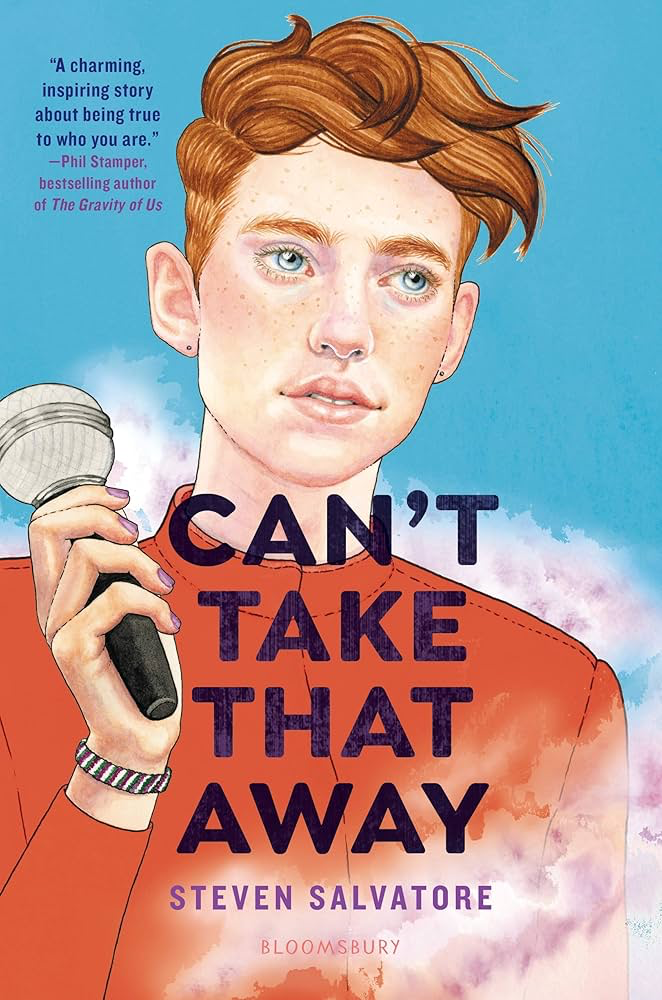
Can’t Take That Away – Steven Salvatore

Carey Parker was born to be a diva. With an unwavering love for Mariah Carey and aspirations of stardom, they have fought tooth and nail to express themself the way that they want. So when a friend convinces them to audition for Elphaba in their high school’s production of Wicked, they seize the opportunity—and land the leading role. Yet in spite of their apparent talent, parents and teachers cause an uproar about genderqueer Carey’s casting in the role of a leading lady. With mounting threats to kick them out of the play and dismantle the production all together, Carey must find their voice in order to prove that they deserve to be heard—and sing.

TW/CW: homophobia, transphobia, misogyny, misgendering, physical assault/violence, descriptions of injuries, bullying, gender dysphoria, suicidal ideation, cheating, loss of loved ones

I have nothing against Wicked, but reading this while being oversaturated with all things Wicked every time I opened up Instagram was an experience, for sure…I guess if Carey were a real person, they’d be over the moon at the prospect of the movie, so there’s that.

Without a doubt, Can’t Take That Away is a story that needed to be told. For the most part, I applaud Steven Salvatore for delivering this novel with unflinching realism (about 90% of it, at any rate. More on that later). The plot—parents and teachers cause an uproar when a genderqueer teen takes on the role of Elphaba in their high school’s production of Wicked—feels like a headline waiting to happen. I have no doubt that it’s already happened. My only minor complaint is that the main villains (Mr. Jackson and Max) felt cardboard, but they too, in a way, felt like the adults raving and ranting about “gender ideology” and the online trolls bent on tearing queer people down. They leaned on the side of exaggeration, yet…some people are just like that, unfortunately. That realism is what fueled the story; Carey’s manifold struggles, from grappling with gender dysphoria, bullies, and first love, was delivered both candidly and sensitively. Salvatore didn’t hold back from the ugly parts of some of these topics (be warned—happy ending aside, it’s a rough ride), but it made them all the more important to show that, like the plot, Carey is as real a person as your trans classmate. Carey could easily be someone in your life, and that was what made the story ring so resonantly.

That being said, I felt that the romance was incredibly messy, and not necessarily in a good way. Having Carey have their first love as they’re fighting to find themself was a good side plot in concept, but…it was just a dumpster fire for no reason. I don’t know if this is just me reading YA and no longer being a teenager, but half of the romantic drama felt unnecessary in contrast to the very timely, very upfront main plot. Why did Carey need to kiss some random guy in a basement while they were dating Cris? How are Carey and Cris just okay with everything that the other did? Maybe this is just me, but if my partner kissed somebody else in a basement while we were dating, I wouldn’t come running back…see? MESSY. Can’t Take That Away already had high drama aplenty, and I know that’s a hallmark of YA to some extent (that I appreciate), but this bordered on ridiculous.

I’m rather conflicted about the ending. It was wrapped up quite neatly, which isn’t inherently a crime, especially since it’s YA. There are bound to be some things that are tied up more nicely than they would be in real life. Can’t Take That Away is aimed at high schoolers, and unless it’s too neat, this quality isn’t always an instant flaw in YA books. That being said, Can’t Take That Away bordered on taking that to an extreme. After the protest, the cops are immediately on the side of the queer people and people of color, and have almost no hesitation about punishing the white male perpetrators of the hate crimes. Carey’s protest immediately goes viral, and they get so famous that they get free tickets to see Mariah Carey and go onstage and sing with her. The bad guys get their comeuppance almost instantly, and the good guys get the greatest rewards possible. I’m not saying that Carey and company didn’t deserve a happy ending—they absolutely did—but it felt unrealistic to a point where it almost felt like the fulfillment of a fantasy. Sure, that’s what writing’s for to some extent, but when dealing with a plot that felt ripped from the headlines, the resolution felt much less so. You can give characters a fulfilling, satisfying victory that feels earned and realistic!

Yet at the same time, queer kids deserve these kinds of stories. There are easily infinite examples of straight characters getting unrealistic endings that end in instant fame and wish fulfillment, so why shouldn’t Carey? Why shouldn’t all of the trans kids reading their story? Yes, it made me roll my eyes a little when this story, one that ended well enough, had to escalate everything to “and then Carey got everything that they ever wanted in life! Yippee!” But after the deluge of hatred and violence that Carey endured throughout Can’t Take That Away, why shouldn’t they get that ending? This novel is not escapist by any stretch of the imagination, but there’s a kind of necessary escapism in these stories—very real circumstances resolving with the absolute best possible outcome with no strings attached. Sure, it was a stretch, but Carey deserves it—and so do all of the queer teens reading this book.

All in all, a book with flaws here and there, but ultimately proved a timely story about finding your voice. 3.5 stars!

Can’t Take That Away is a standalone, but Steven Salvatore is also the author of And They Lived…, No Perfect Places, The Boyfriend Subscription, and the forthcoming novel When Love Gives You Lemons, which is slated for release in May of 2025.

Today’s song:

this is the least fitting pick for a book about a teen who loves Mariah Carey, but I only pair books with songs in my Sunday Songs, so…enjoy the whiplash. Bon appetit!

That’s it for this week’s Book Review Tuesday! Have a wonderful rest of your day, and take care of yourselves!

Posted in Book Review Tuesday

Book Review Tuesday (9/24/24) – Some Girls Do

Happy Tuesday, bibliophiles!

More importantly, Happy Bisexual Visibility Day…one day late! 🩷💜💙 I figured I would center a bisexual story for this week, and between my readings for school, I’ve been trying to squeeze in some books for this occasion and for Latinx Heritage Month as well. I’ve read a handful of Jennifer Dugan’s other novels, and I can always count on her for a solid queer YA romance. Some Girls Do wasn’t her best work, but when it hit the right notes, it was appropriately sweet.

Enjoy this week’s review!

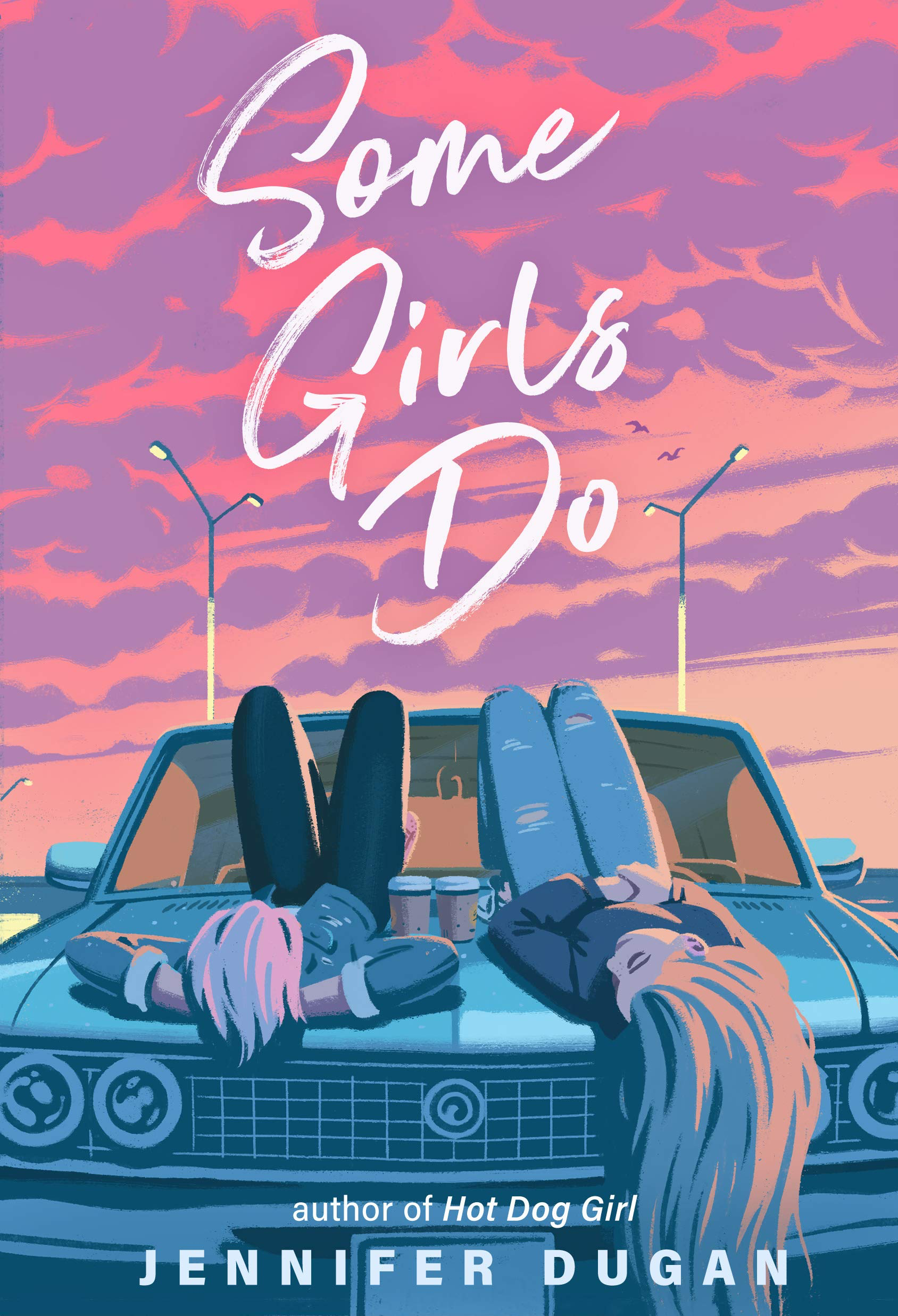
Some Girls Do – Jennifer Dugan

Ruby Torino is intent on keeping her head down until she graduates high school. Even though she’s sick of competing in beauty pageants to appease her mother, she knows that it’s the only way out—the next one’s prize is a scholarship to a community college. There, she can be openly bisexual and not have to please her parents. But when Morgan Matthews, an out-and-proud athlete who was kicked out of her Catholic school after they found out she was a lesbian, transfers to Ruby’s school, her world is turned upside down. Against all odds, the girls end up falling for each other. But Ruby can’t risk coming out—and Morgan can’t seem to let it go.

TW/CW: homophobia, biphobia, verbal and emotional abuse, pressure to come out

Some Girls Do wasn’t a perfect romance, but it was about imperfect people, and for half of the main cast, it worked out. It didn’t blow me away, but it was a solid read for Bisexual Visibility Week!

I wasn’t a fan of both members of the couple (more on that later), but Ruby was such an excellently complicated protagonist! All of her life, she’s been in a volatile position, what with her mother, who had her when she was a teenager, pressuring her into competing in beauty pageants to fulfill the dream she never got to live out herself. Between that and her abusive, homophobic father, she’s learned to guard herself, making her outward personality prickly and unapproachable, even as she blends in with the popular crowd. She’s far from a perfect person, and yet I found myself rooting for her in a way that I couldn’t bring myself to root for Morgan; Ruby’s struggles were tangible and her victories hard-won, and the biggest aspect that kept me reading Some Girls Do was the desire to see her dreams fulfilled.

I find that there’s a limbo that a good amount of queer media doesn’t talk about in terms of environments that people can grow up in. The hometown of Ruby and Morgan is in an in-between place: on paper, it’s mildly liberal and accepting, but there’s still a stigma around queer people. The high school has a pride club, but its members fear holding hands in the hallways. Some of Morgan’s friends act supportive, yet turn up their noses at the idea of the pride club. It’s a dynamic that I haven’t seen explored in queer media often, and Dugan did such a wonderful job in both portraying it and shedding a light on it. Like Ruby and Morgan’s relationship, it’s uncertain what the next day will bring, but there are pockets of unconditional shelter and safety if you look hard enough.

With that out of the way…Morgan. I was not a fan of her. To Dugan’s credit, it’s shown pretty clearly where she’s coming from; by being out, she’s had to risk everything, and is adamant that those who wronged her are proven wrong. But in being so out and proud, she comes off as callous and selfish in all of the wrong ways. When she and Ruby are trying to make it work, she continually pressures Ruby to come out, seemingly oblivious to the very real consequences that could befall her if her parents found out that she was bisexual. Even in her staunch “warrior defending the LGBTQ+ community” stance, she somehow completely forgot that not everyone has the privilege to be openly queer. There was some reconciliation of her attitude and said privilege towards the last part of the book, but in the end, it felt like too little too late.

In concept, Ruby and Morgan’s relationship was cute; once they got into a good rhythm, they had moments of quiet, tender bonding and sweet banter in equal measure. Yet despite Dugan’s efforts to make it work, the way that Morgan was written made it so that it never fully landed. It felt as though no matter how hard they fell for each other, Morgan would never accept that Ruby wasn’t comfortable with public being her girlfriend; even though there were moments at the Pride Club meant for Morgan to learn the error of her ways, she continued to pressure Ruby to do things that weren’t just uncomfortable but unsafe for her. If you took all of that out of the equation, they had some solid chemistry. But Morgan’s unwillingness to accept that Ruby had to stay closeted for her safety made the foundations of what could have been a good romance fold. Encouraging your partner to put her safety in jeopardy is decidedly not romantic.

All in all, a sapphic romance starring some girls that were thoughtfully written and easy to root for, but some girls that were too selfish to even try to like. 3.5 stars!

Some Girls Do is a standalone, but Jennifer Dugan is also the author of several other novels for YA and Adult audiences, including Hot Dog Girl, Melt With You, Verona Comics, The Last Girls Standing, Love at First Set, and many more.

Today’s song:

I’m SO glad my shuffle brought this one out of the depths, I forgot how much I loved it :.)

That’s it for this week’s Book Review Tuesday! Have a wonderful rest of your day, and take care of yourselves!
Posted in Book Review Tuesday

Book Review Tuesday (7/30/24) – To a Darker Shore

Happy Tuesday, bibliophiles!

I was first exposed to Leanne Schwartz through A Prayer for Vengeance, and enjoyed her YA fantasies that centered autistic and plus-size protagonists. I’d forgotten that she’d written another book featuring an autistic protagonist, and I figured it would be perfect for Disability Pride Month. While it didn’t blow me away, To a Darker Shore had a lovely setting with immersive writing and the journey of a courageous girl who would quite literally walk through hell to save her best friend.

Enjoy this week’s review!

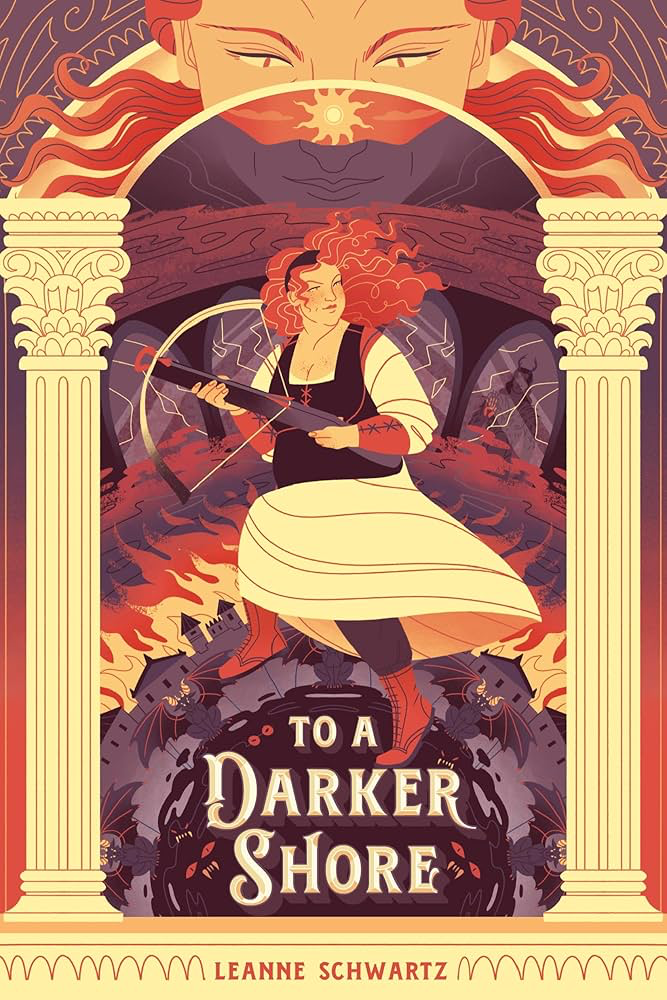
To a Darker Shore – Leanne Schwartz

If there’s one thing that Alesta has known her whole life, it’s that she knows that she has something to prove. Poor, autistic, and plus-size, she means nothing to the townsfolk, save for what she can provide as a sacrifice to their hungry god, Hektorus. So she throws herself into intricate inventions, hoping they can earn her favor with the king. But when a test flight of one of her flying machines goes awry at an exhibition, Alesta knows she’s bound for hell. Yet it’s Kyrian, who helped her test the machine, that takes the fall, now condemned to hell instead of her. Alesta will do anything to bring Kyrian back…even if it means venturing into the treacherous depths of Hell itself.

TW/CW: loss of loved ones, misogyny, fatphobia, ableism, violence, blood/gore, claustrophobia, panic attacks, grief, homophobia

Why does WordPress keep trying to autocorrect “Alesta” to “Alert?” I can only imagine how it was while Schwartz was writing the book in the first place…

Even though Leanne Schwartz isn’t my favorite author, I love her apparent goal of putting out YA fantasy novels with plus-size, queer, and neurodivergent characters at the forefront. A Prayer for Vengeance didn’t blow me away, but it was an enjoyable read nonetheless; to an extent, I feel a similar way about To a Darker Shore, but it’s clear that her writing has improved greatly in the span of two books!

Schwartz’s lovely prose was clearly the star of To a Darker Shore. Throughout the novel, there’s a stark contrast between the fantasy, Renaissance Italy-inspired whimsy and the monstrous realms of hell, but Schwartz handled each of them with the appropriate weight they deserved. The first part of the novel did a wonderful job of immersing me in Alesta’s kingdom, and with every description of the coastline surroundings and the bustling cities, I was instantly transported. Schwartz’s balance of humor and weighty subjects (ableism, fatphobia, and purity culture, to name a few) was handled with aplomb—the strength of all of these aspects is how balanced they were. Additionally, To a Darker Shore’s writing felt like the perfect transition between Middle Grade and YA; apart from some violence and strong language, the accessible writing style and the narrative voice of Alesta could be a great bridge for younger YA readers to start in the genre.

Alesta was also a fantastic protagonist to propel the reader through this treacherous journey into hell! Schwartz did an excellent job of relying on showing to build up to the suspense of losing her best friend; by the time Alesta’s quest through hell begins, you truly do understand her relentless devotion to rescuing her friend, even if when they reunite, hell has permanently altered him. She stopped at nothing to make sure Kyrian made it out of hell alive, and you believed every part of her friendship and steadfast adherence to her mission. Her relentless spirit not only gave the story stakes (I certainly got the sense both she and Kyrian would fall apart without the other), but a reason to follow her along—at its best, there were times when I was invested in the story just because Alesta cared so deeply for succeeding in her impossible mission. Although I liked A Prayer for Vengeance, Leanne Schwartz’s way of writing her protagonists has improved since then, and Alesta is living proof.

I came away from To a Darker Shore with mixed feelings about the worldbuilding. On the one hand, I enjoyed the Renaissance Italy-inspired setting; Alesta is compared to Leonardo Da Vinci in the synopsis, and I loved the aesthetic of her wooden flying machines and the various magical contraptions that she constructed. The worldbuilding surrounding the religion that concerns most of the novel was also well-executed. Schwartz did an excellent job of setting up exposition in a variety of ways, ranging from stories that Alesta had grown up with to descriptions of religious festivals that served to explain some of the mythology. However, even with the obviously Christian inspiration that this religion was based in…why call it Heaven and Hell if it’s an entirely different religion? I get the comparisons here, but it kind of took me out of it to have a whole fantasy religion and then have the exact same names of Christian concepts in it. Considering how detailed most other aspects of this religion were, it comes off a bit lazy—either make it a more direct analog to Christianity, or give Heaven and Hell different (and more creative) names, in my opinion.

Additionally, there were quite a few side characters that surrounded Alesta that didn’t seem like they had anything to do. Along with the dreaded time skip that came out of nowhere [hisses like a vampire with holy water chucked on it], we were just as abruptly introduced to some of Alesta’s other friends. It wouldn’t have been a problem if they had any role in the novel other than to tell the reader that Alesta has made friends after Kyrian’s sacrifice. They were pushed aside as soon as Alesta ventured into hell (a section that takes up about a third of the novel), and therefore had no room to have distinct personalities or roles other than being Alesta’s friends. Since To a Darker Shore is centered so prominently around the unbreakable friendship between Alesta and Kyrian, it would have been better to scrap them entirely—or at least not give them a role that Schwartz seemed to place disproportionate importance on.

All in all, a YA fantasy that took some shortcuts with its side characters and worldbuilding, but was nonetheless a satisfying story of friendships strong enough to survive hell itself. 3.5 stars!

To a Darker Shore is a standalone, but Leanne Schwartz is also the author of A Prayer for Vengeance.

Today’s song:

no idea how I forgot about this one, but I’m so glad I did!! a nostalgic childhood staple, for sure.

That’s it for this week’s Book Review Tuesday! Have a wonderful rest of your day, and take care of yourselves!
Posted in Book Review Tuesday

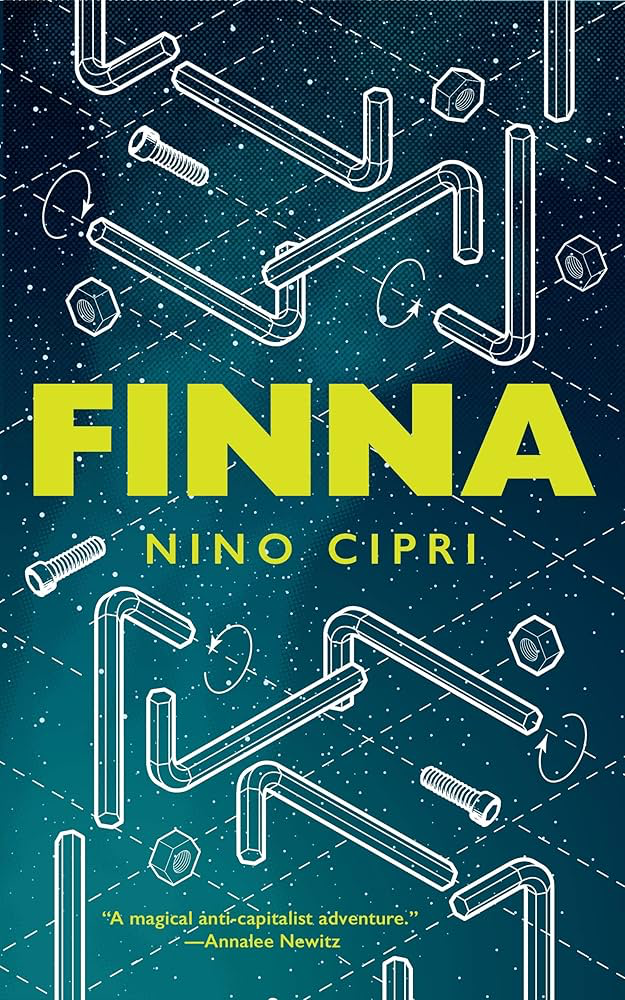
Book Review Tuesday (7/23/24) – Finna

Happy Tuesday, bibliophiles!

Finna has been on my radar since it came out back in 2020; it had a funny and clever concept, but it just kept being pushed back on my TBR for whatever reason. I ended up picking it up after hearing praise from one of my creative writing classmates, and although it wasn’t perfect, it delivered on its inventive premise.

Now, tread lightly! This week’s book review contains spoilers for the novella, so if you intend to read Finna, skim at your own risk.

Enjoy this week’s review!

Finna (LitenVerse, #1) – Nino Cipri

Ava and Jules barely make a living working minimum wage at LitenVarld, a Swedish furniture supply giant. Ever since they broke up, they’ve been trying to avoid each other, and with the labyrinthine structure of the store, it’s easy. But the two are thrown together when an old woman goes missing and the manager tells them that LitenVarld is no ordinary store—it’s prone to opening wormholes that lead to alternate dimensions. Ava and Jules must search across the universes to return the old woman to safety at any cost, but their superiors appear less and less like they have their needs in mind…

TW/CW: blood, violence, grief, mental health themes (anxiety and depression), misgendering

My main concern with Finna was that it would only have the premise to hold it up. It’s a fantastic premise! And although it wasn’t a perfect novella, it went far beyond the expectations for its ideas, delivering an anti-capitalist spin on the monstrous multiverse.

Making Finna a novella was, without a doubt, a wise move. It’s got an inviting premise—a not-IKEA store that’s home to a multitude of portals to strange and hellish dimensions—but it’s one that could have easily been stretched out. It partly works because…well, if you’ve ever been inside IKEA, that’s where your mind naturally goes, but Finna mainly succeeded because Cipri knew the limits of the idea. If it had been a full-length novel, I’m sure it would have been interesting to see the other dimensions hidden within the interdimensional labyrinth of LitenVarld, but the plot couldn’t have sustained itself beyond 100 pages. I’ve seen too many novels where the story has been stretched far too thin, so to have an author know the limits of their story—and have an inventive novella to show for it—was incredibly refreshing.

Finna is the perfect story for right now not just because it has a fun concept, but because it truly nails the kind of corporate neglect that runs rampant in workplaces in this day and age. Even against the threat of a multiverse full of monstrous obstacles (including but not limited to man-eating furniture), Ava and Jules are having to tackle threats leagues beyond their pay grade, and their only compensation is gift cards for a pasta restaurant. Their managers openly tell them that they don’t actually care about the old woman who’s gotten lost in the multiverse—they just want Ava and Jules to find an alternate universe replacement for her so that they can keep up appearances. It’s all so blatantly uncaring and corporate—and it’s all realistic. If some massive chain of stores discovered a wormhole in one of their locations, they would absolutely cover it up until it was no longer possible to do so, especially at the expense of the minimum wage employees. I will say that, although you got hit over the head with this even though the commentary was right there already, Finna’s setup made it perfect for the anticapitalist commentary that Cipri explored—corporations only make it look like they care about you when it looks good for them, and even then, the worker is always dispensable. The execution of this corporate setting was, in the end, what made Finna so successful in that regard—it seems like a real, capitalist response to a fictional problem.

That being said, even though Finna works best as a novella, it did fall victim to some of the pitfalls of novella writing. It’s difficult to develop characters in just over 100 pages, and this worked to the detriment of its protagonists, Ava and Jules. We only knew them from the lens of their situations and their breakup; after finishing the novella, all I knew about Ava was that she a) had a failed relationship with Jules, b) had anxiety and depression, and c) hated her job—nothing much about her personality. This is about as deep as we get with her, and for Jules, we get even less, other than the fact that they’re more reckless and cocky, and for that reason, Ava doesn’t like working with them. The plot was compelling and well-executed enough for me to continue reading the story, but it was so plot and theme-driven that the characters were left in the dust.

Such underdeveloped first drafts of characters meant that the emotional impact of Finna was all but deadened. I got the feeling that I was supposed to feel something when Jules sacrificed themself so that Ava could return to her home dimension, but since I knew so little about them, I never felt much. What Jules needed, perhaps more than a handful of base personality traits, was some kind of motivation; it could also be down to how quickly the second half moves, but their quest through the other dimensions gave us no indication of why they would go from reckless to selfless. It could just be the constraints of the novella format, but I’ve read plenty of novellas longer and shorter than Finna that have been able to establish well-rounded characters with believable motivations, so I’m not sure if there’s much of an excuse for this.

All in all, a novella with a funny, inventive premise and sharp anti-capitalist commentary that was dragged down by its underdeveloped characters. 3.5 stars!

Finna is the first novella in the LitenVerse series, followed by Defekt. Nino Cipri is also the author of the short story collection Homesick: Stories and the forthcoming YA novel Dead Girls Don’t Dream. They have also contributed stories to Nonbinary: Memoirs of Gender and Identity, Transcendent: The Year’s Best Transgender Speculative Fiction, and several other anthologies.

Today’s song:

forgot about this song for ages…

That’s it for this week’s Book Review Tuesday! Have a wonderful rest of your day, and take care of yourselves!

Posted in Book Review Tuesday

Book Review Tuesday (6/11/24) – Junker Seven

Happy Tuesday, bibliophiles! I’m back from vacation, and I’m feeling rested—and ready to review one of the books I read on my trip.

Junker Seven hung around on my TBR for about a year, and I ended up buying it on Kindle for my trip; as I’ve said ad nauseam, queer sci-fi is the stuff of life for me, so I’ll always lap it up when given the chance. Although I wish the worldbuilding (and the politics) were more creative, it was a solid tale of of love and the joy in reminding yourself that your existence is an act of resistance.

Enjoy this week’s review!

Junker Seven (Twin Suns duology, #1) – Olive J. Kelley

Castor Quasar makes a solitary but dangerous living as a junker, ferrying scrap—and fugitives—across the galaxy. They prefer to stay out of the business of others, whether that’s the widespread political unrest throughout the galaxy or simply making friends. But when Castor is offered a job with an exorbitant amount of money, they can’t help but be suspicious, even though the offer would mean valuable repairs for their ship—and an easier living. Their cargo is Juno Marcus, a trans activist with a target on her back and an urgent need to escape before the Intergalactic Peace Force finds her. Castor reluctantly agrees, but they soon find themself in over their head—and head over heels in love…

TW/CW: murder, loss of loved ones, transphobia, deadnaming, misgendering, ableism, police brutality

Junker Seven was by no means without its flaws, but if you’re looking for a love letter to trans love and identity, a slow-burn romance, and resistance in space, then you’ve come to the right place! Not my favorite, but this was a good book to start off pride month—unabashedly queer and political.

Structurally, there were a lot of odd worldbuilding choices (I’ll get to that later), but despite that, the world of Junker Seven felt wonderfully lived-in. The quiet moments where Castor was alone on their ship were what convinced me of this world being tangible; not everything is sleek, clean, and untouched. You never get the sense that the ship is cramped just because it was made so, but because of all of the choices that led Castor to the place they are today. It’s not just a plot device vehicle—it’s got special nooks and crannies that have been shifted over the years, and there’s a goldfish that’s been there through it all, Castor’s only constant companion. Details like this, as well as some of the pockets of resistance that Castor and Juno find throughout their journey, added a real human element to the story. Even with only two characters for most of the novel, Kelley did an excellent job of making the galaxy seem like a tangible place where humans have settled—and brought their unique ways into a new, far-future world.

If you’re looking for representation, especially trans representation, then you’re in the right place—Junker Seven has diversity in spades! Both the main character and the love interest are trans, as well as several side characters, and Castor is also disabled—they have burn scars, a prosthetic leg, and autism! The key part of said representation is that it never felt like a checklist; if the acknowledgements are any indication, Kelley’s goal was to create a resonant story of trans joy, love, and resistance, and though I’m not trans (disabled and queer, though), that love shone through; Junker Seven felt like a love letter to trans resistance all the way through, from Castor and Juno’s slowburn romance to Castor’s gradual radicalization. I love how the disability representation was handled as well! All of the details about Castor’s autism affects their job felt authentic as a neurodivergent person; no stone was left unturned, whether it was how wearing their prosthetic affected their sensory issues to how it affected their relationships. It’s clear from every page that the diversity in this novel wasn’t borne out of a need to tick off every possible marginalization—it was borne of a need to put authentic queer, trans, and disabled stories out into the world.

That being said, the worldbuilding of Junker Seven gets stranger the more I think about it. There are enough pockets that could convince you that, yes, this could be hard sci-fi that had some thought put into it, but the actual worldbuilding ends at the descriptions of the climates of the planets that Castor and Juno are hopping to and from. Other than that, the politics are the main focus, but given how political this book is, I was surprised at how unoriginal it was in terms of the evolution of politics and queer resistance. Junker Seven is set several hundred years from now, and yet the politics are all but copied and pasted from the U.S. politics of today—no changes whatsoever, save for being stricter when it comes to the treatment of trans people in particular. Yes, history does tend to repeat itself in terms of treatment of the marginalized, but it’s never in the exact same way twice; technology changes, rhetoric changes, leadership changes. None of that is reflected in Junker Seven; honestly, it was familiar to such a degree that it would have worked more if it were set in a less futuristic dystopia set on Earth. This story is set so far in the future that minimal changes in language and policy just makes no sense. It would have been so much more potent—and creative, frankly—to see how the adapted technology of the future actually factored into how trans people in this universe were being oppressed. There were a few throwaway mentions of more advanced technology that was being used to surveil trans people, but that was about the extent that anything changed. It all boiled down to unused potential—there were so many opportunities to explore how (possible) aspects like advancing technology, increased policing, and advancements in genetic modification could affect the status of trans people throughout the galaxy. And yet, Kelley chose to change almost nothing about our current political climate and paste it into space—to the detriment of my suspension of disbelief. Oppression of marginalized groups remains the same in its goals, but not necessarily in its methods—those change with the times.

What also suspended my disbelief was how little we knew about Marwood save for that he was horrible. Save for being a Trump stand-in, we knew almost nothing about him, save for that a) he’s evil (Trump), b) there’s a widespread news network that’s basically his mouthpiece that he uses to demonize trans people (Fox News), and c) did I mention? He’s evil. I will give Kelley some credit for at least establishing the Zephyr News aspect and the fact that his nepotistic predecessor both ended presidential term limits and instated Marwood in a corrupt, illegitimate election so that his fascist, ultra-conservative values would live on. That, at least, felt like a reasonable enough start for a villainous character, but that was it. The key word here is start. I wouldn’t say it completely falls into the dystopian trope of “we’re not going to say anything about the government, but you have to understand. They’re BAD, guys. BAD,” but it comes rather close. This circles back to my overarching issue of unoriginal worldbuilding, but I wanted to know what separated Marwood from any other run-of-the-mill fascist—did he come from a celebrity background and had no real political experience, like Reagan or Trump, or was he a more cold and calculating type with political prowess who knows exactly how to undo any kind of progress and twist the laws in order to abuse his power? A successful, frightening villain needs to be more than an evil cardboard standup that lurks in the shadows, and we never got more than fragments to show that Marwood was more than a stand-in fascist to move the plot along. (Also, did the entire galaxy, after blending into an almost universal accent after several hundred years, universally adopt a vaguely American two-party system and government? It’s…yeah, I have trouble believing that too.)

Although the disability representation is excellent, as I said before, I did find it odd that it wasn’t a part of Castor’s radicalization; being disabled in the 21st century is already a cyberpunk dystopia as it is, so I’m surprised that there wasn’t much discussion of not just Castor’s experience with being disabled, but how it affected their work or their perception of politics. Save for a throwaway line about an autistic person being driven to a life of crime because of how poorly said autism was treated and handled, there wasn’t much rumination on it other than that. I get that the main focus of Junker Seven was trans resistance specifically, I do wish we at least got more of it than what we got. Come to think of it…as diverse as Junker Seven was, there wasn’t a whole lot of intersectionality in terms of politics. I think there was…maybe one line about race and police brutality, and that was about it? I wouldn’t say that this is inherently a flaw of the book itself, but, once again, given how unabashedly political it was, I did find it odd that there wasn’t at least a small mention of the intersection of queer/trans issues with aspects like race, class, and disability.

All in all, a solid piece of queer sci-fi which suffered from unoriginal and nonsensical worldbuilding, but was nonetheless a shining ode to queer resistance. 3.5 stars!

Junker Seven is the first of the Twin Suns duology, followed by the forthcoming sequel Rebel Rising, which is slated for release in September. Kelley has also released D3F3CT: A Twin Suns Novella, set in the same universe as Junker Seven, as well as the novellas As the Light Goes Out and A Very Lighthouse Christmas. They have also contributed to Spectrum: An Autistic Horror Anthology and the forthcoming Dead Cowpokes Don’t Wrangle: A Weird West Anthology.

Today’s song:

why, why, WHY DID I PUT OFF LISTENING TO THIS ALBUM FOR SO LONG??

That’s it for this week’s Book Review Tuesday! Have a wonderful rest of your day, and take care of yourselves!
Posted in Book Review Tuesday

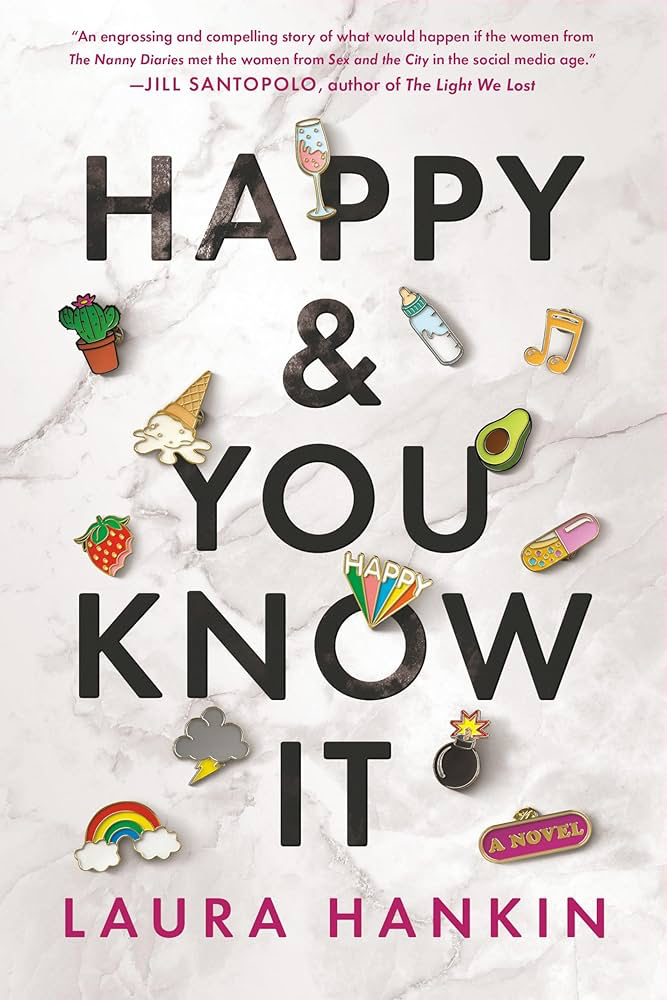
Book Review Tuesday (4/16/24) – Happy and You Know It

Happy Tuesday, bibliophiles!

Happy & You Know It was a book that’s outside of my usual reading comfort zone—I’m not usually a realistic fiction person, and it seemed literary, though it didn’t end up being very much so. Either way, the premise was enough to grab me out of my sci-fi/fantasy stint, and though it wasn’t executed the way I wanted it to be, Happy & You Know It was still a biting and entertaining piece of satire.

Enjoy this week’s review!

Happy and You Know It – Laura Hankin

Claire Martin has been unceremoniously thrown into the lowest point in her life. After her band, Vagabond, replaces her and rockets to stardom not long after, she’s left with fewer and fewer options to keep a job—and pay the rent in New York City. But when the opportunity presents itself to become a playgroup musician for a cohort of rich, Manhattan moms, Claire jumps at the chance—she’ll be paid for music again, even if it’s just singing nursery rhymes, and they’ll surely pay her exorbitantly. Claire is thrust into a world of mommy influencers, babies that are too well-dressed for their own good, and a multitude of secrets. This playgroup isn’t what it seems—and Claire may have been sucked into their whirlwind of lies too late…

TW/CW: substance abuse, cheating/affairs

Given the first page, I was expecting for Happy & You Know It to be a wilder ride than it actually was, but that’s not to say that it was a bad novel. Though I feel like the plot didn’t reach its full potential, it was still a fantastic piece of satire—biting, timely, and hilarious at all the right times.

The gauntlet you always have to run when writing satire—or any genre, honestly—that’s somehow involved with social media is making it sound realistic. Too often, authors heavily force a hand of making sure the characters use all of the right slang and terminology, and end up falling headfirst into what looks like a boomer’s distorted vision of the internet and how it operates. I was bracing myself for Happy & You Know It to have some of those trappings, but thankfully, none of that was to be found! Hankin’s depiction of this inner circle of rich, Manhattan mommy influencers felt scarily true to how such figures act, from the curation of every little aspect of their lives down to the tone-deaf, over-the-top names for their babies. It was ridiculous, but that was precisely the point—those kinds of influencers who treat their growing babies like playthings for them to dress up so they can get more likes is ridiculous, and Hankin clearly understood how twisted it gets when these behaviors are pushed to the extreme.

Claire was a perfect protagonist for Happy & You Know It: an outsider who is morbidly enchanted by this world of kale smoothies and sponsorships, but is so desperate that she falls in too deep just when she realizes how right her instincts were about the morbid part. Hankin did a fantastic job of detailing all of her motivations—given the care that was put into crafting her extensive backstory with her former band and the constant, emotional reminders she gets from their stardom, almost all of what she did made sense. She’s just the kind of person who thinks that she’s smart enough to run from a dangerous situation, but cornered enough to convince herself that she can make it out unscathed. I almost with that this novel was entirely from her perspective, and we didn’t get the POV shifts from most of the playgroup mom—I guess we wouldn’t have explicitly seen the details about Whitney and Christopher’s affair, but I’m sure there’s a way that it could have been revealed. The less we knew about the moms, I think, the better.

Perhaps that was part of what made the initial reveal about the true nature of the TrueMommy supplements (no spoilers) fall slightly flat—part of it may have been that it was a bit predictable, but part of it was that we knew too much about the rest of the moms. By the time that this reveal kicks in past the halfway point, my Spider-sense was already tingling—too much for how far into the novel it was. This amount of time should’ve been enough to ramp up the suspense, but I feel like I saw too much into their heads, and therefore, had a good guess of what the first twist was going to be. Especially since we only got some of the moms’ perspectives (Whitney, Gwen, and Amara), I feel like the balance was off. With Claire as an “outsider looking in” protagonist, it would have worked so much better if that secrecy was also confined to her POV—and nailed in that feel of the novel.

On that subject, given how gloriously over-the-top the introduction was, I expected the culmination of said twist to be a lot more dramatic than it was. It looked so messy from the start, and yet the ending felt wrapped up far too neatly—just a moment of confrontation, and then a time skip where everyone is (mostly) living happily ever after in wake of this supposedly drastic revelation. The one red herring we sort of got felt too obvious, and so it was easy to point to the real perpetrator, which dampened the effect. The setup didn’t match the end result—I guess I did want more of a disastrous downfall for almost all parties involved (can you tell I like Fargo?), but if you specifically have an introduction to hint at some spectacle of corruption and ruin, it needs to deliver—and unfortunately, Happy & You Know It missed the mark on that front.

All in all, a slightly disappointing mystery, but a deeply fulfilling and sharp satire. 3.5 stars!

Happy & You Know It is a standalone, but Laura Hankin is also the author of The Daydreams, A Special Place for Women, and the forthcoming One-Star Romance.

Today’s song:

aaaaaaaaaaand that’s another album added straight to my bucket list

That’s it for this week’s Book Review Tuesday! Have a wonderful rest of your day, and take care of yourselves!
Posted in Book Review Tuesday

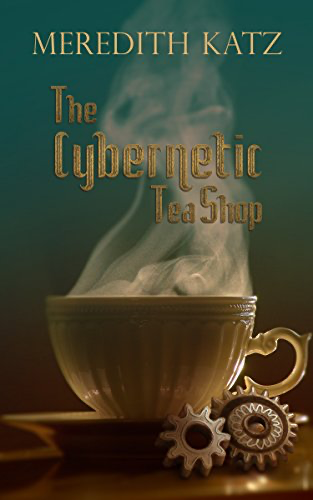
Book Review Tuesday (3/26/24) – The Cybernetic Tea Shop

Happy Tuesday, bibliophiles!

There’s a special place in my heart dedicated to cozy sci-fi, but the sad thing about it is that hardly anybody does it well save for Becky Chambers. I guess it’s hard to reach the bar when it’s been set astronomically high (no pun intended), but I will still read any cozy sci-fi that comes my way, despite the amount of times that the blurb “for fans of Becky Chambers!” has severely led me astray. However, in the midst of my reading slump, The Cybernetic Tea Shop was the perfect novella to tide me over and lift my spirits.

Enjoy this week’s review!

The Cybernetic Tea Shop – Meredith Katz

After the death of her master, Sal, an autonomous robot operating outside of the laws of a futuristic America, runs the tea shop that her master founded. For hundreds of years, she has run it like a well-oiled machine, but something in her program seeks something more. When Clara, an AI technician struggling to make ends meet, walks into Sal’s tea shop by chance, they have an instant spark of friendship—and perhaps even something more. Is Clara what Sal needed all along, and is Sal the key to the similarly vacant space in Clara’s heart?

TW/CW: loss of loved ones (past)/discussions of grief, hate crimes/discrimination (sci-fi)

Since about 2021, I’ve lost count of the amount of times that the tagline “for fans of Becky Chambers!” has let me down. Nobody does cozy sci-fi like her; all of the times I’ve read books with that promise, you get some semblance of found family (which comes off rather forced, in the worst instances), but it often lacks the quiet, tender moments that put the cozy prefix in. However, in that respect, I’m glad to say that The Cybernetic Tea Shop wasn’t a letdown—not without its flaws, for sure, but more than enough to scratch my never-ending cozy sci-fi itch.

I’ve been in a very novella-centered headspace for months, given that I’m trying to write one for class and I’ve been studying how they work for said class as well. One of the foremost concerns we’ve been talking about is how much worldbuilding you can fit into such a small space—often 100 pages or less. The key, I’ve learned, is, after giving your reader the necessary context to make the world feel real, is to only expand on the parts that are essential to understanding the circumstances of your characters. Katz did an excellent job of establishing this kind of worldbuilding, and it speaks to what a novella can achieve in such a small page count! Inevitably, I found myself wanting more of the futuristic American setting that Katz built, but the context we get is only what we need to understand Sal: the creation of intelligent robots, the outlawing of said robots because of ethical complications with intelligence, and the discrimination and illegality of robots in the centuries since. It’s the perfect foundation to set up not just the world, but the conflicts that these characters encounter.

Cozy sci-fi, by nature, often keeps things small; a handful of characters, a singular setting, and all else happening in the background. Novellas, also by nature, typically scale it down as well. The Cybernetic Tea Shop only centers around two characters, but that’s all it really needs; this novella is small in every aspect, and that’s why it largely succeeded. By narrowing down two characters (and their budding romance) and a single, unique setting, Katz confined her world to reasonable limits to explore in a novella; nothing ever felt too convoluted or too large to fit into just over 100 pages, but it didn’t feel too sparse, either. Similarly, aside from the character-driven focus (also the backbone of cozy sci-fi), there’s hardly any plot points, and that was actually a strength of The Cybernetic Tea Shop—in terms of structure, it was practically a Goldilocks of novellas.

However, although the general craft of the novella was commendable, the writing left a lot to be desired. For such a fascinating world and two characters moving through it in a unique way, I wanted so much more from the writing. The prose was rather bare-bones, doing the bare minimum to describe a setting or situation. I wanted so many more descriptions—and genuinely interesting descriptions— of Sal’s tea shop; you can do so many fun things with a tea shop, but I hardly got a sense for what it looked like, what it smelled like, or any other kind of sensory details. Similarly, the dialogue, although it had moments of being sweet, was often bland and stiff, and felt transactional in terms of the prose—just a way to get from point A to point B. Given that the romance between Clara and Sal was what eventually drove the novella, transactional dialogue is the exact opposite of what The Cybernetic Tea Shop needed; the kind of romance that Katz was shooting for wanted to be anything but transactional, but ended up falling flat.

In addition, I found myself wanting more from the characters. Again: cozy sci-fi is a heavily character-driven subgenre, and the evolving relationships between the characters are what make the plot go forward, and not necessarily outside conflict. I did like that Katz only zoomed in on Clara and Sal, but I almost wish that the novella had been all from Sal’s perspective. We get a very detailed and nuanced vision of Sal’s character, from her grieving her long-dead master to her insecurities and fears about being in hiding as an autonomous robot. Clara, on the other hand, was given very little of the same treatment; I would have liked to have seen her have some kind of romantic hurdle to overcome—commitment issues, hesitance, or something along those lines—that would make her something more than just a tool to instigate romance. We did get some of her background, but it didn’t add to much about her in terms of personality—the only part of her character that paired her with Sal was that she’s an AI technician, and therefore in a place to help Sal. With the focus on two characters, it would do Katz a favor to give both of them the fleshing-out that they deserve.

That being said, although Clara’s characterization left a lot to be desired, I did like the more romantic aspect of the plot towards the end of the novella. Even beyond the super sweet asexual/wlw representation (both Sal and Clara are asexual and sapphic!), there was a lot about the romance that worked; the setup of Clara fixing Sal’s programming evolving into cuddling was such an adorable and genius setup, and the resolution that came from it was similarly heartwarming. It did feel slightly rushed, but aside from that, Katz left it in a place where I didn’t quite want more, but was satisfied in knowing that their relationship was bound to blossom. I wanted something cute, and I got something cute, so Katz 100% succeeded on that front!

All in all, a tender, cozy novella with sweet romance and tight structure, but bland prose and half-baked characterizations. 3.5 stars!

The Cybernetic Tea Shop is a standalone, but Meredith Katz is the author of several other novels for adults, including the Pandemonium series (The Cobbler’s Soleless Son, Behind Bars, Heir to the Throne, and Barred Souls), the Sixth Sense Investigations series (Empty Vessels and If Wishes Were Fishes), and many more.

Today’s song:

shoutout to chelsea wolfe for playing this before her show. hauntingly beautiful.

That’s it for this week’s Book Review Tuesday! Have a wonderful rest of your day, and take care of yourselves!
Posted in Book Review Tuesday

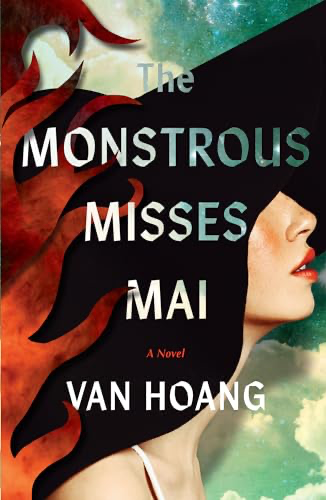
Book Review Tuesday (3/19/24) – The Monstrous Misses Mai

Happy Tuesday, bibliophiles!

Technically, this review is an early review, but I didn’t get it as an ARC—I got it through the Amazon First Readers program. Usually, the books they offer aren’t my cup of tea, but The Monstrous Misses Mai seemed intriguing, and I never say no to free Kindle books. I love a good story about witches, and though it was predictable at times, The Monstrous Misses Mai was an entertaining addition to the wide subgenre!

Enjoy this week’s review!

The Monstrous Misses Mai – Van Hoang

Los Angeles, the early ’50s. Cordelia Mai Yin is down on her luck. Disowned by her parents and out of work, she’s been finding it difficult to find a place to stay. The apartment she eventually finds is cramped and occupied with three other roommates, but they have more in common than just their middle names. They all have unfulfilled dreams—and they all need a way to pay the rent. Callum, a mysterious friend of their landlord, knows it too. He offers them the deal of a lifetime, in exchange for a small sacrifice. Now, Cordi has a stable income and the job of her dreams, but the spells binding her reality are quickly beginning to fade, and the girls are running out of sacrifices to appease them…

TW/CW: body horror (mild), murder, loss of loved ones, manipulation

WARNING: this review contains some spoilers!

I received a free copy of this book as part of the Amazon First Reads program!

In the grand scheme of things, I don’t blame these characters—mostly Cordi—for turning to witchcraft to find a way to pay the rent. You gotta do what you gotta do in this economy. And in the economy of L.A. in the ’50s too, I guess.

The Monstrous Misses Mai was such an entertaining novel! I love a good book about witches, but I would say that it’s slightly different than your typical witch novel in that none of the main characters know what they’re doing with their magic. They’re all but sucked into a magical pyramid scheme that requires greater and greater sacrifices as it drains them little by little. Magic always comes at a cost: we all know that from the get-go, and this novel is no exception. But not knowing what exactly would happen to the women of the Mai residence was what kept the tension up for this novel for me. Although I wanted more out of the eventual climax (more on that later), it was a great narrative tactic to keep the reader guessing—not necessarily about where the plot would go, but about how things would go wrong for the characters.

Van Hoang has excellent prose, and it especially served this novel when it came to describing both L.A. in the ’50s. Her descriptions are so vivid and colorful—there wasn’t a single image in this novel that I couldn’t visualize in almost cinematic detail. The way that Hoang described both the cramped loft that the Mai women share and the glitz and glamor of the fashion world that Cordi finds herself entangled in made the world feel so much more tangible, and the divide between the double lives that the characters lived felt so much more fleshed out and tense as a result. Having such a stark contrast made the creeping feeling of dread for the characters even more palpable—with the magic that they were dabbling, the glamorous lives that they were leading would no doubt catch up to them.

The Monstrous Misses Mai focuses on four women (Cordi, Tessa, Silly, and Audrey), but we’re reading entirely from Cordi’s perspective. Cordi was a compelling enough character, and her struggles—both financial and magical—fueled the plot and pacing in a steady way. However, I wish I could say the same for the other characters. Tessa was next in terms of the most fleshed-out character, but for most of the novel, she only felt like Cordi’s confidante, and not the magical accomplice that she was supposed to be. Silly and Audrey were barely characterized at all—Silly was only seen in sparing glimpses, and what we got of Audrey was entirely one-dimensional; Audrey was the token no-nonsense, “guys, maybe it’s a bad idea to be messing around with forbidden magic” character, and all the resolution gave her was an “I told you so” [strikes pose with hand on hip] moment and no development whatsoever. I feel like this novel could have worked better as a multi-POV novel; if we got into the heads of all four of the Mai women, we could have gotten individual ideas for their specific stakes, risks, and transformations.

Remember what I said about not knowing about the magic? It worked for most of the novel, but when it came to the ending, I found myself wanting more. The resolution felt so predictable—they’re finally too many spells deep to reverse their magic, leaving them in a worse situation than they were before. For a little while, I almost thought it was going to resolve in some kind of tired “oh, women and their vanity hahaha, you know how chicks are” ending, but luckily, it’s 2024, so not to worry about that; I do appreciate that the blame was placed squarely on Callum for being the one who instigated a magical pyramid scheme and nearly stole their souls. However, I feel like there wasn’t a whole lot that was original about Hoang’s take on this kind of story. I expected there to be something strange about what the magic cost them or how their transformations occurred, but all we get is their (very mild) bodily deterioration and some lost fingernails/hair loss. Which, yeah, the fingernails were pretty gross, but I found myself wanting a kind of unique magical toll that it took—something otherworldly that would ultimately expose them. It wasn’t bad, per se, but it wasn’t the most memorable take on this kind of story.

All in all, a story of witchcraft and deception with memorable prose but not-so memorable twists. 3.5 stars!

The Monstrous Misses Mai is a standalone, and Van Hoang’s adult debut. Hang is also the author of the Girl Giant and the Monkey King series (Girl Giant and the Monkey King and Girl Giant and the Jade War) and the forthcoming middle grade novel Hidden Tails.

Today’s song:

That’s it for this week’s Book Review Tuesday! Have a wonderful rest of your day, and take care of yourselves!

Posted in Book Review Tuesday

Book Review Tuesday (2/27/24) – The Melancholy of Summer

Happy Tuesday, bibliophiles!

I believe I heard about The Melancholy of Summer somewhere around the blogosphere when it first came out last May, and I figured it would be a good piece of fiction between several hefty fantasy reads. Louisa Onomé is a new-to-me author, and now that I’ve read her newest work, I don’t regret it—a coming-of-age story that pulls no punches.

Enjoy this week’s review!

The Melancholy of Summer – Louisa Onomé

Summer is alone. Waiting to turn 18 and gain her independence, she has been staying at friends’ houses after her parents were convicted of fraud and went on the run without warning. Left to her own devices, Summer has been able to keep her status a secret, but after her counselor discovers that she has been living alone, she’s sent to live with a cousin she barely knows. Struggling to balance her double life with a cousin who’s barely more independent than she is, Summer is faced with a myriad of difficult decisions for the future. But Summer is left with a burning desire to find out what really happened to her parents, and it will take her to places she didn’t bargain on going to.

TW/CW: parental abandonment, grooming, homelessness, emotional abuse

First off: this isn’t about the book itself so much as the marketing. About the marketing…whose idea was it to tag this book as “sad girl summer”? How do you see a book tackling a myriad of sensitive topics, including but not limited to parental abandonment, homelessness, and familial betrayal and go “ah, yes, ✨sad girl summer✨” WHAT? I just wanna talk to whoever made that decision. Just a quick chat. WHY? And I thought trope marketing couldn’t get any worse…

All this is to say that I’m saying these things because it’s more than The Melancholy of Summer deserves. Situated on the older side of YA, it’s not just a coming-of-age story: it’s an unflinching portrayal of the topics I discussed earlier. There’s no sugarcoating or dancing around the reality of issues here. It’s a heartbreaking novel, but it’s not one that employs horrific events for shock value—they’re an authentic consequence of Summer’s circumstances. I haven’t read a lot of novels—especially not YA novels—that have dealt with these kinds of subjects, but I really respect the route that Onomé chose to go down in terms of portraying them. Although I can’t speak to their accuracy, it feels like an unapologetic respectful depiction of parental abandonment and homelessness, along with the emotional turmoil that brings.

Going off of that, Summer’s character felt just as authentic. She really feels like a teenager, and not in a forced way; it really should be a given for a YA novel, but you’d be surprised at how many authors miss the mark. Summer isn’t just a teenager—she’s a messy one, an emotional one, and sometimes a brazen and impulsive one, but never once did it feel like Onomé was forcing it down our throats that she’s 17. Summer’s yearning for independence felt all too real, especially given her circumstances; none of the pent-up anger that she expresses felt out of place, and none of her emotional outbursts were without reason. Summer felt, more than anything, just how someone with teenage, volatile emotions would feel having to grapple with circumstances out of her control, and that’s a large part of why The Melancholy of Summer was so successful for me.

That being said, although most of the plot points did feel appropriately and respectfully handled, much of the development (or lack thereof) with the character of Olu felt very rushed and unresolved. The plot point about her being groomed, as well as the plot of Summer trying to help her out at the venue, felt like it was tossed in as a slice of filler, and therefore felt half-baked at best. With how authentically Onomé portrayed a lot of the topics in the novel, it seemed uncharacteristic that something as serious as grooming was brushed over so quickly and resolved in a way that could only be described as unsatisfying. It was all but a footnote, and it seemed like it wanted to be a major plot point, but with how unceremoniously it was shoved into the middle of the novel, it felt poorly handled.

This was a symptom of a larger issue in The Melancholy of Summer overall; other than Summer, hardly any of the side characters get the development that they need. Save for Summer’s aunt, the side characters that we’re meant to care for almost as much as Summer were often one-note and tossed aside whenever the plot called for it. Tanya, Summer’s cousin and guardian, could have been a vital character to explore, and although we do get the sense that she still feels like a kid and doesn’t know any more than Summer does about navigating life, she shows hardly any growth throughout the course of the novel. The same can be said for Olu, Sid, and many of the other people that we meet. It was clear that Summer got the most attention, and yes, she’s the protagonist, but that doesn’t mean that the side characters had to be left in the dust.

All in all, a heartbreaking and authentically-written novel with a vibrant protagonist but a not-so-vibrant supporting cast. 3.5 stars!

The Melancholy of Summer is a standalone, but Louisa Onomé is also the author of Twice as Perfect, Like Home, and Pride and Joy.

Today’s song:

That’s it for this week’s Book Review Tuesday! Have a wonderful rest of your day, and take care of yourselves!
Posted in Book Review Tuesday

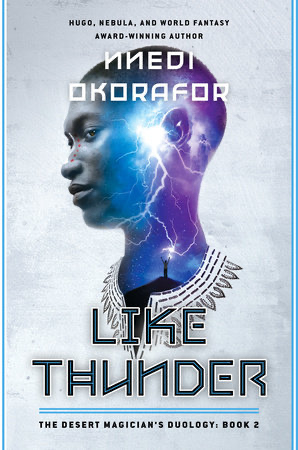
Book Review Tuesday (1/9/24) – Like Thunder (The Desert Magician’s Duology, #2)

Happy Tuesday, bibliophiles!

After I finished Shadow Speaker back in December, I was eager to see what the newly published sequel, Like Thunder, had in store. It was finally available at the library recently, and it was one of my first reads of this year. And though it retained some of the issues that Shadow Speaker had, it was still a worthy sequel and end to the duology.

TREAD LIGHTLY! This review may contain spoilers for book one, Shadow Speaker. If you haven’t read it and intend to, read at your own risk.

For my review of Shadow Speaker, click here!

Enjoy this week’s review!

Like Thunder (The Desert Magician’s Duology, #2) – Nnedi Okorafor

2077. Three years after Ejii and Dikéogu saved Earth from the threat of Chief Ette and forced him to sign the truce to bring no harm to the Changed, Dikéogu has realized that the fight is not over. Estranged from his parents and living on his own, he knows that the truce is due to expire, and that the humans are growing more hostile to the Changed by the day. After disaster strikes and puts those that he love in danger, he sets off to find the one person he knows that can help save the day: Ejii. But when they reunite, saving the world—for the second time—is more difficult that either of them bargained for.

TW/CW: genocide, slavery, ableism, murder, death, loss of loved ones

In general, I was still a fan of this book, but strangely, even though a lot of my minor gripes with Shadow Speaker were resolved, they were often filled in with elements that ended up bringing down the narrative. That’s not to say that Like Thunder wasn’t a worthy sequel—it absolutely was, and it was a fitting way to finally end the Desert Magician’s Duology, all these years after Shadow Speaker was initially published.

The worldbuilding was, without a doubt, the strongest aspect of Shadow Speaker, and Like Thunder expanded on it in all the ways that it should have! Through Dikéogu’s eyes, we get to see parts of the Desert Magician world that Shadow Speaker left behind, and they greatly enhanced the ongoing narrative of change and prejudice. Not only do we get an expansion of the effect of what kind of powers possessed by the Changed, we also see the direct effects that being Changed has on people apart from the main characters that we saw in book one. Time was clearly on Nnedi Okorafor’s side here, since she presumably had so many years apart from Shadow Speaker to craft all of the world’s eccentricities, but even if there wasn’t such a large gap between now and then, I have faith that her worlds would have been fleshed out anyway—if there’s one thing that Okorafor has excelled at over the years, it’s crafting a detailed world.

A lot of this worldbuilding contributed to the themes that Like Thunder built up, and it serves as an incredibly powerful narrative about genocide. Now that the three-year treaty between Chief Ette and the Changed has expired, he doesn’t hide the hostility that he’s been waiting to unleash since then. No matter what perspective that it’s written from, genocide is always a difficult and delicate subject to write about, and Okorafor took great care in depicting it unapologetically—it’s brutal, authentic, and horrifying, just as it should have been. In general, I preferred Ejii’s perspective to Dikéogu’s (more on that later), but Dikéogu’s voice was well-suited to handling this kind of subject matter; he had the anger that the subject warrants, and his rage not only fueled his journey, but the emotion behind this depiction.

That being said, I wasn’t the biggest fan of Dikéogu being the main POV character in Like Thunder. Although seeing the effects of the treaty dissolving through his eyes was enlightening and his anger fueled much of the novel (and for good reason), in much of the down time of the novel, I found him to be borderline obnoxious. Most of it manifested in his treatment of a lot of the female characters in the novel—once he reunited with Ejii, he had this attitude that he was still owed her after all these years, and it got on my nerves to no end. I wouldn’t have minded a romantic subplot between the two of them, but Dikéogu’s insistence on being incredibly possessive of her soured the whole thing for me. His perspective was needed to a point, but I felt like he worked better as a side character.

Going off of that, there were a lot of cheap elements in Like Thunder that sullied the narrative for me. When I think of Nnedi Okorafor, I think a lot about subversion—subversion of genre conventions, subversion of tropes, etc. But throughout the novel, there were just so many elements that felt pointless and served no purpose—and were so common that it almost seemed beneath Okorafor to add them in the first place. We get the age-old “killing the main man’s girlfriend for the plot” trope; I think it was meant to convey some of the horrors of the genocide going on, but it was already pretty evident that Dikéogu’s life was significantly changed and he already knew the horrors of genocide firsthand, so there was no point in having that subplot at all, especially since it was blatantly shoved in there to try and advance Dikéogu’s narrative arc. And the love triangle…why? Why? Once we got to that part, combined with Dikéogu’s possessiveness of Ejii, it just felt like filler drama—it didn’t advance the plot at all, and it seemed like a cheap way to generate drama as well. It just seemed like a disservice to Okorafor’s inexhaustible creativity.

All in all, a satisfying conclusion to a solid sci-fi/fantasy duology that excelled in its worldbuilding, but suffered in its use of overused and stale tropes. 3.5 stars!

Like Thunder is the second and final installment in the Desert Magician’s Duology, preceded by Shadow Speaker. Nnedi Okorafor is also the author of Lagoon, the Binti series (Binti, Home, and The Night Masquerade), Noor, Remote Control, and several other books for teens and adults.

Today’s song:

NEW SMILE WOOOOOOOOOOOOOOOO

That’s it for this week’s Book Review Tuesday! Have a wonderful rest of your day, and take care of yourselves!