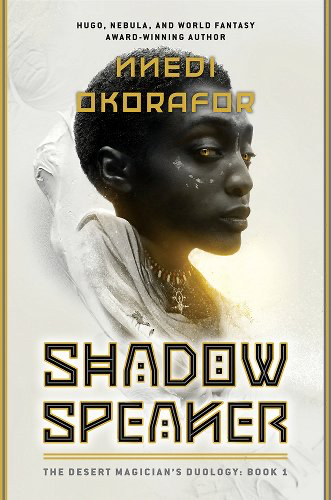
I’ve been a fan of Nnedi Okorafor for several years now, but it wasn’t until about a month ago that I found out that one of her first novels, which originally went out of print, was being reissued with new content and a new cover! (Gorgeous cover, by the way.) I ended up buying it, and though it wasn’t her best (what else would you expect from one of her very first books), but it’s not just a fun ride—it’s a glimpse into an incredibly talented author coming into her own.
Niger, 2074. In the wake of a nuclear disaster, both humanity and the natural world have developed powers far beyond their imaginations. These Shadow Speakers have been given strange abilities by the aftershocks of nuclear war. Born into this world is 15-year-old Ejii, gifted the abilities of advanced sight and hearing the thoughts of animals. When she was young, her father, a corrupt politician, was assassinated. All these years later, Ejii decides that, regardless of the horrific legacy her father left behind, she must journey out into the Sahara Desert to search for his killer.
TW/CW: murder, beheading, fatphobia
Being a (somewhat) longtime fan of an author and reading their debut or earlier works further down the line is always an eye-opening experience. I was expecting something along those lines when I bought Shadow Speaker the other day, but…man, I really had no idea what I was in for. Shadow Speaker was honestly kind of bonkers, but in the best possible way. Quite plainly, it’s one of the boldest debut novels that I can think of.
Shadow Speaker was Nnedi Okorafor’s first novel (published all the way back in 2008), and it really does feel like a debut. I said eye-opening before because you can see the through lines where Okorafor hadn’t yet hit her stride in terms of writing; in contrast to the tight organization of most of her other novels, we still get chunks of worldbuilding delivered paragraph by paragraph. Her prose has the same bold brightness and whimsical spirit that really stands out as her signature, but it hasn’t been refined as much. And with the re-release this November, despite apparent rounds of editing, there’s still a few things that haven’t aged well from 15 years ago (ex. the villain’s evilness explicitly being tied to him being fat…mmmm, yikes…). All debuts are bound to have flaws, but the latter ones could have probably been edited out. But unlike that, I feel like it’s worth keeping some of the writing as it is—reading this novel was a time capsule into the mind of a younger writer.
And yet, Shadow Speaker is still one of the boldest books I’ve read in a long time, debut or not. Everything about is really and truly nuts, and that was the best part about reading it. Once you get the exposition of Ejii’s post-apocalyptic, magical world out of the way, at no point did I know where this novel was going, and at a certain point, I ceased to even care. There’s the spread of X-Men-like powers caused by a nuclear disaster, a talking camel (also because of the nuclear disaster, how did you guess?), gods and goddesses roaming across the land…you get the idea. Actually, no. You don’t get the idea. And that’s the point of this book, from what I can tell—Ejii and her ragtag band of nuclear magicians don’t know where they’re going either, and that’s where the fun of Shadow Speaker lies.
Over the years, Nnedi Okorafor has proven herself to be an absolute master of Afrofuturism (more specifically Africanfuturism and Africanjujuism, in her words), and the latter (a term that she coined to describe a subgenre of fantasy that is specifically Afrocentric and is inspired by the mythologies of Africa) really describes this novel to a T; although the inciting incident and the introduction of powers has a distinctly sci-fi feel, Shadow Speaker is so clearly fantasy. It’s hard to do that kind of genre-bending so effortlessly in a debut, but already, Okorafor make it look easy. Every element, whatever genres you want to ascribe them to, is blended seamlessly into the world of the Desert Magician Duology as smoothly as stirring together the ingredients of a cake. It’s an impressively distinct world, and despite its flaws, I’m glad this book was brought back into print.
Part of the reason for re-releasing Shadow Speaker is that Nnedi Okorafor just published its intended sequel, Like Thunder, this November. Hopefully I can get my hands on it soon, but it’ll certainly be interesting to see the leap in writing style between the two, given how much time has passed…
All in all, a bold and wild debut from one of science fiction’s most original writers active today. 3.5 stars!
Shadow Speaker is the first book in the Desert Magician’s Duology, followed by the new sequel, Like Thunder, which came out this November. Nnedi Okorafor is also the author of many books for adults, teens, and children, including Lagoon, the Binti series (Binti, Home, and The Night Masquerade), Noor, Remote Control, and many others.
Today’s song:
this song makes me ridiculously happy
That’s it for this Book Review Tuesday! Have a wonderful rest of your day, and take care of yourselves!
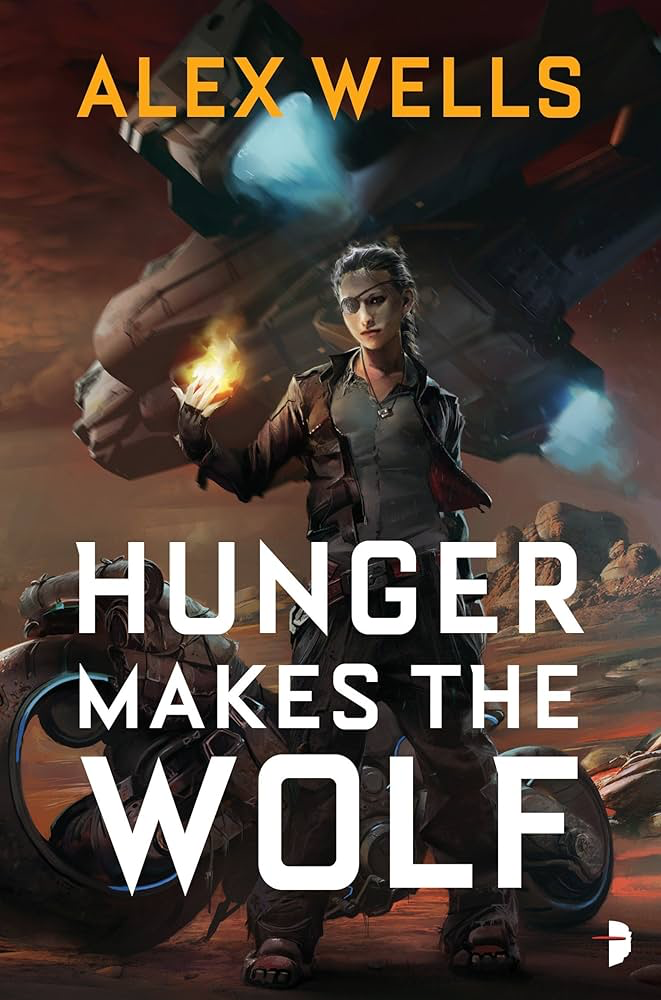
Hunger Makes the Wolf came on my radar when I was looking for more books with disability rep (as always), but I ended up buying it on my Kindle after my dad notified me that I had some unused Kindle points (thank you for reminding me!)—it was free with the points added on, so how could I resist? And while Hunger Makes the Wolf wasn’t perfect, it’s a ton of gunslinging, space-fantasy fun.
Hob Ravani ekes out a living in the deserts of Tanegawa’s World, a planet owned by TransRifts—the corporation who controls the market on interstellar travel in the whole galaxy. For 10 years, Hob has gotten by with the help of the Ghost Wolves, a group of bandits roaming the desert and finding money where they can. But when Hob discovers the body of Nick, the man who recruited her to join the Wolves, abandoned in the desert, she knows that she has to act before TransRifts discovers their operation—and discovers the powers that she’s kept hidden from sight.
TW/CW: murder, descriptions of injuries, descriptions of corpses, violence, loss of loved ones, human experimentation
Writing accents phonetically is a slippery slope that I’m not going to get fully into in this review. In this case, though, Alex Wells had decent success with making everyone who was meant to sound like they had a Southern accent actually sound like they had a Southern accent, which worked—this novel was a space Western, after all. That being said, the unintended consequence was that Wells’ spelling of Hob’s accent was that I imagined her voice more like Holly Hunter in Raising Arizona than the badass, hardened gunslinger that she was made out to be. It sort of worked, though.
As far as sci-fi subgenres go, I’m not usually huge on space Westerns; I’ve rarely seen them done exceedingly well (even The Mandalorian got more than a little repetitive eventually), but the best are at least fun. And that was what Hunger Makes the Wolf was—incredibly fun. It had all of the trappings of a debut novel, but what Wells did get right on the first time was that pacing. Although the action sequences were what made Hunger such a blast to read in the best parts, Wells also knew how to balance them out with quiet, more emotional moments, and also moments to slip in worldbuilding without absolutely walloping you with it. Wells’ action was really the star of the show here; their fight scenes had just the right amount of tension, levity, and butt-kicking to make for more than one delightful scene.
Recently, I’ve read several sci-fi books that were marketed as “space fantasy,” and none of them have really fit the bill. And yet, Hunger Makes the Wolf wasn’t necessarily marketed as such, but it does what the other novels lacked. Even amidst the classic sci-fi backdrop of corporate greed, massive spaceships, and gruesome human experimentation, there’s the element of the characters’ strange hidden powers. Naming said powers “witchiness” was already a win in my book, the charm of it really fits the Western atmosphere that Wells was going for—it hits that sweet spot of not sounding overly jargon-y or formal, but not too hokey, either. Every time one of the characters mentioned it, I couldn’t help but smile—especially in Hob’s aforementioned Holly Hunter voice.
Hunger Makes the Wolf is an incredibly ambitious novel, and the ambition is accentuated when you remember that this is Alex Wells’ debut. In some ways, it worked; Wells managed to juggle a safe amount of the worldbuilding without leaving the reader without context, but also without dumping it excessively. However, what Wells did not juggle as well was the sheer amount of characters that we jump between. Hunger was clearly meant to have a found family theme to it, which I’m normally a sucker for, but Wells just had so many extraneous characters on their hands that none of the character relationships felt fleshed out. If we had gotten more scenes with Hob and the rest of the Wolves, for instance, I would have believed that they really were as thick as thieves. Adding onto this, the perspective switches may not have been necessary; Mags, although she plays a prominent role, doesn’t have a perspective or voice that added anything substantial to the narrative. It’s a classic debut author case: Alex Wells had some spot-on ideas, but they bit off far more than they could chew.
All in all, a rollicking space fantasy with action aplenty, but with characters that left me wanting more. 3.5 stars!
Hunger Makes the Wolf is the first book in the Ghost Wolves duology, followed by Blood Binds the Pack. Hunger was Alex Wells’ debut novel; they are also the author of the short story Angel of the Blockade.
Today’s song:
FARGO IS BACK I AM FOAMING AT THE MOUTH OH MY GOOOOOOOD
That’s it for this week’s Book Review Tuesday! Have a wonderful rest of your day, and take care of yourselves!
Happy Tuesday, bibliophiles, and more importantly, MERRY FARGO DAY!! SEASON FIVE IS FINALLY HERE!! REJOICE!! I’ve been waiting three years for this…I can’t WAIT to watch it tonight!
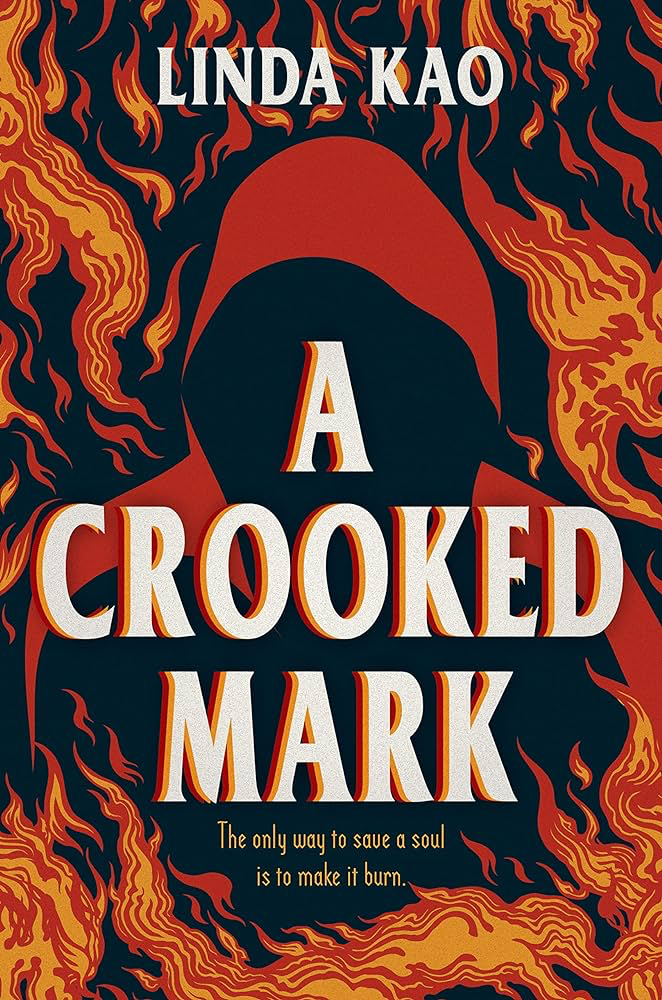
I’ve noticed that I’ve read a lot of adult books this month (much of which have been more literary fiction) and not a lot of YA; although it’s been a much better reading month than October, I wanted some YA to mix it up. A Crooked Mark was the perfect book to scratch that itch—campy and silly in the best possible way.
Matthew Watts knows that evil works in mysterious ways. That’s why his father has raised him to know the signs of those marked by Lucifer himself. Ever since he was young, they’ve been going from town to town, making sure the Marked are killed before their evil is unleashed on the innocent. But Matt’s father has a new mission for him—his first ever solo mission, following a girl named Rae Winters. As Matt tries to blend in at the local high school, he befriends Rae—and begins to fall in love with her. And as his mission steers in the wrong direction, he begins to question if all that he’s working for is a lie…
TW/CW: murder, descriptions of burning alive, car crash, grief, loss of loved ones (on and off page), descriptions of injury
A Crooked Mark caught my eye over the summer because of its premise—not necessarily that it was particularly unique, but because it sounded so similar to Frailty—a movie about a father and his sons killing those that God has told him are demons. As far as I can tell, there’s no real correlation between the two (though I’d be shocked if this wasn’t at least a partial inspiration for the book), but, again, caught my eye—of all the movies to inspire a younger-leaning YA novel, Frailty would not be my first choice. That being said, A Crooked Mark, though not without its flaws, scratched the itch I needed—corny, supernatural fun.
From here on out, if I say “corny” in this review, I mean in the most affectionate way possible. I was on a streak of reading a lot of adult fiction/more literary-leaning fiction, and while I enjoyed all that, A Crooked Mark was just the kind of unserious book I needed to shake things up. It feels like it could’ve been the kind of campy, supernatural drama that I would’ve watched in middle school, down to the fact that there’s actually a character named Moose. It’s great. I’ve seen a lot of reviews comparing it to Supernatural, which I haven’t seen, but even from the vibes I get from the show, the comparison hits the nail right on the head. The writing, while it wasn’t the best, really nailed that feel, even if it wasn’t what Kao was going for. I can probably enjoy it more because there isn’t cheesier acting attached to the already cheesy writing, but either way, A Crooked Mark was made for corny enjoyment.
Going off of that, A Crooked Mark really nailed the beats of that kind of campy, paranormal story. Matt was the perfect protagonist for this story—not overly brooding, but still self-serious (in a very un-serious way) enough that he was fun to follow around. His friend group didn’t necessarily contribute a whole lot to the narrative, but they served the purpose of putting a shield around Rae—and later being sources of conflict once everything went south. Rae was on the too-perfect side, but again: this is the campiest book I’ve read all month. I’m not expecting monumentally good character development. I did also love that Matt was mixed-race—as a mixed-race person, I wouldn’t say it’s groundbreaking rep, or that the book explores his mixed-race identity poignantly (it really doesn’t), but it’s more important in that everybody deserves to be the hero of a cheesy, paranormal teen drama. It’s what we deserve.
That being said, for a book where Matt was up against the clock trying to discover if Rae really was marked by Lucifer himself and put an end to said evil, A Crooked Mark meandered quite a lot. It was more than a sagging middle—more of a sagging 60-75% of the whole book. There was a whole lot of uneventful high school bonding, a lot of Rae’s tutoring sessions that went nowhere, and a lot of hemming and hawing in general. It would have been easy to add bits of drama here and there to amp up the stakes, and Kao partially did this, but not enough to sustain the story. Especially since a lot of the “twists” ended up being dead ends, (save for the Big Twist™️), there really should’ve been more suspense—or at least more drama—before the main twist right before the climax. I was in it for the cheese in the first 30% or so, and it only managed to pick up in the last 20% of the book—not enough to hold my attention.
All in all, A Crooked Mark isn’t anything revolutionary or exceptionally well-written, but if you’re in the mood for something spooky and campy, this is the perfect book for you. 3.5 stars!
A Crooked Mark is a standalone and Linda Kao’s debut novel.
Today’s song:
I love listening to music like this while I’m just calmly doing chores…I’ll just be cleaning the sink and Joe Talbot’s aggressively screaming about kindness and consent in my ears bahahaha I love IDLES
That’s it for this week’s Book Review Tuesday! Have a wonderful rest of your day, and take care of yourselves!
I’ve seen this novel around a fair bit ever since it came out, both in the blogosphere and from our queen Amie Kaufman, who co-hosted the podcast Pub Dates with Kate J. Armstrong. It seemed like a more unique YA fantasy concept, and the 20’s-inspired setting intrigued me, and…okay, who wasn’t looking at that gorgeous cover? Now that I’ve read it, I can say that I enjoyed it, but I came away with mixed feelings—Nightbirds was a well-crafted fantasy in terms of worldbuilding, but its characters and general fence-sitting about what it wanted to say slightly put me off.
In Simta, no one is more sought after than the Nightbirds. Long ago, these girls from the Great Houses were bestowed with the magic of witches, and with a kiss, they can grant that power to anyone who wishes to wield it. Matilde, Sayer, and Æsa are this season’s Nightbirds, but they have already learned that they will only ever be seen and treated as disposable. Yearning for something more to life, they stumble upon an underground networks of witches—witches whose powers come fro outside of the Great Houses, and are hidden from sight from the government. With the knowledge that their power will not be suppressed, the three Nightbirds set out to make things right.
TW/CW: misogyny, fantasy violence, murder, death, past mentions of torture, near-death situations
I came to this book mainly from the word of Amie Kaufman, who also happened to release a 1920’s-inspired YA fantasy this year. And while I did enjoy Nightbirds as a whole, the more I thought about it, the more drawbacks I found. If you’re torn between the two, stick with The Isles of the Gods.
Let’s start with the best part of the novel, though: the worldbuilding at the atmosphere! The Jazz Age inspiration was heavy, but it was executed incredibly; the worldbuilding, from the hidden magic to the forces trying to suppress it, was impeccably-crafted, with not a single stone unturned in terms of the intricacies of Simta and Armstrong’s world as a whole. It was a world that felt genuinely fun to be in—there was so much to explore along with the three main characters, and I enjoyed every minute of it.
All that wouldn’t have been possible with Armstrong’s atmospheric writing. There were other markers about Nightbirds that signaled it as a debut novel (more on that later), but for a first novel, the writing in this novel was fantastic! It’s the kind of writing that doesn’t just immerse you in the world, but dunks you headfirst into it with its vivid, vibrant imagery. Armstrong’s writing was so clear that I could visualize the world of Nightbirds almost cinematically, every scene played out like it already had a screen adaptation. The steady pacing added to that effect as well—it had a great balance of political intrigue, action, and down time to keep me intrigued for most of the novel.
However, the multiple POVs were an issue for me for most of the novel. The worst crimes that a multi-POV book can commit is not marking which POV the chapter is from, and switching POVs without warning in the middle of a chapter. Nightbirds was guilty of both. With these kinds of books, it’s often a struggle to pick out one character’s voice from another, but the third-person POV remedied that slightly. Even so, it was maddening trying to feel my way through the chapter and remember whose POV was being focused on. And speaking of the characters, they were in some serious need of being fleshed-out. Other than Matilde, whose personality was being entitled and stubborn, I could barely get a read on both Sayer and Æsa beyond what the synopsis said about them. Aside from Matilde, they had hardly any distinctive features, personalities, or traits, which made the whole multiple-POV mess all the more maddening. All of it could have been prevented with some chapter headers and giving the characters more life—it really wouldn’t have been all that hard of a fix.
And for a book that was advertised as being a feminist fantasy, Nightbirds really didn’t seem to know what it wanted to say. For a plot centered around an archaic system built on exploiting teenage girls, you would think that there would at least be some commentary on it. All we really got was a hollow, vague sense of taking back power, but there was no real call to action to do just that; aside from the revelation of the underground network of witches whose magic hasn’t been suppressed by the fantasy patriarchy, there’s hardly any real questioning of the system or realizing that there is a way to reform it and break away from it entirely. It’s like the book equivalent of thinking that you’re a feminist just because you post some instagram infographics on your story every once in a while and do nothing else. It’s saying “smash the patriarchy!” and then sitting comfortably and doing nothing. That’s basically what Matilde’s “character arc” ended up being, honestly. I know there’s probably better words to describe it, but the one that comes to mind is just…white woman-y. I guess I missed the queer rep (WHERE??? I saw no indication of any queerness 😭), but except for that and the conveniently described token side character of color, there was no hint of intersectionality. And no, I’m not saying that every book has to have an impeccably diverse cast, but for a book that billed itself as feminist and supposedly centered around tearing down oppressive systems, I feel like intersectionality should be taken far more into consideration. Nightbirds just came off as more white feminism than actual feminism.
All in all, a fantasy debut with stunning worldbuilding, but that was dragged down by its lack of fleshed-out characters and hardly any hint of the feminist messaging that it advertised. 3.5 stars.
Nightbirds is the first in the Nightbirds duology, which continues with the forthcoming sequel Fyrebirds. Nightbirds is Kate J. Armstrong’s debut novel.
Today’s song:
this is just such a GROOVE
That’s it for this week’s Book Review Tuesday! Have a wonderful rest of your day, and take care of yourselves!
Happy Tuesday, bibliophiles! Everybody say happy birthday to Hobbes, who turns 7 today:
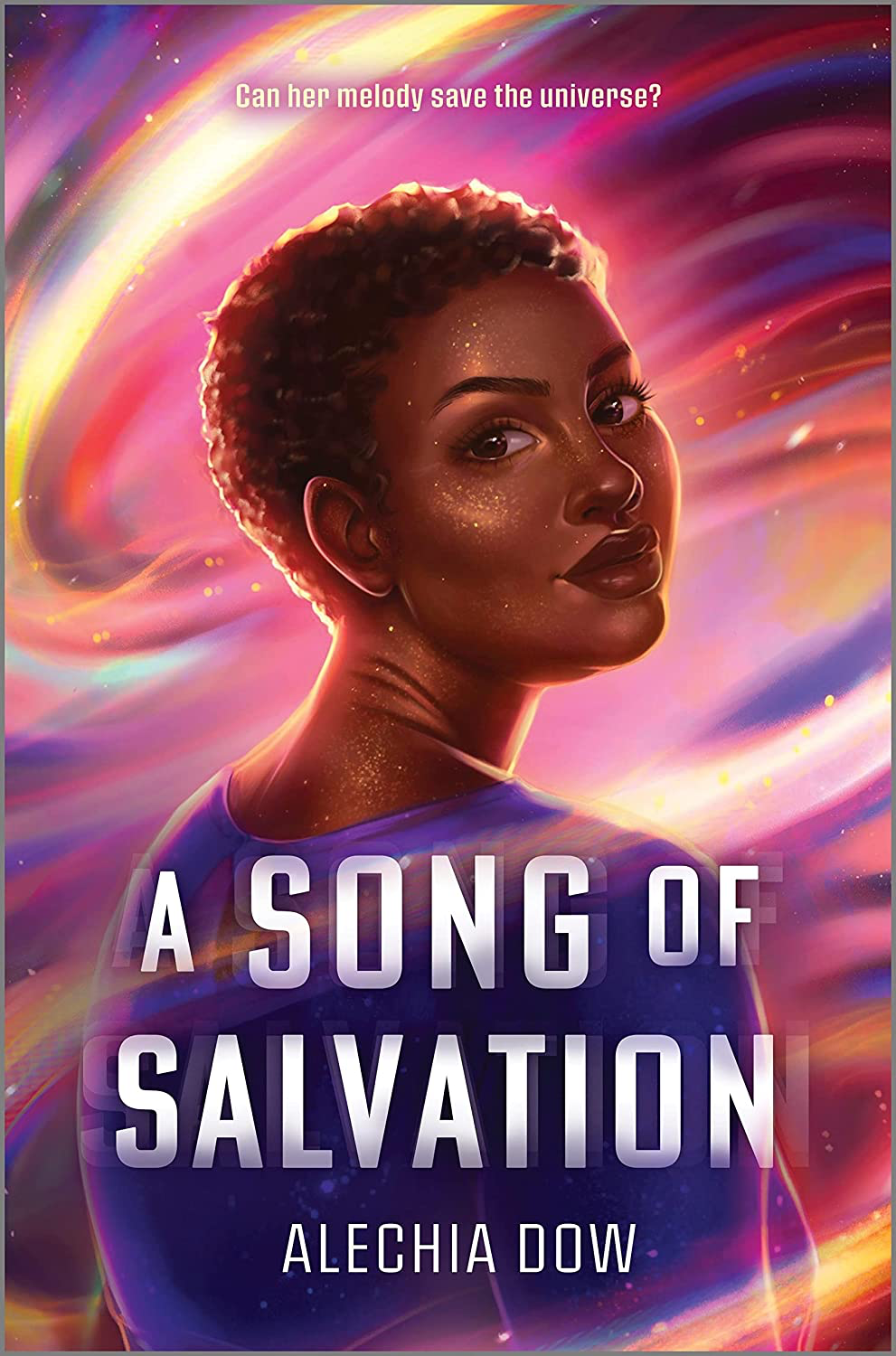
I’ve been following Alechia Dow ever since The Sound of Stars was a 5-star read for me way back in 2020; I’ve loved reading her brand of hopeful, queer YA sci-fi with Black characters at the forefront, and so I was so excited to hear that A Song of Salvation was set in the same universe as her first two books! Unfortunately, I found it to be more lackluster than her first two books, but that doesn’t mean that I still enjoyed it.
Zaira Citlali knows her purpose. As the reincarnation of the goddess Indigo, she has been granted with their powers—but cannot seem to harness them. What’s worse, her mortal enemy, the destruction god Ozvios, remains at large, and as he creates war all across the galaxy, he’s eyeing Zaira as a prime sacrifice. But Zaira won’t go down without a fight, even if it means rushing to control her powers. With the help of Wesley, a disgruntled smuggler who just wants to get the job done, and Rubin, a celebrity podcaster that Wesley definitely doesn’t find ridiculously attractive, she must find her way to Terra, the center of intergalactic conflict, to ensure that the song of the universe remains intact.
TW/CW: themes of war, genocide, colonialism/imperialism, murder
I liked this book. But I wanted to like it so much more. Ever since The Sound of Stars, I’ve been trying to get my hands on every Alechia Dow that comes out—normally, I love her special brand of sweet, vibrant sci-fi with Black, queer characters at the forefront. But putting this book next to The Kindred has made me realize that I’m liking her books less and less with each one that comes out. And that makes me really sad. It almost makes me scared to re-read The Sound of Stars, which was a 5-star read for me, just out of fear that it won’t be as impactful for me now as it was back in 2020. All that is to say that A Song of Salvation was still a solid read, but a visible downgrade from both The Sound of Stars and The Kindred. It doesn’t feel like her best work at all.
I’ll start with the positives: if anything, A Song of Salvation was still fun and well-crafted. Dow’s space opera universe where queer characters of color are in charge of their own destinies and get to star in their own star-crossed romances is always a treat to step inside of. The new context and worldbuilding that Song adds to this already vibrant world made it even more fleshed out and real, and Dow was adept at handling all of the intergalactic politics as war descended upon the universe. It’s all richly layered and detailed, with no stone left unturned in terms of the eccentricities of everything going on. And of course, sci-fi with high(ish) stakes but with ultimately hopeful and happy resolutions are always a win. Before I get into my main gripes, I should clarify that I did enjoy the book—it was still a fun read, and better than a fair portion of YA sci-fi—but having read Dow’s other novels, it left me wanting more.
What was endearing to me about The Sound of Stars and The Kindred (the latter to a lesser extent) were the characters—Ellie and Morris felt so resonant, and Felix and Joy, even if they were slightly less so, were still a joy (no pun intended) to be around. Given that Dow’s books have leaned more on the side of character-driven, I expected Song to have the same kind of characters and character development, but unfortunately, I found it lacking. Zaira, Wesley, and Rubin were all fun characters, in the abstract, but it felt like Dow didn’t give them the same love and care that she did for her other characters. They all seemed to have a baseline personality trait each: Wesley is grumpy, Rubin is flamboyant, etc. There wasn’t a whole lot to Zaira, either—it genuinely saddens me to say this, but she feels like every single “reincarnated god/goddess/has the power of a deity” kind of character, whose only traits seem to be that they’re overpowered. And for all of the “I can’t control my powers :(” talk, she seemed to miraculously save the day most every time? That’s not to say that they weren’t all at least entertaining, though; they had a good group dynamic, and Wesley and Rubin were cute together. (Did anybody else feel like Rubin was a toned-down, YA version of Ruby from The Fifth Element? The name and everything…I can’t be the only one to see that…)
Plot-wise, A Song of Salvation struggled to remain relevant for at least half of the book; it felt like a lot of running about with no consequence to the story (and, y’know, the looming intergalactic war?). The second half more or less suffered from the same problem, but it hinged so much on the cameos from the previous books. Don’t get me wrong—it was really sweet to see Ellie, Morris, Joy, Felix, and all of the others, but the more that they showed up, the more it felt like they were being used as crutches to keep longtime readers interested in the story. And for such endearing, well-developed characters, having them used like this was such a shame. They were too well-written to just be cameos. It really felt like such a shame.
All in all, a fun addition to Alechia Dow’s sci-fi universe, but one that relied too much on the wondrousness of its predecessors to stand on its own. 3.5 stars.
A Song of Salvation is the companion to Alechia Dow’s other YA sci-fi novels, The Sound of Stars and The Kindred; they are not a concrete trilogy, but they are all set in the same universe, and can be (and probably should be, just to understand everything) read as such. Dow is also the author of the forthcoming middle grade novel Just A Pinch of Magic (slated for release this October) and All’s Fair(y) in Love & War (slated for release in 2025).
Today’s song:
haven’t been able to stop listening to this gaaaaah
That’s it for this week’s Book Review Tuesday! Have a wonderful rest of your day, and take care of yourselves!
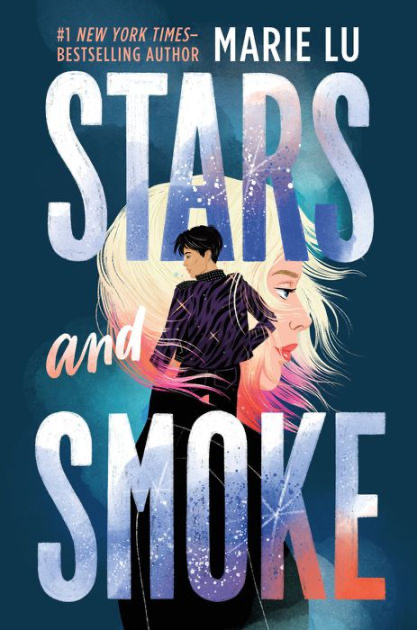
Here’s the thing—I’m not sure if I would read this book if it weren’t for Marie Lu. It’s not the kind of story that I would normally pick up, but if I’ve learned one thing as a longtime fan, it’s that she’s deft at writing for a variety of different genres. After finishing Stars and Smoke, it proved my point—I probably wouldn’t have read it otherwise, but it was still a fun read.
Winter Young is on top of the world. The former backup dancer has had a meteoric rise to fame with his solo career, with sold-out tours and chart-topping albums every year. But his talents are wanted elsewhere—as a spy.
For Sydney Cosette, Winter is the key to taking down Eli Morrison, a prominent crime boss. After Morrison’s daughter, Penelope, requests a private concert for her birthday, Sydney and her colleagues recruit him for the Panacea Group, a spy organization willing to do the dirty work that most won’t do. Winter is the perfect opportunity to infiltrate Eli Morrison’s rank—and take him down for good. But sparks are flying between Winter and Sydney—sparks that could compromise the mission itself…
TW/CW: poisoning, murder, loss of loved ones
I’ve been a fan of Marie Lu since middle school, and she’s become an autobuy author for me, no matter the story—in my experience, she’s shown herself to be incredibly versatile when it comes to hopping genres. When I saw the description for this book, I knew one thing: I probably wouldn’t have read this book had her name been on it. It didn’t seem like my type of story. And although that’s still true, Marie Lu gave it her best shot at that magic touch that she applies to every novel she writes.
Lu said that in the acknowledgements that after the pandemic and all of the chaos and awful things that have happened as of late, this book was meant to be a piece of light escapism to distract from it all. Given how dark some of her works have gotten, I really respect creating a book just for that purpose—some days you can’t swallow a whole, literary masterpiece full of emotional turmoil. And as with every other novel she’s written, Lu achieves that goal perfectly. Stars and Smoke is pure fun—it’s the YA version of an action-packed blockbuster, filled with fun and romance. Lu keeps the plot and pace going steadily, and I never found myself getting bored.
However, even though most of the book hinged on the premise of said romance, it barely felt fleshed out. In the last 2-3 years, I’ve seen the “enemies to lovers” trope being slapped on advertisements and blurbs for books as a selling point from its popularity from both fan fiction and BookTok. Listen—I adore the dynamic when it’s done well, but the trope has become such a buzzword that a lot of authors seem to have forgotten what it’s really about. All too often, the stretch between “enemies” and “lovers” is virtually nonexistent, making for a half-baked romance that ends up feeling like it has no chemistry—going to complete disgust to head-over-heels in love in no time at all.
Stars and Smoke, unfortunately, fell into this trap as well, which is frankly surprising, since Marie Lu has done enemies-to-lovers (and romance in general) well before. Winter and Sydney seemed to have hardly any chemistry at all—they seemed to go from “eh, I really don’t want to work with [x]” (and vice versa) to “excuse me while I write a chart-topping love confession for [x]” in a very short span of time. The “enemies” part was very understated too—not that I’m complaining, but if anything, it was more “mild annoyance to sorta lovers, I guess” than anything. Again: enemies to lovers has become a complete buzzword. Trope terms are helpful, but love is often more complicated than that, and the key to getting them right is to recognize the nuance beyond the basic premise of the trope.
All in all, a light, fun novel that lacked in the romance department, but delivered in the pure escapism that it promised. 3.5 stars!
Stars and Smoke is the first in a planned duology, concluding with an as-of-yet unnamed sequel set to be released sometime in 2024. Marie Lu is also the author of the Legend series (Legend, Prodigy, Champion, and Rebel), the Young Elites trilogy (The Young Elites, The Rose Society, and The Midnight Star), the Warcross duology (Warcross and Wildcard), the standalone Kingdom of Back, the Skyhunter duology (Skyhunter and Steelstriker), and many other books for children and young adults.
Today’s song:
criminally short
That’s it for this week’s Book Review Tuesday! Have a wonderful rest of your day, and take care of yourselves!
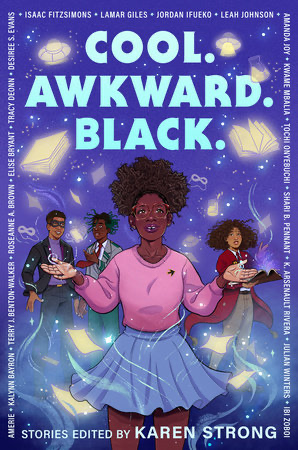
I’m always up for diverse anthologies, and the fact that this one focused on both sci-fi/fantasy stories and geek/nerd culture from a Black lens was an instant sell for me! There were a few authors that I was familiar with and liked in here—Jordan Ifueko, Roseanne A. Brown, and Leah Johnson, to name a few—so that helped its case too. But as with any anthology, there were hits and misses, but there were still a fair amount of gems within Cool. Awkward. Black.
A multi-genre YA anthology of bestselling, critically acclaimed Black authors challenging the concept of the geek, featuring contributions from Amerie, Kalynn Bayron, Terry J. Benton-Walker, Roseanne A. Brown, Elise Bryant, Tracy Deonn, Desiree S. Evans, Isaac Fitzsimons, Lamar Giles, Jordan Ifueko, Leah Johnson, Amanda Joy, Kwame Mbalia, Tochi Onyebuchi, Shari B. Pennant, K. Arsenault Rivera, Julian Winters, and Ibi Zoboi.
A girl who believes in UFOs; a boy who might have finally found his Prince Charming; a hopeful performer who dreams of being cast in her school’s production of The Sound of Music; a misunderstood magician of sorts with a power she doesn’t quite understand.
These plotlines and many more compose the eclectic stories found within the pages of this dynamic, exciting, and expansive collection featuring exclusively Black characters. From contemporary to historical, fantasy to sci-fi, magical to realistic, and with contributions from a powerhouse list of self-proclaimed geeks and bestselling, award-winning authors, this life-affirming anthology celebrates and redefines the many facets of Blackness and geekiness–both in the real world and those imagined.
TW/CW: racism, misogyny, religion-based bigotry
Cool. Awkward. Black. was hit or miss as a whole, but above all, there were a few fantastic stories in the bunch, and I loved the spotlight on Black sci/fi fantasy, as well as geek culture. With all Black protagonists, many of which are queer and/or disabled, it’s a breath of fresh air, even if not every story was a hit for me.
Since this is an anthology, I’ll do shorter reviews of each story in chronological order.
~
“Our Joy, Our Power” – Julian Winters (⭐️⭐️⭐️.5)
I was expecting to not be a fan of this one after not being a fan of Running With Lions, but this was a surprisingly sweet story! With a tender, queer romance at a comic con and some great commentary on the racism within cosplay culture, this was a great start to the anthology. I’m not sure if it’s enough for me to give Winters’ novels another chance, but I certainly enjoyed it.
“The Book Club” – Shari B. Pennant (⭐️⭐️.5)
I felt obligated to like this one as a former book club president, but this one was a letdown. The concept of this one was interesting enough—a girl finds a book that seems to speak to her when she picks it up, and is then invited to a secret society of magic wielders in the guise of a book club—but the prose veered onto the cheesy side more often than not. I wish we’d gotten a little bit more context around the Society (and…okay, maybe the name was vague on purpose, but I would’ve liked a name more interesting than just “The Society”) and more of what their magic entailed other than the Evil Magician™️ that Must Be Defeated.
“Nina Evans, In the Round” – Kalynn Bayron (⭐️⭐️⭐️⭐️)
This one was an unexpected highlight of the anthology! Again, my expectations were rather low after how much of a sore disappointment Cinderella is Dead was for me, but I loved this story of a Black girl determined to get the role of Maria in her high school’s production of The Sound of Music. Her story of determination was a powerful and timely one, and I loved the poignant themes of Nina breaking the mold and never surrendering.
“Earth is Ghetto” – Ibi Zoboi (⭐️⭐️⭐️⭐️)
Even without the fantastic title, “Earth is Ghetto” is undoubtedly one of the best stories in this anthology! It follows Ingrid, a Haitian immigrant, who witnesses First Contact, and upon speaking to the aliens and wishing to go to their planet, realizes that they harbor many of the same prejudices as humans back on Earth. It’s witty, it’s timely, and it’s unflinchingly questioning of the norms upon which both we and the aliens built our societies. I loved the hopeful ending as well; it’s hard to get this kind of ultimatum that Ingrid has to make across in such a short story, but Zoboi managed to do all that and subvert the usual tropes and endings that go along with it. Great stuff.
“Initiative Check” – K. Arsenault Rivera (⭐️⭐️⭐️)
This was the first time I’d ever heard of K. Arsenault Rivera, and this was a decent story, I’d say. The whole story comprises a group of friends and their Dungeons and Dragons campaign, and although I wasn’t as big of a fan of the campaign aspect of it, I loved the subtle, tender chemistry that Rivera created between her larger cast of characters. A nice, sweet story, but nothing that changed my life.
“Corner Booth” – Leah Johnson (⭐️⭐️⭐️⭐️)
Following in the footsteps of Johnson’s solid rom-coms, “Corner Booth” was the story of two teens meeting after competing with each other for years over a competitive, Scrabble-like spelling app. I loved the definitions scattered throughout, showing Rose’s knack for strategy and etymology, and I loved the buildup of the enemies/rivals-to-lovers romance blossoming between her and Wes. It’s an adorable addition to the anthology, and a standout without a doubt.
“Betty’s Best Craft” – Elise Bryant (⭐️⭐️⭐️.5)
Elise Bryant perfectly captures the chaos of a high school group project, but I find myself wishing that mine had the romance of this story. Another sweet enemies-to-friends/lovers, Bryant wonderfully weaves in the grudge that Betty’s had against Jhamir for years, and takes that buildup into a blossoming friendship—or maybe something more—on a final project for an African American History class. I’ve only read Bryant’s Happily Ever Afters, but “Betty’s Best Craft” felt the same way—a light, sweet, and artsy romance of second chances.
“The Panel Shows the Girl” – Amanda Joy (⭐️⭐️.5)
I really wanted to like this one, and there was one aspect that I really did like—the discussion around disability and accommodations. Amaya’s struggles with trying to get accommodations for her ADHD was one that I knew all too well, and I’m glad to see that perspective represented. That being said, the rest of the story felt clunky to me; the twist about the drawings coming to life felt shoehorned in and poorly executed, and most of the dialogue felt stilted and corny as well. Shame…
“Spirit-Filled” – Jordan Ifueko (⭐️⭐️⭐️⭐️)
I expected nothing less from the author of Raybearer, and “Spirit-Filled” delivered! I loved the discussions around Romilly questioning her faith and the role of women, as well as the suspense built by Romilly’s secret library book locked in the supply closet of her church. Like many of the other short stories in this story, I love how unapologetic it is about questioning authority and systems, and Romilly was a great vehicle for exploring misogyny in some parts of organized religion. Plus, the youth pastor character was appropriately cringey, so that was pretty funny.
“Cole’s Cruise Blues” – Isaac Fitzsimmons (⭐️⭐️⭐️.5)
Although I wasn’t as much of a fan of the writing in this one, it had a wonderful emotional core, and I loved that it featured a trans protagonist! Also, I definitely felt for poor Hailey…man, I feel that 10 year old feel of botching something in front of an audience 😭 I JUST WANNA GIVE THE POOR KID A HUG
“High Strangeness” – Desiree S. Evans (⭐️⭐️⭐️⭐️)
More than ever, this story made me yearn for the experience of stargazing in the middle of nowhere with a goth girlfriend…is that too much to ask?
…please?
“Catalyst Rising” – Tracy Deonn (⭐️⭐️.5)
Unlike some of the other stories, I went into this story with low expectations, and the low expectations were…met. I wasn’t as blown away by Legendborn as everybody else seemed to be, and this story was more of the same. It felt like a very cliched setup for a fantasy chosen one in the real world, and although I liked the inclusion of Petra’s anxiety, the story as a whole just felt so overdone and exaggerated.
“Requiem of Souls” – Terry J. Benton-Walker (⭐️⭐️⭐️.5)
I LOVED the concept of this one, especially the trio of unique ghosts that follow Rocko around, and Rocko using them to get back at those who have wronged him. The musical aspect was a lot of fun as well, and it added some very Tim Burton-like, campy fun to this story. Plus, although being Gen Z has given me a permanent Minecraft association to the word “creeper,” I loved this story’s monstrous Creeper as well.
“Honor Code” – Kwame Mbalia (⭐️⭐️)
The dialogue felt very stilted for me on this one, and beyond that, it felt more like a comprehensive guide to LARPing and not an actual story. If “Honor Code” leaned more on the present day and not so heavily on the multiple flashbacks, it would’ve held so much more water. This one might be my least favorite story in the collection.
“Drive Time” – Lamar Giles (⭐️⭐️⭐️)
Although it wasn’t the most well-written of the collection, I loved the multiple POVs and the nonstop action of “Drive Time.” The writing was more than a little cheesy, but unlike some of the other stories, it felt cheesy for the right reasons—this story is essentially if a botched driver’s test turned into something like Fast & Furious, after all. I appreciate the art of well-placed cheese.
“Wolf Tracks” – Roseanne A. Brown (⭐️⭐️⭐️⭐️)
Nothing beats werewolves tearing a racist troll to shreds (literally, in this sense), does it? I was super excited to read Brown’s addition to the story, and she delivers every bit of it with humor, heart, and grounding emotion that balances levity with more grounded themes.
“The Hero’s Journey” – Tochi Onyebuchi (⭐️⭐️⭐️.5)
I wasn’t expecting to like this one as much after how disappointing Beasts Made of Night was, but “The Hero’s Journey” perfectly captured writer’s block in a way that I’ve never seen in a short story—or any novel that I can think of. I didn’t expect to be called out with the [INSERT CHARACTER NAME IN BRACKETS], but here we are. Happens to the best of us.
“Abyss” – Amerie (⭐️⭐️⭐️⭐️)
I was super impressed by Amerie’s short story in A Phoenix Must First Burn, and her story here was a perfect sendoff for Cool. Awkward. Black. Her character work and descriptions are once again fantastic, and for once, she can make a lack of quotation marks in dialogue an understandable stylistic choice that still makes the story flow. The latter is something that usually gets on my nerves, but Amerie used it greatly to her advantage in “Abyss.”
I averaged out my ratings for each story, and they came out to about a 3.5! I’d say that’s accurate—it was a mixed bag, but there were unexpected gems from both authors that I love and authors that I didn’t like as much previously. Not every one shone, but there were enough fantastic ones in there to make this a wonderful experience. And my ratings aside, I loved the diversity of both the characters and the genres of each story—it’s a very unique collection. 3.5 stars!
Cool. Awkward. Black. is an anthology, and if you click this Goodreads link, you can see all of the previous works of the many authors featured in this collection.
Today’s song:
GAH this has been stuck in my head for a week straight it’s so good
That’s it for this week’s Book Review Tuesday! Have a wonderful rest of your day, and take care of yourselves!
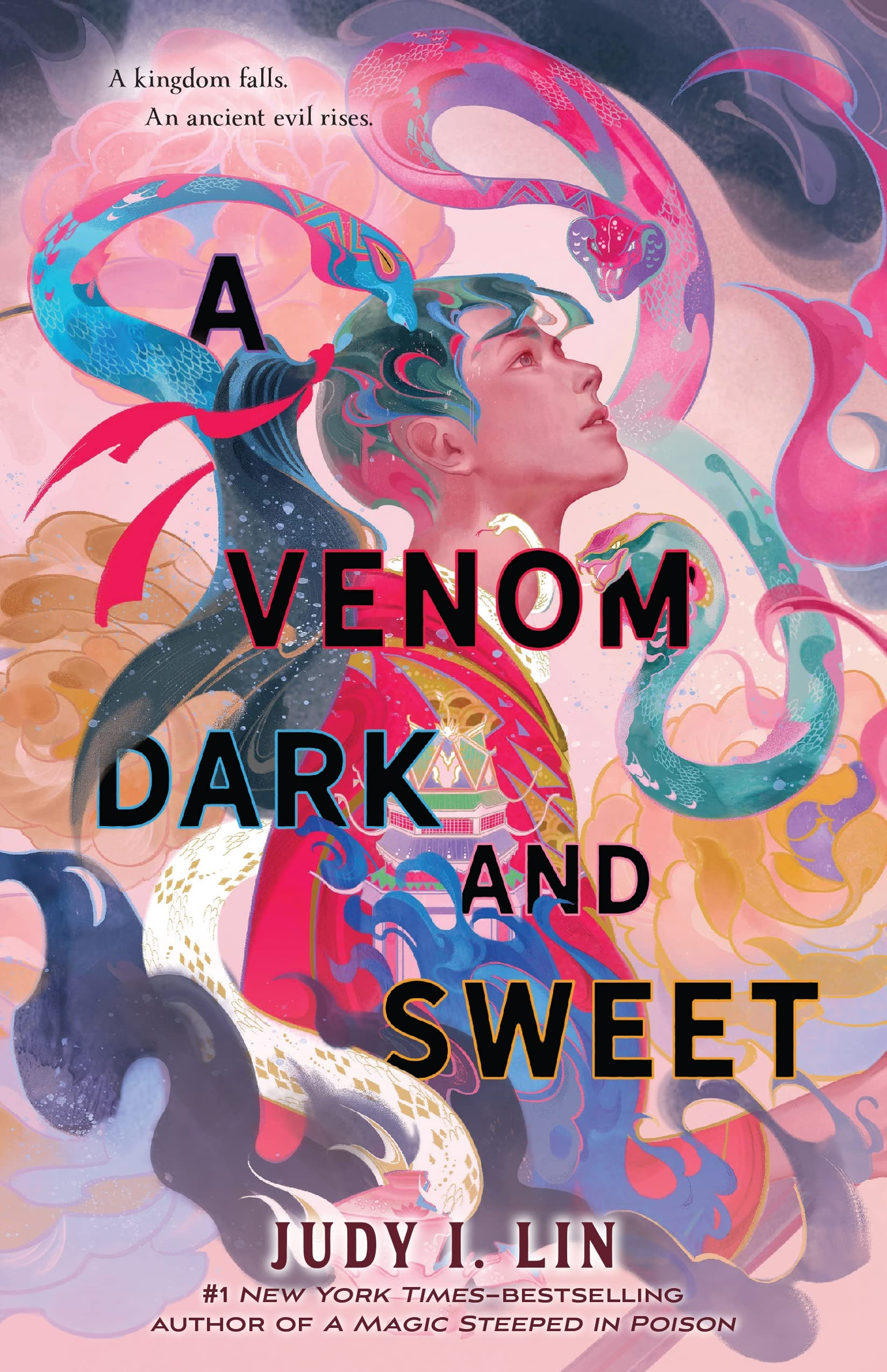
I really enjoyed the first book in the Book of Tea duology, A Magic Steeped in Poison, because of its unique magic system and immersive world. Lucky for us, book 2 came out mere months after Magic (HOW), so I got to get my hands on Venom somewhat soon after reading book 1. However, a lot of what I loved about Magic was watered down in the sequel—Lin’s writing remained strong, but a good portion of what made Magic so unique had been sidelined.
Tread lightly! This review may contain spoilers forA Magic Steeped in Poison. If you haven’t read it and intend on doing so, read at your own risk.
For my review of book 1, A Magic Steeped in Poison, click here!
After the Banished Prince returns to take his place on the throne of Dàxi, Ning and the other exiled royals are forced into hiding. Evading the Prince’s systematic tea poisonings across the kingdom, it’s up to Ning to expose the fraud and treachery of the new ruler. But an even greater evil lurks in the shadows, and if Ning and her newfound allies can’t stop the hostile takeover of their kingdom, they may fall to an even worse fate than they could have ever imagined.
TW/CW: fantasy violence, death, substance abuse, torture
I really wished I liked A Venom Dark and Sweet more than I did; the series was off to such a strong start with A Magic Steeped in Poison, but this sequel bordered on lackluster in comparison. Without the novelty of the unique elements that made book 1 so memorable, there wasn’t much else to carry the plot, save for Lin’s excellent writing; nevertheless, it was still entertaining.
As with Magic, Judy I. Lin’s beautiful writing was the strongest point of the whole novel. Her prose continues to be as lush and immersive as the world she created, and even when the plot faltered, Lin’s words carried it afloat until the end of the book. It wasn’t quite enough to overshadow the weaker aspects of this book, but it gets an extra half-star from me—it largely picked up the slack of the rest of the book.
However, the rest of Venom didn’t seem to have much to it. Most of the book seemed to just be the two parties skirting around each other/trying to avoid getting killed, and it just felt like 350-odd pages of a wild goose chase. After how compelling the political intrigue and the magic system of Magic were, I expected so much more from this book, but there seemed to be hardly any payoff to anything that happened in book 1. We did get some bits of fascinating worldbuilding (the bamboo forest, for one, we needed more of that), but they were delivered in such brief, fleeting chunks that they left me feeling disappointed. It was decent on its own, but I just wanted more—more exploration of the world, more exploration of the magic system, more stakes.
And speaking of no payoff…did Lin just forget that she was teasing a romance between Ning and Kang? Venom was told in dual POVs between the two of them, but they didn’t end up meeting until about the 95% mark and then…nothing really happened? My issue isn’t that they were just platonic (in fact, I’d be all for that), but given that Lin was teasing a romance between them for a good portion of Magic, I really wished there had been some sort of resolution.
All in all, a promising sequel with beautiful prose, but a lackluster conclusion to the duology as a whole. 3.5 stars.
A Venom Dark and Sweet is the final book in the Book of Tea duology, preceded by A Magic Steeped in Poison. Judy I. Lin is also the author of the forthcoming Song of the Six Realms, slated for release in 2024.
Today’s song:
finished learning this on guitar today, so much fun
That’s it for this week’s Book Review Tuesday! Have a wonderful rest of your day, and take care of yourselves!
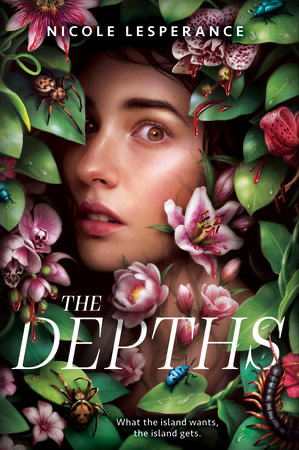
I found out about The Depths after Nicole Lesperance’s other YA novel, The Wide Starlight, was my first 5-star read of the year. (For my review of The Wide Starlight, click here!) After it came out, I was excited to read it after how much The Wide Starlight impacted me. I knew going into The Depths that it would be a very different kind of book, and that was certainly the case—compared to Starlight, it was a slight disappointment, but when separated from Lesperance’s other works, it’s a unique horror story with a creative setting.
After a free-diving accident left her medically dead for several minutes, 17-year-old Adeline Spencer has to tag along with her mother and step-father on their honeymoon. In a secluded, nearly uninhabited island, Addie is supposed to stay put while she recovers from her near-fatal lung injury. But Eulalie Island is full of strange secrets—birds that seem to call her name, flowers that bleed bloodred sap, and a 200-year history of mysterious deaths. When she uncovers a centuries-old mystery hidden in a remote cave system , Addie must rescue herself from the same fate before Eulalie Island takes her in as one of its own.
TW/CW (from the author): death, past child death, blood, drowning, venomous insects/arachnids (spiders, centipedes, etc.)
I’m not much of a horror person, but after The Wide Starlight captured my heart, I was willing to give this novel a try. Sadly, The Depths didn’t blow me away like her previous novel did, but it still held its own with its unique take on a spine-chilling ghost story.
What really saved The Depths for me was its unique approach to the genre. Even though I don’t read/watch much horror at all, I’ve seen hardly any horror stories that take place in tropical locations. The secluded setting of Eulalie Island was the perfect, underused setup for a story like this—a chilling history of shipwrecks and sickness, cave systems that are all too easy to get lost in, and plenty of creepy crawlies to go around—not to mention the color-changing flowers that appear to bleed. (If I hadn’t already been dissuaded before, The Depths further convinced me that I’m not going caving any time soon.) Despite the supernatural elements, there were so many elements that felt real, and that’s part of what made it so successful. The Depths is a fantastic case study in using all aspects of your setting to make the most of your story.
I also love how Lesperance wove all of these centuries of history into her mystery; it’s easy to establish recurring events in your story, but the detail that she put into each part of the timeline—plus the presence of the ghosts and each one of their stories—gave the plot a more tangible sense of scale and weight. Even though I’ve repeated that The Wide Starlight and The Depths are two very different novels, when they stand together, you can see how skilled Lesperance is with building history and establishing a clear and well-thought-out timeline.
However, I found several elements of the story to be rather predictable. As detailed as the timeline was, the “plot twists” were often left behind, making for plot points that were easy to see coming—and I’m saying this as someone who hardly ever reads or watches horror. Without spoiling anything, the most obvious was the twist with Sean—I remember seeing that one coming from at least 100 pages before it was revealed. To be fair, it was at least a decently clever twist, but the fact that it was so easy to predict took a little bit away from my enjoyment of the story, even though I’m not the best at maneuvering plot twists.
All in all, a solid horror story that excelled in its unique setting, but fell flat in its predictability. 3.5 stars!
The Depths is a standalone, but Nicole Lesperance is also the author of The Wide Starlight, as well as the middle grade Nightmare Thief duology (The Nightmare Thief and The Dream Spies).
Today’s song:
the single most unexpectedly motivational song I’ve ever heard and I LOVE it
That’s it for this week’s Book Review Tuesday! Have a wonderful rest of your day, and take care of yourselves!
Huntress is one of those books that just sat on my TBR collecting dust for several years. I decided to read it after finishing Ash a few years back, and I finally was able to get my hands on a copy from the university library. After remembering liking Ash, my expectations were average, and I was rewarded with a solid, strong fairytale full of darkness in unexpected places.
Huntress is technically a prequel, but it doesn’t necessarily require reading Ash beforehand, as its set in the same world, but hundreds of years earlier (you should read it anyway, though!). If you’d like to read my review of Ash, click here!
Kaede and Taisin have been chosen for an insurmountable task: restoring order to the human world. For years, the sun hasn’t shone, the crops have dried up, and strange creatures have begun to breach the boundaries of human and otherworldly. The only way for them to seek answers is through the mysterious Fairy Queen, but the journey there may be more dangerous than what lies at the end. But as members of their party begin to die off, Kaede and Taisin must grapple with their futures—the future of the human world, and of the feelings they’re having for each other.
TW/CW: blood, fantasy violence, death, descriptions of injuries/corpses
“I don’t want to marry the man you arranged for me to marry because I don’t know him and I want to have control over my life”: good, good
“I don’t want to marry the man you arranged for me to marry because I don’t know him, I want to have control over my life, and also I’m a lesbian”: EVEN BETTER
It’s been a few years since I’ve read Ash, but reading Huntress doesn’t necessarily require a whole lot of knowledge of Ash‘s world to understand it. What remains, however, is that you have to remember that it was some of the first of its kind. Nowadays, YA is dominated by fairytale-inspired and fairytale retellings, some of which are queer, but stories like Ash and this companion were some of the first ones to do so—and some of the first to be openly queer. If you remember that (and if you can get past the painfully dated cover), you’re in for a fun ride—a dark and atmospheric piece of high fantasy filled with all sorts of danger and strange creatures.
Lo’s world is pretty distinctly High Fantasy™️, which I’ve been jaded with as of late, but her unique spin on it was enough to create a captivating world. Although the magic system was a little hazy, Lo’s descriptions of the barren landscape and treacherous forests created a world that felt real enough to step into. Even more captivating were the creatures that inhabited this world—everything from unicorns to horrifying changelings; the mythology around them and the stakes they created propelled the story even more. Plus, it’s always refreshing to have non-European inspiration for a high fantasy novel; in the author’s note, Lo explains that most of the book was inspired by both Chinese and Japanese mythology.
What I remember about Ash was how much I loved the main couple, but with Huntress, that was a little bit less of the case. In fact, I found Kaede and Taisin to be almost interchangeable (accentuated by the sporadic POV changes), but still compelling enough to root for. Most of the other characters were rather underdeveloped and forgettable, but Lo has a grim solution for the problem—killing them off. For me, it was Con who stole the show; he was the only character with a distinct personality, and it was a very lovable one at that. He’s the kind of character who probably would’ve been lumped in as the love interest in any other YA book, but having him as a platonic friend was so much more endearing.
Even though I loved Lo’s worldbuilding, I still wish that more was explored; we only got tidbits of the creatures in the Fairy Queen’s kingdom, and especially since the main villain was introduced so late in the book, I wished that we’d spent less time on the road and more time near the destination. The journey was interesting, sure, but it would’ve been more interesting to explore the more alien, unfamiliar corners of the world Lo created.
All in all, a solid piece of fantasy that made good use of its dark, barren atmosphere, but could’ve pushed it even further. 3.5 stars!
Huntress is a prequel to Ash, and they are the only books set in that universe. Malinda Lo is also the author of Last Night at the Telegraph Club, the Adaptation duology (consisting of Adaptation and Inheritance), and several other books for teens and adults.
Today’s song:
found this and “Metal Mickey” in a video somebody made of a medley of Britpop riffs, and…maybe I should check them out now?
That’s it for this week’s Book Review Tuesday! Have a wonderful rest of your day, and take care of yourselves!