Posted in Book Review Tuesday

Book Review Tuesday (2/25/25) – When No One Is Watching

Happy Tuesday, bibliophiles!

I’ve had my eye on When No One Is Watching for a few years now. I’m not typically a thriller fan, but the concept intrigued me, despite the consistently mediocre to low ratings on Goodreads and The Storygraph. Alyssa Cole is a new-to-me author, and I figured I would give her book a try. However, I’ve come out of it with a mixed bag and uncertainty as to whether I’ll read more of her books in the future. When No One Is Watching had an excellent premise that it only halfway delivered on, but was still entertaining and timely in the end.

Enjoy this week’s review!
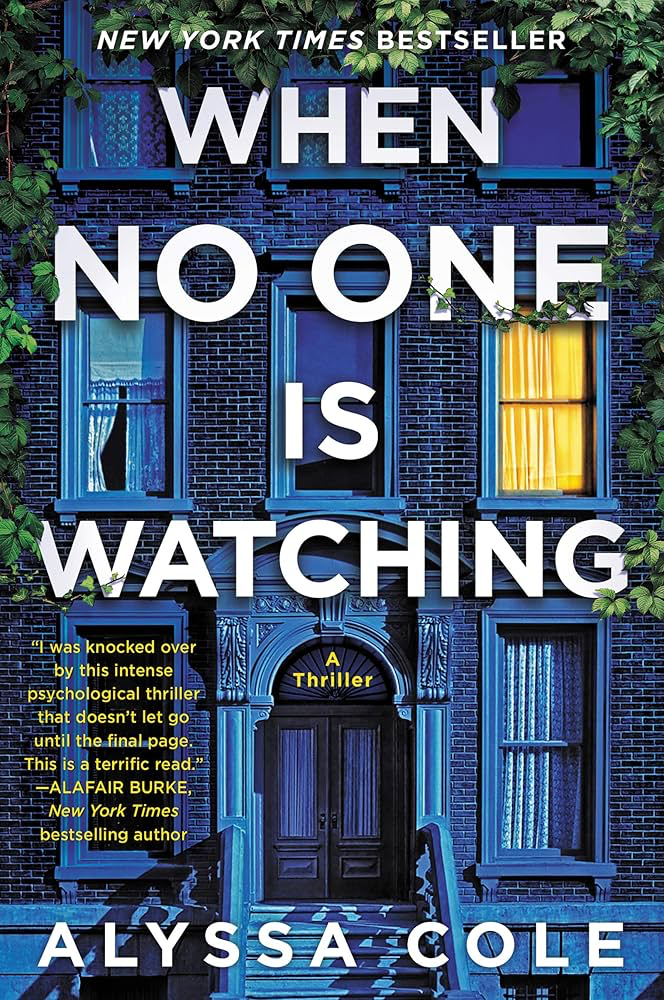
When No One Is Watching – Alyssa Cole

Sydney Green has called Brooklyn home for her entire life, yet her childhood is quickly slipping through her fingers. Her neighborhood, which was once home to a diverse group of homeowners, is quickly beginning to be gentrified. Condos are springing up where her neighbors once lived, and her Black and brown neighbors are being driven away one by one. Sydney suspects that something is amiss, and that there may be something more insidious to the gentrification of her neighborhood. With the help of Theo, her well-meaning neighbor, Sydney seeks to uncover the truth of her neighborhood’s fate, but what she finds may be even more sinister than she could have ever imagined.

TW/CW: racism, misogyny, gun violence, murder, loss of loved ones, police brutality, kidnapping

First off, When No One Is Watching is an incredibly timely thriller, and having a thriller surrounding the themes of gentrification is genius. When you strip past the apathy the general American population has of living not just on stolen land, but land that has driven its people of color into the worst possible conditions, it really is a frightening reality to live with. Even if the gentrification of neighborhoods itself isn’t some grand conspiracy, as it partially is in this novel, it’s a no-punches-pulled look at what’s happening to neighborhoods all over the country. Adding in snippets of social media doesn’t always work in books, but weaving in the neighborhood groupchat into When No One Is Watching also served to add a critical piece of the puzzle: that a lot of white people in such situations are so easily willing to dismiss any kind of racism if it doesn’t affect them, even if it’s happening in their own backyard. With an unflinching pen, Cole examines all of the aspects of gentrification, from its history to its current iterations, making for a thriller grounded in a real source of fright.

There are plenty of scary scenes in When No One Is Watching, but the fact that Cole mines the horror out of Syd being in an Uber and her driver driving her away from her destination should tell you something about where this novel lies. That particular scene is at the beginning of the book and isn’t the scariest thing that happens, but man…Cole is excellent at squeezing the horror from very grounded, real events. With the exception of the more sinister twist at the end, this novel creeped me out because almost everything that happened was real—its horror drawn from the realities of racism, misogyny, and gentrification. I can’t speak to this personally, but it felt like the inherent horror of being a marginalized person in the United States, but specifically of being a Black woman, a group that this country has historically done everything in its power to silence and oppress. It really gives weight to the expression “truth is stranger than fiction”—in this case, truth is scarier than fiction. That’s where Cole finds the fear, which made When No One Is Watching so effective in its brand of suspense.

However, a lot of the realism that came through in the suspense aspect of When No One Is Watching was deadened somewhat by the excessive use of modern internet lingo. I don’t mean the AAVE at all—that part was great, and I’m glad to see more of it integrated into literature, because there’s no need to cater to white audiences anymore at this point (and there’s many conversations to be had about how twitter/tiktok/etc. slang has subsumed AAVE so quickly and stripped it of its original meaning). No, I’m talking about the very millennial-sounding, tweet-ready one-liners that many of the characters dole out to make the story “funnier.” (Whew. Lots of hyphens in that sentence, even for me.) If I hadn’t seen the quote “I need you to channel the confidence of a mediocre white man” on at least 10 different t-shirts, stickers, and tweets, it would’ve been funny. About half of the humor in When No One Is Watching lands, but the other half is about the same as this: quips that have been circulated on the internet for at least a decade that could’ve been funny years ago, but have gone so stale that they’ve lost all novelty, originality, and more importantly humor. Again, I liked that When No One Is Watching was able to balance levity with some of the more thriller aspects, but it would’ve tipped the balance even more if more of the humor was original. Even five years after this book’s release, it was so easily dateable. Give it another five, and it’ll be painfully dated.

What hindered When No One Is Watching the most, however, wasn’t that: it was the pacing. It was just odd. When the suspenseful moments came, they were appropriately suspenseful, but there was so much middling around in between these moments for the first 75% of the novel that I started to question whether or not I was reading a thriller. But once the big twist comes in, it’s when I was about 80-85% of the way through the book—and the entirety of the big reveal, the climactic final battle, and the resolution were crammed into only about 15% of the book. It was whiplash-inducing, but not in a way that a thriller should be. Thrillers aren’t my go-to, but for more thriller/horror movies, I like when I have some breathing room between the suspenseful/scary moments (see: Alien, Nosferatu). When No One Is Watching theoretically had that down pat, but where it suffered was that the breathing room was rarely interesting. Other than the fantastic commentary on racism and gentrification, the plot between the suspense was just boring. I didn’t care much for Syd and Theo’s romantic subplot, I didn’t care for them randomly running around and ultimately discovering very little. So much of it could have been condensed in order for the climax to not feel like being chucked out of a bus window and onto the highway—not in a suspense way, but in a wild pacing way. Big reveal, shootout, resolution, and bam, it’s all over…in about 30 pages, tops. As with the humor, there needed to be balance with the plot—more suspense spread out through the novel, and more room to process and mine into the commentary of the climax.

All in all, a thriller with sharp, relevant commentary on racism and gentrification that excelled in its suspense, but was dragged down by uneven pacing and humor that dated itself far too quickly. 3 stars.

When No One Is Watching is a standalone, but Alyssa Cole is also the author of several other novels for adults, including the Reluctant Royals trilogy (A Princess in Theory, A Duke by Default, and A Prince on Paper), the Off the Grid trilogy (Radio Silence, Signal Boost, and Mixed Signals), The Loyal League trilogy (An Extraordinary Union, A Hope Divided, and An Unconventional Freedom), and many other novels.

Today’s song:

That’s it for this week’s Book Review Tuesday! Have a wonderful rest of your day, and take care of yourselves!

Posted in Book Review Tuesday

Book Review Tuesday (10/24/23) – Stars, Hide Your Fires

Happy Tuesday, bibliophiles!

Here I am with a proper book review this week! I’m not exhausted now! However, I’ve still been in something of a reading slump for a fair portion of the month. Behold the consequences.

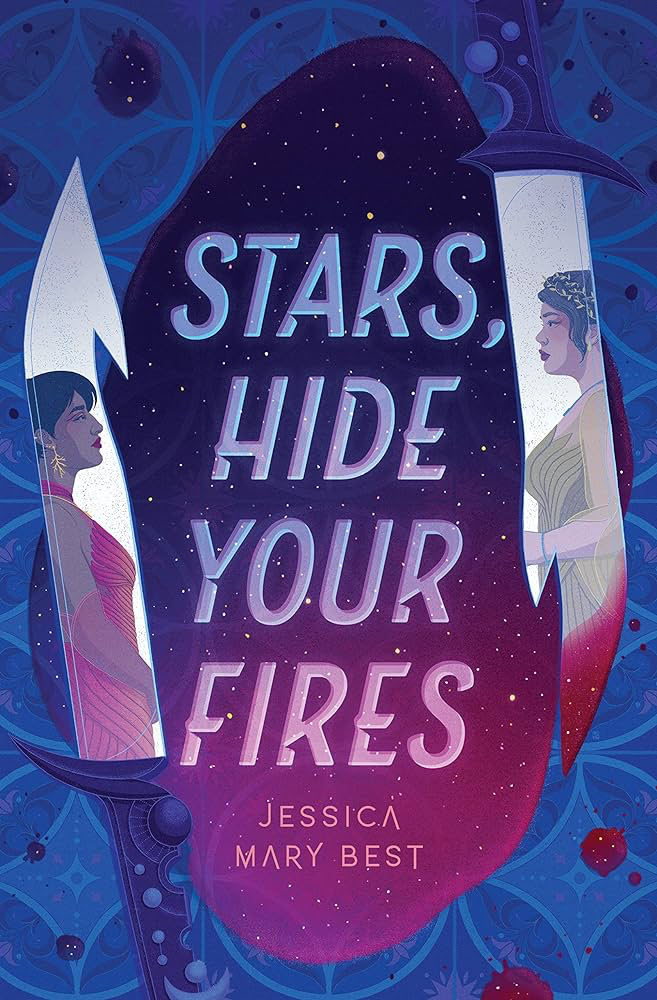
Knives Out in space? Yep. I am not immune to propaganda. I fell for that one. The gorgeous cover helped. Duped by a pretty cover again. I’m always on the hunt for YA sci-fi that really delivers, but even though Stars, Hide Your Fires was an entertaining read, it largely fell into the “ballrooms in space” trap that so much of the subgenre suffers from.

Enjoy this week’s review!

Stars, Hide Your Fires – Jessica Mary Best

Cass knows her place. As a thief scraping out a living on a backwater moon, she knows that there’s no escape that the life that the Emperor and his family have made for people like her. But when she sees the chance to hitch a ride to the Palace Station, she knows she’s hit it big. Steal enough jewelry, and she’ll be able to escape the planet forever. But when the Emperor is mysteriously murdered and suspicion lands on her, Cass must find a way to escape the space station—and clear her name.

TW/CW: murder, blood, sci-fi violence

I really need to stop going after YA sci-fi books where most of the plot takes place in some kind of ballroom or palace. After a certain point, it just gets so bogged down in the flowy dresses, jewelry, and court intrigue modeled after…I don’t know, Ancient Rome, probably, that it barely feels like sci-fi anymore. It’s really a travesty. But even though Stars, Hide Your Fires was far from perfect, it didn’t fall into every single one of the pitfalls I just described. It at least had a few elements that almost set it apart. Almost.

I’ll give Best this—for the first quarter of the book or so, Stars, Hide Your Fires did actually feel like science fiction. Although we didn’t get into the full extent of the worldbuilding, I did like the setup of the class difference just from showing the differences between two planets. You really did get a sense for Cass’ situation, and the setting of the dead, backwater moon really emphasized not only that, but the stakes that Cass later had to follow up on. Best’s writing sold the dusty, gloomy setting that dominates the first quarter of the book, and in comparison to all of the glittery ballroom business that comes later, it was a well-written contrast.

I’d also have to hand it to Best for keeping Stars, Hide Your Fires so tightly paced! Even though I lacked much connection to the plot, I’d be remiss if I didn’t acknowledge how neat it was—that part really felt sanded to a polish. All of the beats lined up straight into place, and with the exception of some dawdling in the middle, it at least held my attention for most of the novel. If anything, Stars, Hide Your Fires had some solid timing—Jessica Mary Best clearly had her line of dominoes ready to fall from the start, and the suspense was palpable.

That being said, other than the first and last quarters, I barely got the sense that this was science fiction. It’s one of those books where it could have just as easily been a historical drama or even fantasy if you took away the space setting. Sci-fi is my go-to, and usually, I’d like for a novel to present at least something partially new, whether it be a subversion of a typical setting, a unique kind of technology, or even some aliens to populate the universe. (ALIENS! ALIENS! ALIENS!) But other than being set in space, Stars had nothing to its name in that department. You could have just as easily made the palace a grounded palace on Earth, and hardly anything about the plot would have changed. Cass’ home moon could have been a different country, the spaceships could have been trains, the escape routes that she took could have been back alleys or indoor ventilation ducts. Even though it’s billed as sci-fi, Stars, Hide Your Fires doesn’t have anything to show for it other than being in space.

Additionally, I felt hardly any connection to the plot or characters. That was in no small part thanks to how unoriginal much of it was. You’ve got a generic setup of a tyrannical empire, but you don’t get much of a sense of what exactly is tyrannical about what they’re doing, other than being generally evil and a bit of monkey business with clones. To oppose them is an equally generic rebellion, and other than them being billed as heroic, you don’t really have much motivation to root for them since their goal is defeating said empire and not much else. Cass doesn’t have any ties to either, but other than her poorer background, there’s not much to her, either. My, a loner, rebellious pickpocket? Where have I seen that before? That’s the sad thing about this novel—if we’d had some original elements to any of the plot points, it could have been really fun. I’m all for a heist in space, but you’ve got to have the sci-fi chops to pull it off. And there’s some slack I’m willing to give Best since this is her debut novel, but it was still disappointing on that front.

All in all, an entertaining YA novel that could have elevated itself above simply “entertaining” if it had boasted any kind of original elements. 3 stars.

Stars, Hide Your Fires is a standalone; it is also Jessica Mary Best’s debut novel.

Today’s song:

thank you to whoever was in charge of the Wilco pre-show playlist on Sunday night for this

That’s it for this week’s Book REview Tuesday! Have a wonderful rest of your day, and take care of yourselves!

Posted in Book Review Tuesday

Book Review Tuesday (7/11/23) – The Whispering Dark

Happy Tuesday, bibliophiles!

I’m willing to go out of my genre comfort zone when it comes to finding books with good disability rep, and that was the case for this book; dark academia usually puts me off (see my review of Victoria Lee’s A Lesson in Vengeance for the gist of my gripes about it), but I’m always here for books by disabled authors! In this case, it was worth it, but the experience wasn’t the one that I think the author intended—The Whispering Dark was a mess, but in kind of a fun way. For the most part.

Enjoy this week’s review!

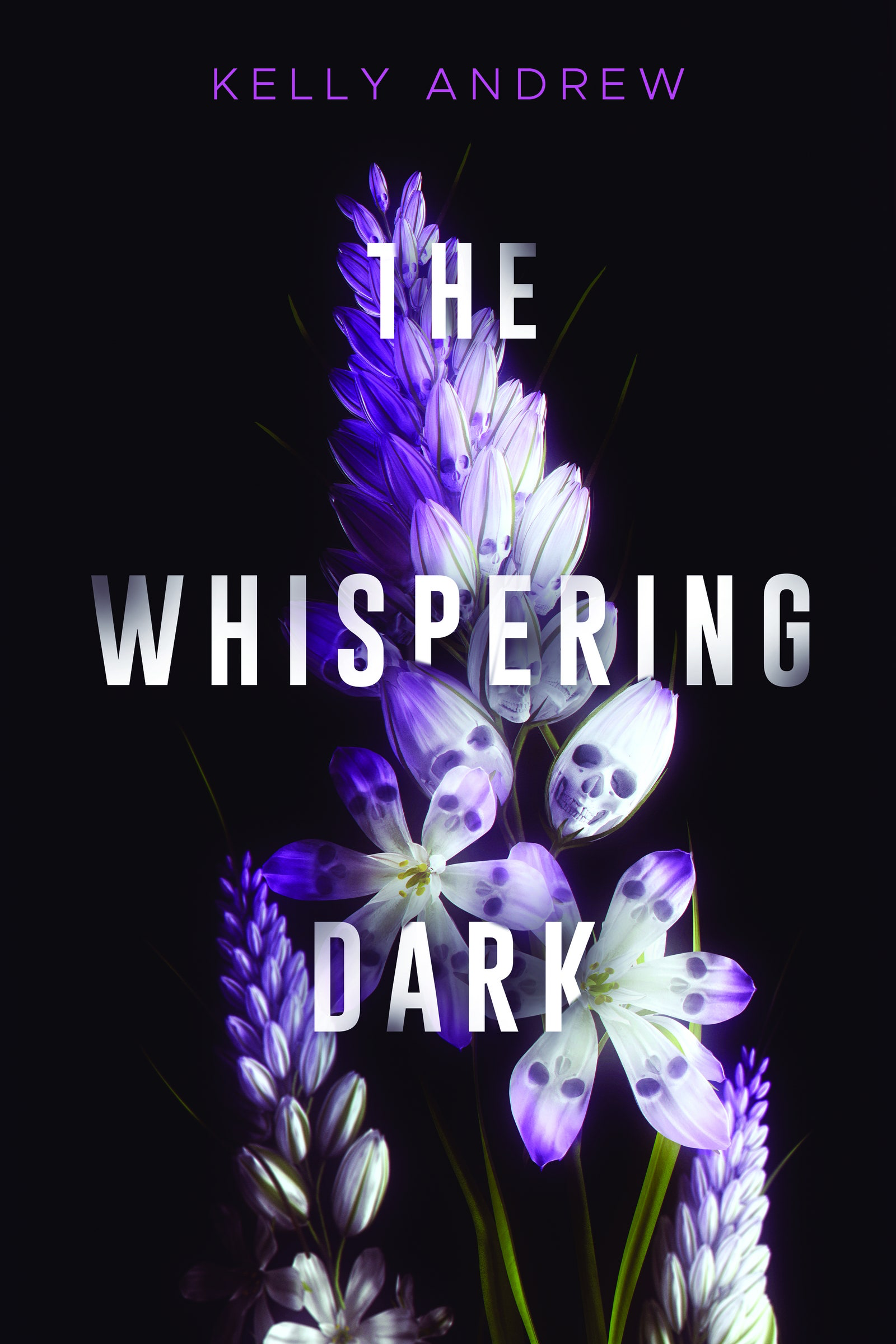
this cover is so goofy to me for no reason 💀

The Whispering Dark – Kelly Andrew

Delaney Meyers-Petrov is determined to prove herself. All of her life, people have perceived her as fragile because of her Deafness, but when she’s accepted into the famed, rigorous Godbole University, she knows that this is the ultimate chance to show the world what she’s really made of. But Godbole isn’t an ordinary college—its students are trained to jump between parallel worlds, tapping into arcane magic in order to travel through alternate dimensions. As Delaney faces ableism from her peers and professors, a boy from her past, and the pressure to get good grades, the sinister side of Godbole begins to show its face. For months, boys have been going missing, and the answer to their disappearance may be right in front of her. Will she be able to get to the bottom of what’s killing Godbole’s student body—and work with this mysterious boy?

TW/CW: ableism, murder, blood, gore, past descriptions of death, near-death experiences

Look, you slip the phrase “unholy affliction” into a sentence, and you’ll automatically make me think of Soccer Mommy. And the more I think about it, the more it feels like the vibe of that song is what this book really, desperately wanted to be, but…wasn’t. At all.

Normally, I steer clear of dark academia—the really bad stuff just feels like a bunch of Donna Tartt copycats writing about rich people being “morally gray” (read: smoking indoors, wearing turtlenecks and forming vague “secret societies”) and trying to capitalize off of a popular aesthetic. However, the fact that this one featured a disabled character written by a disabled author (!!!), convinced me to give The Whispering Dark a chance. Here’s the thing: the disability rep? It’s fantastic. Everything else? Not so much. The Whispering Dark was an absolute mess, but it got to the point where its utter ridiculousness was honestly kind of fun to read, so it wasn’t entirely a waste of time.

Let’s start off with the disability rep. Although I can’t speak to the accuracy of the specific rep (Delaney, the MC, is Deaf), it’s so refreshing to see disabled authors writing disabled characters—Kelly Andrew is also Deaf! And even without being Deaf, Andrew wrote some of the specificities of Delaney’s experience with her disability beautifully; I loved the details about how Delaney moved through life, from how the noises around her are described to subtle details like the change in sound when the battery runs out in her cochlear implant. Along with that, Andrew’s portrayal of being a disabled college student really resonated with me, from the nerves about personally confronting professors about accommodations to Delaney’s desire to prove herself.

Aside from that, it’s hard for me to find anything genuinely positive to say about The Whispering Dark. There are more positives in my eyes, to be fair, but they aren’t necessarily about how I think this novel was meant to be taken. In my experience, this book was SUPER campy, but the kind of campy that unintentionally resulted from taking itself so seriously that it becomes almost hilarious. I still can’t believe that all of this was played so straight—this book fell headfirst into every cheesy YA fantasy trope like a 5-year-old being pushed off of a diving board, and we were somehow expected to take it all seriously. You’ve got your edgy protagonist with her dyed hair and her edgy nickname, a mysterious, Ivy League school that teaches its students to jump between parallel worlds, students showing up dead, and a romance with a mysterious, dangerous older boy, who is compared by the MC to Patrick Bateman (I wish I was kidding), but still ends up being the one for whom the MC falls head-over-heels in love with. The way Andrew wrote it felt like she thought it was the most original idea in YA in the last decade, and honestly? I had to laugh. It felt like watching a terrible movie for the irony. Solid unintentional camp. I mean, look at how goofy that cover is.

And look—as campy as The Whispering Dark was, I at least expected there to be a little bit of worldbuilding. Here’s the thing: THERE WAS NONE. Interested in learning about Godbole University and how you can jump through parallel worlds with magic, according to Kelly Andrew? You’re outta luck. There aren’t any explanations for anything—you just get tossed around to parallel worlds without any explanation as to how. Want to know how the various types of magic factor into this world-hopping? Sorry, come back later. Want to know how the villain is using said world-hopping to kill unsuspecting students? Nope, looks like you’ve used up your three wishes. Again, it got to the point where it just felt so bad that it was funny—worldbuilding? Who is she? And it only proves my belief that dark academia, as a genre, suffers from “no plot, only vibes” syndrome time and time again.

All in all, a novel with great disability rep, but that took itself far too seriously for the campy train wreck that it was. We disabled readers deserve our mindless camp too. 3 stars.

The Whispering Dark is a standalone, and Kelly Andrew’s debut novel; her next novel, Your Blood, My Bones, is slated for release in 2024.

Today’s song:

That’s it for this week’s Book Review Tuesday! Have a wonderful rest of your day, and take care of yourselves!
Posted in Book Review Tuesday

Book Review Tuesday (6/27/23) – Flowerheart

Happy Tuesday, bibliophiles!

Here’s some queer fantasy for my last review of Pride Month 2023. I’m so glad that cozy sci-fi/fantasy as a subgenre is slowly multiplying nowadays, and that’s exactly what drew me to Flowerheart. I borrowed it from the Kindle library and ate it up in a few hours flat—though it wasn’t without its flaws, it was a charming, sweet palate-cleanser with lots of flowers and queer rep!

Enjoy this week’s review!

Flowerheart – Catherine Bakewell

Clara has a gift—she can summon flowers at will, making them grow in any space she focuses on. But she’s only 16, and her flower magic is uncontrollable—and sometimes dangerous. When she accidentally causes poisonous flowers to grow in her father’s chest, Clara is distraught—and in desperate need of someone to heal his ailment and help her hone her magic. But the best magician for the job just happens to be Xavier, her former best friend who she can’t quite hide her feelings for. With Xavier hiding secrets and Clara racing against the clock, can they heal her father—and rein in her wild magic?

TW/CW: body horror, substance abuse (fantasy), absent parent, sick parent, mental illness, emetophobia

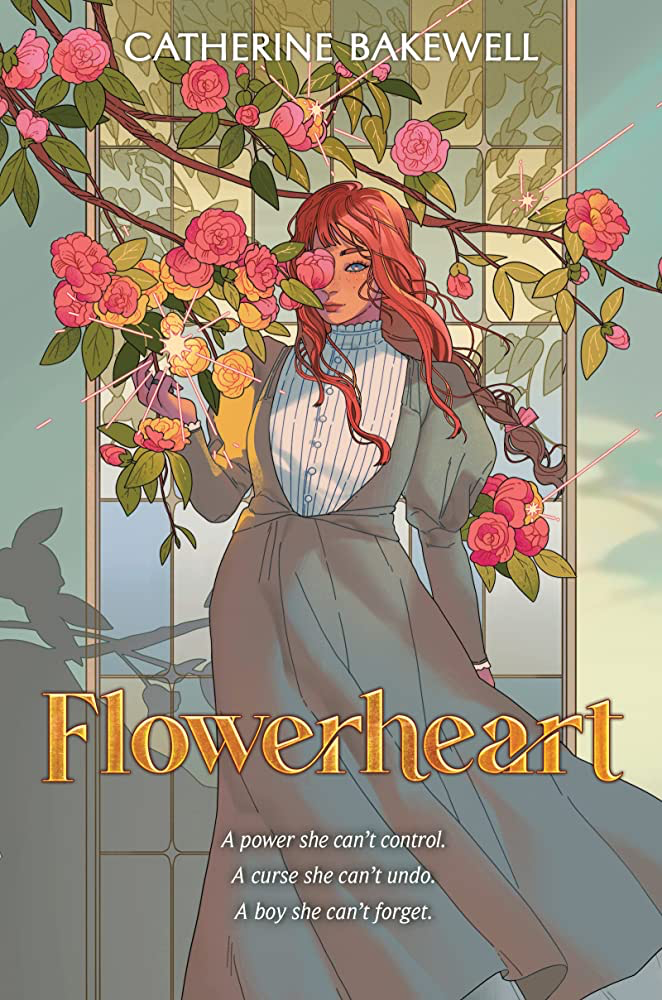
I love the title of this book as much as the next person, but I’m not gonna pretend that it isn’t a valid Warrior Cats name. Just saying. I’ll bet you money that it was somebody’s OC from 2014.

Flowerheart has a 3.58/5 average rating on Goodreads at present. I have a thing where I’ll see ratings in the 3.5 range and think “oooh, this could be a disappointment,” and then I’ll finish the book and realize that it was just about right on the money. It makes sense. I can see why several people loved it, but a good amount of people felt lukewarm about it or disliked it. For me, I’m sort of in the middle—it was a charming, sweet palate-cleanser, but the holes in the story and some of the writing style prevented me from enjoying it all the way.

The main selling point for Flowerheart seemed to be its coziness—setting aside the annoying, clearly BookTok marketing tactic to put “cottagecore” in the actual description, Bakewell passed with flying colors in terms of this book’s coziness! Other than a brief moment of fantasy body horror (said Flowers growing from Clara’s dad’s Heart), there’s very little that’s stressful. The book also has a strong emphasis on embracing your emotions and learning to love them (as opposed to suppressing them), which is always a win in my book (no pun intended). The queer-normative world was also a delight alongside of that—Clara is bisexual and in a straight-passing relationship, and there are several trans and nonbinary side characters! I ate this book up fairly quickly, but it was a delightful world to stay in, however short the stay was.

That being said, I really wanted more from the world. There really isn’t much to chew on other than the fact that everybody has a unique type of magic, there’s a ruling council of magicians that keeps everybody in check, and that most of the names have a vaguely European root or origin. Other than that, there was almost nothing to hold up the worldbuilding—if it were a house on stilts, the stilts might as well have been popsicle sticks. Where does the magic come from? What is the technology level of this world? Why are they letting 16-year-olds onto this magician council that makes all of the important decisions? Where even were we in the first place? Was there even a name for the place that Flowerheart was set in??? Cozy sci-fi/fantasy and expansive worldbuilding can coexist (see: anything by Becky Chambers), so the subgenre isn’t the issue. I didn’t need a huge, elaborate picture of the world of Flowerheart, but it was sadly clear that Bakewell did the bare minimum in terms of worldbuilding. I really did want more.

Aside from that, my main issue (if you can call it that) was the writing style. On its own, I liked it a lot—it had the perfect, charmingly over-the-top kind of style to it, and it suited the story very well. I saw another review that compared it to Harry Potter, and it made a lot of sense—it did sound very distinctly British. But Harry Potter is mostly middle-grade, and Flowerheart tended to skew the same way in its voice; Clara’s voice read more as a 12-14 year old than a 16 year old. Again: it’s not the coziness and relatively low stakes that made it feel more middle-grade, but the way that the characters were written. Not much of an issue, but I really feel like this would’ve been more successful if Clara was a few years younger.

All in all, a cozy fantasy that was filled with quite a few holes, but still sweet enough to enjoy. 3 stars.

Flowerheart is a standalone, but Catherine Bakewell is also the author of the middle-grade novel We Are the Song.

Today’s song:

ughhhhhh this album is so good

That’s it for this week’s Book Review Tuesday! Have a wonderful rest of your day, and take care of yourselves!
Posted in Book Review Tuesday

Book Review Tuesday (4/25/23) – Social Queue

Happy Tuesday, bibliophiles!

Earlier this month, I was looking for some books with autism rep for Autism Acceptance Month. I stumbled upon this one on a Goodreads list, and it seemed like a fun read. And while I did have some problems with the writing style, it was a solid romance through the lens of a young Autistic woman!

Enjoy this week’s review!

Social Queue – Kay Kerr

18-year-old Zoe is determined to turn over a new leaf. After a string of bad experiences in high school, she lands an internship at an online media company, where she writes pieces about her dating experiences—or lack thereof. But when these pieces get noticed by some of her old high school classmates, Zoe must reassess her idea of romance—and if taking second chances is worth it at all.

TW/CW: ableism, police brutality, bullying, sensory overload, misogyny

I found this one mostly on a whim (the quest for good disability rep never ends) and figured that it would be a good read for Autism Acceptance Month this year. And…I’ve come out of it with mixed feelings. I did like it, and I’d say it was a solid read. But I just had such a hard time getting into the writing, and while I loved all of the discussions around autism and disabled identity in general, they often came out very forced.

Let’s start with the good stuff. Zoe was a great protagonist, and she was the perfect fit for this kind of story. Although I wished we could have seen some more personality from her, I loved the journey of self-love and acceptance that she goes on over the course of this book. She had great character development, and her interactions with the other characters felt authentic and genuine. I can’t speak to how accurately her autism was depicted, but as a neurodivergent person, a lot of it felt very authentic, what with the sensory overload and whatnot. Either way, it’s always incredibly refreshing to see disabled characters/stories actually being written by disabled authors, so Kay Kerr deserves a thank you just for that.

There were some great conversations about autism and about disability in general as well in Social Queue! Zoe’s experiences—especially with her well-intentioned but ultimately harmful coworker trying to write about disabled issues—were so important to have in a book, and Kerr handled all of them very well. I loved the emphasis on restructuring the language we use around disabled people, especially removing the context of disability automatically being synonymous with suffering and doing away with the narrative of “overcoming” one’s disability. Social Queue raises so many questions that are so often left out of conversations about disability (and in feminism in general), and even as a piece of fiction, it works as a good primer for somebody looking into disabled issues.

That being said, some of the situations which Kerr tried to implement said conversations about disability came off as forced to me. For instance, early on in the novel, Zoe witnesses an instance of police brutality directed at an Autistic man. While this is a great starting point for conversations about disability and police brutality, it felt…blatantly like a plot device, like this horrifying instance of police brutality was set up just so that these conversations could be had in the book. Even though said conversations stemming from it were worth having, the placement and writing of it just made such a horrifying thing into nothing more than a conversation starter. Didn’t leave the best taste in my mouth.

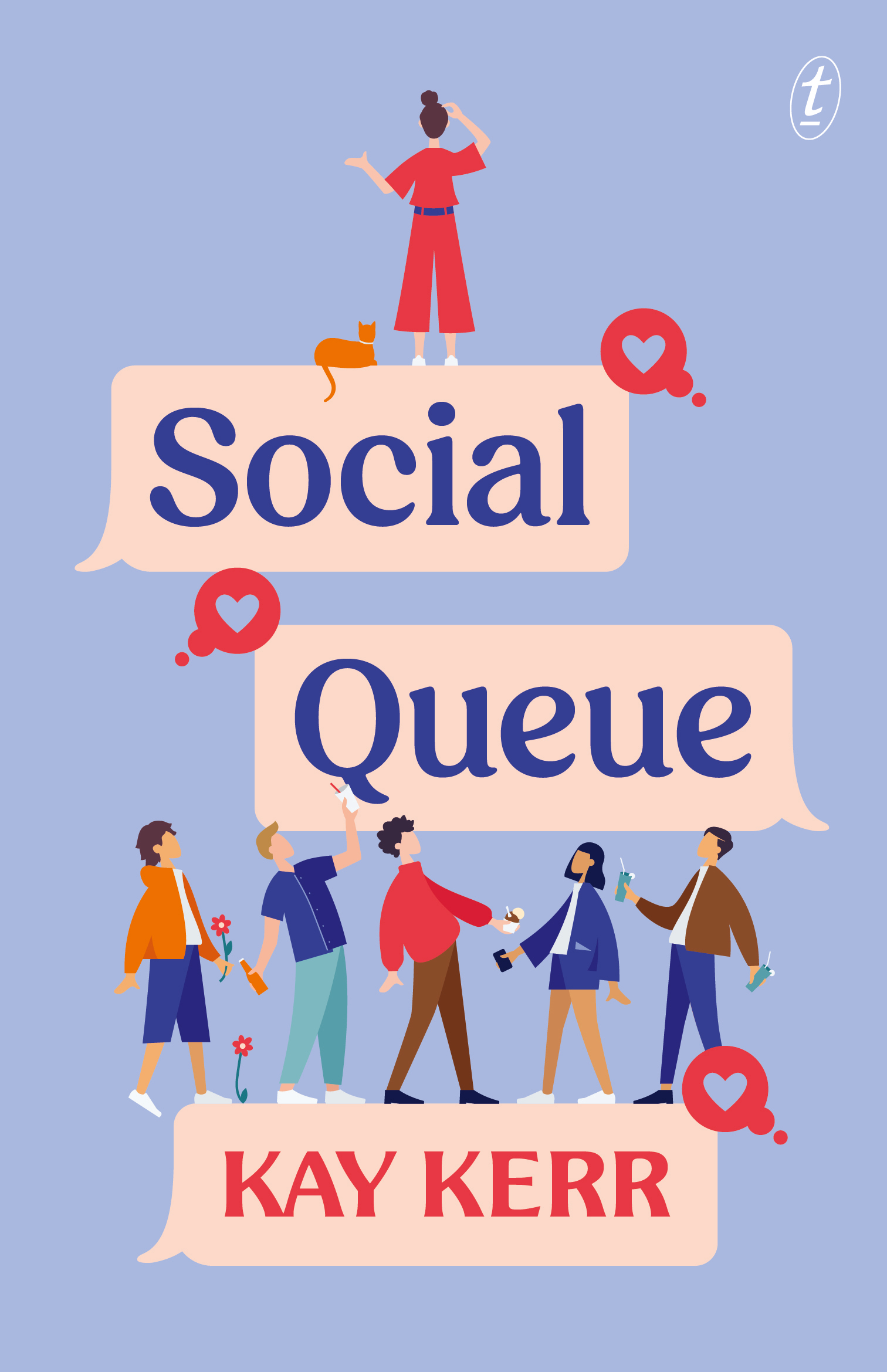
I think part of why that instance didn’t work was because of Kerr’s writing style. Just like the cover, which looks like it was made in 15 minutes on Canva, nothing about it felt very distinct; none of the characters had unique voices, and most of the descriptions of the plot were mostly concerned with going from point A to point B without much embellishment. I’m not saying that Kerr should’ve gone headfirst with the purple prose, but the writing felt so dry that it needed some kind of embellishment, anything to make it more interesting. Even though Zoe was a solid character, this writing made for a significant amount of disconnect between her and some of the other characters that we were supposed to sympathize with.

Additionally, the romance aspect was iffy for me. I loved the premise of Zoe reconnecting with people from her high school and exploring her sexuality, but since the writing was so bland, most of said love interests were interchangeable to me. The only distinguishing factor was a) one of them was a girl (we love to see characters questioning their sexualities, though!! good stuff), and b) that one of them was a creep. That was pretty much it. Also, the fact that Zoe ended up with Gabe after all that infuriated me. I get forgiving and forgetting, but if a guy makes a WHOLE CLASS PRESENTATION about how you’re “so inspiring” just because you’re disabled, I WOULDN’T EVEN CONSIDER GIVING HIM A SECOND CHANCE. WHY. Apologies aren’t even enough at that point. That’s just disgusting. And I’m glad that they did cover that, but…Zoe. Bestie. You can do so much better than him. There was a lot of “he was mean to you because he had a crush on you, so it’s fine” action in Social Queue as a whole too, which rubbed me the wrong way, but Gabe was the most offensive for me.

All in all, a romance novel that did a good job of representing disabled and Autistic issues, but was let down on several occasions by its bland writing. 3 stars.

Social Queue is a standalone, but Kay Kerr is also the author of Please Don’t Hug Me and Love & Autism.

Today’s song:

BABE WAKE UP NEW PALEHOUND JUST DROPPED

That’s it for this week’s Book Review Tuesday! Have a wonderful rest of your day, and take care of yourselves!
Posted in Book Review Tuesday

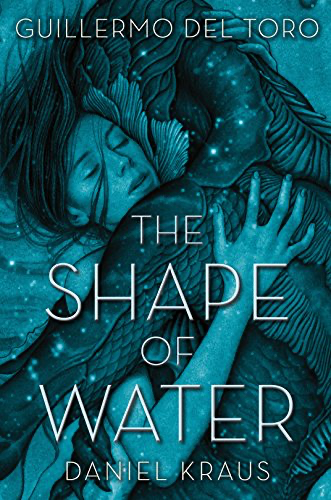
Book Review Tuesday (3/21/23) – The Shape of Water (film novelization)

Happy Tuesday, bibliophiles!

The Shape of Water has been my all-time favorite movie for several years now—I’m looking over my shoulder at the poster above my bed as I’m writing this. I had the novelization on my TBR for a few years, but only got around to it recently, probably for fear of it not living up to the film. I had no idea that it was a dual release with the film, but after reading it, the novelization of The Shape of Water struggled to live up to the poetic poignance of the film.

Enjoy this week’s review!

The Shape of Water (novelization) – Guillermo del Toro and Daniel Kraus

Summary from Goodreads:

NOW A MAJOR MOTION PICTURE FROM FOX SEARCHLIGHT

Visionary storyteller Guillermo del Toro and celebrated author Daniel Kraus combine their estimable talent in this haunting, heartbreaking love story.

The Shape of Water is set in Cold War-era Baltimore at the Occam Aerospace Research Center, which has recently received its most sensitive asset ever: an amphibious man captured in the Amazon. What unfolds is a stirring romance between the asset and one of the janitors on staff, a mute woman who uses sign language to communicate with the creature. 

Developed from the ground up as a bold two-tiered release—one story interpreted by two artists in the independent mediums of literature and film — The Shape of Water weaves together fantasy, horror, and romance to create a tale that is equally gripping on the page and on the big screen.

TW/CW: racism, homophobia, xenophobia, ableism, misogyny, sexual harassment/assault, blood, gore, murder, animal death, loss of loved ones

The Shape of Water is a movie that’s touched my heart in a way that I doubt any other will. In summation, the film is a testament to the marginalized experience—any kind of marginalized or othered group—and self-love and acceptance. Guillermo del Toro is a storyteller without parallel, and maybe that’s why I was so hesitant to pick up the novelization for so long. I had no idea that it was a dual release with the film, but either way, my fears ended up being confirmed—Daniel Kraus’ novelization is faithful in the barest, structural way, but largely failed to capture the heart of the film’s message.

I’m not familiar with Daniel Kraus’ other novels, but even a quick scan on Goodreads tells me that he’s a frequent collaborator with Guillermo del Toro, which, after reading this, frankly surprises me. Del Toro’s storytelling, from this film to Pan’s Labyrinth and the most recent Pinnochio, has a consistently strong emotional core, something that anchors the fantastical elements to our most core human experiences. And somehow, Kraus chose to adapt this novel in the most flat, checklist-like way possible. Yes, all of the beats of the film were there, as well as some bonus content. But thanks to Kraus’ dry writing, the emotional core—what made the story so deeply impactful in the first place—apparently flew straight over his head.

Now, before I get into my major gripes, I will say this—the novelization picks up far more at the halfway point. The chapters that Kraus writes from the perspective of The Asset were an unmistakable highlight, charming, dreamlike, and refreshingly strange compared to most of the other perspectives. I almost find myself wishing that the scene with Bob Hoffstetler and The Asset made it to the film. And the very climactic events in the third act were dealt with the appropriate amount of weight, and the pace picked up significantly, unlike the steady pace of the movie. And as much as I love the dance scene, I completely get the decision to nix it from the novel—out of all of the scenes to translate from screen to page, that would be at the top of the page.

With that out of the way, I was bothered by how much emphasis Kraus places on the antagonist, Strickland. There were some fascinating scenes that never made it to the film of the process of him capturing The Asset in the South American rainforest; they were interesting additions, and although I liked them in general, it mostly ended up being Strickland being incredibly racist. It’s painfully on brand for his character, but beyond that, it seemed like his character got the most page time out of the whole cast. He is the main villain, sure, but given that this story is about the marginalized experience and he is the predatory antithesis to what the film stands for, the decision didn’t leave the best taste in my mouth.

My other main issue was how Kraus wrote the character of Elisa Esposito. For the most part, Kraus was somewhat faithful to her personality, but there were multiple instances where the descriptions of her were incredibly concerning. On several occasions, she is described as “childlike” and “[like] a kindergartener” in scenes where she is struggling to communicate her needs—for those of you who have not seen this film, Elisa is mute, and she uses ASL to communicate. It’s already offensive on the front that Elisa is such a treasured character to me, but Kraus seems to, once again, miss the message of the film by a mile, and ends up right smack in the middle of the all-too-common trope of infantilizing disabled people—especially disabled women. Elisa is in no way “childlike” for trying to communicate her needs—she is a grown woman, and she is frustrated by the struggle to communicate with her abled peers in a world that is not built for her. Let me say it again: Elisa Esposito is a grown woman. Even though Kraus was somewhat respectful in some of his other descriptions of her, but these instances all but negated everything else that he had established in the adaptation.

All in all, a structurally faithful, occasionally beautiful, but often frustrating adaptation of a film that will forever have the prime spot in my heart. 3 stars from a peeved Guillermo del Toro fan. Just watch the movie instead.

The Shape of Water is a standalone, as the film is, but Daniel Kraus has also collaborated with Guillermo del Toro on the novel Trollhunters. Kraus is also the author of The Life and Death of Zebulon Finch, The Teddies Saga, and several other books for all ages.

Today’s song:

saw these legends on Friday night—such a beautiful experience, and I’ve had this song on repeat ever since

That’s it for this week’s Book Review Tuesday! Have a wonderful rest of your day, and take care of yourselves!
Posted in Book Review Tuesday

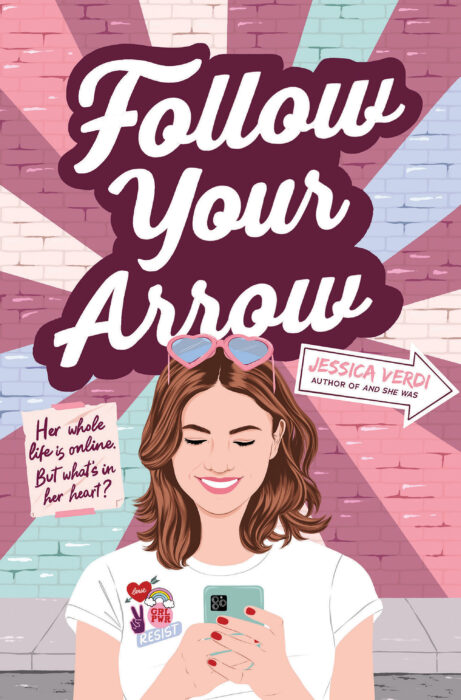
Book Review Tuesday (7/26/22) – Follow Your Arrow

Happy Tuesday, bibliophiles!

Ever read a book because of one aspect people have been telling you about? That was me about Follow Your Arrow—I don’t know if I would have picked it up if not for several people telling me how good the bi rep was. And you know how much of a sucker I am for good bi rep. So I picked it up—and yes, the bi rep and discussions around biphobia were great, but the rest of the story I found to be a little lacking.

Enjoy this week’s review!

Follow Your Arrow – Jessica Verdi

CeCe Ross is an influencer with nearly a million followers. Her relationship with her girlfriend of two years, Silvie, has gained an extensive following, with thousands of fawning followers making #Cevie all the rage. But when she and Silvie break up, her life is turned upside-down—both on and offline. To make matters more complicated, she’s met Josh, a musician who has no idea about her online following. Will she be able to reckon with the storm she’s stirred up online—and keep her secret from Josh?

TW/CW: Biphobia, cyberbullying, homophobia

My feelings about Follow Your Arrow can essentially be summed up by that one Reductress article—“Why I Couldn’t Care Less About Your Relationsh—Oh, It’s Gay? Tell Me More.” I don’t think I would’ve picked up this book if not for several people telling me about how great the bisexual rep was, and I liked it on that front. However, it was definitely lacking for me in some of the other departments.

So, the bisexual rep! That aspect of Follow Your Arrow was what stood out most to me, and it was the most well-executed aspect of the book! Verdi did a fantastic job of discussing so many aspects of bisexuality and biphobia, especially about the stigmas of bisexual people in straight-passing relationships. Even though some of the social media aspects of the book weren’t very well-done (more on that later), the backdrop of social media was a perfect setting for CeCe to come into her own. There’s so much discussion about how bisexual people are pigeonholed as simply straight or gay, depending on their relationship, and how even within the queer community, there’s still so much biphobia present. Follow Your Arrow is a solid book for anyone who wants to learn more about bisexuality, and Verdi did a great job of representing it respectfully.

As far as the other aspects of the book…I wasn’t quite as invested. The romance, although the representation of bi people in a straight-passing relationship was great, didn’t hold a lot for me. It’s a pretty standard setup—”she’s an influencer, he’s a hipster musician who doesn’t even have social media! oh boy, how will this work out? he doesn’t even know what ‘ship’ means, tee hee!” It didn’t help that neither CeCe nor Josh were characterized much more beyond a few base character traits. The combination of the cliche pairing without much of an original spin on it (other than CeCe being bi) and the lack of characterization for both parties made me lose interest more than not.

I also had an issue with the writing—it tried way too hard not to date itself, but it ended up backfiring spectacularly. Even though app names (Instagram, Twitter, etc.) weren’t specifically mentioned (there was only the mysterious App…oookay) , the slang peppered in and the excessive use of hashtags at the end of every other paragraph made it feel painfully like a Gen X-er trying to sound “hip.” (How do you do, fellow kids?) CeCe’s status as an influencer didn’t make the hashtags make any more sense—I doubt that even influencers think in random hashtags. It felt weird. Additionally, Follow Your Arrow couldn’t seem to make up its mind about the message it was trying to share about social media; all it got was that there are good and bad aspects of social media, but it never got much more nuanced than that. Given how large of a role social media played in this book, I wish that were more developed.

All in all, a decent rom-com with great discussions around biphobia and bisexuality, but not-so-great writing and an underdeveloped romance. 3 stars.

Follow Your Arrow is a standalone, but Jessica Verdi is also the author of And She Was (really hoping that’s a Talking Heads reference lol), The Summer I Wasn’t Me, What You Left Behind, and several other novels.

Today’s song:

That’s it for this week’s Book Review Tuesday! Have a wonderful rest of your day, and take care of yourselves!
Posted in Book Review Tuesday

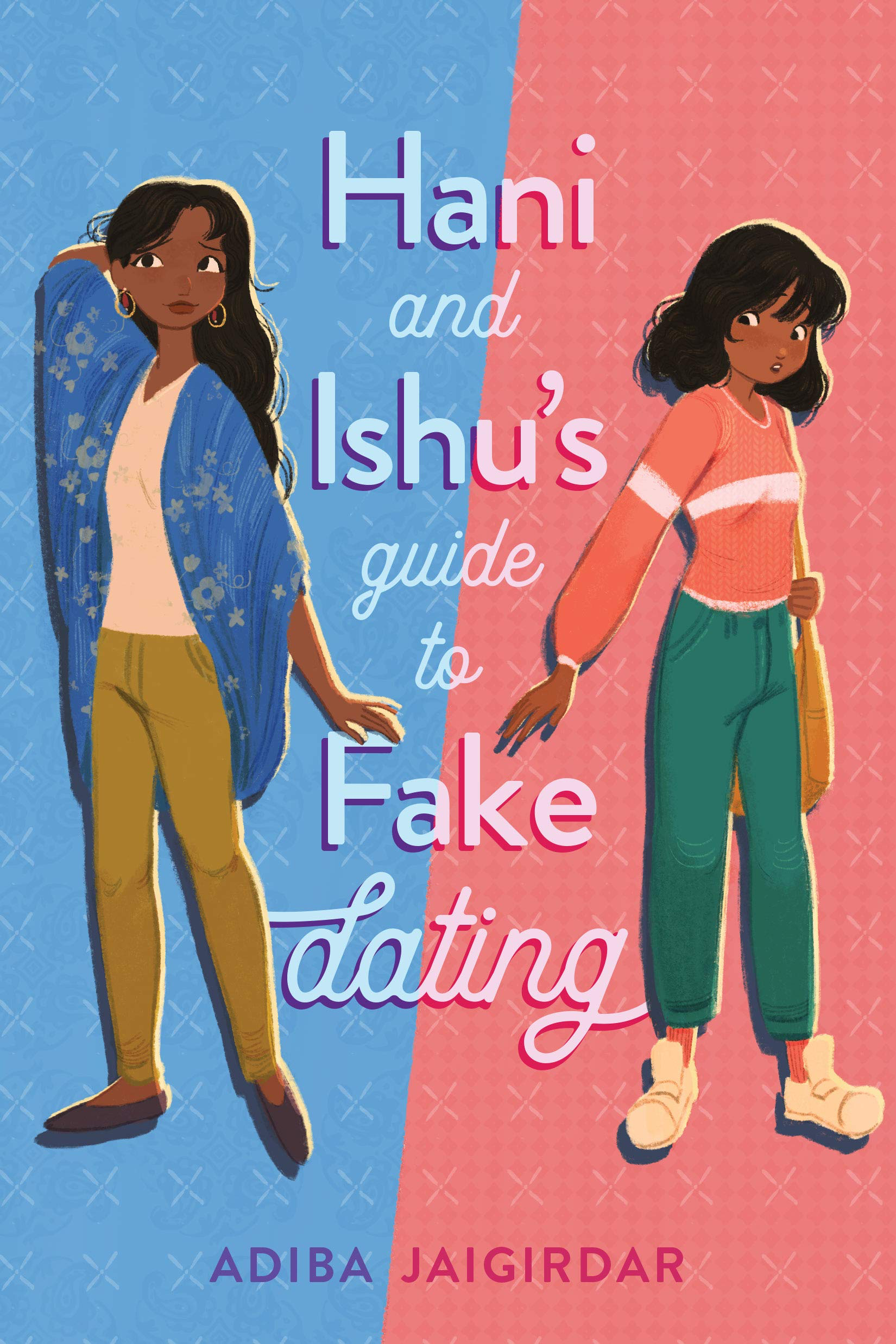
Book Review Tuesday (4/5/22) – Hani and Ishu’s Guide to Fake Dating

Happy Tuesday, bibliophiles!! I’m still reeling from finally seeing Spiritualized last night—such a transcendental show!

Rom-coms aren’t my go-to as far as genres go, but I really enjoyed The Henna Wars, so I wanted to given Adiba Jaigirdar’s newest rom-com a try. It ended up being one of those books that I put off for no good reason—I had it on hold at least twice at the library and left it on the shelf too long because of trips or something—but I ended up picking it up on Kindle over spring break. Having read it, I liked it overall, but generally, I have a few mixed feelings about it.

Enjoy this week’s review!

Hani and Ishu’s Guide to Fake Dating – Adiba Jaigirdar

Humaira Khan—Hani for short—has started coming out to her friends and family as bisexual, but her friends don’t believe her. In their (horribly biphobic) beliefs, Hani can’t be bi if she’s only ever dated boys. So to save face, Hani blurts out that she’s dating Ishu, a top-of-the-class perfectionist and the only other Bengali girl at her school.

From then on, Hani and Ishu make a pact to orchestrate a fake relationship—as soon as both of their goals are achieved, they will stage a fake breakup worthy of the Oscars. But as they get deeper into their plan, they realize that their relationship might not be so fake after all.

TW/CW (from Adiba Jaigirdar): racism, homophobia, biphobia, lesbophobia, Islamophobia, toxic friendships, gaslighting, parental abandonment

I loved The Henna Wars, but despite all the hype that Hani and Ishu is getting, I’ve come away with mixed feelings. The setup is all there and the diversity is fantastic, but it’s difficult to enjoy a rom-com when the romance itself feels forced.

I’ll start out with what I enjoyed; Adiba Jaigirdar’s writing is consistently charming and funny. Her style is perfect for a rom-com, filled with wit and sarcasm. I can’t exactly say that she hit the perfect balance of levity and dealing with the aforementioned content in the TW/CW section (especially the biphobia, in my experience—more on that later), but it almost hit that sweet spot for me.

Adding onto that, it’s always wonderful to see POC characters at the forefront of rom-coms, and the fact that they’re LGBTQ+ makes it so much better! I can’t speak to the accuracy of the representation myself (Hani is Bangladeshi-Irish, and Ishu is Indian-Irish, and they’re both Muslim), but most of the LGBTQ+ rom-coms out there are…pretty white. So it’s always a breath of fresh air to see non-white LGBTQ+ characters in literature.

My main problem, however, is with the excessive biphobia throughout the book. I fully recognize that all of it was challenged, but there was just so much of it that it became unnecessarily triggering. Hani’s “friends,” in almost every scene they’re in, invalidate her every chance they get, and a lot of the extreme bigotry they displayed definitely triggered me as well. All of the biphobia was challenged and I appreciate Adiba Jaigirdar for putting the trigger warning there, but for a book that was advertised as a feel-good rom-com, it decidedly did not make me feel good as a bisexual person. I feel like Hani’s bisexuality was well-depicted and relatable, but there didn’t need to be that much biphobia to sell the point of how bigoted and toxic Hani’s “friends” were—there was already enough evidence towards them being disgusting people. (I will say, though—Jaigirdar did a great job of writing how difficult it is to break out of toxic friendships. So props to her for that.)

Other than that, I never got on board with the romance. The setup was all there, but even through all of the bonding that Hani and Ishu had, I just never felt like they had any chemistry at all. There was just this feeling of…neutrality throughout the whole thing. Like their relationship was just acquaintances at best, even though they were sold as an almost enemies-to-lovers kind of deal. They just didn’t seem to click for me. And seeing as Hani and Ishu was billed as a rom-com, I didn’t get a whole lot of the “rom.”

All in all, an LGBTQ+ rom-com that was sweet in concept, but messy in its execution. 3 stars.

Hani and Ishu’s Guide to Fake Dating is a standalone; Adiba Jaigirdar is also the author of The Henna Wars and the forthcoming A Million to One.

Today’s song:

this was the third song they played last night…still in awe of how smoothly they transitioned from “She Kissed Me (It Felt Like a Hit)” to this. beautiful song 💗

That’s it for this week’s Book Review Tuesday! Have a wonderful rest of your day, and take care of yourselves!
Posted in Book Review Tuesday

Book Review Tuesday (1/4/22) – Rise of the Red Hand

Happy Tuesday, bibliophiles!

Since I haven’t been able to go to the library lately, I’ve been going through some books on my wish list at the Kindle library. I found this in the sci-fi section, and despite a lot of mediocre to bad reviews, I figured that I would give it a try. And yes, it was a little messy at times, but it presented a unique addition to the YA dystopia genre.

Enjoy this week’s review!

Rise of the Red Hand (The Mechanists, #1) by Olivia Chadha

Rise of the Red Hand (The Mechanists, #1) – Olivia Chadha

25 years after a devastating nuclear war, Ashiva ekes out a living in the slums of the South Asian province. While the rich gorge on new technology, the poor barely get by on secondhand tech and scarce food and water.

Ashiva works for the Red Hand, a revolutionary organization with the goal of dismantling the oppressive government of the South Asian province. As a new sickness ravages the province, Ashiva is forced to ally with Riz-Ali, a rich uplander who may hold the key to exposing a dark conspiracy within the government.

ohapplejuice.tumblr.com - Tumbex

TW/CW: human experimentation, pandemic, graphic violence, emergency medical procedures, death, blood, faked disability, attempted murder

Rise of the Red Hand was more than a little messy, but it had enough unique takes on the average dystopia to pull it through.

What sets Rise of the Red Hand apart from most everything else in the YA dystopian genre is its setting; it’s set in a futuristic South Asia, which is really cool to see, especially since 90% of the dystopias I’ve read are set somewhere in the U.S.! That, along with the atmosphere of the future world that Chadha created and the interspersed South Asian culture and slang, was a breath of fresh air.

Along with that, the highlight of Rise of the Red Hand is that it made dystopia feel…human. There were slices of life that the reader witnesses amidst the horror and destruction—the last real-food vendor in the market, a group of children putting a “kick me” sign on a government robot—that made the setting feel genuine. Dystopias are supposed to be bleak and horrible, of course—that’s the definition of a dystopia in the first place—but elements like these are what make it believable. No matter the circumstances, little pockets of life always thrive. Or, in the words of Jeff Goldblum, “Life finds a way.”

I have mixed feelings about the worldbuilding. On the one hand, Chadha did a good job of making a thorough buildup to the current state of her world, and I didn’t feel as though I were missing anything as I read it. On the other hand, this information was delivered in chunks that were often hefty and distracted from the present dialogue. Good worldbuilding, but ruined by getting dropped on the reader’s head like cinderblocks. Also, on the subject of the provinces…if Asia was divided into the South Asian province and the Asian province, why were North America, South America, and Africa just provinces on their own? It made sense for Europe and Australia, since they’re both fairly small as far as continents go, but…North and South America and Africa are huge. How could that be one province?

The plot itself wasn’t terribly unique; Chadha’s writing made it compelling enough, but underneath all its trappings, it was your garden-variety “take down the oppressive government (that is oppressive for very vague and unspecified reasons) kind of dystopian plot. It’s not to say that it isn’t bad, just overdone. Take away the thorough worldbuilding and unique setting, and this could have been something from 10 years ago, post-Hunger Games. However, I will say that at least it was specified why the government was so oppressive—and a lot of it’s horribly sinister. But again, the setting was the saving grace here—not much else.

Other than that, the characters were decent—not terribly interesting, but not cardboard either. The romance between Ashiva and Riz-Ali felt very rushed and insta-love-y, and was ultimately very unnecessary. Taru’s chapters didn’t feel very necessary, and her voice bothered me. And on the subject of Taru—why exactly did they fake her having brittle-bone disease? Not only are we supposed to be rooting for Ashiva, who conspired to do this, how is that even a solution? That part just felt…weird.

Overall, a dystopia that boasts a unique setting, humanity and atmosphere—but not a lot else. 3 stars.

Dystopia GIFs - Get the best GIF on GIPHY

Rise of the Red Hand is the first book in the Mechanists duology, and it is followed by an untitled sequel set for release this year. Olivia Chadha is also the author of Balance of Fragile Things.

Today’s song:

the harmony at the very end is so pretty 🥺

That’s it for this week’s Book Review Tuesday! Have a wonderful rest of your day, and take care of yourselves!

Posted in Book Review Tuesday

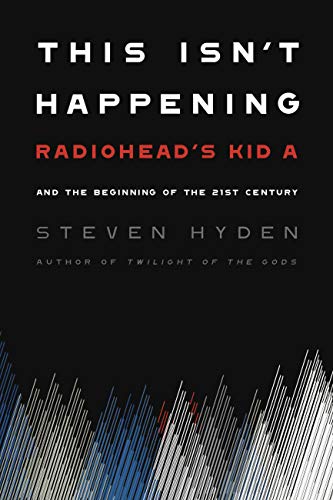
Book Review Tuesday (12/7/21) – This Isn’t Happening: Radiohead’s “Kid A” and the Beginning of the 21st Century

Happy Tuesday, bibliophiles!

For the past two years, I’ve started to read more nonfiction (though still not much, admittedly), but it’s rare that I ever review any of them. But I figured I would review this book since a) I’m a major Radiohead fan, and b) I have Some Thoughts™️ on it, so here goes nothing…

Enjoy this week’s review!

This Isn't Happening: Radiohead's "Kid A" and the Beginning of the 21st  Century - Kindle edition by Hyden, Steven. Arts & Photography Kindle eBooks  @ Amazon.com.

This Isn’t Happening: Radiohead’s “Kid A” and the Beginning of the 21st Century – Steven Hyden

From its tumultuous inception to its profound impact on release, Radiohead’s 2000 album “Kid A” is seen as a landmark of modern music. Though critics and fans alike were divided on it when it first hit stores, its impact stretches far beyond the world of music—for many, it was an unintentionally prophetic vision of the future. 20 years later, music critic Steven Hyden dives deeper into the mythology around this iconic album, from its creation in the studio to the cultural impact it had in the years after its release.

TW/CW: this is nonfiction and it’s mostly just music history, but be aware that there are some (mostly brief) mentions of mental breakdowns, suicide, 9/11, and substance abuse.

This Isn’t Happening reads like a 244 page Pitchfork review, but I wouldn’t say that’s necessarily a bad thing. What’s clear, though, is that it’s by Radiohead fans and for Radiohead fans, which is exactly what it should be.

It’s clear from every page of This Isn’t Happening that, like many Radiohead fans, that listening to “Kid A” was a life-changing experience for Steven Hyden. Hyden’s love for the album bleeds for the page, and every bit of analysis was so clearly crafted out of love and admiration. This isn’t simply bare analysis: it’s imbued with a well-deserved appreciation for a band that may well have changed the fabric of modern rock music forever. Every track—even “Untitled“—gets some degree of attention (although I’m stunned that more praise wasn’t given to “Motion Picture Soundtrack”—come on, now), and the most minute details are reported on with simultaneous tact and love, from Thom Yorke’s inner conflict while creating the album to the many bands whose influences shine through on the album.

However, the price of This Isn’t Happening clearly being from the heart of a Radiohead fan is that it tends to ramble. Smaller, more unimportant points during the course of the book were often extended to a near-ridiculous degree, digressing from the subject matter of that particular section. This resulted in passages like “yeah, I just mentioned post-rock here. You know what my favorite post-rock band is? It’s this obscure band that you’ve never heard of, beat that!” or “Many wonder what ‘Kid A’ would have been like had it been a double album with ‘Amnesiac.’ You know what? Screw it, here’s how I would organize it if it was a double album. Ooooh, look at me, I’m putting in all the singles that got cut from the album…”, etc., etc., etc. With how short This Isn’t Happening is (only around 244 pages on the hardcover edition), a lot it felt like nothing more than stream-of-consciousness digressions that only served to plump up the page count.

What was also fascinating to me was some of the more cultural aspects of This Isn’t Happening and the aftermath of “Kid A.” All of this happened just before I was born, and from a younger perspective, it was so interesting to see Hyden’s picture of the cultural landscape. It’s not from the perspective of a historian—it’s from the perspective of a music critic, and something about this view, from somebody who knows everything just from living through it, made it all the more engrossing to read.

Through it all, there’s a profound appreciation—not worship, but still immense admiration—for music as a whole. Hyden’s writing is full of dry humor and clever references, and it makes for a read that wholly appeals to the music nerd in all of us. Hyden treats listening to “Kid A” as an almost cinematic experience, encouraging the reader to sit back, relax, and start playing “Everything In Its Right Place” as he dives into the creation of the album. This is the kind of book that only a music critic could write—otherwise, it would sound disingenuous.

All in all, a loving but flawed exploration into the most groundbreaking albums of the 21st century. But before I go:

That’s all.

3 stars!

submitted by invisible-rainbow) | Radiohead kid a, Album art, Radiohead  albums

(since this is a book dealing with an album, click here if you’d like to listen to “Kid A” for yourself. I highly recommend it!)

Stephen Hyden is an author and music critic; besides This Isn’t Happening, he is also the author of the nonfiction books Your Favorite Band is Killing Me and Twilight of the Gods.

Today’s song:

That’s it for this week’s Book Review Tuesday! Have a wonderful rest of your day, and take care of yourselves!