Posted in Book Review Tuesday

Book Review Tuesday (12/26/23) – The Siren, the Song, and the Spy (The Mermaid, the Witch, and the Sea, #2)

Happy Tuesday, bibliophiles! Also, a belated Merry Christmas and a Happy Kwanzaa to those celebrating!

To my parents: I tried so hard not to finish this in one day. I tried. But it was just too good. Just like how I devoured The Mermaid, the Witch, and the Sea around two and a half years ago, its sequel, The Siren, the Song, and the Spy captured my heart, and added some intricate depth, timely commentary, and no shortage of emotion to Maggie Tokuda-Hall’s fantasy world. Also to my parents: thank you so much for the incredible Christmas present!

WARNING: this review may contain spoilers for The Mermaid, the Witch, and the Sea—tread lightly!

for my review of book 1, click here!

Enjoy this week’s review!

The Siren, the Song, and the Spy (The Mermaid, the Witch, and the Sea, #2) – Maggie Tokuda-Hall

After the Pirate Supreme and their crew wounded the Emperor’s fleet, they have gone into hiding, growing the Resistance that they hope will end the colonial rule that has trapped them for decades. In the ruins of the battle, Genevieve, a loyal daughter of the empire, has washed up on the Red Shore. Now in the company of strangers, she must decide where her loyalties truly lie—and decide for herself if the empire has lied to her all along. Back on the mainland, Alfie is a spy in the Imperial Palace, hoping to tear it down from the inside. But when everyone is hiding false intentions, who can he trust in his quest to see the Resistance win?

Meanwhile, the Sea readies for battle, looking for vengeance after years of the Emperor robbing her of her daughters…

TW/CW: colonialism, genocide, blood, murder, self-harm (ritual), racism, animal death (off-page), ableism

I would have been satisfied if The Mermaid, the Witch, and the Sea was a standalone—it had an ambiguous, hopeful ending, and it’s rare to see novels that willingly keep their worlds in one book after an ending styled like that. Usually, when authors go and make said ambiguous but satisfying endings not so ambiguous by expanding the story and the world, it feels hollow—the sequel doesn’t always live up to the original, and sometimes, it just feels like a cash grab. The Siren, the Song, and the Spy is none of these things. It does what every sequel (and duology-closer) should do—it makes the already beloved characters, world, and plot all the more intricate and vast, but has no trouble sticking the landing and wrapping things up.

I think The Siren has the most POVs I’ve ever seen in a single book; some POVs only appear once or twice, but even still, I can think of at least ten (maybe more, I didn’t go back and count) that this novel cycles through over the course of just 320 pages. Usually, any number of POVs over five or six is too much for any author to handle; some characters don’t get developed the way they should, and some of them don’t need the page time or the internal dialogue that other characters need to make the story move forward. Normally, uneven emphasis on certain characters is also a flaw of multiple-POV novels. However, what Tokuda-Hall succeeded in was knowing when characters needed attention and when they didn’t; some chapters are dedicated to side characters, but they’re few and far between, and often shorter than the main character chapters. And somehow, by a stroke of luck, all of them felt necessary to the narrative—and all of them were compelling. Even minor antagonists got their time in the spotlight, but Tokuda-Hall used those moments to her advantage—sometimes, these chapters were more to reveal secrets than to peer inside characters’ heads. It’s a skill that very few authors have, but The Siren proved that Maggie Tokuda-Hall is incredibly adept at the art of the multiple-POV novel.

With Evelyn and Florian mostly out of the picture, The Siren develops many of the side characters present in The Mermaid—many of whom got necessary backstories, and often, something of a redemption arc. I didn’t expect to start rooting for Alfie after everything that he did in The Mermaid, but Tokuda-Hall did an excellent job of making him come to realize the error in his ways, and at least partially put him on the path to improvement. I don’t fully believe that he can ever be fully forgiven, and Tokuda-Hall acknowledges that, but what she’s also very skilled at is created complicated characters—”morally gray,” as much as it’s become a buzzword in both book communities and publishing these days, really is the best word for it. The difference is that Tokuda-Hall actually seems to know what the term really means. Introducing a batch of new characters (and not taking the easy route and killing a bunch of them off) was also a tricky task to surmount for Siren, but both the new characters and locations elevated the novel a ton; Koa and Kaia worked incredibly off of each other as siblings with wildly different personalities, and they meshed easily with some of the already established characters like Genevieve. And as with Mermaid, Siren is full of diversity—most of the new characters are people of color (as are most of the characters in the novel), and we also have Kaia, who has one hand, and a character who uses neopronouns.

Speaking of Genevieve…

I was already excited to see what Genevieve would do next after how Mermaid left off, but that was mostly because of how cunning of a character she was. At first, it didn’t seem necessary to me for her to have a redemption arc—she could have been such a sneaky minor villain, and I would’ve enjoyed seeing that develop. But her character arc was so much more than redemption—it was one of the most well-written case studies in colonial brainwashing and subsequent decolonization that I’ve read in years. What with her POV jumping back and forth between the past and the present, you can see exactly the kind of manipulation that went into her being duped into believing in Lady Ayer and the Emperor, betraying her own identity in the process. Her change of heart wasn’t straightforward either—it was plenty messy, and it wasn’t until she actually witnessed a full-on genocide that she realized what the empire was actually doing all along, but the messiness in the middle was what made her arc so memorable. Decolonizing one’s identity is anything but straightforward, and Genevieve’s journey of restructuring her beliefs and identity was rocky—as it should have been. Genevieve alone should be proof of Maggie Tokuda-Hall’s incredible skill in crafting authentic, messy characters.

On the subject of colonization and decolonization, I also appreciate the realistic—and unrelentingly anti-colonial—approach that Tokuda-Hall took to bringing down the empire. The stakes built up over both books made them feel like a real threat, and not just a hollow “evil empire” that’s only evil because the author takes great pains to tell you so. (Basing this empire off of multiple real-life examples of colonialism probably helped, but my point still stands.) The initial takedown was was incredibly emotional, and appropriately incorporated the awesome forces of the Sea. But after that final battle, what stuck out to me the most was the epilogue; it was very brief and appropriately hopeful, but what it emphasized was so important to understanding the process of decolonization—it’s messy. Even several years after the fact, everything isn’t magically fixed—things take time to rebuild, and not everybody instantly changes their minds. In such a short amount of time, Tokuda-Hall managed to portray an essential reality of colonialism that most sci-fi and fantasy narratives miss: change isn’t instantaneous, and the limbo between changes in power is a long, messy process.

All in all, a worthy sequel that proves Maggie Tokuda-Hall’s many, incredible special talents as an author—juggling dozens of POVs with ease, writing flawed characters with complicated arcs, and giving both colonialism and decolonization with the nuance that’s often missing from fantasy and sci-fi portrayals of the subject. 4.5 stars!

The Siren, the Song, and the Spy is the sequel to The Mermaid, the Witch, and the Sea, and is the end of the duology. Maggie Tokuda-Hall is also the author of several picture books and graphic novels, including Also an Octopus, Love in the Library, Squad, and the forthcoming The Worst Ronin.

Today’s song:

That’s it for this week’s Book Review Tuesday! Have a wonderful rest of your day, and take care of yourselves!

Posted in Book Review Tuesday

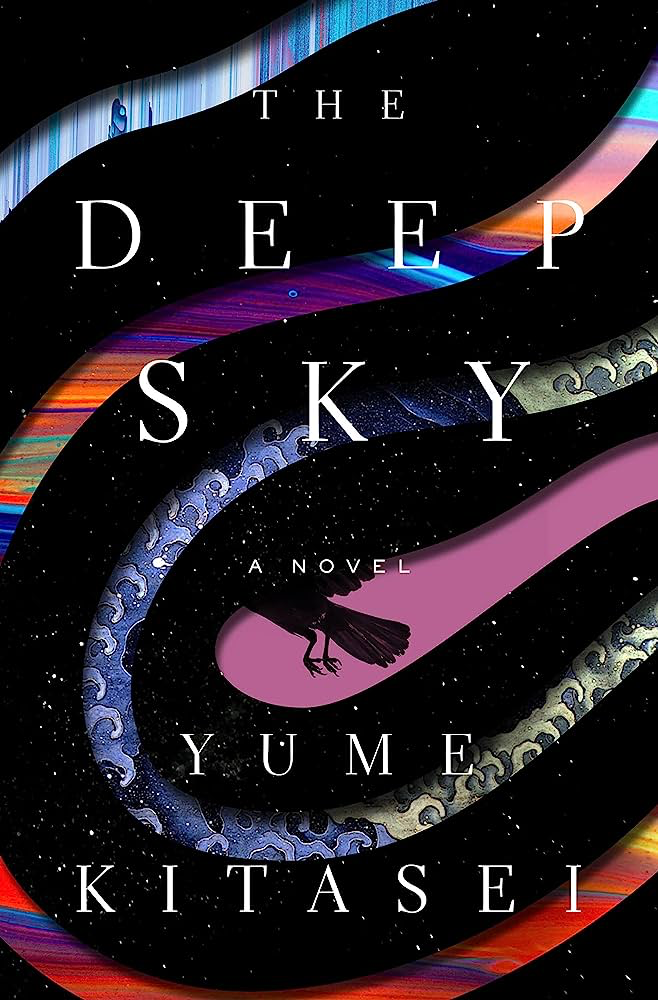
Book Review Tuesday (11/7/23) – The Deep Sky

Happy Tuesday, bibliophiles!

The Deepy Sky came out this July, and I’ve been seeing a ton of buzz about it around the blogosphere since. I’m always in for a sci-fi thriller, and this one delivered in that aspect, as well as the wonderful mixed-race rep!

Enjoy this week’s review!

The Deep Sky – Yume Kitasei

Asuka has been chosen as a representative on a mission to deep space, where she will help give birth the next generation of Earth’s children. But she has been chosen to represent Japan—a country she barely knows, as a half-Japanese, half-Latina girl raised in the United States. Feeling like an imposter to an unfamiliar country, she accepts her duty and joins the crew of the Phoenix. But a deadly explosion onboard the ship leaves her the only surviving witness. With all eyes on her once more, Asuka must get to the bottom of the explosion before the perpetrator strikes again.

TW/CW: racism, terrorism, miscarriage/fertility themes, death of a child

“Literary” sci-fi rarely does it for me; most of what I’ve read barely scrapes past the 3.5 star rating for me, at best. Often, what happens is that the sci-fi element gets significantly watered down for the sake of marketability, drama, and a place in a celebrity’s book club (see: Sea of Tranquility, In the Quick). But The Deep Sky had the chops to make itself unique—and incredibly poignant.

The sci-fi plot of The Deep Sky is pretty standard as far as story elements go, but Kitasei’s approach to it made it feel fresh. It’s the setup for a myriad of sci-fi thrillers: you’ve got a large crew voyaging through the depths of space, only for a tragic accident to leave everyone onboard in suspicion, with no way to get back to Earth. It’s not necessarily a new approach plot-wise that keeps it going—it’s the emotional core that Kitasei brings to it. You’re really able to see deeply into Asuka’s head, deeper than a lot of authors dare to go with these kinds of stories; it’s a great way to increase the stakes without having to complicate the mystery of the story.

Also, LET’S HEAR IT FOR MIXED-RACE REPRESENTATION!! I’ve been on a roll with books with amazing mixed-race characters and stories lately (see also: Leslie Marmon Silko’s Ceremony—a very different book, but no less poignant), and as a mixed-race person, I’m so glad that narratives like these exist. Kitasei’s depiction of the imposter syndrome that Asuka faces about her identity is twofold—not only is there the level of it that comes with her being of Japanese and Mexican descent in the U.S., but also in the fact that she has to represent Japan—a country that she’s barely been to—in this mission. It really did make me feel so, so seen. Kitasei’s portrayal of having these intersecting identities and them coming at odds with how others want to box you in was deeply moving and authentic, and I cannot thank her enough for that.

Back to the subject of literary sci-fi. A lot of these types of novels that I’ve read deal with intersecting, nonlinear timelines, which may or may not have to do with actual time travel (case dependent). For the most part, it worked incredibly in Kitasei’s favor—even outside what we can consider the “main” plot, the pieces that we get of Asuka’s life before the deep space mission were almost more intriguing than the actual murder mystery in space. Kitasei’s character work is incredibly detailed and nuanced, and having most of this novel be driven by character and family was a choice that made me enjoy it that much more. These types of sci-fi thrillers normally lend themselves to very distant characters, and minimal character work by proxy (outside of “trust no one”), so this was a breath of fresh air in that sense.

That being said, the nonlinear timeline was also what brought part of the novel down for me. There’s much more emphasis placed on the time before the mission than the actual mission, making the murder mystery plot feel like an afterthought. The way that these timelines were spaced out meant that we went long stretches without checking in on what’s supposed to be the novel’s inciting incident, which made the stakes feel much lower than they were meant to be. The tension got appropriately amped towards the end, but other than that, there really wasn’t as much thriller as I was expecting going in. Maybe this is just a matter of how The Deep Sky was marketed, but I did wish we got a little more of the “main” plot.

All in all, a rare gem of a literary sci-fi novel where every page brimmed with emotion and suspicion. 4 stars!

The Deep Sky is a standalone; it is also Yume Kitasei’s debut novel.

Today’s song:

listened to my first Arlo Parks album, and I’m a fan!! this was my favorite, for sure

That’s it for this week’s Book Review Tuesday! Have a wonderful rest of your day, and take care of yourselves!
Posted in Book Review Tuesday

Book Review Tuesday (9/26/23) – Deep as the Sky, Red as the Sea

Happy Tuesday, bibliophiles!

Fingers crossed, I should be able to keep up with at least these reviews and my Sunday Songs now. Plus, I’ve read some good books lately, and I’m itching to write a full-length review! Especially about this one. I’ve seen it here and there on the blogosphere, and it’s getting average reviews on Goodreads as of now; I don’t usually gravitate towards historical fiction, but Deep as the Sky, Red as the Sea was such an engrossing read!

Enjoy this week’s review!

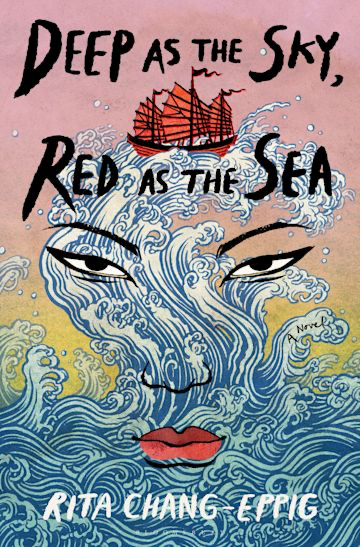
Deep as the Sky, Red as the Sea – Rita Chang-Eppig

The pirate Shek-Yeung has a reputation that precedes her. After her husband is murdered by a Portuguese sailor, she takes it upon herself to do everything in her power to take his fleet for her own, starting with marrying her husband’s second in command and having his son. With the ship under her iron rule, she becomes just as feared as her husband once was. But as the Emperor of China begins a crackdown on piracy and her crew begins to turn against her, Shek-Yeung must grapple with the power that is slipping through her fingers—and taking care of her new son.

TW/CW: blood, gore, near-death situations, descriptions of illness, loss of loved ones, misogyny

I love a good swashbuckling pirate book, so I never considered that a more grounded pirate story could possibly exist. And it does—its name is Deep as the Sky, Red as the Sea, and it has just as much of a punch and importance, even if it lacks the conventional adventuring that typically comes along with pirate stories.

I’m not usually much for historical fiction; it’s not a genre that I typically gravitate towards, but if I pick it up, it’s usually because it’s intertwined with another genre (fantasy, etc.). Literary historical fiction, even less so—that usually brings to mind the thousands of WWII novels with the exact same font that I always have to reshelve at the library. But Deep as the Sky, Red as the Sea occupies a very unique niche. It has all of the diligent research and worldbuilding of any good historical fiction, with a fair dose of drama and an emotional core that sets it apart from the often distant literary fiction novels that I can think of. Even though I know next to nothing about the time period in which its set (listen, I took AP World History online, you can understand my situation), Chang-Eppig clearly put so much time into fleshing out Shek-Yeung’s world—and all of it paid off.

On that note, I’ve seen a lot of complaints about this book having dry writing. At times, the worldbuilding and negotiations did trail in the slightest, but to me, this novel was just the right amount of captivating. Even with all of said drama and heavy plot points, the writing felt cinematic—I don’t mean that in the way of a blockbuster, but of that special kind of Oscar-winner that you actually watched and enjoyed. It knew when to hold its breath and let the silence fill the page, and it knew when to make your emotions swell. I wouldn’t call it perfect, but it’s impressive enough that I’m wowed by the fact that this is Chang-Eppig’s debut novel. I’d gladly watch a movie adaptation of this book.

The characterization in Deep as the Sky, Red as the Sea was just as stellar as the other aspects! Shek-Yeung was such an expertly written protagonist in almost every way that I can think of. Chang-Eppig captured every aspect of her personality effortlessly; she lives at that intersection of aging and legacy where she isn’t as physically strong as she was in her youth, but she’s just as fearsome and skilled as she was back then. She’s been beaten down by the trials of womanhood and the shadows of her past trailing her, but is slowly learning to love again. Every part of her was nothing short of captivating, and she was the perfect emotional core for the story, even if she was reluctant to show her own. The side characters were just as wonderful as well, and the perfect foils to Shek-Yeung. Yan-Yan was my absolute favorite. She was just the sweetest…my girl needs a hug

That being said, I feel like more could have been done with Shek-Yeung’s character development at the end of the novel—and the ending of the novel in general. Throughout the novel, Shek-Yeung basically had that mentality of “we’re all just meat sacks on a floating rock and we’re all just animals that don’t care about each other” (it’d be insufferable on any other character, but…she’s a middle-aged pirate in the Qing Dynasty who’s just witnessed the brutal murder of her husband, I can at least kind of see it in her case). But most of the smaller arcs with her seemed to be leading up to her learning how to heal and love again, what with her son and with the rest of her crew (esp. the more optimistic Yan-Yan). But even after the climactic events of the last part of the novel, she hardly seemed to change. It just didn’t make sense for her, who’d been so well-written up until this point, to suddenly go static. Most of the ending felt rushed in general—it felt ambiguously but not necessarily in a literary way, but more in an “I don’t know how to end this book, so I’m going to write a few more sentences and call it a day” kind of way. It just felt like such a disservice to what was an otherwise stellar novel.

All in all, a beautiful historical drama with some of the most well-written characters I’ve read in a while. 4 stars!

Deep as the Sky, Red as the Sea is a standalone; it is also Rita Chang-Eppig’s debut novel.

Today’s song:

favorite song from this album!!

That’s it for this week’s Book Review Tuesday! Have a wonderful rest of your day, and take care of yourselves!
Posted in Uncategorized

Book Review Tuesday (6/20/23) – Meru

Happy Tuesday, bibliophiles!

I’ve been eyeing this book for a while—I remember it being heavily advertised on Goodreads when it was first released, and normally, I don’t pay much attention to Goodreads ads or sponsored books, but all you had to say was “space opera” and I was hooked. I’m a woman of simple tastes. It was cheap on the Kindle library, so I bought it to read on vacation. To my excitement, it ended up being my favorite book that I read on vacation—so detailed and gripping!

Enjoy this week’s review!

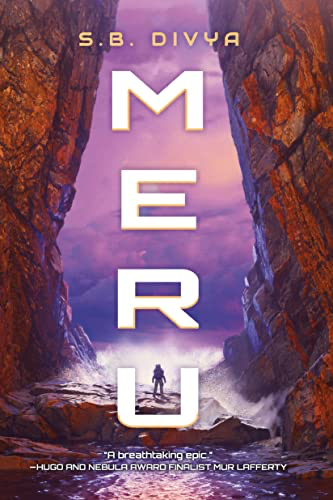
Meru (The Alloy Era, #1) – S.B. Divya

Jayanthi, like all other humans in her day and age, are confined to Earth. Kept there by the Alloys, evolved human descendants with advanced capabilities, she has been raised by Alloy parents on her homeworld, but has always dreamed of seeing the wider galaxy. But when an opportunity arises for Jayanthi to explore the newly discovered planet Meru with the aid of an Alloy pilot, she jumps at the chance—what better way to show the galaxy that humans are more than their violent past?

With the help of Vaya, her Alloy pilot, Jayanthi touches down on Meru. Soon, they find themselves embroiled in a human-alloy conflict, seemingly engineered to separate the two of them. Will Jayanthi and Vaya beat the odds—and restore faith in the human race?

TW/CW: ableism, xenophobia (fictional), sexual content/pregnancy, descriptions of injury, sci-fi violence

I got carsick while reading this book, but I don’t hold it against it at all. That was on me and my hubris of thinking that I wouldn’t get nauseous on a long car trip just this once. Whoops.

Reading some of the lower-rated reviews of Meru is kind of cracking me up…listen. I get that zie/zir pronouns (and neopronouns in general) are somewhat obscure, but of all the absolutely wild, dense, and out-there concepts that this book throws at you, that’s what makes you jump ship? Not the exceedingly complicated…well, everything else?

That being said, Meru lived up to the hype I’ve seen it getting for the past few months! It hit a sweet spot for me that a lot of sci-fi and fantasy books rarely do—creating a complex and multilayered universe, but very delicately balancing when and where to deliver all of this information. Divya came very close to going over the edge, but she navigated the worldbuilding delivery with aplomb.

So, about said worldbuilding. I’d say that Meru isn’t for the faint of heart, even for longtime sci-fi fans—as I mentioned in the beginning of the review, there’s a lot to take in, from the post-human history of the Alloys to all of the machinations surrounding new genetic modification laws in the future. But even though we do get some of this information in larger chunks, Divya excels at navigating which information is actually relevant to the scene it’s informing, and not sledgehammering you with extra information that only becomes relevant elsewhere in the book. It also helps that every inch of said worldbuilding is truly fascinating—it’s clear to see how much care was put into the creation of this universe.

If you’re talking about disability in sci-fi, you’re generally bound to open a particularly dicey can of worms. There’s quite a lot of eugenics narratives that a lot of readers have let slide for years, and the narrative of curing all disabilities is seen as positive, when a lot of the disabilities being described never needed curing in the first place. For the sake of this review, I’ll keep it short, but the bottom line is that it’s gross. But Meru takes a refreshing perspective on disability in sci-fi—not only was Jayanthi, the protagonist, specifically engineered to have sickle-cell anemia (now THAT’S a subversion I like), her disability is depicted in a far more advantageous and positive light. Anyone who’s ever touched a high school biology textbook probably remembers this example: despite its drawbacks, those with sickle-cell also have increased resistance to many tropical diseases. That’s exactly the case for Jayanthi, whose sickle-cell anemia makes her more suited to the environment of the planet Meru than those without it. Positive disability rep is good enough, but having it specifically depicted as something that gives the character the edge is something special. That, along with the wonderful discussions around disability and bodily autonomy (both allegorical and literal), made Meru a wonderful experience for me as a disabled reader.

In addition, Divya has created such a vibrant cast of characters in Meru! Jayanthi was such an endearing and powerful protagonist, and her relationship with the equally endearing Vaha was full of tenderness, despite its ups and downs. Almost all of the cast added to the book’s masterful suspense and tension, making you feel deeply for all of the relevant characters before things got (very) hairy. Plus, the integration of Sanskrit, several Indian-coded (and other POC characters), and loads of casual queerness was a breath of fresh air from all of the white, male, cishet sci-fi that still dominates the market. We need more books like Meru.

All in all, an intricately-crafted sci-fi novel that dazzled with its detailed worldbuilding, diversity, and refreshing discussions around disability. 4 stars!

Meru is the first book in S.B. Divya’s Alloy Era series, continued by the forthcoming Loka, slated for release in July of 2024. Divya is also the author of Machinehood and Run Time, as well as a contributor to several short story collections.

Today’s song:

NEW SMILE IT’S SO GOOOOOOOOOOOOOOOD (does this mean that we’re closer to hearing “Read the Room” too?????

That’s it for this week’s Book Review Tuesday! Have a wonderful rest of your day, and take care of yourselves!
Posted in Book Review Tuesday

Book Review Tuesday (5/30/23) – The Memory Police

Happy Tuesday, bibliophiles!

I forget how exactly I came across this novel, but it was one of the first books that I put on my Libby wish list way back in March 2020, when I lived off of Kindle books. At the time it was always on hold for weeks when I tried to check it out, and so gradually, it faded to the bottom of the list. But after years of forgetting about it, I rediscovered this novel—and it was finally available! Usually, literary science fiction doesn’t always do it for me, but The Memory Police was a strangely quiet dystopia with a powerful undercurrent.

Enjoy this week’s review!

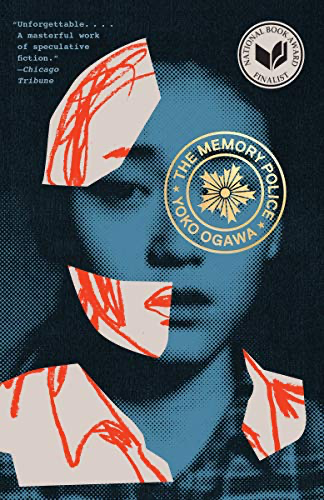
The Memory Police – Yōko Ogawa (translated by Stephen Snyder)

A young writer leads a quiet life on a distant, unnamed island, grieving a multitude of losses. Her parents passed away many years ago, but it isn’t just people that are disappearing—it’s objects, animals, and ideas as well: hats, birds, ribbons, and all manner of things. Once they disappear, nobody on the island has any recollection of their existence—they simply fade from public memory. And to enforce this, the island is under the iron fist of the Memory Police, who are there to make sure that these forgotten things stay that way. But she seems to be one of the only people who still clings to the memory of what’s been lost.

When the writer’s editor falls under suspicion from the Memory Police, she hatches a plan to hide him under her floorboards, silently completing her novel as they evade capture. And as more and more objects begin to fade into obscurity, her writing may be the only thing left to cling to.

TW/CW: loss of loved ones (past), kidnapping, police brutality

The Memory Police has been compared time and time again to 1984, and the comparison is clear, but it seemed to take a more literary approach. And while the “literary” part initially made me suspicious, this was one of the most creative and wholly human dystopian novels that I’ve read in a long time!

What sets The Memory Police apart from most other dystopias that you can think of is its perspective. We aren’t given an extensive history as to how the unnamed island came to be under such totalitarian rule, and how everything began disappearing and why. Nor do any of the characters—save for the main character’s editor, referred to only as ‘R’ in this translation—have names, save for their roles or jobs (the protagonist’s parents) or their physical appearance (the old man). All this book seeks to do is give you an ordinary person’s view into something haunting—the protagonist is just as confused as you are, and she is moving through this world in the only way that she can. Naturally, I was curious about the main plot points (how and why everything was disappearing, and how the Memory Police came to be), but I got that the point wasn’t to explain such things, but to see it happening firsthand through somebody else’s eyes, when they may know about as much as we do. I assumed the Memory Police were in control of what disappeared and they had some degree of immunity, which I was curious about, but the decision to omit these details at least made sense as a stylistic choice.

Make no mistake—The Memory Police is certainly haunting, but there’s a quietness to it that makes it stand out from the rest. In this state-surveilled, isolated island environment, this novel is the closest thing that you can get to a slice-of-life story. Other than some chilling instances involving break-ins by the Memory Police, it’s the story of one woman flying under the radar and trying to write her novel as the world is crumbling around her. There’s a constant fear surrounding everything, but in between, she finds time to craft a novel, share secret memories about her parents’ world and what they loved, and hold parties from an elderly man who helps keep her editor hidden. Sometimes, frightening change doesn’t come in the form of something obvious—it’s often slow and goes unnoticed, and it is the small things that keep us going through it.

Literary science fiction like this often comes off like it’s trying to be better than “regular” science fiction, like it boasts some lofty message that your common novel can’t possible get across. I’m glad to say that The Memory Police does none of that—some of the writing does fit that style, but nothing about it comes across as belittling or haughty. In fact, it has an incredibly powerful message. With all of the plot centering around the loss of memory and holding on to the last remnants of a past world, the ending made an incredibly powerful statement: as long as there is somebody around to keep a memory of something alive, memories never really die—they always stay with us. It’s a beautiful message on loss, and about resistance in general—maybe the most powerful thing we can do in the face of tyranny is to know that there is a way to change things, and hold memories of what our forebears did in the face of similar situations. This book is proof that dystopias don’t have to be flashy and overtly gritty to get their themes across—quietness can be just as powerful.

All in all, a nontraditional dystopia that made an incredible impact from reveling in its quiet moments. 4 stars!

The Memory Police is a standalone, but Yōko Ogawa is the author of many other novels that have been translated into several different languages, including Revenge, The Housekeeper and the Professor, Hotel Iris, and more.

Today’s song:

Peter Gabriel Summer 2 is upon us

That’s it for this week’s Book Review Tuesday! Have a wonderful rest of your day, and take care of yourselves!
Posted in Book Review Tuesday

Book Review Tuesday (5/23/23) – Only a Monster

Happy Tuesday, bibliophiles!

This book has been on my radar for quite some time—I’m always up for a good urban fantasy every once in a while, and the V.E. Schwab comparison had me hesitantly optimistic. I figured it would be a good read for AAPI Heritage Month, but…alas, it was such a mess, and ultimately not worth my time.

Enjoy this week’s review!

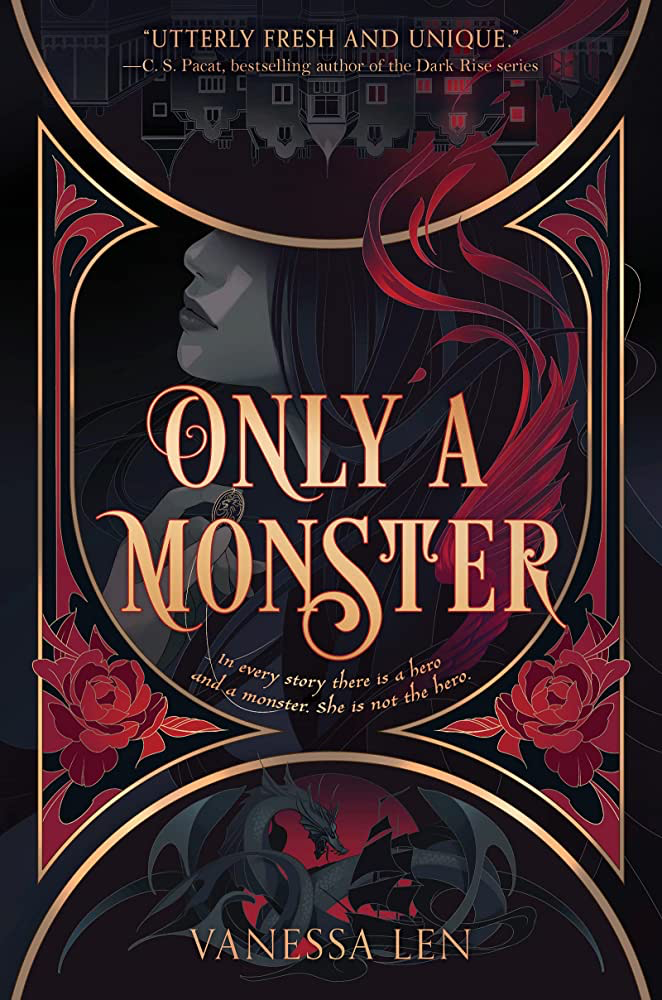
Only a Monster (Monsters, #1) – Vanessa Len

Joan is set to have the perfect summer. She’s staying in London with her late mother’s side of the family, amidst historical buildings, a steady job (with a handsome co-worker, Nick), and the smell of magic in the air. But when a disaster leaves most of her family dead, Joan is confronted with an ugly truth—she comes from a long line of time-stealing monsters. Worse still, the handsome Nick comes from a long line of monster hunters. Can Joan hone her powers before the monster hunters track her down?

TW/CW (from Vanessa Len): murder, violence, blood, loss of loved ones (on & off-page), substance abuse, xenophobia (fantasy), racism, interrogation, brainwashing, weapon use

DNF at 27%.

Before I get into my rant: I’ll always appreciate how much time and love it takes to write a book and put it out there. Any kind of creative output like this is highly admirable, and I can give this novel a certain degree of slack knowing that it’s Vanessa Len’s debut novel. That being said, Only a Monster really wasn’t it for me, and sometimes 1-star rants can be good for the soul as long as they aren’t actively hurting anybody. Gotta air it all out sometimes.

I went into Only a Monster expecting for it to be a nice break from some of the denser books I’d just read—something fun, something charmingly over-the-top. And…well, the over-the-top element was very much present, but not in a good way at all. From what I read of this novel, it was really just a mess that lacked any sort of nuance whatsoever.

We had the setup right from the start—a monsters versus monster-hunters conflict, “Joan is not the hero of this story,” et cetera, et cetera. Before reading this, I figured a lot of that language was just going to be for the sake of putting a nice hook on the front cover and other marketing purposes; I assumed that the book was going to get into some of the morally gray (as much of a buzzword that’s become with books these days) aspects of that conflict, but…no. From the get-go, we’re hit over the head with a comically large sledgehammer that JOAN IS NOT THE HERO OF THE STORY!!! and that BEING A MONSTER IS BAD BAD BAD!! and that MONSTERS AND HEROES!!!! DO NOT MIX!!! EVER!!! It’s not so much a theme so much as it is a metal pipe that gets painfully shoved down your throat. It got to the point where I felt like it was insulting my intelligence—I didn’t need to be told all this over and over. I really didn’t. Jeez. It could’ve been developed somewhat compellingly, but….no.

Beyond that, I didn’t know going in to Only a Monster that there was going to be a dreaded love triangle, which…[EXTREMELY LOUD INCORRECT BUZZER]

If there’s anything that can instantly ruin a book, it’s that. THERE’S NO NEED. And the setup wasn’t even anything that hasn’t been done before—each love interest is on one side of the conflict (monster and monster-hunter), and while I didn’t care to stick around to find out how it was resolved, I had a feeling that it would end up as a trash fire. What I did manage to get, however, was the description of Nick as “stupidly good-looking.” Can we please, as a society, get rid of this? Please? It’s starting to become just like “she let out a breath she didn’t know she was holding” at this point. Again: zero nuance.

All in all, a bitter disappointment of a book that lacked the creativity and nuance that the blurb and reviews promised. 1 star.

Only a Monster is the first in Vanessa Len’s Monsters trilogy, which will continue with Never a Hero (slated for release this August) and an untitled third book.

Today’s song:

WE LOVE THE MAGNETIC FIELDS IN THIS HOUSE

That’s it for this week’s Book Review Tuesday! Have a wonderful rest of your day, and take care of yourselves!

Posted in Books

The Bookish Mutant’s Books for AAPI Heritage Month (2023 Edition)

Happy Wednesday, bibliophiles! I wrote most of this post in advance, but as of now, I’m about to move out of my dorm!! I HAVE SUCCESSFULLY FINISHED MY FIRST YEAR OF COLLEGE!!

Here in the U.S., May is Asian American and Pacific Islander Heritage Month, and I’ve compiled another list of book recommendations for the occasion! Diverse reading shouldn’t be restricted to a single month, but it’s so important to amplify marginalized—in this case, AAPI—voices during this month. My lists serve as guides to read during not just their respective months, but any time you’d like.

However, this year is a little different. Even though I’m too lazy to change the header image (sometimes you’ve gotta be a bit stingy with your media space), I’ve decided to put both YA and adult books on this list. I’ve started to read more adult books in the past few years, and I’d be remiss if I didn’t include some of these books on this list. So it’s a slightly wider pool to choose from this year—read at your leisure!

If you’d like to see my past lists, click below:

Enjoy these recommendations!

THE BOOKISH MUTANT’S BOOKS FOR AAPI HERITAGE MONTH

YA:

ADULT:

TELL ME WHAT YOU THINK! Have you read any of these books, and what did you think of them? What are some of your favorite books by AAPI authors? Let me know in the comments!

Today’s song:

I FEEL LIKE I’VE ASCENDED TO ANOTHER PLANE OF EXISTENCE HELP

That’s it for this list of recommendations! HAve a wonderful rest of your day, and take care of yourselves!

Posted in Book Review Tuesday

Book Review Tuesday (5/9/23) – Not Here to Be Liked

Happy Tuesday, bibliophiles!

I put this one on my TBR years ago, and I only fished it out of the void a few days ago, after looking for some books to read for AAPI heritage month. I’d read mixed reviews, so I went in with low expectations, but I came out with a fantastic and nuanced story of feminism in a high school setting!

Enjoy this week’s review!

Not Here to Be Liked – Michelle Quach

Eliza Quan knows that she’s qualified for the position of editor-in-chief at her high school newspaper. She’s been with them since the beginning of her high school career, and sure, she may not be the warmest person 24/7, but she has what it takes to bring the newspaper to new heights. The problem? Her classmates don’t seem to think so.

When she loses the editor-in-chief election to Len DiMartile, who only joined the newspaper after an injury prevented him from playing baseball and decided to run against her on a whim, she feels as though all of her hard work has come to nothing. And she knows she’s qualified—so why does this sexist activity keep running amok in her school? After pouring out her thoughts in a manifesto, Eliza thinks it’s all over. But after the manifesto is posted to the paper’s website without her permission, it causes a ripple effect of protest and accusations. Among the sides being taken, can Eliza transform this drama into genuine change at her school?

TW/CW: sexism/misogyny (external & internalized), racism, bullying, slut-shaming, substance abuse (alcohol)

Don’t you just love it when you’ve forgotten about a book existing, so you go in with low expectations, and you end up dazzled? Top 10 feelings, for sure.

I’ve read my fair share of feminist, realistic-fiction YA in my day, and sadly, it’s easy for them to miss the mark, whether it’s introducing diverse characters for the sake of intersectionality and doing nothing with them (Six Angry Girls) or having a protagonist who only focuses on very surface-level aspects of feminism without getting any more nuanced (half of Watch Us Rise). But Not Here to Be Liked delivered the nuance, heart, and punch that it was supposed to, making for a powerful story of systemic misogyny and leadership.

I think some of the reviews seemed to miss the point when talking about Eliza—she’s a great character, but she’s not intended to be entirely likable. It’s in the title, after all! Sure—she’s determined to make the school paper as good as possible, and sometimes, that comes off as abrasive or strict. But that’s the point—were she a man, these traits would be praised: she’s “too harsh,” but he’s “willing to take charge” or “a fearless leader.” See the double standard? That’s what this book was trying to say all along. And Quach did an excellent job of having a flawed but incredibly root-able protagonist: every position that she takes is a laudable one that’s backed up more often than not. Eliza was robbed of her position, simply because a man’s charisma meant more than a woman’s experience and talent.

Not Here to Be Liked also portrayed how we think of feminism so well! As soon as Eliza’s manifesto is leaked and both support and vitriol begin to flow towards her, many of her classmates stand behind her, but their support is often half-baked; it’s a great commentary on that shallow, hollow white feminism that’s so prevalent among people who aren’t willing to do anything politically uncomfortable: slapping an “I am a feminist” pin on your shirt, saying “smash the patriarchy!” a few times because it’s briefly profitable, and being done with it. This novel does an incredible job of dissecting the true nuance of feminism and teaching others that making genuine change isn’t simple or easy—there are always more layers than you think there are. It’s never just about gender—it’s about race, sexuality, class, and so many other facets of our national (and international) identity. And even though this book doesn’t necessarily cover every bit of it—it’s a big ask for a single book to cover every single component that falls under feminism—it didn’t need to: misogyny and racism were the main focuses, and they were dealt with in a nuanced way. Apart from a misunderstanding of the Bechdel test (the book seemed to interpret a lot of it as how much real women think about men, when Bechdel’s focus was more about how female characters are written, especially in male-dominated Hollywood), it’s a great view of feminism in a YA setting.

Plus, with all of my gripes, Not Here to Be Liked did something of an enemies-to-lovers romance pretty well! Going into this novel, that part was what I was most suspicious about, but Quach, unlike many romances with “enemies-to-lovers” slapped onto them as a buzzword, actually handled in a way that felt authentic. The stages of Eliza and Len’s relationship didn’t feel like it was cut into neat, digestible slices—they had their ups and downs, and the result wasn’t entirely black and white, either. That’s what love is. It’s not quantifiable by any of the labels we put on it, and that’s how it’s supposed to be. Personally, I didn’t think that they had a whole lot of chemistry together, but their relationship was well-written enough that I could push some of that to the side.

All in all, an incredible story of one young woman’s fight for justice in her high school that scores high on its protagonist and depictions of feminism. 4 stars!

Not Here to Be Liked is a standalone, but Michelle Quach is also the author of The Boy You Always Wanted, which is slated for release on August 1, 2023.

Today’s song:

almost finished with Kindred on FX, and I have mixed feelings about it, but for now, at least I got this eery Beatles cover out of it

That’s it for this week’s Book Review Tuesday! Have a wonderful rest of your day, and take care of yourselves!
Posted in Uncategorized

Book Review Tuesday (4/11/23) – Stars & Smoke

Happy Tuesday, bibliophiles!

Here’s the thing—I’m not sure if I would read this book if it weren’t for Marie Lu. It’s not the kind of story that I would normally pick up, but if I’ve learned one thing as a longtime fan, it’s that she’s deft at writing for a variety of different genres. After finishing Stars and Smoke, it proved my point—I probably wouldn’t have read it otherwise, but it was still a fun read.

Enjoy this week’s review!

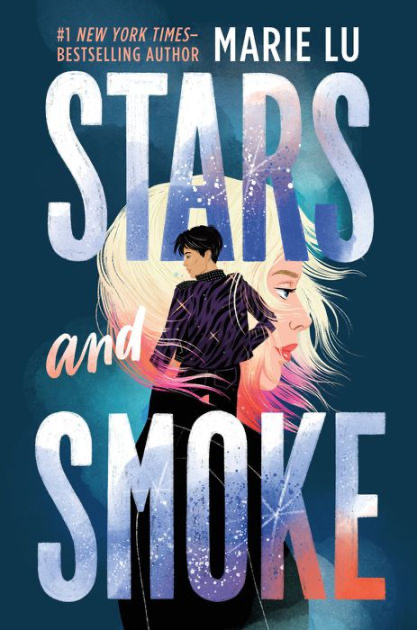
Stars and Smoke (Stars and Smoke, #1) – Marie Lu

Winter Young is on top of the world. The former backup dancer has had a meteoric rise to fame with his solo career, with sold-out tours and chart-topping albums every year. But his talents are wanted elsewhere—as a spy.

For Sydney Cosette, Winter is the key to taking down Eli Morrison, a prominent crime boss. After Morrison’s daughter, Penelope, requests a private concert for her birthday, Sydney and her colleagues recruit him for the Panacea Group, a spy organization willing to do the dirty work that most won’t do. Winter is the perfect opportunity to infiltrate Eli Morrison’s rank—and take him down for good. But sparks are flying between Winter and Sydney—sparks that could compromise the mission itself…

TW/CW: poisoning, murder, loss of loved ones

I’ve been a fan of Marie Lu since middle school, and she’s become an autobuy author for me, no matter the story—in my experience, she’s shown herself to be incredibly versatile when it comes to hopping genres. When I saw the description for this book, I knew one thing: I probably wouldn’t have read this book had her name been on it. It didn’t seem like my type of story. And although that’s still true, Marie Lu gave it her best shot at that magic touch that she applies to every novel she writes.

Lu said that in the acknowledgements that after the pandemic and all of the chaos and awful things that have happened as of late, this book was meant to be a piece of light escapism to distract from it all. Given how dark some of her works have gotten, I really respect creating a book just for that purpose—some days you can’t swallow a whole, literary masterpiece full of emotional turmoil. And as with every other novel she’s written, Lu achieves that goal perfectly. Stars and Smoke is pure fun—it’s the YA version of an action-packed blockbuster, filled with fun and romance. Lu keeps the plot and pace going steadily, and I never found myself getting bored.

However, even though most of the book hinged on the premise of said romance, it barely felt fleshed out. In the last 2-3 years, I’ve seen the “enemies to lovers” trope being slapped on advertisements and blurbs for books as a selling point from its popularity from both fan fiction and BookTok. Listen—I adore the dynamic when it’s done well, but the trope has become such a buzzword that a lot of authors seem to have forgotten what it’s really about. All too often, the stretch between “enemies” and “lovers” is virtually nonexistent, making for a half-baked romance that ends up feeling like it has no chemistry—going to complete disgust to head-over-heels in love in no time at all.

Stars and Smoke, unfortunately, fell into this trap as well, which is frankly surprising, since Marie Lu has done enemies-to-lovers (and romance in general) well before. Winter and Sydney seemed to have hardly any chemistry at all—they seemed to go from “eh, I really don’t want to work with [x]” (and vice versa) to “excuse me while I write a chart-topping love confession for [x]” in a very short span of time. The “enemies” part was very understated too—not that I’m complaining, but if anything, it was more “mild annoyance to sorta lovers, I guess” than anything. Again: enemies to lovers has become a complete buzzword. Trope terms are helpful, but love is often more complicated than that, and the key to getting them right is to recognize the nuance beyond the basic premise of the trope.

All in all, a light, fun novel that lacked in the romance department, but delivered in the pure escapism that it promised. 3.5 stars!

Stars and Smoke is the first in a planned duology, concluding with an as-of-yet unnamed sequel set to be released sometime in 2024. Marie Lu is also the author of the Legend series (Legend, Prodigy, Champion, and Rebel), the Young Elites trilogy (The Young Elites, The Rose Society, and The Midnight Star), the Warcross duology (Warcross and Wildcard), the standalone Kingdom of Back, the Skyhunter duology (Skyhunter and Steelstriker), and many other books for children and young adults.

Today’s song:

criminally short

That’s it for this week’s Book Review Tuesday! Have a wonderful rest of your day, and take care of yourselves!
Posted in Book Review Tuesday

Book Review Tuesday (4/4/23) – Strike the Zither

Happy Tuesday, bibliophiles!

Descendant of the Crane and The Ones We’re Meant to Find made me an instant fan of Joan He, and so I was immediately hooked when I found out that she was cooking up another piece of folkloric-feeling historical fiction! And now that I’ve finished this novel, I can safely say that Joan He has never once let me down. Fingers crossed that it’s consistent.

Enjoy this week’s review!

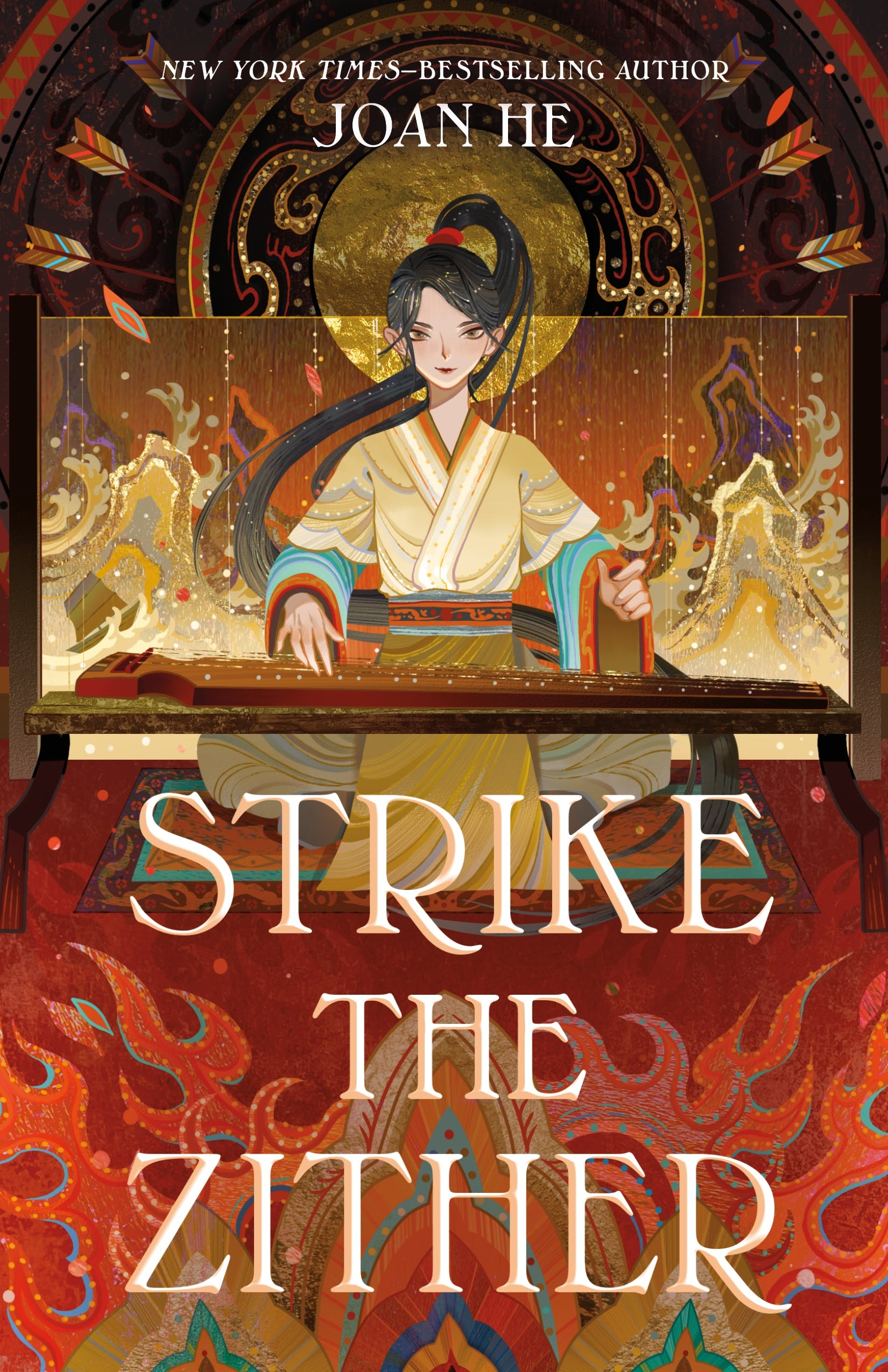
Strike the Zither (Kingdom of Three, #1) – Joan He

Zephyr has spent her whole life mapping survival out strategically. It was necessary after she was orphaned while she was still young, but as the strategist of the warlordess Xin Ren, she now holds the fate of a warring country in her hands. Three factions are fighting for dominance under a figurehead of an empress, and any sudden moves could mean that one faction takes over the entire Xin Dynasty.

When Zephyr is sent on a mission to infiltrate the ranks of the enemy to ensure the safekeeping of Xin Ren’s loyal followers, she collides with Crow, an enemy strategist with an agenda of his own. But the boiling point of all three factions is fast approaching, and Zephyr must do anything in order to make it out alive—even if it means exposing herself to the enemy.

TW/CW: death, blood, war themes, violence, torture, animal death, vomiting, abuse, body-shaming, xenophobia (fictional)

I’m not sure why I’m so hesitant to say that Joan He can do no wrong at this point. She’s never missed. Not with Descendant of the Crane, not with The Ones We’re Meant to Find, and certainly not with this novel. Her first two books were already works of art, and I’m glad to say that He is consistent in the quality of her writing, and consistent in her ability to put out so much unique media into the world of literature.

Each Joan He book is memorable in its own way, but what stood out to me about Strike the Zither was how wonderfully cinematic it was. It wasn’t frustratingly quippy or overtly self-serious; He knew just when to hit the balance, juxtaposing war with well-placed zither solos and political intrigue. He seems to do political intrigue especially well—there’s a way to make it genuinely interesting without having the entire focus be on court drama, which happens so often in YA, and with both this novel and Descendant of the Crane, she teases each development just enough to continually keep my attention. With the stylized art on the cover, I could honestly imagine this novel being adapted into a darker Laika Studios stop-motion film, but no matter the medium, Strike the Zither feels like it was born for the screen.

He also has an awareness of her characters that not many YA authors do—she knows that Zephyr and all of the other supporting characters are over the top, and she absolutely rolls with it. Again, Strike the Zither was a master class in balance; Zephyr neither fell into the all-too-common self-seriousness of YA, nor did she constantly break out into the dreaded Marvel Funny personality. She’s theatrical, but in a fun way that doesn’t mire itself in angst unnecessarily. Given this novel’s roots in Chinese classics and folklore, it’s the perfect way to write it; He mentions that the original epic of the Three Kingdoms had a tendency to put historical figures on a godlike pedestal, and this felt like a tongue-in-cheek response to that style.

The pacing of this novel also sealed the deal for me; although it was a little difficult to get into right out of the gate with how the world and its characters were so rapidly introduced, once it got going, the pace never faltered. Every action felt calculated, like the strategist that Zephyr is, and each choice elevated the plot to heights that I didn’t expect Strike the Zither to reach. The main twist was so deftly executed, and it had me grinning from ear to ear when I came across it, and my excitement never waned over the course of this novel. This one’s a must-read, trust me.

All in all, an impressive display of Joan He’s talent on all fronts. 4 stars! I can’t wait for the rest of the duology!

Strike the Zither is the first book in the Kingdom of Three duology; the sequel, Sound the Gong, is set for release in October of 2023 (!!!). Joan He is also the author of Descendant of the Crane and The Ones We’re Meant to Find, both of which are standalones.

Today’s song:

I’ve had this on repeat for the past few days :,) so lovely

That’s it for this week’s Book Review Tuesday! Have a wonderful rest of your day, and take care of yourselves!