Posted in Book Review Tuesday

Book Review Tuesday (10/20/26) – The Book Witch

Happy Tuesday, bibliophiles!

I’ve been a fan of Meg Shaffer since I first read her debut, The Wishing Game, several years ago. I liked The Lost Story as well, and when I found out that she had a new novel out this year, I was eager to see what she’d concocted. Though it was worth it to endure until the end, The Book Witch‘s corny writing nearly smothered the more earnest sentiments at its heart.

Enjoy this week’s review!
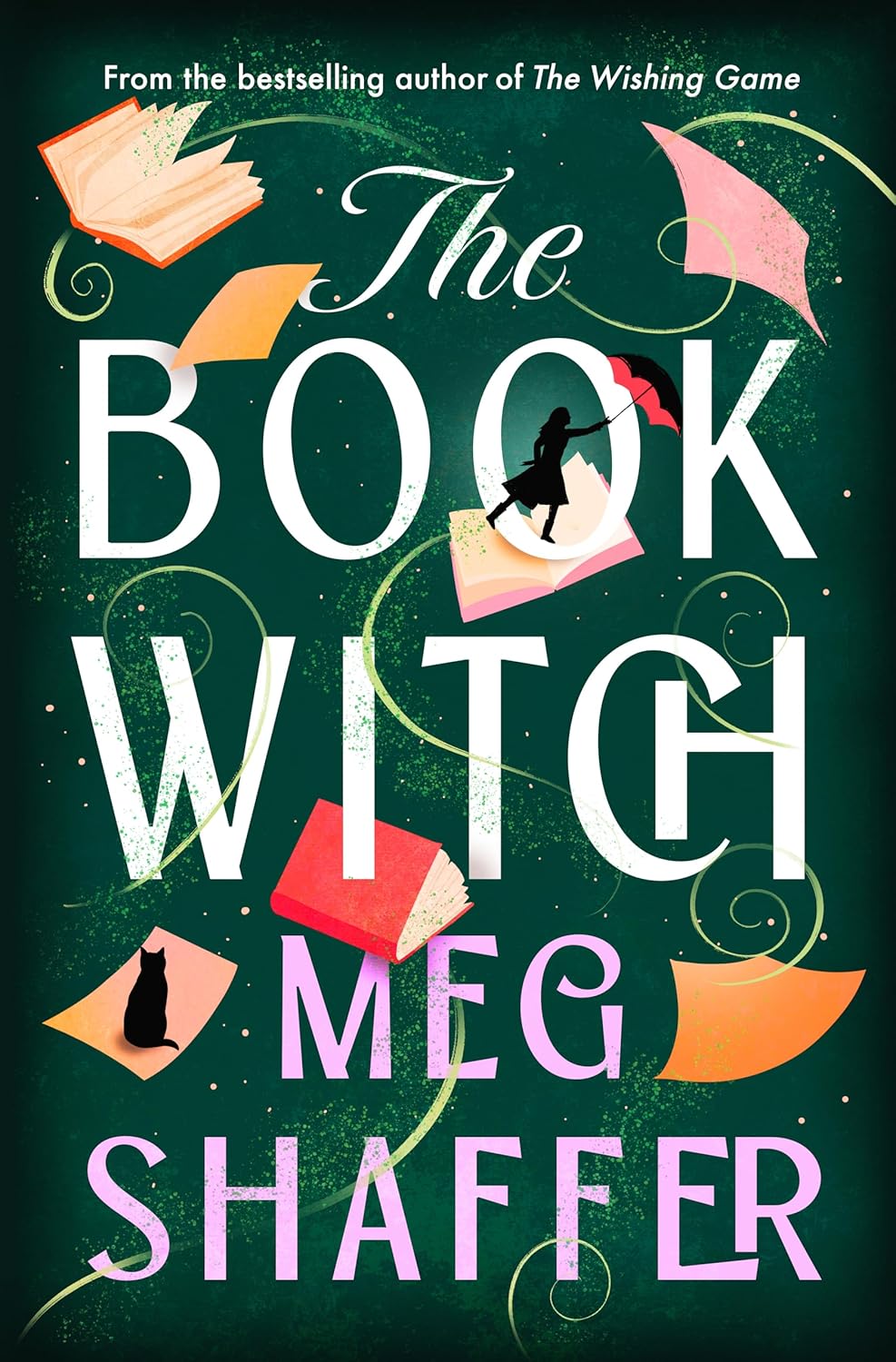
The Book Witch – Meg Shaffer

Rainy March is a Book Witch, an umbrella-wielding magician with a sworn oath to protect the fictional realm from real-world threats. Two years ago, she made the gravest mistake a Book Witch could possibly make: she fell in love with the Duke of Chicago, the main character in her favorite series. A slap on the wrist and a demotion later, and Rainy has accepted that she’ll never see the Duke again. But when her grandfather disappears, leaving cryptic, bookish clues behind, she may have to turn to him again to solve this seemingly unsolvable mystery.

TW/CW: loss of loved ones, grief themes, mild violence, terminal illness, brief descriptions of injury

WARNING: This review contains spoilers! If you haven’t read The Book Witch, tread lightly.

Let me start off by saying this: I didn’t enjoy most of The Book Witch, but it’s worth sticking it out until the ending. That being said, the payoff is excellent, but Jesus Christ, the road there was awful.

For the first 2/3rds of the novel, Shaffer’s prose in The Book Witch was insufferable. The recurring feeling that I had was that this was some kind of Sherlock x reader fanfic circa 2012 that had breached containment. It just reeked of that overly meta, quirky millennial humor that’s only become more grating with time. Rainy kisses the book boyfriend of her dreams, and mid-kiss, she says something to the effect of “Um, am I actually kissing the Duke of Chicago right now? 🤪” PACK IT UP. Who is this, y/n? Just put me out of my misery right now. And all of it is in that juvenile, cloying adorkable style, from the too-perfect Duke of Chicago (a book boyfriend made manifest) to the comically-evil, mustache-twirling, black-horse-riding stock villain, a book burner named X (I wish I was kidding). Even for a somewhat silly and whimsical concept, it just felt lazy to lean this heavily on tropes; knowing that Shaffer is capable of better writing than this made it even more sour.

On top of all that, the scaffolding of The Book Witch was barely there. There were just countless plot and character elements that didn’t feel believable at all. Rainy was meant to be somewhat exhausted, a bit jaded and beat-up after her dalliance with the Duke and the trouble she got in. We’re supposed to see the peppy Penny as a contrast to her, but they have the same cloyingly happy-go-lucky personality. Like X, all of the characters had one stock trait to go on that stayed static for the whole novel. I feel like there were more plot conveniences than actual plot, and therefore no tension, since I knew that everything would magically work out in Rainy’s favor. If this were a different author, I would’ve DNF’d it on the spot—it was just too convenient and juvenile to hold water.

Then came the last third of the novel. The Book Witch is one of those books that’s difficult for me to talk about without verging into spoilery territory, so here goes nothing. After 150+ pages of corny galumphing through fictional worlds, we get hit with the twist that Rainy March was never in the real world to begin with: she is a fictional character herself, and her author, Maxine Blake, is terminally ill and needs to pass the torch to a new author to finish her bestselling series. This is where the Meg Shaffer I know and love finally came through. This part of the book cemented some genuinely touching moments about the power of reading, the impact that authors and stories have on us, and the sanctuaries that books provide for reader and author alike. For how predictable the rest of The Book Witch was, this part hit me upside the head, and it was a glimmering lighthouse of sincerity in a sea of eye-roll-inducing prose. With that guiding the rest of the novel (and Rainy March’s journey), it actually managed to have some real heart.

With that said: does the end justify the means? Despite the poignant story behind The Book Witch, I don’t think it excuses any of the heinous prose that happened before the big reveal. Just because the story is a book-within-a-book doesn’t mean that fictional authors can’t write well. I just don’t believe that a dying old woman would write like a millennial in 2012 on Wattpad with too much time on her hands. Even though the Rainy March series is a bestselling series in-universe, I just don’t buy that something with such juvenile writing would be aimed at adults and gain the traction that it did. Having these books be a fluffy series of bestsellers doesn’t excuse the mountain of plot conveniences and tired tropes. It’s like Shaffer got so caught up in how a fictional bestseller would be written that she stumbled headfirst into every possible writing pitfall. The sad thing is that The Book Witch could’ve been so much more enjoyable and touching if not for that—the bones were here, but the meat (the book-within-a-book itself) was completely spoiled.

All in all, a novel that was worth the poignant message about the books that change us…but as a book, it didn’t change me. Honestly, it just really annoyed me. 2.5 stars.

The Book Witch is a standalone, but Meg Shaffer is also the author of The Wishing Game and The Lost Story.

Today’s song:

saw phoebe bridgers live for the first time last night (!!!!) and I’m still reeling from it!! I was really hoping she’d play this, and I just about spontaneously combusted when she did…what a magical night :,)

That’s it for this week’s Book Review Tuesday! Have a wonderful rest of your day, and take care of yourselves!

Posted in Book Review Tuesday

Book Review Tuesday (7/21/26) – Field Guide for the Formerly Villainous

Happy Tuesday, bibliophiles!

I hate to say it, but while Amie Kaufman has never let me down with her books, her book recommendations are less reliable. That’s how I found out about Field Guide for the Formerly Villainous, but to be fair, I’ve been reading and enjoying Autumn K. England/M.K. England’s books since I was in high school. They’ve never been a favorite or auto-buy author for me, but their books have been consistently solid and enjoyable in a pinch. Unfortunately, their cozy adult debut is their weakest novel to date.

Enjoy this week’s review!

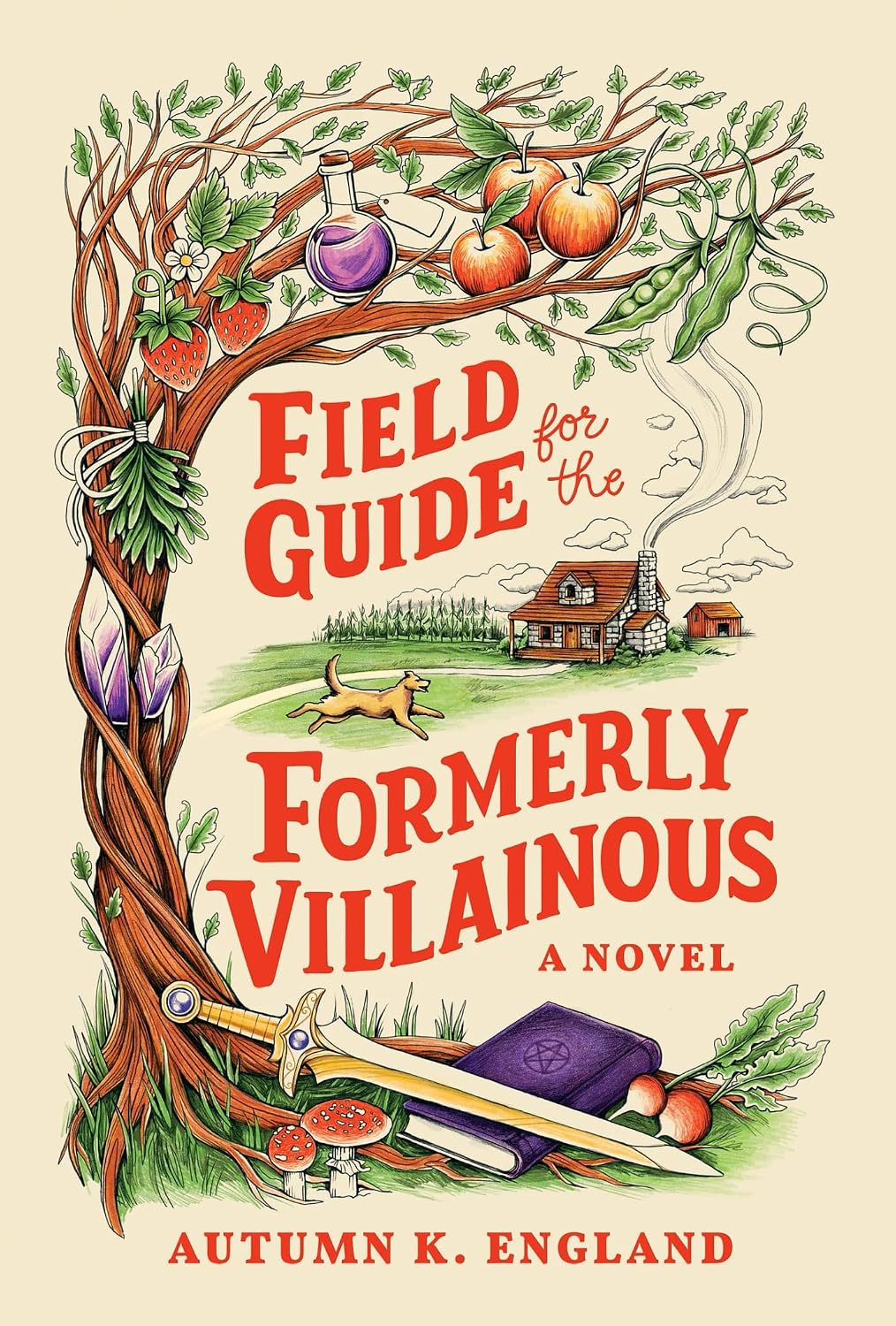
Field Guide for the Formerly Villainous – Autumn K. England

Oaklin Nettlewood is turning over a new leaf. After narrowly escaping from a magical cult, Oaklin has fled to the small town of Mossley’s Rest. In a fit of desperation, they buy a farm, not knowing that its former occupant was a beloved staple in the town before her death. Her ghost lingers in the barn, and she’s bent on helping Oaklin revive the farm in earnest. But between painful flashbacks, suspicious townsfolk, and Oaklin’s self-imposed barriers, will they ever be able to start over?

TW/CW: panic attacks, mental illness themes, past descriptions of murder/violence, substance abuse

I wasn’t a massive fan of England’s books before, but they were consistently entertaining, which is why I’ve kept reading them. This might be where I break up with them. I should’ve seen the red flags when this was compared to Can’t Spell Treason Without Tea, which I rated too generously in retrospect. Field Guide for the Formerly Villainous was largely bland, and when it wasn’t bland, it was grating; there are so many ways to make cozy genre fiction compelling, and England used none of them.

Field Guide for the Formerly Villainous did have a prominently good aspect; it’s not just a matter of “the main character is disabled/mentally ill and that’s cool,” but England’s depiction of Oaklin’s PTSD was so empathetic. England did an excellent job of writing all of the facets of Oaklin’s trauma and mental illness. No punches were pulled with the depictions of their violent flashbacks, and their frequent panic attacks and harshly critical inner monologue were treated with the appropriate balance of sympathy and authenticity—unlike some other parts of the book, none of it felt sanitized, which I appreciated. It didn’t just feel like representation for representation’s sake—it felt like a genuine attempt to humanize a mental illness that’s quite stigmatized.

I’m not sure if I was just able to pass over the flaws in England’s novels in high school because I wasn’t super discerning or if Field Guide for the Formerly Villainous is just their worst novel. Whatever the case, one of the biggest weaknesses of this novel was just how downright bland it is. I hate to say this, but I genuinely can’t think of a single unique quality that England’s writing has. There were a few nicely flowery metaphors here and there, but it just felt devoid of any individuality. The bucolic setting was described at the barest minimum, as were the relationships between Oaklin and the others. I wasn’t expecting a worldbuilding marvel, or anything, but any sense of the world beyond the absolute bare minimum was missing. England’s writing style was just exceedingly nothing. This was certainly a book. With words in it.

I was hoping that England’s characters and dialogue would pick up the slack that the boring writing left off. Unfortunately, that was not the case. Apart from Oaklin, who was decently written, and Granny (whose main distinguishing factors were that she was a ghost and had the mannerisms of an old lady), the supporting characters were lazy copy and pastes of each other. Looking back, the only thing that distinguished Lior from the others was that she was [checks notes] an attractive woman who had a different job from the others. Ryn and Jules were the exact same character. (I think one of them plays guitar? That’s all that distinguishes them.) But what really exacerbated this issue was that all of their dialogue sounded the same. To make matters worse, they all had these very modern, gratingly “quirky” mannerisms that felt like some insufferable person’s DnD campaign. For all the effort that England put into making the people of Mossley’s Rest seem like the kind of small town folk that you’d be comfortable being neighbors with, I just wanted to leave as soon as possible.

An extension of this character issue came in the form of the romance. I liked the setup of Oaklin and Lior’s relationship, but none of it felt earned. From the start, I knew that they would end up together. That in and of itself wasn’t the problem; the problem was that their romantic progression felt so fast and unearned. So much of how their relationship developed fell into the many timeskips throughout the novel, leaving what we had on the page insufficient. It just lacked tension. In cozy genre fiction of any kind, romance is a great way to introduce an element of low-stakes tension without making the novel overly tense. Here, it was just insta-love, and wholly unearned. The only real barriers were Oaklin’s past identity and their conflicting professions, both of which got smoothed over pretty quickly. I do like that Lior was able to accept Oaklin in spite of their past, but it just felt like it robbed the book of some fluffier tension that it very much needed.

That being said, I will say that, in spite of not enjoying myself throughout most of Field Guide for the Formerly Villainous, I did love the ending. It’s messier than a lot of cozy fantasies like it are willing to get, and the biggest takeaway is that Oaklin is fundamentally deserving of love in spite of their past, which they had no control over. Yes, it was a little sappy, but I always appreciate narratives about the harsh criticism that characters have about themselves being proven wrong. England stuck the landing, but it wasn’t enough to save the whole novel.

All in all, a cozy fantasy that was forgettable in all senses of the word. 2.25 stars.

Field Guide for the Formerly Villainous is the first novel in the Everyday Magic series, but no sequels have been announced yet. Autumn K. England (also writing as M.K. England) is also the author of several other books for teens and adults, including The Disasters, Spellhacker, Roll for Love, All Fired Up, and many others.

Today’s song:

NEW CHELSEA WOLFE ALBUM IN AUGUST, THIS IS NOT A DRILL!!

That’s it for this week’s Book Review Tuesday! Have a wonderful rest of your day, and take care of yourselves!