Posted in Book Review Tuesday

Book Review Tuesday (6/16/26) – Idolfire

Happy Tuesday, bibliophiles! Halfway through 2026 now…😵‍💫

If you told me about 3 years ago that I was this excited for a new Grace Curtis book, I wouldn’t have believed you. Full disclosure: I didn’t like Frontier, but the premise of Floating Hotel was so endearing to me that I took a chance on it…and loved it. And here I am now. (Special shoutout to Kat @ The Lily Cafe, who is the reason that I know that this book exists. Thanks, Kat!) I had a feeling I was going to enjoy Idolfire, but as we’re officially halfway through the year…this might be one of my favorite books that I’ve read this year!

Enjoy this week’s review!

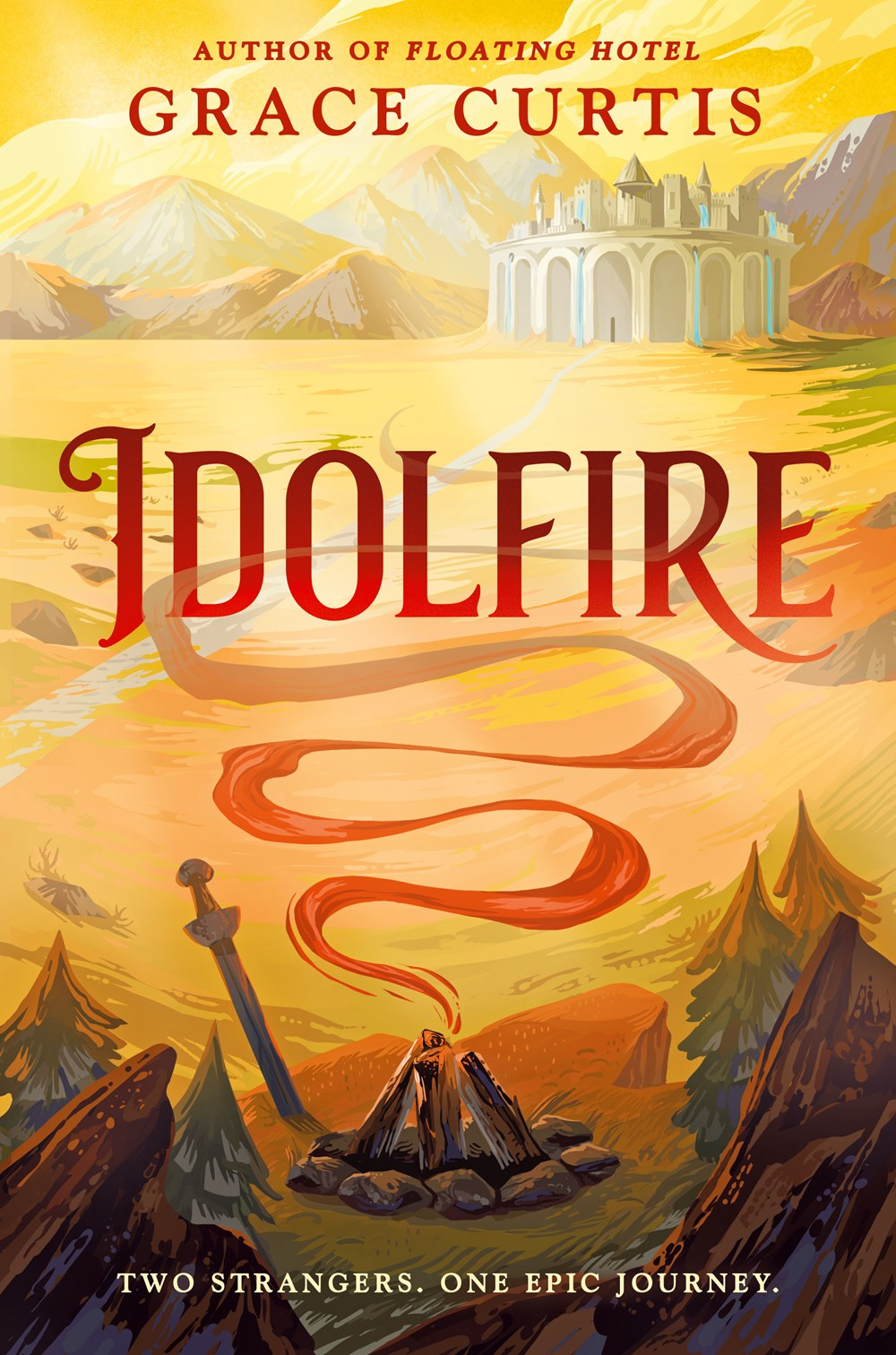
Idolfire – Grace Curtis

After illness tears her family apart, Kirby of Wall’s End sets off on the road to Nivela, a famed kingdom that has fallen from grace, but retains the promise of magic beyond its gates. Across the world, Aleya Ana-Ulai is searching for Nivela too, eager to prove herself after being abandoned by her family. When these two women from disparate regions meet on the road, neither knows that their togetherness is key to their survival. But the road to Nivela is long and treacherous, and it seems to hold everything but the answers they need within it. Aleya and Kirby must decide if the promise of Nivela is worth it—and if they’ll be able to survive at all.

TW/CW: violence, blood, war themes, loss of loved ones, child death, infertility

First off—this isn’t a slight on the book, but if you’re going in (like I did) expecting science fantasy, Idolfire is not that. This is straight up fantasy. I’m convinced that the “science fantasy” thing was tacked on for marketing reasons after Curtis wrote two sci-fi novels. Just be forewarned about that…and the fact that this book came dangerously close to destroying me. This might be one of the best books I’ve read all year.

Grace Curtis’s prose keeps getting better and better with each novel she writes. It’s prose that gave me genuine, heartwarming joy to read. She just has this way of making everything, from the setting to the subtle glances between characters, so wholly human; it goes beyond feeling lived-in and real and becomes something with a real heartbeat. Where Curtis succeeds is in shedding light on the unsaid; slight turns of phrase became quietly heartwarming or heartbreaking with a single word. Her renderings of the varied landscapes that Aleya and Kirby travel through are so rich and full of life. Every line of dialogue is razor-sharp, both in their humor and their power to devastate. If you want proof of Curtis’s improvement as a writer, Idolfire is the perfect evidence.

One of the strongest aspects of Idolfire was how it balanced humor and more sobering, serious themes. Curtis has really honed her talent for humor—there were so many moments throughout that were laugh-out-loud funny. Aleya and Kirby had such excellent chemistry (more on that later), but their separate senses of humor pinged off of each other exceptionally well, making for a fantastical road trip that never had a dull moment. And yet, Curtis gave the same amount of care to depict the darker themes of the novel alongside the lighter ones. Curtis’s depiction of war was one that has stayed with me; her descriptions of it have no interest in glorifying its purpose or its participants. Even for a novel billed with swordfighting, her sparse, devastating language in describing the horrors of war were so impactful in a genre where there’s often a degree of romantic language ascribed to something so horrendous. From the effect it has on the minds of individual soldiers to the scars that it wrought across the lands of Idolfire, Curtis explored every facet of living during wartime. Yet Curtis had the same level of care in the lighthearted and dark aspects of Idolfire—for a novel like this, it was a very difficult balance to strike, but Curtis absolutely clinched it, making for a novel that was, above all, human.

I didn’t think that Curtis’s character writing could get much better after Floating Hotel, but I was proven wrong. Although I loved the slice-of-life roving between multiple characters, I think that narrowing her focus down to two central characters did a great service to their development. Aleya and Kirby were some of the most memorable characters that Curtis has ever written. A less talented writer would’ve slapped a hasty grumpy-sunshine dynamic on them and left it at that, but they both had such richly layered personalities. Both of them had trauma so deeply embedded in their psyches, but Curtis did an excellent job of showing us how it manifested in both of them and shaped their personalities. I loved how Aleya’s more reserved, stoic nature played off of Kirby’s more mischievous personality, but the deeper you get, the more you realize that both of these traits serve as shields for both of them. They had such immediate, lovable chemistry, and the progression from begrudging companions on the road to lovers was impeccably paced, and every step of that progression felt so natural—and instantly lovable to root for. Without spoiling anything, things do turn out bittersweet for them, but I think the way that Curtis ended their story was poignant and fitting for both of them.

I also adored the road trip plot of Idolfire, and it kept me guessing constantly. Curtis’s talent for character writing also applied to the menagerie of weirdos that Aleya and Kirby met along the road to Nivela. Even the smallest glimpses we got of the denizens of Idolfire‘s expansive fantasy world were so fleshed-out, and they added so much life to the already fantastic worldbuilding. Balance is something that Curtis clearly has been honing, because like the balance between levity and darkness, there was a great balance of more action-packed moments—such as Aleya’s many swordfights—and downtime with Aleya and Kirby. The pacing was neat as a pin, and even the downtime between the more climactic parts of the novel were measured out to near-perfection. Idolfire really was a balancing act in so many ways, but Curtis toed the lines she set with enviable ease.

And if there’s anything that you can expect Curtis to do well with, it’s sharp commentary on empires and imperialism. Floating Hotel excelled at that as a point in the background, and Idolfire honed in on it even more. I think what Idolfire brings to the conversation is how ideas shape the image of an empire. Fully acknowledging that Curtis is British and I’m just projecting my experience onto this book, but I couldn’t help but think about Nivela—and Aleya and Kirby’s goals—in terms of the permanently out of reach “American dream,” and how an empire can build up an idea of itself while hiding a crumbling foundation beneath it. The further they go on their journey, the more they see the destructive aftermath of an idea twisted into something that excuses genocide and imperialism. I also liked how it tied into the magic system, with belief being what makes certain magic work/not work, and how that translated into the belief in Nivela, which has been faltering to the point of destruction. (Without getting into spoilery territory, there’s some really fascinating stuff about the very literal, human cost that this has in the world of Idolfire.) In the end, I think it was a beautiful meditation on the power of ideas, and how they can be twisted into something so terrible that it swallows the world, but how we can use that same power to create a more equitable world worth living in.

Ultimately, with ratings like these, there’s always that slight oomph that pushes it into 5 star territory. I think there’s still a few small nitpicks that made 5 stars not justifiable, but it sure was close. Overall, Idolfire was a deeply moving and human road trip fantasy, a meditation on the nature of the ideas and idols we hold up in our minds. 4.75 stars!

Idolfire is a standalone, but it has a companion novel, Heaven’s Graveyard, set 2,000 years later in the same universe. Grace Curtis is also the author of Frontier and Floating Hotel.

Today’s song:

I’m sorry, Let’s Dance (1983), I was unfamiliar with your game

That’s it for this week’s Book Review Tuesday! Have a wonderful rest of your day, and take care of yourselves!

Posted in ARC Reviews, Book Review Tuesday

ARC Review: Mother & Slaughter

Happy Tuesday, bibliophiles!

Whew, this header’s been gathering some serious dust. I don’t do ARCs regularly anymore, but basically consider this my regular Book Review Tuesday installment…just with some more intrigue, since this book is less than a month away from release!

As I said before, I’ve gotten too busy to regularly review ARCs in the past few years, but this is an exception. The author of this upcoming novel (Liz Shipton) came across my blog and personally reached out to ask if I could review their ARC, so I said yes! Sadly, it pains me to say that this satirical fantasy was kind a miss.

Enjoy this week’s ARC review!

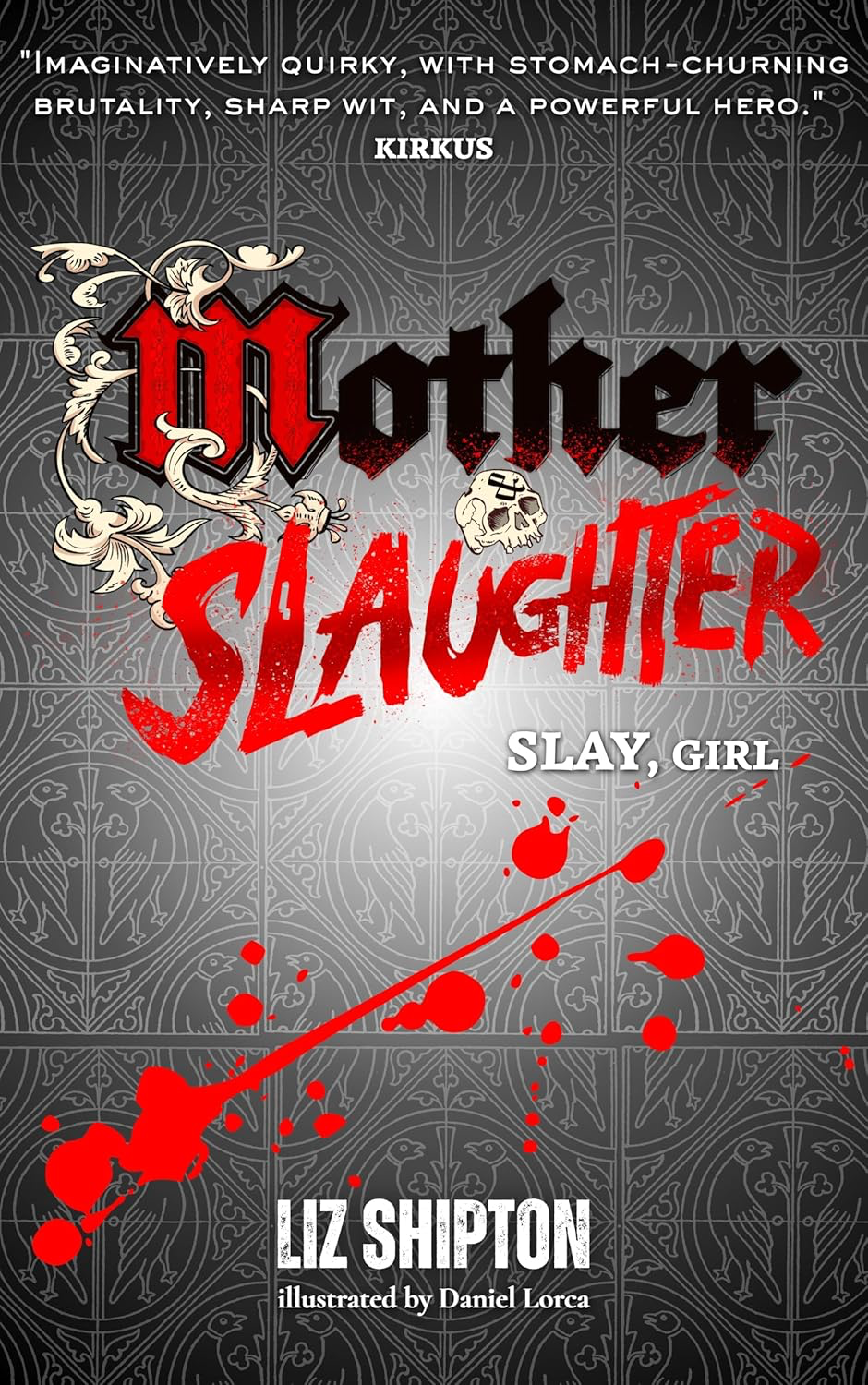
Mother & Slaughter – Liz Shipton

150 years ago, all of Draconia’s women were stripped of their magic. Now, their only options once they turn eighteen are to become mothers or gladiators. Eleanor Skinner was content to choose the latter, and has spent her days fighting her way to the top. At 35, she’s Draconia’s oldest gladiator, and proud to claim the title. But when she becomes pregnant after a one-night stand, her options are slim. Rumors have swirled about Draconia’s only magic-practicing woman left, who might be able to give her the abortion she’ll need. But Draconia is full of patriarchal monsters, and Eleanor will have to claw her way to freedom.

TW/CW: misogyny, violence, gore, blood, abortion themes, sexual content, racism, transphobia, xenophobia/anti-immigrant rhetoric, homophobia, ableism (internalized/external), animal death

Thank you to Liz Shipton for sending me this eARC in exchange for an honest review!

Giving an ARC a low rating is always tough. It’s especially tough since Liz Shipton was nice enough to reach out to me personally and give me this ARC, which I really appreciate. But with every ARC, I promise an honest review, and an honest review is what this is. I really wanted to like Mother & Slaughter, but it tripped over itself too many times to be truly successful.

If you’re going into Mother & Slaughter thinking that it’ll be subtle satire…it’s not. And honestly? That’s okay. There’s a place for both kinds of political allegory in this literary ecosystem. Mother & Slaughter is a revenge fantasy about tearing down the Trump administration, which I am 100% behind. Unfortunately, while I’m 100% behind Shipton’s politics, the delivery was not my cup of tea. This book basically feels like if we lived in a better, kinder universe where Quentin Tarantino was somehow woke. (For what it’s worth, I think Mother & Slaughter is the perfect book for anybody who was brutally grossed out by The Bride’s speech about “motherhood” at the end of Kill Bill: Volume 2. If Kill Bill: Volume 2 has no haters, then I am no longer here.) It’s a very bloody and irreverent novel, and it definitely tested my squeamishness for gore. The chemistry and banter between the characters was good, but it just wasn’t my kind of humor. There’s no shortage of swearing—we’re talking at least 5 f-bombs per page here, so that’s what you’re getting into. My issues with this aspect in particular are purely personal and not about the craft—it was written decently enough, but it just wasn’t the book for me in this regard.

Mother & Slaughter tackles almost everything you could think of that’s wrong with the Trump administration; misogyny and womanhood take center stage, but there’s also lots of discussions of homophobia, transphobia, xenophobia, racism, and the persecution of scientists and scholars. I think the depictions of misogyny and the struggles women have under this administration were well done and well-realized through Eleanor’s character. There was some nice disability inclusion with Eleanor and Roz, who both had sustained permanent injuries from being gladiators. I also liked how respectfully Sam (who is a trans woman) was handled as a character; Eleanor and Roz butt heads about how to treat her, but ultimately, they both come to respect her as her true self—and as a victim of the same patriarchal system that they’ve been fighting against. There’s some timely discussions about immigration and anti-immigrant rhetoric which was solidly done. Shipton also attempts to tackle racism through the character of Roz; I will say, although her character gained more depth later, my biggest complaint is that for the first half of the book, Roz felt like she was only there to teach Eleanor that racism existed. This was remedied later, but it’s still worth mentioning as a writing flaw. Additionally, I’m not sure if the racism commentary was done well, as we never really get any context for how racism is systemic in Draconia (as misogyny/transphobia/etc. are), and there’s only some offhanded comments about how women of color are oversexualized and discriminated against without factoring it into how the government oppresses people of color in Draconia.

Politics take center stage in Mother & Slaughter, which is as it should be. I’m not asking for this novel to be some masterfully-crafted, intricate world, because first and foremost, it’s a political satire. That being said, I think it would’ve been much more effective if there was more effort put into the worldbuilding. It’s basically your run-of-the-mill, vaguely medieval European fantasy setting, but with more anachronistic language and dialogue. (I kind of expected the anachronisms given that this book’s tagline is “Slay, girl,” but it’s worth noting.) Yet aside from the government’s strict control of women and immigrants, I really couldn’t tell you how the government works. In order for this kind of satire to work, there needs to be at least some scaffolding of the world in order for us to understand our own politics through the lens of a fantasy world. The real fun of satire in genre fiction is to warp our own reality into a fictional one, and in this case, it just felt like a cheap copy-and-paste of current U.S. politics onto a hastily thought-out fantasy world. Fiction holds a mirror to parts of our world, but it’s really not much fun if the mirror is indistinguishable from the real world itself.

This issue is exacerbated in the ending, in which we finally meet Draconia’s Trump stand-in, who is…blatantly just Trump poorly photoshopped into a fantasy world. Like I said, the real fun of ridiculing horrible demagogues like him is by warping them to fit a fantasy setting. Once again, I recognize that this book wasn’t meant to be subtle, but a lack of subtlety shouldn’t mean a lack of creativity. Reknaw says “yuge,” he calls the main characters “nasty women,” and he even mentions a “big, beautiful bill.” As much as I loathe the man, it just felt so lazy and cheap to have no effort whatsoever put into this Trump parody. This is an exceedingly niche reference here, but remember Hellboy: Blood and Iron? They have their stand-in, comically evil oligarch character (Oliver Trombolt) whose name is just multiple real-life oligarchs (Trump being one of them) mashed up, but at least he didn’t look like a clone of Trump (or any of his other inspirations)! the bar’s real low. Even the artwork looks exactly like him. It…gets to a point. Well-intentioned satire, once again, but it just felt so unoriginal when there’s a myriad of ways to critique this administration and the scumbags within it.

Overall, a satirical fantasy with good intentions but a bloody mess of an execution. 2 stars.

Release date: July 1st, 2026

Mother & Slaughter is a standalone, and will be released on July 1st, 2026. Liz Shipton is also the author of Dot Slash Magic, the Thalassic series (Salt, Sand, Soul, Paz, and Passage), and several other books for teens and adults.

Today’s song:

yes, I know this song has one of the most threatening auras of any Brian Eno track, but I just CANNOT STOP LISTENING TO IT god I love this album

That’s it for this week’s ARC Book Review Tuesday! Have a wonderful rest of your day, and take care of yourselves!

Posted in Book Review Tuesday

Book Review Tuesday (5/26/26) – The Killing Spell

Happy Tuesday, bibliophiles!

As I’ve been doing my AAPI books focus during AAPI Heritage Month over the years, I noticed that I’ve unintentionally neglected the PI part of the acronym, which is a real shame. Unfortunately, as with a lot of marginalized groups, it’s difficult to find books—especially genre fiction—by marginalized authors; in fact, The Killing Spell is billed as the first traditionally published adult fantasy by a Native Hawaiian author, which…insert the “disappointed, but not surprised” meme. It took until 2026 for this to happen? Christ.

Anyways, I was intrigued by that, and by the urban fantasy premise. In the end, The Killing Spell was a fun and ambitious fantasy debut.

Enjoy this week’s review!

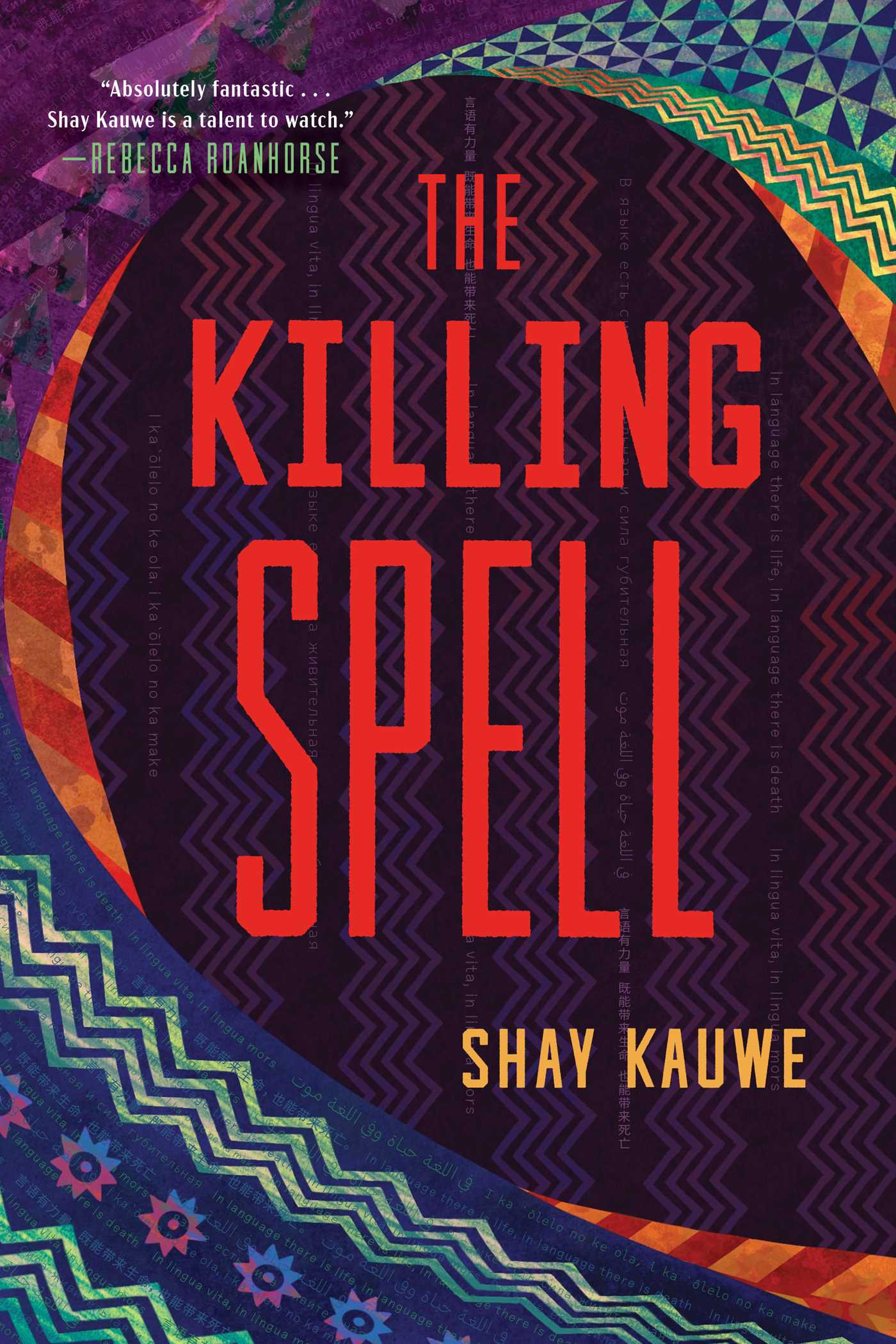
The Killing Spell – Shay Kauwe

200 years ago, a flood of unforeseen proportions changed the world forever. The Hawaiian Islands were submerged in the ocean, and the survivors found refuge on the coast of California. Kea Petrova lives in this Hawaiian Homestead in what remains of Los Angeles, honing her language-based magic. Discriminated against by the powers that be—both because of her heritage and her magic—she tries to keep her head down. But when a powerful politician is murdered by a killing spell connected to the Hawaiian language, Kea has a target on her back. Desperate to prove her innocence, she teams up with a corrupt politician to clear her name. But what they’ll uncover may shake the magical world of L.A. to its very foundations…

TW/CW: murder, violence, sexual harassment, racism, colonialism/imperialism themes

The Killing Spell is a great debut, but what stands out about it is that I can just feel how much fun Shay Kauwe had while writing it. Though it wasn’t without its flaws, I could feel that same sense of fun and adventure on every page of this novel. I guarantee that you’ll have a blast reading it!

The characters in The Killing Spell are also a standout for sure. Kea was such a compelling main character; she has that perfect combination of being flawed enough to seem real but likable enough to root for. She’s headstrong and stubborn more often than not (to be fair, it’s justified half the time), but she’s so determined and witty that it almost makes up for it. She had the perfect combination of traits to make all of her adventures instantly worth following. The other characters were differing degrees of fun and campy, which suited the classic murder mystery atmosphere. The only character that I didn’t like as much was Sora. He was a little too cliched for my liking, and as much as I love a good enemies-to-lovers arc, Kea and Sora lacked romantic chemistry to me. The romance subplot was just forced in general—thinking back to the story as a whole, it really didn’t enhance anything about it. But he’s the exception to the rule—Shay Kauwe’s characters were a joy to follow.

Despite The Killing Spell being set 200 years in the future, it checked off all of the boxes for a fun murder mystery. I think I just like genre fiction-mystery/thriller melds in general—they just present so many fun opportunities to use worldbuilding to make a compelling world and explain the structures of it by showing you what it means for things to go wrong. There’s so much here for the diehard fantasy fans, but I think if you’re a mystery reader who wants to get into fantasy, you should absolutely pick up The Killing Spell. The setting is modern enough for a lot of the classic murder mystery beats to happen, and with the right balance of seriousness and camp; you’ve got your mysterious poisonings, unlikely detective teams, and seducing people for clues in a dance hall, all wrapped up in a futuristic fantasy package. What was clear to me was that The Killing Spell was Kauwe’s love letter to both genres, and that passion was evident with every successive page.

Language-based magic was already a fascinating magic system for Shay Kauwe to explore, but it bolsters the novel’s themes, which were one of The Killing Spell‘s biggest strengths. Many of the characters (most prominently Kea) are Native Hawaiian, and there is so much discussion about sovereignty and land ownership, as well as the preservation of Indigenous cultures. But I think the language magic and the discussions of the “legitimacy” of languages was the strongest theme in the novel. Through this magic system, Kauwe starts some very cogent discussions about what languages that people and governments deems “important” in its often Eurocentric view, and the bias against languages that don’t have as many speakers; there’s also lots of very potent discussions about cultural pride and how it can be an act of resistance when the dominant, hegemonic cultures are bent on deeming it “lesser.” Kauwe’s pride in Native Hawaiian culture shone through in The Killing Spell, and from an outside perspective, I think these kinds of perspectives are so vital to fantasy as a genre.

Most of the elements above would’ve added up to a solid four stars for me. I had some minor nitpicks, but most of them aren’t very relevant. What is relevant, however, is the worldbuilding, which left a lot to be desired. Aside from the language-based magic, which was well-thought out and thematically strong, the worldbuilding got messy. The whole impetus for the emergence of magic was this cataclysmic flood, which somehow released this language magic into the world. How this happened just…isn’t explained. At all. There was a flood, the Hawaiian Islands sunk, and…magic appeared? I guess? And The Killing Spell happens 200 years after said flood. You’d think that there would be some sort of major societal change, right? Other than the vague system of magical mobs that rule L.A., we get no explanation as to how the world reorganized itself or how magic changed society at large. This is supposed to be 200 years in the future, but nothing would’ve changed if this was just an urban fantasy set today. Other than the Hawaiian Homestead plot, we don’t get any real consequences of how the world changed after the flood. And locations outside of America get mentioned, but what the hell happened to them? Come to think of it, what’s going on in America outside of L.A.? Ultimately, the foundation was there, but Kauwe didn’t expand on it nearly enough for the worldbuilding to actually hold water.

All in all, an action-packed debut rife with magic, mystery, and intrigue. 3.75 stars!

The Killing Spell is Shay Kauwe’s debut novel, and a standalone.

Today’s song:

ANOTHER BANGER CATE LE BON ALBUM IN THE BOOKS! cyrk is excellent, and this song makes me emotional out of nowhere…

That’s it for this week’s Book Review Tuesday! Have a wonderful rest of your day, and take care of yourselves!

Posted in Book Review Tuesday

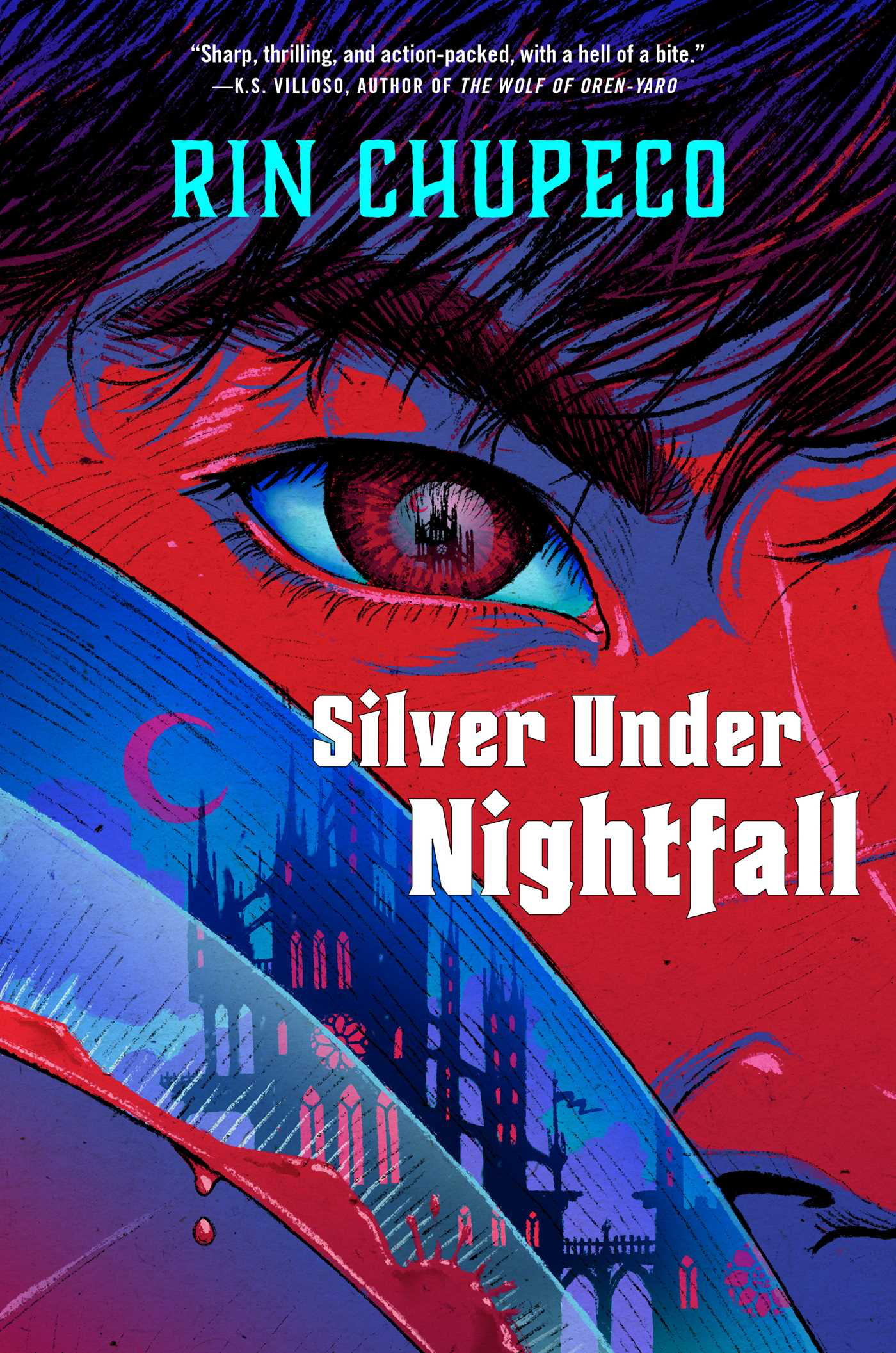
Book Review Tuesday (5/19/26) – Silver Under Nightfall

Happy Tuesday, bibliophiles!

I read a handful of Rin Chupeco’s books in high school. I liked them for the most part, but I think I just lost interest eventually. Fast forward a few years, and I found out that they’d written another series for adults, and the premise hooked me. However, it seems like Chupeco’s writing doesn’t hold up now that I’m older. Silver Under Nightfall was just ridiculous in all the wrong ways.

Enjoy this week’s review!

Silver Under Nightfall (Silver Under Nightfall, #1) – Rin Chupeco

Remington Prendergast is a Reaper—a highly-trained bounty hunter who specializes in the most dangerous quarry: vampires. Even with his talents, the rumors surrounding his possibly vampire heritage have alienated him from his colleagues. His father, the Duke of Valenbonne, has been desperate to make his powers so great that they overshadow the rumors, but he’s failed. But when strange, deadly vampires, the likes of which the kingdom has never seen, begin to spread across the kingdom, Remy’s only choice is to turn to a pair of enigmatic vampires to solve the case—and risk being drawn into their seductive web.

TW/CW: blood, gore, sexual content, loss of loved ones, pedophilia, vomit, emotional abuse

I haven’t read a Rin Chupeco book since I was about 17. I really should’ve kept it that way. Silver Under Nightfall sounded fun and gothic enough from the premise, but this novel was bordered on being a disaster. It genuinely boggles my mind that this book has such a positive average rating on both Goodreads and The Storygraph. I endured 500 pages of this (probably should’ve DNF’d it), but now I have the evidence to hate from an educated stance…

Before I get into all my gripes, I’ll give Chupeco credit for the handful of things that they did well. Though it didn’t go in the direction I would’ve liked it to go, I loved the vampire murder mystery/thriller plot, and the genetically engineered monsters and subsequent fights were quite fun. There were moments where they nailed the gothic atmosphere, and there were a handful of solid quotes here and there. But unfortunately, these elements, despite being key to the premise, weren’t delivered on nearly enough, which is surprising, since Silver Under Nightfall is over 500 pages long. Unfortunately, most of that 500 pages is a poorly-written mess.

The last book of Chupeco’s that I read was The Ever Cruel Kingdom, which I honestly forgot about completely, other than the vague sensation of it being entertaining, but ultimately finishing it just to finish it. Not a great endorsement, I know. But even at that age, I had the sense that it felt overwritten, that there were random metaphors tripping over themselves. Unfortunately, that quality increased tenfold in Silver Under Nightfall. To Chupeco’s credit, their writing has some fun moments of being campy and gothic. In the end, they were just trying way too hard to be gothic. This resulted in so many sentences with nonsensical structure and metaphors that went on far longer than they humanly should have. At the worst points, the writing was so deliberately obtuse that I could barely get any sense of the setting or world beyond it. (Worldbuilding? Who is she?) It was just dense and unwieldy, and did very little to enhance the atmosphere.

Speaking of trying too hard, Chupeco’s dialogue was the worst victim of the above prose problem. It was terrible. All of the characters oscillated between talking like 15-year-old edgelords and fictional Victorian nobles, even though they’re all meant to be adults. The Victorian noble bit was painfully overwritten, carrying over the same problem of Chupeco’s floundering attempt at making Silver Under Nightfall gothic; again, a lot of the dialogue was stuffy at best, grammatically nonsensical at worst. On the other end of the spectrum, you have characters like Remy, who Chupeco spends 500 pages desperately trying to convince you that he’s funny.

Below is an actual quote from the book:

“…I’ve never infected anyone, if you don’t count my dry wit—”

Oh my God, free me from this prison. 90% of the humor in Silver Under Nightfall is 2017 Tumblr humor partially filtered through quasi-historical nobleman speak; like the specially-engineered vampire-creatures in the novel, it’s an unholy abomination that shouldn’t exist. And Chupeco really, really, really wants you to think that it’s funny, so much so that it supersedes most other elements that are important in a novel, like…oh, worldbuilding? Character development? No, apparently what matters most is making sure that the reader knows, beyond all reasonable doubt, that your character has a dry sense of humor. And he doesn’t. He, like most of this book, is painfully unfunny.


This brings me to the characters. I think the fundamental problem was that Chupeco seemed hellbent on making them as likable as possible, which in the novel, translated to them having virtually no flaws. We’re beaten over the head with the prospect that Remy is a poor widdle baby and nobody likes him because people think his mommy was a vampire but he’s also SO TALENTED and SPECIAL and EDGY and COOL. Textually, we get very little evidence to support this, other than his overlong monologues and the treatment he gets from his father. No character development, no revelations that aren’t external—stuff just happens to him, and Chupeco just paints him like this sad, wet puppy that got left out in the rain. Show me more interactions between him and the other Reapers! Give me some actual internal reflection and genuine grappling with his identity at the very least, dammit! As for the others, there’s not much to say about them…which is to say that most of them had one character trait each. Malekh and Xioadan were sexy, the Duke was a Bad, Bad Guy, and there were…a few others? I guess? Most of them got taken care of in the bloodbath towards the end. Silver Under Nightfall was just a classic case of a main character that was unrealistically overpowered and emo, and then all of the others were just window dressing (or threesome fodder).

However, I think the fundamental problem with the characters in Silver Under Nightfall was that Chupeco refused to give them any nuance. Remy, for how much of an edgelord he was purported to be, was purely good. Malekh and Xioadan were the same way—they were completely pure, despite the “oooh the evil vampires are seducing me ooooh 😏🫦” plot. There was a revelation at the end that could’ve complicated the relationship between Malekh and Remy in a super interesting way, but Chupeco immediately shuts it down in favor of Malekh being completely pure. Of course, all of the bad guys are completely bad. I wouldn’t even let this kind of black and white writing slide in a YA novel. It was such a lazy, uninteresting way to write these characters, especially when the novel touts itself as having all of these morally gray characters. None of the specialest, most precious little guys can have any sort of nuance or depth, I guess.

All in all, a bloated mess of a vampire novel with unwieldy writing and even worse character work. I feel like I’ve been drained…by Colin Robinson, maybe. 2 stars.

Silver Under Nightfall is the first in the Silver Under Nightfall duology, which concluded with Court of Wanderers. Chupeco is also the author of the Bone Witch series (The Bone Witch, The Heart Forger, and The Shadowglass), the Never Tilting World series (The Never Tilting World and The Ever Cruel Kingdom), the A Hundred Names for Magic trilogy (An Unreliable Magic, Wicked As You Wish, and The World’s End), The Sacrifice, and several other novels for teens and adults.

Today’s song:

That’s it for this week’s Book Review Tuesday! Have a wonderful rest of your day, and take care of yourselves!
Posted in Book Review Tuesday

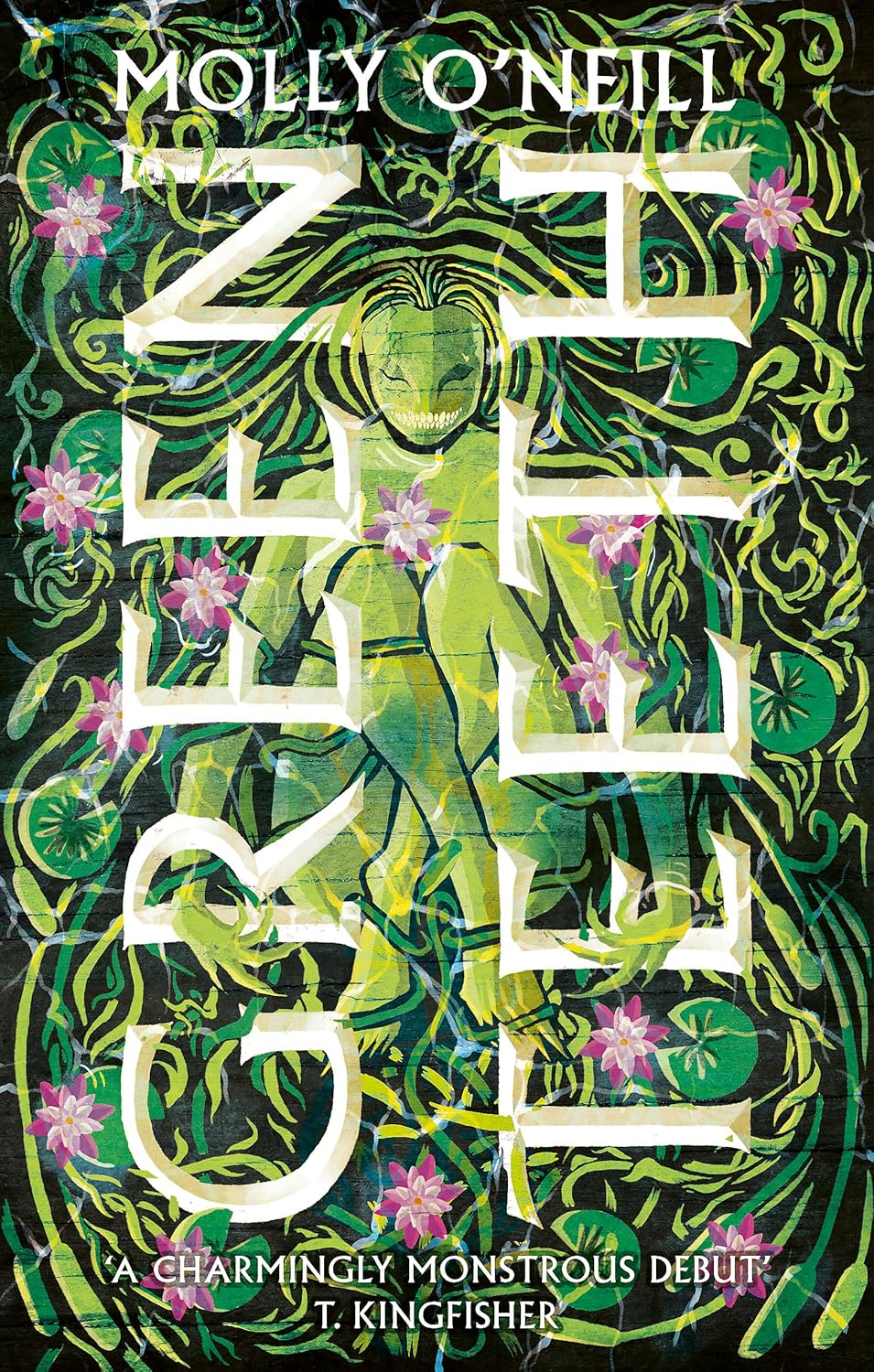
Book Review Tuesday (3/17/26) – Greenteeth

Happy Tuesday, bibliophiles, and Happy St. Patrick’s Day! 🍀 Thankfully none of you can pinch me through the screen, but is a book with a bright green cover and “green” in the title enough for you?

I’ve had my eye on Greenteeth ever since it came out last year—the focus on Jenny Greenteeth and the gorgeous cover (shoutout to Leo Nickolls) caught my eye, but I’ve passed it up in favor of other books…until now. (Shoutout to the Boulder Bookstore, where I got myself a copy!) Though it had its fair share of flaws, Greenteeth was a touching, fantastical story of unlikely friendship.

Enjoy this week’s book review!

Greenteeth – Molly O’Neill

Jenny Greenteeth has lived in her lake for thousands of years. Most humans that she encounters are passing fascinations—or simply a meal. But when Temperance, a human witch sentenced to drown, comes upon her lake, Jenny decides to take her in. Temperance desperately wants to return to her family, and Jenny cannot break a promise. They decide to find a way back to Temperance’s family, but what they discover along the way may hint at a darker rift between the humans and the faerie realm—one that may lead Jenny to discover more about her monstrous lineage than ever before.

TW/CW: animal death, violence, blood, descriptions of injury, grief

For some reason, I thought that Greenteeth was going to have a sapphic element to it, but that’s fully on me constantly having the Gay Goggles on for everything. In retrospect, this might be the one time where having a queer relationship between the main characters would be a bad idea, because a) Temperance is happily married and b) Jenny’s at least 1,000 years older than her. God, that would’ve been a mess.

Greenteeth filled a void that I’ve felt in a lot of fantasy, and that’s the unabashed embrace of all of the weird parts of faerie folklore. I’ve been intrigued by Jenny Greenteeth ever since I read the incarnation of her that appeared in the Hellboy comics, and it’s safe to say that these adaptations of her are very close to the inherent weirdness of the original folklore. Said folklore of Greenteeth draws from classic British, Scottish, and Welsh folklore and Arthurian legend, both of which I indulged in. O’Neill introduces a delightful cast of characters and creatures, and makes the faerie realm feel truly weird, something that a lot of fantasy seems to miss. O’Neill’s atmospheric prose rendered this realm in vibrant color, and I loved every minute of the quest.

Jenny was obviously the heart of the story here, and O’Neill did an excellent job with her! She was just so lovable—like I said above, I love that she didn’t hold any punches with making her truly weird and monstrous. Jenny acts exactly like you’d expect a 1,000+-year-old creature that lives in the bottom of a lake and barely talks to anybody to act, which made Greenteeth a delight from the get-go. With Brackus as her foil and Temperance to teach her about the world, Jenny made for a charming protagonist. However, I’m not sure if O’Neill hinted at the reveals about her past (not the really big one—more on that later) well enough, because by the time they’d been established, it seemed out of character for her to hide something so drastically, lie about it so badly, or even convince herself that these things hadn’t happened at all; with her baby, I get not wanting to reveal that, but they were only revealed when we knew Jenny as a character who wouldn’t necessarily hide these parts of herself in the way that she did. I didn’t buy all of that, but aside from those unfortunate quirks, she was a delightful character. Plus, once we got over the hurdle of said reveals, her character arc became even more poignant.

What made Greenteeth suffer the most, I think, was the tonal shifts. Ultimately, I think it was indecisive about what kind of novel it wanted to be. A lot of reviewers have pegged this as cozy fantasy, and there are a few scenes that would lead me in that direction. However, with the rapid shifts into violence and decidedly more fast-paced and action-packed sequences, I really don’t think this fits the bill. (Also, I feel like most cozy novels wouldn’t pull the move of having a dog get stabbed unceremoniously and then completely brush over this in a few sentences. Not necessarily the dog-stabbing bit, but the fact that they basically go “Oh no! Anyway,” and move on. Justice for Cavall!) It was just so inconsistent in terms of the stakes; we only get to the real meat of the objective of the characters about halfway through. Frankly, I would’ve enjoyed Greenteeth whether or not it decided to be a more cozy, found family quest or an epic, Arthurian quest, but this novel could not decide which of the two it wanted to be. I’m not sure if the half-baked limbo between the two options was the way to go.

That being said…I could not get enough of the ending twist! Personally, it’s too good for me to spoil it, but without revealing anything big, I think it gave Jenny’s arc a deeply emotional conclusion. I’m no expert on Arthurian legend, but internally, I jumped out of my seat like a football fan when said Big Reveal got revealed. However, I think it added some oomph that Jenny’s arc was in need of; the reveals we get about Jenny’s backstory came too late and with too little preamble for the seemingly heartrending emotion that came along with them, but here, I think they reached the potential that they always needed. Jenny’s true origins gave her a real sense of purpose, and even though it was more of a symbolic gesture, it gave her proof of what she needed to hear all along: that she was a powerful, important being, full of love and the potential for greatness…as all of us are.

All in all, a heartwarming fantasy novel that faltered in parts of the plot, but blew it out of the water when it came to atmosphere and the tender relationships between its characters. 3.5 stars!

Greenteeth is a standalone, and Molly O’Neill’s debut novel. O’Neill is also the author of Nightshade and Oak, which came out this February.

Today’s song:

heard this before the Jeff Tweedy show on Friday night…

That’s it for this week’s Book Review Tuesday! Have a wonderful rest of your day, and take care of yourselves!
Posted in Book Review Tuesday

Book Review Tuesday (2/17/26) – The King Must Die

Happy Tuesday, bibliophiles!

Confession time: I was not a fan of Kemi Ashing-Giwa’s debut, The Splinter in the Sky. I didn’t think I would read any of her other books. But my hunger for sci-fi knows no bounds, and when I saw this, I was intrigued enough by the premise to give her writing a second shot. Thankfully, the gamble paid off—The King Must Die was an unexpected delight, full of rebellion, blood, and the friendships that somehow spring up from those other two things.

Enjoy this week’s review!

The King Must Die – Kemi Ashing-Giwa

Newearth was once humanity’s last hope, a planet terraformed by incomprehensible, alien overlords. Now, it’s on the verge of destruction, with dwindling resources divided unfairly amongst the struggling poor and the Sovereign that rules over them. What’s more, the Sovereign has the power of the omnipotent, alien Executors on their side, willing to do their divine bidding at a moment’s notice, leaving a path of destruction in their wake. Fen, the daughter of anti-imperialist rebels, is on the run after the assassination of her fathers. With a target on her back, she flees for a neighboring rebel faction. But when Alekhai, the ruthless heir to the Sovereign, stumbles directly into the plans of the rebellion, Fen is faced with a brutal choice: join forces with him, or let the rebellion fall prey to the Sovereign.

TW/CW: murder, loss of loved ones, gore, blood, violence, descriptions of injuries, torture

I almost passed on this novel when I saw that it was by the same author as The Splinter in the Sky. But sometimes, every once in a while, it’s worth it to give an author another chance; if not for second chances, I wouldn’t have loved Grace Curtis’s Floating Hotel, for instance! I’m glad I took the chance with Kemi Ashing-Giwa, because The King Must Die was an action-packed, adrenaline-filled story of rebellion and intrigue.

My issue with The Splinter in the Sky was that the story did not feel original. A recurring thought I had while reading it was that it had poorly copied A Memory Called Empire‘s homework—there wasn’t enough about the story that was original. I can excuse some of it, since this was her debut novel, but debut novels can have a story that doesn’t border on being a rip-off. That being said, I do remember liking some of Ashing-Giwa’s prose. Thankfully, she’s worked on both of those fronts, creating an original story to go with said prose, and the prose itself has been leveled up significantly! Ashing-Giwa had such a vibrant way of describing the imagined world of Newearth and the many people within it, so much so that I could easily see myself walking through its war-torn jungles. Her dialogue is snappy without being corny, and her metaphors added a poetic flair to an often bloody and dreary landscape. The King Must Die is a marked improvement from Ashing-Giwa’s debut, fleshing out what I felt lacked in her writing on the first time around.

Whenever I say that an adult novel is a good transitory novel between YA and Adult age groups, it always seems backhanded. I guess that’s because literary circles still turn their noses up at YA for the most part. Listen—even though I’ve aged out of the target audience, I read a fair amount of YA (although adult novels have eclipsed them), I write YA, and I have a deep respect for it as an age group (it’s not a genre!). There’s a difference between YA (novels that genuinely portray the complex emotions of teenagers and their circumstances) and YA (tropey slop banking on the latest fanfiction/TV trends). And I think there’s something about The King Must Die that felt like it could be an excellent book to introduce older teens to more adult genre fiction. Sure, the kill count and amount of blood in general is very much adult, but Ashing-Giwa hits that balance between the political intrigue that’s more present in Adult novels with the character drama that I associate more with YA. It has the fast pace that I associate with some of my favorite YA sci-fi romps that I ate up in high school, but with a level of maturity that would have been lost on me at that time. It’s difficult to balance this kind of complicated worldbuilding and politics while also having this character drama, but The King Must Die had both in spades.

The main part that felt YA (affectionate) to me was the character dynamics. The dynamic between Fen and Alekhai is a classic YA setup; she’s a runaway rebel, and he’s the heir to the empire she wants to destroy. Will sparks fly? …no, evidently, but they did make for some seriously compelling character dynamics. I appreciated that, although there were multiple opportunities for Fen to be paired off with any number of characters, all of them were platonic, and they still gave me that juicy, delectable drama that’s usually only reserved for romances. Fen had such excellent chemistry with Mettan, Sinjara, and the other rebels, but what stood out the most was her relationship with Alekhai. I love a good redemption story for a villain, but it’s even more impressive given how much that Ashing-Giwa establishes about him that honestly…shouldn’t be that redeemable. But his development over the course of the story culminated in something so emotional, and the slow cracking of his shell from a ruthless, indestructible royal to someone who only wanted love in return was incredibly poignant.

The King Must Die is still sci-fi for sure, but I’d place it somewhere in the nebulous category of space fantasy. There are some elements that solidly ground it in science fiction: the alien Makers and their terraformed planet, for one, but also some of the technology. However, much of the action that we see on the ground was very fantasy, what with battles waged with intricate swords and quarterstaffs. I loved the strange, often horrifying beasts that we encounter throughout, though I would’ve liked explanations about how they fit into the ecosystems; we get a lot of tidbits of creatures that supposedly went extinct centuries ago, but are showing up for…reasons, and are never brought up again. As a whole, there were a handful of holes in the parts of the worldbuilding that didn’t relate to a) the politics or b) the terraformed Newearth, but for the most part, the world of The King Must Die was a compelling one without a doubt.

In general, I liked the ending and the epilogue; on a more technical level, Ashing-Giwa is excellent at writing battle scenes that really pump up your adrenaline. Some of the imagery, as well as Askrynath’s dialogue, reminded me of the final battle in the throne room in Hellboy II: The Golden Army, which, if you know me well, is a compliment of the highest order. Conceptually, I like how the ending and epilogue resolved—through selflessness and collective community work, the empire was dismantled and a more fair system was set up on Newearth. However, it felt wrapped up far too neatly. An empire that size—especially one with the backing of incomprehensibly all-powerful aliens—doesn’t crumble in a day. I wanted to see more of the messiness of rebuilding a new world in the ashes of the old one—the transition just felt too clean to be realistic. To be fair, The King Must Die is already pushing 500 pages, so I get it if that didn’t make the final cut. Nonetheless, it was a satisfying ending—just too satisfying for my liking, and for the tone of the story itself.

All in all, a sci-fi adventure that balanced genuine political critique with fast-paced action and dramatic, snappy dialogue—it’s rare to find a book that succeeds with both. 4 stars!

The King Must Die is a standalone, but Kemi Ashing-Giwa is also the author of The Splinter in the Sky and the novella This World Is Not Yours.

Today’s song:

That’s it for this week’s Book Review Tuesday! Have a wonderful rest of your day, and take care of yourselves!
Posted in Book Review Tuesday

Book Review Tuesday (2/3/26) – The Hundred Thousand Kingdoms

Happy Tuesday, bibliophiles, and happy Black History Month!

As I’ve done for the past few years, all of my reviews for the month of February will be for books by Black authors. (Stay tuned for my annual Black History Month recommendations list!) I’ve been a fan of N.K. Jemisin for many years now. I was especially blown away by her Broken Earth trilogy, and I figured I would read this to see where she started out. I liked enough of it, but strangely, the flaws reassured me—in order for you to make something as mind-bending as The Fifth Season, you have to start somewhere. The Hundred Thousand Kingdoms happens to be that somewhere.

Enjoy this week’s review!

The Hundred Thousand Kingdoms (The Inheritance Trilogy, #1) – N.K. Jemisin

Yeine Darr never imagined herself in Sky—the opulent floating city of the Arameri, who rule over countless kingdoms. After the sudden death of her mother, Yeine discovers a royal inheritance that she never knew of. Now, in the world of political machinations, scheming, and dark magic, Yeine must fight her way through kings and gods alike. But Yeine has only scratched the surface of the secrets that have been concealed from her—and their consequences may shatter all of the Hundred Thousand Kingdoms.

TW/CW: rape, pedophilia, violence, slavery, torture, loss of loved ones, sexual content

Though she’s had some misses in her later career, N.K. Jemisin is one of the more inventive speculative fiction writers out there. The Broken Earth trilogy was so nuanced and mind-bending, and it was for sure one of the more creative adult fantasy series that I’ve ever come across. Yet somehow, even though I didn’t enjoy The Hundred Thousand Kingdoms as much as her other novels, it’s oddly comforting. You’ve got to write a weaker book before you get on the level of The Fifth Season.

The Hundred Thousand Kingdoms is a cold book. That’s not necessarily a bad thing. In fact, I think it works in the main character’s favor. This novel is all about isolation, alienation, and othering, and that’s exactly how it manifests in our protagonist, Yeine. Jemisin’s exploration of her being an outsider—in terms of her age, her race, and her unfamiliarity with Sky itself—centered so much about the distance that she felt between herself and the people she’s suddenly meant to cause peers. Yeine is a flawed characters, but you see the exact circumstances that make her this way; groomed to demurely accept microaggressions and be derided and tossed around, she’s shrunk herself so far into a corner that she’s ceased to be herself. Jemisin didn’t shy away from making Yeine a flawed character, but what made her at least partially worth rooting for was seeing how intricately her backstory was constructed. At best, The Hundred Thousand Kingdoms is a no-holds-barred exploration of how being subsumed into an empire does not just to your country, but to your psyche.

Over the years, Jemisin has built a name for herself in socially conscious fantasy, and The Hundred Thousand Kingdoms is, without a doubt, where it all began. Though I don’t think I’ll continue with the trilogy (more on that later), this novel excelled in talking about the politics of its world. Aside from Yeine’s alienation, I loved how Jemisin showed through the worldbuilding just how much the nations of the Hundred Thousand Kingdoms are willing to turn the other cheek to, be it war, racism, abuse, or slavery. It’s a dizzyingly large structure full to the brim with conniving politicians, but with the added bonus of warring gods to complicate things in Jemisin’s world. Even beyond the worldbuilding, what Jemisin does best is depict the staggering scale of an empire, and the intimidation that it causes. When the enemy seems too vast and layered to take down, it can force you into submission, or even absolute hopelessness. That hopelessness feeds into Yeine’s character arc once she’s faced with the Hundred Thousand Kingdoms, and her gradual conquering of it made for a poignant, timely character arc, especially for a novel written almost exactly 16 years ago.

The Broken Earth trilogy had this kind of fairytale-like narrator who stepped into the narrative to occasionally interrupt the main storyline. It was an artful, cryptic part of Jemisin’s storytelling that gave those novels a unique flavor. The Hundred Thousand Kingdoms was clearly the trial run of this tool, because it was…nearly the same. At first, I was excited to get that signature N.K. Jemisin storytelling, but as much as I liked it in the first half, I’m not sure if it really worked for this novel. I won’t spoil The Fifth Season, because even though it’s been out for many years now, that twist is too good to ruin for new readers; but with that narrative framing in mind, it works exactly in tandem in the story. However, for The Hundred Thousand Kingdoms, it didn’t fully make sense. I did like it in the sense of a trickster narrating the story, but for the kind of fantasy this is—much more about politics than prophecy—it seemed less of a narrative device and more just window dressing to spruce up what was already there. I’m all for those kind of elements normally, but I think it works better for a destiny, prophecy-oriented fantasy like The Fifth Season more than it does the more grounded, political machinations of this novel.

One of the main things that kept me from enjoying The Hundred Thousands Kingdoms all the way was the romance. Even calling whatever happened in this novel “romance” is generous. Everything between Yeine and Nahadoth was just…weird on a number of levels. Their first sex scene was written in such a way that I fully thought that Yeine was getting raped, and their dynamic never recovered from that perception. Either way, even with Yeine being the vessel for the most powerful goddess in this universe, there was obviously an uneven power dynamic at play, but I don’t think Jemisin wrote it consciously enough. Their relationship felt the same as the relationships between the domineering, condescending politicians of the Hundred Thousand Kingdoms, and yet somehow, it was automatically romantic for them. These kind of power dynamics are something that Jemisin has explored in her later works and written with much more nuance and aplomb; once again, I guess you have to start somewhere, because this was a mess. There could’ve been some sort of Stockholm syndrome kind of thing going on with Yeine, but once again, no nuance—even though she’s a traumatized character, depicting it through a solely romantic lens was a mistake. Additionally, the final sex scene with Yeine and Nahadoth was painfully overwritten to the point where it was almost funny. Plus, the relationship that Yeine had developed with T’vril felt much more natural and beholden to a fleshed-out romance—where did Nahadoth even come from?

Also, because I can’t let go of this—yeah, I know, Sieh is technically an adult mind in a child’s vessel (there’s a fantasy explanation for this), but in what world did that weird ass kiss between Sieh and Yeine need to happen? Reverse Poor Things, much? Eugh.

All in all, a flawed but ambitious debut from one of the cleverest fantasy authors working today. 3.25 stars.

The Hundred Thousand Kingdoms is the first novel in the Inheritance Trilogy, followed by The Broken Kingdoms and The Kingdom of Gods. N.K. Jemisin is also the author of several other sci-fi and fantasy novels for adults, including the Broken Earth trilogy (The Fifth Season, The Obelisk Gate, and The Stone Sky), the Great Cities duology (The City We Became and The World We Make), the anthology How Long ’til Black Future Month? and DC Comics’ Far Sector.

Today’s song:

saw Robyn Hitchcock on Sunday night—what an absolute treasure!!! this was a standout

That’s it for this week’s Book Review Tuesday! Have a wonderful rest of your day, and take care of yourselves!
Posted in Book Review Tuesday

Book Review Tuesday (1/13/26) – We Will Rise Again: Speculative Stories and Essays on Protest, Resistance, and Hope

Happy Tuesday, bibliophiles, and from the bottom of my heart, fuck ICE. Rest in power, Renee Nicole Good. My heart goes out to everybody in Minneapolis right now. ❤️‍🩹

Whoo, look at me! Actually reviewing a book not long after it came out!!

I found out about We Will Rise Again soon after it came out, and it immediately caught my eye—in fact, it seemed almost specifically engineered for me. I mean, speculative fiction based on social justice? Come on. And while the stories and essays within it varied in quality, this anthology was a worthy endeavor and a much-needed collaboration.

Enjoy this week’s review!

We Will Rise Again: Speculative Stories and Essays on Protest, Resistance, and Hope – edited by Karen Lord, Annalee Newitz, and Malka Older

(description from The Storygraph:)

From genre luminaries, esteemed organizers, and exciting new voices in fiction, an anthology of stories, essays, and interviews that offer transformative visions of the future, fantastical alternate worlds, and inspiration for the social justice movements of tomorrow.

In this collection, editors Karen Lord, Annalee Newitz, and Malka Older champion realistic, progressive social change using the speculative stories of writers across the world. Exploring topics ranging from disability justice and environmental activism to community care and collective worldbuilding, these imaginative pieces from writers such as NK Jemisin, Charlie Jane Anders, Alejandro Heredia, Sam J. Miller, Nisi Shawl, and Sabrina Vourvoulias center solidarity, empathy, hope, joy, and creativity.

Each story is grounded within a broader sociopolitical framework using essays and interviews from movement leaders, including adrienne maree brown and Walidah Imarisha, charting the future history of protest, revolutions, and resistance with the same zeal for accuracy that speculative writers normally bring to science and technology. Using the vehicle of ambitious storytelling, We Will Rise Again offers effective tools for organizing, an unflinching interrogation of the status quo, and a blueprint for prefiguring a different world.

TW/CW: violence, transphobia, themes of oppression/marginalization, ableism, murder

Somehow, it’s so on brand that Ursula Vernon would be that hardcore about gardening. I always vaguely got that vibe from her work, but her essay was not a surprise in the slightest.

There were all kinds of speculative fiction authors featured in We Will Rise Again: familiar authors I’ve liked, familiar authors I haven’t been a fan of, and unfamiliar authors entirely; in fact, all three of the authors who edited the anthology (Karen Lord, Annalee Newitz, and Malka Older) are all hit-or-miss authors for me, but I stuck to this anthology because the concept was so compelling to me. Sure enough, not only were their stories fascinating, so were everyone else’s. Some of my favorites were Charlie Jane Anders’s “Realer Than Real,” a meditation on being transgender in the U.S. and poking fun at gender roles, Abdulla Moaswes’s “Kifaah and the Gospel,” a potent commentary about Palestinian resistance and the inherent absurdity of colonialism, and Malka Older’s “Aversion,” an excellent commentary about how to get people to pay attention and care about issues without having to expose them to a barrage of triggering, disturbing imagery. (The latter isn’t deeply relevant at all, no way! No way…) Whether in sci-fi, fantasy, or loosely speculative formats, all of them came together in a vibrant quilt of different perspectives and ideas.

The nonfiction in We Will Rise Again was, for the most part, equally potent. I was so excited to see Nicola Griffith featured in here, and her essay “Rewriting the Old Disability Script” was as timely as ever; even though disability representation in media at large, not to mention literature, has gradually gotten better, this was a potent reminder of the staggering lack of representation of disability of any kind in mainstream media. I’d already read N.K. Jemisin’s “How Long ‘Til Black Future Month? The Toxins of Speculative Fiction, and the Antidote That Is Janelle Monae,” but it fit perfectly in this anthology and was well worth a re-read. The very core of We Will Rise Again was that the fiction stories had tangible input from activists with real-world experience; without this, I still would’ve liked these stories, but with this added layer, they strangely gave me more hope. The faith of real-world activists embedded in fiction emphasizes what this anthology was really about, for me: educated, grounded hope for a better future.

However, with an anthology that cast such a wide net idea-wise, there’s bound to be some misses. I think the biggest issue with We Will Rise Again was that it verged on being too broad. Naturally, when you’re talking about social justice, there are so many things that you can talk about, and this anthology discusses the whole gamut of them in both fiction and nonfiction, from community care to transphobia to disability rights. For the most part, I could see the common thread through all of them easily. Some of them, however, bordered on being very loosely strung together; for instance, although I loved Vernon’s essay “The Quiet Heroics of Gardening,” the connection between it and the other stories was very, very loose. I think the issue was that not all of the fiction stories had nonfiction paired with them—the format they had with most of these stories could’ve cohesively been applied to all of them and given the anthology a better, more reasonable structure.

Overall, there weren’t any stories that I didn’t like, which is a rare thing in any given collaborate short story anthology. However, I did have a structural issue with some of them. Speculative fiction is a notoriously broad term, and I think some of the stories in this collection took that a little too seriously. While some of them were clearly sci-fi, fantasy, or at least had some speculation and change to the world, some of them barely felt speculative. For instance, if you took away the fleeting fantastical element of Vida James’s “Chupacabras,” I would’ve thought that it was only set a few years after the present—there wasn’t a ton that was new about it, and said fantastical element felt like an afterthought. (I had a similar issue with Sabrina Vourvoulias’s “Persefoni in the City.”) Even with some of the “this is only meant to be a few years from now” stories, I got that what was speculative was the politics (ex. with Izzy Wasserstein’s “The Rise and Fall of Storm Bluff, Kansas”), but with the ones I mentioned, hardly anything had changed. While I get that the focus wasn’t necessarily on the worldbuilding, with the anthology’s whole point being on genre/speculative fiction as a way of collective imagination and imagining better worlds, stories like those felt at odds with the intended message. “Speculative” was a bit generous of a term for some of those stories.

All in all, a diverse and hopeful anthology, both in terms of its contributors and its subject matter, all coming together to make powerful statements about how to survive in this landscape and dream of something better. 3.75 stars!

We Will Rise Again is a standalone anthology; Karen Lord is also the author of the Cygnus Beta series (The Best of All Possible Worlds, The Galaxy Game, and The Blue and Beautiful World). Annalee Newitz is also the author of The Terraformers, Autonomous, Automatic Noodle, and The Future of Another Timeline. Malka Older is also the author of The Investigations of Mossa and Pleiti series (The Mimicking of Known Successes, The Imposition of Unnecessary Obstacles, and The Potency of Ungovernable Impulses) and the Centenal Cycle (Infomocracy, Null States, and State Tectonics).

Today’s song:

LODGER 🙌

That’s it for this week’s Book Review Tuesday! Have a wonderful rest of your day, and take care of yourselves!
Posted in Book Review Tuesday

Book Review Tuesday (12/16/25) – Katabasis

Happy Tuesday, bibliophiles!

I’ve been a fan of R.F. Kuang’s work for years (though I’ve steered away from the Poppy War trilogy, given how many people I know have been emotionally eviscerated in its wake). As bored as I am with dark academia, if there’s anybody I trust with the genre, it’s Kuang—and for the most part, her latest venture into the bowels of academia (and Hell itself) was an adventurous success!

Enjoy this week’s review!

Katabasis – R.F. Kuang

Professor Grimes is going to Hell, and it’s all Alice Law’s fault.

After a backfired spell sends their advisor to an early grave, two rival Cambridge grad students find a way to enter Hell to bring back Professor Grimes. Braving all manner of demonic horrors beyond their wildest nightmares, Alice Law and Peter Murdoch have agreed to risk it all for their beloved professor. Yet the further they travel through Hell, they must come to grips with the man Professor Grimes was—and if the man they idolized was really worth going to Hell for.

TW/CW: violence, gore, loss of loved ones, sexual assault/harassment, suicidal ideation/suicide, ableism

There’s really nobody doing it like R.F. Kuang. She isn’t my favorite author of all time, but nonetheless, I don’t think I’ll ever find another fantasy book that has both spooky scary skeletons sending shivers up my spine AND a well-placed dig at Jacques Derrida. That’s how it’s done.

Right after it was released, Katabasis seems to have made a major splash in the book community (namely BookTok)—partly because Kuang’s next novel was bound to be highly anticipated, but partly because it sparked some debate about anti-intellectualism. But compared to something like Babel, which is practically footnotes upon footnotes, I feel like this…isn’t that bad? Sure, it’s very esoteric, but most everything is so easily searchable online? Or in the library? Granted, I understood a fair amount of this solely because I took a literary theory course for my English degree, but even then…just google what you don’t know! And maybe you’ll learn something fun! I don’t know how one would go into an R.F. Kuang book and not expect something academically-minded, but maybe this is just the people who were only used to the strictly realistic fiction of Yellowface? Who knows.

Either way, the academic aspect of Katabasis was such a fun element for me. Whether or not that’s because I’m so hopelessly English-majoring it out here, but I loved all of the subtle nods to world mythologies and literature. (The bit about postmodern and poststructuralist magic cracked me UP. Poststructuralism slander healed my soul. Thanks, literary theory.) But ultimately, I loved what Kuang said about academia; there’s the satirical part that it can be Hell, but also that it demands an inhumanity of you that is systemically supported and produces such spectacular burnout. Being the genius that people like Grimes wanted required students like Alice and Peter to relinquish their humanity in pursuit of knowledge and prestige, and that’s something that you shouldn’t have to sacrifice to get what you want. Given Kuang’s accolades and track record, I’m sure she’s experienced this firsthand, but it was a potent statement on the pressure that’s put on students, especially in the Ivy Leagues and other prestigious institutions, magical or not.

Katabasis had a wild version of Hell, and so much of the fun of the book was exploring it. Granted, it is rather all over the place, but I feel like it emphasizes Kuang’s initial rule of Hell: there are no rules in Hell. There’s the parts that are just Cambridge but in Hell, carnivorous hordes of Tim Burton-esque skeletons, deities from all kinds of mythologies, and one very lucky cat. (Shoutout to Archimedes, I’m glad he survived!) Entire sections of Hell are made out of M.C. Escher’s structures, there’s impossible shapes everywhere, and all of it serves to make Alice and Peter get as close to snapping as possible—exactly what you’d expect from Hell. Tonally, it was also kind of all over the place; some of it was genuinely horrific, while other parts bordered on Beetlejuice-esque camp. But all of these disparate elements made sense as a sort of archive of all possible Hells; it’s a very academic Hell, but beyond that, it seems like an exercise in writing that Kuang had tons of fun writing. That passion poured off every page!

Alice and Peter’s relationship formed the core of the novel, and I loved following them as characters. They made such an odd couple of rivals to friends to…something more, I’d imagine, and their personalities bounced so well off of each other. The perspectives that both of them brought to Kuang’s satire of academia—Alice’s struggles as a woman of color and Peter’s as a chronically ill person—really hammered the commentary home. My main criticism of Katabasis has to do with the 75% mark (more on that later), but I feel like part of why it felt so off-balance for me was that Peter wasn’t there. Alice was a compelling character on her own, but Katabasis leaned so much on their shared dynamic, the scholarly banter they bounced off of each other and the warring struggles that eventually coalesced as they realized their dual mistake in idolizing Grimes. They had such effortless chemistry both as rivals and friends, making them easy to root for.

Of course, when you’ve created a Hell this dizzyingly intricate and complex, you’re bound to get lost. Alice and Peter did, and so did Kuang herself. There’s a point at the 75% mark where the plot, along with the characters, gets hopelessly lost. By this point, we’ve moved on past “we’re here to get Grimes,” but it seems like none of the detours served the novel in any way. The real kicker is that this part of Hell isn’t even that new or interesting—it’s even more academic commentary, which, while I liked it at first, was just repetitive and regurgitated the same satire about academia that Kuang had already talked about in the first third of the book. I’m all for taking detours to explore an unknown realm, but this one didn’t even feel new at all. My edition of Katabasis is around 540 pages, mind you, so it’s not like cutting too much of this would’ve made it too short. I feel like not every little thing about a novel directly needs to serve the plot, but I feel like it should at least develop the characters or show us something new, and this part of Katabasis did none of those things. Thank goodness we were whisked out of Hell soon after that.

All in all, an inventive and satirical journey into the depths of Hell—which, as it turns out, looks an awful lot like Cambridge. 4 stars!

Katabasis is a standalone, but R.F. Kuang is the author of several other fantasy and fiction novels, including Yellowface, Babel, and the Poppy War trilogy (The Poppy War, The Dragon Republic, and The Burning God).

Today’s song:

I just need everybody to know that this cover exists. That’s it.

That’s it for this week’s Book Review Tuesday! Have a wonderful rest of your day, and take care of yourselves!
Posted in Book Review Tuesday

Book Review Tuesday (11/25/25) – Mad Sisters of Esi

Happy Tuesday, bibliophiles!

Guess who’s back…for only a week, probably. We’ll see. My college is on this maddening schedule that only gives us one (1) week after Thanksgiving Break and then it’s straight into finals, so I’ve been grinding for most of November. But now I’m on break, thank goodness!

I found out about Mad Sisters of Esi while doing a research paper on the history of science fiction in India. It sounded intriguing—who doesn’t love an incomprehensibly large cosmic whale, after all? I’m not usually one for fantasy (citation needed) novels that are this dense and self-referential, but there was so much passion poured into every word that I couldn’t help but be dragged along for the bizarre ride.

Enjoy this week’s review!

Mad Sisters of Esi – Tashan Mehta

Myung and Laleh are inseparable sisters living inside the Whale of Babel, a whale the size of a galaxy, large enough to contain planets in the folds of its body. They have never known life outside of the Whale, save for the Great Wisa, their distant, unknown creator. Laleh is content to explore the endless lands inside the Whale’s body, but Myung yearns for something more. Her journey takes her to the far edges of the universe, but so far that she cannot find her way back to her only home. As Myung and Laleh attempt to find their way back to each other, they ponder the stories that got them to where they were, and if stories themselves can bring them back together.

TW/CW: loss of loved ones, grief, abandonment

If you’re wondering how I’ve been lately, I’m apparently saturating myself with “[]ad Sisters” media. Mad Sisters of Esi? Bad Sisters? What am I doing here? What’s going on with all these sisters?

I’m glad that this trend doesn’t have a name, but I love the trend of recent genre fiction coming to conclusion that “maybe [x] was the friends we made along the way” can actually be a very powerful message. Maybe storytelling was the friends we made along the way. God. What a book.

I was captivated by the premise of Mad Sisters of Esi, but I could have easily not been. It falls into those fantasy books that verge more on the literary side that are very self-serious about been multilayered, dense, and Deep with a capital D. Not that there’s anything wrong with it, but toeing the line between a story that’s actually meaningful and a book that’s 500+ pages of needlessly convoluted, pretentious nonsense that only serves as a monument for how supposedly complex of a plot the author could dish up. The latter are often all style and no substance, but the real frustrating part is that they’re so convinced of their substance that it deadens any meaning that it could’ve had. (See my review of The Spear Cuts Through Water. At least Simon Jimenez has other good books. Go read The Vanished Birds instead of that one.) It’s just a literary version of “look, Ma, no hands!” that rarely results in anything really substantive.

My main criticism of Mad Sisters of Esi is that it does stray into that territory sometimes. It never fully went over the edge for me, but there were moments were it got too convoluted for both my taste and the service of the narrative. Most of it was complex, but not needlessly so, but at a certain point, parts of it got dizzying. I definitely didn’t get everything about this book, and I feel like it’s almost the point. For me, what separates the two kinds of fantasy novel that I just described is…well, love. I could tell right away that Mehta didn’t write Mad Sisters of Esi to show off how complicated of a narrative that she could write—there’s a story, a tangible message, and a thrum of passion that spills through in every page. With every fictional academic article and magical town, I knew that Mehta’s world was born of love. Which, given the nature of this book’s themes, is exactly what it should have been. It’s a novel that’s all about love, storytelling, and the act of creation, and Mehta’s writing felt more than faithful to that premise.

Mad Sisters of Esi is full of meta commentary on the nature of storytelling. I’ll get more into that aspect later, but part of what sold those thematic elements was Mehta’s prose itself. Mehta is clearly someone who has studied her fair share of fairytales. Mad Sisters of Esi doesn’t just feel like a fairy tale in terms of the plot—Mehta’s prose has the same enchanting quality of a timeless fairy tale. The narrator bobs in and out, always with a cryptic lesson. The lush world is rendered in the most magical, wondrous detail. All of the descriptions surrounding Myung and Laleh make them sound like classic protagonists in an ancient tale. It was all very self-aware, but in a way that made the story feel fuller—and drew me in page by page. With Mehta’s strong hand, every location that Myung visited was bursting with bizarre, fantastical life—I was hooked on nearly every aspect.

If this novel has made me realize anything, it’s that we don’t have nearly enough cosmic whales in literature. We need more of them, frankly. Or maybe not—I’m torn on whether or not we should gatekeep them so they don’t get tired. I doubt they would, though. Either way, you can’t just promise a galaxy-sized whale full of planets and two sisters that live inside it and not deliver on that premise. Thankfully, Mehta did in spades. The world of Mad Sisters of Esi was a sight to behold. Every minute detail was somehow nonsensical and yet made perfect sense. It all felt very trippy and whimsical, and above all, so vibrant. I loved every quirk in every location that Myung visited in the vast universe; I’ve seen reviews compare it to The Phantom Tollbooth, and honestly, I have to agree—it has that same absurd, dreamlike quality more often than not. Beyond that, I love the integration of the academic articles and research papers about all of the bizarre events and people within this novel—it added such a fun layer of worldbuilding that made it all feel more grounded and real—as much as it could be, with all of the out-of-this-world (no pun intended) stuff that was going on.

With all of the emphasis on madness, I was really hoping there wasn’t going to be yet another story about art being all about suffering. From how incredible the first few chapters were, I was hopeful. But with everything about madness, madness, madness…doubt crept into my mind, for sure. I’m not confident that I fully got what Mehta intended, but I feel like this is what I took away from it. There is a little madness in every creation, even if you’re not actively suffering—how do you create a massive cosmic whale and not go a little crazy? Yet she emphasizes that even if you pour your all into your creation, that you run the risk of losing yourself, and that’s when your creation goes wrong. Mehta’s madness isn’t the suffering kind of madness—it’s about the passion. It’s about throwing all of your love into the act of creating, just so that the world is a little brighter and less boring than it was before, and to give your love a physical form. The reason that Myung is so lost out in the universe is that she strays from something that was created with nothing but love. That’s my two cents (is that expression even relevant anymore now that we don’t have pennies?), especially given how the novel concluded. That’s why the passion I felt from every page felt authentic—the passion is what it’s about, to love what you create and not destroy yourself in the process, because you too are made of love.

All in all, a dazzling and surreal space fantasy full of love, sisterhood, and whales. 4.5 stars!

Mad Sisters of Esi is a standalone, but Tashan Mehta is also the author of the novella The Liar’s Weave, and has contributed to several anthologies, including Magical Women, Solarpunk Creatures, and The Gollancz Book of South Asian Science Fiction, Vol. 2.

Today’s song:

That’s it for this week’s Book Review Tuesday! Have a wonderful rest of your day, and take care of yourselves!